
You’ll find fresh ways to make your living room ceiling both beautiful and useful without sacrificing comfort. This article shows 12 ceiling design living room with fan that pair stylish finishes with the right fan so you can pick a look that fits your room and improves airflow.
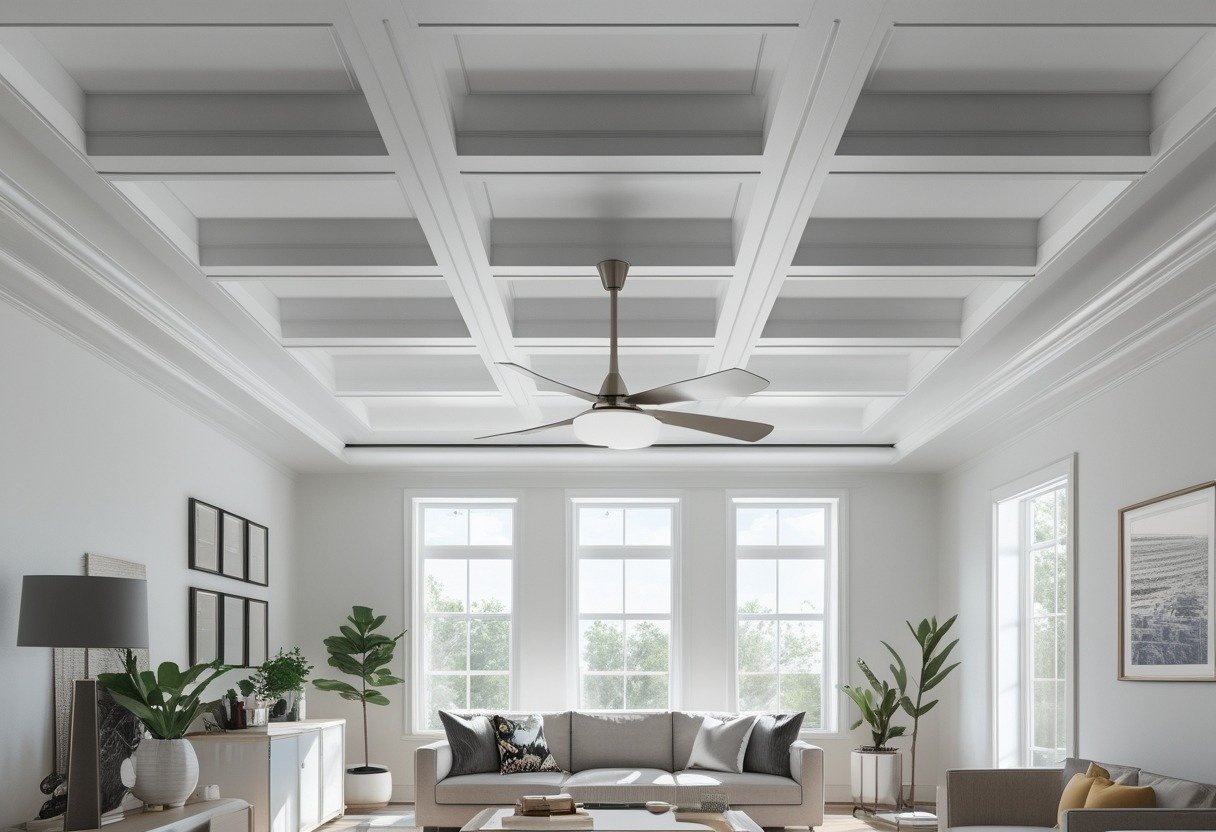
Explore ideas from clean, minimalist trays to bold painted treatments and skylight integrations, all matched with fans that suit scale, function, and mood. Use these examples to imagine changes that lift your space and keep it comfortable year-round.
1) Minimalist white tray ceiling with a matte black modern fan
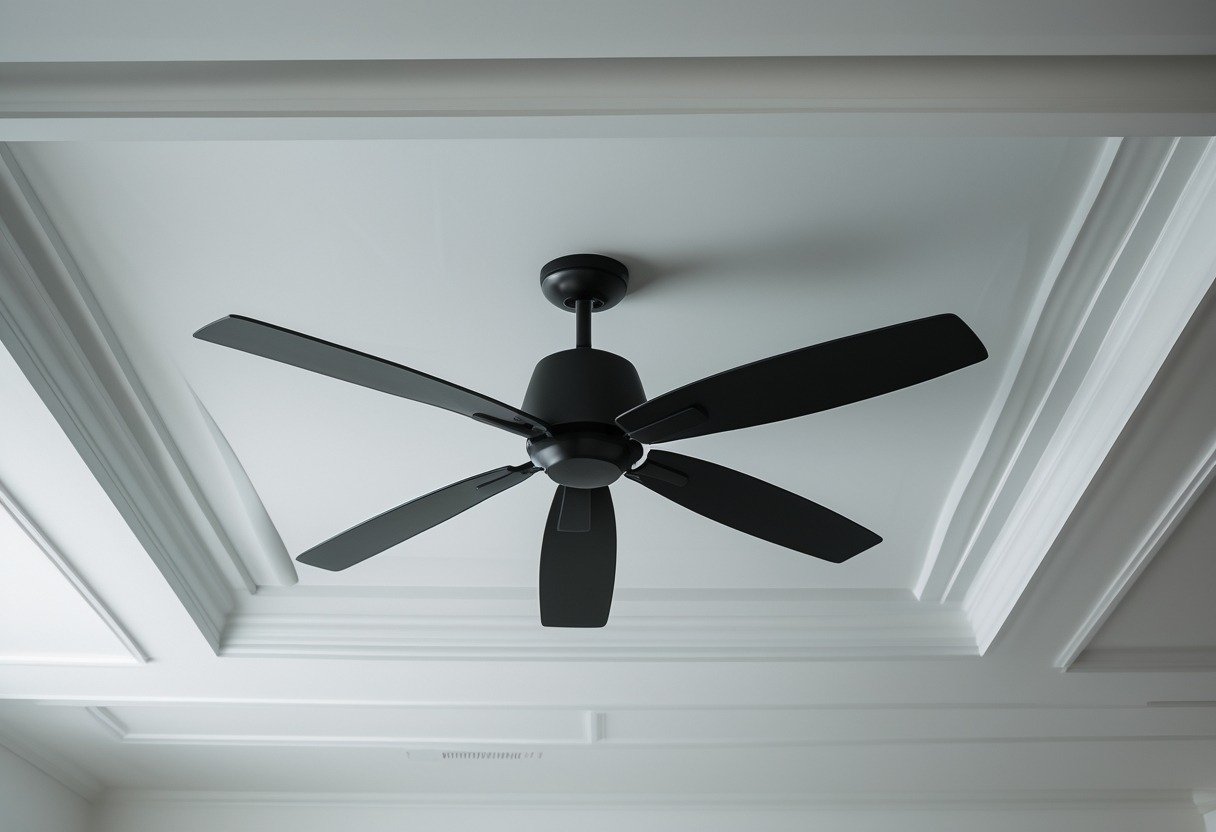
You create a calm, modern look by keeping the tray ceiling white and simple. The clean lines make the room feel taller and brighter.
A matte black fan gives a sharp, stylish contrast without cluttering the space. Choose a fan with slim blades and minimal detailing to match the ceiling’s restraint.
Place the fan centrally in the tray to balance light and airflow. Use a remote or wall control for easy speed and light adjustments.
2) Exposed wooden beam ceiling with a bronze farmhouse fan
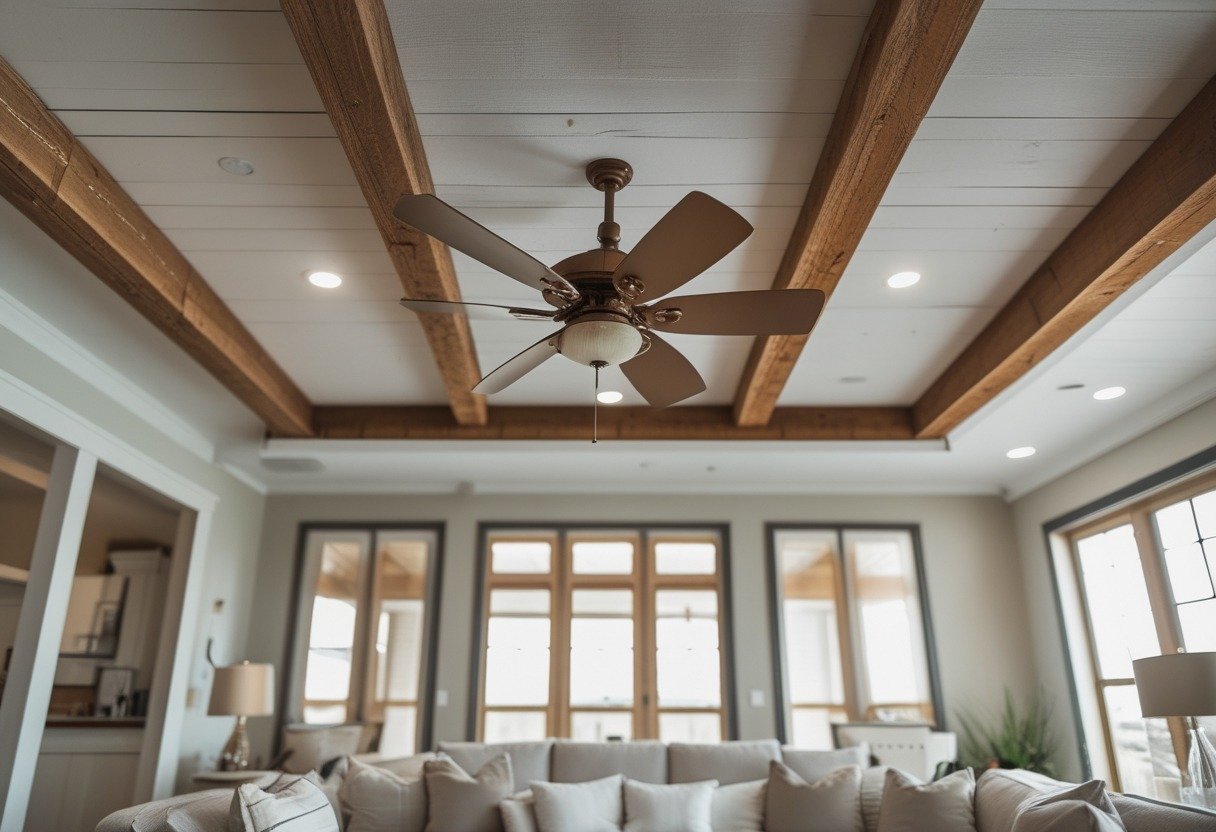
You can add warmth with exposed wooden beams that run across a vaulted or flat ceiling. The wood brings texture and a rustic feel without overwhelming your room.
A bronze farmhouse fan complements the beams with a muted, classic look and helps circulate air efficiently. Pick a fan with simple lines so it blends with the wood and keeps the focus on the ceiling.
Keep surrounding colors neutral and add soft lighting to highlight the beam grain. This pairing suits both modern and traditional living rooms.
3) Coffered ceiling painted deep navy paired with a brass 5-blade fan
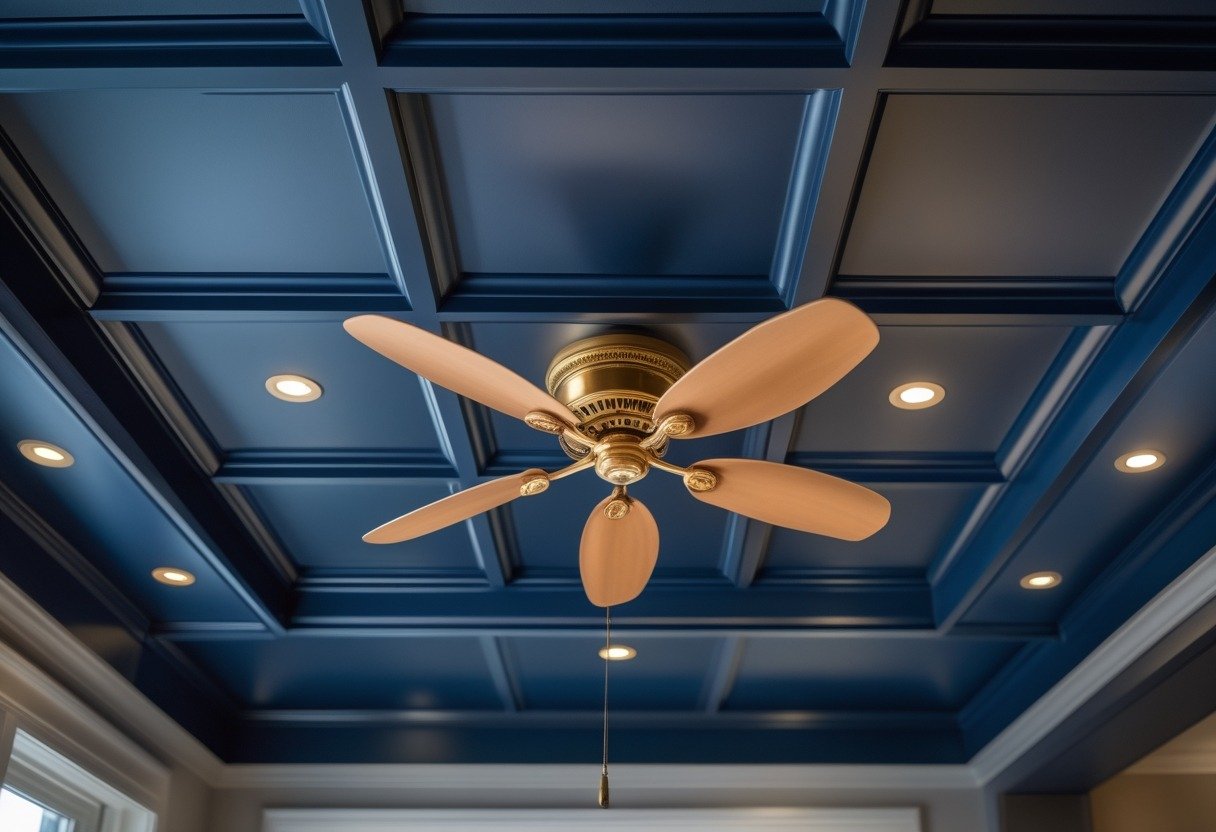
Paint the recessed panels deep navy to add depth and a modern edge to your living room. The dark color draws the eye upward without overwhelming the space.
Pair it with a brass 5-blade fan for a warm, elegant contrast. The brass finish brightens the navy and gives a subtle luxe feel.
Keep trim and beams lighter to define the coffers and keep the room from feeling too heavy. This combo works well with neutral walls and warm wood or leather furnishings.
4) High vaulted ceiling with a large dual-motor ceiling fan
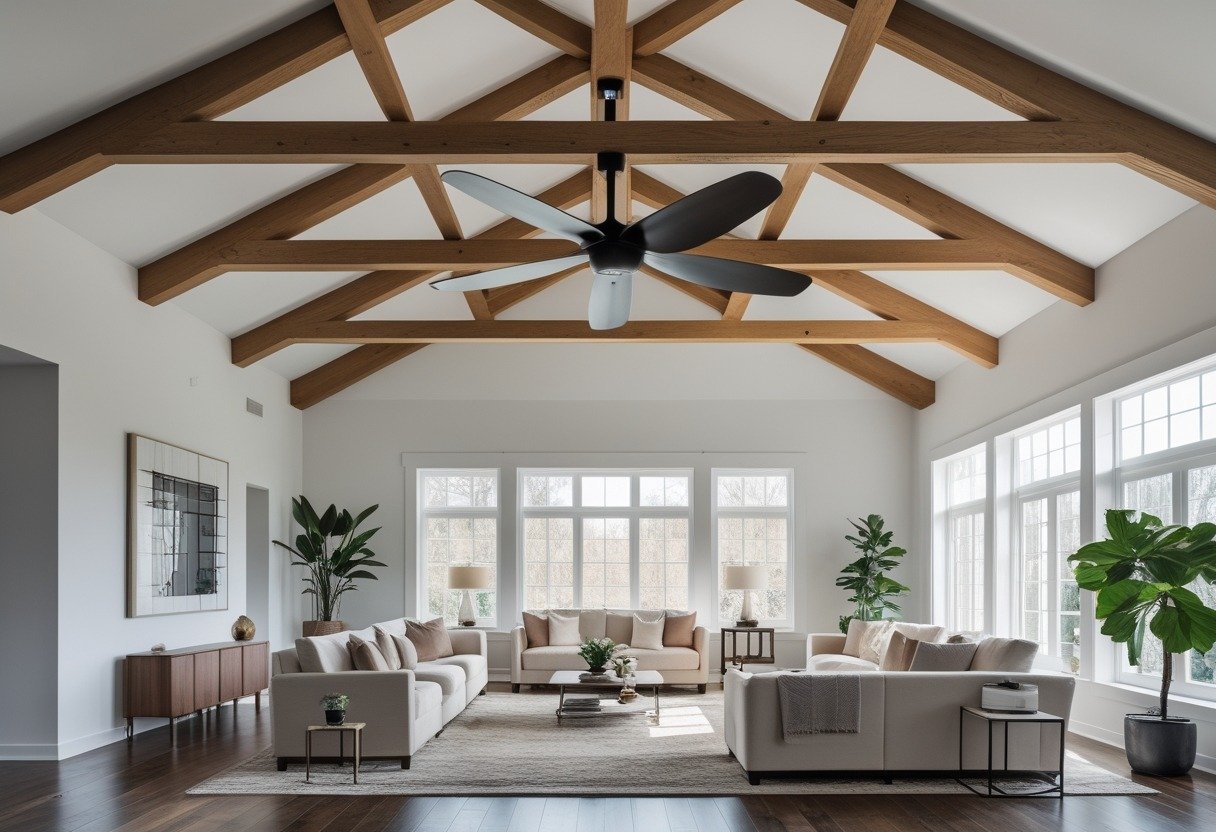
You can use a large dual-motor fan to move air well in tall, vaulted rooms. Dual motors spin two sets of blades for wider coverage without needing extreme blade length.
Choose a long downrod so the fan sits lower than the peak. Make sure the mount supports sloped ceilings and the motor is rated for high airflow.
Balance noise and power by picking a quiet, high-efficiency motor. A remote control helps you reach and adjust the fan from the floor.
5) Recessed LED-lit perimeter ceiling with a low-profile flush mount fan
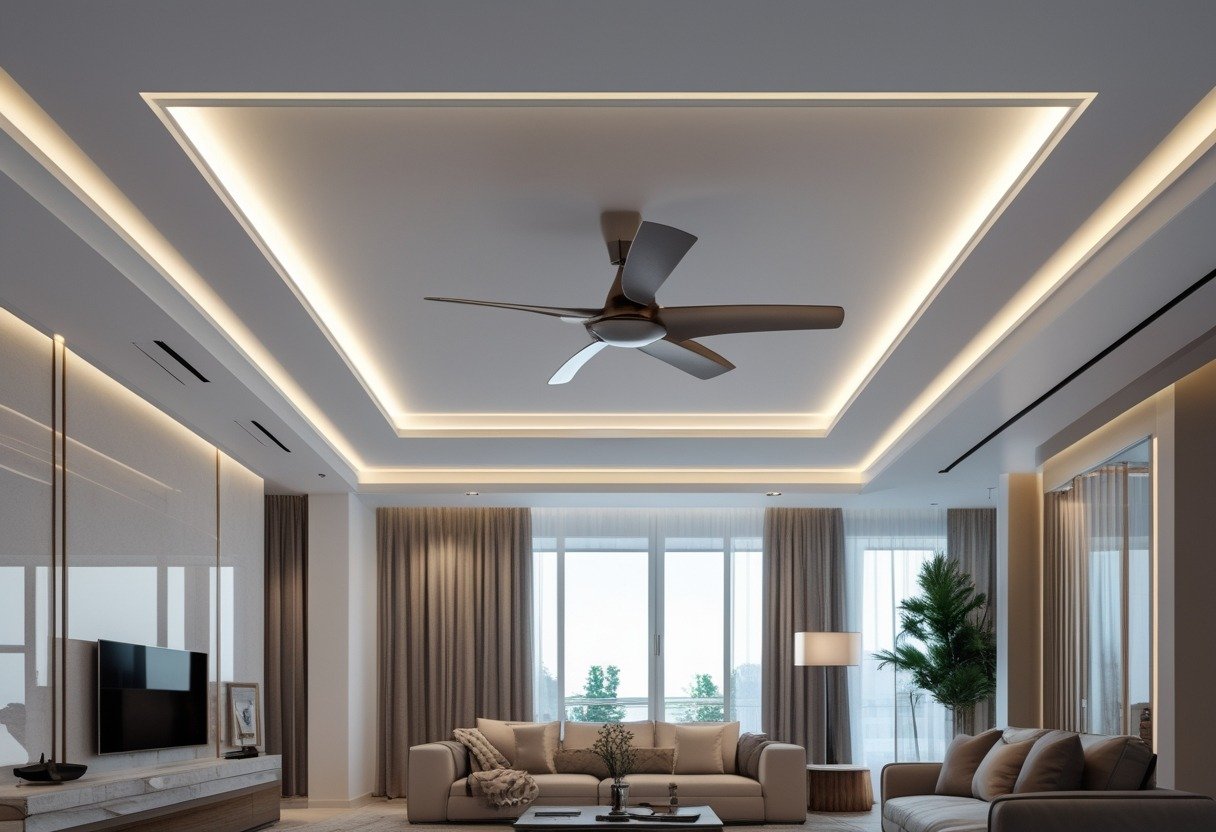
You can install recessed LED strips around the ceiling perimeter to add soft, even light that lifts the room without glare. This keeps the center clean for a low-profile flush mount fan that won’t hang down or block sightlines.
Choose dimmable, warm-to-cool LEDs so you control mood and task lighting. A slim fan keeps airflow steady and looks modern while saving vertical space for rooms with lower ceilings.
6) Geometric plaster ceiling design with a sculptural fan blade set
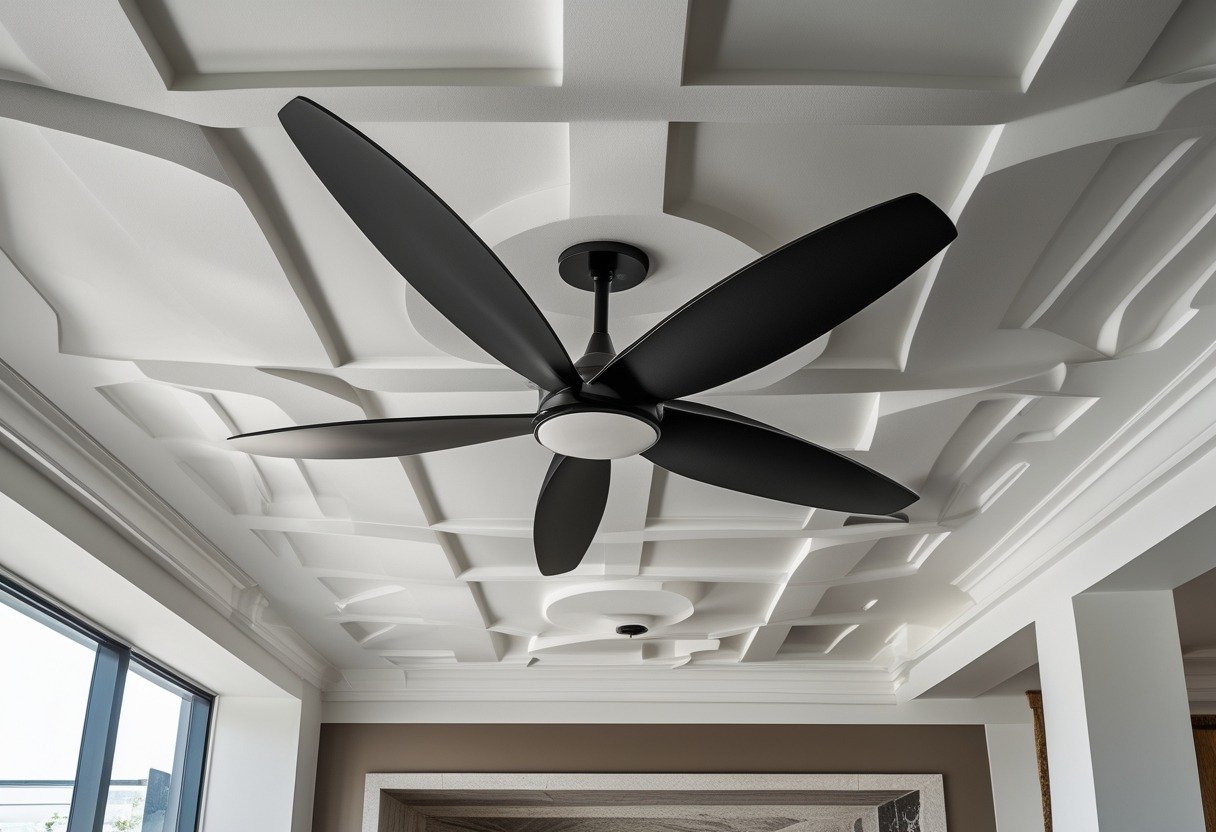
You can use geometric plaster panels to give your ceiling strong lines and depth. The shapes create rhythm and guide the eye toward the fan.
Choose a sculptural fan blade set that echoes the ceiling pattern. Matching scale and finish ties the fan into the design without hiding its function.
Keep lighting subtle so the plaster relief casts soft shadows. This approach balances sculptural form with everyday comfort in your living room.
7) Rustic reclaimed-wood ceiling with an industrial cage fan
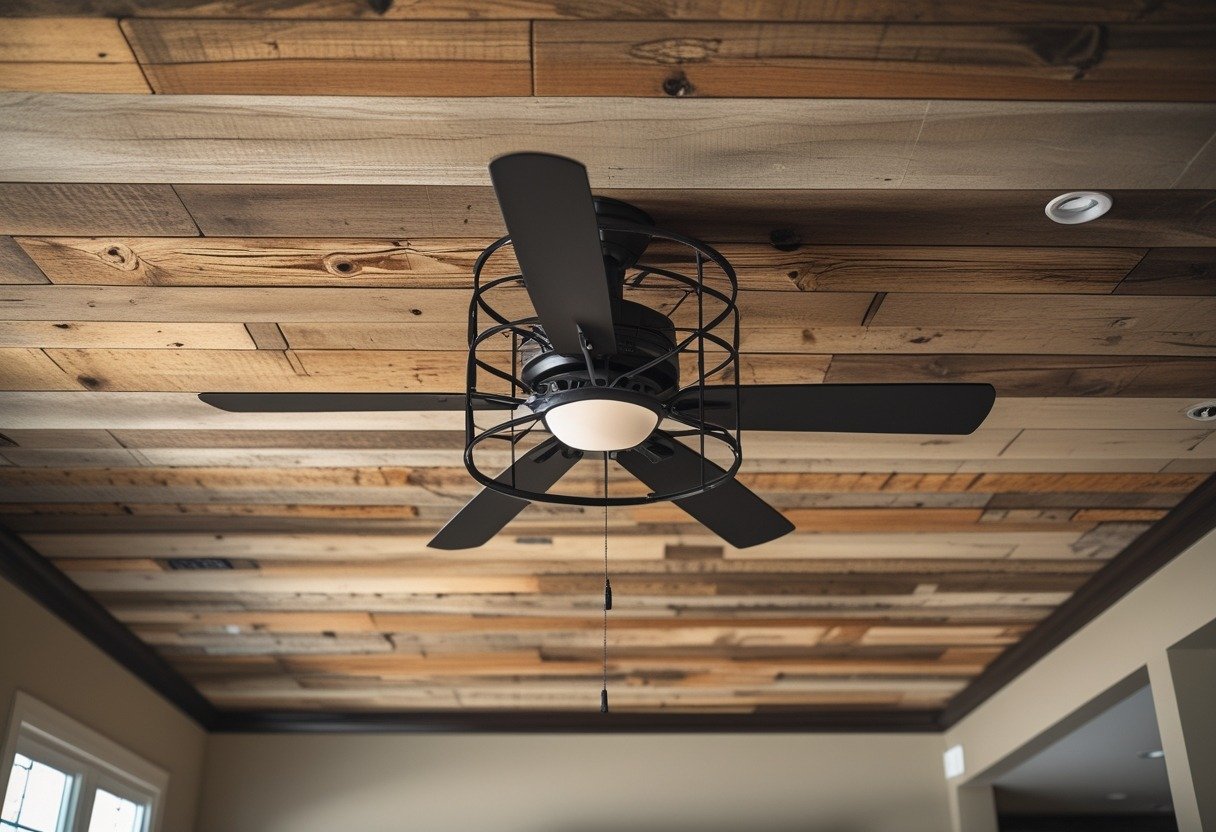
Pair reclaimed-wood planks with an industrial cage fan to add warm texture and honest character to your living room. The wood tones soften metal details, while the caged light keeps a rugged, vintage look.
Choose a fan with dimmable lighting and a quiet motor so your space stays comfortable without noise. Position the fan centrally to balance airflow and draw attention to the ceiling’s natural grain.
8) Popcorn-to-smooth ceiling conversion featuring a slim DC motor fan
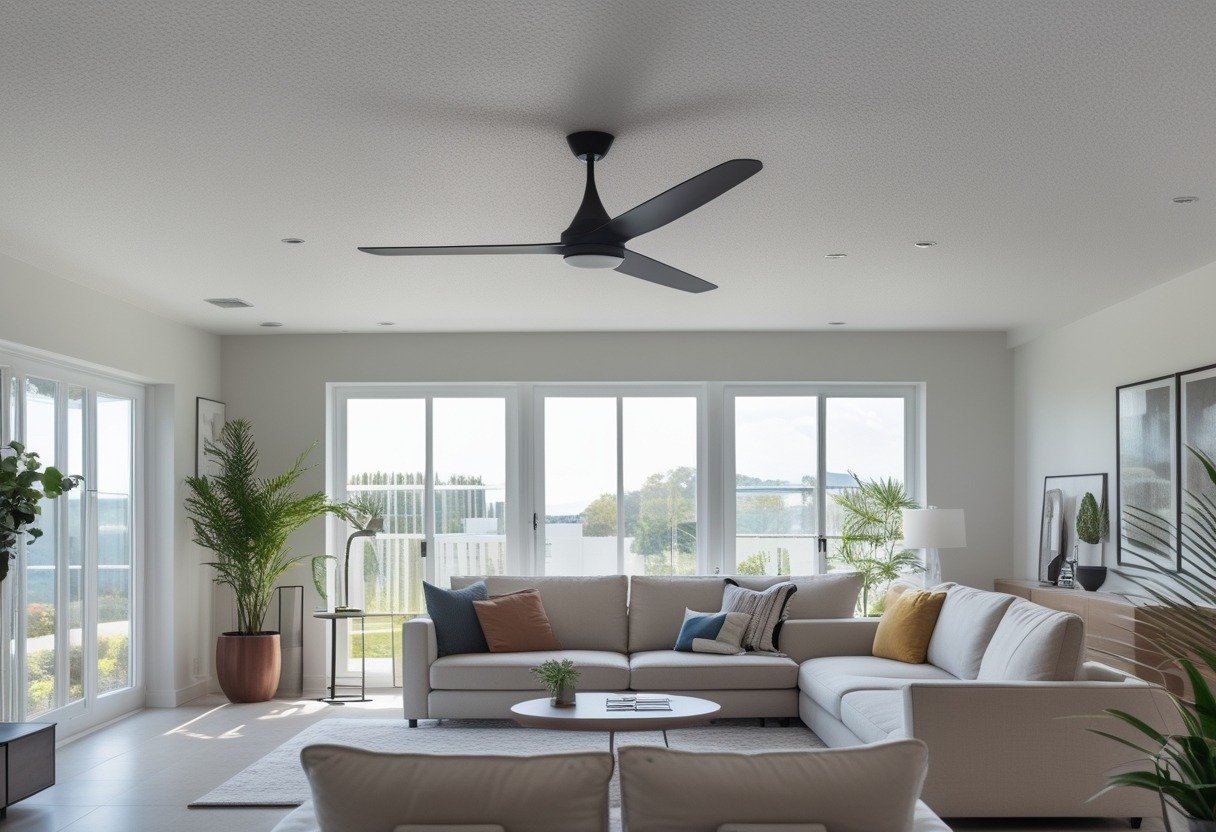
You can remove or cover popcorn texture to get a clean, modern look that pairs well with a slim DC motor fan. Smooth ceilings reflect light evenly and make the low-profile fan look intentional, not bulky.
A slim DC motor fan saves space and uses less energy than older motors. Choose a reversible model with quiet operation so your living room stays comfortable without noise.
9) Skylight-integrated ceiling with an angled aero blade fan
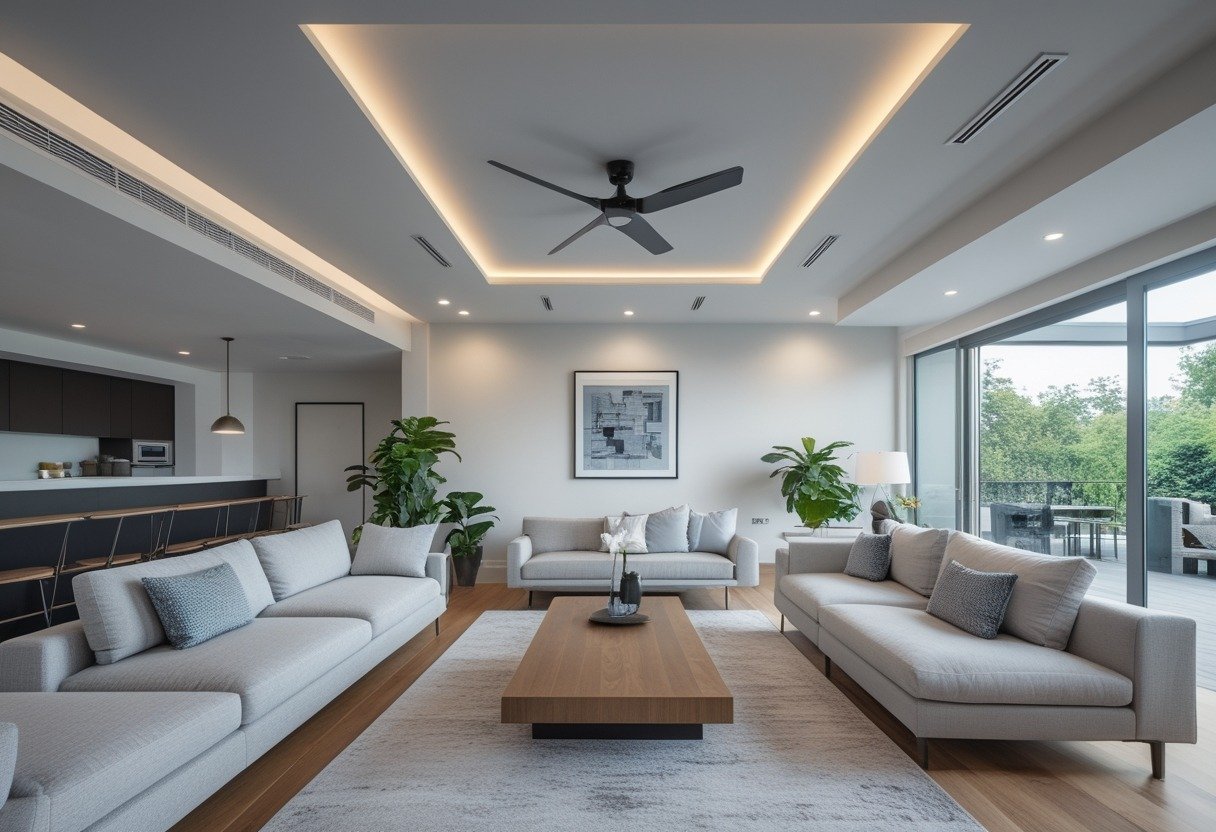
Place your fan near a skylight to boost daylight and airflow without blocking light.
An angled aero blade fan fits sloped ceilings and moves air efficiently while keeping a low profile.
Choose a model with a quiet motor and a dimmable LED to control light and noise.
Position the fan to push warm air down in winter and pull fresh air in summer for better comfort.
10) Painted mural ceiling with a discreet ultra-quiet fan
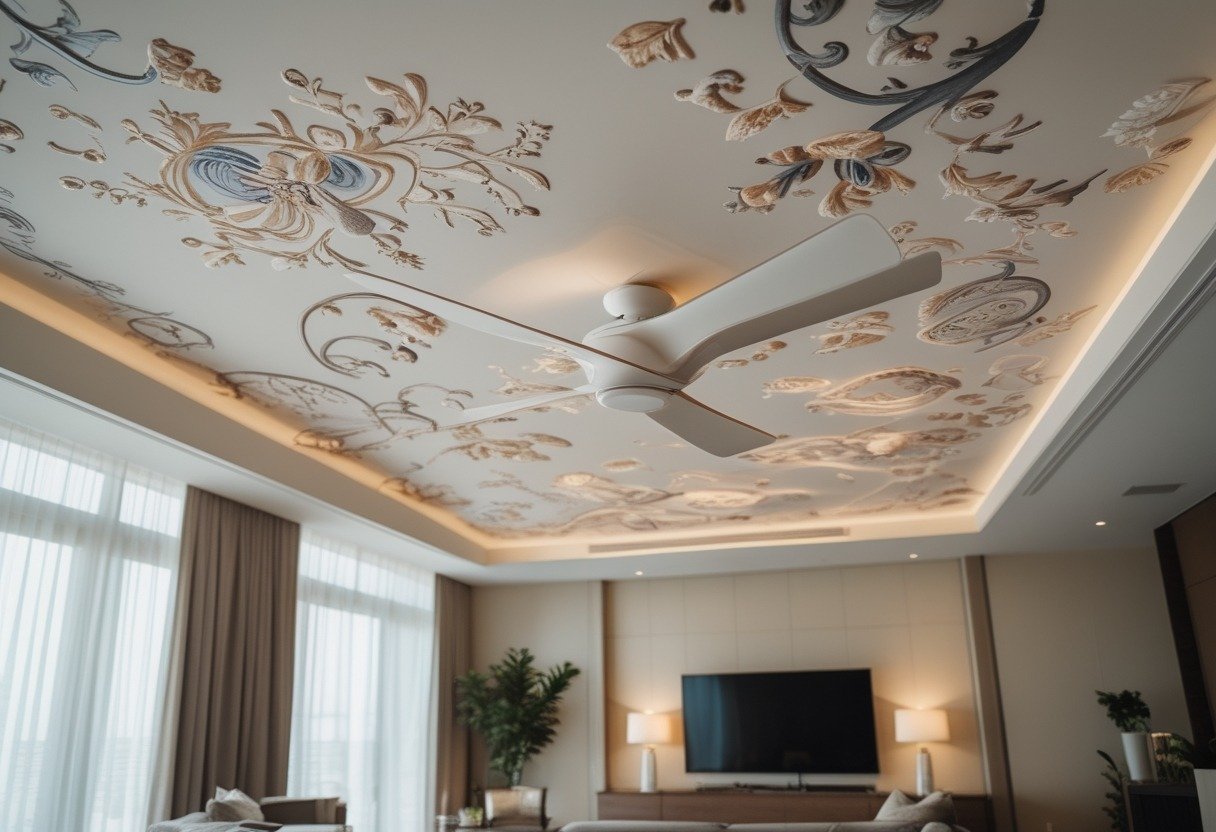
You can add a painted mural to your ceiling to create a focal point without crowding the room. Choose soft colors and simple shapes so the mural feels calm and fits with your decor.
Install an ultra-quiet fan with a low-profile motor to keep airflow without ruining the artwork. Position the fan so it blends into the mural and use a finish that matches the paint for a seamless look.
11) Metallic copper ceiling accent with a matching copper finish fan
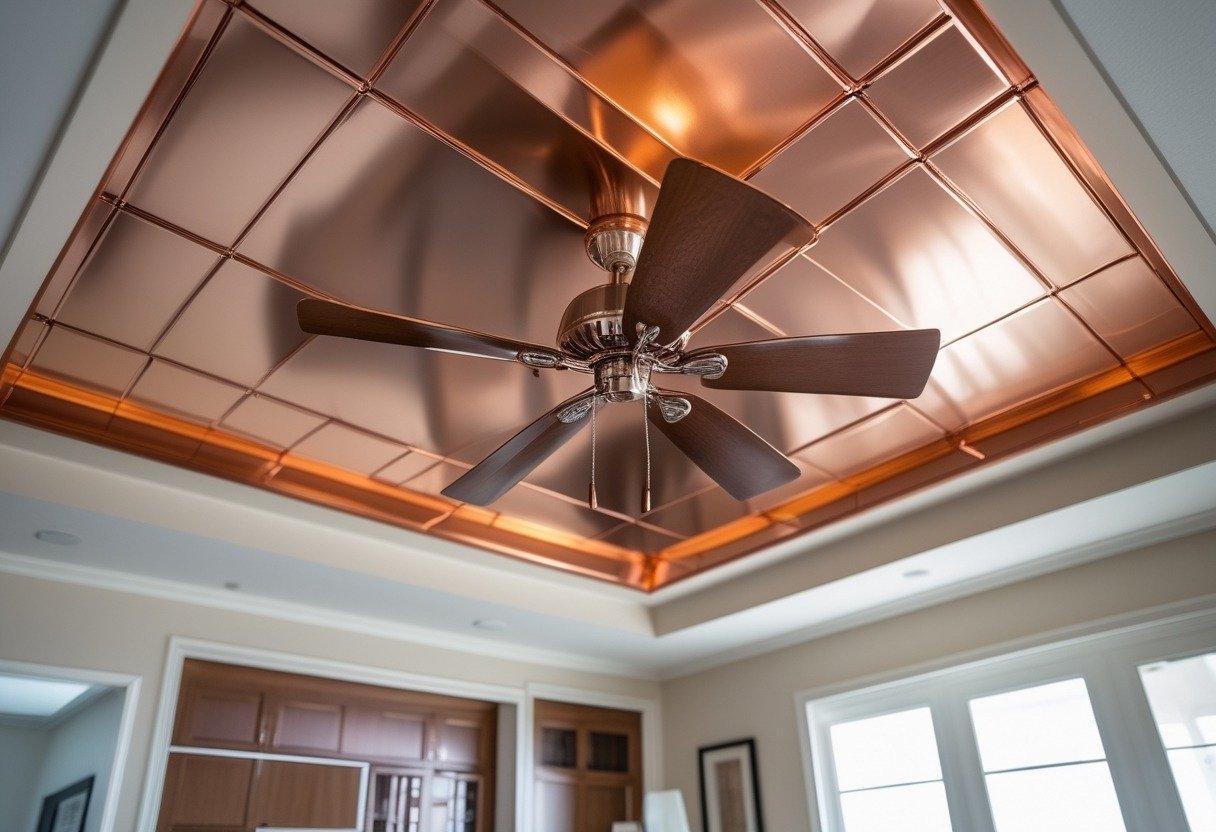
You can add a metallic copper ceiling panel to bring warmth and a subtle glow to your living room. A matching copper-finish fan ties the look together while helping air flow.
Choose a fan with copper housing or blades and a simple light kit for balance. Keep surrounding decor neutral so the copper becomes the focal point without overpowering the room.
12) Black-painted ceiling for a dramatic look with a matte black paddle fan
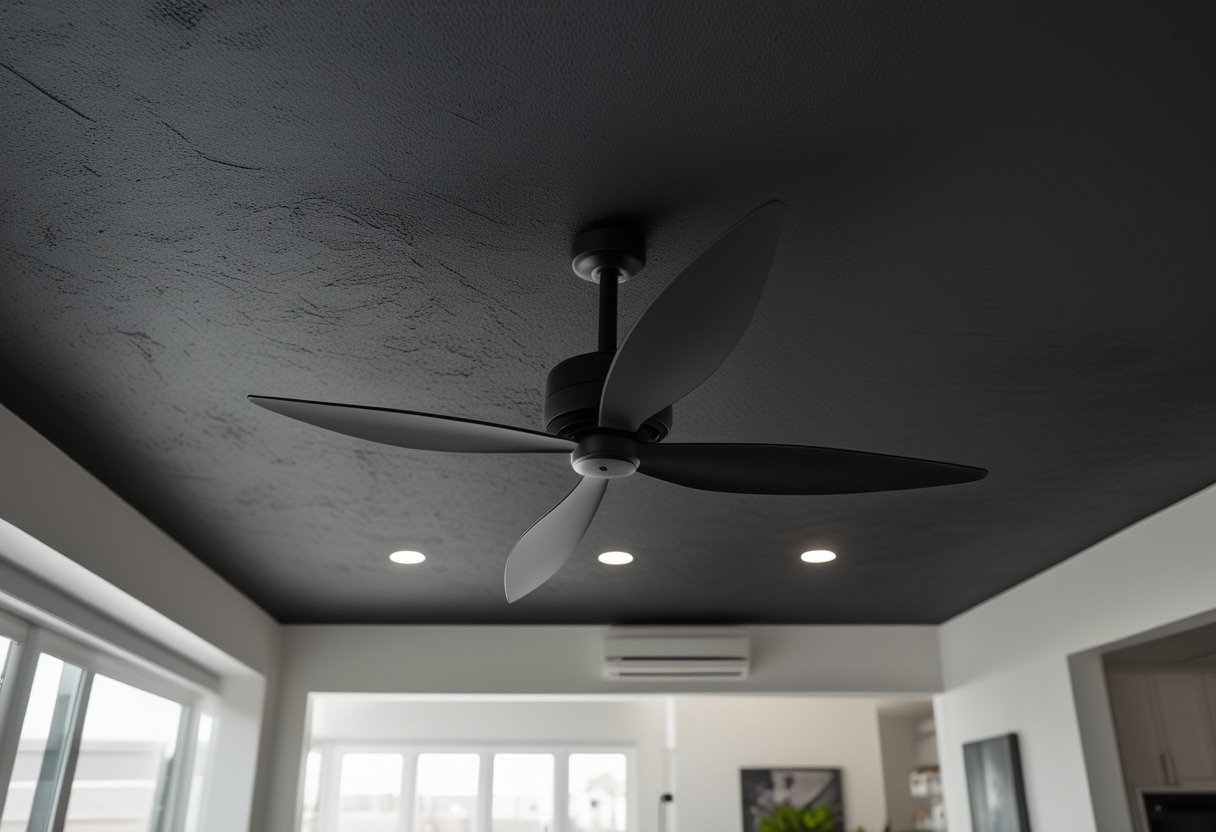
Paint your ceiling matte black to add depth without glare. This makes the room feel cozier and draws the eye upward.
Choose a matte black paddle fan to match the finish and keep the look cohesive. A simple fan silhouette reads clean against the dark plane.
Ensure good lighting so the ceiling doesn’t feel heavy. Track or wall lights can balance the darkness and highlight furnishings.
Key Considerations for Integrating Fans Into Ceiling Designs
Think about where light, airflow, and materials meet so the fan looks intentional and works well. Plan wiring, clearances, and finishes early to avoid costly changes later.
Lighting Coordination
Match the fan light output to your room tasks. For reading areas aim for 300–500 lumens per fixture; for general living spaces plan 150–300 lumens per square meter. Use LED modules inside the fan for long life and dimmable drivers if you want mood control.
Place ambient ceiling lights around the fan, not directly behind it, to avoid shadows. If the fan includes a light, position it centrally and balance with recessed or cove lighting along the perimeter. Use a separate switch or remote to control fan light independently.
Consider color temperature that suits your decor: 2700–3000K for warm, cozy rooms; 3500–4000K for neutral, bright spaces. Match fixture finishes and diffuser styles so the fan’s light blends with other sources.
Optimizing Airflow and Efficiency
Center the fan in the main seating area for even circulation. For rooms up to 12×12 ft use a 42–48 inch fan; larger rooms need 52–60 inch or two fans spaced at least 3–4 meters apart. Keep blades 8–10 inches below the ceiling for flush mounts when ceiling height is low.
Angle blades at 12–15 degrees and maintain a 7–9 ft clearance from floor to blade for safety. Choose an efficient DC motor for lower energy use and quieter operation. Consider fan speed settings and reversible motors to support both cooling and winter heat redistribution.
Avoid obstructing airflow with low beams, decorative soffits, or bulky recesses. If you place the fan in a tray or coffer, ensure vents or gaps let air move freely so performance doesn’t drop.
Material and Finish Selection
Pick blade materials that match humidity and room use. Solid wood or plywood works in dry living rooms; ABS or treated composites resist warping in humid spaces. Metal blades suit modern looks but can show dust more readily.
Coordinate finishes with other fixtures: brushed nickel, matte black, or oil-rubbed bronze often pair well with lighting and hardware. Use paints or stains that contrast the ceiling slightly so the fan reads as part of the design, not a hidden element.
Choose sealed bearings and corrosion-resistant hardware for long life. If you plan a painted or recessed ceiling panel, confirm the fan manufacturer’s mounting plate fits that depth and finish to avoid gaps or retrofit issues.
Impact of Ceiling Height on Design Choices
Ceiling height shapes how you place furniture, choose lighting, and pick a fan. It changes scale, comfort, and how much visual weight you need in the room.
Low Ceilings: Space-Saving Techniques
With ceilings under 8–9 feet, keep the room feeling open by using low-profile ceiling fans and flush or semi-flush light fixtures. Mount fans close to the ceiling to meet safety clearances and avoid bulky blades that crowd the room.
Use horizontal lines and lower shelves to draw the eye across the room instead of up. Choose furniture with exposed legs and lower backs to preserve sightlines. Paint the ceiling a shade lighter than the walls, and add narrow, horizontal trim to widen the space visually.
Consider recessed lighting and wall sconces to free up vertical space. Mirror placement across from windows amplifies light without adding height. Keep clutter minimal and scale accessories to the lower plane to avoid a cramped look.
High Ceilings: Accentuating Vertical Volume
For ceilings 10 feet and above, emphasize height with taller furniture, floor-to-ceiling curtains, and vertical paneling. Use a larger, multi-speed fan with longer blades and a downrod to position airflow within reach and maintain safe blade clearance.
Create layers of light: a central statement fixture or chandelier above the seating, plus wall sconces and floor lamps to balance brightness. Taller artwork and stacked shelving draw the eye upward and make the ceiling feel intentional, not empty.
Anchor the space with big rugs and substantial furniture to keep the room grounded. If heat rises, choose fans with reversible blades and higher CFM to move warm air down in winter and circulate cool air in summer.
