Remember when ceilings were just flat, white, and forgotten? Yeah, me neither – because I’ve been obsessing over ceiling designs since I accidentally looked up during a yoga class and realized the studio’s wavy ceiling was more interesting than my downward dog. That moment changed everything about how I see interior spaces.
Modern ceiling design has exploded beyond the boring popcorn texture your parents probably still have. We’re talking about architectural statements that transform rooms from basic boxes into Instagram-worthy spaces.
After renovating three homes and making every ceiling mistake possible (including that time I tried to DIY a coffered ceiling with zero woodworking skills), I’ve learned what actually works.
Let’s talk about 10 modern ceiling designs that’ll make your spaces feel fresh, current, and absolutely fabulous. Whether you’re working with a cramped apartment or a sprawling loft, these ideas will give you that “wow, look up!” factor every room deserves.
Floating Panel Ceiling
Floating panels changed the ceiling game completely. These suspended geometric shapes hover below your actual ceiling, creating depth and drama without major construction. I installed floating panels in my home office last year, and now every Zoom call starts with “What’s that cool thing above your head?”
Why Floating Panels Hit Different
The beauty of floating panels lies in their versatility. Mix different sizes, heights, and angles to create a custom constellation that fits your space perfectly. They work especially well in modern minimalist interiors where you want interest without clutter.
What makes floating panels amazing:
- Acoustic benefits that reduce echo
- Hide ugly ceiling imperfections
- Integrate lighting seamlessly
- Create zones in open-plan spaces
The installation isn’t rocket science either. Most panels use cable suspension systems or mounting brackets that any confident DIYer can handle. Just make sure you hit those ceiling joists – nobody wants a panel crashing down during dinner.
Design Strategies That Work
Start with odd numbers – three or five panels look more intentional than even groupings. Vary the heights by 4-6 inches between panels for dynamic visual flow. I learned this after my first attempt looked like a tic-tac-toe board floating overhead.
Color choice matters here. Matching your wall color creates subtle sophistication, while contrasting colors make bold statements. My favorite trick? Paint the backs of panels a different color for surprise pops when viewed from different angles.
Geometric Pattern Ceiling
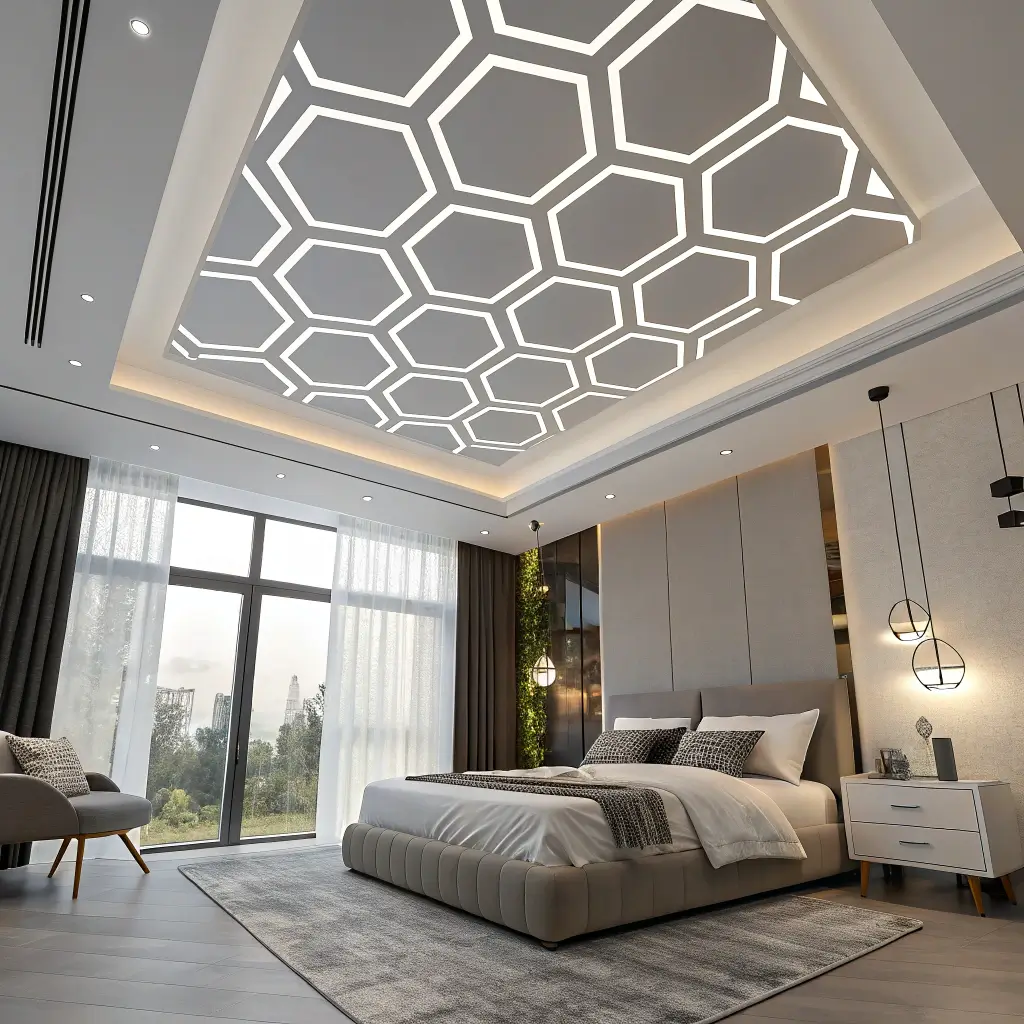
Geometric ceilings turn math into art. Whether you go for hexagons, triangles, or abstract angular designs, geometric patterns add modern edge that plain ceilings could never achieve. My living room’s diagonal stripe pattern gets more compliments than my actual furniture.
Creating Patterns Without Going Crazy
The key to geometric success? Scale and proportion matter more than complexity. Large-scale patterns read as intentional design choices, while tiny repetitive patterns can trigger anyone’s latent trypophobia.
Geometric approaches that nail it:
- Linear patterns for room elongation
- Diamond shapes for Art Deco vibes
- Asymmetric designs for contemporary edge
- Interlocking shapes for visual flow
Here’s what nobody tells you: test your pattern with painter’s tape first. What looks amazing on paper might feel overwhelming at ceiling scale. Trust me, removing tape beats repainting everything.
Color and Contrast Considerations
Modern geometric ceilings work best with restrained color palettes. Think tone-on-tone greys, or white with one bold accent color. Save the rainbow for your kid’s playroom – sophisticated spaces need edited choices.
My biggest geometric ceiling fail? Trying to incorporate five colors. The result looked like a geometry textbook exploded. Stick to three colors maximum, including white.
Wooden Beam Accent Ceiling
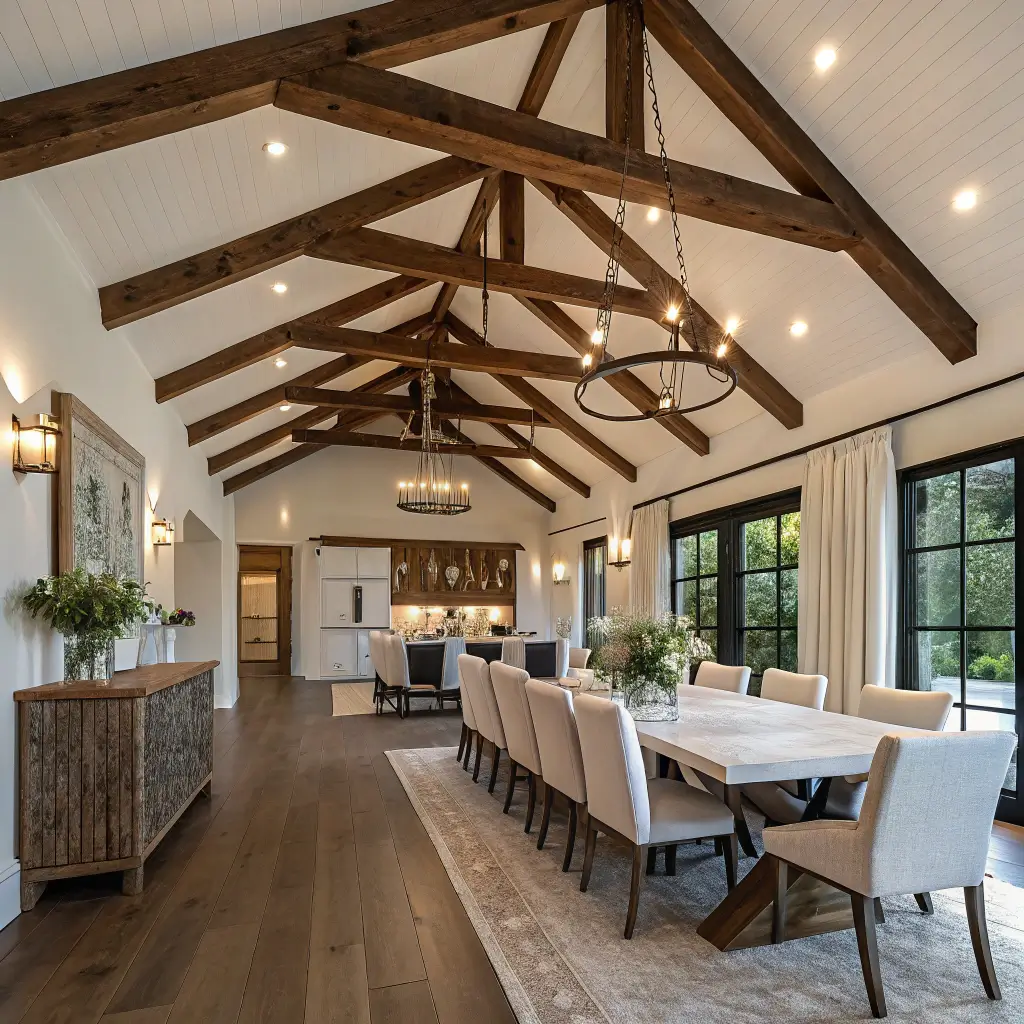
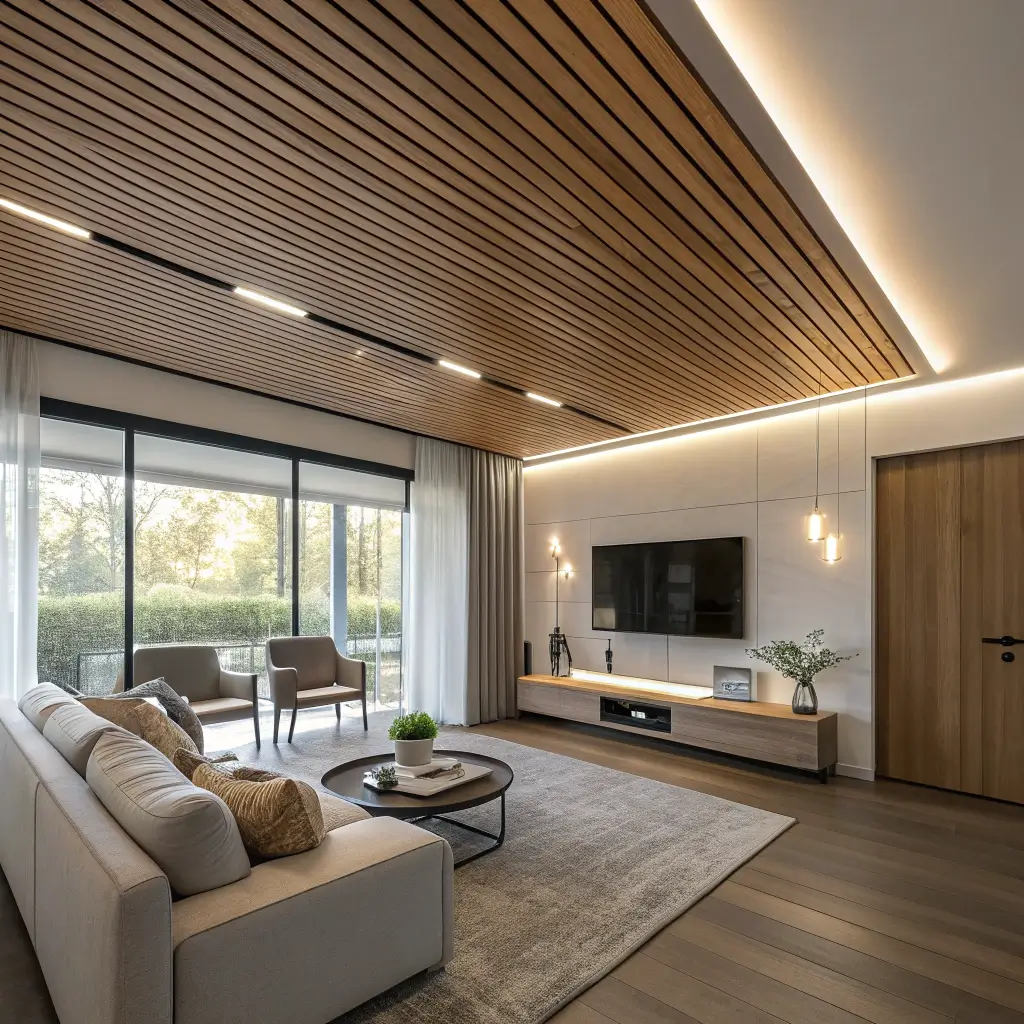
Modern wooden beams aren’t your grandma’s heavy oak logs. Today’s sleek beam designs add warmth and structure without the cabin-in-the-woods vibe (unless that’s your thing). My kitchen’s slim walnut beams transformed it from sterile to stunning.
Modern Beam Aesthetics
Forget chunky rustic beams – modern design calls for clean lines and refined proportions. Think 3-4 inch wide beams with sharp edges, not rounded barn wood. The spacing matters too: wider gaps between beams keep things contemporary.
Modern beam strategies:
- Parallel beams for directional emphasis
- Grid patterns for structured looks
- Single statement beam as focal point
- Mixed materials (wood + metal) for industrial edge
The wood tone you choose sets the entire mood. Light woods like ash or maple maintain airiness, while dark walnut or ebony creates drama. Just remember – dark beams in low-ceiling rooms equals instant cave vibes.
Installation Reality Check
Real wood beams require serious structural consideration. But hollow faux beams give you 95% of the look with 5% of the hassle. Modern versions look so realistic, I’ve had contractors ask me where I sourced my “reclaimed” beams.
The mounting process matters. Use proper blocking between ceiling joists for secure installation. Those YouTube videos making it look easy? They skip the part where improper mounting leads to sagging beams.
Also Read: 10 Stylish False Ceiling Design Ideas for Small Spaces
LED Strip Modern Ceiling
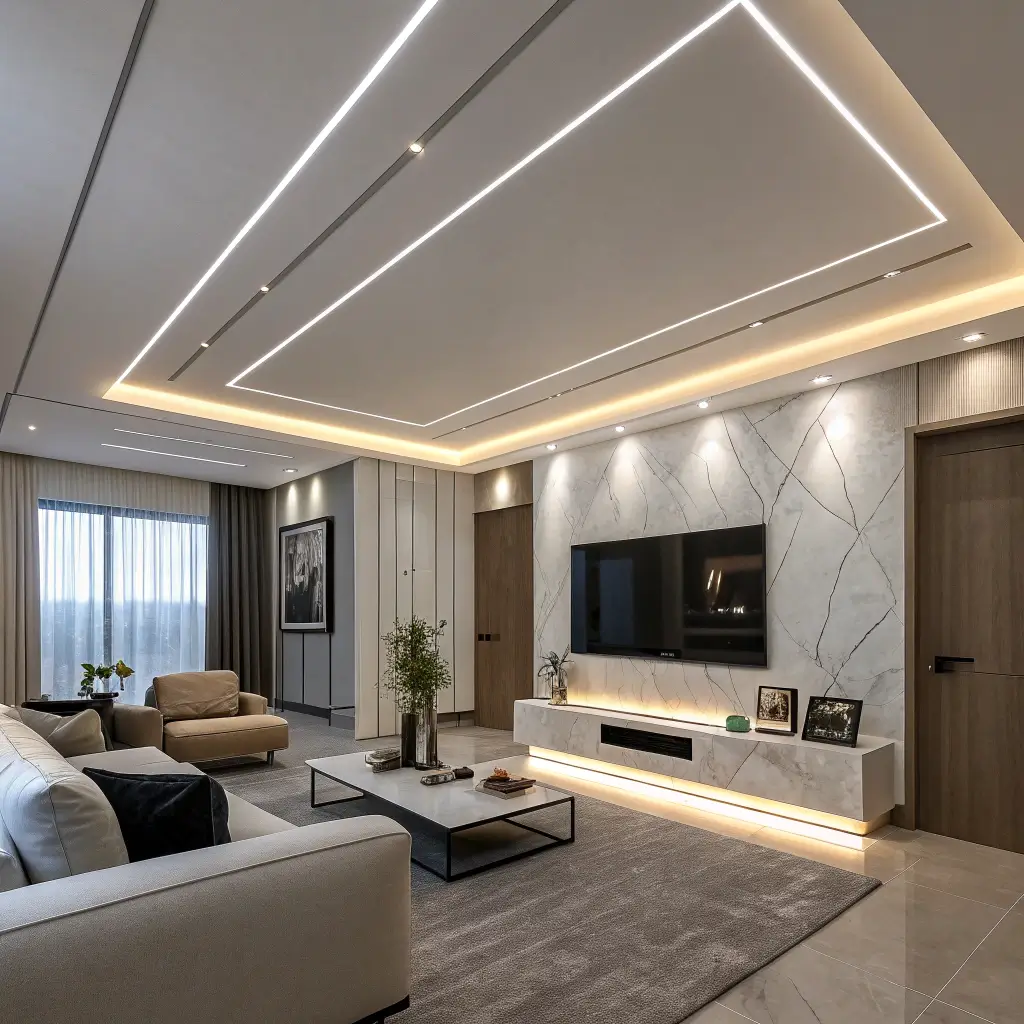
LED strips revolutionized ceiling lighting, and honestly, I can’t imagine designing without them now. Hidden LED strips create ambient lighting that makes every room feel like a high-end hotel. My bedroom’s perimeter LED setup cost less than a designer lamp but delivers way more impact.
Strategic LED Placement
The secret to professional-looking LED ceilings? Proper placement and quality components. Cheap LED strips create dotted hotspots instead of smooth light washes. Spend the extra money on high-density strips and aluminum channels.
LED ceiling techniques that work:
- Cove lighting for soft ambiance
- Recessed channels for clean lines
- Color-changing RGB for mood flexibility
- Daylight strips for task areas
Temperature matters more than you think. 2700K-3000K creates warmth for living spaces, while 4000K-5000K works for kitchens and offices. Mixed temperatures in one room? That’s a recipe for visual chaos.
Technical Tips Nobody Mentions
Here’s what the Instagram posts don’t show: LED strips need proper drivers and controllers. Underpowered drivers cause flickering, while cheap controllers create annoying delays. Budget for quality components, not just the strips.
My game-changer discovery? Diffusion materials eliminate dot patterns completely. A simple acrylic cover or specialized diffusion tape transforms amateur installations into professional-looking ceilings.
Coffered Minimalist Ceiling
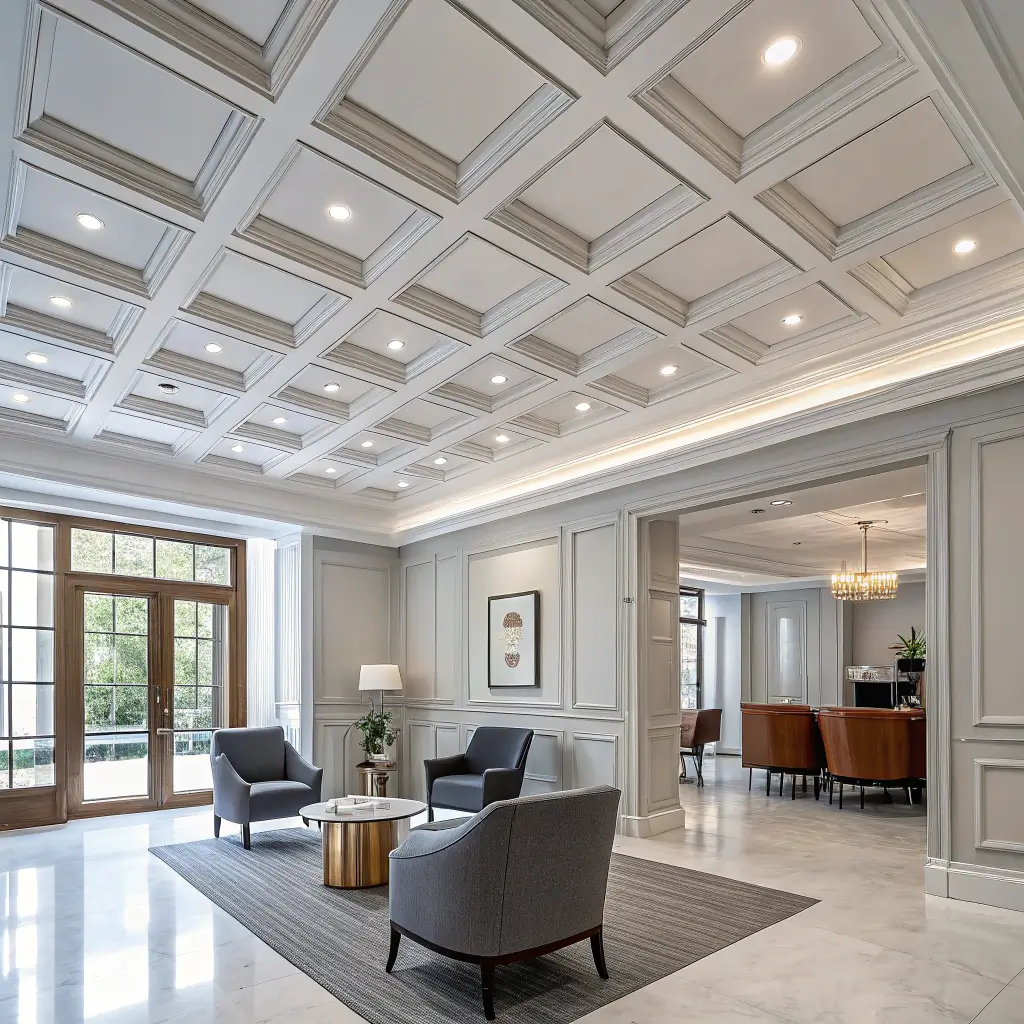
Modern coffered ceilings stripped away the ornate moldings and kept the good stuff. Clean-lined recessed panels add architectural interest without overwhelming contemporary spaces. My dining room’s minimalist coffers make it feel like a gallery – perfect for showing off art.
Minimalist Coffer Design
Traditional coffered ceilings scream “mansion,” but modern versions whisper “sophisticated.” Shallow recesses with simple trim create subtle dimension that enhances rather than dominates. Think iPhone design philosophy applied to ceilings.
Elements of modern coffered design:
- Consistent grid patterns for order
- Painted (not stained) finish for unity
- Integrated lighting in recesses
- Larger panel sizes for contemporary scale
The proportions make or break minimalist coffers. Panels should be at least 2×2 feet – smaller looks busy and traditional. I learned this after my first attempt looked like a waffle iron attached to my ceiling.
Budget-Friendly Alternatives
Real coffered ceilings require serious carpentry skills and cash. But faux coffered systems using lightweight molding deliver similar results for fraction of the cost. FYI, nobody’s getting on a ladder to check if your coffers are structurally integrated.
Paint everything the same color initially. You can always add contrast later, but starting neutral lets you live with the pattern before committing to bold choices.
Metallic Finish Ceiling
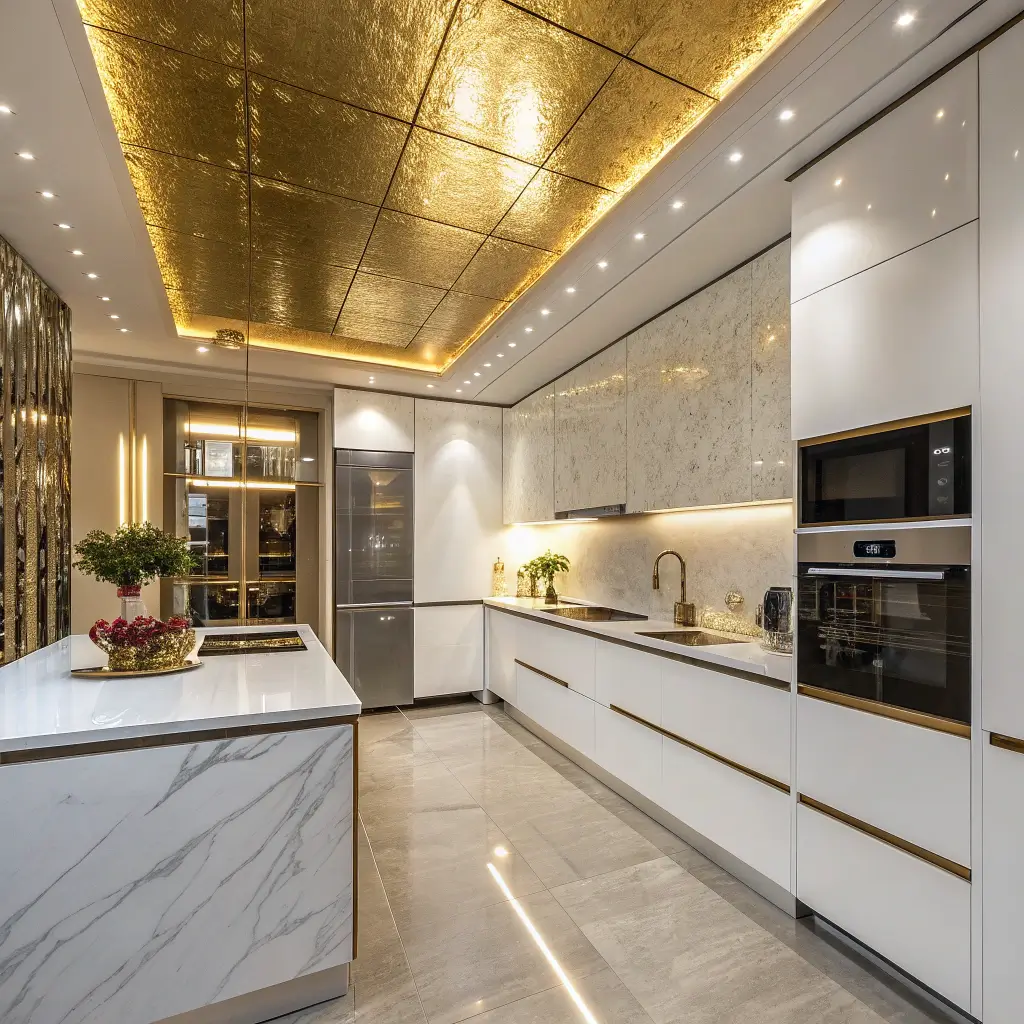
Metallic ceilings sound excessive until you see one done right. Subtle metallic finishes reflect light in ways that paint never could, creating depth and movement throughout the day. My powder room’s bronze ceiling makes a 50-square-foot space feel luxurious.
Choosing Your Metal Mood
Different metallics create different vibes entirely. Warm metals like copper and brass add coziness, while cool metals like pewter and silver feel sleek. Rose gold? Still trendy but proceed with caution – it might date quickly.
Metallic application methods:
- Metallic paint for DIY options
- Metal-look wallpaper for easy install
- Actual metal tiles for authenticity
- Venetian plaster with metallic wax
The finish matters as much as the color. Brushed or satin finishes hide imperfections while providing sophisticated shimmer. High-gloss metallics show every flaw and create glare – learned that lesson the hard way :/
Application Techniques That Actually Work
Metallic paint requires technique to avoid streaky disasters. Work in sections with consistent strokes, and never stop mid-wall. Having a partner helps – one person maintains the wet edge while the other applies paint.
My secret weapon? Metallic glaze over regular paint gives more control than straight metallic paint. Build thin layers until you achieve your desired shimmer level.
Also Read: 15 Fabulous Ceiling Design Ideas to Refresh Your Home
Recessed Tray Ceiling
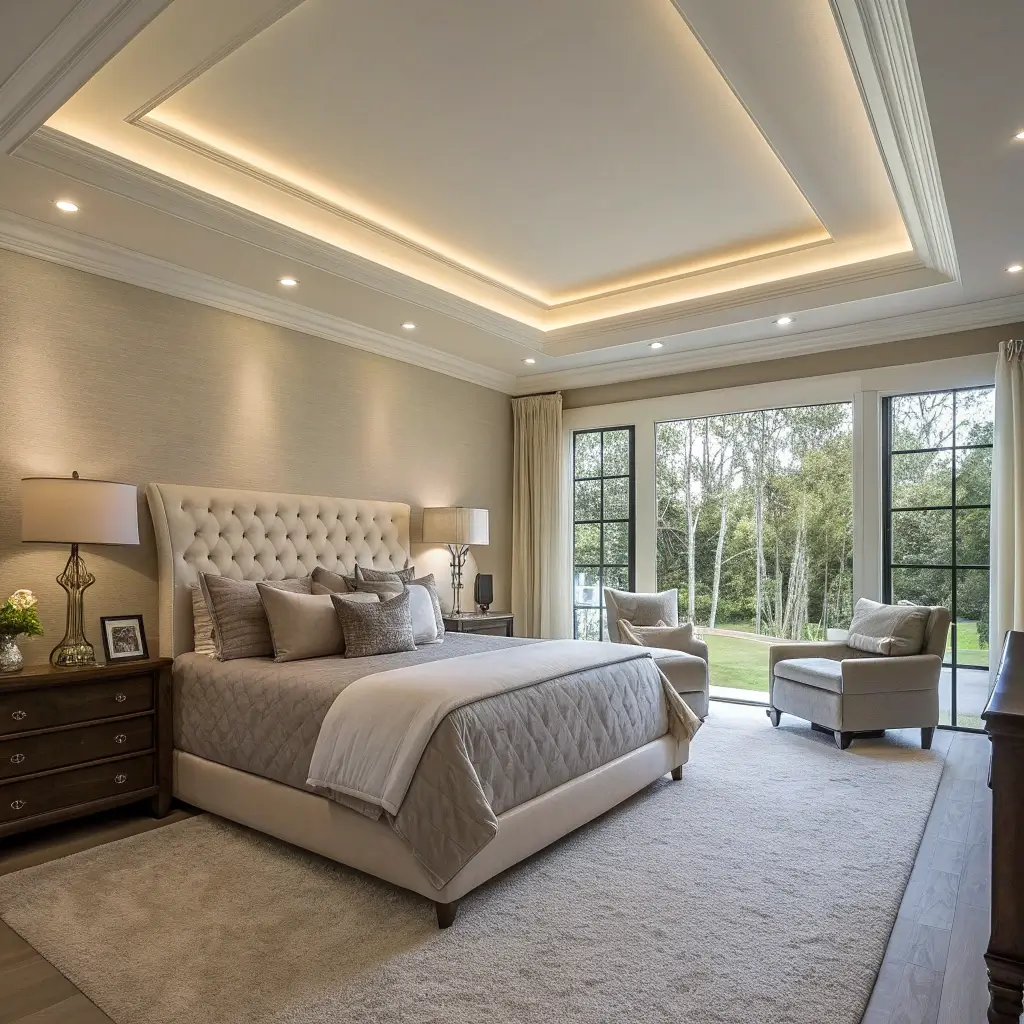
Tray ceilings create architectural interest through elevation changes without eating up headroom. Modern versions skip the ornate crown molding for clean transitions that feel current. My master bedroom’s tray ceiling makes the space feel hotel-suite fancy.
Modern Tray Design Elements
Contemporary tray ceilings embrace simplicity. Clean 90-degree angles beat elaborate stepped designs every time. The recession depth matters – 6-12 inches creates impact without making rooms feel shorter.
Tray ceiling enhancements:
- Perimeter LED lighting for ambiance
- Contrasting paint in recessed area
- Wallpaper or texture in the tray
- Integrated ventilation or speakers
The lighting strategy makes everything. Hidden LED strips in the perimeter create that floating ceiling effect everyone loves. Skip the visible rope lights – this isn’t a dorm room.
Color Strategy for Impact
Most people paint tray ceilings white and call it done. But painting the recessed area darker creates incredible depth perception. My navy blue tray against white perimeter makes standard 9-foot ceilings feel cathedral-like.
Just remember: dark colors in the tray work best with abundant natural or artificial light. Otherwise, you’ll create a black hole effect that sucks energy from the room.
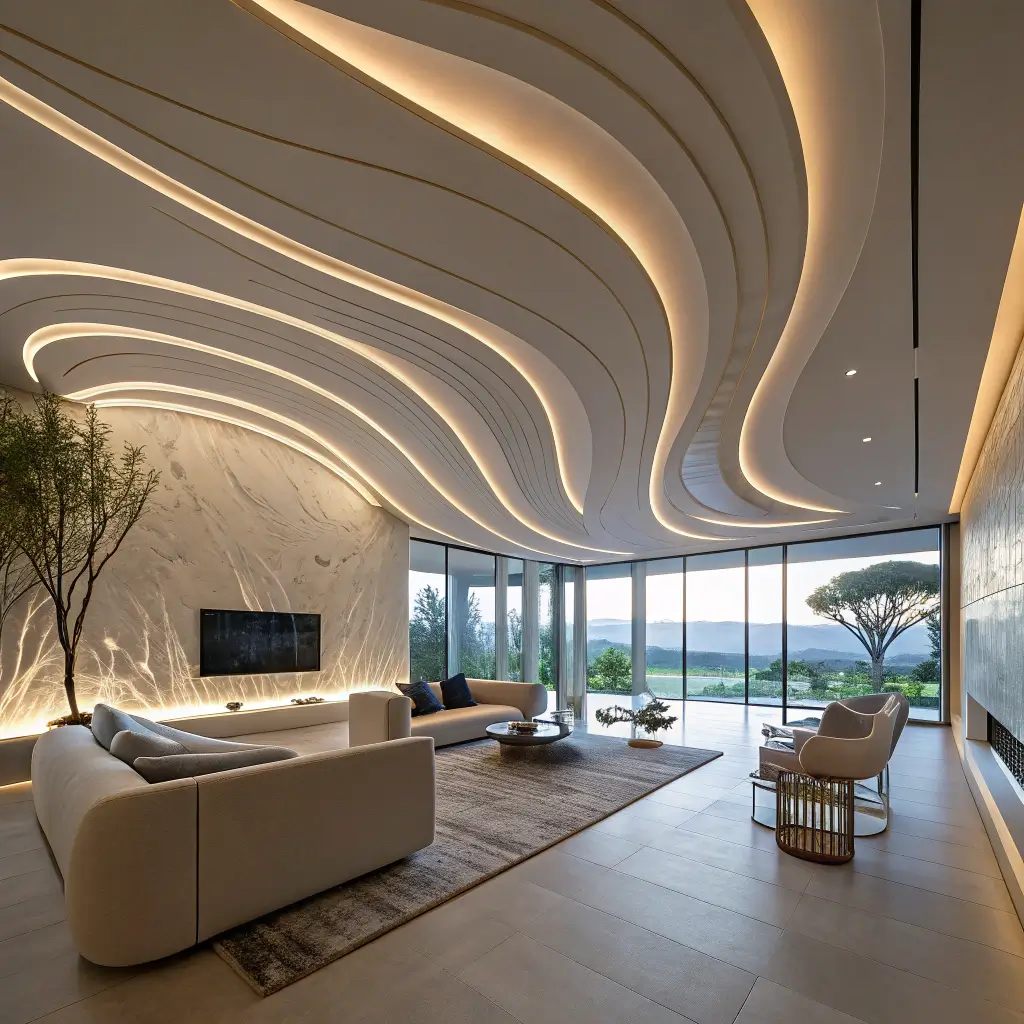
Curved Wave Ceiling Design
Curved ceilings bring organic flow to boxy rooms. Undulating wave designs soften harsh angles and create movement that flat ceilings never could. After installing a subtle wave ceiling in my hallway, that boring passage became a destination.
Creating Curves in Modern Spaces
Modern curved ceilings aren’t about baroque swirls. Think gentle undulations or single dramatic curves that guide the eye without overwhelming. The curve radius matters – too tight feels forced, too gentle goes unnoticed.
Curved ceiling approaches:
- Single wave for subtle movement
- Multiple waves for rhythm
- Curved corners to soften rooms
- Barrel vault for classic modernism
The construction method determines your options. Flexible drywall or formed panels make curves possible without custom plastering. Yes, it costs more than flat ceilings, but the impact justifies the investment.
Technical Considerations
Curved ceilings require experienced installers. The framing must support the curve perfectly, or you’ll get lumpy waves instead of smooth flows. This isn’t the place to test your DIY limits.
Lighting curved ceilings needs strategy too. Linear LED strips following the curves emphasize the shape, while recessed spots can create unwanted shadows. Plan lighting during design, not after installation.
Textured 3D Wall-to-Ceiling
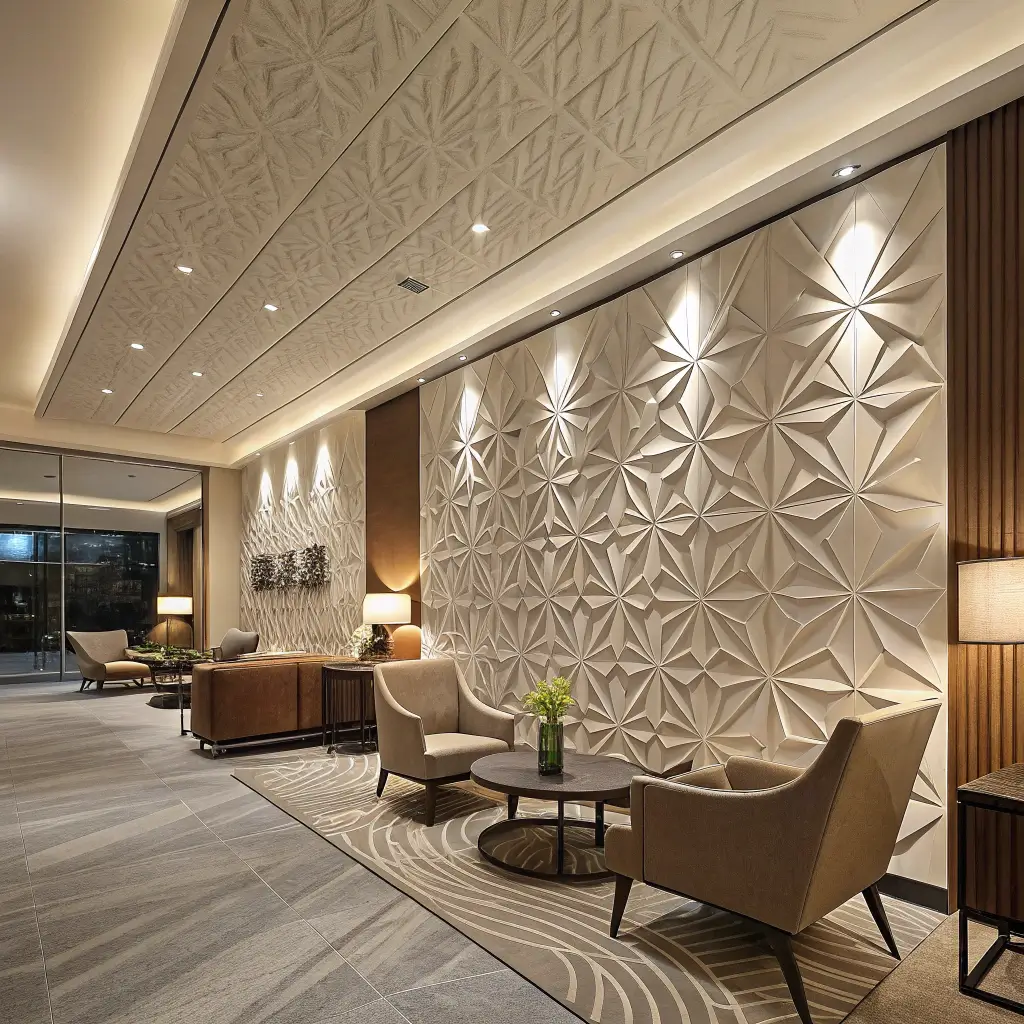
Blurring the boundary between walls and ceiling creates seamless sculptural spaces that feel absolutely current. My office’s 3D geometric pattern flowing from wall to ceiling makes the room feel like modern art you can work inside.
Seamless Transition Techniques
The key to wall-to-ceiling textures? Consistent pattern scale and flow. Abrupt transitions look accidental, while gradual evolution feels intentional. Start bold on one wall and let the pattern fade as it crosses the ceiling.
3D texture options that rock:
- Parametric designs for tech vibes
- Organic patterns for natural flow
- Geometric tiles for structured look
- Wave patterns for movement
Material choice affects everything. Lightweight foam or gypsum tiles install easier than you’d think, while maintaining dramatic dimensional impact. Heavy materials need serious structural support – not ideal for most homes.
Installation and Integration
Wall-to-ceiling installations require meticulous planning. Map your pattern completely before starting – fixing mistakes means starting over. Trust me, I learned this during my first attempt at a continuous hexagon pattern.
The corner transition is crucial. Rounded corners or coved transitions work better than sharp angles for continuous patterns. Some designs actually look better with defined breaks – know your pattern’s strengths.
Also Read: 15 Pretty Pink Christmas Bedroom Ideas Sweet Decor
Glass or Acrylic Feature Ceiling
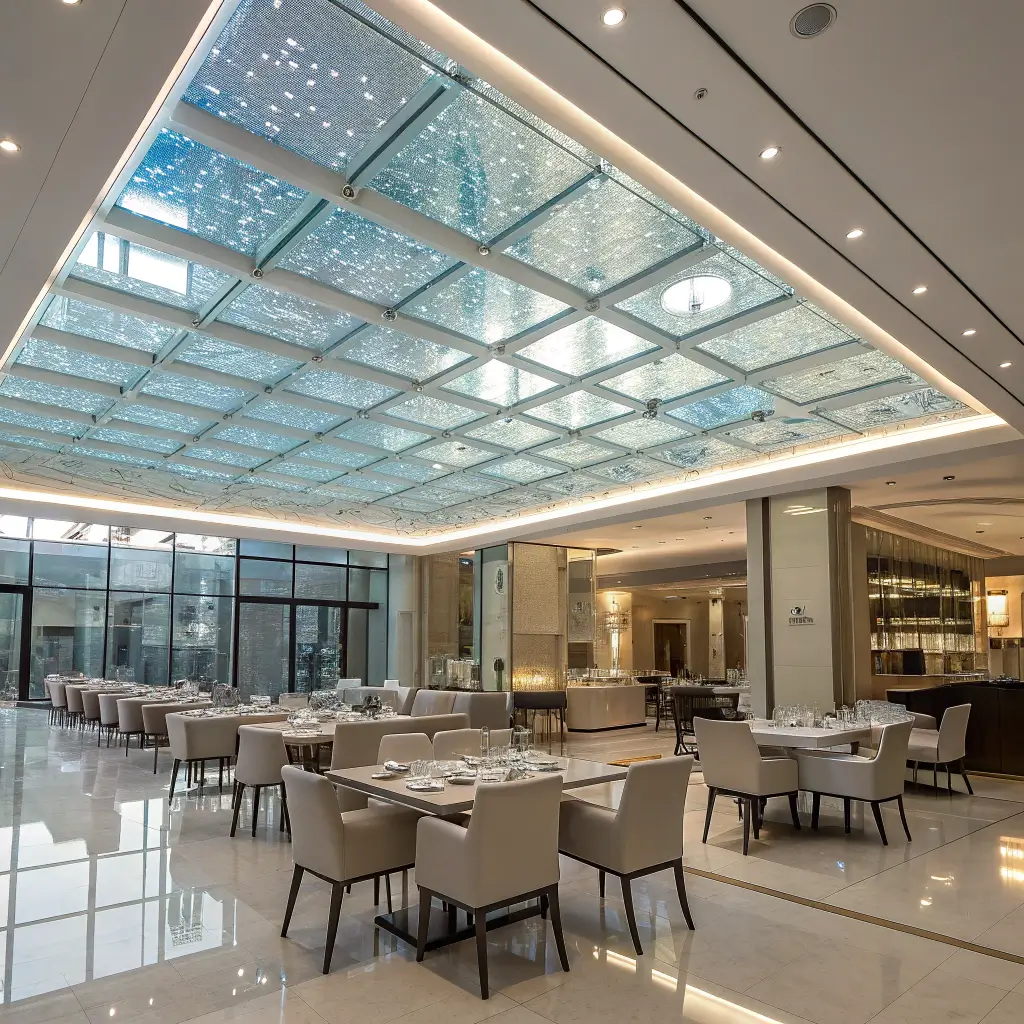
Transparent and translucent ceilings bring light and airiness that solid materials can’t match. My sunroom’s frosted acrylic panels filter harsh sun while maintaining brightness – way better than the old solid ceiling that made it feel like a cave.
Modern Transparency Options
Glass ceilings aren’t just for conservatories anymore. Modern safety glass and acrylic options make transparent ceilings feasible for any room. The key is choosing the right transparency level for function and privacy.
Glass and acrylic ceiling applications:
- Frosted panels for diffused light
- Clear sections for sky views
- Colored panels for mood lighting
- Textured glass for pattern play
Safety comes first with glass ceilings. Laminated or tempered glass is non-negotiable – regular glass is basically a disaster waiting to happen. Acrylic offers similar aesthetics with less weight and risk.
Lighting Through Transparency
Transparent ceilings change the lighting game entirely. Natural light during day, artificial at night – plan for both scenarios. My favorite setup uses LED panels above frosted acrylic for even, adjustable illumination.
Consider maintenance before committing. Glass shows every fingerprint and dust speck, while acrylic scratches but cleans easier. IMO, frosted or textured options hide imperfections better than clear.
Making Your Modern Ceiling Vision Reality
So there you have it – ten modern ceiling designs that’ll transform any space from forgettable to fabulous. The ceiling you choose should complement your lifestyle, not just your Pinterest board 🙂
Remember, modern design prioritizes function alongside form. That stunning curved ceiling won’t feel so fabulous if it amplifies every sound. The metallic finish loses appeal when it shows every imperfection. Choose designs that enhance how you actually live in the space.
My advice? Start with one room and commit fully. Half-hearted ceiling updates look worse than leaving them plain. Pick the design that solves a problem – whether that’s adding light, creating zones, or simply making your space more interesting. Once you nail that first ceiling, you’ll see every room’s potential differently.
The best part about modern ceiling design? Technology keeps making installation easier and more affordable. What required master craftsmen five years ago now comes in DIY-friendly systems. Sure, some designs still need professionals, but more options exist for ambitious homeowners than ever before.
Your ceiling is waiting to become more than just a flat surface overhead. Pick your favorite idea, plan carefully, and get ready for everyone to start looking up when they enter your space. Because honestly, life’s too short for boring ceilings when these amazing options exist right above our heads!