
Remember when your grandparents’ furniture suddenly became cool again? Yeah, that happened to me about five years ago when I walked into a friend’s apartment and realized their “old-school” living room looked better than my supposedly modern setup.
Mid-century modern design has this magical ability to feel both nostalgic and cutting-edge at the same time—and honestly, that’s exactly why we can’t get enough of it.
If you’re sitting there wondering how to transform your living room into something Don Draper would approve of (minus the cigarette smoke, please), you’ve hit the jackpot.
I’ve spent way too much time obsessing over mid-century modern spaces, and I’m about to share 15 fresh ideas that actually work in real homes—not just those impossibly perfect Instagram posts.
Minimalist Mid-Century Modern Lounge
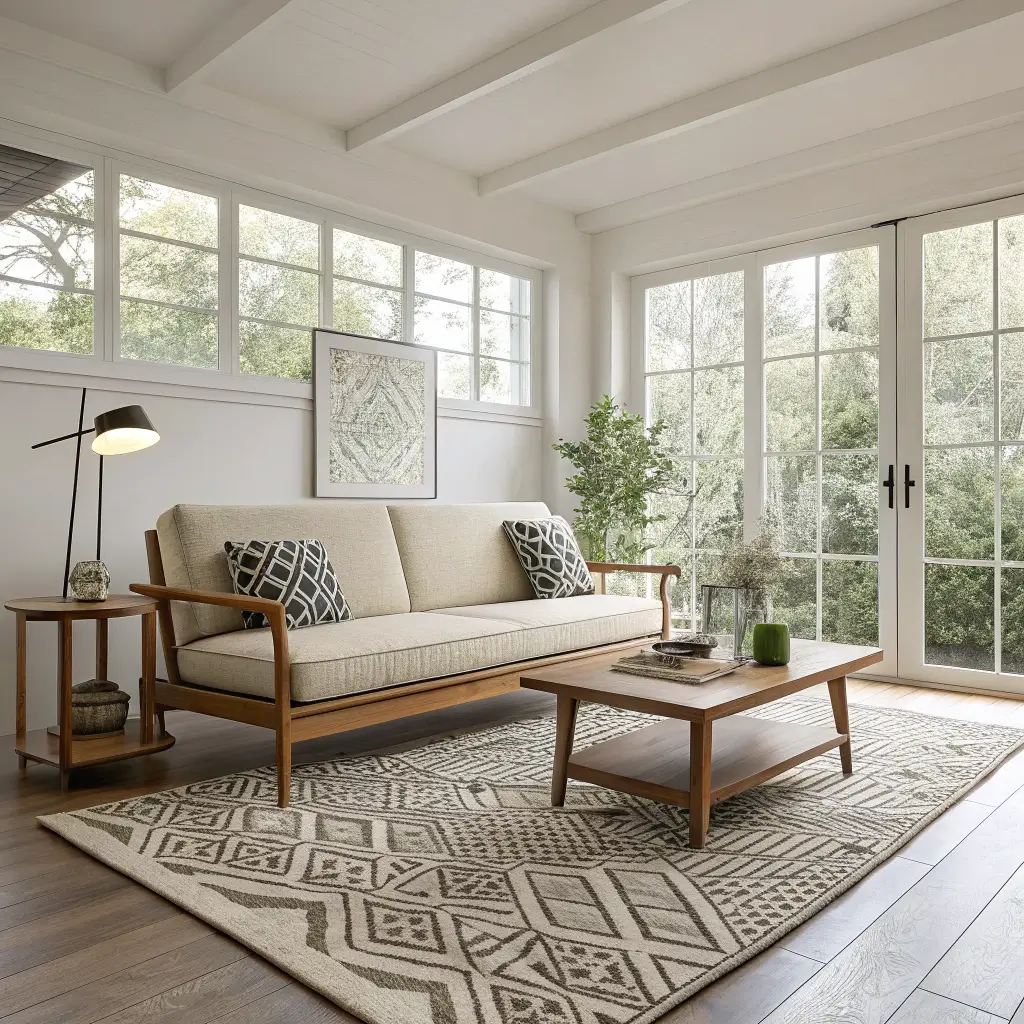
Let’s kick things off with the approach that makes everything else possible: embracing minimalism within the mid-century framework. You know that feeling when you walk into a space and instantly feel calmer? That’s what we’re going for here.
The secret sauce combines clean lines with purposeful furniture placement. I learned this the hard way after cramming too much furniture into my first apartment—turns out, less really is more. Pick one stunning sofa with those signature tapered legs, add a single statement coffee table (walnut or teak work beautifully), and call it a day.
Key Elements for Your Minimalist Setup
• One hero piece of furniture that draws the eye
• Neutral color palette with maybe one pop of mustard or orange
• Open floor space that actually lets you breathe
• Hidden storage solutions (because clutter kills the vibe instantly)
The beauty of this approach? You save money by buying fewer, better pieces. Plus, cleaning takes about five minutes—win-win situation if you ask me.
Retro Chic Living Room Makeover
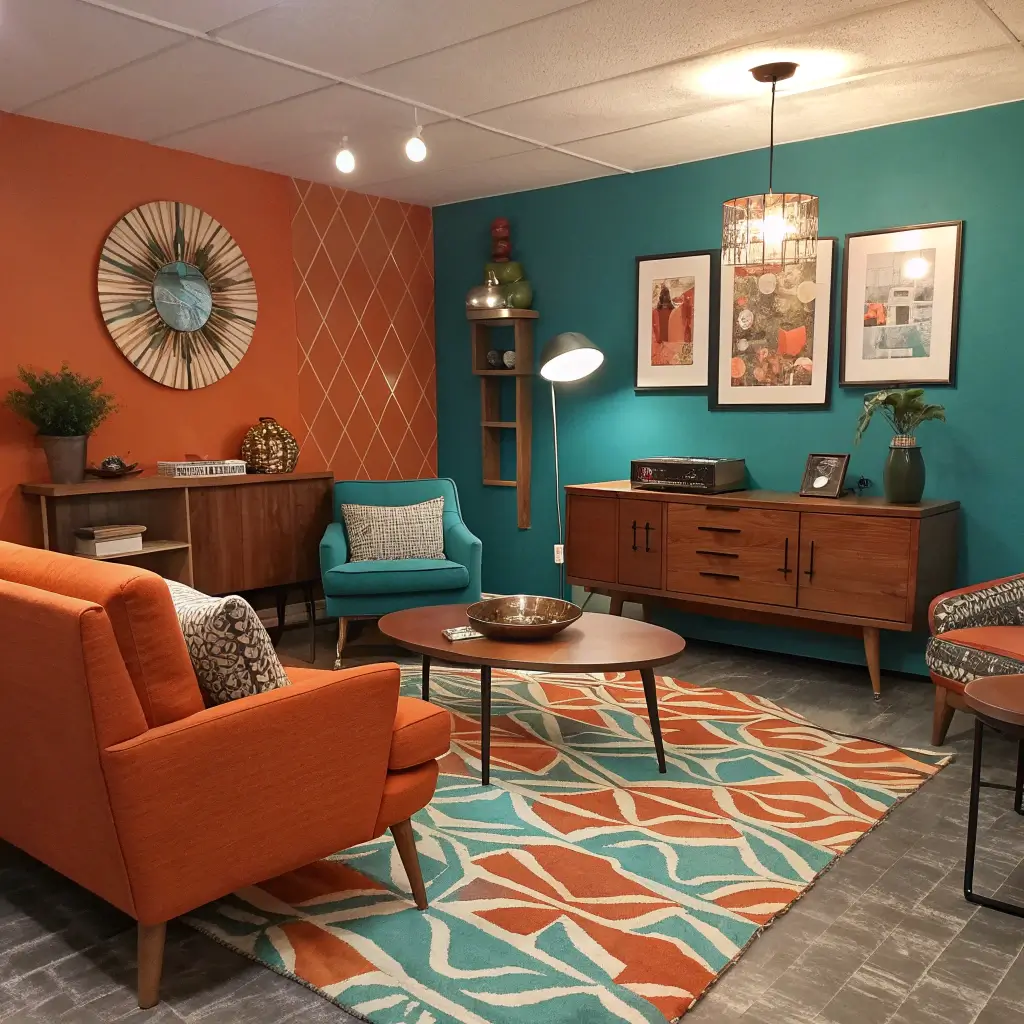
Who says retro has to mean kitschy? The modern take on retro chic brings all the fun without the plastic slipcovers. Think sophisticated throwback vibes that make people ask, “Where did you find that?”
Start with a color palette that screams 1960s but whispers 2024. I’m talking burnt orange, avocado green, and golden yellows—but use them sparingly. Paint one accent wall or grab some throw pillows in these shades. The trick is balancing these bold choices with plenty of neutral territory.
Your furniture choices make or break this look. Hunt for pieces with curved edges and organic shapes. That kidney-shaped coffee table you spotted at the vintage shop? Perfect. The boomerang-leg side table? Even better. Mix these retro shapes with modern fabrics and you’ve nailed the aesthetic.
Making Retro Work Today
Remember, you’re not recreating your grandmother’s living room exactly—you’re giving it a fresh spin. Keep technology visible (no hiding that flat-screen TV behind wood paneling), and choose performance fabrics that can handle real life, not just photo shoots.
Warm Wood Accented Living Space
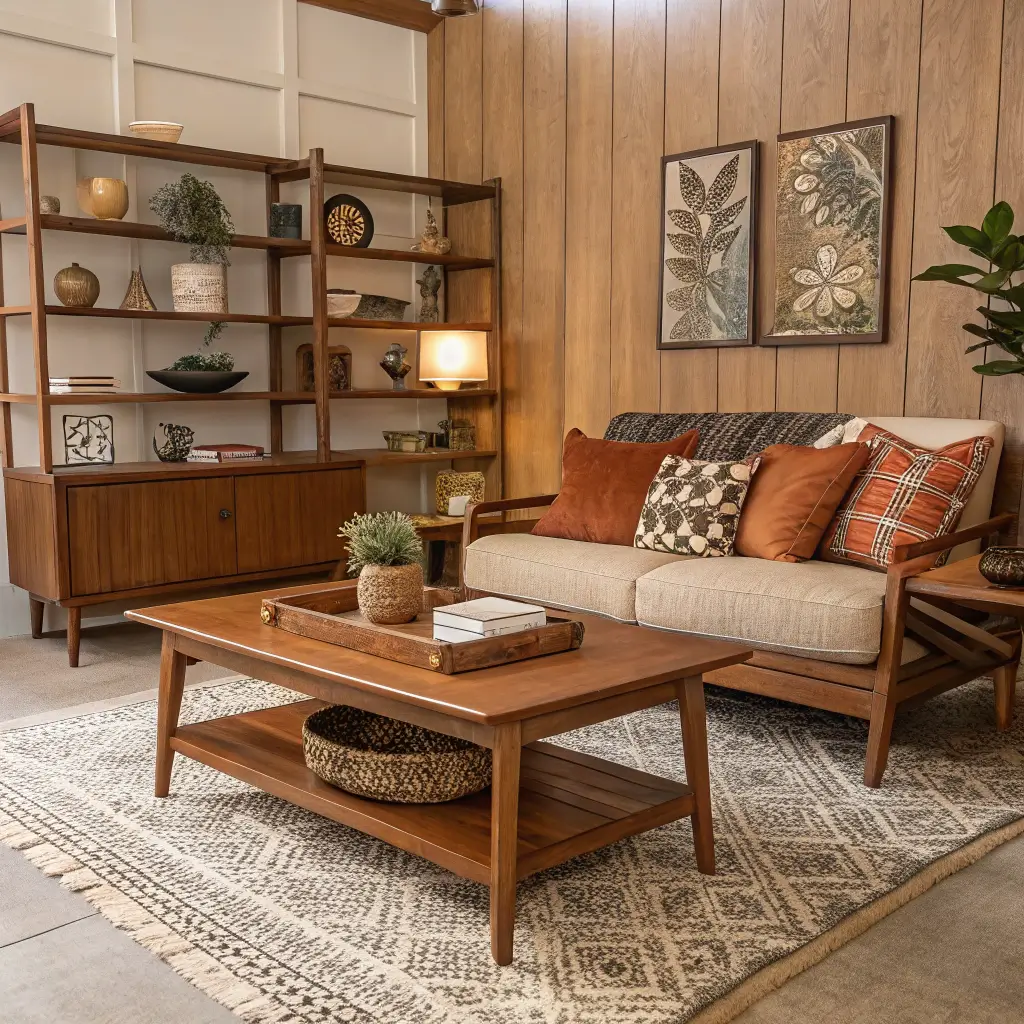
Can we talk about how walnut wood basically solves every design dilemma? Seriously, when in doubt, add walnut. The warm tones of mid-century wood pieces create this incredible foundation that makes everything else fall into place.
I discovered this accidentally when I inherited my uncle’s walnut credenza. Suddenly, my mismatched living room started making sense. The wood acts like a neutral that’s actually interesting—way better than another beige couch, IMO.
Layer different wood tones for depth. Mix walnut with teak, add some light oak, and watch your space come alive. The key is keeping the undertones consistent—all warm or all cool, never both.
Wood Accent Must-Haves
• Floating wooden shelves for displaying your coolest finds
• A substantial wood coffee table as your anchor piece
• Wood-framed mirrors to bounce light around
• At least one vintage wooden sideboard or console
Also Read: 15 Trendy Wall Decor Living Room Ideas to Transform Your Space
Sleek Sofa & Statement Chairs Combo
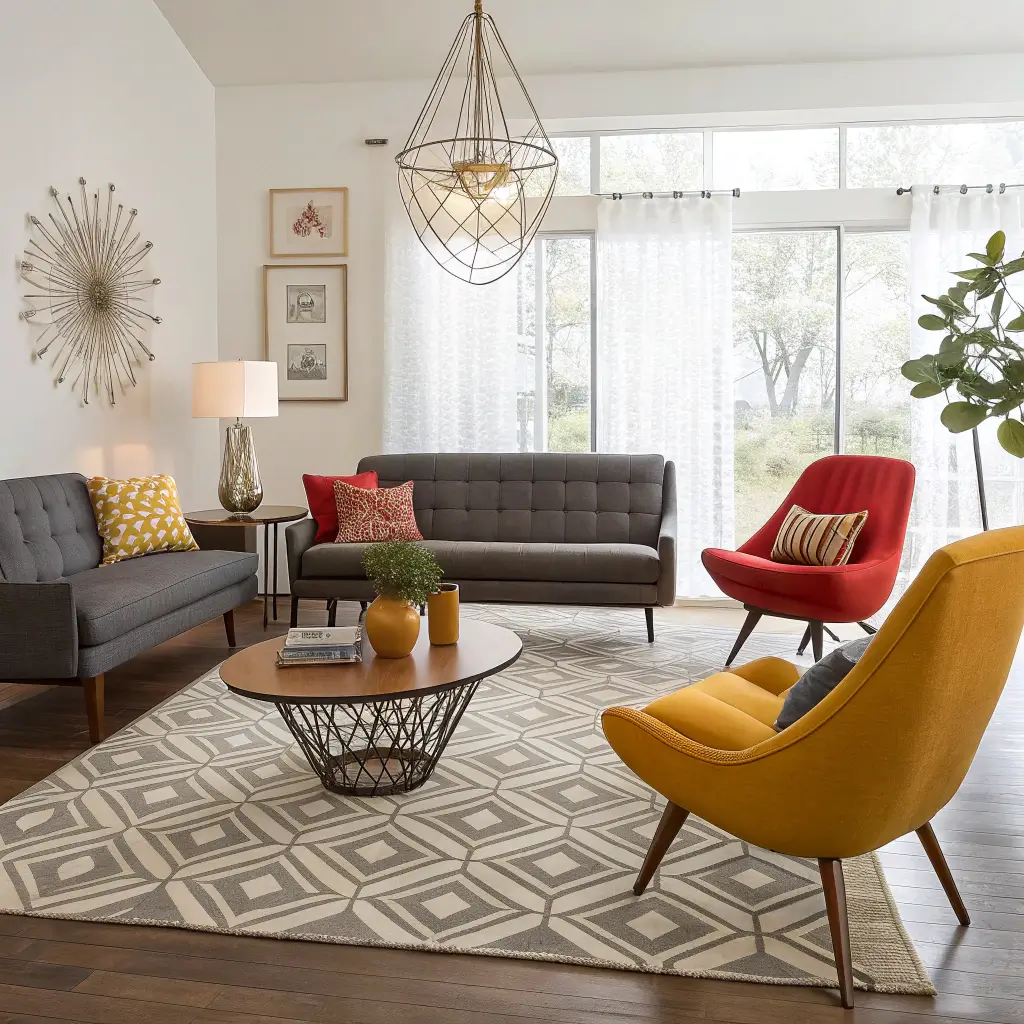
Here’s where things get fun. The sofa-and-chair conversation in mid-century design follows specific rules, but breaking them slightly creates magic. Your sofa should be low, long, and lean—think stretched-out elegance rather than puffy comfort fort.
Now for the chairs—this is where you go wild. Mix a classic Eames lounge chair replica (let’s be real, most of us aren’t dropping $7,000 on the original) with something unexpected. Maybe a bright orange wingback or a leather sling chair that looks like it belongs in a Swedish cabin.
The contrast creates visual interest that keeps eyes moving around the room. Plus, it gives you permission to collect chairs over time without looking like you’re hoarding furniture. Trust me, I’ve tested this theory extensively 🙂
Bold Geometric Pattern Decor
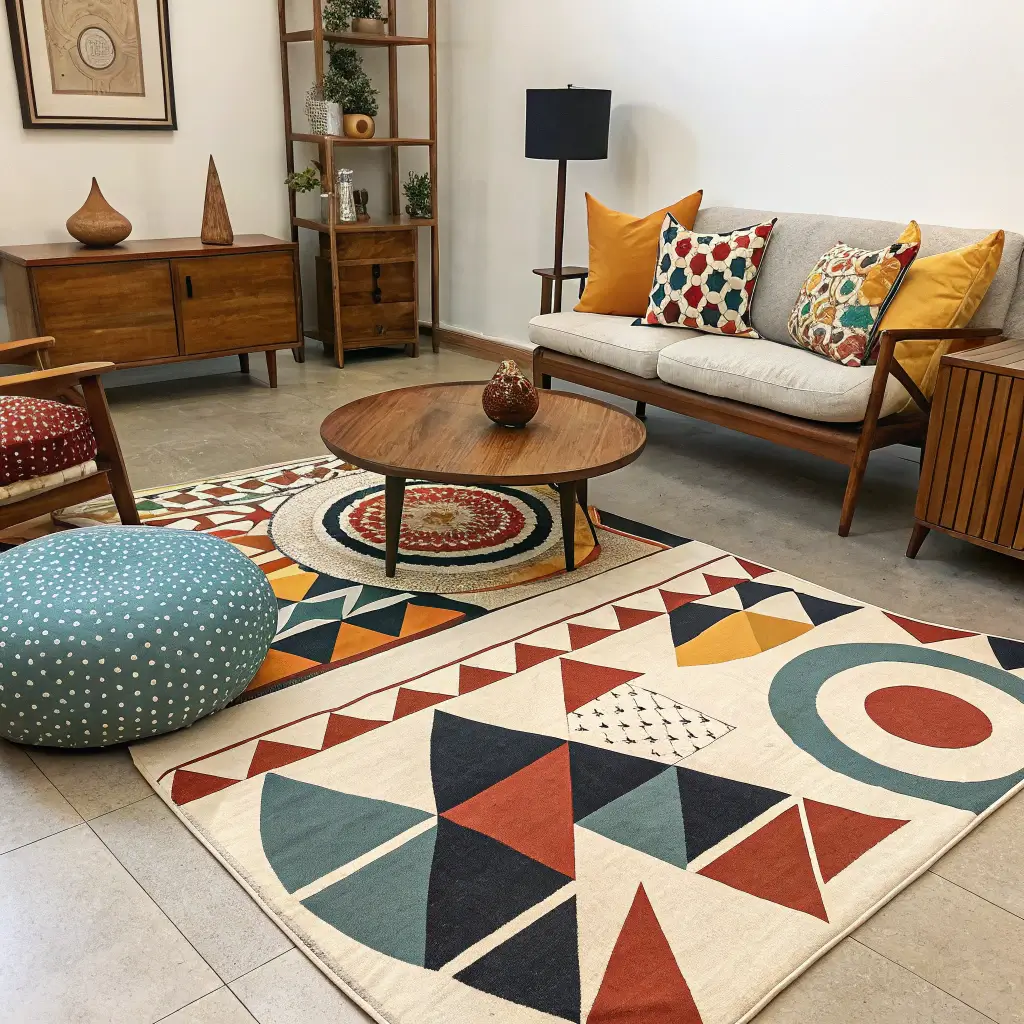
Geometric patterns and mid-century modern go together like coffee and Monday mornings—absolutely essential. But here’s the thing: you can overdo it faster than you can say “atomic age.”
Start small with geometric throw pillows or a single area rug featuring bold patterns. Those classic starburst designs, abstract triangles, and overlapping circles add energy without overwhelming the space. I once made the mistake of combining geometric wallpaper, curtains, AND rugs—looked like a math textbook exploded in my living room.
Pattern Play Guidelines
Pick one hero pattern and let it shine. Support it with solid colors and maybe one subtle secondary pattern. Think of it like seasoning food—you want to enhance, not overpower.
Your pattern placement matters too. Eye-level patterns (like wall art or curtain panels) have more impact than floor-level ones. Use this knowledge wisely.
Cozy Mid-Century Modern Reading Nook
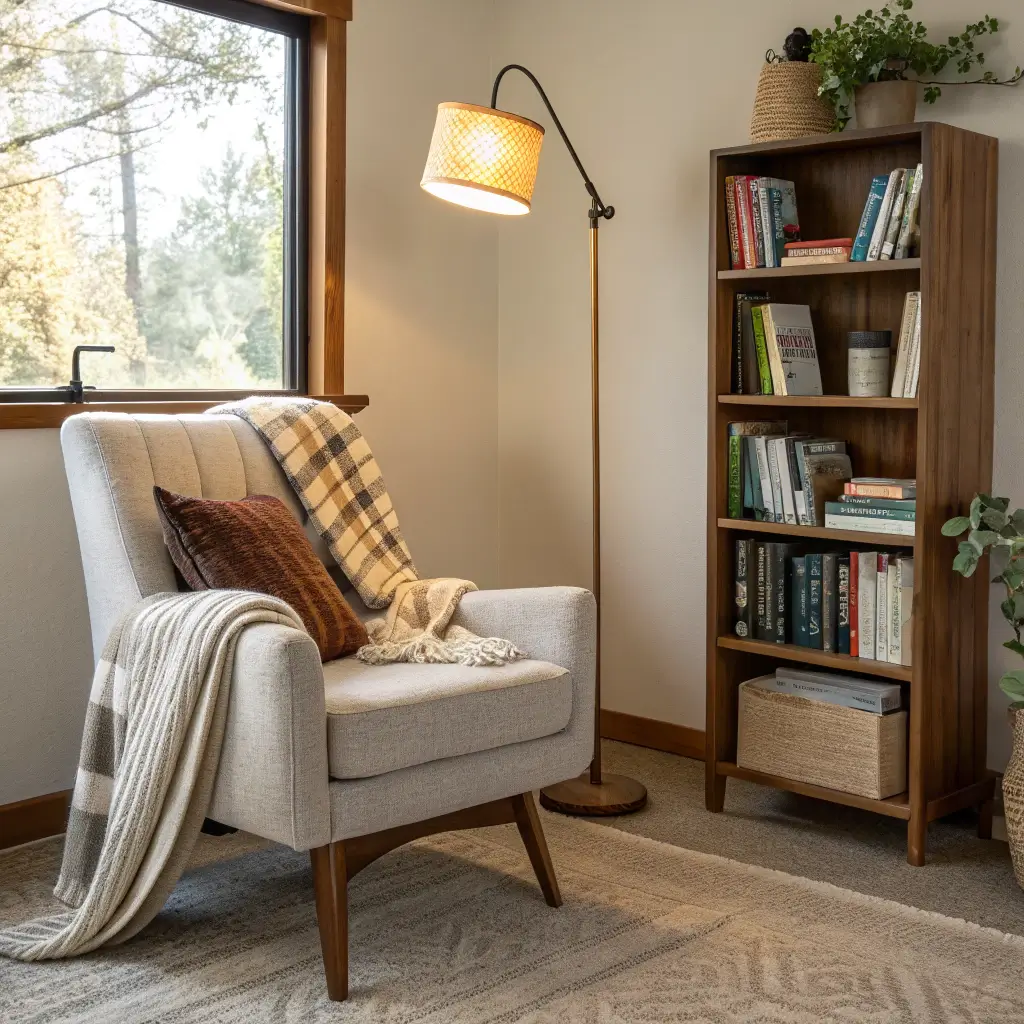
Every living room needs that one corner that whispers, “Sit here with your coffee and ignore the world.” Creating a mid-century reading nook combines function with that effortless style we’re chasing.
Position a statement chair (something with good back support—your spine will thank you) near a window. Add a sleek floor lamp with an adjustable arm, and place a small side table within arm’s reach. That’s it. That’s the formula.
What makes it mid-century? The furniture choices and the restraint. No pile of fuzzy blankets, no tower of books creating a fire hazard. Just clean, purposeful comfort.
Nook Essentials Checklist
• One exceptional chair that supports long reading sessions
• Task lighting that actually illuminates pages
• A surface for your beverage (non-negotiable)
• Maybe one small ottoman if you’re feeling fancy
Also Read: 15 Practical Living and Dining Room Combo Ideas That Work
Natural Light Focused Living Room
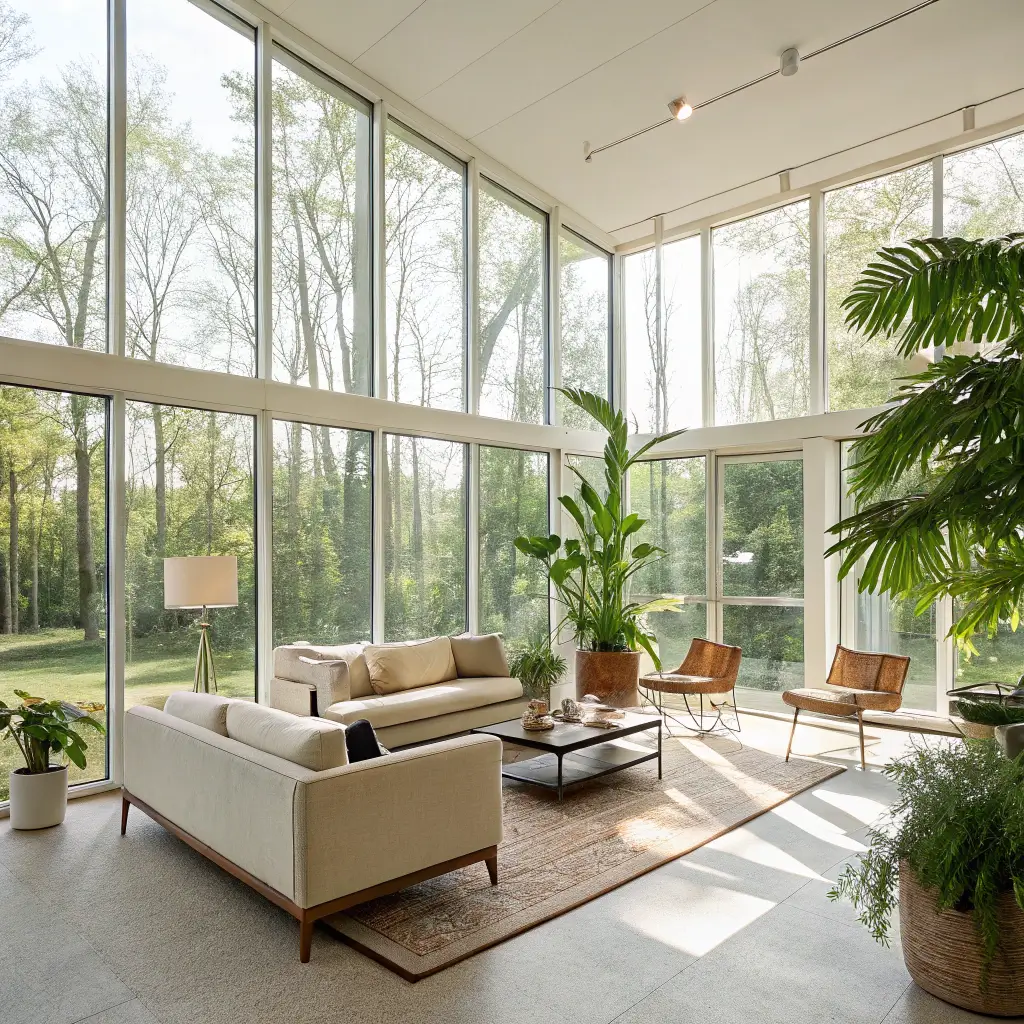
Mid-century architects were obsessed with natural light, and honestly, they were onto something. Maximizing daylight transforms even the most basic furniture into something special.
Remove heavy curtains immediately. Replace them with simple panels in white or natural linen that you can pull completely to the sides. Those windows are architectural features—show them off!
Position your main seating to take advantage of the light without creating glare on your TV. I learned this lesson after spending six months squinting at my screen every afternoon. Angle your sofa slightly, use the natural light for reading areas, and watch how the space opens up.
Color-Blocked Accent Wall Ideas
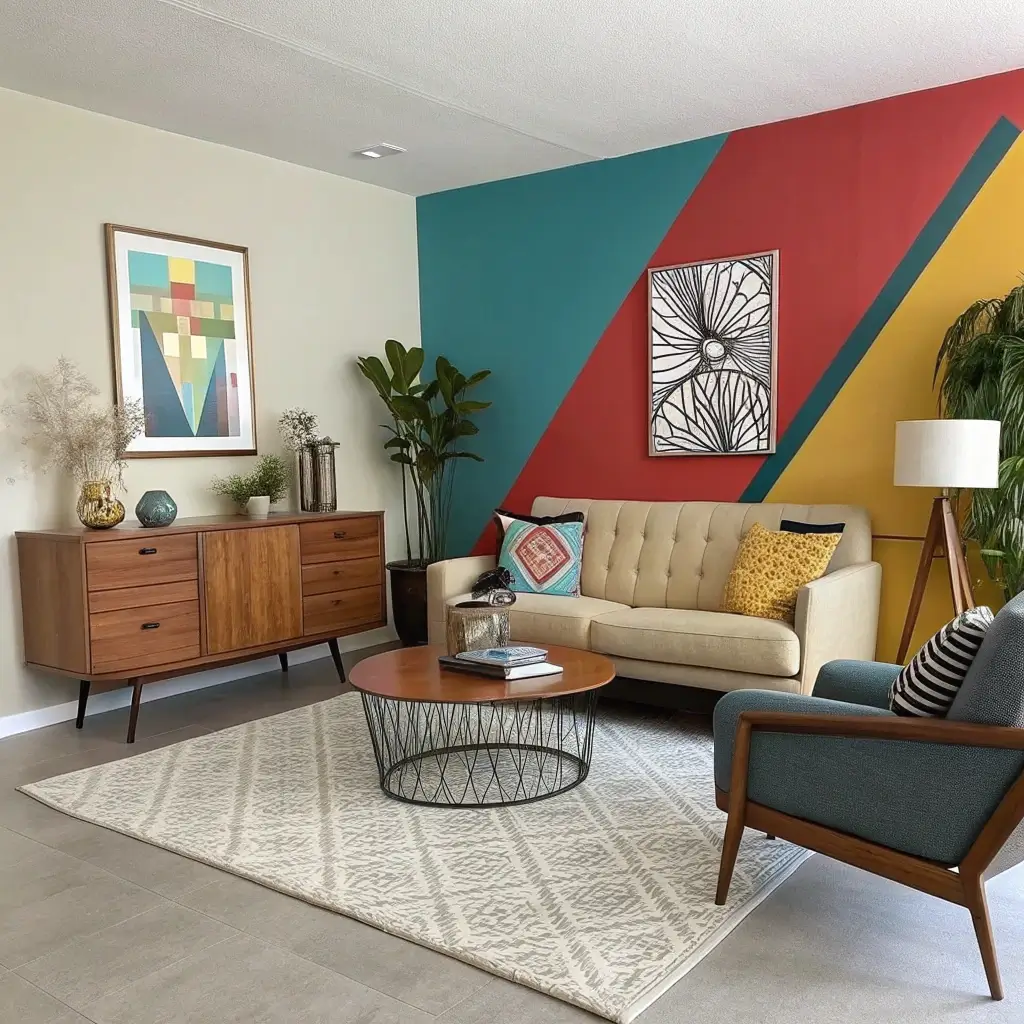
Color blocking sounds fancy, but it’s basically just painting geometric shapes on your wall. The mid-century twist? Using period-appropriate colors and keeping the shapes simple and bold.
Try a diagonal split with warm white and terracotta. Or create a horizontal band of deep teal running through the middle of your wall. The effect is artistic without requiring actual artistic skill—my favorite kind of DIY project.
Color Blocking Success Tips
Start with painter’s tape and a level. Seriously, eyeballing it never works (ask me how I know). Choose colors that appear elsewhere in your room for cohesion. And here’s a pro tip: photograph your wall at different times of day before committing—colors change dramatically with lighting.
Vintage Meets Modern Furniture Mix
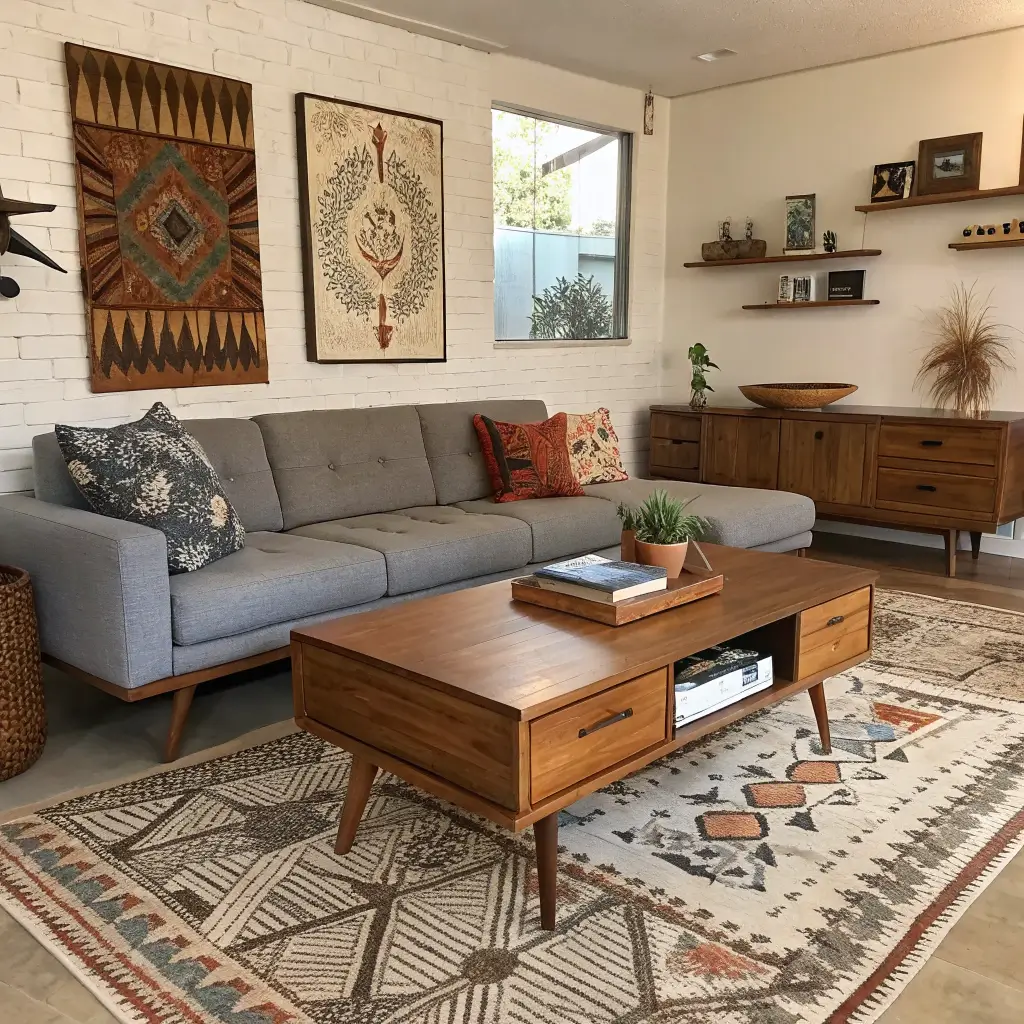
This is where the magic happens. Mixing genuine vintage pieces with modern interpretations creates a lived-in, collected-over-time feel that pure vintage or pure modern can’t achieve.
Pair that authentic 1960s sideboard you scored at an estate sale with a brand-new sofa in contemporary fabric. Set modern ceramic vases on vintage wooden shelves. The contrast keeps things interesting and, bonus, fits better with real-life budgets.
The ratio I’ve found works best? About 60% modern, 40% vintage. This keeps your space feeling fresh rather than like a time capsule.
Also Read: 15 Amazing Small Living and Dining Room Combo Ideas Fast
Earthy Tones and Textured Fabrics
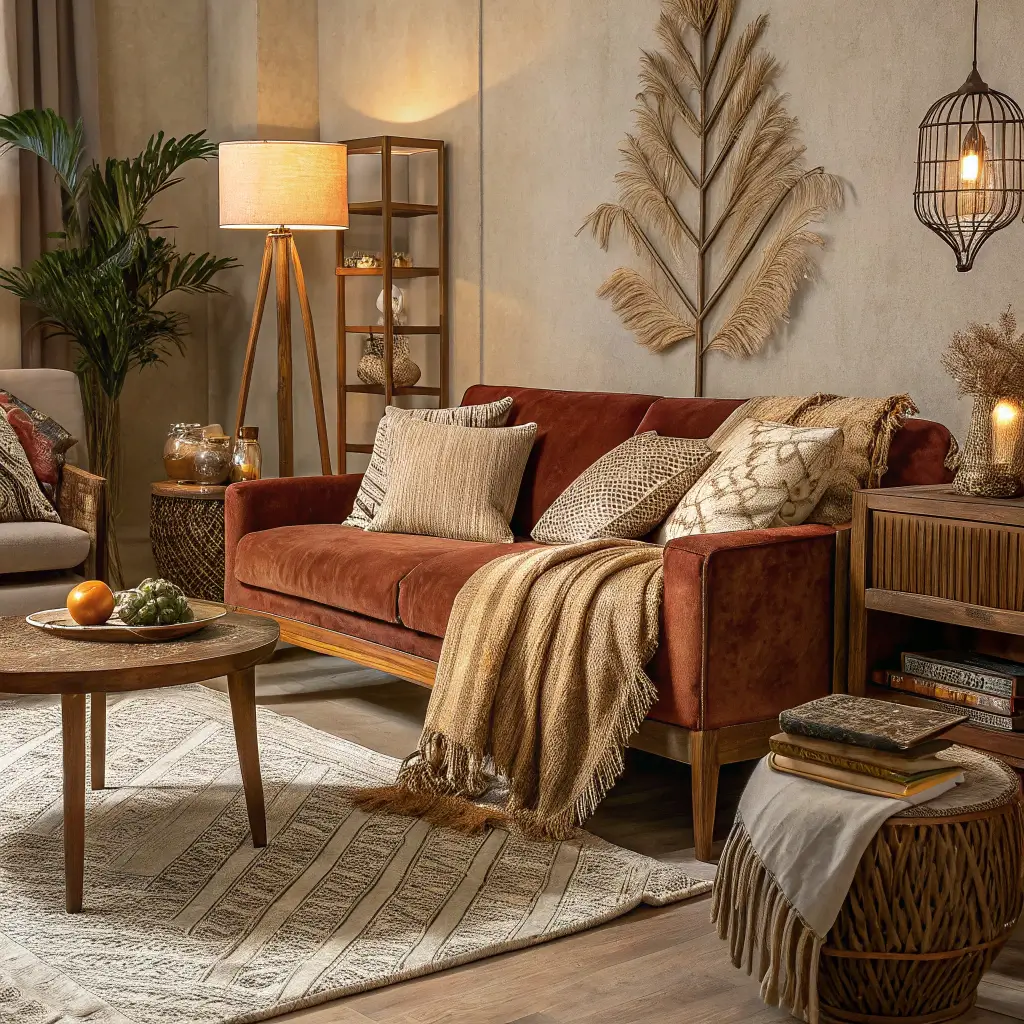
Move over, stark white minimalism. The fresh take on mid-century embraces warm, earthy tones and touchable textures. Think cognac leather, nubby linen, and soft wool in colors pulled straight from nature.
Layer textures like you’re creating a really sophisticated sandwich. Start with a leather sofa, add linen pillows, throw in a chunky knit blanket, and finish with a jute rug. The mix creates depth that flat, single-texture rooms can’t match.
Texture Combinations That Work
• Smooth leather + rough linen
• Soft velvet + natural wood
• Woven rattan + polished metal
• Plush wool + sleek glass
FYI, pets and kids actually hide better against textured, earthy-toned fabrics than pristine white ones. Practical AND stylish.
Open Layout Mid-Century Style
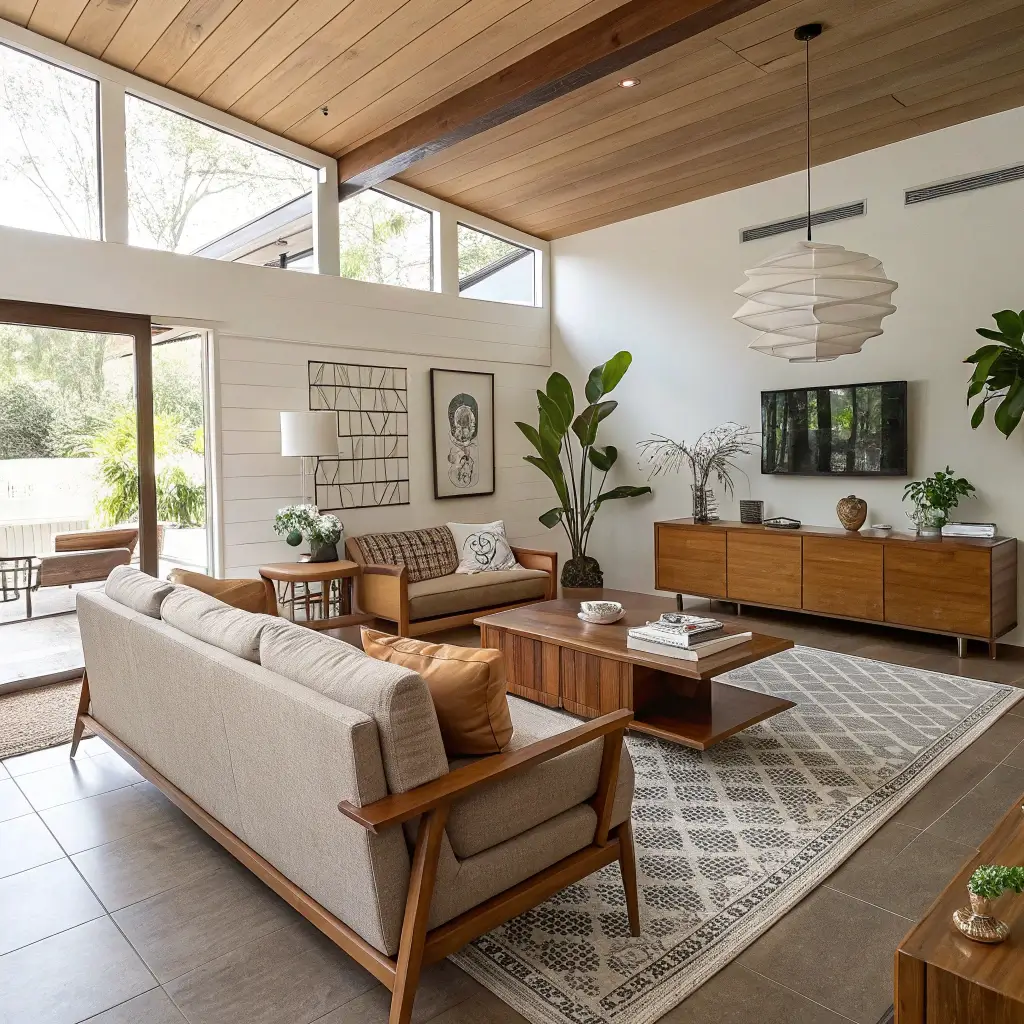
The open floor plan isn’t going anywhere, and mid-century design principles make it work beautifully. Define zones without walls using furniture placement and area rugs.
Float your sofa in the middle of the room instead of pushing it against a wall. Use a console table behind it to create a subtle room division. Position chairs to create conversation areas that feel intimate despite the open space.
The trick is maintaining sight lines while creating distinct areas. Your living room should flow into your dining area without feeling like one massive, undefined space.
Statement Lighting & Pendant Fixtures
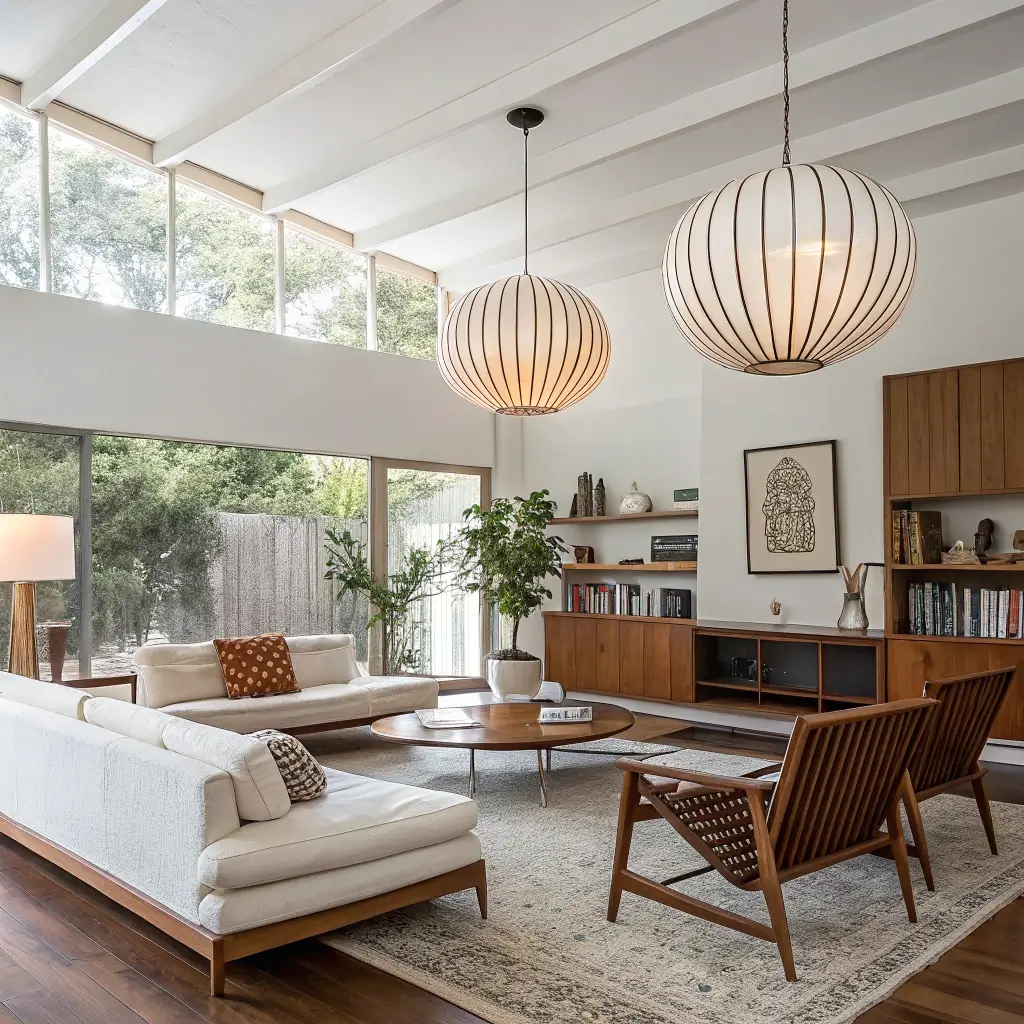
Lighting in mid-century design isn’t just functional—it’s sculptural. Those iconic pendant lights and arc floor lamps serve as artwork that happens to illuminate your space.
Hang a cluster of pendant lights at varying heights over your seating area. Or position a dramatic arc lamp to curve over your sofa like a metal rainbow. The shadows these fixtures create become part of your decor.
Lighting Rules to Live By
Never rely on overhead lighting alone—it’s harsh and unflattering. Layer your lighting with:
• Ambient lighting for general illumination
• Task lighting for reading or working
• Accent lighting to highlight artwork or architectural features
• Dimmers on everything (seriously, dimmers change everything)
Low-Profile Furniture Arrangement
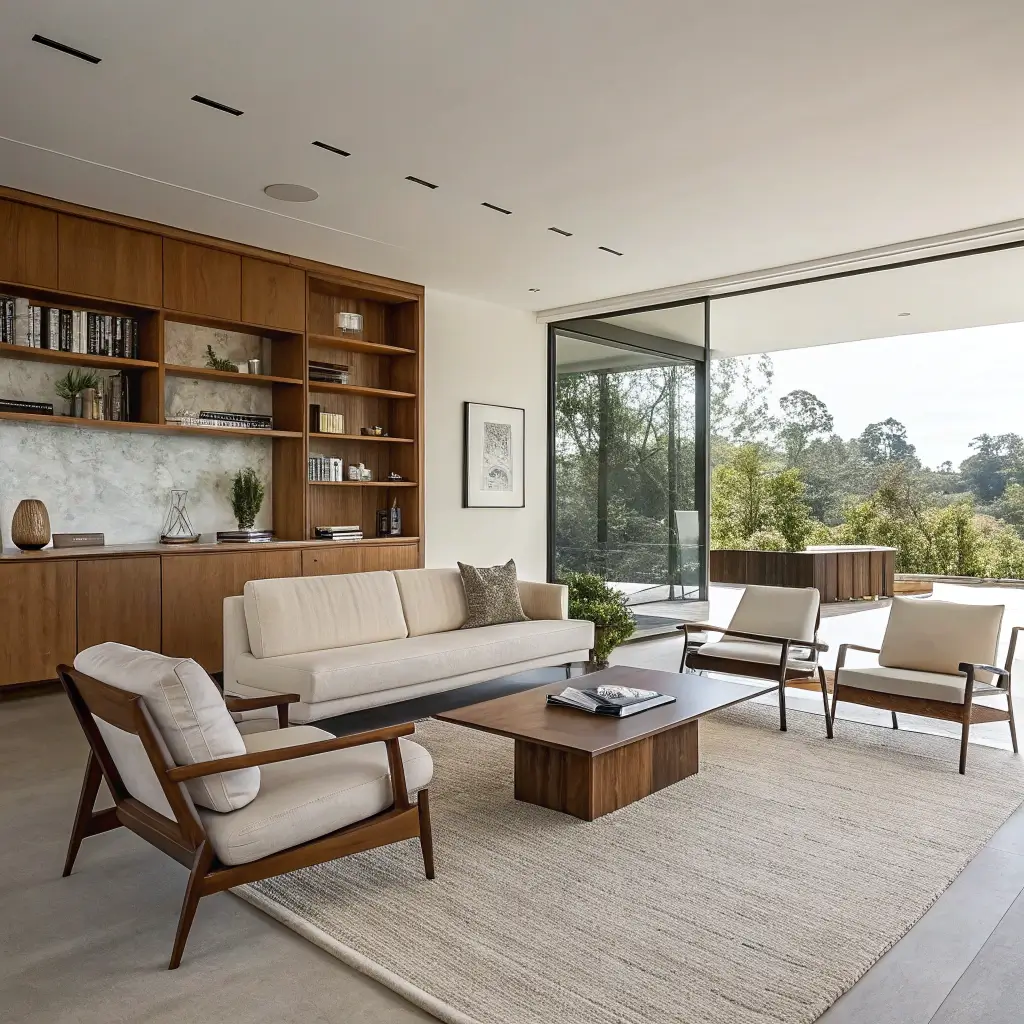
Mid-century modern loves to hug the ground. Low-profile furniture creates horizontal lines that make your ceilings feel higher and your space feel larger.
Choose sofas and chairs that sit lower than traditional furniture. Your coffee table should be roughly the same height as your sofa seat, maybe an inch or two lower. The whole arrangement should feel grounded and stable.
Ever noticed how low furniture makes you feel more relaxed? There’s something about being closer to the ground that signals our brains to chill out. Plus, it makes your room feel twice as spacious.
Indoor Plant Mid-Century Vibes
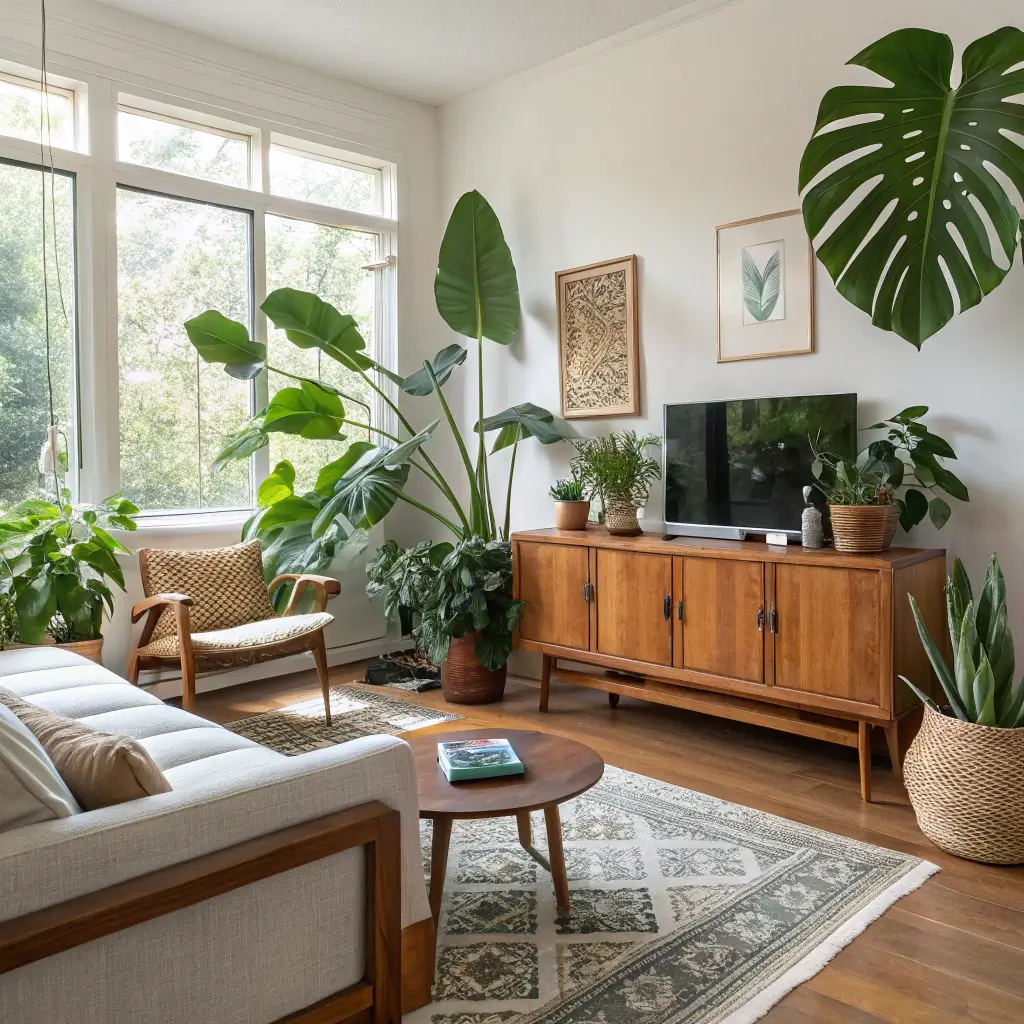
Plants and mid-century modern are basically best friends forever. But we’re not talking about random greenery—specific plants enhance the aesthetic while others clash entirely.
Fiddle leaf figs, snake plants, and rubber trees have the architectural quality that complements clean lines. Position them in simple, ceramic planters—white, terracotta, or matte black work best. Skip the macrame hangers unless you’re specifically going for boho-meets-mid-century (which is totally valid, just different).
Plant Styling Strategy
Place one large statement plant in a corner, add medium plants on credenzas or shelves, and maybe scatter a few small succulents on your coffee table. The rule of odd numbers applies here—group plants in ones, threes, or fives for visual balance.
Scandinavian-Mid-Century Fusion
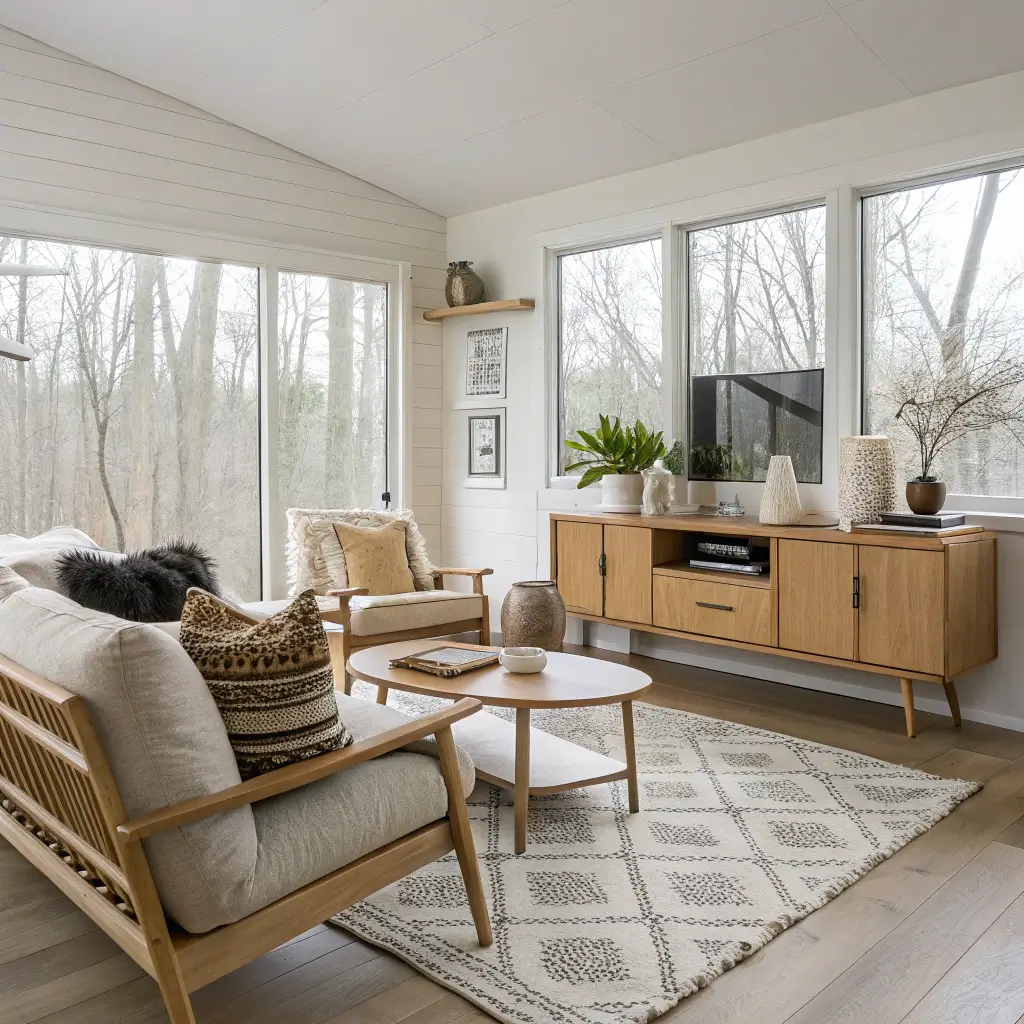
The lovechild of Scandinavian and mid-century modern design might be the perfect living room aesthetic. Both styles worship simplicity, functionality, and natural materials, making them natural partners.
Lighten up the typical mid-century palette with Scandinavian whites and pale woods. Keep the iconic furniture shapes but upholster them in light, neutral fabrics. Add cozy elements like sheepskin throws and knitted poufs to warm up the clean lines.
The fusion works because both styles share DNA—they emerged around the same time with similar values. You’re not forcing two incompatible styles together; you’re reuniting distant cousins.
Fusion Elements That Never Fail
• Light oak or birch wood instead of dark walnut
• White walls with natural wood accents
• Minimal color palette with maybe one muted accent
• Hygge-inspired textiles on mid-century frames
• Plants, plants, and more plants
Wrapping Up Your Mid-Century Journey
Creating a fresh mid-century modern living room isn’t about slavishly copying the past—it’s about taking the best elements and making them work for how we live now. Whether you go full minimalist or embrace retro chic, the key is choosing what genuinely speaks to you.
Start with one idea that excites you most. Maybe it’s adding that statement chair you’ve been eyeing, or finally painting that color-blocked accent wall. Build from there, and remember—the best mid-century modern rooms look like they evolved over time, not like they were ordered from a catalog.
The beauty of this style is its flexibility. It plays well with other design elements, adapts to different budgets, and somehow manages to feel both nostalgic and contemporary. Plus, unlike some trend-driven styles, mid-century modern has proven it has staying power.
Your living room won’t look dated in five years—if anything, it’ll probably look even better as those vintage pieces gain more character.
So grab that measuring tape, start hunting for the perfect walnut coffee table, and remember—in mid-century modern design, less is more, but better is everything. Your living room transformation starts now, and trust me, once you go mid-century, you never really go back.
