
You know that awkward moment when you realize your living room and dining room need to share the same space, and suddenly you’re stuck wondering if your sofa should high-five your dining table?
Yeah, I’ve been there. After helping three friends redesign their combo spaces (and redoing my own twice), I’ve learned that making these rooms work together isn’t rocket science – it just takes the right approach.
Let me walk you through 15 killer combo ideas that actually work in real life, not just in those pristine magazine photos where nobody ever eats or sits on anything. These aren’t just pretty concepts; they’re practical solutions I’ve seen transform cramped, confused spaces into rooms that feel twice their actual size.
Minimalist Monochrome Harmony
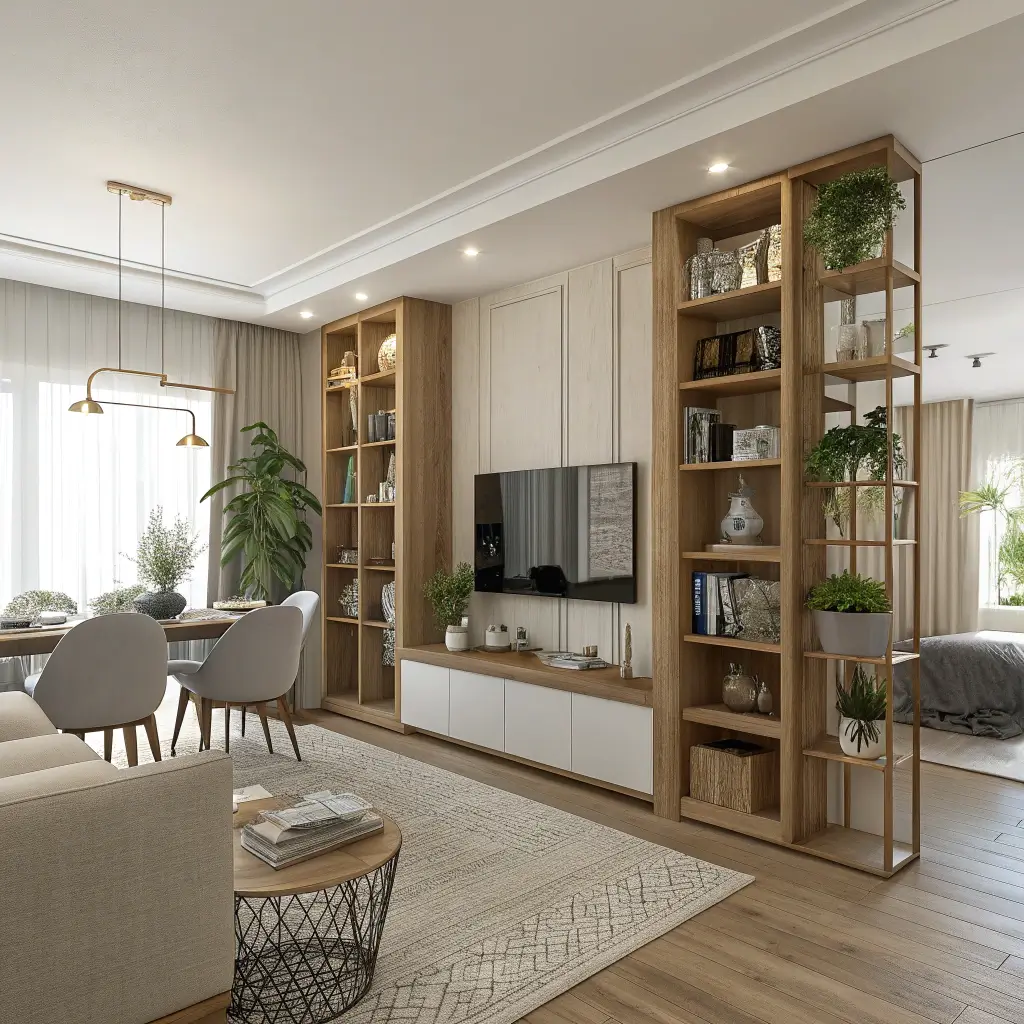
Here’s the thing about going monochrome – it’s basically foolproof. I discovered this when I accidentally bought three different shades of gray furniture and somehow it all worked together. The secret? Sticking to one color family creates visual continuity that makes your combo space feel intentional rather than thrown together.
Start with your base color (I’m partial to whites and grays, but you do you) and layer different textures within that palette. Think a charcoal sofa, dove gray dining chairs, and maybe a white oak table that bridges the gap. The beauty of this approach? Your eye flows seamlessly from one zone to the other without any jarring transitions.
Want to add personality without breaking the monochrome magic? Play with patterns and materials instead of colors. A geometric rug under your living area, smooth leather dining chairs, and maybe a chunky knit throw can create tons of visual interest while maintaining that cohesive look.
Making It Work in Small Spaces
The monochrome approach especially shines in tight quarters. When everything shares a similar tone, walls seem to dissolve and spaces appear larger. I helped my neighbor transform her 400-square-foot studio using this technique, and suddenly her place looked like it belonged in a Scandinavian design blog.
Key elements for nailing minimalist monochrome:
- Choose furniture with clean lines and minimal ornamentation
- Invest in quality over quantity – fewer pieces mean each one needs to work harder
- Add warmth through varying textures rather than colors
- Keep accessories minimal but meaningful
Rustic Farmhouse Fusion
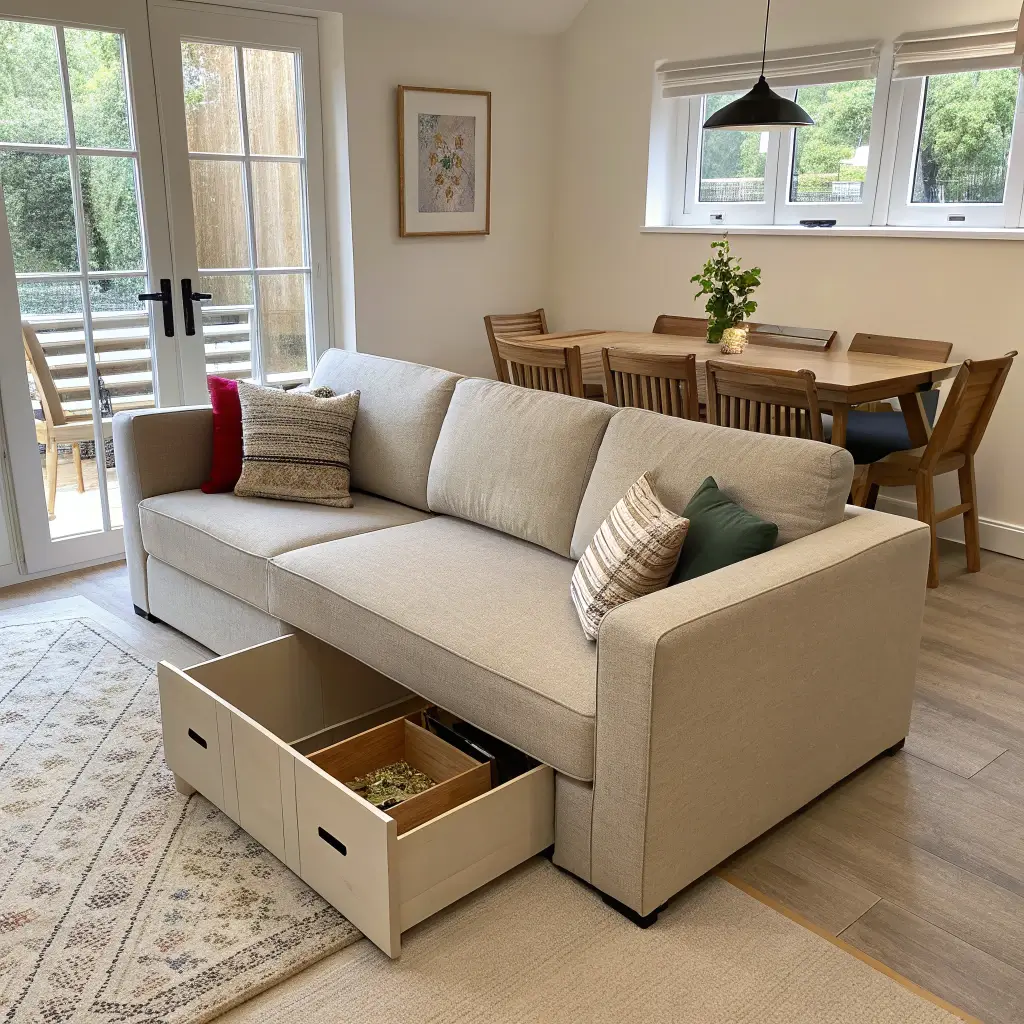
Who says you can’t bring barn vibes into your combo space? The farmhouse look works brilliantly when you need to merge living and dining areas because it’s all about that communal, gathering-place feeling anyway. Plus, farmhouse style gives you permission to mix and match – which is perfect when you’re working with what you’ve got.
Start with a chunky wooden dining table as your anchor piece. I’m talking about the kind that looks like it could survive a tornado and still host Thanksgiving dinner. Pair it with mismatched chairs (intentionally mismatched, mind you) and you’ve instantly created character.
For the living area, think oversized, sink-into-me seating in natural fabrics. Linen, cotton, even leather – as long as it looks like it could handle muddy boots and wine spills with equal grace. The trick is balancing rustic elements with enough polish that your space doesn’t actually look like a barn.
The Magic of Mixed Materials
What makes farmhouse fusion really sing? Contrast, baby. Mix your rough-hewn wood with smooth metals, soft fabrics with hard surfaces. Try these combinations:
- Weathered wood dining table + industrial metal chairs
- Plush upholstered sofa + reclaimed wood coffee table
- Wrought iron light fixtures + soft linen curtains
- Shiplap accent wall + modern artwork
Don’t forget the power of vintage finds. That random antique mirror or beat-up storage trunk? They’re not junk – they’re “character pieces” that tie everything together.
Scandinavian Sleek Simplicity
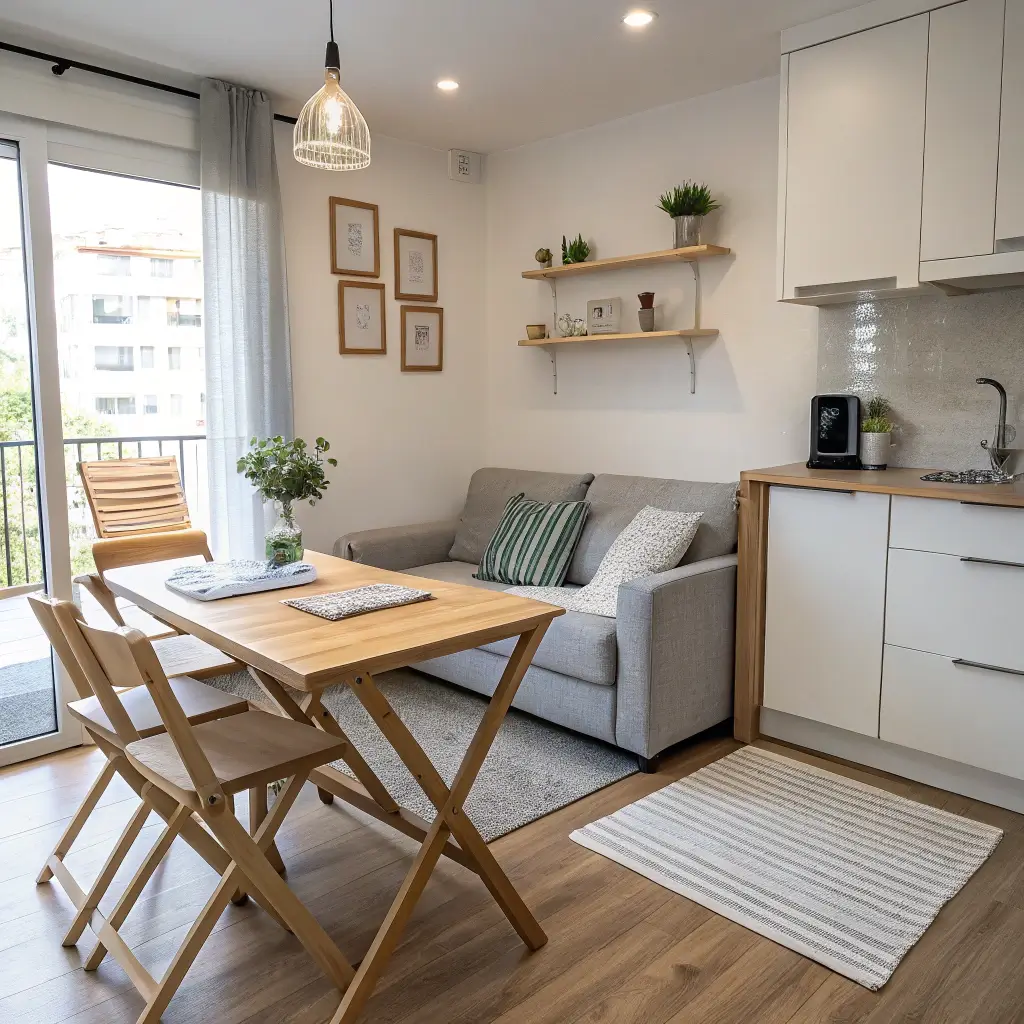
Scandinavian design makes combo rooms look effortless, which is ironic because achieving that “I woke up like this” aesthetic takes serious planning. But once you nail it? Your space becomes this zen-like sanctuary that somehow manages to be both minimal and cozy.
The foundation? Light wood, white walls, and strategic pops of muted color. Think pale oak dining table, white dining chairs with maybe one accent color (dusty pink or sage green are my go-tos), and a gray sofa that whispers rather than shouts.
What really makes Scandi style work in combo spaces is the emphasis on function. Every piece earns its place. That console between your living and dining areas? It’s not just dividing the space – it’s also storing your dinnerware and displaying your three carefully curated plants.
Hygge Your Way to Happiness
Remember, Scandinavian doesn’t mean cold. Layer in warmth through:
- Soft textiles everywhere – throws, pillows, rugs
- Warm lighting (seriously, ban overhead lights forever)
- Natural elements like wood, wool, and leather
- Plants – but like, the right amount of plants, not a jungle
FYI, the whole hygge thing isn’t just marketing – creating a cozy atmosphere actually makes people want to hang out in your space. Who knew? 🙂
Also Read: 15 Amazing Small Living and Dining Room Combo Ideas Fast
Boho Chic Open Plan
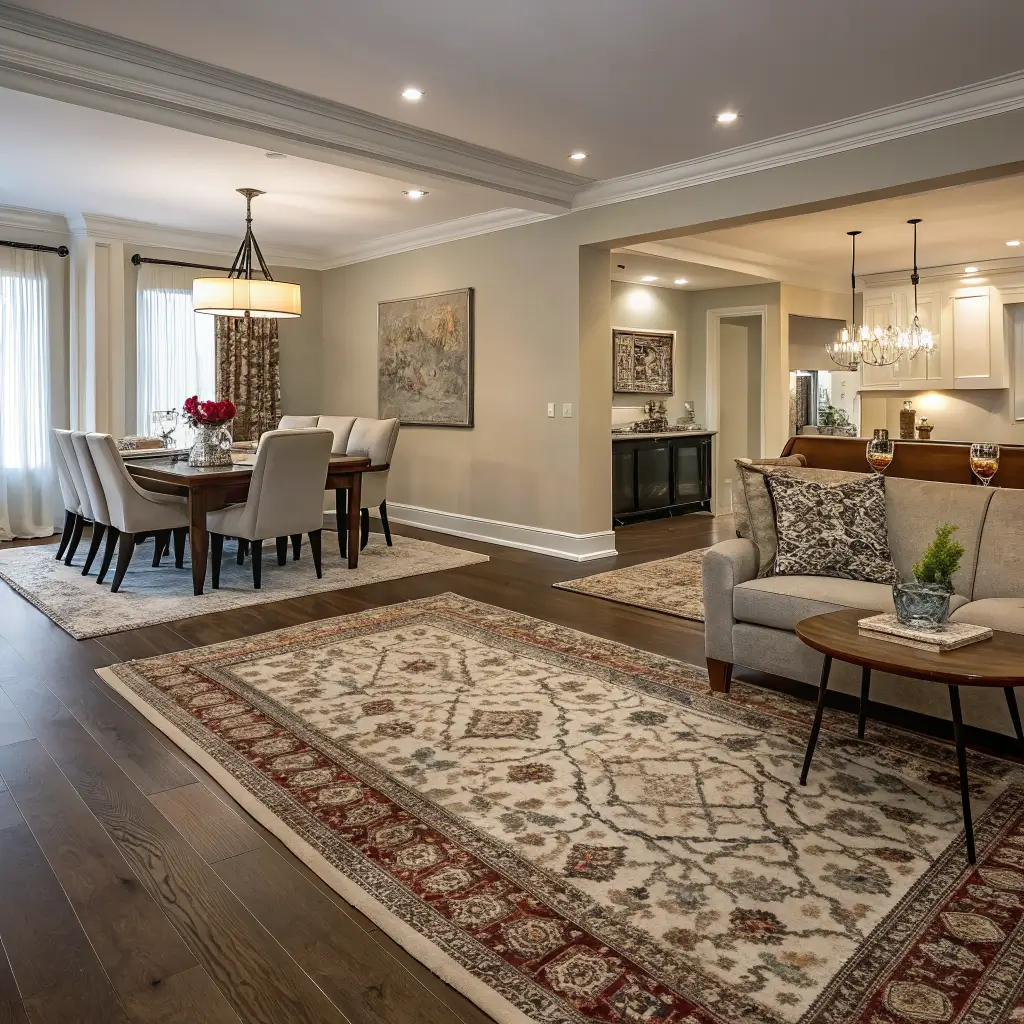
Ready to throw the rulebook out the window? Boho style laughs in the face of matchy-matchy design, making it perfect for combo spaces where you want personality over perfection. This is where you can finally use that moroccan rug you impulse-bought and those mismatched chairs you inherited from grandma.
The key to boho that doesn’t look like a yard sale exploded? Create a cohesive color story. Pick a palette (I usually go with warm earth tones plus one jewel tone) and stick to it across both zones. Your dining chairs might be emerald velvet while your sofa pillows echo that green in a pattern.
Layer, layer, and then layer some more. Rugs on rugs, throws on chairs, plants on every surface that’ll hold them. The beauty of boho is that “too much” doesn’t really exist – as long as there’s some method to your madness.
Pulling Off Organized Chaos
Want that collected-over-time look without the actual time? Try these tricks:
- Mix high and low pieces – splurge on one statement item, thrift the rest
- Vary your heights – low floor cushions, standard chairs, tall plants
- Combine patterns fearlessly but keep them in your color family
- Add global touches – kilim pillows, bamboo screens, woven baskets
The dining area can handle more structure (you need to actually eat there), while the living space can go full bohemian rhapsody with floor seating and hanging chairs.
Modern Industrial Loft Style
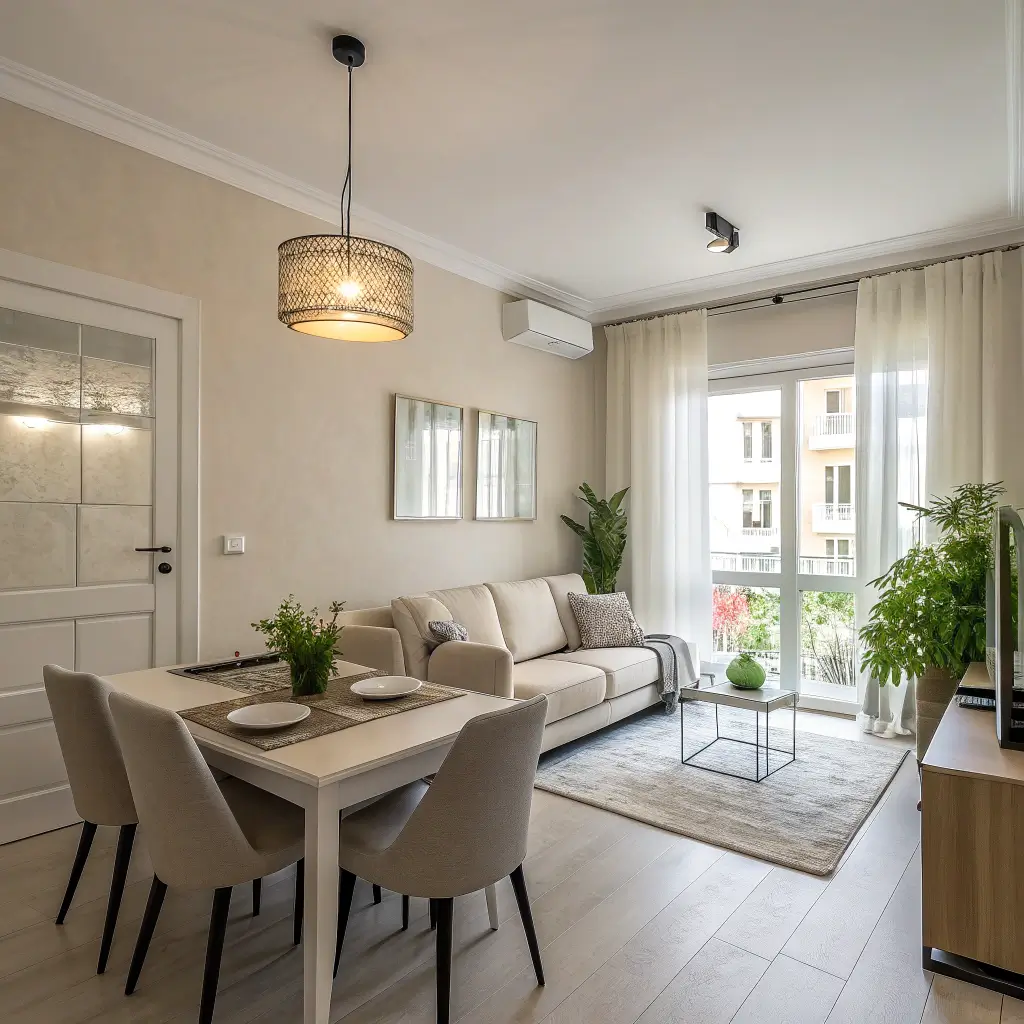
Industrial style in a combo room? It’s like the design equivalent of wearing a leather jacket to brunch – unexpectedly perfect. The raw, unfinished elements of industrial design actually help define separate zones without building walls.
Start with the bones: exposed elements are your friends. Can’t knock down walls to expose brick? Fake it with removable wallpaper (judge me all you want, but it works). Exposed ceiling beams, visible ductwork, concrete floors – these aren’t problems to hide, they’re features to celebrate.
For furniture, think hefty and honest. A reclaimed wood dining table with metal legs, leather dining chairs that look like they’ve seen things, and a sofa that could double as a small country. The industrial look loves big, bold pieces that make statements without trying too hard.
Softening the Edge
Pure industrial can feel cold, so here’s how to make it livable:
- Add warm lighting – Edison bulbs, metal pendants, floor lamps
- Include soft textiles in rich colors – burnt orange, deep navy, forest green
- Mix in wood elements to balance all that metal
- Use area rugs to define zones and add comfort
Remember, industrial doesn’t mean uncomfortable. Your guests should want to linger, not feel like they’re eating in an abandoned warehouse.
Coastal Calm Retreat
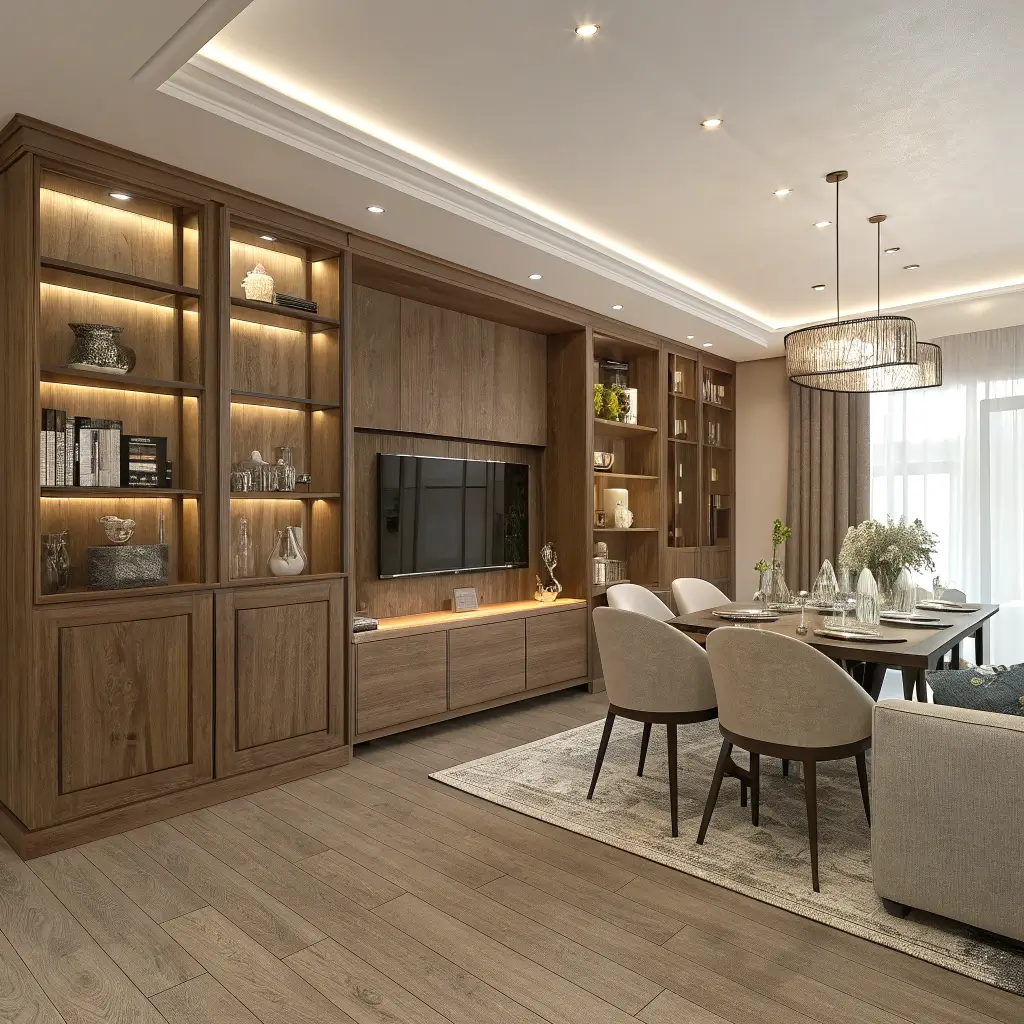
Creating beach vibes when you’re landlocked in Ohio? Totally doable. Coastal style in a combo room works because it’s inherently casual and inviting – exactly what you want when living and dining collide.
The palette practically chooses itself: whites, sandy beiges, ocean blues, and maybe some seafoam green if you’re feeling adventurous. But here’s where people mess up – coastal doesn’t mean covering everything in seashells and anchors. Show some restraint, people.
Choose furniture that looks like it could handle sandy feet and wet swimsuits (even if the closest beach is 500 miles away). Slipcovered sofas, wooden dining tables with a weathered finish, and chairs that wouldn’t look out of place on a deck all fit the bill.
Bringing the Beach Home (Subtly)
Nail the coastal look without going full nautical:
- Focus on natural materials – rattan, jute, driftwood, linen
- Keep things light and airy with sheer curtains and minimal clutter
- Add blue through artwork or pillows, not by painting everything navy
- Include organic shapes and textures that echo waves and sand
One oversized piece of coral or a beautiful piece of driftwood as sculpture? Gorgeous. Seventeen starfish hot-glued to everything? Please don’t.
Also Read: 15 Beautiful Small Space Living Room Ideas Instantly
Vintage Eclectic Blend
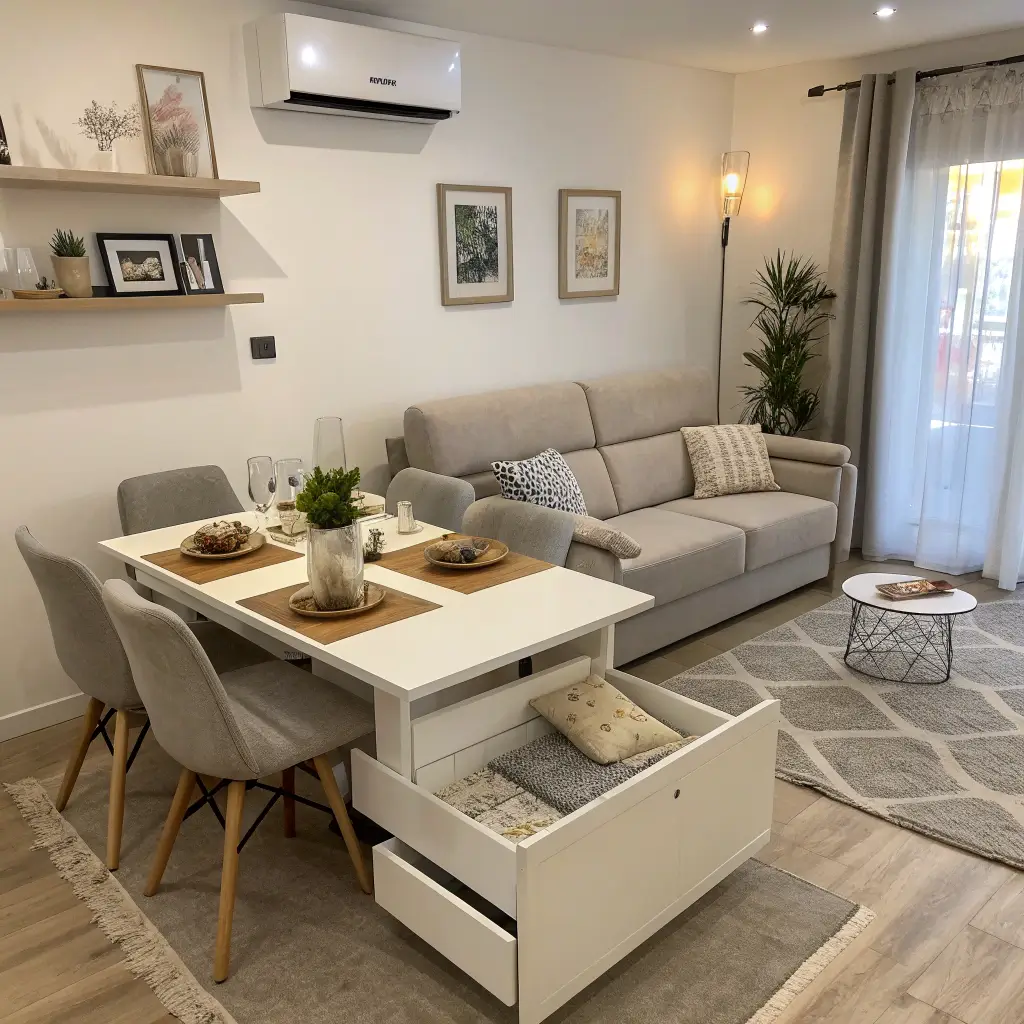
Vintage eclectic is basically permission to use all those random pieces you’ve collected over the years. That art deco mirror from the estate sale? The mid-century chairs you scored on Facebook Marketplace? They all get to play together now.
The secret sauce? Creating conversations between pieces from different eras. Your 1970s dining table might share space with a contemporary sofa, but they need something to help them get along – maybe a rug that pulls colors from both or lighting that bridges the style gap.
Don’t try to make everything match perfectly. The whole point is that collected-over-time look that says “I have excellent taste and probably travel to Europe regularly” (even if your last vacation was to your parent’s house).
Curating Your Collection
Make vintage eclectic work with these strategies:
- Limit your eras – pick 2-3 decades max to avoid chaos
- Use color to unify disparate pieces
- Mix scales – pair delicate vintage chairs with a substantial modern sofa
- Balance ornate and simple pieces throughout both zones
IMO, the best vintage eclectic rooms look like they evolved naturally, not like someone raided every antique store in a 50-mile radius last weekend.
Mid-Century Modern Flow
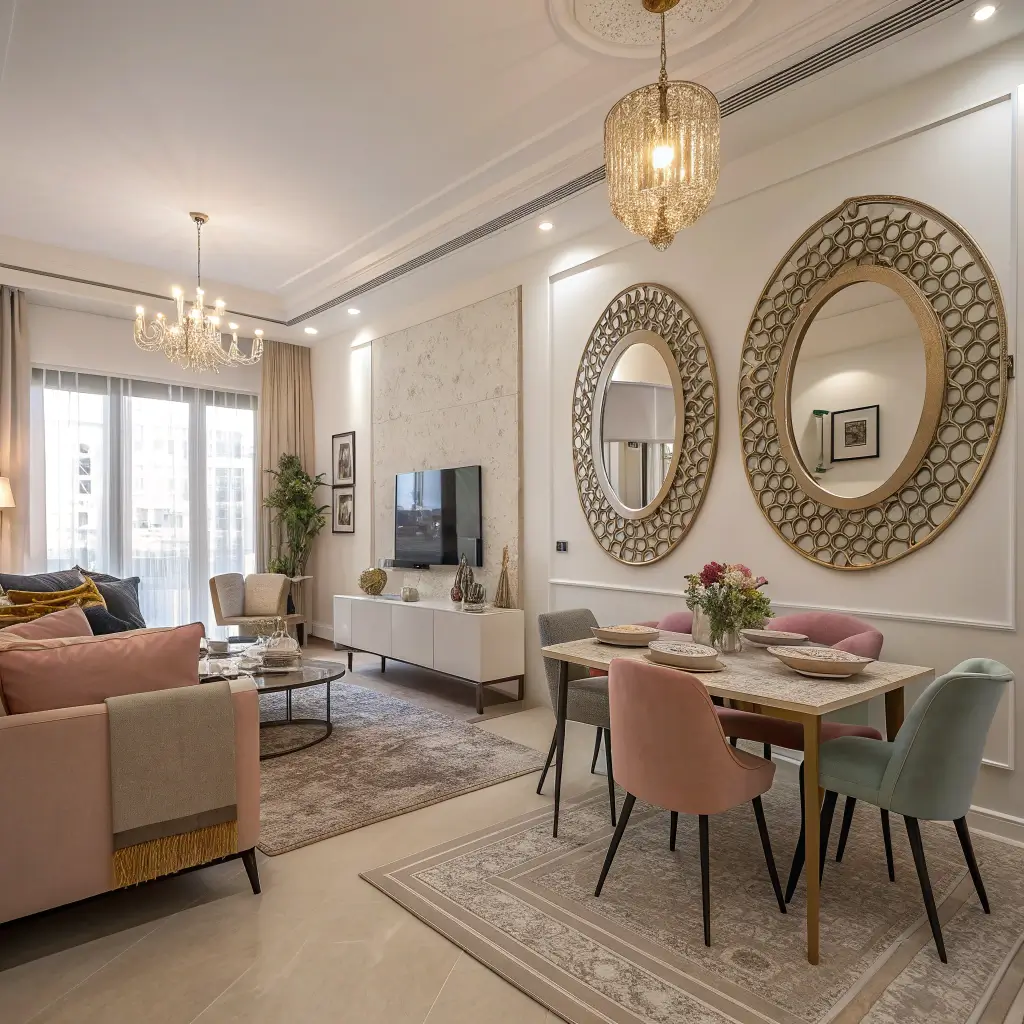
Mid-century modern in a combo space is like putting on your favorite jeans – it just works. The style’s emphasis on open floor plans and functional beauty makes it a natural fit for rooms pulling double duty.
Those iconic clean lines and tapered legs create visual space even in tight quarters. A walnut dining table with hairpin legs doesn’t block sightlines, while a low-profile sofa keeps the room feeling open. It’s all about furniture that looks like it’s floating rather than squatting.
The color palette typically stays warm and earthy – think mustard yellow, burnt orange, olive green – which helps create cohesion between your living and dining zones. Throw in some geometric patterns and you’re basically Don Draper (minus the questionable life choices).
Authentic vs. Inspired
Let’s be real – authentic mid-century pieces cost more than my car. Here’s how to get the look without selling a kidney:
- Invest in one real piece if possible – it’ll anchor the whole room
- Mix vintage finds with modern interpretations
- Focus on the silhouette more than the provenance
- Add period-appropriate accessories like starburst clocks or geometric art
The goal is capturing that optimistic, forward-thinking spirit of the era, not creating a museum exhibit.
Compact Space Genius
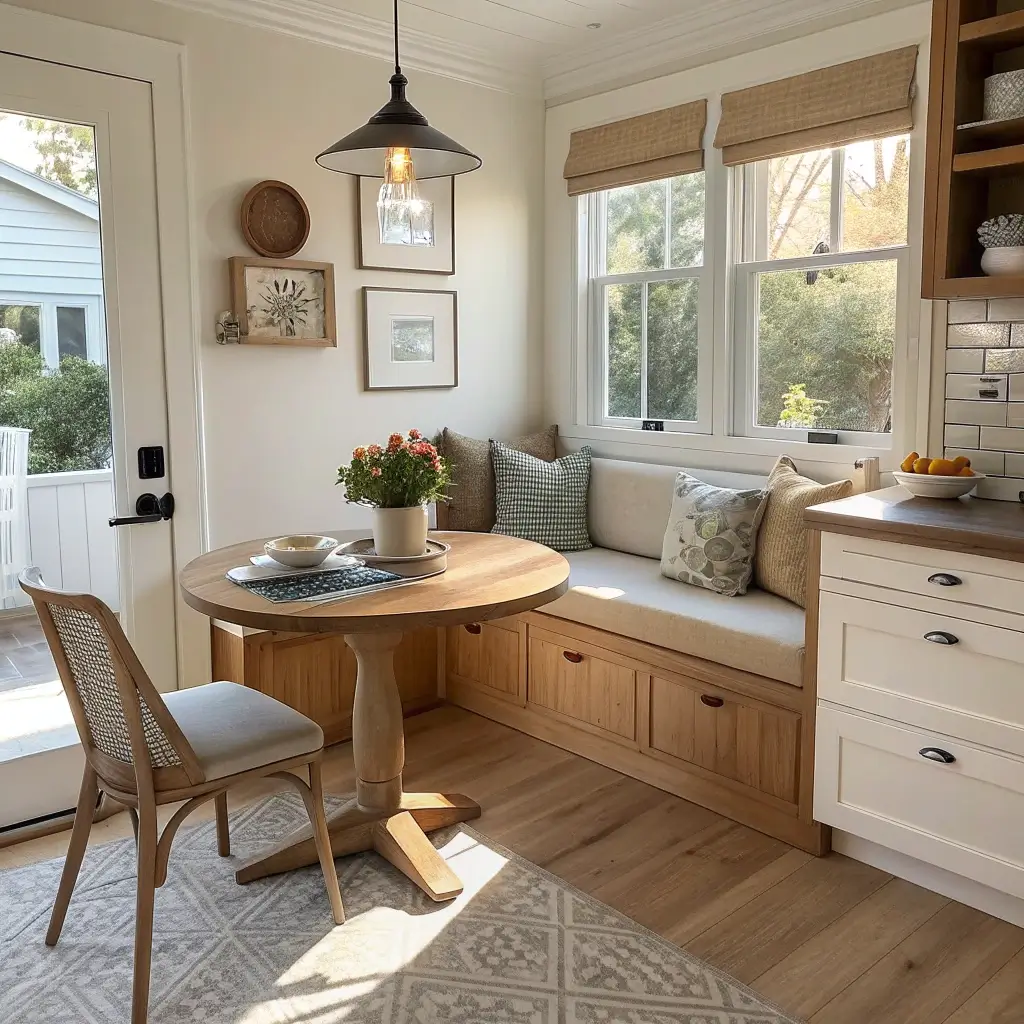
Working with a seriously small combo room? Join the club – we have meetings in my 250-square-foot living/dining space (kidding, there’s no room for meetings). Small spaces force you to get creative, and honestly? Some of my favorite rooms are tiny ones that punch way above their weight.
Every piece needs to multitask harder than a parent at a school bake sale. Your dining table? It’s also your desk. That ottoman? Secret storage plus extra seating. The console behind your sofa? It’s actually your dining room sideboard.
Think vertically, because floor space is precious real estate. Wall-mounted shelves, hanging plants, and tall bookcases draw the eye up and make ceilings feel higher. Plus, keeping stuff off the floor makes cleaning easier – always a win in my book.
Small Space Survival Tactics
Master these moves for maximum impact:
- Choose furniture with legs – seeing floor underneath creates airiness
- Stick to a tight color palette to avoid visual chaos
- Use mirrors strategically to double your visual space
- Invest in quality lighting – dark corners make rooms feel smaller
- Consider a round dining table – no corners means better flow
Remember, small doesn’t mean boring. Some of the most characterful rooms I’ve seen could fit in a suburban garage.
Also Read: 15 Trendy Very Small Living Room Ideas and Space Magic
Luxe Glamorous Touch
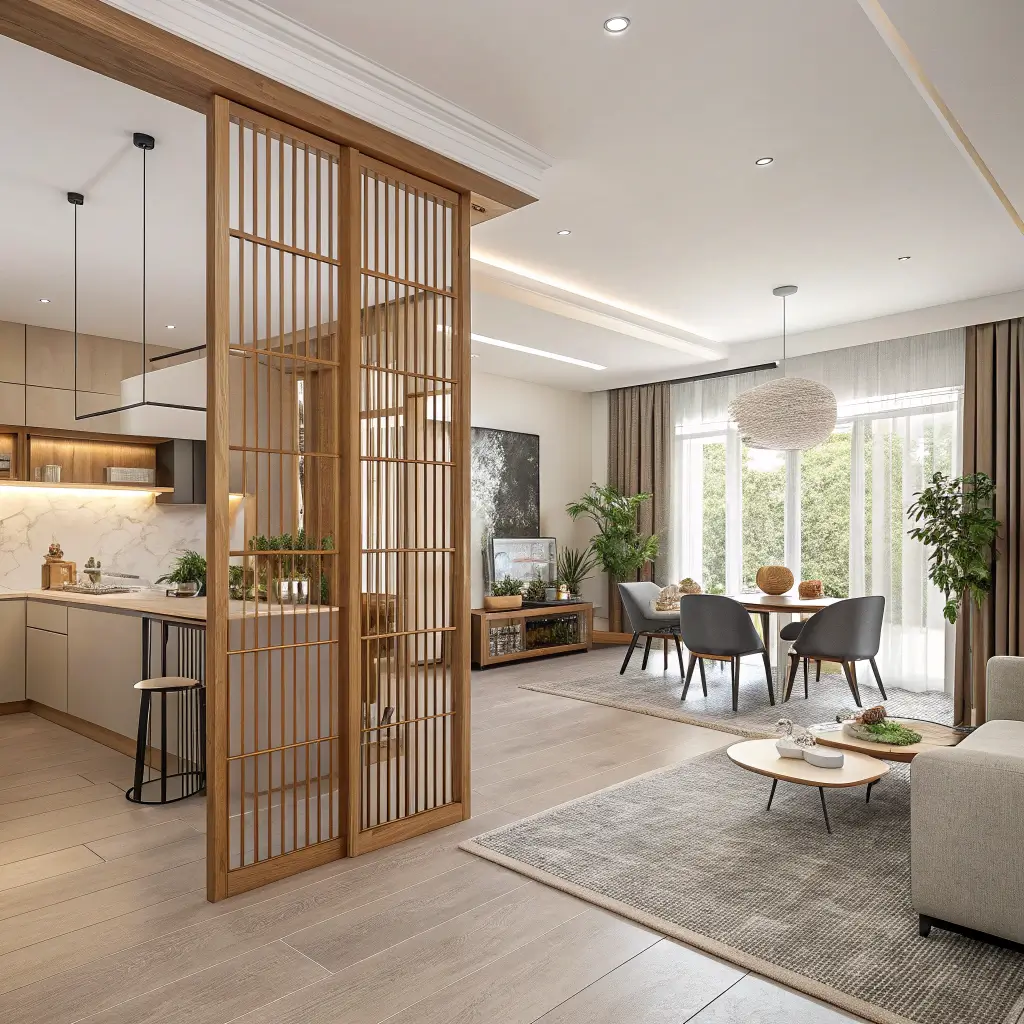
Want your combo space to feel like a boutique hotel lobby? Glamorous design in an open plan takes confidence, but when you nail it, your friends will think you hired a designer (let them think that).
Start with a neutral base – grays, creams, maybe black – then layer in metallics like nobody’s business. Gold dining chair legs, a brass coffee table, silver picture frames – mixing metals is totally fine as long as you distribute them evenly throughout the space.
Texture is everything in glam design. Velvet dining chairs, a tufted sofa, silk curtains, and maybe a fur throw (faux, please – we’re glamorous, not villains). The key is balancing opulence with livability because nobody wants to feel like they can’t put their feet up in their own home.
Glamour Without Gaudiness
Keep it classy with these guidelines:
- Limit your statement pieces – one showstopper per zone max
- Balance shine with matte finishes
- Include modern elements to prevent a Vegas hotel vibe
- Add fresh flowers or orchids – instant elegance
- Invest in quality window treatments – they make everything look expensive
The goal? Sophisticated glamour that whispers rather than shouts.
Green Indoor Oasis
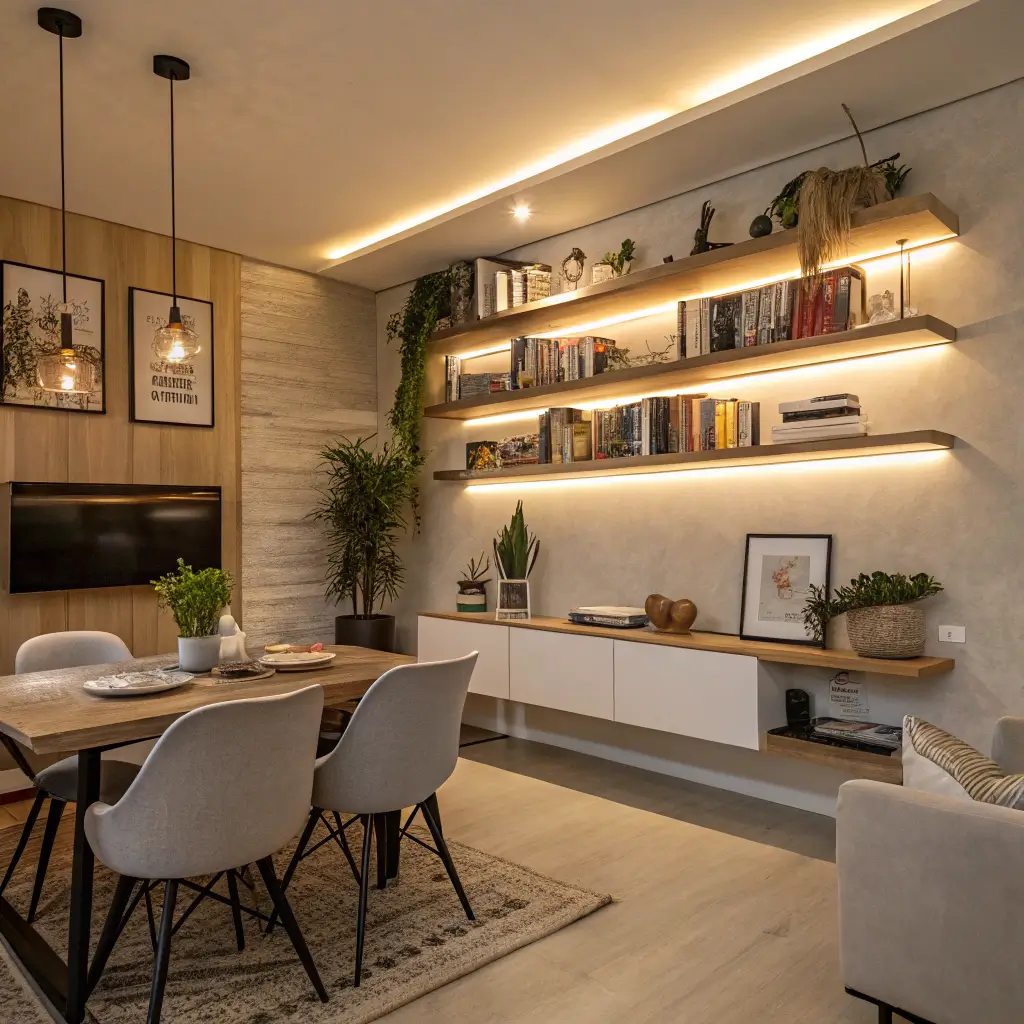
Plants in a combo room aren’t just trendy – they’re genius space definers that happen to clean your air. I went from killing every plant I touched to having 30+ thriving green friends, and they’ve completely transformed how my combo space feels.
Use plants as natural room dividers. A tall fiddle leaf fig between your sofa and dining table creates separation without blocking light. Hanging plants draw the eye up and add layers without taking up floor space. Plus, they’re way cheaper than building an actual wall.
Different zones can have different plant personalities. Maybe your dining area gets the elegant orchids while your living space rocks the casual pothos trailing from shelves. The variation adds interest while the green throughout ties everything together.
Plant Parent Pro Tips
Keep your indoor jungle thriving:
- Group plants with similar care needs together
- Use uniform planters for a cohesive look
- Mix heights and leaf shapes for visual interest
- Consider low-maintenance options like snake plants or ZZ plants
- Add grow lights if natural light is limited
Don’t go overboard – you want an oasis, not a greenhouse where you can’t find your sofa :/
Color-Blocked Zoning
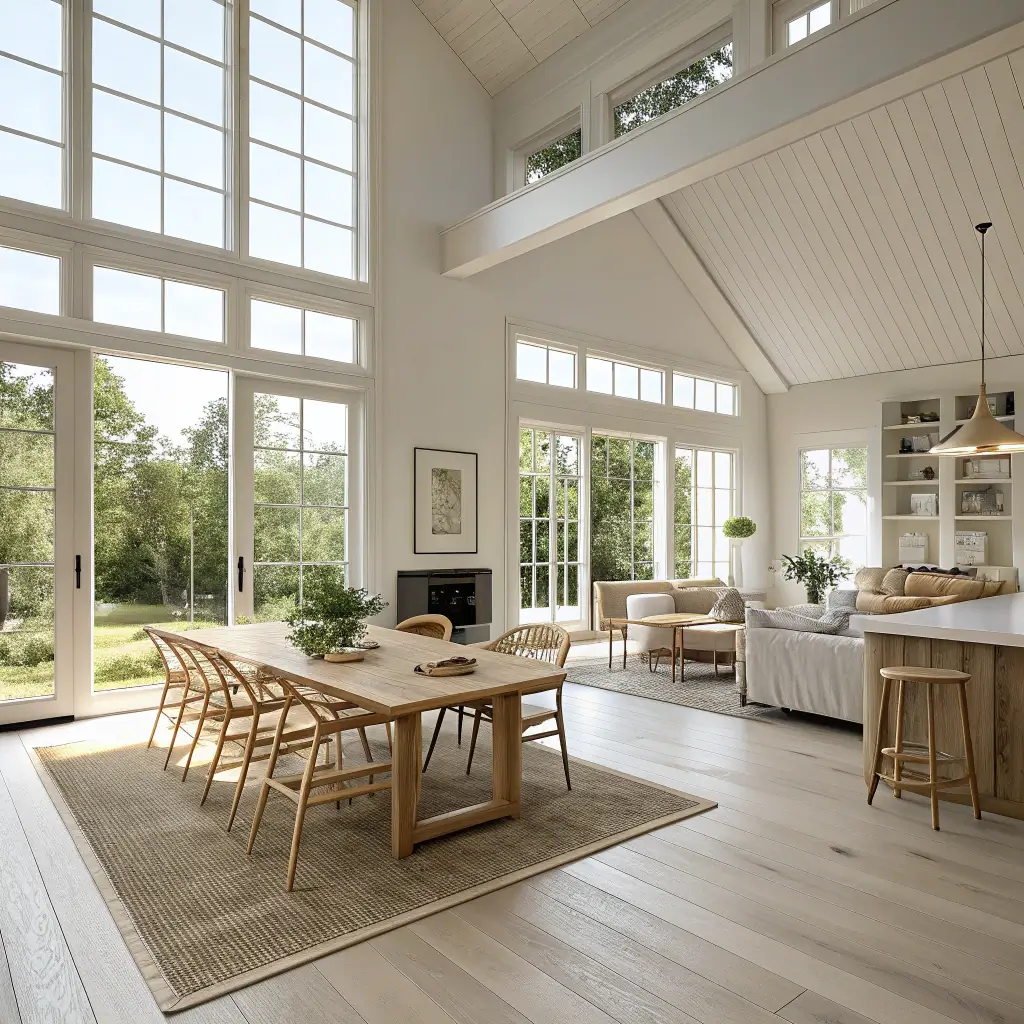
Who needs walls when you have paint? Color-blocking creates distinct zones without construction, permits, or arguments with your landlord. It’s basically the design equivalent of drawing invisible boundaries that everyone respects.
Paint your dining area wall in a bold navy while keeping the living area neutral, or create a color-drenched ceiling that defines your dining space. The key is commitment – halfhearted color-blocking just looks like you ran out of paint.
This technique works especially well in rooms with architectural features. That awkward alcove? Paint it a rich emerald and suddenly it’s an intentional dining nook. The weird corner where nothing fits? A bold color makes it a feature, not a flaw.
Color-Blocking Like a Pro
Make it work with these strategies:
- Choose colors that share undertones for harmony
- Use painter’s tape for crisp lines – wonky edges kill the effect
- Consider the ceiling as your fifth wall
- Balance bold colors with neutral furniture
- Add artwork that bridges both color zones
The beauty of paint? When you’re over it, it’s just a weekend and a few gallons away from change.
Multi-Functional Furniture Magic
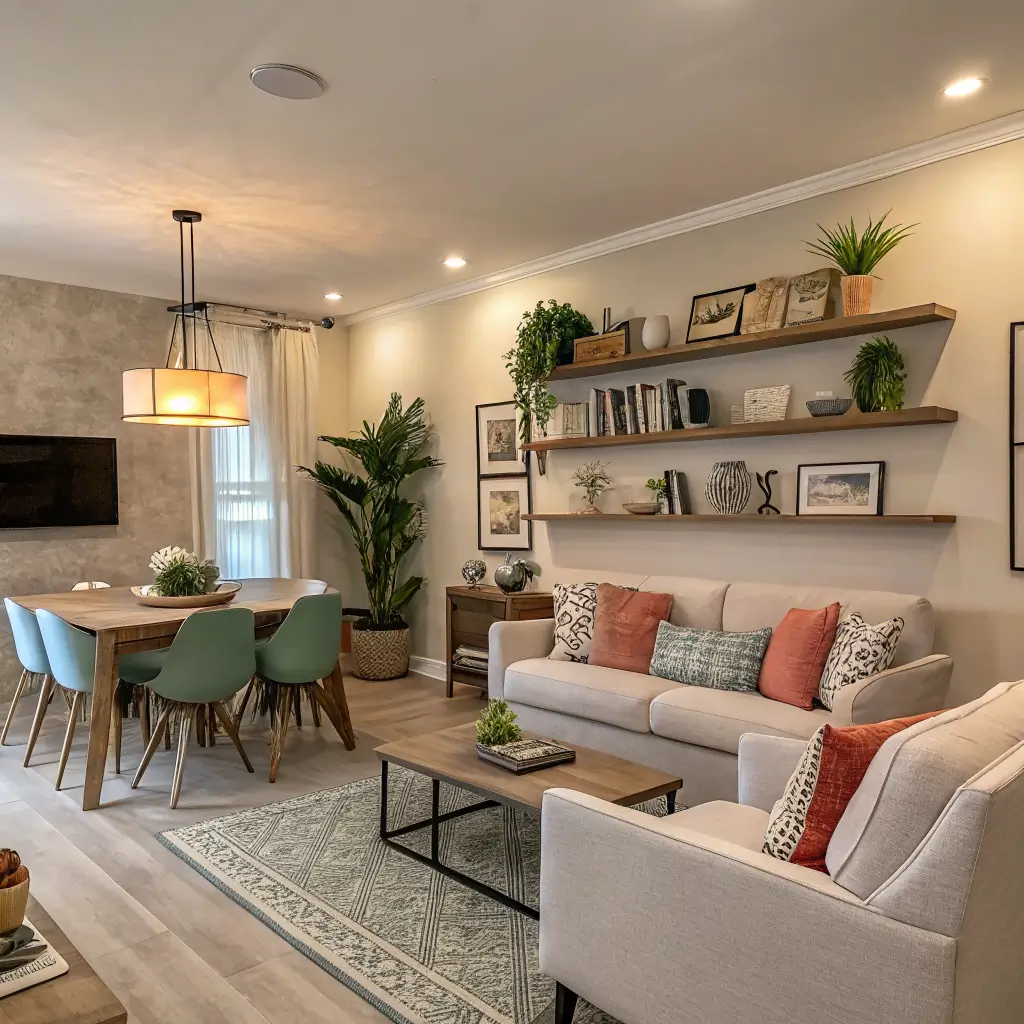
Multi-functional furniture is the Swiss Army knife of combo rooms. That ottoman that opens for storage, doubles as coffee table, and provides extra seating? It’s doing the work of three pieces while taking up the space of one.
Expandable dining tables are combo room MVPs. Daily dining for two, Thanksgiving dinner for twelve – one table handles it all. Nesting coffee tables, sofa beds, and storage benches all earn their keep by pulling double or triple duty.
But here’s the thing – multi-functional doesn’t mean ugly. Modern designs have come so far from those clunky futon days. You can find pieces that transform beautifully without looking like they’re trying to hide something.
Smart Furniture Investments
Pieces worth splurging on:
- Quality expandable dining table – you’ll use it constantly
- Storage ottoman in durable fabric
- Console table that extends to dining table
- Modular sofa that reconfigures for different occasions
- Bar cart that moves between zones as needed
The best multi-functional pieces feel intentional, not like compromise solutions.
Bright & Airy Layout
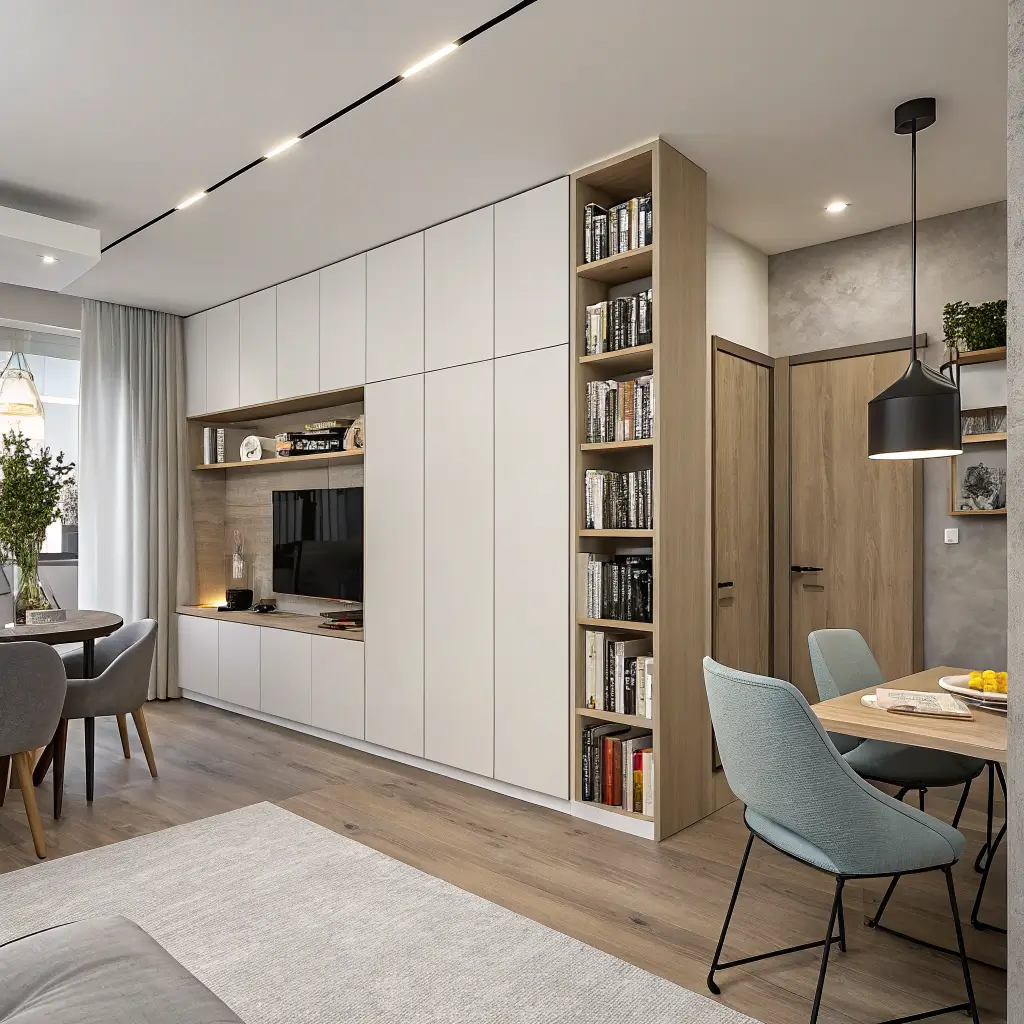
Creating an airy feel in a combo room is about more than just painting everything white (though that helps). It’s about maximizing light, minimizing visual weight, and keeping things flowing like a gentle breeze through your space.
Position your furniture to take advantage of natural light. Float your sofa instead of pushing it against a wall, angle your dining table to catch morning sun, and never, ever block a window with tall furniture. Natural light is free therapy – don’t waste it.
Choose furniture with legs, glass surfaces, and open shelving. These pieces let light and sight lines travel through rather than stopping dead. Your room instantly feels twice as big when you can see through and under things.
Maximizing the Airy Vibe
Brighten your space with these moves:
- Layer your lighting – ambient, task, and accent
- Hang curtains high and wide to maximize window size
- Use mirrors to bounce light around
- Keep clutter minimal – airy and cluttered don’t mix
- Choose light-colored rugs that expand rather than anchor
The goal is a room that feels like it could float away if it weren’t for the furniture keeping it grounded.
Cozy Warm Neutral Palette
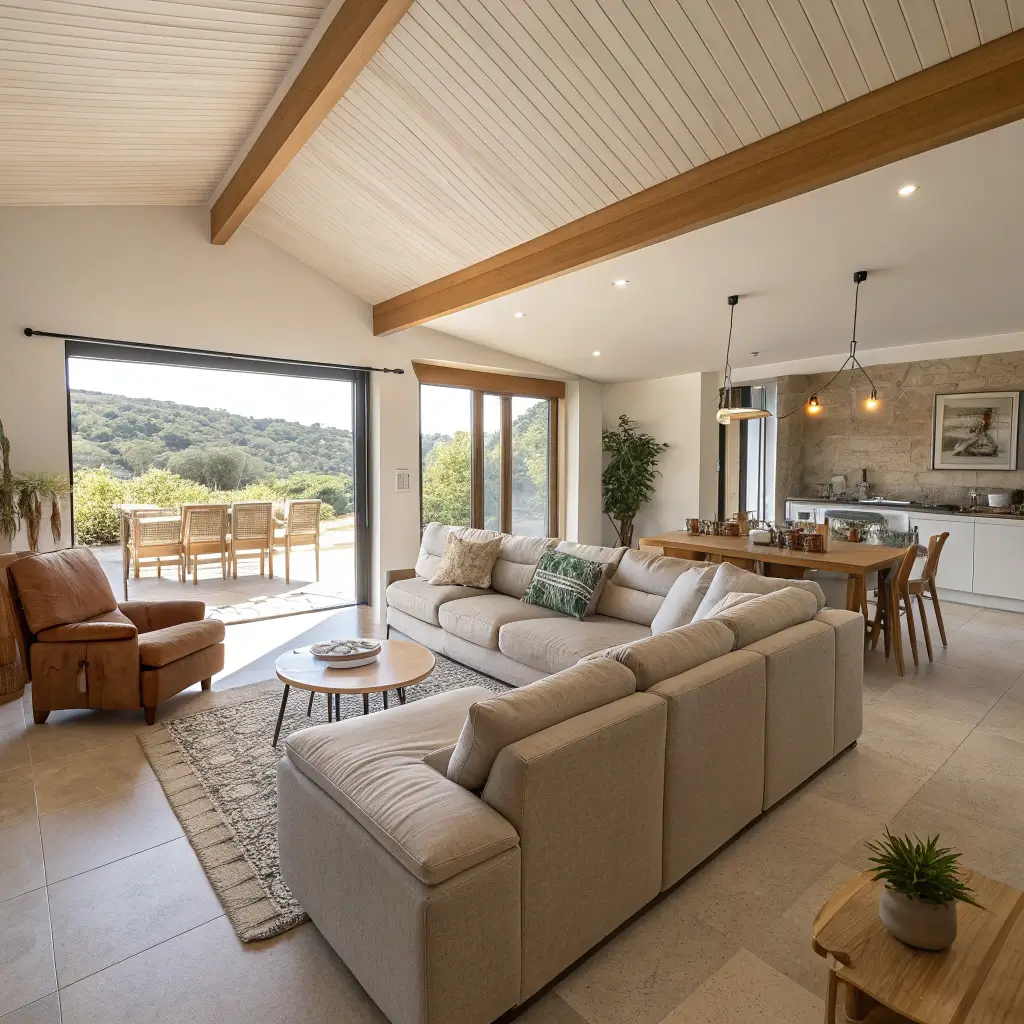
Neutrals get a bad rap for being boring, but a warm neutral palette creates the perfect backdrop for combo living. We’re talking honey-colored woods, creamy whites, soft grays, and warm taupes that make everyone feel instantly at home.
The magic happens in the layering. Different shades of beige might sound like watching paint dry, but when you mix textures – nubby linen, smooth leather, rough jute – suddenly you’ve got dimension and interest without the color chaos.
Warm neutrals also play nice with changing styles. Want to add color next season? Your neutral base welcomes it. Feeling minimalist? Strip back to basics. It’s like having a room that adapts to your mood without major renovation.
Creating Cozy Without Clutter
Build warmth through:
- Layered textiles in varying neutral shades
- Wood tones from light oak to deep walnut
- Soft lighting with warm bulbs (3000K or less)
- Natural materials like wool, cotton, and leather
- Subtle patterns in tone-on-tone designs
The result? A space that feels like a cashmere sweater – expensive, comfortable, and always appropriate.
Conclusion
Look, creating a living room and dining room combo that actually works isn’t about following every design rule or copying what you see on Pinterest. It’s about finding what makes sense for how you actually live. Maybe you need that industrial edge because you’re tired of precious spaces you’re afraid to use. Or perhaps the Scandi simplicity speaks to your cluttered soul that craves calm.
The beauty of these 15 approaches? They’re starting points, not strict prescriptions. Mix and match elements, break some rules, make some mistakes. The best combo rooms I’ve seen all have one thing in common – they reflect the people who live in them, not some magazine’s idea of perfection.
Your combo space should work as hard as you do, look good without trying too hard, and make both Tuesday night takeout and Saturday dinner parties feel equally at home.
Whether you go full glamorous or keep it minimal, just remember: the best room is one you actually want to spend time in. Everything else is just details – really important, style-defining, Instagram-worthy details, but still just details ;
