Let’s be honest—you’ve probably spent the last hour scrolling through Pinterest, looking at gorgeous rooms and wondering why yours doesn’t have that same “je ne sais quoi.” Well, I’m about to let you in on a secret: it’s all about the profile lighting in your ceiling.
I discovered profile lighting completely by accident when my electrician suggested it as a solution to my “I hate all ceiling fixtures” problem. Three years and two homes later, I’m basically evangelizing about how these hidden light channels transform spaces from basic to breathtaking. The soft, indirect glow creates ambiance that no chandelier or pendant light could ever match.
Think about it—when you walk into a high-end hotel or that friend’s house that always looks magazine-ready, what creates that sophisticated atmosphere? Nine times out of ten, it’s the lighting you don’t see directly.
Profile lighting takes your ceiling from forgotten fifth wall to the star of the show, all while staying completely hidden. Ready to discover which profile lighting design will turn your home into that space everyone else pins on Pinterest?
Floating Glow Profile Ceiling
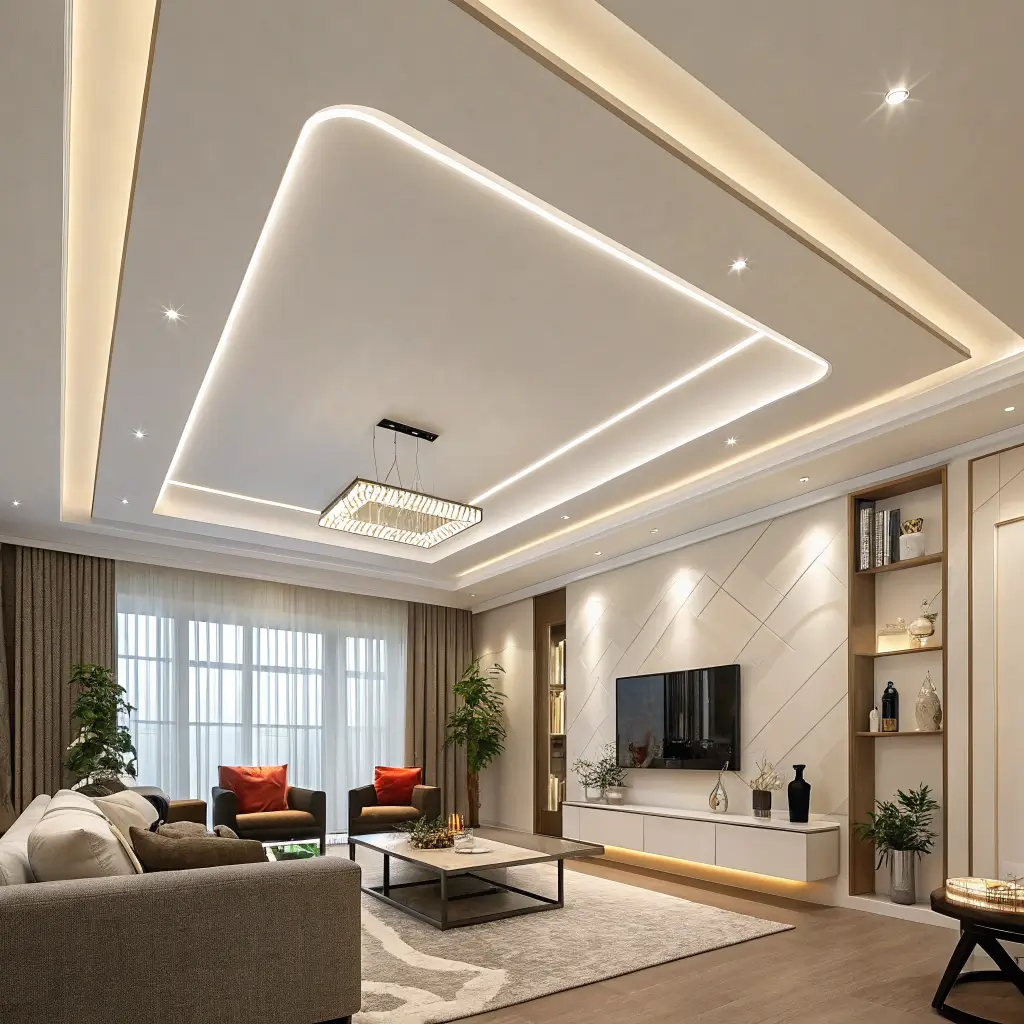
Ever walked into a room and felt like the ceiling was literally floating? That’s the magic of floating glow profile ceilings, and trust me, once you experience it, regular ceilings feel tragically grounded.
The concept revolves around creating a gap between your ceiling and walls, then tucking LED strips into that space. The light washes down the walls while making the ceiling appear to hover weightlessly above. I installed this in my master bedroom, and now falling asleep feels like floating on a cloud—dramatic? Maybe. True? Absolutely.
What makes this design particularly brilliant is how it handles low ceilings. Instead of making rooms feel shorter, the floating effect actually adds perceived height. The continuous perimeter glow eliminates harsh shadows in corners, making spaces feel larger and more open.
Key Design Elements:
- Gap width of 2-4 inches works best
- Use warm white LEDs (3000K) for residential comfort
- Install diffusion strips to prevent dot effect
- Include dimmer controls for versatility
- Plan access panels for future maintenance
The installation requires building a dropped ceiling frame slightly smaller than your room dimensions. Yes, you lose a few inches of height, but the visual payoff makes every inch worthwhile.
Minimalist Cove Light Magic
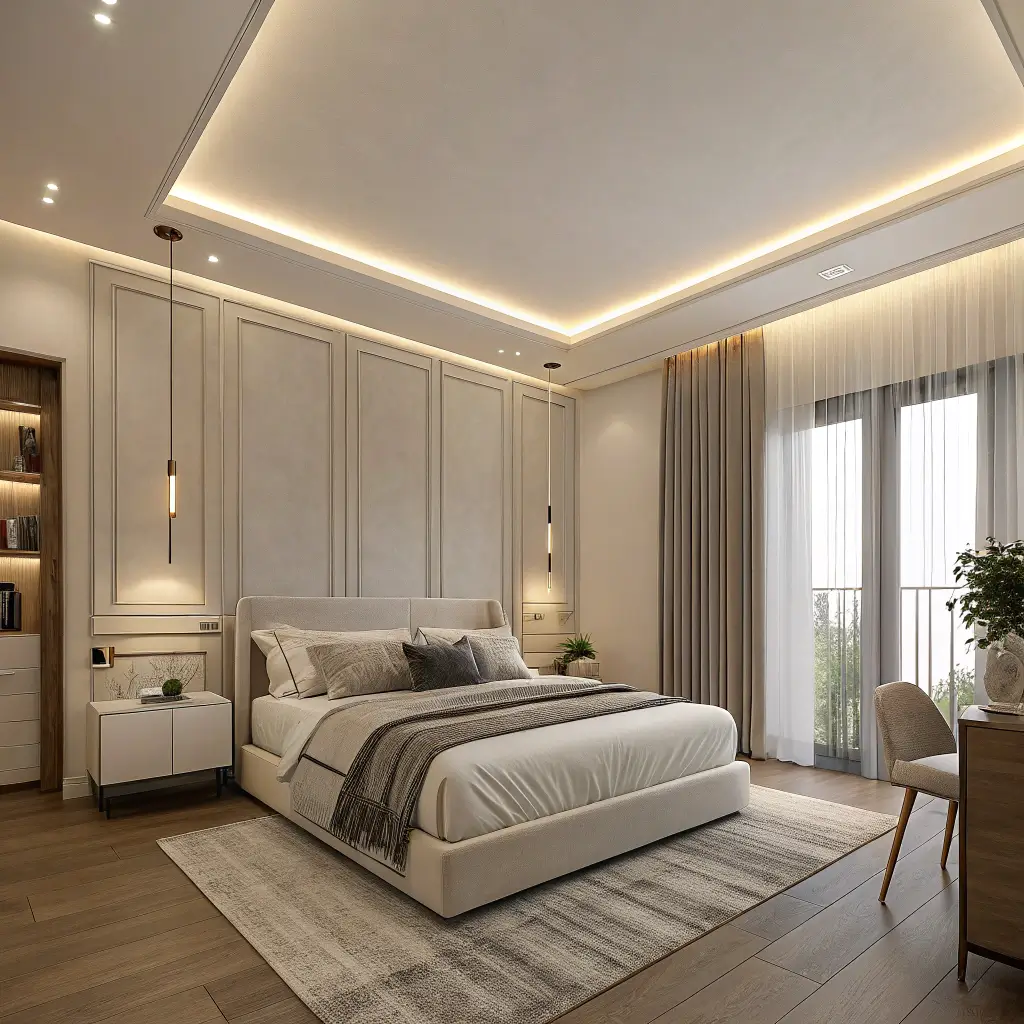
Minimalist cove lighting strips away everything unnecessary, leaving pure, elegant illumination. No fancy patterns, no complex layers—just clean lines and perfect light distribution.
The beauty lies in the simplicity. A single recessed channel runs around your ceiling perimeter, housing LED strips that cast light upward and outward. The result? Your entire ceiling becomes one giant, soft light source. My living room uses this approach, and guests constantly ask where the lighting comes from because they can’t see any fixtures.
This design works particularly well with modern, minimalist interiors where less truly is more. The absence of visible fixtures means nothing interrupts your clean lines or competes with your carefully curated furniture. Just pure, even illumination that makes everything look better.
Minimalist Cove Specifications:
- Cove depth should be 4-6 inches minimum
- Keep profile edges sharp and clean
- Paint cove interior white for maximum reflection
- Use high-CRI LEDs for accurate colors
- Consider separate zones for different areas
Installation tip: measure three times, cut once. Minimalist design means every imperfection shows, so precision matters more than with decorative styles.
Layered LED Ceiling Elegance
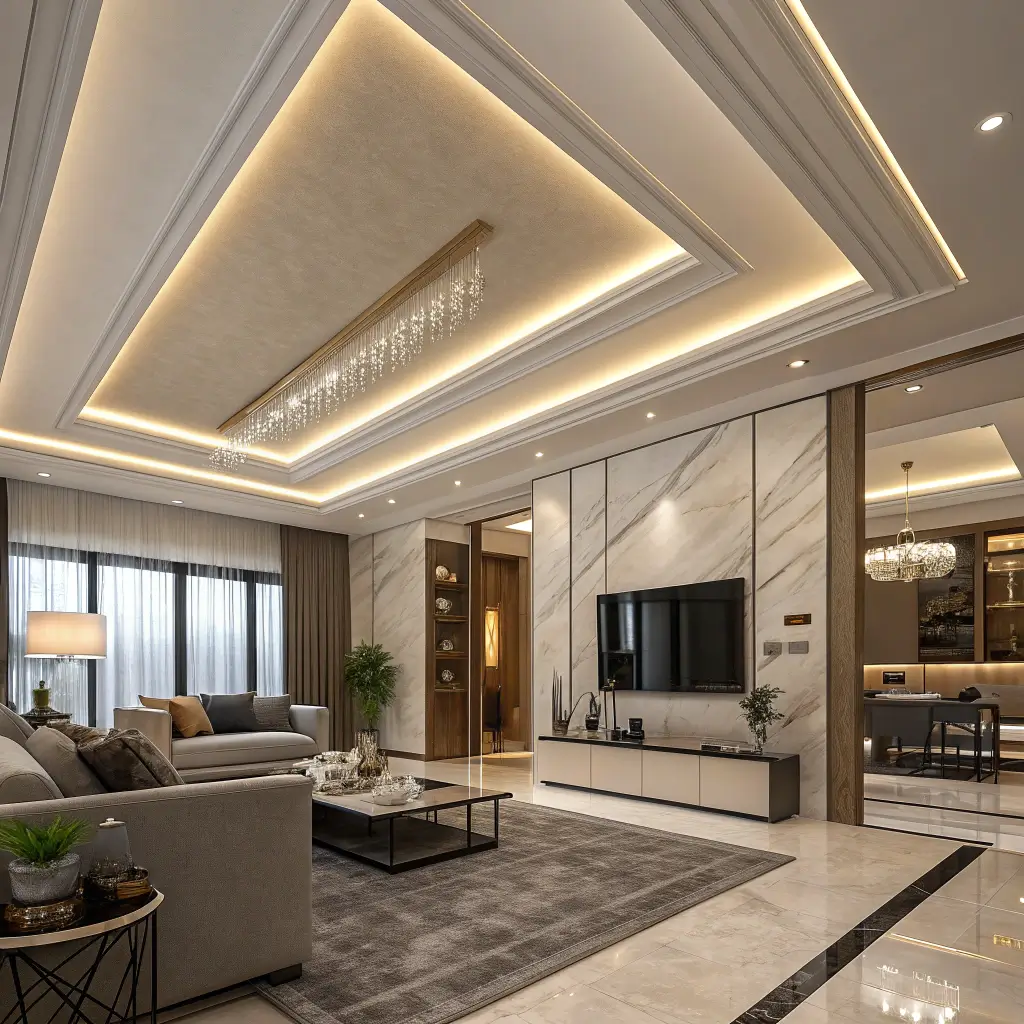
Why settle for one level when you can have multiple? Layered LED ceiling profiles create depth and dimension through strategically stacked lighting channels at different heights.
Picture this: your main ceiling has a recessed border with warm white LEDs. Drop down six inches, and another frame creates a second layer with cooler accent lighting. Maybe add a third central layer for task lighting over specific areas. Each layer operates independently, giving you complete control over ambiance.
I helped my sister design a three-layer system for her dining room, and the transformation was incredible. She can go from bright and energetic for homework time to soft and romantic for dinner parties with just a few switch flips. The layers also define spaces within open floor plans without needing walls.
Layering Strategy:
- Start with the largest perimeter and work inward
- Vary heights by 4-8 inches between layers
- Use different color temperatures for each layer
- Include separate controls for maximum flexibility
- Plan cable management from the beginning
The complexity means higher installation costs, but the dramatic effect and versatility justify every penny.
Also Read: 10 Charming POP Ceiling Design Ideas with Wow Factor
Geometric Light Frame Design
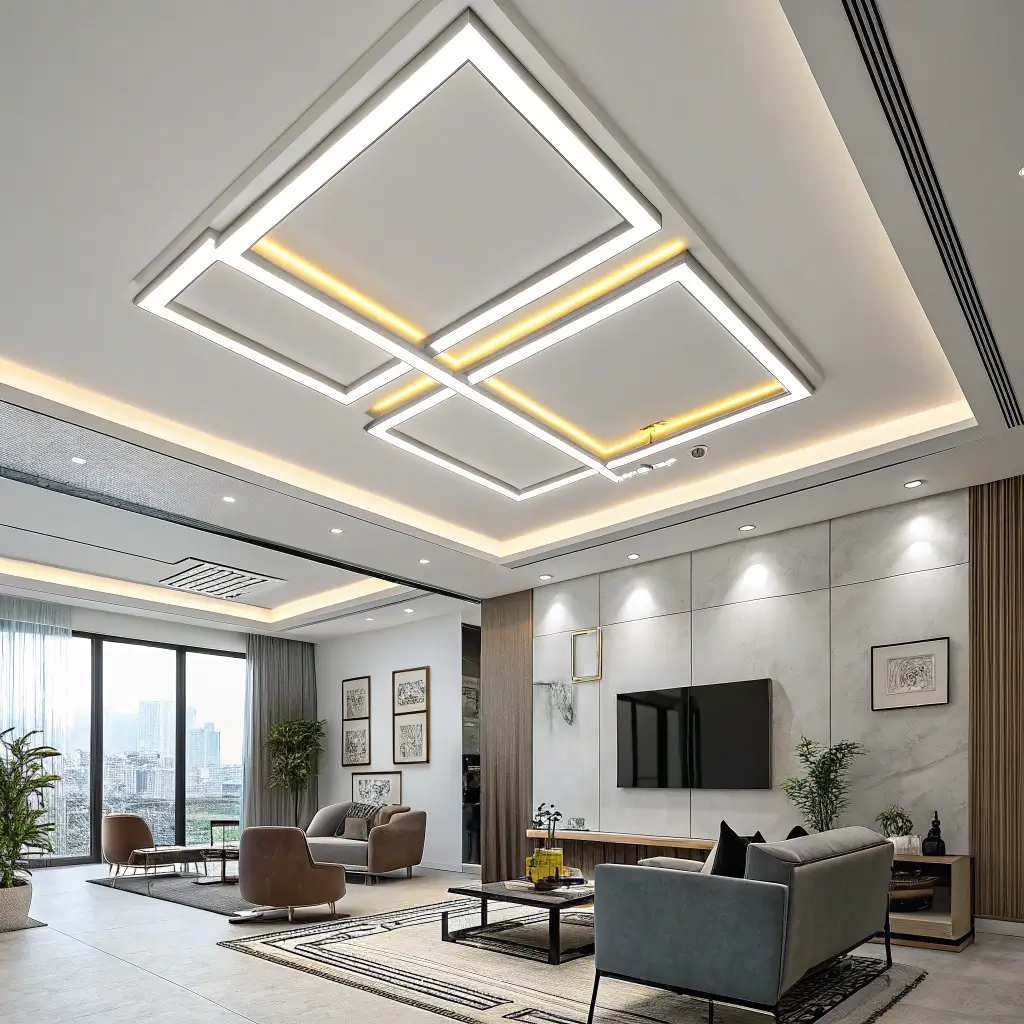
Forget boring rectangles—geometric light frame designs turn your ceiling into an illuminated work of art. Triangles, hexagons, or abstract shapes outlined in light create focal points that command attention.
The key to successful geometric profile lighting lies in proportion and placement. Your shapes should complement room architecture, not fight it. My home office features interlocking diamond shapes that mirror my bookshelf pattern, creating visual continuity that ties the whole space together.
Modern LED technology makes complex shapes achievable without astronomical costs. Flexible LED strips bend around corners, while rigid channels maintain clean lines for straight sections. Mix both for unlimited design possibilities.
Geometric Planning Tips:
- Sketch designs on graph paper first
- Keep shapes proportional to room size
- Limit to 2-3 shapes to avoid chaos
- Use warm white for all shapes (consistency matters)
- Consider how shadows will fall
Ever noticed how geometric patterns make rooms feel larger? The lines draw your eye outward, expanding perceived boundaries. Psychology meets design in the best way.
Warm Ambient Profile Glow
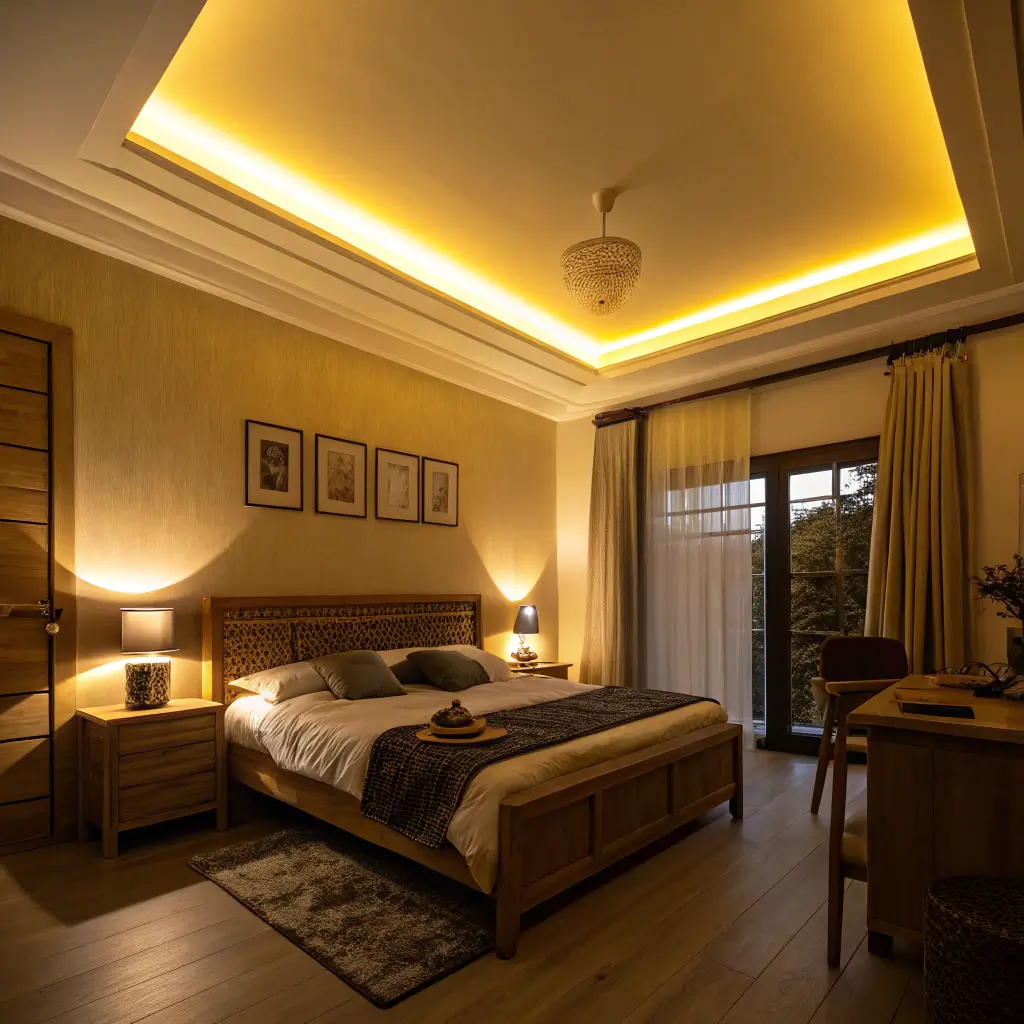
Sometimes you don’t want dramatic or architectural—you want warm, cozy, ambient lighting that makes every evening feel like hygge heaven. Profile lighting delivers this better than any other option.
The secret lies in color temperature and placement. Choose 2700K-3000K LEDs for that golden hour glow year-round. Position profiles to wash light across textured surfaces—exposed brick, wood paneling, or even textured paint—to enhance warmth through shadow play.
My parents were skeptical about profile lighting until I installed warm ambient profiles in their family room. Now my dad jokes that their evening TV watching feels like being in a fancy theater. The soft, indirect light reduces eye strain while creating an envelope of coziness.
Creating Warm Ambiance:
- Layer different light sources for depth
- Use amber or gold-tinted diffusers
- Position lights to highlight textures
- Install dimmers (non-negotiable!)
- Consider timer systems for automatic evening ambiance
FYI, warm lighting makes everyone look better. Your selfie game will definitely improve 🙂
Sleek Linear Ceiling Illumination
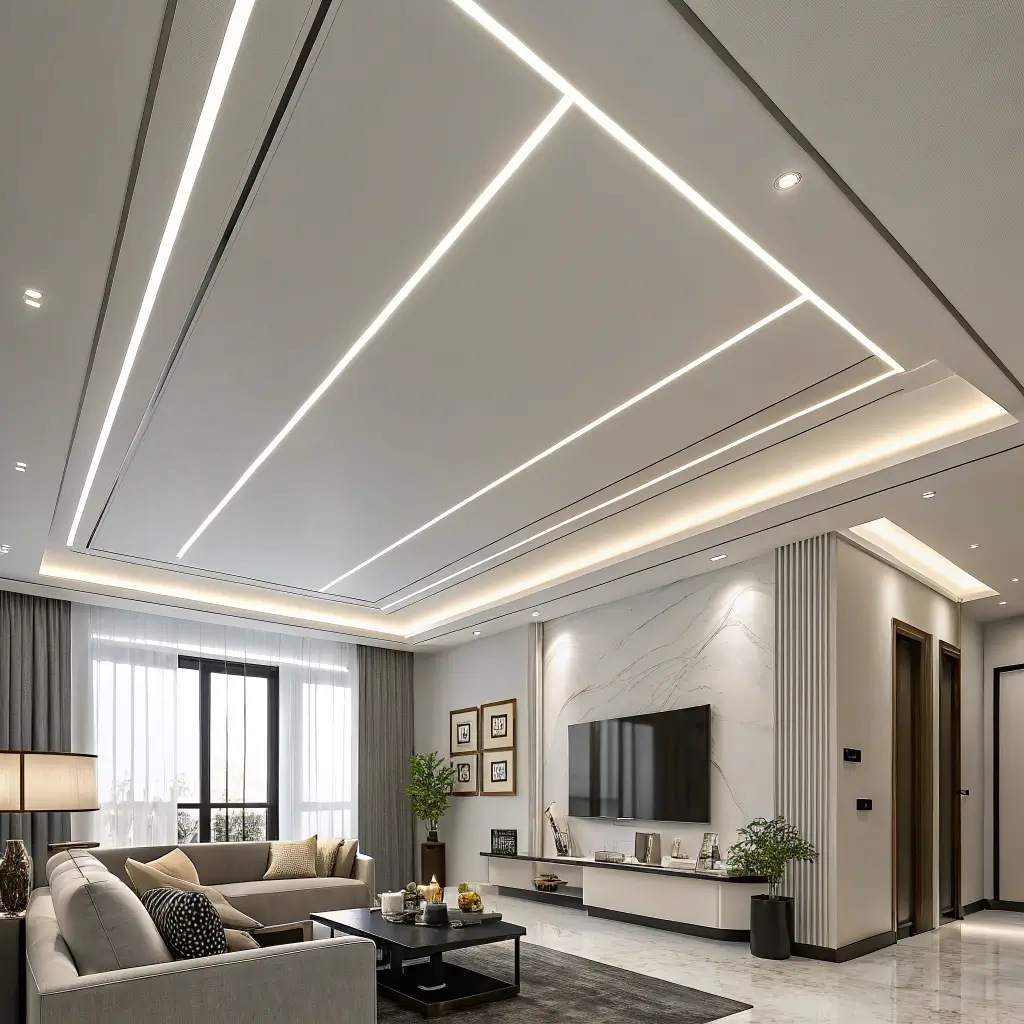
Linear ceiling illumination brings clean, continuous lines of light that guide the eye and define spaces with surgical precision. Think of it as drawing with light across your ceiling.
The profiles run in straight lines—parallel, perpendicular, or even diagonal—creating rhythm and movement overhead. I’ve seen this used brilliantly in hallways where the lines lead you through the space, and in kitchens where they define work zones without cluttering the ceiling with individual fixtures.
What sets linear profiles apart is their versatility in width and intensity. Narrow 1-inch channels create subtle accents, while wider 4-inch versions become primary light sources. Mix widths for visual hierarchy—wider over main areas, narrower for transitions.
Linear Design Principles:
- Run lines parallel to longest dimension to elongate space
- Maintain consistent spacing between multiple lines
- Use corners to create frames within frames
- Include emergency lighting capability
- Plan for future expansion possibilities
The minimalist aesthetic works with any decor style. Modern spaces embrace the clean lines, while traditional rooms benefit from the understated elegance.
Also Read: 12 Trendy Wooden Ceiling Design Ideas for Modern Décor
Starry Sky Profile Lighting
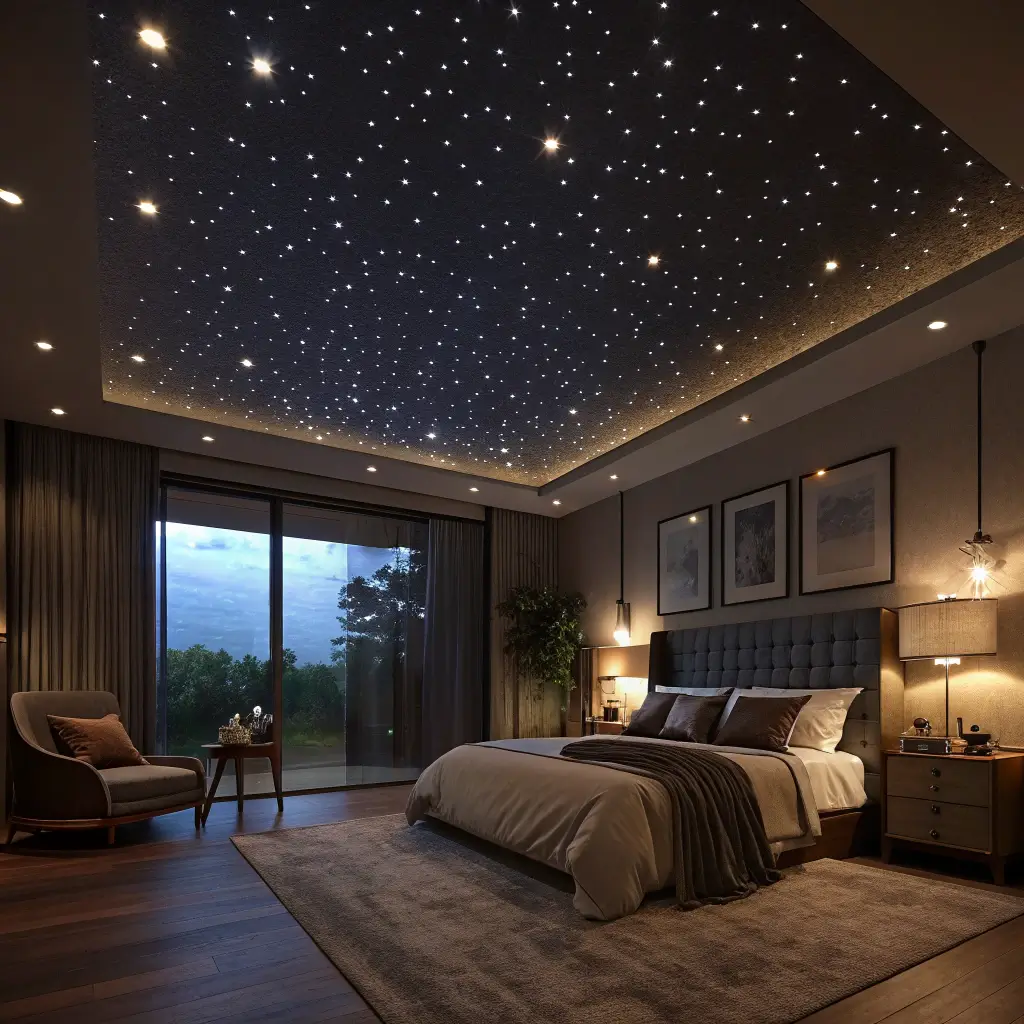
Who says profile lighting can’t be magical? Starry sky effects combine traditional profile channels with fiber optic stars or micro-LEDs to create your personal cosmos overhead.
The main profile provides base ambient lighting, while tiny points of light twinkle through the ceiling surface. Some systems even include shooting star effects or constellation patterns. My nephew’s bedroom has this setup, and bedtime became significantly easier once he could fall asleep under “stars.”
Technology has evolved beyond those cheesy fiber optic kits from the ’90s. Modern systems use addressable LEDs that can twinkle, fade, and even change colors individually. Smartphone control lets you adjust everything from twinkle speed to constellation brightness.
Starry Sky Components:
- Base profile lighting for general illumination
- Micro-LEDs or fiber optics for stars
- Controller for effects and patterns
- Optional color-changing capabilities
- Sound activation for party mode
IMO, this works best in bedrooms or entertainment spaces. Your formal dining room probably doesn’t need a galaxy overhead :/
Modern Recessed Light Waves
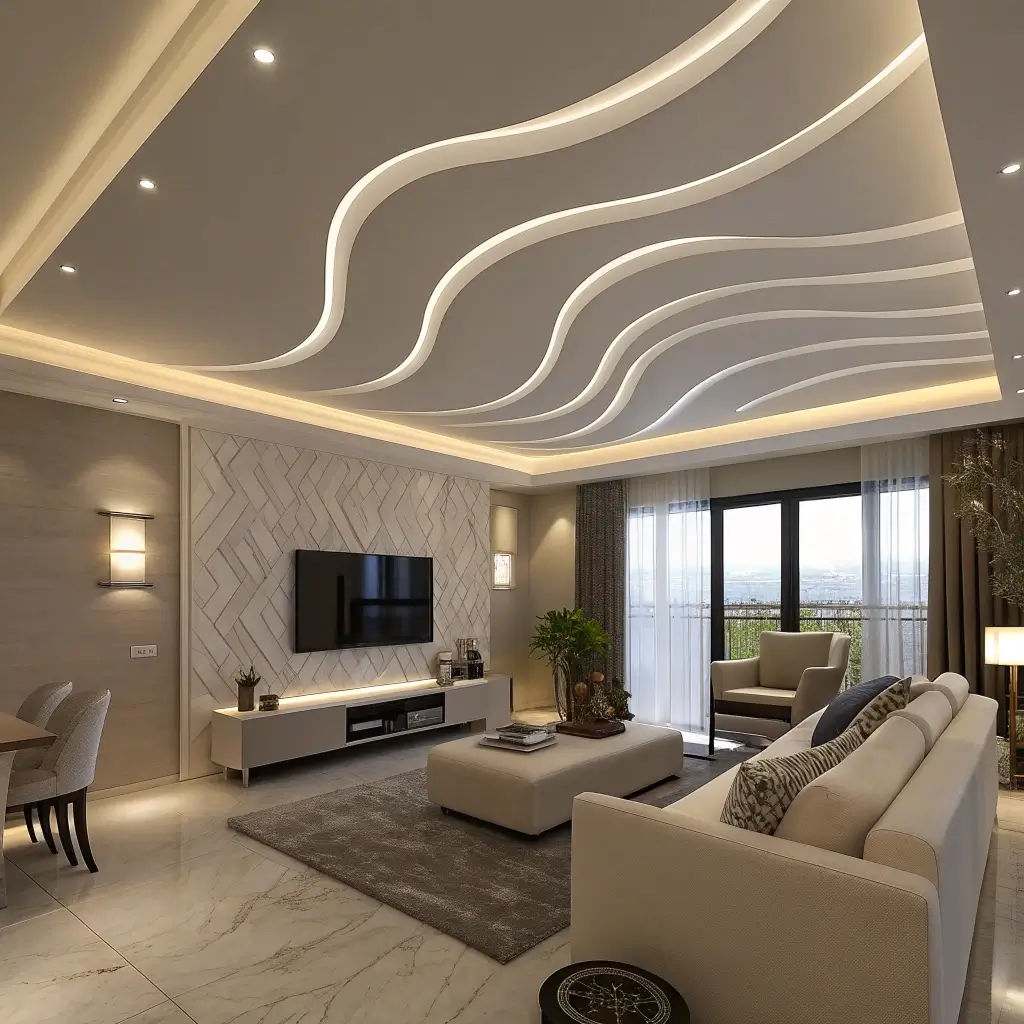
Straight lines are so yesterday. Curved wave profiles bring organic movement to your ceiling, creating flowing ribbons of light that make static spaces feel dynamic.
The waves can be subtle undulations or dramatic swoops, depending on your courage level and ceiling height. LED strips follow the curves, creating gradients of light and shadow that shift as you move through the room. My friend’s spa features gentle waves that genuinely make you feel more relaxed—placebo effect or design genius? Who cares when it works!
Creating smooth curves requires flexible profile channels or custom-fabricated pieces. The investment in proper materials pays off—poorly executed curves look like mistakes rather than design choices.
Wave Design Considerations:
- Start with gentle curves if you’re unsure
- Follow room flow patterns
- Vary wave amplitude for interest
- Use consistent LED spacing throughout curves
- Consider how furniture placement relates to waves
The organic nature softens modern interiors while adding contemporary flair to traditional spaces. It’s basically the Switzerland of ceiling designs—neutral yet impressive.
Color-Changing Mood Ceiling
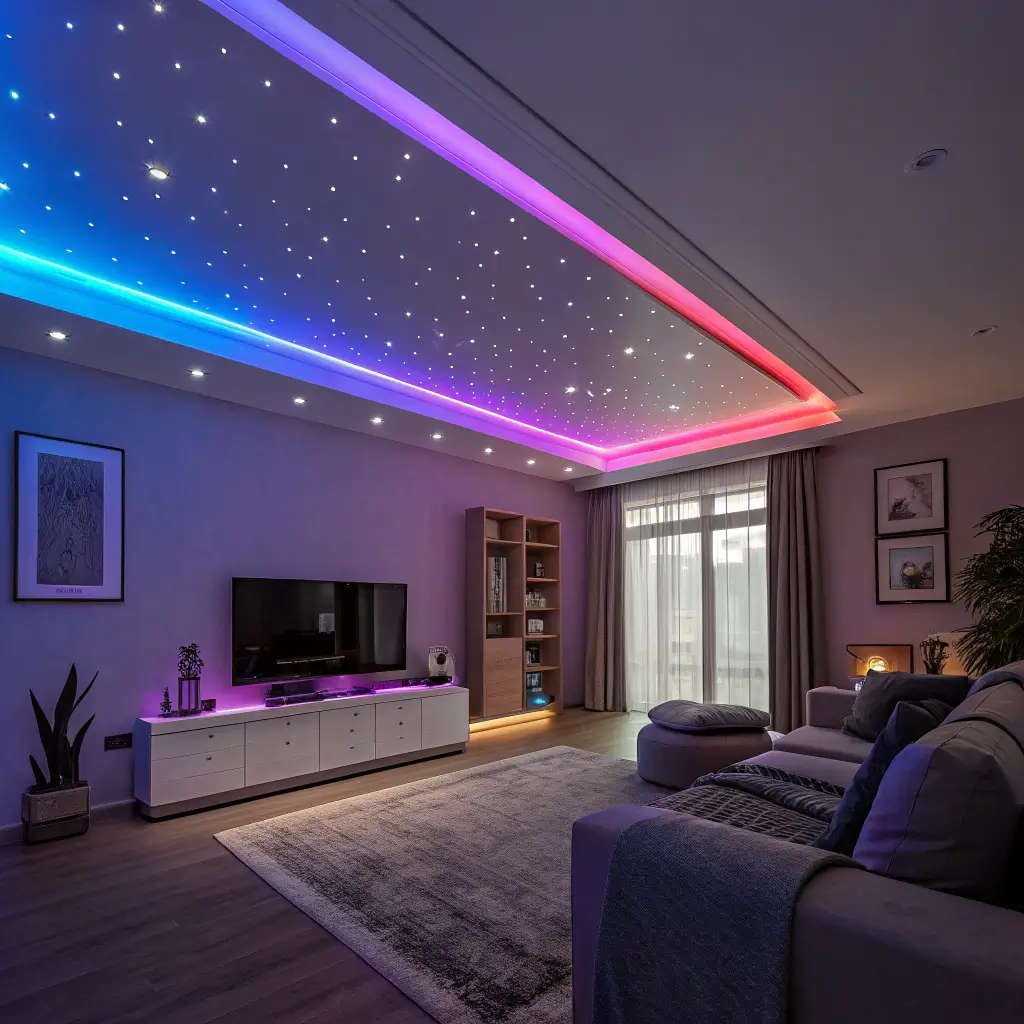
Ready to transform your room’s entire personality with one remote click? Color-changing profile ceilings use RGB or RGBW LEDs to create any mood imaginable.
Before you roll your eyes thinking this is just for teenagers or party animals, hear me out. Modern color-changing systems offer sophisticated options beyond rainbow disco modes. Subtle color temperatures for different times of day, gentle color washes for ambiance, or yes, party modes when the mood strikes.
My home theater uses this system, and it’s transformed movie nights. Horror films get deep red undertones, rom-coms get warm pink glows, and action movies get cool blue accents. The profiles ensure even color distribution without hot spots or shadows.
Color System Features:
- RGBW LEDs provide better whites than RGB
- Smartphone apps for infinite control
- Pre-programmed scenes for convenience
- Music synchronization capabilities
- Integration with smart home systems
Just remember—with great power comes great responsibility. Nobody needs strobe effects during dinner.
Also Read: 15 Minimal Simple Ceiling Design Ideas for Clean Look
Rustic Wooden Cove Lights
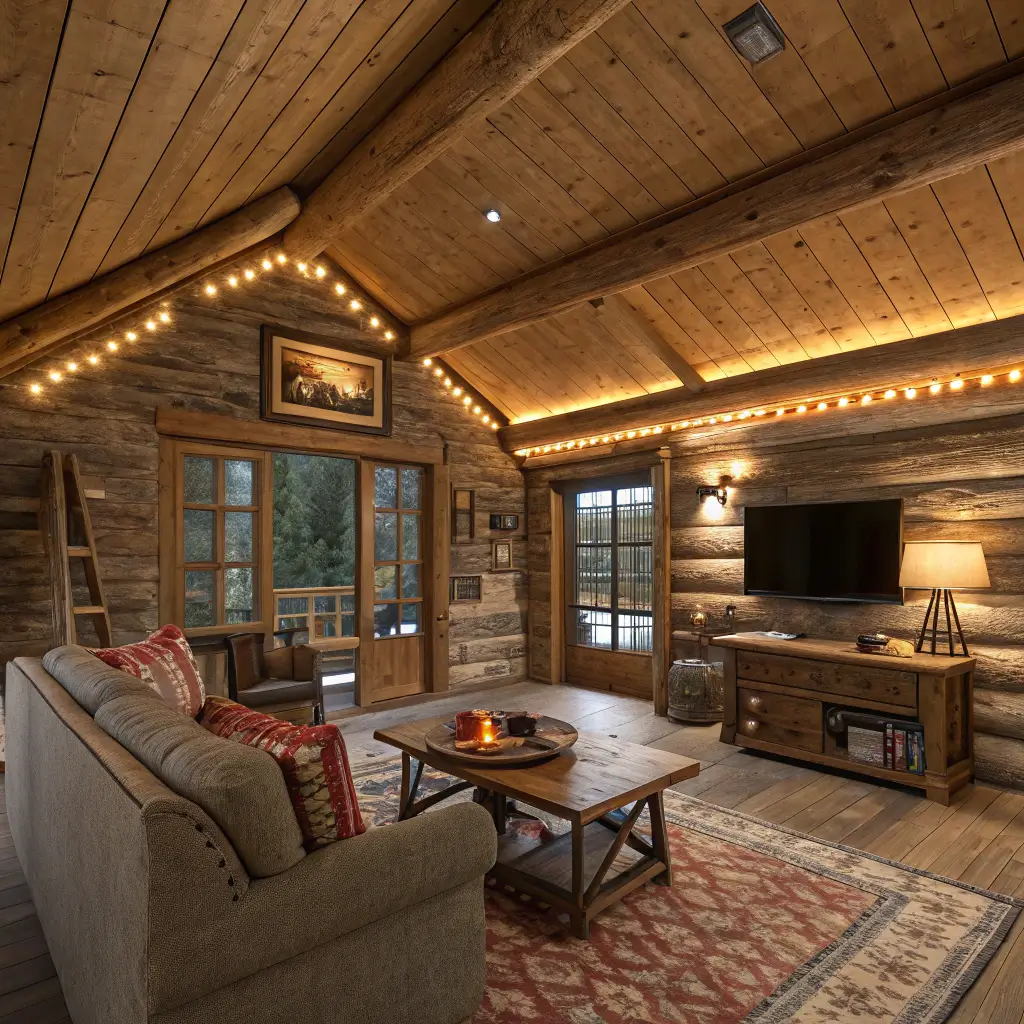
Who says profile lighting only works with modern aesthetics? Rustic wooden cove designs marry traditional materials with contemporary lighting technology for spaces that feel both timeless and current.
The concept involves creating cove channels using reclaimed wood, rough-hewn beams, or distressed lumber, then hiding LED strips within. The contrast between organic wood textures and clean LED light creates visual interest that manufactured materials can’t match.
I installed these in my mountain cabin (okay, it’s a regular house, but “cabin” sounds cooler), using barn wood to create the cove structure. The warm wood tones combined with warm white LEDs create an atmosphere that makes you want to grab a book and never leave.
Rustic Integration Tips:
- Choose wood that complements existing finishes
- Seal wood properly to prevent warping
- Use warm white LEDs exclusively
- Keep profiles simple—let wood texture shine
- Consider adding vintage-style exposed bulbs for accent
The rustic approach proves that profile lighting isn’t just for contemporary spaces. Traditional homes benefit from the improved lighting while maintaining their character.
Illuminating Your Dream Home Vision
So there you have it—ten ways profile light ceiling designs can transform your home from ordinary to extraordinary. The beauty of profile lighting lies not just in the aesthetic upgrade but in the complete transformation of how spaces feel and function.
Start by identifying your biggest lighting pain points. Harsh shadows? Go with floating glow or ambient profiles. Boring, flat ceilings? Geometric frames or waves add instant interest. Can’t decide on a mood? Color-changing systems offer infinite flexibility. The right profile lighting design solves problems while creating beauty.
Remember, profile lighting is an investment in your daily quality of life. You use lighting every single day, multiple times per day. Why settle for basic when you can have brilliant? The installation might seem daunting, but the payoff in ambiance, functionality, and straight-up gorgeousness makes it worthwhile.
Look up at your current ceiling. Now imagine it transformed with soft, even light emanating from hidden sources, creating the perfect ambiance for every moment. That dream is completely achievable with profile lighting. Your ceiling is literally waiting for its glow-up—isn’t it time you delivered?