Windows play a major role in how a room looks and feels, but choosing the right curtains can make an even bigger difference. The perfect window treatment can soften a space, introduce beautiful colors and textures, improve privacy, and make an ordinary room feel thoughtfully decorated. Whether you are refreshing your living room, updating your bedroom, or giving your dining area a little makeover, curtains offer an easy way to change the atmosphere without completely redesigning the space.
Personally, I think curtains are one of those decorating details that deserve more attention. We often spend time choosing furniture, wall colors, rugs, and decorative accessories, but the windows sometimes remain an afterthought. A beautiful pair of curtains can bring all these elements together and make a room feel complete.
The best part is that there are so many styles to explore. You can choose light and airy sheer panels, luxurious velvet drapes, simple neutral curtains, playful floral patterns, or modern layered window treatments. Each option creates a different mood, so the right choice depends on your room, decorating preferences, and everyday needs.
If you are looking for inspiration, these 15 window curtain ideas will help you discover beautiful ways to dress your windows. From timeless designs to contemporary decorating styles, there is something here for almost every home.
1. Floor-to-Ceiling Curtains for an Elegant and Spacious Look
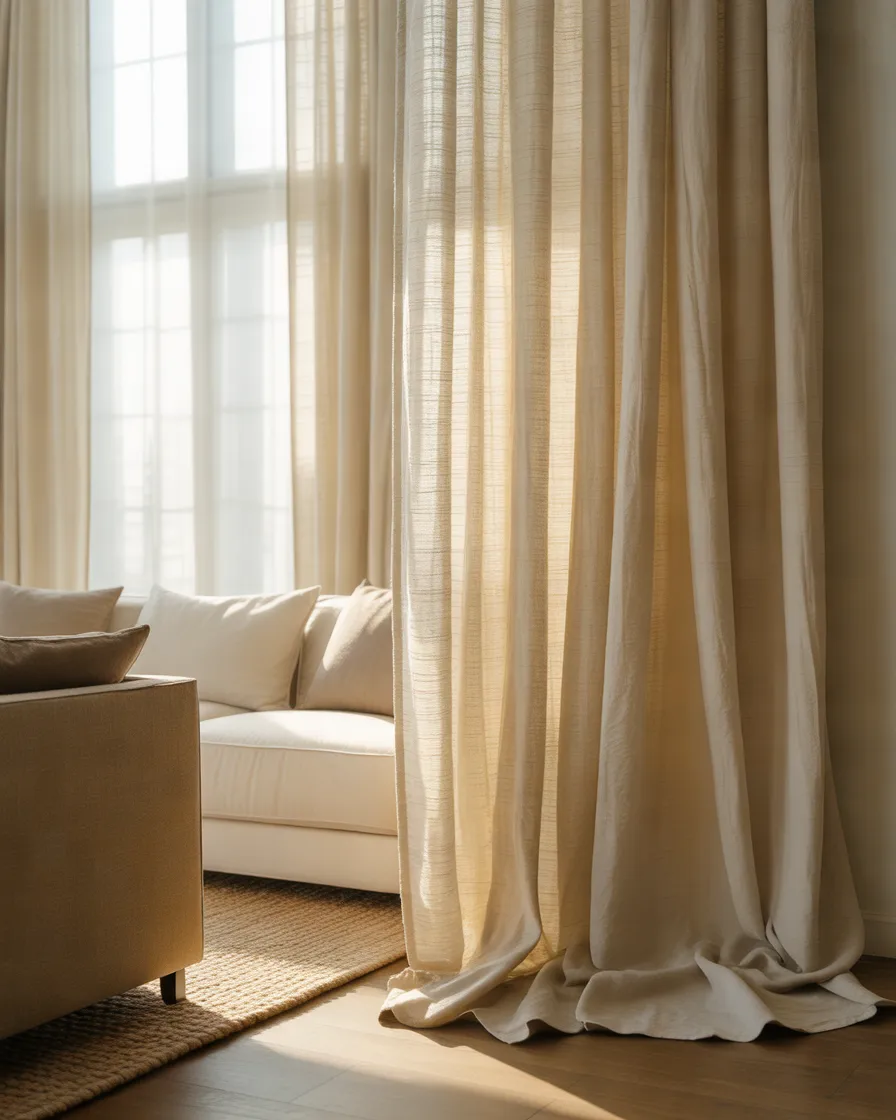
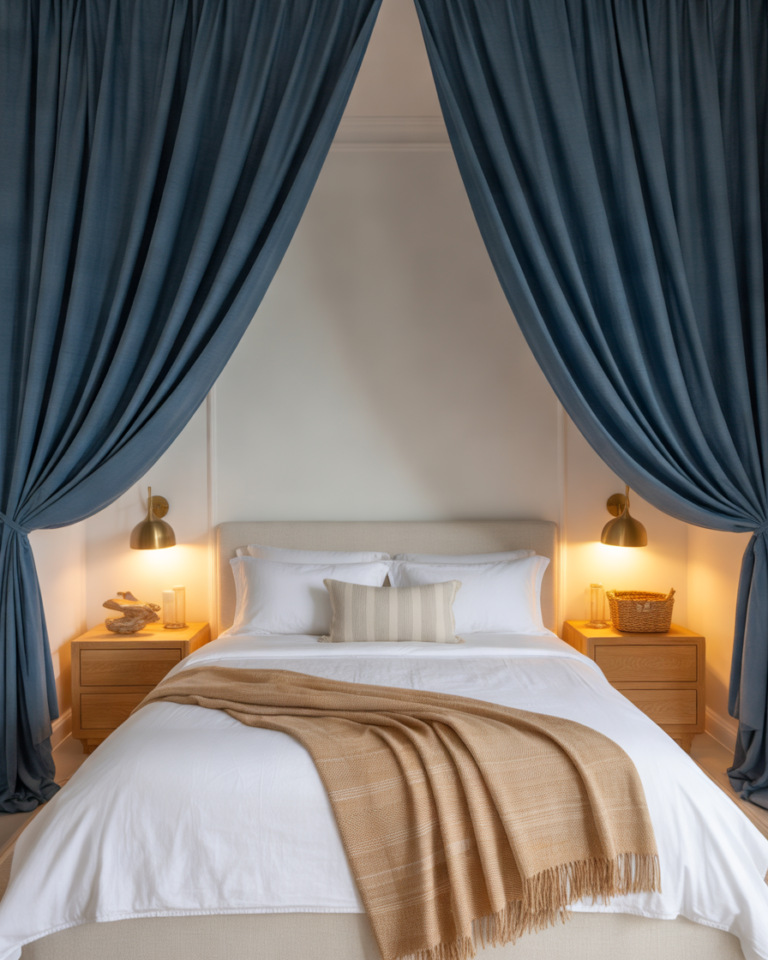
Floor-to-ceiling curtains are one of my favorite window treatment choices because they instantly make a room feel taller, more elegant, and visually balanced. Instead of stopping at the bottom of the window frame, these curtains extend from a rod installed close to the ceiling all the way down to the floor. This creates a beautiful vertical line that draws the eye upward and makes even an average-sized room appear more spacious.
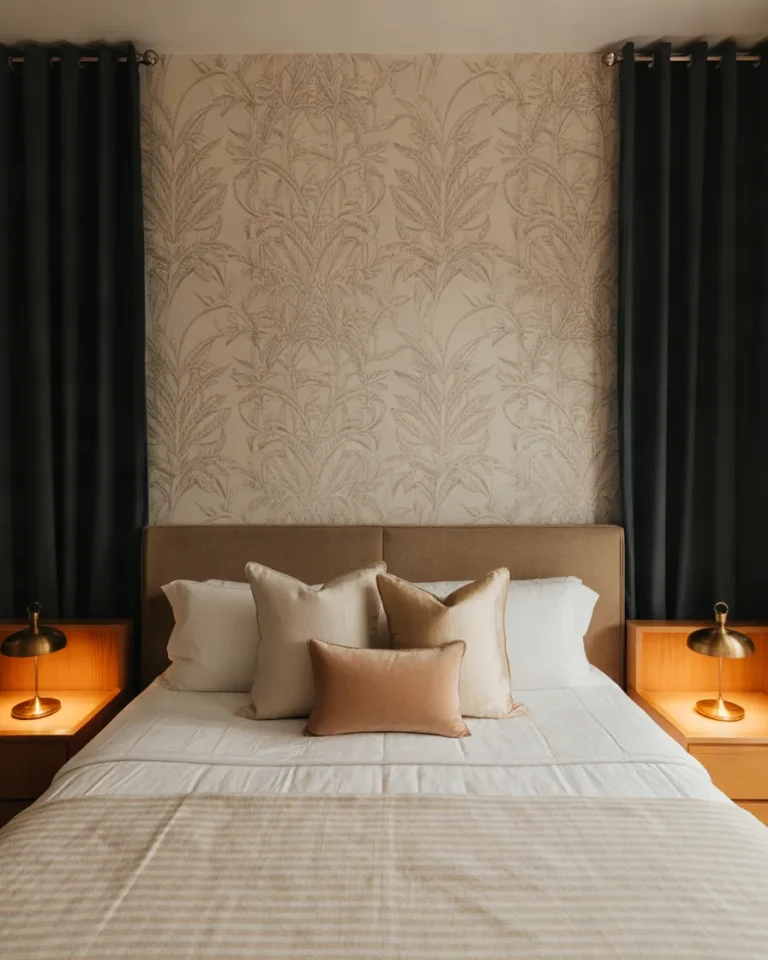
For a timeless look, consider ivory, warm beige, soft white, or light greige curtains. These shades work particularly well in contemporary, traditional, and minimalist interiors. If you prefer a little more drama, deep charcoal, navy blue, or rich chocolate-brown drapes can create a sophisticated atmosphere.
Fabric selection also makes a difference. Linen and cotton blends offer a relaxed appearance, while velvet provides a more luxurious finish. I especially love how floor-to-ceiling linen curtains look beside large windows because they allow the room to feel soft without making the décor look heavy.
You can pair these curtains with a slim black curtain rod, brushed brass hardware, or a concealed ceiling track. For the best result, measure carefully and let the panels either gently touch the floor or create a subtle fabric break.
2. Sheer White Curtains for a Light and Airy Atmosphere
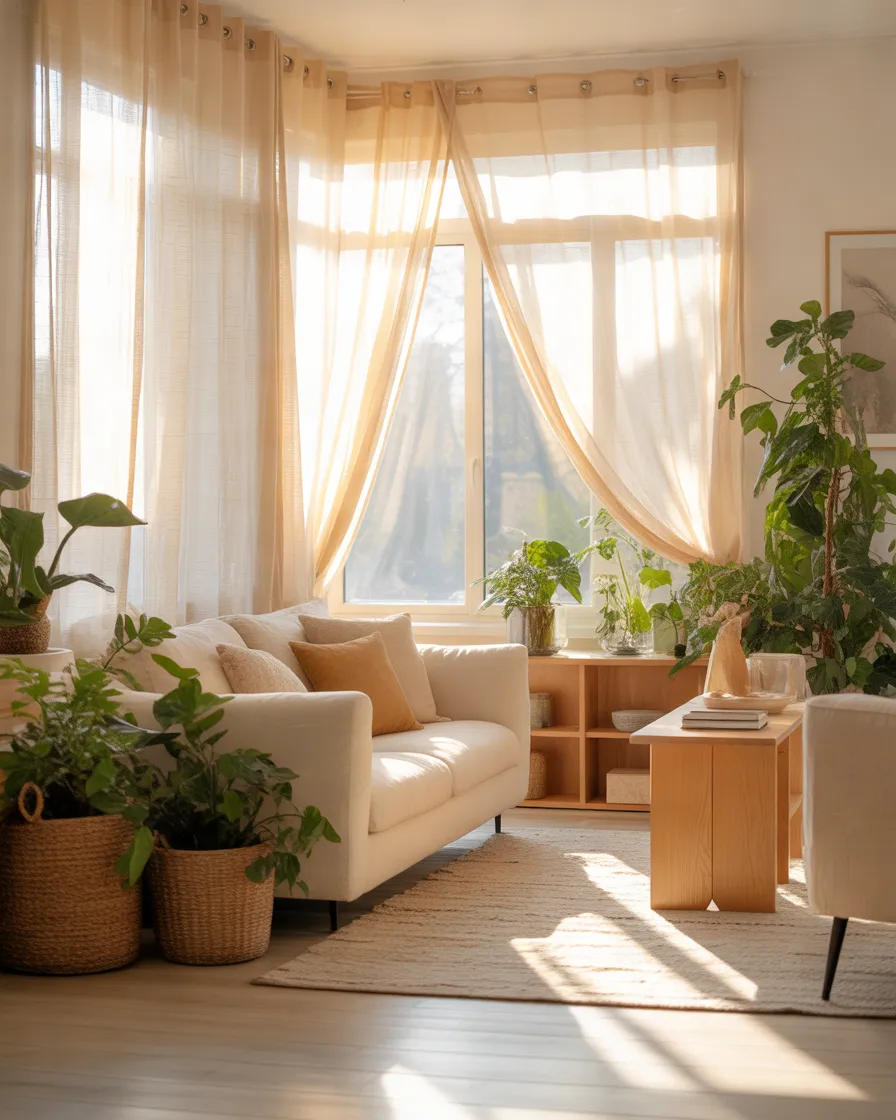
If you love rooms that feel bright, peaceful, and welcoming, sheer white curtains are an excellent option. Their lightweight fabric allows natural daylight to filter through while softening the appearance of strong sunlight. Rather than completely covering the windows, they create a gentle, dreamy effect that makes the entire room feel more relaxed.
One of the biggest advantages of sheer curtains is their versatility. They look beautiful in living rooms, bedrooms, dining areas, and even home offices. You can use them in Scandinavian-inspired interiors, coastal homes, modern apartments, or traditional spaces.
White is a classic choice, but you do not have to limit yourself to pure white. Soft ivory, warm cream, and delicate off-white shades can create a slightly warmer appearance. These colors look particularly attractive against beige walls, light oak furniture, and natural wooden floors.
For styling, choose simple curtain rods and let the panels fall naturally. If privacy is important, especially in bedrooms or street-facing rooms, consider combining sheer curtains with blackout or heavier privacy panels. This gives you the flexibility to enjoy daylight during the day and additional coverage whenever needed.
I would also recommend choosing a fabric with a subtle woven texture rather than an extremely shiny material. It gives the window a more natural and sophisticated finish.
3. Velvet Curtains for a Luxurious and Dramatic Interior
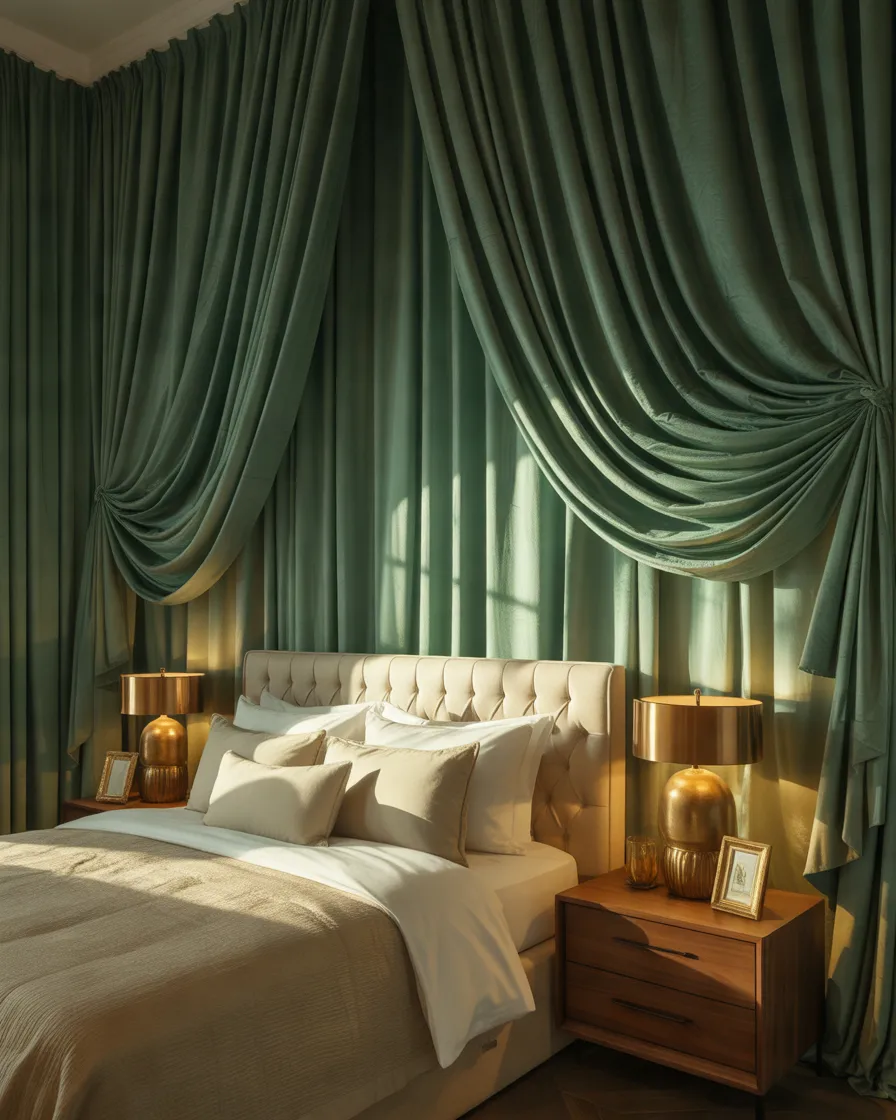
Velvet curtains are perfect when you want your windows to become an important design feature rather than simply a practical part of the room. Their rich texture, beautiful folds, and slightly reflective surface create an elegant appearance that works particularly well in luxurious and sophisticated interiors.
One of the reasons I love velvet is the depth it brings to a space. Even a relatively simple room can look more polished with a pair of beautifully tailored velvet drapes. Emerald green, burgundy, navy blue, deep brown, and charcoal are especially attractive choices.
If you prefer a softer appearance, dusty rose, muted sage, taupe, or champagne velvet can provide a luxurious finish without making the room feel too dark. These shades work beautifully with gold accents, upholstered furniture, marble surfaces, and warm lighting.
Velvet curtains are particularly suitable for bedrooms and formal living rooms. Their heavier construction can help reduce incoming light and provide an additional sense of privacy, depending on the fabric and lining. However, they may feel too heavy in small rooms with limited natural light.
When hanging velvet panels, use a sturdy curtain rod or track because the fabric can be considerably heavier than ordinary cotton or sheer curtains. Allow enough fullness so the fabric creates attractive, flowing folds when closed.
4. Beige and Neutral Curtains for a Timeless Home
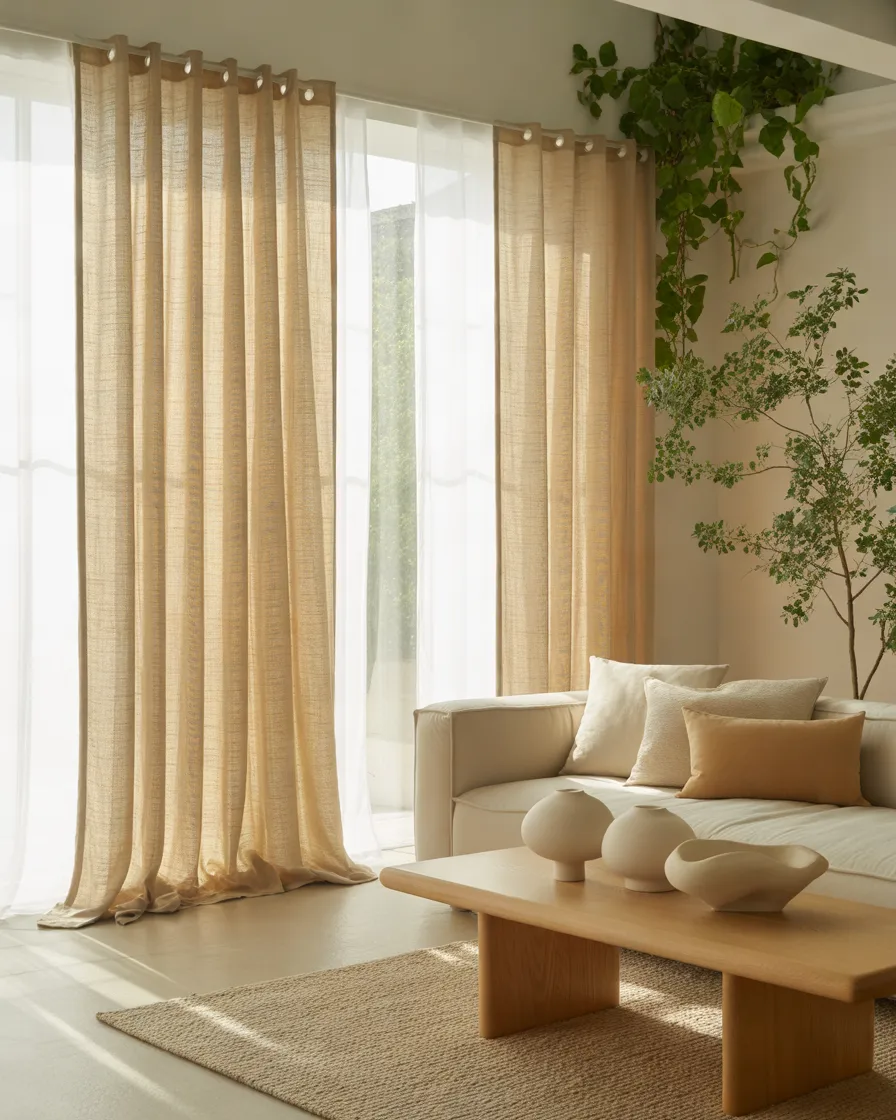
Neutral curtains are a wonderful choice if you want your home to feel coordinated, comfortable, and timeless. Beige, taupe, sand, oatmeal, and warm greige are versatile colors that complement a wide range of interior styles. Instead of competing with your furniture or wall decorations, they create a soft background that allows the entire room to feel connected.
I particularly like beige curtains in homes where the furniture and walls already feature several different textures. For example, imagine a living room with a cream sofa, wooden coffee table, textured rug, and a few decorative cushions. Adding warm beige curtains can bring all these elements together without introducing another strong color.
The secret to making neutral curtains interesting is choosing the right fabric. Linen offers a relaxed, slightly textured appearance, while cotton creates a cleaner and more structured look. If you prefer a more luxurious finish, consider a heavier fabric with a subtle woven pattern.
Neutral curtains are also practical when you enjoy changing your home décor throughout the year. You can introduce seasonal cushions, colorful accessories, or different rugs without needing to replace the window treatments.
For an elegant finish, hang the curtains slightly above the window frame and choose a rod that complements the rest of the room. Small details like these can make a simple neutral design look professionally styled.
5. Floral Print Curtains for a Charming and Welcoming Space
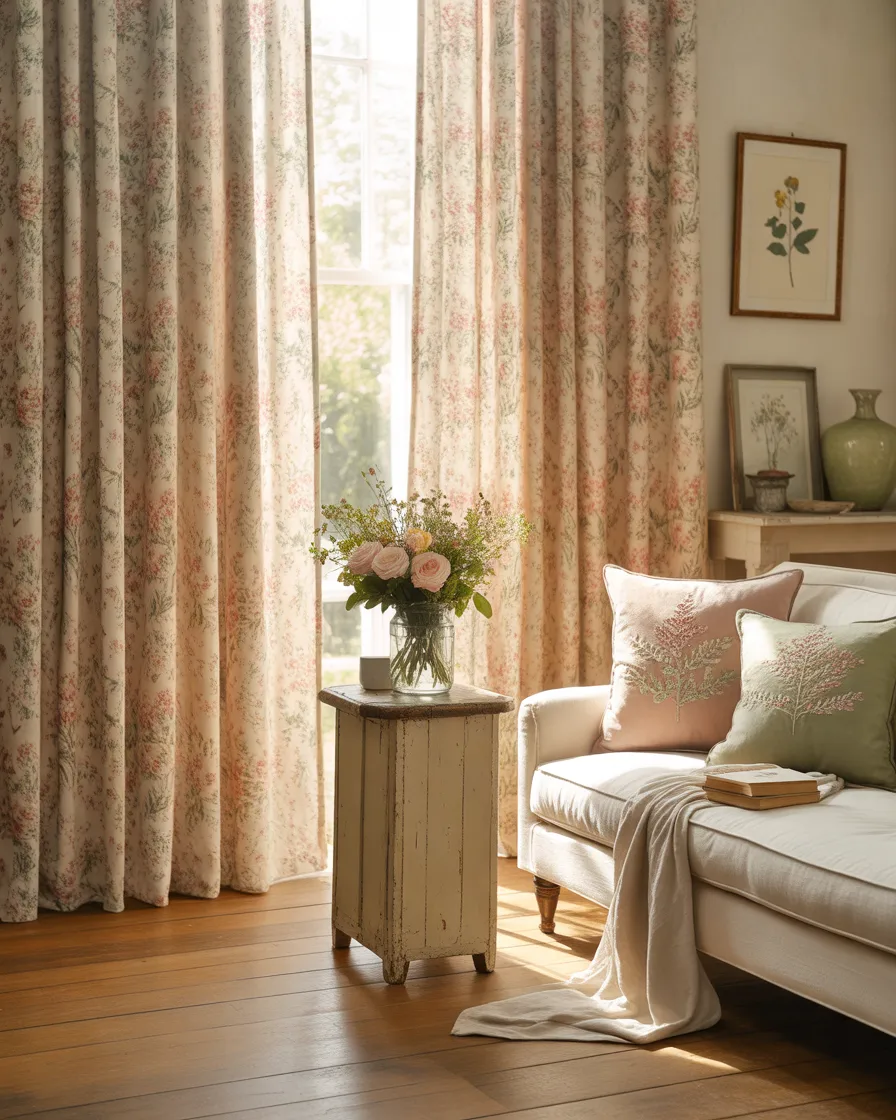
Floral curtains are a lovely way to bring personality, color, and a little natural charm into your home. Whether you prefer delicate botanical patterns or larger, more expressive floral designs, printed curtains can make a room feel more interesting and inviting.
For a traditional or cottage-inspired interior, choose curtains with small flowers, soft leaves, and muted colors. Pale pink, dusty blue, sage green, and cream are beautiful combinations that create a gentle decorative effect. If you enjoy more contemporary interiors, look for oversized botanical prints with a cleaner color palette.
Floral curtains can look particularly beautiful in bedrooms, breakfast nooks, reading corners, and living rooms. In a bedroom, delicate floral panels can create a relaxing atmosphere when paired with simple bedding and soft lighting. In a living room, larger floral patterns can become the main decorative feature.
One important styling tip is to avoid introducing too many competing patterns. If your curtains already have a noticeable floral design, keep the surrounding furniture and accessories relatively simple. You can pick one or two colors from the curtain pattern and repeat them in cushions, decorative vases, or small accessories.
I would also suggest paying attention to the scale of the print. Small patterns generally work well in cozy spaces, while larger prints can look beautiful on wide windows where the design has enough room to stand out.
6. Blackout Curtains for a Comfortable and Private Bedroom
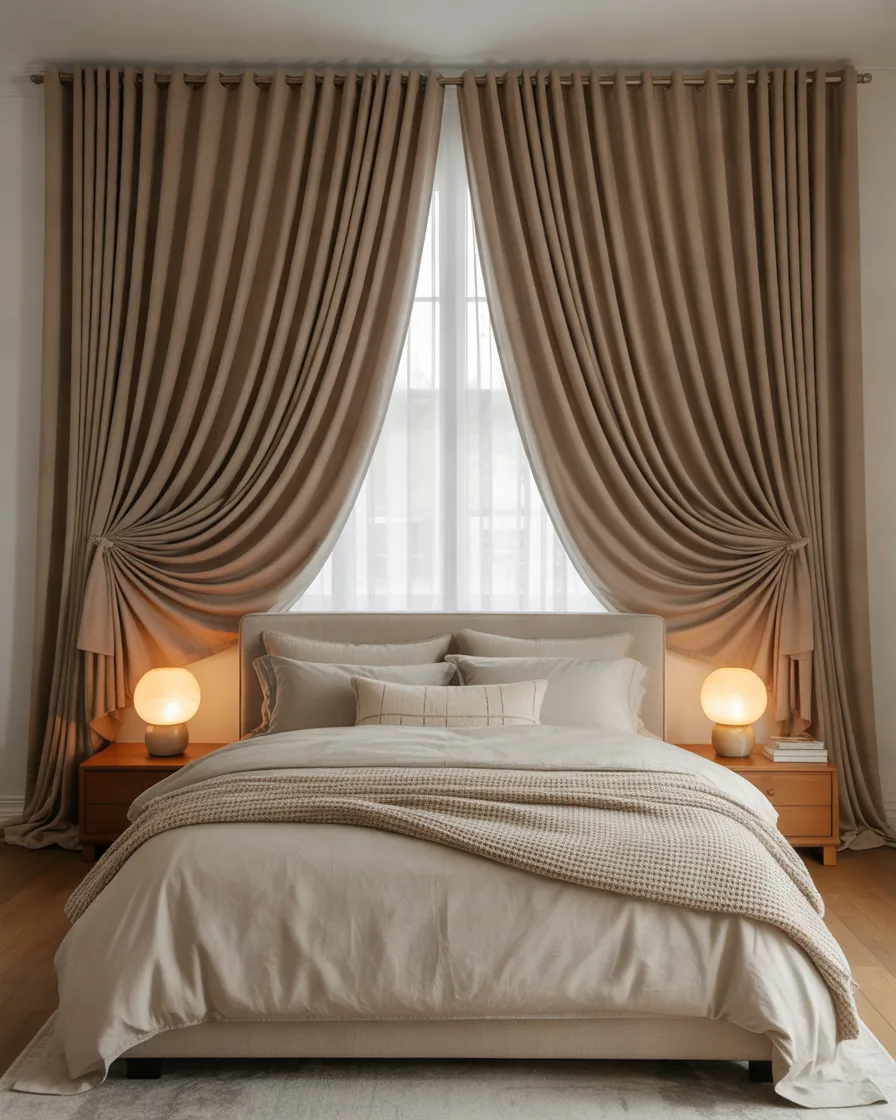
Sometimes beautiful curtains need to do more than improve the appearance of a room. If you value privacy, prefer a darker sleeping environment, or have bright outdoor lighting entering your bedroom, blackout curtains can be a practical and attractive solution.
Unlike ordinary decorative panels, blackout curtains are designed with a light-blocking lining or specialized construction. The amount of light they prevent from entering depends on the product, its installation, and how well the panels cover the window edges.
Fortunately, blackout curtains are available in many attractive designs. You can choose soft beige, charcoal, navy, dusty blue, sage green, or classic white-backed neutral options. This means you do not have to compromise your decorating style to get better light control.
For a relaxing bedroom, I would choose a warm neutral shade with a subtle texture. Pair it with matching bedding, a comfortable upholstered headboard, and warm bedside lighting. If you want something more dramatic, deep navy or dark olive curtains can create a beautiful contrast against lighter walls.
Consider installing the rod slightly wider than the window frame to minimize light gaps around the sides. You can also combine blackout curtains with sheer panels to create a layered arrangement that looks decorative during the day and practical at night.
7. Layered Curtains for Style, Privacy, and Flexibility
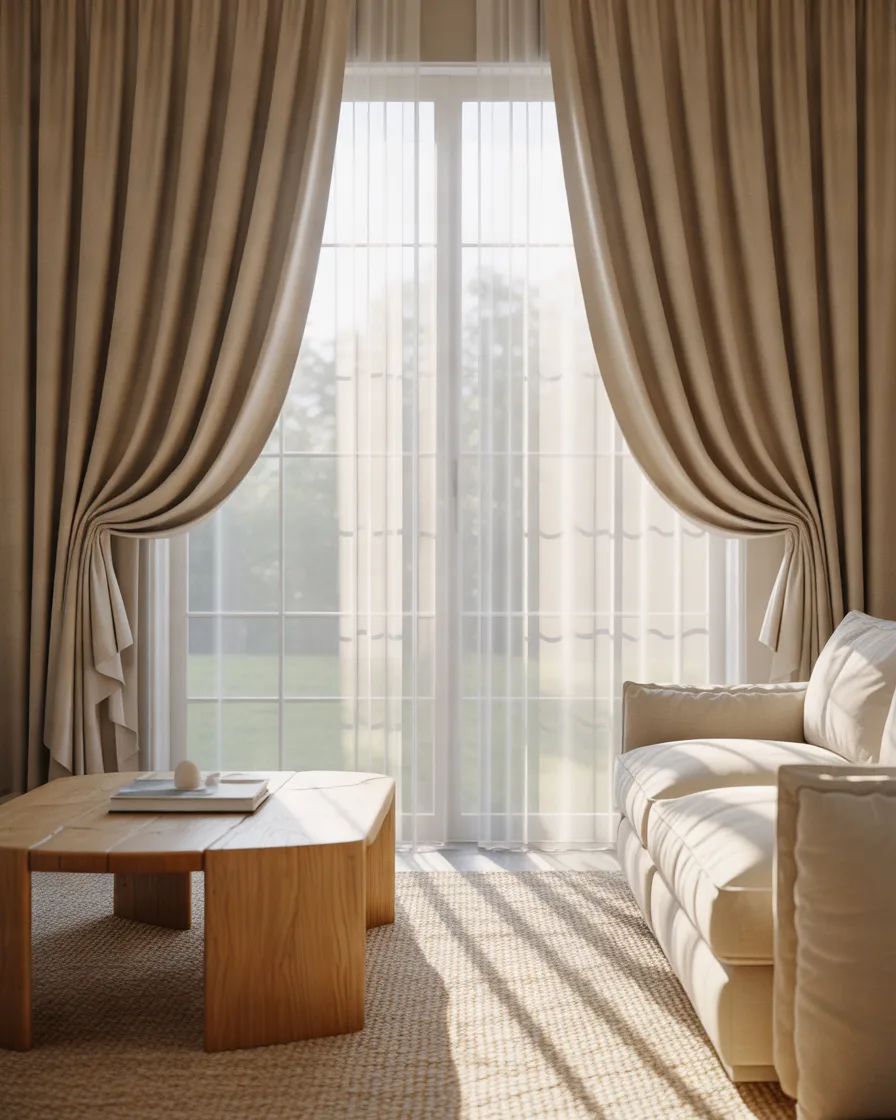
Layered curtains offer the best of both worlds because they combine decorative beauty with everyday functionality. This design usually involves placing lightweight sheer panels closer to the window and heavier decorative curtains on the outer sides.
The sheer layer allows natural light to enter while providing some daytime privacy, depending on the lighting conditions and fabric transparency. The outer curtains offer additional privacy, light control, and a more finished appearance.
One of my favorite combinations is white sheer curtains with warm beige or taupe outer panels. It is simple, elegant, and easy to coordinate with different furniture styles. For a more luxurious look, you could combine white sheers with velvet curtains in emerald green, navy, or deep brown.
Layered curtains are particularly useful in bedrooms and living rooms where lighting needs change throughout the day. You can leave the sheer panels closed while pulling the heavier curtains back, or close both layers when you want a darker and more private environment.
For installation, consider a double curtain rod or a dual ceiling track. This keeps both layers organized and allows them to move independently. Make sure the outer panels are wide enough to frame the window attractively when open.
8. Roman Shades for a Clean and Modern Window Treatment
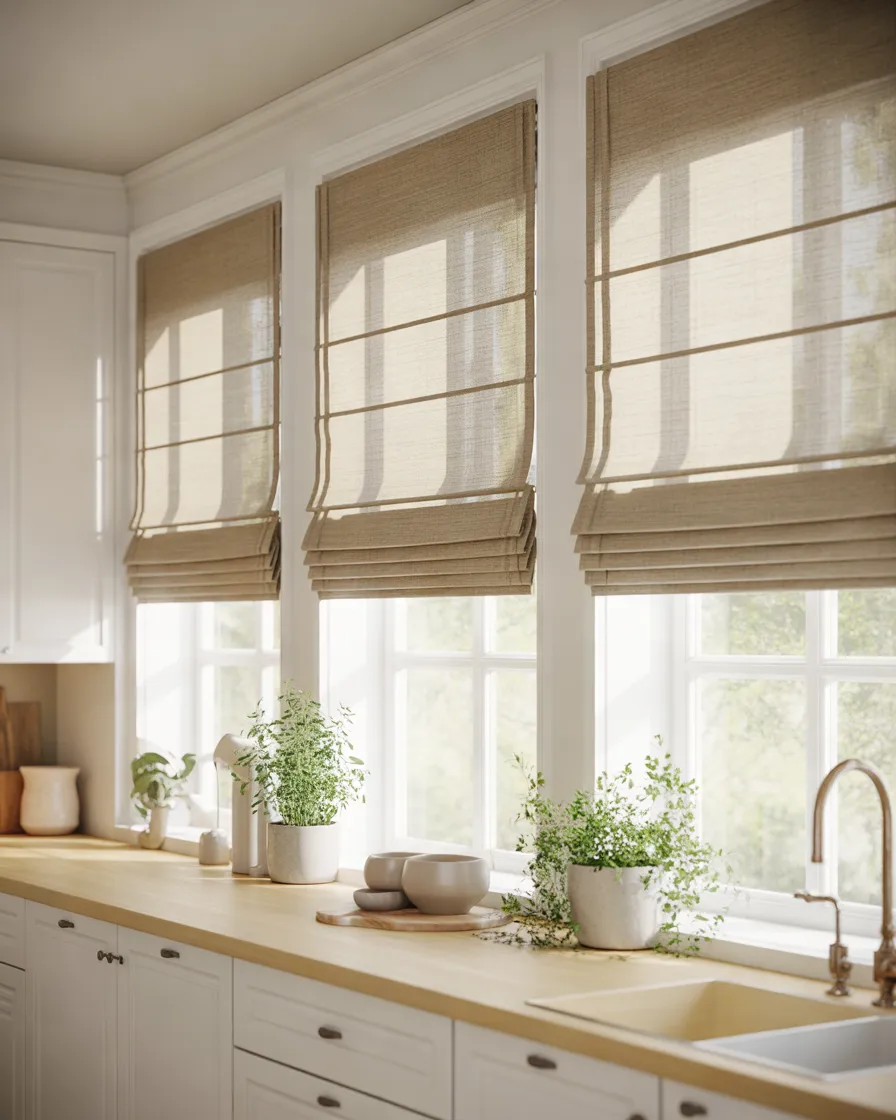
If you prefer a neat and tailored window treatment, Roman shades are worth considering. Unlike traditional curtains that hang in long vertical panels, Roman shades fold into horizontal sections when raised. When lowered, they create a smooth fabric covering that gives the window a clean and organized appearance.
I particularly like Roman shades in smaller rooms where full-length curtains might feel too bulky. They are suitable for kitchens, bathrooms, home offices, breakfast areas, and bedrooms. They also look attractive in modern apartments where a simple and uncluttered appearance is preferred.
Fabric choices can completely change the final result. Natural linen Roman shades create a relaxed and understated appearance, while patterned cotton shades introduce more personality. If you enjoy traditional interiors, subtle stripes, small botanical prints, or classic woven fabrics can work beautifully.
For a contemporary home, consider warm white, oatmeal, light gray, or muted sage shades. These colors provide visual interest without overwhelming the rest of the room.
Before purchasing Roman shades, measure your window carefully and decide whether you prefer an inside mount or an outside mount. An inside mount creates a more integrated appearance, while an outside mount can help make a window look larger.
9. Striped Curtains for a Classic and Playful Look
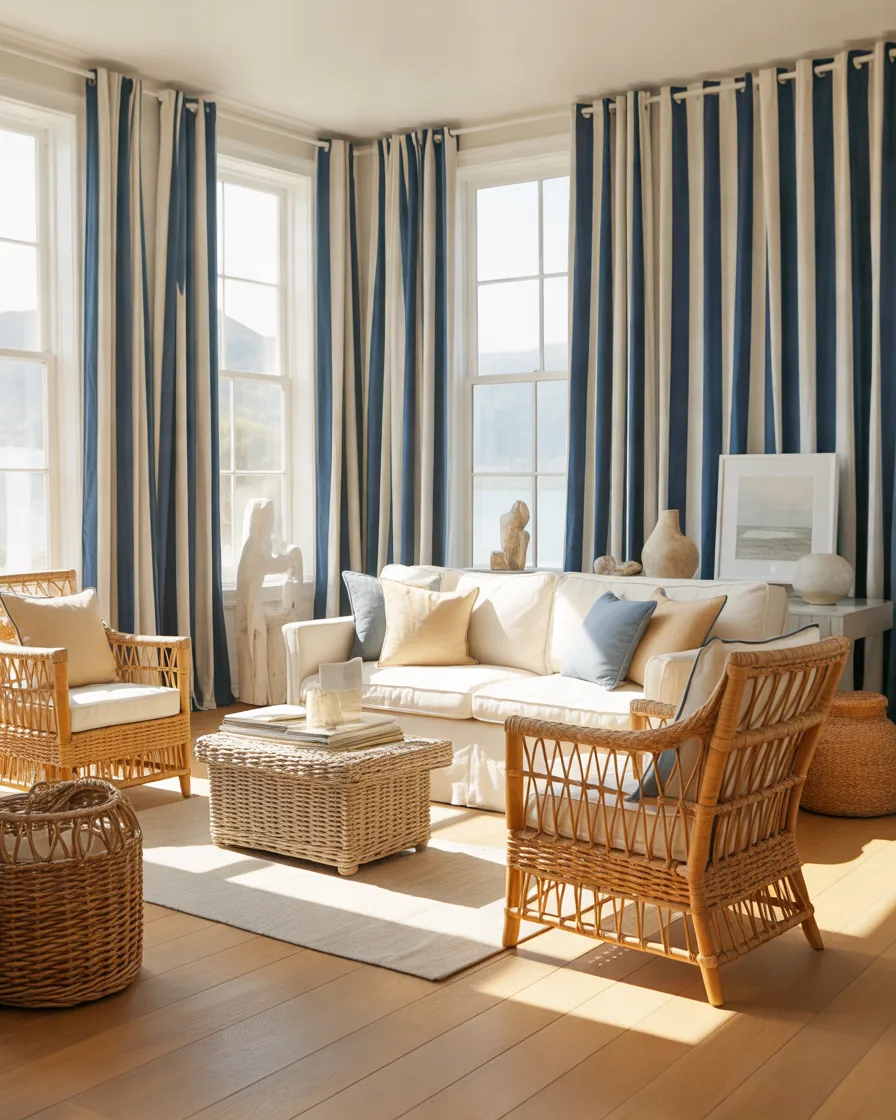
Striped curtains are a wonderful option when you want to introduce a little pattern without making your room feel overly decorative. Their simple lines create visual movement, and they can work with traditional, coastal, farmhouse, and contemporary interiors.
Vertical stripes are particularly attractive when you want to emphasize the height of a room. They naturally draw the eyes upward and create an elongated appearance. Horizontal stripes, on the other hand, offer a different visual effect and can make a window treatment feel wider.
There are plenty of beautiful color combinations to explore. Blue and white stripes create a fresh coastal atmosphere, while beige and cream stripes provide a softer and more understated appearance. Black and white stripes can look striking in modern interiors, especially when combined with simple furniture and minimal accessories.
Striped curtains are especially suitable for living rooms, children’s bedrooms, sunrooms, and casual dining spaces. You can use them as the main pattern in the room or coordinate them with smaller decorative patterns in cushions and rugs.
My advice is to keep the surrounding décor relatively balanced. If you choose bold, wide stripes, let the curtains stand out instead of filling the room with too many other patterns.
10. Sage Green Curtains for a Relaxing Natural Interior
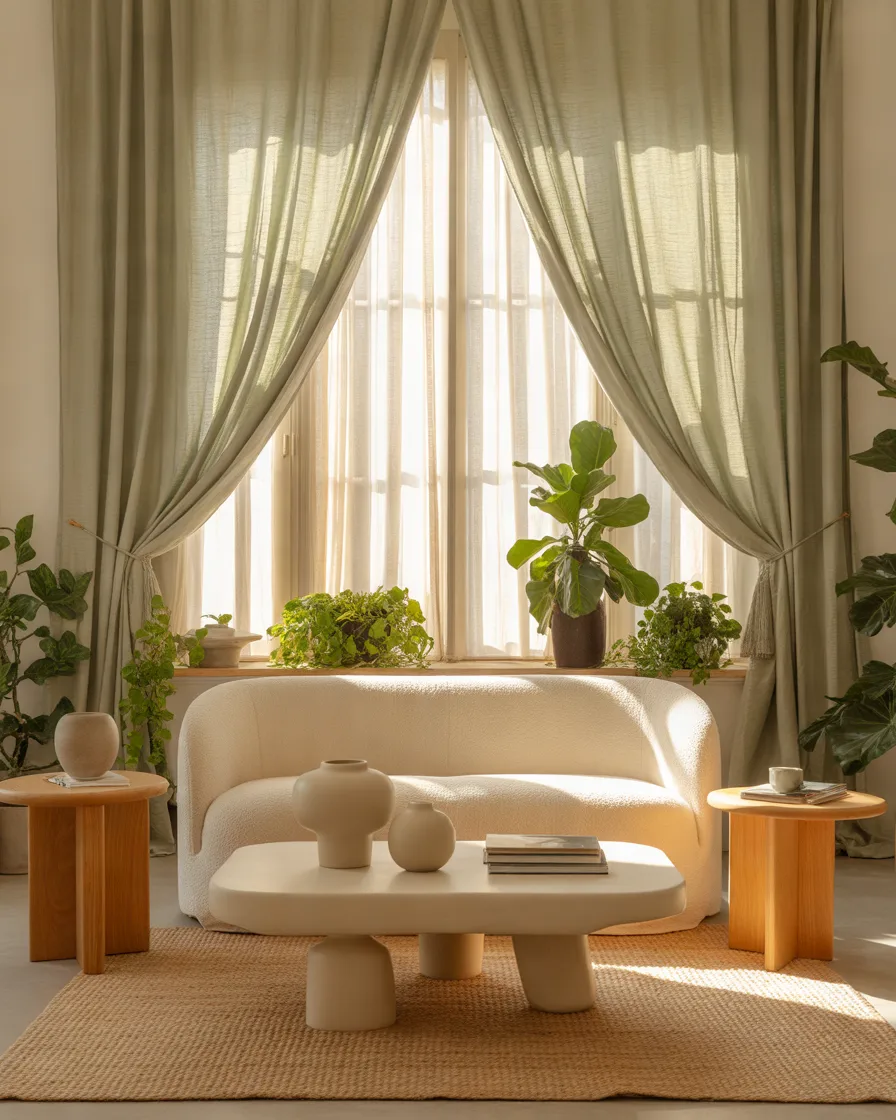
Sage green has become a beautiful decorating choice for people who appreciate soft, nature-inspired interiors. It sits somewhere between green and gray, giving it a muted appearance that feels peaceful rather than overly bold.
Sage green curtains can bring a refreshing touch to a room without making the window treatment look too colorful. They are especially attractive in bedrooms, living rooms, and reading spaces where you want to create a comfortable atmosphere.
One of the easiest ways to style this color is to combine it with warm white walls, cream furniture, natural wood, and woven accessories. These materials complement the muted green tone and create a cohesive interior.
You can also explore different fabrics depending on your preferred look. Sage green linen curtains feel relaxed and natural, while heavier cotton or velvet panels provide a more polished appearance. For a modern bedroom, full-length sage curtains paired with white bedding and wooden furniture can look particularly beautiful.
If you enjoy bringing nature indoors, consider adding a few leafy plants near the window. The greenery will complement the curtains and create a coordinated botanical-inspired space.
11. Café Curtains for a Charming Kitchen Window
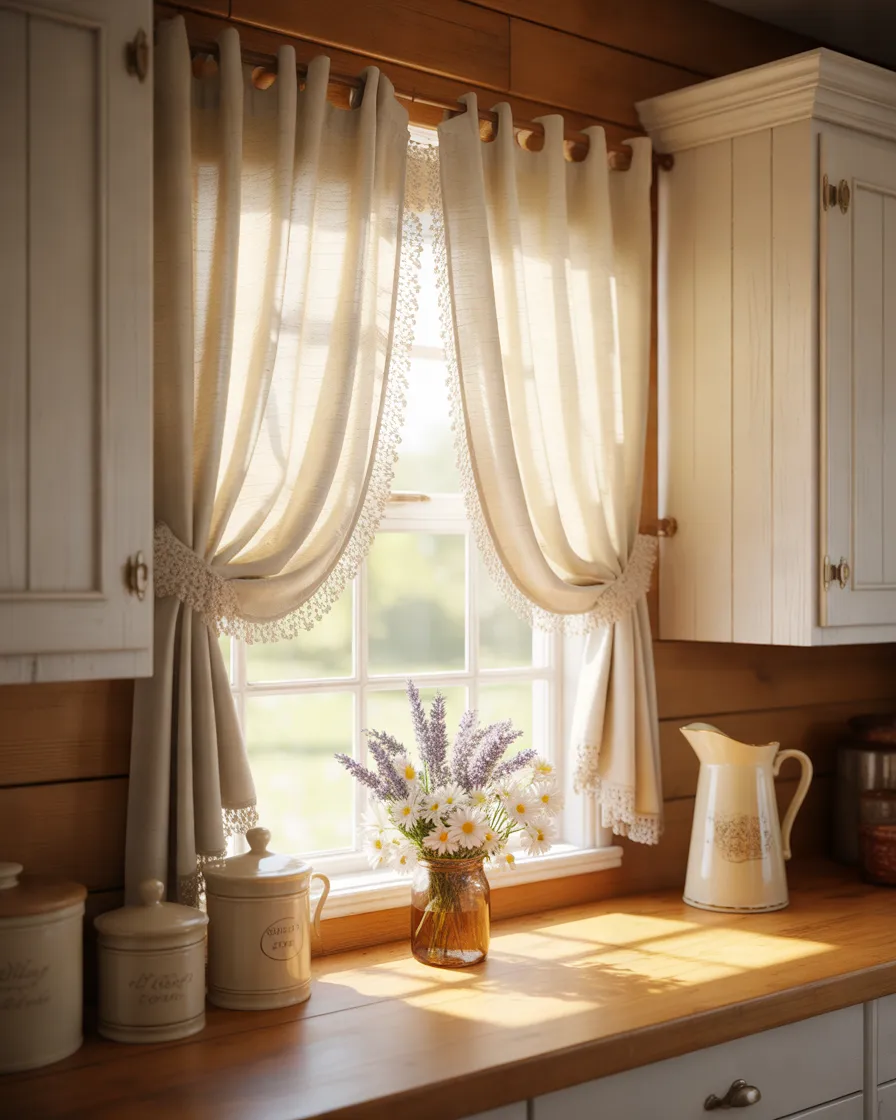
Café curtains are a charming way to decorate kitchen windows, especially when you want to maintain some privacy without blocking all the natural light. Unlike traditional full-length curtains, these panels usually cover only the lower portion of the window.
This arrangement allows sunlight to enter through the upper section while providing coverage at eye level. It creates a welcoming atmosphere that feels particularly suited to cottage kitchens, farmhouse interiors, and traditional homes.
For a classic look, choose white cotton café curtains with delicate lace edging. If you prefer something more contemporary, consider plain linen panels in cream, beige, or soft sage green. Small gingham checks and subtle floral patterns are also beautiful choices for a country-inspired kitchen.
Café curtains work particularly well above kitchen sinks, breakfast nooks, and smaller windows. You can pair them with wooden countertops, white cabinetry, ceramic accessories, and fresh flowers to create a cozy setting.
When choosing the fabric, remember that kitchen windows are exposed to cooking smells, moisture, and occasional splashes. Washable cotton and linen-blend fabrics can be practical options, provided their care instructions suit your household routine.
12. Patterned Geometric Curtains for a Contemporary Home
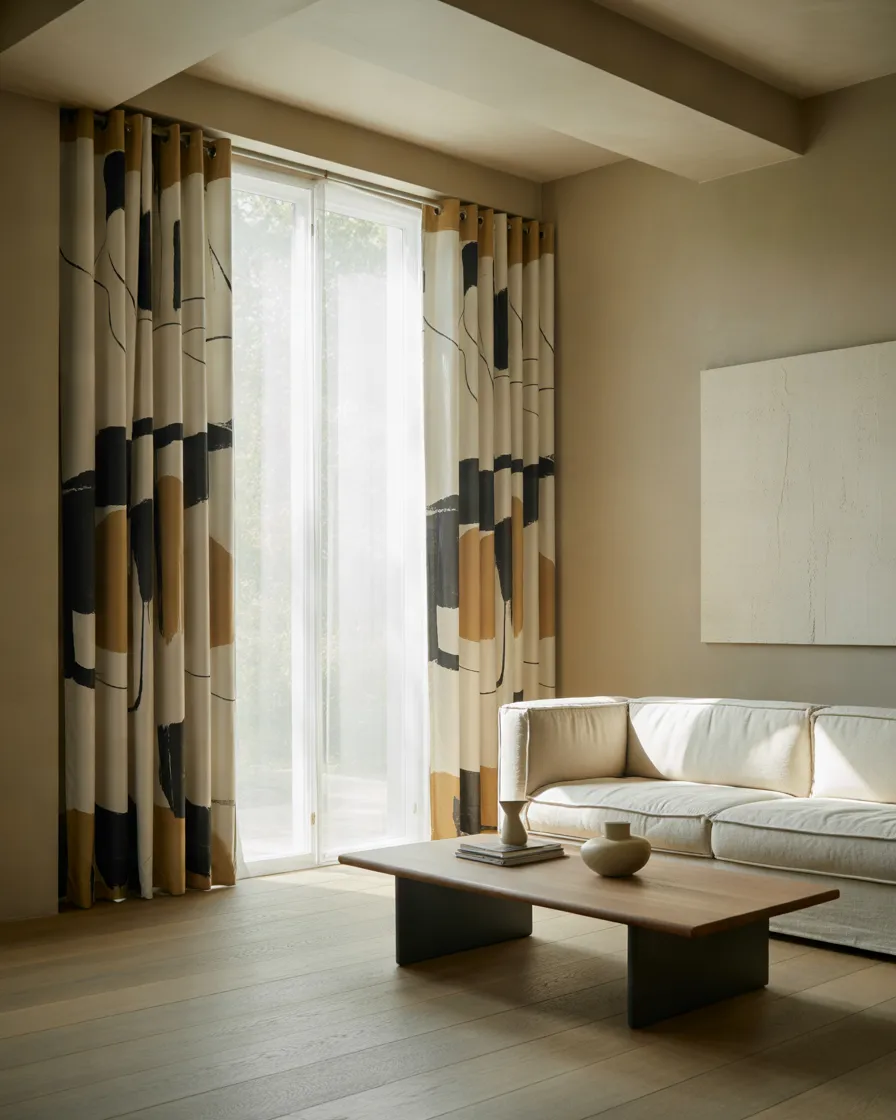
If you enjoy modern interiors with a little personality, geometric curtains can be an exciting decorating choice. Their repeating shapes, clean lines, and structured patterns introduce visual interest while maintaining a contemporary appearance.
There are many different patterns to explore, including diamonds, triangles, abstract lines, grids, and repeating curves. You can choose a subtle design with small shapes or go for a bold print that makes the window the focal point of the room.
For a minimalist interior, black and white geometric curtains can create an attractive contrast. If you prefer something softer, look for beige, gray, muted blue, or dusty green patterns. These combinations work beautifully with simple furniture and neutral walls.
Geometric curtains are especially suitable for living rooms, modern bedrooms, home offices, and creative spaces. They can also help introduce a little structure into rooms that contain mostly plain furniture and soft textures.
The key is to balance the pattern. If the curtains have large geometric shapes, avoid using several other bold prints nearby. Instead, choose solid-colored cushions, understated rugs, and simple accessories that allow the design to remain the main attraction.
13. Double-Width Curtains for Large Windows and Sliding Doors
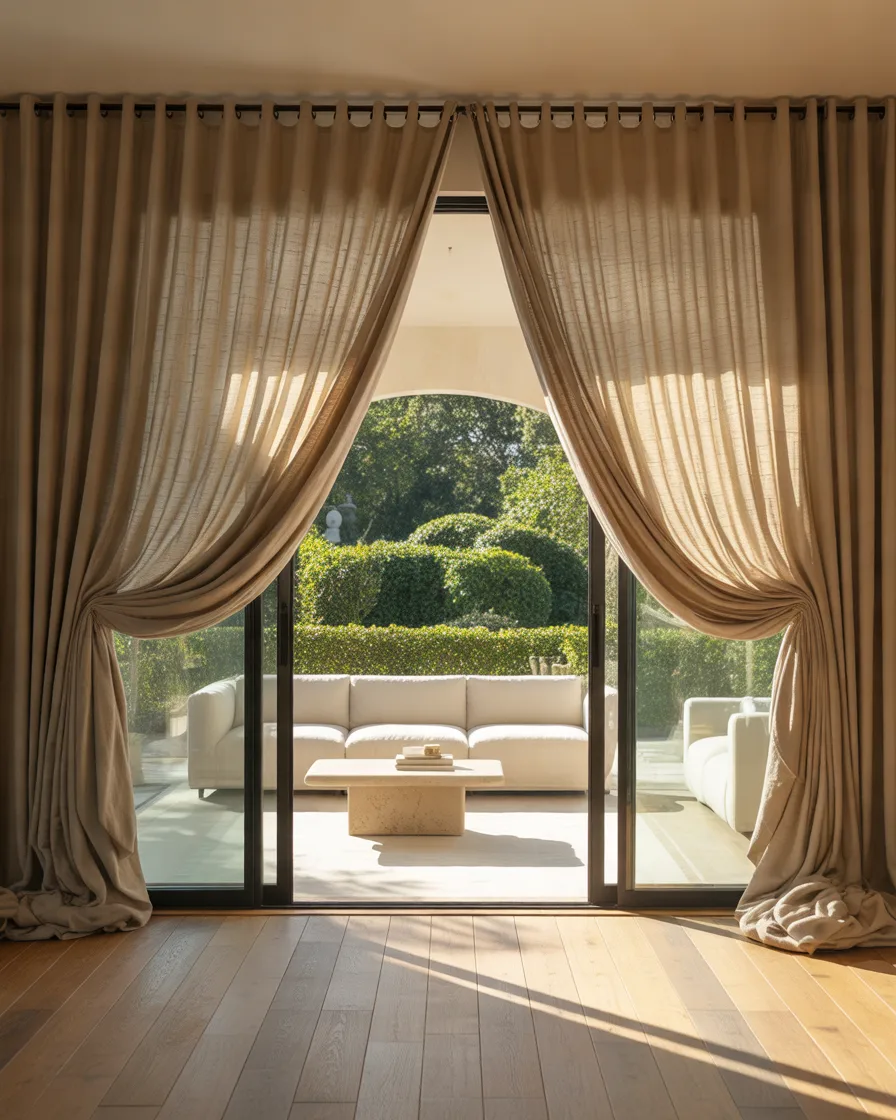
Large windows and sliding glass doors can be beautiful architectural features, but decorating them requires a little more thought than styling an ordinary window. Double-width or generously full curtain panels can provide the coverage needed while making the entire space feel more elegant.
Instead of choosing narrow panels that look stretched when closed, use wider curtains that create soft, generous folds. The extra fabric gives the window a more luxurious appearance and prevents the arrangement from looking unfinished.
Neutral linen, textured cotton, and light-filtering woven fabrics are particularly attractive choices for large living room windows. If you need more light control, lined curtains in a slightly heavier material may be a better option.
For a contemporary home, choose curtains that complement the furniture and flooring. Warm white panels can create a seamless look in a bright living room, while taupe or charcoal curtains introduce a little contrast.
A ceiling-mounted track is an excellent choice for large windows and sliding doors because it creates a clean, uninterrupted line. Make sure the track and its supports are suitable for the combined weight of the curtains.
14. Textured Linen Curtains for a Relaxed Organic Style
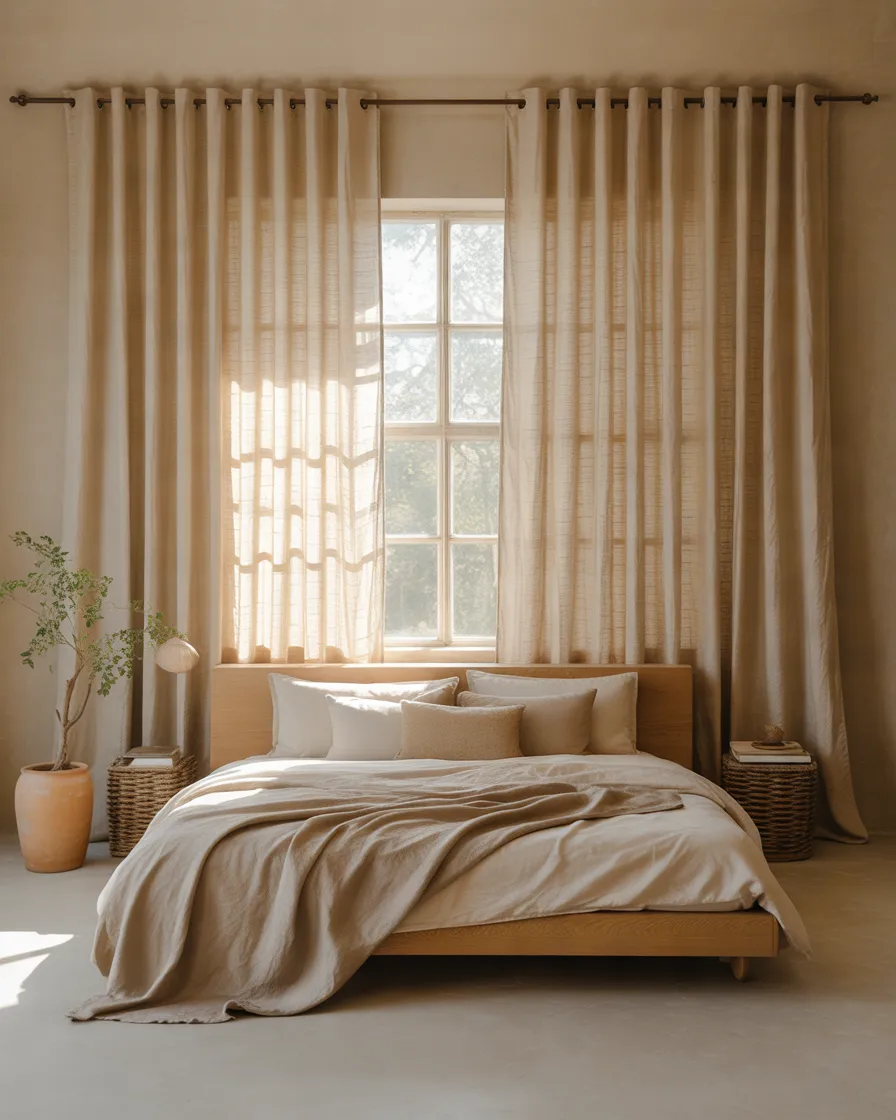
Sometimes the most beautiful window treatments are the simplest ones. Textured linen curtains are a perfect example because their natural weave, gentle irregularities, and relaxed appearance add character without relying on bold patterns or bright colors.
Linen works especially well in homes where natural materials and comfortable surroundings are important parts of the decorating style. Its slightly imperfect texture gives curtains a softer, more organic appearance than many synthetic fabrics.
You can choose natural flax, oatmeal, warm ivory, stone, or light taupe. These shades are easy to coordinate with wooden furniture, stone accessories, neutral bedding, and woven rugs.
I particularly love textured linen curtains in bedrooms because they create a calm, understated atmosphere. They also look wonderful in living rooms where you want the windows to feel decorated without making them the main attraction.
Depending on the fabric’s weave and lining, linen curtains may filter light or provide more coverage. If privacy or light control matters, check the fabric’s transparency before buying.
For an organic modern look, pair linen panels with a simple wooden or matte-black curtain rod. Allow the fabric to hang naturally rather than choosing overly structured folds.
15. Two-Tone Curtains for a Creative and Stylish Window Design
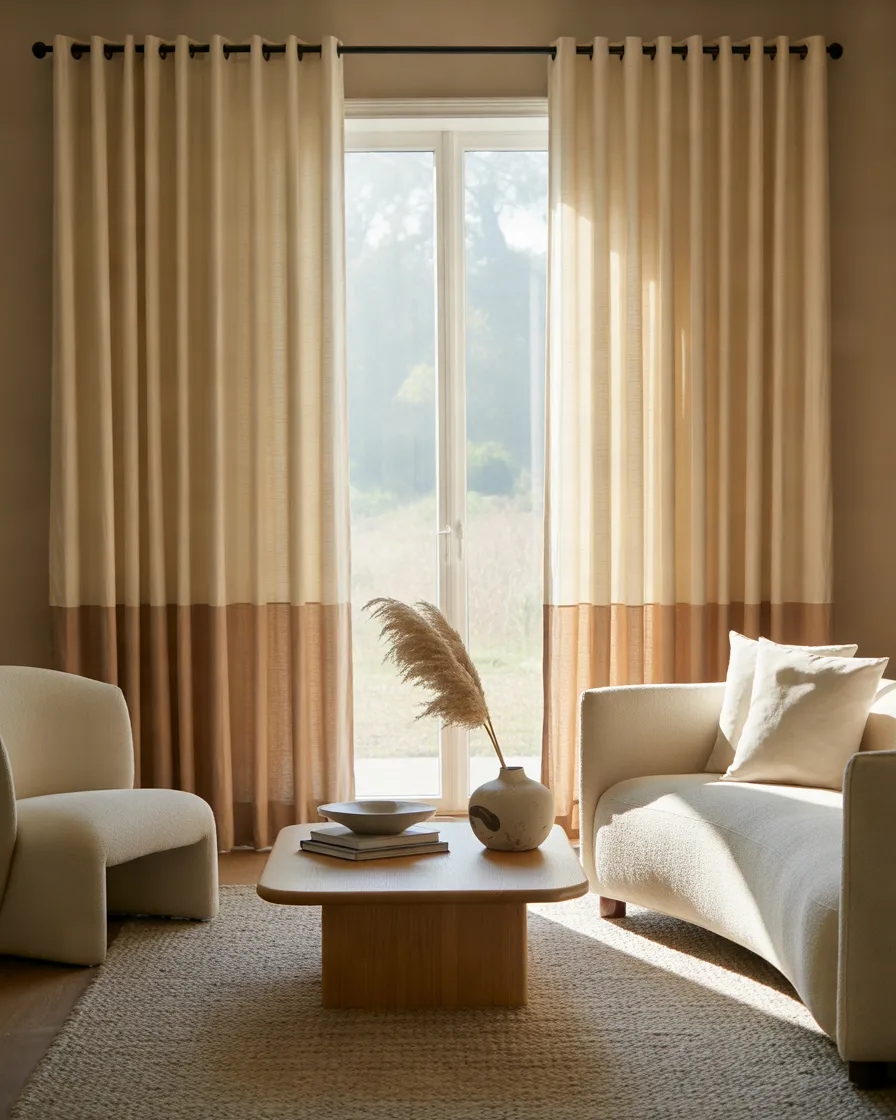
If you want something a little different from traditional single-color curtains, two-tone designs are a beautiful way to introduce contrast and personality. These curtains combine two complementary colors, often through horizontal color blocking, contrasting borders, or different fabric sections.
For a subtle and sophisticated look, consider combining cream with beige, ivory with taupe, or white with soft gray. These combinations add visual interest while keeping the overall design calm and versatile.
If you prefer a more expressive interior, you could explore navy and white, dusty rose and cream, or sage green and warm ivory. The best combination is one that connects with the existing colors in your furniture, rugs, or decorative accessories.
Two-tone curtains work particularly well in contemporary living rooms, bedrooms, and creative spaces. They can also be an interesting option for children’s bedrooms when you want to introduce color without relying on cartoon prints or overly busy designs.
One helpful styling tip is to repeat at least one of the curtain colors somewhere else in the room. This might be through cushions, artwork, a throw blanket, or a decorative accessory. It helps the window treatment feel like part of the overall design rather than an isolated feature.
Expert Tips for Choosing the Perfect Window Curtains
Choosing attractive curtains is only one part of decorating your windows. The right measurements, fabric, installation, and color combinations can make a significant difference to the final result.
Measure Your Windows Before Buying Curtains
One of the most common decorating mistakes is purchasing curtains without measuring the windows properly. Before shopping, measure the window width and height, including the space where you plan to install the curtain rod or track.
For a fuller appearance, curtain panels generally need to be wider than the window itself. The exact amount of fabric depends on the style and fullness you prefer. Also consider whether you want the curtains to touch the floor, sit just above it, or create a slight fabric break.
Choose Fabric According to the Room
Different rooms have different requirements. Lightweight sheers are excellent for bright living spaces, while lined or blackout curtains may be more suitable for bedrooms.
For kitchens, washable fabrics are often easier to maintain. In formal living rooms, velvet and heavier textured materials can create a more luxurious atmosphere.
Consider Natural Light and Privacy
Think about how much sunlight enters your room throughout the day. A south- or west-facing window may receive stronger sunlight, while a north-facing room may benefit from lighter window treatments.
Also consider your surroundings. If your windows face a busy street or neighboring property, layered curtains or privacy-focused fabrics may be useful.
Match Curtains With Your Existing Interior
Your curtains do not necessarily need to match your sofa or wall color exactly. Instead, choose shades that complement the overall palette.
For example, beige curtains can work beautifully with white walls and a gray sofa. Sage green panels can introduce a natural accent into a room with cream furniture and wooden finishes.
Select the Right Curtain Hardware
Curtain rods, rings, brackets, and tracks all contribute to the finished appearance. Matte black hardware works well in modern interiors, while brass and bronze can complement traditional or luxurious spaces.
For heavier curtains, always choose suitable supports and mounting hardware that can handle their weight.
Common Window Curtain Mistakes to Avoid
Even beautiful curtains can look disappointing when they are installed incorrectly or selected without considering the rest of the room.
Choosing curtains that are too short: Curtains that stop noticeably above the floor can make a room look unfinished. Measure carefully and choose a length that complements your window and interior style.
Ignoring curtain fullness: Narrow panels can look stretched and unattractive when closed. Choose sufficient fabric width to create the folds and coverage you want.
Selecting colors without considering the room: A curtain color may look beautiful in a store but feel completely different at home. Consider your wall colors, furniture, flooring, and natural lighting before making a decision.
Using heavy curtains in dark rooms: Thick, dark panels can make a room with limited daylight feel even darker. Consider lighter fabrics or layered treatments when maintaining brightness is important.
Forgetting about maintenance: Some fabrics require special cleaning or careful handling. Always check washing and care instructions before purchasing.
Ignoring the curtain rod: A poorly chosen rod can affect both the appearance and functionality of your curtains. Make sure its style, size, and strength suit the fabric and window.
Frequently Asked Questions About Window Curtain Ideas
1. What Are the Most Popular Window Curtain Styles?
Some popular curtain styles include sheer curtains, floor-to-ceiling drapes, velvet curtains, linen panels, blackout curtains, floral designs, and layered window treatments. The best option depends on your interior design preferences, privacy requirements, and the amount of natural light you want.
2. Should Curtains Be Lighter or Darker Than Walls?
Both options can look beautiful. Lighter curtains create a soft, seamless appearance, while darker curtains introduce contrast and visual depth. For a balanced design, choose a curtain shade that complements your walls and furniture rather than focusing only on whether it is lighter or darker.
3. Are Floor-to-Ceiling Curtains Better for Small Rooms?
Floor-to-ceiling curtains can help small rooms appear taller because they draw the eye upward. Choosing light colors and lightweight fabrics can make the space feel more open. However, proper measurements and suitable fabric fullness are important to avoid an overcrowded appearance.
4. Which Curtain Fabrics Are Best for Living Rooms?
Linen, cotton, velvet, and polyester blends are all popular choices for living rooms. Linen offers a relaxed natural appearance, cotton provides versatility, and velvet creates a more luxurious atmosphere. Your decision should depend on your preferred style, maintenance requirements, and light-control needs.
5. Are Sheer Curtains Enough for Privacy?
Sheer curtains provide some daytime privacy, but their effectiveness depends on the lighting conditions and how transparent the fabric is. At night, when interior lights are on, people outside may be able to see inside. For better privacy, consider combining sheers with lined or heavier curtains.
6. How High Should I Hang My Curtains?
A common decorating approach is to install curtain rods several inches above the window frame or closer to the ceiling to create a taller appearance. The exact placement depends on your ceiling height, window proportions, and overall design. For a clean look, measure carefully before drilling.
7. Can I Mix Different Curtain Styles in the Same Home?
Absolutely! You do not need to use identical curtains in every room. You can choose sheer curtains for the living room, blackout panels for bedrooms, and café curtains for the kitchen. To maintain a coordinated appearance, repeat complementary colors, fabrics, or hardware finishes throughout the home.
Final Thoughts
Decorating your windows with beautiful curtains is one of the simplest ways to give your home a fresh and inviting appearance. From elegant floor-to-ceiling drapes and luxurious velvet panels to natural linen curtains and charming floral designs, there are countless ways to make your windows an attractive part of your interior.
My biggest recommendation is to choose curtains that complement your everyday lifestyle as well as your decorating preferences. A beautiful design should not only look good but also provide the privacy, lighting, and comfort you need.
You do not have to spend a fortune or completely redesign a room to achieve a lovely result. Sometimes, replacing plain window coverings with thoughtfully chosen curtains is enough to make the entire space feel different.
Take inspiration from these 15 window curtain ideas, experiment with colors and textures, and find a style that makes your home feel welcoming, comfortable, and uniquely yours.