
A grey couch gives your living room a calm, flexible base you can build on. You can shape the whole room’s mood with simple choices like texture, accent colors, and lighting, so a grey sofa becomes either cozy or modern depending on how you style it.
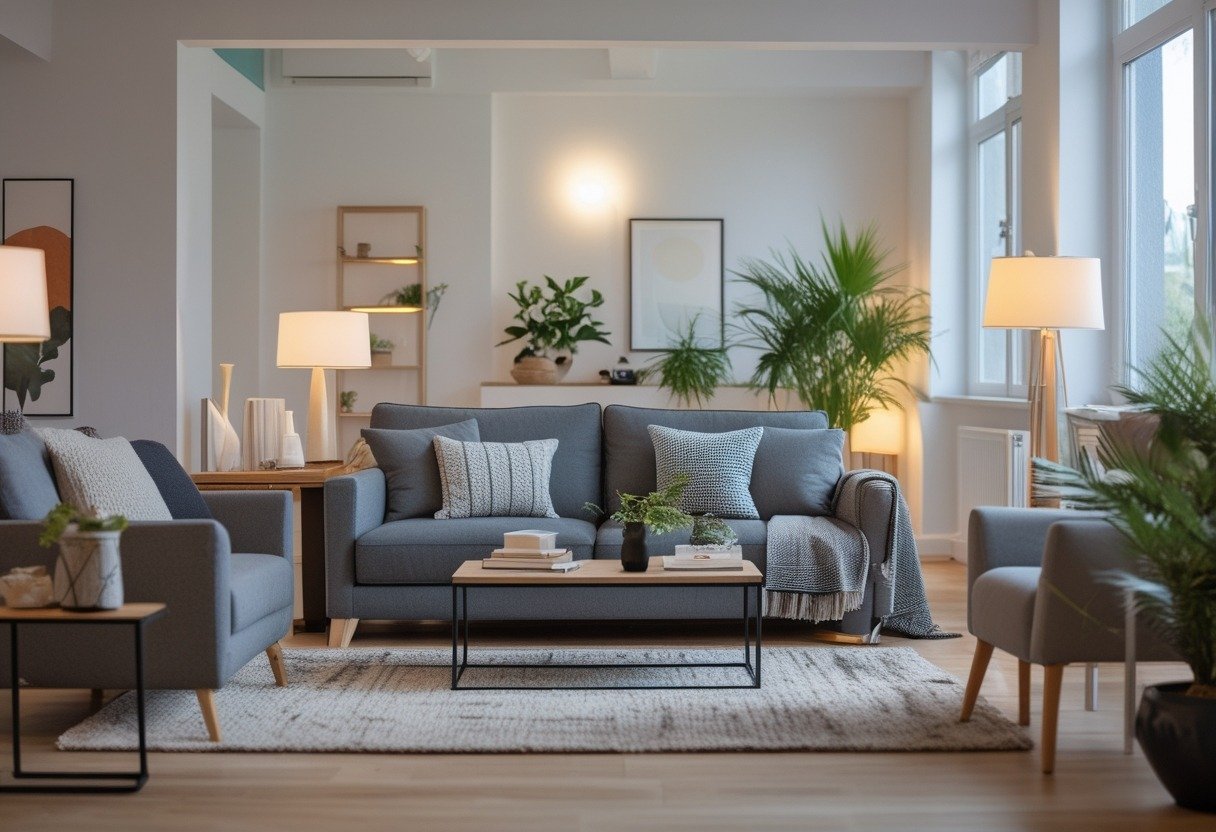
This article shows 15 practical ways to use a grey couch in different styles and layouts. You’ll find grey couch living room ideas that cover everything from warm, natural looks to sleek, industrial setups and clear tips on color theory and styling for modern spaces.
1) Charcoal L-shaped sectional with brass floor lamp and cream shag rug
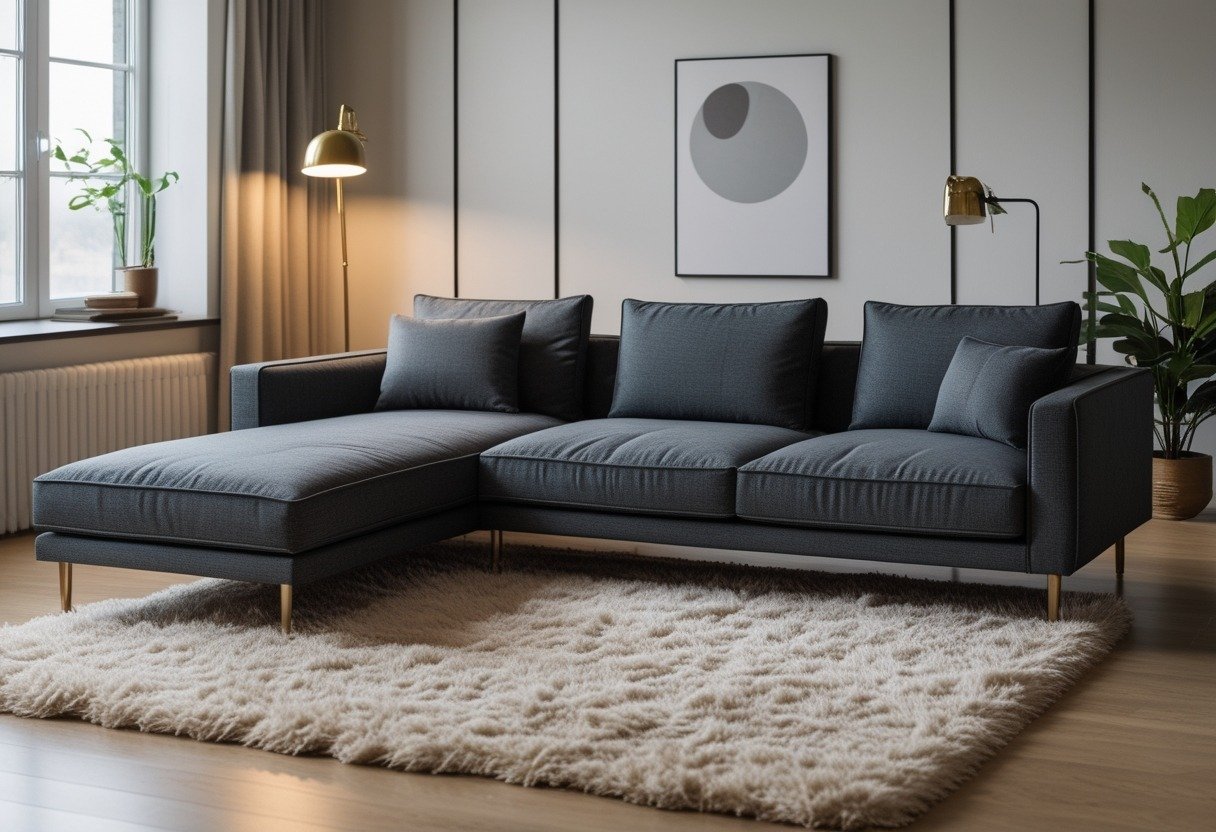
Choose a charcoal L-shaped sectional to anchor your living room. It gives you roomy seating and a modern look without being loud.
Place a brass floor lamp beside the chaise for warm, focused light. The metal adds a touch of shine that pairs well with dark fabric.
Lay a cream shag rug under the sofa to soften the space. The light rug lifts the palette and creates contrast without clashing.
2) Light grey mid-century sofa paired with mustard yellow throw pillows
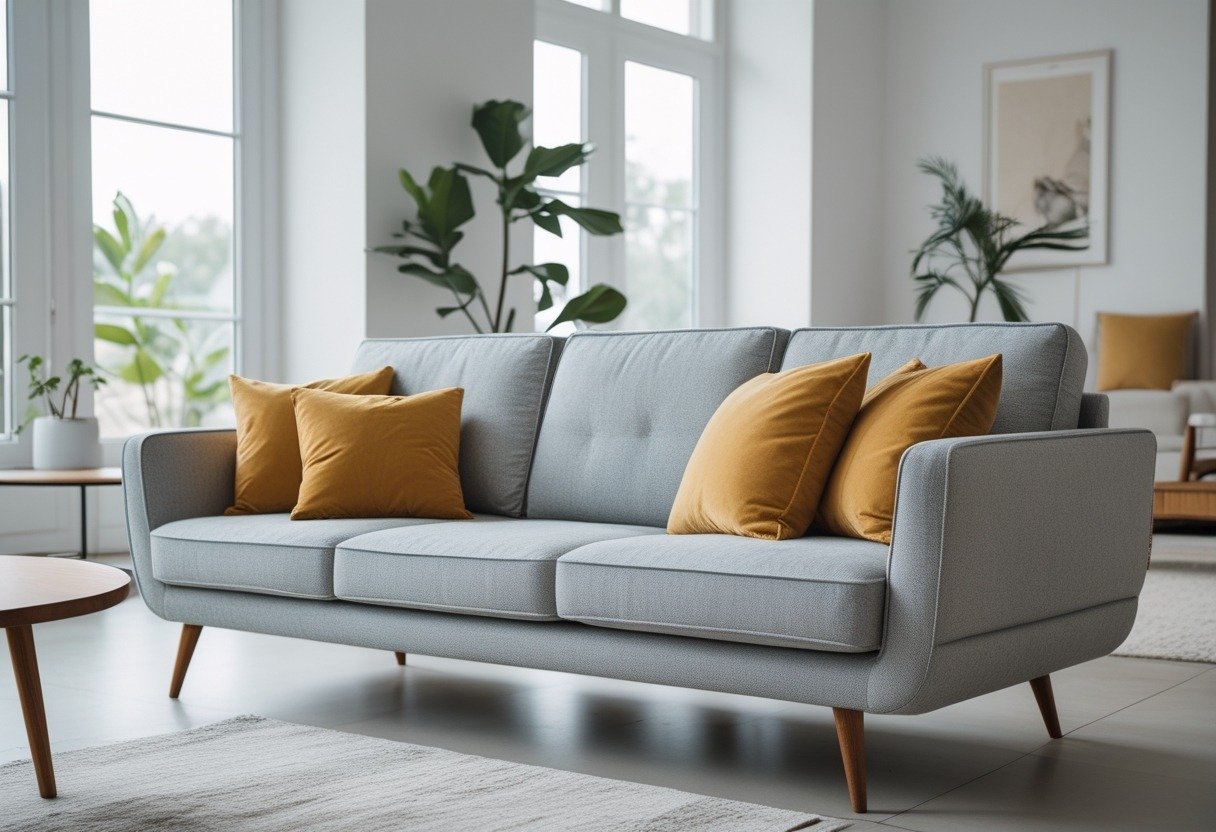
Choose a light grey mid-century sofa for clean lines and a timeless shape that fits many rooms. You get a neutral base that keeps the space calm.
Add mustard yellow throw pillows to give warmth and a pop of color. The mustard hue contrasts nicely with grey and draws attention without overpowering the room.
Keep accessories simple: a wooden coffee table or geometric rug complements the mid-century look. Balance the color by adding a plant or small navy accent for depth.
3) Velvet slate grey couch with emerald green velvet accent chair
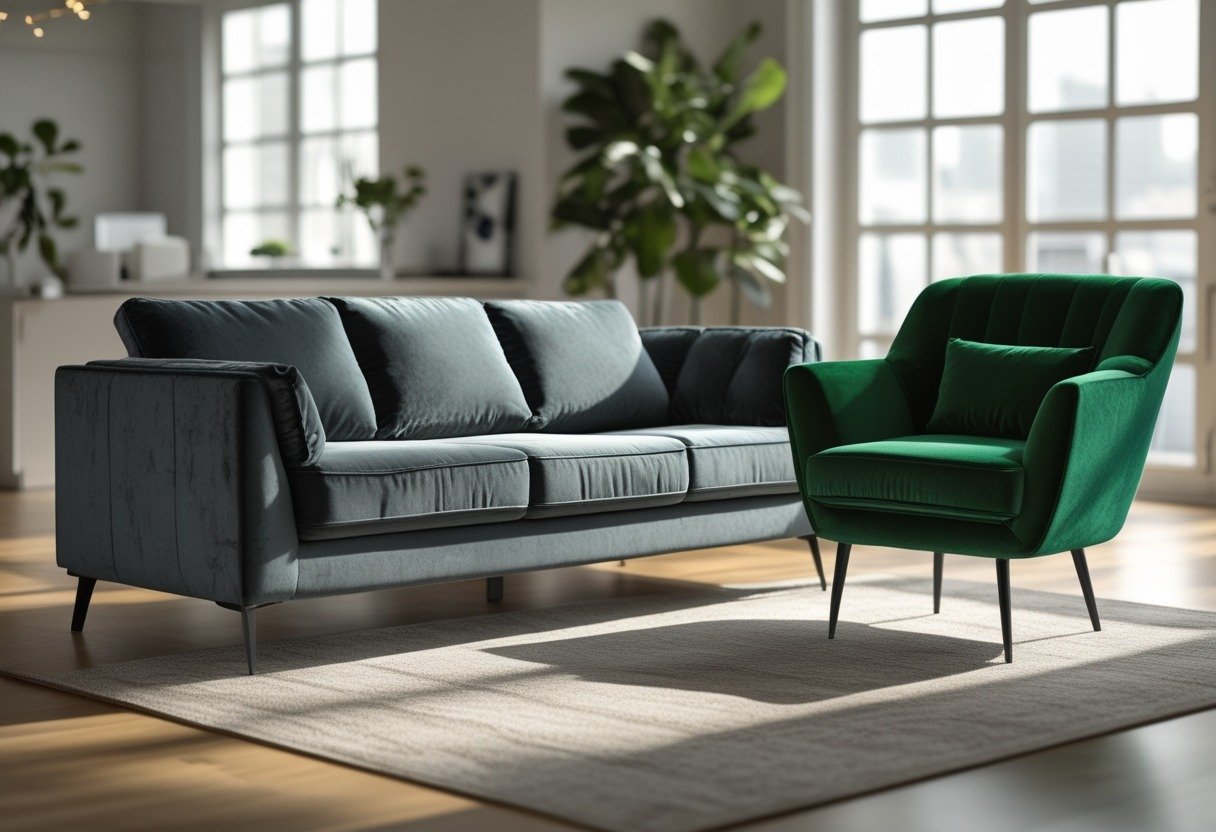
Pair a slate grey velvet couch with an emerald green velvet accent chair to add depth and a focal pop of color. The smooth velvet fabrics tie the pieces together while keeping the palette rich but calm.
Balance with light wood or brass accents to prevent the room from feeling heavy. Add neutral cushions and a textured rug for comfort and visual contrast.
4) Warm greige couch layered with natural jute rug and rattan side table
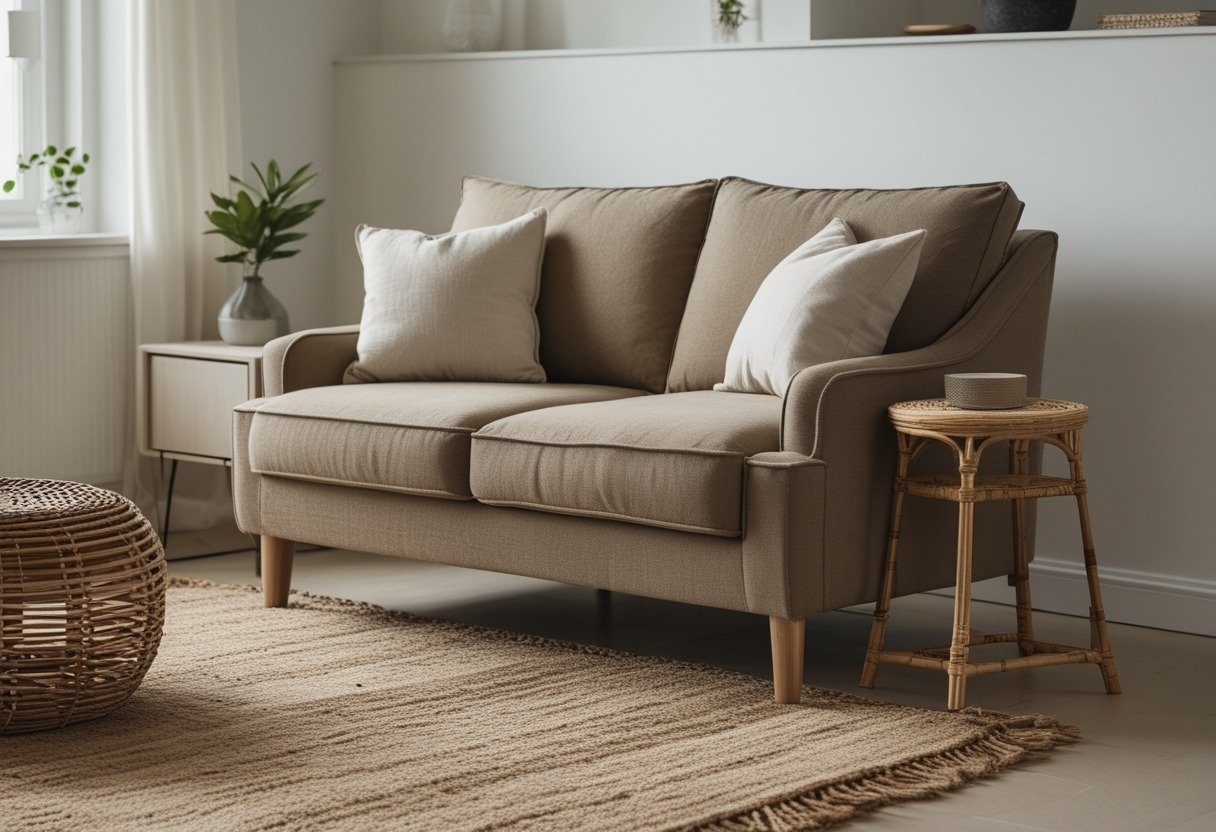
Place a warm greige couch on a textured jute rug to add earthiness and soft contrast. The rug grounds the seating area and brings a natural, tactile feel underfoot.
Add a rattan side table for light, organic texture that complements the jute. Keep accessories simple—linen pillows and a woven throw will tie the look together without clutter.
5) Cool dove-grey sofa styled with monochrome black-and-white gallery wall
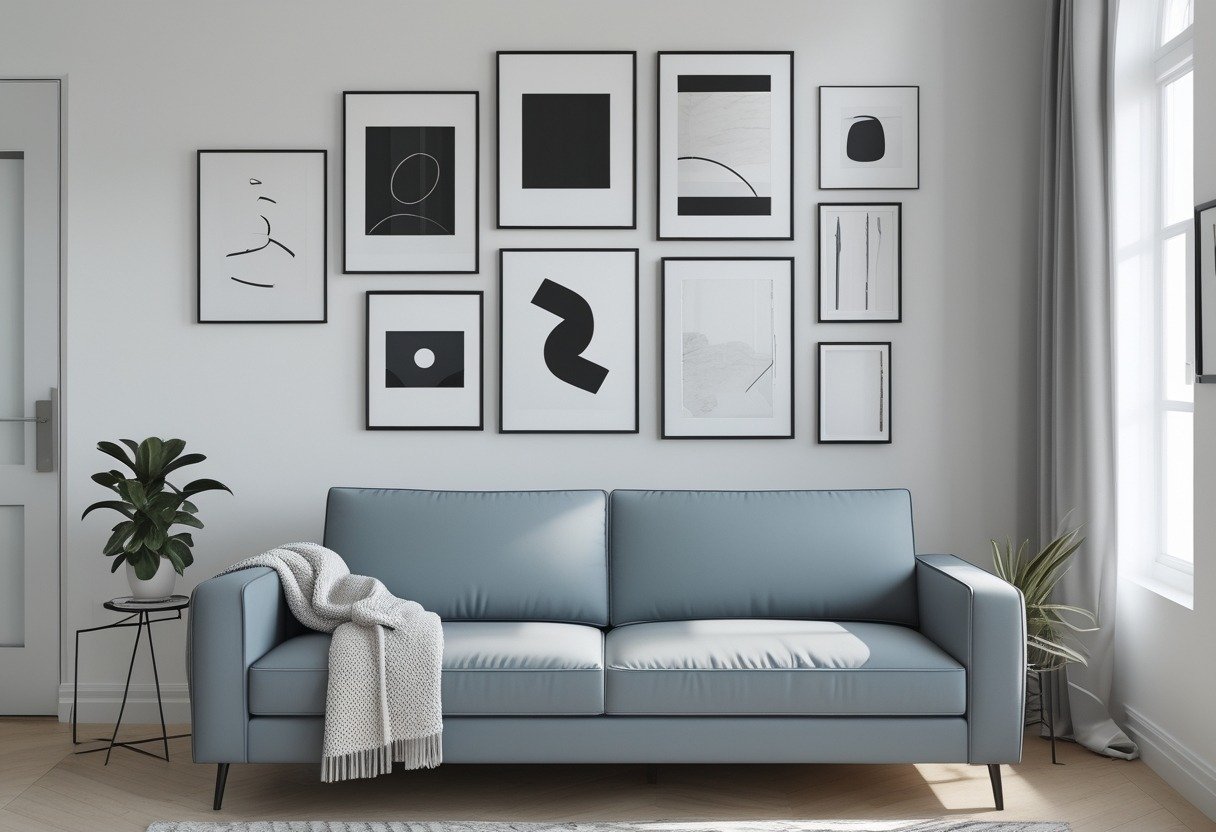
Place a dove-grey sofa against a white or very light wall to keep the room bright. The soft gray acts as a neutral base for bolder black-and-white art.
Arrange framed prints in a grid or loose salon style above the sofa. Use black frames and white mats for a crisp, cohesive look that ties the room together.
Add a few textured throws or pillows in charcoal and cream. This keeps the palette simple while adding warmth and visual interest.
6) Pale ash-grey loveseat framed by pale wood Scandinavian shelving
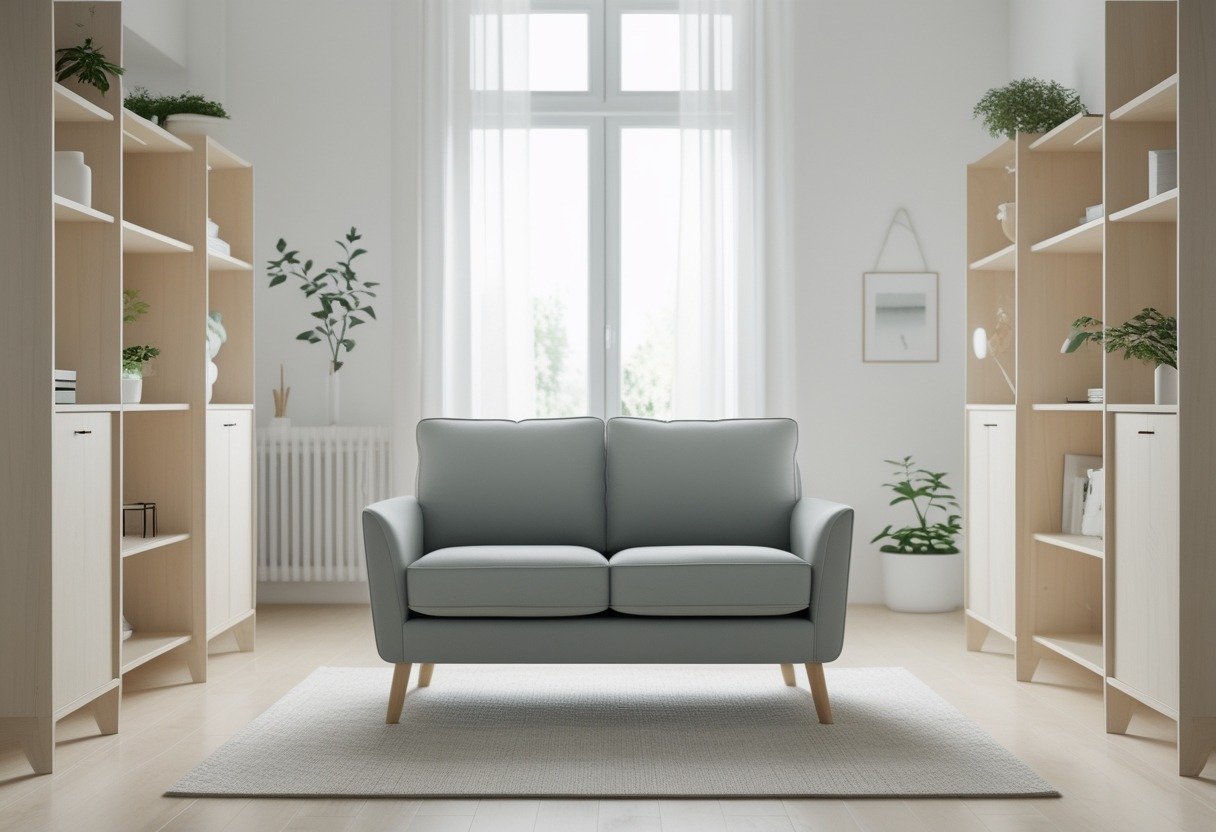
Place a pale ash-grey loveseat against a wall of pale wood Scandinavian shelving to keep the room light and calm. The soft grey lets your accessories stand out without overwhelming the space.
Use open shelving to display books, plants, and simple ceramics. This adds texture and keeps the layout airy while giving you easy access to items you use often.
Add a single textured throw and a slim floor lamp for reading. These small touches make the seating feel intentional and livable.
7) Deep graphite sofa anchored by a large abstract navy wall art
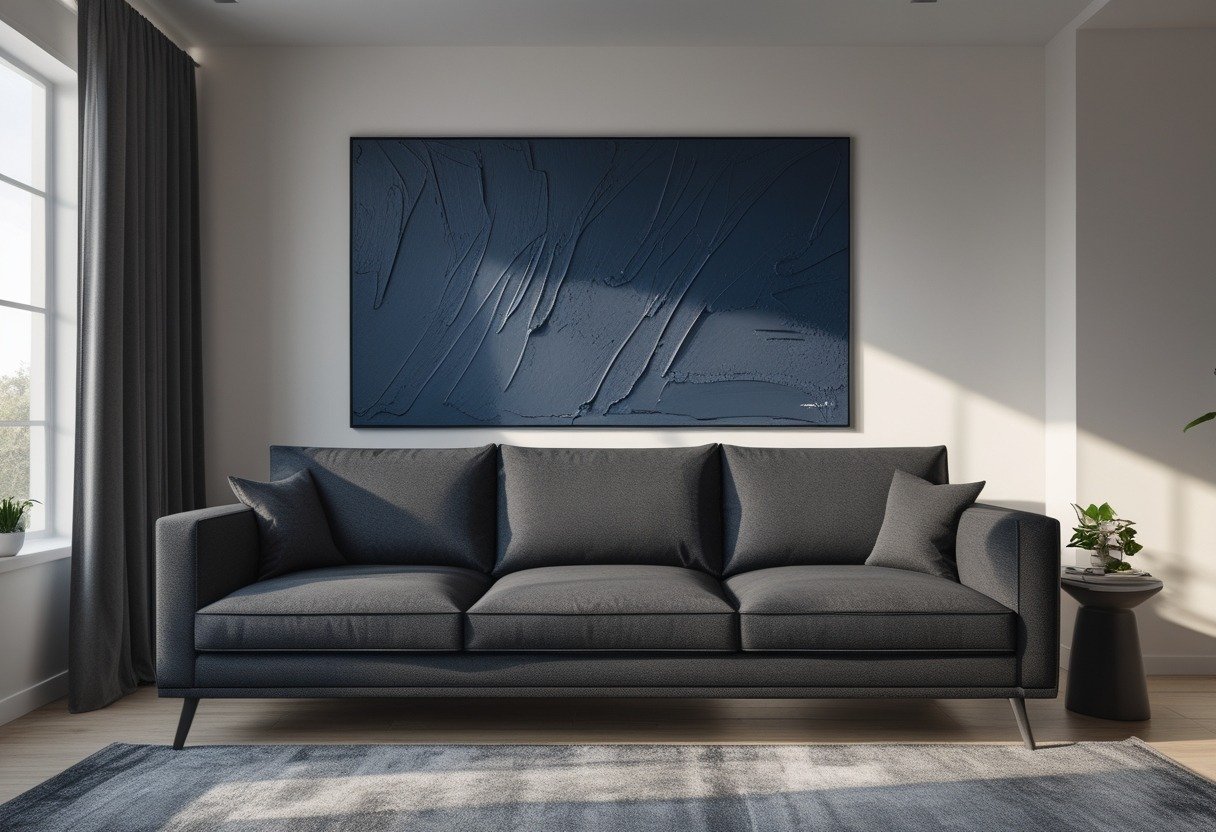
Place a deep graphite sofa as the room’s anchor to ground the palette. The dark sofa creates a strong, neutral base that pairs well with cooler tones.
Hang a large abstract navy painting above the sofa to add visual weight and color contrast. The navy art draws the eye and gives the space a focal point without clashing.
Balance the look with light textiles and warm wood accents to prevent the room from feeling heavy. Keep accessories minimal so the sofa and artwork remain the main features.
8) Grey modular sofa arranged around a round marble coffee table
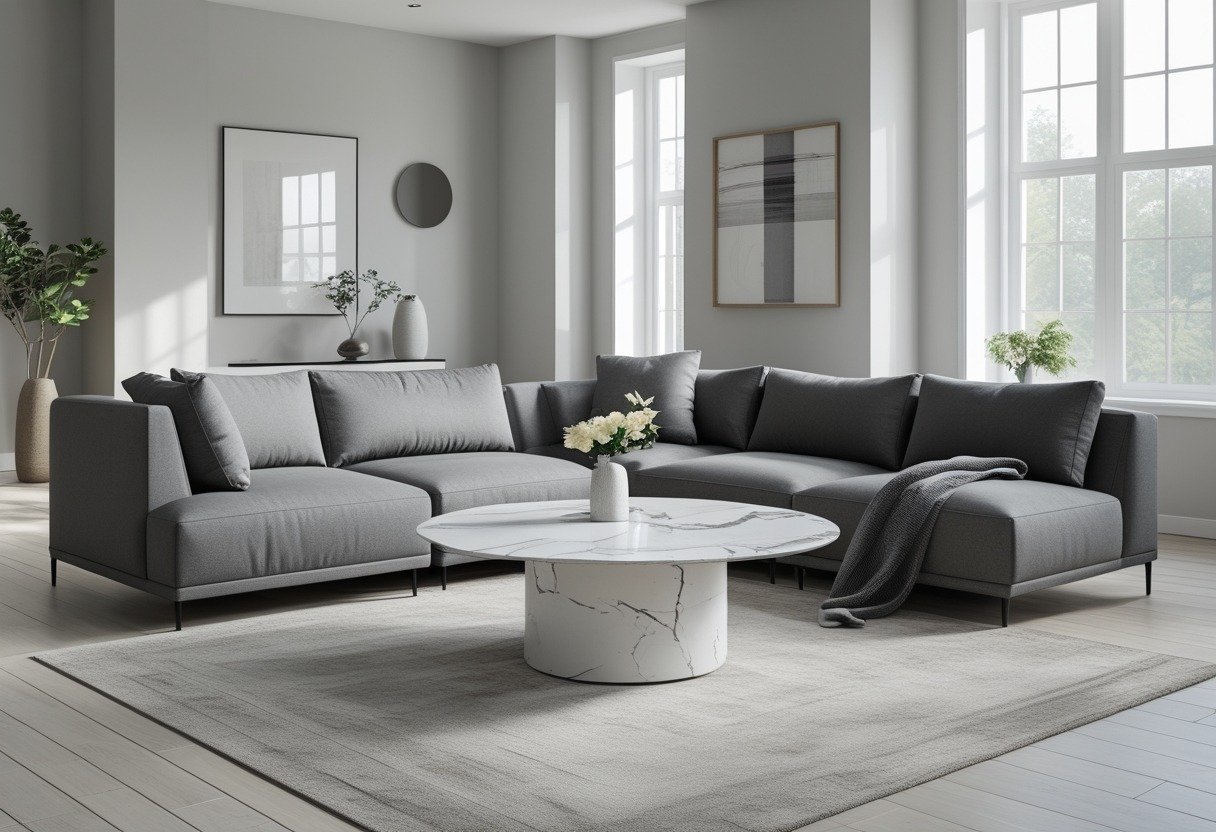
Place your modular sofa in a gentle curve or U-shape to encourage conversation and flow. The round marble table softens the geometry and keeps traffic paths clear.
Marble adds a light, elegant contrast to the grey fabric without clashing. Choose a table with slim metal or wood legs to keep the look balanced and airy.
Add a textured rug and a few low-profile accessories on the table to create interest. Keep colors simple so the marble and sofa remain the room’s anchors.
9) Soft silver-grey couch accented with blush pink cushions and brass tray
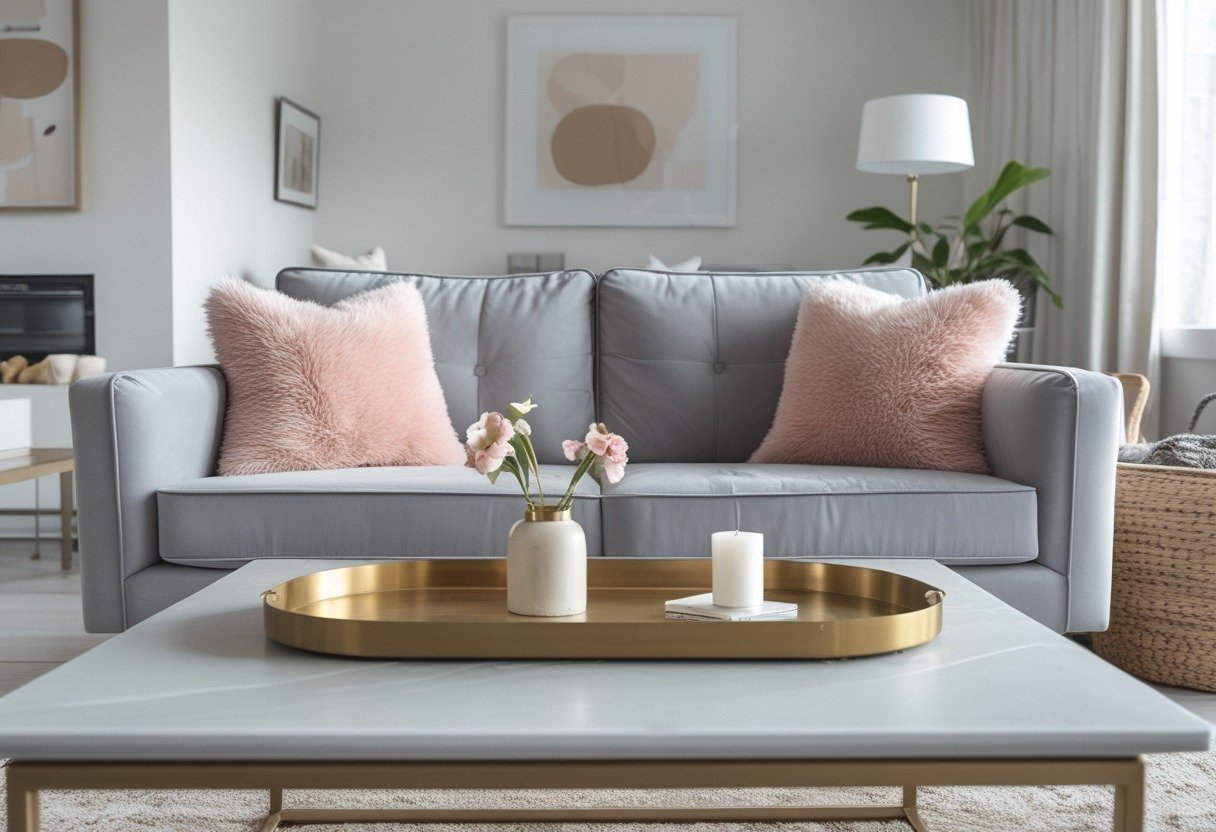
Place a soft silver-grey couch as the room’s calm anchor. The cool tone keeps the space modern and easy to layer.
Add blush pink cushions for warmth and a gentle pop of color. Keep patterns simple so the look stays refined.
Use a brass tray on the coffee table to introduce a small metallic shine. It ties the palette together and holds drinks or a vase neatly.
10) Industrial grey leather sofa with exposed brick and matte black fixtures
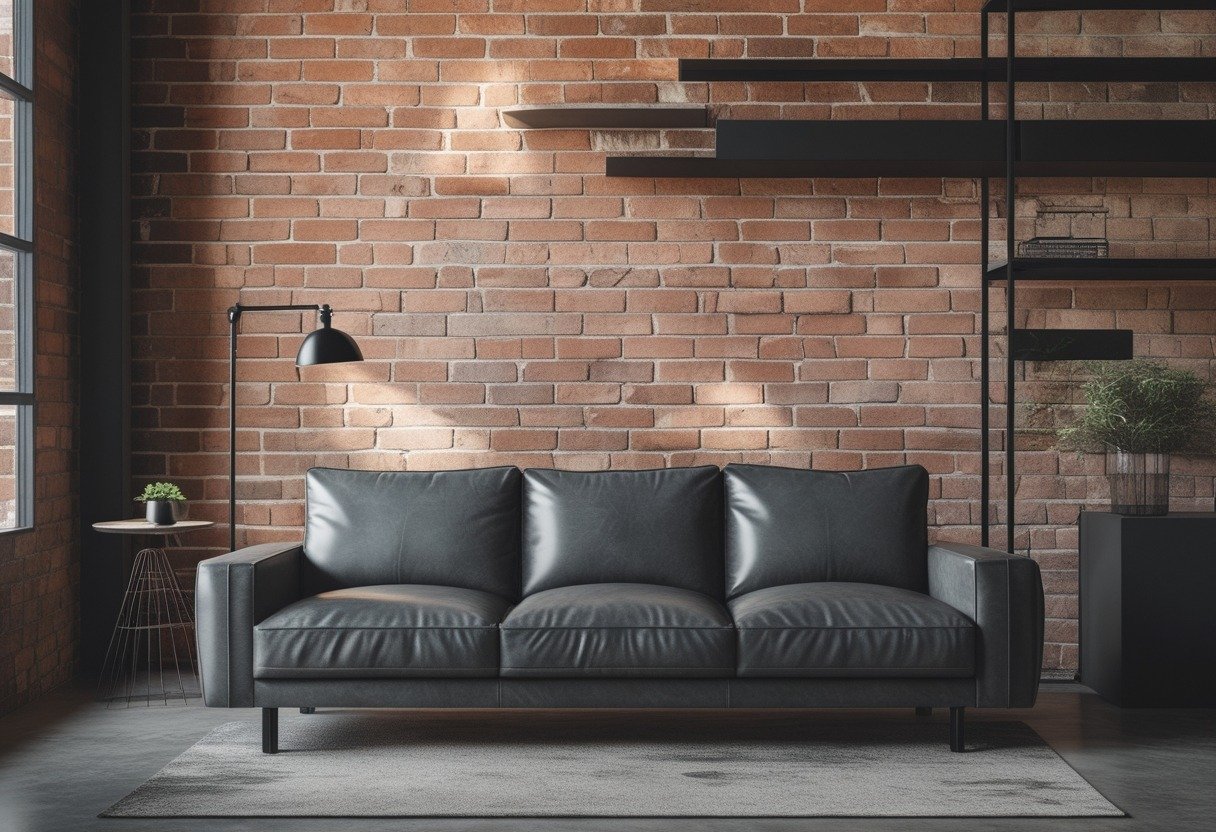
Choose a grey leather sofa to anchor your industrial living room. Its smooth texture balances rougher surfaces like exposed brick.
Pair the sofa with matte black fixtures—lighting, legs, and hardware—to keep the look cohesive. Add warm wood or metal accents for contrast and to soften the palette.
Keep accessories simple: a textured throw, a metal coffee table, and a few plants. This lets the sofa and brick wall remain the room’s focal points.
11) Classic heather-grey Chesterfield with patterned Persian rug
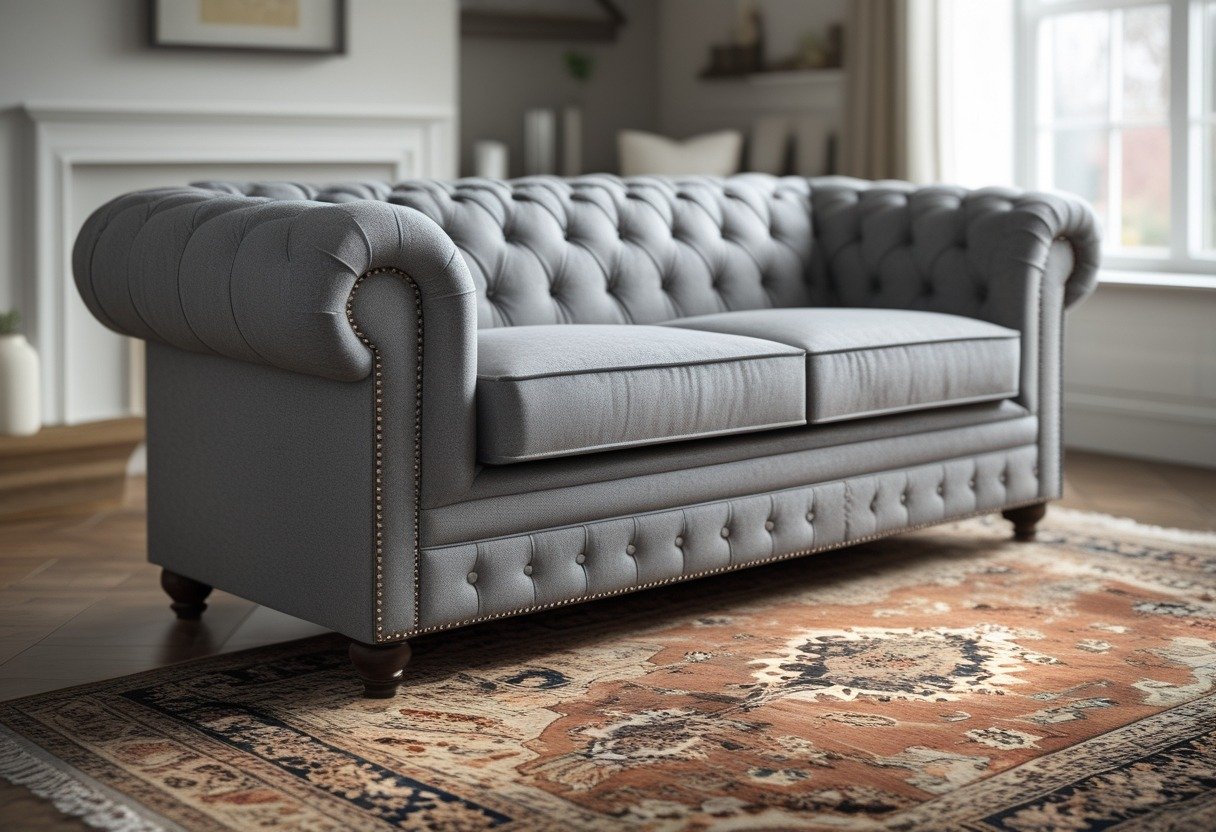
Pair a heather-grey Chesterfield with a Persian rug to balance tradition and warmth. The sofa’s buttoned back and rolled arms bring formality, while the rug adds color and intricate detail.
Choose a rug with deep reds, navy, or rust to contrast the cool grey. Keep surrounding décor simple so the sofa and rug remain the room’s focal points.
Add cushions in mixed textures to soften the look. A low coffee table and warm lighting complete the space without clutter.
12) Stone-grey sectional with floor-to-ceiling curtains and tall indoor fiddle leaf fig
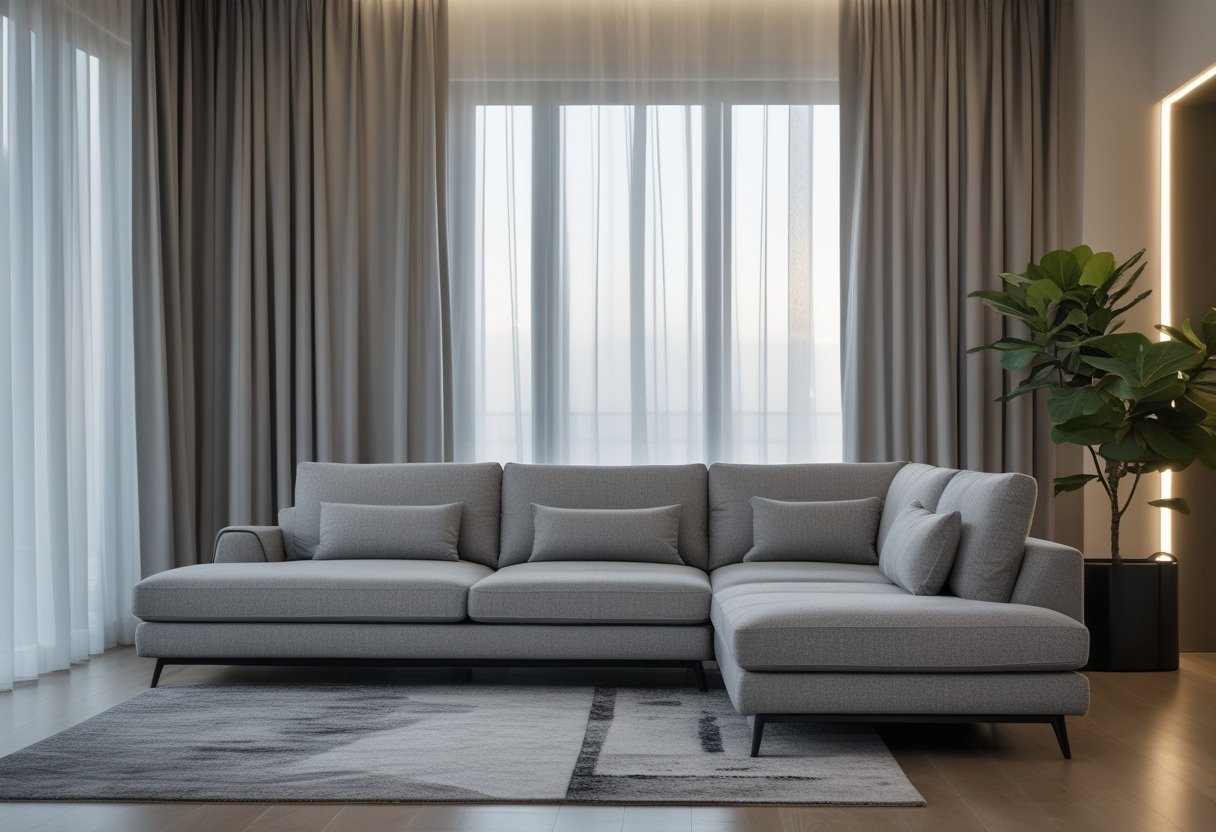
Choose a stone-grey sectional to anchor your living room with a calm, modern tone. The color works well with wood floors and soft rugs.
Hang floor-to-ceiling curtains to add height and frame windows. Light, neutral curtains keep the room bright while making the ceiling feel taller.
Place a tall fiddle leaf fig near the sectional for a natural focal point. Its large leaves add texture and a fresh green contrast to the grey.
13) Smoky grey tufted sofa with layered textured throws in cream and taupe
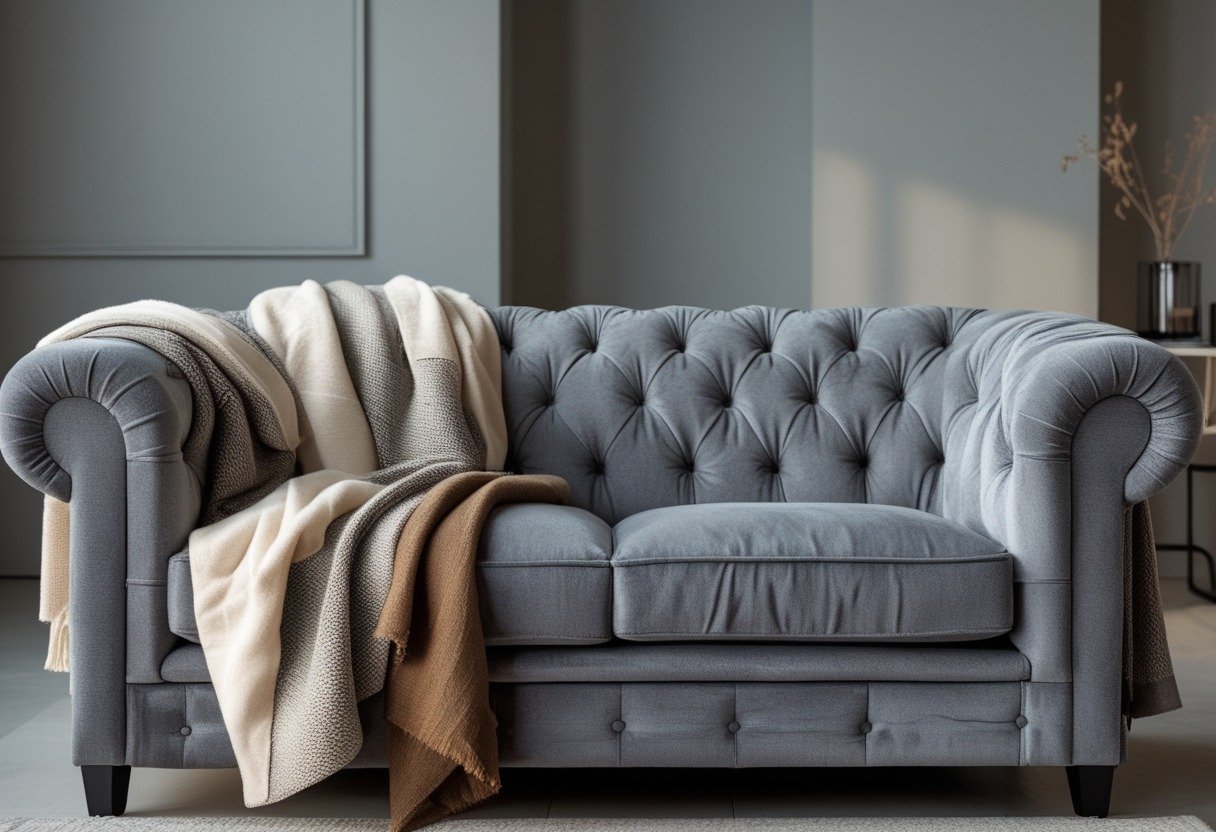
Place a smoky grey tufted sofa as your room’s anchor to add depth without overpowering the space. The tufting gives a classic look while the muted grey stays modern and calm.
Layer cream and taupe throws over the sofa for contrast and warmth. Mix knit, woven, and faux-fur textures so each piece adds touchable interest and keeps the palette cohesive.
Keep nearby accessories simple: a light rug and wooden side table help balance the softness. This setup makes your living room feel inviting and well put together.
14) Light concrete-grey sofa paired with industrial metal coffee table and Edison bulbs
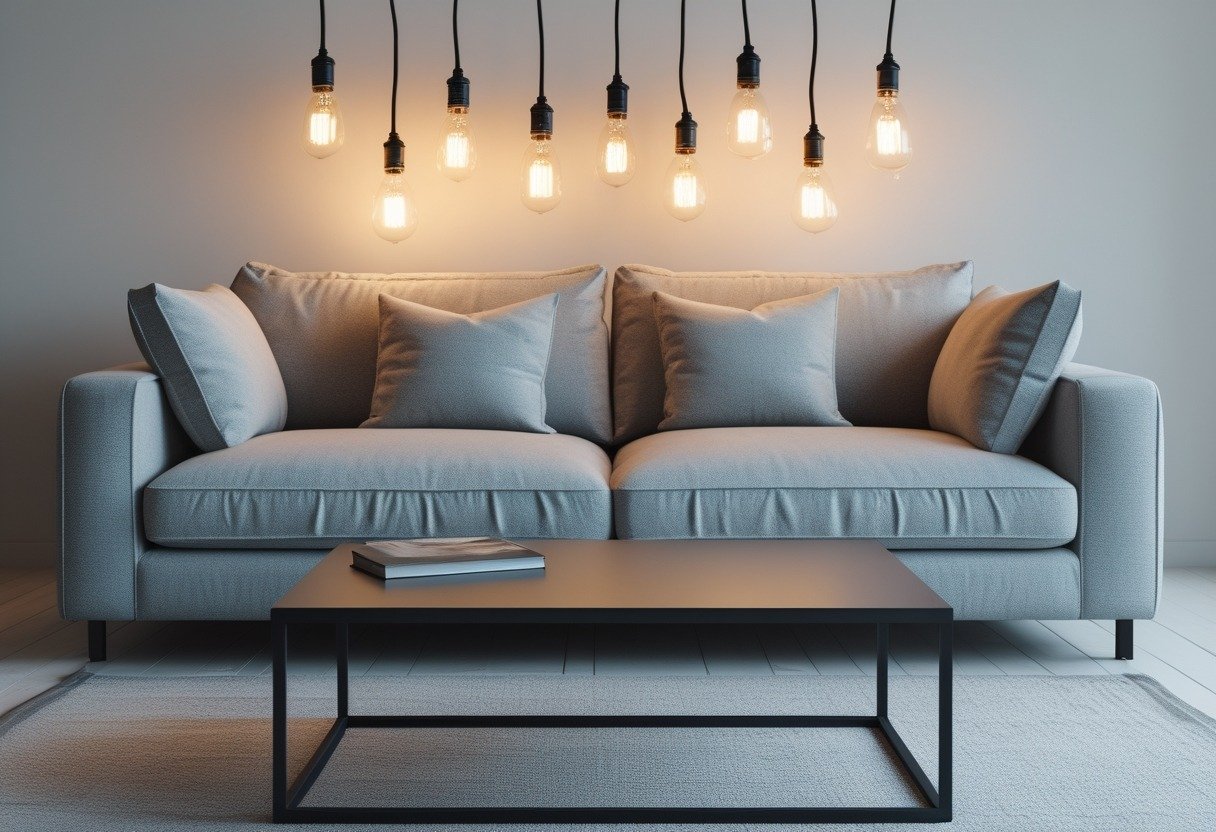
Place a light concrete-grey sofa as your room’s anchor to keep the palette calm and modern. The sofa’s smooth tone works well with raw textures.
Choose an industrial metal coffee table for contrast and durability. Its dark metal frame gives a clear, structured look against the soft grey.
Hang Edison bulbs for warm, focused light. They add a vintage touch without overwhelming the simple, industrial feel.
15) Neutral warm-grey sofa accented by botanical prints and woven baskets
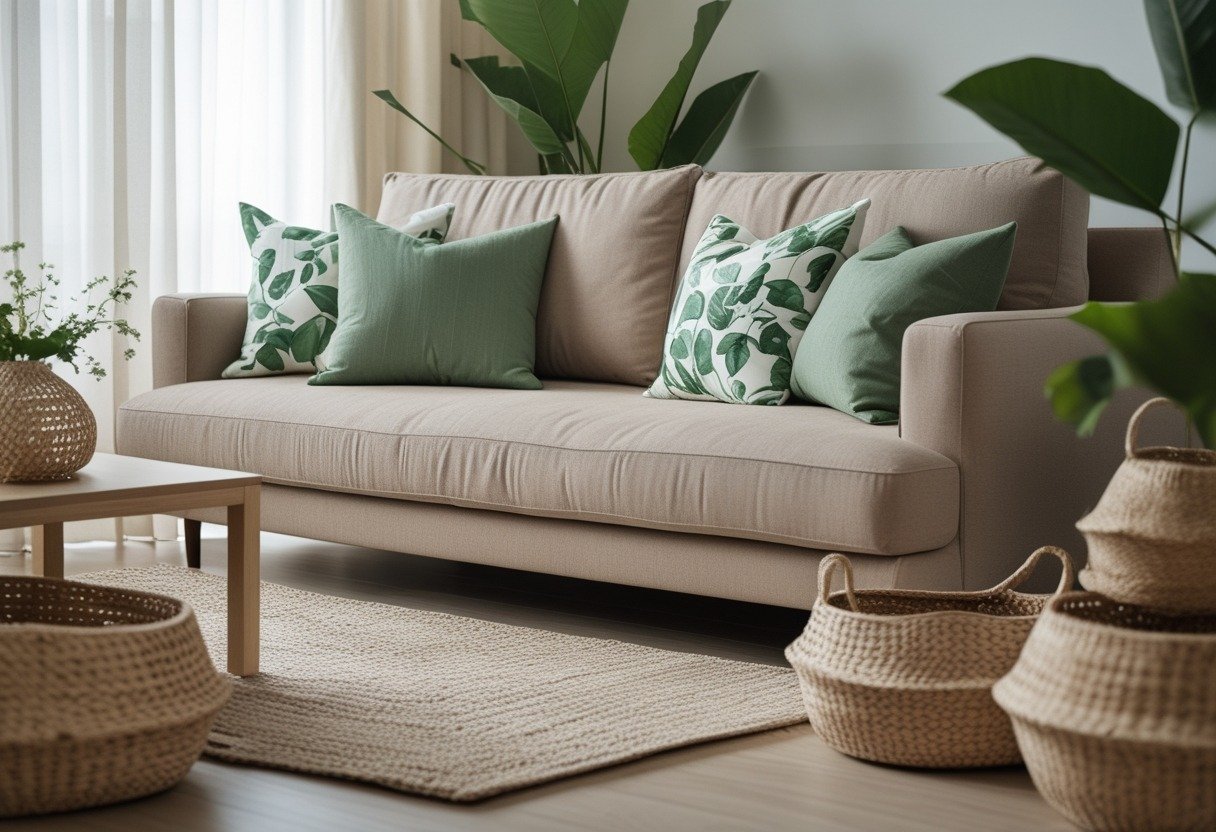
Choose a warm-grey sofa to keep your room cozy and flexible. The soft tone works with both bright and muted accents.
Add botanical prints to bring life without loud color. Framed leaves or simple plant art create a calm, natural feel.
Use woven baskets for texture and storage. They hide clutter and echo the plant theme for a balanced, lived-in look.
Color Theory for Grey Couches
Gray acts like a blank canvas that supports bold accents, warm or cool palettes, and varied textures. Pick colors that match the gray’s undertone, use contrast to add depth, and layer texture to keep the room from feeling flat.
Accent Color Selection
Choose one or two accent colors to repeat across pillows, rugs, and art. For mid-gray sofas, try teal or mustard for bold contrast. For light cool grays, soft blush or navy work well. For warm greys with brown or taupe undertones, pick olive green, rust, or terracotta.
Use accents at different scales: a large rug in a neutral with small bright pillows, or one bright armchair with smaller neutral items. Limit the palette to three main hues (sofa + one primary accent + one supporting accent) to keep the room cohesive.
Balancing Warm and Cool Tones
Identify your sofa’s undertone first: blue, green, or brown. Match undertones in walls or large furnishings to avoid visual clash. If the sofa leans cool, add warm wood, brass, or amber glass to balance the space. If it leans warm, use cool metals, blue art, or slate tiles to calm the warmth.
You can also mix warm and cool within a single accent scheme. For example, pair a cool navy pillow with a warm ochre throw. This creates a deliberate, layered look without feeling chaotic.
Contrast and Texture Effects
Contrast helps the sofa stand out. Use a dark rug under a light gray couch or a pale rug under a dark gray couch. Contrast also works with shapes: round coffee tables against a square sofa soften the visual lines.
Texture prevents flatness. Layer knits, leather, linen, and a high-pile rug to add tactile interest. Mix matte and glossy finishes—matte upholstery with a glass or metallic lamp—so light plays differently across surfaces.
Styling Tips for Modern Spaces
Keep the room simple, balanced, and functional. Use clean shapes, a limited color palette, and strong focal points to make the grey couch feel modern and intentional.
Incorporating Minimalist Decor
Choose furniture with slim profiles and straight lines to complement a grey couch. A low-profile coffee table in black metal or light wood keeps sightlines clear. Limit accessories to 3–5 purposeful pieces: a sculptural vase, a stack of coffee-table books, and one tactile throw.
Stick to a tight color scheme: two neutrals plus one accent. For example, charcoal grey, warm white, and a single accent like mustard or teal. Repeat that accent in cushions, a small rug, and an art frame to tie the room together.
Keep surfaces uncluttered. Store items in closed cabinets or a single woven basket. Let negative space show—spaces without objects will make the couch and a few key items feel deliberate.
Art Placement and Wall Treatments
Hang art at eye level—center pieces about 57–60 inches from the floor. For a single large canvas above a three-seat grey couch, pick width that’s roughly 60–75% of the sofa’s length. That keeps proportions balanced.
Create a simple gallery with 3–5 frames in matching mats and thin black or wood frames. Arrange them in a tight grid or linear layout above the couch to maintain a modern look. Keep spacing between frames 2–3 inches for cohesion.
Use wall finishes sparingly. A textured plaster or matte paint in a warm neutral adds depth without overpowering the couch. If you use wallpaper, choose a subtle geometric or tone-on-tone pattern and limit it to one accent wall.
Lighting Techniques
Layer three lighting types: ambient, task, and accent. Start with a dimmable overhead fixture for even light. Add a floor lamp with an adjustable arm beside the couch for reading. Use table lamps on side tables for softer pools of light.
Position accent lighting to highlight art or architectural features. Picture lights or adjustable spotlights above a painting bring attention to the wall without brightening the whole room. LED strips under a floating shelf add modern flair.
Choose bulbs with 2700–3000K color temperature for warm, welcoming light. Use matte or frosted shades to diffuse glare and keep reflections off the grey fabric. Keep switches and dimmers reachable from the couch for easy control.
