
Let’s talk about the most underrated element in living room design: curtains. Seriously, people spend weeks agonizing over sofa colors and coffee table shapes, but then grab whatever random curtains happen to be on sale. Big mistake.
I learned this lesson the hard way. My first apartment featured these sad, thin curtains that did absolutely nothing for the space. They looked like an afterthought because, well, they were. The moment I upgraded to proper drapes? Game changer. Suddenly my living room looked like it belonged on a design blog instead of a college dorm room.
Here’s the beautiful truth about living room curtain ideas: they offer maximum visual impact with minimal effort. Curtains frame your windows, soften your architecture, control light, and tie your entire room together. They’re basically the supporting actor that secretly carries the whole movie.
Whether you’re working with a tight budget, a tricky window situation, or simply crave a fresh look, I’ve gathered 15 simple living room curtain ideas that deliver serious style without serious complications. Ready to give your windows the attention they deserve?
1. Floor-to-Ceiling Neutral Drapes
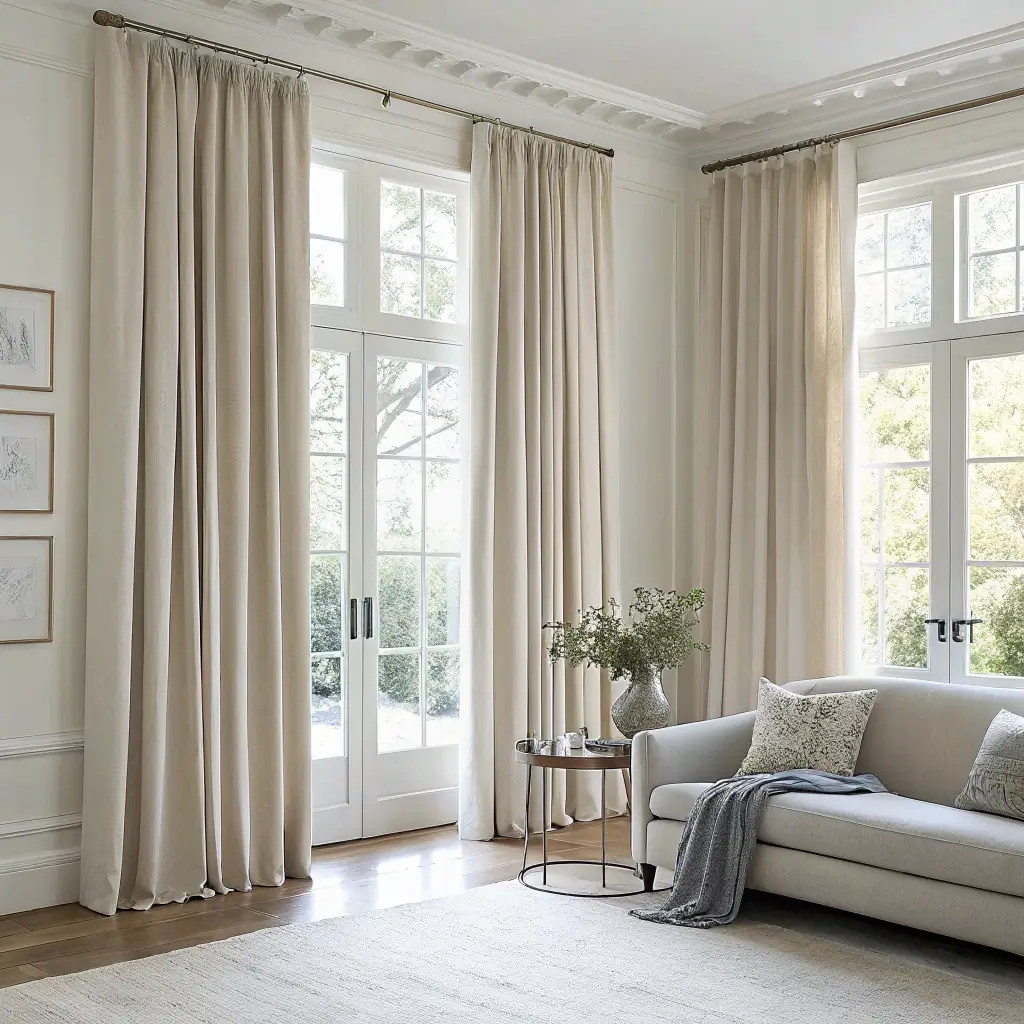
Want to know the single most impactful curtain trick designers use? Hanging curtains from ceiling to floor. This simple adjustment makes any room feel taller, grander, and infinitely more polished.
Floor-to-ceiling neutral drapes create vertical lines that draw the eye upward, making your ceilings appear higher than they actually are. It’s an optical illusion that works every single time.
Why Neutral Colors Work Best
Neutrals let the length do the talking without competing for attention. Think about these gorgeous options:
- Warm white – Bright and clean without feeling sterile
- Soft ivory – Adds warmth while maintaining airiness
- Light gray – Sophisticated and works with virtually any color scheme
- Greige – That perfect blend of gray and beige for versatility
- Taupe – Earthy warmth that grounds the space
The key measurement here matters: mount your curtain rod 4-6 inches from the ceiling, not right above the window frame. Let those drapes puddle slightly on the floor or hover just half an inch above—never awkwardly in between.
I installed floor-to-ceiling ivory drapes in my living room last spring, and honestly, people started asking if I’d renovated. Nope, just curtains. That’s the power of proper proportions.
2. Sheer White Curtains with Black Rods
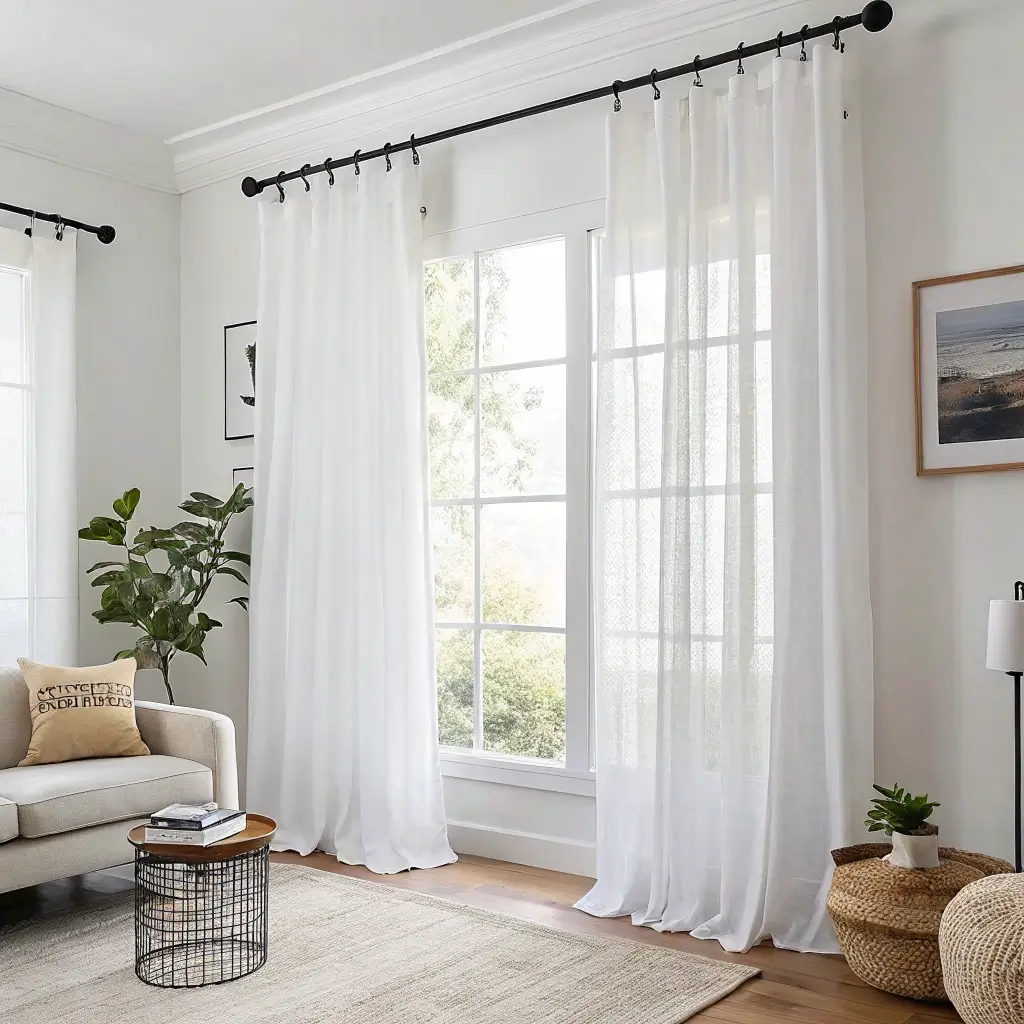
The contrast of sheer white curtains paired with black curtain rods creates instant modern elegance. This combination looks designer-level expensive while remaining incredibly accessible.
Sheer white fabric brings softness and lightness to your living room, while black hardware adds definition and architectural interest. They balance each other perfectly—one delicate, one bold.
Choosing Your Black Hardware
Not all black rods deliver the same impact:
- Matte black – Contemporary, sleek, and incredibly popular right now
- Oil-rubbed bronze – Warmer undertones with subtle depth
- Black iron – Industrial edge for loft-style spaces
- Thin minimalist rods – Modern, barely-there aesthetic
- Thick statement rods – More traditional, commanding presence
Matte black finishes photograph beautifully and resist showing fingerprints and dust. They’ve earned their spot as the current design favorite.
The sheers themselves should be generously full—at least 1.5 to 2 times your window width. Skimpy sheers look sad and defeat the whole purpose of that dreamy, flowing effect.
3. Layered Sheer and Blackout Curtains
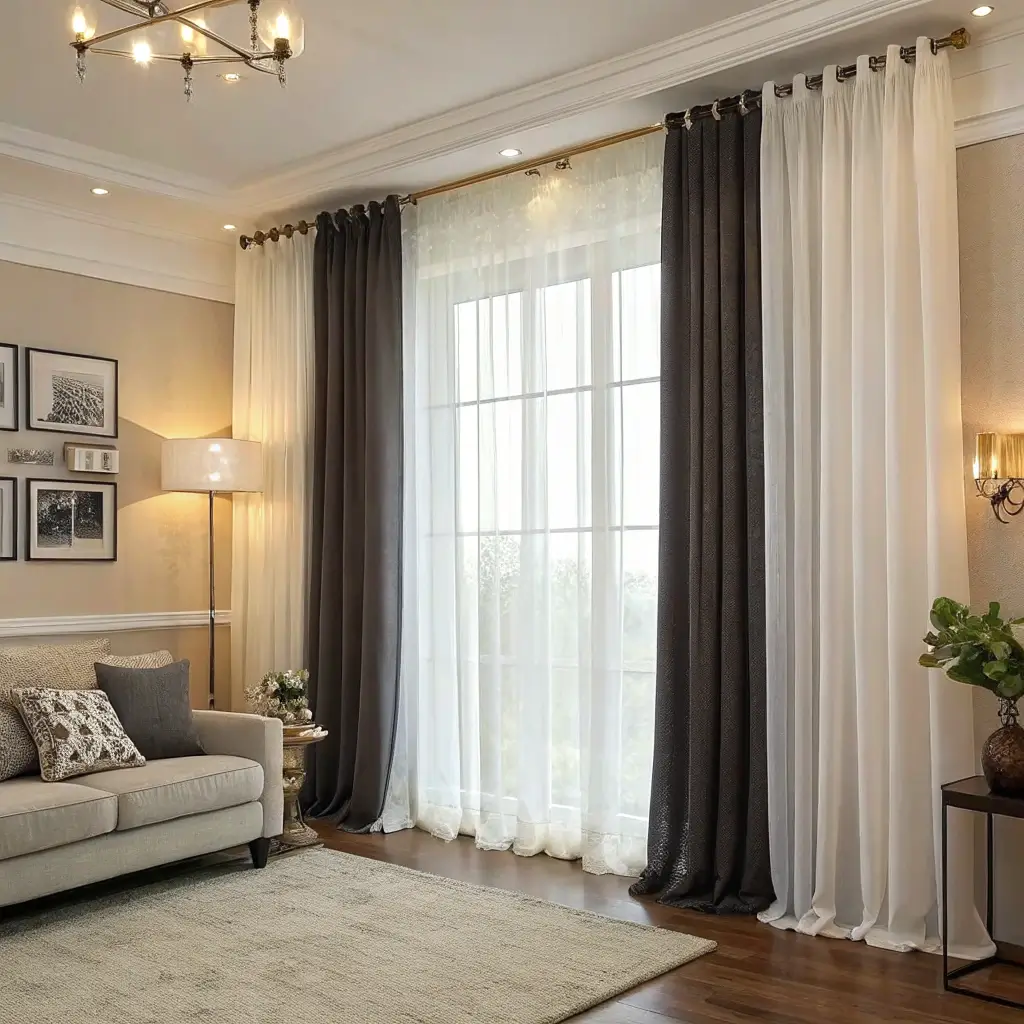
Why choose between pretty and practical when you can have both? Layered curtains combine sheers with blackout panels for ultimate versatility and depth.
This approach gives you complete control over light and privacy while creating rich, dimensional window treatments. During the day, enjoy filtered natural light through your sheers. At night, draw the blackout layer for darkness and insulation.
How to Layer Effectively
Here’s what you need to nail this look:
- Double curtain rod – Allows independent operation of each layer
- Sheers closest to window – Creates base layer diffusing light
- Blackout panels on front rod – Draws open for daytime, closed for privacy
- Complementary colors – Match or intentionally contrast your layers
- Consistent length – Both layers should reach the same point
The double rod system matters more than people realize. Some try using a single rod with clips, but that creates a tangled mess when you try operating each layer independently.
I run sheers in my bedroom with navy blackout panels, and honestly, the flexibility transformed how I use that space. Bright and airy mornings, cave-like darkness for sleeping in on weekends.
Also Read: 10 Chic Apartment Decorating Living Room Ideas to Try Today
4. Textured Linen Curtains in Warm Tones
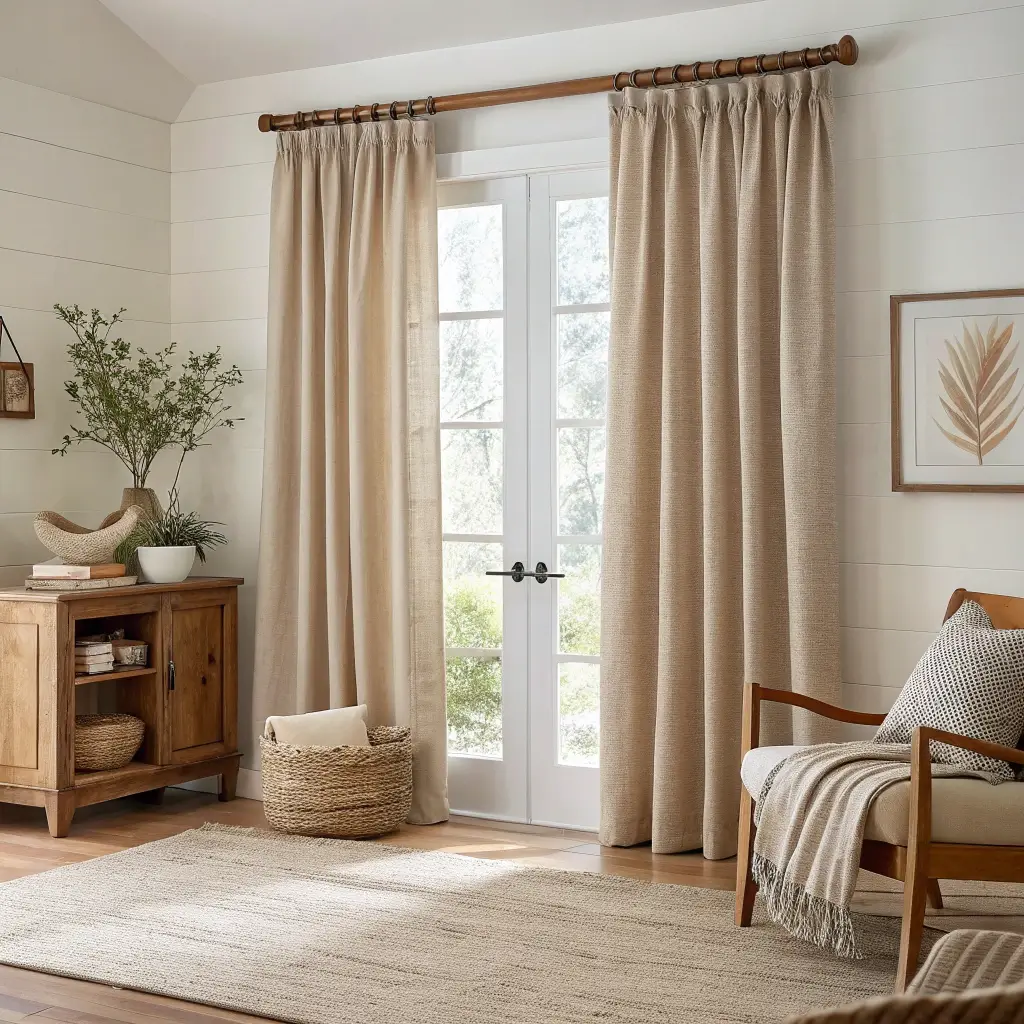
Textured linen curtains bring organic beauty and casual sophistication that synthetic fabrics simply cannot replicate. When you add warm tones to that linen texture, you create living rooms that feel like cozy embraces.
Linen’s natural slubs and variations catch light beautifully throughout the day. It wrinkles, yes, but those wrinkles read as relaxed elegance rather than neglect.
Best Warm Tones for Linen Curtains
These warm shades work particularly well:
- Terracotta – Earthy, warm, and surprisingly versatile
- Mustard – Bold warmth without overwhelming
- Camel – Rich neutral with golden undertones
- Rust – Deep warmth for fall-inspired year-round coziness
- Warm sand – Subtle warmth, maximum flexibility
Natural linen costs more than polyester alternatives, but the difference in appearance justifies every extra penny. Synthetic “linen-look” fabrics rarely fool anyone up close.
Pro tip: embrace linen’s natural drape. Don’t expect crisp, tailored folds—linen falls softly and organically, and that’s exactly what makes it beautiful.
5. Ceiling-Mounted Curtains for Height
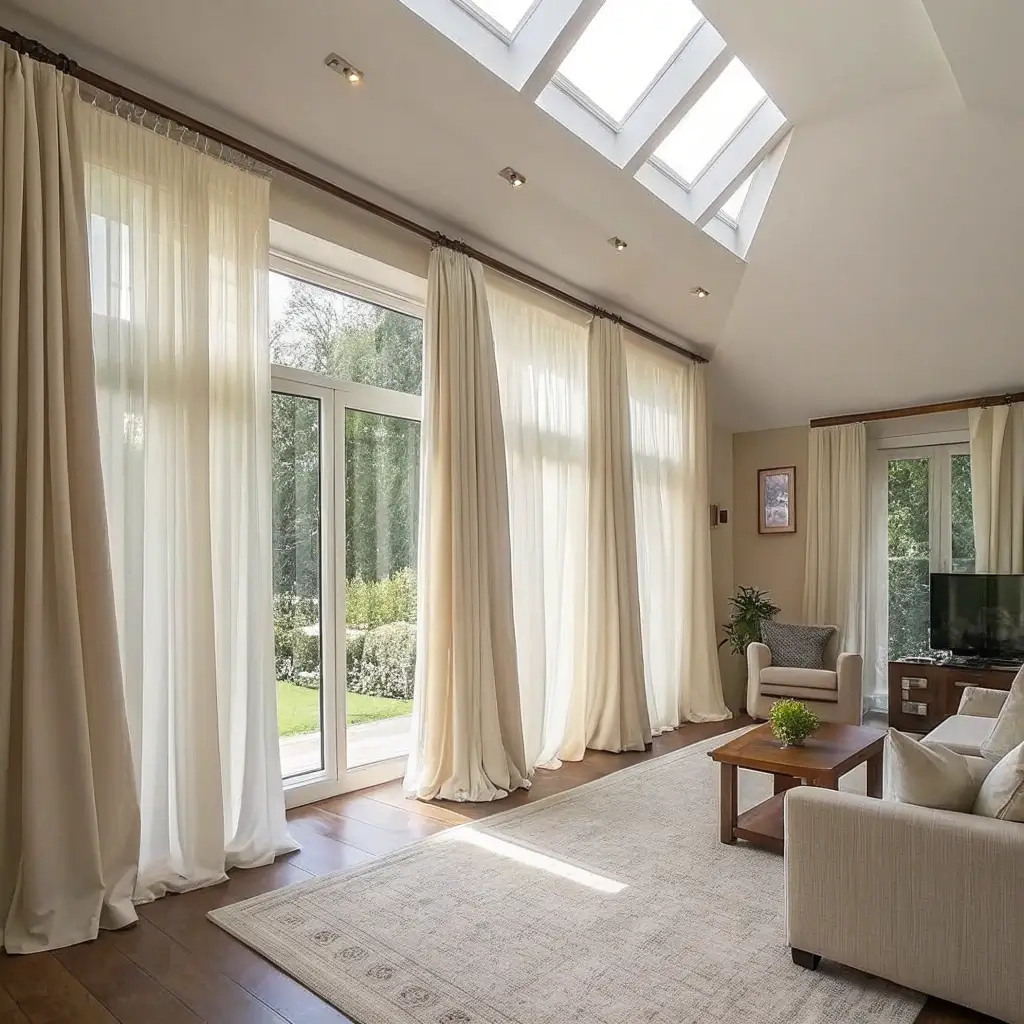
Similar to floor-to-ceiling drapes, ceiling-mounted curtains maximize perceived height, but this approach works especially well for rooms with shorter ceilings or windows awkwardly close to the ceiling line.
When your window sits just inches below the ceiling, traditional rod placement looks cramped. Ceiling mounting solves this elegantly while adding dramatic presence.
Ceiling Mount Installation Tips
Get it right with these considerations:
- Track systems – Most common for ceiling mounting; slides smoothly
- Proper anchoring – Find ceiling joists or use appropriate anchors
- Extra length calculations – Measure from ceiling to floor, add 1-2 inches
- Ripple fold headers – Create clean, consistent waves with track systems
- Professional installation option – Ceiling mounting mistakes cost more to fix
Track systems with ripple fold curtains create that hotel-lobby sophistication everyone admires. The uniform waves look incredibly polished and expensive.
FYI, ceiling-mounted curtains also work brilliantly for sliding glass doors where wall space above the door is limited.
6. Minimalist Solid Color Drapes
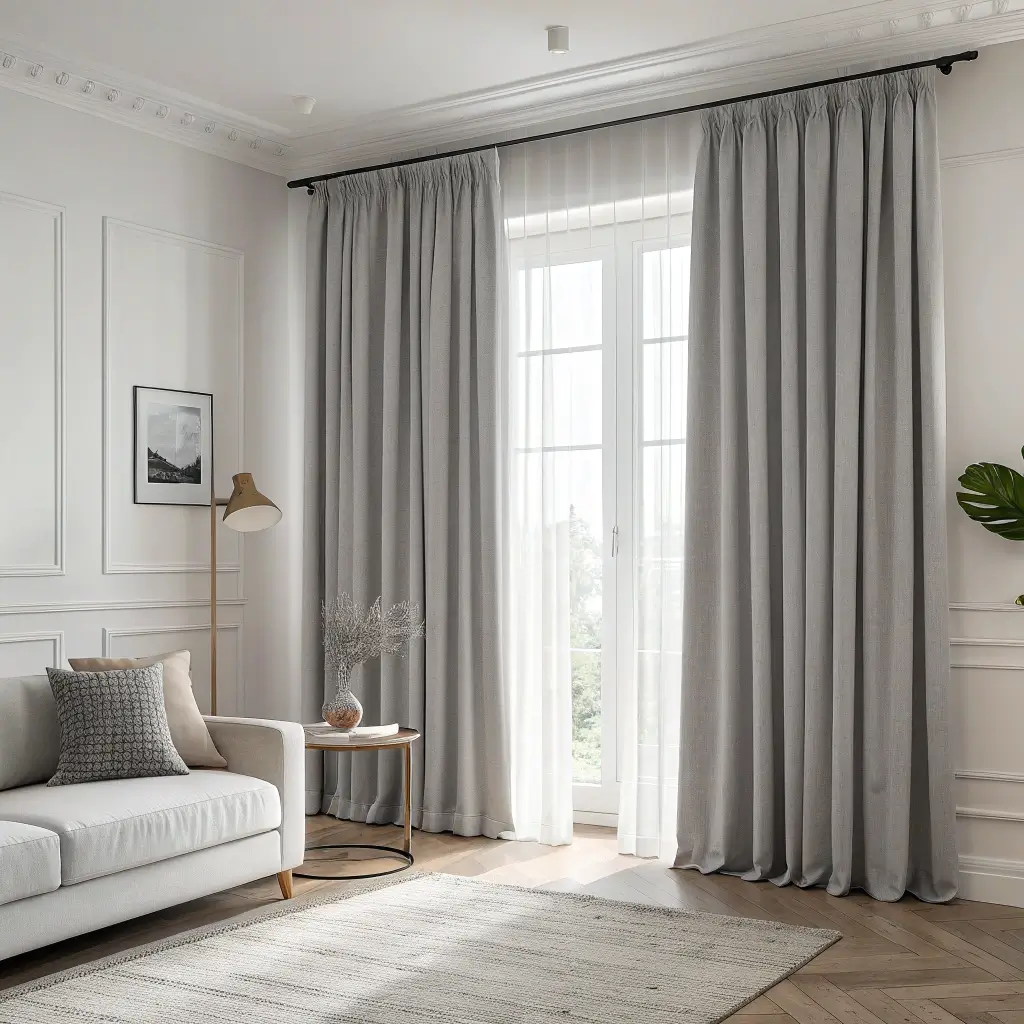
Sometimes less truly means more. Minimalist solid color drapes prove that simplicity creates sophistication when executed properly.
Clean lines, quality fabric, and intentional color selection—that’s the minimalist curtain formula. No patterns to compete with your decor, no fussy details to distract the eye.
Selecting the Perfect Solid Color
Your solid color choice should serve a purpose:
- Match your walls – Creates seamless, expansive feeling
- Complement accent colors – Pulls from throw pillows or artwork
- Neutral foundation – Allows other elements to shine
- Statement color – Becomes the focal point itself
- Tone-on-tone variations – Subtle contrast with sophisticated depth
Matching curtains to wall color creates rooms that feel larger because the eye travels uninterrupted around the space. This trick works wonders in smaller living rooms.
The fabric quality becomes even more critical with solid colors. Every flaw shows when there’s no pattern to hide behind, so invest in proper drapes rather than bargain-bin options.
Also Read: 12 Smart Apartment Decorating Ideas for Tiny Apartments
7. Soft Pastel Curtains for Bright Spaces
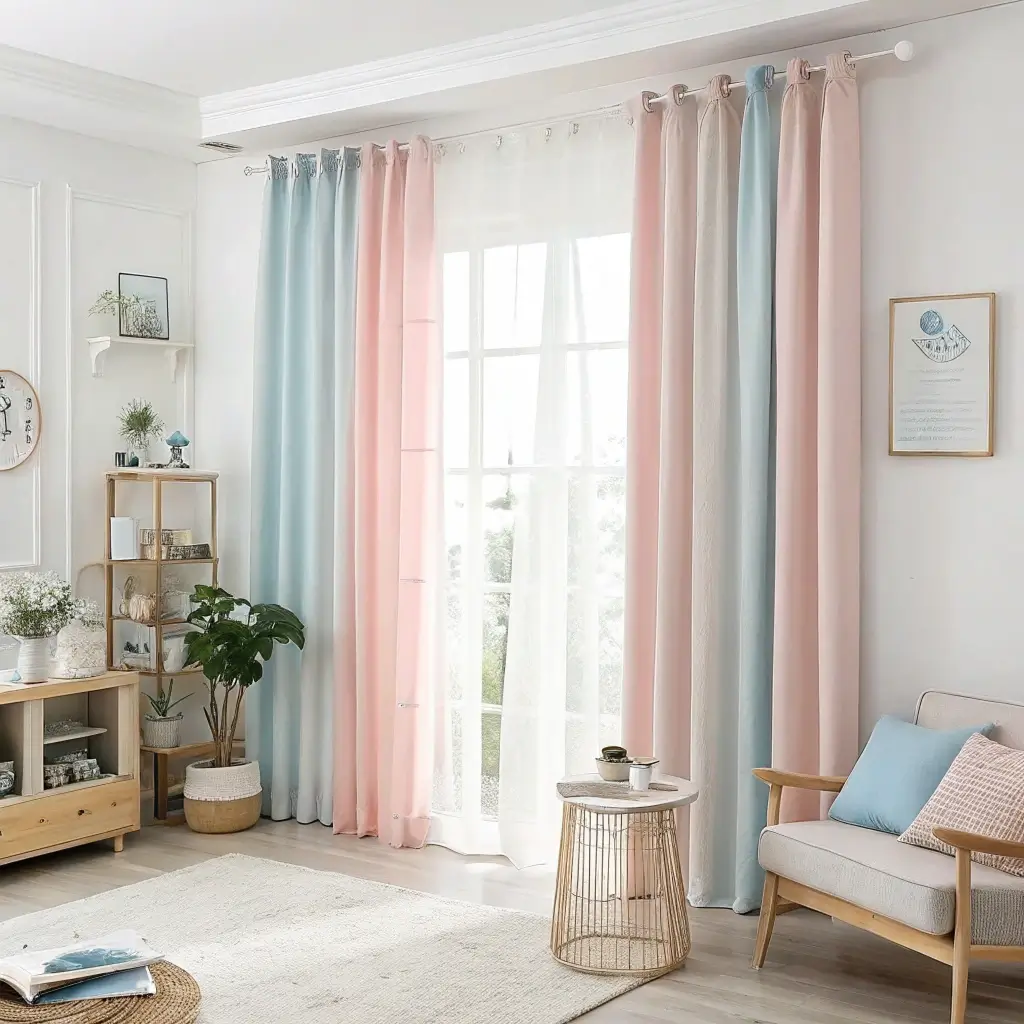
Rooms flooded with natural light deserve curtains that celebrate rather than fight that brightness. Soft pastel curtains enhance sunny spaces while adding gentle color that doesn’t overwhelm.
Pastels bring subtle personality without the visual weight of saturated colors. They keep spaces feeling fresh, airy, and welcoming while still introducing intentional design choices.
Best Pastels for Light-Filled Rooms
Consider these lovely options:
- Blush pink – Warm, romantic, incredibly flattering to skin tones
- Soft sage – Calming, nature-inspired, surprisingly versatile
- Pale blue – Fresh, coastal vibes, pairs beautifully with neutrals
- Lavender – Sophisticated, unique, works in traditional and modern spaces
- Butter yellow – Sunny, cheerful, amplifies available warmth
Blush pink has maintained surprising staying power beyond what many predicted. It reads sophisticated rather than juvenile when paired with mature furnishings.
Light-filled rooms can handle slightly heavier fabric weights since you’re not desperately preserving every lumen. Pastels in medium-weight linens or cottons drape beautifully.
8. Dark Moody Curtains for Contrast
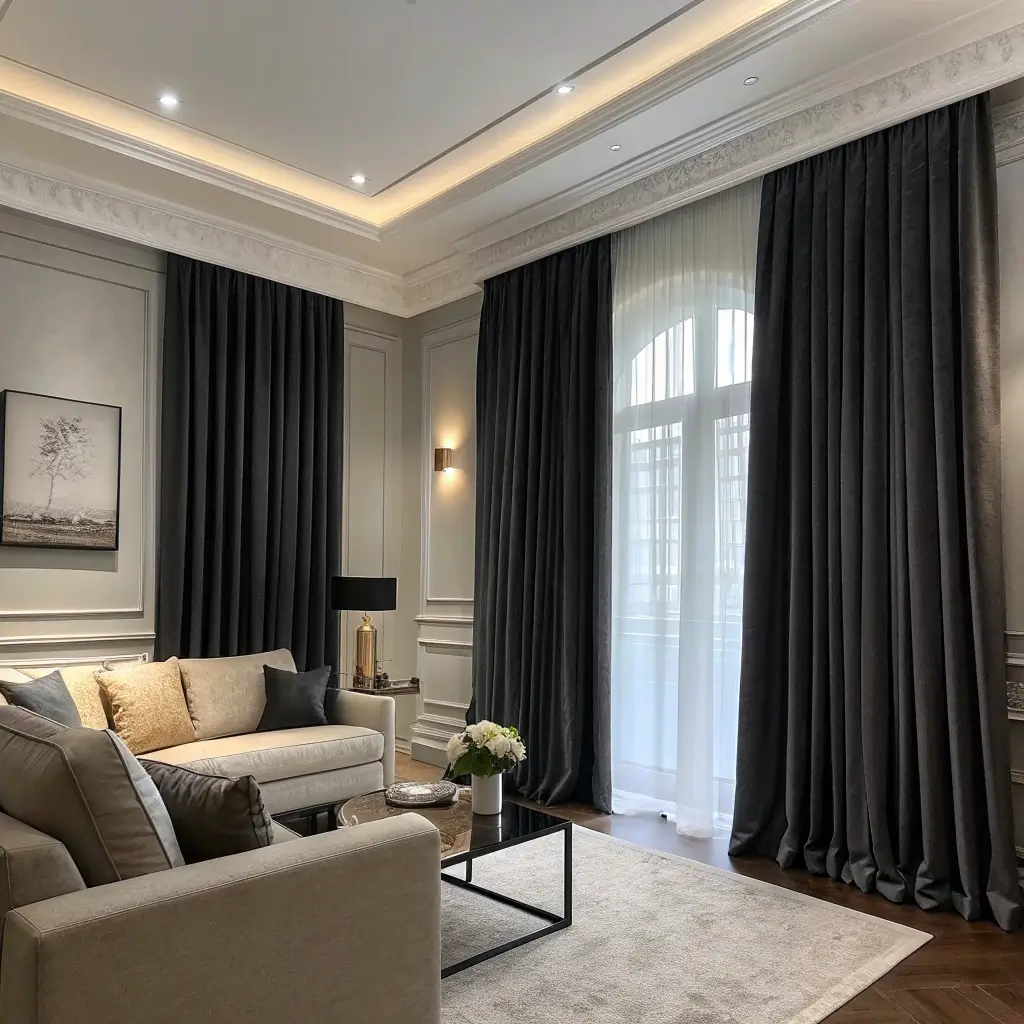
Ready to make a statement? Dark moody curtains deliver dramatic contrast that transforms living rooms from nice to unforgettable. They’re bold, they’re theatrical, and they work.
Deep colors anchor rooms, create coziness, and provide the perfect backdrop for lighter furniture and accessories. Don’t fear the darkness—embrace it strategically.
Moody Colors That Deliver
These dark tones create maximum impact:
- Charcoal gray – Softer than black, still dramatically dark
- Navy blue – Classic depth with timeless appeal
- Forest green – Rich, earthy, surprisingly warm
- Plum – Unexpectedly luxurious with pink undertones
- Deep burgundy – Wine-inspired sophistication
Dark curtains require confident commitment. Half-measures look awkward—go bold or choose a different direction entirely.
The contrast works best when your walls stay light or neutral. Dark curtains against dark walls can feel oppressive without careful lighting consideration. Against white or cream walls? Absolutely stunning. 🙂
9. Patterned Curtains with Subtle Prints
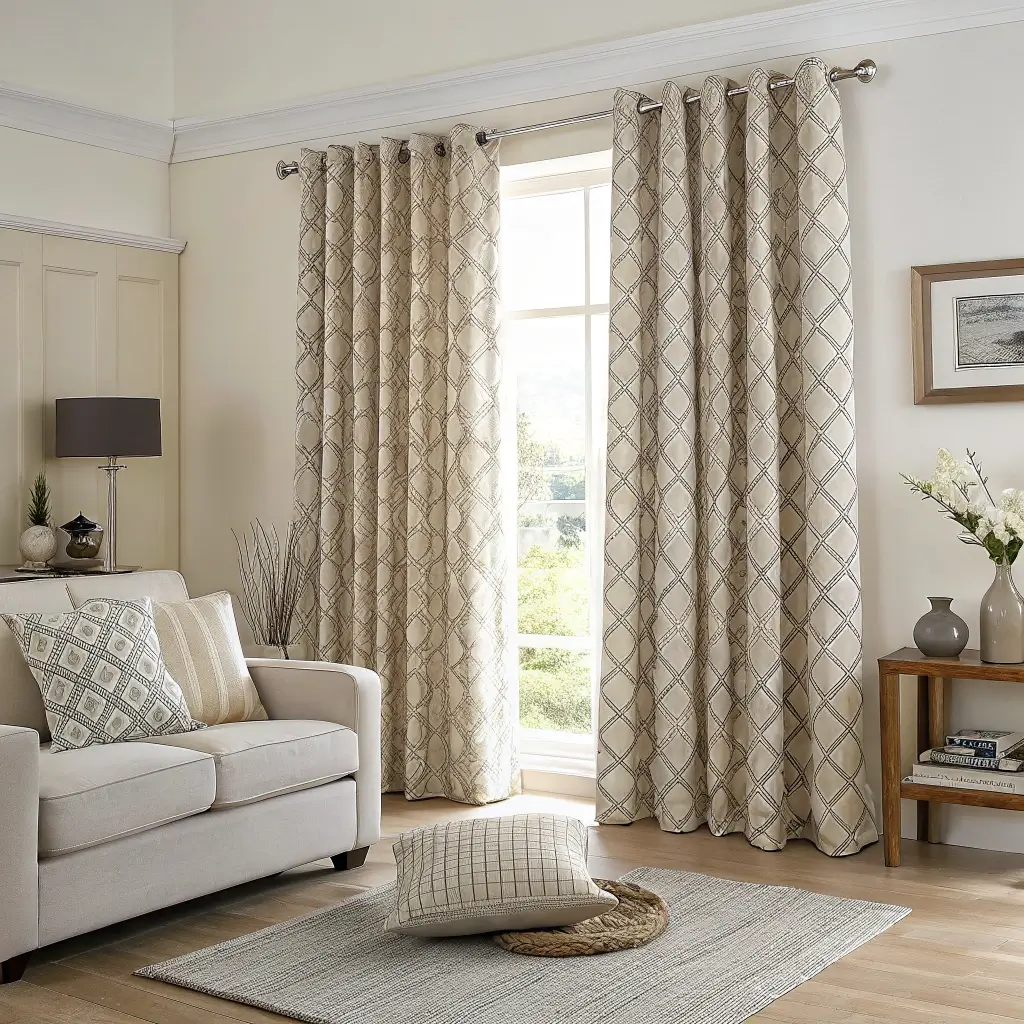
Patterns add personality without demanding attention when you choose subtle prints over bold graphics. Think whispered interest rather than shouted statements.
Subtle patterns work harder than solids while maintaining versatility. They hide imperfections, add visual texture, and keep spaces feeling designed rather than decorated.
Subtle Pattern Options
Explore these understated choices:
- Tone-on-tone stripes – Movement without contrast
- Small geometric prints – Modern interest at a subtle scale
- Muted florals – Traditional elegance, contemporary restraint
- Abstract textures – Organic patterns that read almost solid
- Faded damask – Classic pattern with softened impact
Distance matters with pattern selection. What looks bold up close might read as texture from across the room. Consider how you’ll typically view your curtains.
I chose a subtle gray-on-gray geometric for my living room, and people often don’t notice the pattern until they’re right next to the window. It adds dimension without demanding attention—exactly what I wanted.
Also Read: 15 Functional Studio Apartment Ideas for Men and Smart Design
10. Natural Cotton Curtains for Airy Feel
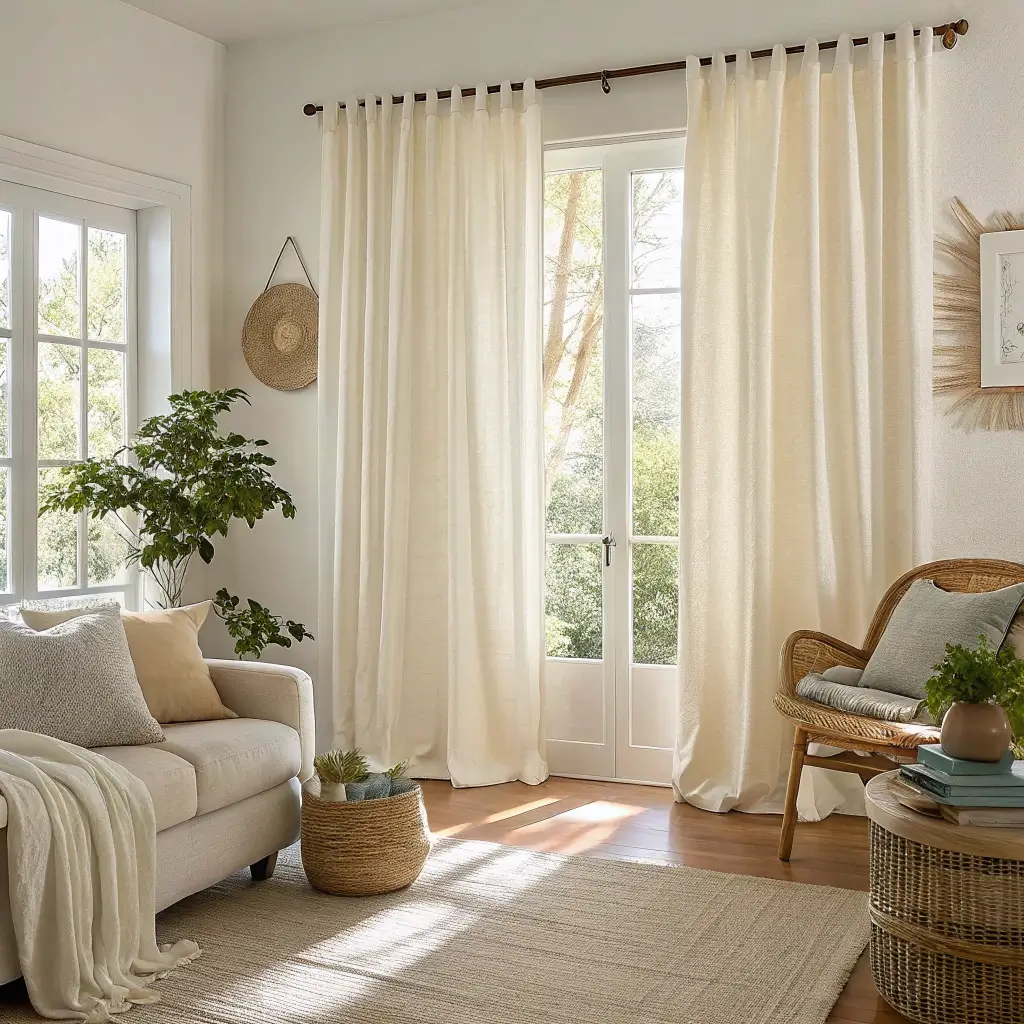
Nothing creates effortless airiness quite like natural cotton curtains. They’re casual, comfortable, and bring that relaxed elegance coastal designers adore.
Cotton breathes, moves, and catches breezes beautifully. It feels approachable rather than formal, making living rooms welcoming and lived-in.
Cotton Curtain Considerations
Keep these factors in mind:
- Weight variations – Lightweight for movement, medium-weight for structure
- Weave types – Canvas, gauze, muslin each offer different aesthetics
- Washing requirements – Cotton shrinks; pre-wash or dry-clean
- Wrinkling tendency – Embrace it or iron regularly
- Light filtration – Cotton typically filters rather than blocks light
Pre-washed cotton curtains develop that perfectly rumpled look immediately. New, stiff cotton needs time to soften and relax into its best self.
IMO, cotton curtains work best in casual living rooms where formality isn’t the goal. They bring that farmhouse-meets-coastal vibe people can’t stop pinning.
11. Neutral Curtains with Decorative Tiebacks
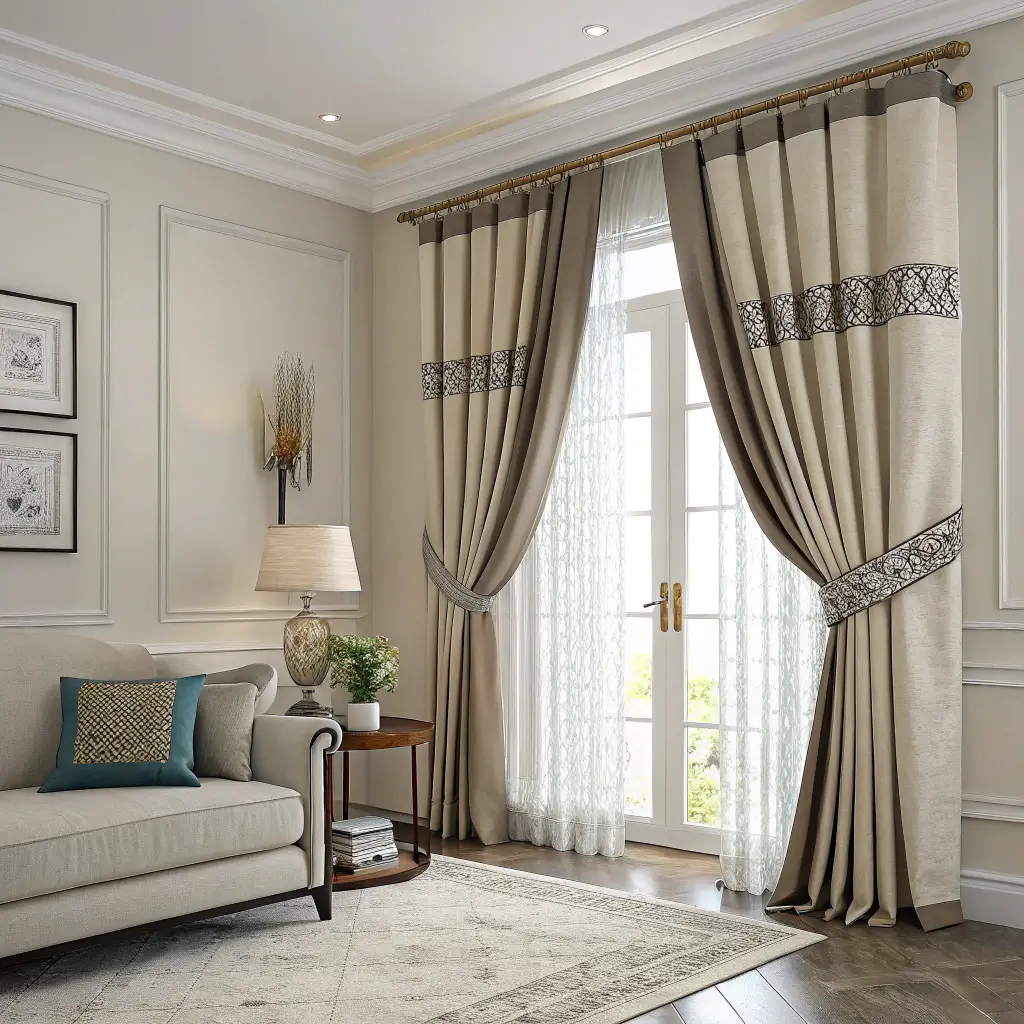
Simple curtains become statement pieces when you add decorative tiebacks. This approach keeps your drapes neutral and versatile while accessories do the heavy lifting.
Tiebacks serve functional and aesthetic purposes. They hold curtains open, frame windows beautifully, and introduce texture, color, or sparkle wherever you want attention.
Tieback Styles to Consider
Options abound for every aesthetic:
- Woven rope – Natural, coastal, perfect for bohemian spaces
- Tassel tiebacks – Traditional elegance with modern appeal
- Metal holdbacks – Architectural hardware creating clean lines
- Leather straps – Masculine edge, works brilliantly with minimalist spaces
- Crystal or beaded – Glamorous sparkle catching light beautifully
- Fabric bands – Matching or contrasting; classic and understated
Metal holdbacks offer the cleanest aesthetic and don’t require tying or adjusting. They simply hold curtains in place with architectural permanence.
Placement matters: install tiebacks approximately two-thirds down from the curtain top for the most flattering drape ratio.
12. Light-Filtering Curtains for Small Rooms
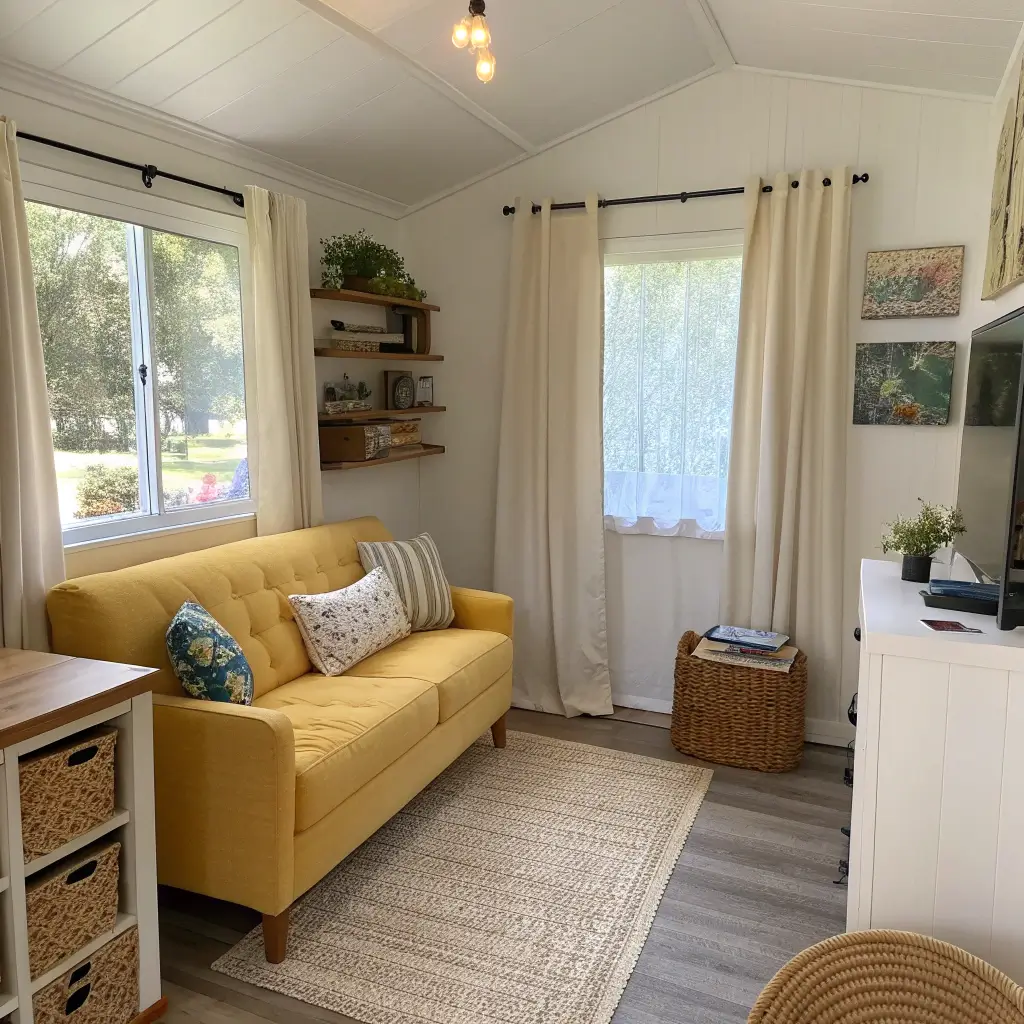
Small living rooms need every advantage possible, and light-filtering curtains preserve precious natural light while still providing privacy and softness.
Heavy blackout curtains make compact spaces feel smaller and darker—exactly what you don’t want. Light-filtering options maintain brightness while delivering the window treatment finish your room deserves.
Maximizing Small Spaces with Curtains
Follow these guidelines:
- Choose lightweight fabrics – Sheers, voiles, or light cotton
- Keep colors light – White, cream, or pale neutrals expand space
- Extend rods beyond windows – Makes windows appear wider
- Ceiling-to-floor length – Draws eyes upward, increases perceived height
- Avoid bulky headers – Simple grommet or tab tops reduce visual weight
The rod extension trick genuinely transforms small rooms. Extend your curtain rod 8-12 inches beyond each window side, allowing curtains to stack on walls rather than blocking window glass.
This means your windows look larger and more light enters when curtains open. Simple physics, big visual impact.
13. Modern Two-Tone Curtain Panels
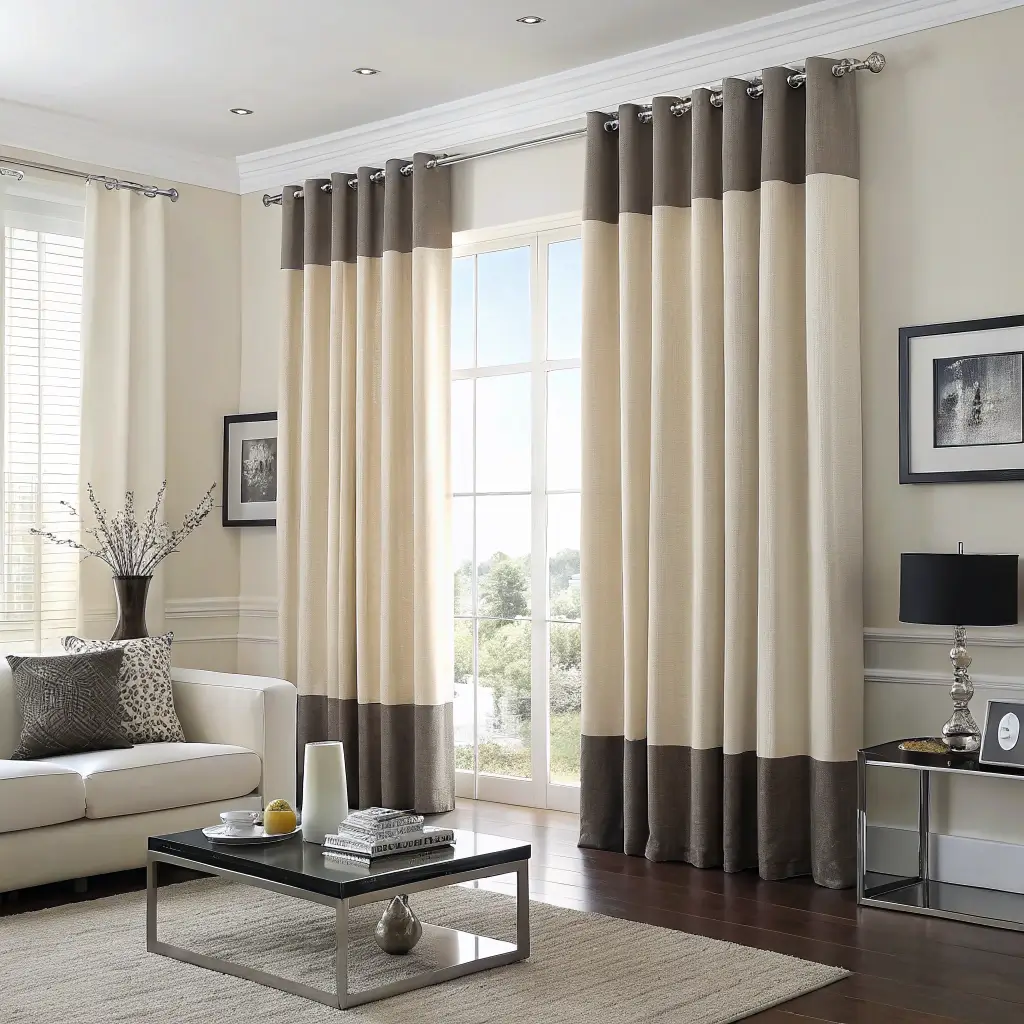
Two-tone curtain panels bring contemporary edge through color blocking or horizontal divisions. They’re modern, they’re unexpected, and they add personality without busy patterns.
This approach works especially well for those who love color but prefer graphic simplicity over traditional prints. Two-tone designs feel intentional and designed.
Two-Tone Approaches
Explore these variations:
- Horizontal blocking – Different colors on top and bottom portions
- Vertical blocking – Color change runs lengthwise
- Bordered panels – Contrasting trim along edges or hem
- Dipped hem effect – Color concentrated at bottom, fading upward
- Colorblock combinations – Bold contrasts or subtle tonal shifts
Horizontal divisions at the one-third or two-thirds mark create the most visually pleasing proportions. Centered divisions can feel awkward and uncertain.
Color combinations matter tremendously here. High contrast (navy and white) makes strong statements. Low contrast (cream and sand) whispers sophisticated subtlety.
14. Earthy Beige Curtains with Wooden Rods
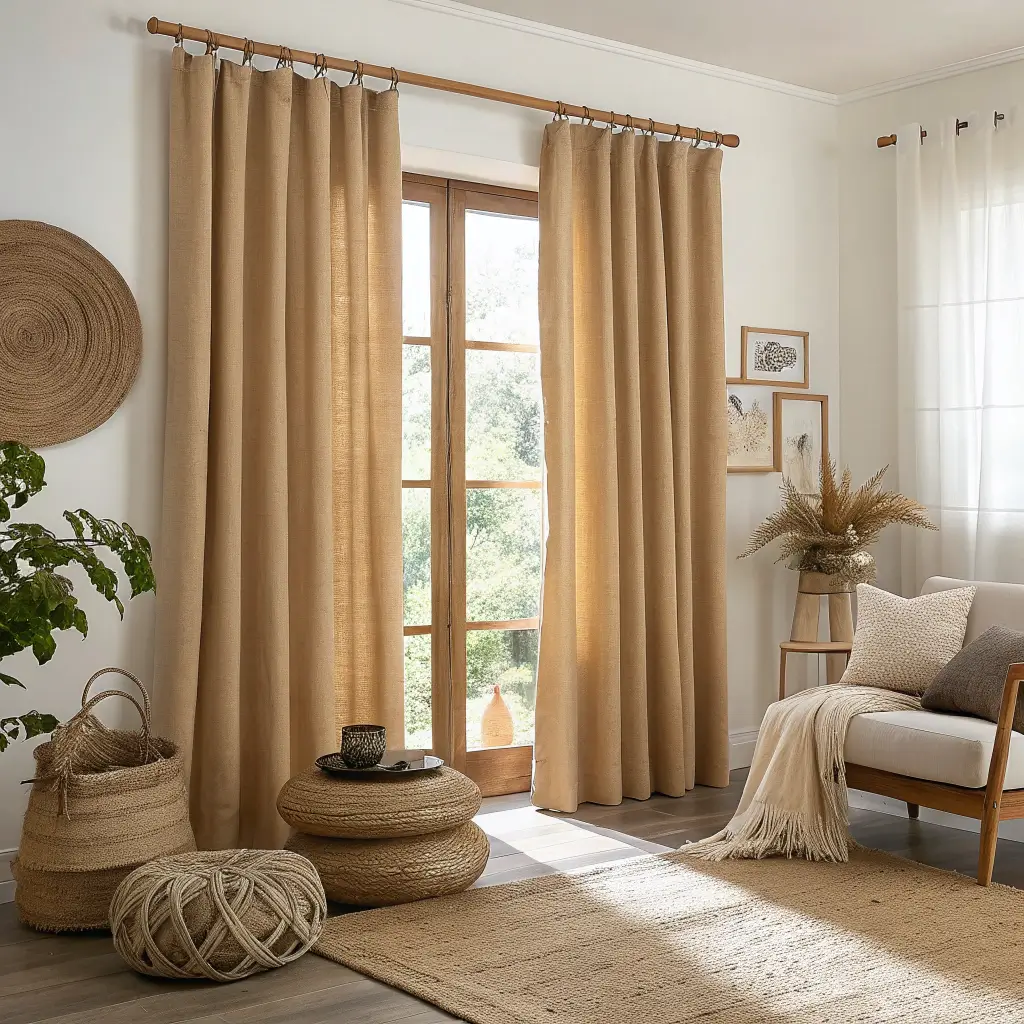
Earthy beige curtains paired with wooden curtain rods create warm, natural living rooms that feel grounded and organic. This combination embraces nature-inspired design beautifully.
The wood and natural fiber combination connects your interior space to the outdoors. It feels honest, warm, and timelessly appealing regardless of trending styles.
Choosing Wooden Rods
Consider these wood options:
- Oak – Light to medium tones with prominent grain
- Walnut – Rich, dark brown for dramatic warmth
- Bamboo – Lightweight, sustainable, distinctly organic
- Driftwood – Weathered texture for coastal aesthetics
- Stained pine – Budget-friendly with customizable color
Match your wooden rod finish to other wood tones in your room—furniture, flooring, or architectural details. Cohesive wood tones create intentional design harmony.
The beige spectrum offers more variety than people realize. Warm beige leans toward yellow undertones, while cool beige contains gray undertones. Match your room’s warmth for best results.
15. Full-Length Curtains Framing Large Windows
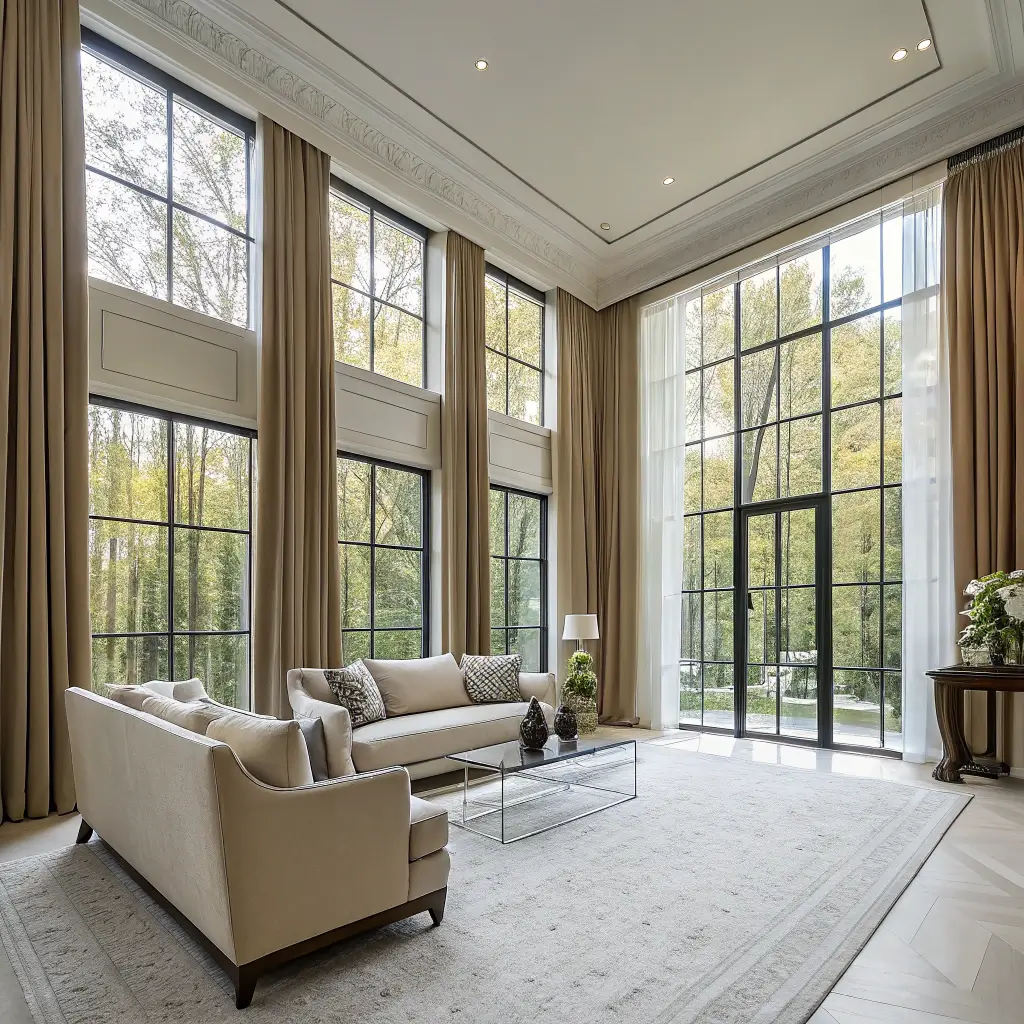
Large windows deserve grand treatment, and full-length curtains create the perfect frame for your architectural assets. They honor impressive windows while adding softness and finish.
Big windows without curtains can feel stark and institutional. Full-length drapes transform them into deliberate design features that anchor your entire living room.
Framing Large Windows Effectively
Master these techniques:
- Extra fullness – Large windows need generously gathered curtains
- Substantial rods – Flimsy hardware looks ridiculous on big windows
- Professional hanging – Weight and width may require expert installation
- Consistent puddle length – Uniform floor contact across wide spans
- Tie-back consideration – Allow maximum glass exposure when open
Budget for quality when treating large windows. Cheap curtains look especially cheap at scale, and the volume of fabric required makes any shortcomings painfully obvious.
Sliding glass doors, picture windows, and window walls all benefit from this approach. The curtains celebrate the windows rather than trying to hide them.
Quick Buying Guide: What to Consider
Before shopping, keep these universal factors in mind:
Fabric Selection
- Natural fibers (linen, cotton, silk) – Higher cost, superior aesthetics
- Synthetic options (polyester blends) – Budget-friendly, easy care
- Blended fabrics – Balance of beauty and practicality
Hardware Matters
- Rod diameter – Heavier curtains need thicker rods
- Bracket strength – Support the weight adequately
- Finish coordination – Match other metal finishes in your room
Measurement Essentials
- Width – 1.5 to 2.5 times your window width for proper fullness
- Length – Floor length (touching or puddling) creates the most impact
- Rod placement – 4-6 inches above window frame minimum
Wrapping Up Your Living Room Curtain Journey
There you have it—15 simple living room curtain ideas ready to transform your space from forgettable to fabulous. Every single one delivers big impact without requiring design degrees or massive budgets.
The common thread running through all these ideas? Intentionality. Great curtains don’t happen by accident. They result from thoughtful choices about length, fabric, color, and hardware that work together harmoniously.
Start with what excites you most. Maybe those moody dark drapes have been calling your name, or perhaps the simplicity of white sheers with black rods fits your aesthetic perfectly. There’s no wrong choice when you’re choosing with intention.
Remember my first apartment disaster? Those thin, sad curtains taught me that windows deserve respect. Your living room windows carry tremendous potential—they just need the right curtains to unlock it.
Now stop staring at those bare windows (or those regrettable curtains from 2016) and give them the upgrade they’ve been waiting for. Your living room’s transformation awaits, one curtain panel at a time.
