
You know that feeling when you walk into your small living room and think, “How the heck am I supposed to make this work?” Yeah, I’ve been there.
My first apartment had a living room so tiny, I could practically touch both walls if I stretched out my arms. But here’s the thing – small spaces can actually be incredibly cozy and stylish when you know the right tricks.
After years of experimenting (and let’s be honest, making some pretty questionable design choices), I’ve discovered that transforming a cramped living room into a modern haven isn’t about having more space. It’s about being smarter with the space you’ve got.
Today, I’m sharing 15 game-changing ideas that’ll make your small living room feel like it belongs in a design magazine – without breaking the bank or knocking down any walls.
Floating Shelves for Extra Storage
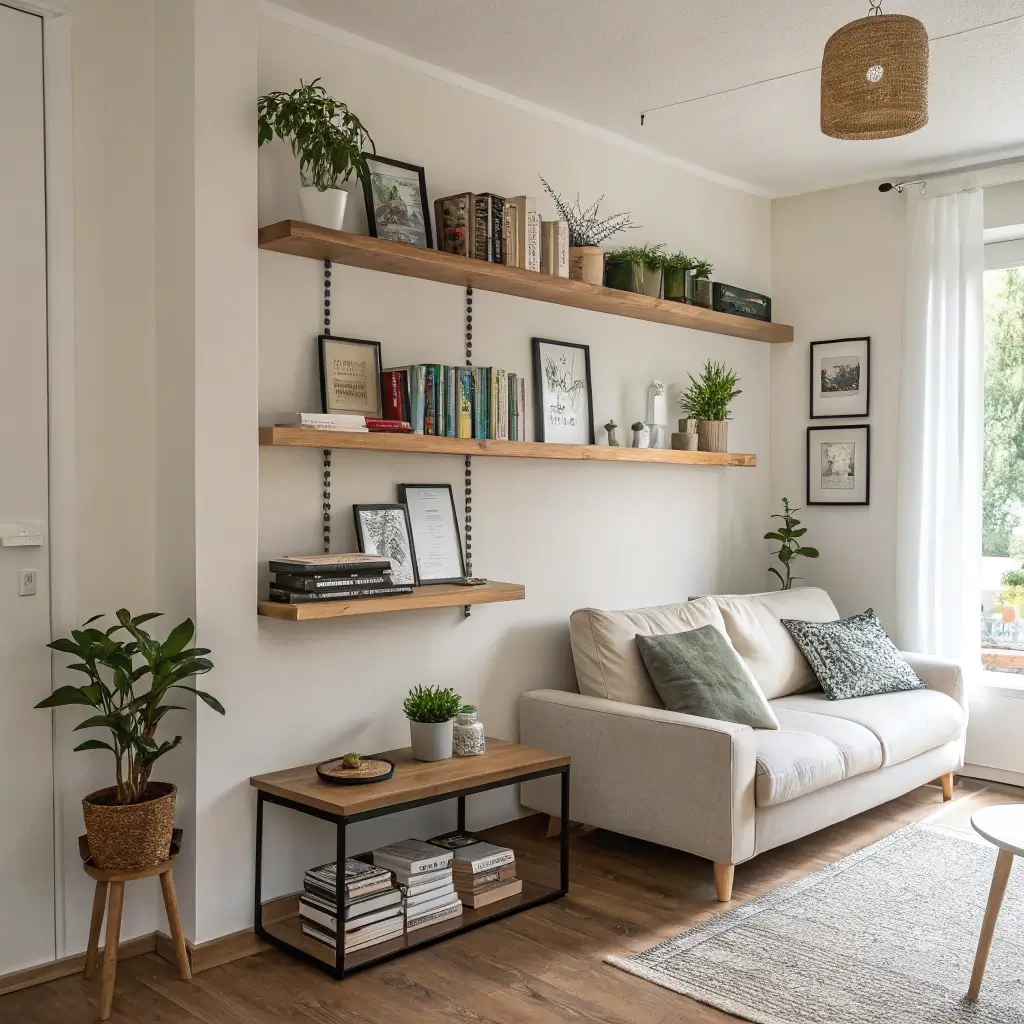
Let me start with my absolute favorite small-space hack: floating shelves. Remember when I mentioned my tiny first apartment? These bad boys saved my sanity. While everyone else was cramming bulky bookcases into their already-cramped spaces, I discovered the magic of going vertical.
Floating shelves give you storage without eating up precious floor space. I installed three sleek walnut shelves above my TV, and suddenly I had room for books, plants, and those random decorative pieces that make a house feel like home. The best part? They create this illusion of space because you can still see the wall behind them.
Why Floating Shelves Work So Well
Here’s what makes floating shelves perfect for small living rooms:
- They draw the eye upward, making your ceiling seem higher
- You can install them at any height to maximize awkward wall spaces
- They’re incredibly versatile – switch up your décor seasonally without commitment
- Installation takes maybe an hour (trust me, if I can do it, anyone can)
I recommend sticking to odd numbers when arranging items on your shelves. Three books here, five small plants there – it creates visual interest without looking cluttered. And please, resist the urge to fill every inch. Negative space is your friend in small rooms.
Multi-Functional Furniture Pieces
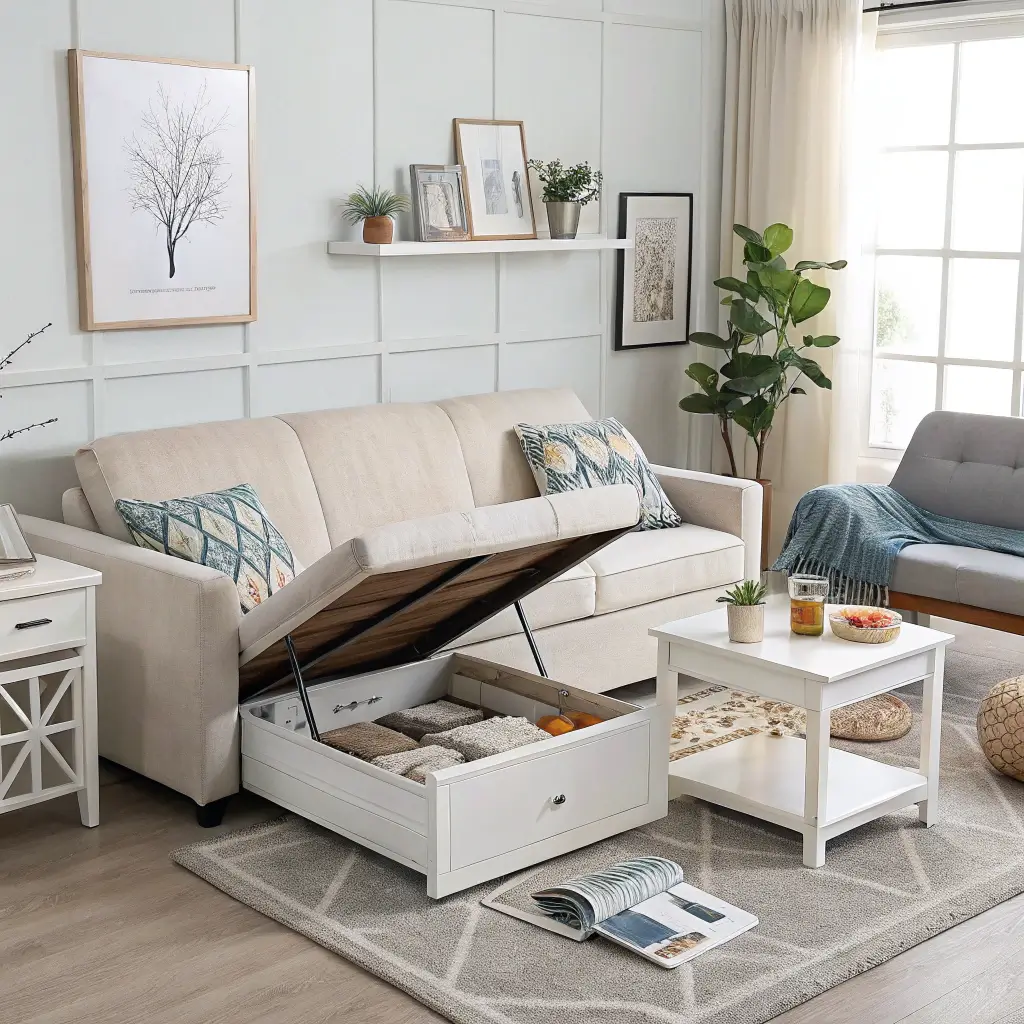
Can we talk about how furniture manufacturers finally got the memo about small spaces? Multi-functional pieces are having a serious moment, and honestly, it’s about time. My current sofa has built-in USB ports and hidden storage underneath. Who knew furniture could be this smart?
The key here is choosing pieces that work overtime. Think storage benches that double as extra seating, or side tables with magazine racks built in. Every piece should earn its spot in your limited square footage.
Smart Multi-Purpose Picks
When shopping for multi-functional furniture, look for:
- Nesting tables that tuck away when not needed
- TV stands with integrated shelving and cable management
- Poufs that open up for blanket storage
- Console tables that extend into dining tables
I learned this lesson the hard way after buying a gorgeous but completely impractical armchair. Sure, it looked amazing, but it just sat there taking up space. Now, everything I buy has to answer one question: “What else can you do for me?”
Minimalist Wall Art Gallery
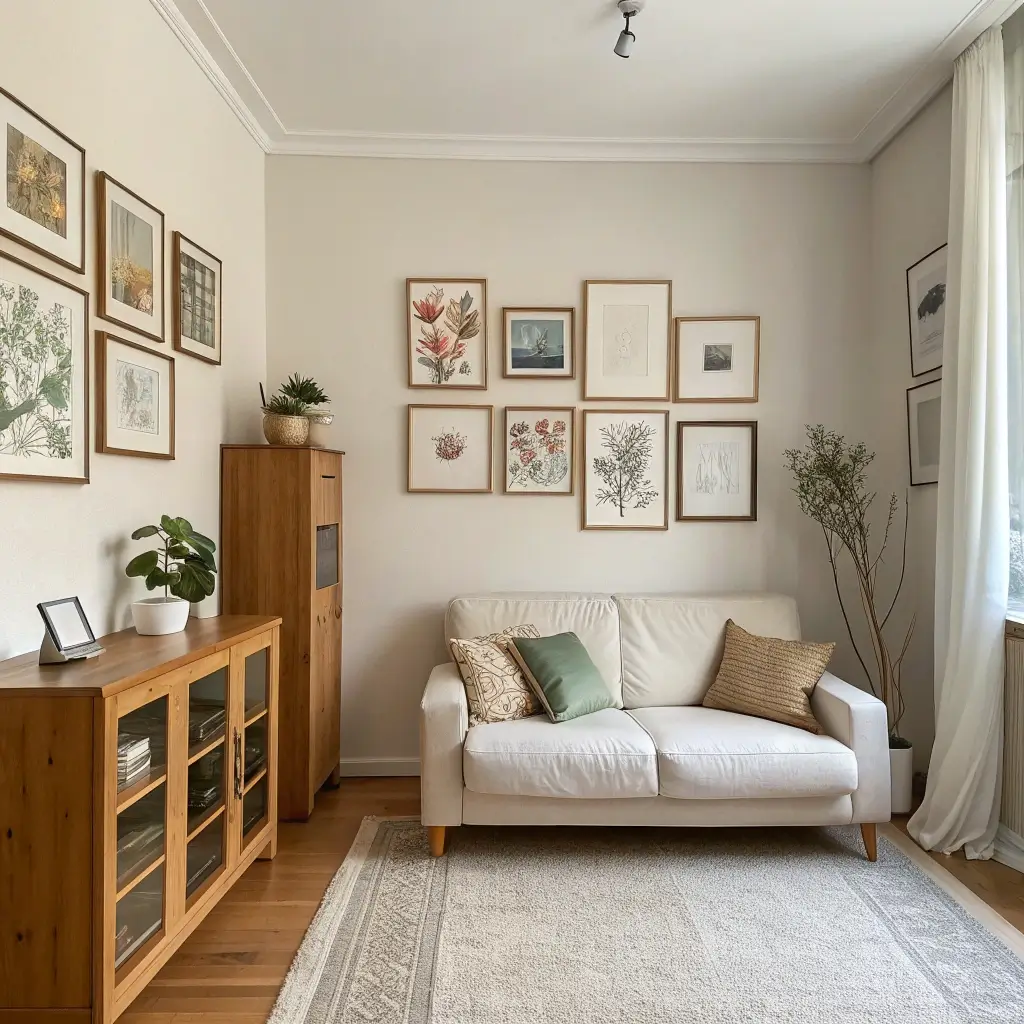
Here’s where I might ruffle some feathers – you don’t need massive artwork to make a statement. In fact, a carefully curated gallery wall of smaller pieces often works better in compact spaces. It adds personality without overwhelming the room.
I created my gallery wall using a mix of family photos, small prints from local artists, and even some postcards from travels. The trick is keeping the frames cohesive. I stuck with thin black frames throughout, which creates unity despite the varied content.
Start by cutting paper templates of your frames and taping them to the wall. This way, you can play with arrangements without putting unnecessary holes in your walls. Space them about 2-3 inches apart for a clean, modern look that doesn’t feel cramped.
Also Read: 15 Stunning Living Room Decor Ideas to Transform Your Space
Light and Airy Color Palette
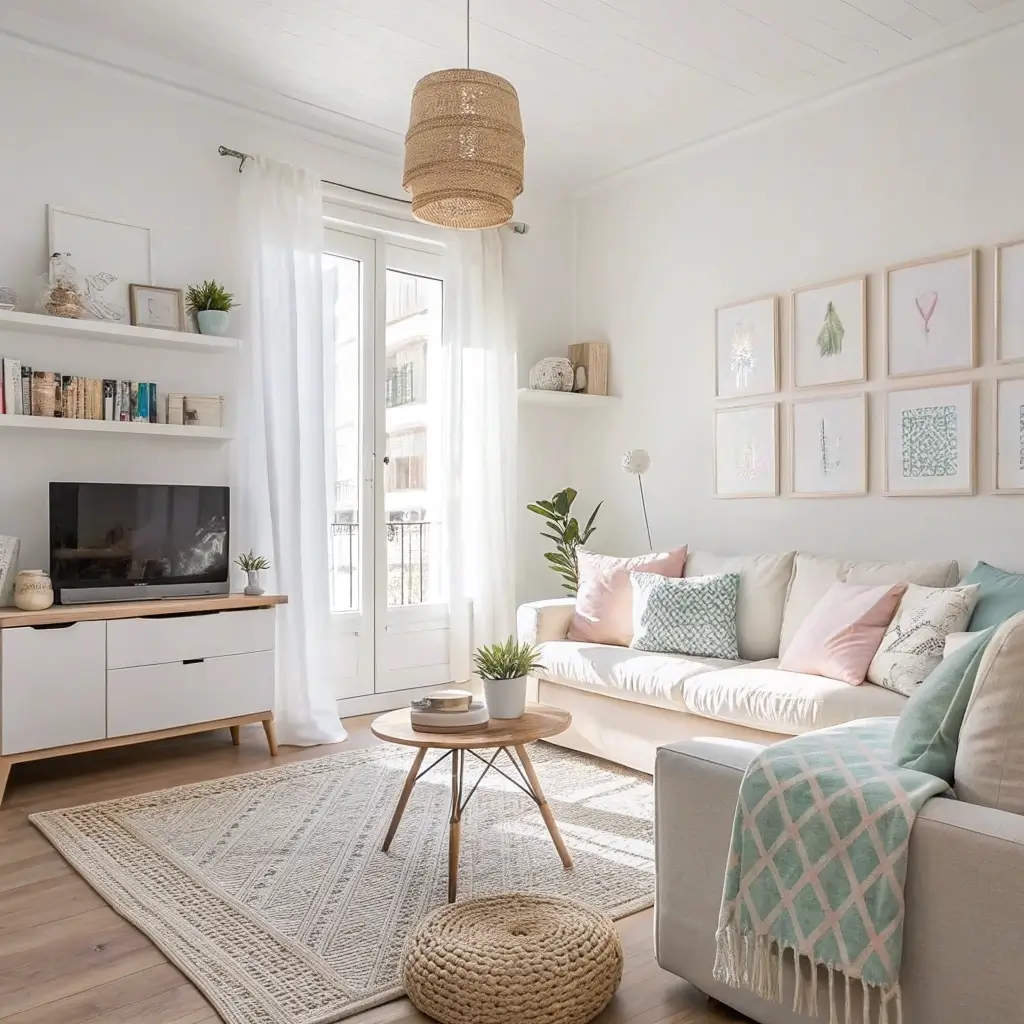
Okay, I know what you’re thinking – “Light colors for small spaces? Groundbreaking.” But hear me out. There’s a reason this advice gets repeated ad nauseam: it actually works. Dark colors absorb light and make walls feel closer, while light shades reflect light and open things up.
That doesn’t mean you’re stuck with boring white walls though. I painted my living room in a soft sage green, and it completely transformed the space. Light doesn’t always mean neutral – think soft blush pinks, pale blues, or warm beiges.
Color Combinations That Work
My favorite small living room palettes:
- Warm white + natural wood + sage green accents
- Soft gray + navy details + brass fixtures
- Cream + terracotta + dusty pink touches
- Pale blue + white + natural rattan
The 60-30-10 rule works wonders here. Use your lightest color for 60% of the room (walls, large furniture), a complementary shade for 30% (smaller furniture, curtains), and a bold accent for the remaining 10%.
Foldable or Extendable Coffee Table
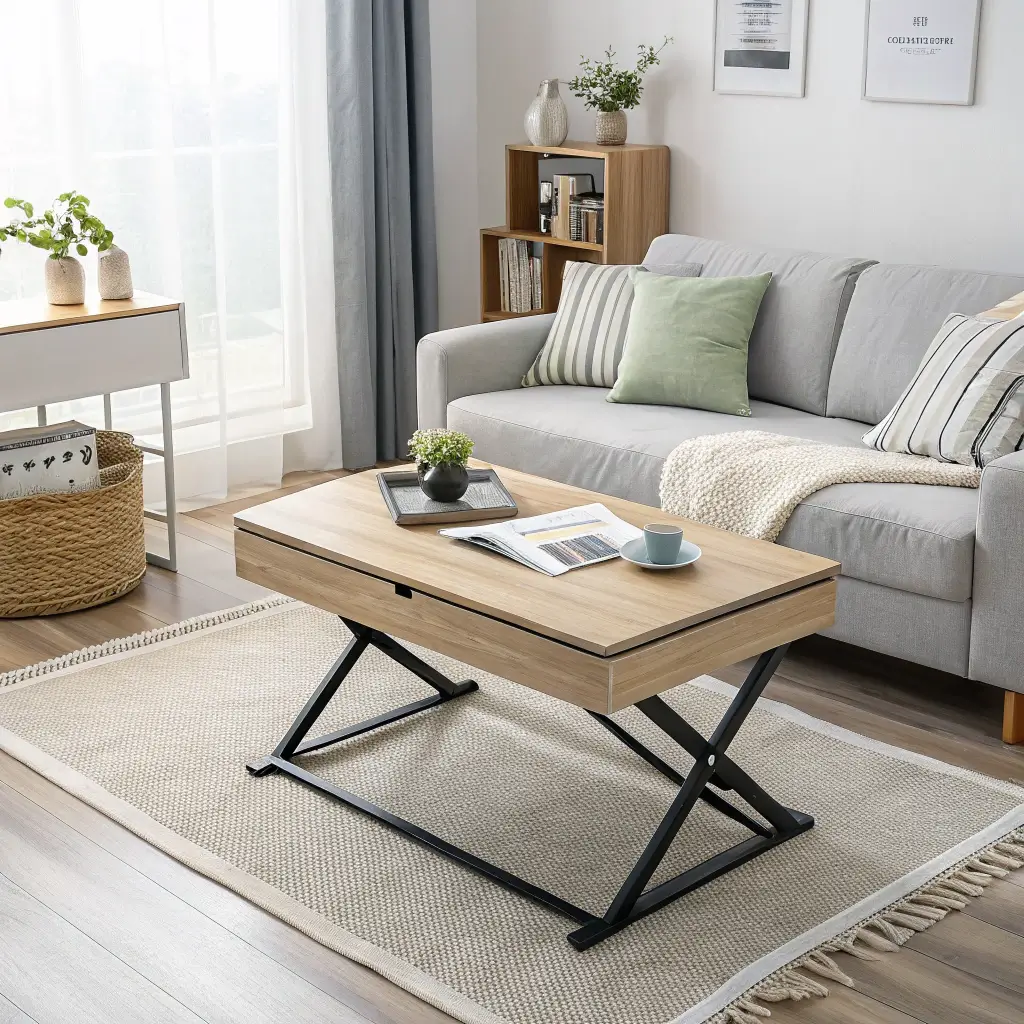
This might be my second-favorite small space solution (after floating shelves, obviously). My extendable coffee table has literally changed how I use my living room. During the day, it’s compact and out of the way. Come dinner time or when friends visit, it transforms into a proper table.
I went with a lift-top design that reveals hidden storage inside. Now I can stash remotes, coasters, and all those random items that usually clutter the tabletop. Plus, the lifted surface is perfect for working from home – no more hunching over my laptop on the couch.
Look for tables with wheels if you really want flexibility. Mine rolls aside when I need floor space for yoga or when my nephew comes over and turns my living room into a playground.
Vertical Storage Solutions
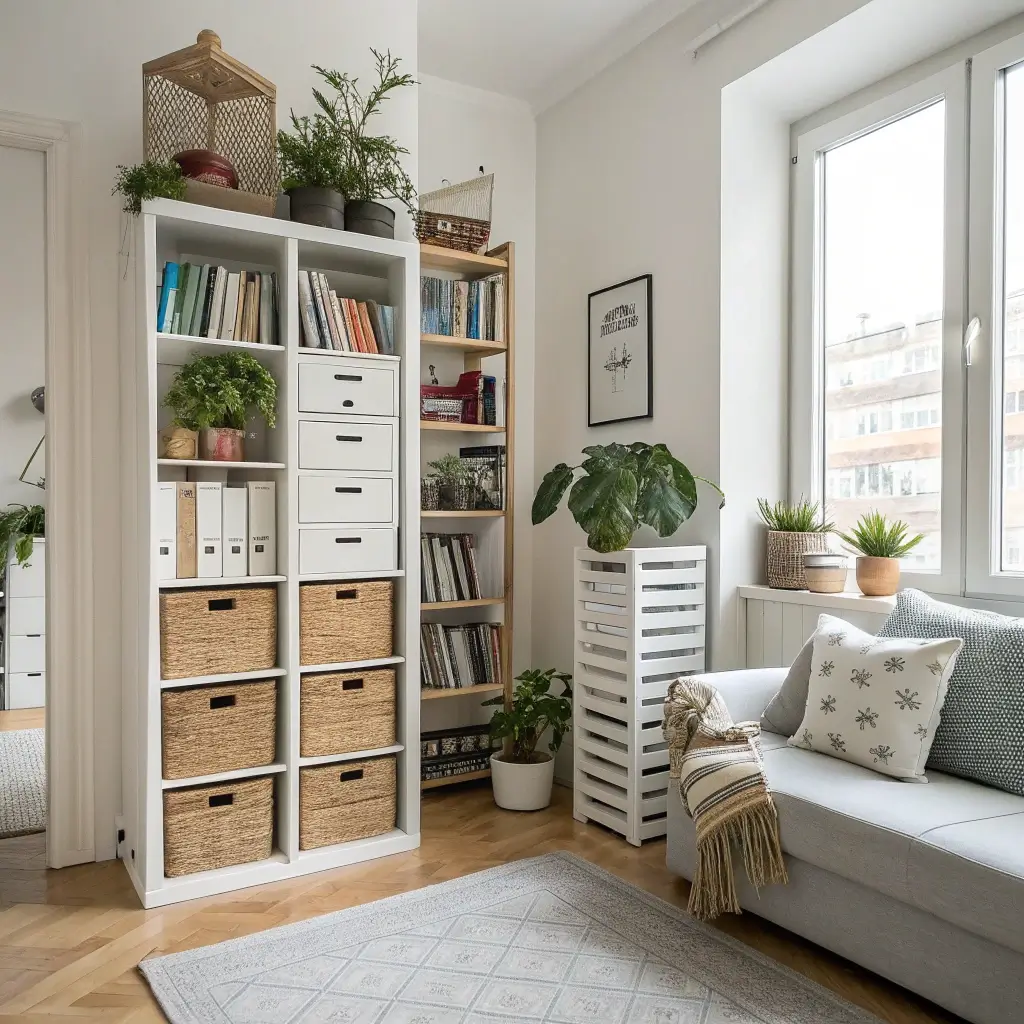
Why do we always think horizontally when it comes to storage? Going vertical is like discovering a whole new dimension in your living room. Floor-to-ceiling solutions maximize every inch without making your space feel smaller.
I installed a tall, narrow bookshelf that takes up minimal floor space but holds everything from books to baskets of charging cables. The key is choosing pieces that feel light and airy – avoid anything too bulky or dark.
Vertical Storage Ideas That Work
Consider these vertical solutions:
- Ladder-style shelving units that lean against the wall
- Wall-mounted TV to free up surface space
- Hanging planters for greenery without sacrificing tables
- Over-door organizers for the back of closet doors
- Tall, slim cabinets instead of wide, low ones
FYI, pegboards aren’t just for garages anymore. I’ve seen some seriously stylish living rooms with painted pegboards holding everything from artwork to small shelves.
Also Read: 15 Stylish Peel and Stick Floor Tile Bathroom Ideas Made Simple
Hidden Storage Ottoman
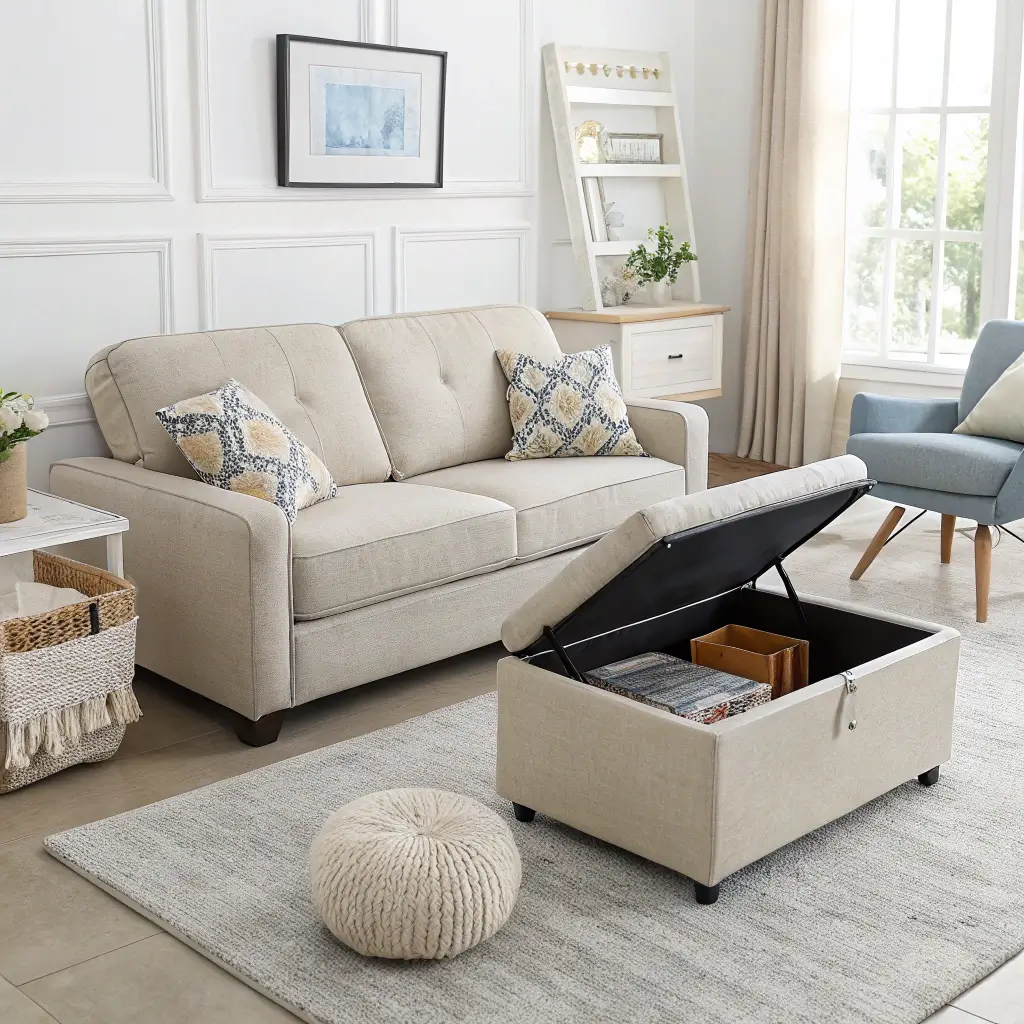
Let’s talk about the unsung hero of small living rooms: the storage ottoman. Mine is probably the hardest-working piece of furniture I own. It’s a footrest, extra seating when needed, a coffee table with a tray on top, and it hides all my throw blankets and seasonal décor.
I specifically chose one with a cushioned top that’s firm enough to use as a seat but soft enough for putting my feet up after a long day. The interior is divided into sections, which keeps things organized instead of becoming a black hole of random stuff.
Pro tip: Get one on wheels or with little legs that make it easy to move around. You’ll appreciate the flexibility when you’re rearranging furniture or need to vacuum underneath.
Mirrors to Expand Space Visually
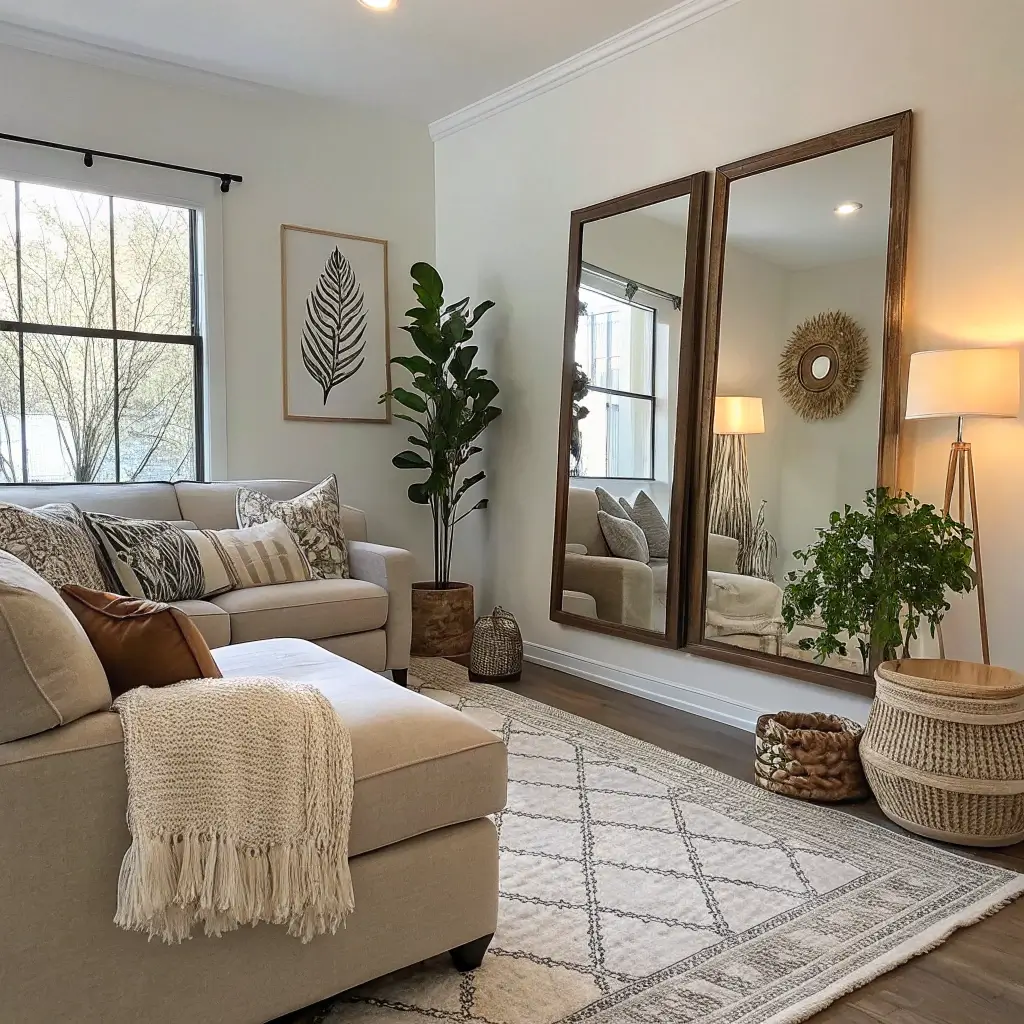
Mirrors are basically magic for small spaces. They reflect light, create depth, and can literally double the visual size of your room. But there’s an art to using them effectively – you can’t just slap a mirror on any wall and call it a day.
I have a large mirror positioned directly across from my window. It bounces natural light throughout the room and creates the illusion of a second window. On cloudy days, the difference is dramatic.
Strategic Mirror Placement
Here’s where to position mirrors for maximum impact:
- Across from windows to maximize natural light
- Behind light sources to amplify ambient lighting
- At the end of narrow spaces to create depth
- In groups of smaller mirrors for artistic appeal
- Leaning against walls for a casual, modern vibe
Avoid placing mirrors where they’ll reflect clutter or unflattering angles. Nobody wants to see their messy kitchen from the couch 🙂
Compact Modular Sofas
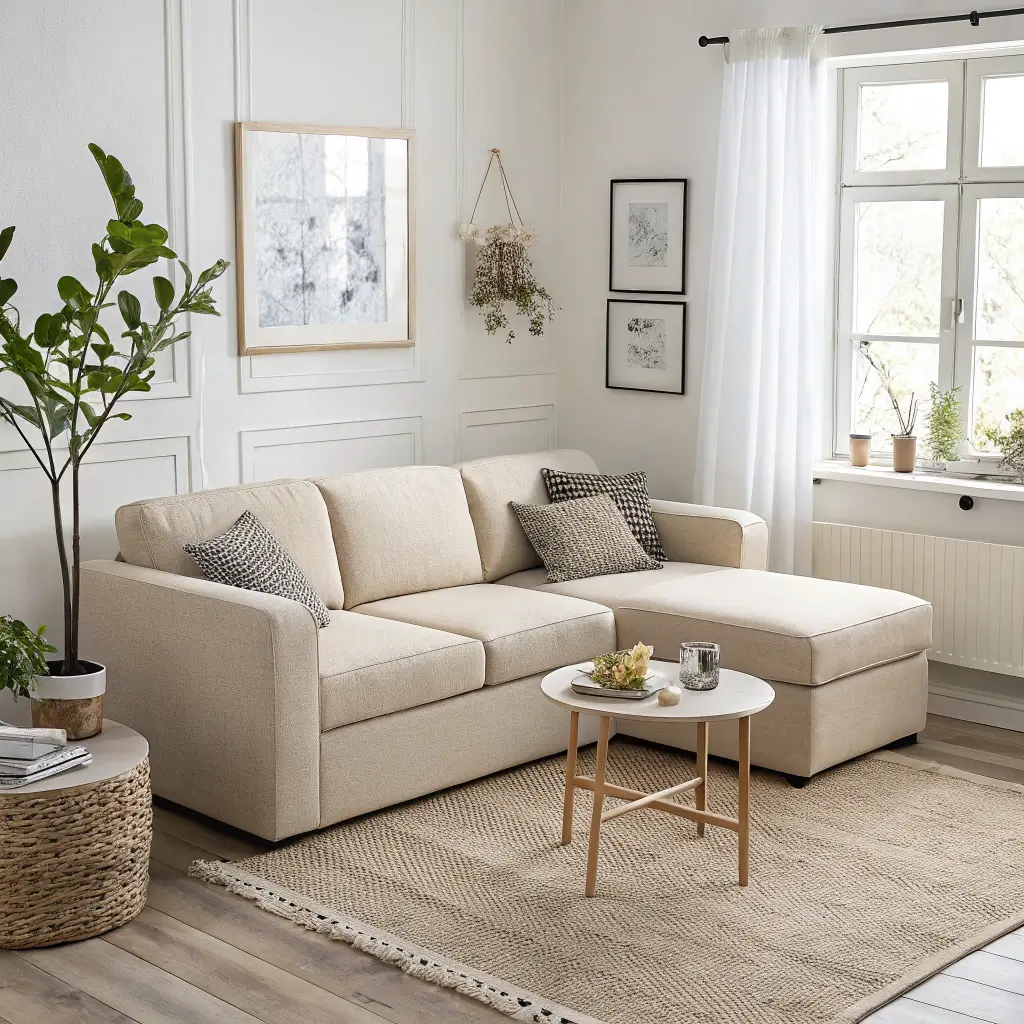
Remember when sofas were just… sofas? Now we’ve got modular designs that transform based on your needs. My modular sofa started as a three-seater but can separate into individual chairs when I’m hosting game night.
The beauty of modular furniture is its adaptability. You can reconfigure it seasonally, push pieces against walls when you need floor space, or create an L-shape for movie nights. Some even come with hidden storage in each module.
Look for pieces with low backs and raised legs. The low profile keeps sightlines open, while visible floor space underneath makes the room feel larger. I chose one in light gray fabric – dark leather would’ve made my space feel like a cave.
Also Read: 15 Bright Vertical Subway Tile Bathroom Ideas to Refresh Your Room
Corner Reading Nook
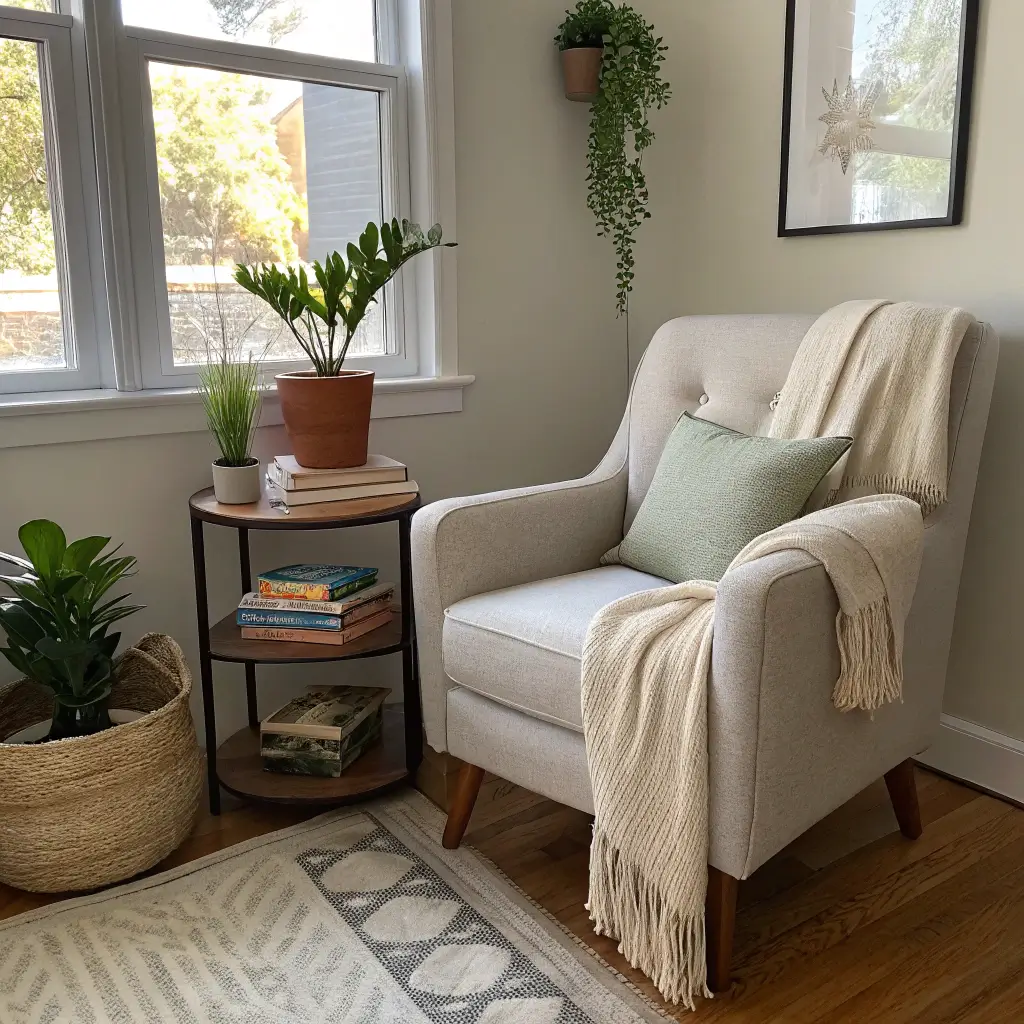
Who says you need a separate room for a reading space? One of my favorite living room transformations involved turning a dead corner into a cozy reading retreat. All it took was a comfortable accent chair, a small side table, and good lighting.
I angled my chair slightly toward the room rather than pushing it flat against the walls. This creates better flow and makes the nook feel intentional rather than like furniture exile. A small ottoman tucked underneath serves as a footrest that doesn’t take up permanent space.
Creating Your Perfect Nook
Essential elements for a corner reading spot:
- A comfortable chair that fits your body (test it first!)
- Task lighting like a floor or table lamp
- A small surface for books and beverages
- Something soft like a throw blanket
- Optional: a small plant or wall art above
The trick is making it feel separate from the main living area without actual barriers. I used a different rug texture to define the space subtly.
Open Shelving for Décor Display
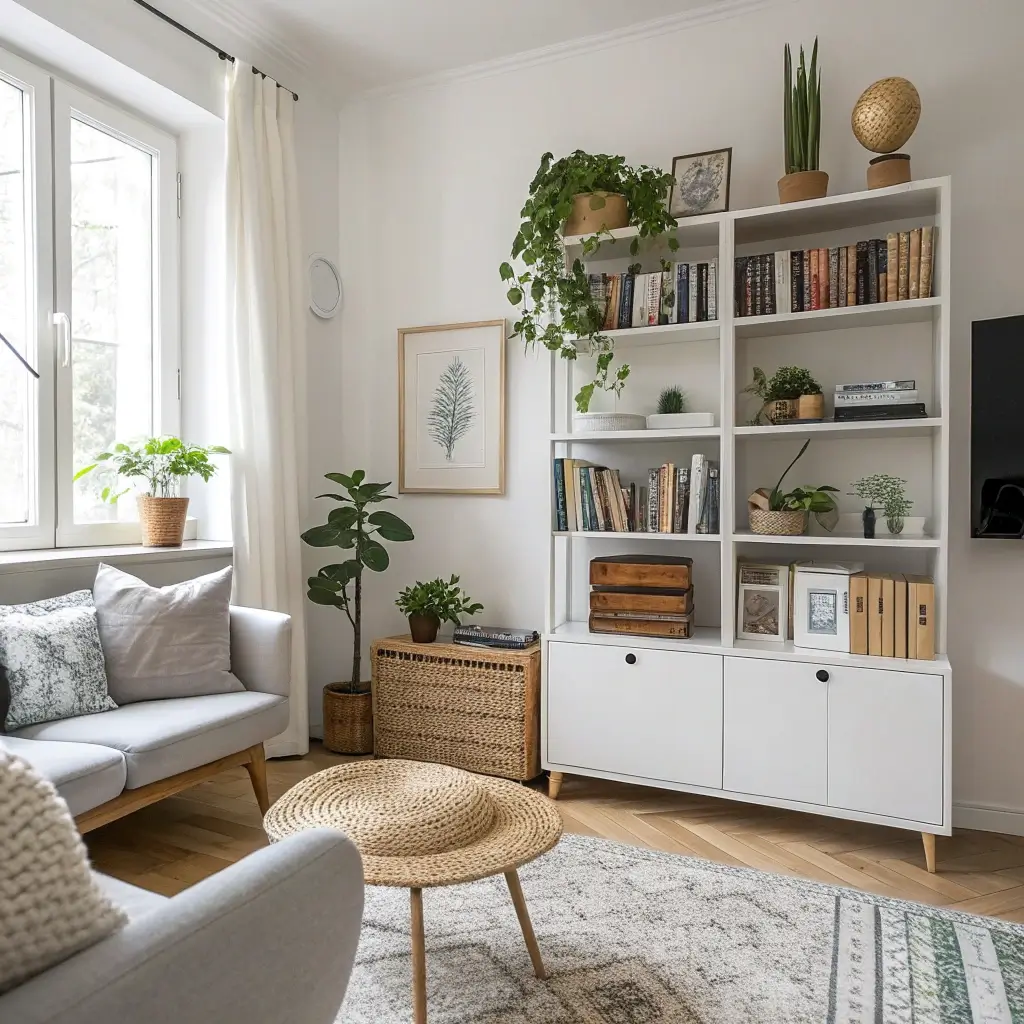
Open shelving strikes the perfect balance between storage and style. Unlike closed cabinets that can feel heavy in small spaces, open shelves maintain visual flow while showcasing your personality.
I replaced upper cabinets in my living room’s bar area with open shelves, and the difference was immediate. The room felt bigger, brighter, and more inviting. Plus, I actually use my nice glassware now instead of hiding it away.
The challenge with open shelving? You can’t hide the mess. Everything needs to be somewhat presentable. But IMO, this forced organization is actually a blessing – it prevents accumulating clutter you don’t really need.
Keep your open shelves looking sharp by:
- Sticking to a cohesive color scheme
- Mixing heights and textures for visual interest
- Leaving breathing room between items
- Rotating displays seasonally
- Using attractive containers to hide less-pretty essentials
Sliding Door Room Divider
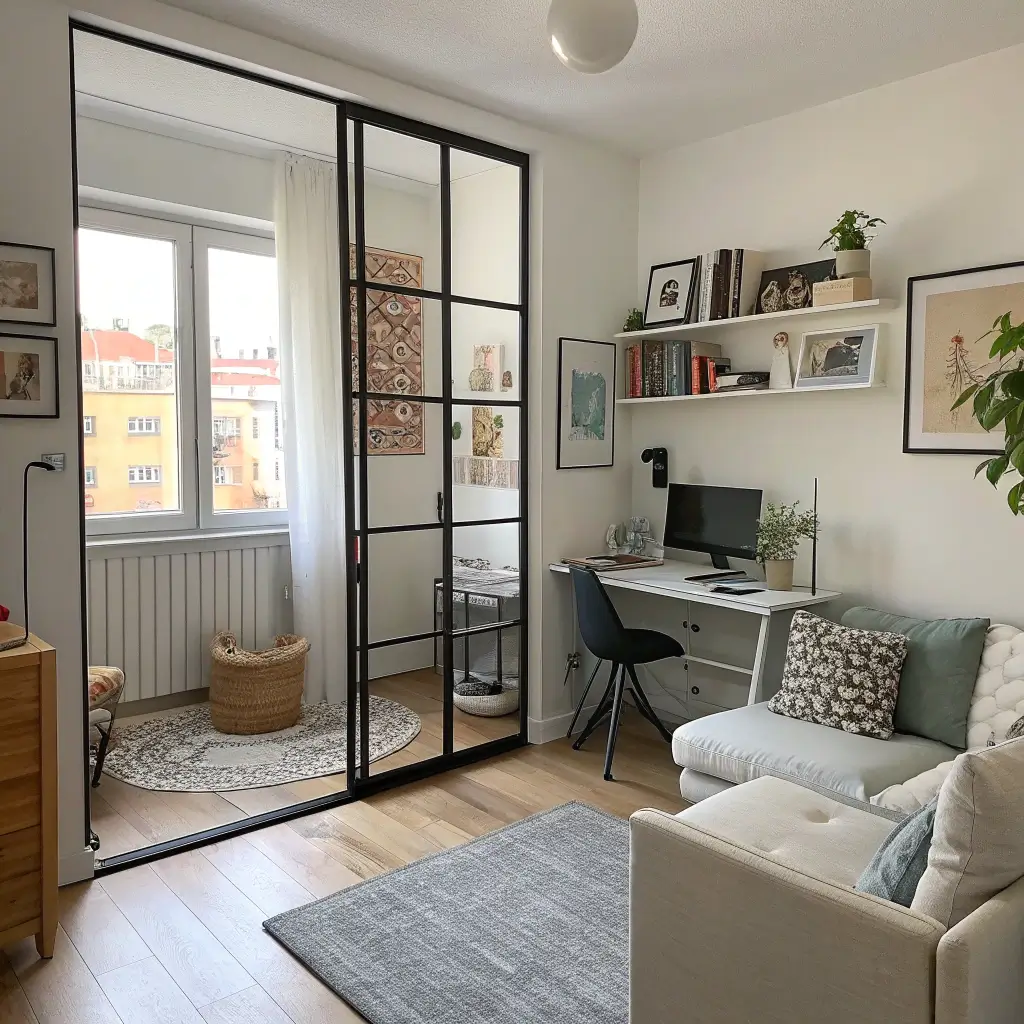
Sometimes you need to separate spaces without building walls. Enter the sliding door divider – a game-changer for studio apartments or open-plan living. Mine slides on a ceiling-mounted track and can completely disappear when I want one large space.
I went with frosted glass panels that let light through while providing privacy. When closed, they create a separate zone for my home office. When open, the living room feels twice as large.
Divider Options to Consider
Popular sliding divider styles:
- Barn door style for rustic charm
- Japanese shoji screens for minimalist vibes
- Bookshelf dividers that work from both sides
- Curtain dividers for budget-friendly flexibility
- Glass panels for maintaining light flow
Installation isn’t as complicated as you might think. Most systems come with clear instructions, and you can usually complete the project in a weekend.
Layered Rugs for Depth
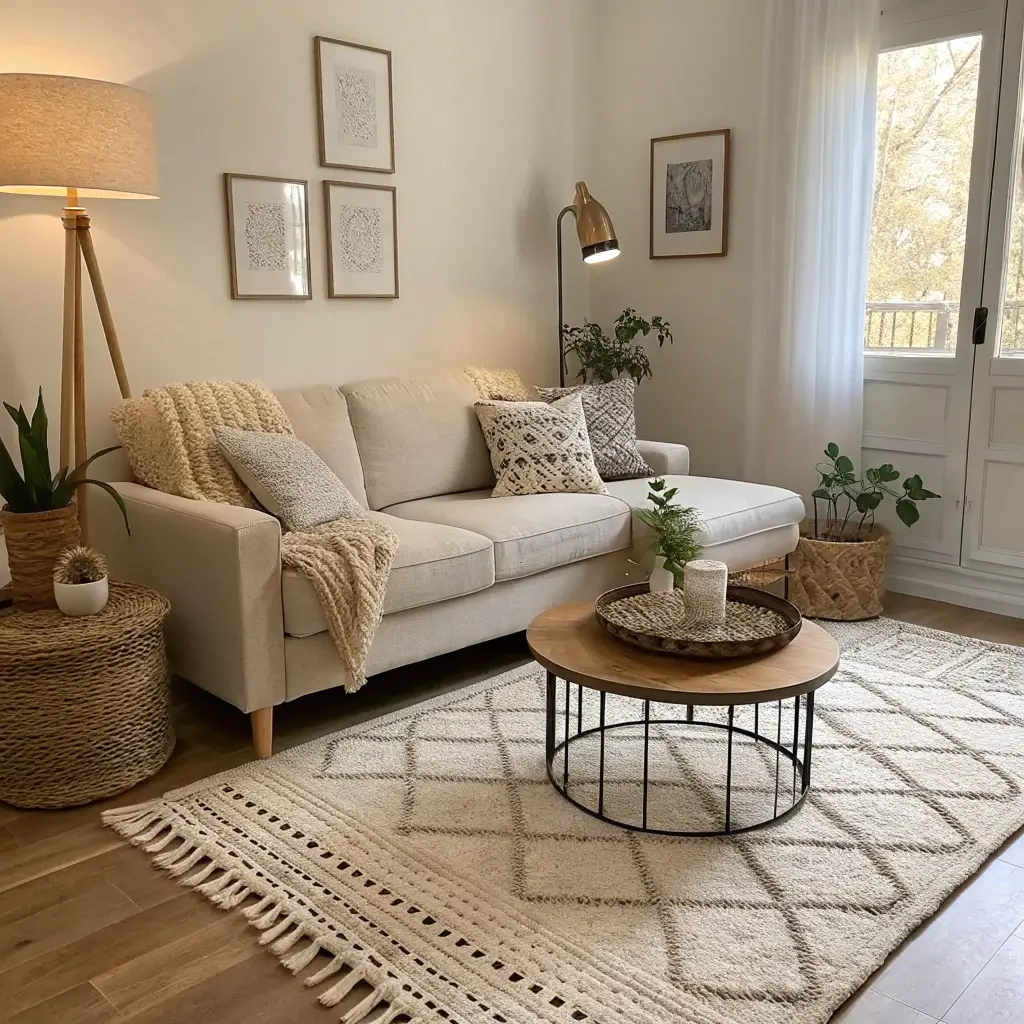
Here’s a designer secret that transformed my living room: layering rugs adds incredible depth and interest to small spaces. Instead of one large rug that might overwhelm, I use two or three smaller ones layered strategically.
I start with a neutral jute rug as my base, then layer a smaller patterned rug on top. This creates zones within the room and adds texture without requiring more furniture. Plus, it’s way easier to clean smaller rugs than wrestling with a room-sized monster.
The key is varying textures and patterns while keeping colors complementary. Mix a flat-weave with a plush rug, or combine geometric patterns with organic shapes. Just make sure the top rug is heavy enough not to slide around – nobody wants a trip hazard.
Smart Lighting with Dimmer Options
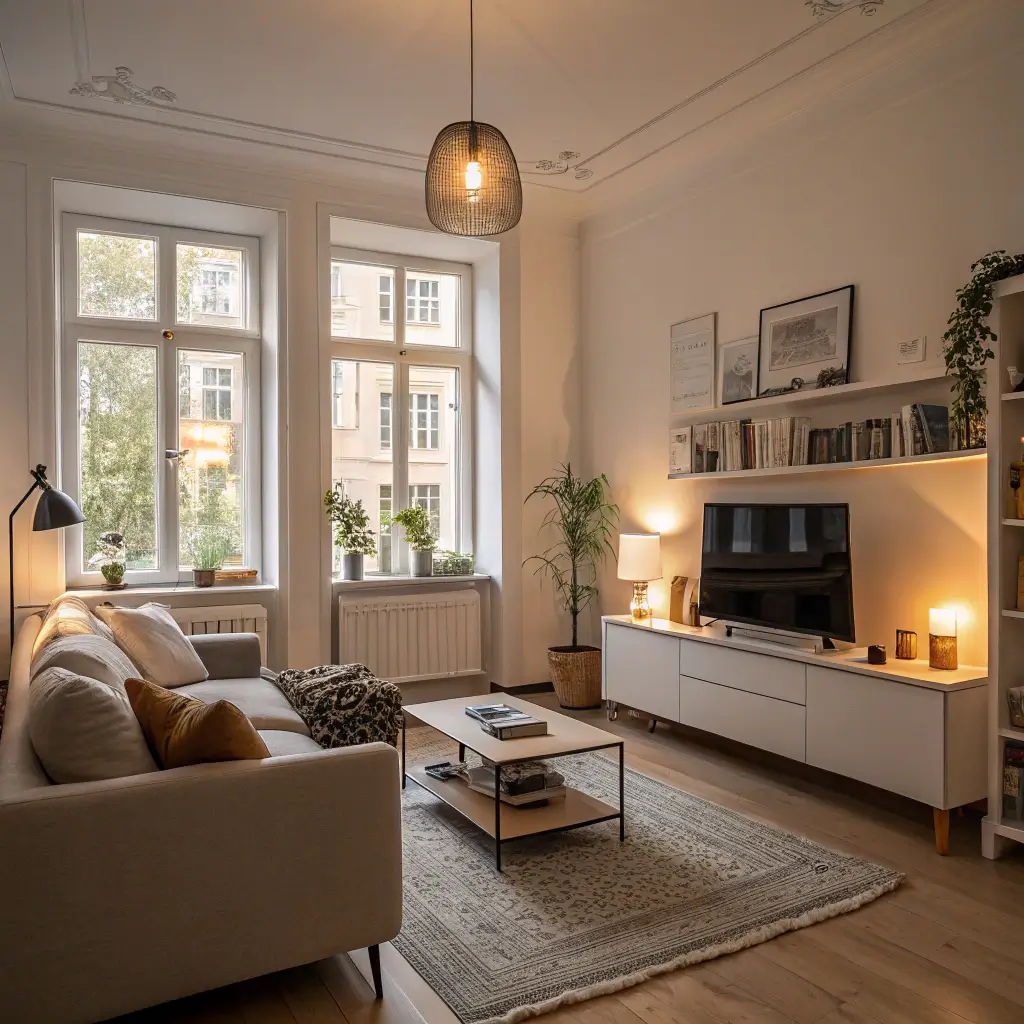
Lighting can make or break a small living room. Harsh overhead lights make everything feel flat and cramped, while layered, dimmable lighting creates ambiance and depth. I learned this after living with a single ceiling light for way too long.
Now I use three types of lighting: ambient (overall room light), task (for reading or working), and accent (highlighting artwork or architectural features). All on dimmers because flexibility is everything.
Building Your Lighting Scheme
My living room lighting setup:
- Smart bulbs in table lamps for color temperature control
- LED strip lights behind the TV for bias lighting
- A dimmable floor lamp in the reading corner
- Battery-powered puck lights inside shelving units
- Candles for those extra cozy evenings
Smart lighting might seem like overkill, but being able to control everything from my phone is surprisingly convenient. Want movie theater vibes? Done. Need bright light for cleaning? Easy.
Indoor Plants for Fresh Vibes
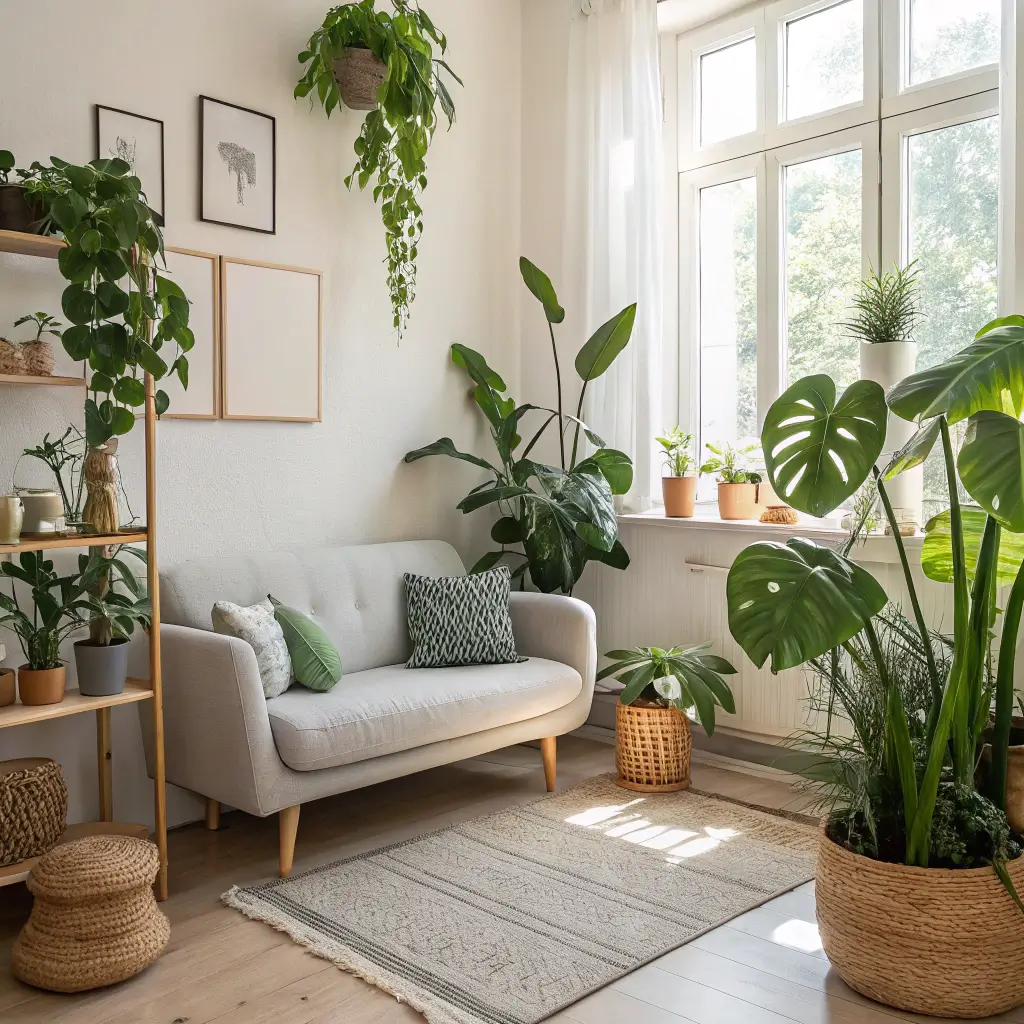
Nothing brings life to a small space quite like actual living things. Plants add color, improve air quality, and create a connection to nature that makes any room feel more inviting. Even if you’ve killed every plant you’ve ever owned (guilty), there are options for you.
I started with nearly indestructible plants like pothos and snake plants. Now my living room hosts a small jungle of different heights and textures. The vertical variety draws the eye up and makes the ceiling feel higher.
Best Plants for Small Living Rooms
My top picks for small-space greenery:
- Pothos – trails beautifully from shelves
- Snake plants – vertical growth, minimal care
- ZZ plants – glossy leaves, drought-tolerant
- Small fiddle leaf fig – trendy and compact varieties available
- Air plants – no soil needed, perfect for tiny spaces
- Succulents – cluster small pots for impact
Don’t have floor space for planters? Use macramé hangers, wall-mounted planters, or place small pots on floating shelves. The goal is adding green without sacrificing valuable real estate.
Bringing It All Together
Creating a cozy, modern living room in a small space isn’t about following every trend or buying expensive furniture. It’s about being intentional with your choices and understanding how different elements work together.
Start with one or two ideas from this list that resonate with you. Maybe it’s finally installing those floating shelves you’ve been considering, or perhaps it’s time to embrace the power of mirrors. Small changes compound over time, and before you know it, you’ll have transformed your cramped living room into a space that feels both spacious and intimate.
The beauty of small living rooms is that they force us to be creative and thoughtful. Every piece has to earn its place, every color choice matters, and the result is often more cohesive and personal than larger spaces that can handle excess.
What really matters isn’t the square footage – it’s how the space makes you feel. My tiny living room has hosted dinner parties, movie marathons, and lazy Sunday mornings. It’s seen dance parties and deep conversations. Size doesn’t determine comfort or style; smart design does.
So grab that measuring tape, start planning, and remember – the best living room is one that reflects your personality and meets your needs, regardless of its size. Whether you implement all 15 ideas or just a few, you’re already on your way to creating a small living room that feels anything but limiting.
