
Designing a bedroom for two kids in a small room can feel overwhelming. Between beds, storage, study areas, and play space, it’s easy to think there’s no room left. But I’ve learned over the years that small doesn’t mean cramped, and with creativity, smart planning, and clever furniture choices, you can create a functional, cozy, and stylish shared bedroom for your kids.
Here are 12 bedroom ideas for small rooms with 2 kids that have worked wonders in my experience, helping maximize space, enhance storage, and create a fun environment for children to sleep, study, and play.
1. Bunk Beds: The Ultimate Space-Saver

The classic bunk bed is a must for small shared bedrooms. By stacking two beds vertically, you free up valuable floor space for play areas, desks, or storage. I chose a bunk bed with a built-in ladder and storage drawers underneath for my two children, and it was a game-changer. Safety is key, so always look for sturdy guardrails and non-slip ladders.
Pro Tip: Add a cozy reading nook or beanbag in the freed-up floor space to create a shared play area.
2. Loft Beds with Study Area Below
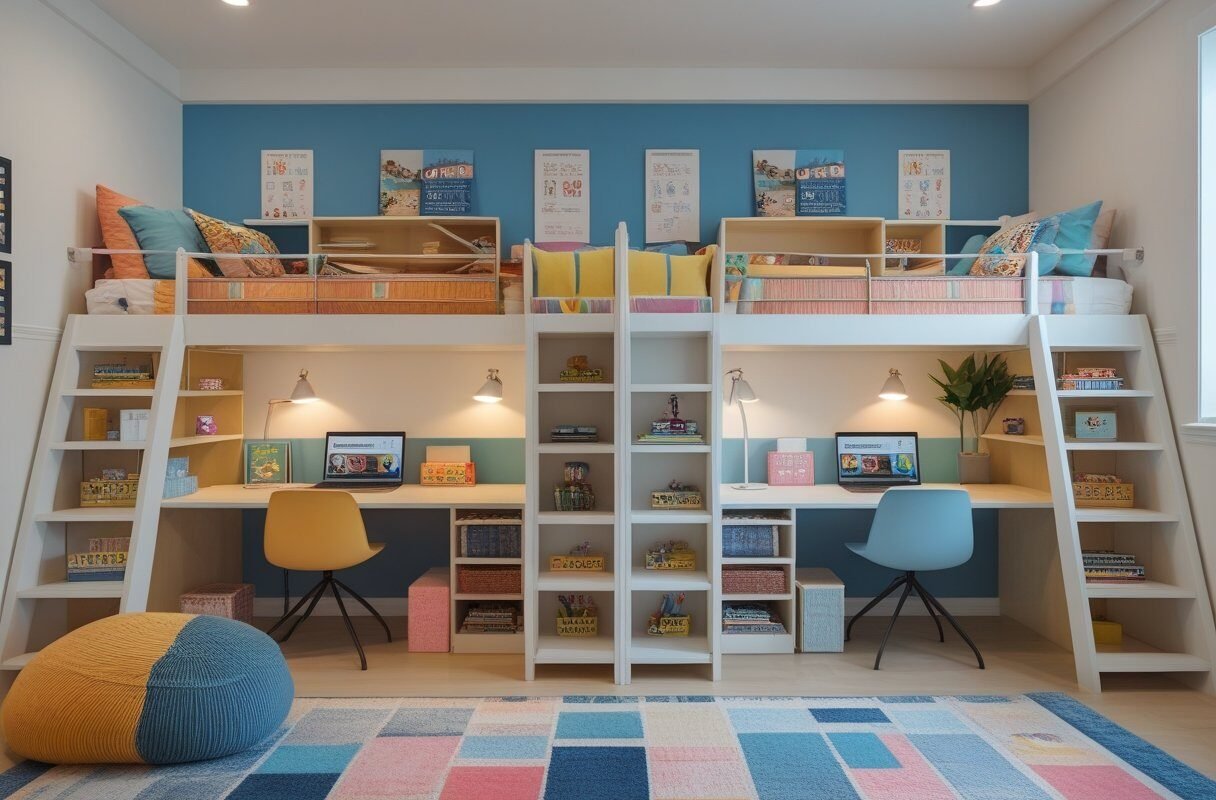
If your kids need a study or homework space, consider loft beds with desks underneath. This design not only saves space but also creates a functional corner for each child to focus on learning. I installed a loft bed for my daughter, and the desk area below became her favorite study spot. It’s like combining two rooms into one small space.
3. Twin Beds with Storage Drawers
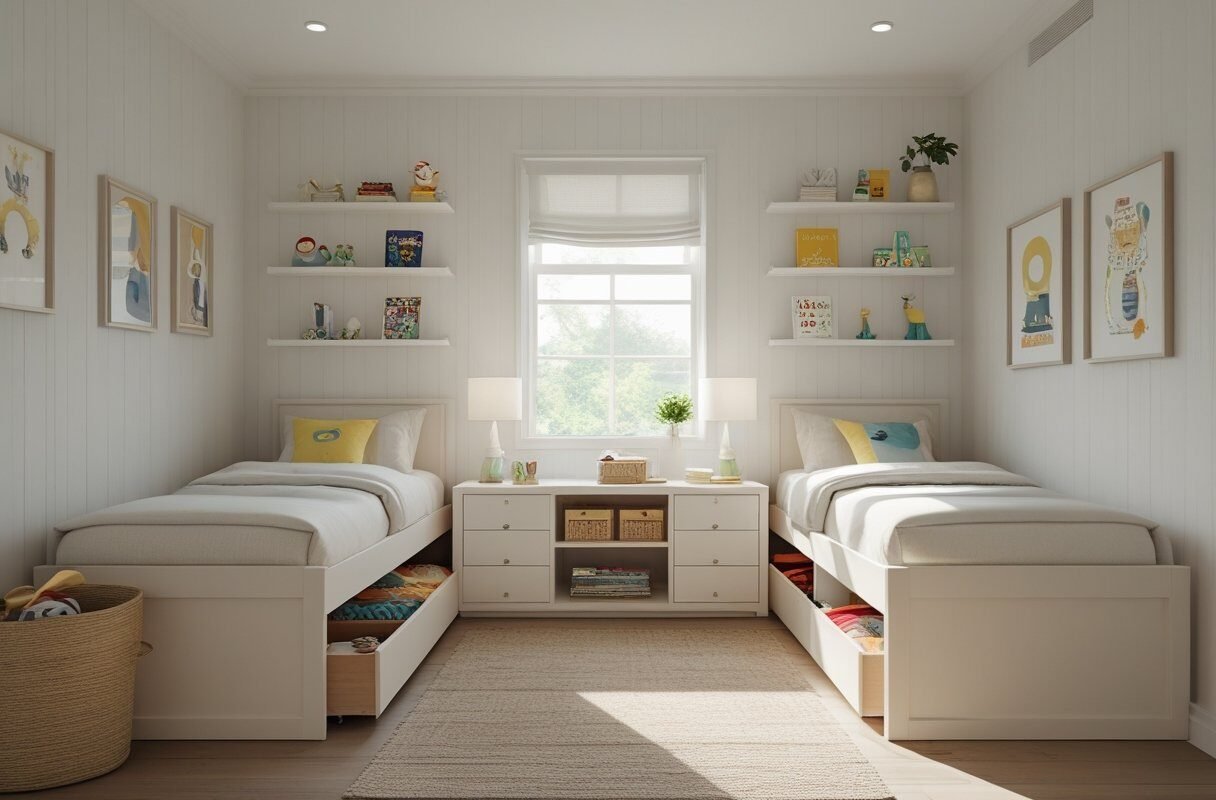
For kids who prefer their own sleeping space, twin beds with built-in drawers are perfect. These beds provide separate beds while utilizing the space underneath for toys, books, and clothes. I personally love how this design keeps a small room tidy—everything has its place without adding bulky furniture.
Pro Tip: Color-code storage drawers for each child to avoid mix-ups and make cleanup easier.
4. Foldable or Trundle Beds
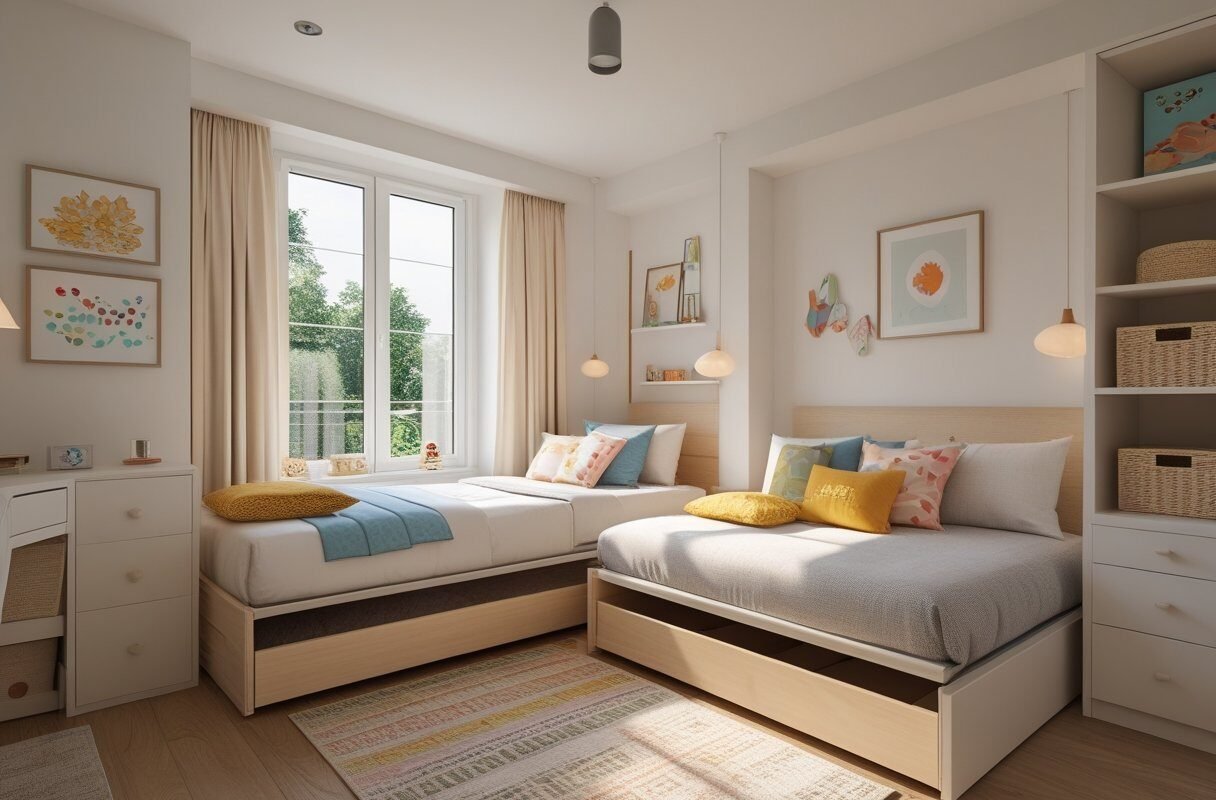
When space is extremely limited, trundle beds are a lifesaver. The second bed slides out from underneath the first one, making sleepovers or shared nights simple and flexible. I added a trundle bed in my son’s small room, and it’s perfect for adjusting sleeping arrangements without sacrificing play space during the day.
5. Vertical Storage and Wall Shelves
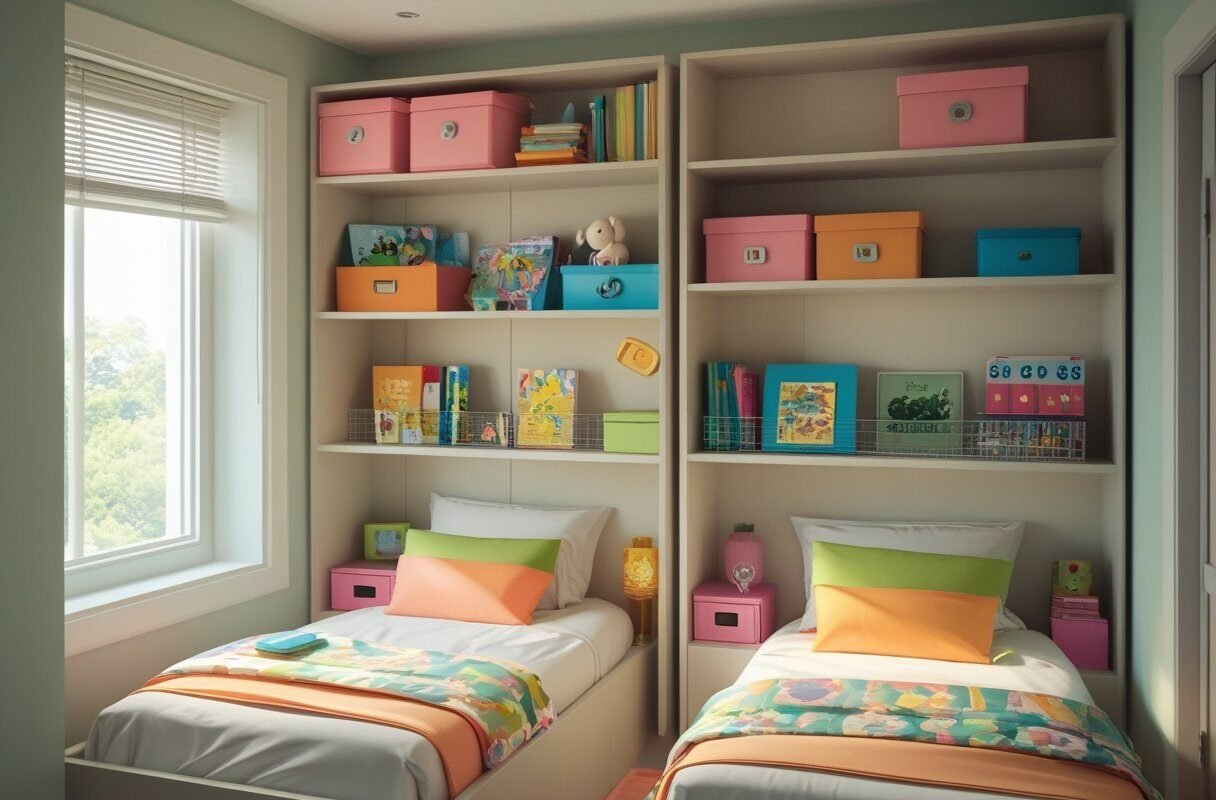
A small bedroom becomes much more manageable with vertical storage. Floating shelves, wall-mounted cubbies, and tall bookcases utilize height rather than floor space. In my experience, adding floating shelves above beds is perfect for storing books, toys, or small décor items. It keeps the floor clear and gives the room a clean, open feel.
Pro Tip: Label shelves or use bins to designate each child’s space, maintaining organization in shared rooms.
6. Shared Desk Area
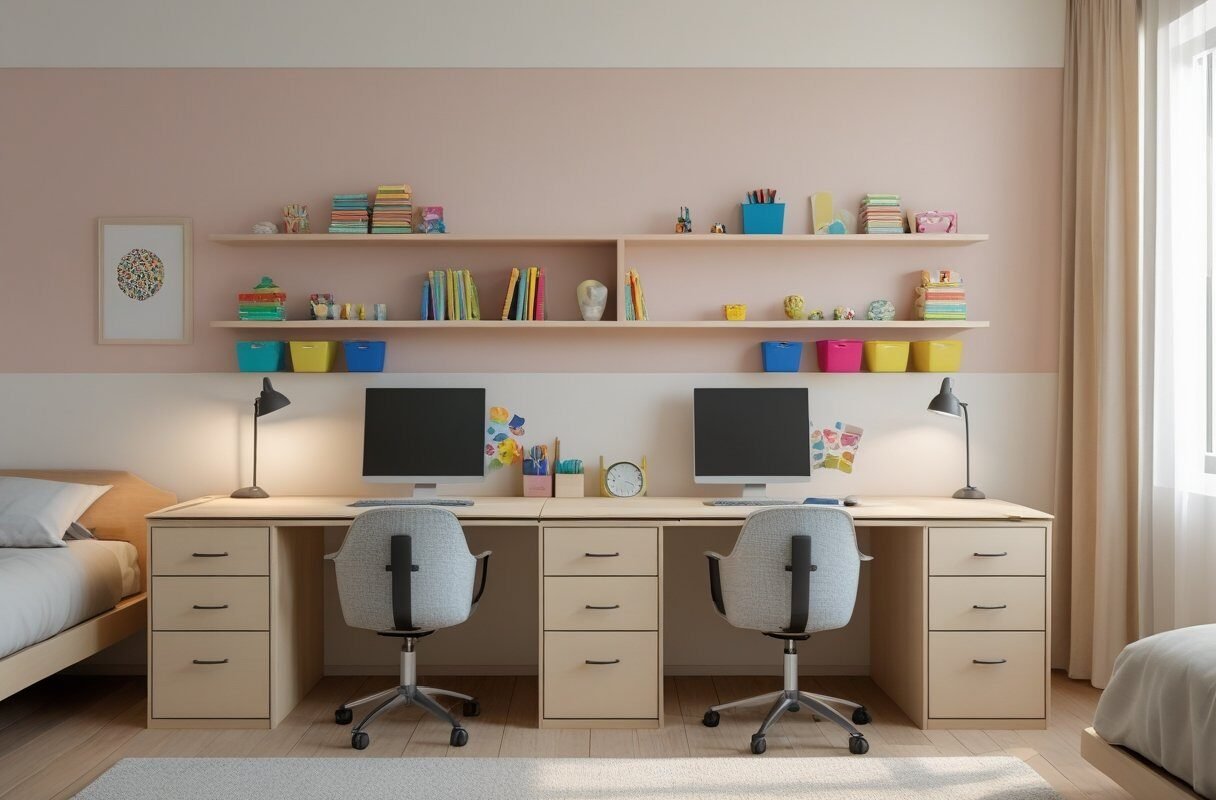
In a small room with two kids, a shared desk is practical and space-efficient. I built a long, narrow desk along one wall with two chairs—it became a perfect study area for both children. You can separate each child’s workspace using organizers, small bulletin boards, or even different colored desk lamps. This setup encourages shared use while maintaining personal space.
7. Multi-Functional Furniture
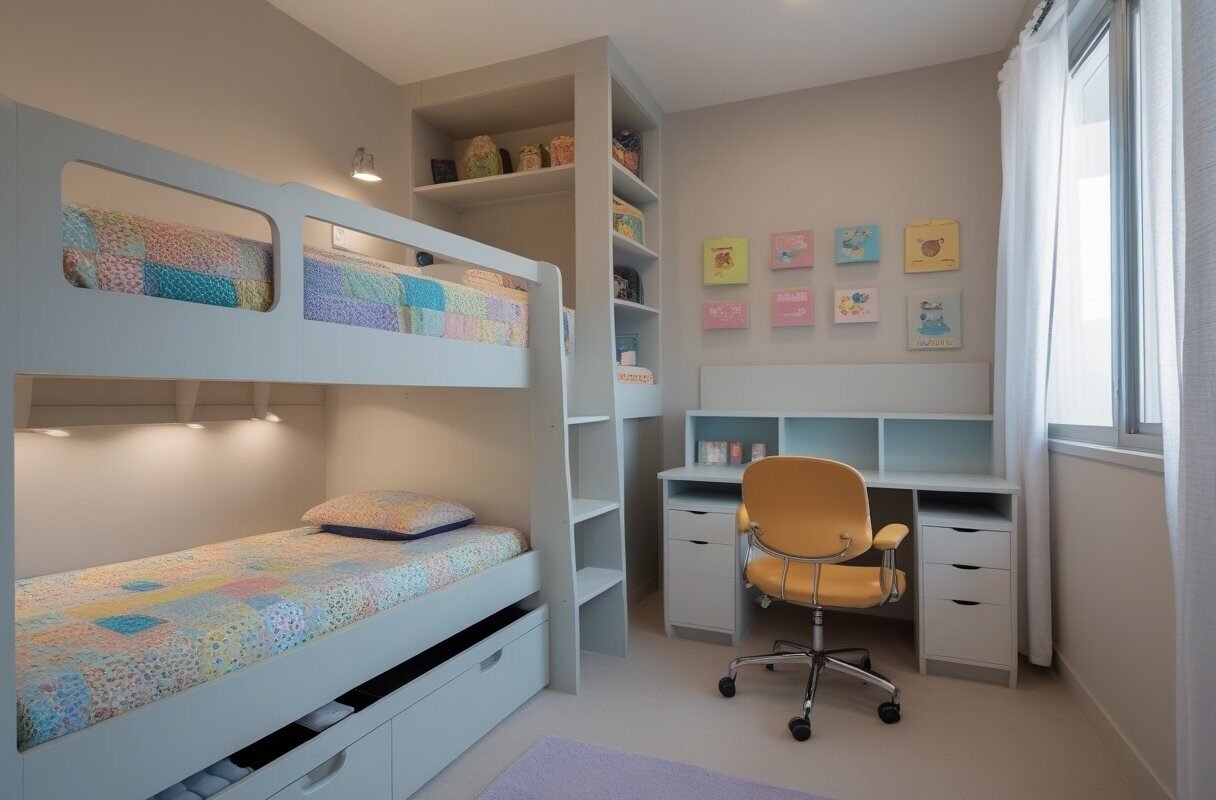
When every inch counts, multi-functional furniture is your best friend. Beds with drawers, ottomans with storage, or small bookshelves that double as nightstands save tons of space. I installed a small storage bench at the foot of the bed in my kids’ room—it stores toys and blankets while also serving as a seating area.
8. Bright Colors to Open Up the Space
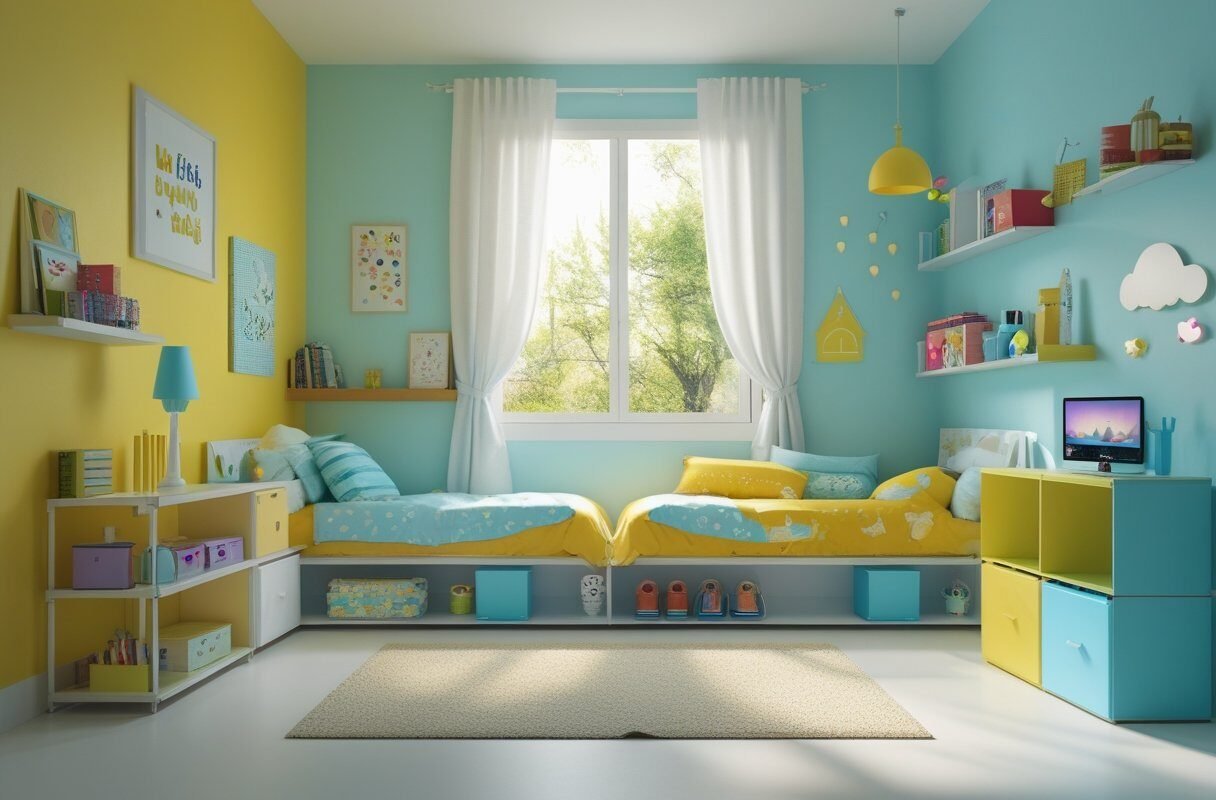
Colors make a huge difference in how spacious a small room feels. Light and bright colors like pastel blues, soft greens, and creams open up the room and make it feel airy. I painted one wall with a soft mint and kept the rest white—it instantly brightened the space. You can add pops of color with bedding, curtains, or wall decals without overwhelming the room.
Pro Tip: Use similar color tones for both kids’ sides to create a cohesive look, while letting each child personalize with accessories.
9. Wall Décor for Personality
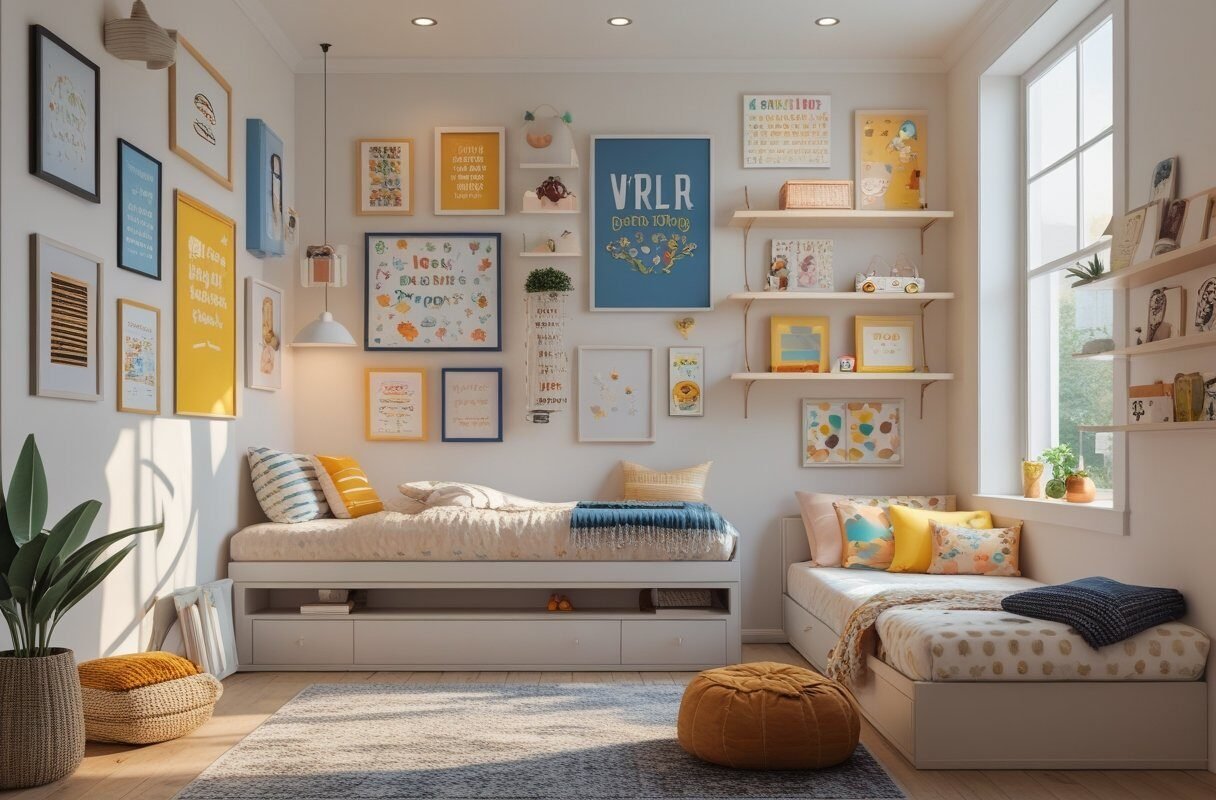
Even small shared bedrooms deserve personality. Wall decals, posters, or framed prints allow you to decorate without taking up floor space. I added removable wall decals above each child’s bed—a city skyline for my son and a floral garden for my daughter. This gives each side of the room character while keeping the room playful and organized.
10. Use Corners Wisely
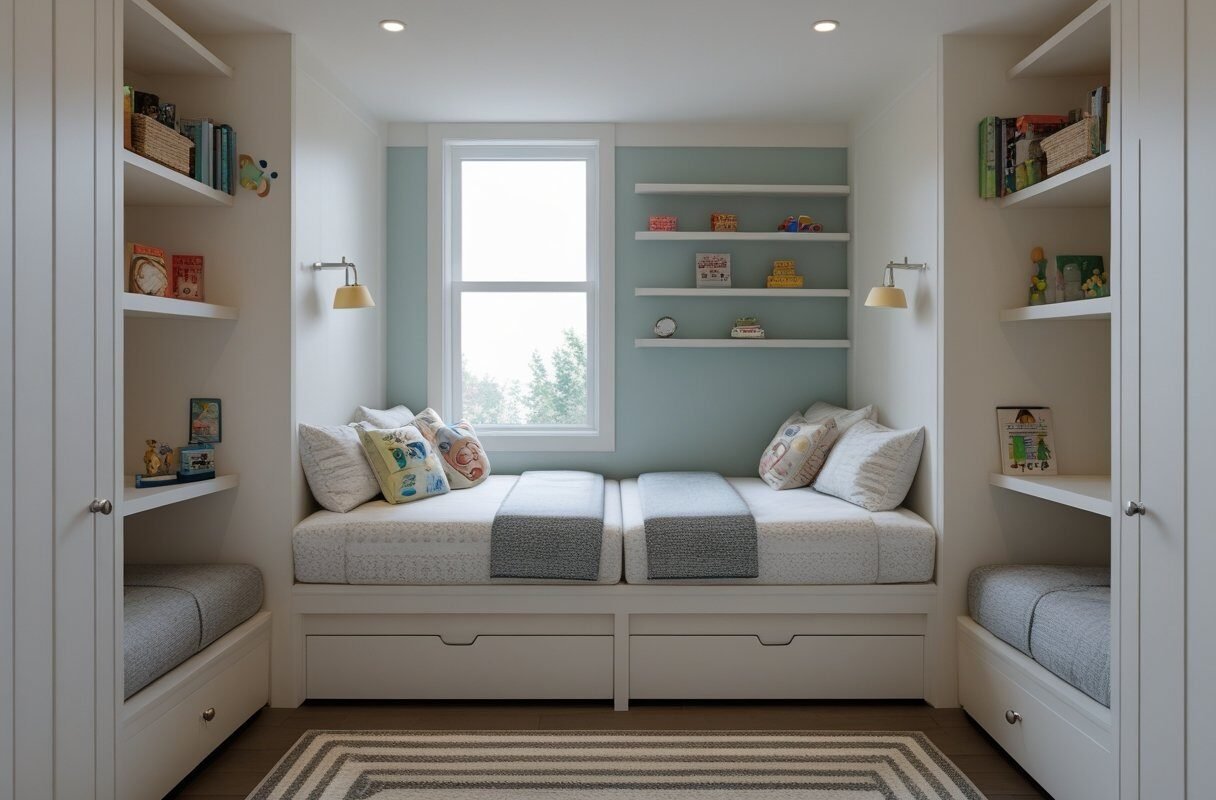
Corners are often underutilized in small bedrooms. Corner shelves, corner desks, or beanbag chairs make every inch count. In my experience, a corner reading nook with a small shelf and cushions became my children’s favorite cozy spot. Corners are perfect for creating separate zones for reading, playing, or even quiet time.
11. Mirrors for Illusion of Space
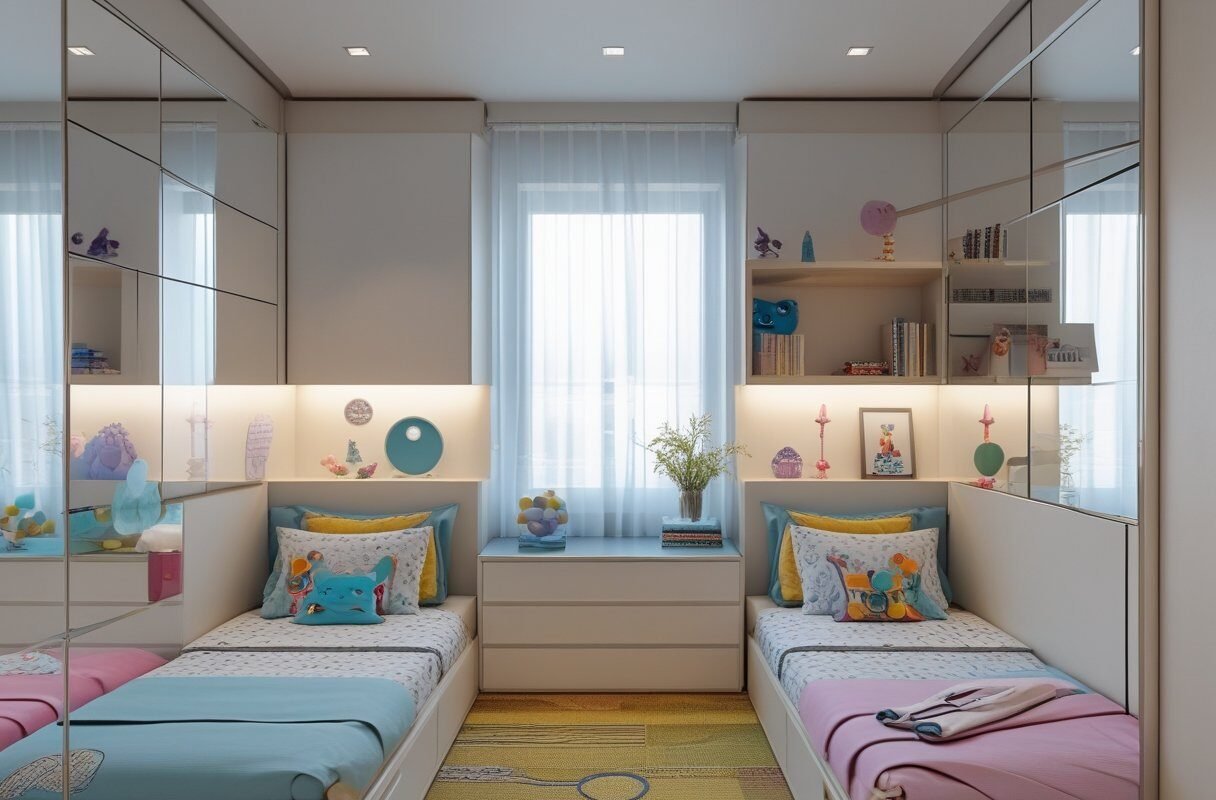
Mirrors are a simple trick to make a small room appear bigger. Placing mirrors strategically opposite windows reflects light and creates depth. I added a medium-sized mirror in my kids’ shared room—it made the room feel twice as spacious and added a stylish accent. You can even use mirrored closet doors to open up the space visually.
12. Personalize Each Child’s Space
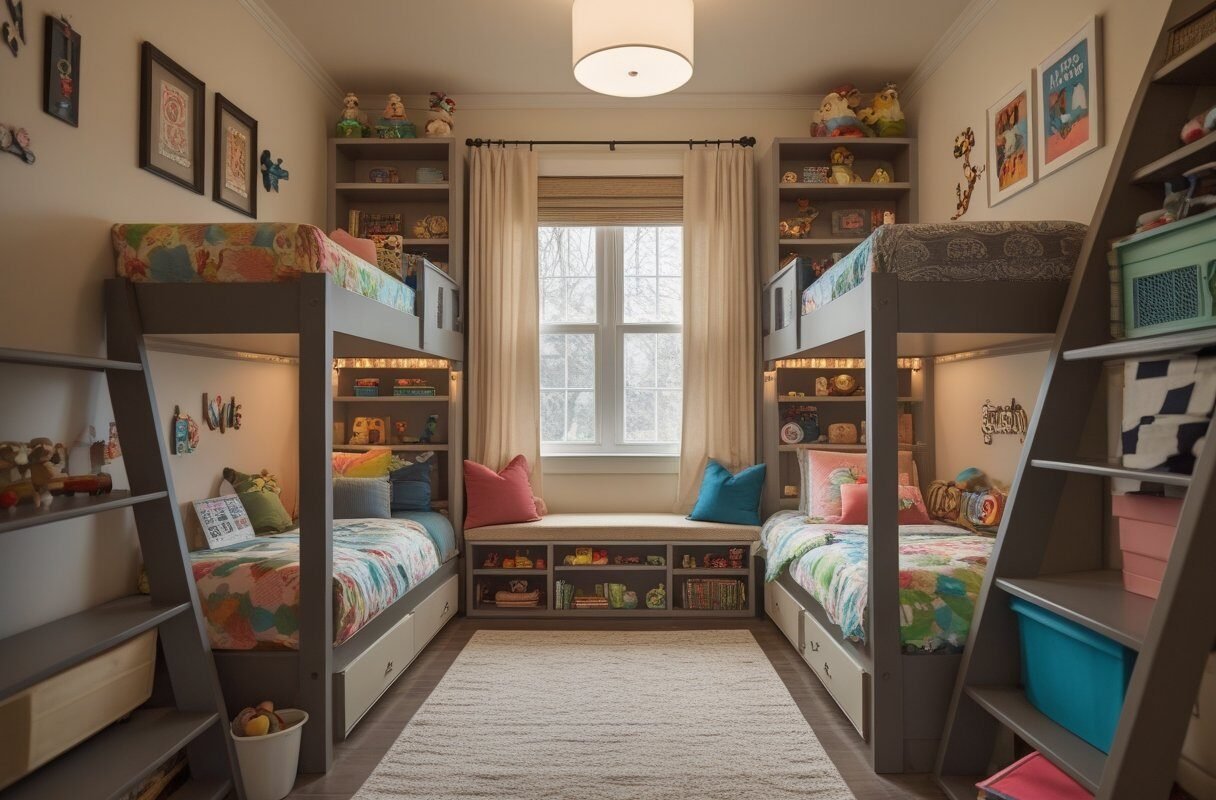
Even in a shared room, each child needs a sense of ownership. Personal touches like individual bedding, small storage bins, or personalized wall art create a balanced shared space. I let my children pick their own bedding and small décor items—it makes them feel their side of the room belongs to them. Personalization keeps the room harmonious and reduces conflicts over space.
Extra Tips for Small Shared Bedrooms
- Declutter regularly: Less furniture and fewer toys make the room feel spacious.
- Use sliding doors: For closets or entrances, sliding doors save precious space.
- Maximize under-bed storage: Bins or drawers under beds hold toys, books, or seasonal clothing.
- Create zones: Designate areas for sleeping, studying, and playing for order and functionality.
- Safety first: Always ensure loft or bunk beds have guardrails and sturdy ladders.
Final Thoughts
Designing a small bedroom for two kids is all about creativity, clever storage, and thoughtful planning. With bunk or loft beds, vertical storage, bright colors, and multi-functional furniture, even the tiniest space can feel cozy, organized, and stylish.
I’ve personally applied many of these ideas in my children’s shared room, and the transformation was incredible. The space feels larger, the kids have room to play and study, and the room is visually appealing and organized.
Remember, small rooms don’t limit your design choices—they challenge you to be creative and maximize every inch. With the right combination of furniture, colors, and personal touches, you can turn a small shared bedroom into a functional and charming haven for your children.
