
You can shape a study room that helps you focus, feels comfortable, and reflects your taste. This article shows 13 study room decor aesthetic ideas so you can pick a style that fits your space and study needs.

Explore ideas that range from clean Scandinavian corners to cozy nooks, industrial desks to plant-filled botanical rooms, and ergonomic setups to student-friendly dorm solutions. Use these styles as a starting point to mix practical layout tips with decor choices that keep you motivated and productive.
1) Minimalist Scandinavian Study Corner with White Floating Desk

You get a bright, calm corner by mounting a slim white floating desk. It frees floor space and keeps the room feeling open.
Choose light wood accents and a simple chair to add warmth without clutter. A small plant and neat storage boxes keep essentials tidy and add gentle texture.
Use natural light and soft white walls to boost focus. The overall look stays simple, functional, and easy to maintain.
2) Warm Cozy Nook with Earth-Toned Textiles and Wool Rug

Create a small study corner with warm, earth-toned textiles to make studying feel calm and steady. Layer a wool rug under your desk and chair to add softness and reduce noise.
Choose cushions and throws in muted browns, terracotta, and cream to keep the palette simple and cozy. Add a small lamp with warm light to protect your eyes and set a focused mood.
3) Industrial Loft Desk with Metal Pipe Shelving and Edison Bulb Lamp

Choose a metal-pipe desk to give your study room a raw, structured look that holds up to daily use. The pipe shelving adds open storage for books and decor while keeping surfaces clear for work.
Pair the desk with an Edison bulb lamp for warm, focused light that reduces eye strain. The lamp’s vintage filament and simple metal frame match the industrial style without being flashy.
4) Mid-Century Modern Study with Walnut Desk and Eames-Style Chair

You can create a mid-century look with a walnut desk and an Eames-style chair for clean lines and warm wood tones. The desk adds natural texture while the chair brings sculpted comfort, ideal for long study sessions.
Choose simple accessories like a metal desk lamp and a small plant to keep the space uncluttered. Stick to neutral colors and one accent hue to preserve the era’s calm, focused feel.
5) Botanical Study Room with Large Potted Monstera and Macramé Planters

Place a large potted Monstera near natural light to boost airiness and focus. Its bold leaves create a calm, green backdrop without crowding your workspace.
Add macramé hangers to lift smaller plants and free floor space. The woven texture adds warmth and a subtle boho touch that pairs well with books and wood furniture.
Keep care simple: bright, indirect light and regular watering. Rotate the Monstera occasionally so growth stays even and the room looks balanced.
6) Japandi Calm Space with Neutral Palette and Low Profile Desk

You create a peaceful study by choosing a neutral palette of creams, soft grays, and warm wood tones. A low-profile desk keeps sightlines clear and reduces visual clutter.
Choose natural materials like matte wood and woven textiles for texture without noise. Add a simple task lamp and one small plant to bring life while maintaining calm.
Keep storage hidden or low to the floor so your workspace feels open. Aim for quality pieces and minimal accessories to support focus.
7) Vintage Library Vibe with Floor-to-Ceiling Bookshelves and Ladder

You can create a vintage library feel by installing dark wood shelves that reach the ceiling. Tall shelving adds warmth and gives your study a classic, organized look.
Add a rolling or leaning ladder for access and style. A leather chair and soft, warm lighting complete the scene without crowding the room.
8) Monochrome Black-and-White Study with Matte Black Desk Accessories

You can create a calm, focused space using only black, white, and shades of gray. Matte black desk accessories—lamp, pen cup, and monitor stand—add a modern, low-glare look that keeps visual clutter down.
White walls and light shelving balance the dark pieces and make the room feel open. Add a few textured items, like a woven rug or paper notebooks, to prevent the space from feeling flat.
9) Soft Pastel Aesthetic Study with Blush Pink Accents and Fairy Lights

You can create a calm study space using blush pink accents, mint or lavender tones, and white furniture to keep the room bright. Soft textiles like a plush rug and cushions add comfort and reduce noise.
String fairy lights around a shelf or pinboard for warm, even light that helps when you study at night. Add a small plant and simple desk organizers to keep your workspace tidy and visually balanced.
10) Ergonomic Productivity Setup with Herman Miller Aeron Chair

Place the Aeron where you work most and set the seat height so your feet rest flat and knees are at 90 degrees. Adjust lumbar support and tilt so your spine feels supported during long sessions.
Set armrests to support your forearms without lifting your shoulders. Use the chair’s fine adjustments to reduce strain and help you focus more comfortably.
11) Rustic Farmhouse Study with Reclaimed Wood Desk and Mason Jar Storage

You can anchor the room with a reclaimed wood desk that shows knots and grain for authentic character. Pair it with a simple leather or fabric chair to keep the focus on the wood.
Use mason jars for pen storage, small plants, or fairy lights to add function and charm. Open shelving, a woven rug, and warm lighting keep the space cozy without clutter.
12) Student Dorm Study with Multi-Tier Desk Organizer and LED Desk Strip
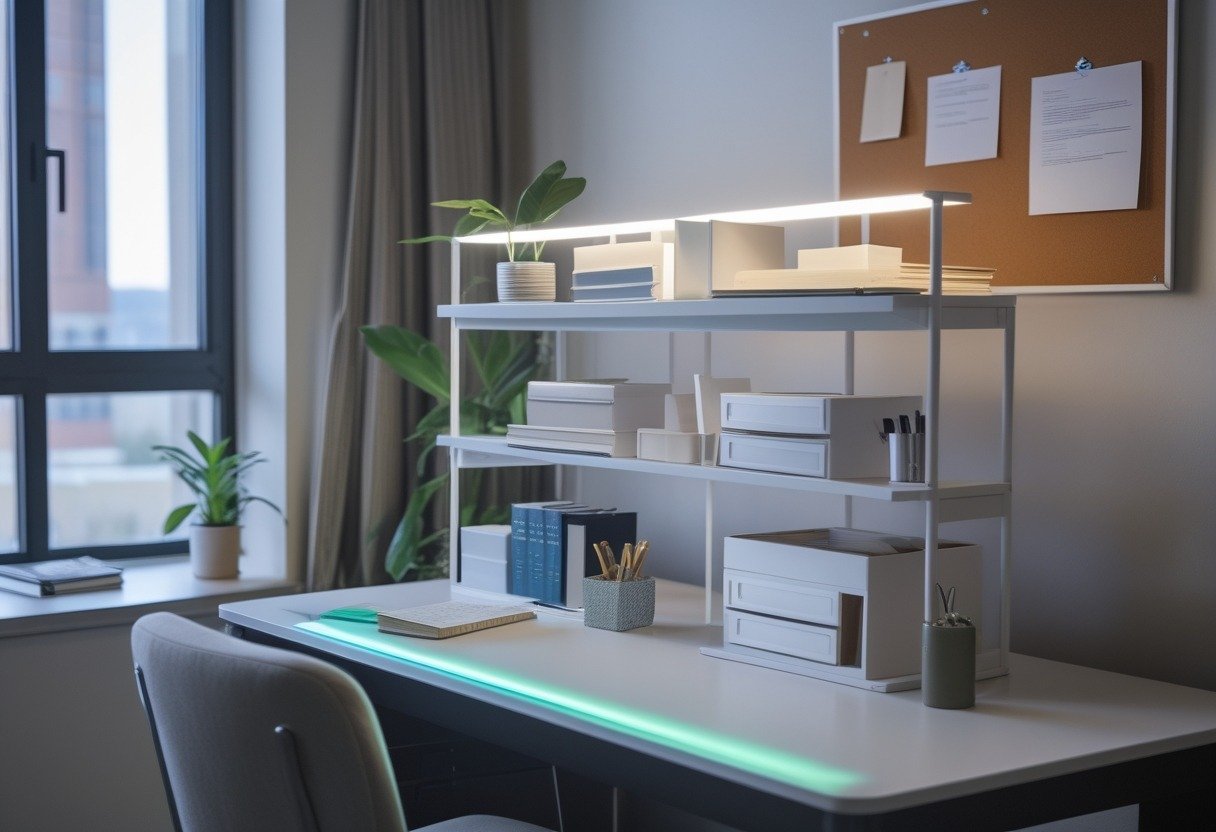
You can free up desk space by adding a multi-tier organizer for books, supplies, and small decor. It keeps items visible and easy to reach so your surface stays clear for studying.
Add an LED desk strip under a shelf for even, low-glare light that helps reduce eye strain. Choose adjustable color and brightness to match tasks and mood without harsh overhead lighting.
13) Cozy Reading Alcove with Tufted Armchair and Benjamin Moore Hale Navy Accent Wall

Place a tufted armchair by a window to make a simple, comfy reading spot. Add a small side table and a soft throw for easy reach and warmth.
Paint the wall behind the chair Hale Navy to give depth and make books stand out. Use warm lighting to balance the dark color and keep the space inviting.
Keep decor minimal: a rug, a floor lamp, and a few plants will help the nook feel calm. This setup stays stylish and practical for long reading sessions.
Key Elements That Shape an Aesthetic Study Space
Balance color, light, and surface choices so your room supports focus and feels inviting. Small, deliberate changes—paint, lamp placement, or a textured rug—can change how you study and how long you stay comfortable.
Understanding Color Psychology
Choose paint and accents with clear intent. Use soft blues or muted greens on walls to lower stress and boost focus. Reserve bright accents like mustard yellow or coral for small items—pillows, desk organizers, or a single wall art piece—to add energy without distraction.
Limit high-contrast patterns near your workspace. If your curtains or bedding are bold, keep the desk area in a calmer shade to reduce eye strain. Test color choices with sample swatches on the wall at different times of day to see how natural light changes the tone.
Use a consistent palette of three colors: a base (walls), a secondary (furniture), and an accent (decor). This makes the room feel intentional and prevents visual clutter. Keep color temperatures in mind—cool tones encourage alertness; warm tones feel cozy.
Essential Lighting Strategies
Layer three types of light: ambient, task, and accent. Ambient light comes from ceiling fixtures or a bright window and creates overall visibility. Task lighting, like an adjustable desk lamp with a focused beam, reduces eye strain while reading or writing.
Place your desk perpendicular to the window if you use natural light, which cuts down on glare on screens. Choose bulbs with a color temperature around 4000K for a neutral, focus-friendly glow. Use dimmers on overhead lights so you can lower brightness when doing low-energy tasks.
Add accent lighting to highlight shelves, art, or plants. Small LED strips or a warm table lamp create depth and make the room feel inviting during breaks. Ensure cords are managed and switches are easy to reach from your chair.
Integrating Texture and Patterns
Mix smooth and tactile surfaces to keep the room visually interesting without overwhelming you. Pair a smooth wooden desk with a soft wool rug and linen curtains for a balanced feel. Textured items reduce the sterile look of plain furniture and add warmth.
Use patterns sparingly and at different scales. A large geometric rug anchors the room; small patterned throw pillows add detail. Avoid repeating busy patterns near your work area to keep your focus steady.
Bring in natural materials—wood, cotton, jute, and ceramics—to add subtle variety. These materials age well and create a calm backdrop for study. Rotate or switch small textured pieces seasonally to refresh the room without a full redesign.
Personalizing Your Study Area for Motivation
Choose items that make your space feel useful and encouraging. Pick art and small objects that match your goals, make tasks easier, and keep distractions low.
Incorporating Inspirational Artwork
Select artwork that ties to a specific goal or mood. For example, hang a framed print of a map if you study geography, or a simple typography poster with a short mantra like “Start Small” to prompt action. Place art at eye level near your desk so it’s visible during work without blocking light.
Keep pieces simple and limited. One or two meaningful items work better than many small images that clutter your focus. Use neutral frames and consistent color tones to keep the look calm and not busy.
Rotate art every few months to refresh motivation. Swap in photos from a successful project or a certificate to remind you of progress. Use corkboard or washi tape for an easy, changeable display.
Selecting Functional Decor Accents
Choose decor that adds storage, light, or comfort. A desk lamp with adjustable brightness helps you study at different times of day. Use a compact shelf or stackable bins to keep books and papers within reach but off the desktop.
Pick a comfortable chair cushion and a small footrest to reduce physical fatigue during long sessions. Add a plant like a snake plant or pothos for low maintenance greenery; it lifts mood without extra work.
Use clear containers and labeled drawers so you can find pens, chargers, and flashcards quickly. Add a small whiteboard or calendar on the wall for daily targets. These accents make your study area useful and keep you focused on tasks.
