
You can make a headboard that adds personality, storage, or a cozy reading spot without spending a fortune. This article shows 10 kids Room headboard ideas and design tips so you can pick one that fits your child’s tastes, safety needs, and your space.

You’ll find playful shapes, practical storage solutions, soft fabrics, and simple DIY options that work for different ages and room sizes. Use these ideas to create a bed area that sparks imagination and stays safe and functional.
1) Rainbow arch painted headboard with soft LED backlighting

Give your child a bright focal point by painting a simple rainbow arch on the headboard. You can use pastel or bold colors to match the room and change them later if tastes shift.
Install soft LED strip lights behind the headboard to add gentle backlighting for reading or bedtime. LEDs create a cozy glow without visible fixtures and save energy.
2) Built-in bookshelf headboard with cubby storage and reading light
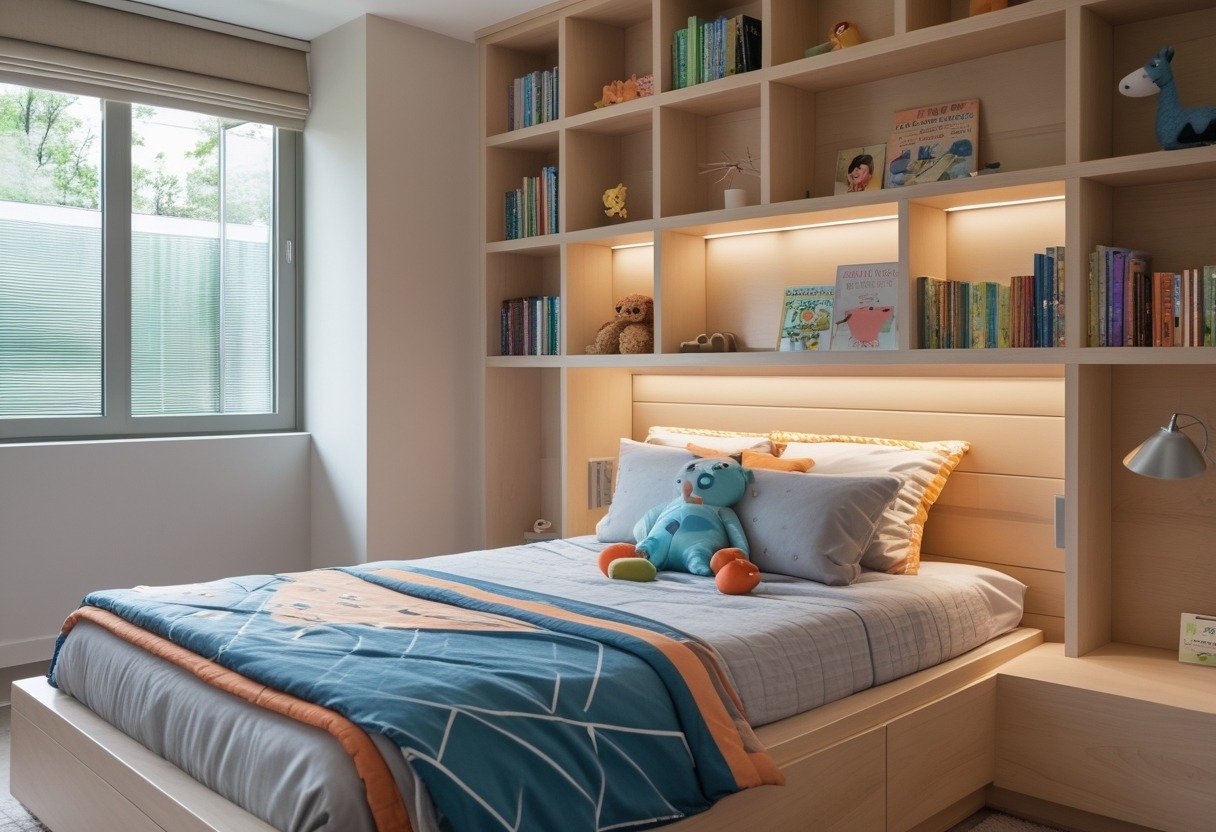
Choose a headboard with cubby shelves to keep books, toys, and night items within reach. The built-in reading light makes bedtime stories easier without a bedside lamp.
Look for USB ports or lockable drawers for charging and secure storage. This design saves floor space and keeps your room tidy while giving kids a cozy reading spot.
3) Upholstered tufted headboard in durable kid-friendly fabric

Choose a tufted headboard covered in stain-resistant, easy-care fabric to keep cleaning simple. You get soft edges that protect small heads and hands.
Pick fabrics with tight weaves or performance finishes for spills and wear. Neutral tones work well, or pick a color that ties the room together.
4) Chalkboard-painted headboard for doodles and notes
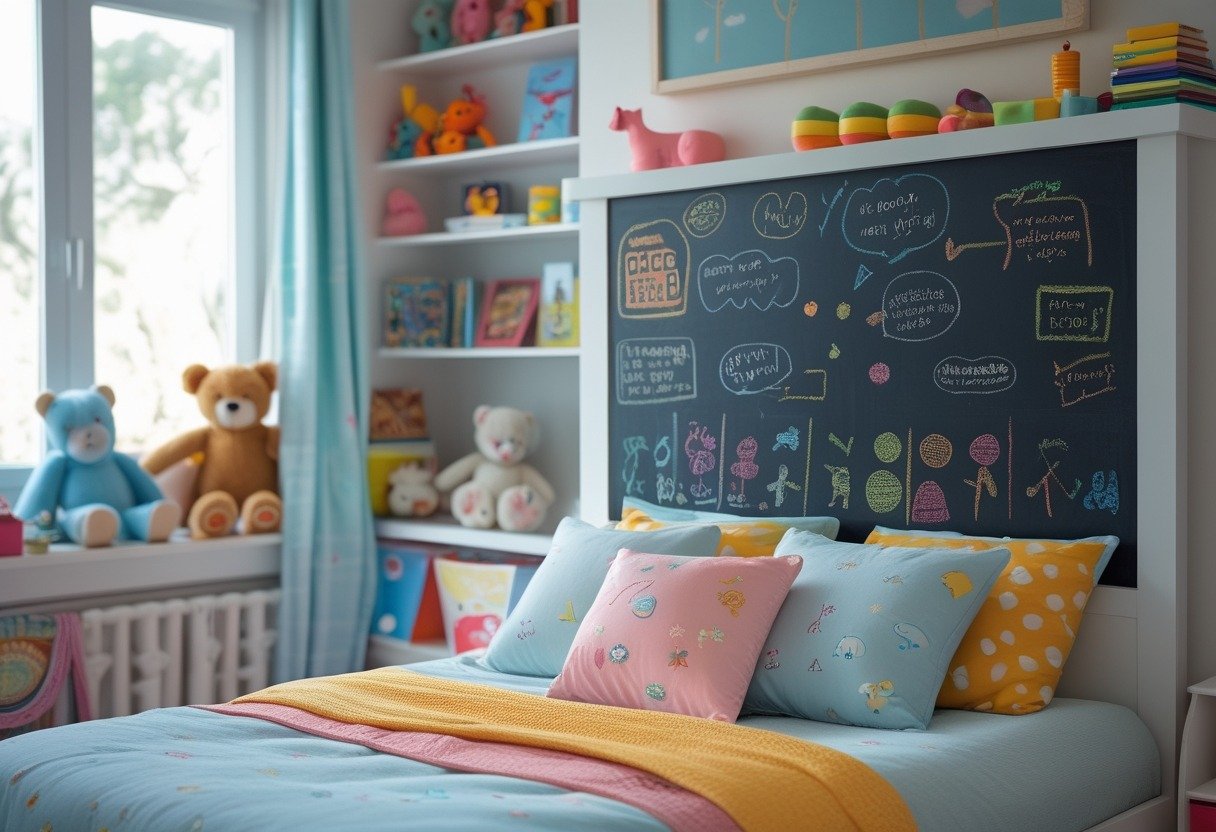
Paint a headboard or the wall behind the bed with chalkboard paint so your child can draw and write freely. It makes the space look playful and gives a simple spot for reminders, practice writing, or bedtime messages.
The surface wipes clean with a damp cloth, so you can change designs often. Use colored chalk for variety and add a small shelf nearby to hold chalk and an eraser.
5) Cloud-shaped plywood headboard with hand-painted gradients
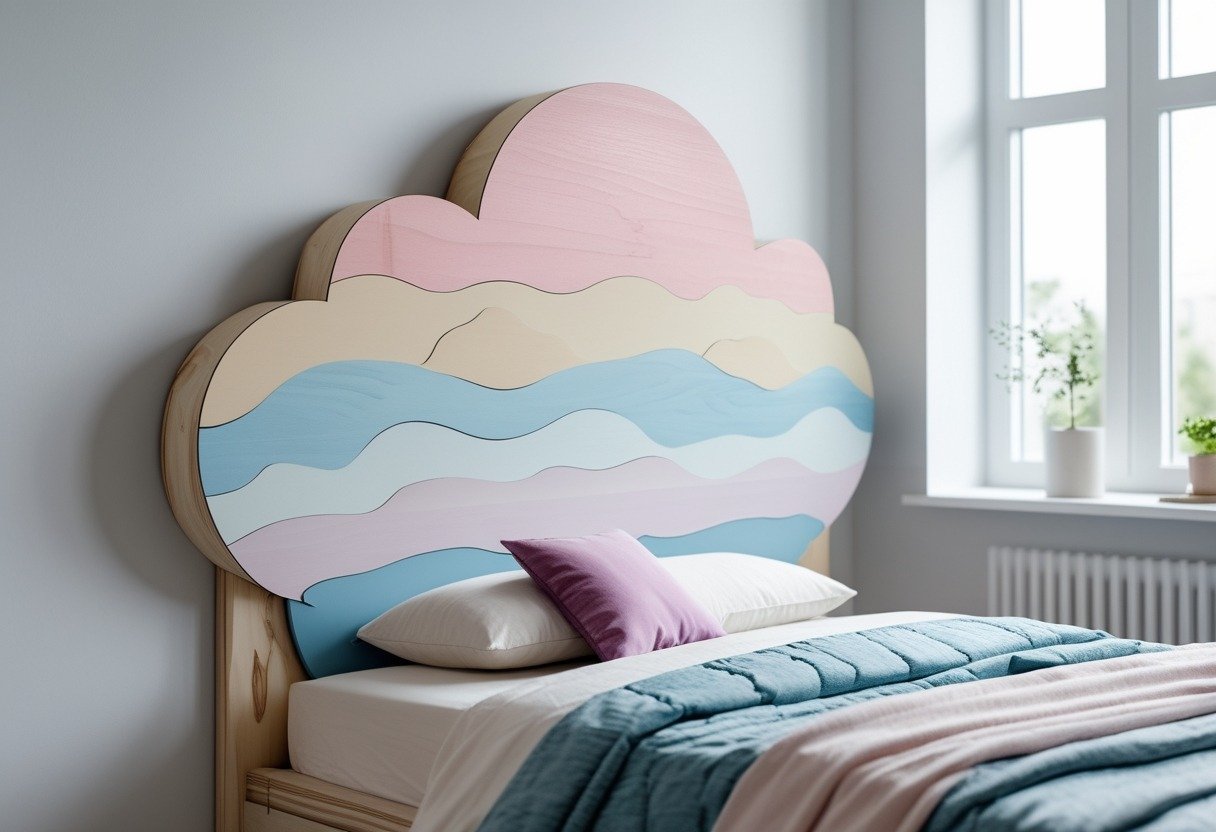
You can cut a cloud shape from plywood for a light, durable headboard. Sand edges smooth and seal the wood before painting.
Choose soft gradient colors like pale blue to white or pink to peach for a gentle look. Use foam brushes or sponges to blend colors in thin layers for a smooth transition.
Mount the headboard low on the wall so it cushions reading time without blocking outlets. The result looks custom and stays budget-friendly.
6) Race car front grille headboard with mounted headlights

You can give your child a bold focal point with a grille-style headboard and built-in headlights. The grille adds texture and a sporty look, while mounted LED headlights work as a nightlight and play feature.
Choose soft materials and rounded edges so the design stays safe and comfortable for sleep. Add a simple switch or remote for the lights to make it easy for your child to use.
7) Forest mural headboard with removable vinyl decals
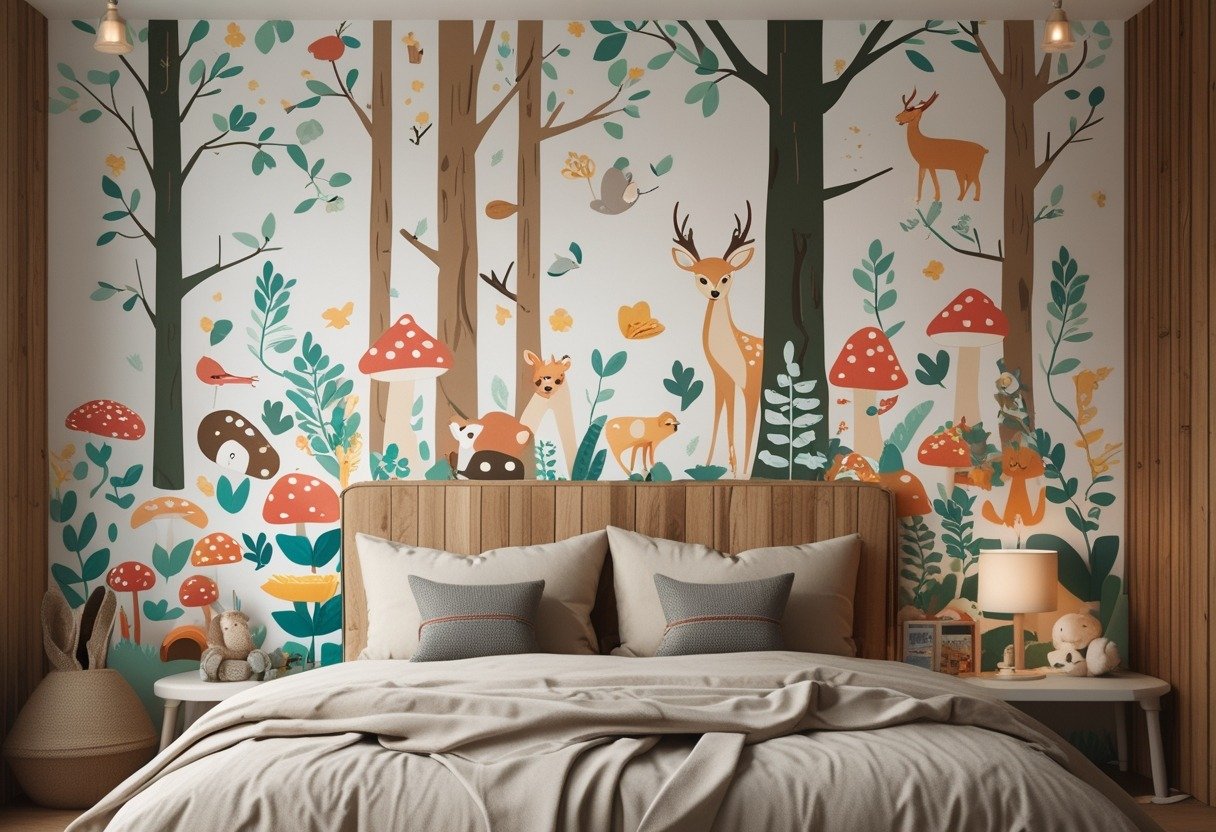
You can create a forest headboard by painting a simple mural or using large removable vinyl decals for trees and animals. Decals let you change the look later and avoid permanent paint, which is good as your child grows.
Place taller tree decals behind the bed’s center and smaller elements along the sides to add depth. Use muted greens and soft browns to keep the room calm and easy to match with bedding.
8) Magnetic felt board headboard for interchangeable play pieces

You can cover a headboard with magnetic felt to create a play surface that stays neat and invites creativity.
Attach lightweight magnets to felt story pieces like animals, letters, or shapes so your child can rearrange scenes safely.
This headboard works well for reading time and quiet play.
Pick a durable fabric and hide the magnets inside soft pieces to keep things child-friendly.
9) Loft-style slatted wooden headboard with integrated safety rails
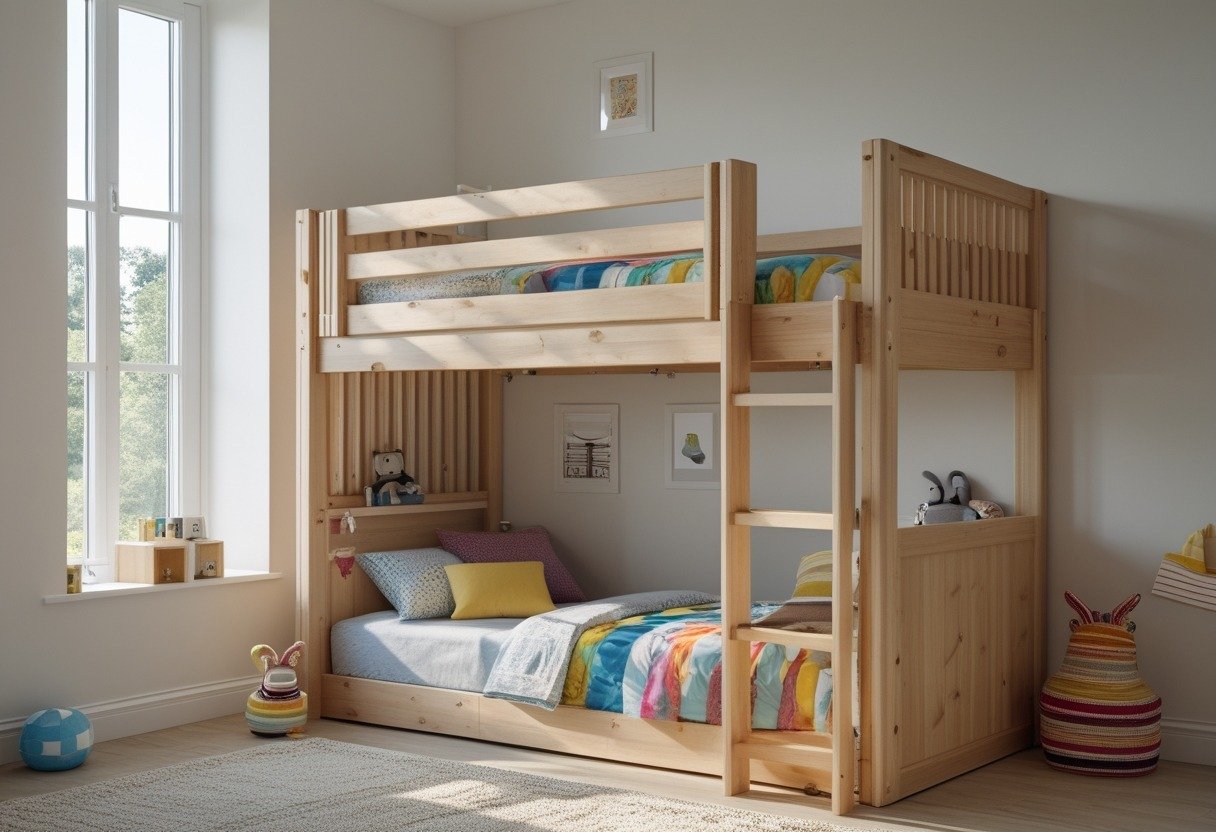
Choose a slatted wooden headboard that doubles as a loft bed railing to save floor space and add style. The slats give a light, airy look while the rails keep your child safe during sleep.
Pick smooth, rounded slats and sturdy joinery to avoid splinters and wobble. Finish with non-toxic paint or clear sealant to protect the wood and meet safety needs.
10) Canopy-style fabric headboard with hanging fairy lights
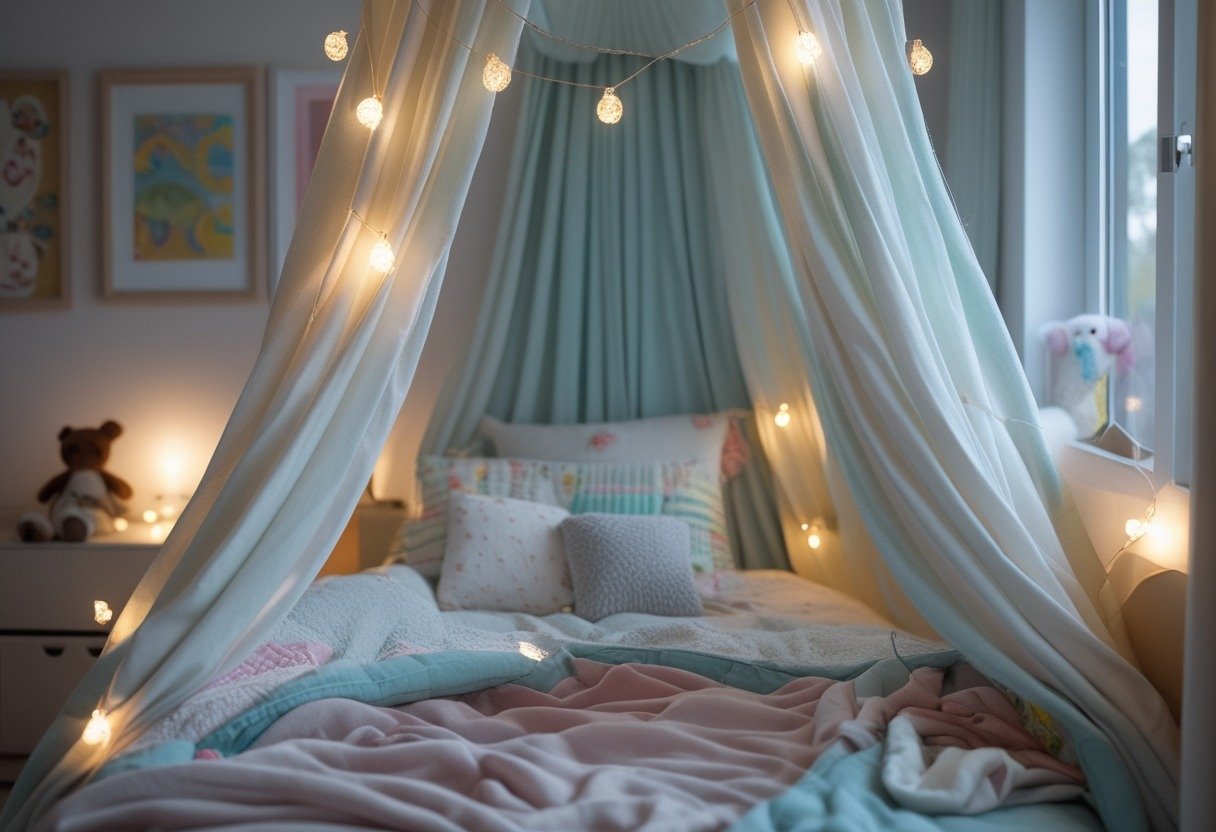
Create a soft canopy above your child’s bed by draping sheer fabric from a ceiling hook. You can attach the fabric to a simple frame or let it fall freely for a relaxed look.
Weave warm fairy lights through the fabric so the glow stays gentle and safe. Position lights away from direct contact with fabric and use LED, low-heat strands with a certified plug.
Choose pastel or neutral fabrics to match the room. This adds a cozy reading nook and a calm bedtime atmosphere.
Design Principles for Kid-Friendly Headboards
Focus on safety, durable materials, and colors that match your child’s age and energy. Pick finishes and shapes that are easy to clean, stain-resistant, and simple to install or remove.
Safety Considerations
Anchor the headboard to the wall or bed frame with hardware rated for the weight it will hold. Use screws and wall anchors rather than nails when possible, and check connections every six months.
Avoid sharp edges and small detachable parts. Choose rounded corners, recessed screws, and trim off loose embellishments that a child could pull off or swallow.
Fire safety matters. Pick fabrics with a flame-retardant treatment or use noncombustible boards like MDF with a safe finish. Keep electrical items like fairy lights out of reach and use LED lights that run cool.
Consider height and placement. Don’t place tall headboards where a child might climb and fall. If the headboard has shelves, limit depth to prevent standing or hiding spaces.
Material Selection Tips
Pick materials that resist stains and can take knocks. Vinyl, treated plywood, and painted MDF wipe clean easily and hold up to play.
Use upholstery only if the fabric is durable and washable. Look for removable covers or fabrics rated for heavy use. Foam should be high-density to avoid compressing and exposing sharp edges under the cover.
Choose non-toxic finishes. Select paints and sealants labeled low-VOC or zero-VOC. Avoid adhesives that state strong chemical fumes; water-based glues are safer.
Think about weight and installation. Lightweight panels are easier to anchor and less risky if they loosen. Heavy solid wood can be beautiful but requires stronger mounts and more frequent safety checks.
Color Psychology in Children’s Spaces
Use color to support mood and sleep. Soft blues and greens calm and help with rest, while brighter hues like yellow or coral boost energy in play areas.
Match color to function. If the bed is mainly for sleep, lean toward muted tones and pastel shades. For reading or homework nooks near the bed, add a saturated accent that encourages focus, like a navy strip or teal panel.
Involve your child in choices. Let them pick an accent color or pattern within a palette you set. This builds ownership while keeping the overall room balanced.
Balance patterns and solids. Large-scale patterns can feel busy; reserve them for small headboard sections or removable panels. Use contrast—lighter headboard against darker walls or vice versa—to create a clear focal point without overstimulating.
Decorative and Functional Enhancements
Add practical storage, personal touches, and easy-care finishes to make the headboard both useful and kid-friendly. Focus on shelves, cubbies, names or themes, and materials that wipe clean or resist stains.
Incorporating Storage Solutions
Build shallow shelves (3–6 inches deep) across the headboard for books, a nightlight, or a small alarm clock. Mount them low enough so kids can reach bedtime books but high enough to avoid pillows hitting items.
Use cubbies or fabric bins set into the headboard for toys, small stuffed animals, or art supplies. Label each bin with words or icons so your child learns to sort and put things away.
Try a slim pegboard section for hanging headphones, a reading lamp, or seasonal decorations. Pegboards let you move hooks and baskets as needs change without new tools.
If you prefer hidden storage, add a hinged top or drawer under a padded headboard shelf. Keep hinges soft-close and edges rounded for safety.
Personalization Ideas for Kids
Let your child pick a theme like space, animals, or rainbows and use decals or removable wallpaper on the headboard. Decals are easy to swap as tastes change and don’t damage paint.
Spell your child’s name with wooden letters or light-up marquee letters attached to the headboard. Choose letters that screw on or use heavy-duty adhesive for a secure install.
Add a chalkboard or dry-erase panel so your child can draw, practice writing, or leave notes. Frame it on the headboard edge to keep marker dust contained.
Incorporate fabric panels or a pocket for displaying artwork. Rotating art gives your child ownership and keeps the room fresh.
Easy Maintenance Strategies
Pick wipe-clean surfaces like painted MDF, laminate, or sealed wood to remove marker, crayon, and snack spills. Keep a mild soap and water cloth nearby for quick spot cleaning.
Use stain-resistant fabric if you add upholstery. Removable cushion covers with zippers let you machine wash stains without removing the whole headboard.
Smooth, rounded edges reduce dirt traps and make wiping faster. Avoid deep grooves or carved details that collect dust and crumbs.
Create a monthly quick-care routine: vacuum fabric panels, wipe shelves, check fasteners, and rotate decorative items. Regular light upkeep prevents big jobs later.
