
Your kid’s bedroom is roughly the size of a walk-in closet, and somehow you’re supposed to fit a bed, toys, clothes, books, and that collection of 47 stuffed animals they absolutely cannot live without. Sound familiar? Welcome to the club of parents trying to perform spatial miracles while maintaining some semblance of style and sanity.
I’ve been wrestling with my two kids’ tiny bedrooms for the past six years, and let me tell you – I’ve made every mistake possible. From buying furniture that literally couldn’t fit through the door (measure twice, people) to creating “organized” systems so complex that my 5-year-old needed a manual to find his socks. But through all that chaos, I’ve discovered that small kids’ bedrooms can actually be more fun and functional than sprawling spaces – you just need to get creative and think like a kid who also happens to be an interior designer.
These aren’t those Pinterest-perfect rooms that stay clean for exactly 3.7 seconds after photographing. These are real ideas for real kids who actually play, sleep, and yes, make enormous messes in their tiny kingdoms. Let’s transform that cramped chaos into something magical.
Loft Bed Designs for Small Kids Bedrooms
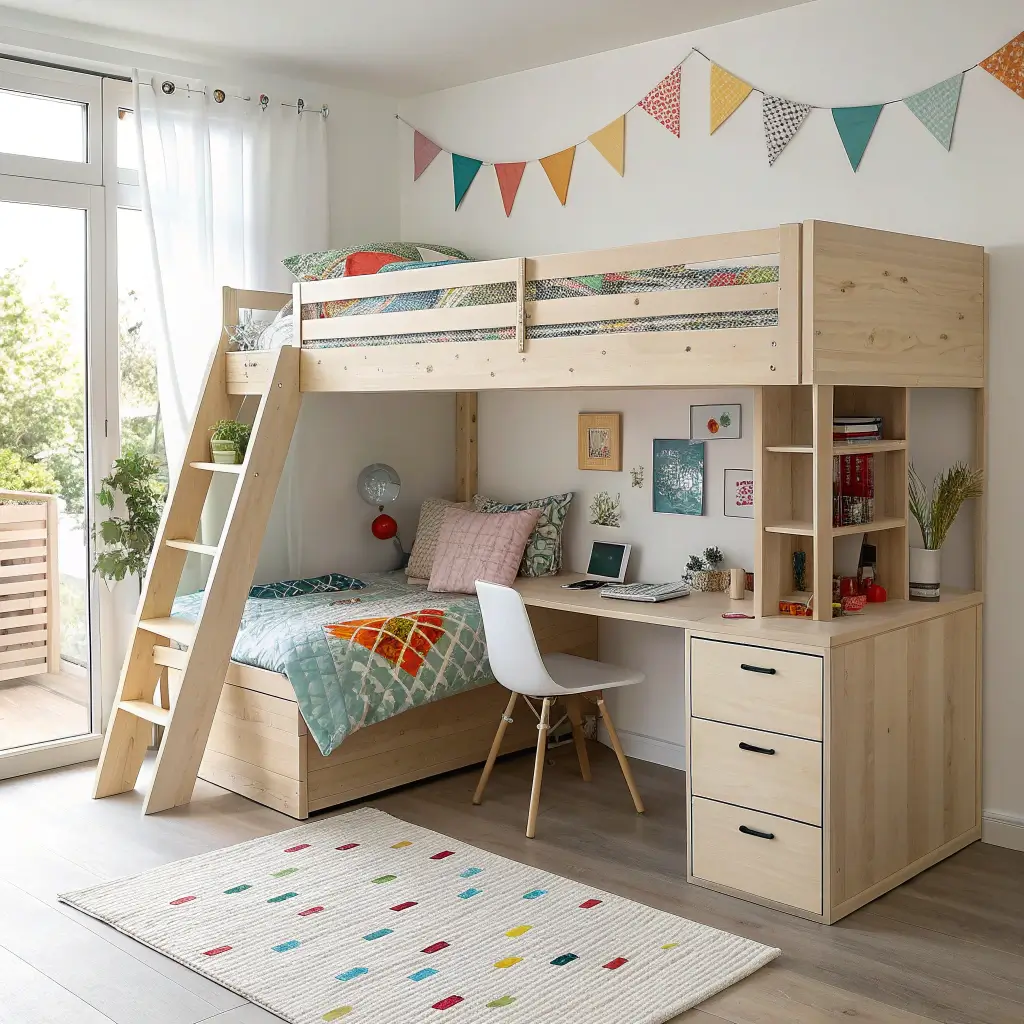
Loft beds are basically the superhero of small kids’ bedrooms – they literally double your usable space by stacking sleep on top and play (or storage, or desk space) underneath. My daughter’s loft bed transformed her 8×10 room from cramped disaster to two-story wonderland.
The space underneath her loft became a reading fort complete with string lights, cushions, and enough books to start a tiny library. Kids love the adventure of climbing up to bed, and parents love reclaiming precious floor space. Win-win, except for that one time she decided to practice her “flying” at 6 AM – safety rails are non-negotiable, folks.
Modern loft beds come in styles way beyond basic bunk frames. You can find castle-themed lofts, ones with built-in slides (yes, slides!), and sophisticated designs that grow with your child. The key is choosing one sturdy enough to survive childhood but stylish enough that your teenager won’t demand immediate removal.
Loft Bed Options That Actually Work
Consider these game-changers:
- Low loft beds for younger kids (easier access, less scary)
- Study lofts with built-in desks underneath
- Play fort lofts creating secret hideaways
- Storage lofts with dresser/shelving combos below
- Convertible lofts that separate into regular beds later
- Slide attachments for morning fun (and quick escapes)
Safety tip: Always anchor loft beds to the wall. Kids treat furniture like jungle gyms, and physics doesn’t care about your decorating plans.
Under-Bed Storage Hacks for Tiny Rooms
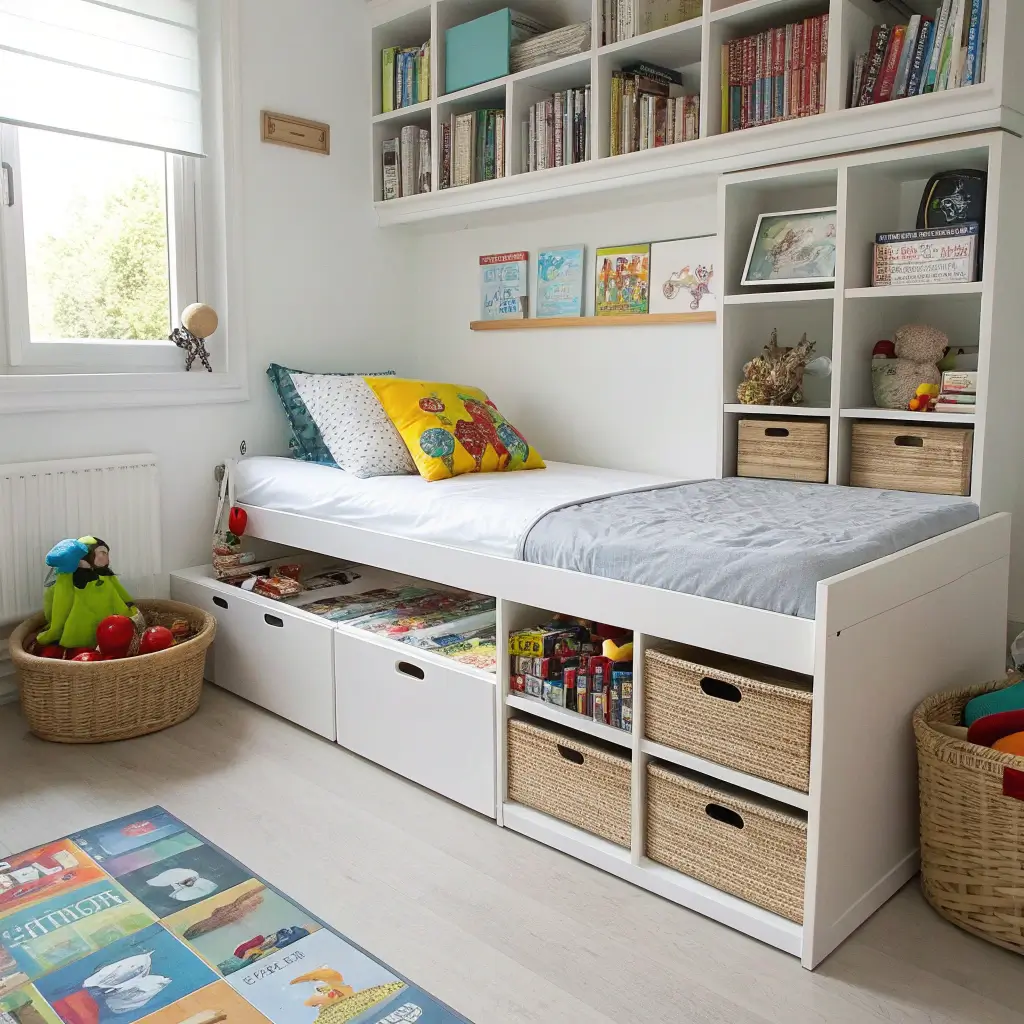
The space under your kid’s bed is prime real estate being wasted on dust bunnies and lost socks. Smart under-bed storage transforms dead space into organizational gold – and I mean the kind of storage kids can actually use without adult assistance.
I learned this lesson after discovering three months of “cleaned up” toys shoved under my son’s bed in a horrifying archaeological layer. Now we use clear rolling bins labeled with pictures (not words – crucial for non-readers). He can see what’s inside, roll them out easily, and most importantly, put things back without my help.
The trick is making under-bed storage accessible and logical for little hands and developing brains. Seasonal clothes in vacuum bags? Great for parents, useless for kids who need their Batman costume RIGHT NOW at 7 AM on a Tuesday.
Under-Bed Storage Solutions
Maximize that hidden space:
- Rolling plastic bins with picture labels
- Drawer units on wheels for easy access
- Fabric bins with handles for lightweight items
- Bed risers creating more vertical storage space
- Built-in platform beds with integrated storage
- Trundle drawers for frequently-used items
Pro tip: Use the back area for parent-controlled storage (out-of-season clothes) and front area for kid-accessible items (daily toys).
Wall-Mounted Desks and Shelves for Kids
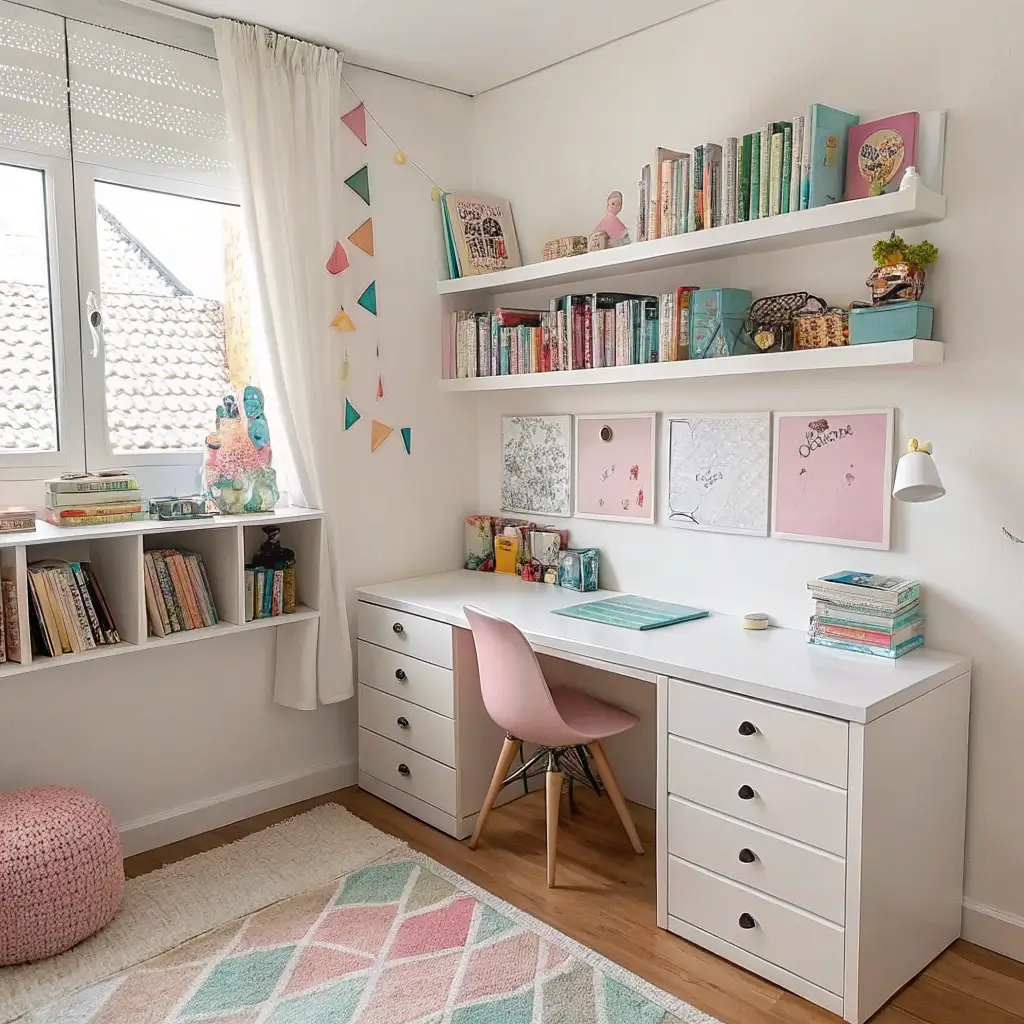
Floor space in small kids’ bedrooms is precious – so why waste it on furniture legs? Wall-mounted everything keeps floors clear for actual playing while providing all the function kids need as they grow.
My son’s wall-mounted desk saved us from homework meltdowns. Previously, his desk chair kept rolling backward into his bed, making writing practice feel like gymnasium torture. The wall-mounted version folds up when not in use, revealing floor space for LEGO construction projects. The transformation takes seconds, and suddenly homework space becomes play space.
Floating shelves at kid-height changed our bedtime routine entirely. Books they can reach themselves? Game-changer. Display space for their “treasures” (rocks, broken toy parts, mysterious sticky things)? Priceless. Just mount everything into studs – drywall anchors and enthusiastic children don’t mix well.
Wall-Mounted Must-Haves
Essential installations include:
- Fold-down desks that disappear when not needed
- Floating bookshelves at reachable heights
- Picture ledges for rotating artwork displays
- Pegboard systems for customizable storage
- Wall-mounted toy organizers with bins
- Hook rails at kid height for bags and costumes
Remember: mount heavy items into studs, always. That cute floating shelf becomes a lawsuit when it falls on tiny heads.
Also Read: 10 Smart Small Guest Bedroom Ideas for Perfect Organization
Multi-Functional Furniture for Small Spaces
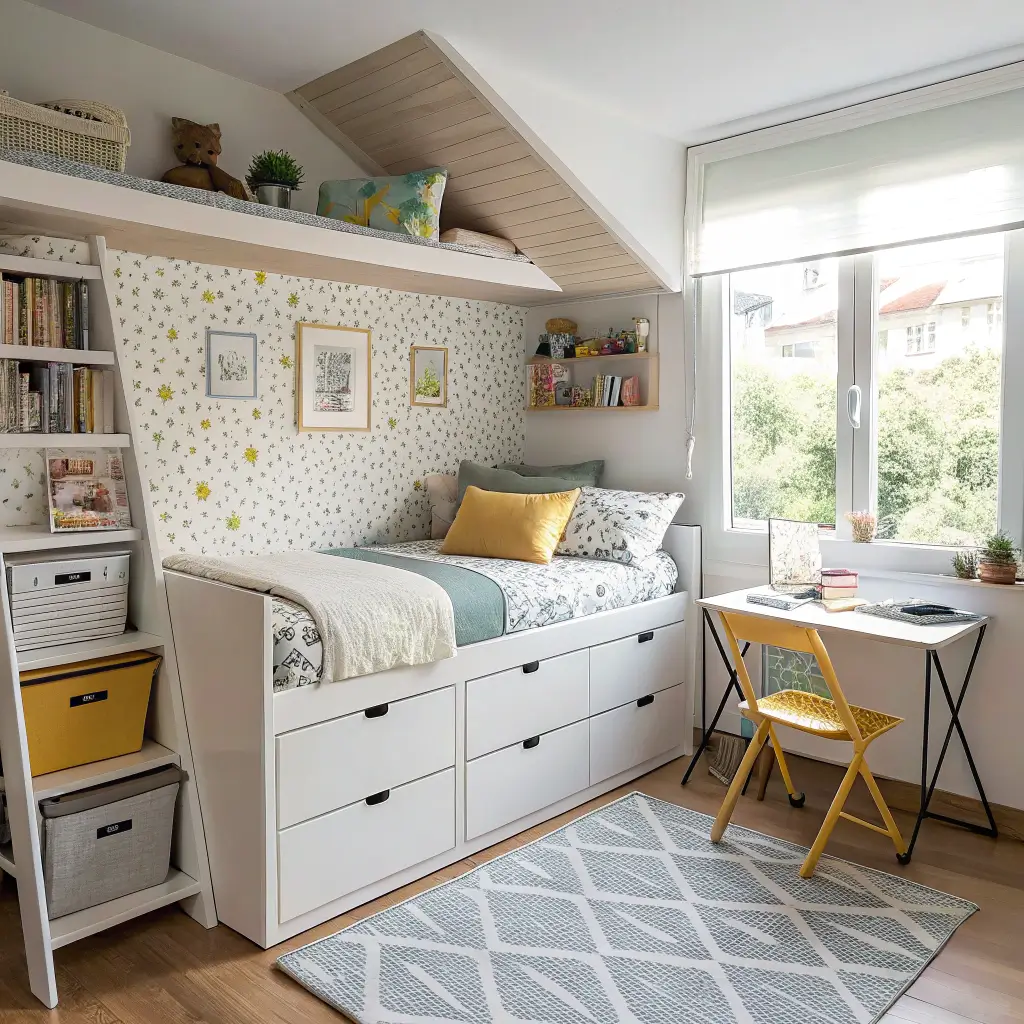
Every piece of furniture in a small kid’s bedroom needs to work harder than a parent at bedtime. Multi-functional furniture eliminates the “single-use” problem while maximizing both storage and play potential.
The storage ottoman in my daughter’s room has lived nine lives already. It’s been a toy box, a step stool, a puppet theater, extra seating for tea parties, and occasionally, its intended purpose as foot storage. Multi-functional furniture grows with your kids’ changing needs without requiring constant furniture swaps.
Choose pieces that make sense for YOUR kid’s actual life. That adorable toy chest/bench combo looks great until you realize your kid needs to dump everything out to find one specific toy. Function beats form when dealing with tiny humans who have big opinions about their stuff.
Multi-Functional Winners
Furniture pulling double-duty:
- Storage benches with cushioned tops
- Bookshelf room dividers creating zones
- Desk/vanity combos that grow with kids
- Bean bags with storage inside
- Convertible toddler-to-twin beds
- Nesting tables that tuck away
FYI, test everything for stability. Multi-functional furniture needs to survive being climbed on, jumped from, and turned into spaceships.
DIY Themed Bedroom Decor for Kids
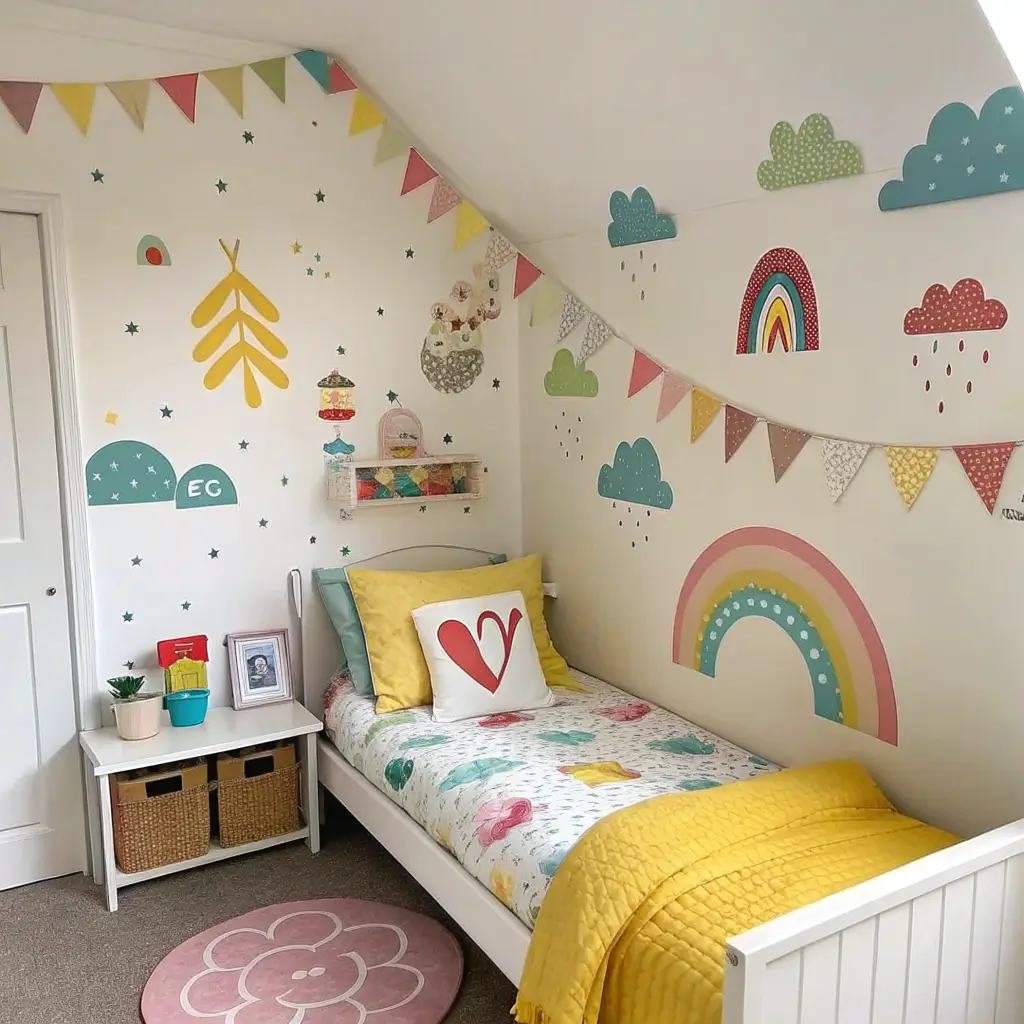
Kids’ tastes change faster than you can say “complete bedroom makeover,” which is why DIY themed decor beats permanent installations every time. That dinosaur obsession will become space exploration faster than you can install dinosaur wallpaper.
I learned this after painting elaborate murals for my son’s “permanent” truck phase. Six months later, trucks were dead to him, and dolphins were life. Now we use removable wall decals, fabric banners, and interchangeable artwork. The room’s theme can evolve without requiring complete renovation or therapy for mom.
DIY decor also means kids can participate in creating their space. My daughter’s “art gallery wall” (translation: tape and construction paper everywhere) makes her room feel like hers, even if it doesn’t match my Pinterest board dreams.
DIY Theme Ideas That Work
Flexible theme solutions:
- Removable wall decals for instant transformation
- Fabric canopies creating themed spaces
- Interchangeable artwork in consistent frames
- Themed throw pillows and bedding
- DIY painted furniture accents
- String lights setting any mood
Keep base furniture neutral, and let accessories carry the theme. Easier to swap out pillows than beds when interests change.
Creative Color Schemes for Tiny Bedrooms
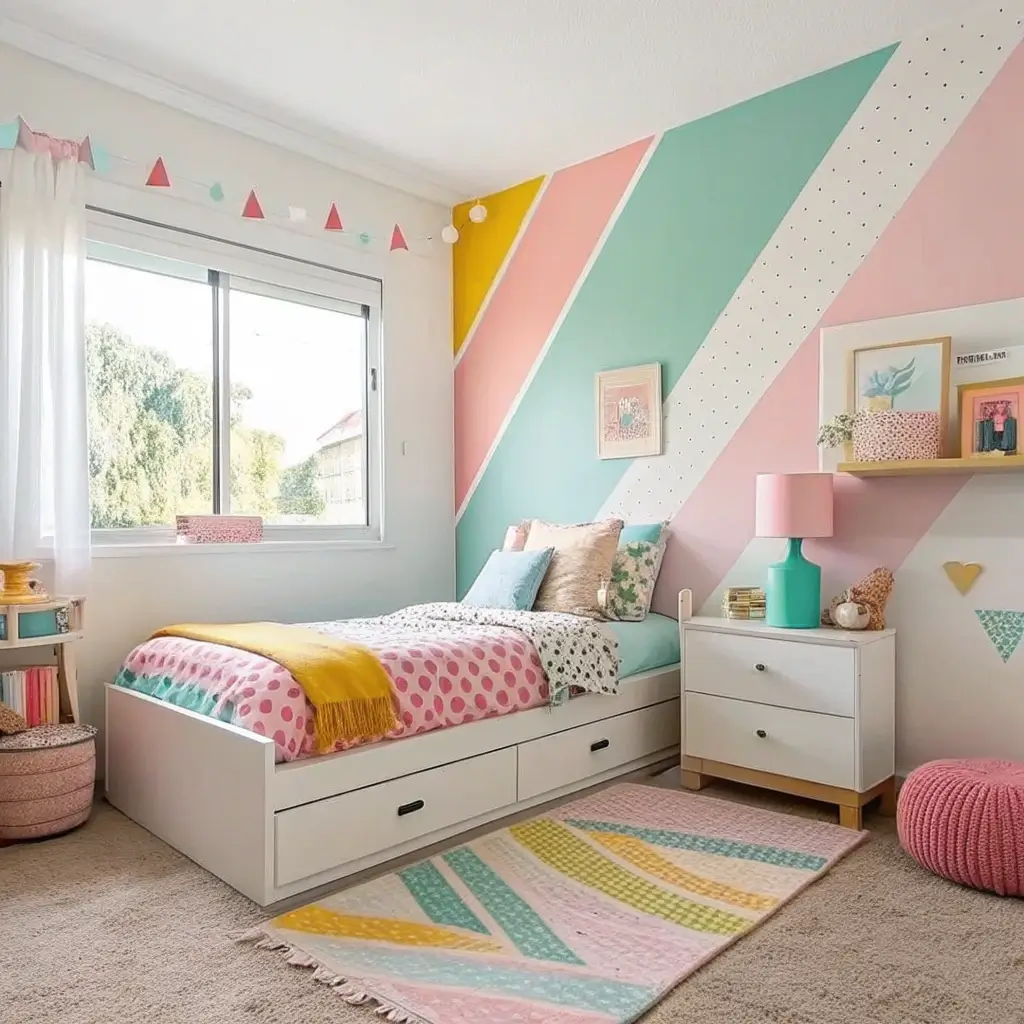
Conventional wisdom says light colors make small spaces feel bigger, but have you tried explaining “conventional wisdom” to a 4-year-old who wants a black bedroom? Creative color schemes can actually enhance small kids’ rooms when you break some rules.
My daughter’s room is painted the boldest pink imaginable on just one accent wall, with white on the others. That pop of color makes her tiny room feel intentional and special, not small and apologetic. Kids don’t see limitations – they see possibilities, and color is their favorite form of self-expression.
The trick is balance. One bold wall, colorful accessories, or a rainbow bookshelf can add personality without overwhelming the space. Just prepare yourself for color combinations that hurt your adult eyes but make perfect sense to kid logic.
Color Strategies That Pop
Make small rooms sing with:
- One bold accent wall as focal point
- Gradient effects drawing eyes upward
- Color zoning defining different areas
- White base with colorful accessories
- Complementary colors creating energy
- Glow-in-the-dark accents for nighttime magic
Let kids choose within reason. Offer three parent-approved options instead of unlimited choice – saves everyone’s sanity.
Closet Organization Tips for Small Kids Rooms
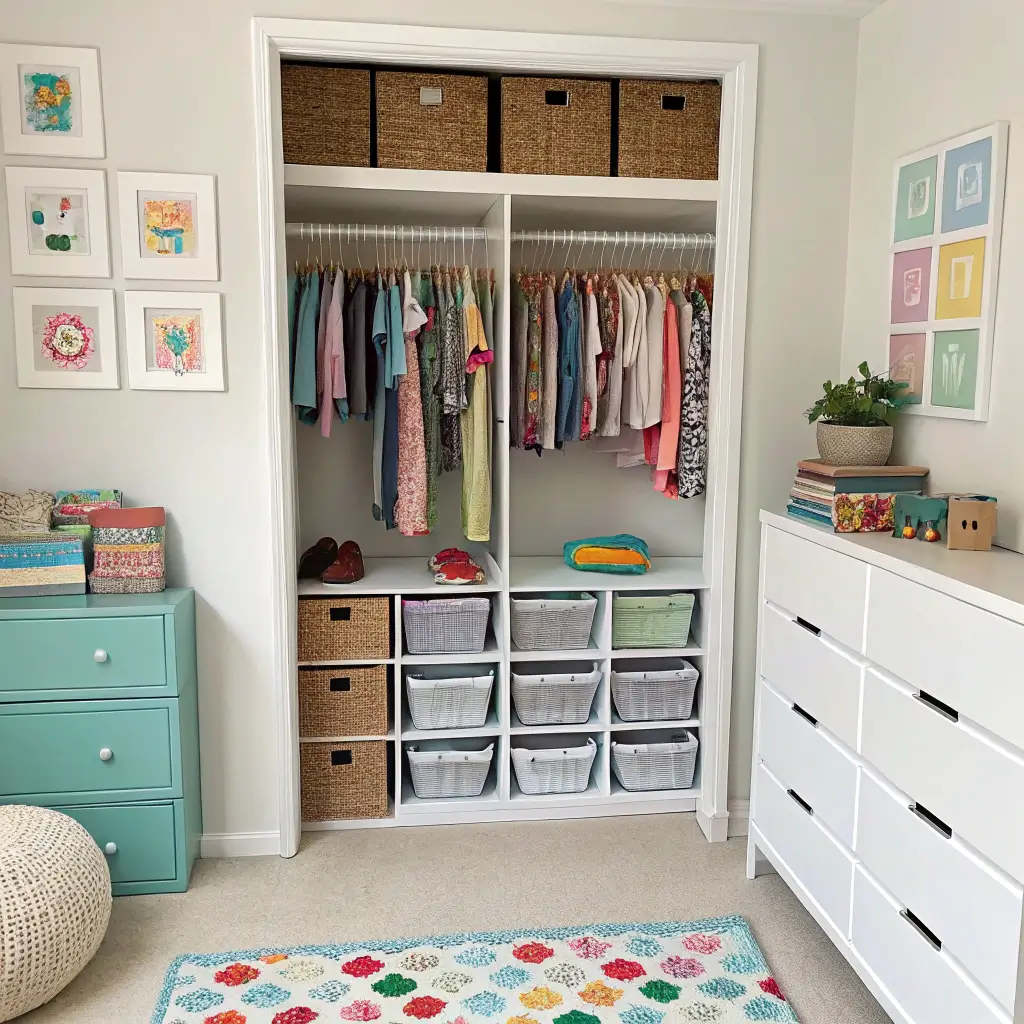
Kids’ closets are like black holes where matching socks go to die and where “cleaned up” actually means “shoved in and door slammed shut.” Smart closet organization makes kids independent (the dream!) while maximizing every inch of space.
I revolutionized my son’s closet with one simple change: lowering the rod to kid height. Suddenly he could hang up his own jackets! Added picture labels on bins, and boom – he knows where everything goes. The independence factor alone makes reorganizing worth it.
Remove closet doors if possible – they eat space and hide messes. Open closets with cute bins and accessible organization actually stay neater because everyone can see the chaos immediately.
Closet Solutions for Kids
Organization that actually works:
- Double rods at different heights
- Clear shoe boxes with picture labels
- Over-door organizers for small items
- Color-coded hangers by clothing type
- Step stools for reaching higher areas
- Weekly outfit organizers preventing morning chaos
Remember: kid logic differs from adult logic. Organize by their categories (favorite, sometimes, yucky) not yours :/
Play Zones in Compact Bedrooms
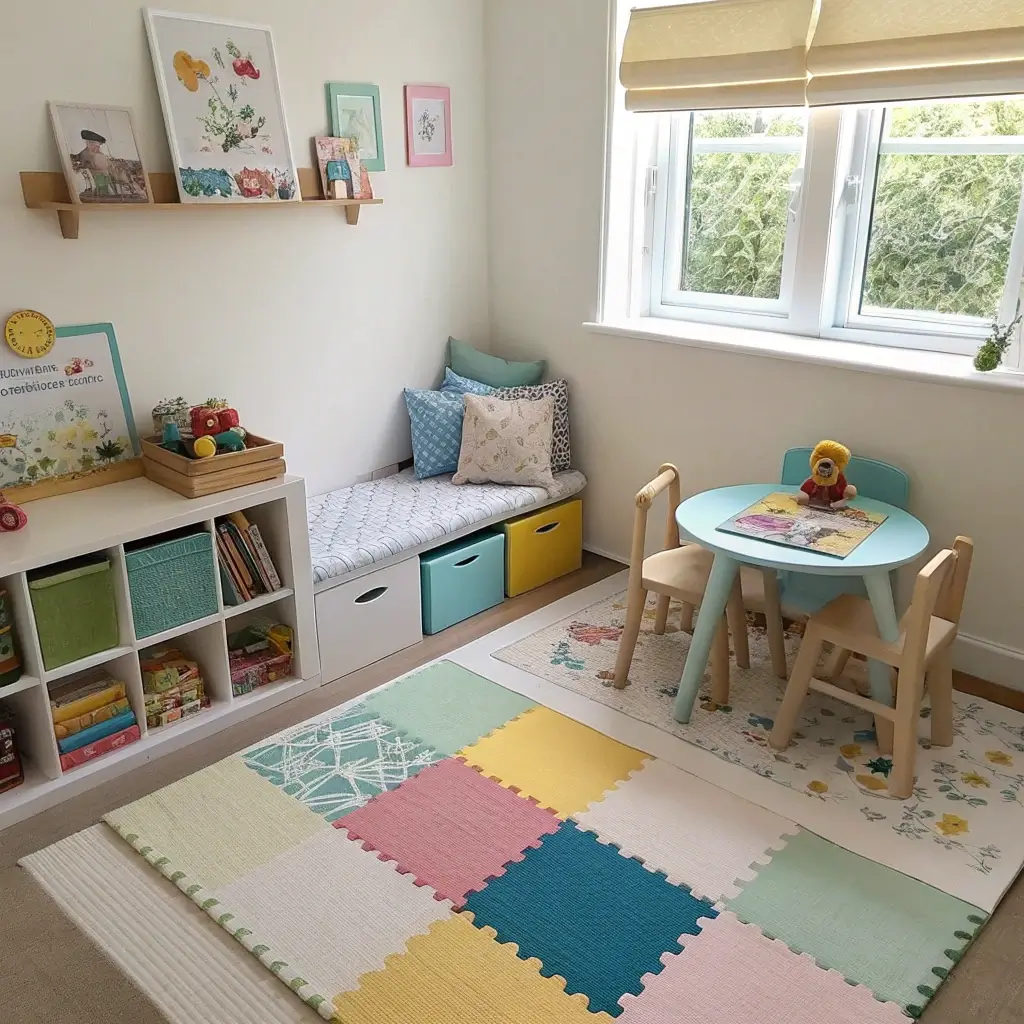
Creating distinct play zones in tiny bedrooms seems impossible until you think vertically and get creative with definitions. Kids need designated spaces for different activities, even in shoebox-sized rooms.
My son’s 9×9 room has three distinct zones: sleep (the bed), create (wall-mounted desk area), and imagine (a 3×3 rug with toy bins). The physical boundaries help him transition between activities and – miracle of miracles – makes cleanup logical. Each zone has its own storage, so toys have obvious homes.
The secret is using visual cues to define spaces. Different rugs, wall colors, or even just furniture arrangement creates psychological boundaries that kids respect (mostly).
Creating Functional Play Zones
Define spaces with:
- Area rugs marking different zones
- Canopy or tent creating cozy corners
- Different lighting for each area
- Furniture placement as natural dividers
- Wall color blocks defining spaces
- Height variations using platforms or lofts
Keep zones flexible. Today’s art corner becomes tomorrow’s science lab – adaptability is key.
Foldable and Space-Saving Furniture Ideas
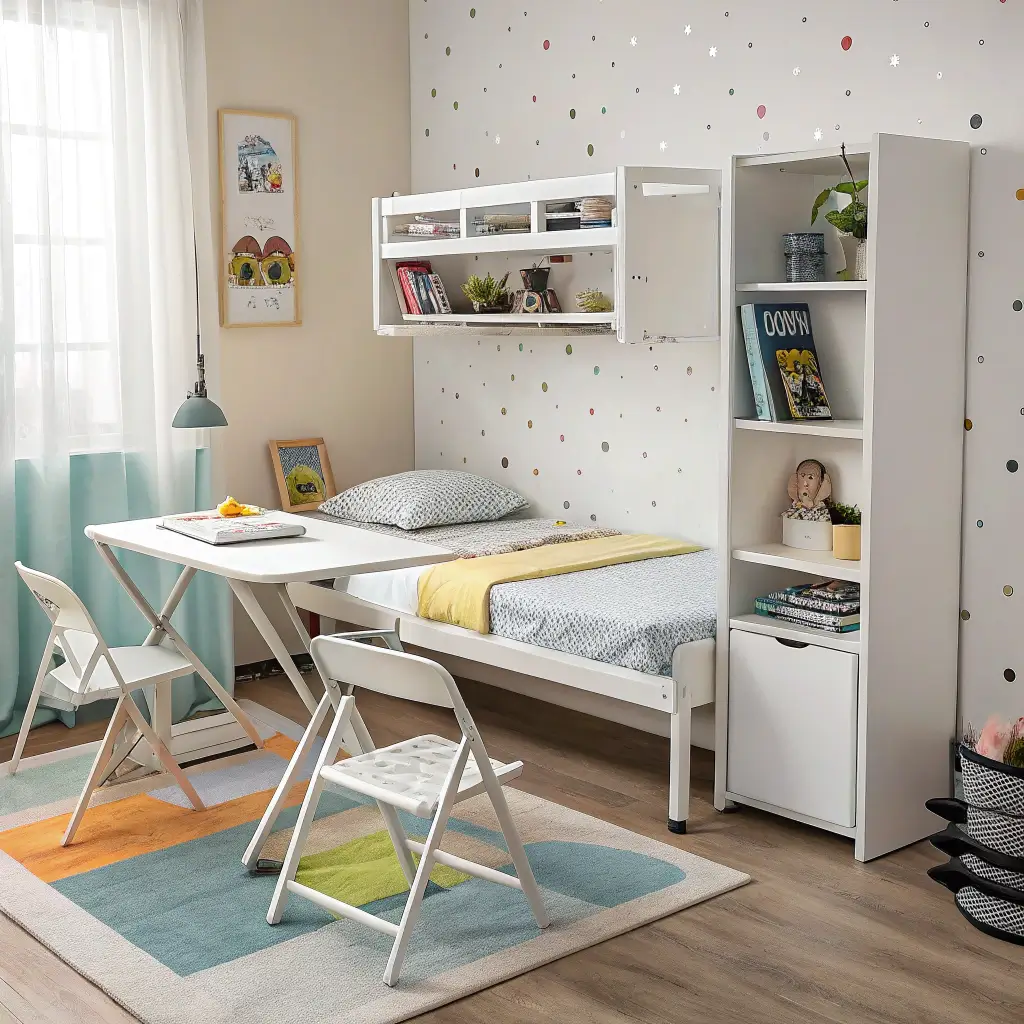
Furniture that folds, stacks, or disappears entirely is the secret weapon of small kids’ bedrooms. Foldable furniture appears when needed and vanishes when playtime calls – it’s basically magic for tiny spaces.
Our game-changer was a fold-down art table mounted to the wall. Art time? Fold it down. Dance party? Fold it up. It eliminated the permanent craft table that consumed 25% of floor space while being used 10% of the time. The flexibility means the room adapts to whatever activity is happening.
Just ensure folding mechanisms are kid-safe and kid-operable (with supervision). Pinched fingers and complicated systems lead to furniture that never gets used as intended.
Foldable Furniture Champions
Space-savers worth considering:
- Folding desk chairs that hang on hooks
- Collapsible play tables for activities
- Stackable stools for friends
- Murphy desk installations
- Folding gymnastics mats doubling as seating
- Pop-up play tents for instant hideaways
Test everything for stability when open and safety when folding. Kids don’t read warning labels.
Also Read: 15 Simple Living Room Curtains Ideas Modern for Small Spaces
Bright Lighting Solutions for Small Kids Bedrooms
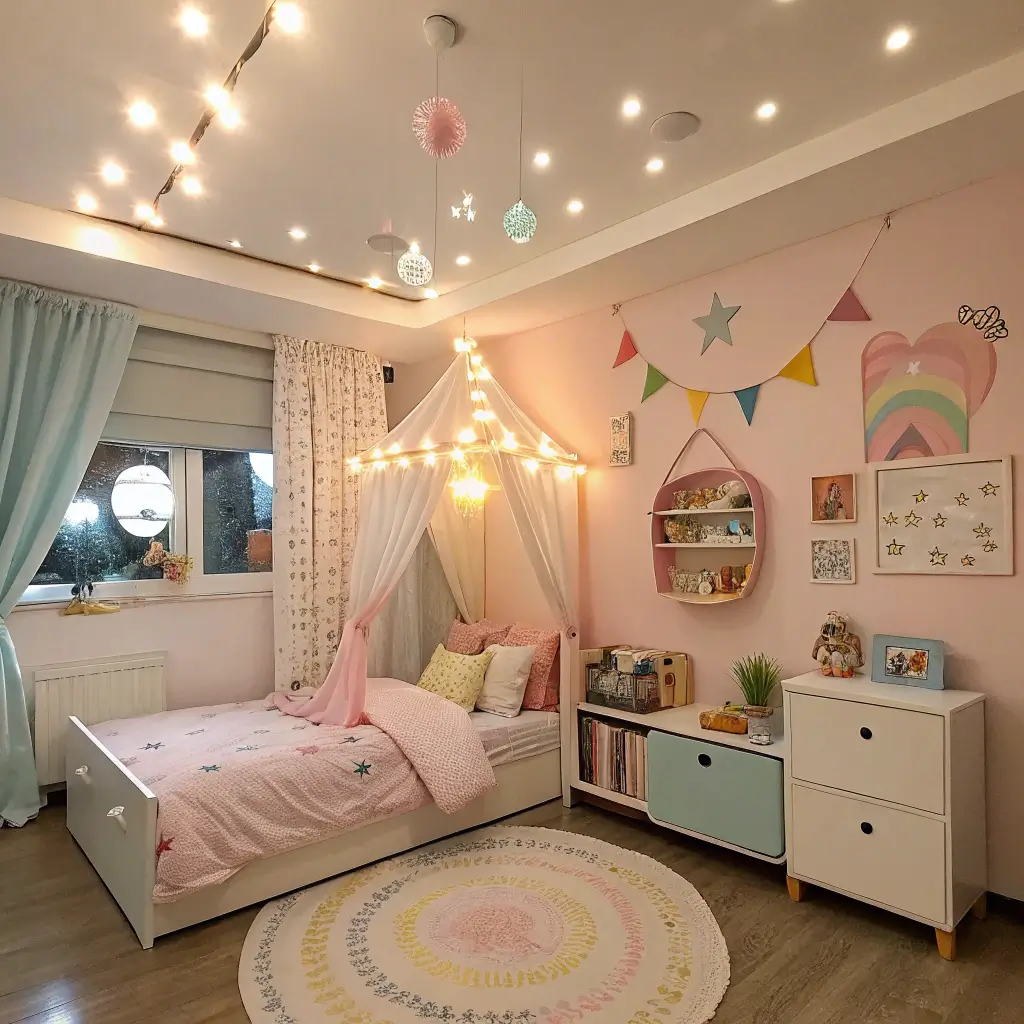
Good lighting in small kids’ bedrooms makes everything better – from reading to playing to finding that one specific LEGO piece at bedtime. Layered lighting eliminates dark corners while creating ambiance for different activities.
I discovered the importance of lighting zones when my daughter kept “reading” in near darkness because her overhead light was too bright for bedtime. Now she has fairy lights for ambient glow, a reading lamp by her bed, and LED strips under her loft for play space lighting. Each light serves a purpose, and she controls them independently.
Skip harsh overhead lighting whenever possible. Multiple soft light sources make small rooms feel larger and definitely cozier. Plus, kids love having control over their environment – light switches at their height are empowering.
Lighting Layers for Kids
Brighten up with:
- String lights for magical ambiance
- LED strips under furniture
- Adjustable desk lamps for tasks
- Night lights with timers
- Color-changing bulbs for fun
- Motion sensors for midnight bathroom runs
IMO, dimmers are worth installing. Bright for cleanup, dim for bedtime – everybody wins.
Making Magic in Tiny Spaces
After years of battling tiny kids’ bedrooms and losing (then occasionally winning), here’s what I know for sure: small bedrooms force creativity that big rooms never require. Every solution needs to be smarter, every choice more intentional, and surprisingly, that often leads to better rooms than sprawling spaces.
Start with your biggest pain point. Is it the toys everywhere? The homework battle? The bedtime routine? Solve that first with one of these ideas, then layer in others. Trying to transform everything at once leads to overwhelm for both you and your kids.
Remember, your kids don’t see a small bedroom – they see their kingdom, their sanctuary, their personal space in a big world. These ideas aren’t about making rooms magazine-perfect; they’re about making them work for real kids with real needs (and really strong opinions about where their dinosaur collection should live).
Mix these ideas based on your kid’s age, interests, and your sanity level. The loft bed that works for your adventurous 7-year-old might terrify your cautious 5-year-old. The fold-away desk perfect for your artist might frustrate your LEGO engineer who needs permanent building space.
The best kids’ bedroom is one where they feel happy, safe, and inspired – size is just a number. Whether you implement one idea or all ten, the goal is creating a space that grows with your child while maintaining some semblance of organization. And if all else fails, remember: they’ll eventually move out, and then you’ll miss the chaos. Maybe 🙂
