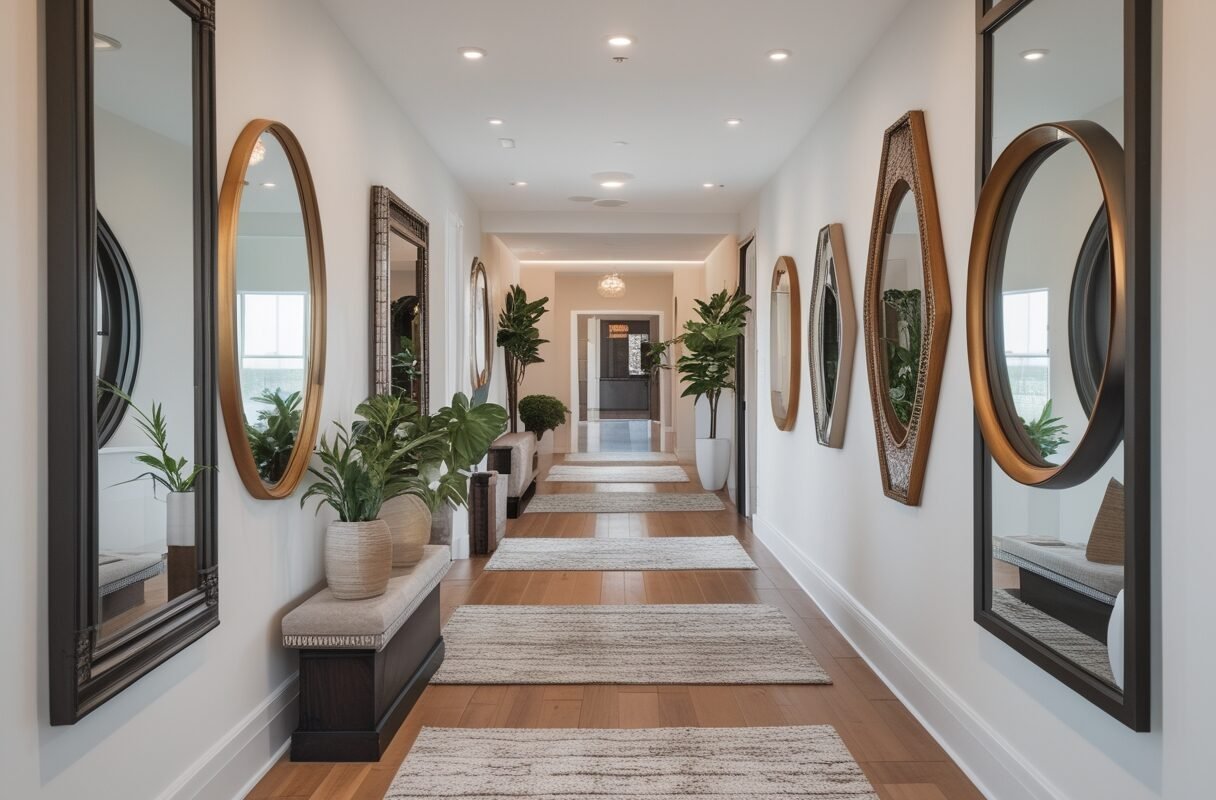
Mirrors can change how your hallway looks and feels without a big remodel. You will see how the right mirror adds light, depth, and style to narrow or dark spaces so your entryway feels brighter and more open.
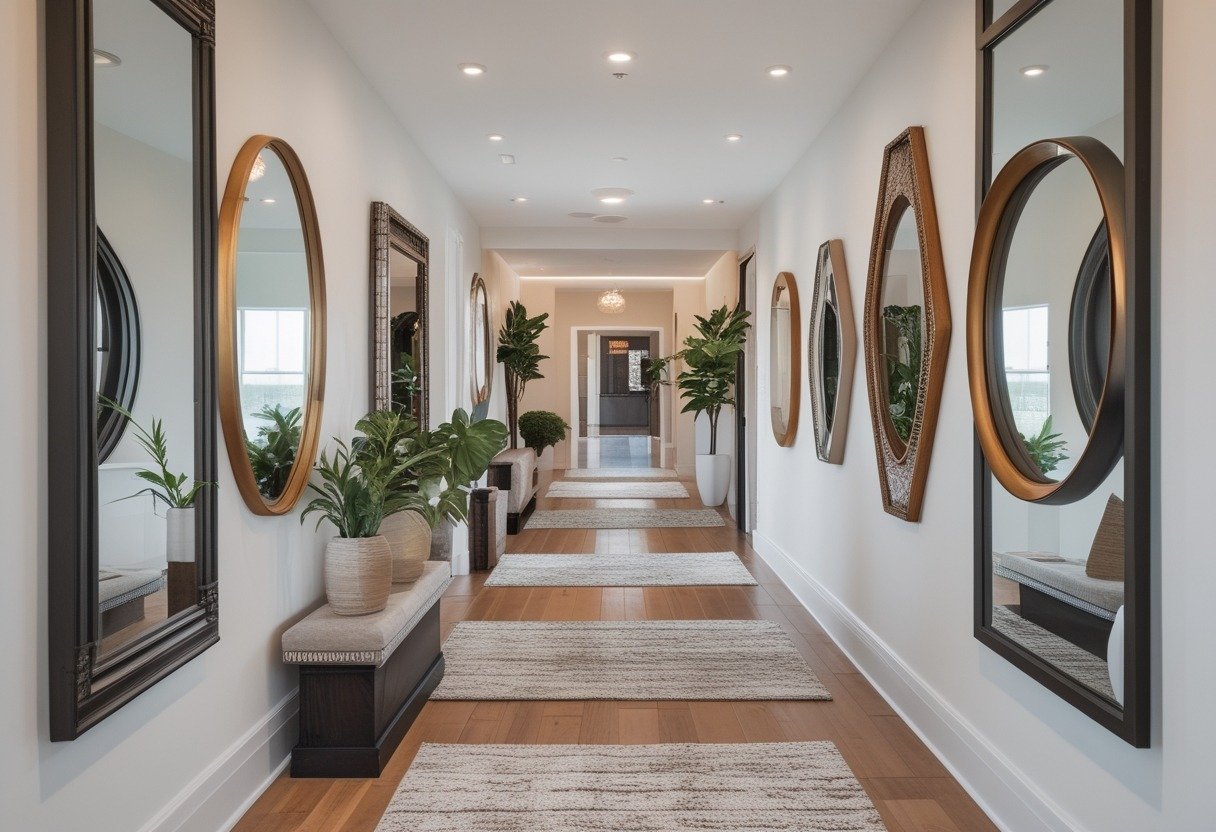
Use these 12 hallway mirror ideas to find one that fits your space, style, and function. You’ll get options that range from bold focal pieces to simple, space-saving choices and clear tips for placement and hanging.
1) Large arched wall mirror hung above a slim console
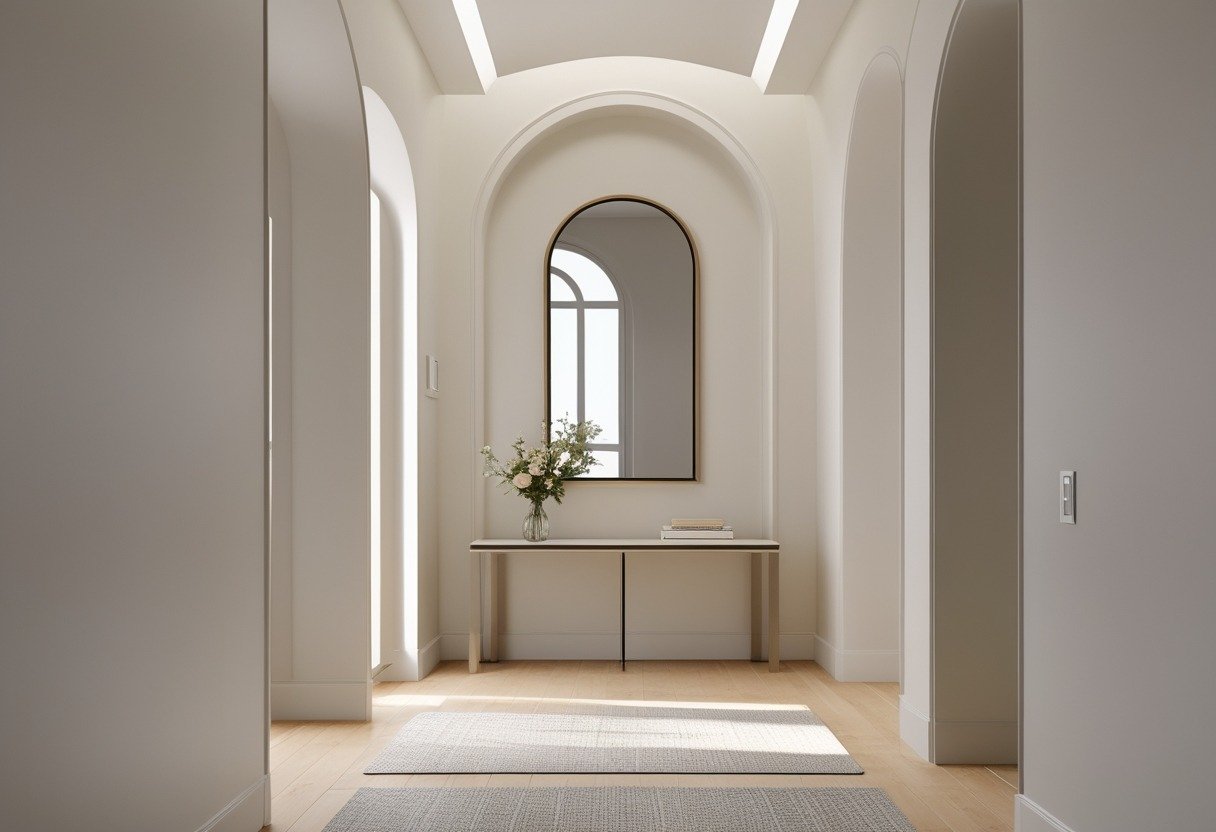
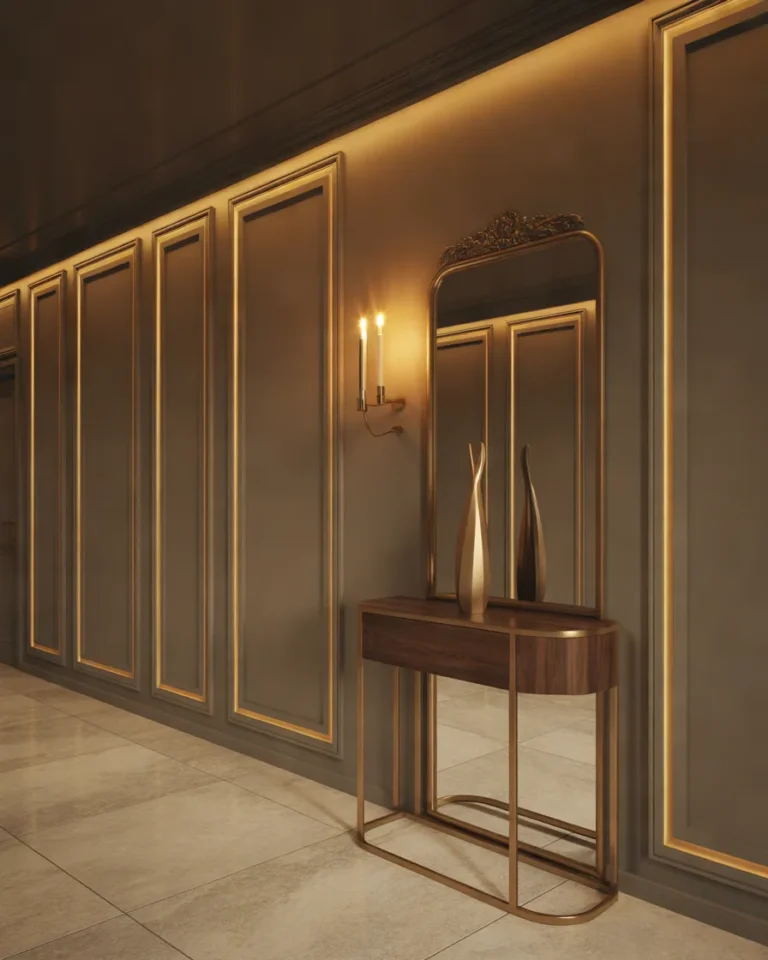
Place a large arched mirror above a narrow console to add height and light to your hallway. The curve softens straight lines and draws the eye upward.
A slim console keeps the walkway clear while giving you a spot for keys or a small lamp. Hang the mirror centered above the table for balance and to make the space feel more open.
2) Round gilt-framed vintage mirror for a classic foyer
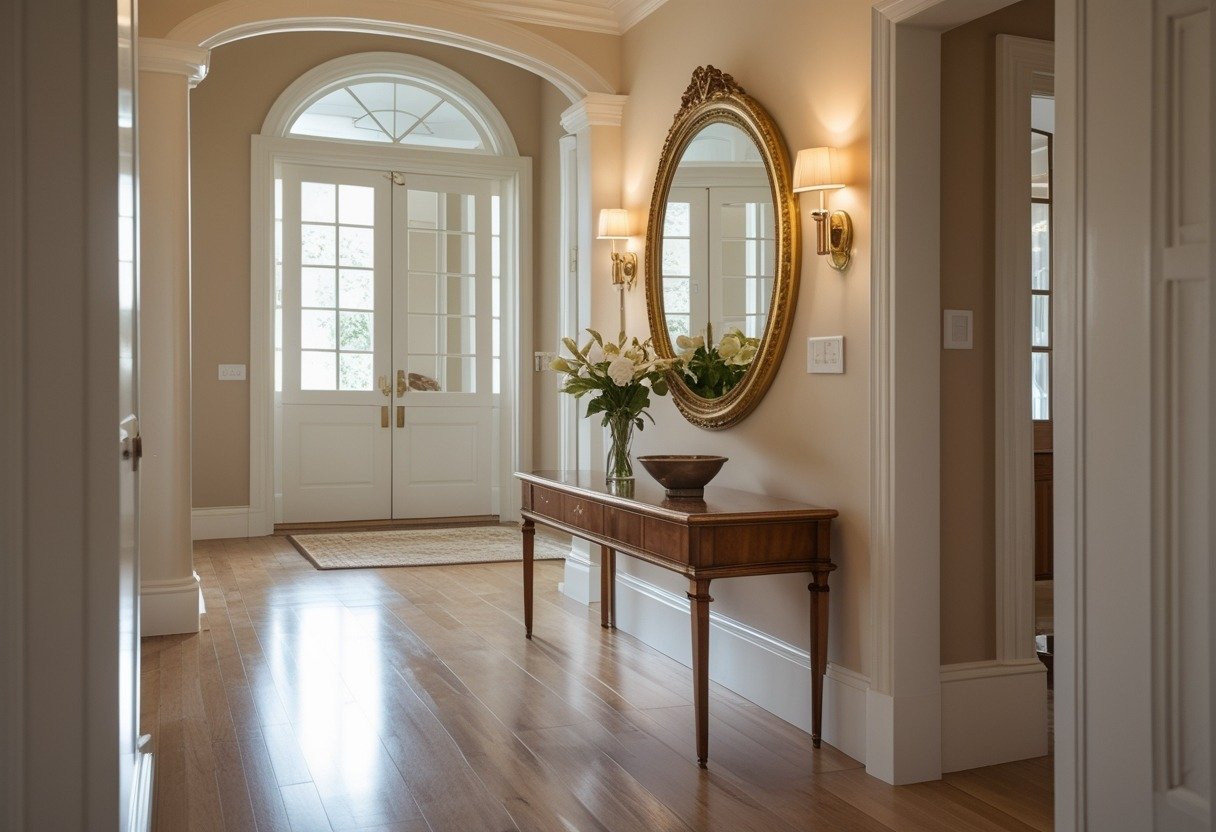
Choose a round gilt-framed mirror to add timeless charm to your foyer. Its warm gold finish pairs well with wood tones and neutral walls.
Hang it above a narrow console to reflect light and make the space feel larger. A simple gilded frame keeps the look classic without overwhelming the entryway.
Select a size that fits the wall and furniture scale. The mirror also works as a focal point for seasonal decor or a small lamp on the console.
3) Oversized rectangular mirror leaning against the wall
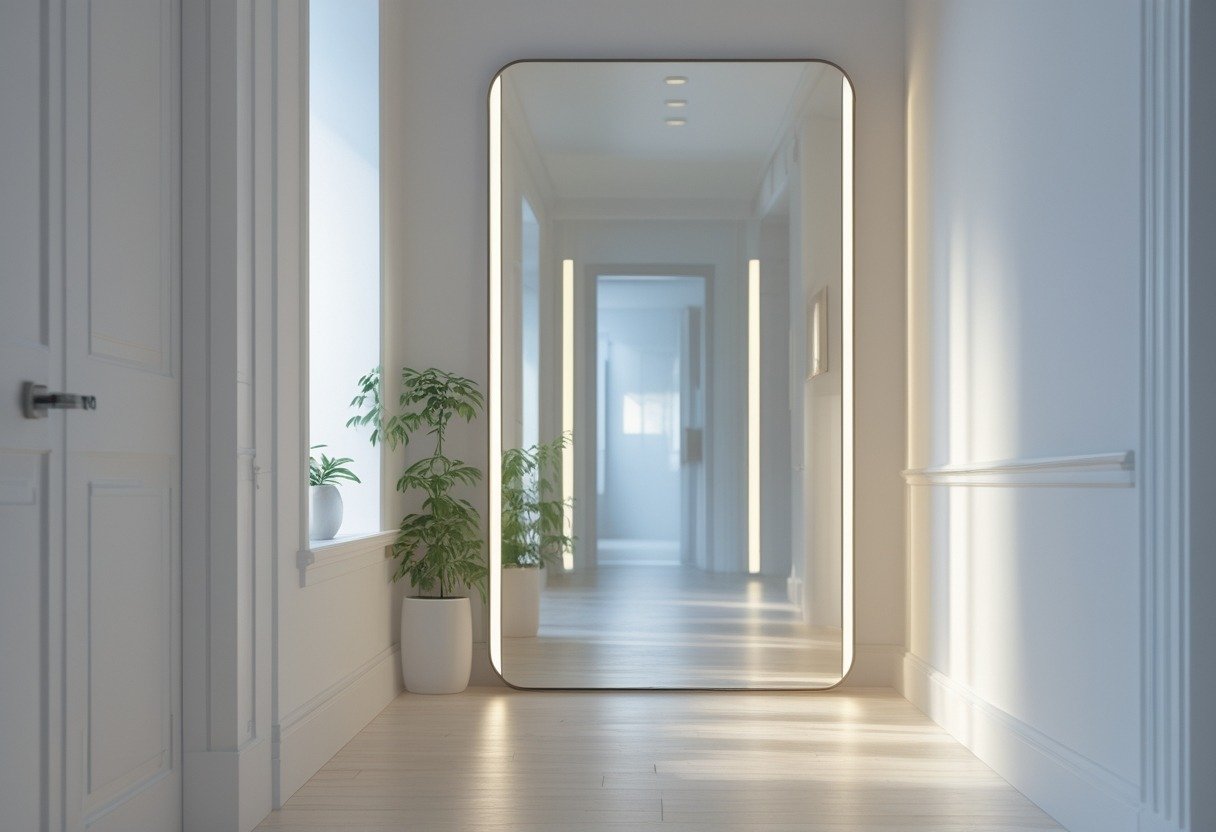
Place a large rectangular mirror on the floor and lean it against a hallway wall to add depth and light. You’ll make the space feel taller and see more of your outfit at once.
Choose a thin frame or no frame for a clean, modern look. The mirror stays movable, so you can shift it when you repaint or rearrange.
4) Set of three staggered brass-framed circular mirrors
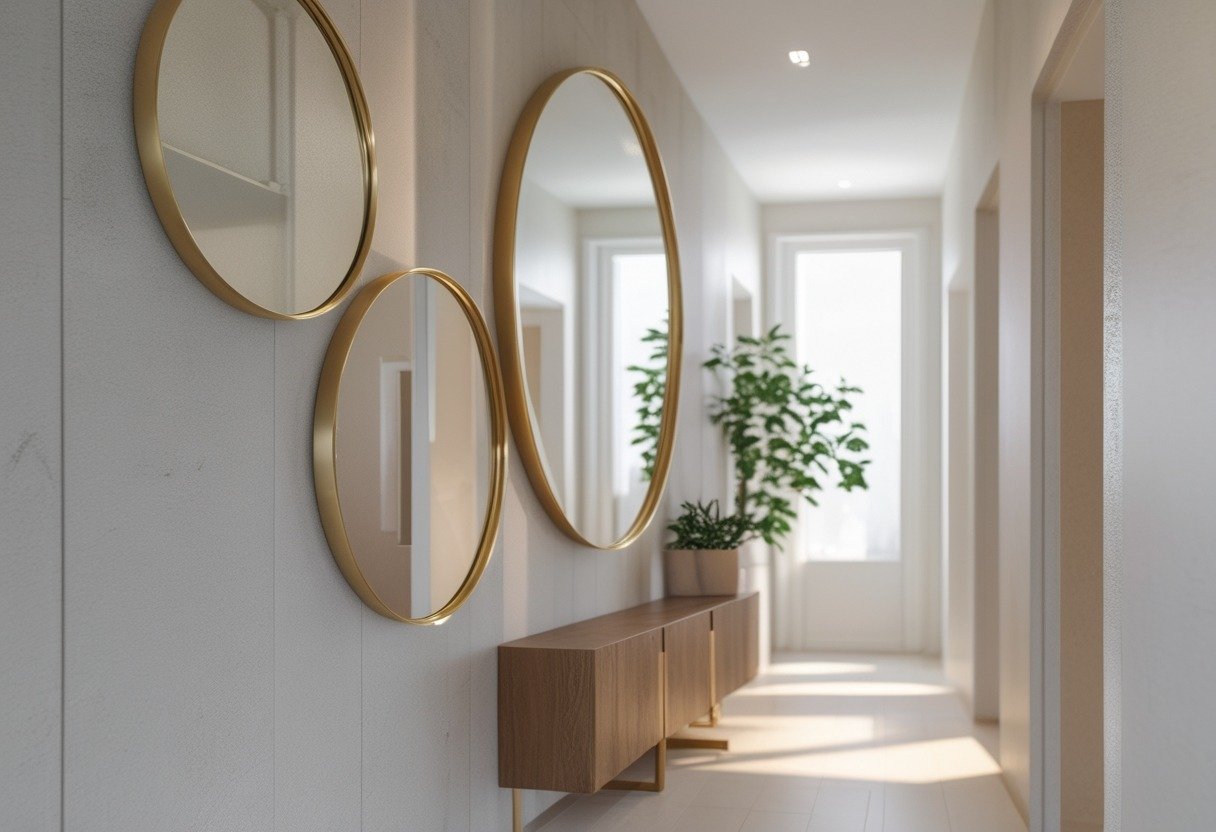
Place three brass-framed round mirrors staggered along your hallway wall to add warmth and shine. The brass trim brings a subtle metallic touch that suits both modern and classic decor.
Staggering the mirrors creates visual movement and makes a narrow hall feel longer. Hang them at different heights so eye lines meet each mirror naturally as you walk past.
5) Full-length beveled mirror with built-in LED backlighting
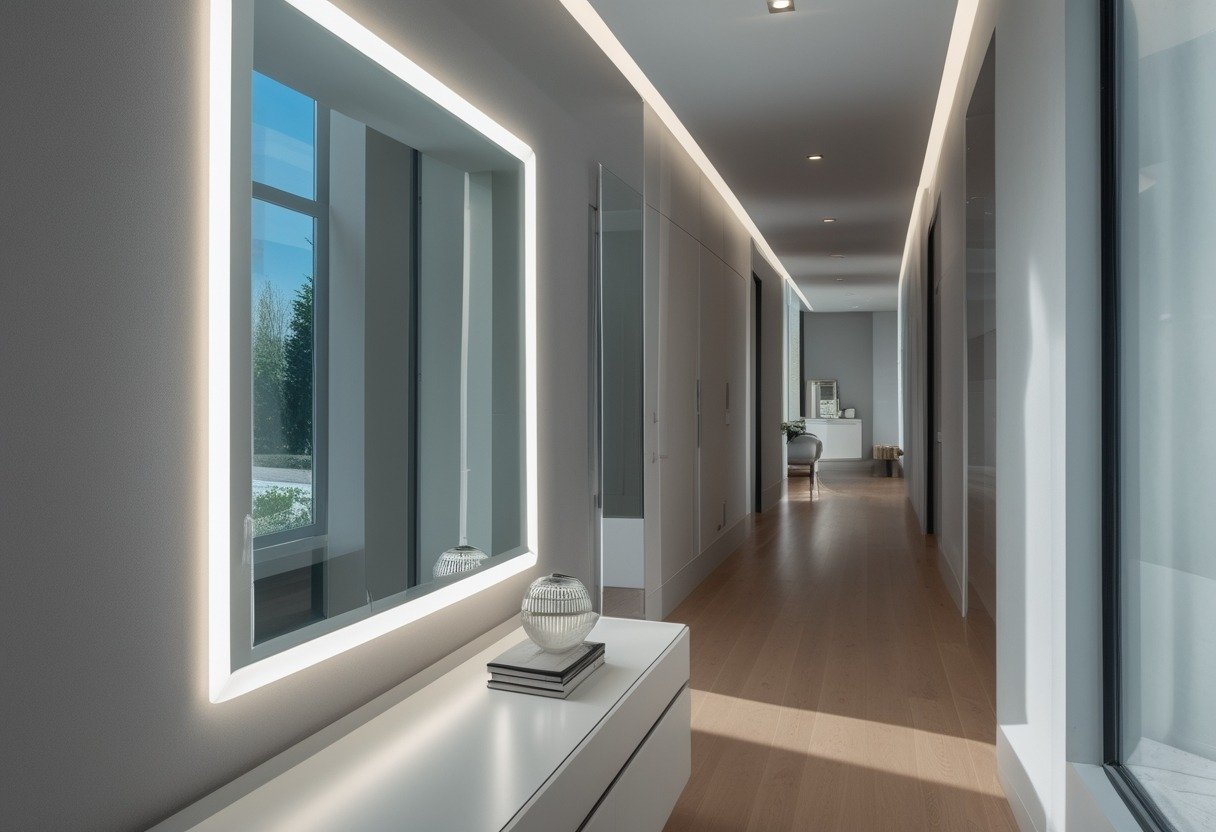
A beveled full-length mirror adds a clean, refined edge to your hallway. The LED backlighting gives soft, even light that helps you check outfits and brightens narrow spaces.
Choose warm or neutral LED tones to match your home’s color. Wall-mount the mirror for a slim, modern look or lean it against the wall if you want a relaxed feel.
6) Antique sunburst mirror as an entryway focal point
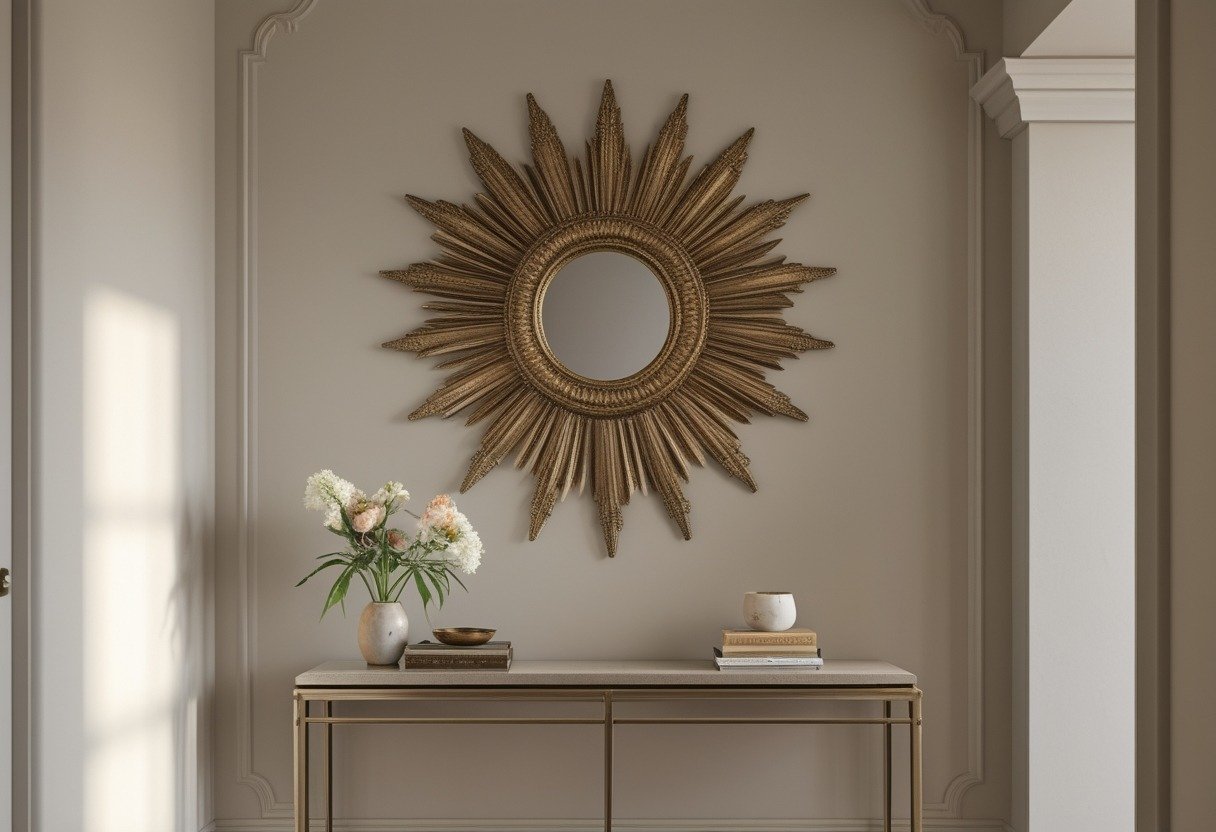
Choose an antique sunburst mirror to give your entryway a clear focal point that feels warm and lived-in. Its radiating frame draws the eye and adds texture without crowding the space.
Place it above a narrow console or coat rack to reflect light and make the foyer feel larger. Match the metal or wood tones to other accents so everything looks intentional and balanced.
7) Floor-to-ceiling mirrored panels to widen a narrow hall
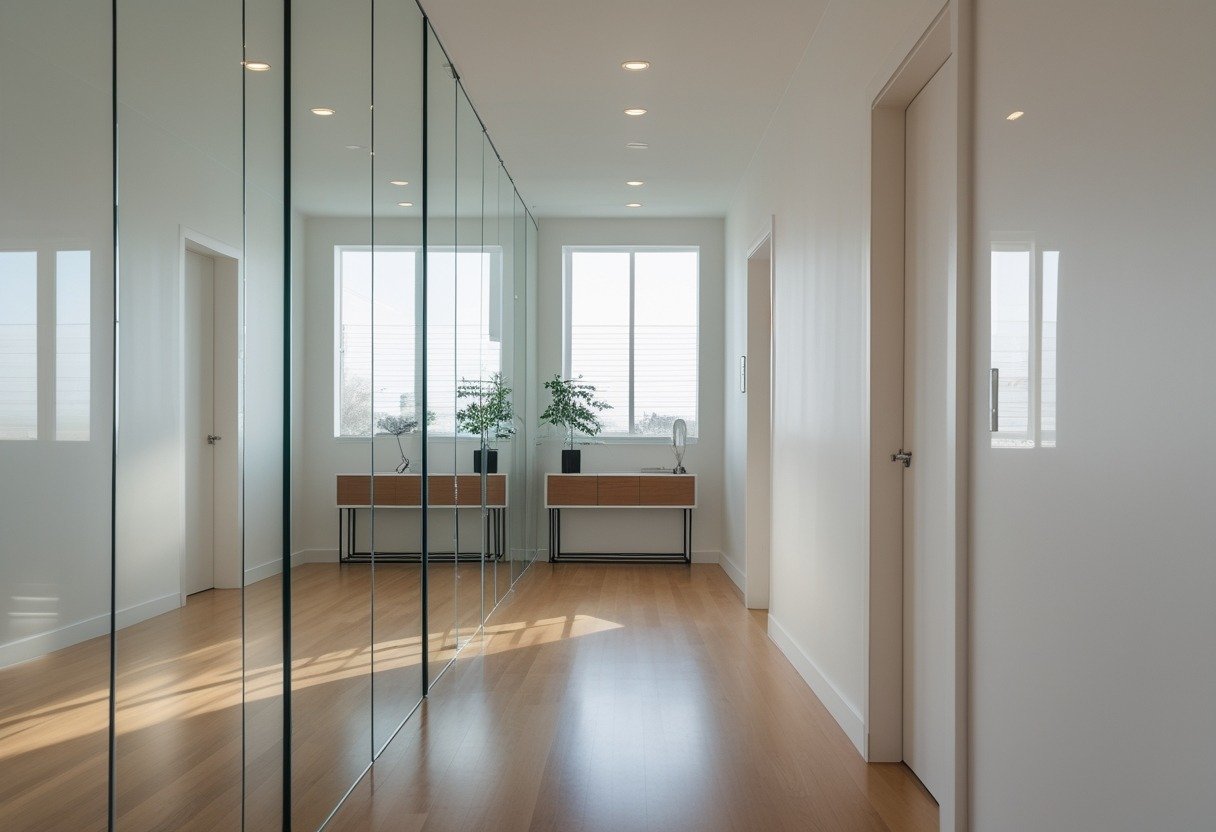
Install floor-to-ceiling mirrored panels to make your hallway feel wider and brighter. They reflect light and sightlines, which reduces the sense of confinement.
Choose seamless or slim-trim panels for a clean, modern look that doesn’t break the reflection. Place them opposite windows or light fixtures to boost brightness without adding bulbs.
Secure mirrors to studs or use professional mounting systems to keep panels stable and safe. Consider tempered glass for durability and easy cleaning.
8) Arched mirror propped on a console for casual elegance
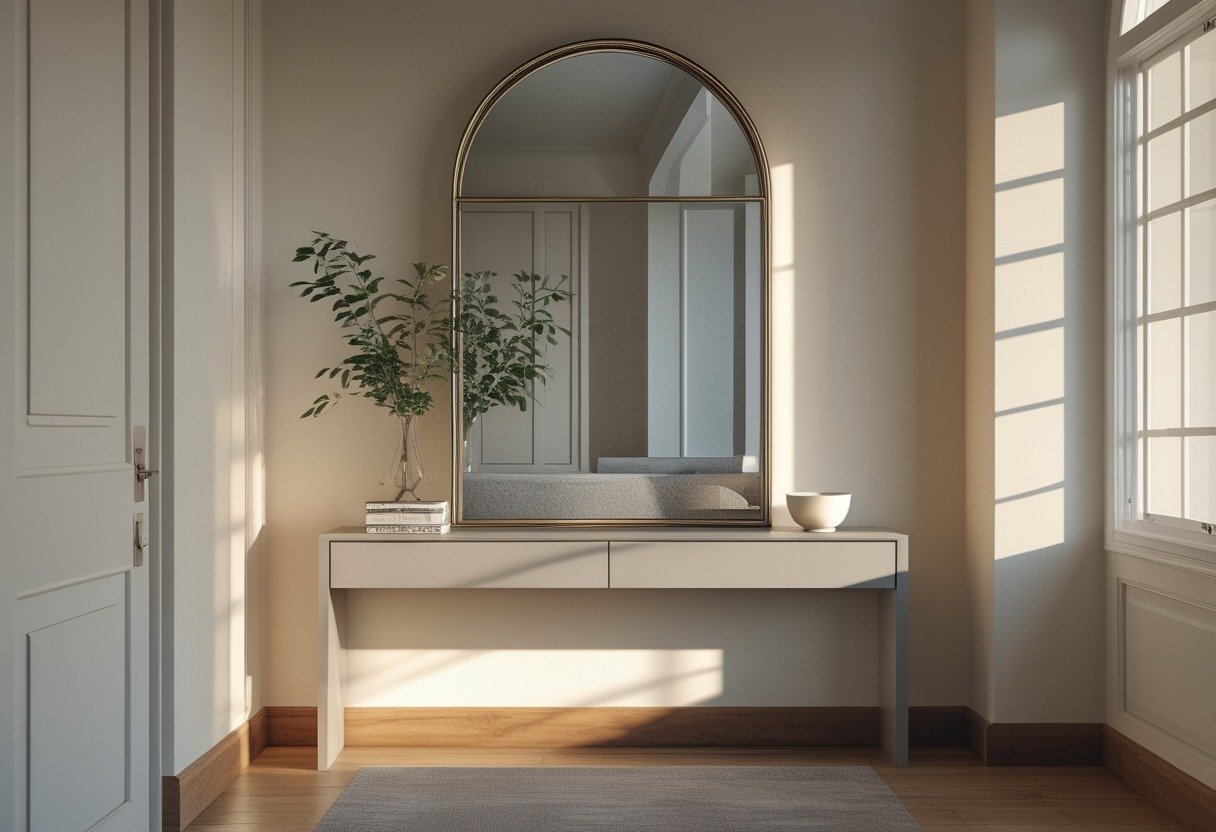
Prop a tall arched mirror on your console to add height and a soft shape without drilling. It leans casually against the wall and brightens the entry with reflected light.
Pair it with a small lamp or a bowl for keys to keep the surface practical. Choose a simple frame to keep the look relaxed, or warm wood for a cozier feel.
9) Frameless long vertical mirror to accentuate ceiling height

Place a tall, frameless vertical mirror against a wall to draw the eye upward and make your ceiling feel higher. The simple edge and clean surface keep the look modern and avoid visual clutter.
Position it opposite a light source or window to reflect light and brighten a narrow hall. Mount it securely to the wall so it sits flush and safe in a high-traffic area.
10) Mirrored gallery wall mixing small gilt and black frames
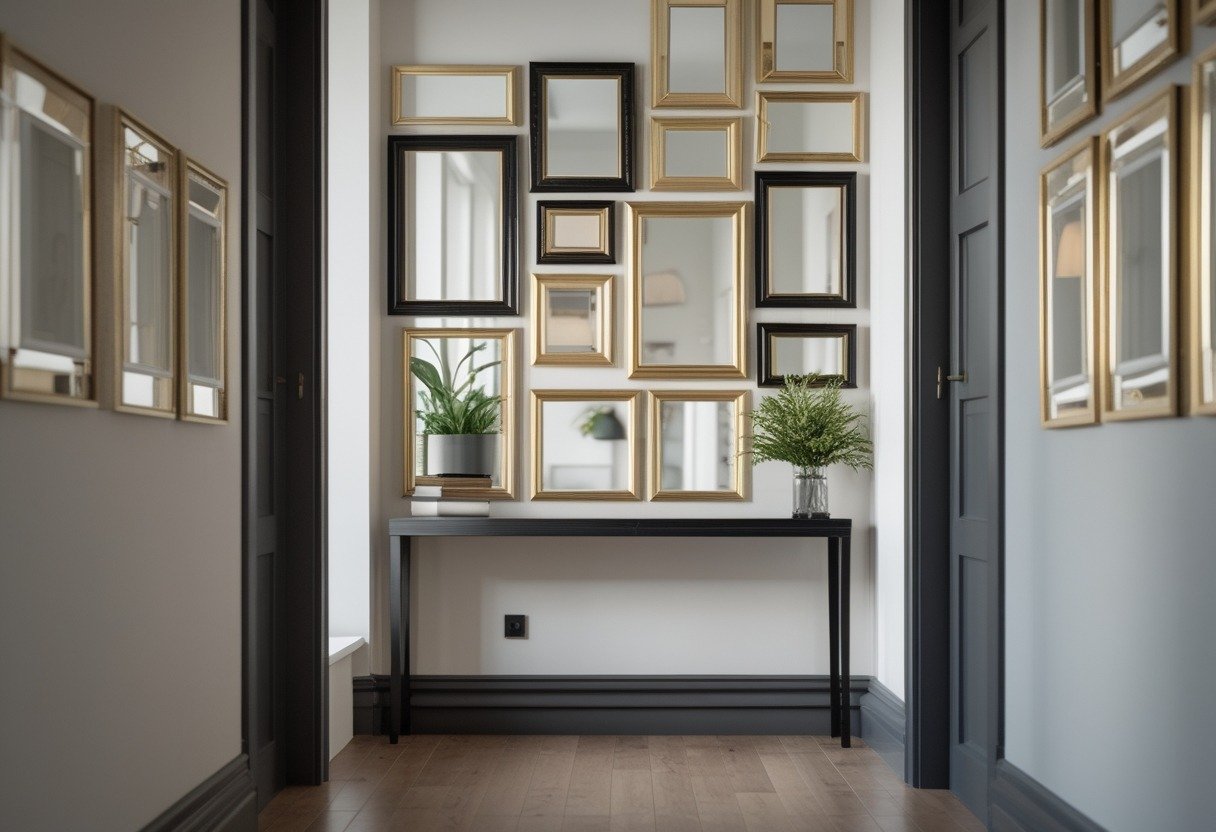
Create a gallery of small mirrors in gilt and black frames to give your hallway depth and style. Mix shapes and sizes but keep spacing even so the display feels intentional.
Place the arrangement opposite a window or light source to boost brightness. Your gilt frames add warmth while black ones anchor the look for balance.
11) Oval mid-century modern walnut-framed mirror
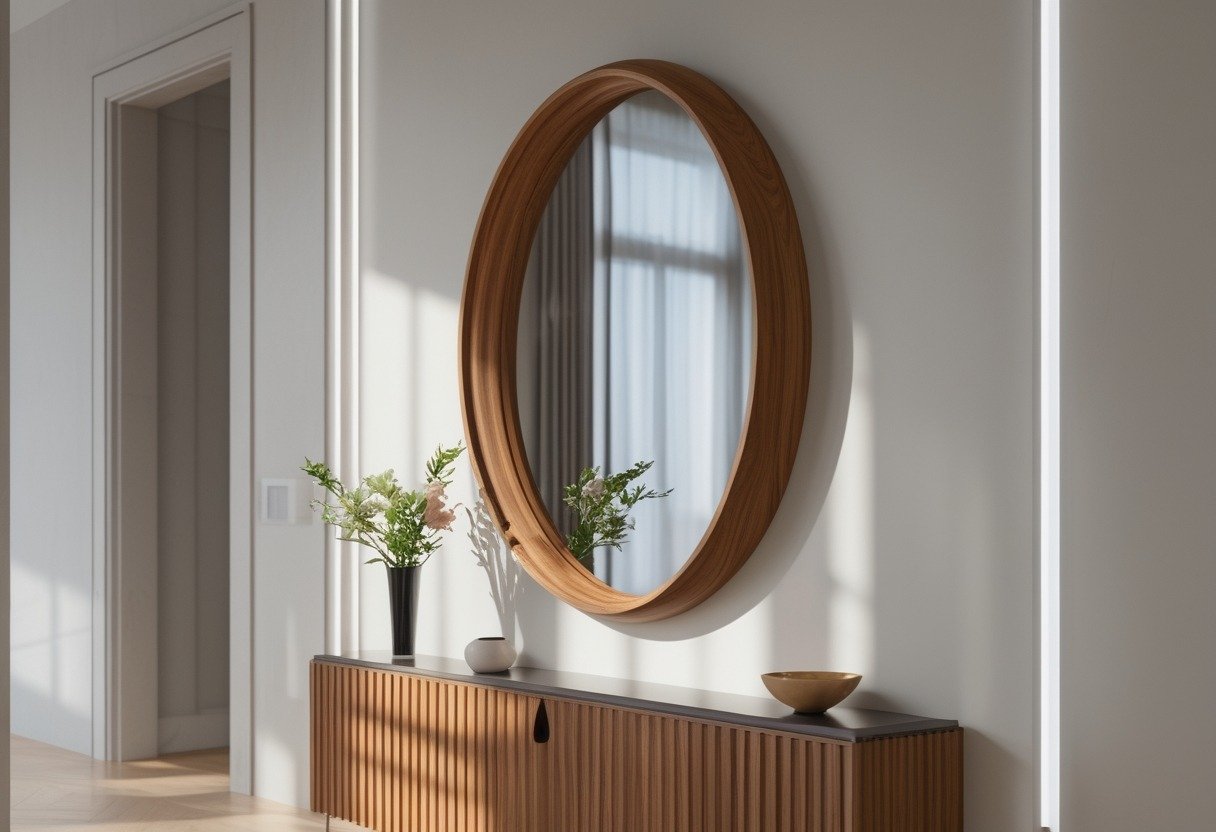
An oval walnut-framed mirror adds warm wood tones and a sleek silhouette to your hallway. Its mid-century shape softens straight lines and fits well above consoles or narrow benches.
Choose a size that balances your wall space; smaller ovals work for tight halls, while larger ones create a focal point. The walnut frame pairs nicely with brass or matte black accents for a cohesive look.
12) Half-moon mirror above a floating shelf with hooks

Place a half-moon mirror above a slim floating shelf to add shape and light to a narrow hallway.
Use the shelf for mail or keys and install hooks underneath for coats and bags to keep your entry tidy.
Choose simple finishes like wood or matte metal to match your decor.
This combo saves space and gives you a quick spot to check appearance before you leave.
Guidelines for Hanging and Placement
Place mirrors where they boost light, fit head height, and reflect attractive views. Consider mirror size, wall height, nearby light, and the objects the mirror will show.
Optimal Height for Different Mirror Sizes
Hang a full-length mirror so the center sits about 60–65 inches from the floor. That puts most of your body in view without awkward cropping. For smaller decorative mirrors, position the center at eye level — roughly 57–60 inches — so the face and upper torso appear naturally.
If you mount a horizontal mirror above a console or bench, leave 4–6 inches of space between the furniture top and the mirror bottom. For a vertical mirror in a narrow hallway, keep the bottom 6–12 inches above the floor to create vertical flow and avoid scuff marks. Use a tape measure and mark twice before drilling.
Addressing Lighting and Reflection
Place mirrors across from windows or light fixtures to double natural and artificial light. Avoid pointing a mirror directly at a bright lamp that causes glare; instead angle it to bounce soft light into shadowed corners. Use a dimmable fixture nearby so you can adjust brightness for evening.
Watch what the mirror reflects. Aim mirrors toward artwork, plants, or a view down the hall. Do not position mirrors to reflect clutter, doors that open into private rooms, or hallways with poor finishes. Test mirror placement temporarily with painter’s tape and stand-in panels before final installation.
Blending Mirrors With Existing Decor
Match mirror frame scale to nearby furniture and wall space. A slim, tall mirror pairs well with narrow consoles; a wide mirror anchors a long console or gallery wall. Choose frame finish to complement hardware and trim — brass with warm metals, black or wood for rustic looks, and sleek metal for modern spaces.
Mix mirror styles only when you balance shapes and sizes. For instance, hang one large arched mirror as a focal point and add two small round mirrors on the opposite wall for rhythm. Use consistent mounting heights across a grouping to keep the layout tidy.
Mirrors as Functional Design Elements
Mirrors can make a hallway feel wider, brighter, and more useful. You will learn how to use mirror placement and mirror types to change space perception and boost natural light.
Maximizing Space Perception
Place tall, vertical mirrors on narrow walls to create the illusion of width. Mount a full-length mirror opposite a doorway or along a long wall so reflections extend the view and make your corridor feel less cramped.
Group several smaller mirrors into a grid or gallery wall to break up monotony while increasing perceived depth. Keep frame colors consistent to avoid visual clutter. For very tight hallways, use floor-to-ceiling mirrored panels or a slim, frameless mirror to reflect the entire corridor and visually double the space without taking floor room.
Pay attention to sightlines. Angle a mirror so it reflects an interesting focal point—like a plant or artwork—to pull the eye through the hall. This simple trick makes the area feel intentional and larger.
Techniques for Enhancing Natural Light
Position a mirror directly opposite or adjacent to a window to reflect sunlight deeper into the hallway. Even a small round mirror can bounce light across the floor and walls, brightening dim spots without added fixtures.
Use multiple mirrors at staggered heights to scatter light at different levels. Choose mirrors with thin or metallic frames to avoid blocking reflections. If your hall gets limited direct sun, place mirrors near light sources like sconces or lamps; the reflected bulb light doubles perceived brightness.
Consider mirror placement with surface finish in mind. A slightly beveled or antique mirror softens glare, while a clear, frameless mirror maximizes raw brightness.