Let’s talk about the battlefield that is your kid’s bedroom. You know the scene – clothes everywhere except inside the wardrobe, toys playing hide-and-seek in random corners, and that mysterious sock collection under the bed.
I’ve been there, done that, and bought the organizational systems that didn’t work.
After designing wardrobes for my three kids (and redesigning them when the first attempts failed spectacularly), I’ve learned that kids’ wardrobes need to work for both you AND them.
We’re not just storing clothes here – we’re creating systems that might actually get used by tiny humans with zero interest in organization.
These 10 wardrobe design ideas have survived real-world testing in actual kids’ rooms, and they might just save your sanity.
Space-Saving Loft Wardrobe with Desk
The Ultimate Small Room Solution
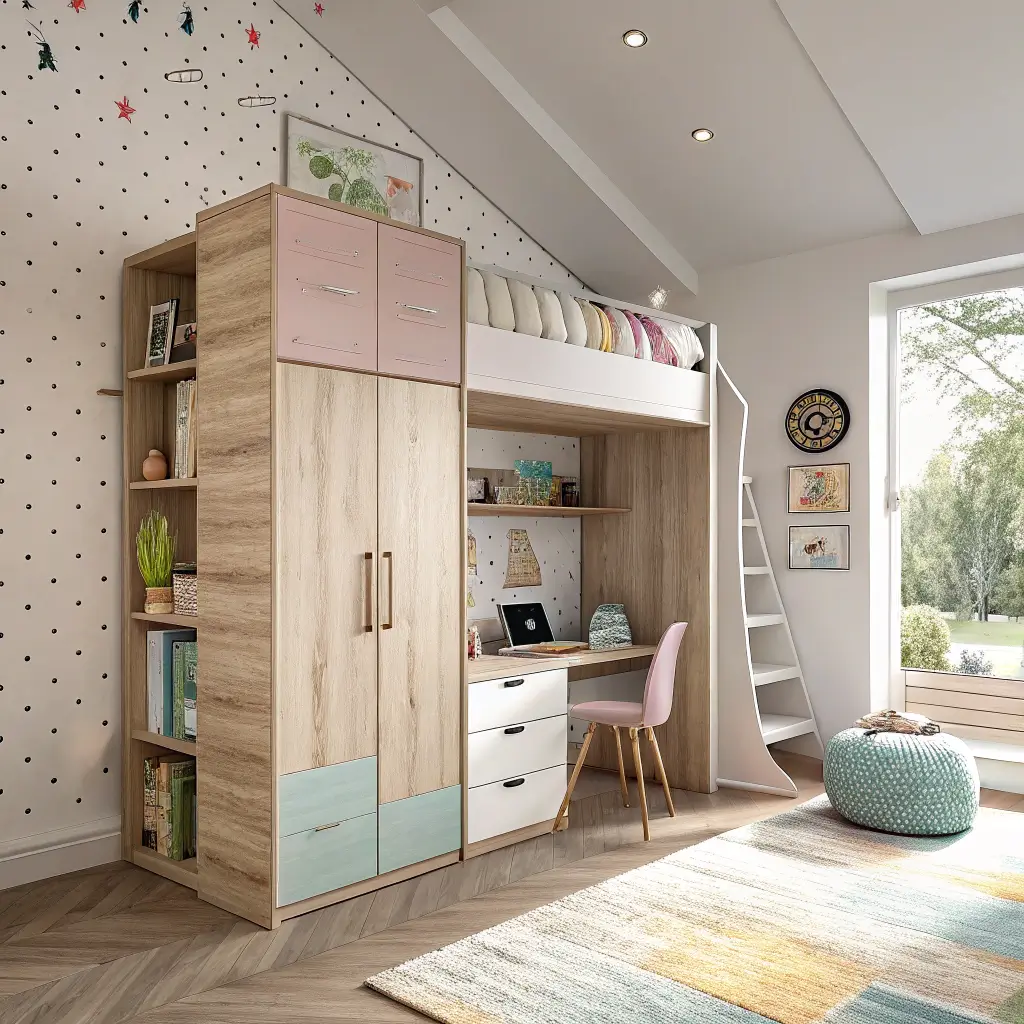
When my son’s room measured barely 8×10 feet, I thought we’d have to choose between storage and study space. Then I discovered loft wardrobes with integrated desks, and everything changed. This design stacks functions vertically, giving you two furniture pieces in one footprint.
The wardrobe sits elevated, typically around 4-5 feet high, with a full desk area underneath. My son loves having his own “office” cave beneath his clothes, and I love that his homework doesn’t compete with his wardrobe for floor space. The enclosed feeling actually helps him focus better – who knew?
Installing a sturdy ladder or stairs is crucial here. We learned this after our first flimsy ladder sent clothes flying every morning. Now we have solid wooden steps with handrails, and they double as extra storage drawers. Genius move, if I do say so myself.
Safety and Accessibility Features
Here’s what makes loft wardrobes work for kids:
- Anti-tip anchoring to walls (non-negotiable)
- Wide, stable ladder steps with grip strips
- Lower hanging rail heights for kid access
- Guard rails around the loft area
- Rounded corners on all edges
Making It Work for Different Ages
The beauty of this design grows with your child. Toddlers use the lower desk for crafts, elementary kids for homework, and teens appreciate the privacy for studying. I’ve watched this setup evolve with my kids over five years, and it keeps delivering value.
Colorful Modular Wardrobe for Playful Rooms
Building Blocks for Storage
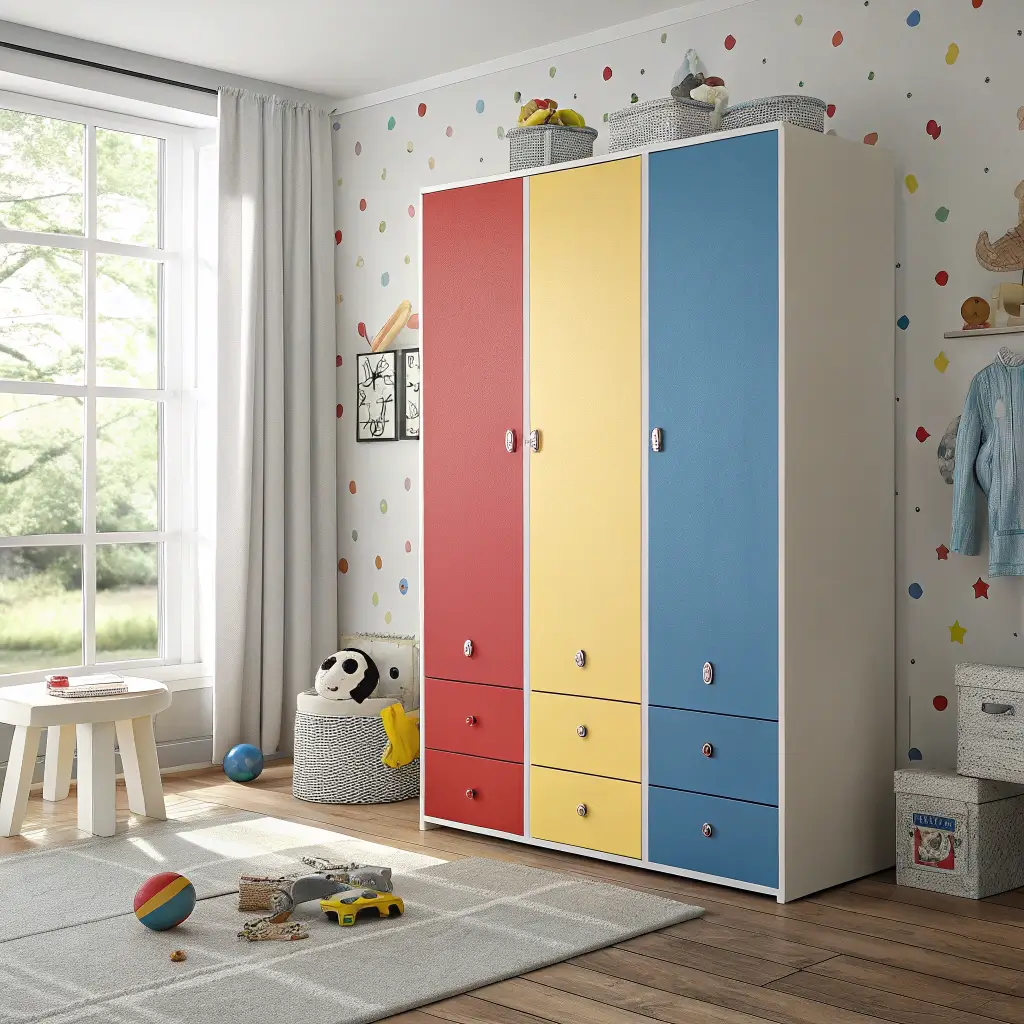
Remember playing with building blocks as a kid? Modular wardrobes work the same way. I started with three basic modules for my daughter, and we’ve added two more as her wardrobe grew. Each module serves a specific purpose – one for dresses, one for everyday clothes, one for sports gear.
The color options make this system ridiculously fun. We went with a rainbow theme (her choice, not mine), with each module in a different bright color. Yellow for summer clothes, blue for winter, green for school uniforms. The visual coding actually helps her find things independently.
What I really appreciate? The flexibility to reconfigure. When she decided she needed more hanging space and fewer shelves, we swapped modules in an afternoon. Try doing that with traditional built-in wardrobes!
Color Psychology in Kids’ Spaces
Different colors affect kids’ moods:
- Bright primary colors energize and stimulate
- Pastels create calm environments
- Earth tones ground hyperactive kids
- Mixed colors encourage creativity
- Monochrome teaches sophisticated taste
Module Combinations That Work
Start with these essential modules:
- Double hanging rod module for shirts/pants
- Drawer module for underwear and socks
- Shelf module for folded items
- Tall module for dresses/coats
- Cube module for accessories
Sliding Door Wardrobe with Chalkboard Panels
Storage Meets Creativity
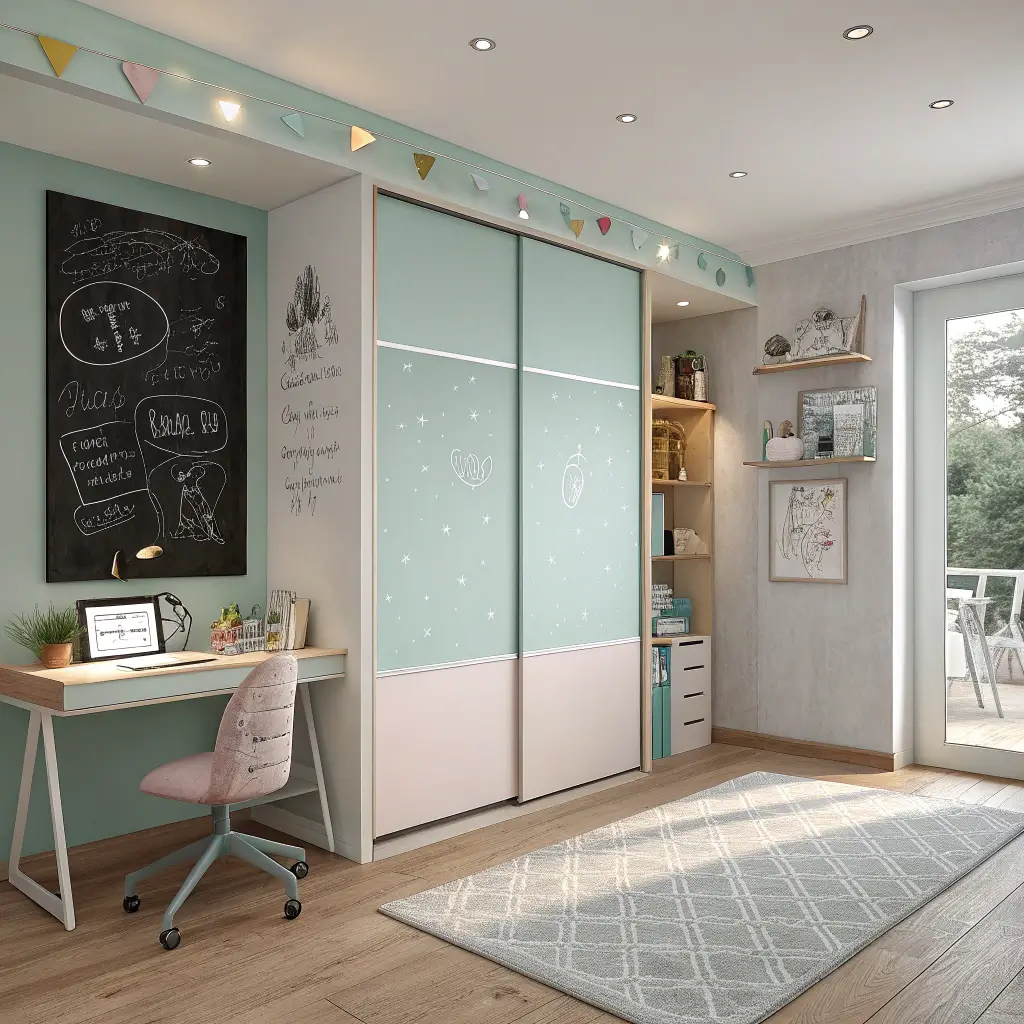
Chalkboard wardrobe doors turned my kids’ constant wall-drawing habit into something productive. Instead of scrubbing crayon off walls, they now have designated drawing surfaces that hide their messy wardrobes. Two problems, one solution – that’s parenting efficiency!
The sliding mechanism means no doors swinging into play space. This matters more than you’d think when you’re navigating a toy-strewn floor at midnight. Plus, kids can operate sliding doors more easily than traditional hinged ones.
We use the chalkboard for everything – homework reminders, daily schedules, artwork, even consequences for not cleaning up (displayed prominently in their own handwriting). It’s become command central for their room operations.
Chalkboard Maintenance Tips
Keep your sanity with these strategies:
- Use dustless chalk to minimize mess
- Install a chalk holder ledge at the bottom
- Seal surrounding areas to prevent dust spread
- Clean weekly with damp microfiber cloth
- Apply chalkboard conditioner monthly
Alternative Surface Options
Not into chalk dust? Try these:
- Whiteboard surface for markers
- Magnetic panels for display boards
- Cork boards for pinning artwork
- Fabric panels for softer look
- Mirror panels for older kids
Also Read: 10 Unique Wardrobe Shutter Design Ideas to Elevate Decor
Built-In Wardrobe with Hidden Toy Storage
The Secret Keeper
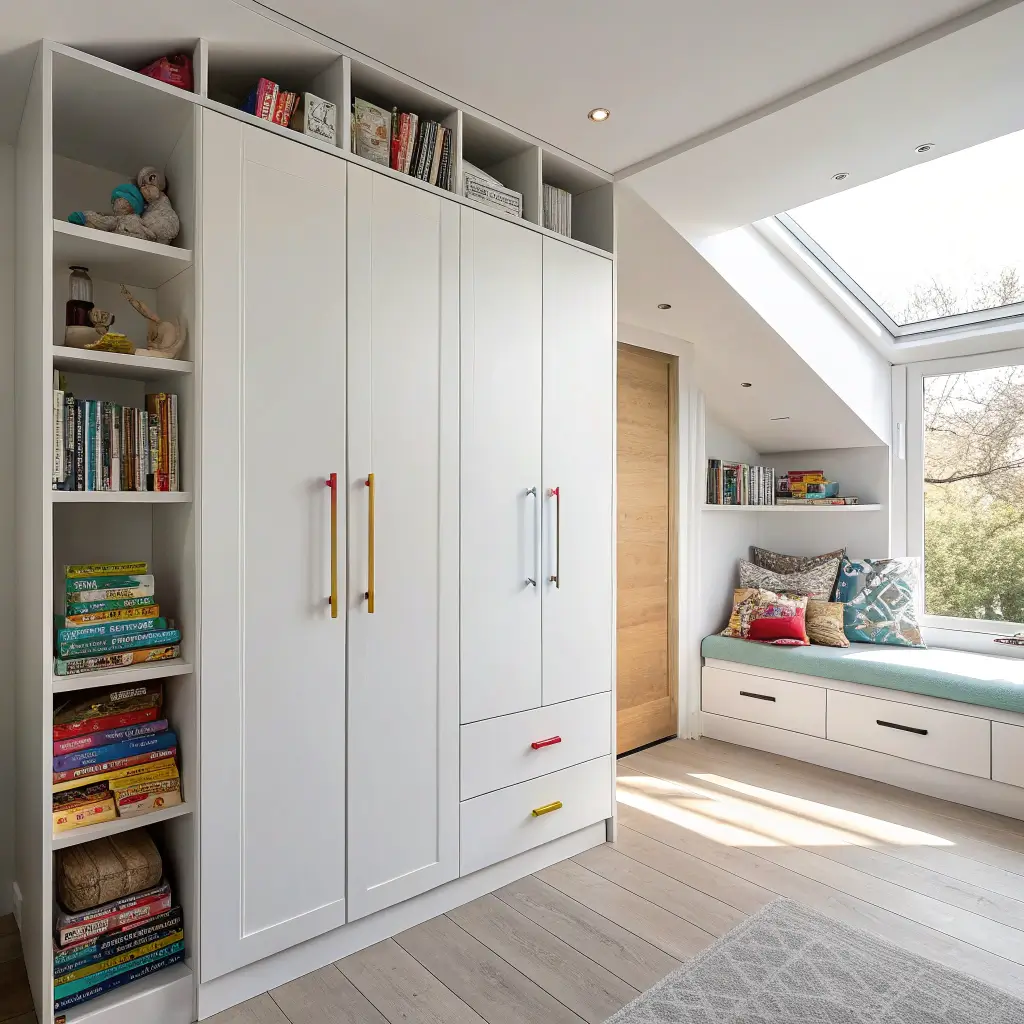
Every parent knows the toy struggle is real. I designed built-in wardrobes with hidden compartments specifically for toys, and it’s been a game-changer. The main wardrobe looks normal, but secret panels reveal toy storage that kids actually use.
Lower sections feature pull-out bins perfect for Legos, action figures, and those million tiny pieces that multiply overnight. Upper hidden compartments store seasonal toys or items in rotation. My kids love the “secret agent” feeling of hidden storage.
The best part? When grandparents visit, one quick slide of the panels and the room looks magazine-ready. No more last-minute toy tsunamis shoved into closets. Everything has a designated hidden home.
Strategic Compartment Placement
Design hidden storage thoughtfully:
- Floor-level compartments for heavy toys
- Mid-level for frequently used items
- Upper storage for parent-controlled items
- Side panels for tall items like sports equipment
- False backs for flat storage
Building vs. Buying
Custom built-ins cost more initially but maximize every inch. I tried modular solutions first, but the wasted space around edges drove me crazy. The custom route paid off in both functionality and home value. FYI, good carpenters can create hidden compartments in existing wardrobes too.
Themed Wardrobe Inspired by Cartoons
When Storage Becomes Adventure
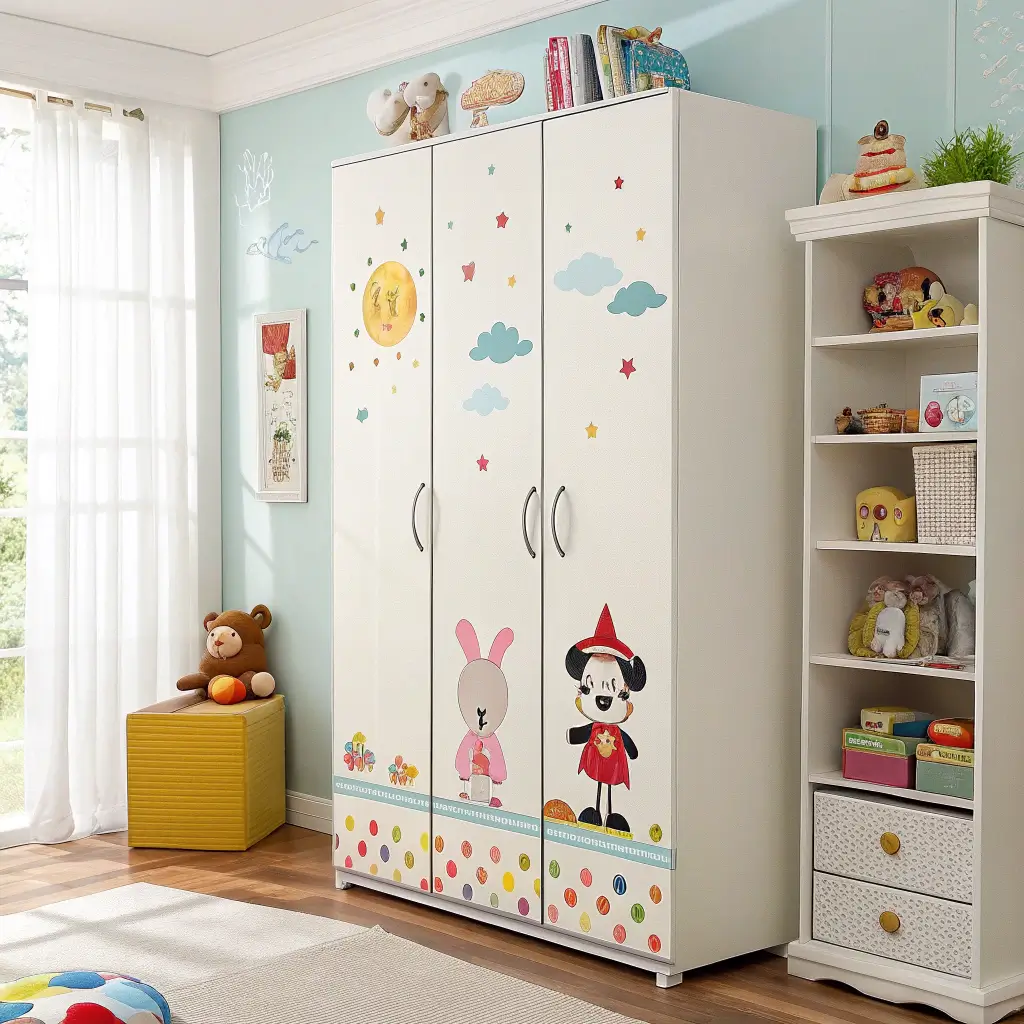
My youngest wanted a superhero room, and turning his wardrobe into a superhero headquarters made him actually excited about organizing. The wardrobe doors look like building facades, complete with windows and “hero signal” lights. Themed wardrobes transform mundane storage into play opportunities.
We added cape hooks inside (for both costumes and regular jackets), labeled drawers with superhero logos, and even installed LED strips that make opening the wardrobe feel like entering a secret base. The small details make the biggest impact.
The theme grows with interests. We started with cartoon characters, evolved to superheroes, and now we’re transitioning to sports themes. Swappable decorative elements keep costs down while allowing personality changes.
Popular Theme Ideas That Last
Choose themes with longevity:
- Space/astronomy (grows from rockets to NASA)
- Nature/jungle (animals to conservation)
- Ocean/underwater (fish to marine biology)
- Fantasy/castle (princesses to medieval history)
- Transportation (cars to engineering)
DIY Theme Elements
Create magic without breaking banks:
- Vinyl decals for easy theme changes
- Painted door panels as backdrops
- Themed handles and knobs
- LED lighting in theme colors
- Sound effects modules for door opening
Wardrobe with Pull-Out Shoe & Toy Drawers
The Accessibility Game-Changer
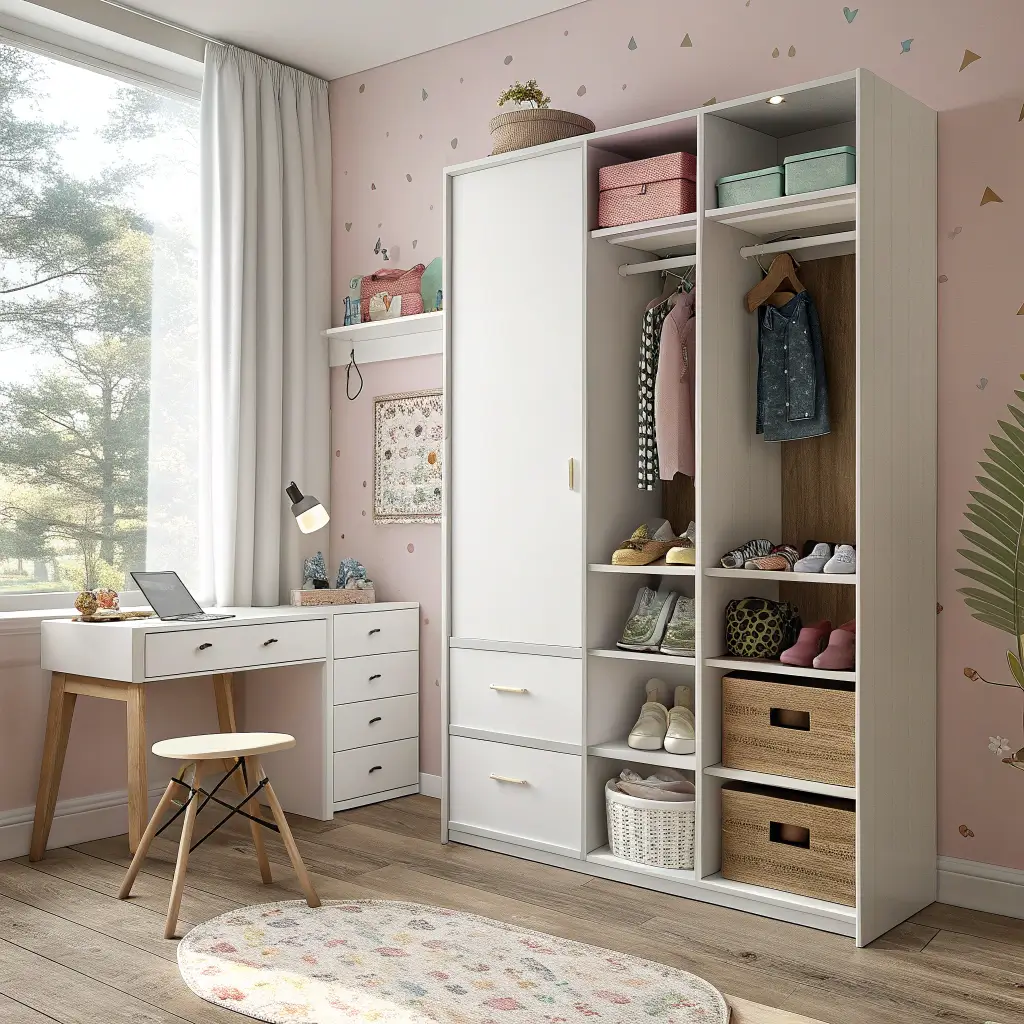
Pull-out drawers changed everything in my house. Kids can actually see and reach their stuff without climbing or dumping everything out. These drawers bring storage to kid height, eliminating the “I can’t reach it” excuse.
The shoe drawers feature angled inserts that display each pair clearly. No more missing matches or forgotten shoes buried in piles. My daughter’s 20+ pairs (don’t judge) stay organized and accessible. The see-through fronts help her choose without opening every drawer.
Toy drawers use dividers to separate different categories. Cars in one section, dolls in another, art supplies contained. The pull-out mechanism includes soft-close features because kids don’t understand “gentle” when they’re excited about finding their favorite toy.
Drawer Configuration Options
Optimize based on your needs:
- Shallow drawers for small toys
- Deep drawers with dividers for mixed items
- Ventilated drawers for sports equipment
- Clear-front drawers for visibility
- Labeled sections for easy sorting
Weight Limits and Safety
Heavy-duty slides support surprising weight. Our drawers handle 75 pounds each, tested by my son standing in them (kids, right?). Full-extension slides let kids access back corners without drawers tipping.
Also Read: 10 Eye-Catching Wardrobe Design Modern Ideas for Modern Homes
Convertible Wardrobe with Study Nook
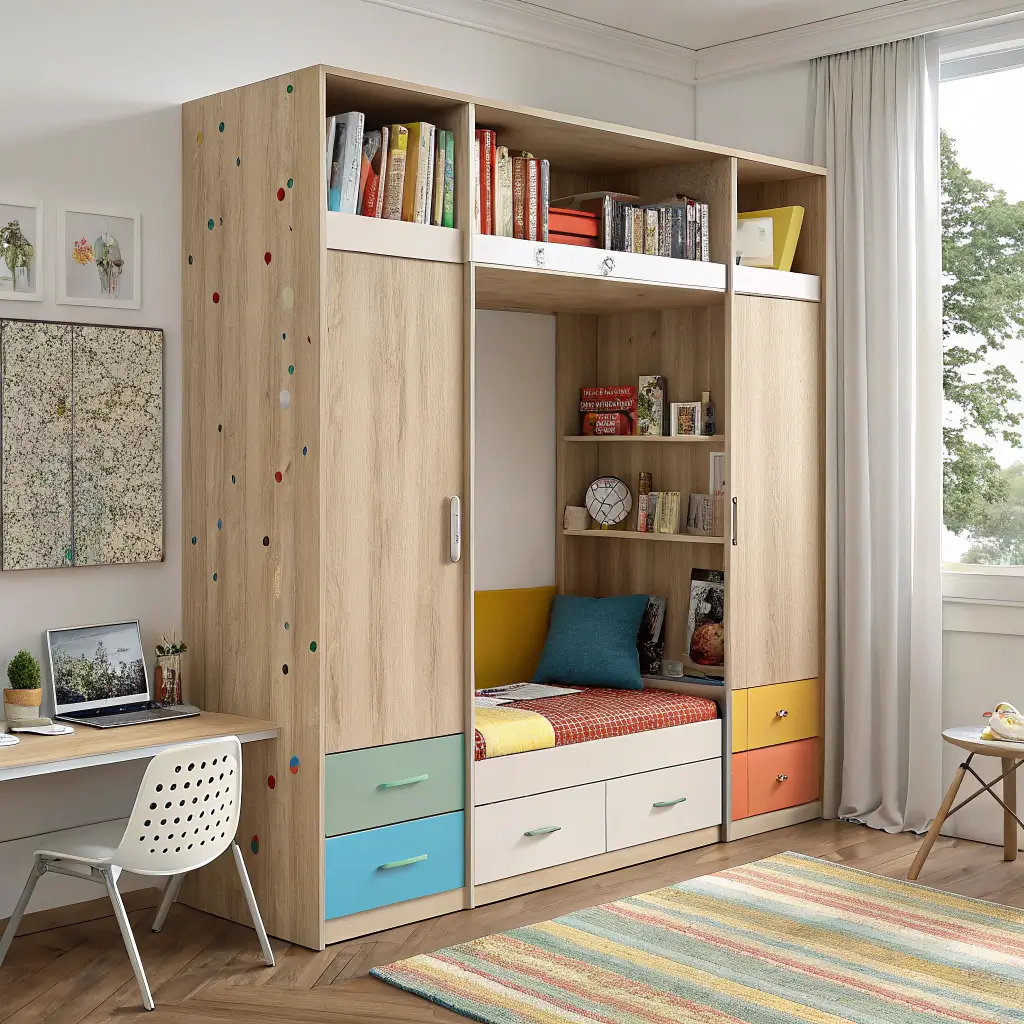
Growing with Your Child
Convertible wardrobes adapt as kids’ needs change. What starts as mostly toy storage transforms into homework central by elementary school. This design prevents furniture graveyards of outgrown pieces.
Our convertible unit began with low shelves perfect for toy bins. We gradually raised shelf heights and added a fold-down desk as homework entered the picture. The same footprint now serves my tween’s study and storage needs perfectly.
The fold-down desk component stays hidden when not needed, maintaining bedroom aesthetics. Built-in lighting activates when you lower the desk, creating an instant study zone. Cable management keeps chargers and device cords organized.
Conversion Milestones
Plan for these transitions:
- Toddler: Low shelves, toy storage, safety locks
- Preschool: Art supply station, accessible clothes
- Elementary: Homework desk, book storage
- Tween: Privacy features, device charging
- Teen: Vanity options, increased hanging space
Investment Justification
Yes, convertible furniture costs more upfront. But calculate the alternative – buying new furniture every few years. Our unit has served three distinct phases over six years. That’s serious ROI, both financially and environmentally.
Minimalist Scandinavian Kids Wardrobe
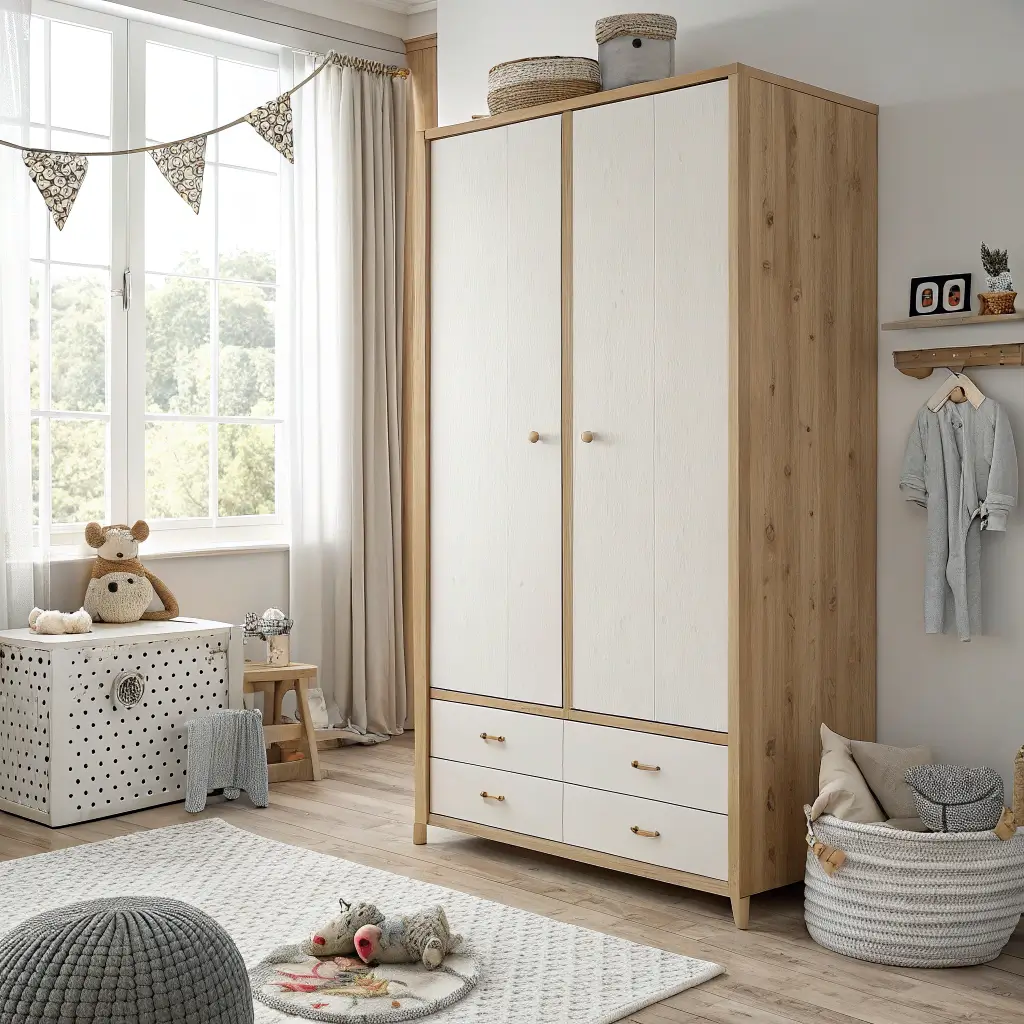
Calm in the Chaos
Scandinavian design in kids’ rooms sounds like an oxymoron, but hear me out. The clean lines and neutral colors create calm that hyperactive kids desperately need. Minimalist wardrobes reduce visual overwhelm, helping kids focus and relax.
I introduced this style in my oldest’s room when his ADHD made traditional busy patterns problematic. Light wood, white surfaces, and simple hardware created a soothing environment. The difference in his behavior was noticeable within weeks.
The minimalist approach forces thoughtful organization. Limited hanging space means keeping only loved and worn items. Open shelving displays folded clothes attractively, teaching kids that organization can look good. Everything has one designated spot.
Scandinavian Elements That Work
Incorporate these features:
- Light wood or white finishes
- Simple, sturdy construction
- Natural material handles
- Soft-close mechanisms
- Hidden storage maintaining clean lines
Making Minimalism Kid-Friendly
Add personality without clutter:
- One accent color in accessories
- Natural textures for warmth
- Quality over quantity in items
- Personal artwork in frames
- Plants for life and color
Wardrobe with Open Shelves and Hanging Space
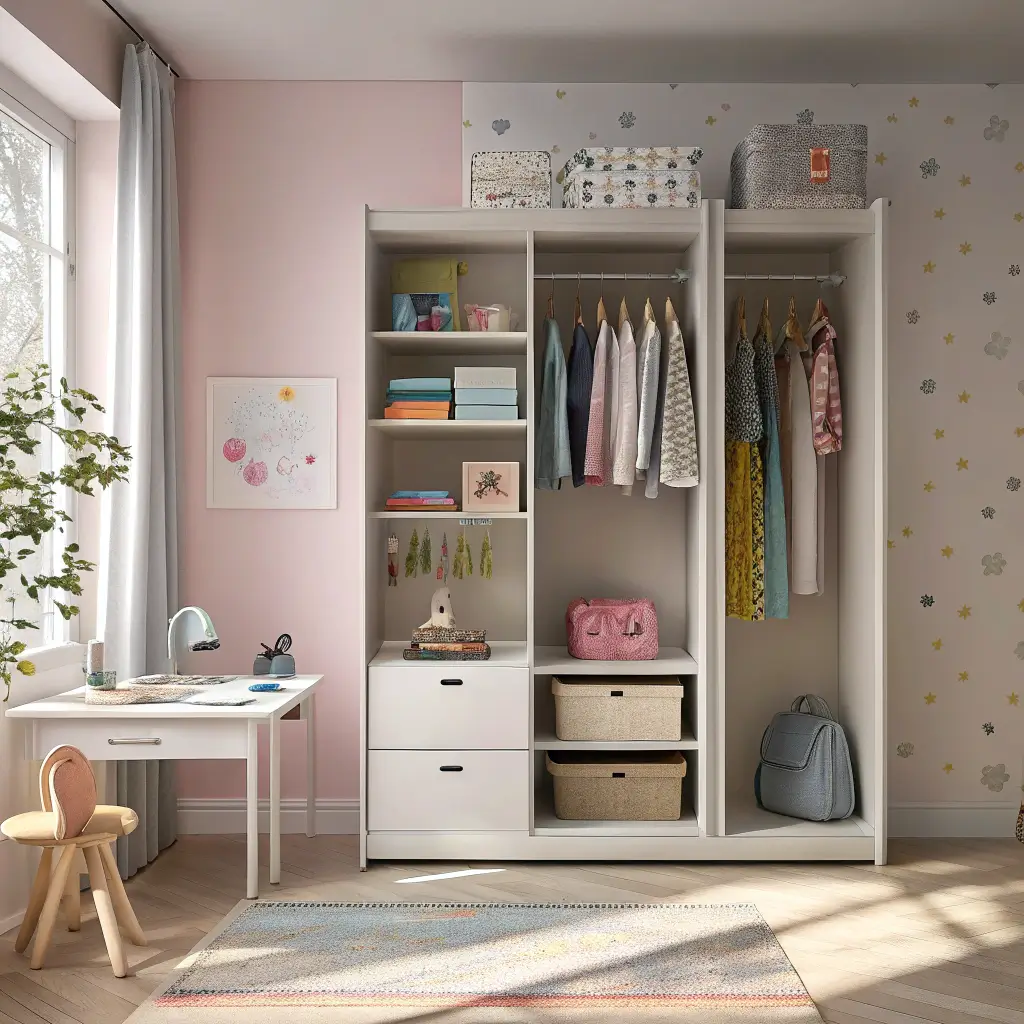
The Visibility Advantage
Open wardrobes might seem counterintuitive for kids’ rooms, but they teach valuable lessons. When everything stays visible, kids learn that messiness has immediate consequences. Open shelving promotes accountability in ways closed wardrobes never could.
My middle child responded amazingly to open storage. Seeing his folded clothes displayed neatly motivated him to maintain order. The hanging space at kid-height means he dresses himself without help. Independence achieved!
We use attractive baskets on open shelves for smaller items. Labels with pictures help pre-readers identify contents. The combination of open and contained storage balances accessibility with tidiness.
Organization Systems for Open Storage
Make open storage work:
- Color-coded baskets by category
- Shelf dividers preventing toppling
- Lower rod for current season
- Upper rod for next season
- Display shelves for special items
The Dust Factor
Let’s address the elephant – dust. Open shelves need weekly attention, but it takes five minutes with a microfiber cloth. The trade-off for teaching organization skills? Totally worth those five minutes.
Also Read: 10 Amazing Sliding Door Wardrobe Designs Ideas for Small Room
Customizable Wardrobe with Growth-Adjustable Sections
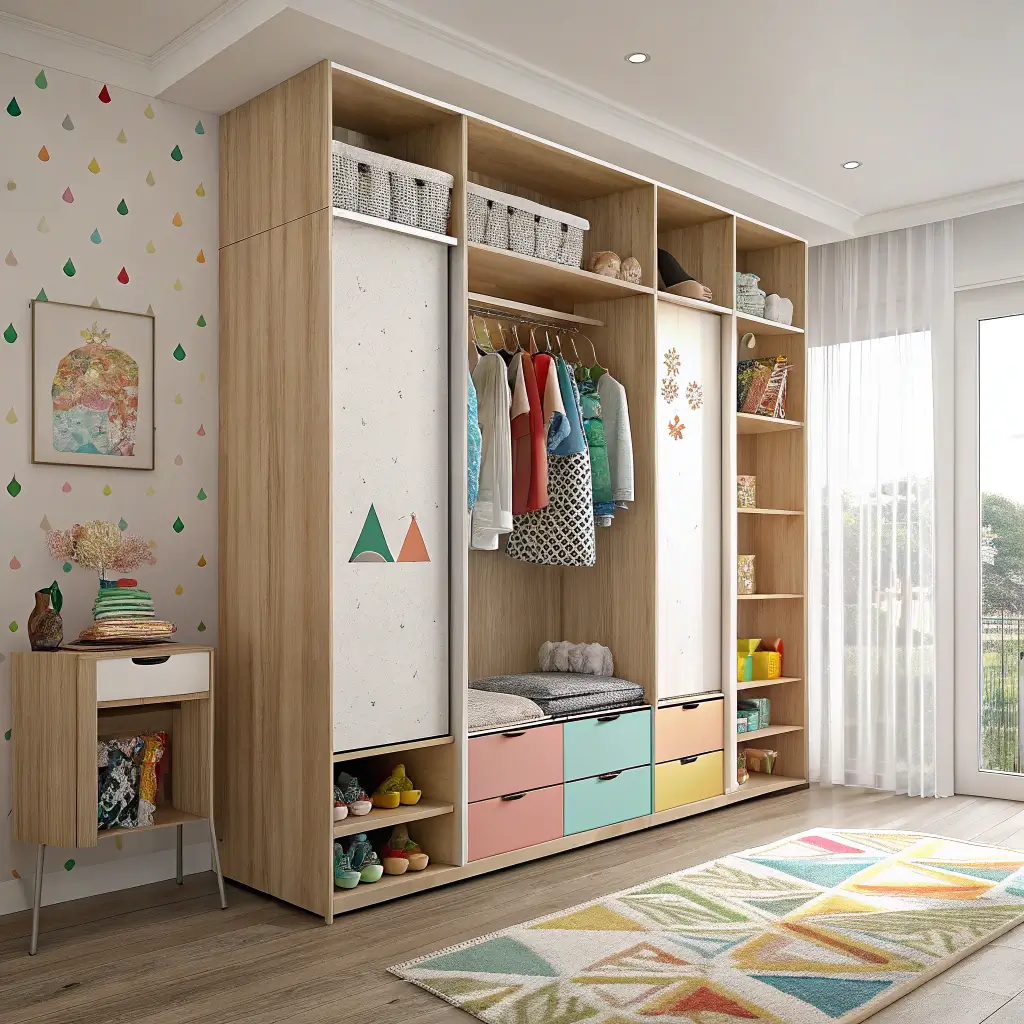
The Long-Term Investment
Adjustable wardrobes grow with your kids, literally. Hanging rods move up as kids get taller, shelves reconfigure as storage needs change. This adaptability extends furniture lifespan significantly beyond fixed alternatives.
I invested in quality adjustable systems for all three kids’ rooms. Five years later, we’re still using the same wardrobes despite dramatic growth spurts. The eldest’s wardrobe transformed from toy storage to teen fashion central without buying anything new.
The key lies in the track system. Industrial-grade tracks support multiple configuration options. Shelves, rods, drawers, and accessories all interchange based on current needs. It’s like having multiple wardrobes in one system.
Adjustment Timeline
Typical height adjustments by age:
- 2-4 years: Rods at 30 inches
- 5-7 years: Rods at 36-40 inches
- 8-10 years: Rods at 45-50 inches
- 11-13 years: Rods at 55-60 inches
- 14+: Standard adult heights
Planning for Changes
Consider future needs:
- Double rods converting to single for longer items
- Toy shelves becoming book storage
- Play drawers transitioning to accessories
- Craft storage evolving to electronics
- Growing shoe collections needing expansion
Making Smart Kids Wardrobe Choices
After exploring these 10 kids room wardrobe design ideas, you’re probably weighing options against your specific situation.
Here’s my honest advice: choose designs that match YOUR kids’ personalities and your patience level. The fanciest system fails if it’s too complex for daily use.
Start with your biggest pain point. Toys everywhere? Hidden storage compartments. Small room? Loft designs.
Multiple kids? Modular systems that adapt. I learned through expensive mistakes that solving actual problems beats following trends every time 🙂
Remember that kids’ wardrobes face unique challenges – growth spurts, changing interests, varying organizational abilities.
The best designs acknowledge these realities while providing structure. Whether you choose themed wardrobes or minimalist designs, make sure they work for your family’s actual lifestyle.
The perfect kids’ wardrobe balances function, fun, and flexibility. It grows with your child, survives daily use, and maybe even teaches some organizational skills along the way. Most importantly? It should make your life easier, not harder. Because honestly, parenting provides enoug
h challenges without fighting with furniture. Now excuse me while I go admire my kids’ actually organized wardrobes – this miracle might not last until tomorrow!