
Narrow hallways often feel like wasted space, but you can turn them into useful, attractive parts of your home. With the right choices, you can make a tight corridor look wider, taller, and brighter while adding storage and style that fit your everyday needs. You’ll learn easy, practical small narrow hallway ideas that make a small hallway feel bigger and more functional without major renovations.
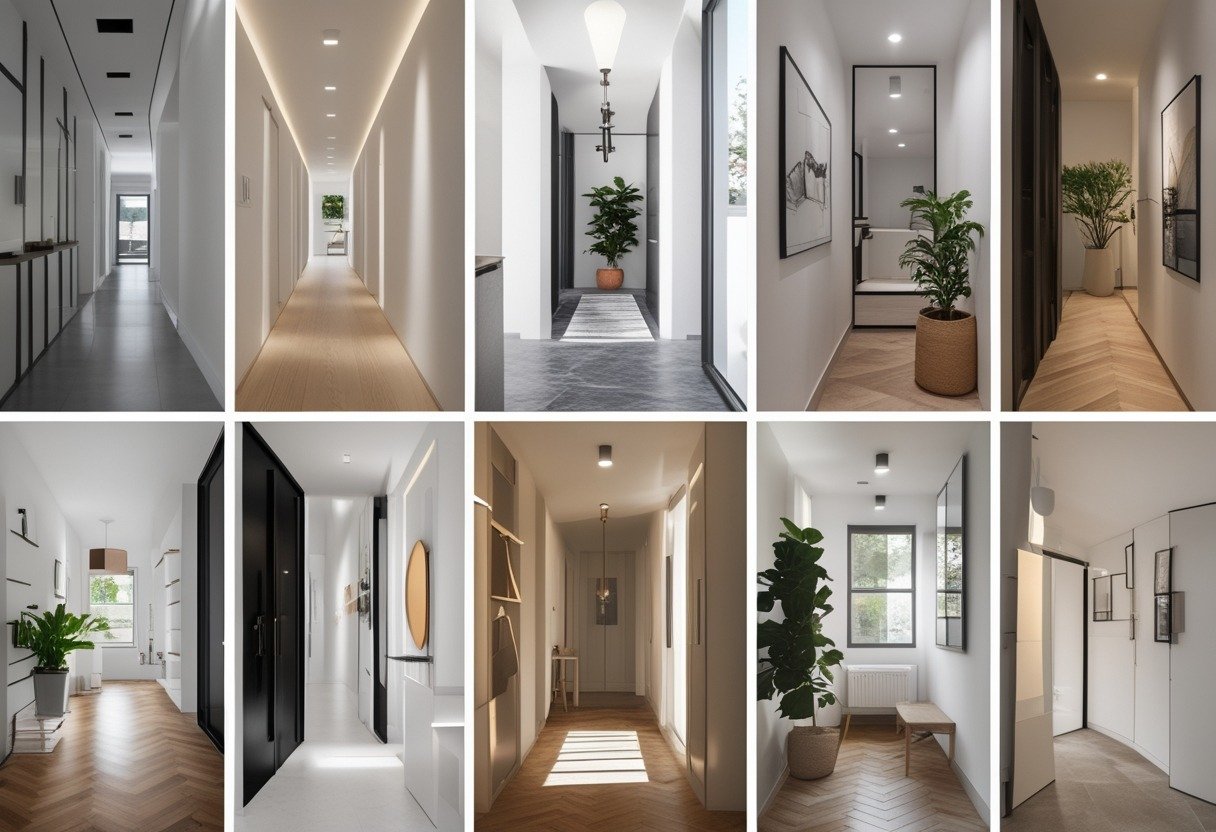
This article guides you through design moves that change perception and improve use—lighting, mirrors, slim storage, smart doors, and simple finishes that work together. Use these tips to create a corridor that connects rooms and adds clear, lasting value to your home.
1) Install full-length mirror panels to visually widen the corridor
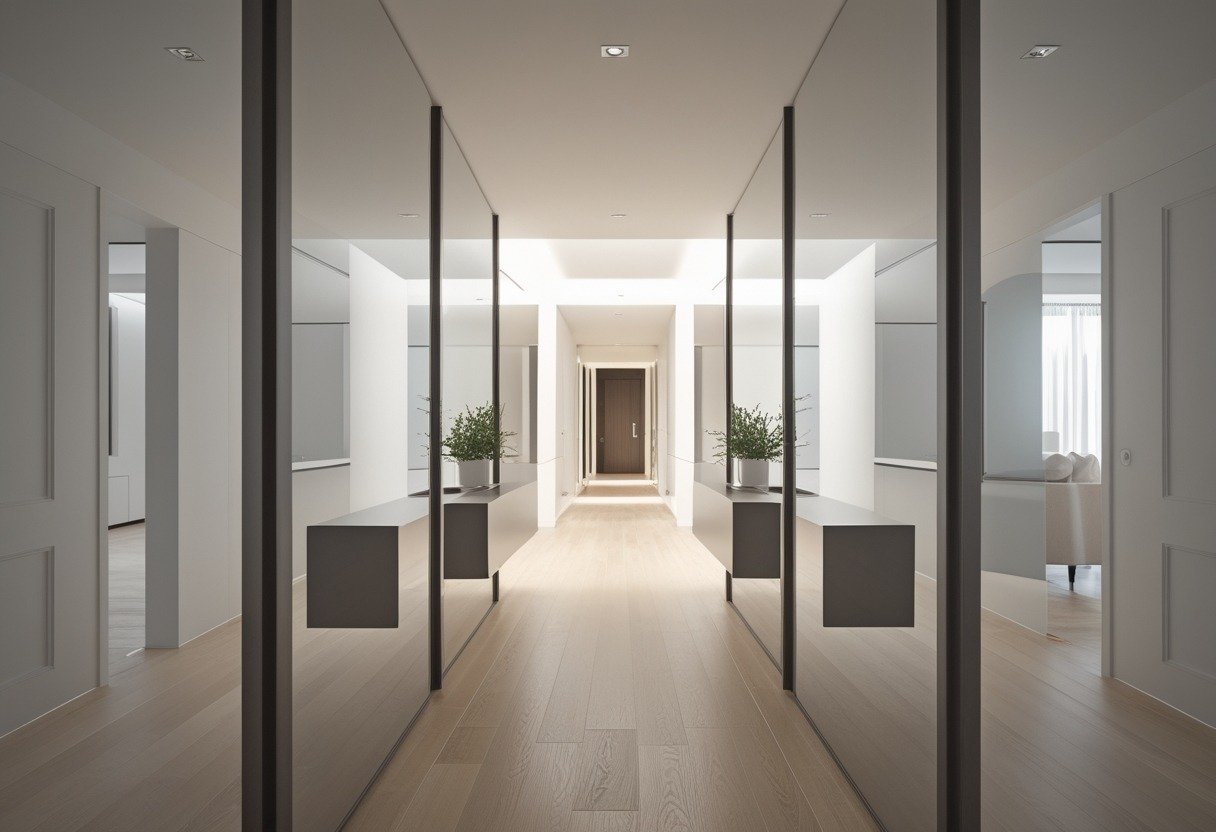
Place full-length mirror panels along one wall to reflect light and create depth. You’ll see the hallway feel wider without changing the layout.
Choose frameless or slim-framed panels for a seamless look that avoids visual clutter. Mount panels flush to the wall to keep traffic clear and make cleaning simple.
2) Paint ceiling a lighter color than walls for perceived height
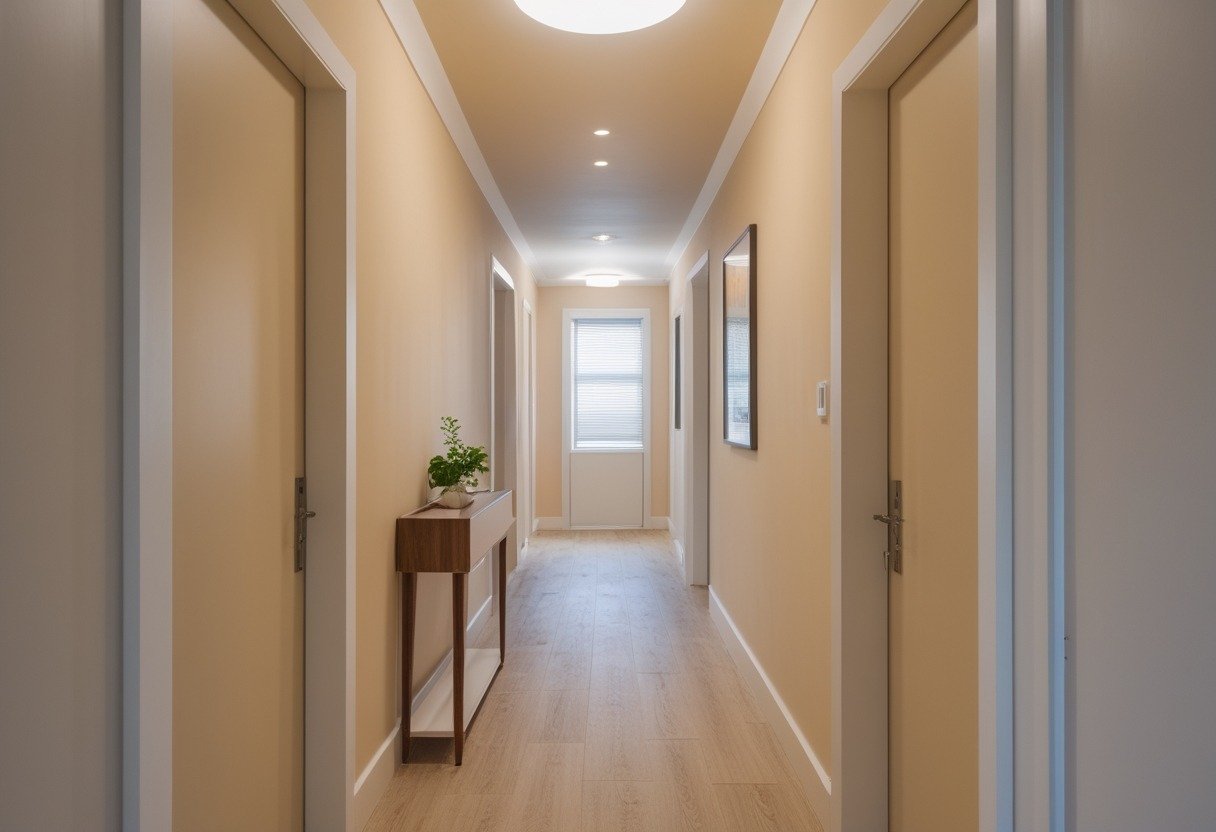
Paint your ceiling a lighter shade than the walls to make a narrow hallway feel taller. Lighter ceilings reflect more light, which reduces shadows and opens the space visually.
Choose a soft white or pale neutral that complements your wall color. Keep finishes low-sheen to avoid glare but still help bounce light upward.
This trick works best with consistent lighting and simple trim. It’s an easy, low-cost change that can improve how your hallway feels.
3) Add recessed LED strip lighting along baseboards
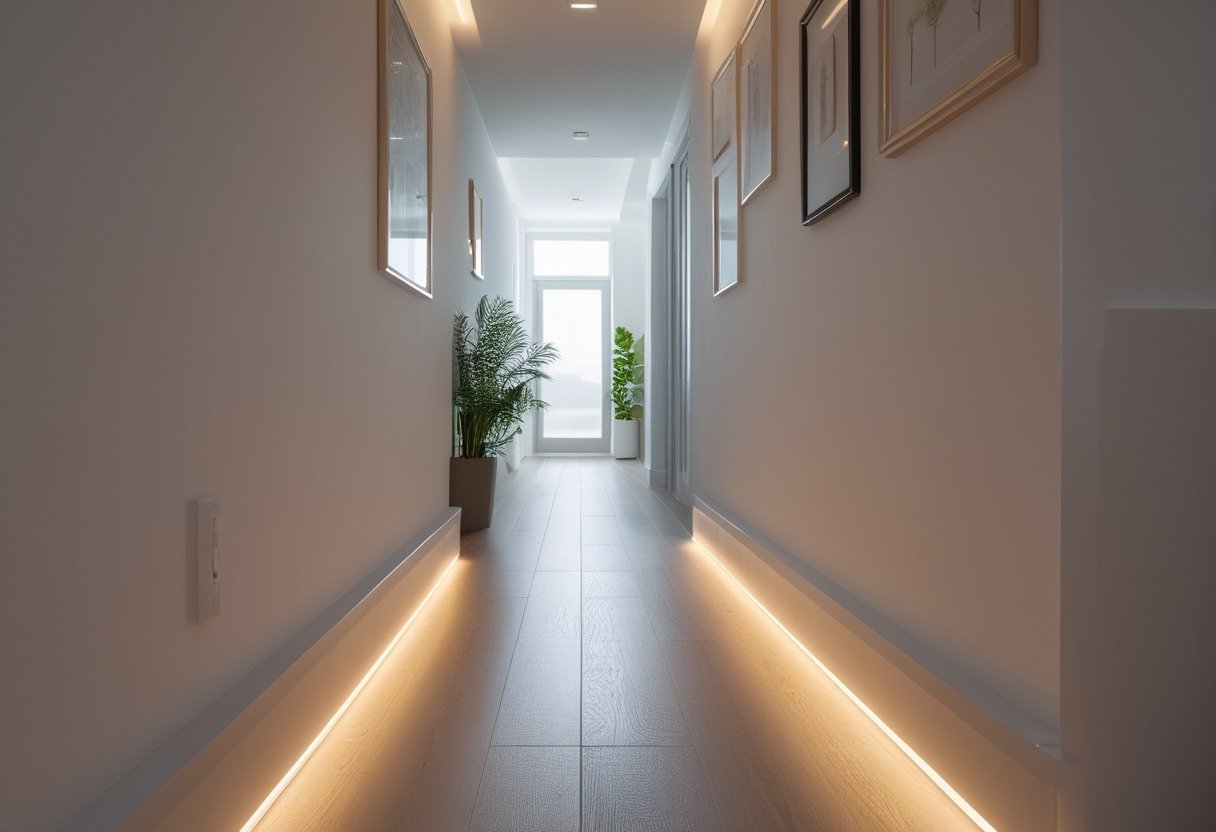
Install recessed LED strips inside the baseboard to wash light along the floor. This adds soft, even illumination that makes a narrow hallway feel wider without glare.
Choose warm white or neutral tones for a welcoming look. Use an aluminum channel with a diffuser to hide the strip and get a clean finish.
Keep wiring low-profile and near outlets or a central junction. That lets you maintain a seamless, professional appearance.
4) Mount slim floating console with integrated drawers
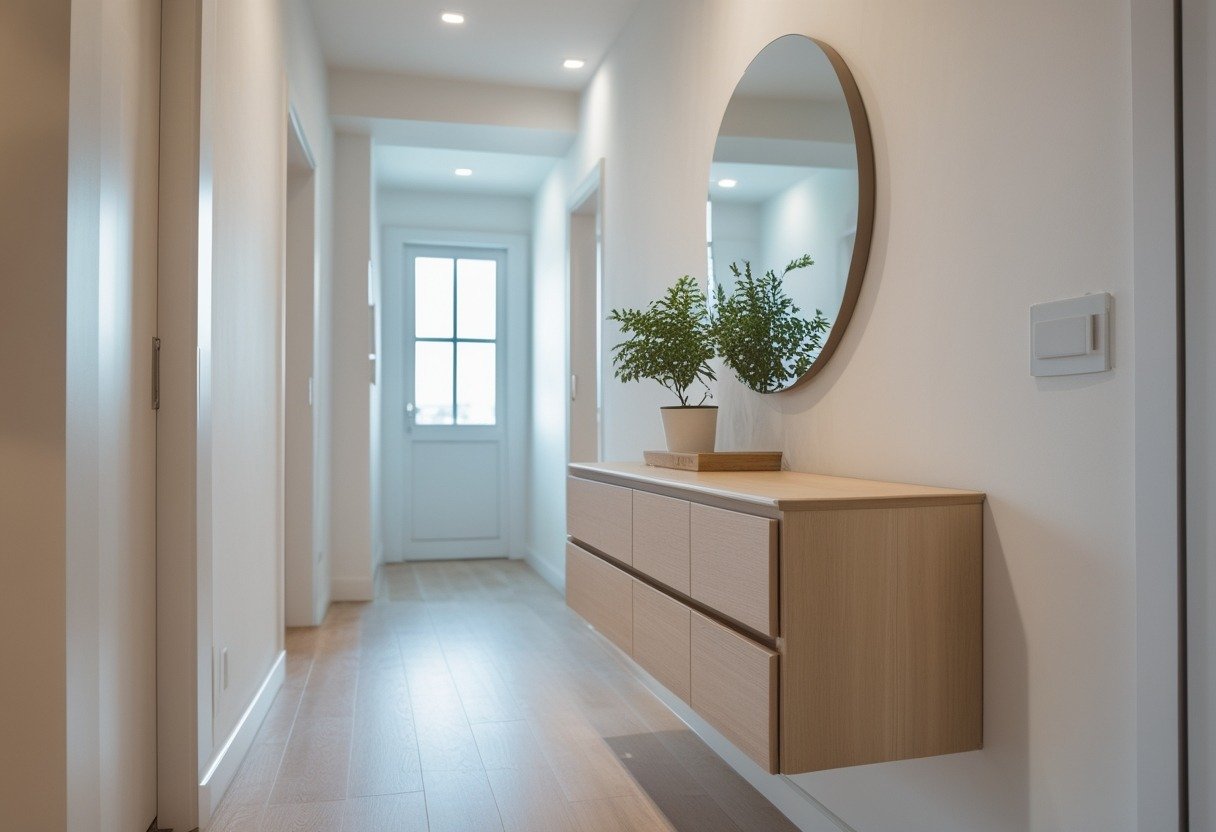
Mount a slim floating console to free floor space and add storage for keys, mail, and small items. Choose a unit with integrated drawers to hide clutter and keep the hallway tidy.
Place it at waist height so you can use the top surface for a lamp or tray. Secure the console to studs or use strong anchors for safe, long-term support.
5) Use vertical wallpaper stripes to elongate walls
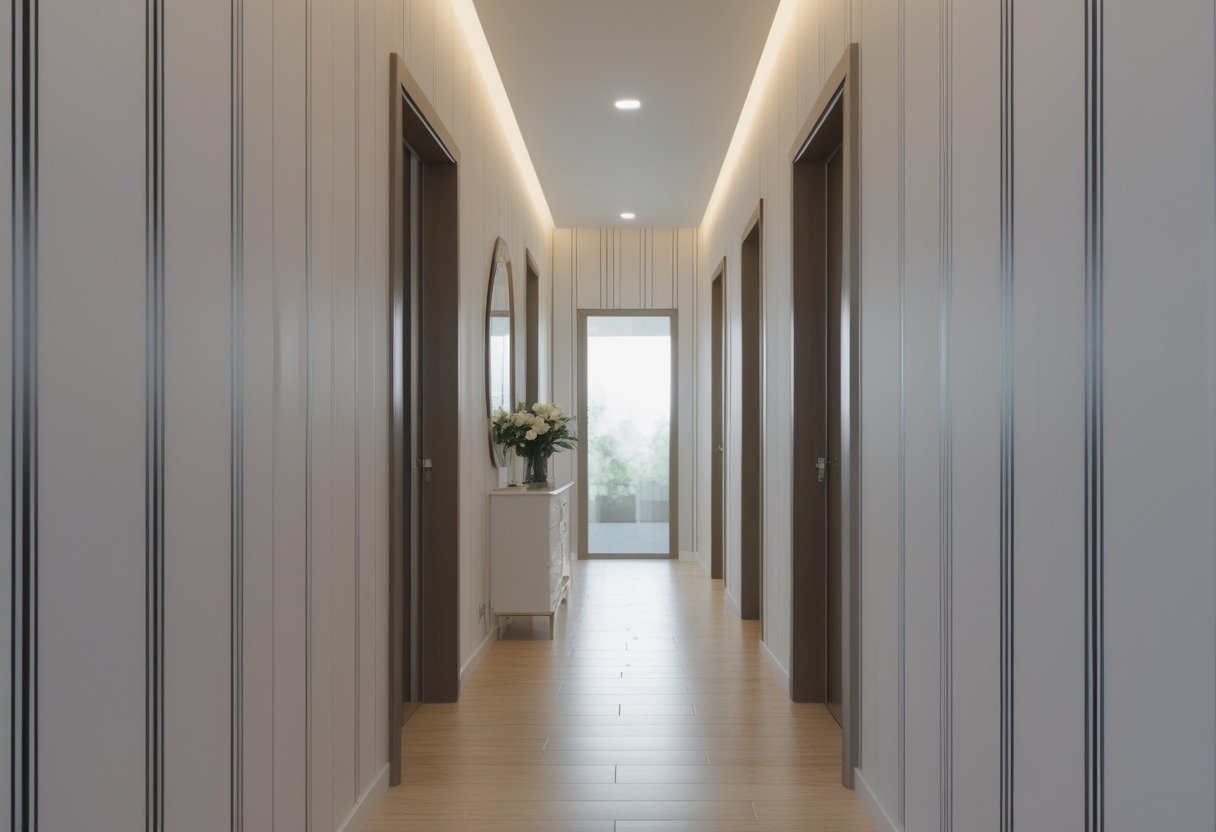
Choose vertical stripes to draw the eye up and make your hallway feel taller. Thin, tone-on-tone stripes keep the look calm and avoid visual clutter.
You can paint stripes or pick wallpaper; both work well. Pair with white trim and simple lighting to let the pattern do the work.
Keep stripe widths small in very narrow halls so the pattern reads subtle. Neutral colors help the space feel open without dominating.
6) Create built-in floor-to-ceiling cabinetry with shallow shelves
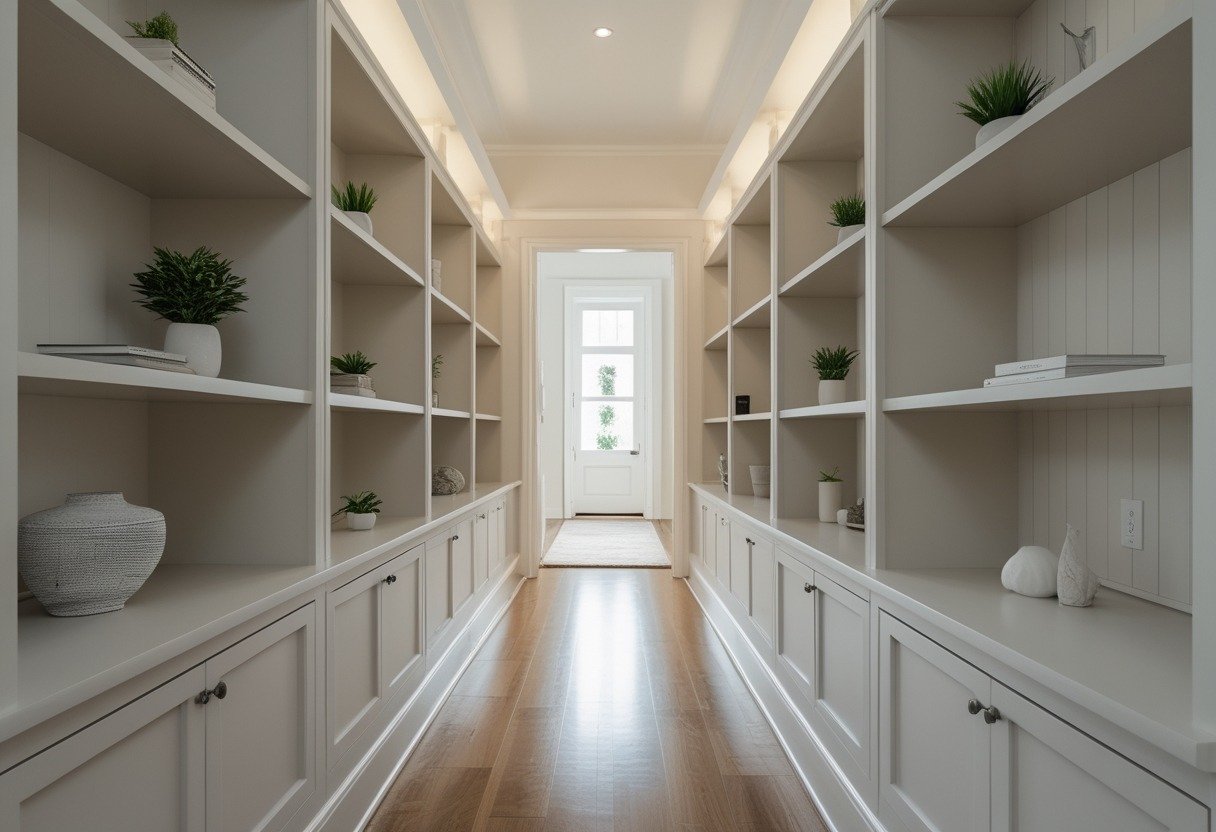
Build slim built-in cabinets that run from floor to ceiling to use vertical space without crowding the hall. Shallow shelves, about 8–12 inches deep, keep the path clear while holding books, baskets, and small decor.
Choose doors or open shelving to match your style; doors hide clutter, open shelves show texture. Keep colors light and hardware simple to maintain an airy feel.
7) Lay chevron or herringbone wood flooring to draw the eye forward
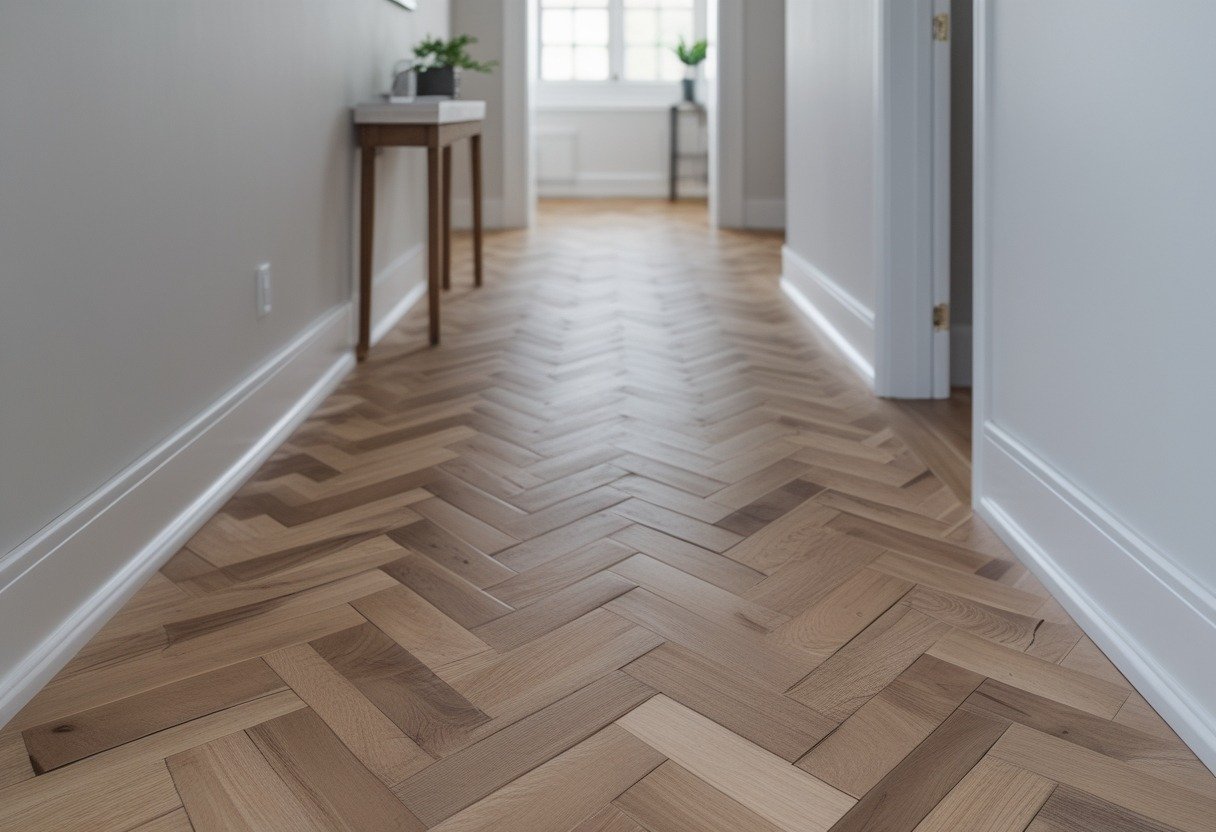
Choose chevron for a strong, pointed run that makes your hallway feel longer. It creates a clear directional line that guides the eye down the space.
Herringbone adds texture and subtle motion without a harsh point. Its staggered pattern can widen a narrow corridor and add visual interest.
Both patterns cost more and need precise installation, but they lift a plain hallway into a deliberate design feature. Pick tones and plank size that match your home’s scale.
8) Hang a row of coordinated wall hooks at staggered heights
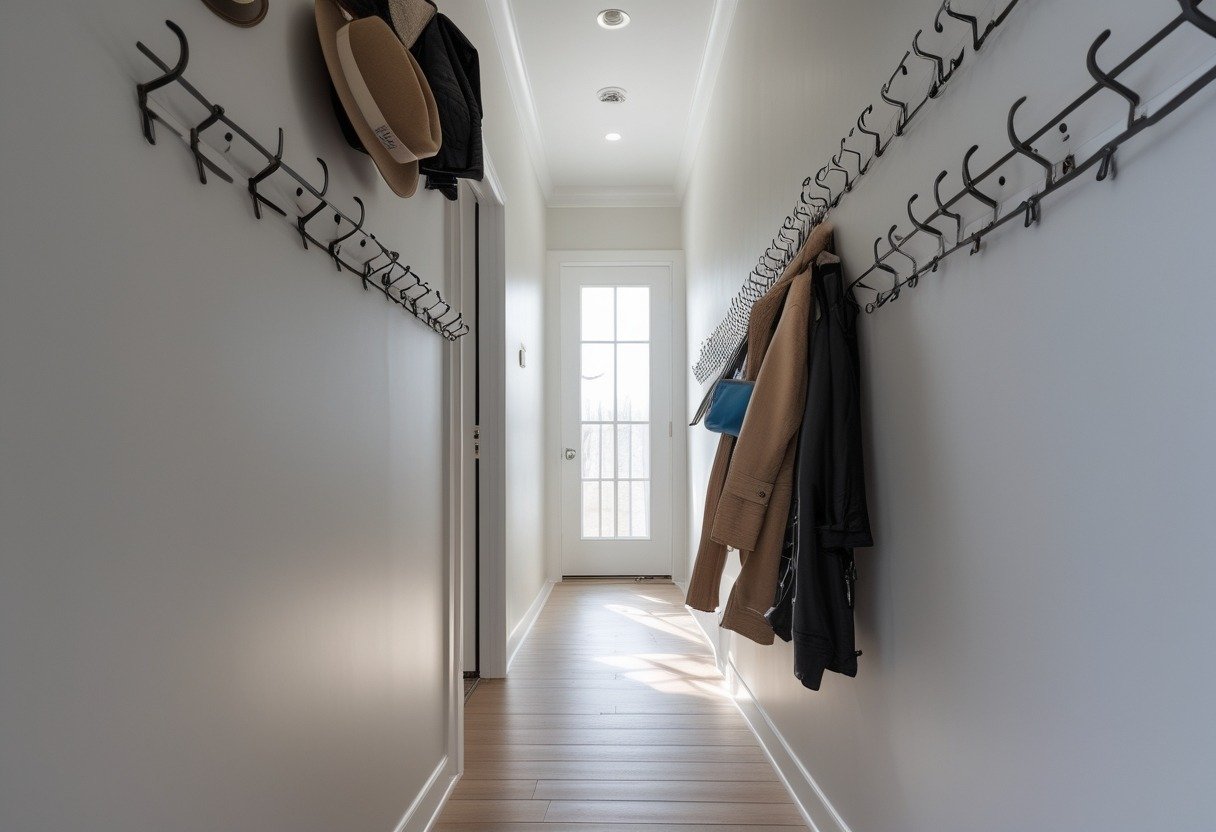
Install matching hooks to create a neat, unified look that saves floor space. Stagger the heights so coats, bags, and hats fit without overlapping.
Choose slim, sturdy hooks to keep sightlines open in a narrow hall. Place a few lower hooks for kids and a bench or basket beneath for shoes or umbrellas.
Keep spacing consistent to avoid cluttered appearance. Use hooks for everyday items to make your hallway both tidy and practical.
9) Install pocket doors to save swing space
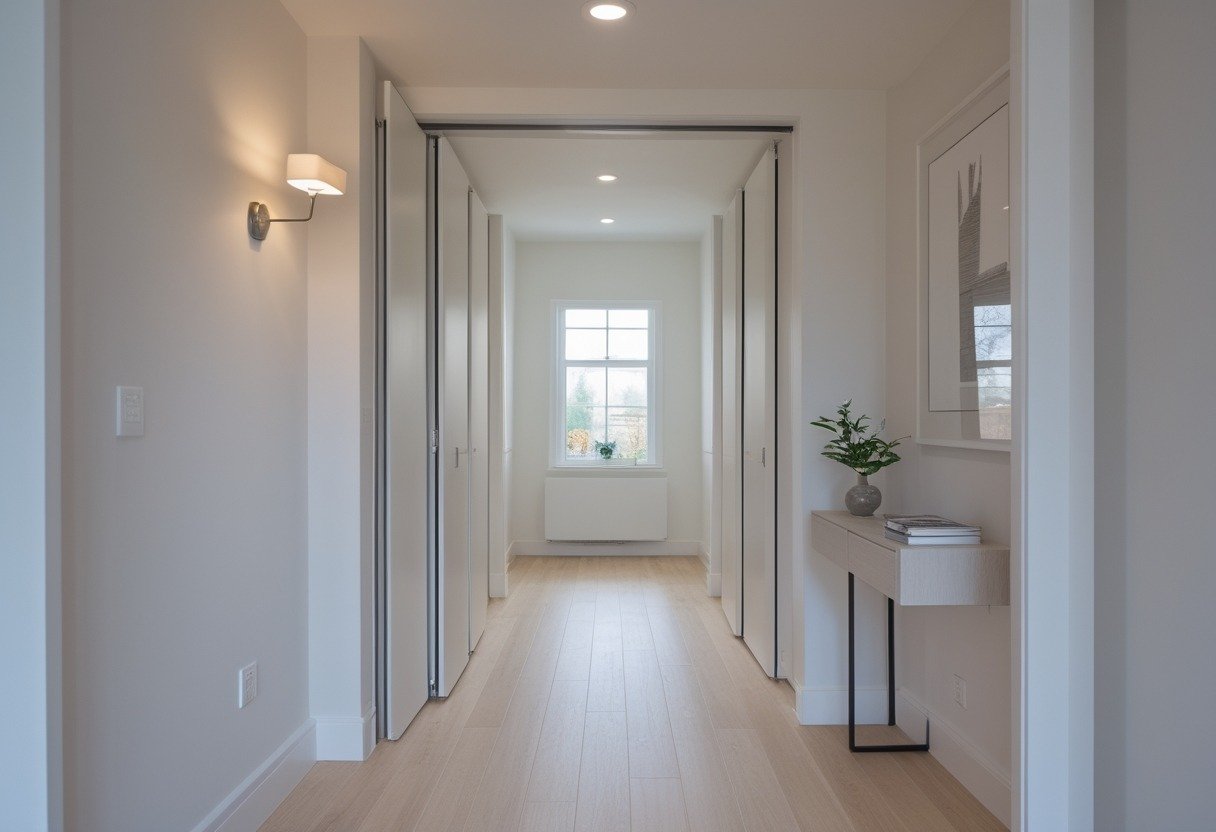
Pocket doors slide into the wall so they don’t need a swing arc. You gain floor space for furniture, rugs, or a clearer walkway.
They work well for bathrooms, closets, and tight hallways where a swinging door blocks movement. Installation is easier in new builds but retrofit kits exist.
Choose sturdy hardware and a solid panel to reduce noise and improve privacy. Make sure the wall cavity can hold the track before you start.
10) Use half-height wainscoting topped with bold paint color
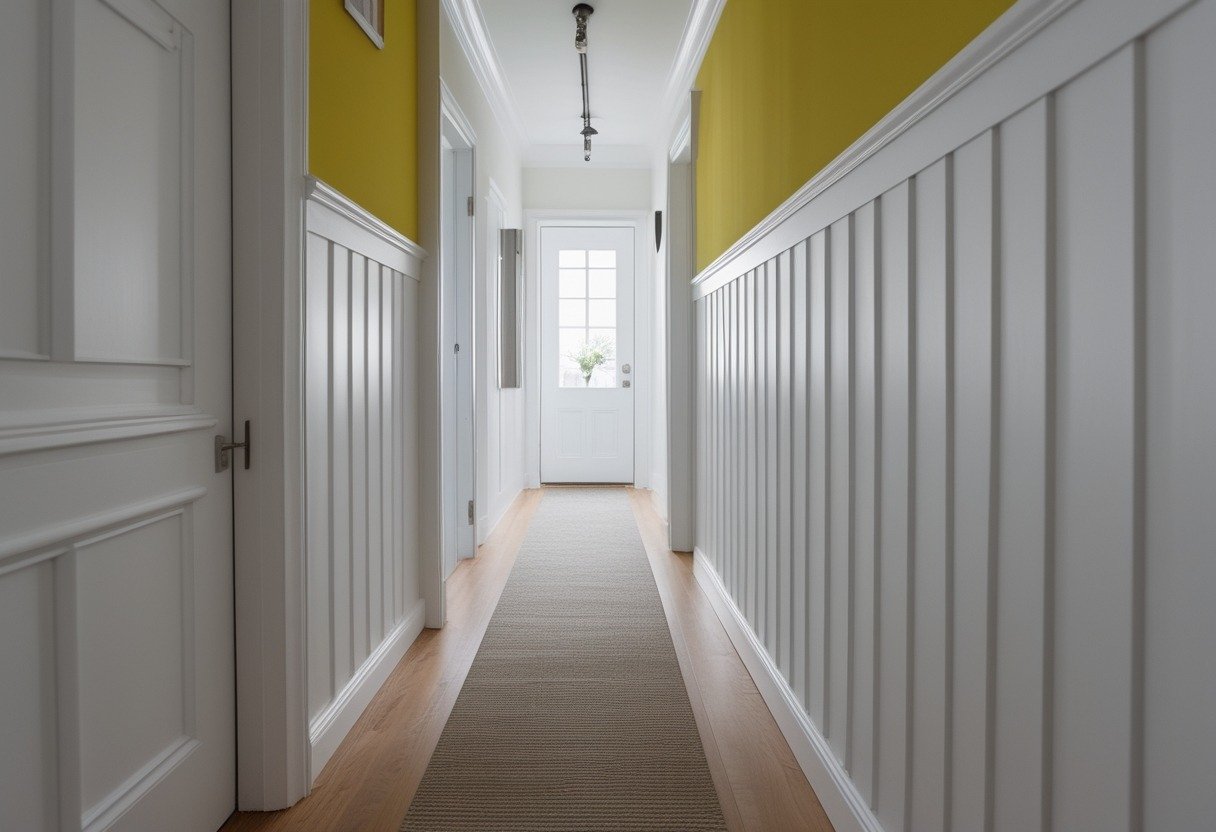
Half-height wainscoting adds texture and protects walls in narrow hallways without crowding the space. You get visual interest low on the wall while keeping the upper area open.
Paint the wall above the wainscot in a bold color to draw the eye upward. This contrast creates depth and makes the corridor feel more purposeful and styled.
Keep trim and wainscoting a lighter neutral to balance the bold hue. A runner and simple wall art will complete the look without cluttering your passage.
11) Place gallery-style slim frames in a linear arrangement
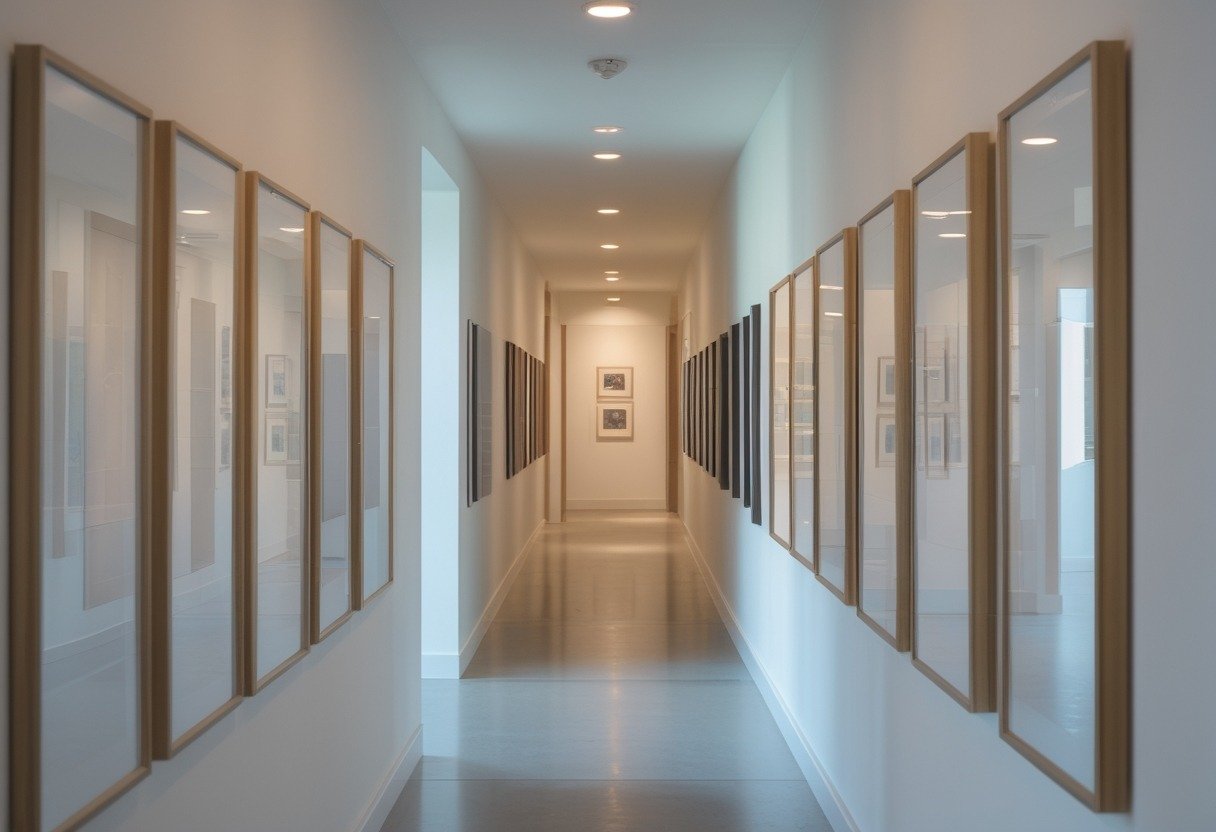
Line up slim, matching frames at eye level to create a clean visual path through your narrow hallway. The uniform look keeps the space feeling orderly and modern.
Keep spacing even and use a single row to avoid clutter. This arrangement draws the eye along the hall, making it feel longer without adding bulk.
Choose simple mats and narrow frames to keep focus on the art or photos. You can swap pieces seasonally to refresh the look without changing the layout.
12) Add a narrow runner rug with a central stripe
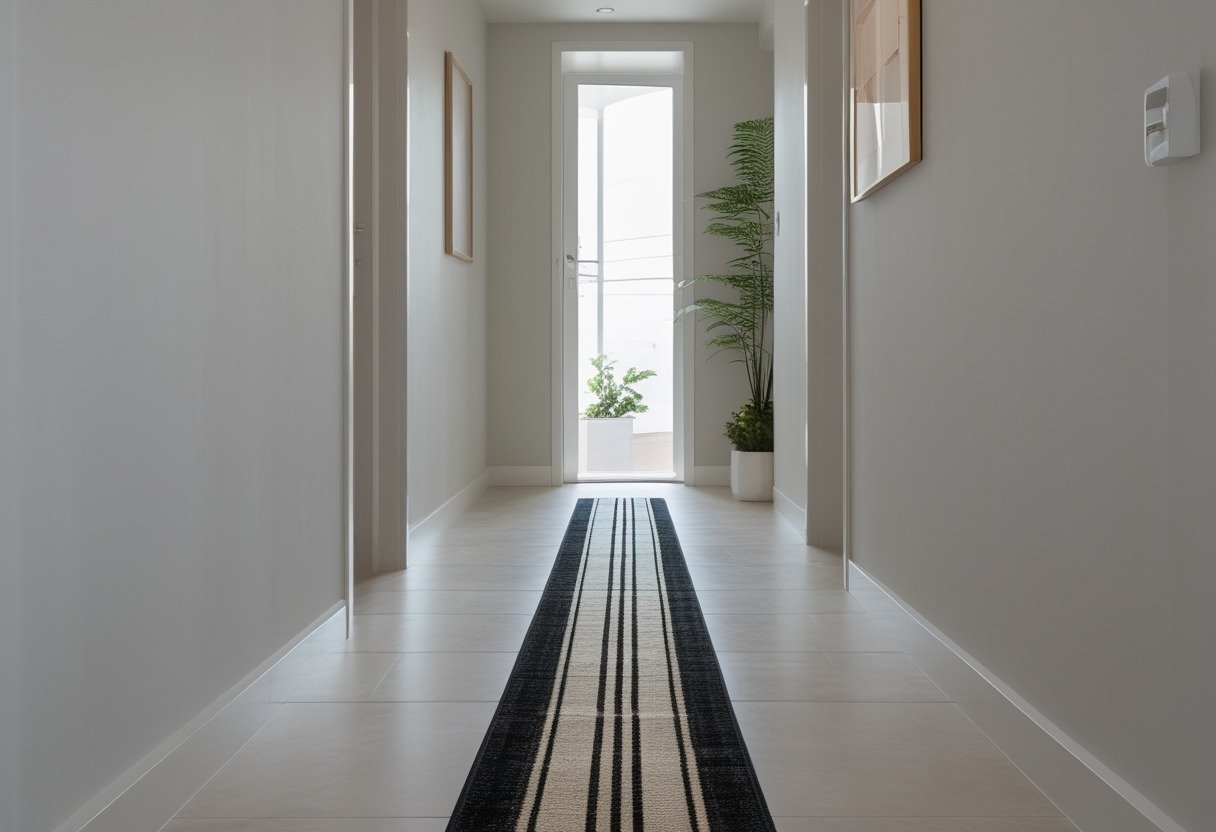
Pick a slim runner with a single central stripe to draw the eye down the hall. The stripe creates a clear path and makes the space feel longer without crowding it.
Choose low-pile, durable fibers so the rug lies flat and survives foot traffic. Match the stripe color to a wall accent or trim for a tidy, intentional look.
13) Incorporate a skylight or solar tube for natural light
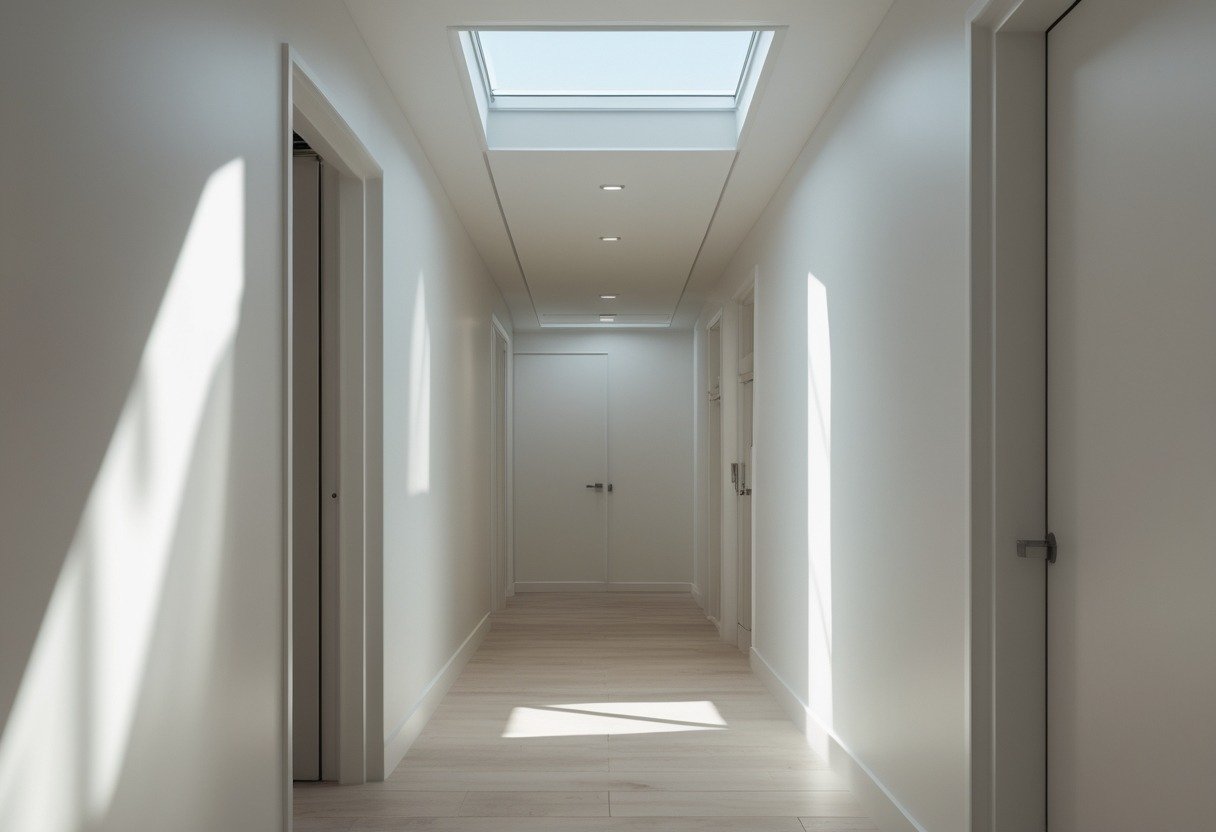
Add a skylight or solar tube to bring daylight into a narrow hallway without major walls changes. These options fit tight spaces and cut the need for daytime electric lights.
Solar tubes work well when a full skylight isn’t practical. You get bright, even light that makes the hall feel larger and safer.
Pick a location that avoids direct glare and check for roof access and clearance. Hire a pro for flashing and sealing to prevent leaks.
14) Apply high-gloss paint on one accent wall for depth
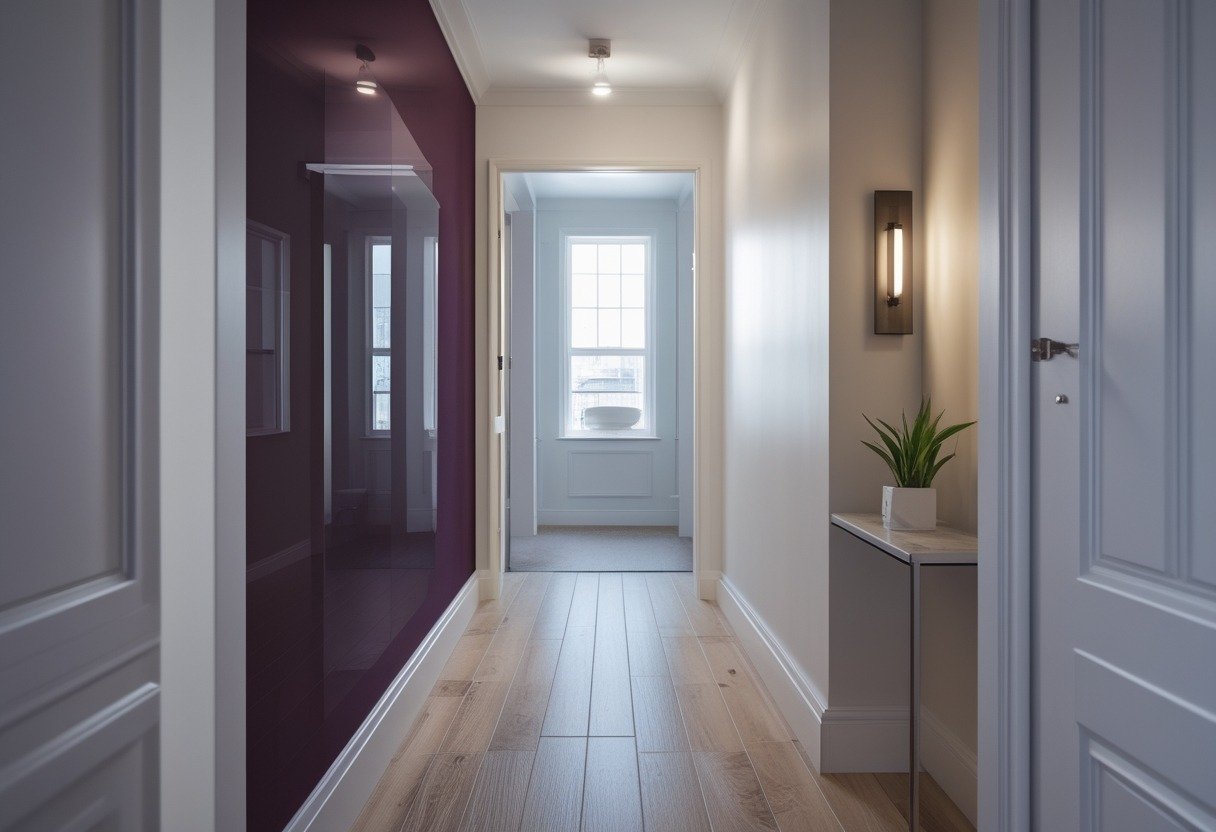
Use high-gloss paint on a single wall to catch light and add depth to a narrow hallway. The shine reflects light and makes the space feel slightly more open without overwhelming the room.
Pick the wall opposite a window or the one at the end of the hall to maximize the effect. Keep the other walls matte so the glossy surface becomes a clear focal point.
15) Fit glass-paneled interior doors to allow light flow
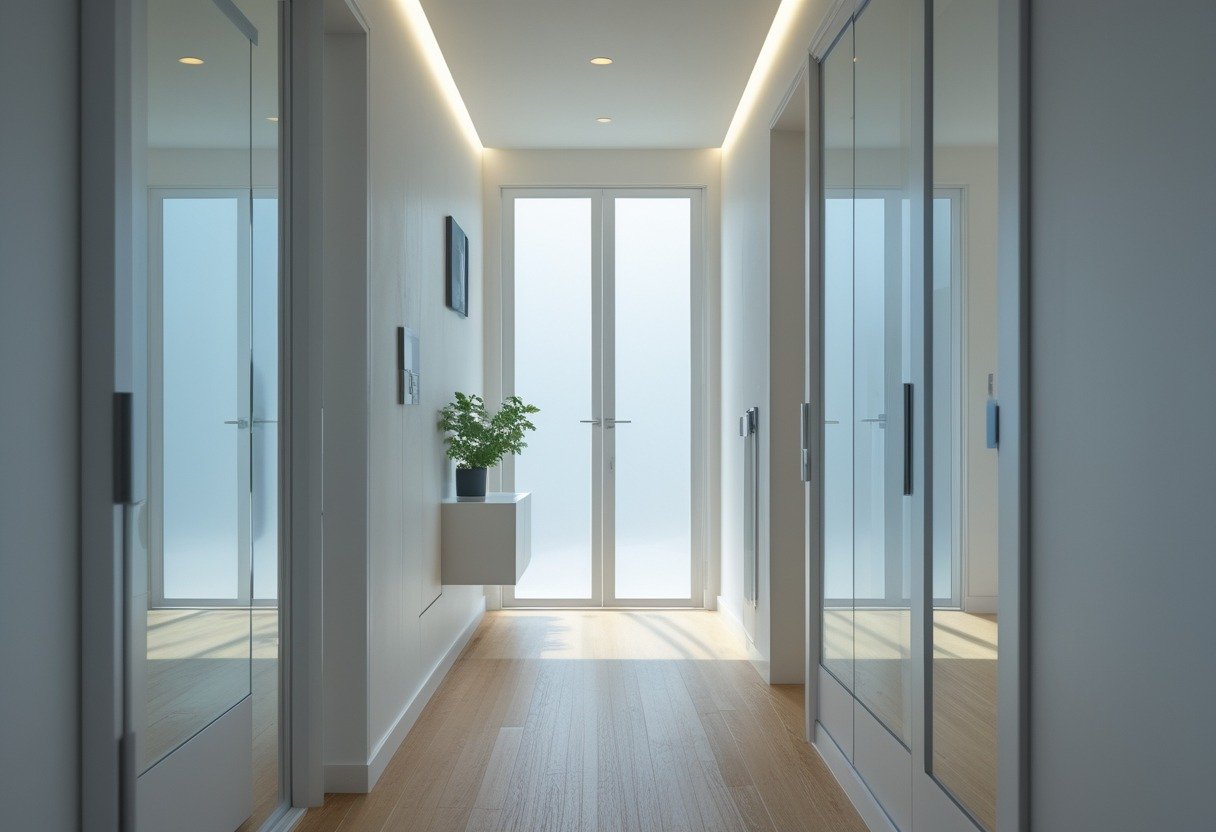
Swap solid doors for glass-paneled ones to let natural light move through your hallway. You will make the space feel brighter and less cramped without opening up walls.
Choose clear, frosted, or textured glass based on privacy needs. Slim muntins or many small panes add style and break up glare.
Sliding or pocket glass doors work well in tight spots. They save space while keeping light and sightlines flowing.
Key Design Principles for Narrow Hallways
Keep sightlines clear, use light to open the space, and pick colors that reflect light and simplify visual clutter. These moves make a narrow hallway feel wider, brighter, and more purposeful.
Optimizing Visual Flow
Keep main pathways unobstructed and reduce visual stops. Use low-profile furniture like a slim console or wall-mounted shelf no wider than 12–14 inches. Place items to one side so people can pass without turning.
Align flooring planks or runner stripes lengthwise to draw the eye down the hall. Keep trim and baseboards simple; thick or busy moulding breaks the flow. Use a single strong focal point at the end—a mirror, artwork, or window—to give the space direction.
Limit vertical breaks. If you add hooks or shelves, group them in a neat, consistent band rather than scattering them. This helps the eye move smoothly and makes the hall feel intentional rather than cluttered.
Lighting Strategies for Compact Spaces
Layer three types of light: ambient, task, and accent. Install flush or semi-flush ceiling lights for even ambient light. Add wall sconces or picture lights every 6–8 feet to remove shadows and keep the corridor bright.
Use LED bulbs around 2700–3000K for warm but clear light. Dimmer switches let you adjust brightness for different times of day. Place a mirror opposite a light source to double the perceived brightness without extra fixtures.
Consider narrow pendant lights only if ceiling height allows and they don’t hang below 7 feet. Recessed lights work well in low ceilings. Aim for about 200–300 lumens per square meter as a starting point.
Selecting Appropriate Color Palettes
Choose light, cool tones to reflect light and widen the space visually. Pale greys, soft blues, and warm off-whites work well on walls. Reserve darker colors for an accent wall at the end or for trim only.
Keep ceiling and trim lighter than walls to create vertical lift. If you want pattern, use a single patterned runner or a thin wallpaper band rather than covering all surfaces. This prevents visual clutter and keeps the hallway feeling open.
Use consistent finishes for doors and hardware to reduce visual interruptions. A simple palette of two to three complementary colors keeps the space calm and cohesive.
Common Challenges and Mistakes
Narrow hallways often feel tighter because of poor item placement, missed wall and ceiling space, and weak storage choices. Fixing these three areas gives you more walking room, better flow, and less visual clutter.
Overcrowding and Clutter
You may pack a hallway with coats, shoes, and furniture that belong elsewhere. Bulky hall trees, wide benches, and stacked boxes block the walking line and make the space feel unusable. Keep the central path clear by limiting furniture depth to 12–16 inches and reserving at least 30–36 inches of uninterrupted width for passage.
Place only daily-use items in the hallway. Use a slim coat rail or wall hooks for current jackets, and store seasonal items elsewhere. Declutter weekly: remove anything that doesn’t belong, donate unused gear, and keep a small, shallow tray for keys and mail to prevent piles.
Ignoring Vertical Space
You might treat narrow hallways like small rooms and forget the walls and height. That wastes potential for storage, lighting, and visual expansion. Think vertical: install floating shelves, shallow cabinets, or a narrow pegboard at eye level to hold small baskets, hats, and gloves without narrowing the floor.
Use vertical lighting too. Wall sconces or a linear pendant draw the eye upward and reduce shadowed corners. Mirrors placed vertically reflect more of the ceiling and lengthen sightlines. Keep wall fixtures within reach and avoid anything that protrudes into the walking plane.
Inadequate Storage Solutions
Open baskets on the floor and oversized consoles look handy but create constant mess. Wrong-sized storage makes small hallways feel chaotic. Choose solutions sized to the space: slim built-ins, recessed cubbies, or underbench drawers that fit the hallway depth.
Organize by function: one shelf for mail, one bin for shoes, one hook row for daily coats. Label baskets and use uniform containers to reduce visual noise. If you need extra capacity, add storage above door height for items you access rarely to keep the floor area free.
