
Your stairs and hallway can do more than move you through the house; they can lift the whole feel of your home and work harder every day. You will find practical stairs and hallway ideas that blend style, light, and smart storage so these spaces look better and serve you more.
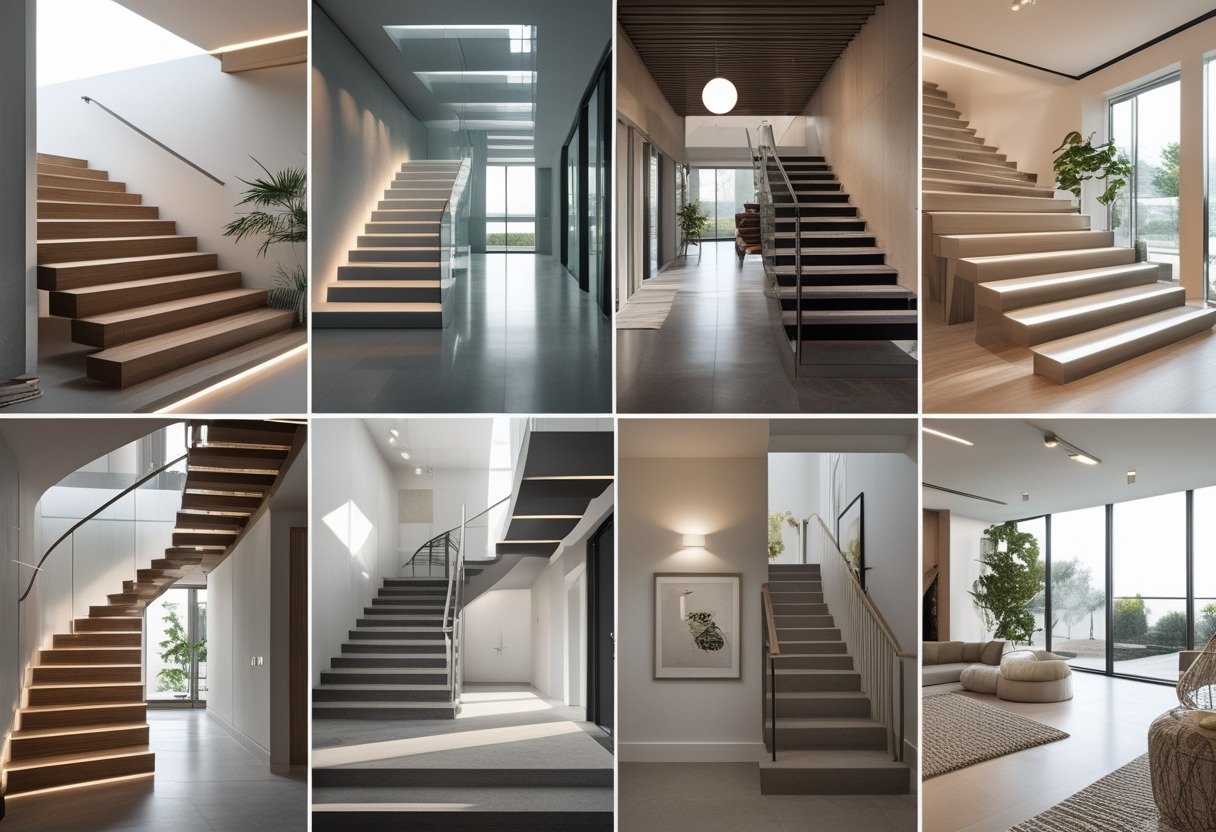
This article walks you through simple design moves and key principles that make stairs and hallways both beautiful and useful. You’ll see options that focus on color, lighting, built-in solutions, and small upgrades that change daily life.
1) Bold stair runner in geometric navy and cream
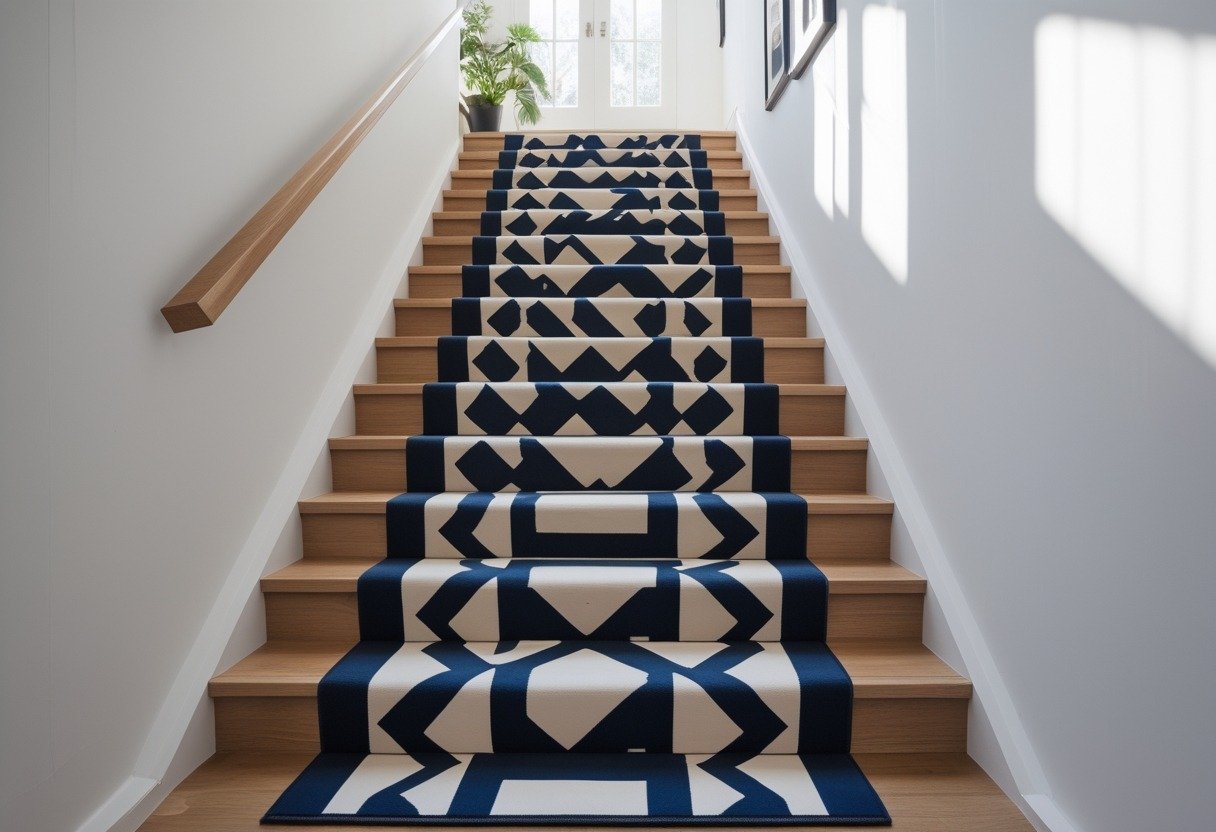
Choose a navy and cream geometric runner to add focus to your stairs without loud colors. The dark navy hides wear while cream shapes keep the pattern crisp and modern.
A geometric design gives a clean, architectural look that suits contemporary and transitional homes. It also helps guide the eye up the staircase, making narrow halls feel more intentional.
Pick a durable, low-pile material for traction and easy cleaning. Secure with proper pads or installation to keep each step safe for family and guests.
2) Gallery wall with mixed-frame family photos on stair rise
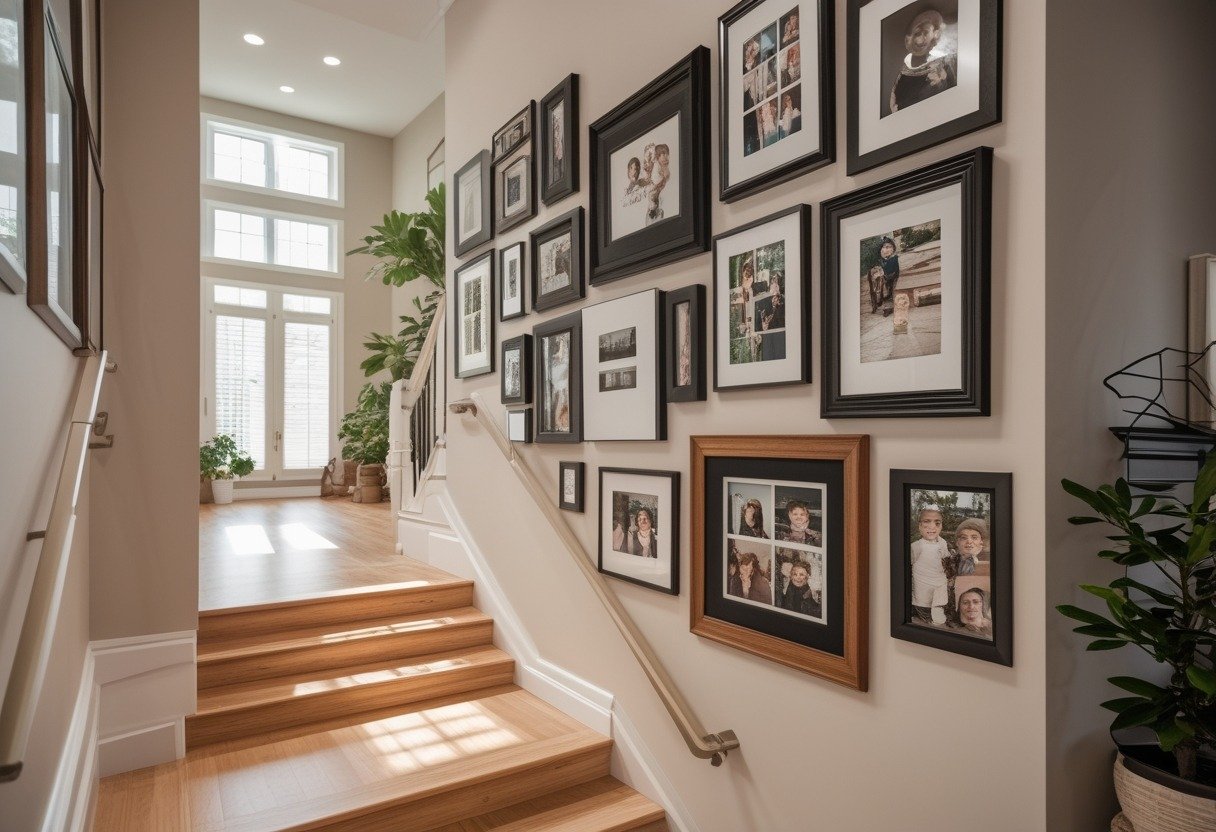
Place a mix of frame styles and sizes along the stair rise to create rhythm and balance. Start with a central photo at eye level, then work outward and upward to follow the stair angle.
Keep spacing even and use a simple color palette for frames so your photos stand out. Measure and mock up with paper templates first to avoid wasted holes in the wall.
Vary portrait and landscape frames for visual interest. Use level and tape measure for a clean, aligned look that feels intentional.
3) Under-stair built-in storage cabinets with push-to-open doors
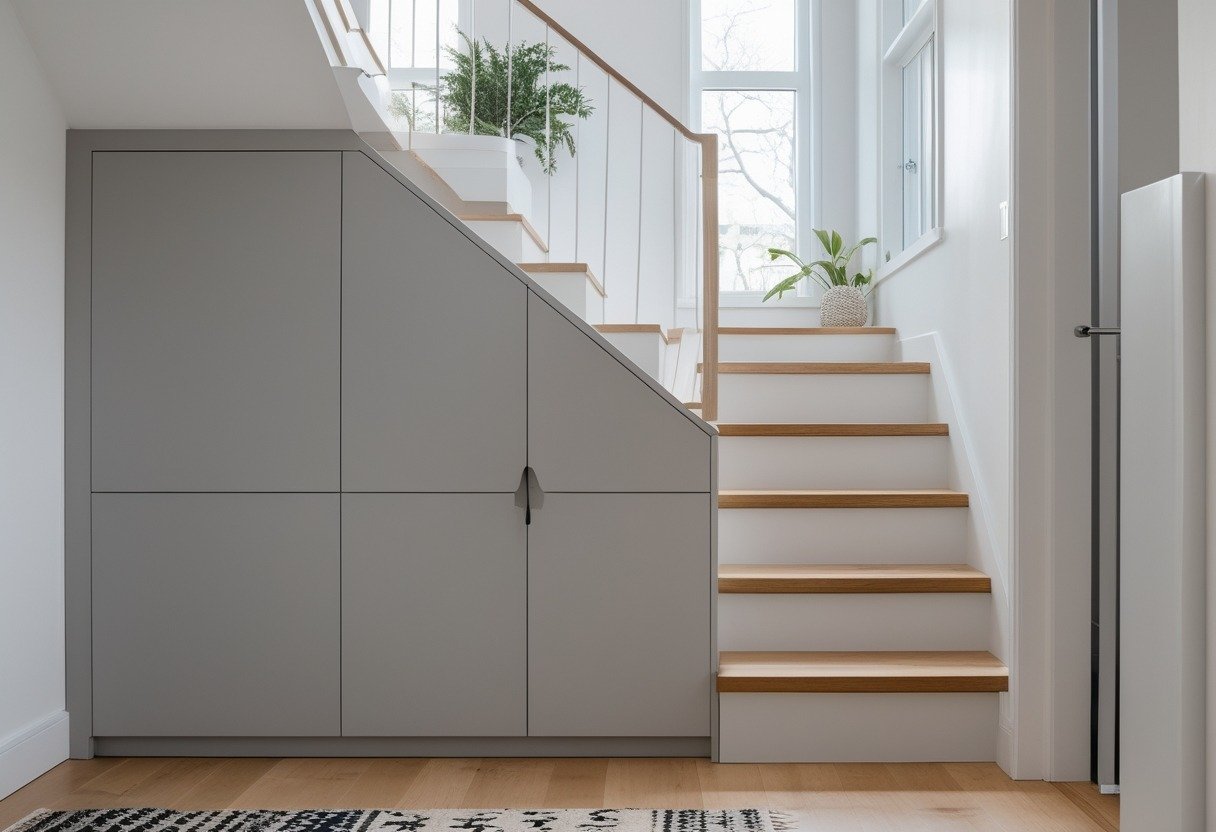
You can turn the space under stairs into clean, seamless storage with built-in cabinets and push-to-open doors. Push-to-open hardware keeps surfaces smooth and hides handles, so the cabinets look like part of the stair architecture.
Use deep drawers for shoes and seasonal items, and shallow shelves for keys or mail. Choose durable materials and soft-close mechanisms to reduce wear and keep the area quiet.
4) Recessed LED strip lighting along stair treads
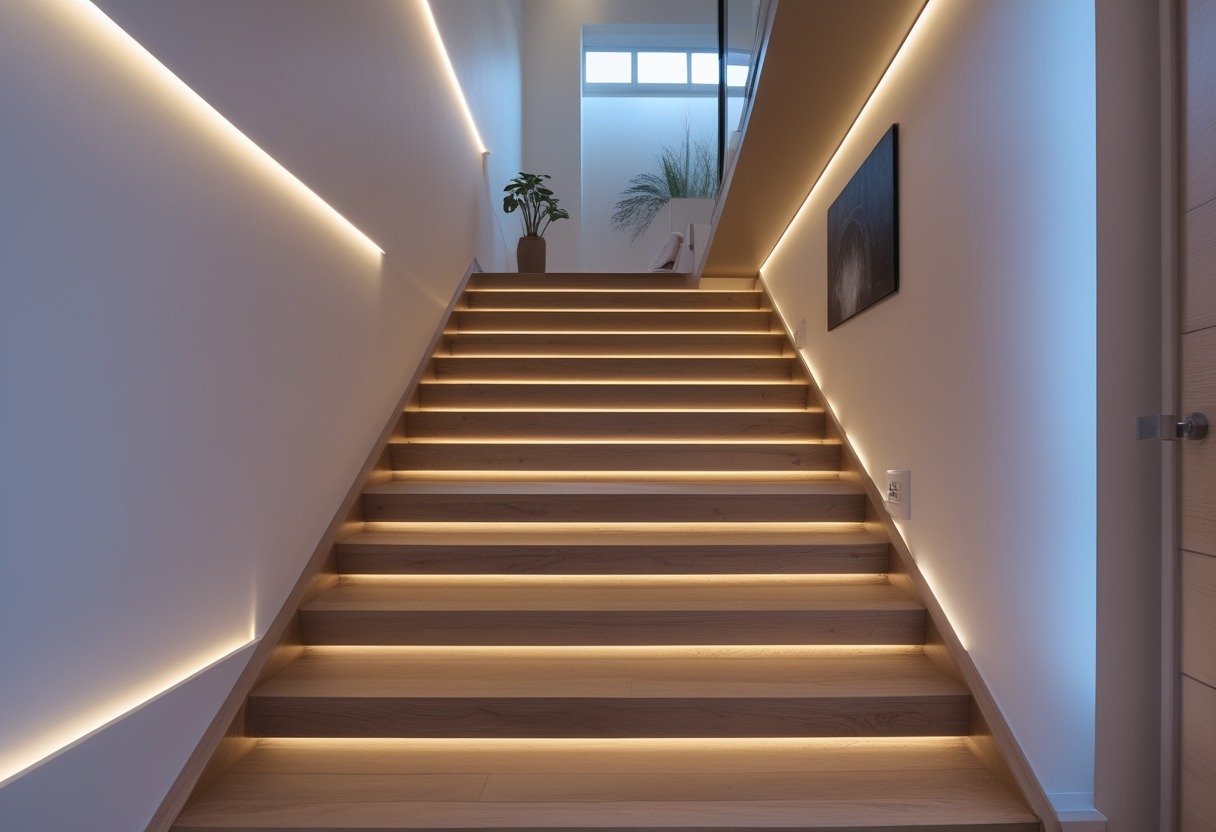
Recessed LED strips hide inside the tread or under the lip so light washes the step without glare. You get clear visibility of each step, which improves safety at night.
Choose a warm or neutral color temperature to keep the look calm and avoid visible LED dots by using a frosted diffuser. Plan power and wiring before finishing the stairs to keep installation neat and code-compliant.
5) Floating oak open-riser staircase with glass balustrade
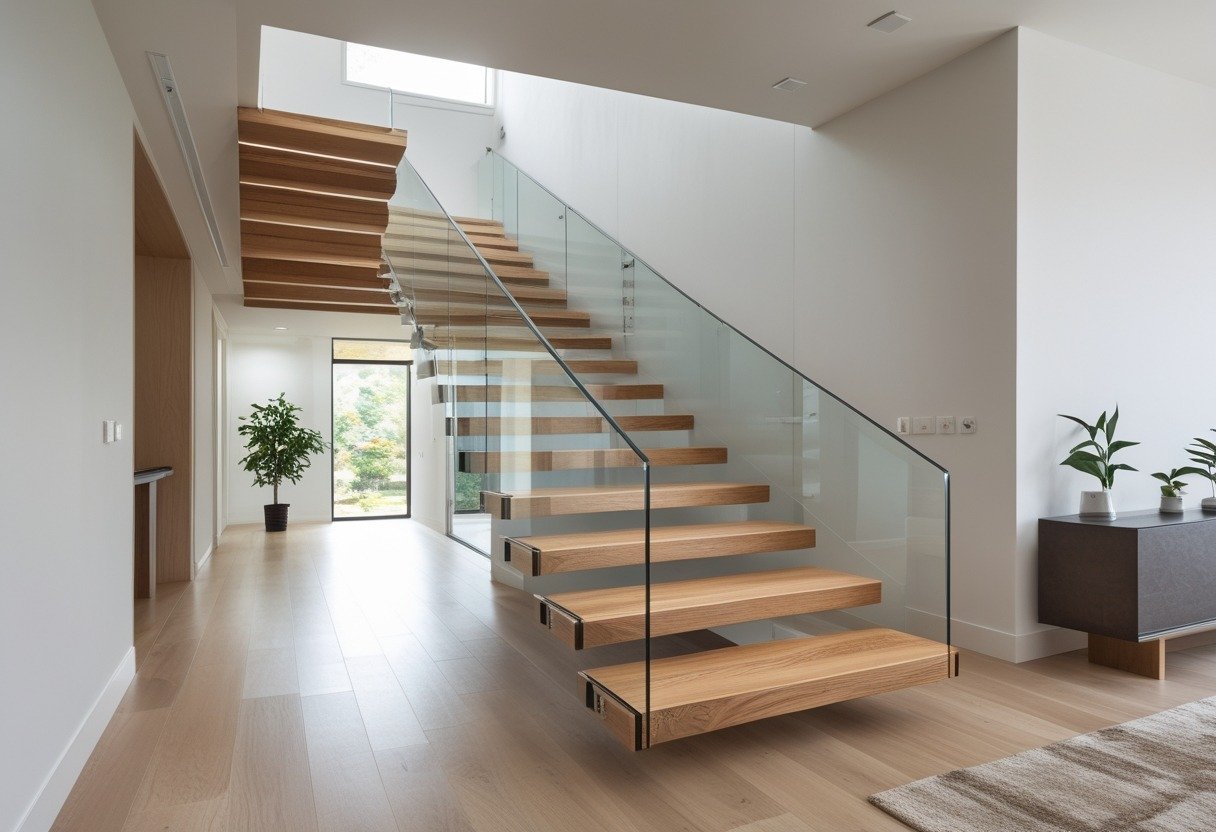
You give your home a clean, modern look with floating oak treads and open risers. The design lets light pass through, making small halls feel bigger.
A clear glass balustrade keeps sightlines open while giving sturdy edge protection. Oak adds warmth and wears well with regular care.
This layout fits contemporary and minimalist styles. It works best when the structure and fixings meet building safety rules.
6) Wallpapered stairwell in large-scale botanical print
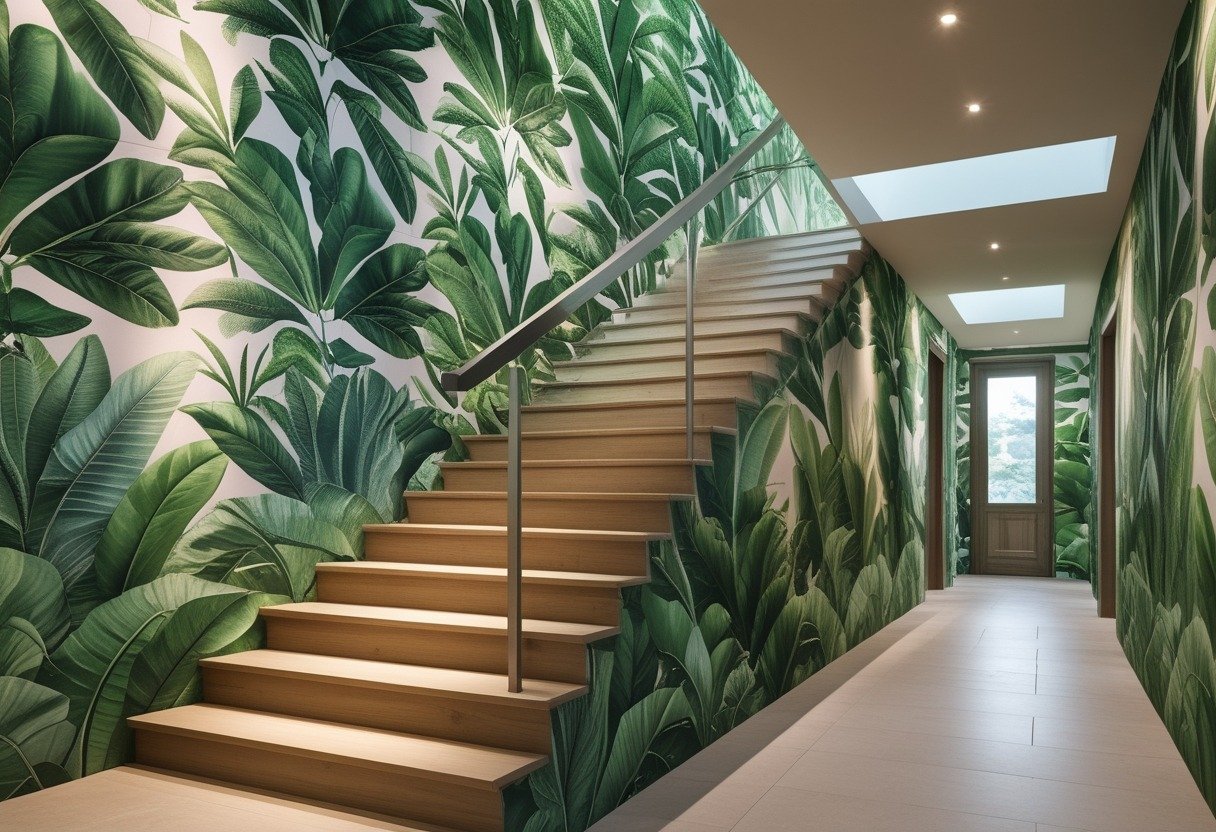
A large botanical print adds life and scale to a stairwell without cluttering the space. You can pick a bold leaf or palm pattern to draw the eye upward and make the area feel intentional.
Choose matte or textured wallpaper to reduce glare and hide minor wall flaws. If your stairs get direct light, pick fade-resistant paper and test a sample first.
7) Slim console table and mirror at hallway entry
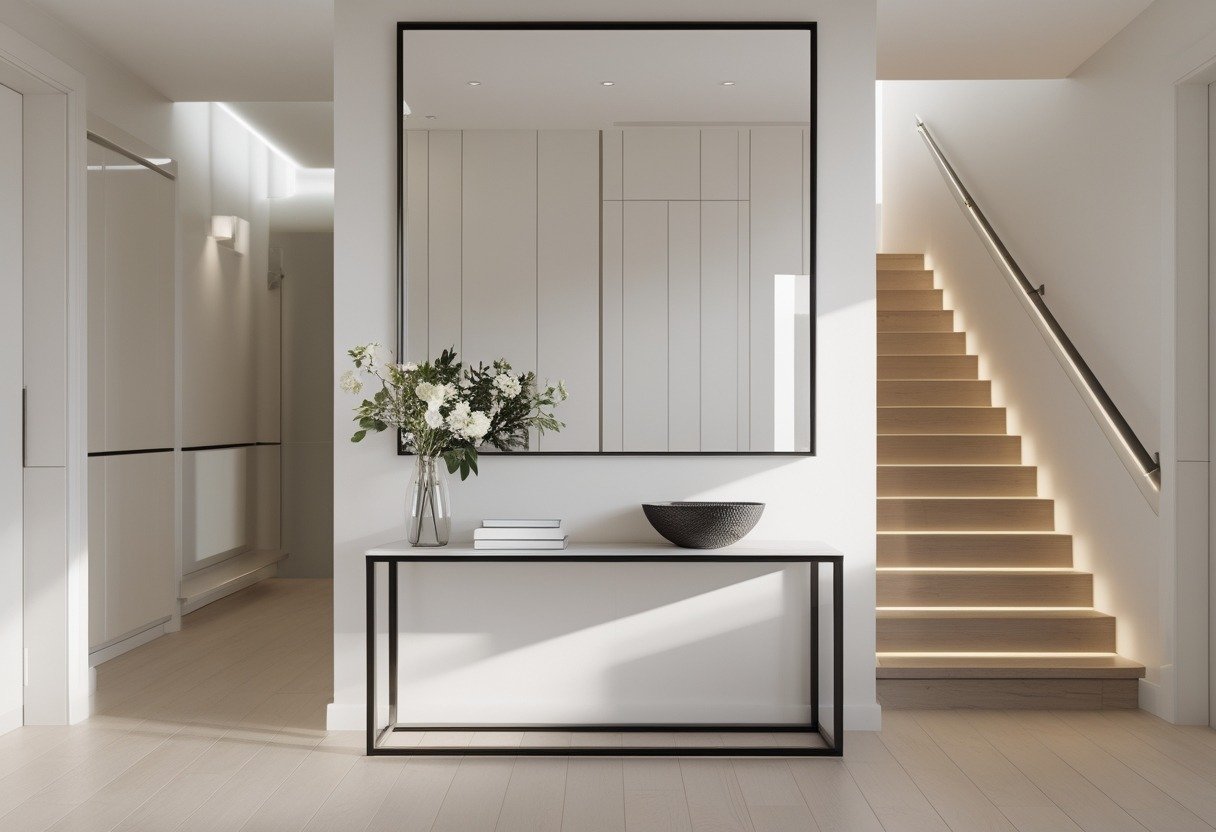
Place a slim console table against the wall to keep your hallway clear and useful. You can drop keys, mail, and a small lamp on it without crowding the space.
Hang a mirror above the table to reflect light and make the area feel larger. Choose a round or narrow rectangular mirror to match the table proportions.
Add one or two simple decor pieces—like a tray and a small plant—for a tidy, welcoming look. Keep styling minimal to avoid clutter.
8) Bench with shoe cubbies and upholstered cushion in hallway
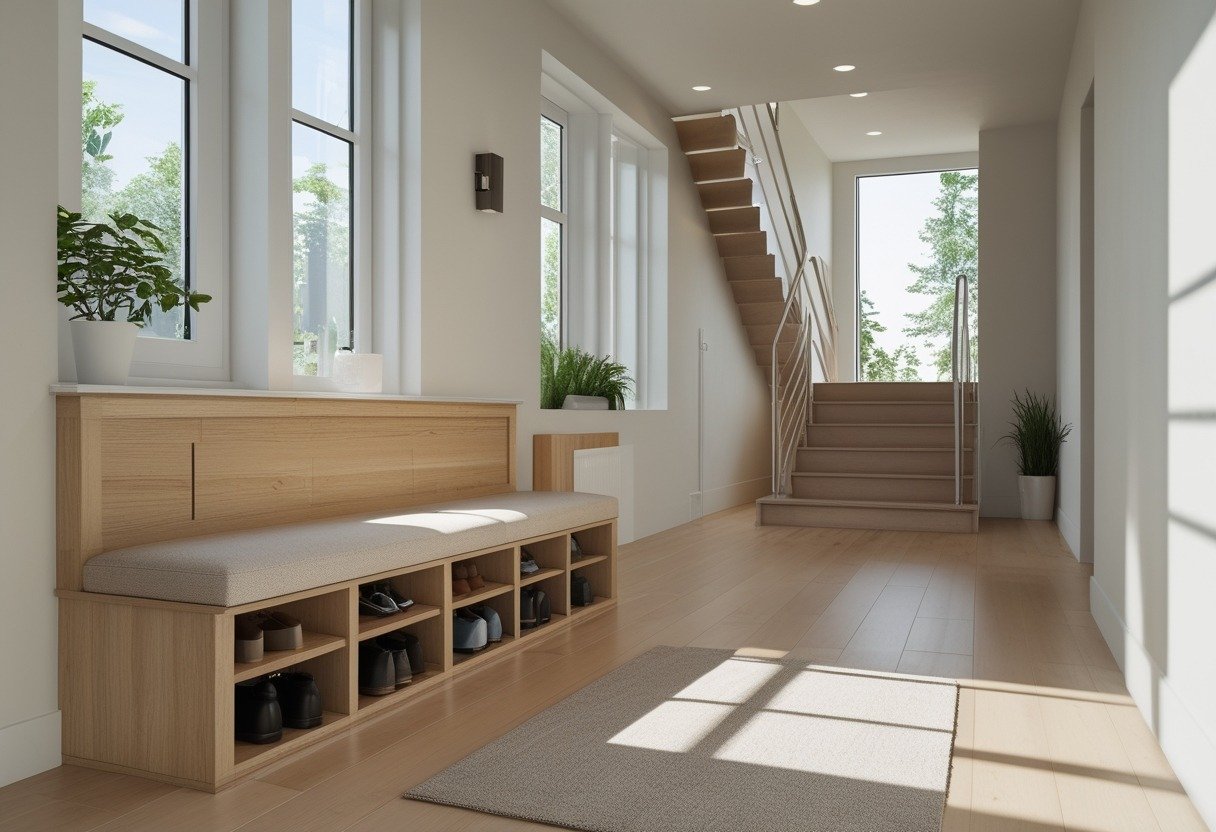
Add a bench with shoe cubbies to keep shoes off the floor and make your hallway look neat. The cushioned top gives you a comfy spot to sit while you put on or take off shoes.
Choose a bench with the right number of cubbies for your family. Look for a durable cushion fabric and a sturdy frame so it lasts through daily use.
9) Floor-to-ceiling paneling painted in warm greige for hallway
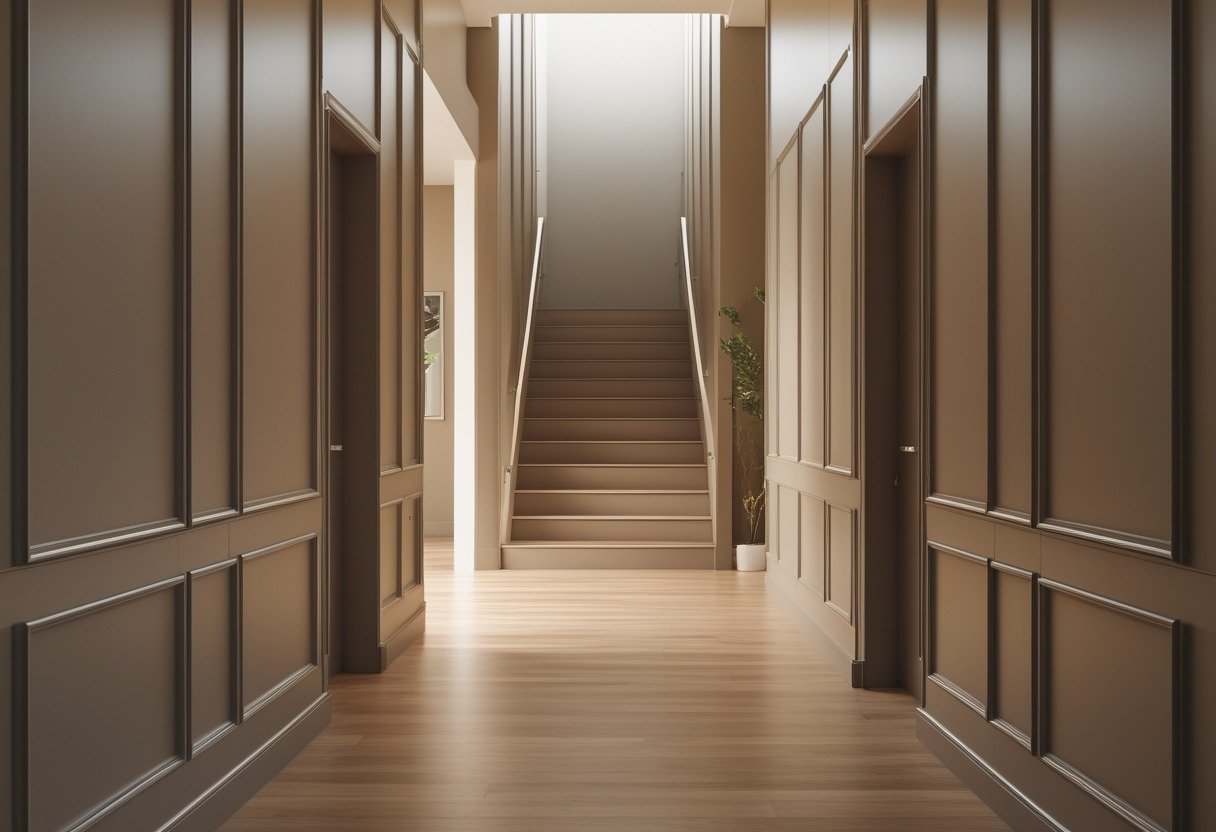
Paint floor-to-ceiling paneling in warm greige to add depth without darkening the space. You get a soft, neutral backdrop that works with wood tones, black hardware, or brass accents.
This treatment hides scuffs and looks refined. Keep lighting bright and add a runner to balance the warm hue and guide the eye.
10) Skylight over stair landing to maximize natural light
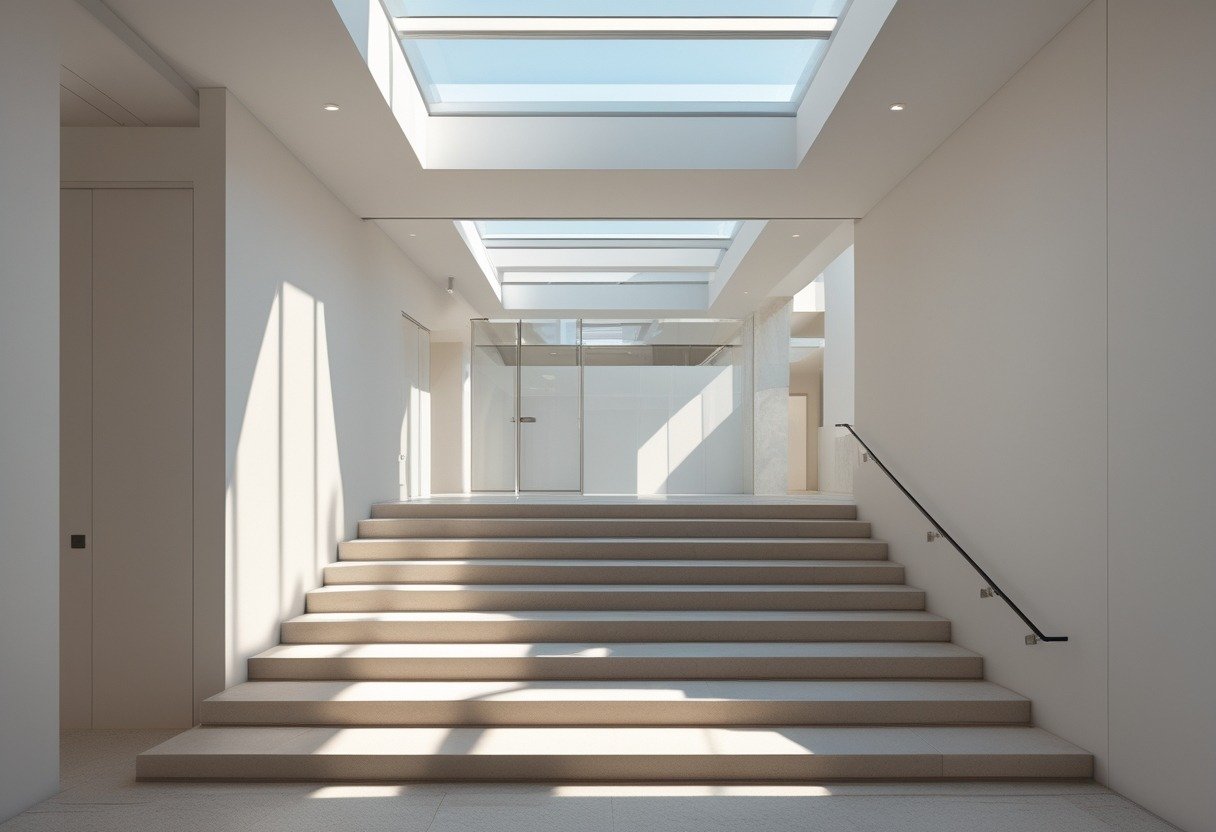
A skylight over your stair landing brings steady daylight deep into the house. You get brighter steps and fewer dark corners without adding wall windows.
Place the skylight to light the landing and upper run; this also lets light spill to lower floors. Choose size and glazing that control glare and heat so the space stays comfortable year-round.
Key Design Principles for Unified Staircases and Hallways
Keep sightlines clear, use matching materials or repeat accents, and plan lighting so stairs feel safe and hallways feel connected. Make choices that guide movement, highlight transitions, and reduce visual clutter.
Flow and Continuity
Use visual cues to lead people smoothly between levels. Align handrails, trim, or floor direction so your eye follows a clear path. For example, run hardwood grain up the hall and onto stair treads, or continue a runner rug pattern from hallway to stair landing to create a single, readable route.
Balance scale and proportion. If your stairs are narrow, avoid heavy newel posts or wide balusters that break the flow. In wide halls, add a low console or art grouping that keeps the center path open while giving the space rhythm.
Keep materials consistent where practical. Match stair treads and hallway flooring or repeat a wall color and molding profile. Small repeats—metal on balusters and door hardware, or a recurring color stripe—help the whole area read as one design.
Lighting Considerations
Layer lighting for safety and atmosphere. Combine overhead fixtures in the hall with step lighting or recessed lights on the stair risers for clear depth perception. Place lights to eliminate shadows on tread edges; a light 6–12 inches above each landing improves visibility.
Use dimmers and multiple circuits. Bright settings help moving large items; lower levels create a calm evening mood. Consider motion sensors for night use so lights come on only when needed.
Choose color temperature carefully. Warm light (2700–3000K) feels cozy in living areas, while neutral white (3000–3500K) shows colors truer and can help sighted navigation on stairs. Keep fixtures and switches in consistent finishes for a tidy look.
Color Palette Coordination
Pick a primary neutral for walls and trim to unify both spaces. Neutrals like soft gray, beige, or off-white let you change accents later without redoing everything. Use the same neutral on stair risers and hallway walls to make transitions smooth.
Add accent colors in predictable places. Paint the stair stringer, the underside of a railing, or a hallway door in an accent hue that repeats elsewhere—pillows, artwork, or a runner—to tie the areas together. Limit accents to two or three shades to avoid visual noise.
Use contrast for safety and style. A slightly darker tread or a contrasting nosing improves depth perception. Keep contrast subtle enough to look planned but strong enough to mark each step clearly.
Enhancing Functionality and Comfort
Make the space work harder and feel calmer by adding smart storage and cutting down on echo and footfall noise. Focus on solutions that fit your layout, keep paths clear, and match your home’s style.
Storage Solutions
Use the space under stairs for pull-out drawers, a built-in closet, or a slim pantry. Measure the full height and depth so drawers slide freely and shelves store items like shoes, vacuum cleaners, or seasonal gear. Add adjustable shelving to adapt as needs change.
Mount a shallow wall cabinet or floating shelf in narrow hallways to hold keys, mail, and sunglasses without blocking traffic. Choose doors with soft-close hinges to avoid slams. For quick drop zones, install a bench with cubbies underneath; add baskets for a tidy look.
Use vertical space: pegboards or slatwall panels let you hang bags, scarves, and umbrellas. Label bins and keep frequently used items at eye level. Match finishes to nearby trim for a built-in appearance.
Noise Reduction Strategies
Lay a runner rug or stair tread carpet to cut impact noise and soften footsteps. Choose a dense rug pad under long runners to reduce bounce and protect floors. On stairs, stair nosing with carpet reduces slipping and dampens sound.
Add soft surfaces to walls to absorb echo. Fabric-backed artwork, cork panels, or acoustic panels behind a gallery wall lower reverberation without changing decor. Place a narrow runner on landings too, where sound often reflects.
Seal gaps around doors and at the base of staircases to stop noise transfer between rooms. Install door sweeps and weatherstripping, and use heavy curtains at entry points if you need extra sound control.
