
You can make a small entrance hall feel useful and inviting without major renovation. This article shows simple, practical small hallway ideas entrance halls you can use to save space, add light, and keep your entryway tidy while reflecting your style.
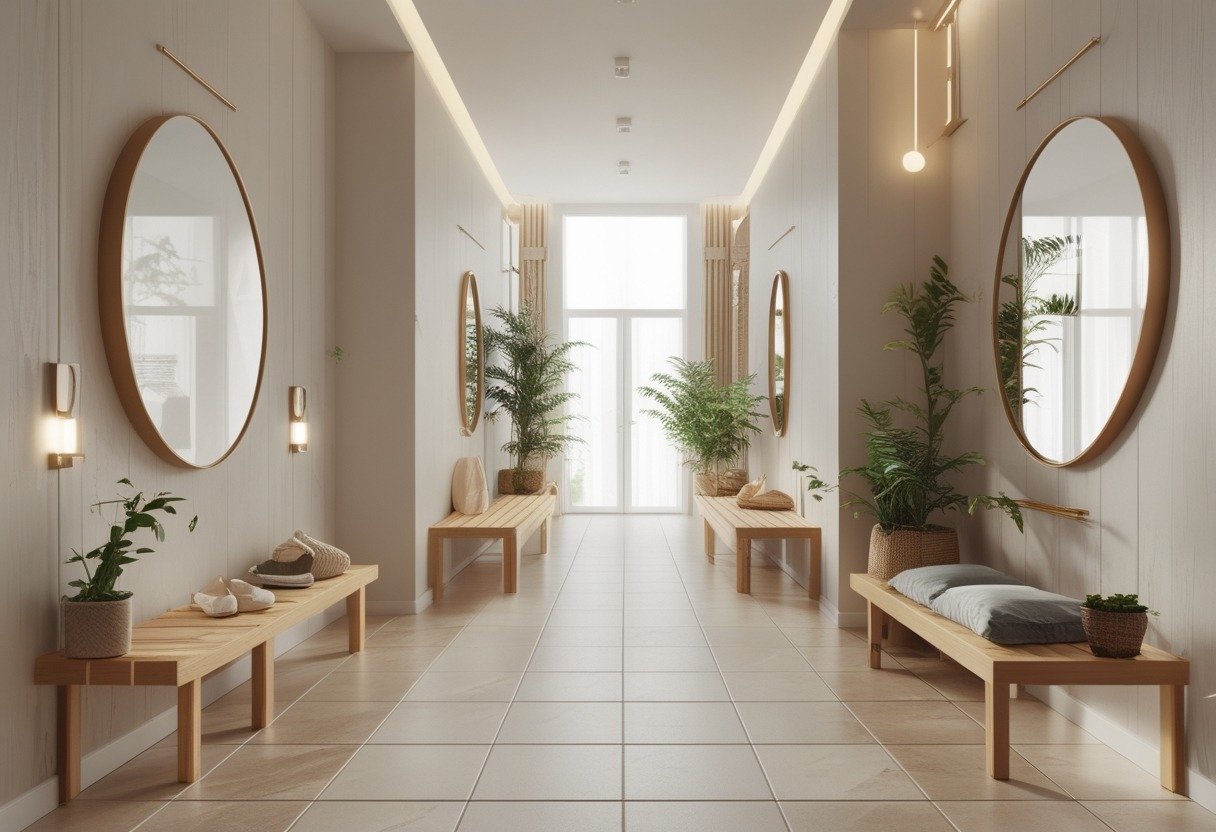
You’ll find compact solutions like slim consoles, mirrors that open up the space, smart storage benches, and lighting tips that lift the mood. Use these ideas to design a narrow hallway that works for daily life and makes a good first impression.
1) Slim wall-mounted console with hidden drawers
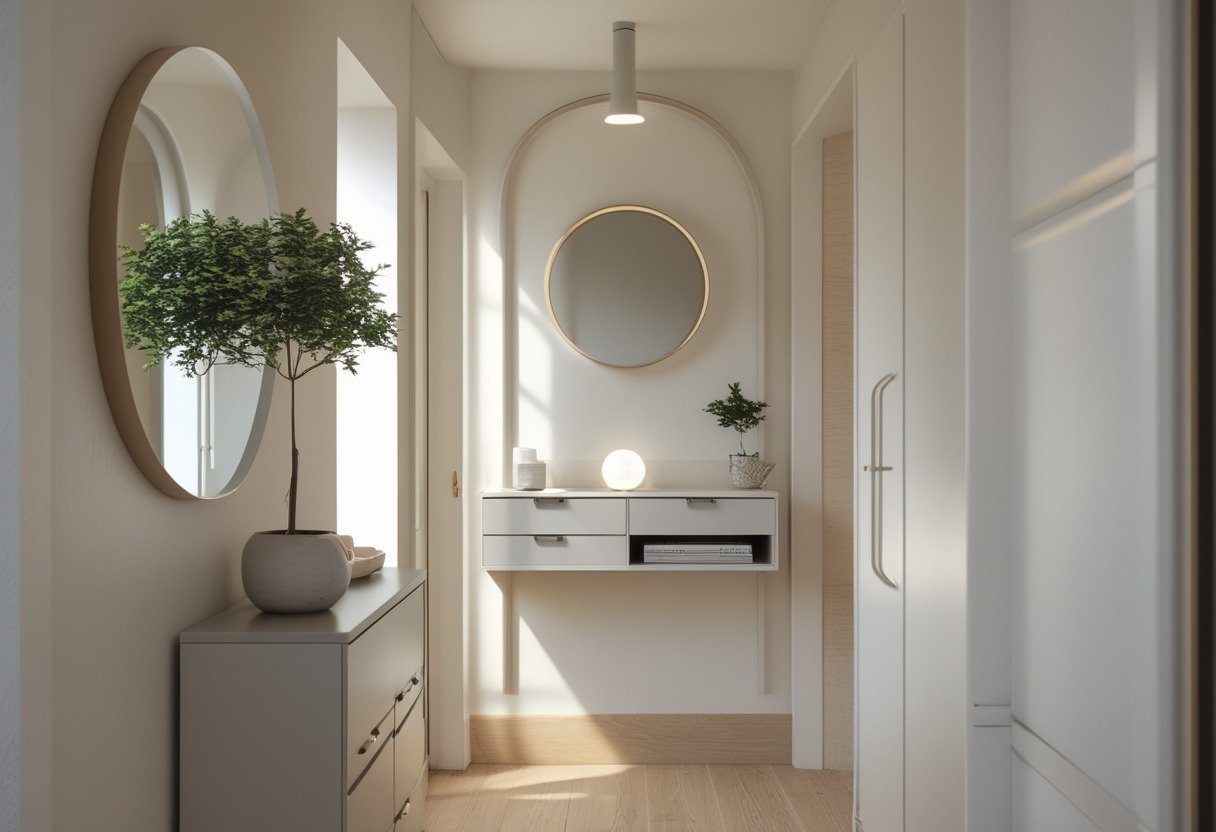
Choose a slim, wall-mounted console to keep floor space open and traffic flow smooth. You get a surface for keys and mail without a bulky table in the way.
Hidden drawers keep small items out of sight and make the entry feel tidy. Mount it at hip height so you can grab things quickly when you leave.
Pick a simple design in a finish that matches your walls to make the hallway appear wider. Use the top for a lamp or a small tray to add function without clutter.
2) Full-length mirror to visually expand the space
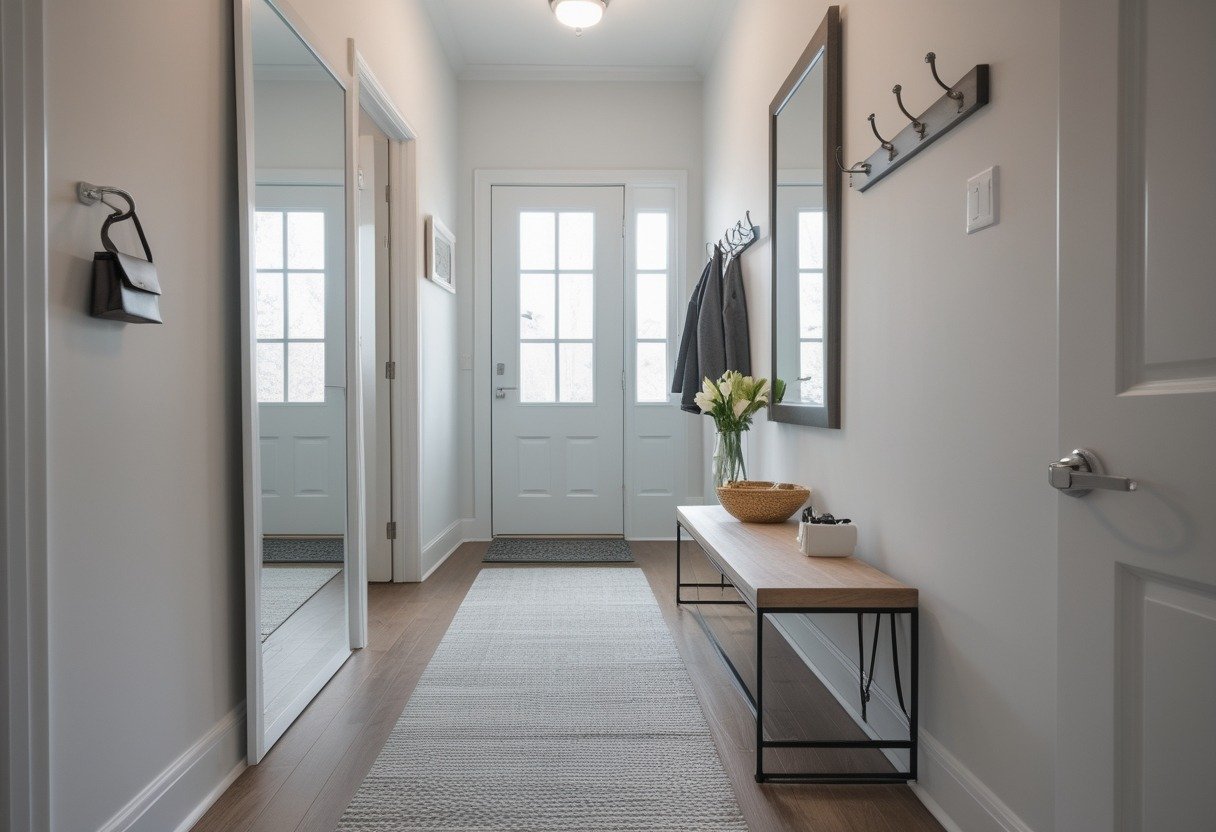
Place a full-length mirror at the end of a narrow hallway to make the area feel wider and longer. It reflects light and sight lines, which brightens darker corridors.
Choose a simple frame that matches your decor so the mirror blends in without crowding the space. Leaning a mirror against the wall saves installation work and adds a relaxed, modern touch.
3) Narrow bench with shoe storage underneath
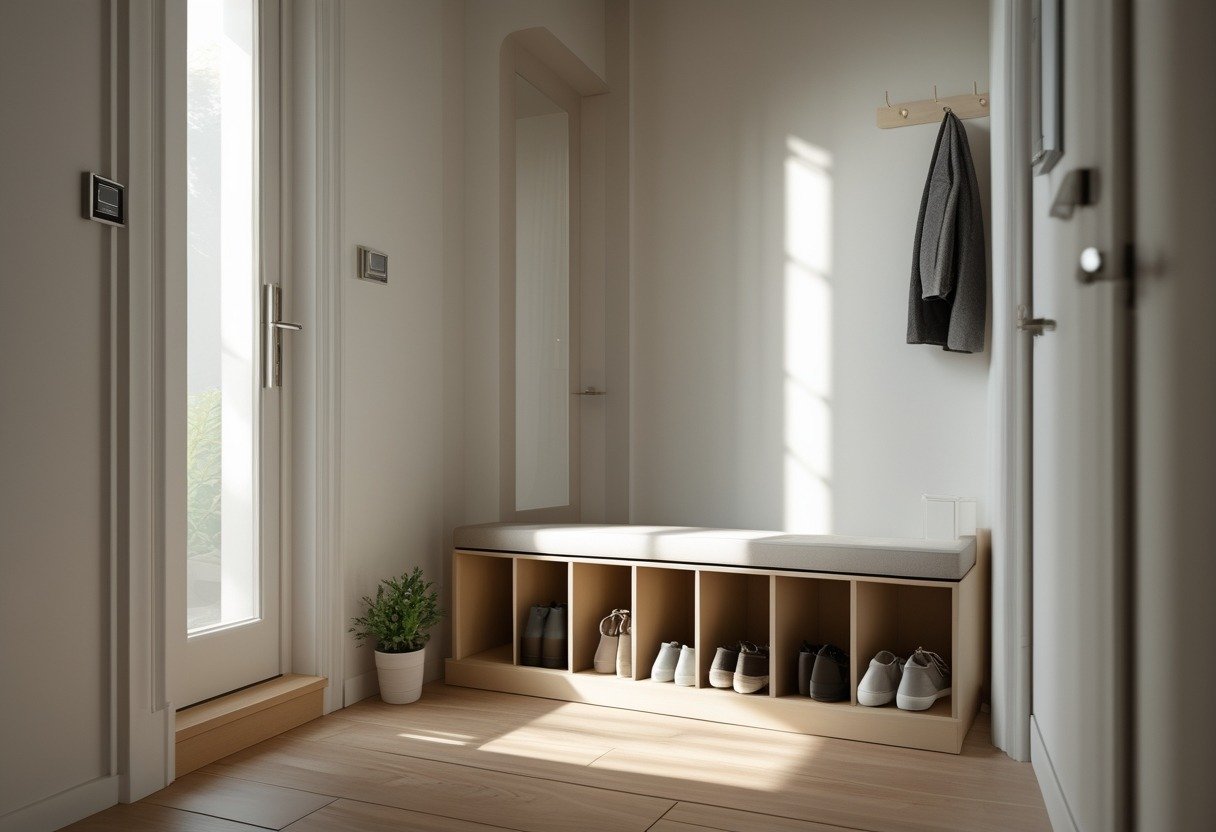
Choose a slim bench to fit tight hallways without blocking the flow. You get a place to sit and a hidden spot for shoes under the seat.
Look for flip drawers, cubbies, or a shelf that keeps pairs out of sight. A cushion on top adds comfort for putting shoes on.
4) Vertical peg rail for coats and bags
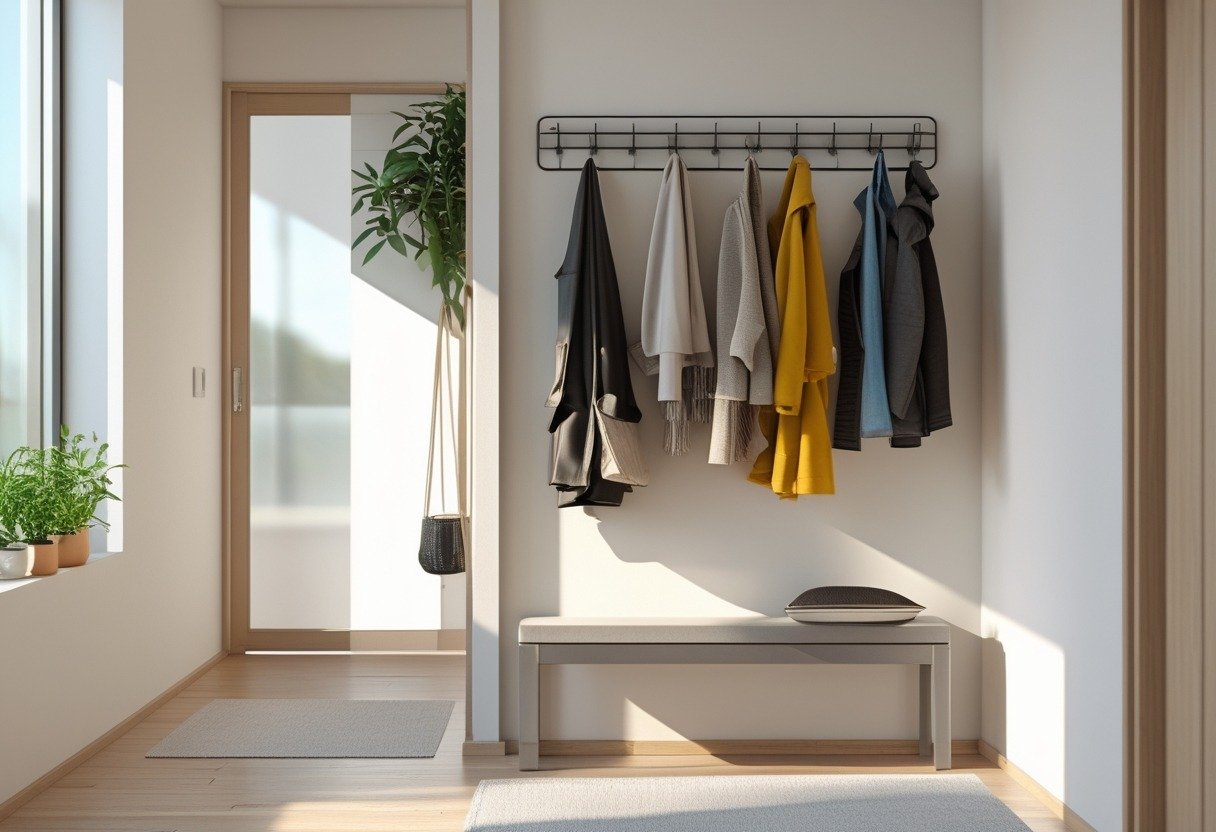
A vertical peg rail uses wall space to hang coats and bags, keeping the floor clear. You can place it away from the front door to avoid crowding the entry.
Choose sturdy pegs spaced for coats and smaller pegs for bags or keys. Match the rail to your wall finish for a neat, built-in look.
Install at varied heights so kids and adults reach easily. This simple change makes a narrow hallway feel more organized and open.
5) Recessed floating shelves for keys and mail
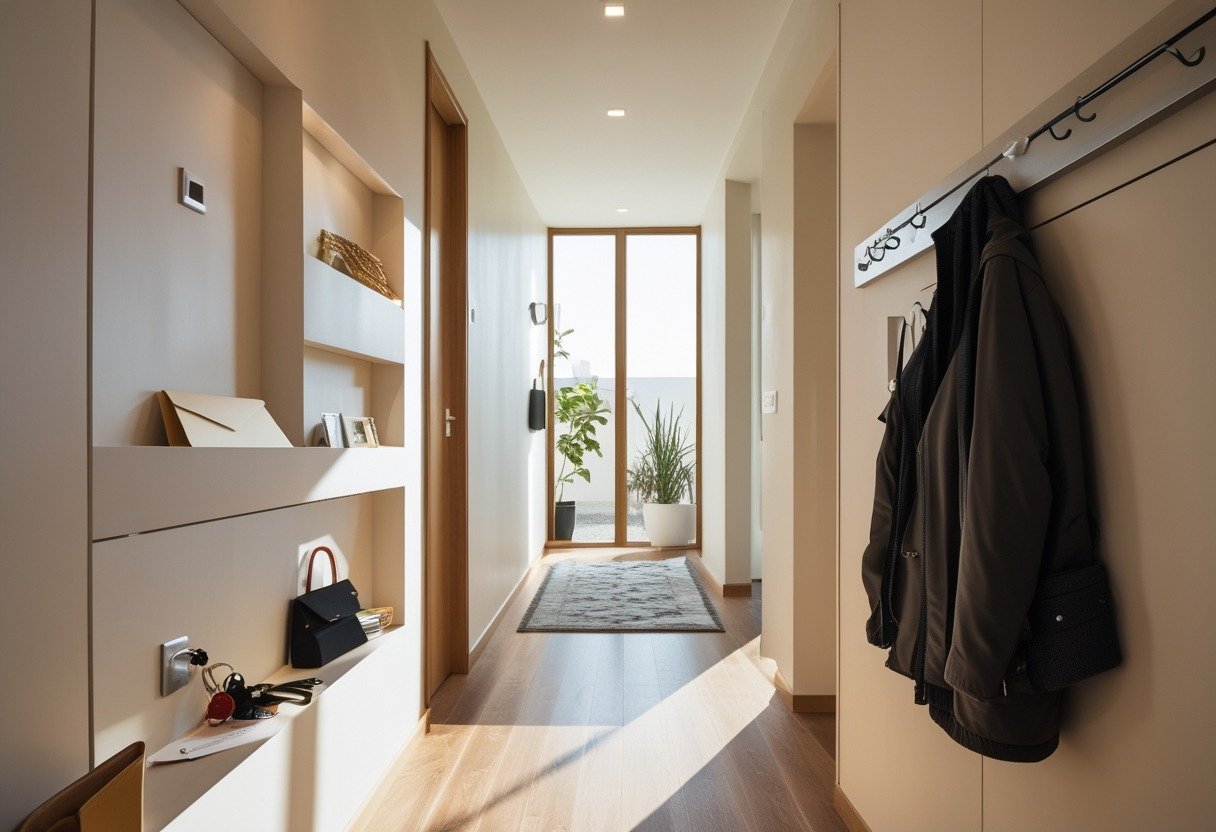
Install shallow recessed floating shelves near your door to hold keys, mail, and small items without sticking into the hallway. They sit flush with the wall, so you keep clear passage while gaining a tidy drop zone.
Choose 6–10 inch depths for narrow halls and add a small tray or hooks underneath for rings and lanyards. Use wood or painted finishes that match your trim to keep the look calm and intentional.
6) Overhead pendant light with warm LED bulb
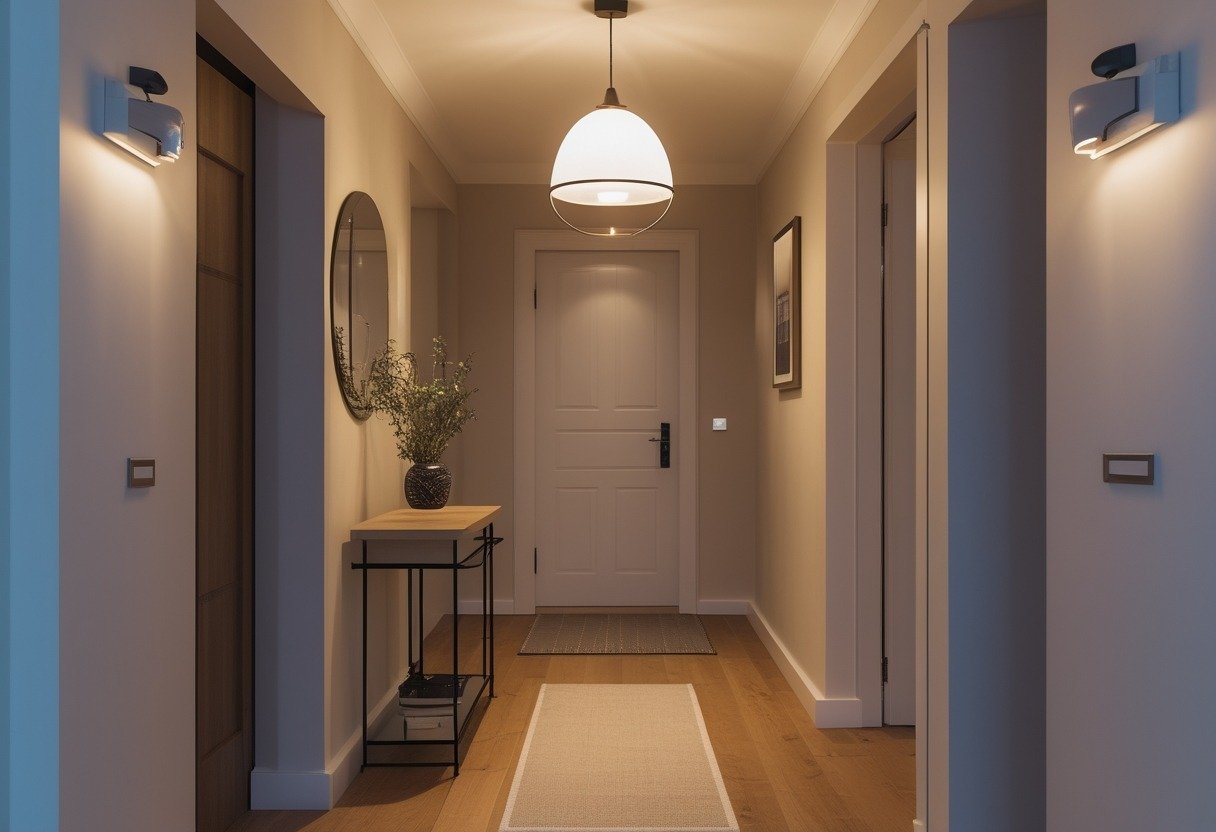
Choose a pendant that fits your hallway width and ceiling height. A single fixture can add style and give clear, even light.
Use a warm LED bulb (2700–3000K) to make the space feel welcoming without glare. LEDs save energy and last longer than incandescent bulbs.
Hang the pendant slightly off-center over a console or runner to create a focal point. Adjust chain or rod length so the light sits about 7–8 feet above the floor for comfortable headroom.
7) Runner rug with bold stripe to elongate hallway
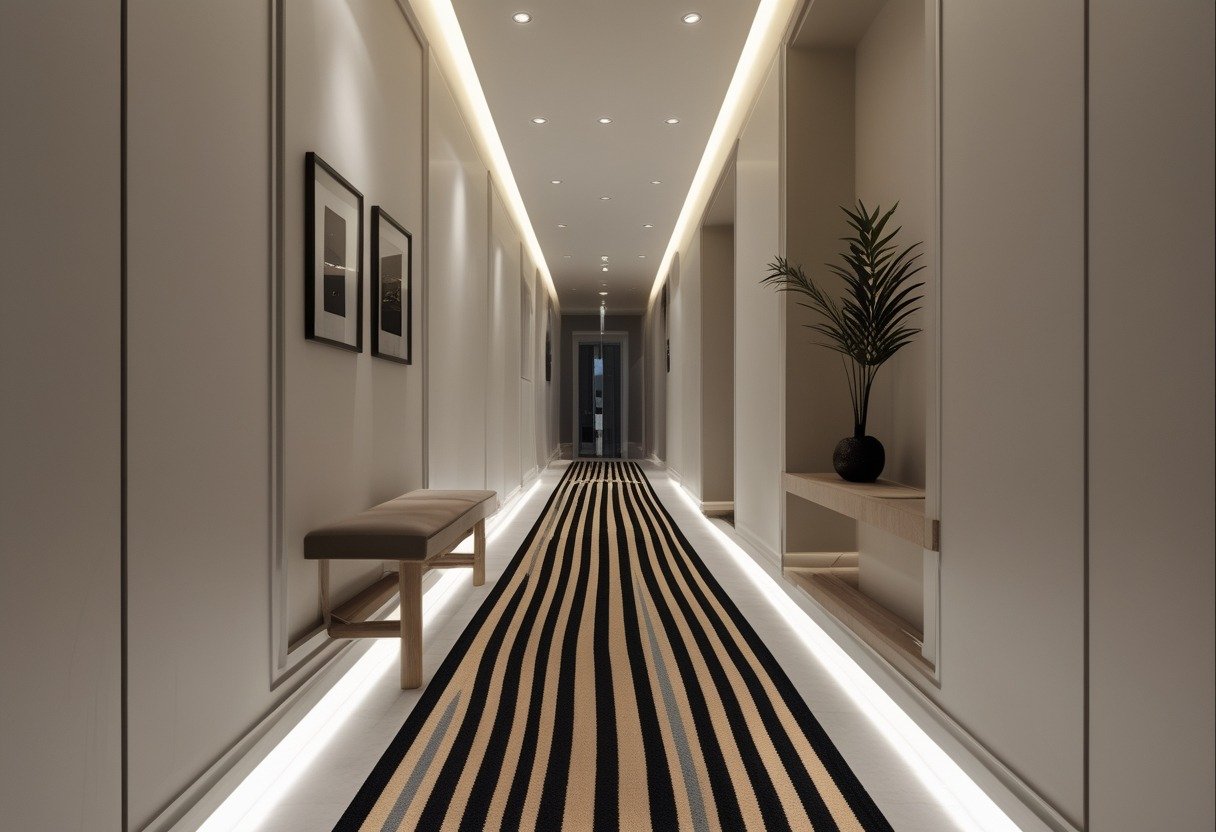
Choose a runner with a strong, lengthwise stripe to make your hallway look longer. The stripe guides the eye down the corridor and adds a clear, modern pattern without clutter.
Pick a rug width that leaves a border of floor on each side so your hallway still feels open. Durable materials work best in high-traffic areas and keep the look sharp.
8) Built-in cubby niches with backlighting
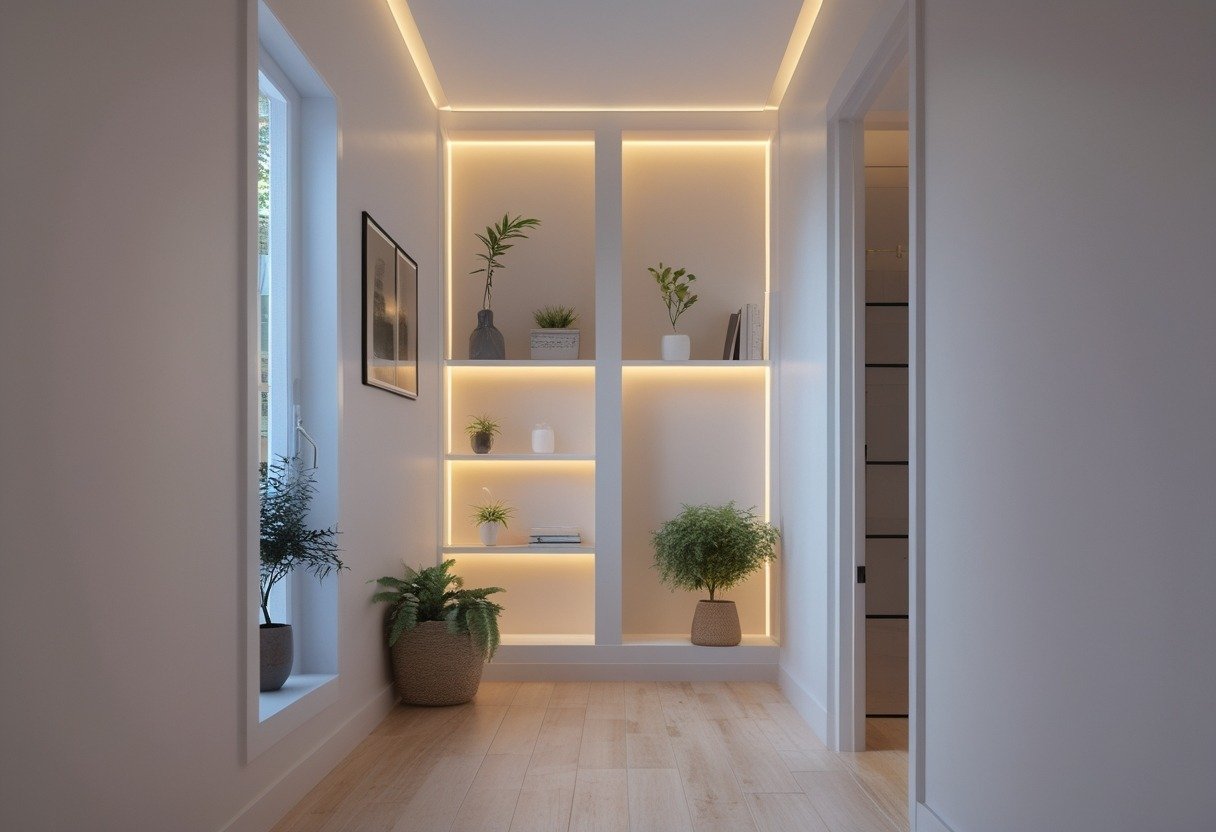
Built-in cubby niches give your entry a neat, custom look and save floor space. You can use them for shoes, bags, or display items without cluttering the hall.
Backlighting adds soft, even light that makes the cubbies easier to use and highlights your items. Choose warm LED strips for a welcoming feel and hide wiring for a clean finish.
9) Fold-down wall-mounted desk for small tasks
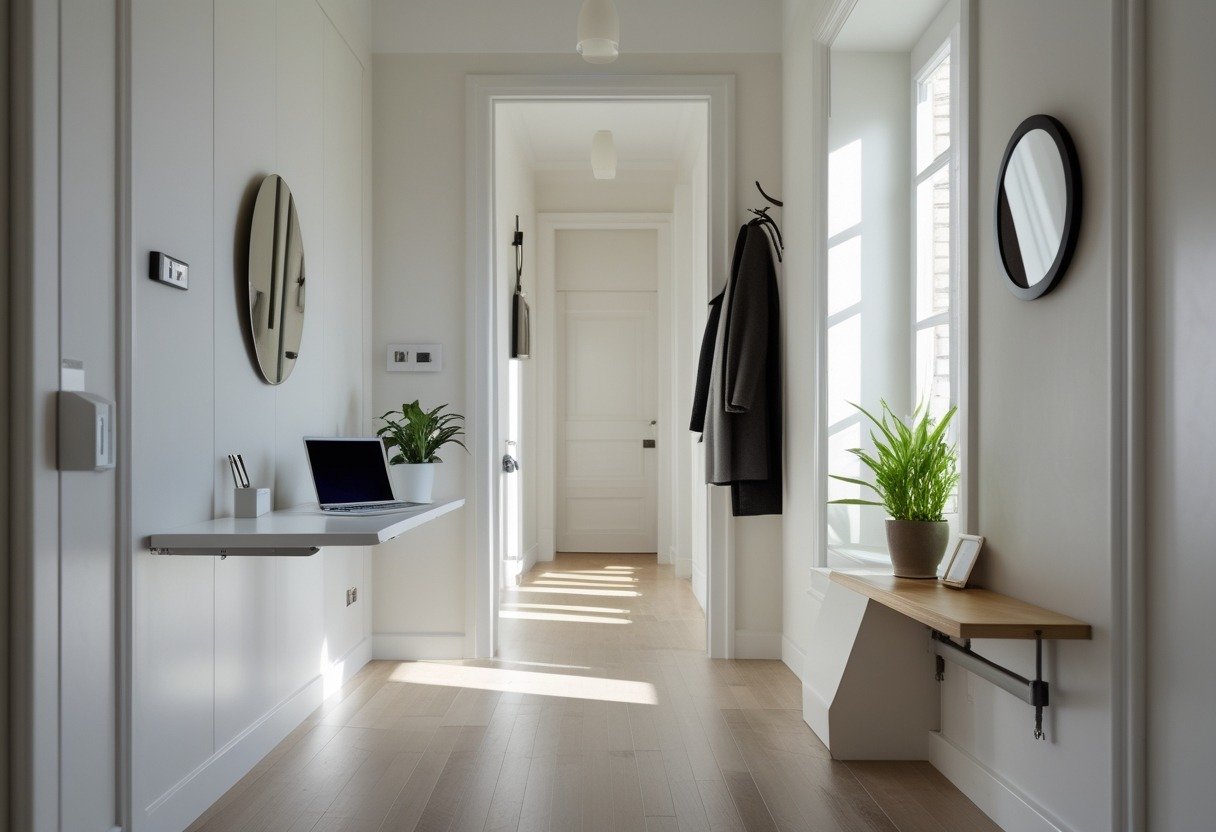
A fold-down wall-mounted desk gives you a quick surface for mail, keys, or a laptop without taking floor space.
Mount it at elbow height so you can use it standing or with a slim stool.
Choose a model with a small shelf or hooks to hold chargers and pens.
When you fold it up, your hallway stays clear and easy to walk through.
10) Glossy paint or satin finish to reflect light
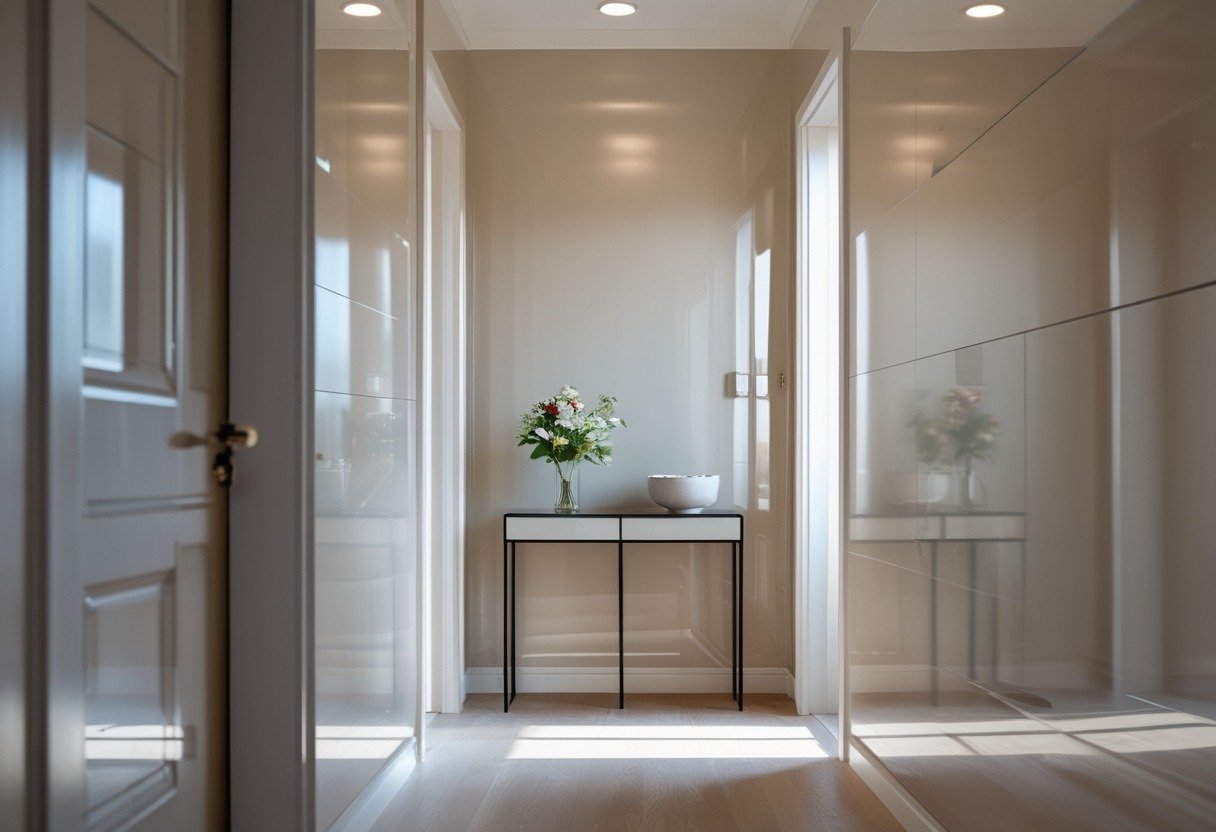
Choose a satin or glossy finish to bounce light around a small hallway. This helps brighten dark corners without changing color.
Glossy trims and a satin wall finish also resist scuffs in high-traffic areas. You can pair them with matte accents to keep the look balanced.
Test paint samples under your hallway lighting before committing. The sheen level can look different in natural and artificial light.
Principles of Designing Narrow Entrance Spaces
Focus on clear movement, smart light, and purposeful materials. Make every inch work for traffic, visibility, and durability without clutter.
Spatial Flow and Traffic Patterns
Map how people move through your hallway during peak times, like morning exits or guests arriving. Keep a clear path at least 36 inches wide where possible. If the hall must be narrower, arrange furniture and storage flush against one wall to preserve walking space.
Use visual cues to guide movement: a runner rug with lengthwise stripes, aligned ceiling lights, or a line of hooks at consistent height. Place door swings and furniture so they don’t block the main route. For turns or intersections, leave a small clearance zone (about 24–30 inches) to allow two people to pass briefly.
Think vertically for storage. Narrow built-ins, shallow consoles (8–12 inches deep), and wall-mounted shelves keep the floor clear. Anchor these items with a single color or material to reduce visual clutter and maintain smooth traffic flow.
Lighting Strategies for Small Hallways
Aim for layered lighting: general overhead, targeted task lights, and accent pieces. Recessed or low-profile ceiling fixtures give even light without lowering the visual ceiling. Use warm white LEDs (2700–3000K) for a welcoming feel.
Add wall sconces or picture lights to reduce shadows and widen perceived space. Place lights about every 6–8 feet in a narrow run, or at each change in direction. Include a bright switch at both ends of the hall so you don’t have to walk in the dark.
Use mirrors to bounce light and create depth. Position a mirror opposite a light source or at the end of the hallway to reflect daylight and cut down on artificial lighting needs. Choose fixtures and finishes that resist dust and are easy to clean.
Color and Material Selection
Choose a cohesive palette to make the hall feel larger. Light, neutral walls reflect light and open the space. Paint ceilings a shade lighter than walls to lift the height.
Select durable materials for high-traffic areas. Scrubbable paints, stain-resistant runners, and resilient flooring like vinyl plank or engineered hardwood stand up to wear. Keep trim and door frames in a single, slightly contrasting color to add definition without breaking the visual flow.
Use texture sparingly to add interest without crowding the eye: a single textured wallpaper strip, a painted wainscot, or a wood slat accent on one wall. Match finishes—metal, wood, or matte—across hardware and lighting to keep the space feeling intentional and calm.
Elevating Ambience and Functionality
You can make a small entrance feel both welcoming and practical by choosing one clear focal element and hiding smart storage where it won’t crowd the space. Focus on light, texture, and a single statement piece while keeping daily items organized and easy to grab.
Creating Focal Points
Pick one focal point so the hall reads as intentional, not cluttered. Good options: a bold runner, a sculptural mirror, or a small gallery wall of three framed prints. A mirror reflects light and makes the space feel wider; hang it at eye level and pair it with a narrow console or a slim shelf beneath.
Use lighting to highlight the focal point. A wall sconce or a pendant above a table draws attention and adds warmth. Keep colors simple around the focal item so it stands out — one accent color plus neutrals works well.
Keep scale in mind. Choose items that match the hall’s width. A large mirror can work, but avoid wide furniture that blocks flow. Measure before you buy.
Integrating Storage Without Clutter
Choose narrow, vertical, or wall-mounted storage to save floor space. Examples: a floating shelf with hooks, a slim console with drawers, or a tall cabinet that fits beside the door. Use labeled baskets or trays inside drawers to keep keys, masks, and mail in order.
Make storage dual-purpose. A bench with a lift-up seat or cubbies gives seating and hidden space. Hooks at two heights fit kids’ coats and adult bags without overlapping. Keep daily items at arm’s reach and seasonal items stored elsewhere.
Maintain a simple routine to prevent buildup. Clear the top shelf weekly and empty the catchall bowl every few days. Use consistent containers so you can grab what you need quickly.
