
You can give your round dining table a clear style and purpose without changing the whole room. This article shows practical round table dining room decor ideas that help you shape mood, seating, and serving so your table feels planned and welcoming.
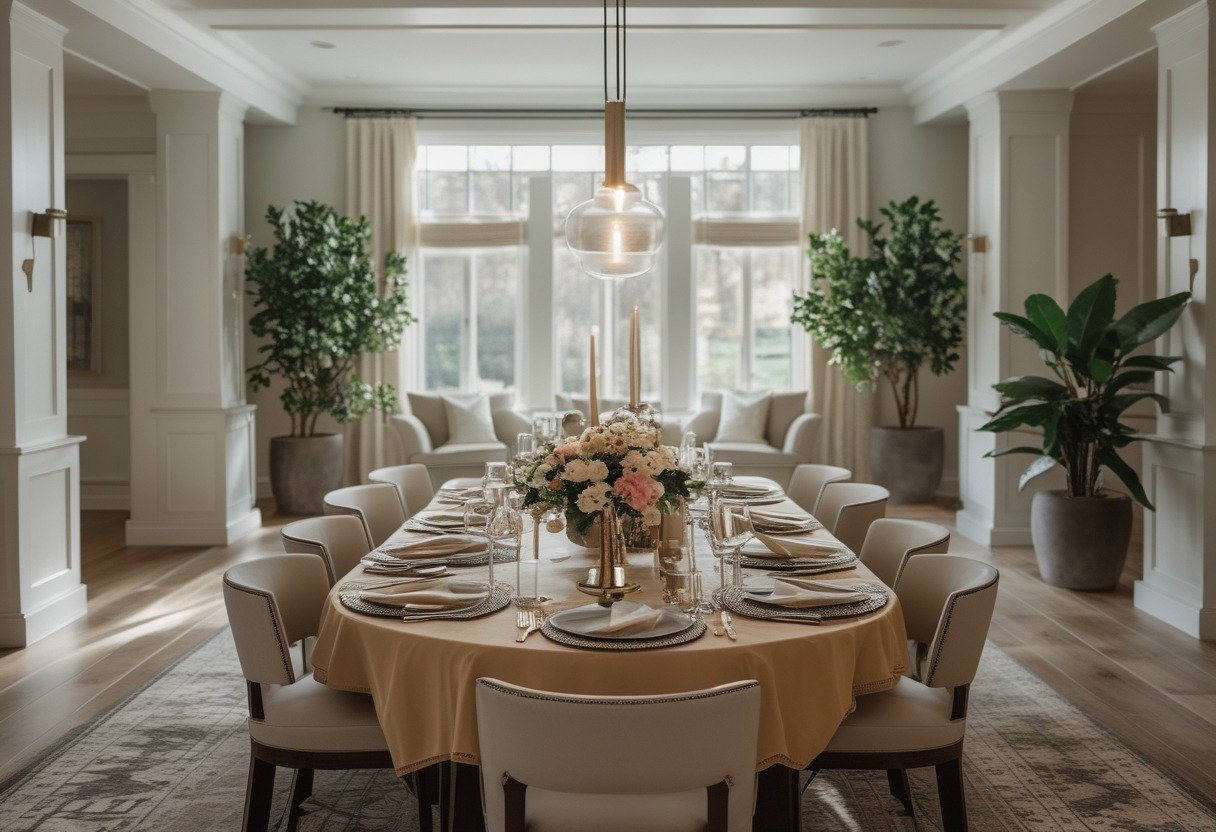
Expect simple, mix-and-match suggestions for centerpieces, seating, lighting, rugs, and serving pieces that work together to make your round table look intentional and usable. You’ll find options that fit tight spaces, cozy dinners, and shared meals so you can pick what matches your home and habits.
1) Rustic reclaimed-wood round table with a live edge centerpiece

Choose a reclaimed-wood round table to add warmth and history to your dining room. The live edge keeps the wood’s natural shape, giving a rustic but refined look.
Pair the table with simple chairs so the wood remains the focal point. Add a low centerpiece that follows the curve of the table—dried flowers, candles, or a shallow bowl work well.
2) Low, layered greenery wreath centerpiece with mixed succulents

Place a low wreath of mixed greenery flat in the center of your round table to keep sightlines clear. Tuck small succulents into the wreath for texture and color that won’t block conversation.
Use a shallow tray or charger under the wreath to protect the table from moisture. Change succulents seasonally or add a few candles for soft, adjustable lighting.
3) Oversized ceramic bowl centerpiece in matte white

Choose a large matte white ceramic bowl to anchor your round table. It gives a clean, calm base without competing with other decor.
Fill it with fruit, seasonal greenery, or a few sculptural objects to add color and texture. You can also leave it empty for a minimalist look that still feels deliberate.
Place the bowl in the center and keep surrounding items low so sightlines stay open across the table.
4) Set of mismatched linen napkins tied with leather cords

Choose linen napkins in different colors or textures to add charm to your round table. The mix looks casual but still neat.
Tie each napkin with a thin leather cord for a rustic, refined touch. The cord keeps napkins tidy and adds a natural accent to your place settings.
Place the tied napkins near each plate or on a small side dish. This small detail brings warmth and personality to your dining space without crowding the table.
5) Brass geometric candle cluster with tapered beeswax candles

Place a brass geometric candle cluster at your table center to add clean lines and warm metal shine. The shapes create visual interest without crowding the round surface.
Use tapered beeswax candles for a soft, natural glow and a subtle honey scent. Arrange three to five tapers at varying heights to keep sightlines open while giving the table depth.
Keep surrounding decor simple — a linen runner or a small bowl of nuts works well. The combo feels modern and calm, fitting many dining styles.
6) Textured handwoven jute round rug under the table

Place a handwoven jute round rug under your dining table to add natural texture and warmth. Its low pile makes cleaning simple, so it works well in busy dining areas.
Choose a neutral tone to keep focus on your table and chairs, or pick a slightly darker shade to hide wear. The round shape echoes your table and creates a balanced, grounded look.
7) Velvet-upholstered pedestal dining chairs in deep emerald

Choose deep emerald velvet chairs to add rich color and soft texture around your round table. The pedestal base keeps the look clean and saves legroom, so guests sit comfortably.
Emerald pairs well with warm woods, brass accents, or matte black fixtures. Use a mix of finishes and a simple centerpiece to let the chairs remain the focal point.
8) Rotating glass lazy Susan with wood base for communal serving

Place a glass Lazy Susan on a wooden base to make serving easy and neat. You can reach dishes without leaning across the table.
The glass top looks clean and shows off food, while the wood base adds warmth. Choose a smooth, silent turntable so plates slide without slipping.
This setup fits family meals and small gatherings. It keeps the table tidy and makes sharing simple.
9) Glass cloche with seasonal fruit and eucalyptus sprigs
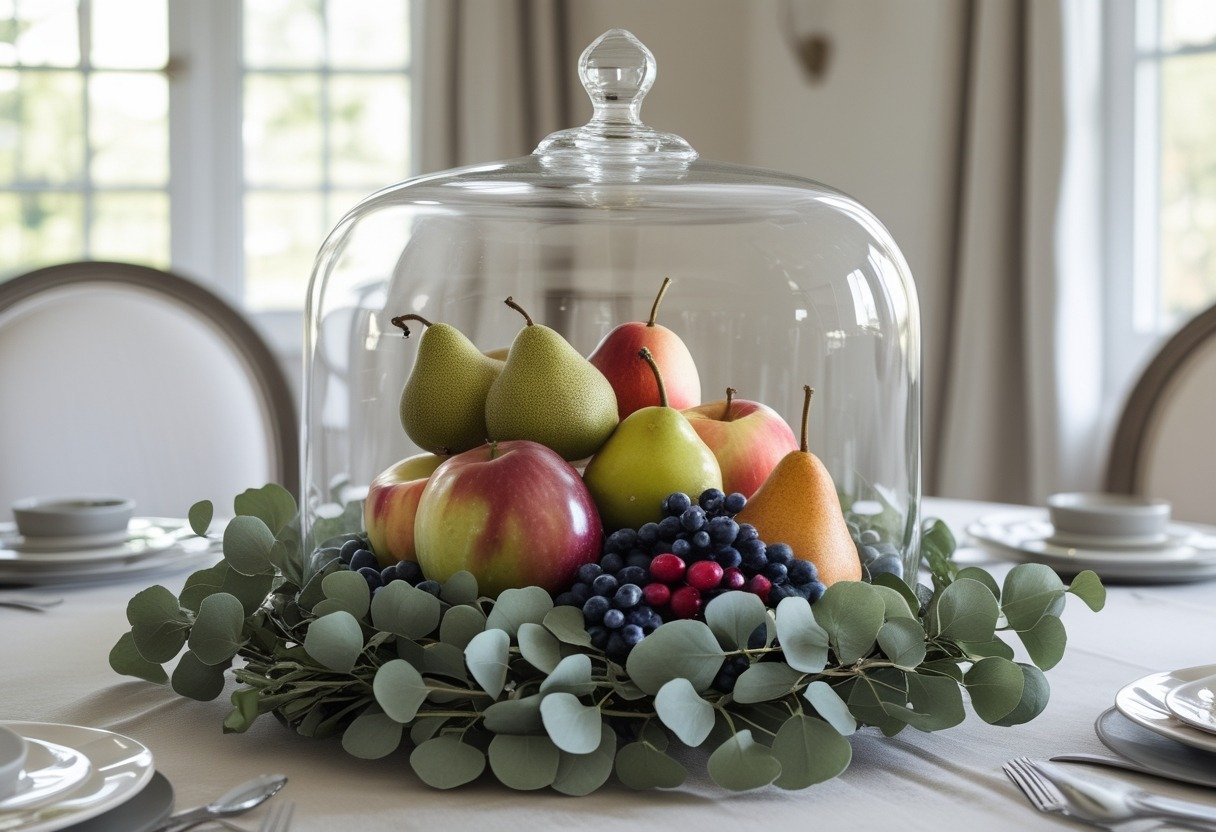
Place a glass cloche over a small cluster of seasonal fruit for a clean, natural centerpiece. The glass keeps the look tidy while letting colors and shapes show through.
Tuck a few eucalyptus sprigs around the fruit to add texture and a fresh scent. Change the fruit each season—apples in fall, citrus in winter, berries in summer—to keep the table feeling current.
10) Pendant cluster lighting—three matte-black globes at varying heights

Choose a three-globe cluster to add focus above your round table. The matte-black finish keeps the look modern and easy to pair with many decor styles.
Hang the globes at different heights to create depth and balance with the table’s curve. Aim for 30–32 inches above the tabletop for clear sightlines and task lighting.
Pick dimmable bulbs so you can shift from bright dinner tasks to soft ambient glow. Installation is simple with a single canopy, yet the effect feels elevated and deliberate.
Styling Principles for Round Dining Tables
Focus on center balance, clear walking space, and a look that ties the table to the room. Use a single strong centerpiece, measure for chair clearance, and match finishes and colors to nearby furniture.
Balancing Tabletop Accessories
Keep the center low and layered so guests can see each other. Start with a base (placemat or tray) about 12–18 inches wide for a 42–48 inch table. Add one main object — a vase, bowl, or candle cluster — then one or two smaller accents to avoid clutter.
Use odd numbers for visual interest: three items read as intentional, five feels crowded. Vary heights by 2–6 inches to create depth without blocking sight lines. When you use fresh flowers, choose low arrangements or a single stem in a tall, slim vase. For everyday use, a tray with salt, pepper, and a small plant keeps items tidy and easy to move.
Space Planning and Flow
Measure for at least 36 inches from table edge to walls or large furniture so chairs can pull out and people can pass behind seated guests. For small rooms, allow 30 inches minimum and use armless chairs to save space.
Think about traffic paths: leave a 24–30 inch clear corridor between table and doorways. If the table sits under a light fixture, center the fixture over the table and hang it 30–36 inches above the tabletop for a 30–36 inch diameter shade, adjusting height for ceiling height. In multi-use rooms, choose a table size that leaves a 3-foot working zone for serving and movement.
Coordinating with Surrounding Decor
Match one material or color from the table to another element in the room to create cohesion. For example, pair a walnut table with picture frames or a sideboard in similar tones. If chairs differ in color, repeat that accent on cushions or a rug.
Choose a rug that extends at least 24 inches beyond the table edge so chairs stay on the rug when pulled out. Keep scale in mind: a large chandelier suits a big round table, while a slim pendant works with a small table. Use two to three repeating colors across table linens, art, and lighting to tie the room together without looking forced.
Color and Material Coordination
Choose colors and materials that link the table, chairs, and floor so the room feels planned. Aim for a clear main color, one neutral, and one accent. Balance textures—matte wood, smooth metal, and soft fabric—to add depth without clutter.
Selecting Complementary Chair Fabrics
Pick chair fabric that ties to a color used elsewhere, like a rug or curtains. If your table is medium oak, choose warm-toned upholstery such as camel leather or linen in a tan shade. For a painted or glass table, go cooler: slate gray or navy velvet work well.
Think about wear and care. Use performance fabrics (stain-resistant polyester blends) for daily family use. Choose natural fibers (linen, cotton) for low-traffic rooms and when you want a softer, breathable feel.
Match texture to style. Smooth leather or vinyl suits modern looks. Nubby weaves and linen suit rustic or farmhouse styles. Add a small pattern—stripes or subtle geometrics—to hide stains while keeping the palette simple.
Integrating Table Finish with Flooring
Make the table finish either contrast or complement the floor to create clear zones. On light oak floors, a darker table like walnut anchors the space and prevents the room from looking washed out. On dark floors, a light or glass table brightens the area.
Consider undertones: yellow oak floors pair best with warm wood tables; cool gray floors pair best with ash or painted tables in cool tones. Use a sample board: place a 12″ fabric swatch and a wood sample on the floor by the table to check harmony.
Also think about scale and reflection. A glass-top round table reflects light and suits smaller rooms. Heavier, matte wood adds weight in open-plan spaces. Match finish sheen—matte with matte, glossy with glossy—to keep the look cohesive.
