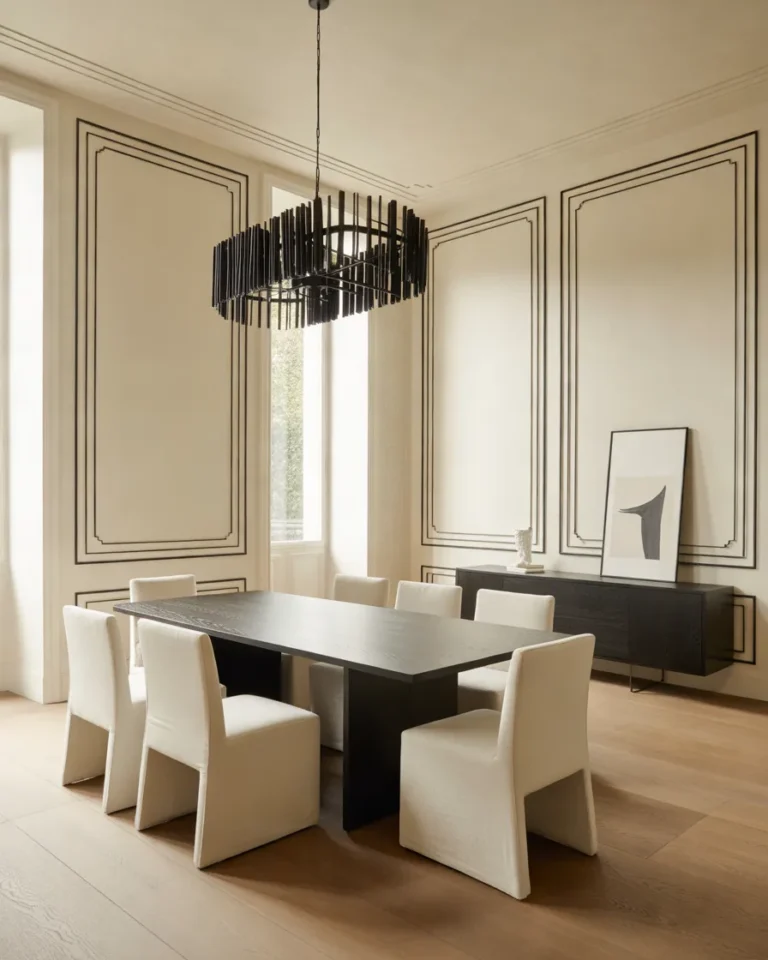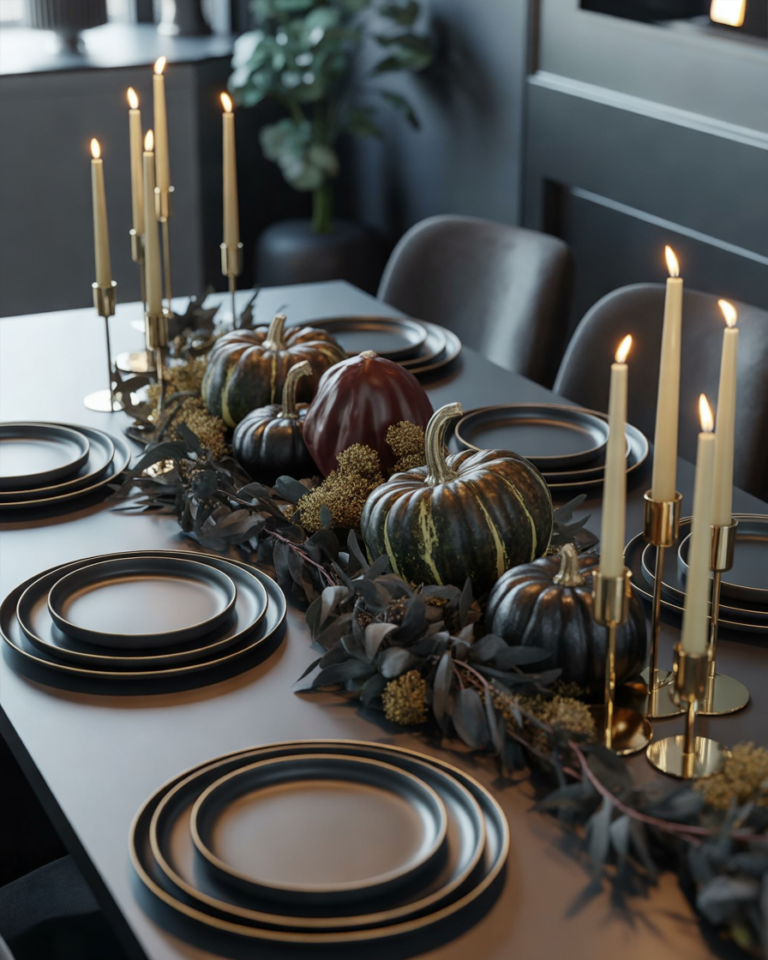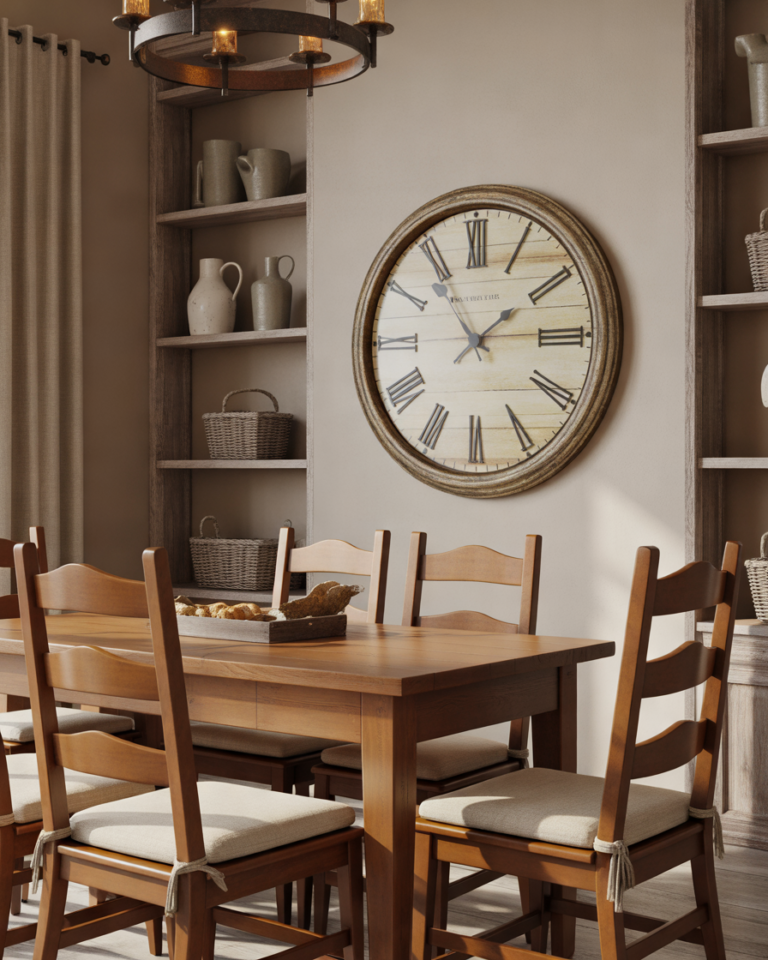
You want a dining room that feels current, calm, and made for good meals and easy conversation. This article shows simple, modern wall ideas that help you shape mood, scale, and style without overhauling the whole room.
You will find practical, dining room wall decor ideas modern and art choices that let you refresh your dining space with clear impact.
Flip through options that range from bold accent walls to subtle textures and smart display solutions so you can pick ideas that match your taste and budget. Each suggestion focuses on how the wall will look, feel, and work in a contemporary dining setting.
1) Oversized round mirror with matte black frame
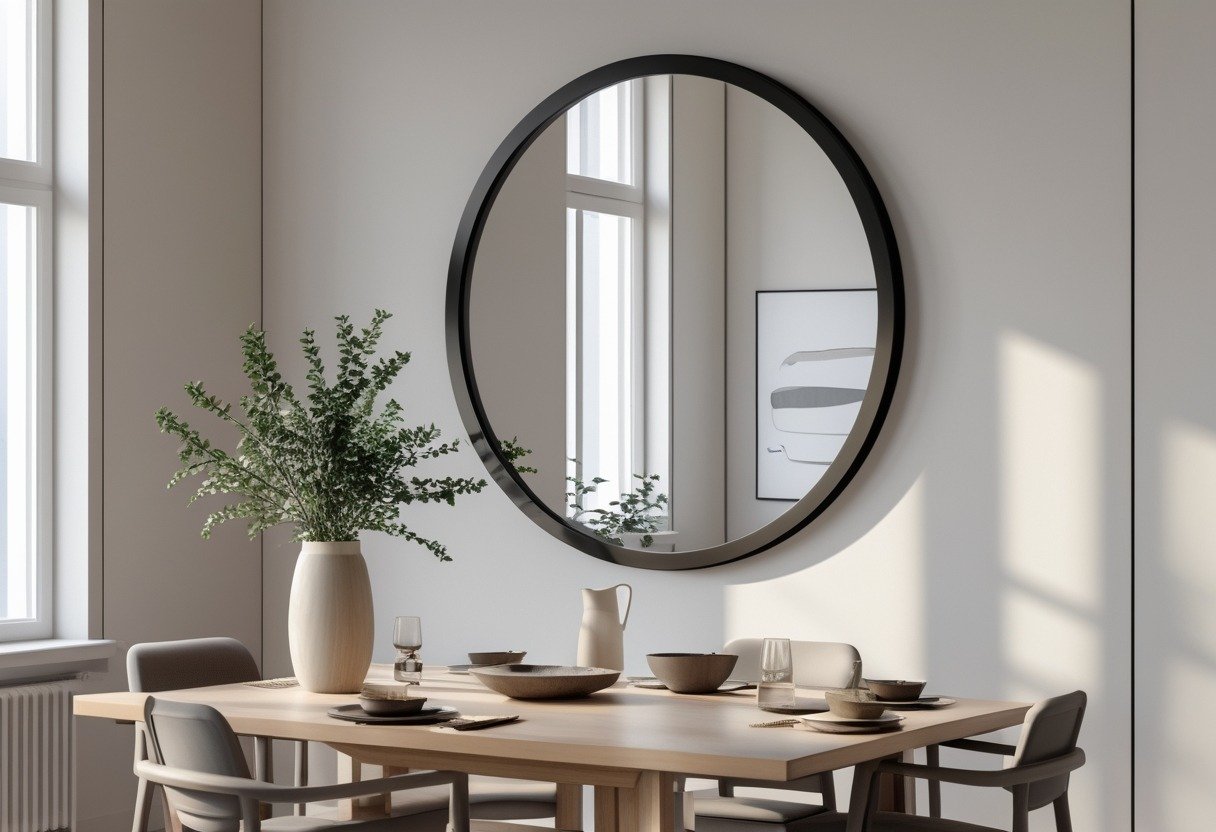
Place an oversized round mirror on a main dining wall to make your space feel larger and brighter. The matte black frame adds a clean, modern edge that suits many decor styles.
Hang it centered above a buffet or console so it reflects light and dining activity. Choose a size that balances the wall without overpowering the table.
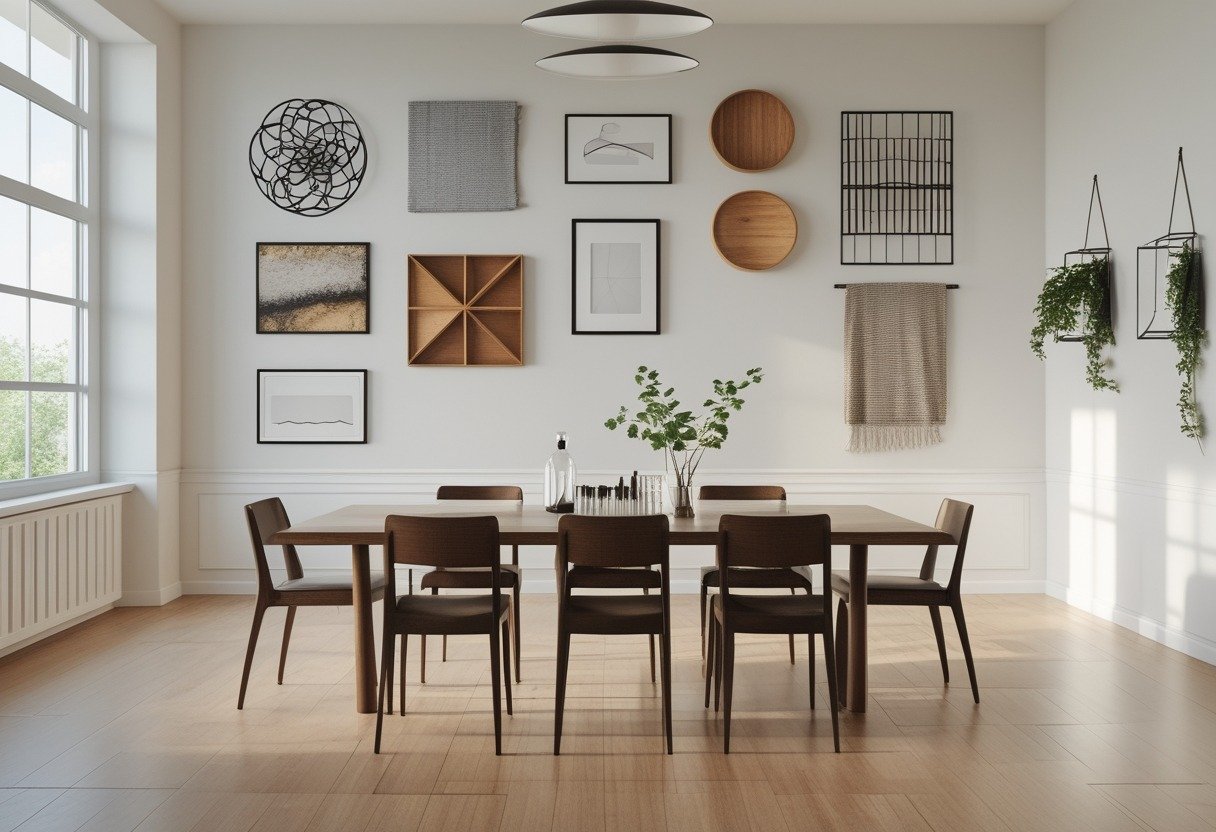
2) Gallery wall of mixed modern art prints (uniform frames)
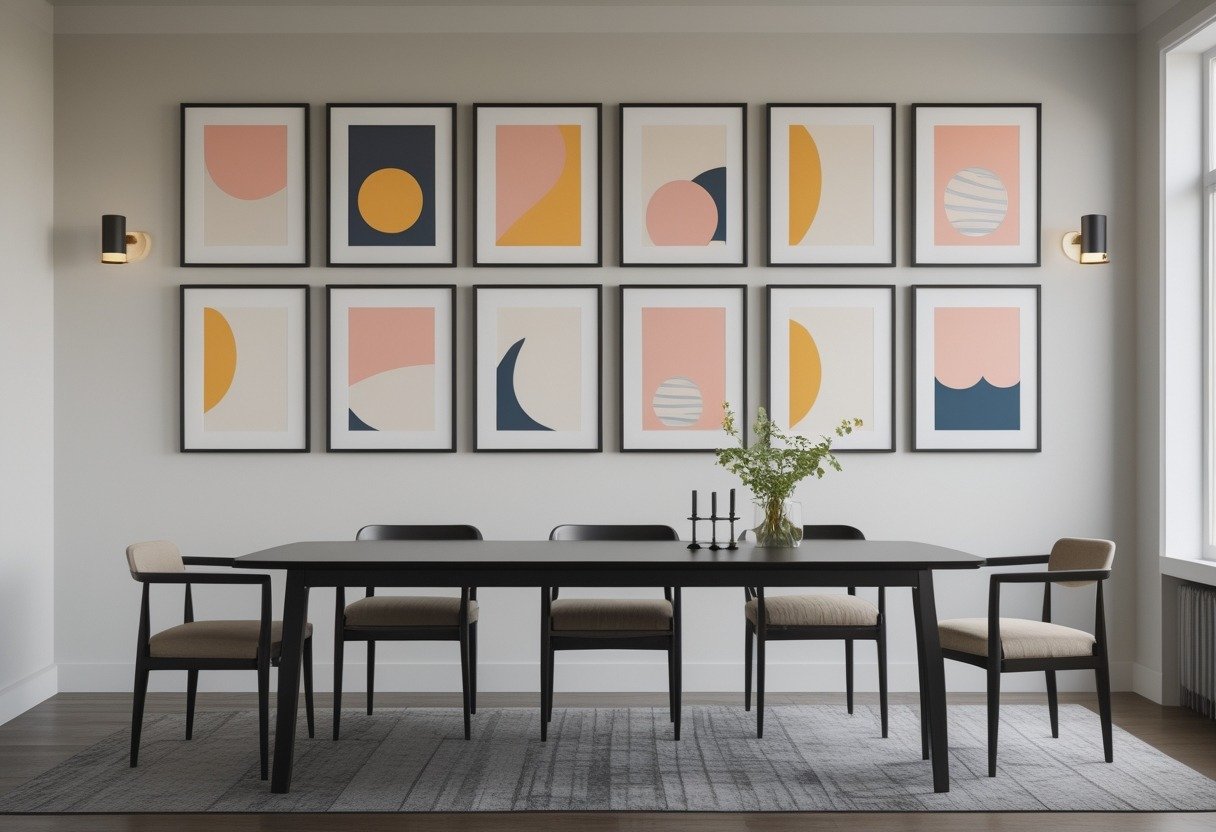
Create a gallery wall using different modern prints but keep the frames the same color and size. This gives a clean, cohesive look while letting each artwork stand out.
Arrange pieces in a loose grid or staggered layout to fit your wall and furniture. Use equal spacing and hang at eye level so the display feels balanced and intentional.
3) Textured grasscloth wallpaper in warm neutral
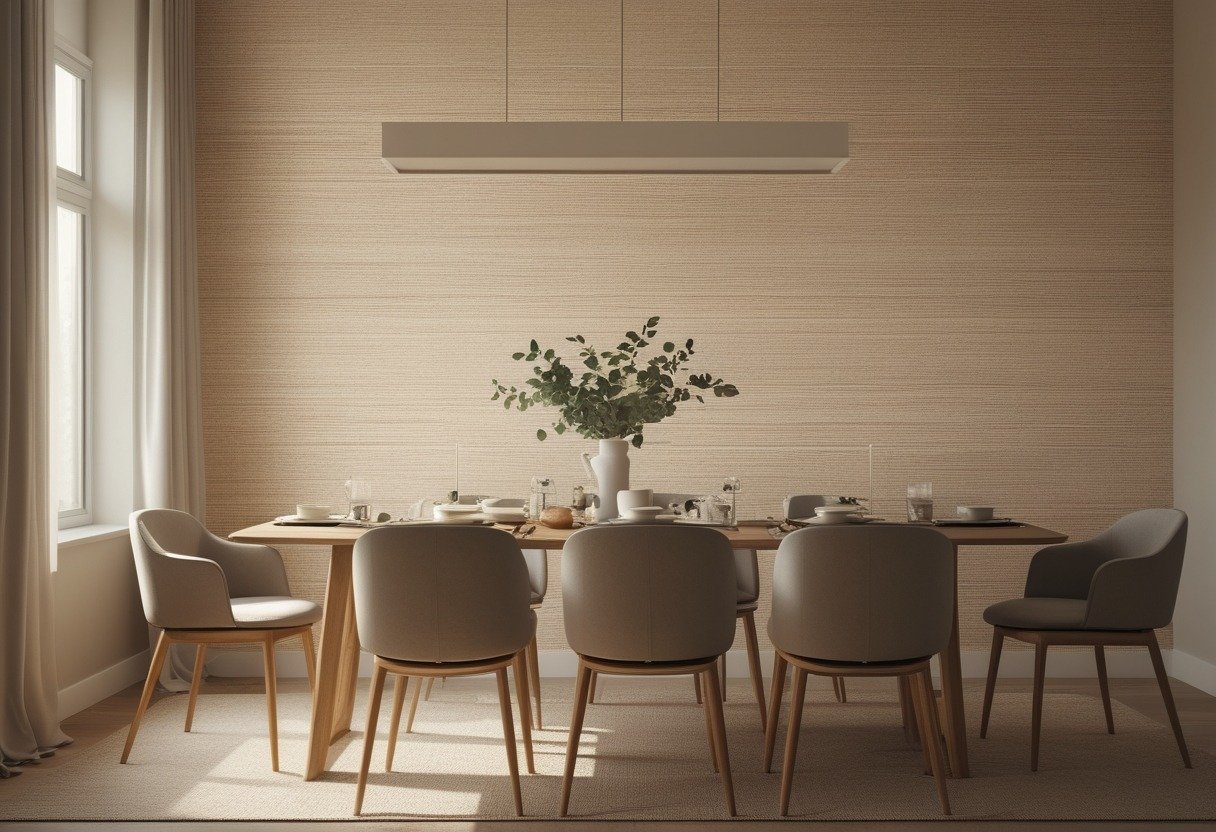
Choose warm neutral grasscloth to add subtle texture and a calm backdrop for your dining room. It reflects light and makes smaller spaces feel airier without stealing focus.
The woven surface pairs well with wood furniture, rattan accents, or metal lighting. Keep other finishes simple so the texture becomes the room’s quiet focal point.
4) Floating walnut display shelf with curated ceramics
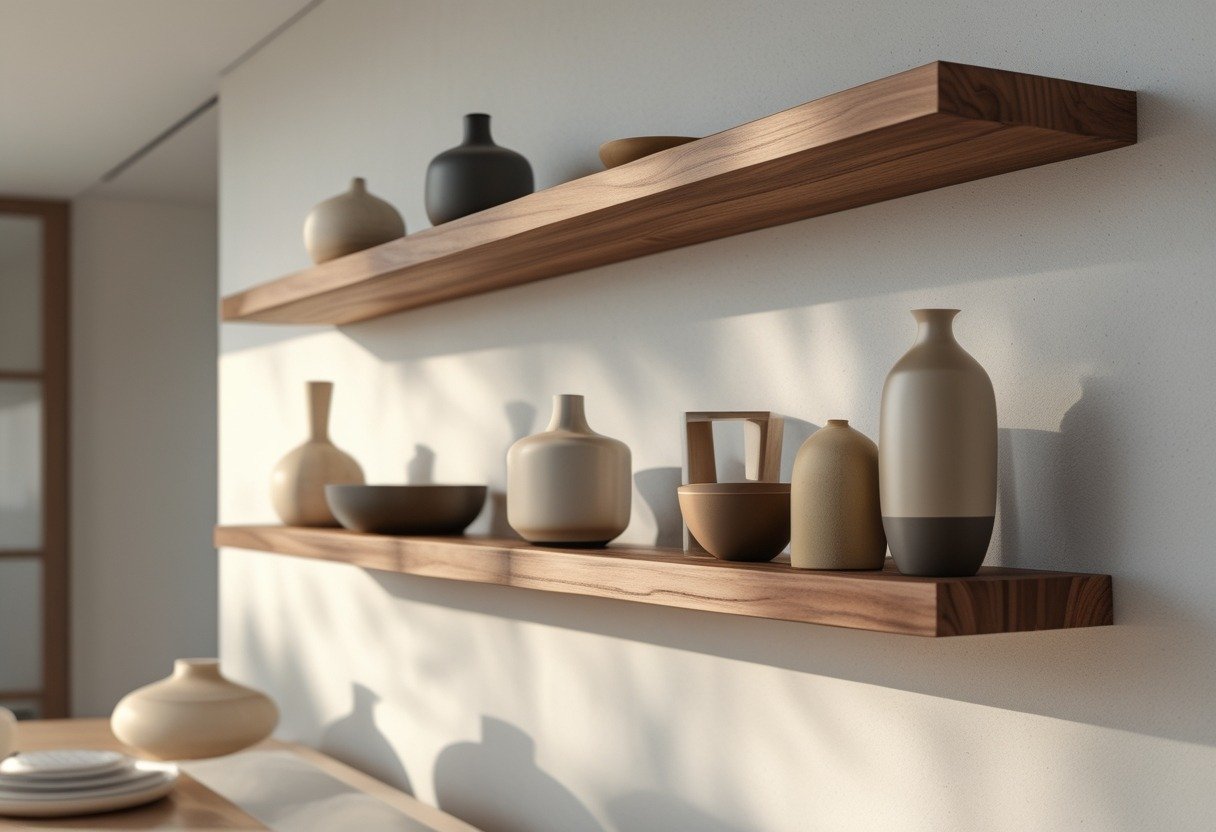
Choose a walnut floating shelf to add warm, natural grain to your dining wall. It looks modern and stays low-profile so your room feels open.
Place a few curated ceramic pieces spaced apart for balance. Mix sizes and textures — matte bowls, a glossy vase, and a small planter work well together.
Keep the arrangement simple and rotate pieces seasonally. This lets you refresh the look without redoing the whole wall.
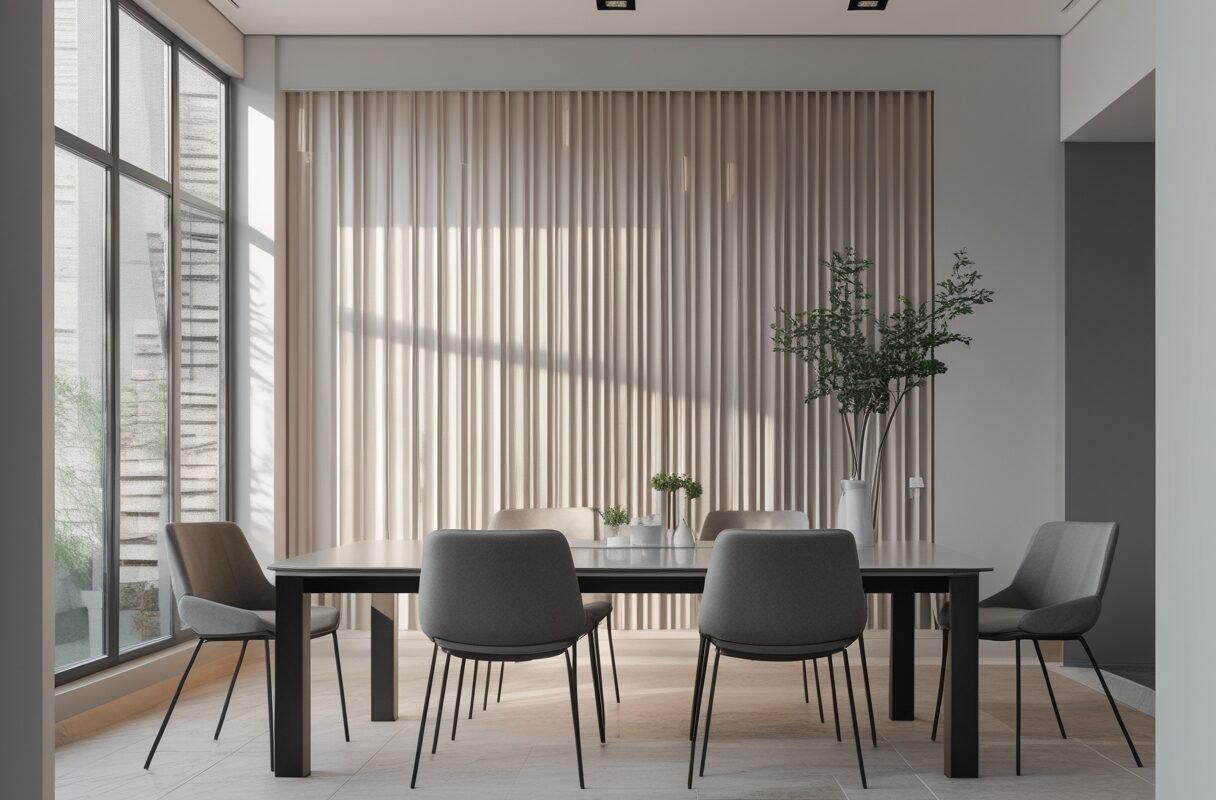
5) Vertical wood slat accent panel painted soft gray
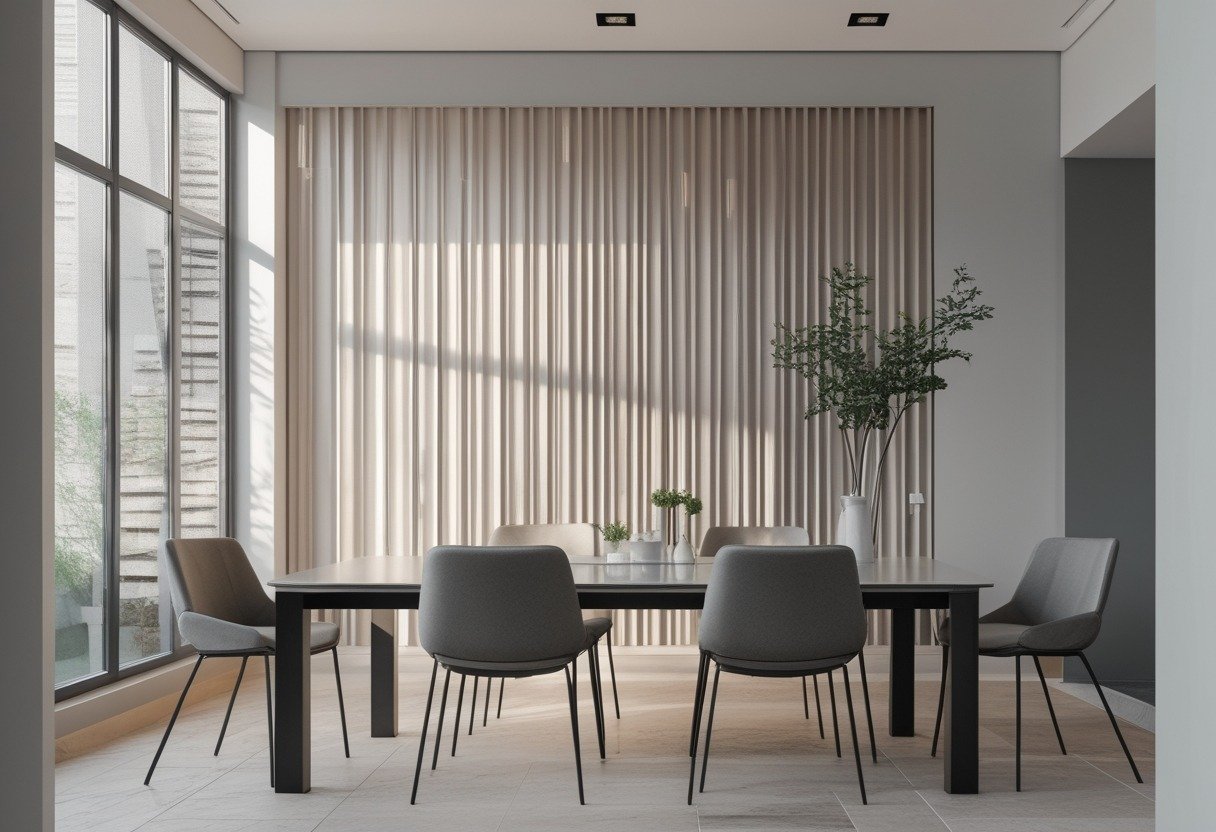
A vertical wood slat panel in soft gray adds texture without stealing focus. You get a clean, modern backdrop that complements dining furniture and tableware.
Painted gray tones make the slats feel calm and versatile. They work with wood, metal, and bold color accents you might already own.
Install the slats floor-to-ceiling to visually raise the room. You can leave small gaps between boards for subtle shadow lines and a light, airy look.
6) Large abstract canvas in muted jewel tones
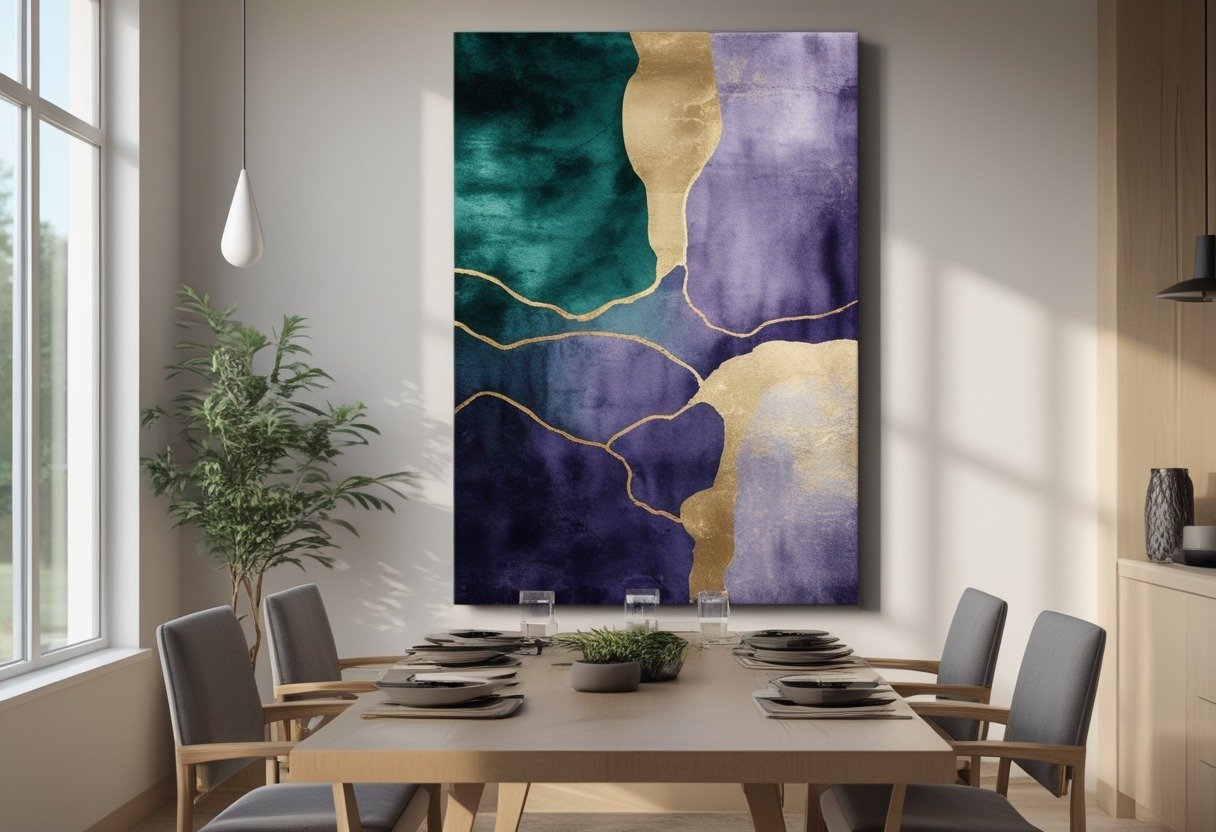
Choose a big canvas with jewel-like colors faded into soft, muted shades to add depth without shouting. The scale anchors your dining area and creates a focal point above the table.
Muted jewel tones—teal, plum, deep blue—pair well with wood and neutral walls. Keep surrounding decor simple so the artwork stays the main visual.
7) Geometric metal wall sculpture in brushed brass
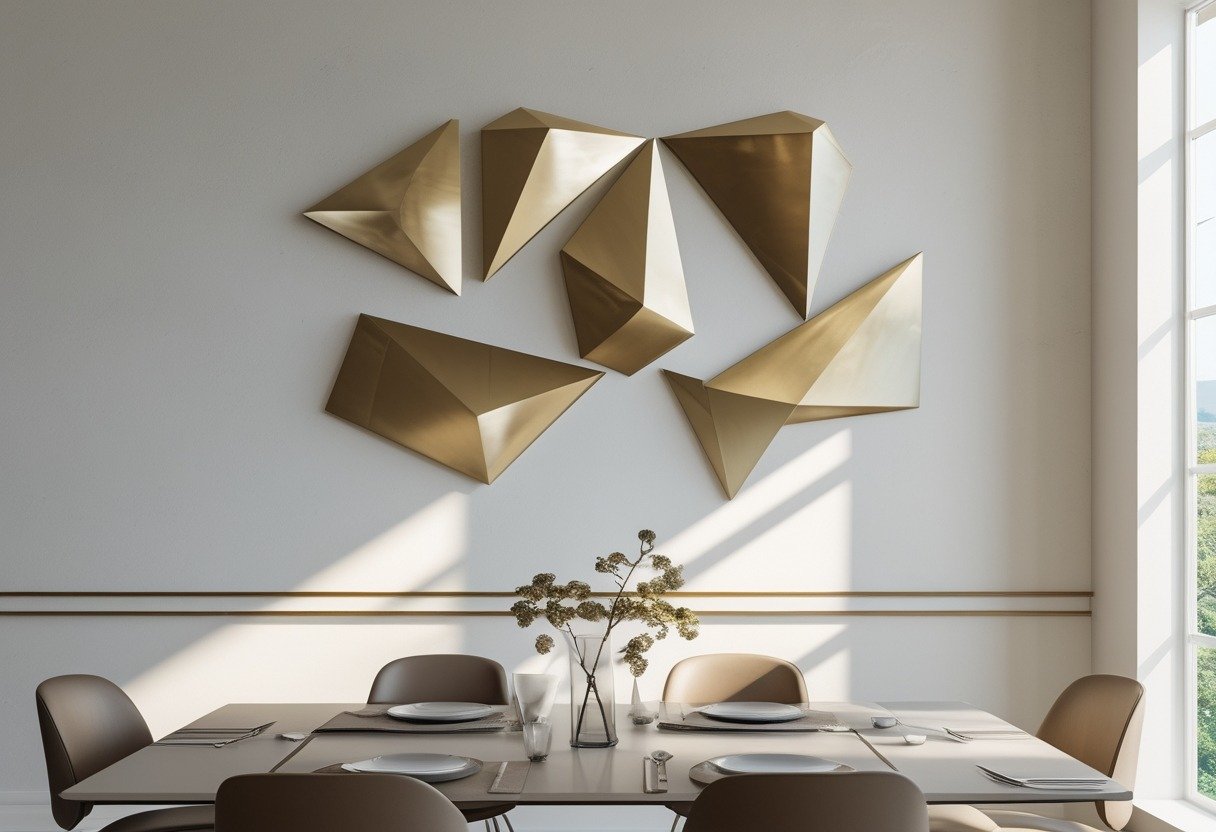
Choose a geometric metal sculpture in brushed brass to add a modern, warm touch to your dining room. The soft sheen catches light without glare, giving the space subtle depth.
Place it above a sideboard or centered over your table for a clear focal point. Keep surrounding decor simple so the clean lines and shapes stand out.
8) Floor-to-ceiling painted accent wall in deep navy
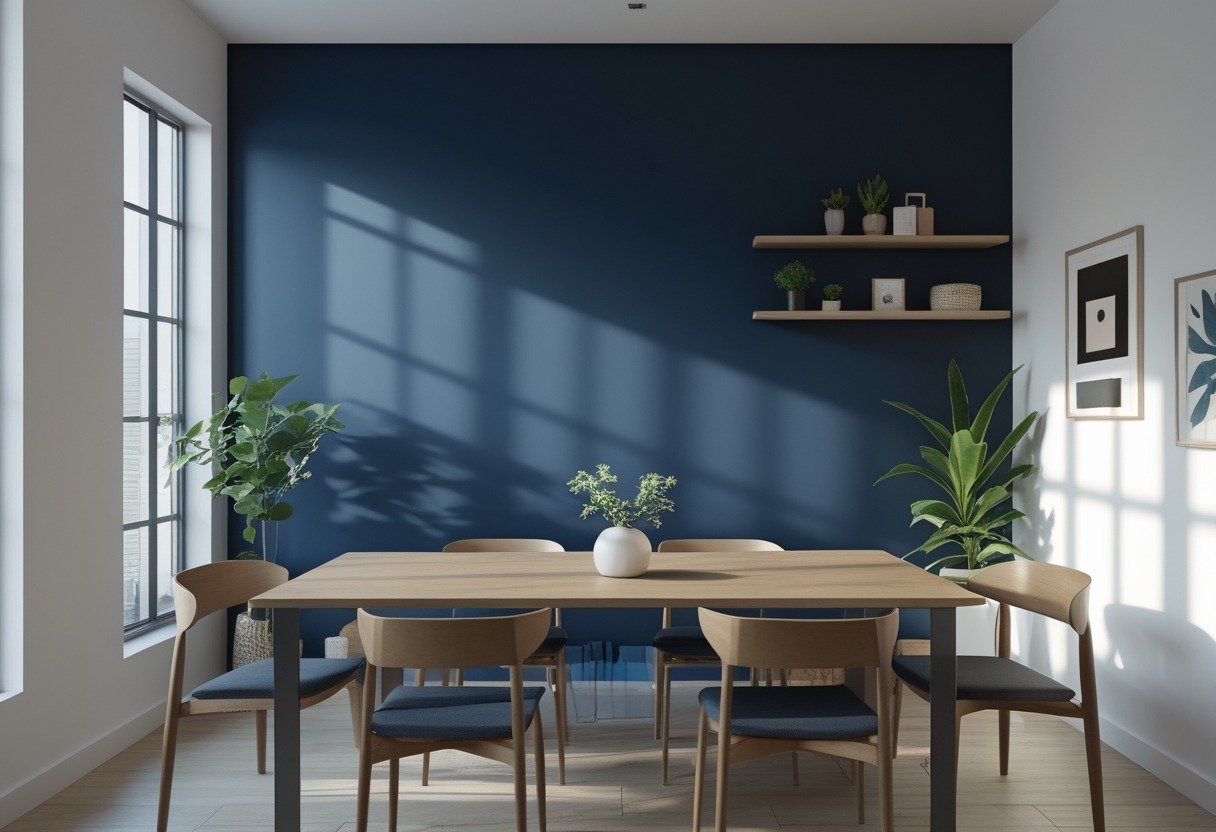
A floor-to-ceiling navy wall gives your dining room clear drama without clutter. It anchors the space and makes furniture and artwork pop.
Keep other walls light so the room still feels open. Use matte or eggshell paint to avoid glare and keep the look modern.
Balance the dark wall with warm wood tones or brass accents. Your lighting matters—soft, layered light keeps the navy cozy for meals.
9) Built-in ledge lighting with framed botanical prints
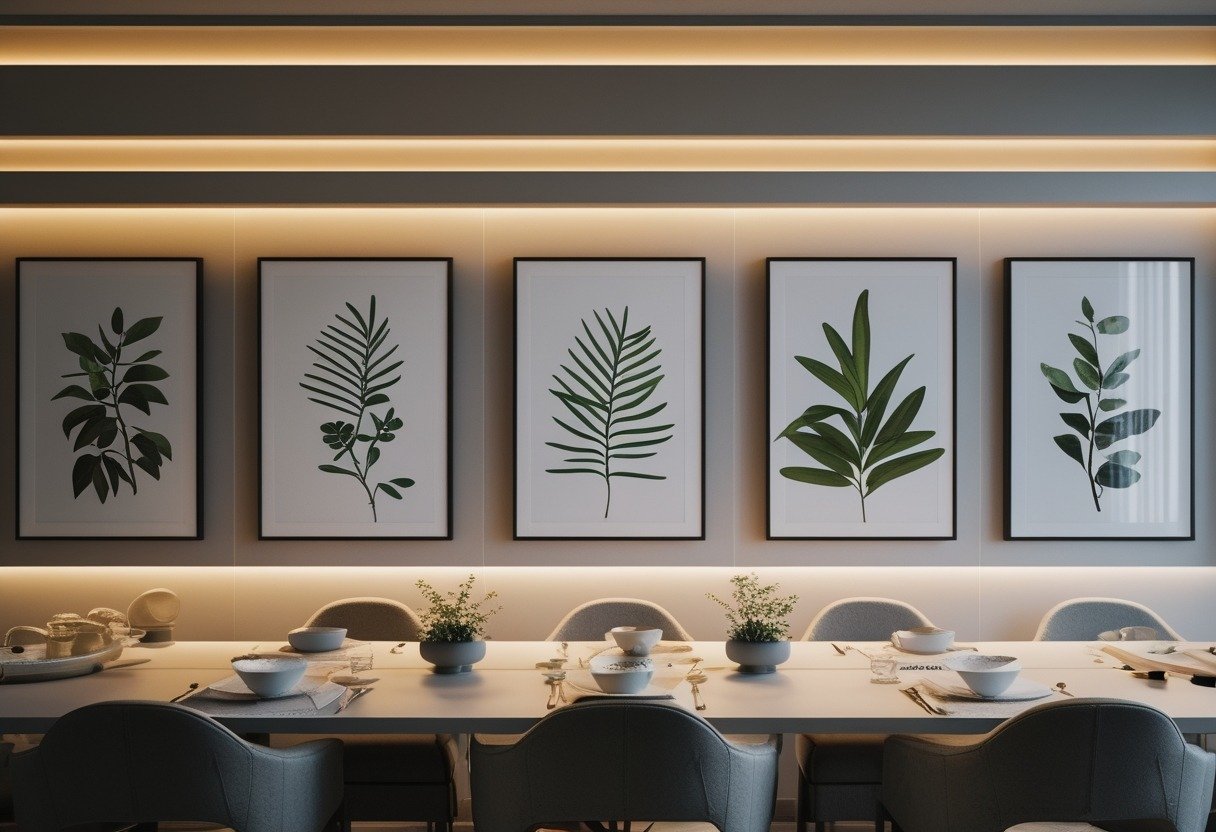
You can install a slim built-in ledge with hidden LED strips to light framed botanical prints evenly. The soft light highlights colors and textures without glare.
Choose simple frames and a mix of leaf or floral prints for a calm, modern look. Arrange prints by size for balance, and keep spacing consistent to avoid clutter.
Use warm white LEDs for a cozy feel or neutral white for a cleaner look. Dimmer controls let you change mood for meals or gatherings.
10) Monochrome photographic triptych in black frames
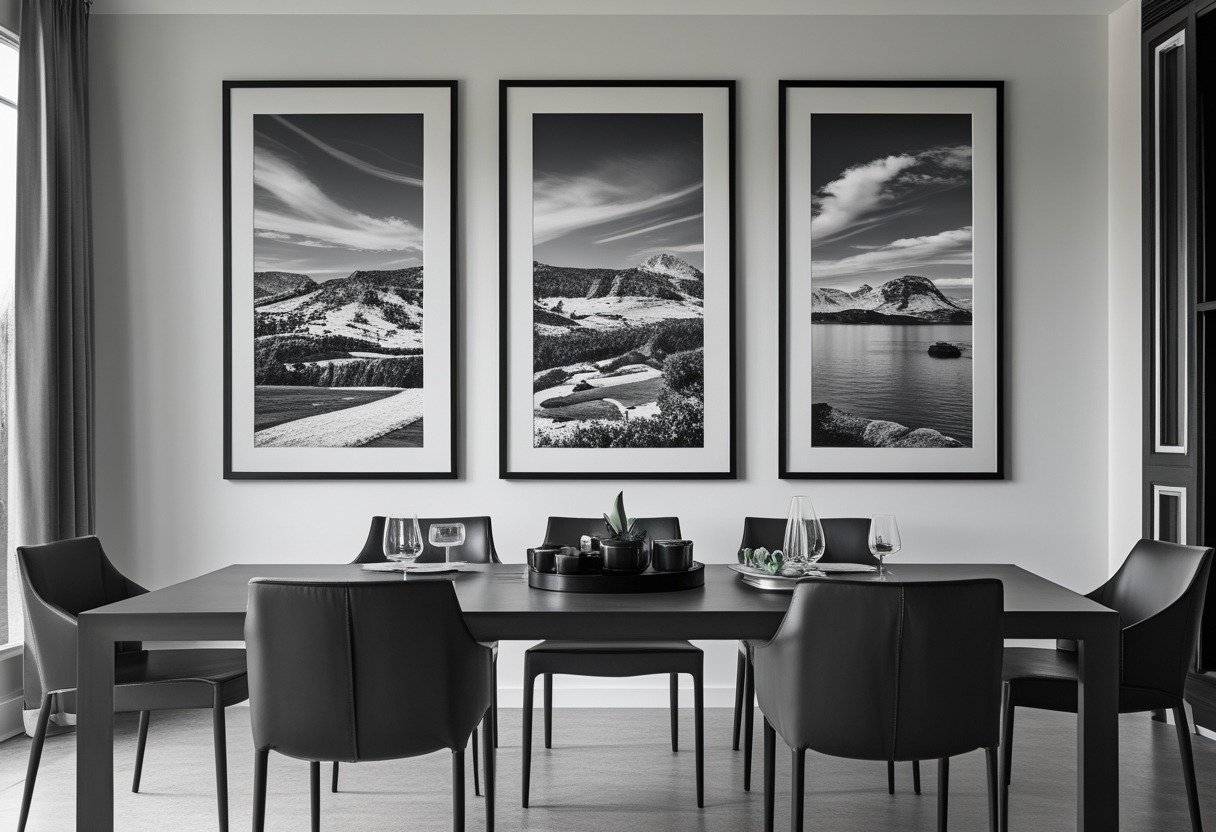
Choose three related black-and-white photos that share a theme, like cityscapes or close-up textures. Hang them evenly spaced above your dining table to create a calm, focused focal point.
Black frames add clean lines and make the images pop without competing with other decor. Keep matting consistent for a polished, gallery-style look that fits modern dining rooms.
11) Wainscoting with simple picture rail and satin finish
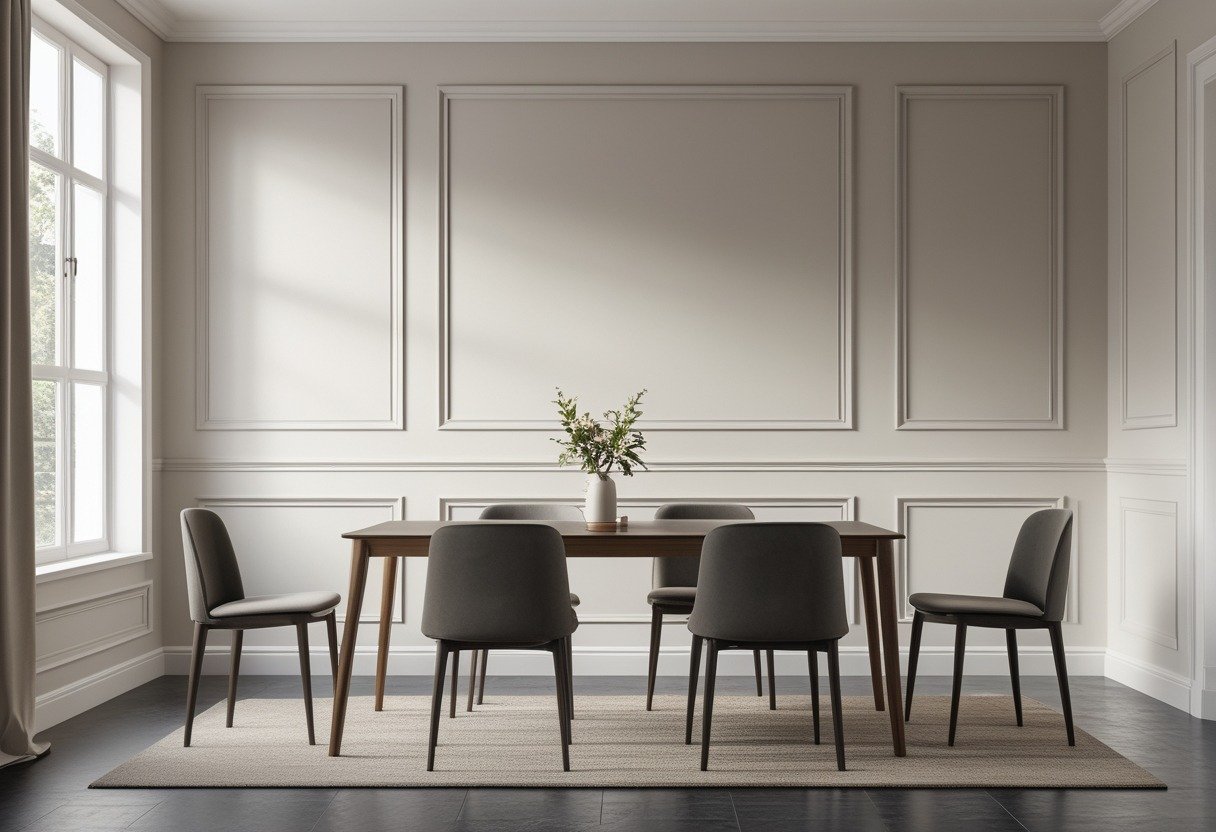
You can add low-profile wainscoting topped with a narrow picture rail for a clean, modern look. The picture rail gives you a place to hang art without nailing into fresh paint.
Choose a satin finish to reflect light gently and hide minor scuffs. Keep the color contrast subtle—white or off-white trim with a soft wall tone keeps the room calm and refined.
This combo adds texture and balance without overwhelming a contemporary dining space. It works well in small and large rooms alike.
12) Patterned removable wallpaper with oversized terrazzo motif
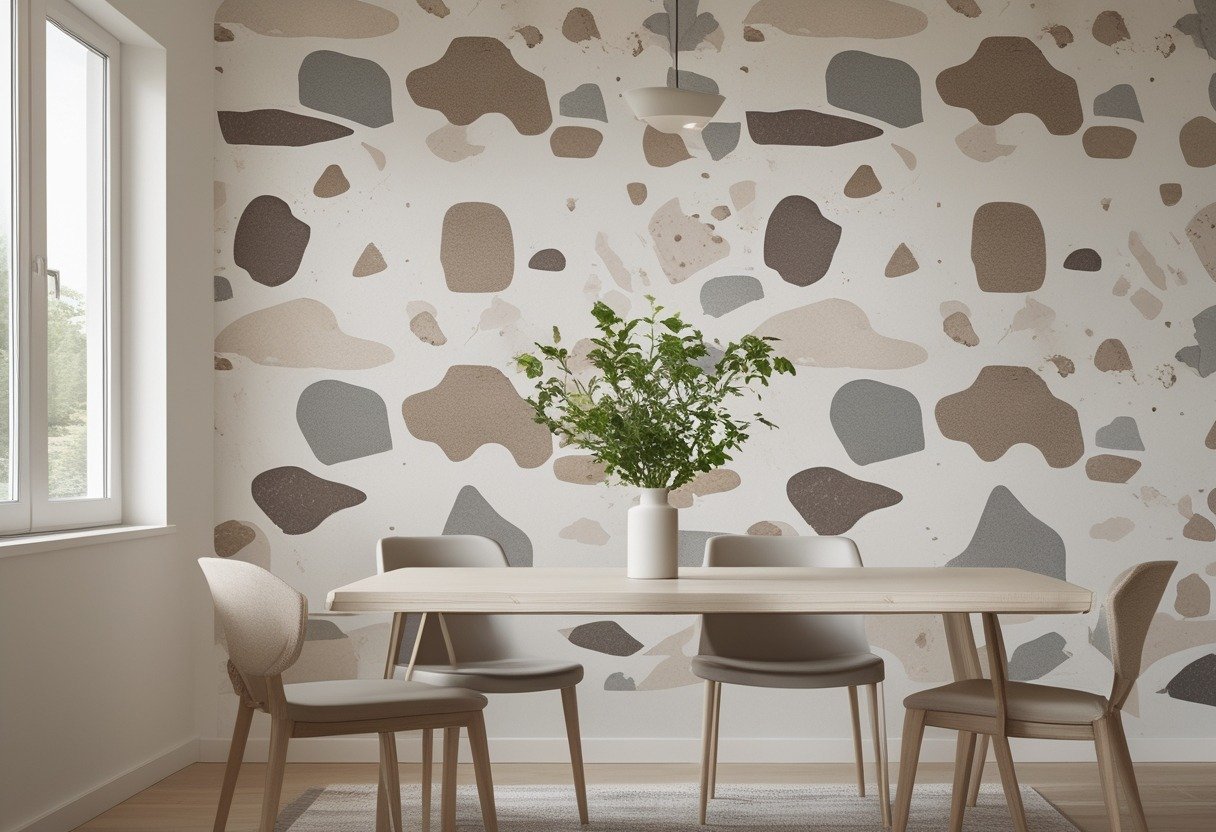
Choose a removable terrazzo wallpaper to add bold texture without a long-term commitment. The large chips create a modern, artistic look that suits dining rooms and works well as an accent wall.
Peel-and-stick options make installation quick and clean, and you can reposition panels if spacing looks off. Pick colors that tie into your tableware or curtains for a cohesive, polished feel.
Design Principles for Contemporary Dining Spaces
Focus on how your dining room looks, feels, and works together. Prioritize pieces that serve a purpose, choose colors that pair well, and use light to make the space welcoming and functional.
Balancing Function and Aesthetics
You need furniture and decor that support meals and social time. Choose a dining table size that fits the room with at least 36 inches of clearance around it so chairs pull out easily. Pick chairs that match the table height and are comfortable for long dinners.
Keep wall decor at eye level and scaled to the wall. A single large artwork or a tightly arranged gallery works better than many small, scattered pieces. If you host often, include practical items on walls—shelves for serving dishes, a credenza for storage, or hooks for a cozy throw.
Mix materials to add interest without clutter. Combine wood, metal, and fabric in predictable ways: wood table, metal light fixture, and upholstered chairs. This creates cohesion while keeping the room useful.
Color Coordination Strategies
Select a base color for walls and larger pieces, then add two accent colors for contrast. Neutral bases like soft gray, warm beige, or muted white let you change accents easily over time.
Use a color triangle: one dominant, one secondary, and one small accent. For example: warm gray walls (dominant), deep blue dining chairs (secondary), and brass fixtures (accent). Repeat each color in at least three places to tie the room together.
Consider the finish and warmth of materials. Matte paint reads differently than satin; a cool gray pairs better with chrome, while warm beige pairs well with brass. Test paint swatches by the light at different times of day to avoid surprises.
Lighting as a Decorative Element
Treat lighting as both a tool and a design piece. A statement pendant above the table anchors the space and provides task light for meals. Aim for a fixture that hangs 30–36 inches above the tabletop for most eight-foot ceilings.
Layer with ambient and accent lighting. Add wall sconces or picture lights to highlight artwork and reduce harsh shadows. Dimmer switches let you change mood from bright family dinners to softer, intimate evenings.
Match bulb temperature to your palette. Warm bulbs (2700–3000K) make wood and warm paints feel cozier. Use LED bulbs with CRI 90+ to show food and decor colors accurately.
Selecting Art and Statement Pieces
Choose pieces that match your room’s scale, color palette, and mood. Focus on one strong focal work and a few supporting items to keep the space balanced and intentional.
Integrating Modern Artworks
Pick one large artwork or a grouped set to anchor the dining wall. For a standard 8–9 ft wall, a piece that takes up about 60–75% of the table length works well. If your table is 6 ft long, aim for artwork roughly 3.5–4.5 ft wide.
Use bold shapes or limited-color abstract works when you want a crisp, modern feel. Black-and-white pieces read cleanly; adding one accent color that repeats in cushions or a rug ties the room together.
Hang art at eye level — center the piece around 57–60 inches from the floor. For gallery-style groupings, keep 2–4 inches between frames and align centers, not tops. Choose frames with simple lines: thin black, white, or natural wood fit modern schemes.
Mixing Textures and Materials
Combine smooth and tactile elements so the room stays modern but warm. Pair a large canvas or metal print with a woven wall hanging or wood panel to add depth. Metal or glass reflect light; textiles absorb sound and make the dining area cozier.
Use a simple table to let textured art stand out. If you add a mirror, pick one with a thin metal frame to keep the look sleek and reflective without overpowering other pieces.
Create a small material palette: 2 hard (metal, glass, wood) and 1 soft (linen, wool). This keeps the mix cohesive. Place textured items off-center from the main artwork to lead the eye and prevent visual clutter.