You can turn a long, narrow hallway into a useful, attractive part of your home without major remodeling. This article gives 14 practical long narrow hallway decorating ideas that help you add light, depth, storage, and style to tight corridors so the space feels wider and works better for daily life.
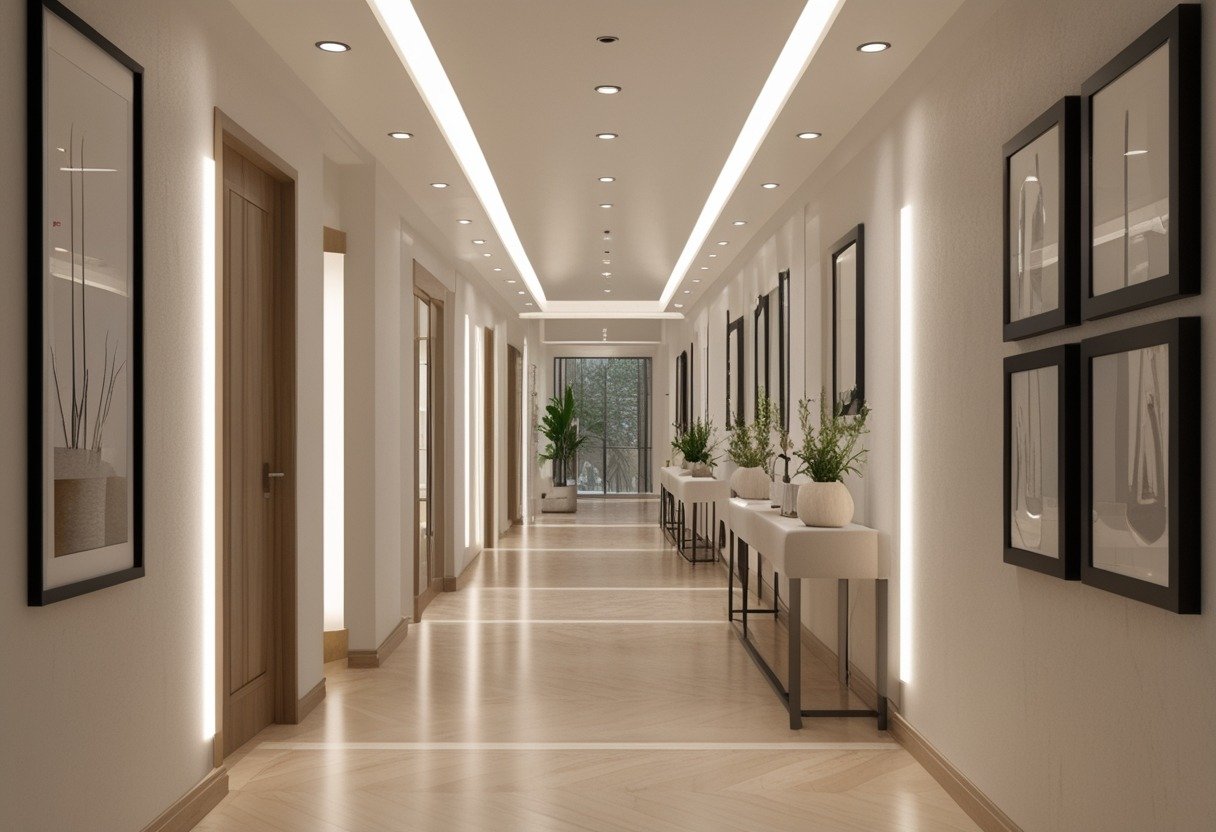
You’ll find simple, low‑cost tweaks and smart built‑ins that boost sightlines and function while keeping traffic flow easy. Expect tips on color, lighting, mirrors, runners, slim furniture, and small‑scale details that make a big visual difference.
1) Paint a single deep accent wall to create depth
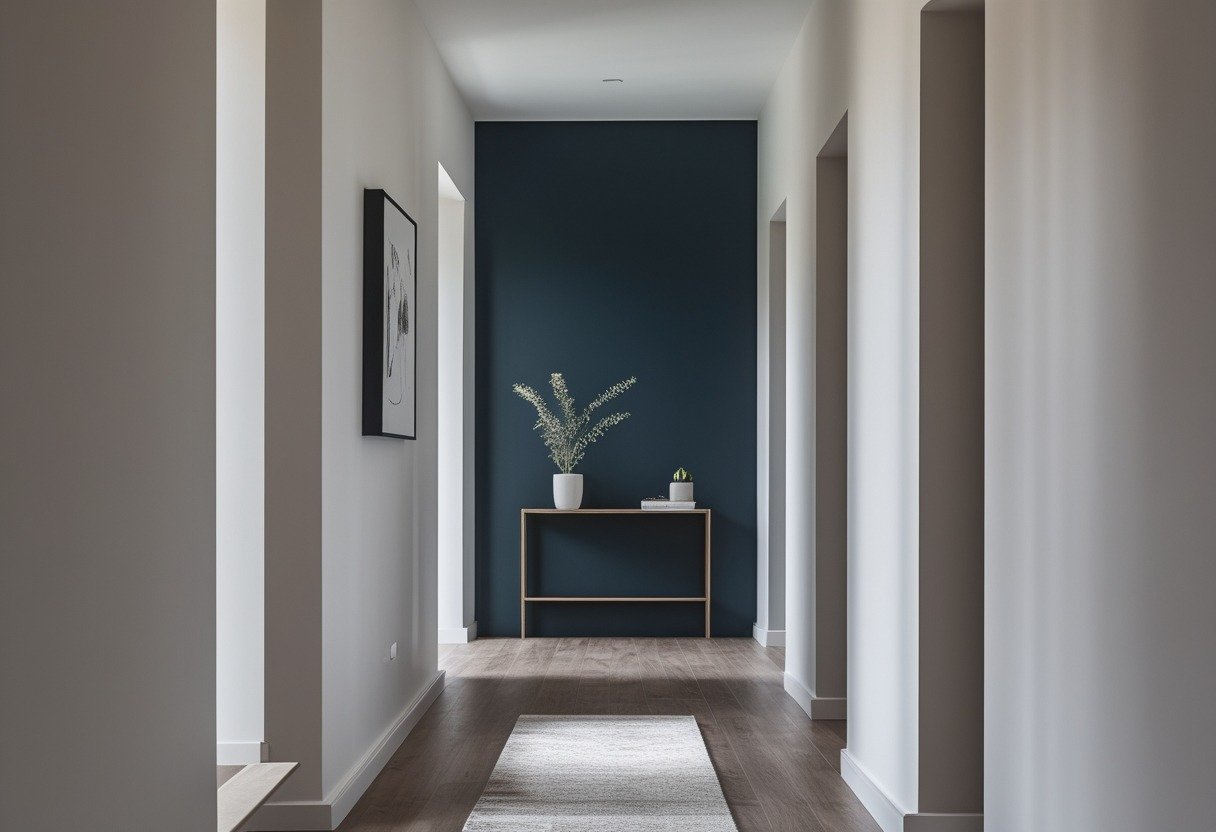
Choose one wall at the far end or a long side of your hallway and paint it a deep, rich color. This draws the eye forward and makes the corridor feel deeper without shrinking the space.
Keep the other walls light and neutral to balance the contrast. Add a simple piece of art or a mirror on the accent wall to enhance the sense of depth and interest.
2) Install vertical shiplap paneling to add height
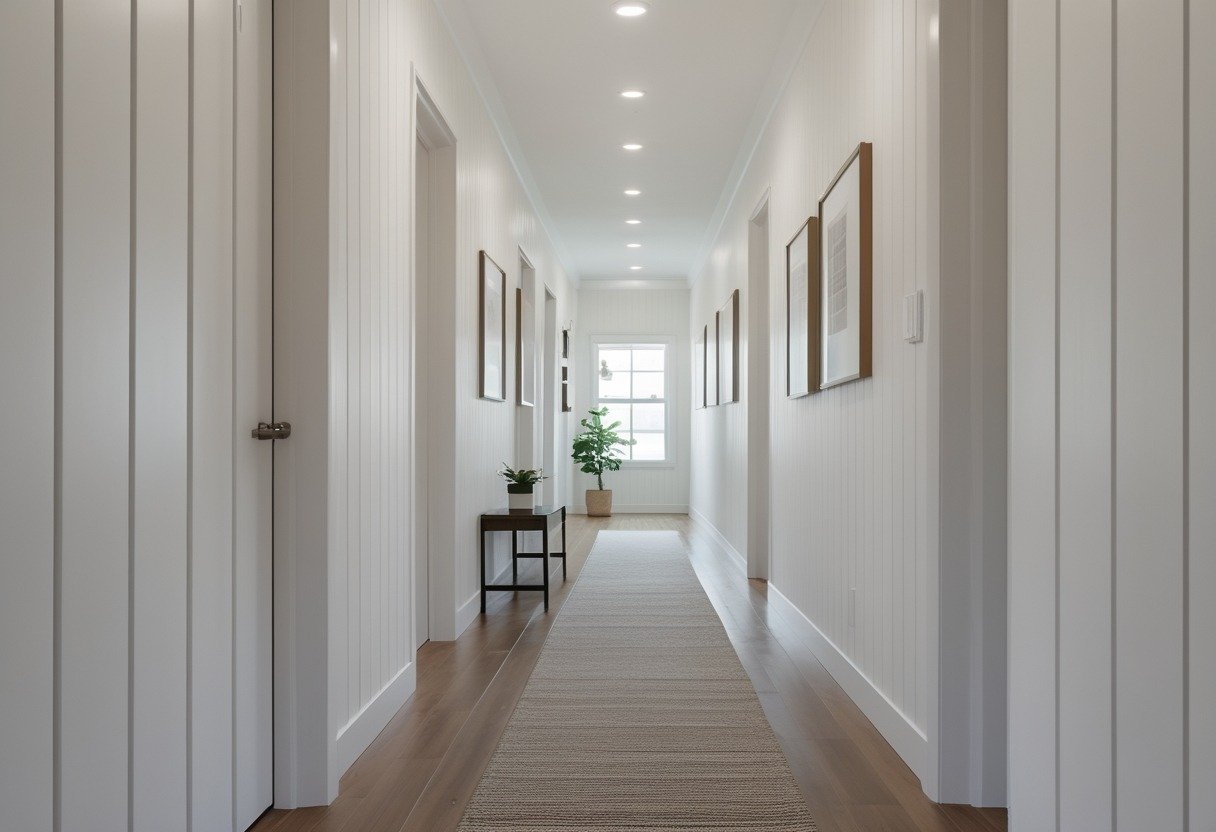
Install vertical shiplap to make your hallway feel taller. The upright lines draw the eye up, giving a sense of height without changing the ceiling.
Choose thin boards or tongue-and-groove panels for a slim profile that suits narrow spaces. Paint them light or keep natural wood to match your style and brighten the passage.
Nail or use adhesive to attach panels to studs or a backing board. Vertical shiplap is a simple upgrade that adds texture and a clean, modern look.
3) Lay a continuous runner rug with a bold stripe
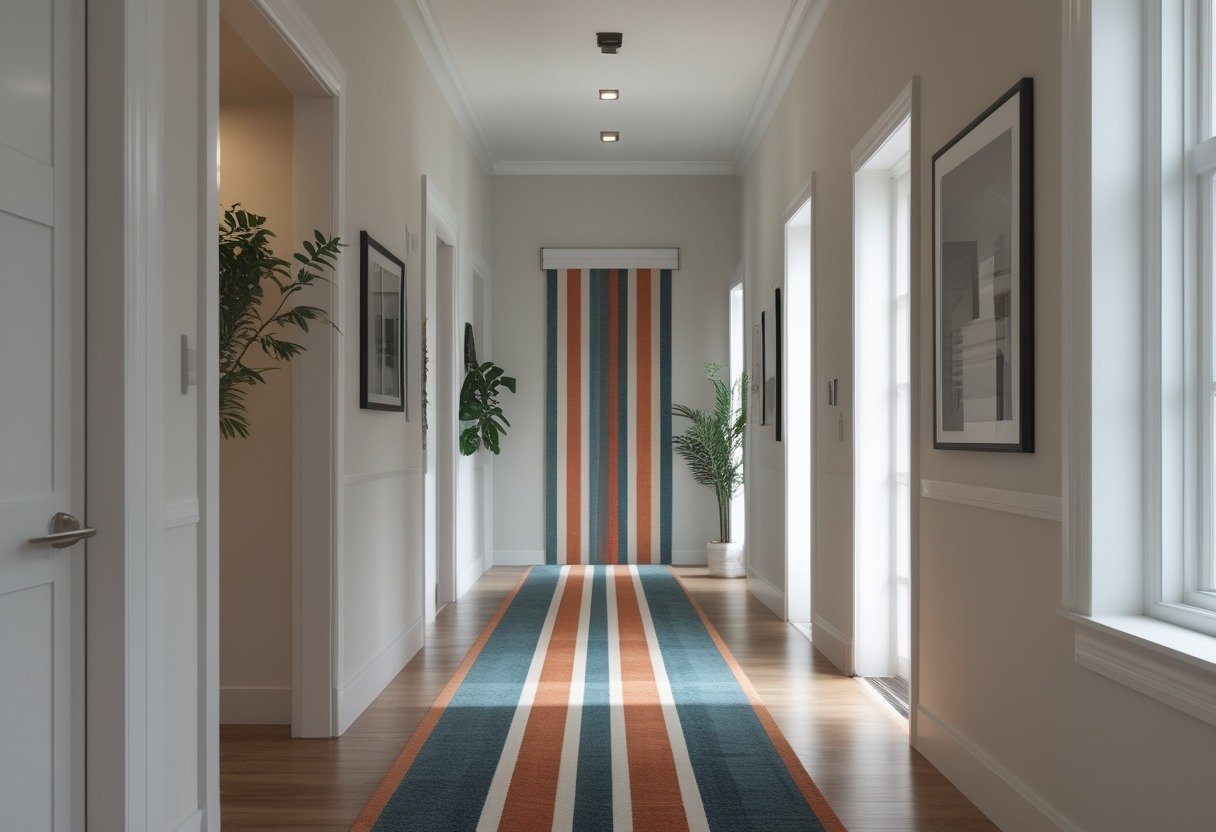
Choose a long runner with a single bold stripe to draw the eye down the hall and make the space feel intentional.
The stripe adds a clear path and works well against plain walls or mixed patterns nearby.
Pick a low-pile, durable material for high traffic.
Secure the runner with a non-slip pad so it stays flat and safe.
Match one stripe color to a nearby accent, like a lamp or frame, to tie the look together.
4) Mount a row of matching picture frames in a linear gallery
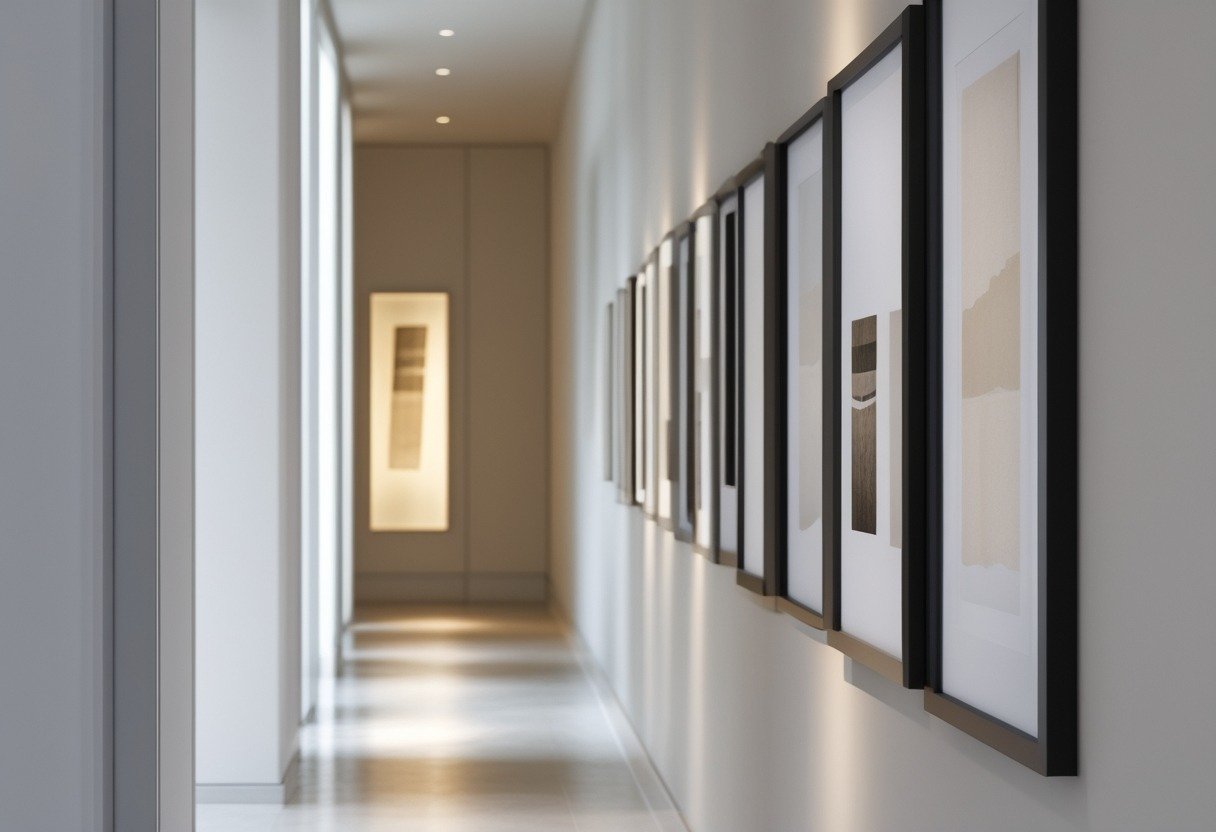
Mount matching frames at eye level to create a clean, steady line down the hall. Use the same frame style and spacing to keep the look simple and calm.
Measure once and mark all hanging points so frames align perfectly. A level and painter’s tape method saves time and avoids extra holes.
Choose photos or prints with a consistent theme or color palette. That small unity makes the narrow space feel intentional and wider.
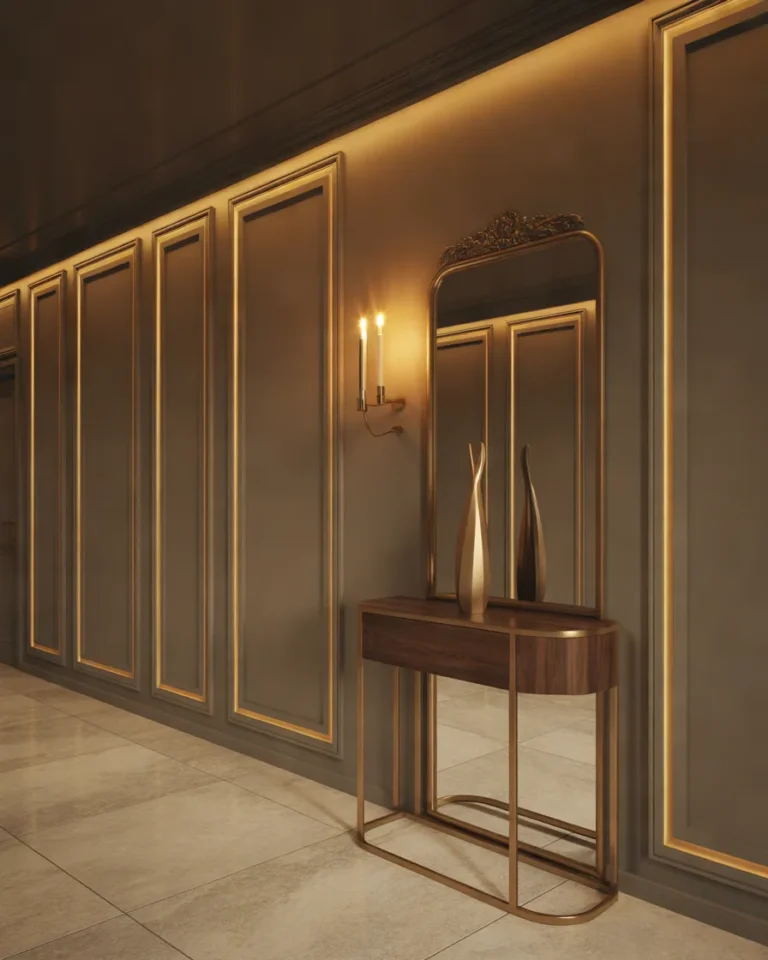
5) Use recessed LED cove lighting along the ceiling
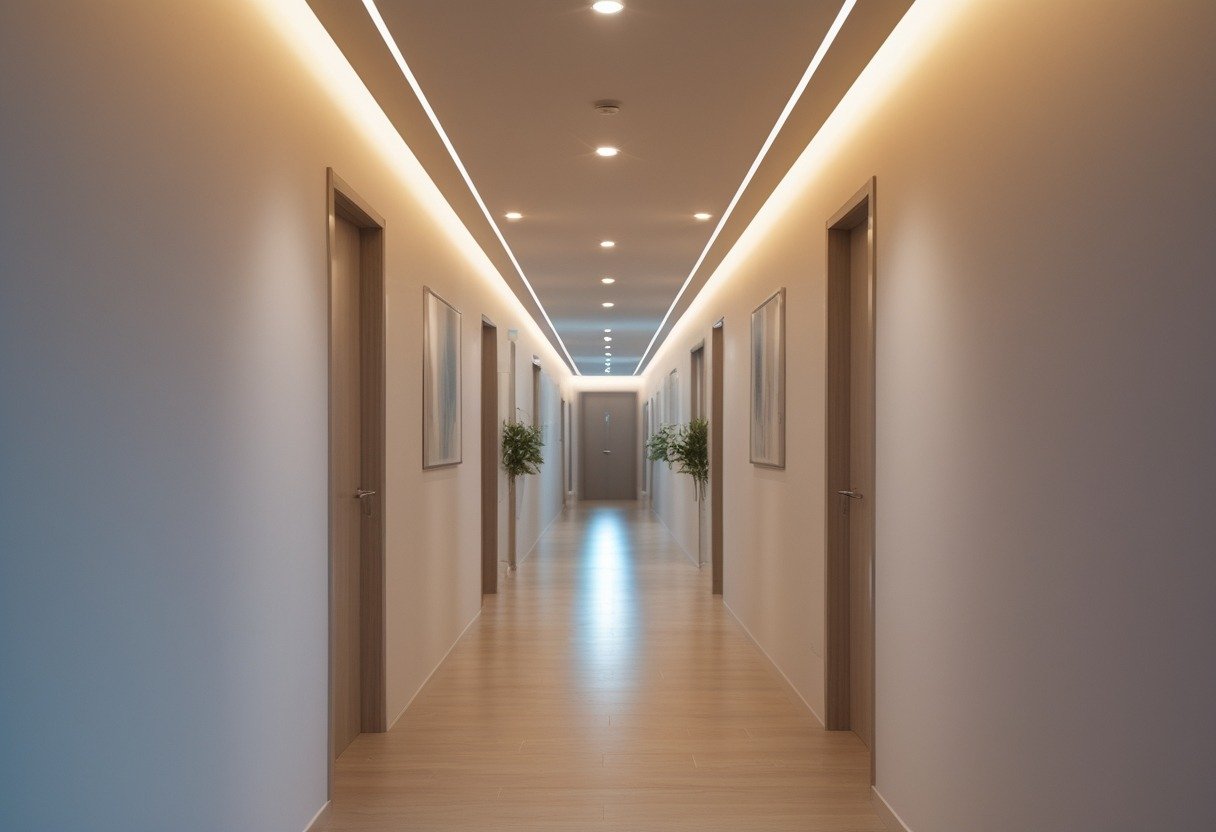
Install recessed LED cove lighting to wash the ceiling with soft, even light. You get a clean look that avoids glare and makes the corridor feel wider.
Place strips in the ceiling recess or behind crown molding for a hidden source. Choose warm or neutral white LEDs and add a dimmer to control mood and brightness.
Use diffusers or aluminum channels to prevent hotspots. Proper spacing and a quality driver will keep the light even and long-lasting.
6) Place full-length mirrors opposite windows to reflect light

Position a full-length mirror across from a window so it catches and bounces daylight into the corridor. This brightens dark corners and makes the hallway feel more open without altering structure.
Choose a slim, tall mirror to match narrow walls and keep traffic flow clear. You can lean it against the wall or hang it; both work well and look intentional.
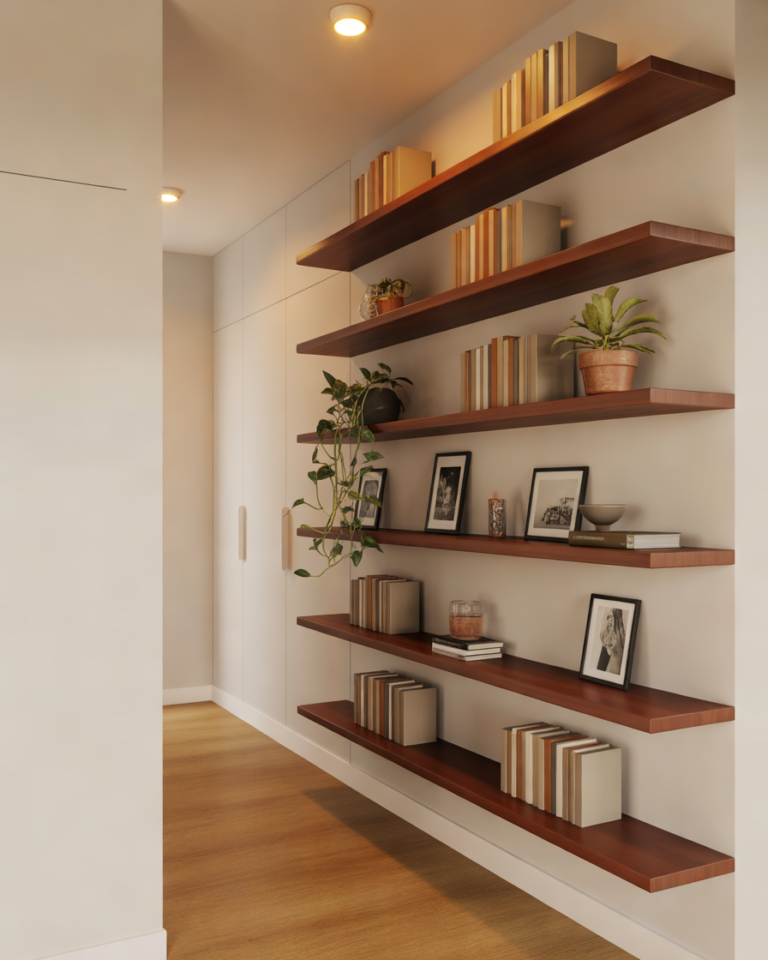
7) Install slim built-in shelving for books and display
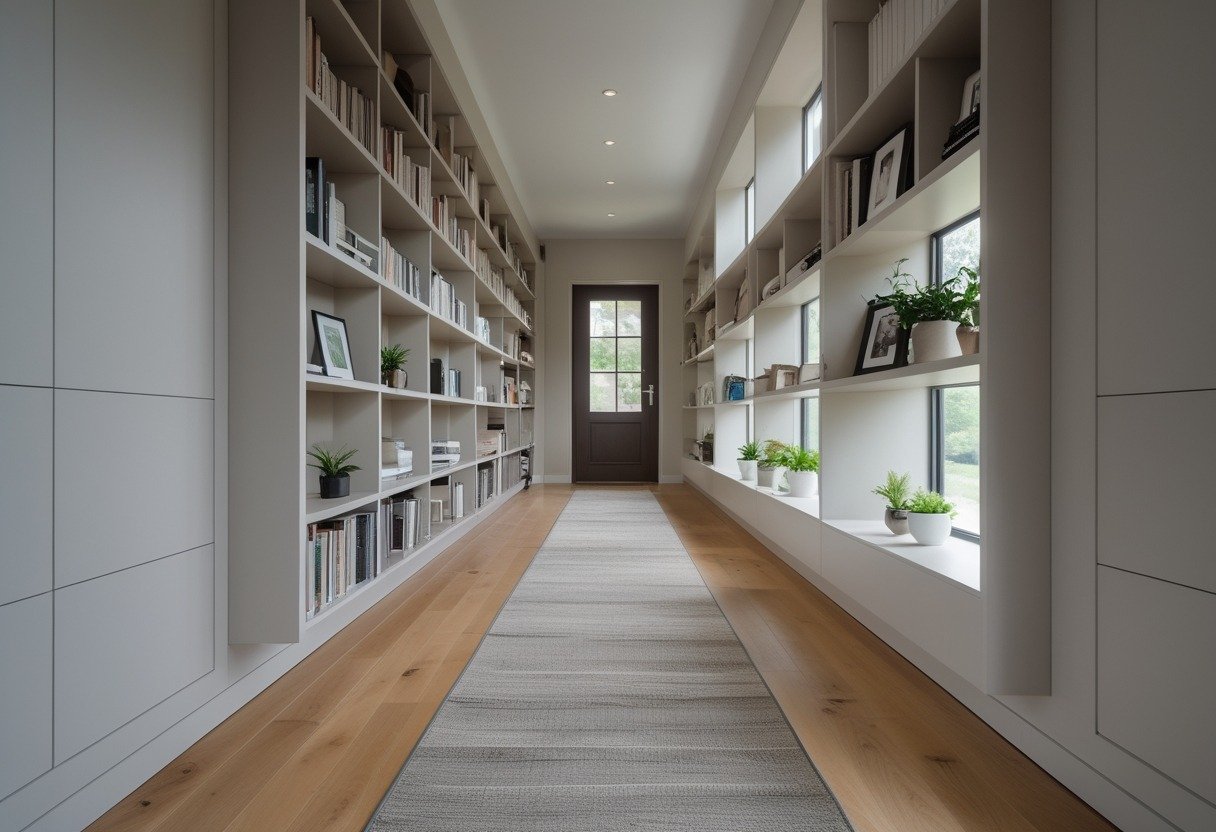
Add shallow, floor-to-ceiling built-ins to keep the walkway clear while giving you storage. You can fit shelves 6–12 inches deep to hold books, small plants, and framed photos.
Paint the shelves the same color as the walls to make the hall feel wider. Use a mix of open shelves and a few closed cabinets for a tidy look.
Place lighting above or under shelves to highlight objects and improve visibility. Keep displays simple to avoid a cluttered feel.
8) Add a narrow console table with slim storage drawers
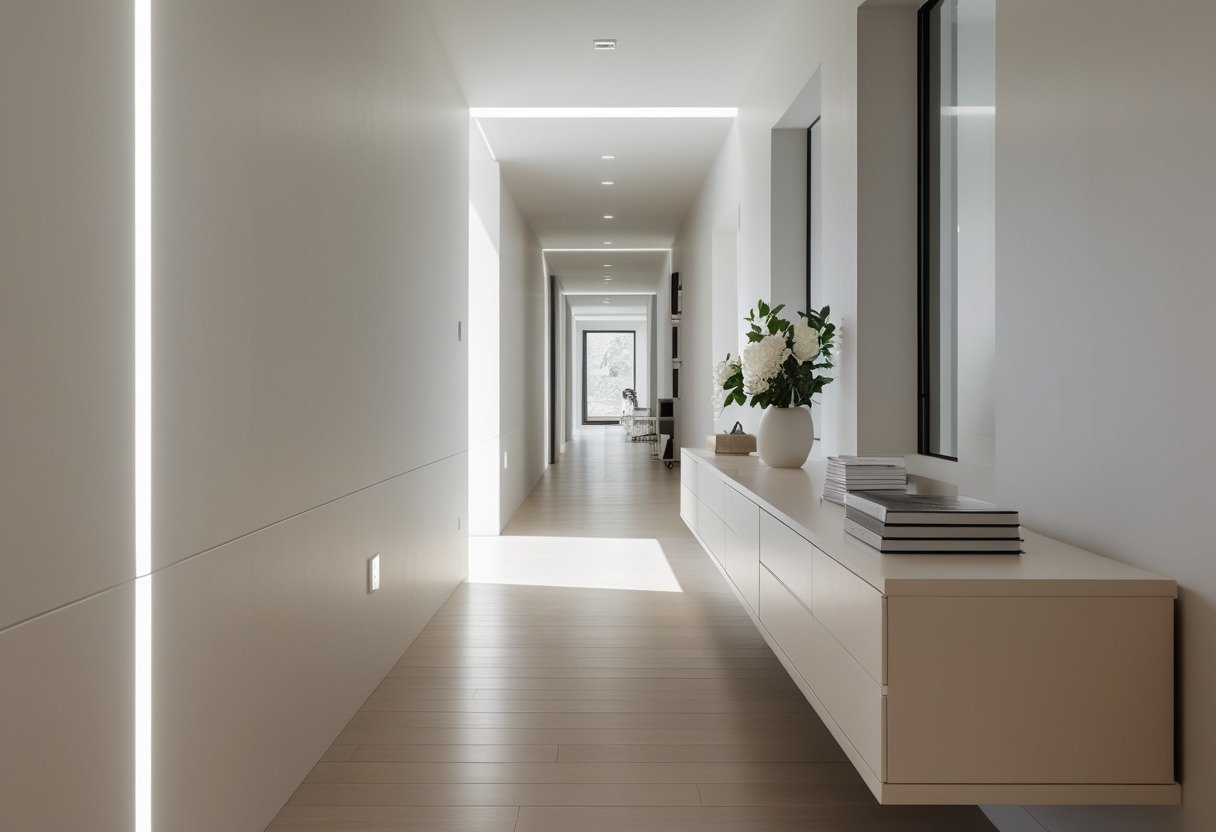
Place a narrow console table along the wall to add surface space without crowding the hallway.
Choose one with slim drawers to keep keys, mail, and small items out of sight and within reach.
Pick a style that matches your decor—wood for warmth or metal for a modern look.
Keep the top tidy with one lamp or a small tray to avoid clutter and maintain clear traffic flow.
9) Create a painted floor runner or stencil path on wood/concrete
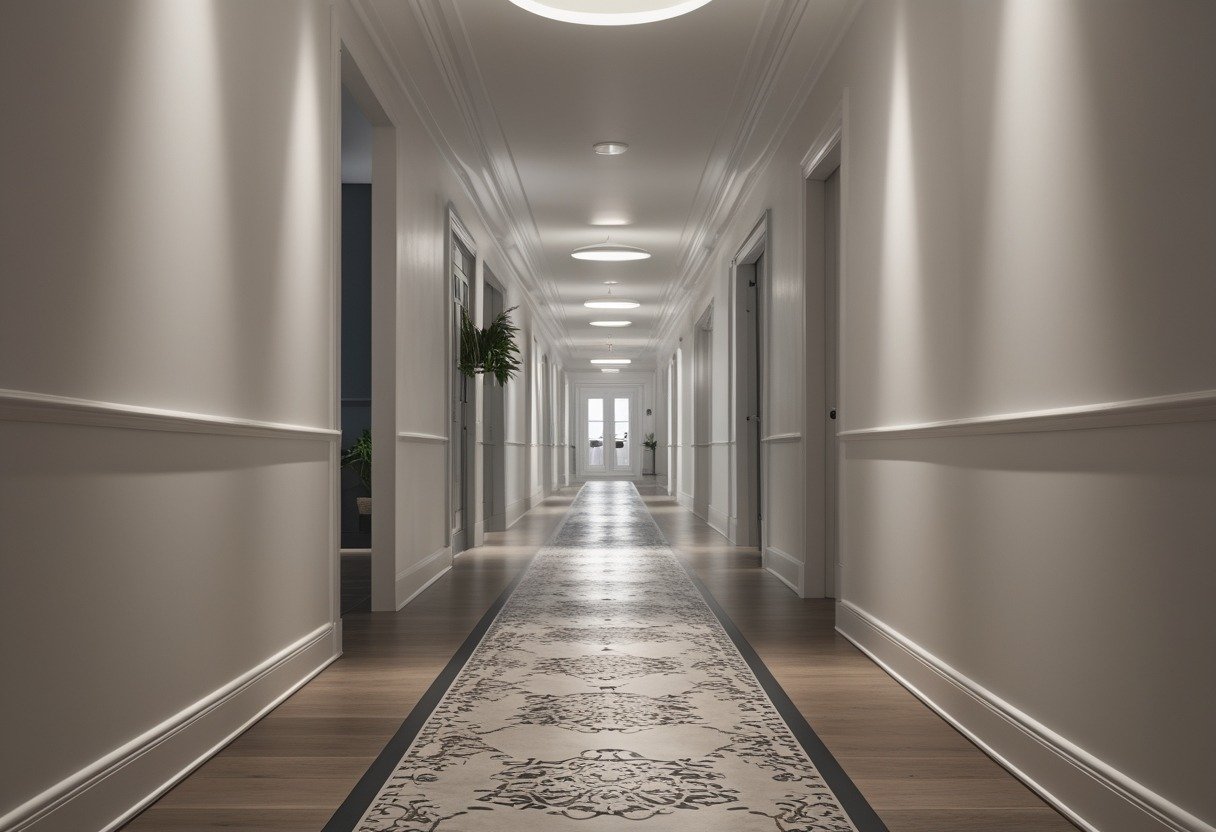
You can paint a runner or use stencils to add pattern without replacing floors. Measure the hall and plan a centered design so the runner looks intentional.
Use floor-grade paint and a sealer for durability on wood or concrete. Stencils let you repeat a tile pattern; freehand stripes or faux-rug shapes work too.
Prep the surface by cleaning and scuffing it slightly. Test colors in a small area before committing to the whole length.
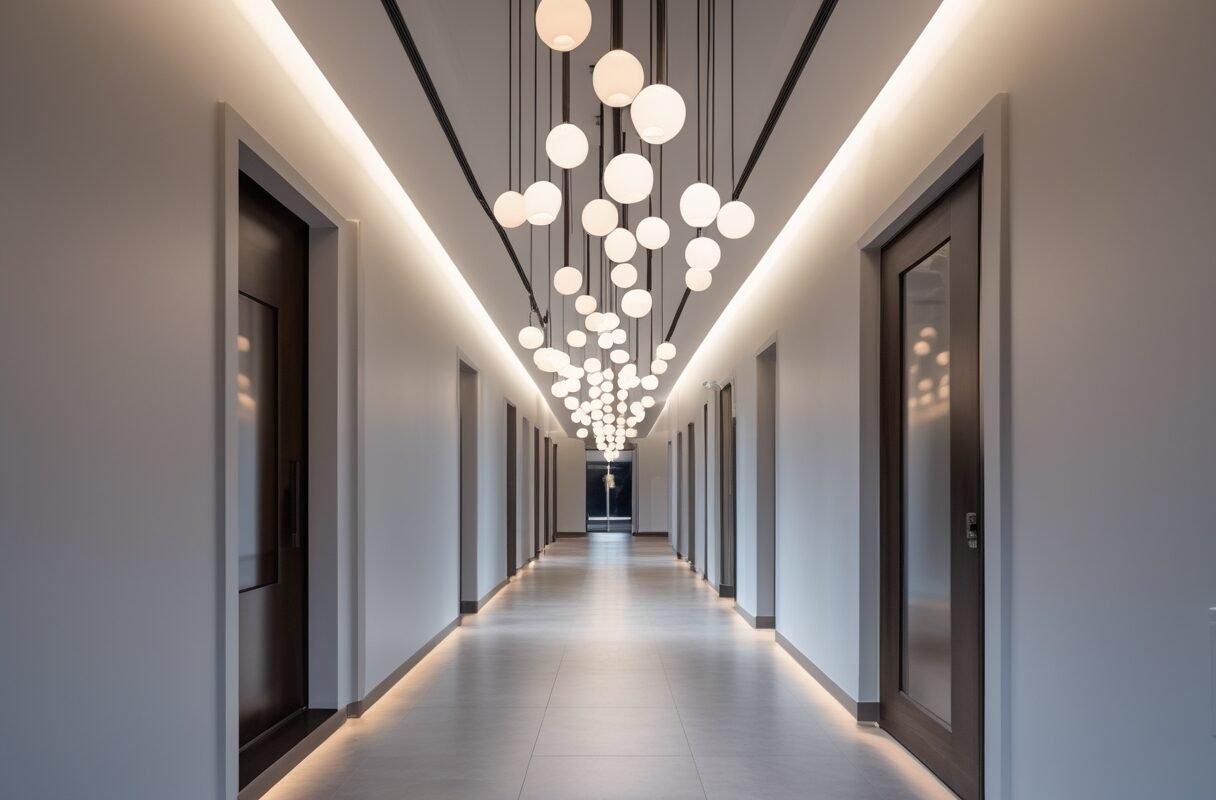
10) Hang pendant lights in a staggered sequence

Stagger pendant lights down the center or along one side of your hallway to add rhythm and interest.
Vary the heights slightly so each fixture draws the eye and avoids a flat, uniform look.
Choose slim, low-profile pendants for narrow halls to keep sightlines open.
Use warm, even lighting to guide movement and make the space feel welcoming.
11) Apply wallpaper with a vertical or small-scale pattern

Choose vertical stripes or a small, repeating motif to draw the eye up and along the hall. This makes the space feel taller and less cramped without adding clutter.
Pick light, muted colors so the pattern adds interest but stays calm. Small-scale prints keep the scale balanced in a narrow corridor.
Install one feature wall or paper the whole length for a cohesive look. Use durable, washable wallpaper for high-traffic areas.
12) Use floating coat hooks and a slim bench at the entry
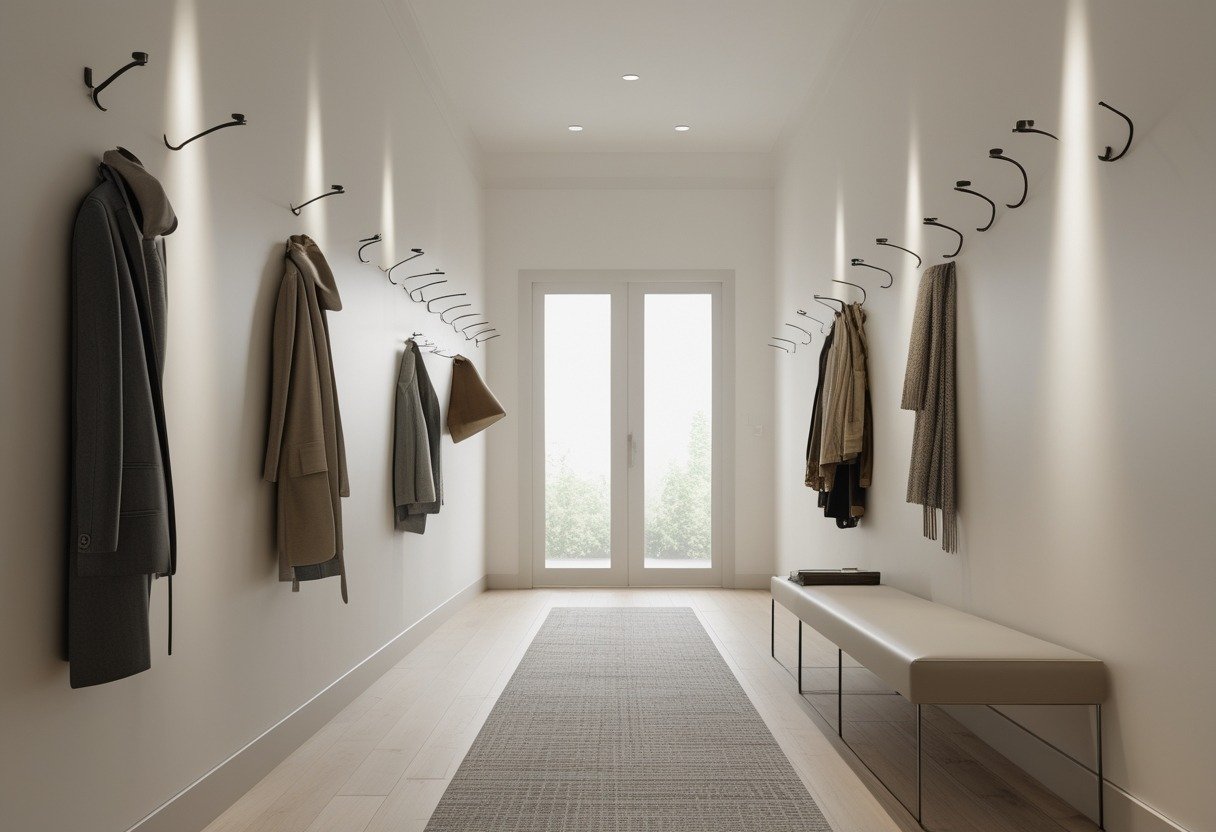
Mount floating coat hooks at shoulder height to keep jackets and bags off the floor. Choose a simple rail or spaced individual hooks to fit your wall length.
Pair hooks with a slim bench for sitting and shoe storage. A narrow bench wastes little space but adds a handy landing spot for keys and mail.
Keep the look clean by using matching finishes and a small tray for loose items. This arrangement adds function without crowding a long, narrow hallway.
13) Paint trim and doors a darker contrasting color
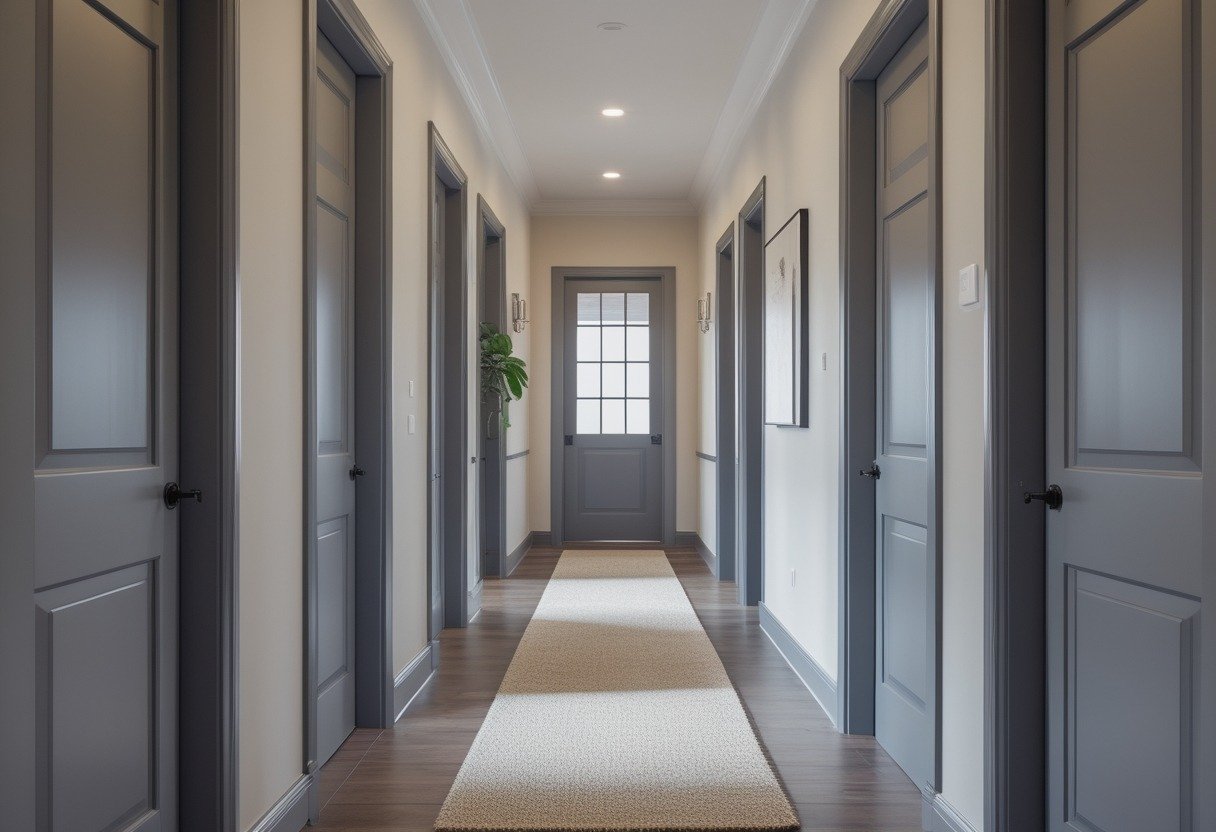
Painting trim and doors darker than the walls adds clear definition to a narrow hallway. It highlights architectural details and creates depth without crowding the space.
Choose a muted dark tone like gray, greige, or deep brown for a balanced look. You can also go bold with black for a crisp, modern feel if your hallway gets enough light.
Keep the walls light to maintain brightness. Dark trim draws the eye along the length, making the corridor feel more intentional and styled.
14) Install glass internal doors to increase sightlines

Swap solid doors for glass-paneled ones to let light flow from rooms into the hallway. This makes your long, narrow space feel more open without removing walls.
Choose frosted or textured glass if you want privacy while keeping brightness. Sliding or pocket glass doors save floor space and avoid swinging into the corridor.
Understanding Hallway Space Constraints
You will deal with tight widths, limited natural light, and traffic needs. The goal is to keep movement smooth while adding storage, light, and visual interest without crowding the path.
Common Challenges in Long Narrow Hallways
Narrow widths make furniture and storage tricky. You must keep at least 36 inches of clear walkway for comfortable two-way passage; aim for 42–48 inches if people carry items or you have wheelchairs. Bulky consoles and wide runners reduce that clearance quickly.
Lighting often feels dim because windows are rare. Rely on layered lighting: slim flush mounts, recessed lights, and wall sconces placed every 6–8 feet. Mirrors opposite light sources amplify brightness.
Traffic flow and sightlines cause visual tunnel effects. Break the tunnel with varied paint heights, a gallery wall at eye level, or a contrasting floor runner that shortens perceived distance. Choose low-profile storage like shallow shelves or wall hooks to avoid trip hazards.
Floor Plan Considerations for Flow and Function
Map the hallway in plan view before buying anything. Measure width at the narrowest point, note door swings, and mark where people pause (e.g., near a closet or bathroom). This tells you where a bench or shoe storage will not interfere.
Think about door clearance and turning radius. Allow a 30–36 inch radius at doorways so doors can open without blocking the path. If a closet door swings into the hall, switch to sliding or bifold doors to save space.
Plan storage vertically, not horizontally. Use tall, shallow cabinets, picture ledges, and hooks mounted at two heights for coats and bags. Keep the floor as clear as possible to maintain a safe, easy flow.
Integrating Lighting and Color
You can make a long, narrow hallway feel wider and brighter by using layered light sources and a simple color plan. Choose fixtures and paint that work together to remove shadows, create depth, and keep sightlines clear.
Optimizing Natural and Artificial Lighting
Maximize any natural light by keeping windows uncovered or using sheer shades that still protect privacy. Place a mirror opposite a window to bounce daylight down the length of the hall.
For artificial light, use a mix of overhead and wall-level fixtures. Slim flush-mount LED fixtures or recessed lights spaced every 4–6 feet give even ceiling light without crowding a low ceiling. Add wall sconces at eye level to remove side shadows and highlight art or trim. Choose LED bulbs around 2700–3000K for warm light, or 3000–3500K if you want a crisper look. Use dimmers so you can adjust brightness for evenings or task needs. Finally, aim for layered control: overhead for general use, sconces for accent, and directional spotlights for artwork.
Color Schemes to Enhance Spaciousness
Pick a light, consistent palette to visually widen the hallway. Use a main wall color in soft white, pale gray, or warm beige and save deeper tones for one feature element like a runner or a single accent wall.
Paint ceilings one shade lighter than walls to raise perceived height. Paint trim and doors in a slightly brighter tone than the wall to keep edges crisp. If you want more interest without crowding the space, add a narrow vertical stripe or subtle wallpaper on one short wall to draw the eye outward. Keep flooring color continuous with nearby rooms to create a smooth flow and avoid abrupt visual stops.