
Your hallway ceiling can change how your whole space feels and functions, and this article shows 13 practical ways to make that change. You will find hallway ceiling ideas that boost light, add texture, or create a focal point so your corridor feels brighter, larger, and more intentional.
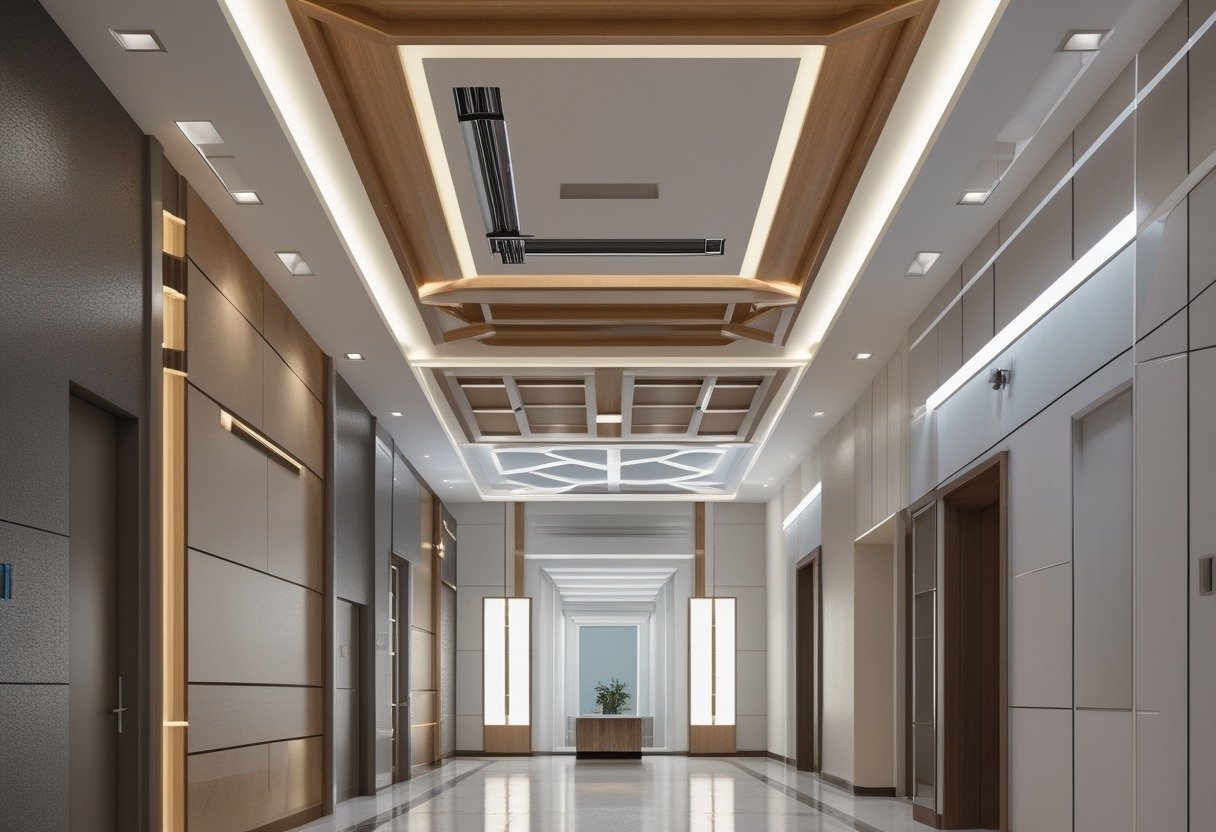
Use these ideas to match your style and solve common hallway issues like low height, poor lighting, or bland finishes. Each option balances looks and real-world concerns so you can pick a solution that fits your home and budget.
1) Matte white paint with recessed LED strip lighting

Paint your ceiling matte white to keep the look clean and reduce glare. The flat finish hides imperfections and makes the space feel taller.
Install recessed LED strip lighting along the ceiling edges for soft, even light. You can choose warm white LEDs to keep tones natural and comfortable.
This combo works well in narrow halls, brightening path sightlines without harsh fixtures. It stays low-profile and energy efficient, so maintenance is easy.
2) Woven rattan pendant fixtures over a painted white ceiling
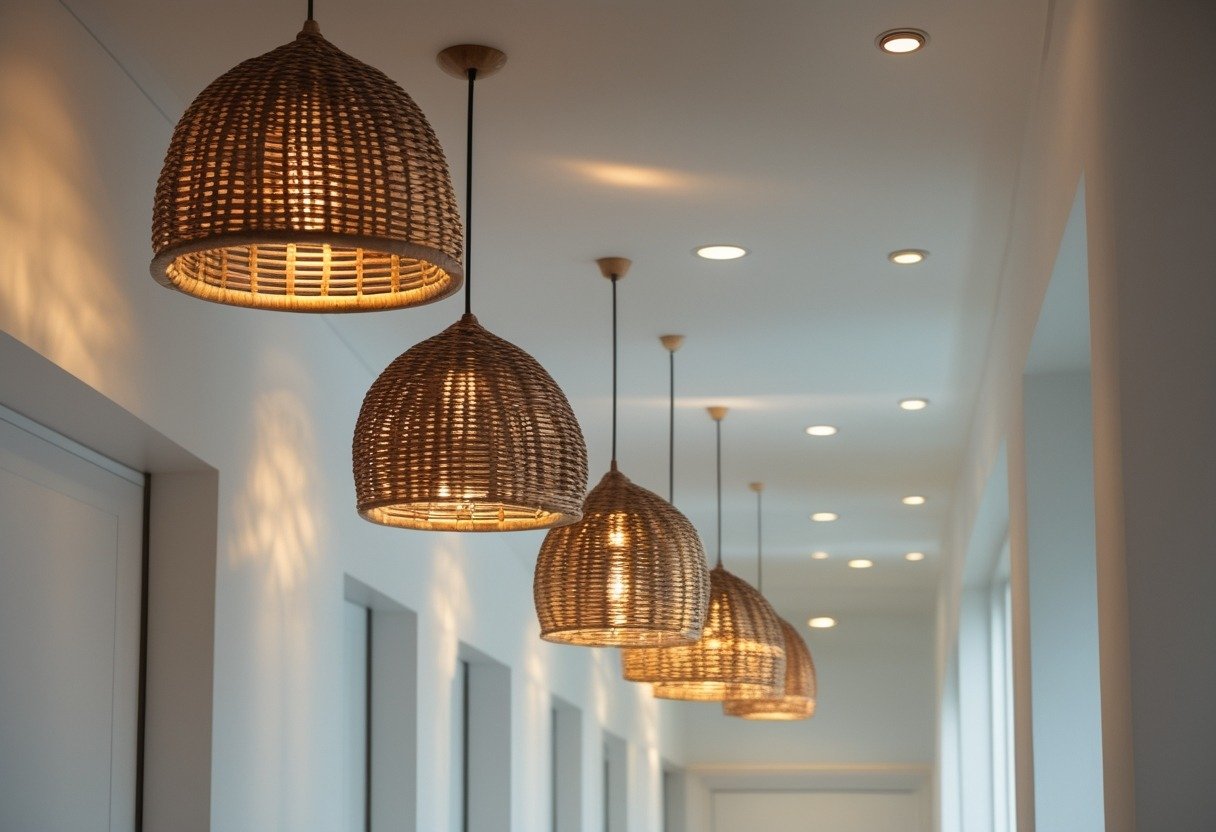
You can add warmth and texture by hanging woven rattan pendants against a white ceiling. The white backdrop makes the rattan pattern stand out and keeps the space bright.
Choose sizes that fit your hallway scale; a single large pendant works for wide halls, while a row of smaller pendants suits long corridors. Use warm bulbs to enhance the natural tone without darkening the space.
3) Beadboard plank ceiling in soft cream

A soft cream beadboard ceiling adds warmth and subtle texture to your hallway. It brightens narrow spaces without overpowering other finishes.
Choose oak or painted MDF planks for a clean look that pairs well with oak floors and black accents. Installation is straightforward and works around existing fixtures.
Keep the finish matte to hide imperfections and use simple trim where the ceiling meets the wall for a polished edge. This choice feels classic and calm in many home styles.
4) Shiplap ceiling painted pale gray
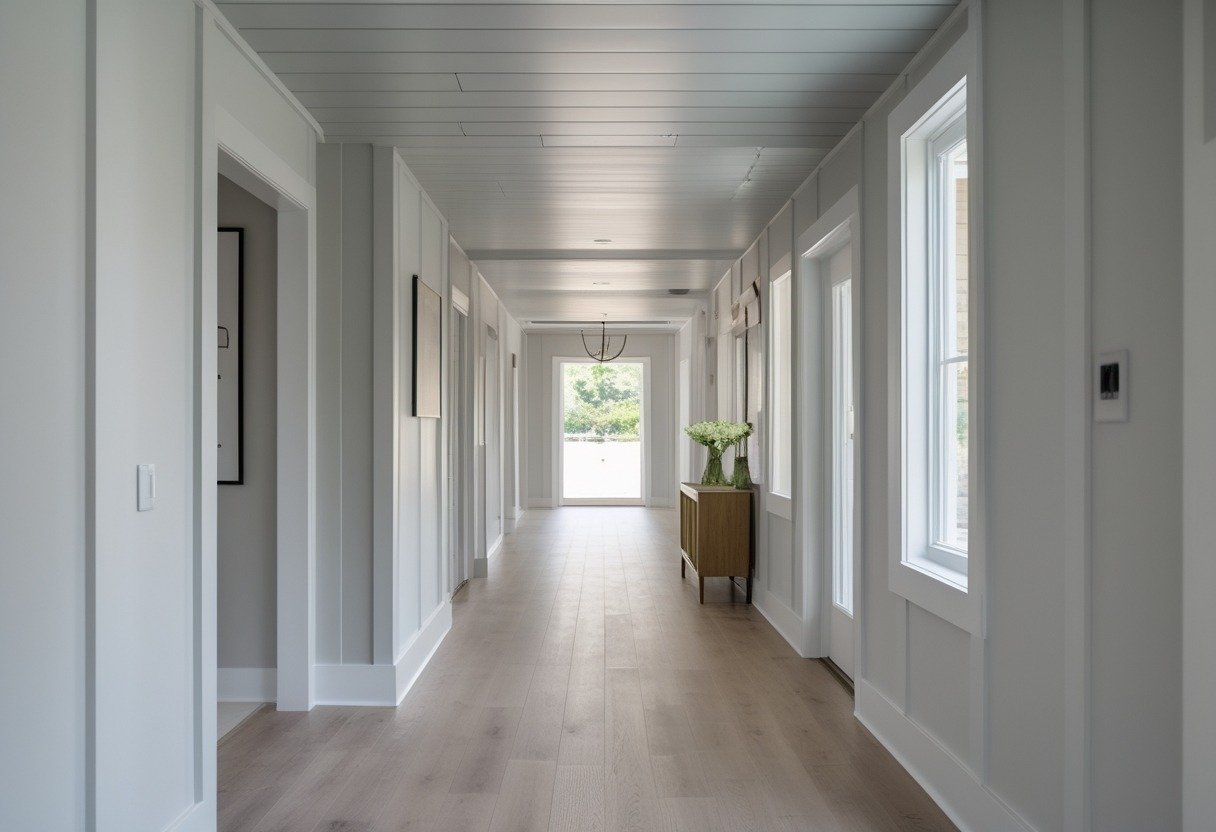
Painting shiplap pale gray adds depth without darkening the hallway. You keep the planked texture but gain a soft, modern tone that pairs well with white trim.
Gray works with many styles—coastal, modern, or transitional—so you can change furnishings later without repainting. It also hides minor dust and shadows better than pure white.
Use satin or eggshell paint to balance light reflection and durability. Keep boards aligned and reveals crisp for the best finished look.
5) Coffered ceiling with contrasting dark walnut stain
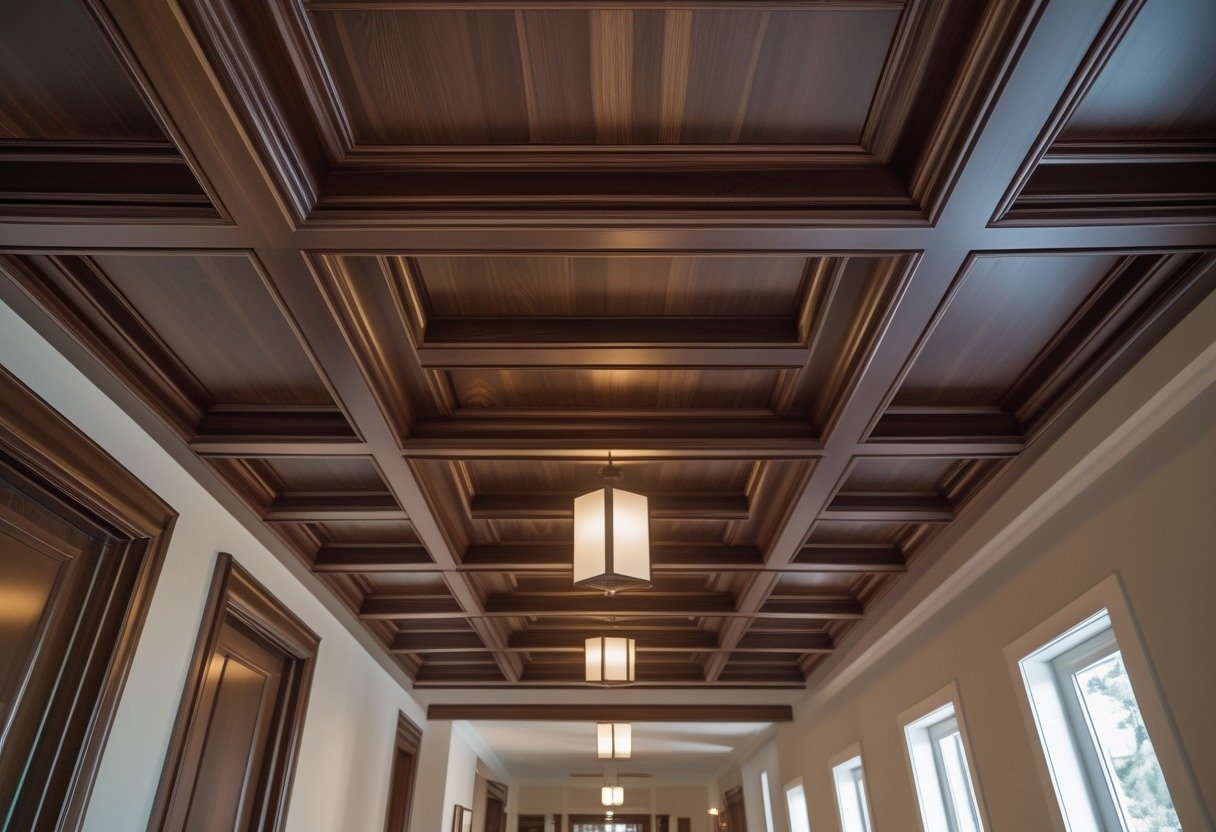
Choose a coffered ceiling with dark walnut beams to add warmth and clear definition to your hallway. The rich stain contrasts well with lighter walls and makes the grid stand out.
Keep recessed panels a pale tone to avoid making the space feel closed. This contrast improves depth while keeping the hall bright.
Use recessed or track lighting inside the coffers to highlight the wood grain. The result feels intentional and refined without adding clutter.
6) Stretch ceiling with diffuse backlit panels

A stretch ceiling with diffuse backlit panels gives your hallway even, glare-free light. You control brightness and color to match mood and function.
The fabric can mimic skylights or smooth surfaces without heat buildup. It fits narrow or low hallways and hides wiring for a clean look.
Installation is quick compared with major ceiling work. Maintenance is low: wipe the fabric and check LEDs occasionally.
7) Glossy Venetian plaster ceiling in warm beige
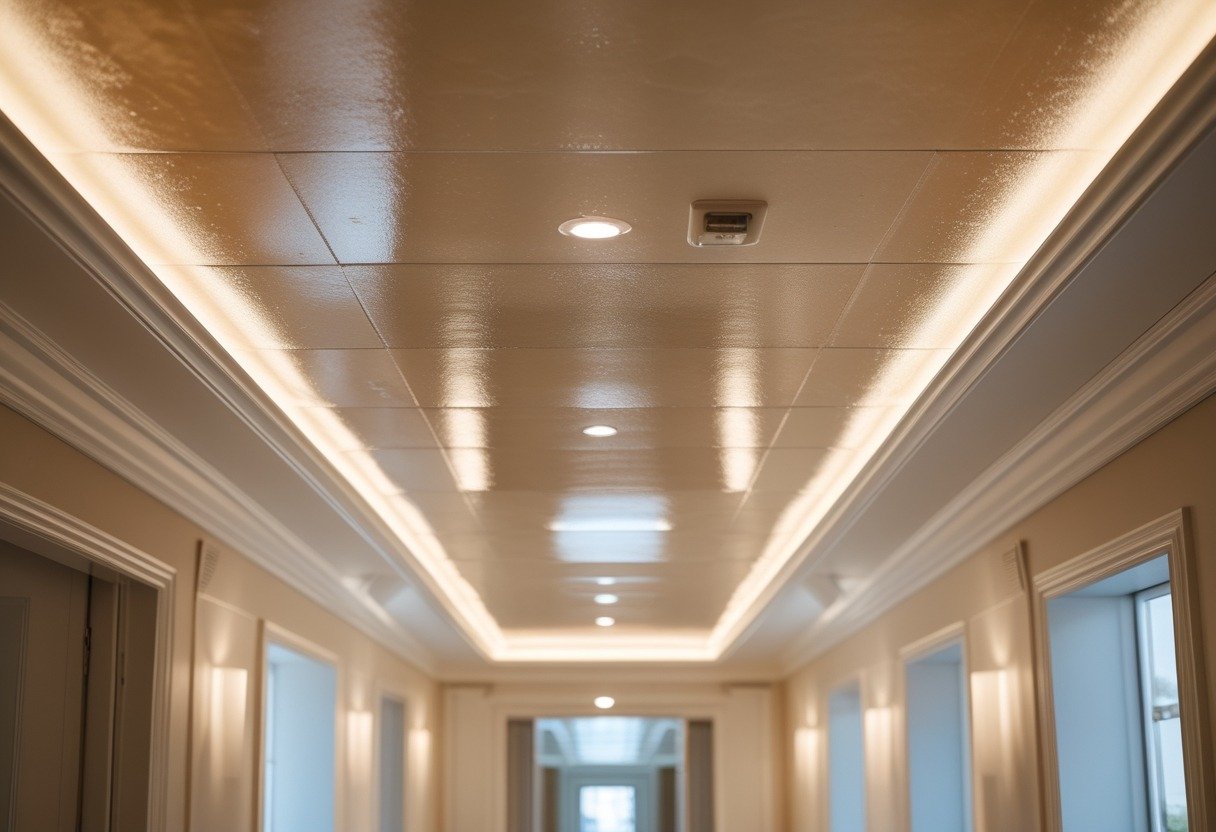
A glossy Venetian plaster ceiling in warm beige adds subtle luxury to your hallway. The smooth, slightly reflective surface brightens the space without glare.
You can pair it with simple trim or recessed lighting to highlight the sheen. It works well in narrow halls because it visually raises the ceiling and softens shadows.
Installation needs skilled plastering and a burnishing finish for that satin shine. Choose lime-based mixes for breathability and durability.
8) Exposed timber beams with whitewashed finish
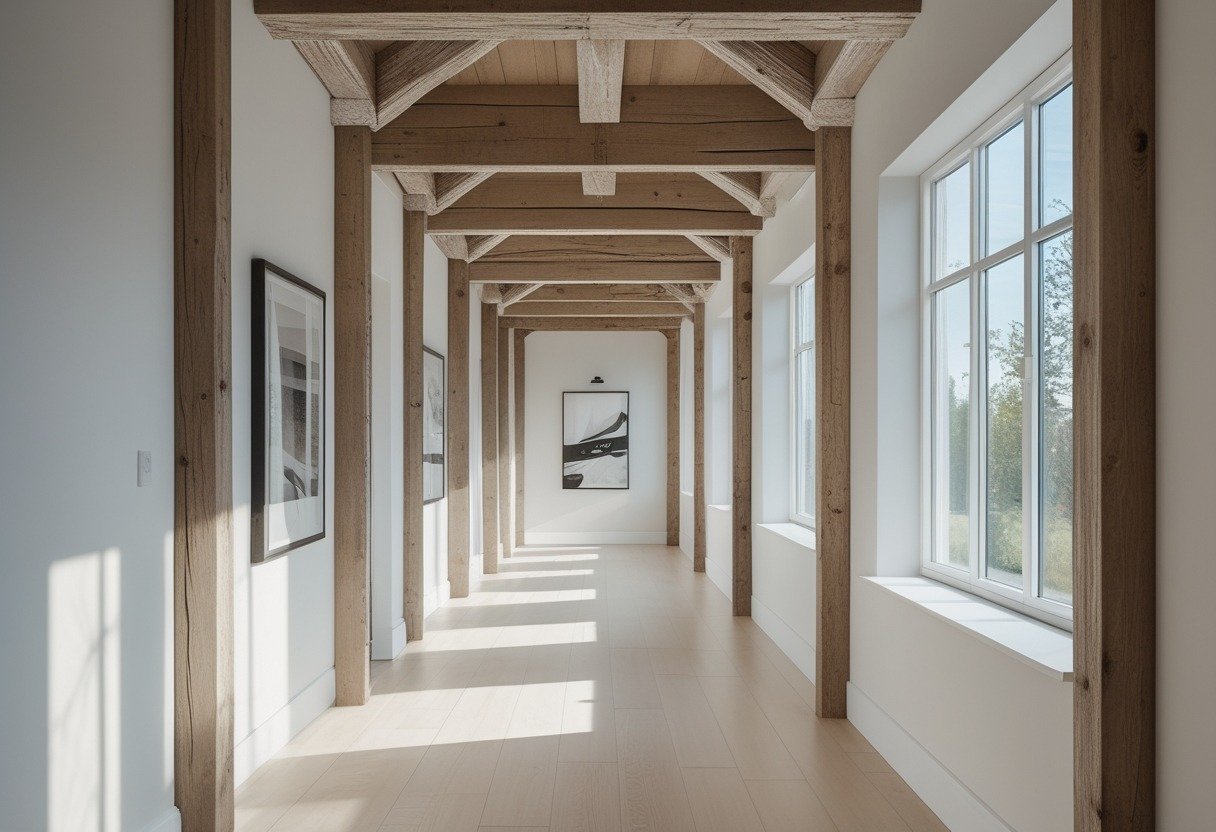
You can add exposed timber beams with a whitewashed finish to brighten a hallway while keeping wood texture. The pale wash softens the beam color and helps the ceiling feel higher.
This look pairs well with white walls and medium wood floors for a balanced contrast. Keep beams evenly spaced and finish edges clean for a modern, intentional feel.
9) Wallpapered ceiling with subtle botanical print
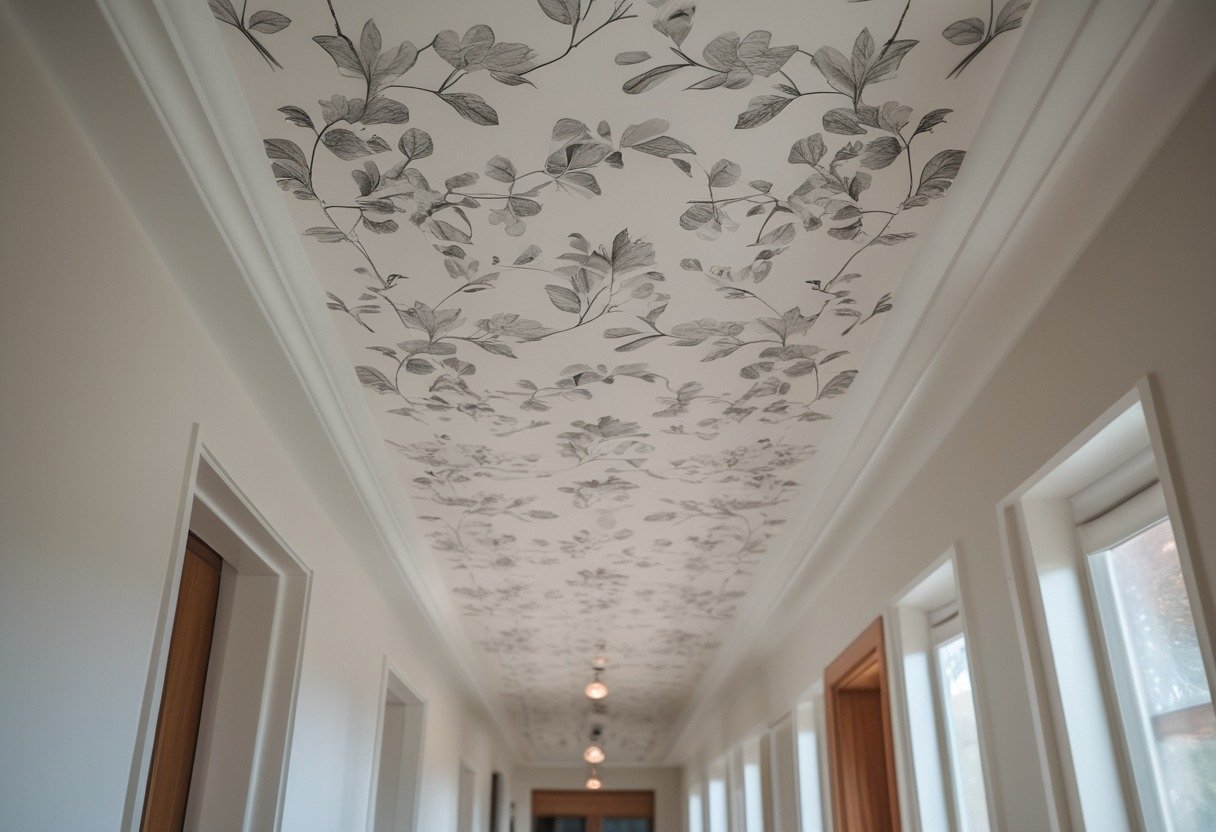
A soft botanical print on your hallway ceiling adds quiet interest without overwhelming the space. You keep walls simple while drawing the eye upward, which can make narrow halls feel more finished.
Choose a small-scale pattern and muted colors for a calm look. Install carefully around lights and crown moldings so the design reads smoothly and looks professional.
10) Slim recessed cove lighting with skylight placement
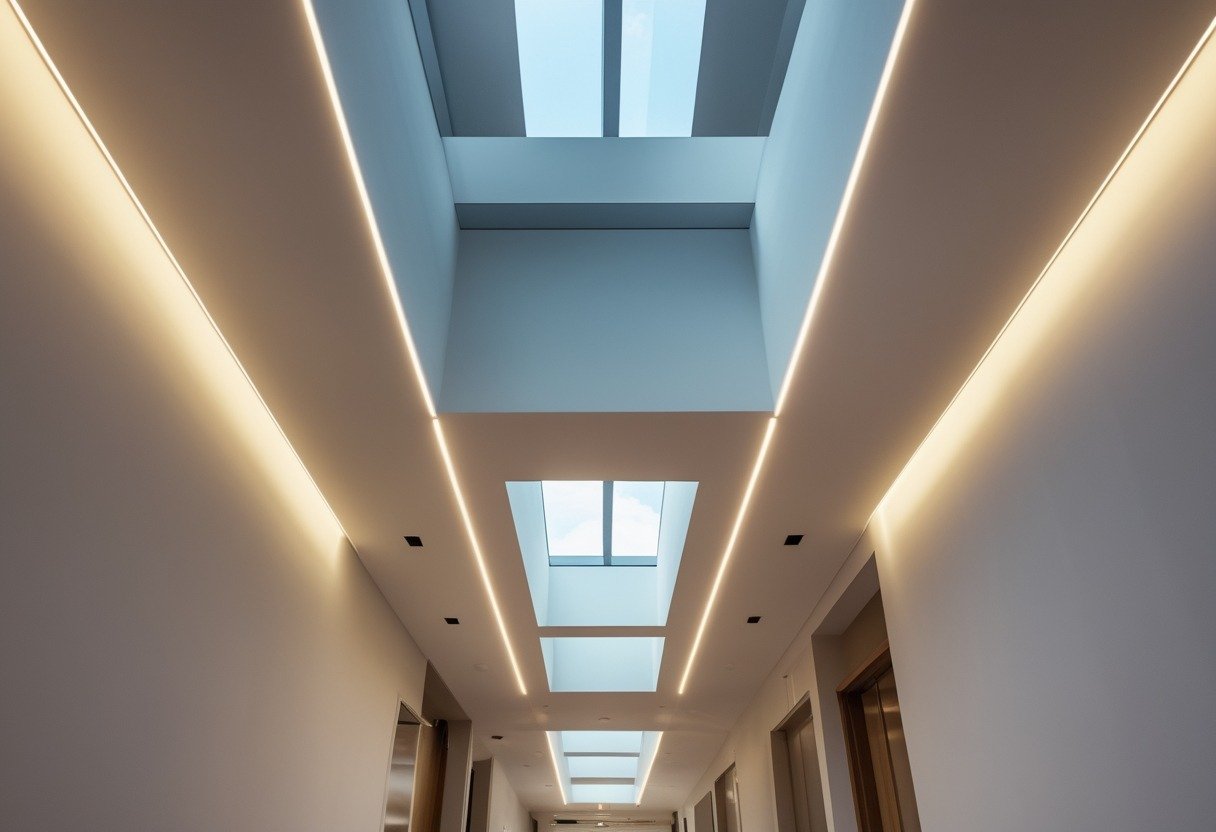
Place slim recessed cove lights near a skylight to boost evening light without competing with natural daylight. You get soft, even illumination that complements the skylight’s brightness.
Keep the cove profile shallow so it fits narrow soffits and maintains a clean ceiling line. Use warm white LEDs to match daylight tones and avoid harsh color shifts.
Space fixtures evenly along the cove to prevent dark spots. A dimmer helps balance artificial light with changing daylight through the skylight.
11) Tongue-and-groove pine planks stained honey oak

You can add warmth and texture to a hallway with tongue-and-groove pine planks stained honey oak. The finish brightens narrow spaces while showing natural grain and knots for a subtle rustic look.
Installation is straightforward because planks lock together on all sides, giving a tight, smooth ceiling. Pair the stain with soft white walls and warm LED lighting to keep the space feeling open and cozy.
12) Mirrored ceiling panels in satin finish
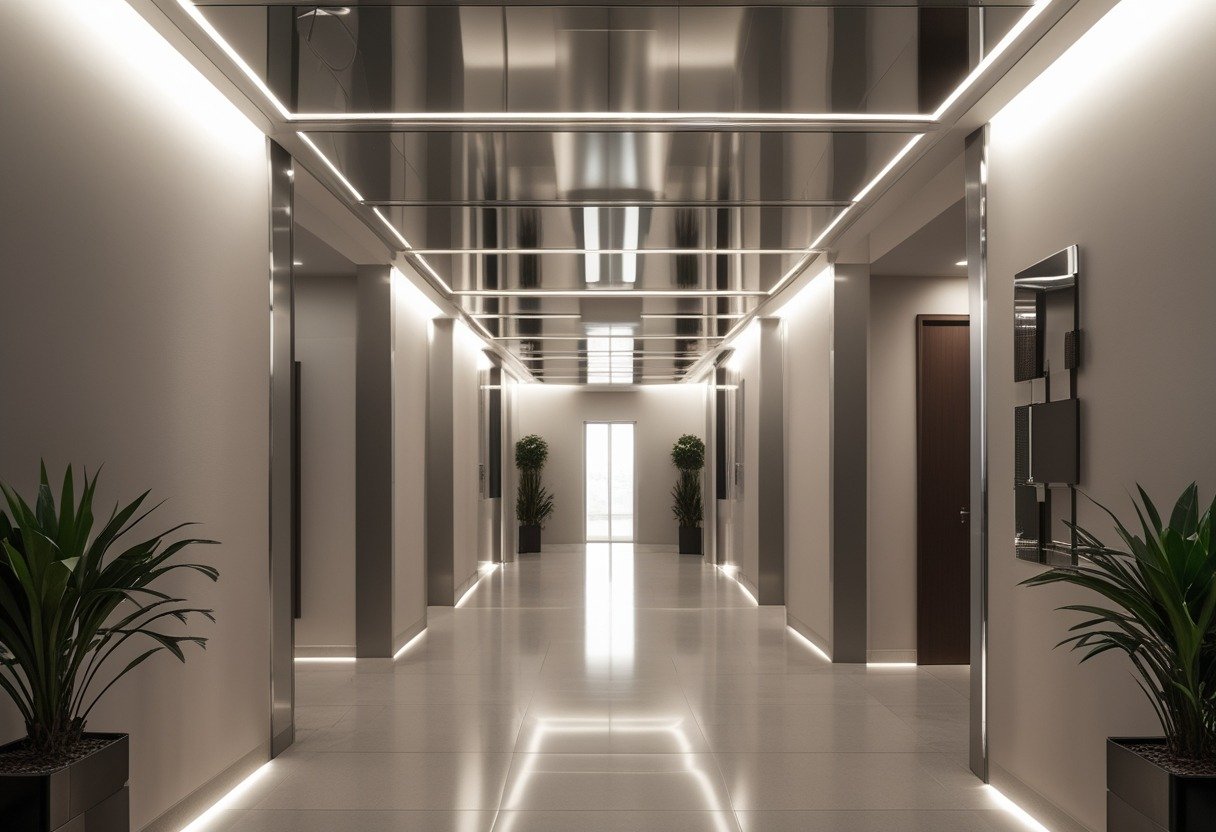
You can add satin-finish mirrored panels to make your hallway feel larger without strong glare.
The satin surface softens reflections and spreads light evenly, which works well in narrow or low corridors.
Install panels to follow the hall’s lines for a clean, cohesive look.
Keep frames slim and finishes neutral so the ceiling reads as an extension of your space.
13) Metallic leaf (gold or copper) accent panels
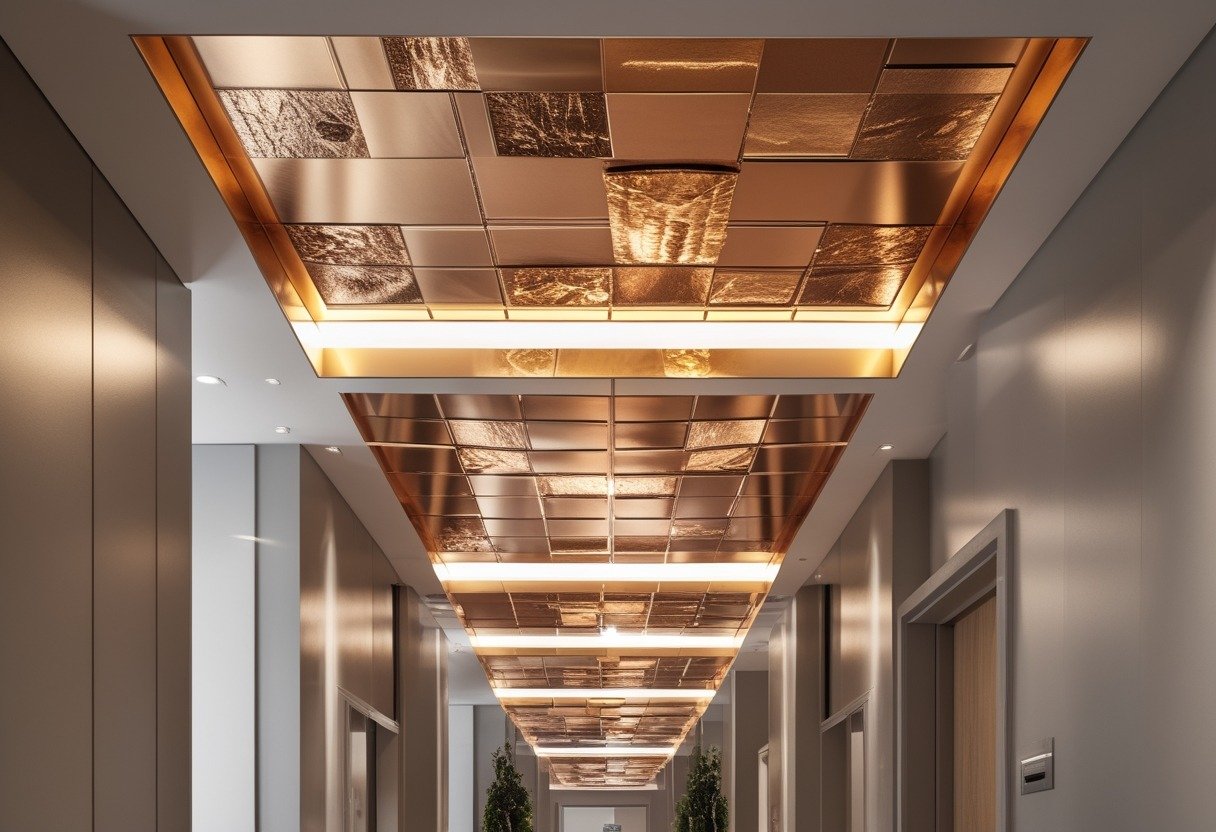
You can add thin metallic leaf panels to ceiling sections to create focused shine without covering the whole hall. Gold warms the space and reads formal; copper adds rich, aged character.
Apply leaf to framed panels or recessed trays for a neat, modern look. Use satin or low-sheen varnish to protect the leaf while keeping reflections subtle.
Keep panels small and spaced so light plays across them without glare. This works well above runners, entryways, or art displays.
Design Principles for Hallway Ceilings
You will focus on light, color, and patterns to make a narrow or low hallway feel taller, brighter, and more intentional. Plan fixtures, paint, and textures to work together so each choice supports better sightlines and easier movement.
Balancing Light and Space
Place lighting to remove dark pockets and keep sightlines clear. Use a mix of recessed downlights and wall washers to even out brightness along the entire hall. Space fixtures every 4–6 feet for typical 8–9 foot ceilings; reduce spacing in very long halls. Add dimmers so you can lower glare for evening use.
Use uplighting or cove lights if the ceiling is low. They push light up and create a perceived lift without stealing headroom. Mirror or glossy paint on opposite walls helps reflect light from fixtures and windows. If natural light is limited, choose cooler white LEDs (3000–4000K) for clearer visibility.
Choosing Complementary Colors
Pick ceiling paint that coordinates with wall and floor tones, not just one you like. Lighter ceilings typically make a hall feel taller; aim for a value one or two steps lighter than the walls. For low ceilings, use a soft white or pale neutral to avoid a boxed-in feel.
If you want drama, use a slightly deeper color while keeping walls neutral to avoid overwhelming the space. For narrow halls, paint the ceiling the same hue as the trim or door frames to create a continuous visual line. Sample paint on a large poster board and view it at night under your chosen lights before committing.
Creating Visual Interest
Add texture, pattern, or architectural detail to make the ceiling feel intentional. Tongue-and-groove planks or shallow coffers give rhythm without lowering headroom much. Keep profile depths under 3–4 inches in narrow halls so details read from a distance and don’t crowd the space.
Use linear elements that run the length of the hall to emphasize flow. Cove molding with hidden LED strips highlights ceiling lines and casts soft, even light. If you add beams, choose slim, painted versions that contrast in color rather than heavy raw wood to keep the ceiling airy.
Addressing Common Hallway Ceiling Challenges
You can make low or narrow hallways feel taller and brighter with a few targeted choices: paint, lighting, and simple trim work. Small changes often give the biggest visual lift and improve daily use.
Low Ceiling Solutions
Paint the ceiling a shade lighter than the walls to create a subtle lift. Use flat or low-sheen white or a very pale neutral; it bounces light without drawing the eye downward.
Install recessed lighting or slim flush-mount fixtures to keep headroom clear. Place lights in a straight line down the hall to guide the eye forward and emphasize length rather than height.
Avoid heavy, hanging pendants or bulky crown moldings. Instead, add thin crown or a shallow picture rail if you want trim—keep it minimal so it doesn’t eat vertical space.
Consider vertical details on the walls—tall, narrow artwork or vertical paneling—to draw the eye up. A single, taller door or mirror at the end of the hall also creates the sense of increased height.
Dealing With Narrow Spaces
Choose a bright, consistent ceiling color to make the corridor feel wider. One tone across walls and ceiling reduces visual breaks and opens the space.
Use linear lighting to widen the feel: wall sconces placed at eye level or a row of flush lights set slightly wider than shoulder width create lateral spread. Avoid downlights clustered in the center only.
Add horizontally oriented trim or a low chair rail to give the illusion of breadth. A runner rug with horizontal stripes or a light-colored narrow runner can counteract a “tunnel” effect.
Keep furnishings slim and shallow. Use shallow shelves, slim console tables, or wall-mounted hooks so circulation stays clear and the corridor reads as open rather than cramped.
