
You want a study space that helps you focus and feel calm. This article shows 15 study room decor ideas that make your room more functional, comfortable, and inspiring so you can get more done.
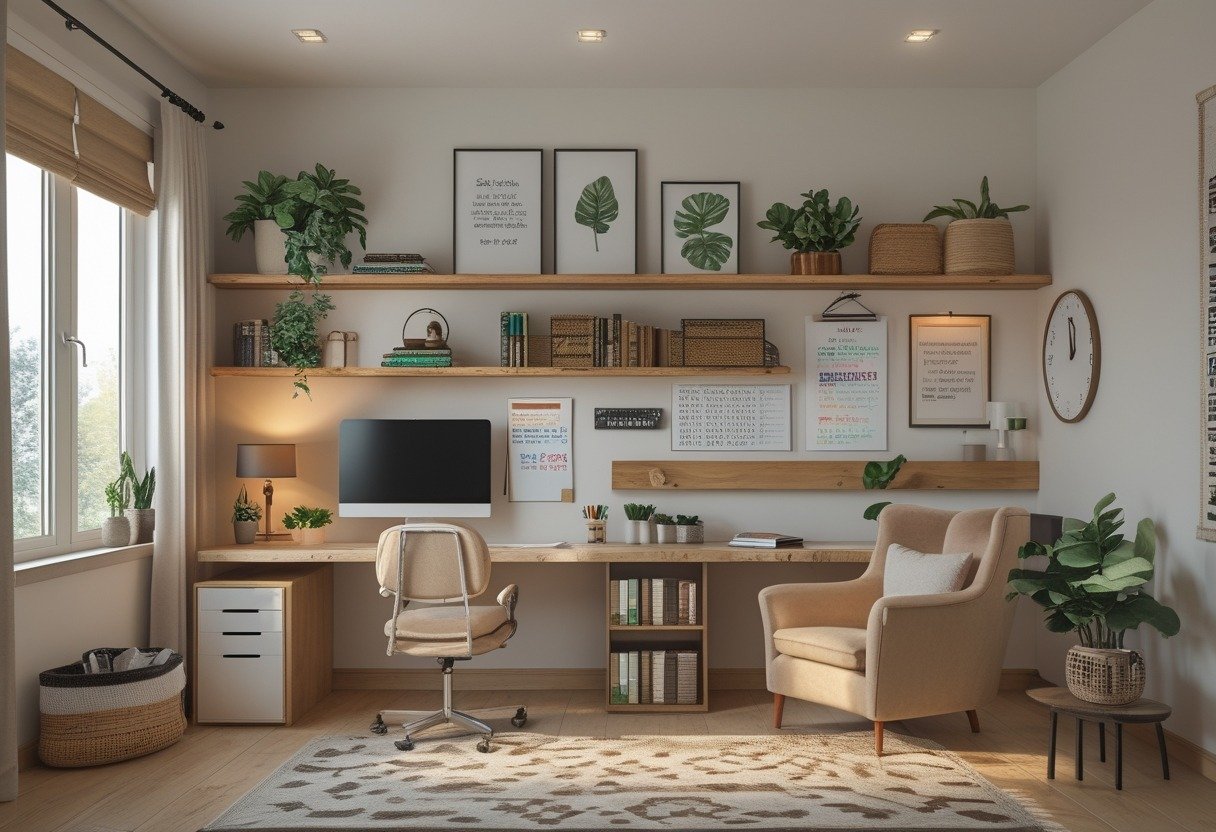
You’ll find tips on lighting, furniture, storage, color, and layout that work together to create a clear, distraction-free space. Use these ideas to shape a study area that fits your routines and boosts your concentration.
1) Ergonomic standing desk with adjustable height
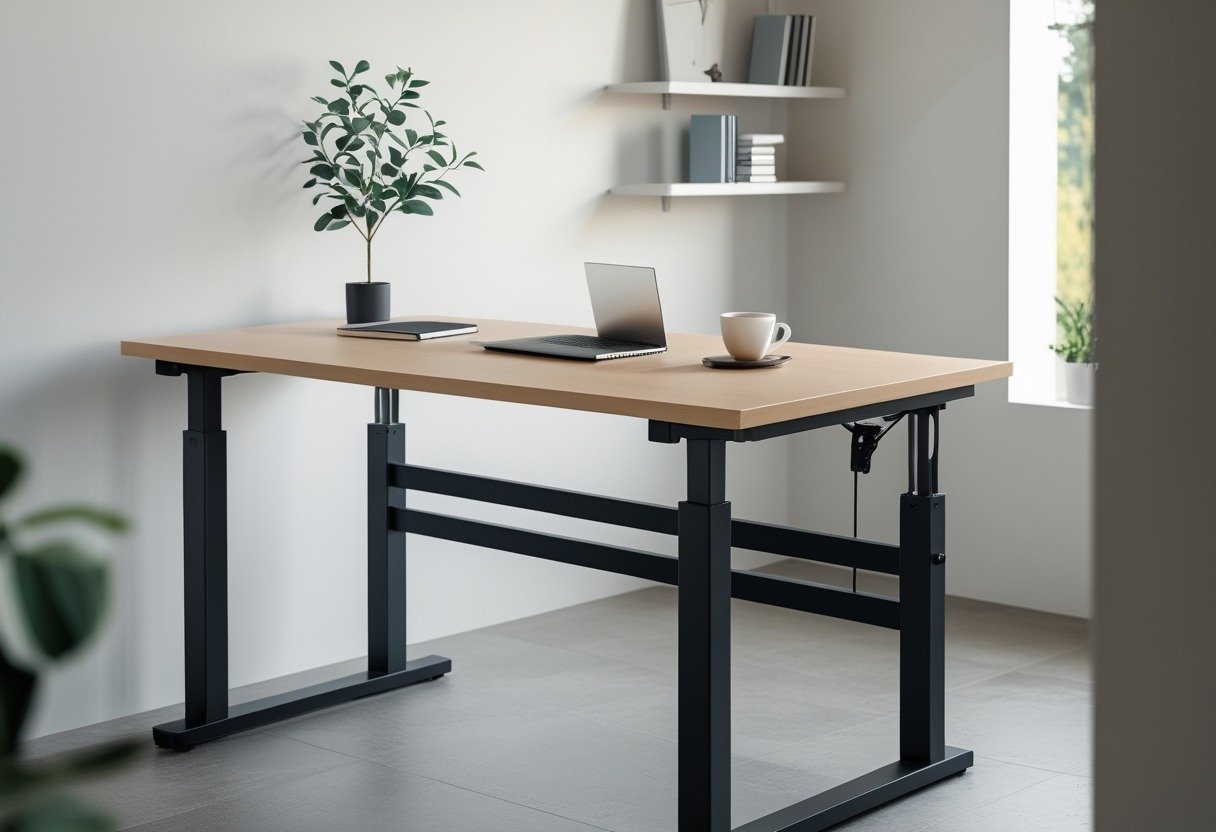
Choose a height-adjustable standing desk so you can switch between sitting and standing easily. This helps reduce strain and keeps you more comfortable during long study sessions.
Look for smooth, sturdy mechanisms and enough surface space for your laptop and books. If you need a budget option, use a desk converter on your current desk to gain height adjustment without buying a new table.
2) Layered lighting: task lamp + ambient pendant
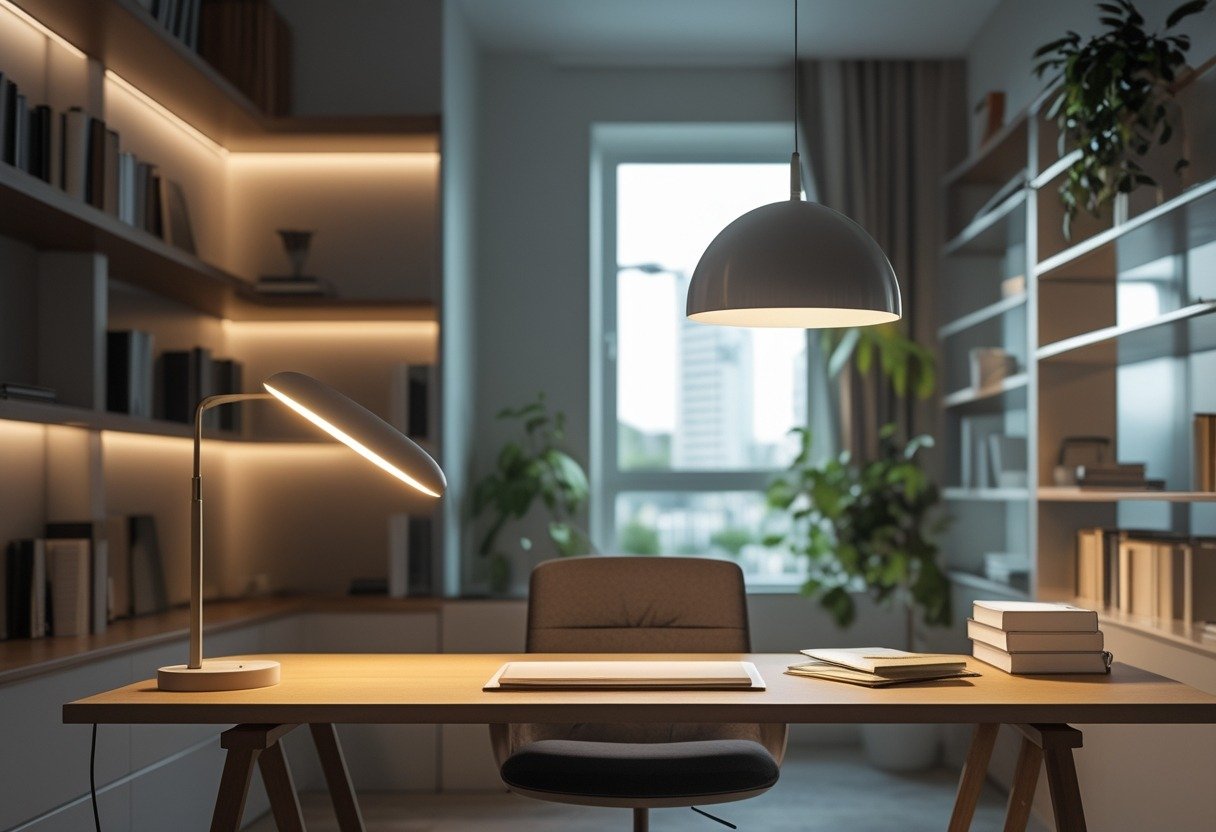
Pair a focused task lamp with a soft ambient pendant to cover both work needs and room mood. The task lamp gives clear light for reading and writing, while the pendant spreads gentle light so the room feels calm.
Place the task lamp on your desk and hang the pendant slightly off-center to avoid glare. Choose bulbs with warm color and good brightness balance to reduce eye strain and keep colors true.
3) Built-in wall shelving with labeled storage bins
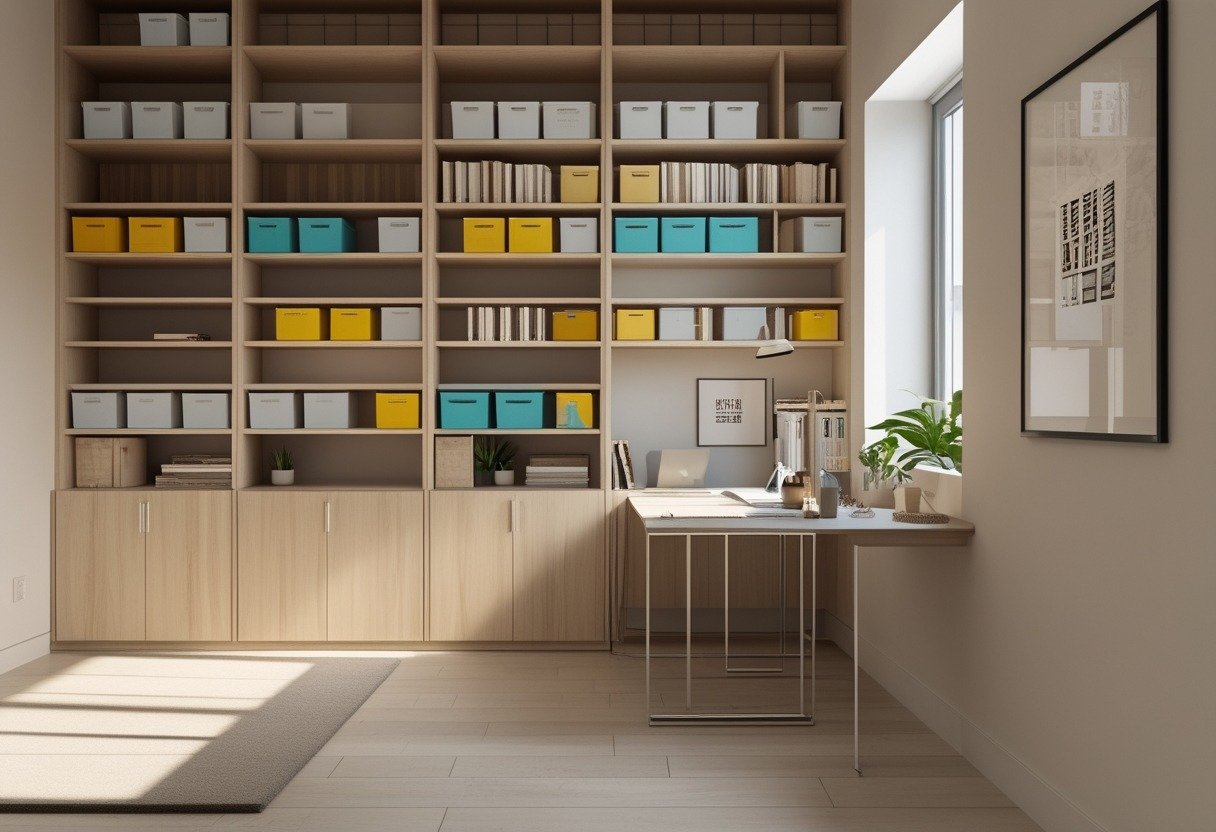
Built-in wall shelving saves floor space and gives your study a clean, finished look. You can fit shelves to the room’s height to hold books, files, and decor without crowding your desk.
Use labeled bins to group supplies like pens, chargers, and paper. Labels help you find things fast and make regular tidying simple.
Choose bins that match the shelf color for a calm, organized feel. Mix open shelves for display with covered bins for clutter.
4) Noise-reducing acoustic panels in neutral tones
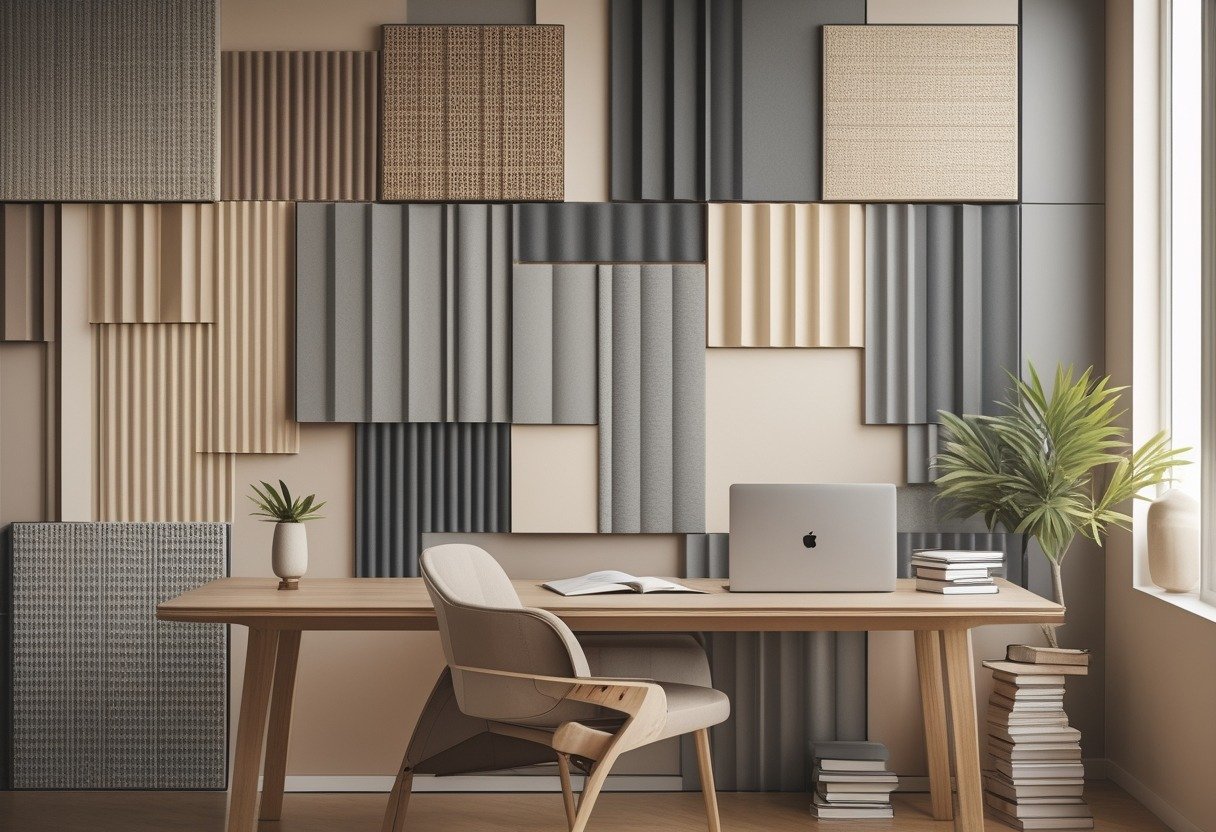
Choose neutral-tone acoustic panels to cut echo without clashing with your decor. They absorb reflected sound so your thinking and reading feel clearer.
Place panels on walls behind your desk and near sound sources for best effect. Materials like felt or wood-finish panels work well and keep a calm, professional look.
You can arrange panels in simple patterns to add visual interest while keeping noise down. Neutral colors make the room feel larger and less busy.
5) Monochrome color scheme with a single accent color
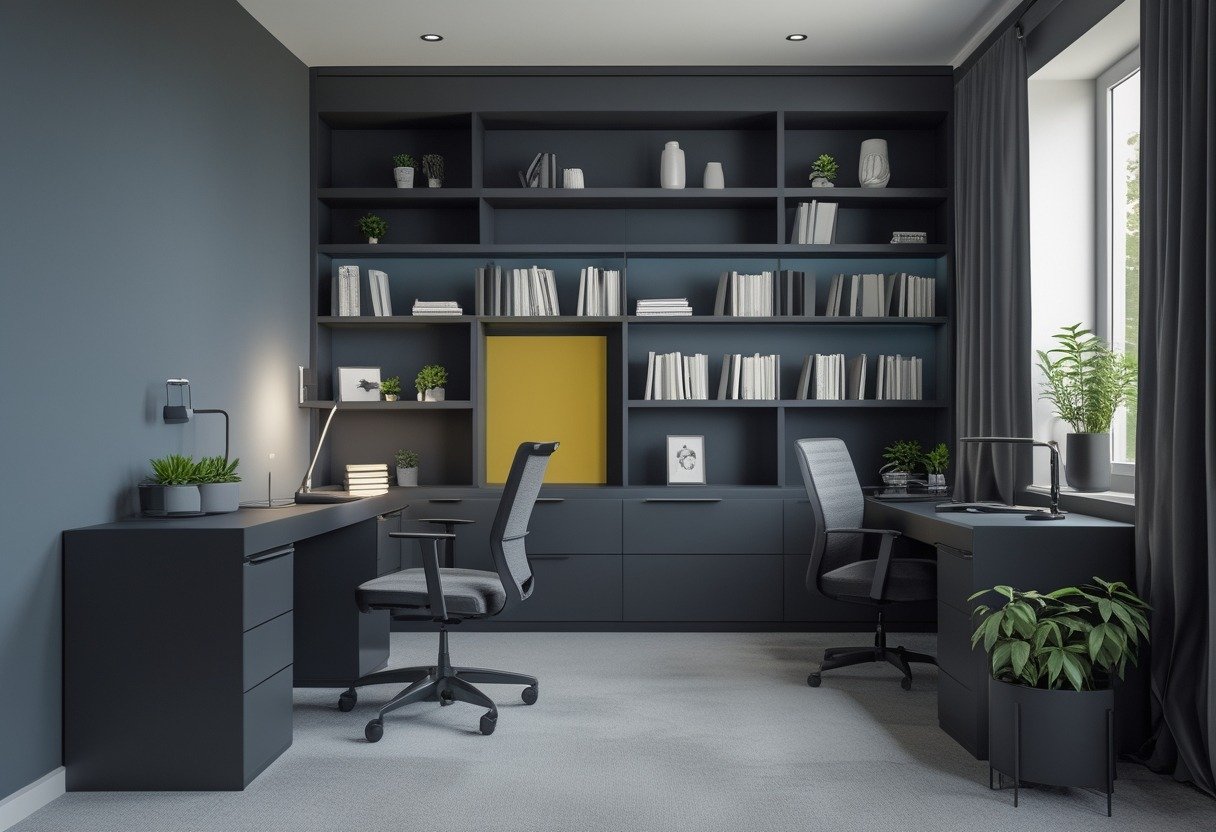
Choose one base color for walls, furniture, and big textiles to keep the room calm and unified. Use different shades and textures so the space feels layered, not flat.
Add one bright accent color in small doses—pillows, a lamp, or a poster—to draw the eye and boost focus. That single pop helps define zones without cluttering the design.
Keep lighting neutral and balanced so the accent stands out naturally. This approach makes your study feel organized and intentional.
6) Large cork or felt pinboard for visual planning
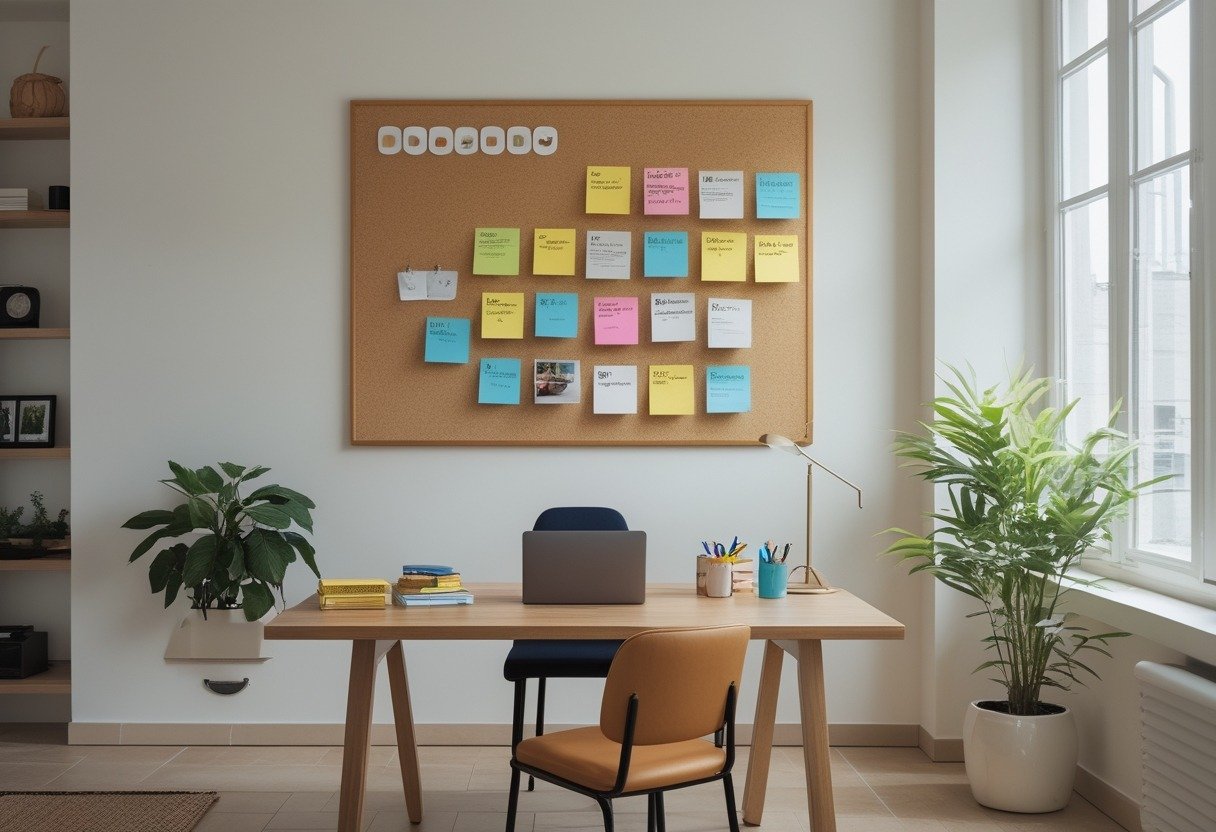
A large cork or felt pinboard gives you a clear place to see tasks, notes, and inspiration. Pin calendars, to-do lists, and study goals where you can glance at them often.
Choose cork for pins and a tactile feel, or felt for push pins and cleaner edges. Mount it at eye level so you use it every day.
7) Indoor plants: snake plant and pothos combo
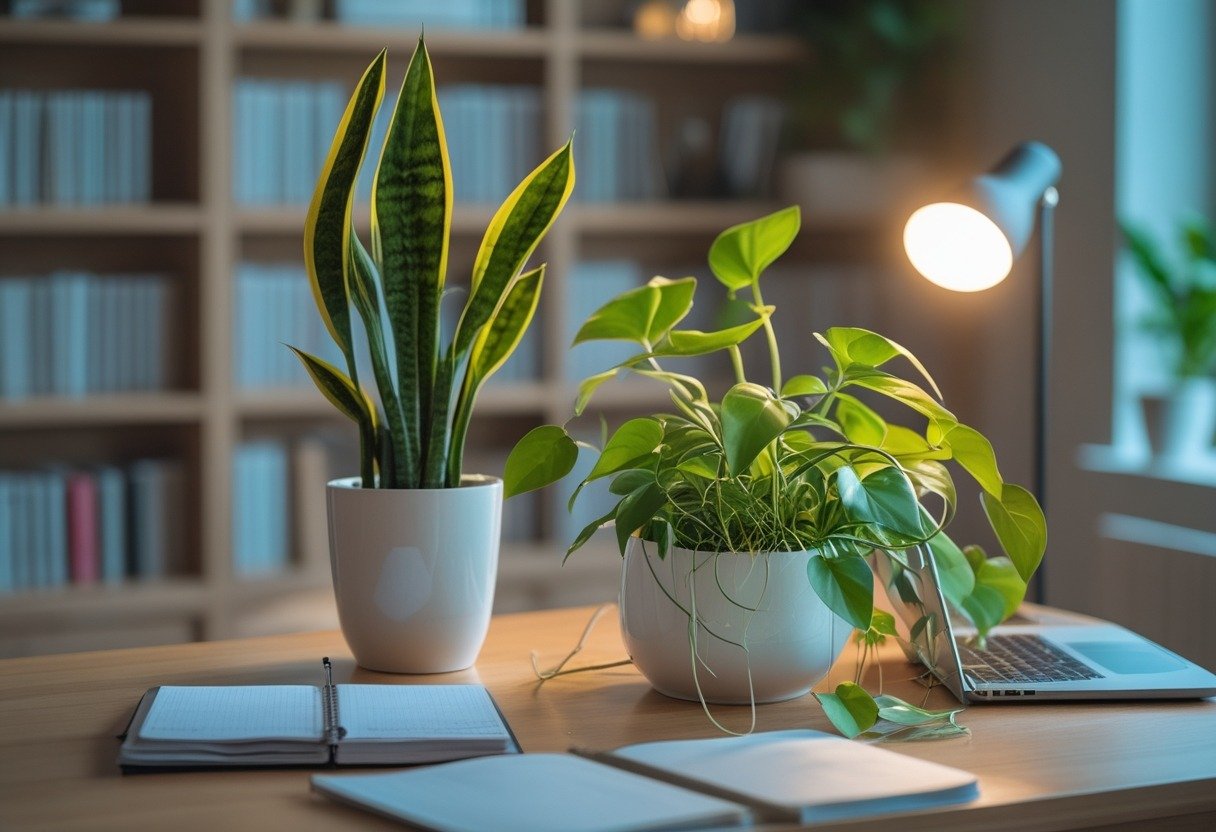
Add a snake plant and pothos to your study for low-maintenance greenery that looks good together. The upright leaves of the snake plant contrast nicely with pothos vines, creating visual balance.
Place them near a window with bright, indirect light or in moderate indoor light. Water sparingly; both tolerate occasional neglect and prefer well-draining soil.
Use a matching pot or mix textures for style. This combo clears visual clutter and can boost focus by making your space feel calmer.
8) Comfortable lumbar-support office chair (mesh)

Choose a mesh office chair with built-in lumbar support to protect your lower back during long study sessions. The breathable mesh keeps you cool while you work.
Look for adjustable lumbar height and tension so you can fit the chair to your spine. Flip-up arms and a waterfall seat edge help reduce pressure on your legs.
9) Floating desk in a window alcove for natural light

Place a floating desk in your window alcove to use natural light for reading and tasks. It keeps the floor clear and makes the space feel larger.
Choose a simple, sturdy shelf-desk and add a compact chair. Add a lamp for cloudy days and task lighting when needed.
Use slim shelves above for books and supplies to keep surfaces tidy. This setup boosts focus and saves space without crowding your room.
10) Cable-management tray and under-desk power strip
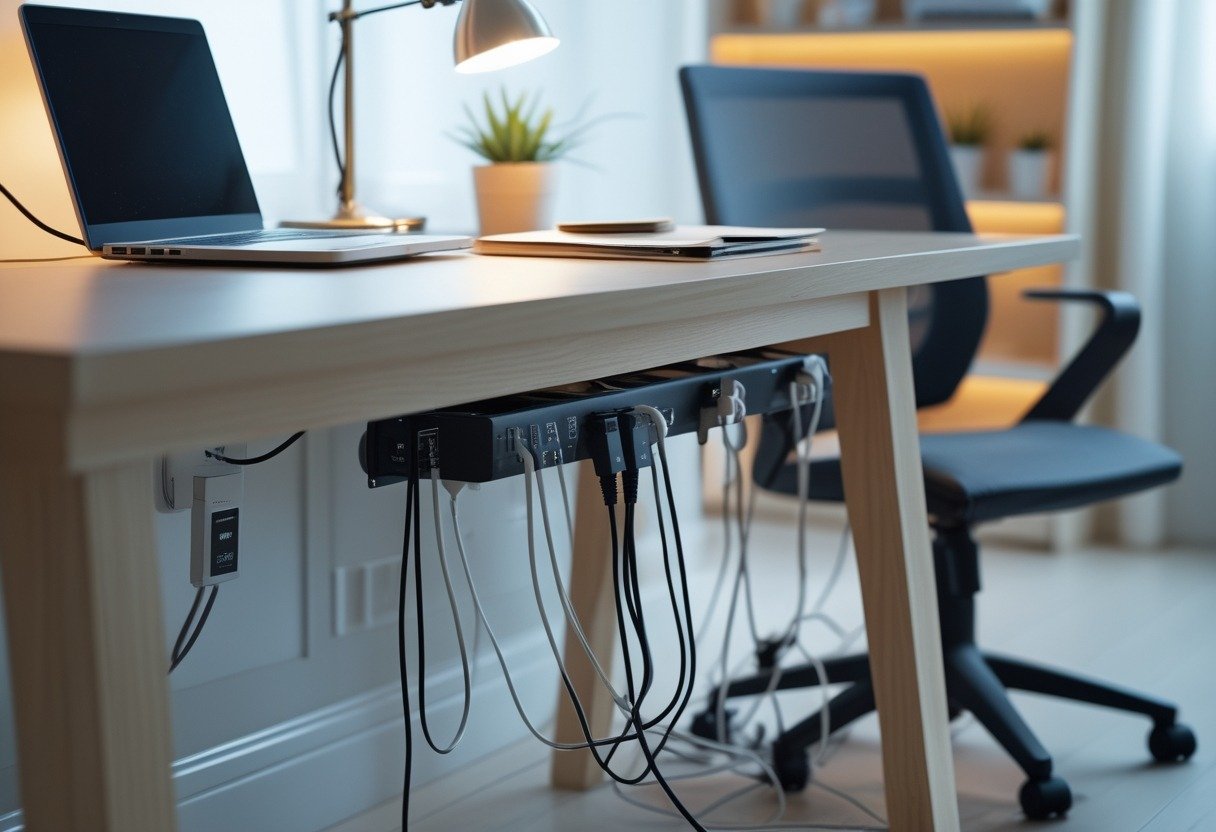
Mount a cable-management tray under your desk to hide power strips and loose cords. This keeps your floor clear and reduces tripping hazards.
Choose a tray that fits your desk size and can hold your power strip and adapters. Secure it with brackets or screws for a neat, stable setup.
Use an under-desk power strip with surge protection and an extra-long cord. Route cables through Velcro ties or clips to keep everything organized and easy to access.
11) Minimalist file cabinet with roll-out drawers
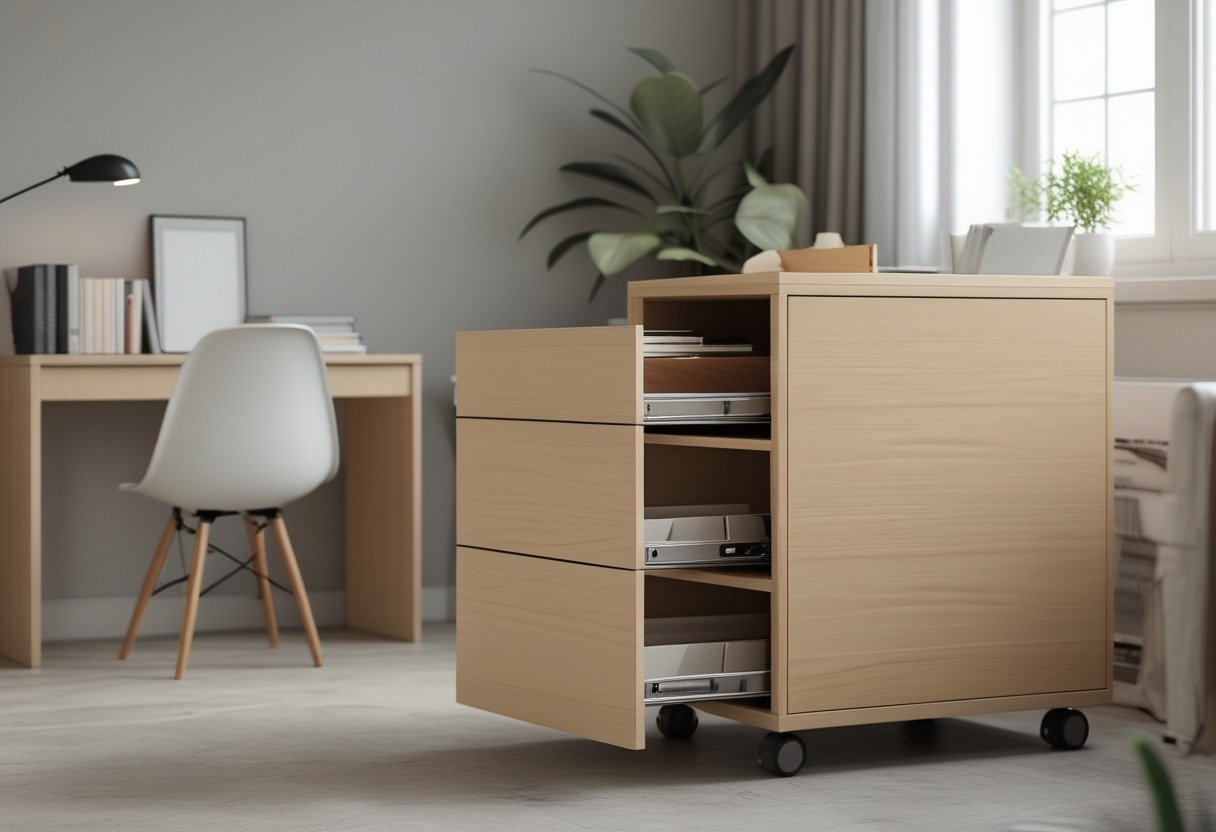
Choose a slim, neutral-colored cabinet to keep your study room calm and tidy. It fits beside a desk without drawing attention and stores papers and supplies out of sight.
Roll-out drawers make access fast and keep files upright, so you can find things without sorting through piles. Look for soft-close slides and a shallow top drawer for small items like pens and chargers.
12) Shelved book nook with integrated reading lamp
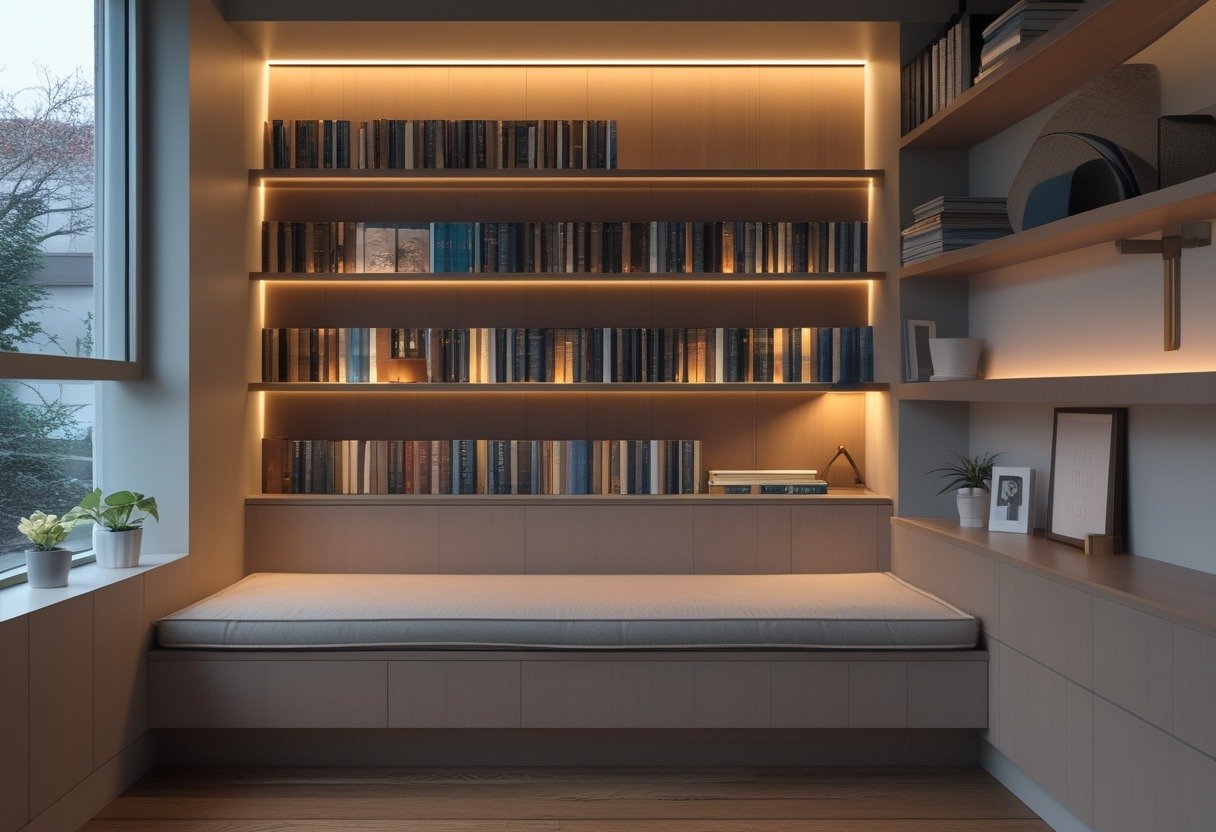
Build a small shelf-lined alcove where your books sit within arm’s reach. Add an integrated reading lamp above eye level to keep light off pages and reduce shadows.
Choose warm, dimmable lighting so you can adjust brightness for study or rest. Keep a cushioned seat and a small side shelf for a drink or notebook.
13) Statement rug to define the workspace area
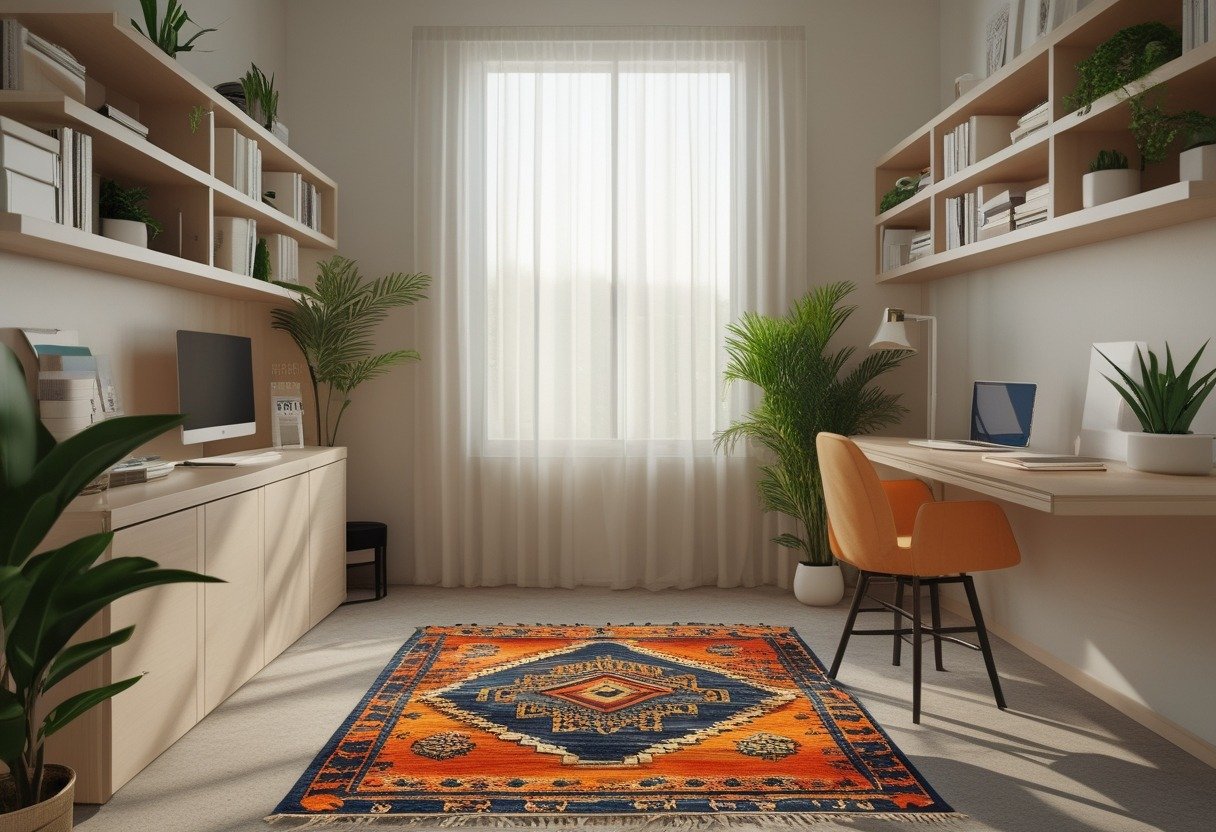
A statement rug helps mark your study zone and gives it a clear edge in a larger room. Pick a rug with color or pattern that links to your chair or shelves to make the area feel planned.
Place the rug under your desk and chair so the front legs rest on it. This creates a visual boundary and adds comfort underfoot while you work.
14) “Focus First” wall print — Maya Angelou
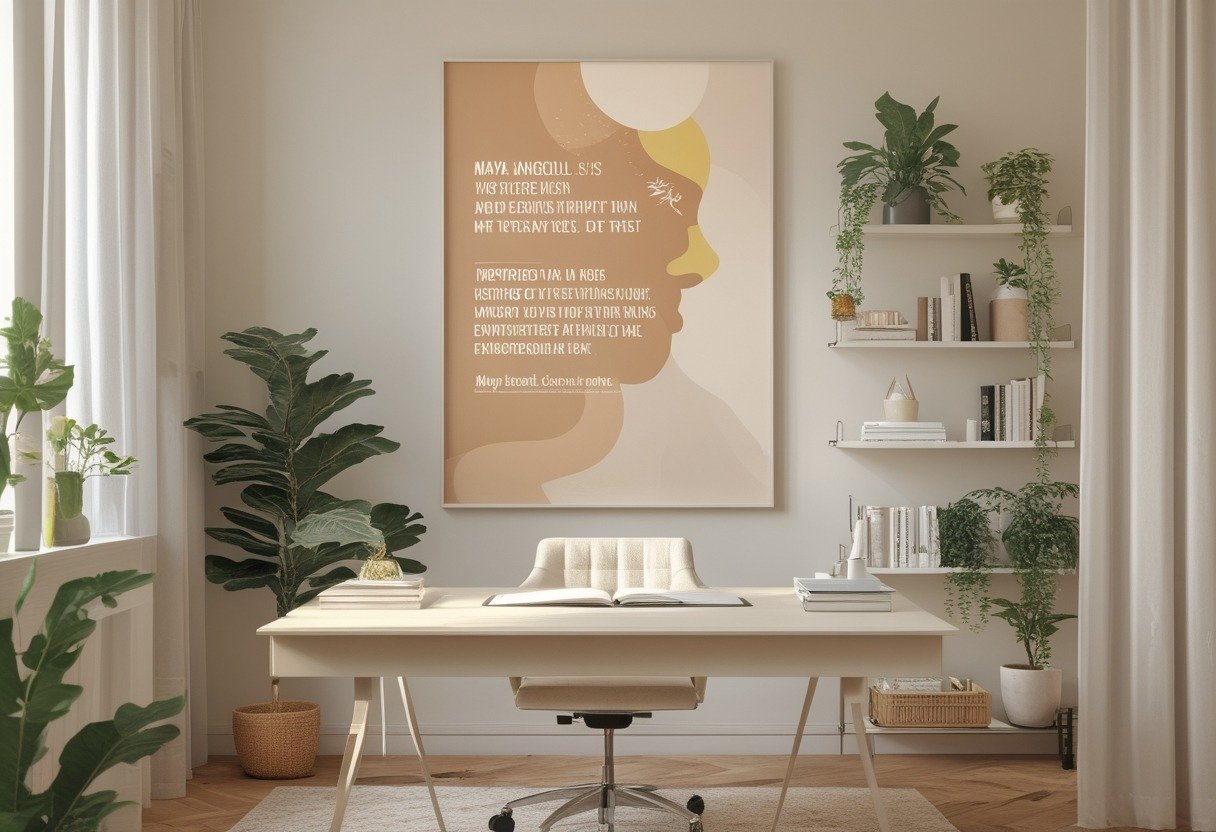
Choose a wall print with Maya Angelou’s quote about focus first to remind you what matters most. Place it above your desk where you will see it when you sit down to study.
Keep the frame simple and the colors calm so the print helps you concentrate. Change its spot if you find it distracting or not visible while you work.
15) Task-specific zone layout: study, reading, and storage
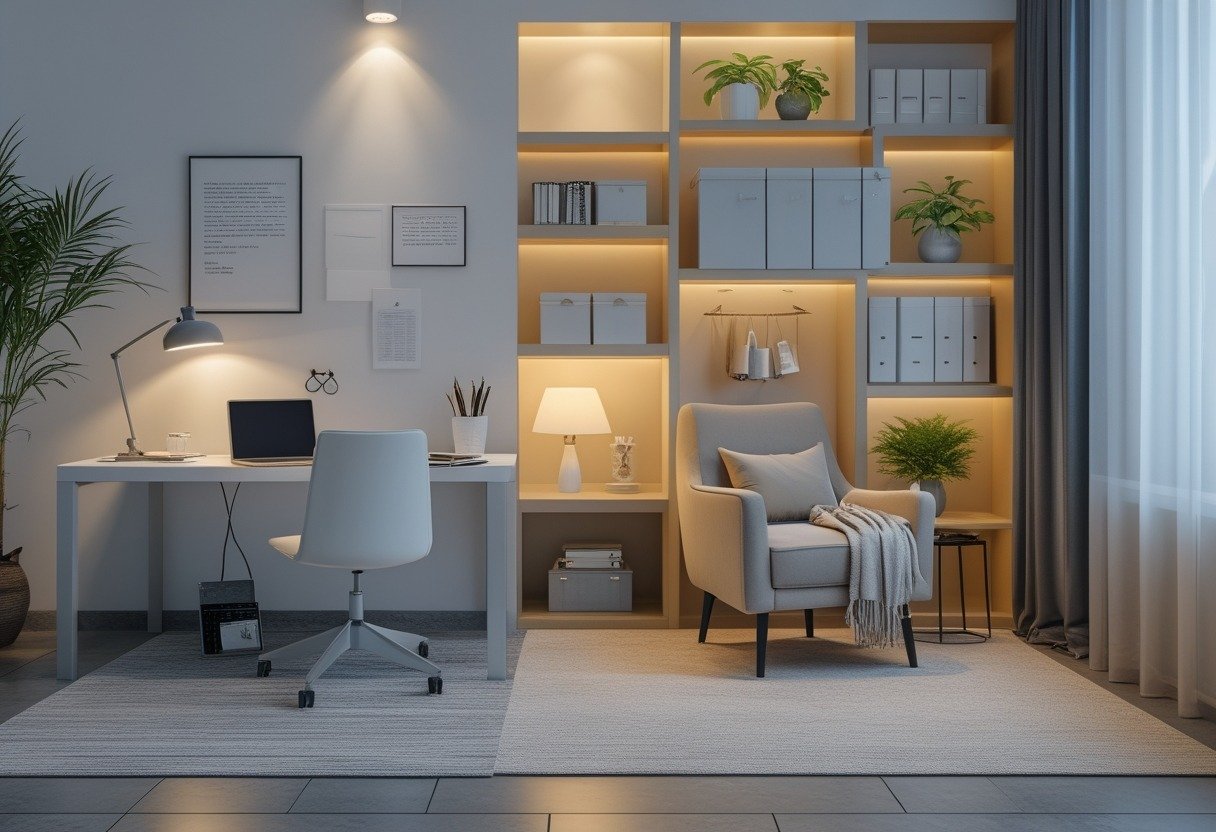
Design separate zones for focused work, relaxed reading, and organized storage. Place your desk near a light source and keep it clear of nonessential items to aid concentration.
Create a cozy reading chair with a lamp and a small side table for books and notes. Use shelves, bins, and labels to store supplies and rotate materials so the space stays tidy and usable.
Optimizing Natural and Artificial Light
Good light helps you read without strain and keeps you alert for longer. Aim for steady daylight near your desk and multiple artificial lights you can control for evening or cloudy days.
Choosing Window Treatments
Pick treatments that give you control over brightness and glare. Roller shades or cellular shades let you lower light while keeping privacy. Sheer curtains soften harsh sunlight and keep the room bright without glare on screens.
Place the desk perpendicular to the window to reduce direct reflection on your monitor. Add a blackout option if you study late and need to block streetlight for screen contrast. For south- or west-facing windows, use adjustable blinds to cut midday heat and strong light.
Think about color and material. Light-colored fabrics reflect daylight and make the room feel larger. Darker or thicker fabrics block light better but can make the room feel small. Match function to your daily schedule, not just the look.
Integrating Layered Lighting
Use three layers: ambient, task, and accent for flexible control. Ambient light fills the room—choose a ceiling fixture with a dimmer. Task lighting goes on your desk: a directional LED lamp with adjustable color temperature is best for reading and screen work.
Accent lights add depth and reduce contrast. Use a small floor lamp or wall sconce to brighten corners and cut eye strain from stark light differences. Place task lights to the side opposite your writing hand to avoid casting shadows.
Set color temperature by time of day. Use 5000K–6500K cool white for focused daytime study and 2700K–3000K warm light for evening wind-down. Install dimmers or smart bulbs so you can lower brightness without changing fixtures.
Color Psychology for Focus
Choose wall and accent colors that help you stay calm, alert, and creative. Think cool blues or soft greens to steady attention, and pick one brighter color to lift energy without causing distraction.
Selecting Calming Hues
Pick a base color that reduces visual noise. Soft blue (pale sky to muted teal) lowers stress and helps sustained attention. Light green works well too; it eases eye fatigue and supports steady focus during long study sessions.
Keep saturation low. Pale, desaturated tones are less stimulating and help you read and write without glare. Use matte or eggshell finishes to cut reflections from natural or overhead light.
Match color to task. Use cooler tones for reading, coding, or test prep. If you need creativity, choose a slightly warmer green-blue mix. Paint three walls and leave one neutral to avoid feeling boxed in.
Using Accent Colors Strategically
Add energy with small doses of brighter color. Use accents on shelves, a single wall, or accessories so color motivates you without stealing attention. Mustard yellow or coral works well in small amounts to boost alertness.
Place accents where you need a quick focus cue. A colored bulletin board above your desk or a bright desk lamp draws your eye to the work zone. Keep textiles and organizers in the same accent family for cohesion.
Balance contrast and comfort. High contrast (dark trim on light walls) can create visual stops that help you refocus. But avoid too many competing accents; one bold color plus one neutral keeps the room calm and purposeful.
