
You can create a coffee and wine bar ideas that fits your space, your schedule, and your style. This article shows 12 practical ideas to help you blend coffee and wine setups so you can enjoy both without clutter or wasted space.
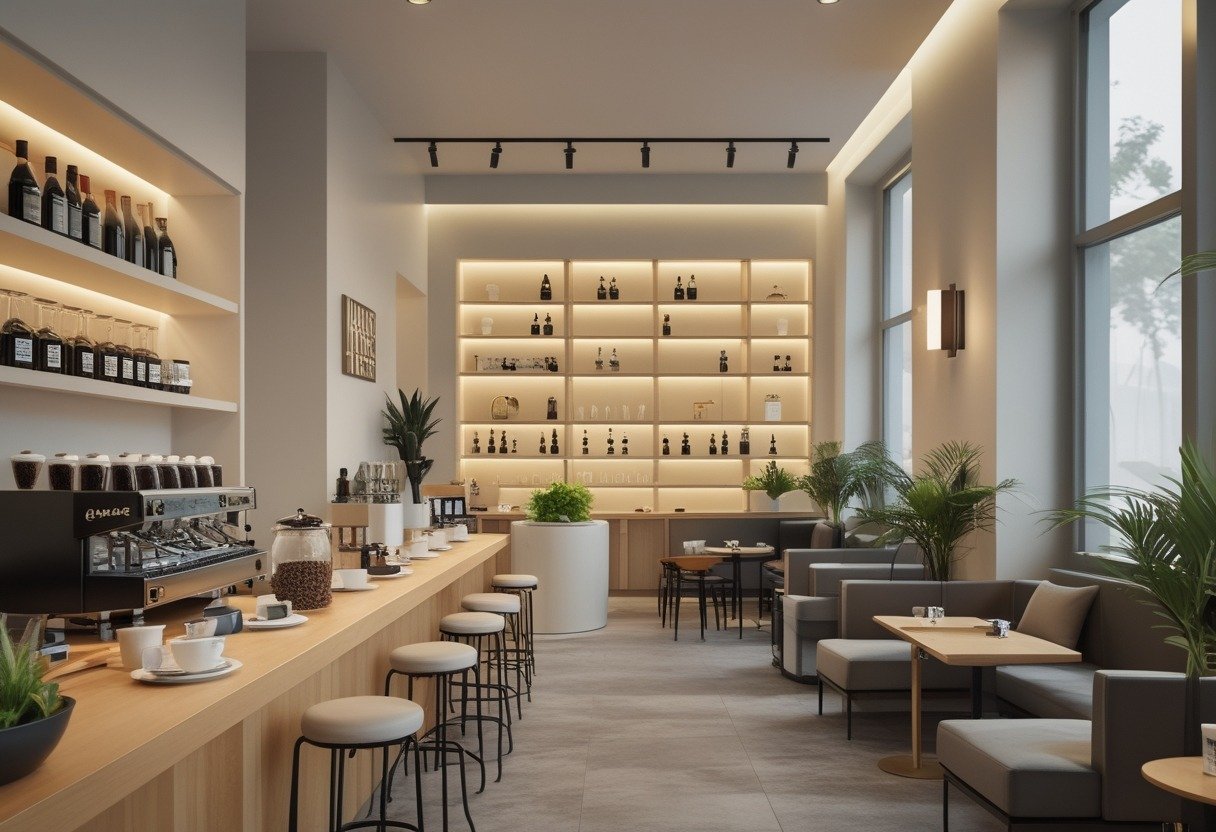
You’ll find options for small nooks, built-in appliances, rustic corners, and sleek modern racks that make daily routines and entertaining easier. Each idea focuses on smart storage, easy flow, and simple design tweaks that lift your beverage moments.
1) Built-in Espresso Nook with Hidden Grinder Storage

Give your kitchen a compact espresso nook with a dedicated shelf for the machine and a hidden drawer for the grinder. You keep beans close but out of sight, reducing countertop clutter.
Add pull-out trays or a small appliance garage so you can use the grinder without moving it. Built-in lighting and a heat-resistant surface make brewing easier and safer.
2) Wine Refrigerator + Open Shelf Coffee Station Combo

Place a small wine refrigerator under a counter and add open shelves above for mugs, beans, and tools. You keep chilled wines ready while everything you need for coffee stays within reach.
Use shelves with airflow and leave space beside the fridge for ventilation. Choose durable, easy-to-clean materials so spills and steam won’t damage surfaces.
3) Reclaimed Wood Rustic Coffee & Wine Corner
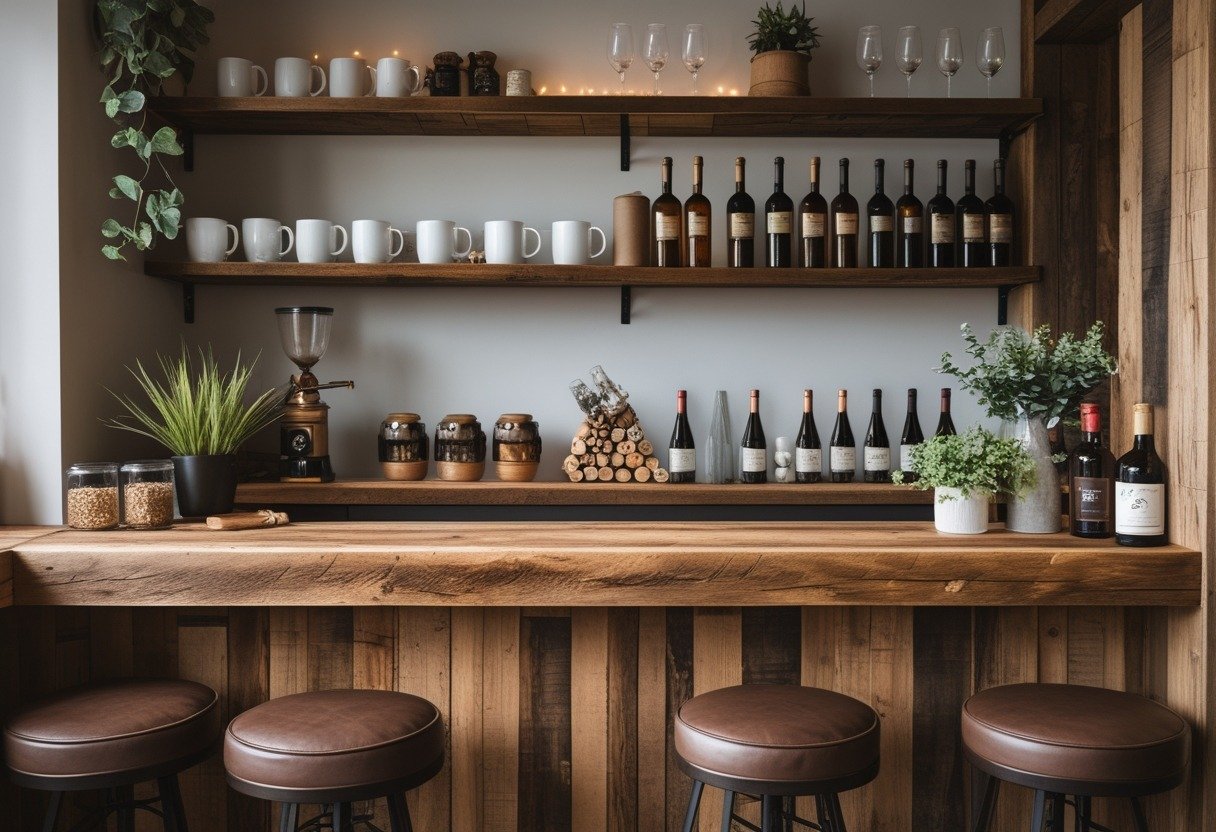
Create a warm corner using reclaimed wood shelves or a small countertop. You get natural texture and a lived-in look without high cost.
Add simple metal brackets or vintage wine racks for support and style. Keep mugs, bottles, and jars grouped so everything stays tidy.
Use soft, warm lighting to enhance the wood tones. Small plants or a stack of coasters finish the space and keep it practical.
4) Minimalist Floating Shelves with Integrated Glass Racks

Choose slim floating shelves to keep your bar area open and tidy. You save counter space while showing off bottles and glassware.
Look for designs with built-in glass racks under the shelf. This keeps stems secure and makes glasses easy to grab.
Use wood, metal, or mixed materials to match your decor. Add a small LED strip for soft, functional lighting.
5) Dual-Function Countertop: Espresso Machine + Wine Decanter Space

Place your espresso machine and a decanter side by side on a durable countertop. Keep the decanter on a small tray or mat to catch drips and protect the surface.
Use a compact espresso unit so you still have room for glassware and a few bottles. Add a small shelf above for mugs and stemware to keep the area tidy and within reach.
6) Hidden Cabinet Coffee Cabinet with Pull-Out Wine Rack

You can hide your coffee gear behind a cabinet door for a cleaner countertop. A pull-out wine rack saves space and keeps bottles organized without taking extra floor area.
Install sliding shelves or a vertical pull-out to access bottles easily. Add outlets inside so your espresso machine and grinder stay tucked away but ready to use.
7) LED-Lit Modern Bar with Built-In Moka Pot Station

You get a sleek bar with LED strips that highlight glassware and work surfaces. The lighting adds mood and helps when you pull espresso with the Moka pot.
Include a heat-safe nook or recessed shelf sized for a stovetop Moka pot. Add a 4-outlet power strip or nearby outlet for an electric stovetop or kettle.
Choose tempered glass doors and easy-clean surfaces. Keep storage for grounds, filters, and a small tamper close at hand.
8) Compact Galley-Style Coffee and Wine Bar for Small Kitchens

You can fit a galley-style coffee and wine bar along one narrow wall or between counters. Keep appliances slim and use floating shelves for bottles, mugs, and beans to save floor space.
Mount a slim countertop for your espresso machine and a small decanter or wine fridge underneath. Add hooks for cups and a narrow drawer for accessories to keep the area tidy and ready.
9) Indoor Garden Coffee & Wine Bar with Herb Planters

Bring fresh herbs to your bar for flavor and scent. Place small planters of mint, rosemary, and basil on shelves or a windowsill near your coffee and wine setup.
Use simple concrete or terracotta pots for a modern, low-maintenance look. Trim plants regularly so they stay tidy and ready for cocktails, tea, or cooking.
10) Dining Room Sideboard Turned Coffee and Wine Buffet

You can repurpose a dining room sideboard into a dual coffee and wine station with little effort. Clear the top for a coffee maker and a few bottles, and use drawers for pods, napkins, and utensils.
Install a small wine rack inside or add adjustable shelves for mugs and glassware. Consider adding a power strip for the coffee maker and small LED lights to create a pleasant serving area.
11) Vintage Bar Cart Staged for Coffee Mornings and Wine Evenings
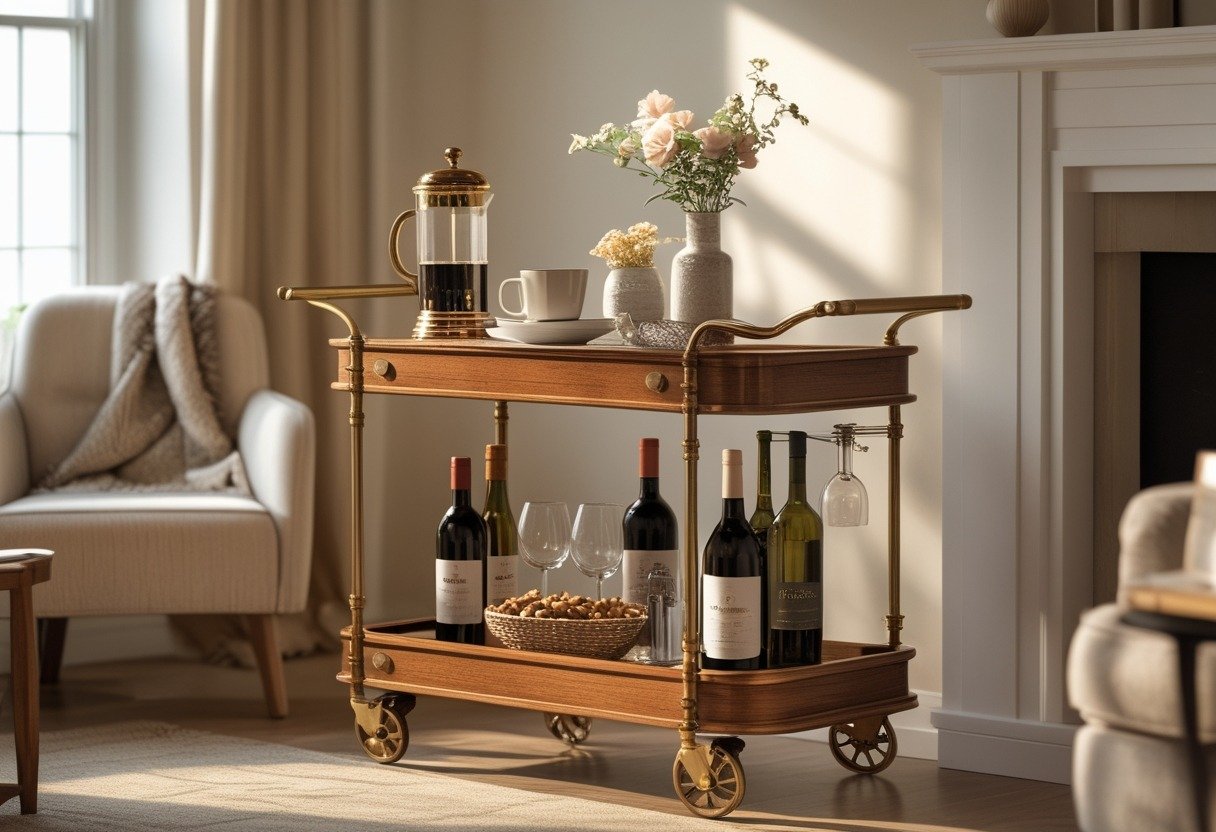
You can use a vintage bar cart as a dual coffee and wine station to save space and add charm.
Place a small espresso maker or French press beside stacked mugs and a sugar jar on the top shelf for easy morning access.
Reserve the lower shelf for wine bottles, glasses, and a corkscrew to switch to evening service quickly.
Roll the cart to the room you need and lock the wheels for stability.
12) Integrated Appliance Wall: Built-In Coffee Machine and Wine Fridge

Give your kitchen a clean, professional look by installing a built-in coffee machine above a wine fridge. You save counter space and create a single, easy-to-use station for drinks.
Choose models that match cabinet height and electrical needs. Add open shelves or drawers nearby for mugs, glasses, and accessories to keep everything within reach.
Use durable materials around the appliances to resist heat and spills. Good lighting makes the area safer and more pleasant to use.
Design Elements That Elevate Ambiance
Pick lights that make drinks look good, plan traffic flow so guests move easily, and choose surfaces that survive spills while feeling inviting. These choices set mood, speed service, and keep the space comfortable for both coffee mornings and wine evenings.
Lighting Strategies
Use layered lighting: bright task lights for the espresso machine and sink, softer ambient lights over seating, and accent lights for shelving. Install under-cabinet LED strips (2700–3000K) to brighten work surfaces without glare. Add dimmable pendant lights above the bar so you can raise brightness for morning coffee and lower it for evening wine.
Include small spotlights or LED tape inside open shelving to highlight bottles and glassware. Use bulbs with CRI 90+ to show true color of coffee crema and wine hues. Avoid harsh fluorescent fixtures; they wash out color and feel cold.
Layout Considerations
Place the coffee station and wine service within 6–8 feet of each other to share plumbing and counter space. Keep the espresso machine near a water line and drainage. Position wine storage slightly away from heat sources and direct sunlight.
Design a clear work triangle: prep area, equipment, and storage within arm’s reach. Reserve a 30–36 inch wide aisle for guest movement. Provide one dedicated prep counter (at least 24 inches deep) and a separate serving ledge for cups or glasses to avoid cross-traffic during busy times.
Materials and Textures
Choose durable, nonporous countertops—quartz or sealed concrete resist stains from wine and coffee. Use solid wood or high-quality laminate for open shelving; add a matte finish to hide fingerprints. Back splashes in porcelain tile or stainless steel simplify cleanup near the espresso machine.
Incorporate soft textures like upholstered bar stools and a woven rug to soften acoustics and add warmth. Mix metal accents (brass or black iron) with natural wood to create contrast without clutter. Seal all wood to protect against humidity and spills.
Crafting Memorable Beverage Experiences
You’ll plan pairings that match flavors and design a few signature drinks that tell a story. Focus on simple, repeatable recipes and clear tasting notes so guests know what to expect.
Menu Pairing Recommendations
Match texture and intensity. For coffee, pair light roasts with delicate pastries like madeleines or lemon biscotti. Medium roasts go well with nutty or caramel-flavored items such as almond croissants or pecan muffins. Dark roasts pair best with chocolate desserts or salty cheeses like aged cheddar.
For wine, use a basic rule: acidity with fat, tannin with protein. Pair crisp whites (Sauvignon Blanc, Pinot Grigio) with goat cheese, salads, and shellfish. Pair medium-bodied reds (Merlot, Sangiovese) with tomato-based dishes, grilled vegetables, and roasted chicken. Pair bold reds (Cabernet, Syrah) with steak, lamb, and hard cheeses.
Use a simple two-column table at the bar to guide choices.
| Beverage type | Quick pairing examples |
|---|---|
| Light coffee | Lemon biscotti, fruit tart |
| Medium coffee | Almond croissant, caramel tart |
| Dark coffee | Dark chocolate, salted nutplate |
| White wine | Goat cheese, shellfish |
| Medium red | Tomato dishes, roasted chicken |
| Bold red | Steak, aged cheddar |
Creating Signature Offerings
Choose three signature items: one coffee, one wine-based cocktail, and one non-alcoholic house drink. Keep recipes short and ingredients easy to source so staff can make them consistently.
Write each recipe with exact measures and service notes. Example: “Vanilla-Cardamom Latte — 1 shot espresso, 8 oz steamed milk, 0.5 tsp vanilla syrup, pinch ground cardamom; steam to 140–150°F; garnish with single cardamom pod.” For wine cocktails, balance acid and sweetness: 2 oz red wine, 0.5 oz orange liqueur, 0.5 oz lemon, dash simple syrup, top with soda.
Train staff on tasting terms and presentation. Display a small card for each signature item with flavor notes, best pairings, and any allergen info. This helps guests pick quickly and builds a consistent experience.
