
You know that feeling when you walk into a kitchen and it just feels right? That’s exactly what happened to me when I painted my cabinets sage green last spring.
Suddenly, my morning coffee tasted better, my cooking experiments got more adventurous, and even doing dishes became less of a chore.
Green kitchens hit different, and I’m not just saying that because I’ve become slightly obsessed with them. They bring this perfect balance of nature and sophistication that makes you want to actually spend time in the space.
Whether you’re planning a complete renovation or just want to add some verdant vibes to your cooking zone, I’ve got 15 killer ideas that’ll transform your kitchen from basic to brilliant.
Sage Cabinet Serenity
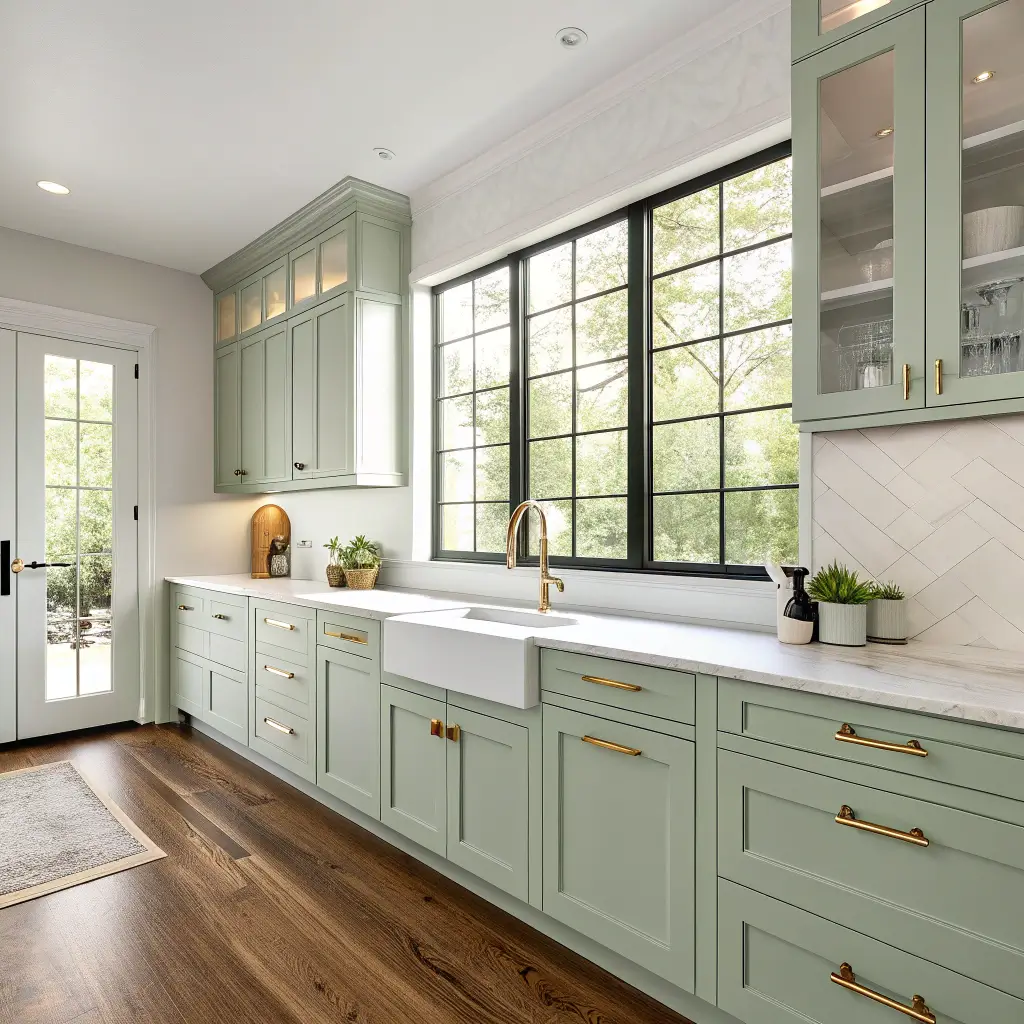
Let me tell you about sage green cabinets – they’re having a serious moment right now, and honestly, it’s about time. This soft, muted green works like magic in pretty much any kitchen style. I painted my upper cabinets in Benjamin Moore’s October Mist, and the transformation blew my mind.
What makes sage so special? It plays nice with literally everything. Pair it with brass hardware for instant sophistication, or go for black fixtures if you want that modern edge. The color shifts throughout the day too – looking almost gray in morning light and distinctly green by afternoon.
Making Sage Work in Small Spaces
Small kitchen? Sage cabinets actually make compact spaces feel bigger. The soft tone reflects light without being too bright or overwhelming. I recommend keeping your walls white or cream to maximize this effect.
Pro tip: Mix sage lower cabinets with white uppers if you’re worried about the color being too much. This creates visual interest while keeping things airy. Add some open shelving to break up the solid colors, and you’ve got yourself a Pinterest-worthy setup.
Olive Grove Minimalism
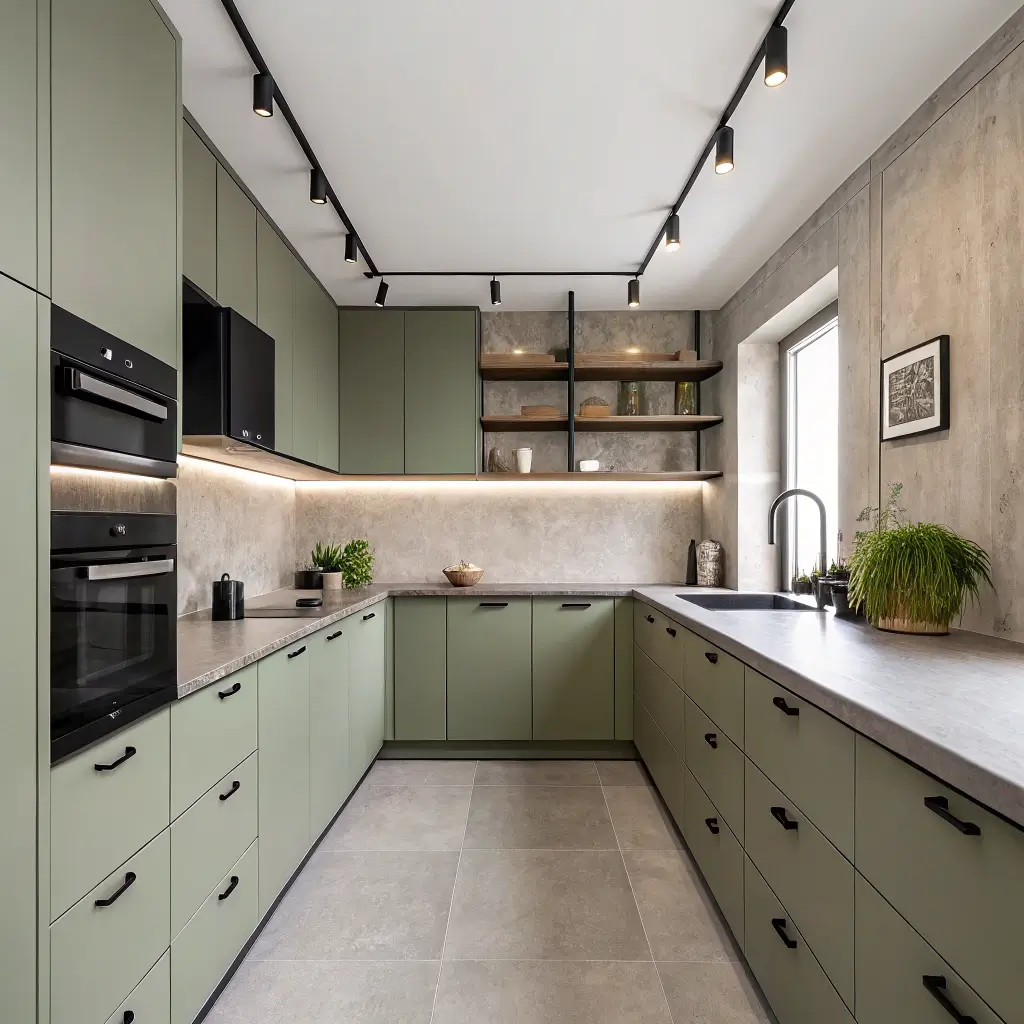
Ever noticed how olive green makes everything look expensive? This deeper, more sophisticated shade brings instant gravitas to minimalist kitchens. Think clean lines, handleless cabinets, and absolutely zero clutter.
I helped my sister design her kitchen around this concept, and we went full minimalist with flat-panel olive cabinets and a waterfall marble island. The key here is restraint – let the color do the heavy lifting while keeping everything else super simple.
The Perfect Olive Palette
Creating an olive minimalist kitchen requires discipline. Here’s what works:
- Surfaces: Keep them clear and choose materials with subtle texture
- Hardware: Hidden or ultra-slim in matching tones
- Lighting: Recessed or simple pendant lights in matte black or brass
- Countertops: White quartz or light concrete for contrast
The beauty of olive minimalism lies in what you don’t see. Every item has its place, and the color provides all the visual interest you need.
Emerald Quartz Harmony
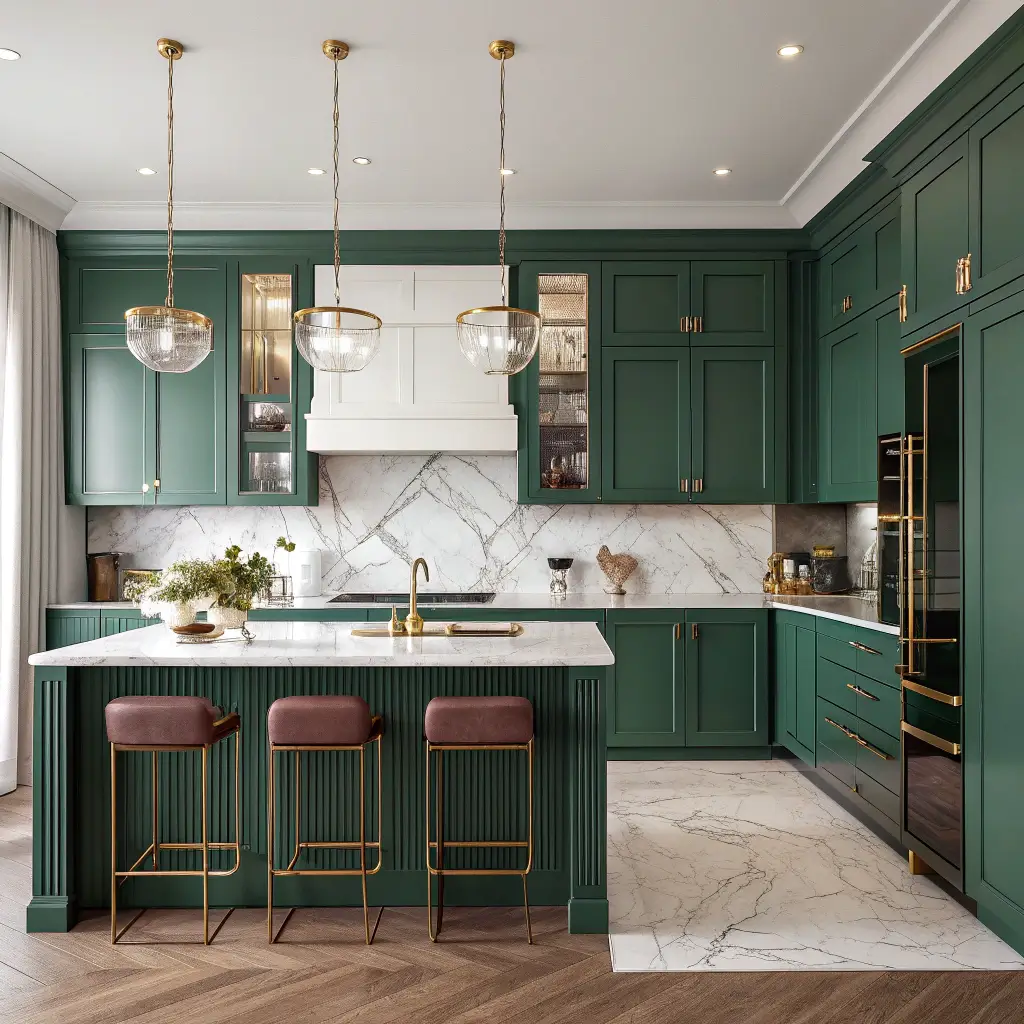
Okay, so emerald might sound scary at first – who wants a kitchen that looks like the Wizard of Oz’s living room? But hear me out. Emerald green, when done right, creates this insanely luxurious vibe that makes every meal feel like a special occasion.
I saw this executed perfectly in a friend’s townhouse. She installed emerald lower cabinets with a matching quartz backsplash that had subtle green veining. The result? Pure sophistication without the stuffiness.
Balancing Bold Emerald
The trick with emerald is balance. You can’t go all-in unless you want your kitchen looking like a leprechaun’s hideout :). Here’s how to nail it:
- Limit emerald to one major element (either cabinets or backsplash)
- Use plenty of white or light wood to offset the intensity
- Add metallic accents in gold or copper for warmth
- Include natural textures like wood or rattan to ground the space
Also Read: 10 Stylish Basement Laundry Room Ideas for Functional Spaces
Forest Green Contrast
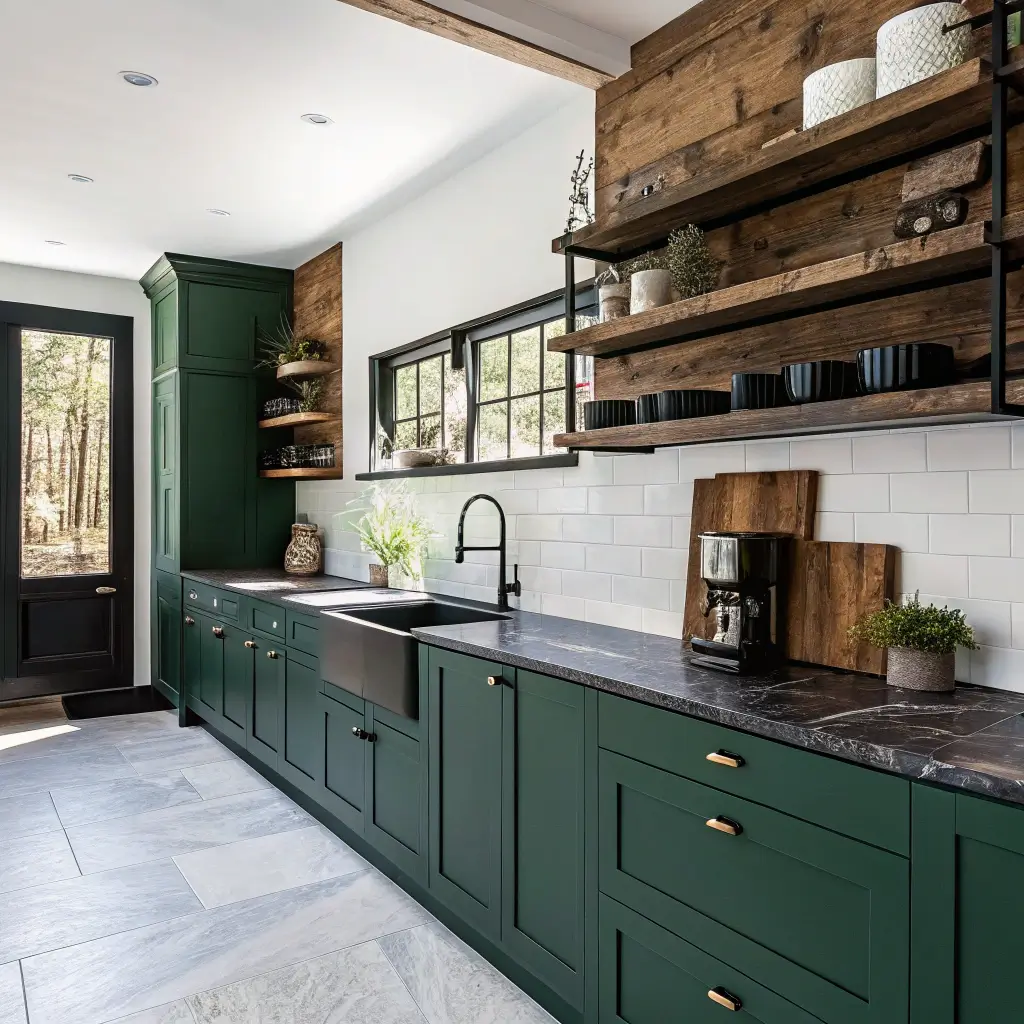
Forest green creates drama like nothing else. This deep, moody shade makes white marble pop, brass fixtures glow, and natural wood sing. I’m talking about that rich, almost-black green that looks different every time the light changes.
My neighbor recently went full forest green on her kitchen island, keeping everything else light and bright. The contrast is stunning – it anchors the entire space while making her white perimeter cabinets look fresh and crisp.
Creating Impact with Forest Green
Want maximum impact? Try these combinations:
- Forest green island with white perimeter cabinets
- Dark green lower cabinets with light uppers and open shelving
- Statement wall in forest green with natural wood cabinets
- Green tile backsplash against neutral cabinetry
Remember, forest green eats light, so compensate with extra lighting. Under-cabinet LEDs become essential, not optional.
Mint Cottage Charm
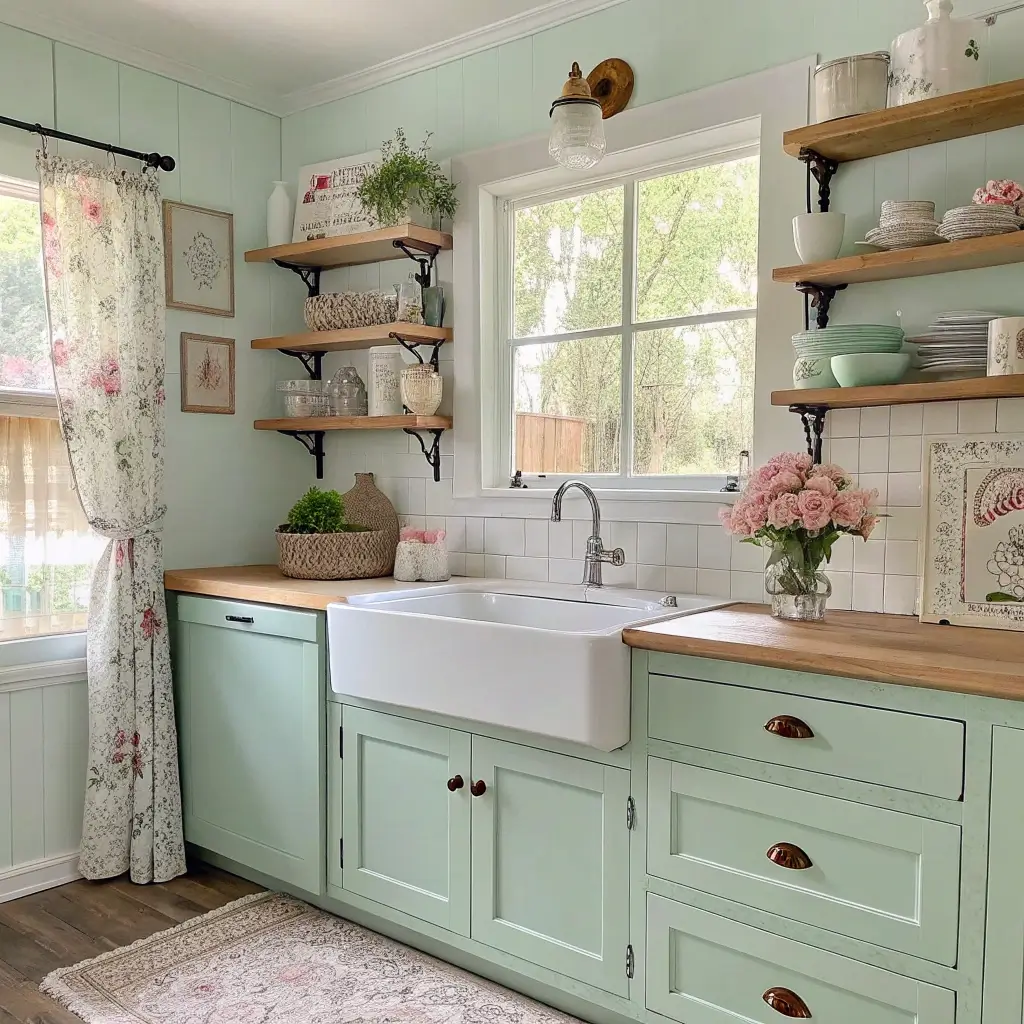
IMO, mint green gets unfairly dismissed as too cutesy, but modern mint kitchens prove otherwise. This fresh, cheerful shade brings instant cottage vibes without looking like your grandmother’s kitchen.
I recently installed mint subway tiles in my breakfast nook, and they transformed the entire corner. The color reads as both vintage and contemporary, especially when paired with black grout and modern fixtures.
Modern Mint Applications
Mint works best when you give it a modern twist:
- Shaker-style cabinets in soft mint with black hardware
- Mint tile backsplash in geometric patterns
- Painted mint ceiling for an unexpected pop
- Mint appliances (yes, they make them!) for a retro-modern look
The key is mixing mint with contemporary elements. Think clean lines, minimal decoration, and strategic pops of black or navy for contrast.
Deep Moss Elegance
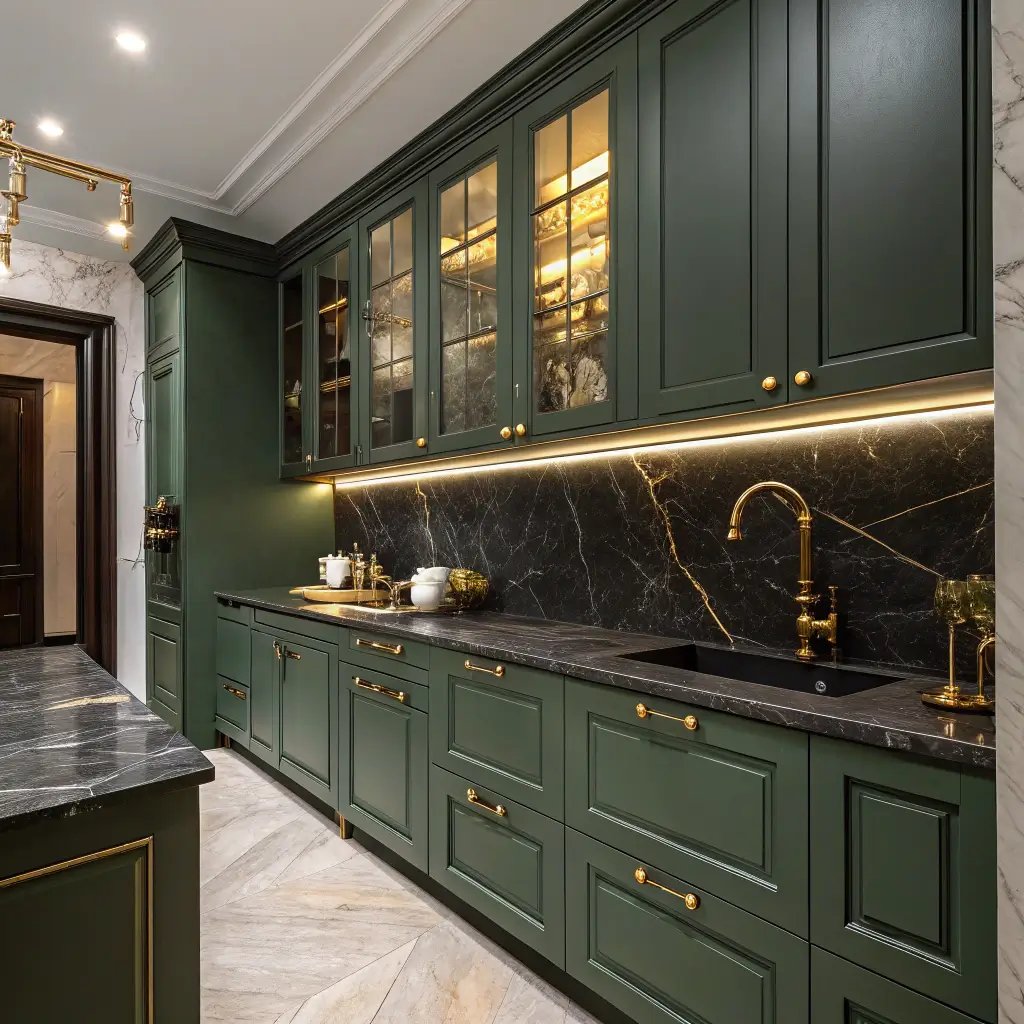
Deep moss green sits somewhere between forest and olive – it’s sophisticated without being too dark, natural without being boring. This color works overtime in kitchens that get variable light throughout the day.
I painted my pantry door in deep moss last month, and now it’s become this gorgeous focal point. The color changes from almost brown in low light to distinctly green when the sun hits it directly.
Incorporating Deep Moss
Deep moss shines in these applications:
- Full cabinet treatment for a cocoon-like feel
- Kitchen island as a grounding element
- Built-in banquette seating for breakfast nooks
- Window trim and doors for subtle color without commitment
Pair deep moss with natural materials like walnut wood, marble, and unlacquered brass. These combinations create an organic elegance that feels both timeless and current.
Also Read: 12 Perfect Top Loader Laundry Room Small Spaces Ideas Instantly
Pistachio Pastel Pop
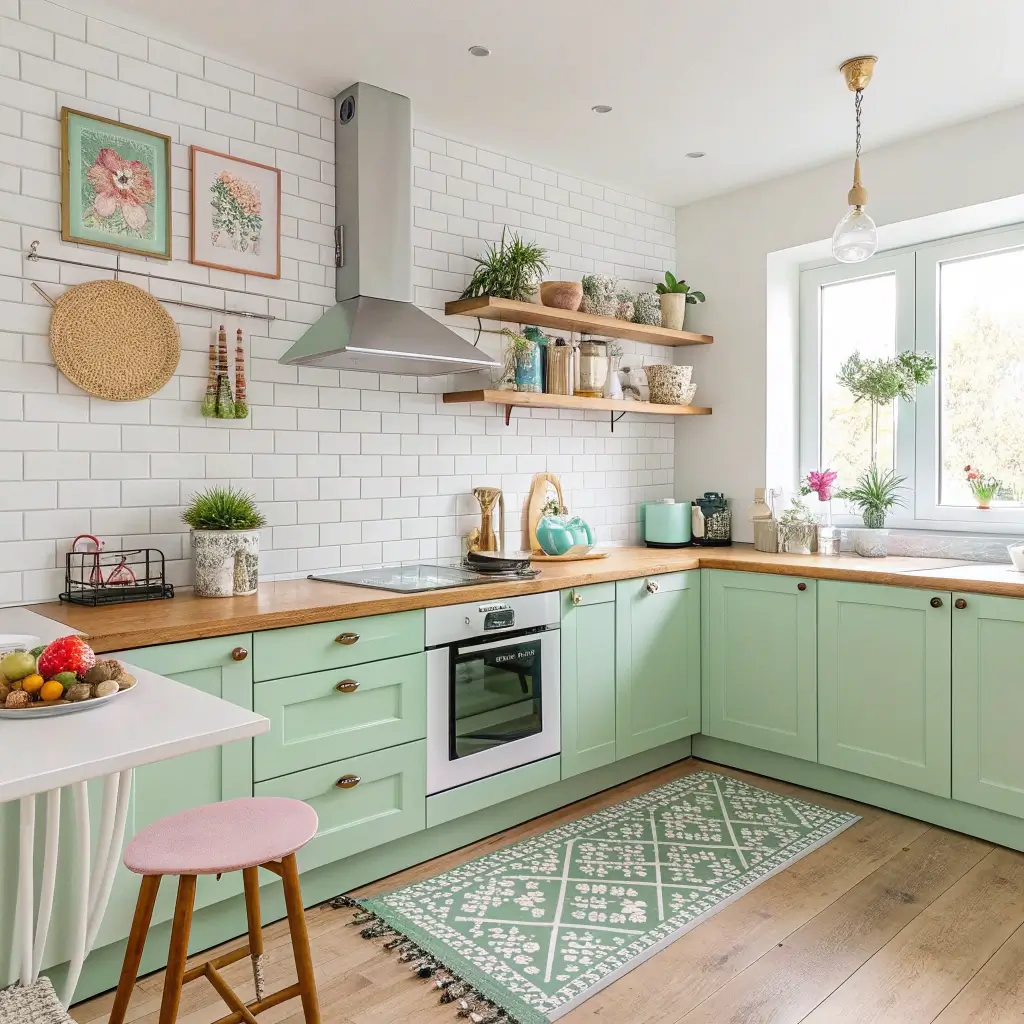
Who says pastels can’t be sophisticated? Pistachio green brings this soft, creamy quality that makes kitchens feel instantly welcoming. It’s like sage’s more playful cousin – still refined but with a touch more personality.
My best friend went all-in with pistachio cabinets in her new build, and everyone who visits asks for the paint color. She paired them with white zellige tiles and brass pulls, creating this perfect balance of trendy and timeless.
Making Pistachio Work
Pistachio requires confidence but rewards you with a unique space:
- Keep competing colors minimal – stick to whites and natural tones
- Add texture through tiles or natural stone
- Use warm metals like brass or copper
- Include natural wood elements to prevent the space from feeling too sweet
The beauty of pistachio? It photographs beautifully at any time of day. Your Instagram game will thank you.
Dark Jade Luxe
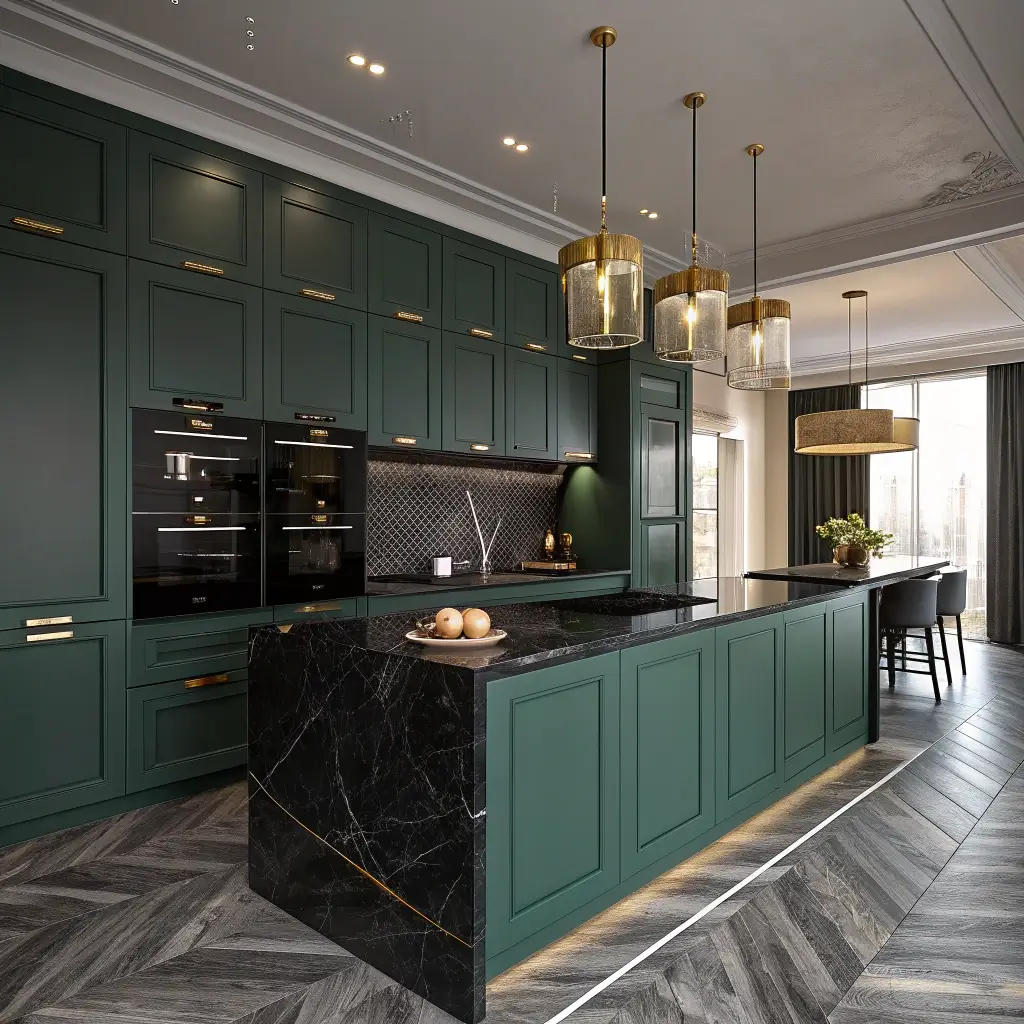
Dark jade brings serious luxury vibes to any kitchen. This jewel tone creates depth and richness that makes even the simplest kitchen feel high-end. Think of it as emerald’s moodier, more mysterious sibling.
I installed dark jade lower cabinets in a client’s penthouse kitchen, and the transformation was insane. Against white marble countertops and gold fixtures, the color looked absolutely regal.
Achieving the Luxe Look
Creating a luxurious jade kitchen requires attention to detail:
- High-gloss finishes amplify the jewel-tone quality
- Mixed metals (gold and silver) add dimension
- Statement lighting in crystal or brass elevates the space
- Mirror or glass elements reflect and amplify the color
Remember, dark jade commands attention. Let it be the star while everything else plays supporting roles.
Soft Meadow Tones
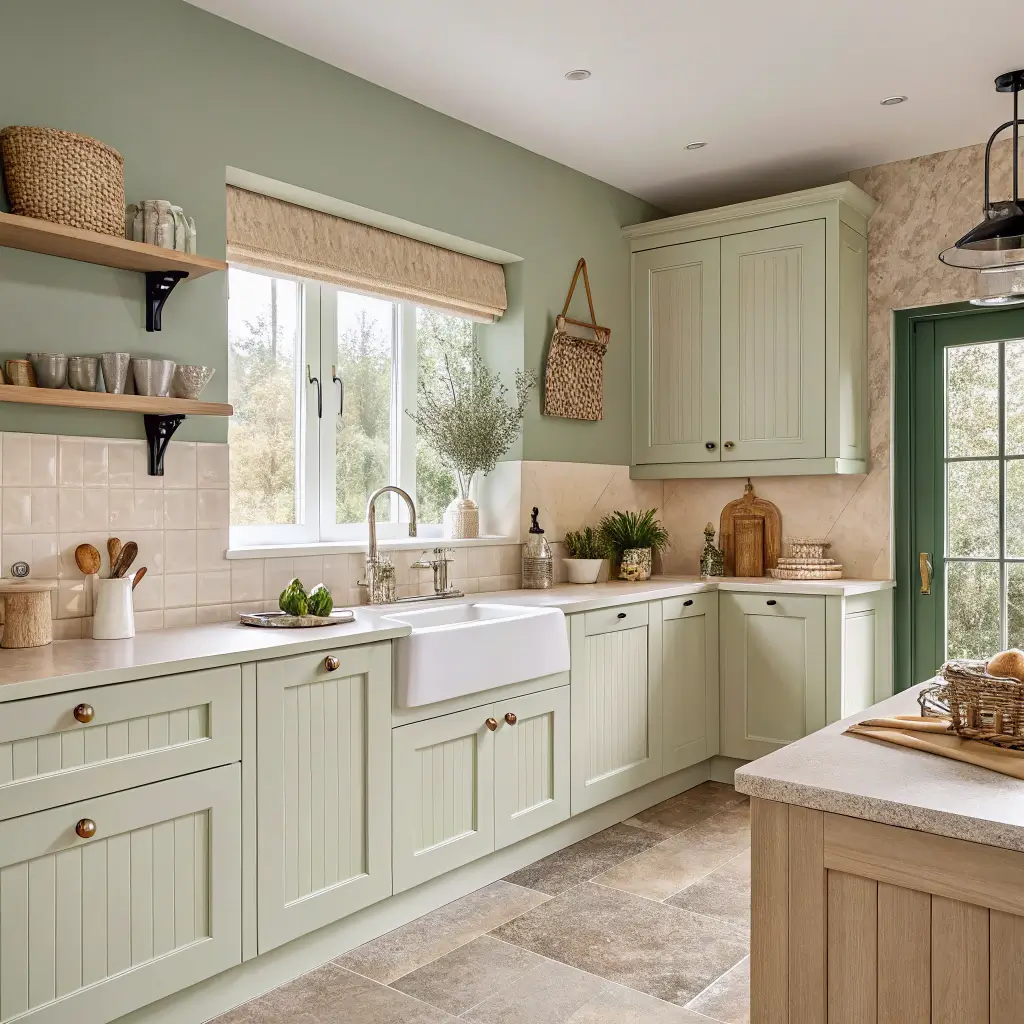
Soft meadow green – that perfect yellow-green that reminds you of spring grass – brings instant freshness to any kitchen. This cheerful shade works particularly well in spaces that lack natural light.
I painted my kitchen chairs in this shade, and they completely changed the room’s energy. Suddenly, breakfast feels more optimistic, and dinner parties seem more lively.
Incorporating Meadow Green
Meadow green works best as an accent:
- Painted furniture like chairs or a hutch
- Cabinet interiors for a surprise pop when opened
- Window treatments in meadow green fabric
- Accessories and dishware for non-permanent color
This shade pairs beautifully with white, cream, and natural wood. Add some fresh herbs on the windowsill, and you’ve got yourself a perfect spring kitchen year-round.
Also Read: 10 Simple Laundry Room Storage Ideas for Better Organization
Green Marble Accent
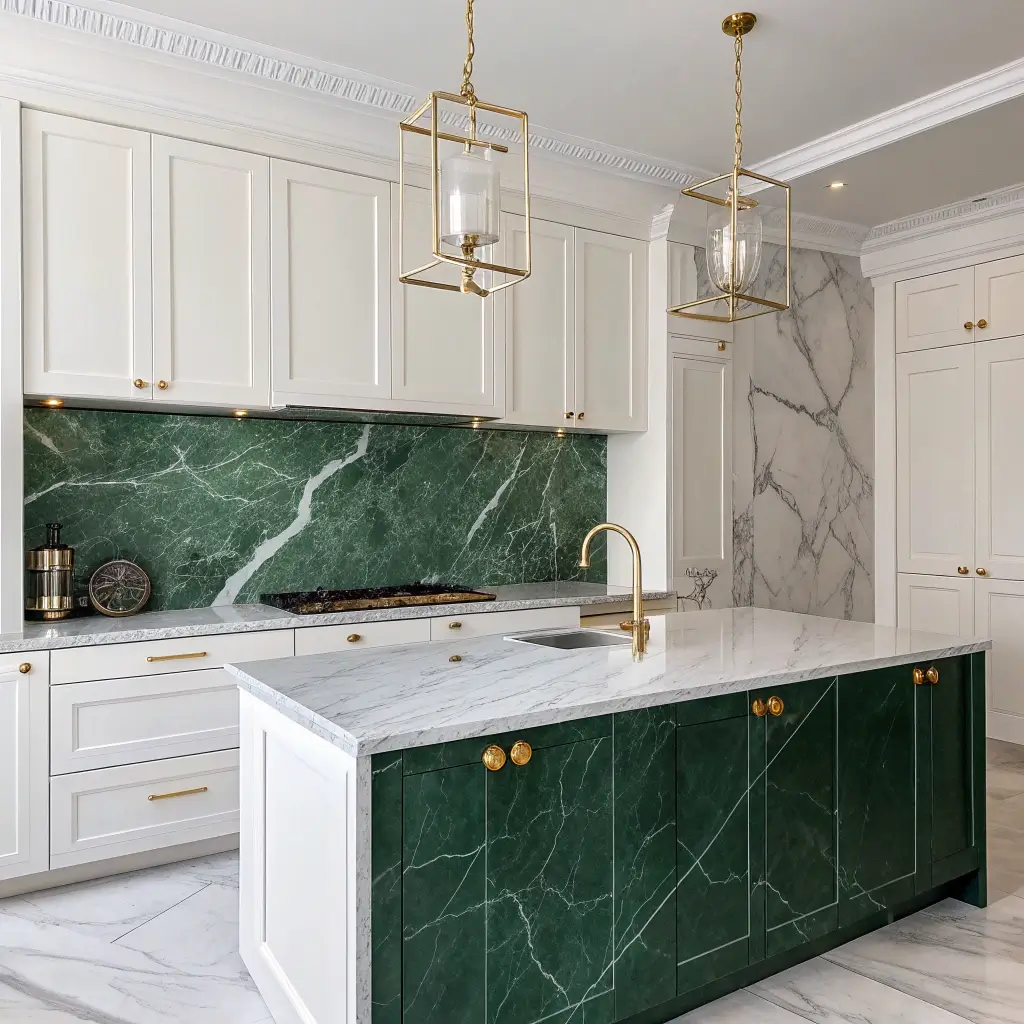
Can we talk about green marble for a second? This natural stone brings color and pattern in the most sophisticated way possible. Whether you go for subtle green veining or full verde marble, it’s guaranteed to elevate your space.
I splurged on a verde marble backsplash last year, and it’s become the focal point of my entire home. The natural variations in the stone mean no two pieces are alike – it’s literally art you can cook near.
Working with Green Marble
Green marble demands respect:
- Keep surrounding elements simple to let the marble shine
- Choose complementary metals like brass or black iron
- Maintain properly – marble needs sealing and care
- Light it well – under-cabinet lighting makes the veining pop
FYI, green marble works in small doses too. Even just a cutting board or serving tray adds that luxe touch without the commitment.
Olive Two-Tone Blend
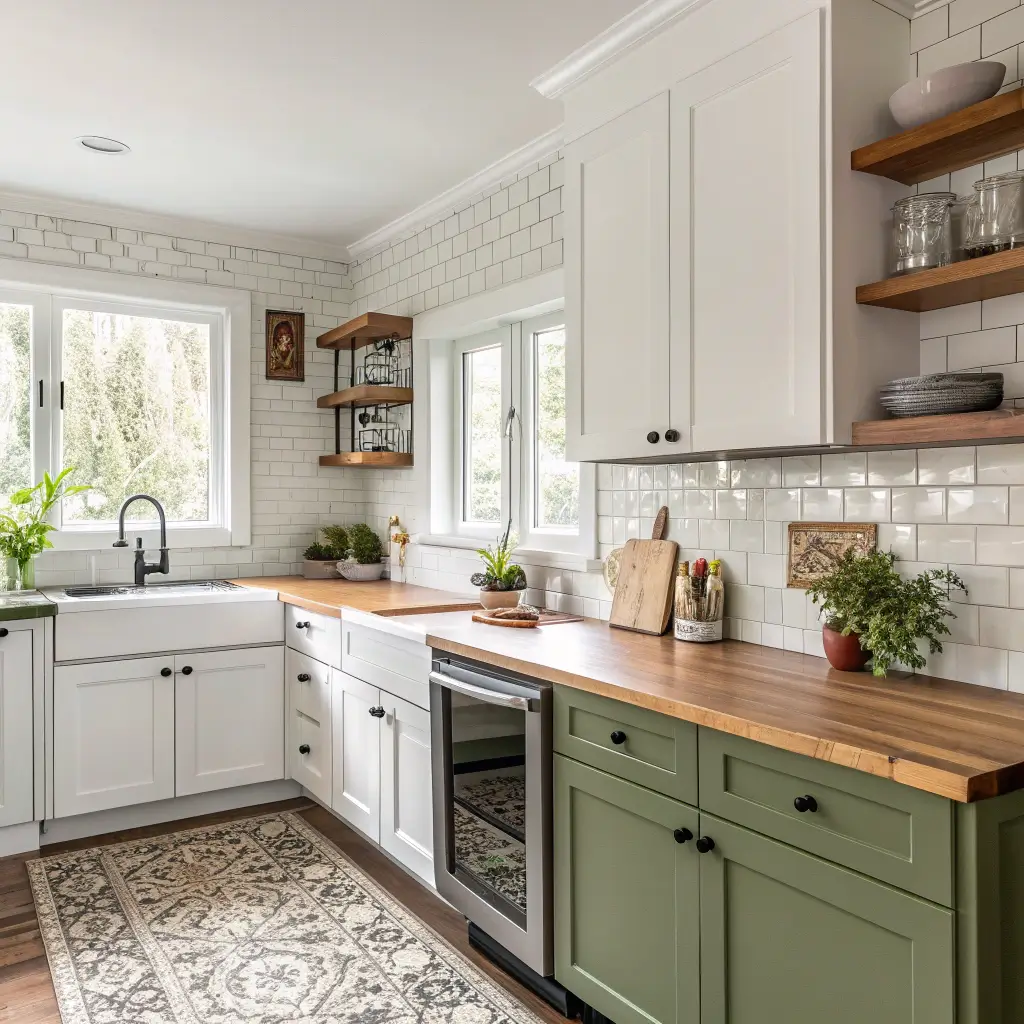
Why choose one shade when you can have two? Olive two-tone kitchens combine different green shades for added depth and interest. This approach keeps things visually dynamic without overwhelming the space.
My cousin nailed this look with sage upper cabinets and deeper olive lowers. The gradient effect draws your eye up and makes her standard-height ceilings feel taller.
Mastering the Two-Tone Look
Creating a successful two-tone kitchen requires planning:
- Choose shades from the same family for cohesion
- Use the lighter shade up top to maintain airiness
- Add a bridging element like open shelving or a tile backsplash
- Keep hardware consistent across both colors
The two-tone approach also lets you experiment without full commitment. Start with just the island in a different shade and see how you feel.
Herb Garden Palette
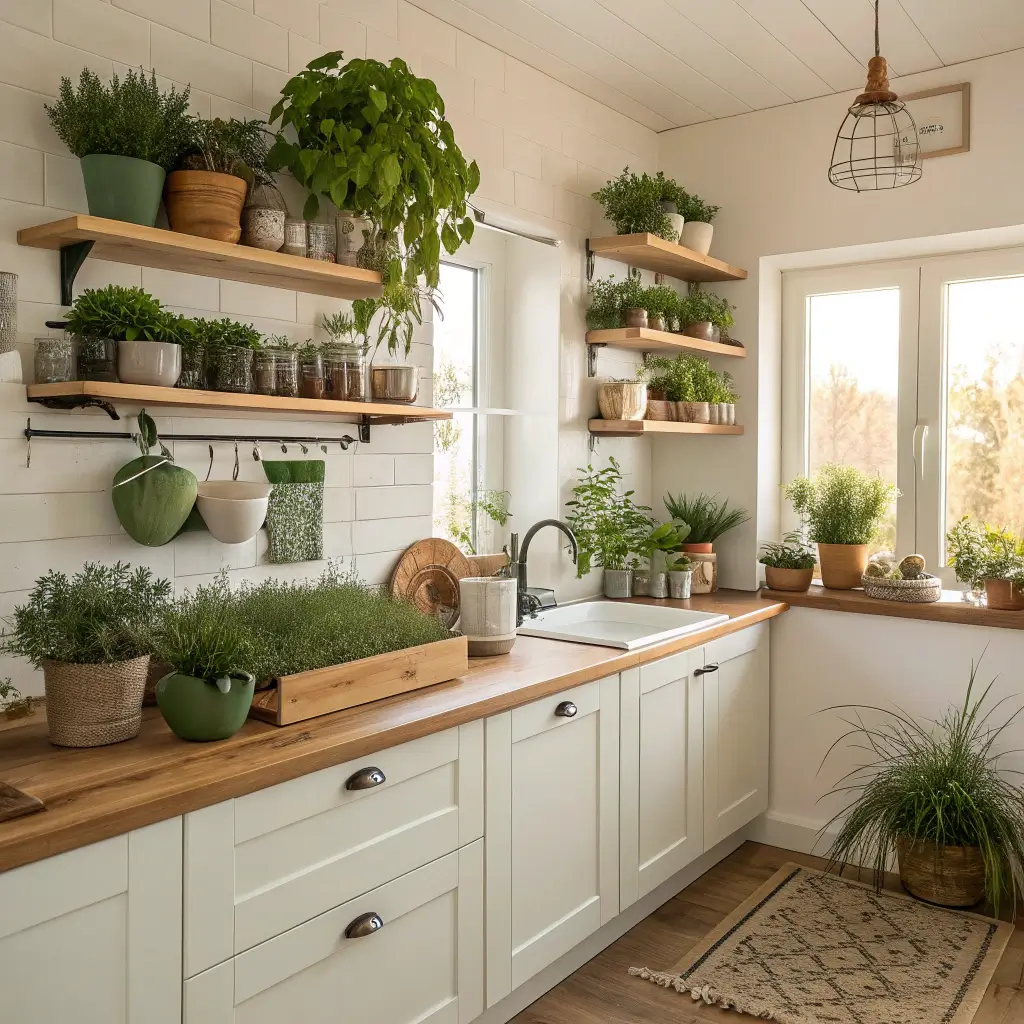
Herb garden green encompasses those fresh, vibrant shades inspired by basil, rosemary, and thyme. These lively greens bring an organic, garden-fresh feel that makes cooking feel more connected to nature.
I painted my spice cabinet doors in different herb-inspired greens, and now opening them feels like stepping into a garden. It’s quirky, sure, but it makes me smile every single time.
Creating Your Herb Garden Kitchen
Herb garden palettes work through variety:
- Mix multiple green shades in small doses
- Include actual herbs in planters for authenticity
- Add natural textures like wood and stone
- Keep the base neutral to prevent chaos
This approach works especially well in cottage, farmhouse, or eclectic style kitchens where a bit of whimsy feels right at home.
Vintage Mint Revival
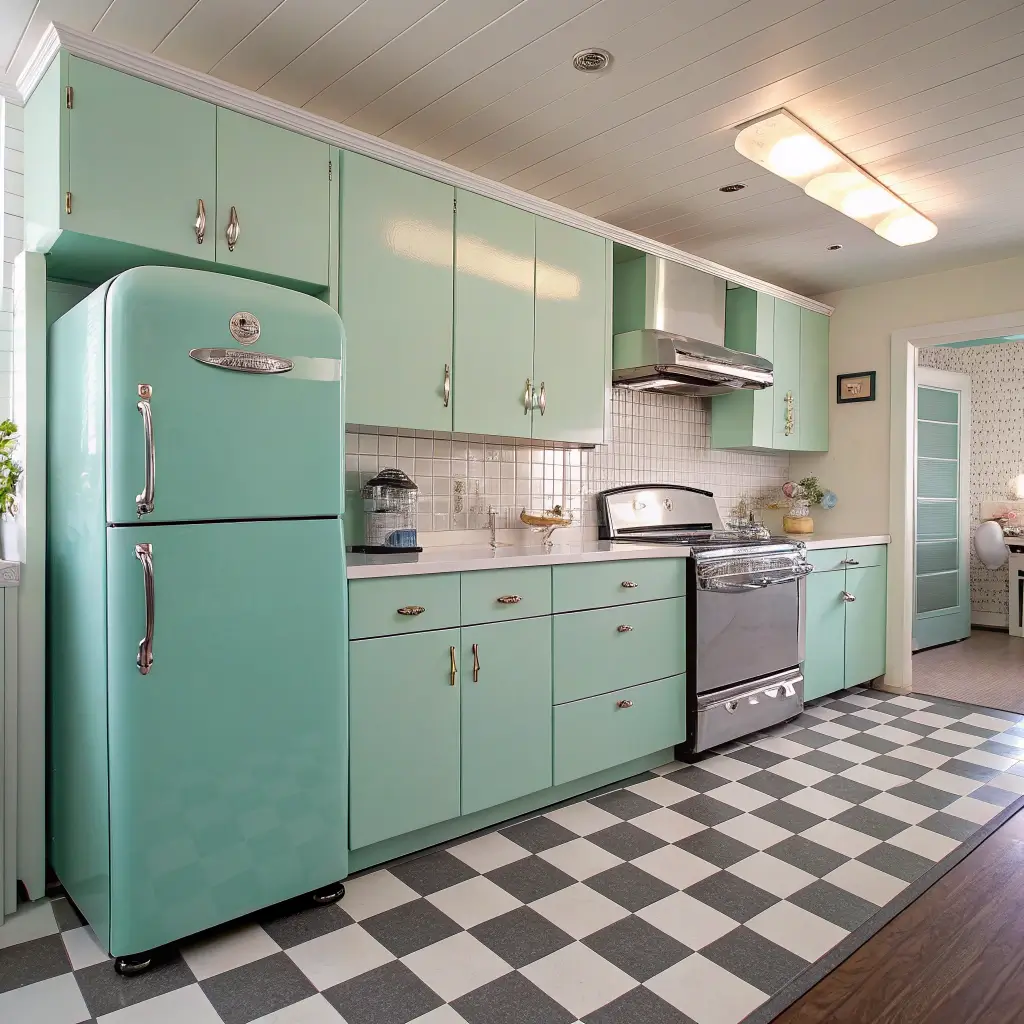
Vintage mint takes us back to the 1950s but with a modern twist. This retro shade brings nostalgia without looking dated when you style it right.
Remember those old mint green refrigerators? Well, they’re back, and they’re cooler than ever. I bought a mint SMEG fridge, and it single-handedly transformed my entire kitchen vibe.
Modernizing Vintage Mint
Bringing vintage mint into today requires balance:
- Mix with modern materials like concrete or steel
- Choose sleek hardware to offset the retro color
- Include contemporary art or accessories
- Keep lines clean even with vintage color
The goal is suggesting vintage without going full theme park. One or two mint elements create charm; too many create a time warp.
Evergreen Modern Mix
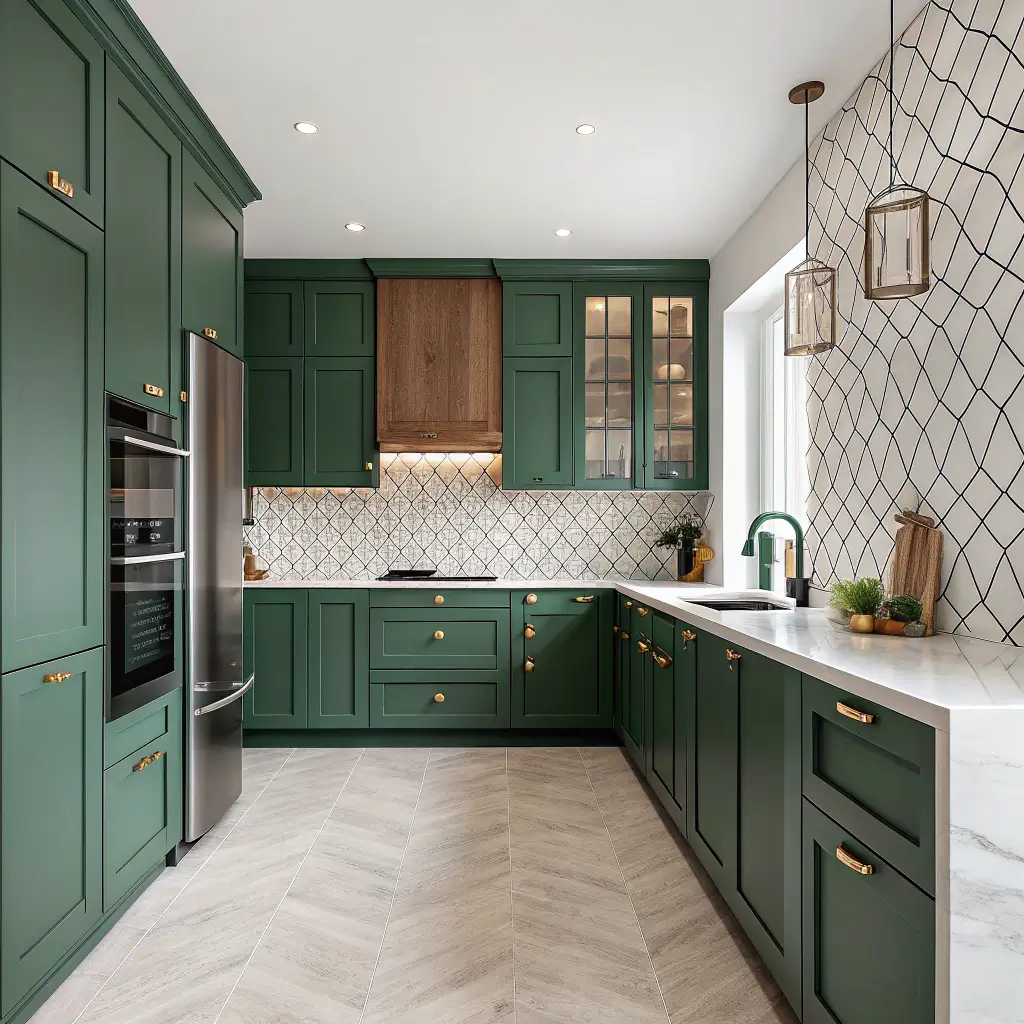
Evergreen – that perfect pine green – brings year-round freshness to modern kitchens. This color feels both seasonal and timeless, working equally well in July or December.
I used evergreen on my coffee bar area, and it created this perfect little zone that feels separate but connected to the main kitchen. The color grounds the space without feeling heavy.
Modern Evergreen Applications
Evergreen loves modern design:
- Flat-panel cabinets in matte evergreen
- Geometric tile patterns incorporating the color
- Statement range hood in evergreen
- Modern bar stools in evergreen velvet
Pair evergreen with white oak, black metal, and white surfaces for that perfect modern mountain vibe. It’s sophisticated without trying too hard.
Seafoam Fresh Style
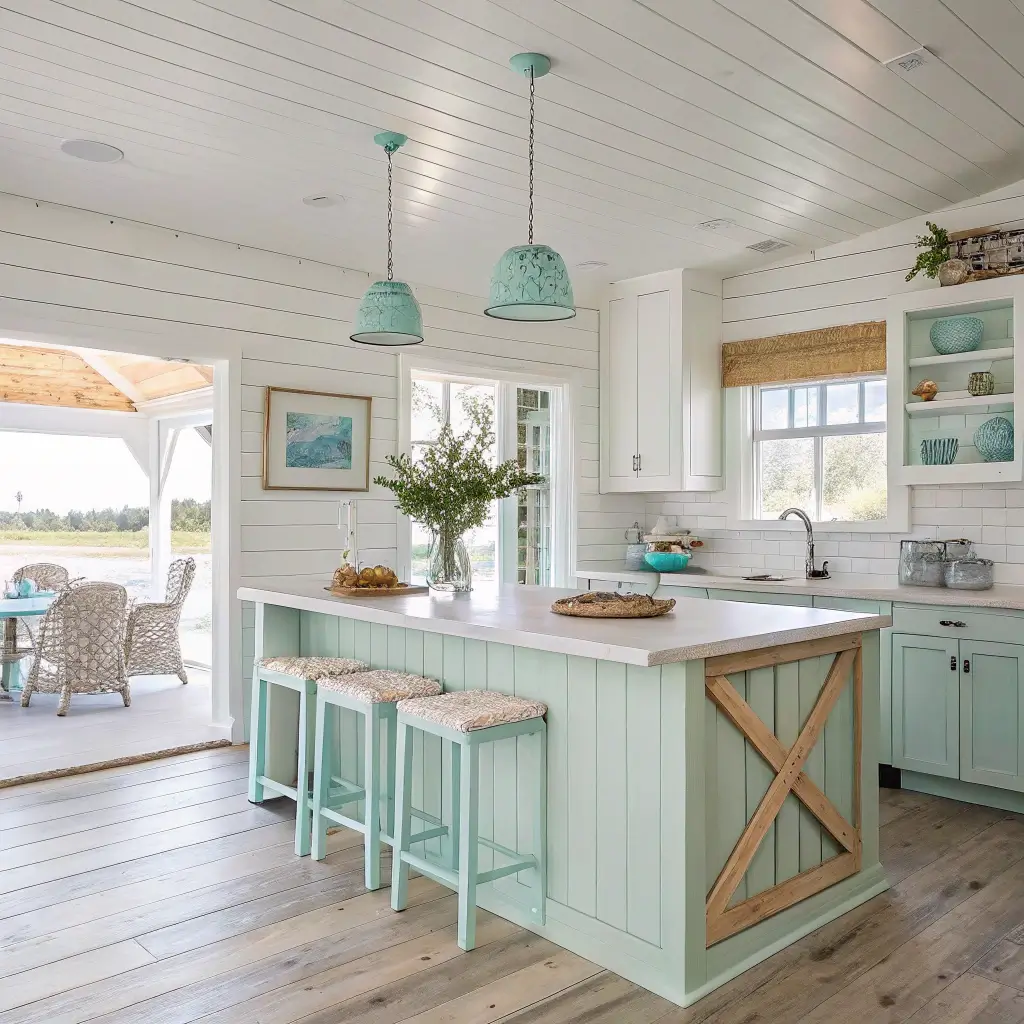
Last but definitely not least, seafoam green brings that perfect blue-green that makes every kitchen feel like a beach house. This color instantly relaxes the space and makes it feel larger and brighter.
My sister-in-law went with seafoam upper cabinets in her coastal cottage, and the effect is pure magic. The color reflects light beautifully and makes her small kitchen feel twice as big.
Styling with Seafoam
Seafoam requires a light touch:
- Keep everything else light and bright for maximum impact
- Add natural textures like rope, rattan, or driftwood
- Include metallic accents in chrome or nickel
- Layer in whites and creams for depth
Seafoam works year-round but really shines in spaces with good natural light. If your kitchen is dark, consider seafoam accessories instead of full cabinets.
Making Your Green Kitchen Dreams Reality
So there you have it – 15 ways to bring green into your kitchen without looking like you live in a salad bowl. The beauty of green is its versatility; whether you go bold with emerald or keep it chill with sage, there’s a shade that’ll work for your space and style.
Remember, you don’t have to commit to painting every cabinet green on day one. Start small with accessories, graduate to a painted island, and see where the journey takes you. Some of my favorite kitchens evolved over time, with owners adding green elements as they gained confidence.
The most important thing? Choose a green that makes you happy. Your kitchen should energize you in the morning and comfort you in the evening. If a color does both, you’ve found your winner. Trust your gut, embrace the green, and get ready for all the compliments coming your way.
Now if you’ll excuse me, I need to go research whether painting my ceiling sage green would be too much. (Spoiler: I’m probably going to do it anyway.)
