
You can make a small living room feel open, useful, and stylish without buying a whole new set of furniture. This article shows practical small living room decor ideas that help you save space, add storage, and boost light so your room works better for daily life.
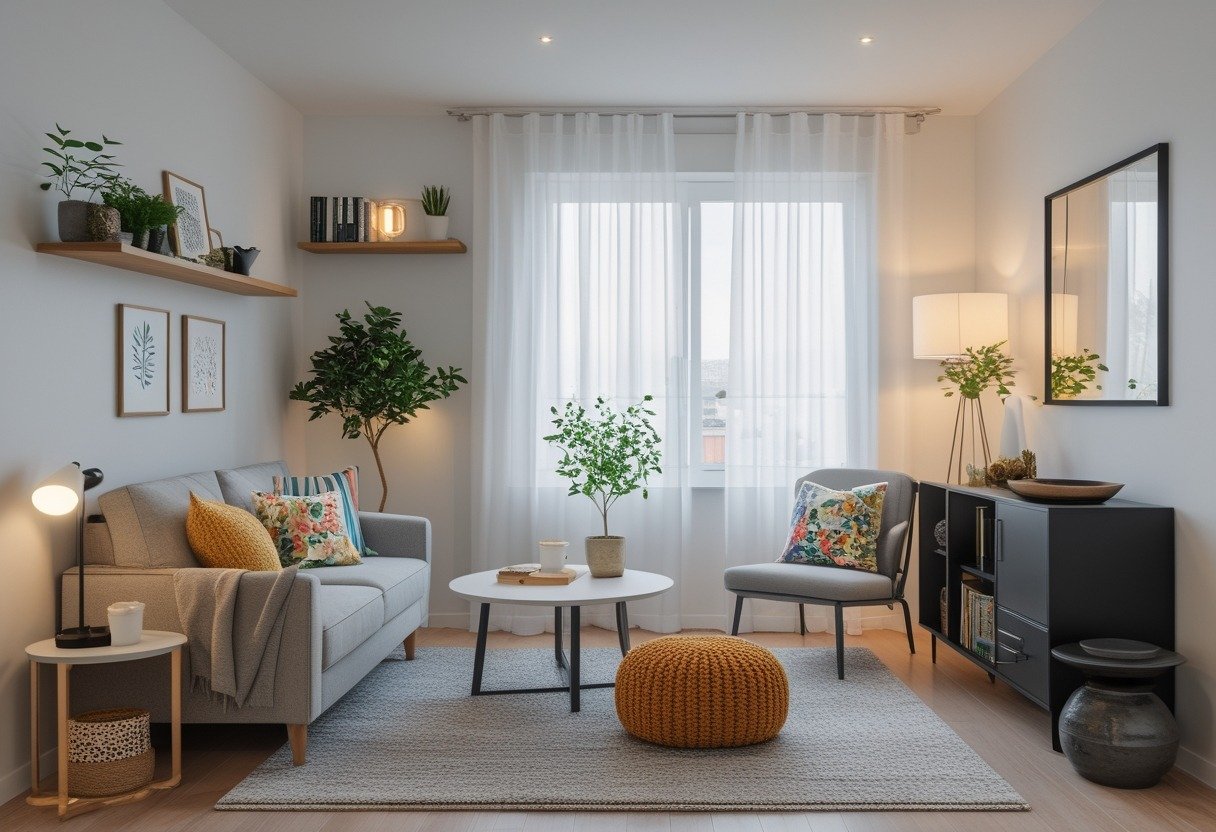
You’ll find simple ways to rearrange, pick pieces, and use walls and windows to expand the feel of your space. Each idea ties to core small-space rules like maximizing vertical space, keeping things light, and choosing multipurpose items so your room stays calm and uncluttered.
1) Floating shelves with staggered heights
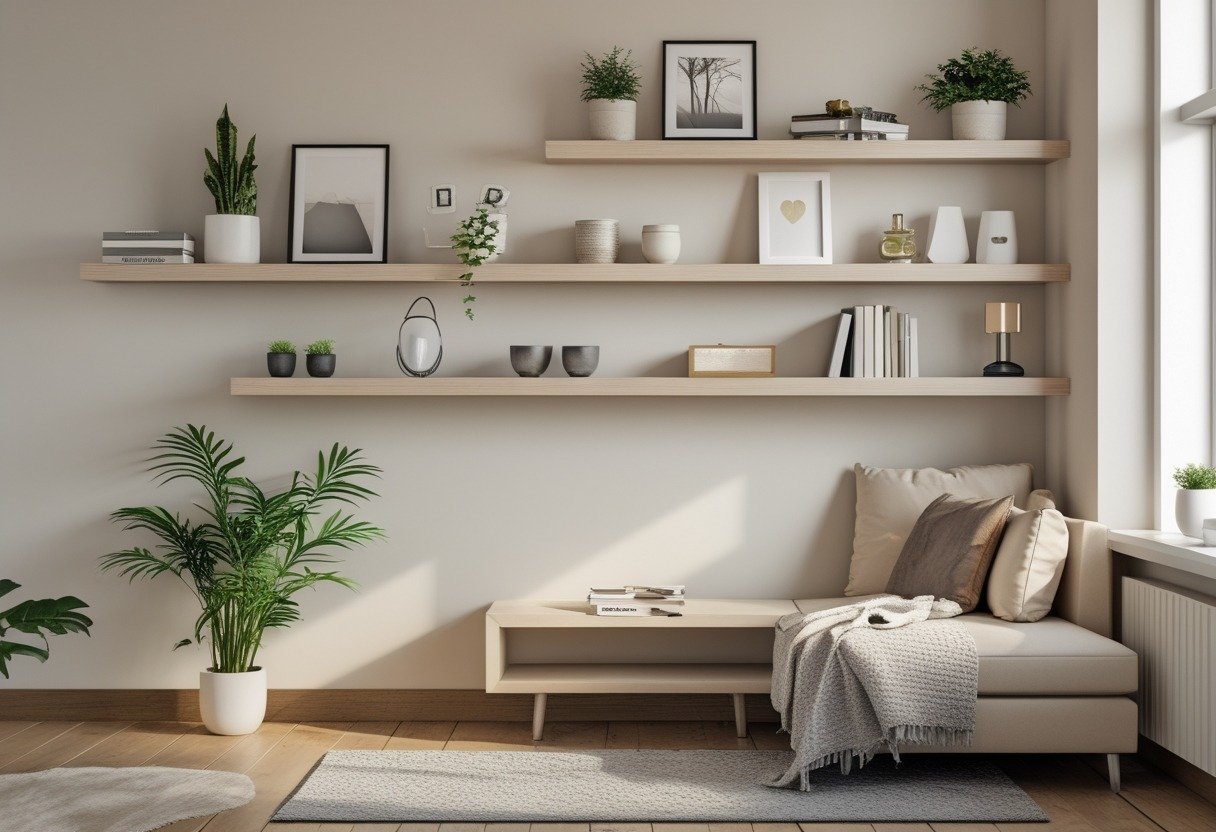
Use floating shelves at different heights to add depth without taking floor space. You can stagger them vertically and horizontally to create visual movement.
Place a mix of books, a small plant, and one or two decorative items on each shelf. Keep space between objects so the wall can breathe and the arrangement feels balanced.
Mount shelves about 10–14 inches apart vertically and offset them 6–8 inches horizontally for a layered look.
2) Sectional loveseat with hidden storage
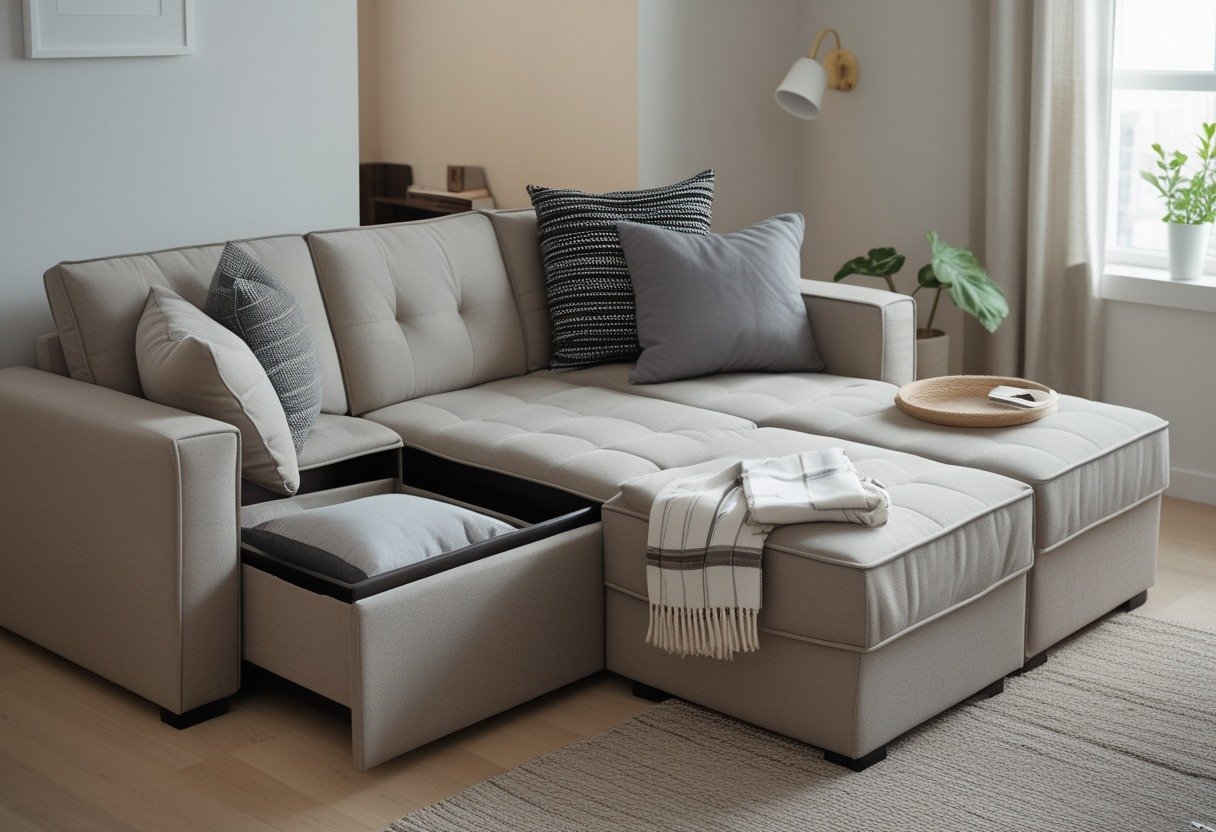
Choose a compact sectional loveseat that fits your room scale. It gives you seating without crowding the floor.
Hidden drawers or lift-up seats keep blankets, games, and extras out of sight. This reduces clutter and makes cleaning easier.
Pick a low-profile design and light fabric to keep the space feeling open. Use the storage for items you reach for often to make daily life smoother.
3) Slim console table behind the sofa
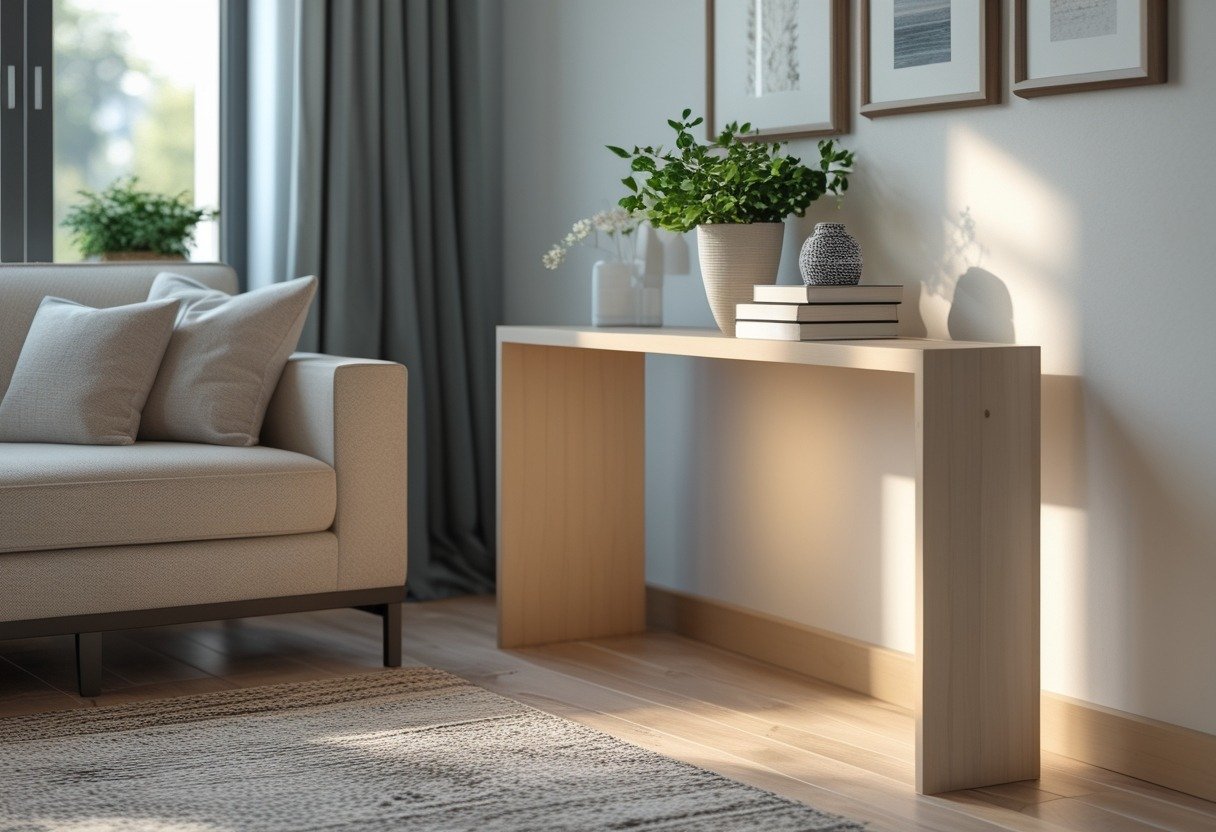
Place a narrow console table behind your sofa to use that thin strip of space well. It anchors the seating and gives you room for lamps, plants, or a few books without crowding the floor.
Choose a slim profile with a lower shelf for extra storage. Match the finish to your sofa or wall to keep the look calm and cohesive.
4) Light-reflecting large mirror
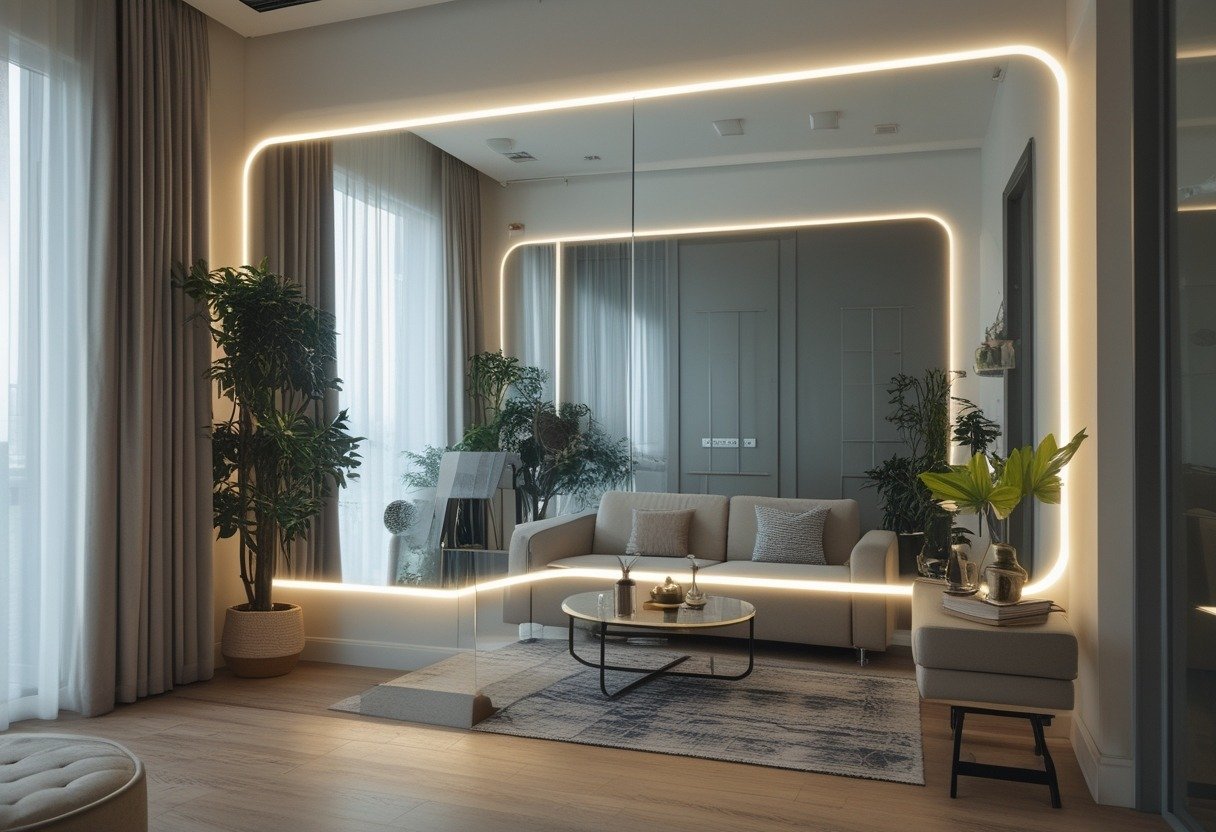
Place a large mirror on a main wall to bounce daylight across the room and make your space feel larger. You can lean it against the wall or hang it above a sofa or console for easy impact.
Choose a simple frame to keep the look clean, or pick a decorative frame as a focal point. Position the mirror to reflect a window or a light source for the best effect.
5) Neutral-tone area rug to define zones
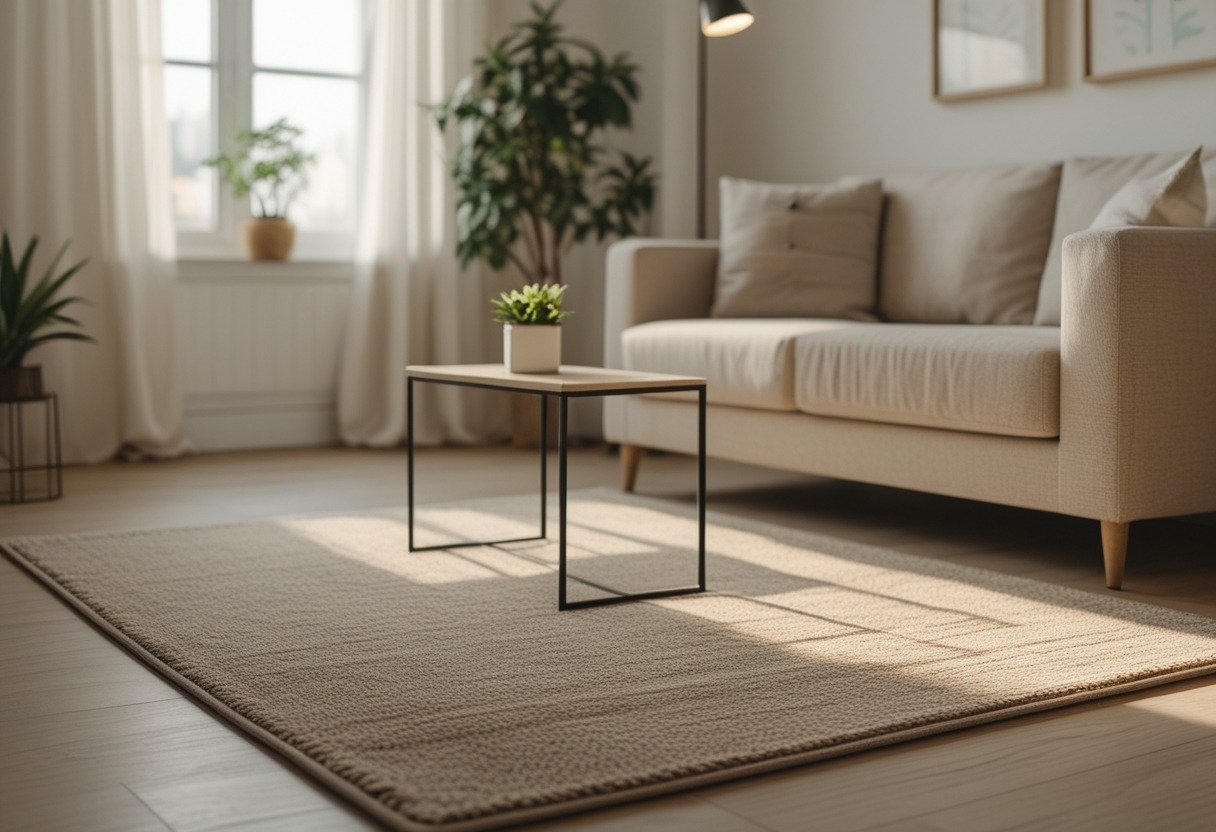
Choose a neutral rug to anchor your seating area without competing with other colors. A simple beige, gray, or ivory rug creates a calm base and makes small rooms feel more open.
Place the rug so front legs of sofas or chairs sit on it to define a conversation zone. Textured weaves like jute or low-pile wool add interest while staying subtle.
Layer a smaller patterned rug over a solid neutral if you want a focal point without overwhelming the space.
6) Nesting coffee tables for flexible surface area
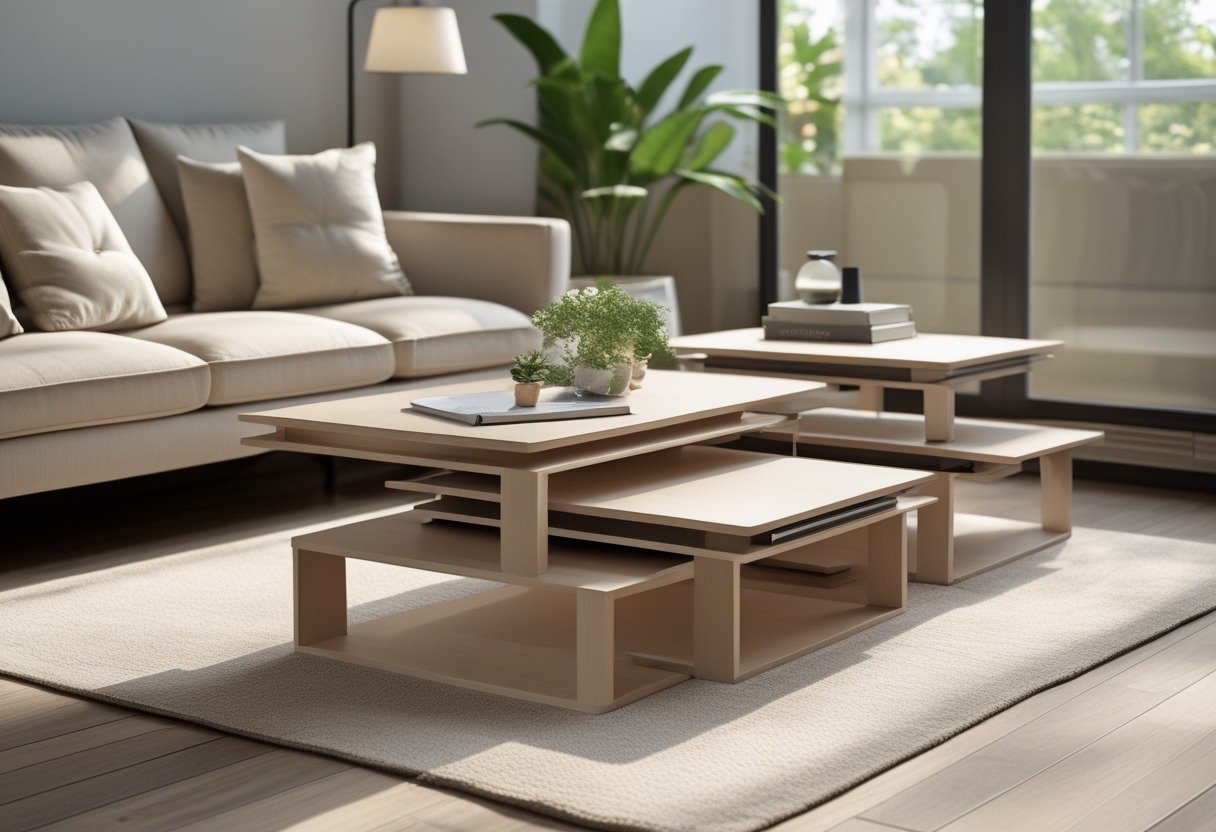
Choose nesting coffee tables to gain extra surface without crowding your space. They slide together when you need floor room and separate for drinks, snacks, or plants.
Pick round or slim shapes to keep traffic flow smooth. Mix materials like wood and metal to match your style while keeping the set practical.
Use the smaller table as a side table or move it to another room for guests. This simple swap makes your layout more adaptable.
7) Wall-mounted TV with cord-channeling
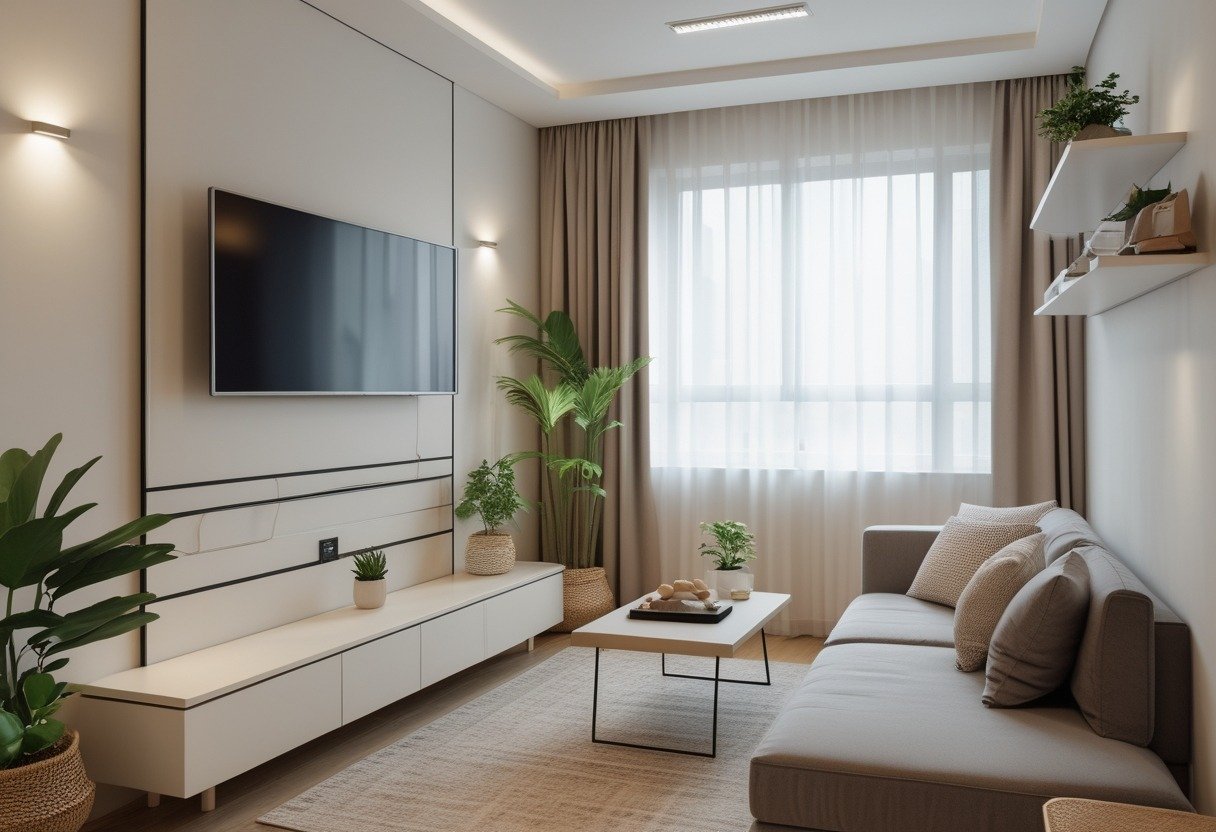
Mount your TV on the wall to free floor space and make the room feel larger. A slim floating shelf under the screen can hold a soundbar or remote.
Use a cord channel to hide cables and keep the wall neat. Paint the channel to match the wall for a clean look that blends in.
Anchor mounts and channels safely to studs or use proper anchors. This keeps your setup secure and reduces clutter without sacrificing style.
8) Sheer layered curtains to maximize light
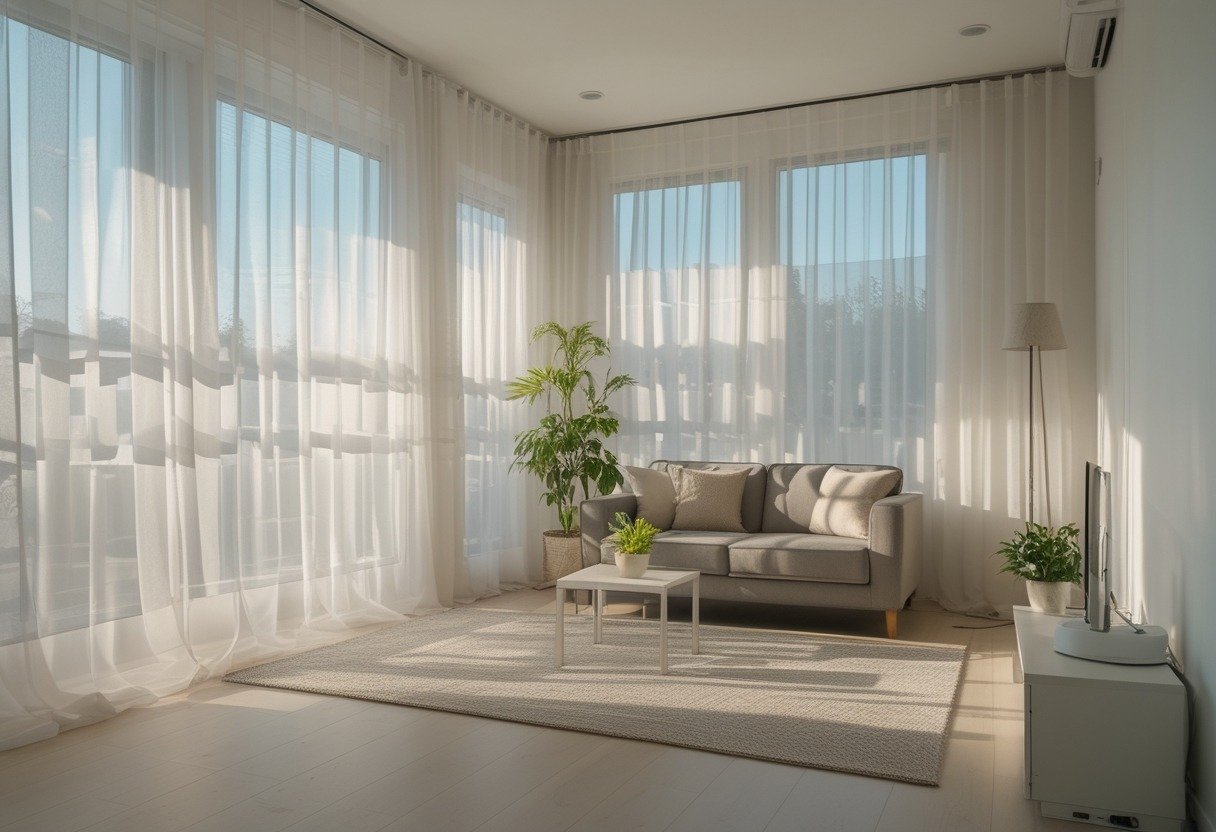
Choose sheer curtains to let daylight fill your small living room while keeping soft privacy. Layer them with heavier drapes or a roller blind so you can block light when needed.
Place the sheers close to the window and heavier panels on a separate rod. This adds depth and gives you control over brightness without crowding the space.
9) Corner floor lamp with an adjustable arm

You can place a corner floor lamp with an adjustable arm to save space and add task lighting.
The arm lets you direct light for reading, working, or highlighting décor without moving furniture.
Choose a slim base to keep the corner from feeling crowded.
Pick a warm white bulb for a cozy glow that still shows colors accurately.
10) Built-in window bench with drawers
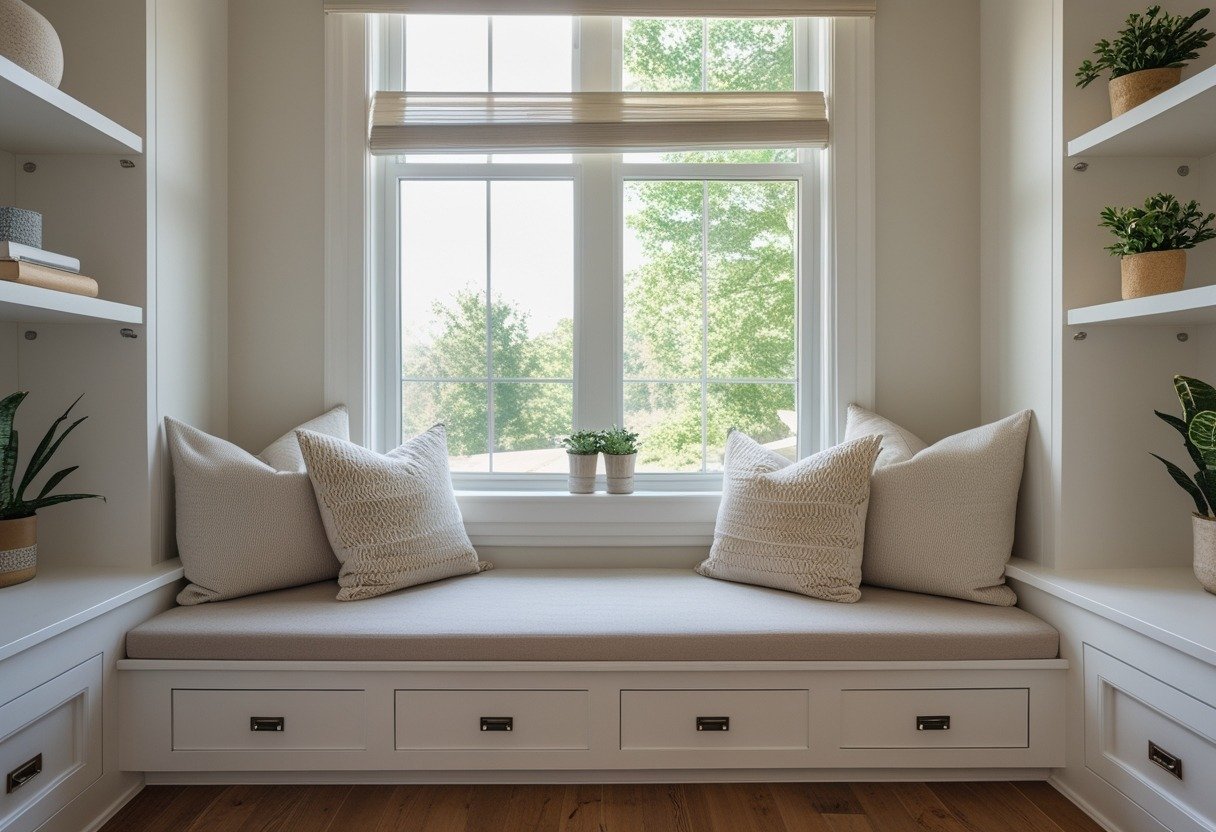
A built-in window bench adds a cozy seat and keeps floor space clear. You get storage under the seat with drawers for blankets, games, or media.
Choose drawers that glide smoothly and match your room’s style. Add thin cushions and a few pillows to keep the look neat and comfy.
Position the bench under a bright window to make the room feel larger. Use the top surface for sitting or display without crowding the living area.
11) Vertical gallery wall in a single color palette
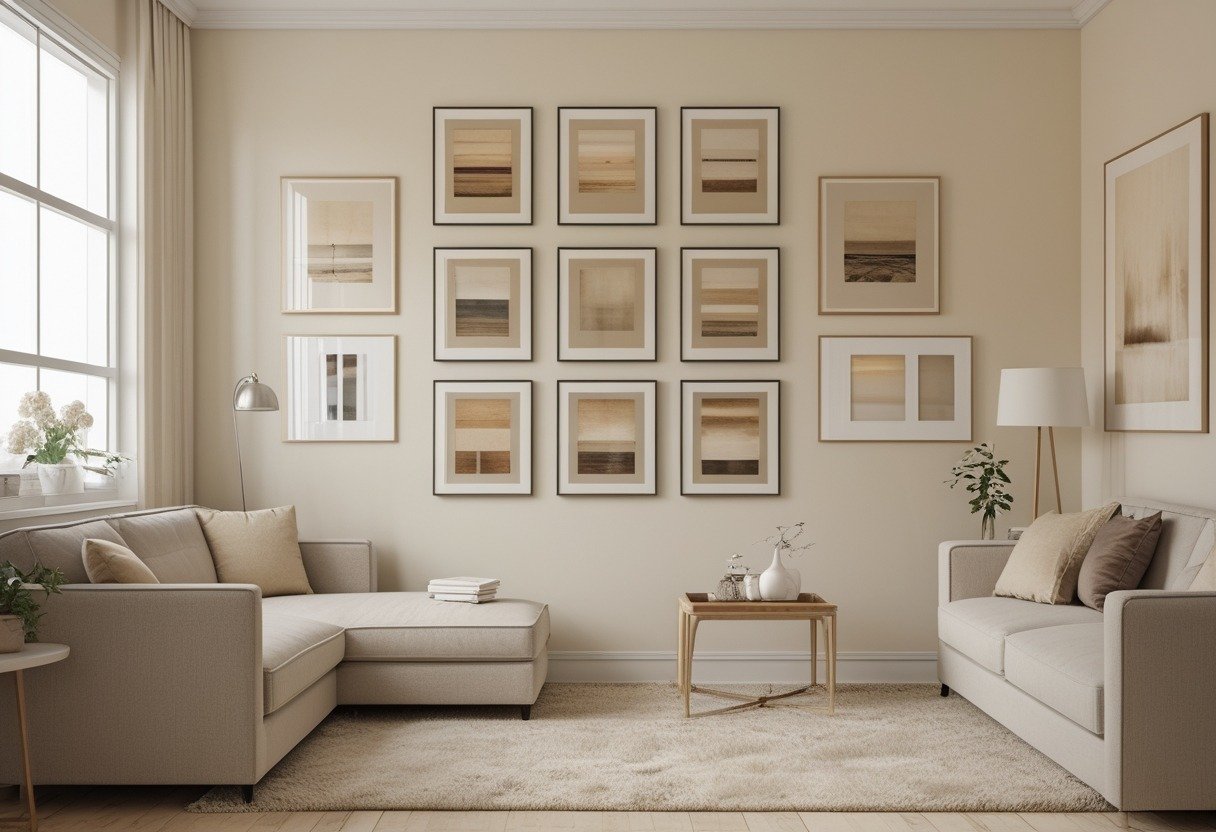
A vertical gallery wall draws the eye up and makes your room feel taller. Choose one color family and vary tones to keep the look unified but interesting.
Mix frame styles and art types—prints, photos, and small shelves—to add texture without clutter. Place the tallest pieces near the center and step down in size to create a clean column that fits narrow walls.
12) Multipurpose ottoman with tray top

Choose an ottoman that doubles as seating, storage, and a surface. You can add a tray to create a stable spot for drinks, books, or a small plant.
Pick a tray that fits the ottoman and has raised edges to prevent spills. Use the storage inside for blankets, games, or items you need often but want out of sight.
This setup saves space and keeps your living room tidy without extra furniture.
Core Principles of Small Space Design
Keep furniture useful and visually light. Aim for bright, open sightlines and a clear path through the room. Use pieces that serve more than one purpose and arrange them so you can move without squeezing past obstacles.
Balancing Function and Aesthetics
Decide what you need the room to do first. List primary activities—watching TV, reading, working—and choose furniture that supports those tasks. Pick a compact sofa or loveseat with a slim profile, then add a storage ottoman or side table that doubles as a tray surface.
Prioritize scale: low, narrow furniture keeps sightlines open. Choose one strong visual anchor, like a patterned rug or a bold lamp, and keep other pieces simple. Use hidden storage—under-seat drawers, built-in shelving, or baskets—to reduce visible clutter.
Create zones with furniture placement instead of bulky dividers. For example, orient seating toward a media wall to define a living area, then place a slim console behind seating as a surface and barrier. Keep materials consistent—wood tones, metals, or fabrics—to make the space feel cohesive.
Maximizing Natural Light
Let natural light do heavy lifting for perceived space. Keep window treatments minimal: sheer panels or roller shades that can fully retract. Position mirrors opposite windows to bounce daylight deeper into the room.
Choose light wall colors and low-reflectance ceilings to enhance brightness without glare. Arrange furniture so it doesn’t block window openings; short-back seating or floating sofas work well. Use layered lighting—task lamps and wall sconces—to fill shadows at night without cluttering surfaces.
If privacy is needed, use translucent options like frosted film or café-style shades on lower panes. Houseplants on a sunny sill add life without crowding. Aim for even light across the room rather than a single bright spot.
Understanding Visual Flow
Create a clear path through the room that feels effortless. Measure walkways so there’s at least 24–30 inches between furniture pieces for comfortable movement. Avoid placing focal items where they interrupt traffic lines.
Use alignment to guide the eye: align furniture edges with rugs, ceilings, or window frames. Keep tall pieces against walls to preserve sightlines. Repeating colors or materials across the room helps the eye move smoothly from one area to the next.
Control scale and clutter to prevent visual stops. Use open-legged furniture that shows floor beneath, and limit small decorative items to a few curated displays. Negative space matters—leave breathing room around key items so each piece reads clearly.
Color and Material Strategies
Use color, finishes, and material choices to make the room feel larger, brighter, and more purposeful. Pick tones and surfaces that work with your light, furniture scale, and storage needs.
Choosing Light Versus Bold Tones
Light tones make a small room feel more open. Paint walls in soft whites, pale grays, or warm beiges to reflect natural light. Keep ceiling and trim a shade lighter than the walls to lift the room visually.
Use bold tones sparingly to add depth. Apply a deep color on one short wall, a fireplace surround, or a built-in shelf to create a focal point without shrinking the space. Use the same bold hue in small accents—throw pillows, a rug edge, or artwork—to tie the room together.
Consider undertones. Cool grays and blues work best with northern light. Warm creams and muted yellows pair well with southern light. Test paint swatches on different walls and view them at morning and evening light before committing.
Incorporating Reflective Surfaces
Reflective surfaces increase perceived space by bouncing light around the room. Use a large mirror opposite a window to double incoming daylight. A mirror framed in thin metal keeps the look airy.
Choose glossy finishes strategically. Satin or semi-gloss paint on trim and doors adds subtle reflection without glare. Glass or acrylic coffee tables and side tables create visual breathing room because light passes through them.
Metallic accents can brighten corners. Pick brushed brass or matte nickel for lamps, picture frames, and drawer pulls. Avoid overdoing high-shine finishes; concentrate reflective pieces near light sources for the biggest impact.
Selecting Multi-Functional Furnishings
Choose furniture that serves more than one purpose to save space and reduce clutter. Look for a storage ottoman that opens for blankets, or a coffee table with drawers or lower shelves for books and remotes.
Scale matters. Use a slim-profile sofa or a loveseat with tapered legs to keep sight lines open. Nesting side tables offer flexibility: pull one out for guests, tuck it away when not needed.
Pick materials that balance durability and lightness. Upholstery in linen blends or performance fabric resists wear but stays visually light. Choose wood finishes in medium tones to hide scratches while keeping the room warm.
