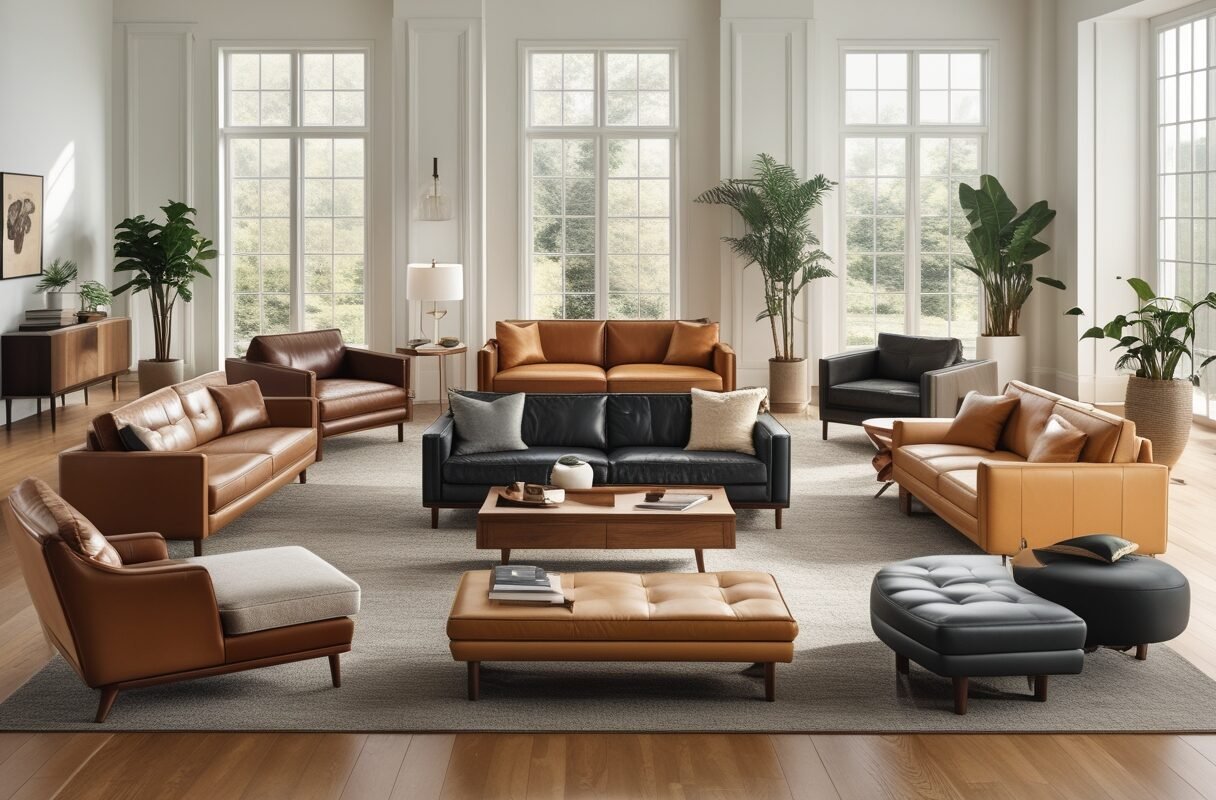
A leather couch can change how your living room looks and feels. It brings warmth, structure, and a mix of timeless and modern style that works with many decor choices. You’ll learn simple, practical leather couch living room ideas to choose and style a leather sofa so it fits your space, comfort needs, and color scheme.
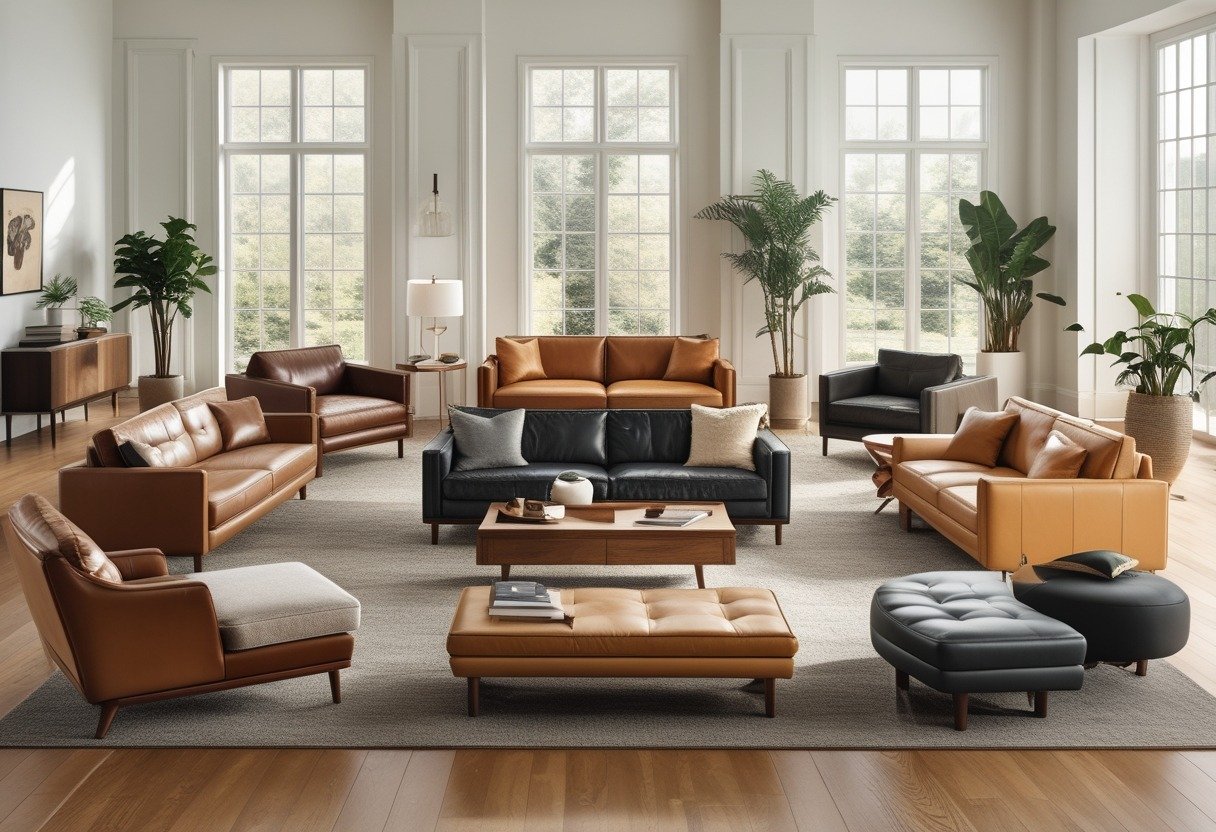
This article walks you through 13 clear ways to make a leather couch the centerpiece of your living area, from classic cognac chesterfields to sleek modular sectionals and convertible options for small spaces. Use these ideas to match leather types, pair textures, and arrange furniture so your room feels balanced and inviting.
1) Cognac Chesterfield leather sofa with brass nailhead trim
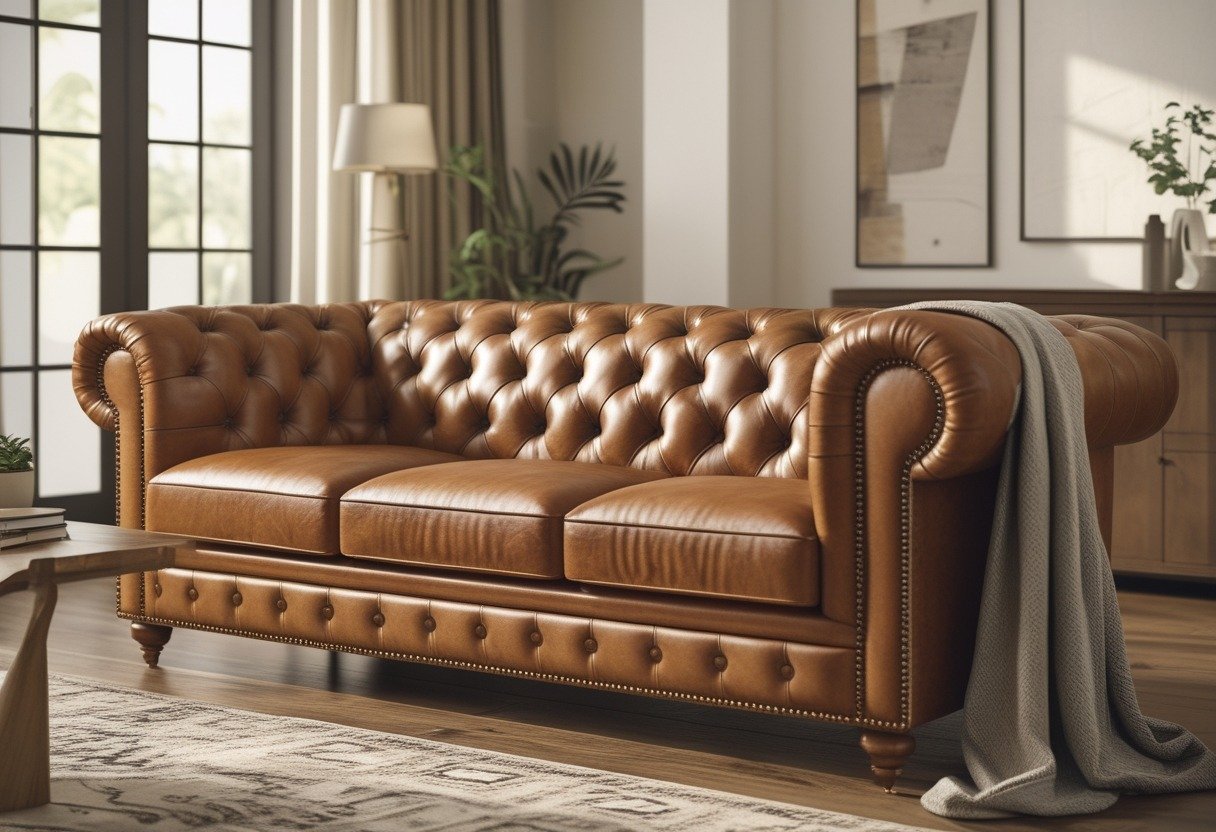
A cognac Chesterfield adds warm color and classic shape to your living room. The deep button tufting and rolled arms give a formal, grounded look without feeling heavy.
Brass nailhead trim brings a subtle shine and pairs well with wood and brass lighting. Place the sofa against a neutral wall to let its color stand out and add a soft rug for contrast.
2) Black mid-century modern leather sectional with tapered wooden legs
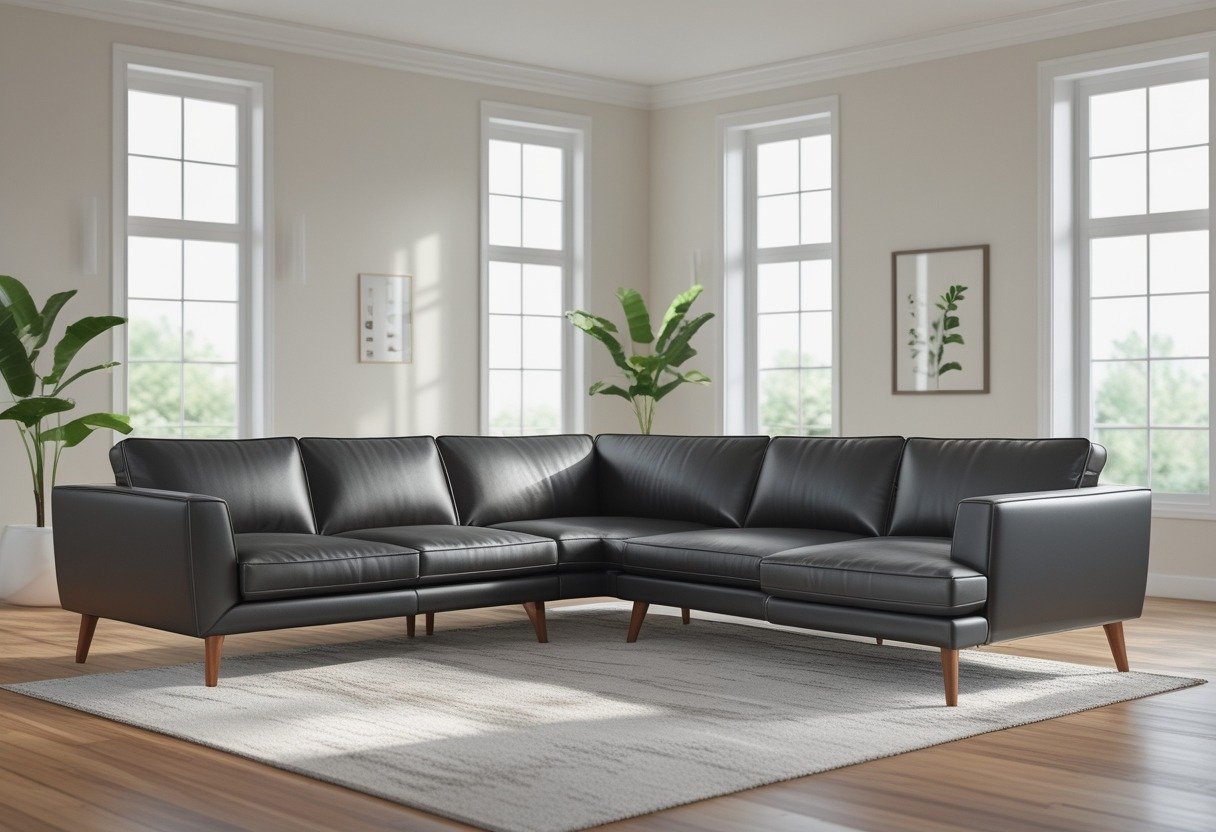
Choose a black leather sectional with clean lines to anchor your living room. The tapered wooden legs lift the piece, giving your space a lighter, mid-century look.
Pair it with warm wood tones and simple decor to balance the dark leather. Use textured pillows or a soft throw to add comfort without cluttering the design.
3) Warm tan Italian top-grain leather sofa paired with a jute rug
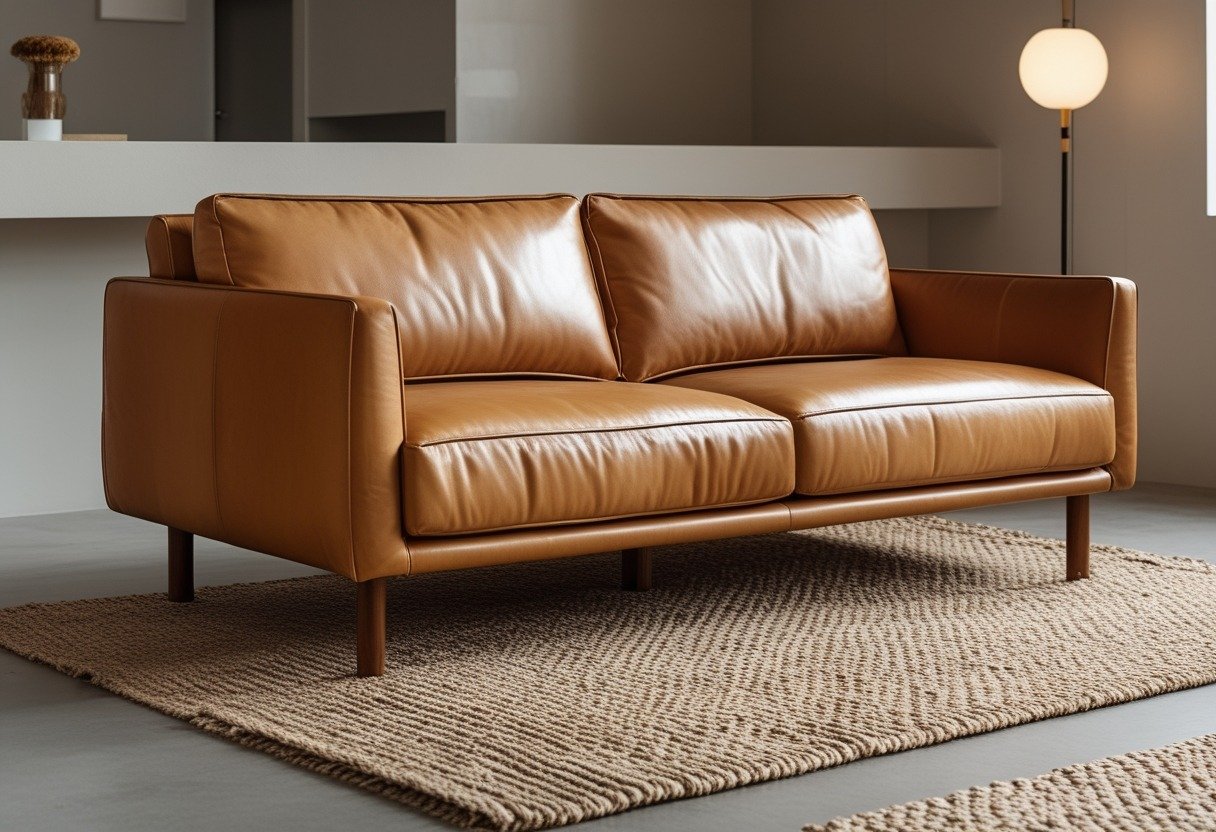
Choose a warm tan Italian top-grain leather sofa for rich color and durable texture. You get a classic, lived-in look that also feels refined.
Place a natural jute rug beneath the sofa to add organic warmth and a subtle contrast. The jute’s coarse weave balances the leather’s smooth surface and keeps the palette grounded.
Keep accessories minimal: a soft throw, a couple of neutral pillows, and simple wood or metal accents. This maintains a clean, cohesive living room without competing patterns.
4) Distressed brown farmhouse leather sofa with plaid wool throw
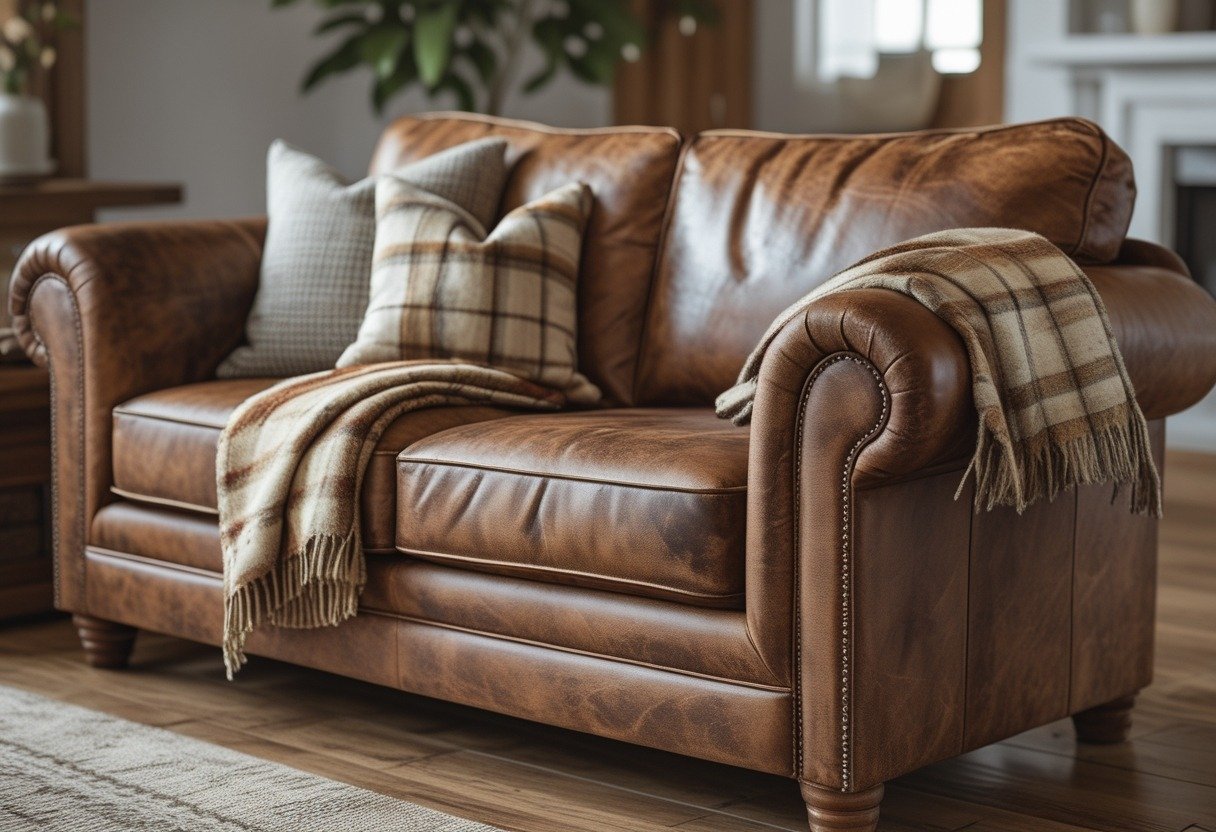
Choose a distressed brown leather sofa to add warmth and texture to your farmhouse living room. The worn finish feels lived-in and pairs well with wood beams or a stone fireplace.
Drape a plaid wool throw over one arm or the back for pattern and extra coziness. The wool adds softness and ties together neutral tones and rustic accents.
5) Sleek low-profile black leather sofa with chrome frame
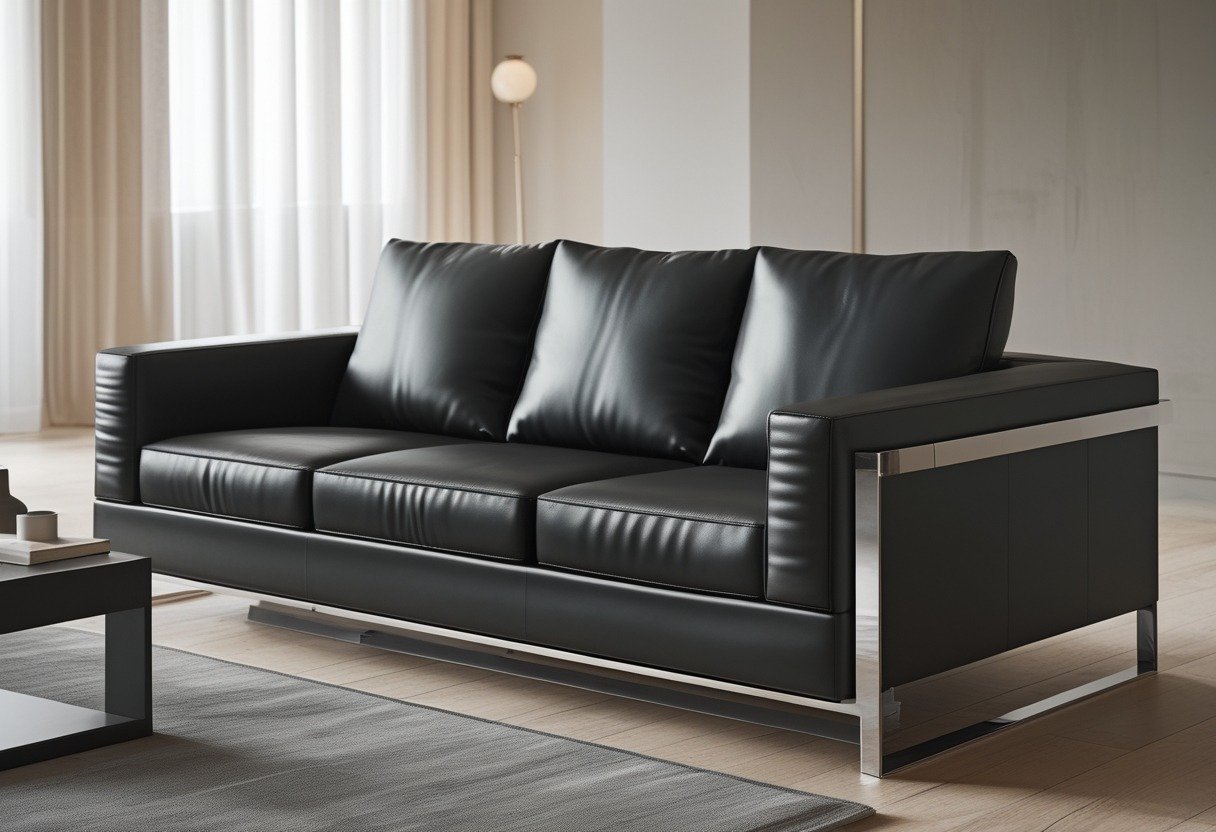
You get a modern focal point with a low-profile black leather sofa and a slim chrome frame. It keeps lines clean and makes small rooms feel more open.
Pair it with light walls or a neutral rug to balance the dark leather. Add a textured throw or a single accent pillow to soften the look without cluttering it.
Choose solid cushions and simple legs for durability and easy cleaning. The chrome adds a touch of shine while staying minimal and refined.
6) Camel-colored saddle leather sofa with sheepskin draped over one arm
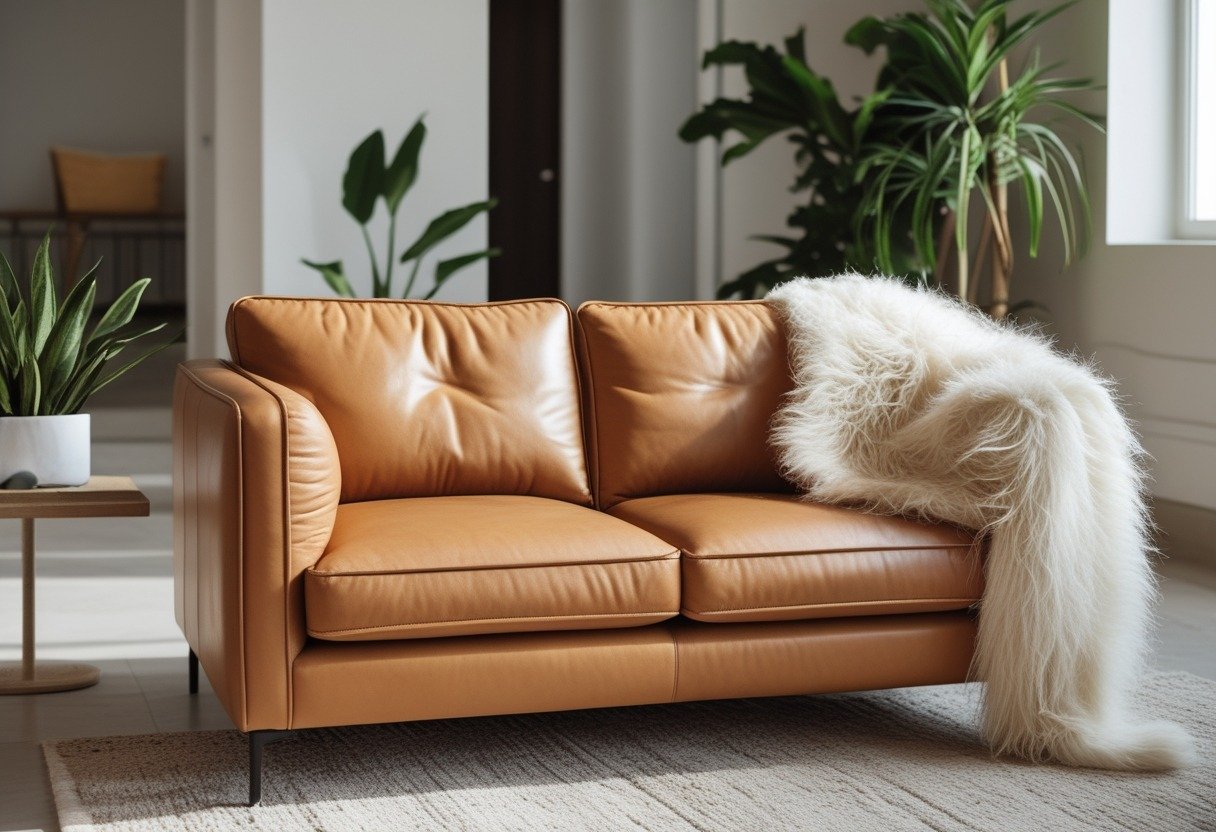
You get a warm, classic look with a camel saddle leather sofa. Draping a sheepskin over one arm adds soft texture and a cozy spot to rest.
Keep surrounding decor simple so the leather and sheepskin stand out. Pair with neutral pillows and a natural wood coffee table for balance.
7) Deep-seated tufted leather loveseat for compact living rooms
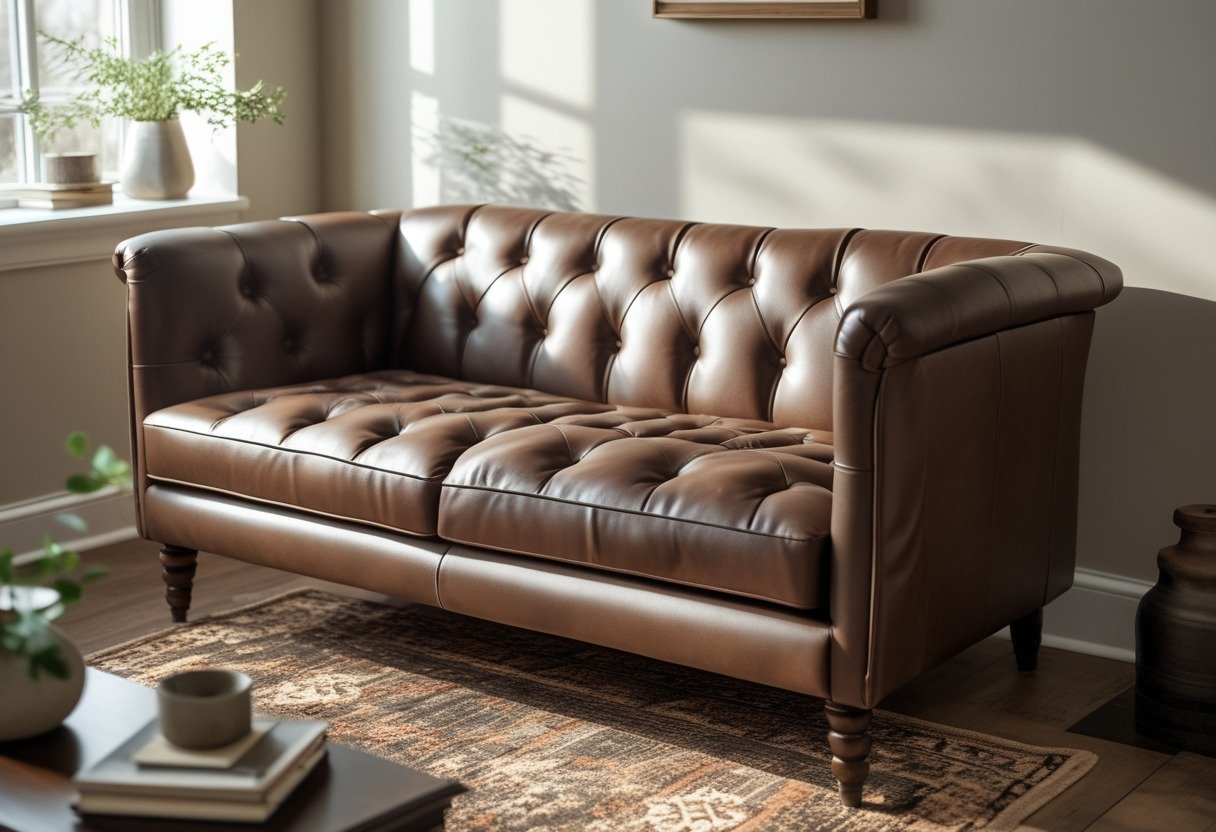
Choose a deep-seated tufted leather loveseat when you need comfort without a large footprint. The tufting adds visual interest while the deep seat lets you stretch out or share the space comfortably.
Pick a neutral leather tone like brown, black, or gray to fit many styles. Look for faux or top-grain options if you want lower cost or easier care.
8) Cream leather convertible sofa bed for multi-use spaces
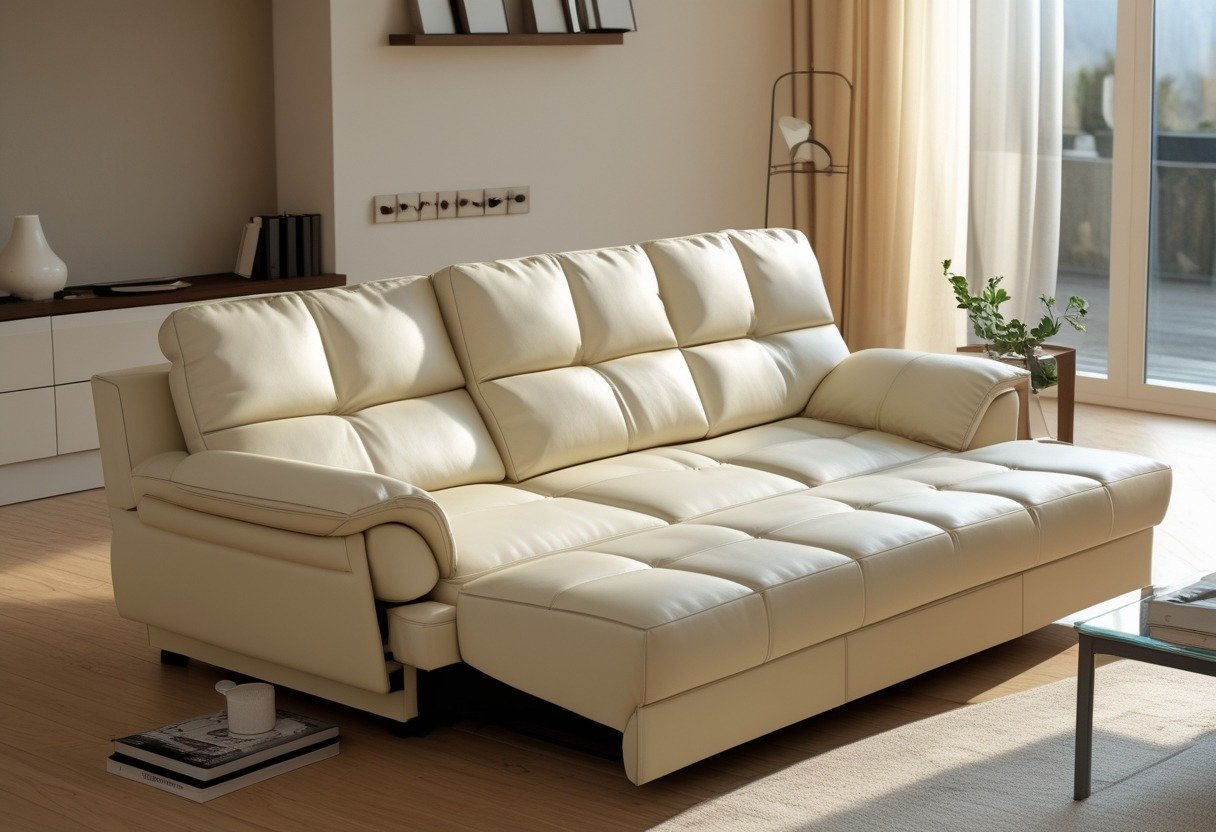
Choose a cream leather convertible sofa bed when you need seating and a guest bed in one piece. It keeps your room light and looks tidy while offering an easy pull-out or fold-down sleep option.
Pick a slim profile for small rooms and a hidden storage chaise if you need extra space for linens. Leather cleans easily and resists stains, so it works well in high-traffic areas.
9) Vintage-inspired cognac leather club chair to anchor a reading nook
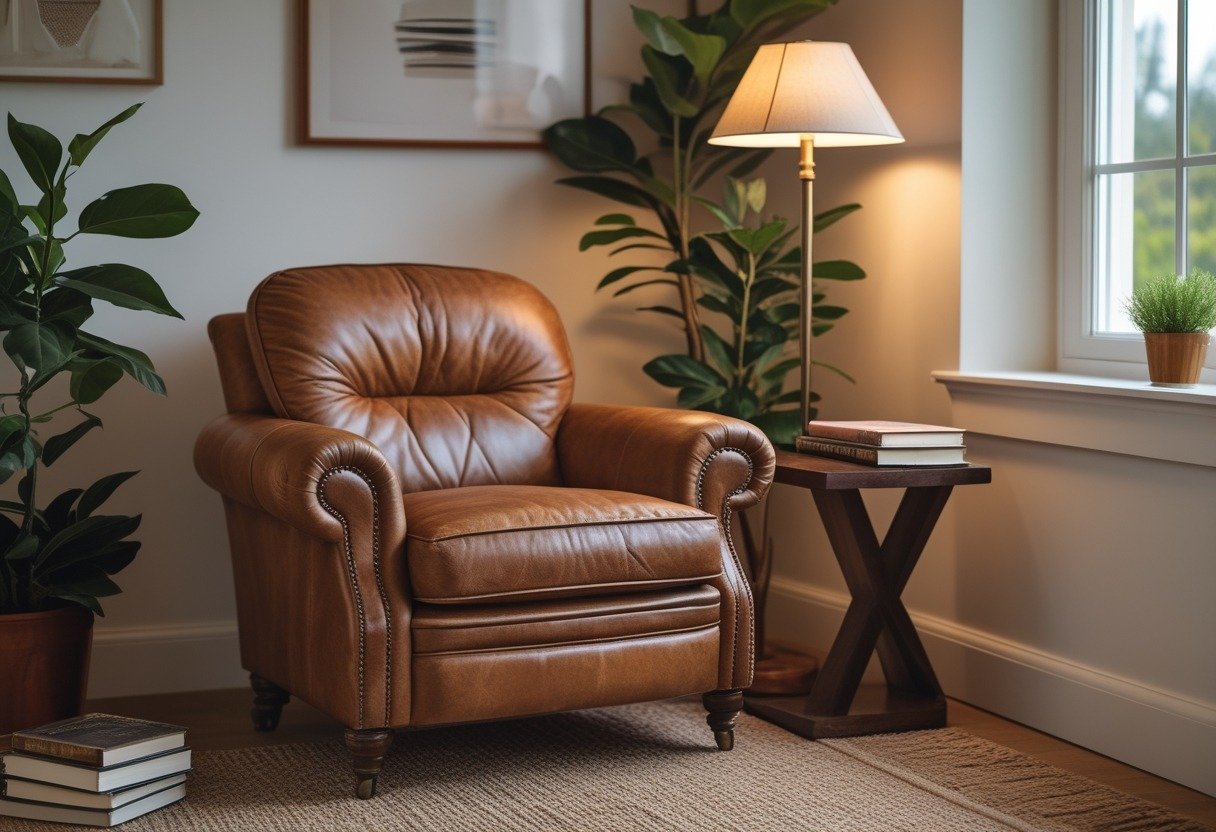
Place a cognac leather club chair in a corner to make a clear focal point for your reading nook. The warm brown tones and worn finish add character without overpowering the room.
Pair the chair with a small side table and a floor lamp for good task lighting. Add a soft throw and a low-profile rug to keep the space cozy and easy to maintain.
10) Two-tone leather sofa (cream seat, walnut-brown back) for contrast
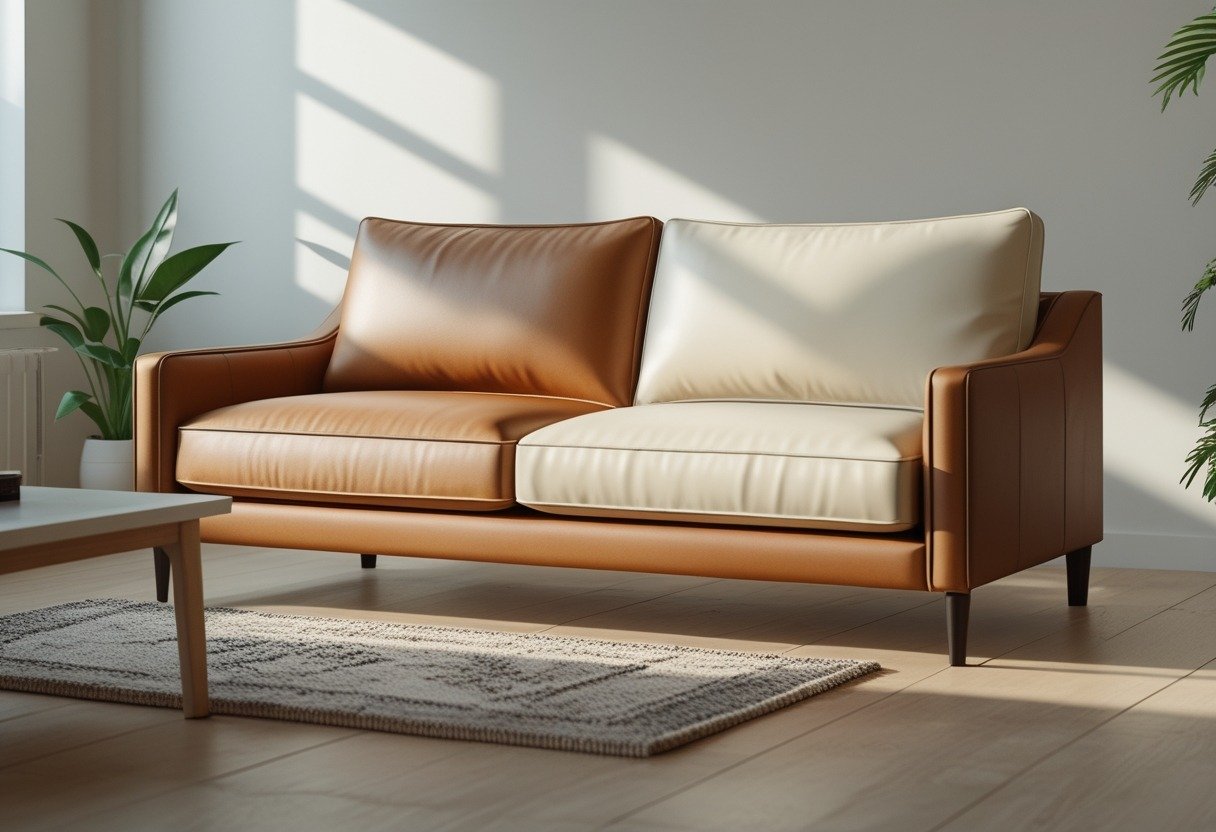
Choose a two-tone leather sofa with a cream seat and walnut-brown back to add clear contrast to your living room. The light seat brightens the space while the darker back grounds it.
Place the sofa against a neutral wall and add simple pillows to echo the walnut tone. This keeps the look balanced and modern without feeling heavy.
11) Rustic leather sofa with reclaimed wood side table attached
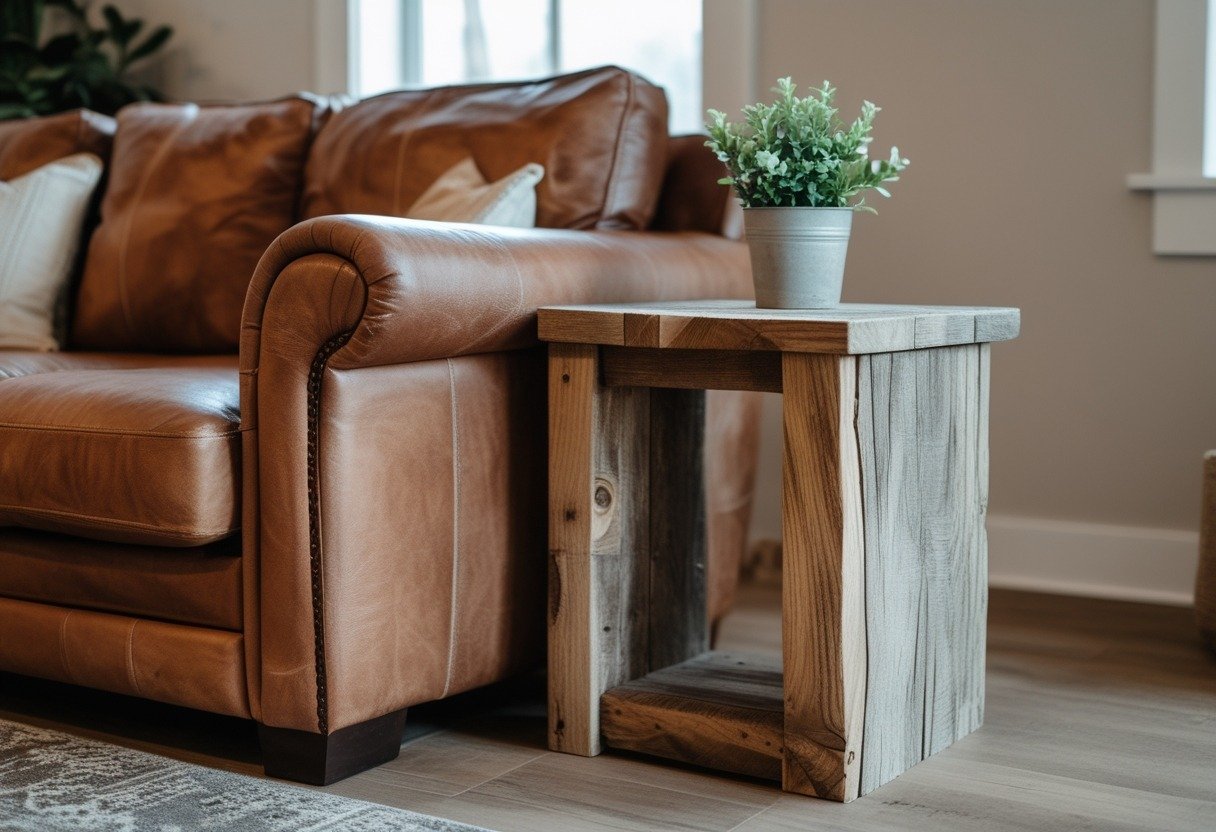
Pair your leather sofa with a built-in reclaimed wood side table to add function and texture. The wood brings warm, natural tones that complement leather without competing for attention.
Choose a table height that matches the armrest so you can set drinks or a lamp easily. Secure the table to the frame for stability and a seamless, custom look.
Use unfinished or lightly sealed wood to keep a rustic feel. Add simple metal brackets or leather straps for an authentic, durable touch.
12) Leather modular sectional with adjustable headrests for family rooms
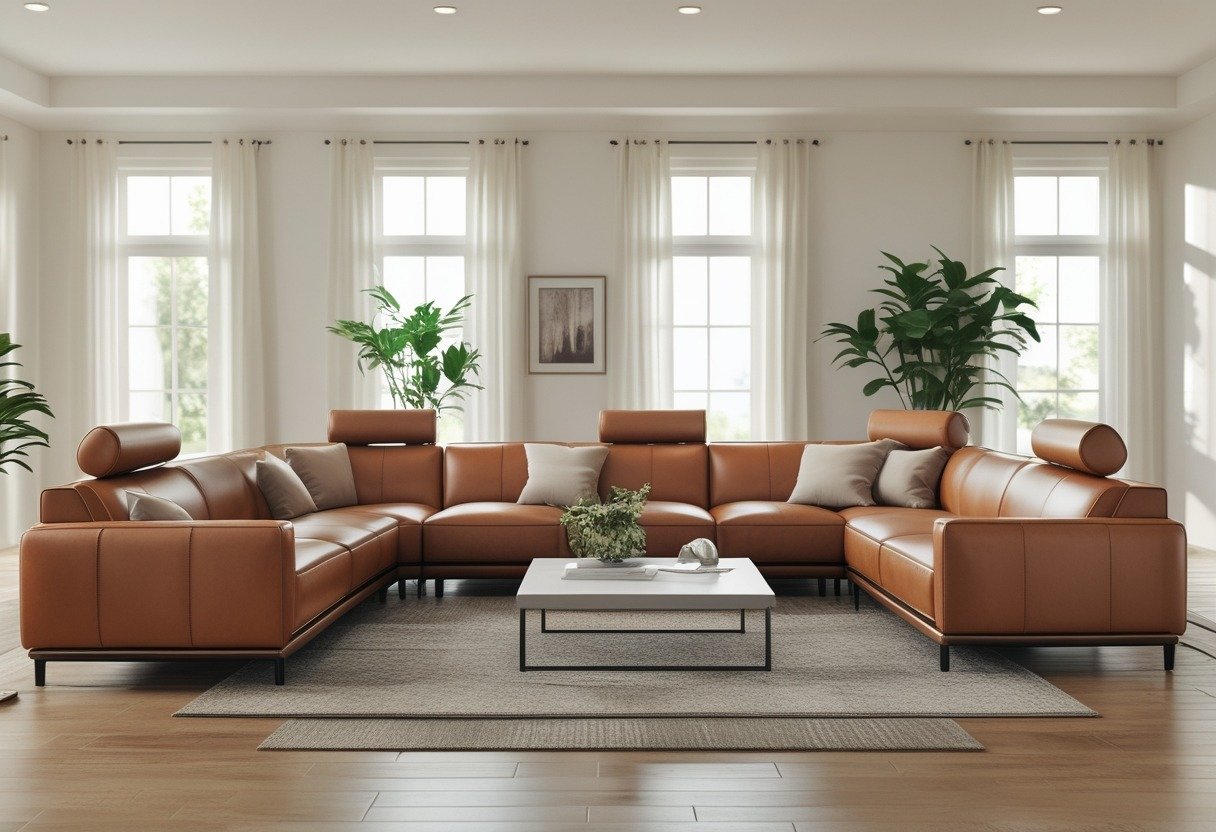
Choose a leather modular sectional to fit your room and needs. You can move pieces to create a long sofa, an L-shape, or individual seats for movie nights.
Adjustable headrests add support for everyone, from kids to grandparents. Leather cleans easily and wears well, so it suits busy family use.
Look for models with USB ports or storage if you want extra function. Pick a neutral color to match changing décor and make the room feel cohesive.
13) Statement gallery wall above a dark brown leather couch
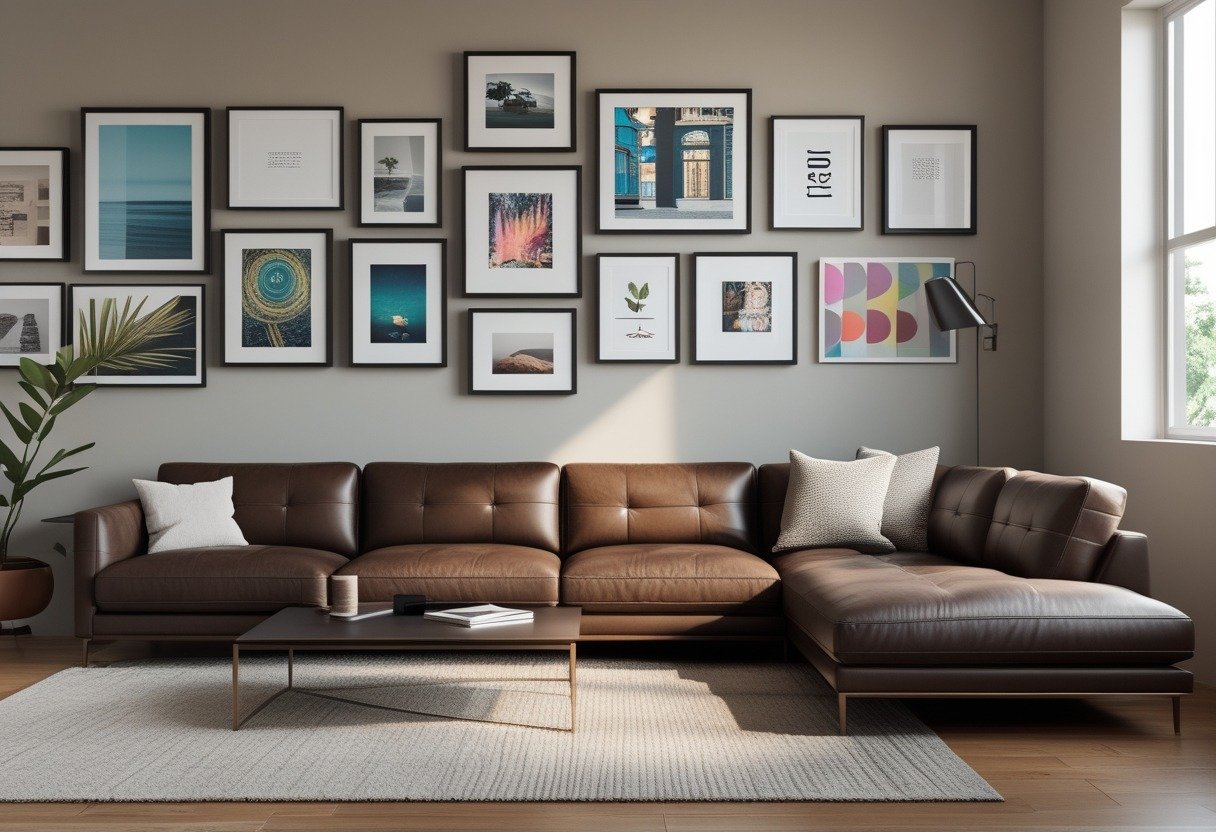
A bold gallery wall draws the eye and balances the couch’s deep tone. Use mixed frame sizes and a clear layout so your display feels planned, not cluttered.
Choose lighter artwork or mats to contrast the leather and brighten the wall. Keep a consistent color or theme to tie the pieces together and make the arrangement feel cohesive.
Hang the lowest frame about 6–8 inches above the couch back. This keeps art at a comfortable viewing height and links the seating with the wall display.
Selecting the Right Leather Type
Choose leather that fits how you live and how you want the room to feel. Think about durability, how the leather will age, and the care it needs.
Full-Grain vs. Top-Grain Leather
Full-grain leather keeps the hide’s natural surface and marks. It feels richer, develops a patina, and resists wear better over time. Pick full-grain if you want a long-lasting sofa that looks better with age and you don’t mind paying more.
Top-grain leather is sanded and refinished for a smoother look. It shows fewer natural marks and is easier to clean. Choose top-grain if you want a uniform color, a sleeker style, and lower maintenance than full-grain.
Quick comparison:
- Full-grain: very durable, natural texture, higher price.
- Top-grain: uniform surface, easier care, slightly less durable. Match the leather grade to your household—kids, pets, and heavy use often suit top-grain for easier upkeep, while full-grain fits formal or rustic rooms where aging leather is desired.
Caring for Different Leather Finishes
Different finishes need different care. Aniline leather has minimal surface coating and soaks up oils and spills more easily. Clean spills fast with a dry cloth and use a leather conditioner occasionally to keep it supple.
Semi-aniline adds a light protective coat. It resists stains better than aniline but still benefits from gentle cleaners and periodic conditioning. Pigmented or protected leather has a heavier finish that stands up to kids and pets and cleans with mild soap and water.
- Blot spills immediately; don’t rub.
- Use pH-balanced leather cleaner for regular cleaning.
- Apply conditioner to aniline and semi-aniline leather every 6–12 months.
- Avoid harsh chemicals and direct sunlight to reduce fading and drying.
Coordinating Colors and Textures
Choose fabrics, paint, and rugs that either soften or highlight the leather’s finish. Aim for contrast in texture and harmony in color so the couch feels like part of the room, not just an isolated piece.
Pairing Leather With Fabrics
Mix soft textiles with leather to add comfort and visual depth. Use linen or cotton throw pillows for breathability and matte texture; velvet or wool pillows add plushness and a touch of luxury. For a brown leather couch, pick pillows in muted greens, rust, or cream to create warm, layered tones. For black or dark gray leather, go with jewel tones or soft pastels to prevent the space from feeling heavy.
Add a textured throw—sheepskin, chunky knit, or a woven blanket—draped over one arm to break the leather’s sheen. If you use patterned fabrics, keep the pattern scale different from the couch lines: small-scale patterns on pillows and a larger-scale rug work well together.
Balancing Warm and Cool Tones
Decide whether you want the room to feel warm, cool, or balanced, then select accents accordingly. Warm leather (tan, cognac, chestnut) pairs well with warm paint colors—warm beige, terracotta, or soft mustard—and with natural wood tones. This creates a cozy, inviting feel.
Cool leather (black, gray, some navy) benefits from cool paints like pale blue, soft gray, or sage green to maintain a calm mood. To avoid a sterile look, add a few warm accents—brass lamps, a wooden coffee table, or terracotta planters—to introduce subtle warmth without clashing.
Use a simple rule: pick one dominant temperature (warm or cool) and add one or two accents from the opposite side to keep the space dynamic.