You want a kitchen coffee bar that fits your space, style, and daily routine. I’ll show coffee bar ideas kitchen counter that work for tiny counters and larger setups, focusing on practical choices and simple styling so you can make better coffee faster.
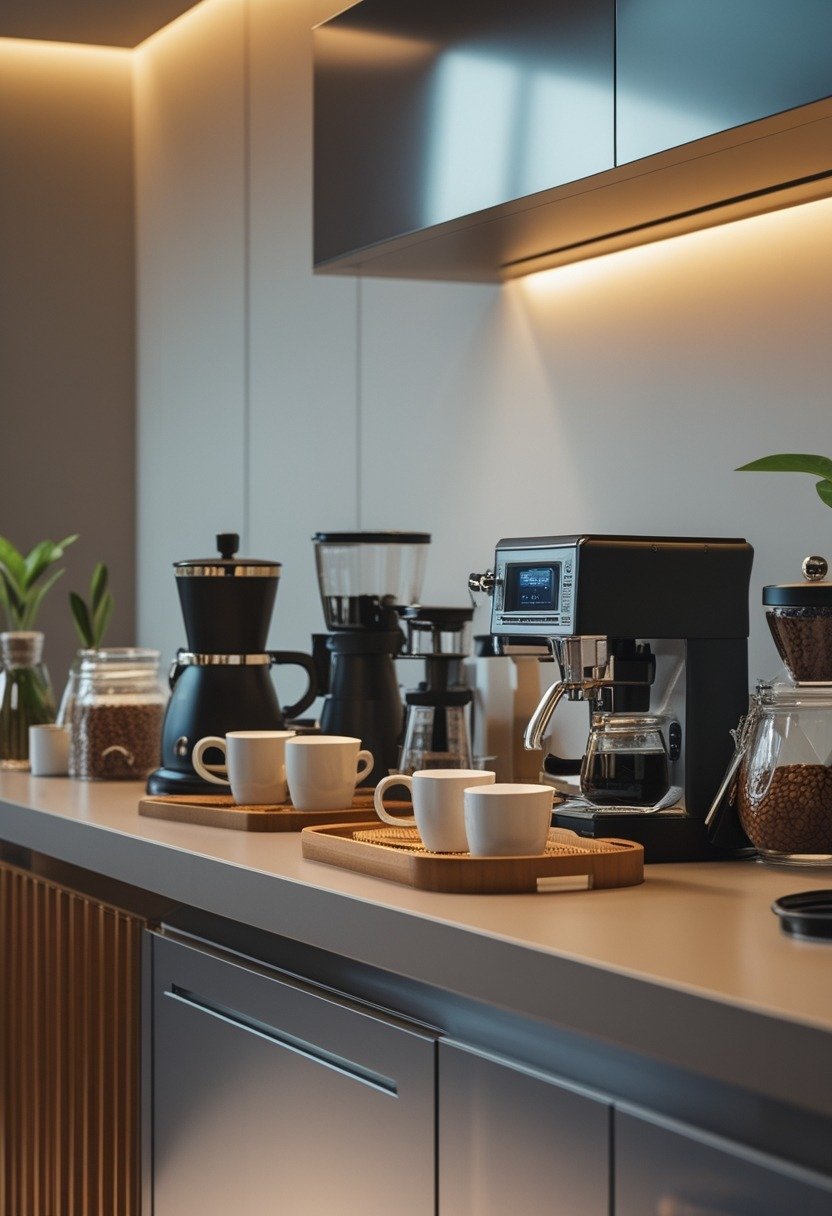
You’ll find twelve clear setups that cover single-serve stations, espresso rigs, cold-brew corners, pour-over displays, built-ins, minimalist looks, rustic trays, and more—each aimed at saving counter space and lifting your morning routine. I’ll also offer tips for organizing, styling, and getting the most from the tools you already own.
1) Compact single-serve station with Nespresso VertuoPlus and capsule carousel
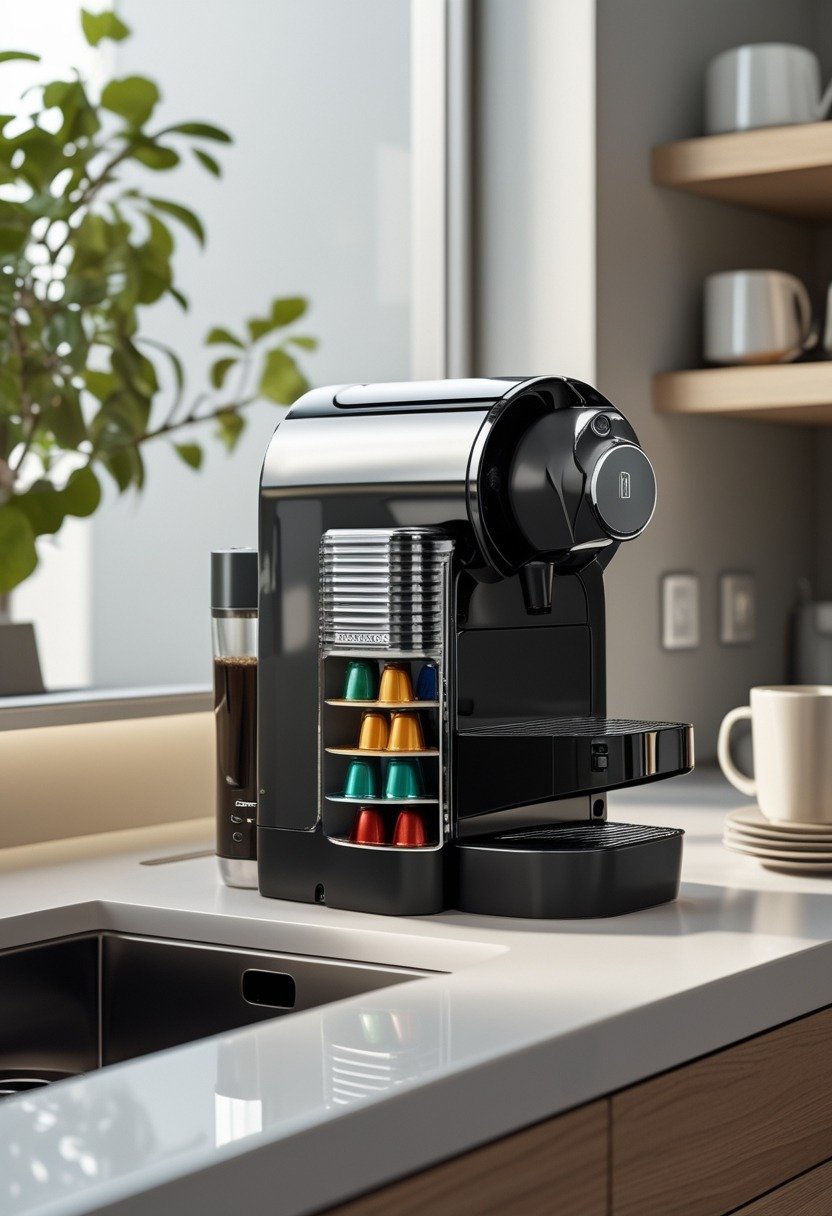
I place a Nespresso VertuoPlus on a small tray to keep my counter neat and protected.
The machine makes espresso and larger cups, so I can serve quick shots or full mugs without extra gear.
I add a capsule carousel next to it for easy access and tidy storage.
This setup fits tight spaces and gives a clean, café-style look while staying simple to use.
2) Espresso-focused setup with Breville Barista Express and tamping mat
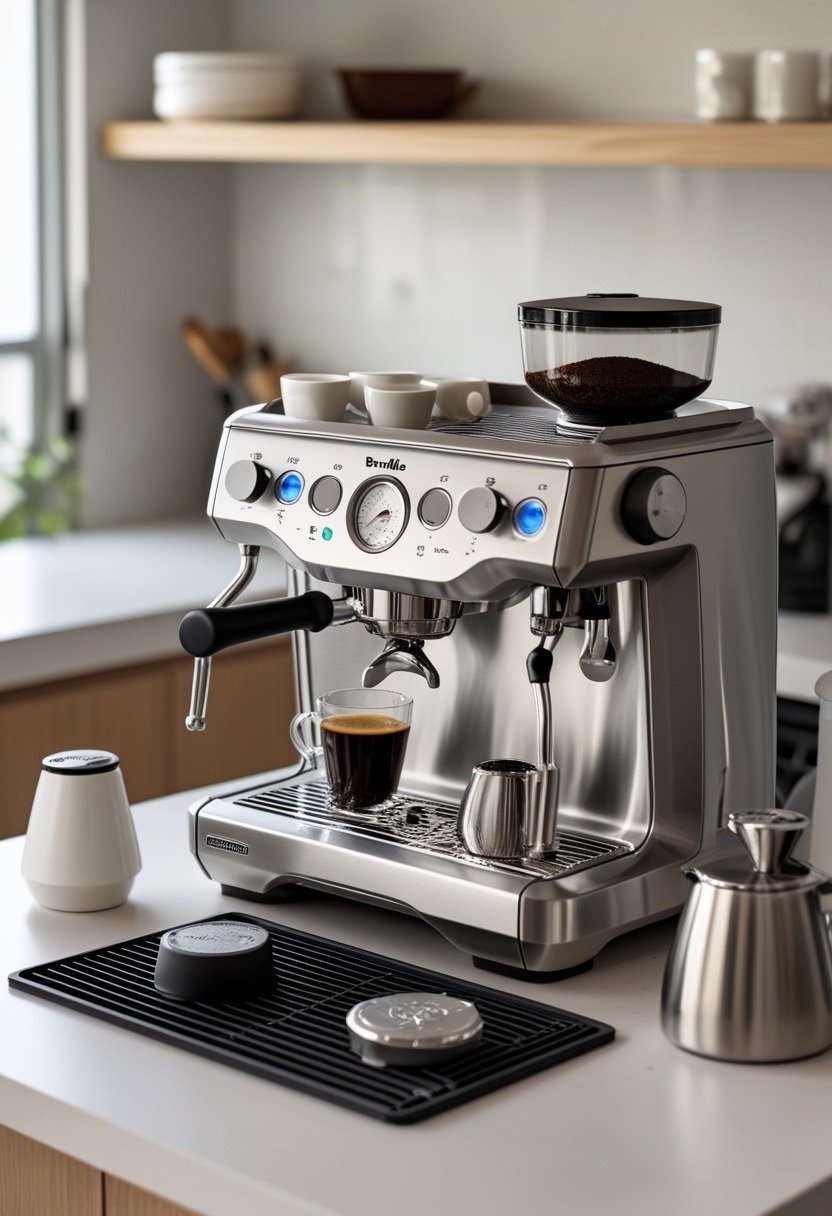
I keep a Breville Barista Express on my counter for fast, quality shots at home. Its built-in grinder and 15-bar pump let me control dose and extraction without extra gear.
I pair it with a rubber tamping mat to protect the counter and stabilize the portafilter while I tamp. The mat makes tamping cleaner and keeps my workspace tidy.
My setup fits small spaces and supports consistent shots. It’s simple to use and easy to clean.
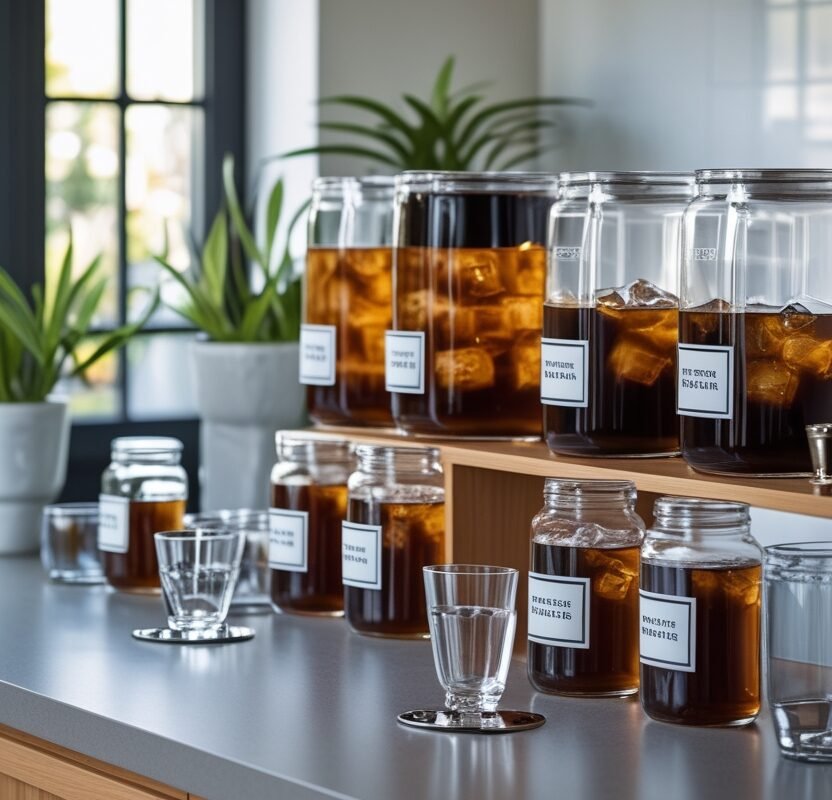
3) Cold-brew corner with Toddy Cold Brew System and labeled glass dispensers
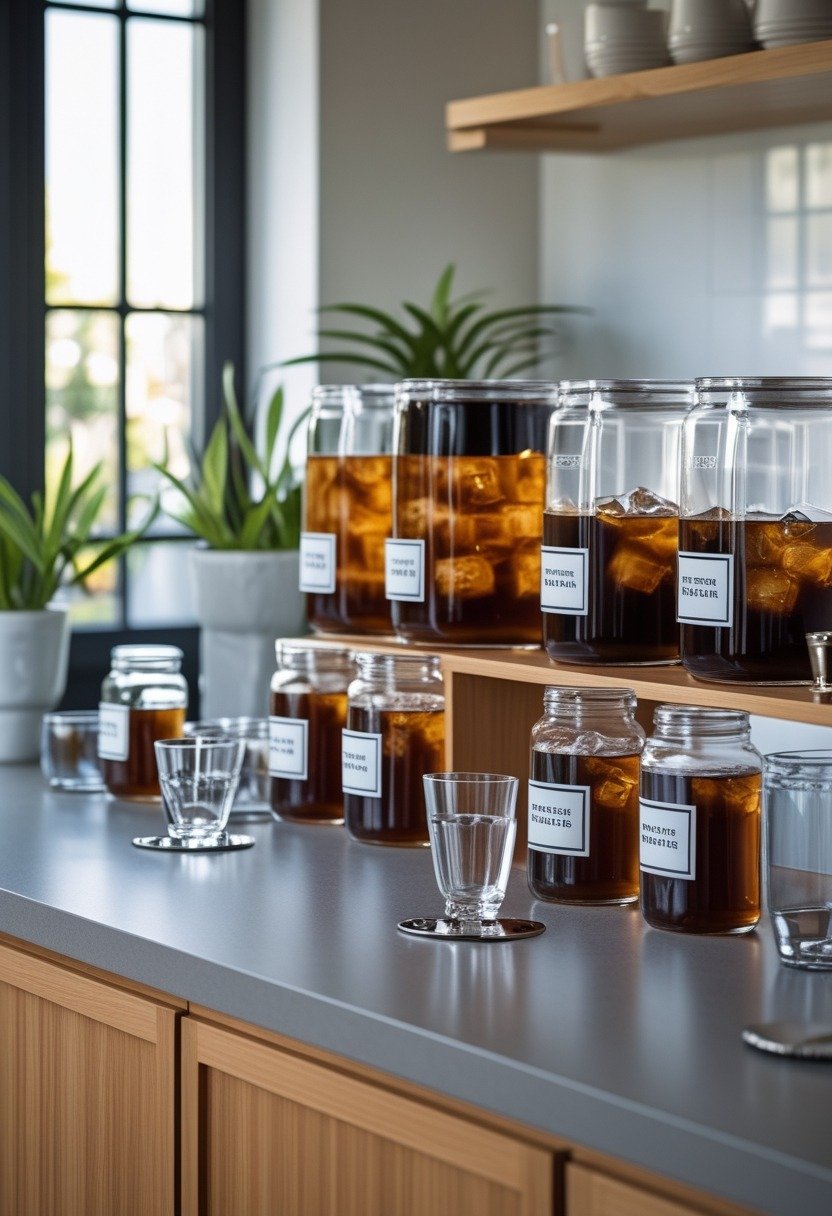
I set the Toddy Cold Brew System on a small tray to keep my counter tidy and catch drips. The system makes cold concentrate that stores well, so I brew once and use it for days.
I pair the Toddy with labeled glass dispensers for milk, simple syrup, and flavored syrups. Clear labels help guests serve themselves and keep the station looking neat and intentional.
4) French-press nook featuring Bodum Chambord and stacked ceramic mugs
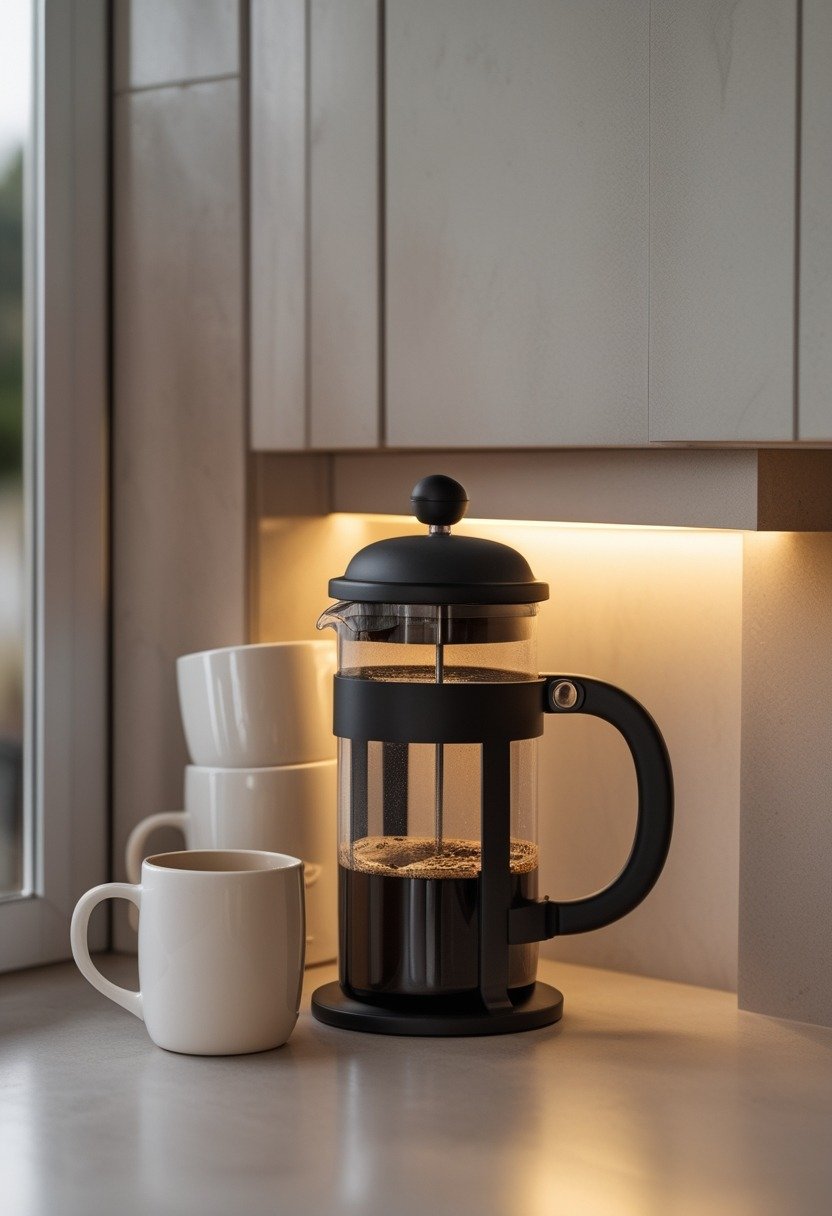
I place a Bodum Chambord on the counter as the focal point for my French-press nook. Its classic look pairs well with a small tray to catch drips and keep grounds contained.
I stack ceramic mugs nearby for easy reach and a tidy look. This setup fits a narrow strip of counter without crowding my workspace.
I keep a small jar of coarse grounds and a simple scale next to the press. That way I can brew consistent cups fast.
5) Pour-over display using Chemex and a wooden pour-over stand

I place a Chemex on a wooden pour-over stand to make a simple, elegant counter display. The stand lifts the carafe and keeps brewing tools tidy so my workspace looks neat.
I store filters and a wooden stir stick nearby for quick access. The natural wood pairs well with glass and adds a warm, minimal touch to my coffee bar.
6) Built-in under-cabinet shelf with Acaia Pearl scale and gooseneck kettle
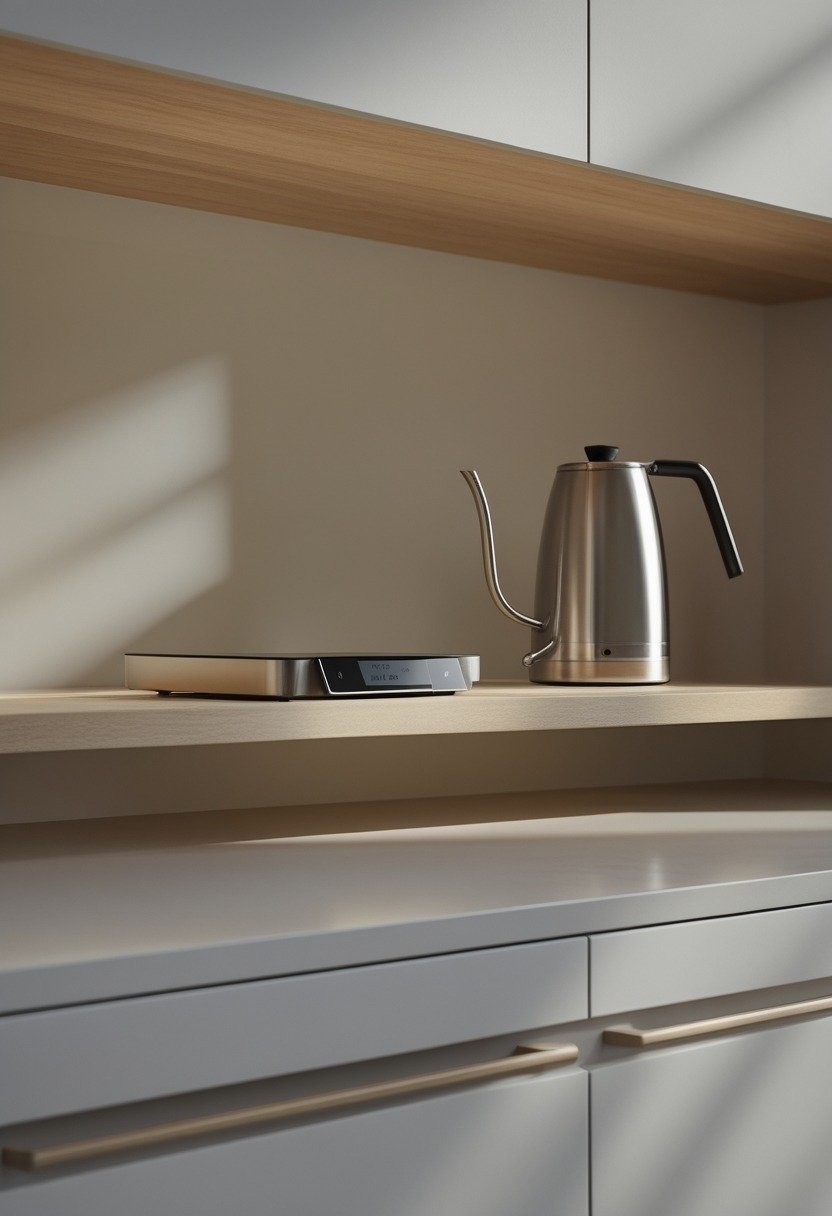
I mount a slim under-cabinet shelf to free counter space and keep tools within reach.
The Acaia Pearl sits on the shelf for precise pours and real-time flow data, which helps me repeat recipes.
A compact gooseneck kettle lives beside the scale for steady water control.
This layout keeps my counter tidy and my workflow smooth.
7) Minimalist matte-black theme with Fellow Stagg EKG kettle and matte canisters
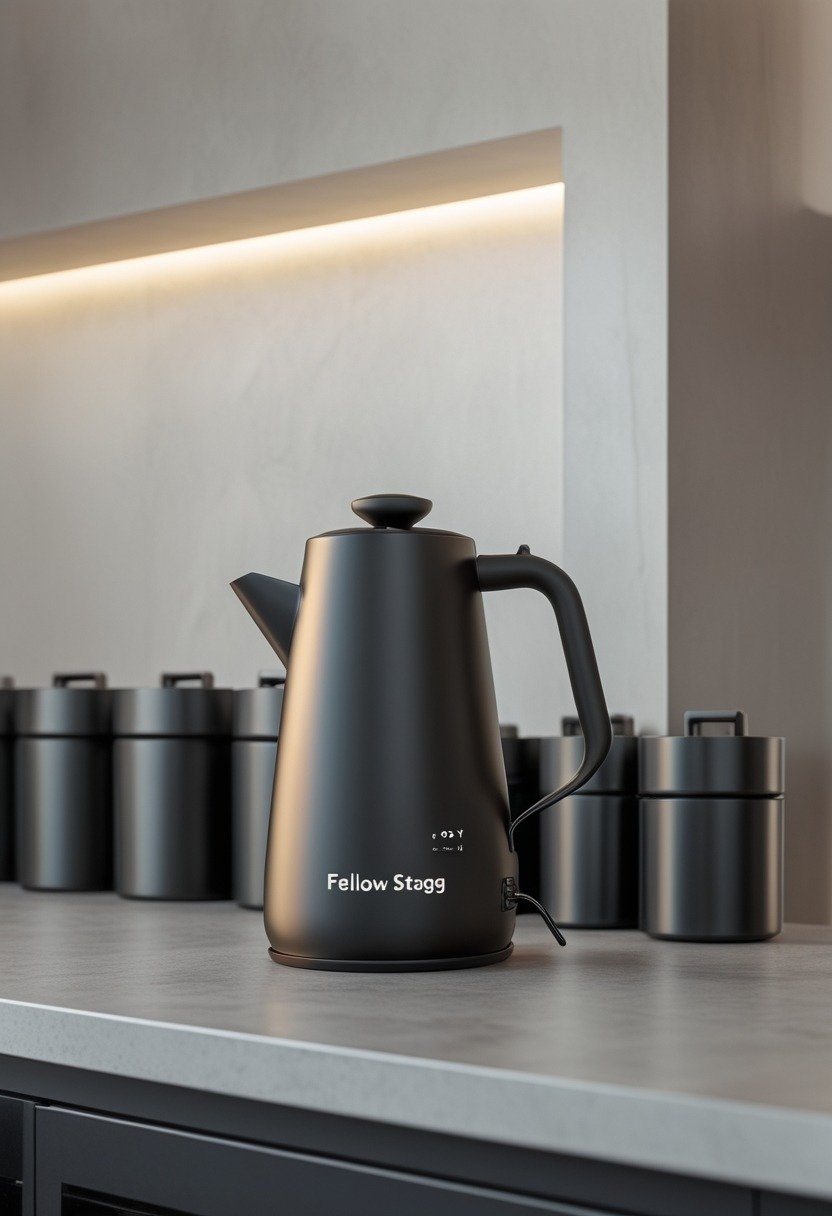
I like a clean, modern counter that feels calm and ordered. A matte-black Fellow Stagg EKG kettle adds a precise, sculpted look and keeps the area visually simple.
I pair the kettle with matte canisters for coffee, sugar, and filters. The matching finishes cut clutter and make my coffee bar feel intentional and tidy.
I leave only essentials on display: the kettle, canisters, a spoon, and a small tray. This keeps the space useful without looking crowded.
8) Rustic tray vignette with vintage scoop, glass jar beans, and Hario V60
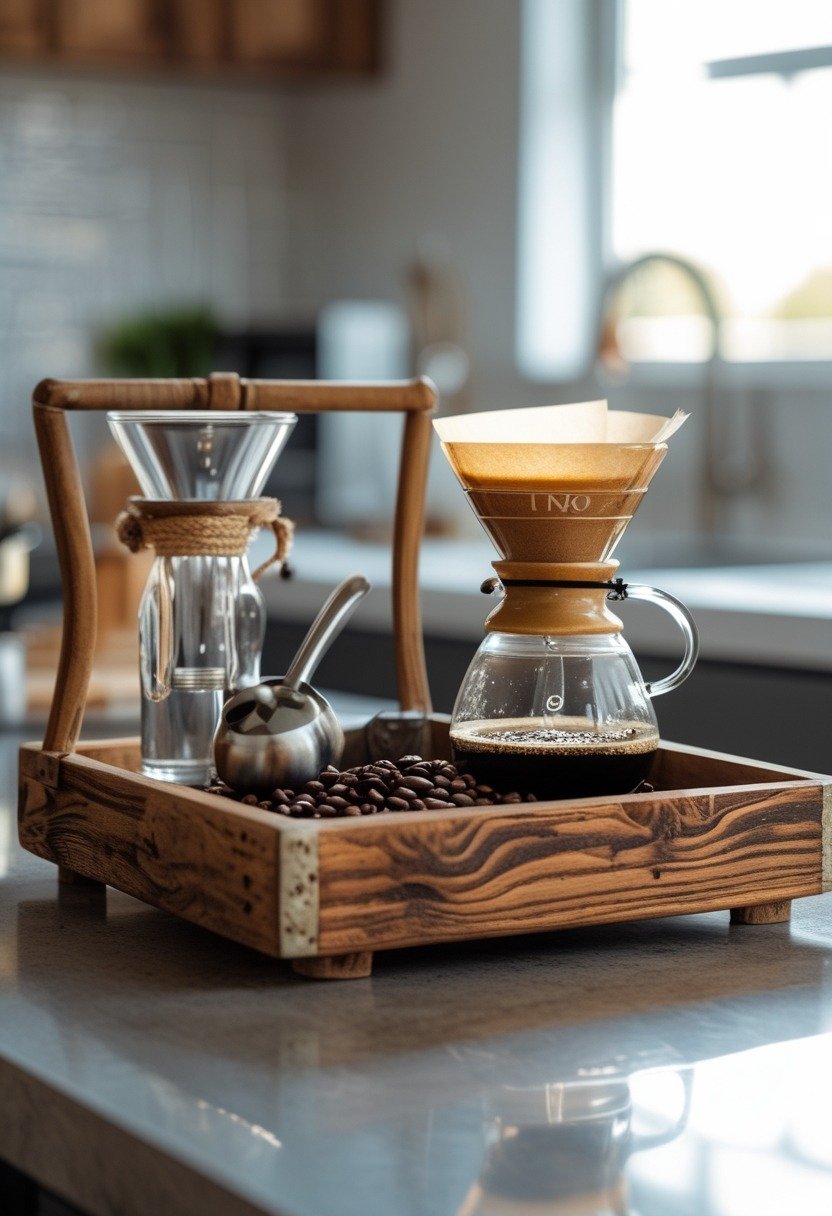
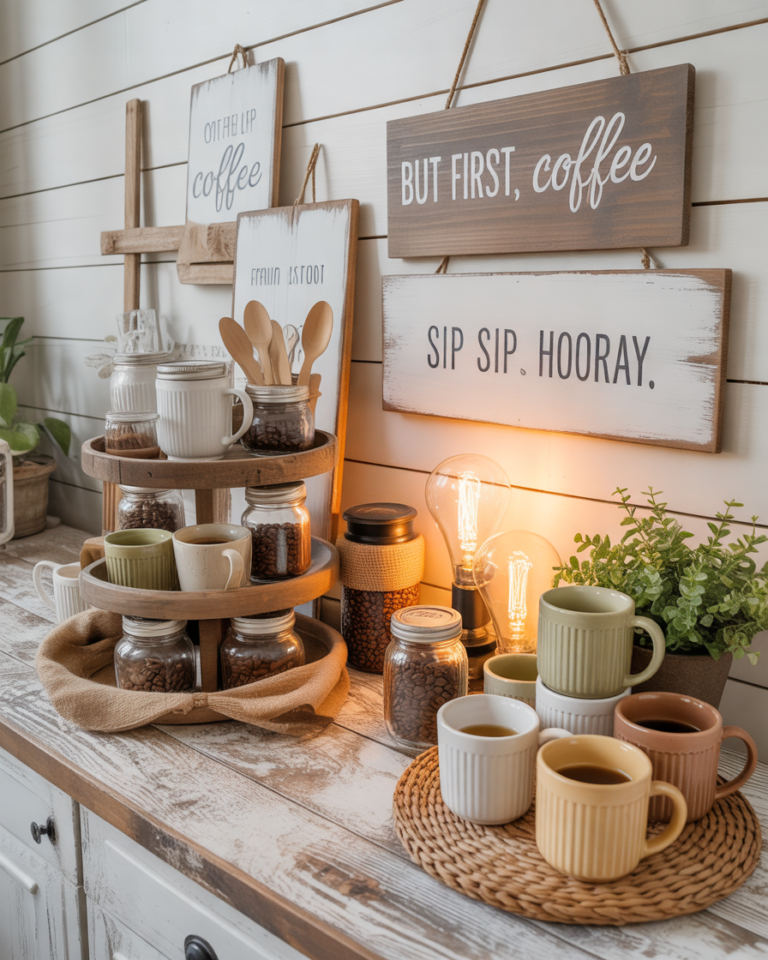
I place a weathered wooden tray on my counter as the base for a simple coffee vignette. A metal vintage scoop leans against a clear glass jar of beans so I can smell freshness and grab what I need.
The Hario V60 sits ready for brewing, keeping the look functional and clean. I arrange everything for easy access and a warm, farmhouse feel that still works for daily use.
9) Coffee-and-tea hybrid station with dual kettles and a Stirling tea tin rack
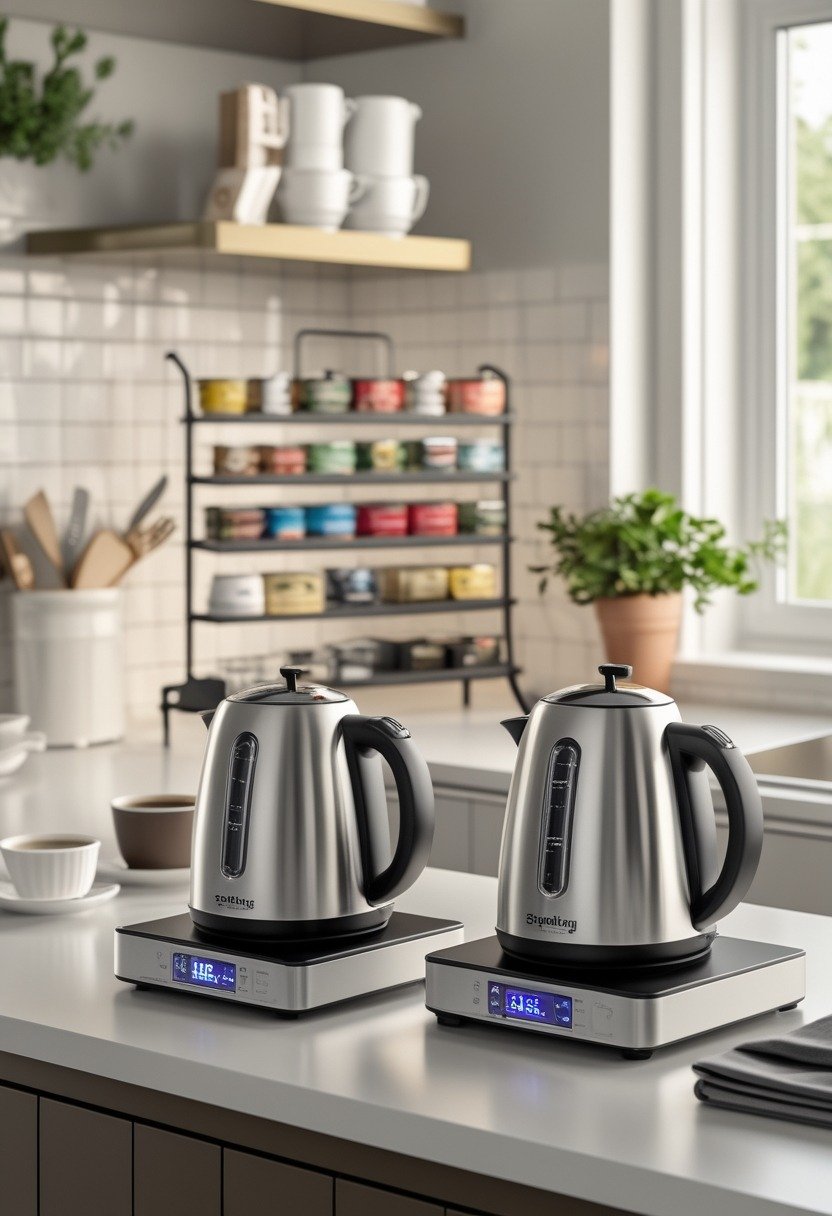
I set up two kettles so I can heat water for tea and coffee at different temperatures. This keeps flavors true and speeds up morning prep.
I place a Stirling-style tea tin rack nearby to store loose leaves and bags. It keeps the counter tidy and makes tea choices easy to see.
I add a small tray for spoons, filters, and sugar so everything stays organized. The layout saves space and feels calm during busy mornings.
10) Mini latte art bar with electric milk frother (Bodum Latteo) and milk pitchers
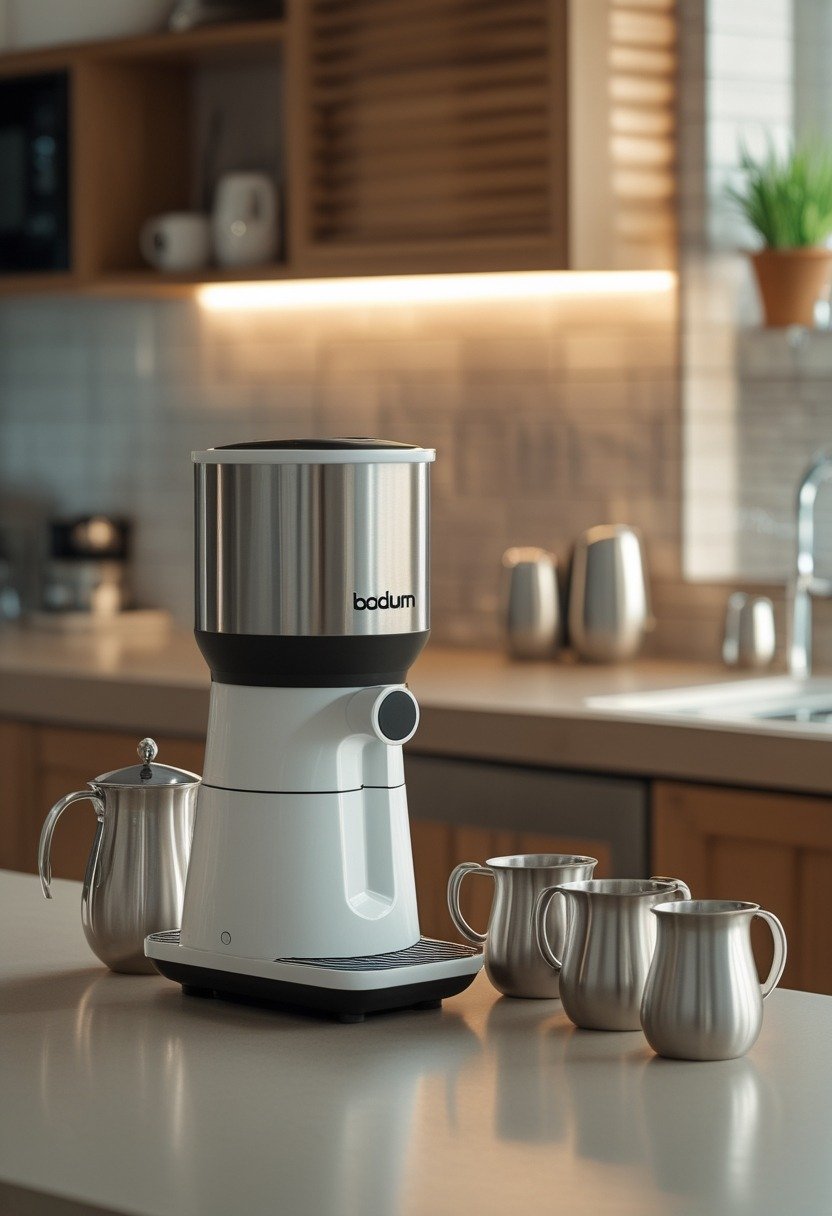
I set up a small station with a Bodum Latteo electric frother and two stainless steel milk pitchers.
The frother heats and textures milk quickly, so I can make microfoam for simple designs.
I keep pitchers in 8–12 oz sizes for control while pouring.
A small tray holds a tamping mat, thermometers, and a few latte art stencils.
11) Pull-out drawer bar with labeled single-origin beans and an airtight coffee canister set
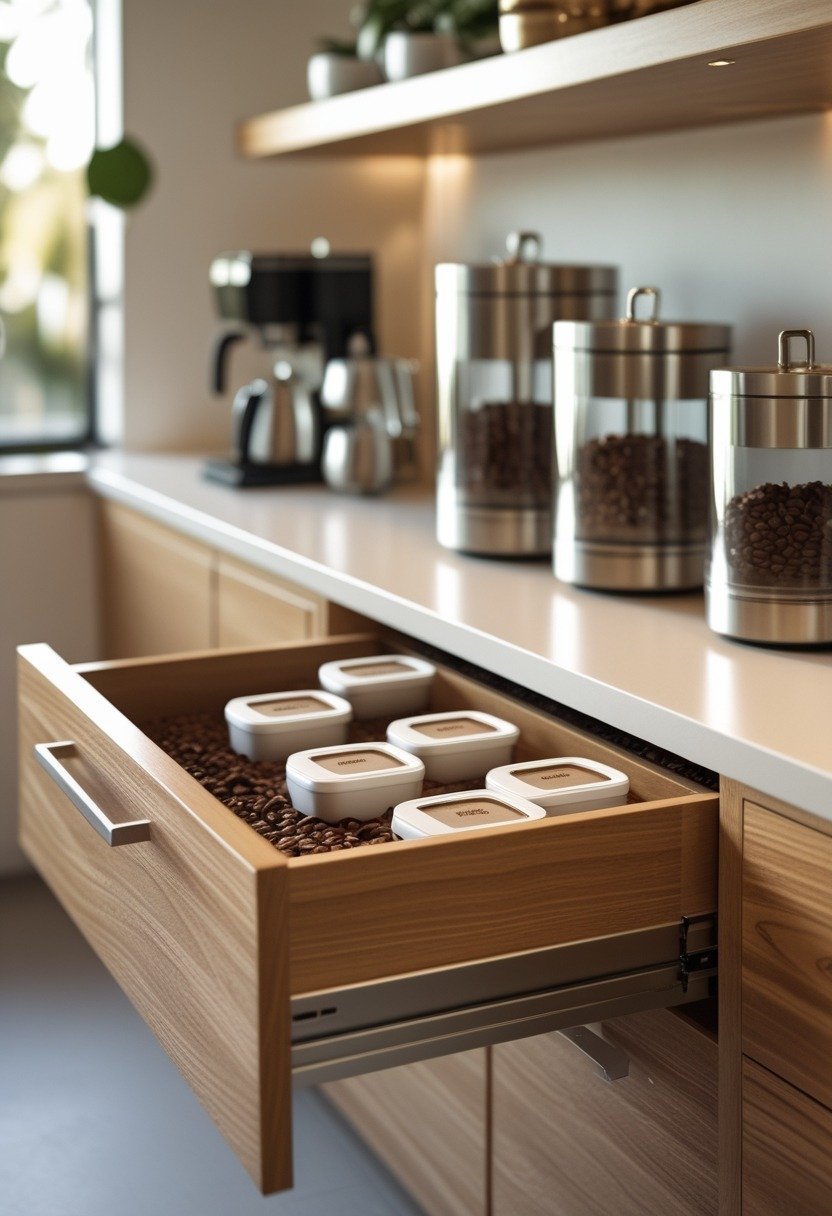
I installed a pull-out drawer to keep my beans organized and close at hand.
I label each tin by origin so I can grab the right flavor fast.
I use an airtight canister set inside the drawer to preserve freshness.
The seals cut air exposure and help my beans taste the way I expect.
12) Backlit niche with floating shelves, decorative saucers, and a Smeg espresso machine
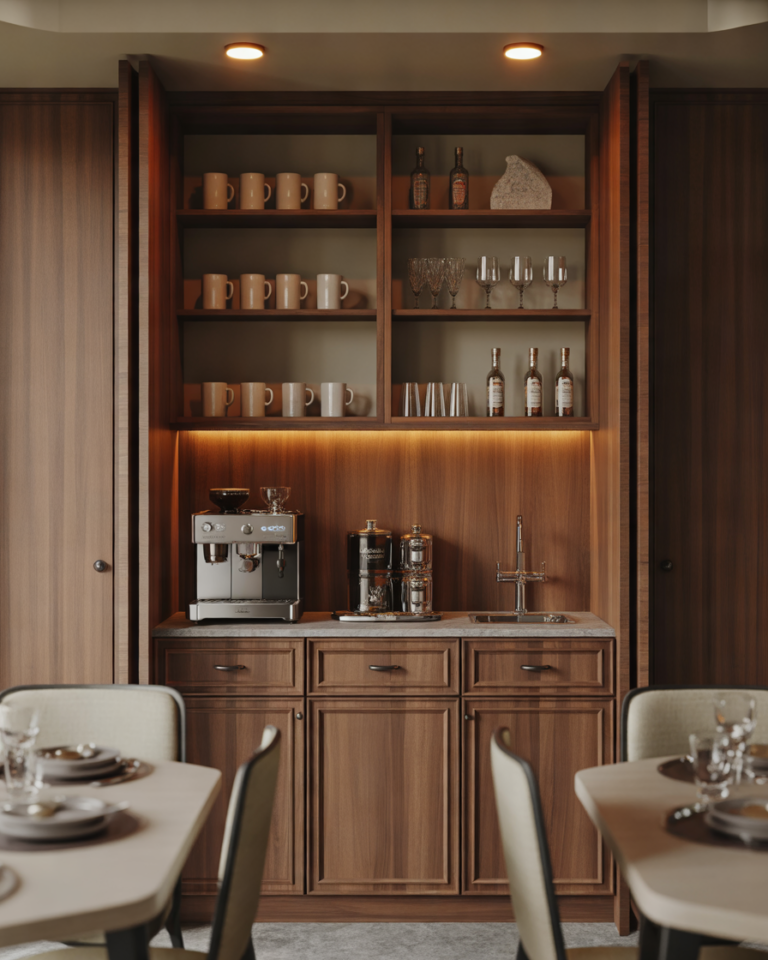
I highlight a shallow backlit niche to add soft, even light that makes the counter feel intentional and calm.
I install floating shelves to keep mugs and jars handy while keeping the counter clear for the Smeg espresso machine.
I display decorative saucers and small plates to add color and texture without clutter.
I place the Smeg espresso machine as the focal point so brewing feels like a small ritual.
Optimizing Counter Space for Coffee Bars
I focus on using the exact counter area available and placing only the tools I use daily. I aim to keep the setup compact, reachable, and easy to clean.
Assessing Available Space
I measure the full counter length and note how much remains after stove, sink, and prep zones. A 24–36 inch stretch is usually enough for a machine, grinder, and a small drip tray. I mark 2–3 inches of clearance at edges for spills and cable routing.
I look vertically next. If I only have 12–18 inches of horizontal space, I use a single shelf above the counter for mugs and beans. For wider counters, I plan a 2-tier setup: machine on the counter, grinder on a small tray or cutting board to keep crumbs contained.
I check nearby outlets and water access. If no outlet sits within 2–4 feet, I add a safe power strip with surge protection. If water is needed, I position the bar near the sink or keep a refillable pitcher handy.
Selecting the Ideal Location
I choose a spot that won’t block kitchen flow or food prep. I avoid placing the coffee zone next to the main cooking area to reduce noise and heat interference. I pick a corner or a short run of countertop that residents walk past daily.
I place the machine on a stable, level patch and keep the grinder beside it for short reach. I reserve a small drawer or basket under the counter for filters, spare pods, and cleaning supplies. That reduces clutter and keeps essentials within arm’s reach.
I also consider lighting and visibility. I add a focused under-shelf light or a small lamp to make tamping and dosing easier. Good light helps me avoid spills and keeps the area tidy.
Styling and Decor Tips
I focus on small, practical choices that make the coffee bar useful and attractive. I pick items that fit the counter space, match the kitchen style, and make daily coffee prep faster.
Incorporating Personal Touches
I add items that show my taste without crowding the counter. A favorite mug collection on a narrow shelf or a small tray to corral syrup bottles and spoons brings personality and keeps things tidy. I choose one or two photos or framed prints that won’t get splattered; I lean toward matte frames that are easy to wipe clean.
I use a mix of textures to make the space feel warm: a wooden cutting board as a base, a small ceramic jar for stirrers, and a woven coaster for the espresso tamper. Plants work well—one small succulent or an air plant adds life and needs little care. Lighting matters, so I add a focused task light or a clip-on LED under the cabinet for clearer work and a cozier look.
Blending with Kitchen Aesthetics
I match materials and colors to the rest of the kitchen so the coffee bar looks intentional. If my counters are marble, I pick brass or matte-black accessories for contrast. For white kitchens, I use warm wood and soft gray accents to avoid a sterile feel.
I keep a consistent scale: small appliances stay in single-file along the counter, mugs hang on a compact rack, and a narrow tray groups smaller items. Function guides design—if I grind beans fresh, I leave space for a grinder and knock box. If space is tight, I mount hooks under a shelf and use a slim cart nearby for extra supplies.