
You can turn a plain closet opening into a stylish, practical feature that fits your bedroom and lifestyle. Whether you want softer lines, better light control, or a quick DIY update, curtains give you flexible options that save space and add personality. They let you hide clutter, control light, and change the room’s look without replacing doors.
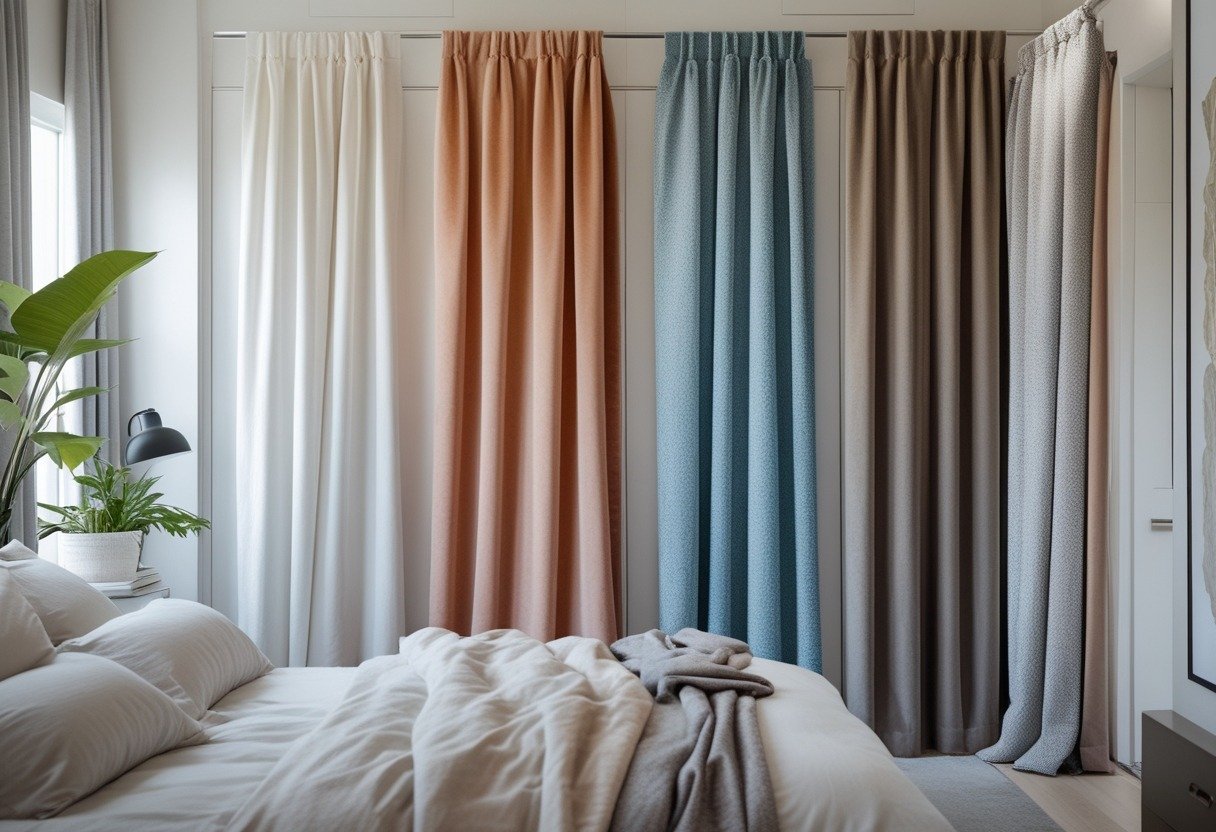
This guide walks you through 12 curtains for closet doors bedroom ideas—from airy sheers and blackout panels to textured macramé and sliding-track solutions—so you can pick the right style, material, and hardware for your space. You’ll learn options that suit different needs, like privacy, ease of access, and easy care, so you can make a confident choice for your closet opening.
1) Floor-to-ceiling linen panels in dove gray hung on a ceiling-mounted rod
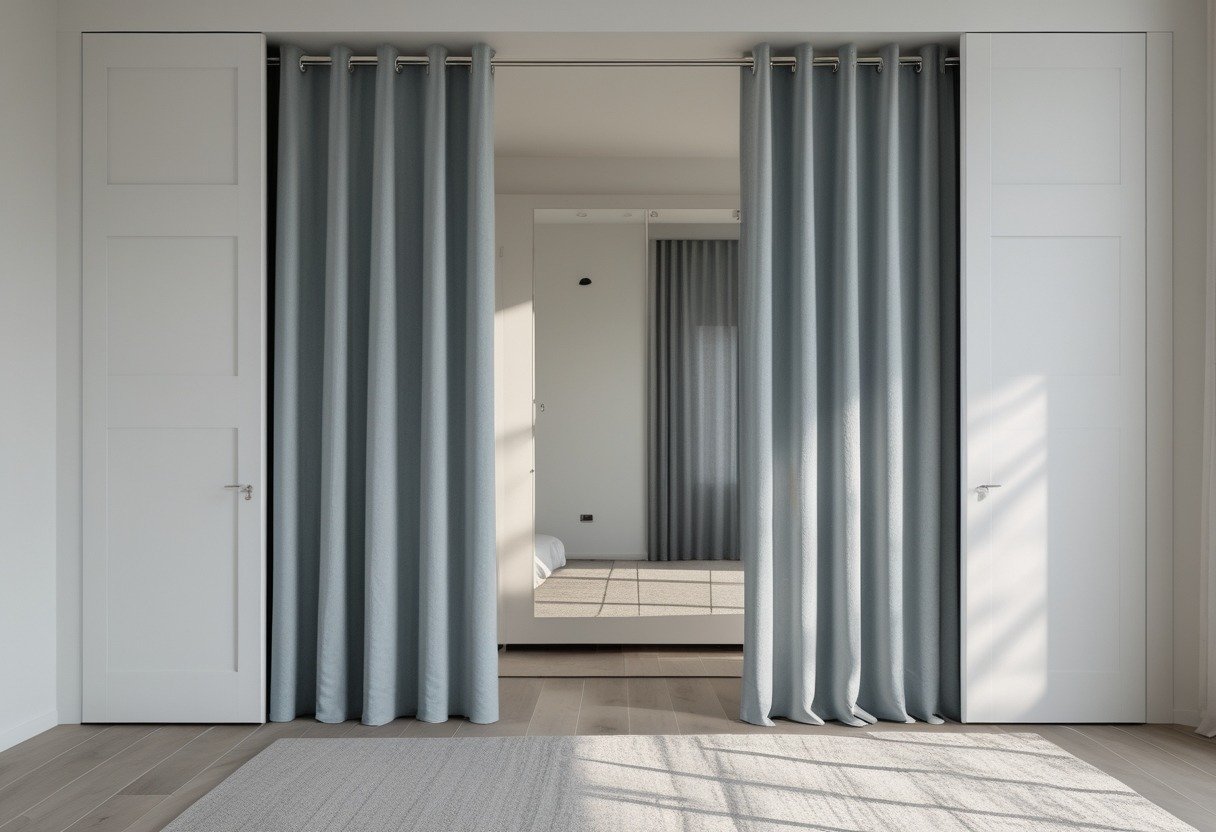
You can use dove gray linen panels to cover closet doors and make the room feel taller. Ceiling-mounted rods let the fabric hang straight from top to bottom, hiding tracks or door frames.
Linen filters light while keeping a soft, natural look. Choose panels long enough to just touch the floor for a clean, tailored finish.
2) Sheer white voile curtains for a light, airy closet opening
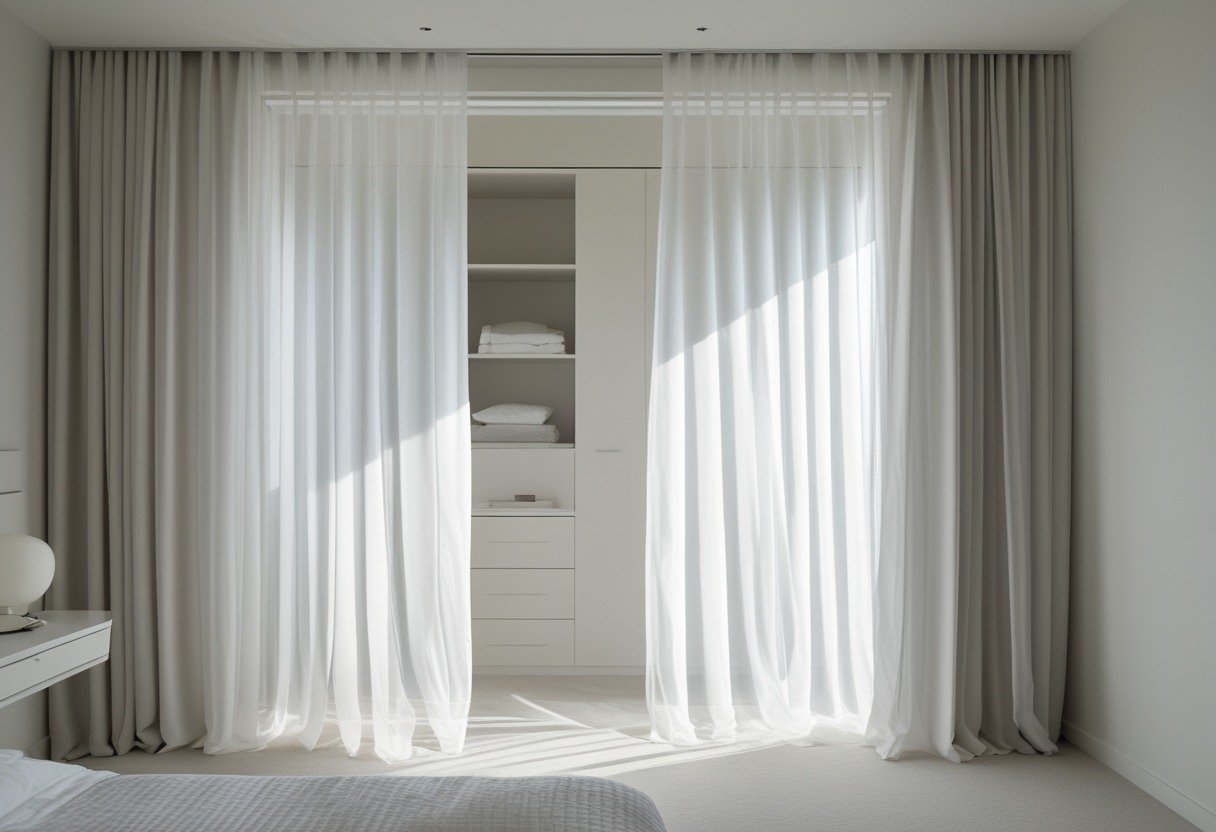
You can swap a solid door for sheer white voile curtains to keep the room feeling open and bright. They filter sunlight while giving modest coverage, so your closet looks neat without blocking light.
Choose panels with rod pockets or grommets for easy installation and smooth movement. Voile works well layered behind heavier drapes if you want more privacy sometimes.
3) Patterned velvet drapes in jewel tones for a luxe bedroom closet
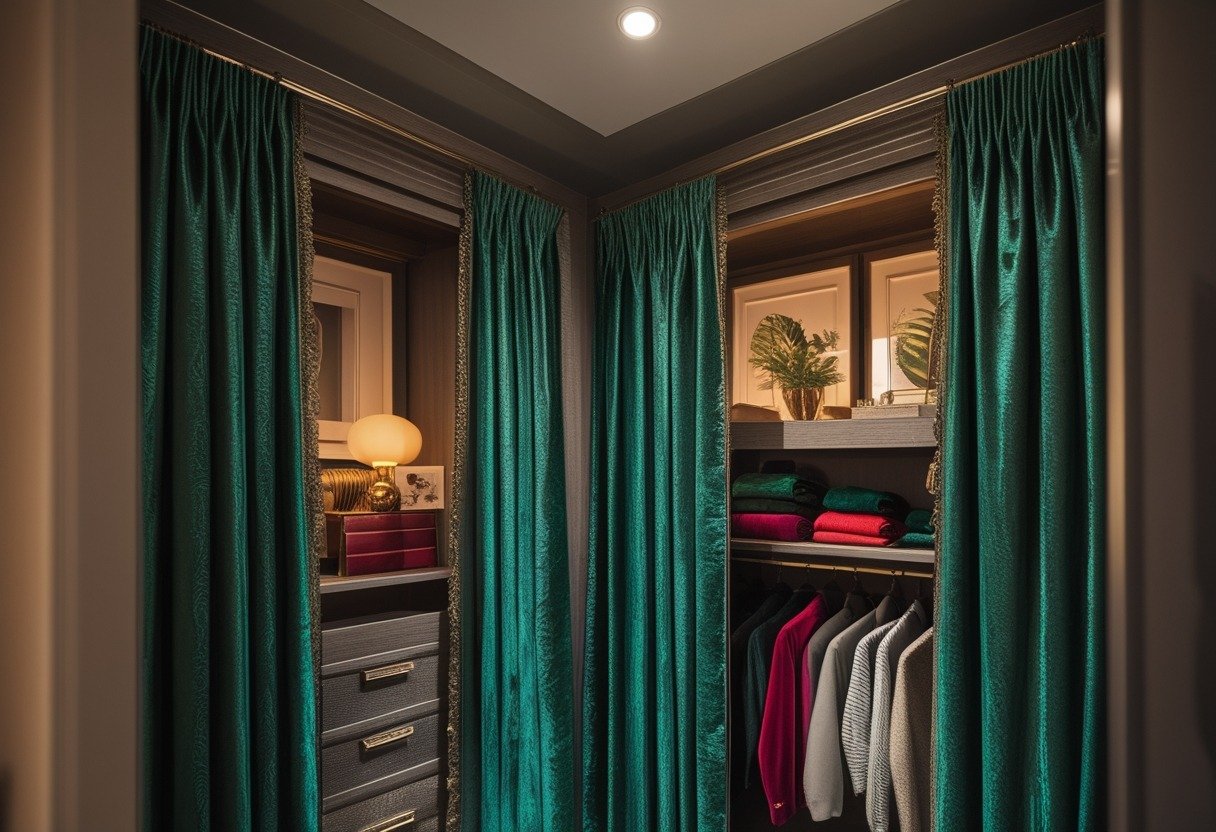
Choose patterned velvet drapes in deep jewel tones to add richness and texture to your closet doors. The heavy fabric blocks light and softens sound, making your bedroom feel calmer.
Pick patterns that match your room’s style—floral for classic looks, geometric for modern spaces. Pair with brass or black hardware to highlight the color and bring a refined, cohesive finish to your closet area.
4) Macramé fringe curtain in natural cotton for boho closets
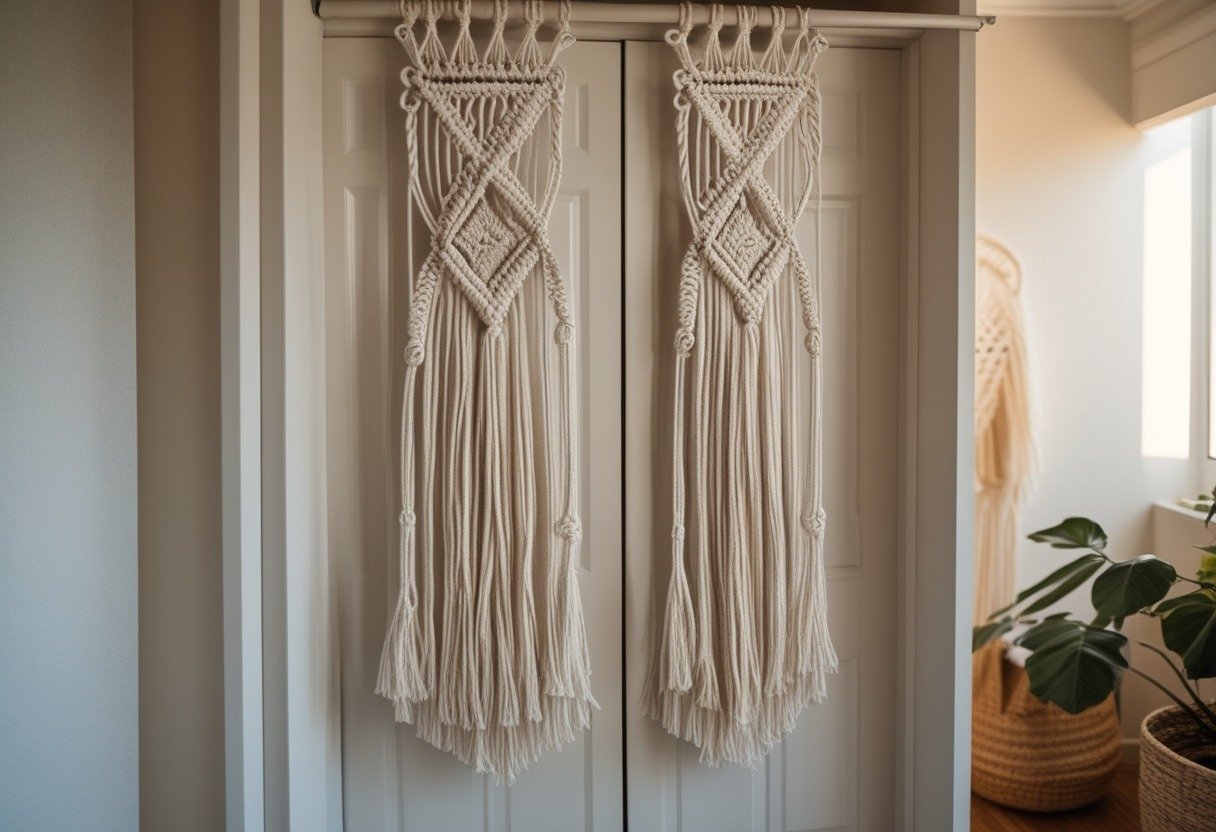
You can add a macramé fringe curtain to give your closet a soft, boho look. Natural cotton feels lightweight and lets air circulate while still offering privacy.
The hand-knotted texture adds visual interest and works well with wood, rattan, or white trim. Choose a length that just brushes the floor for a relaxed, crafted feel.
5) Striped cotton café curtains for half-height closet coverage
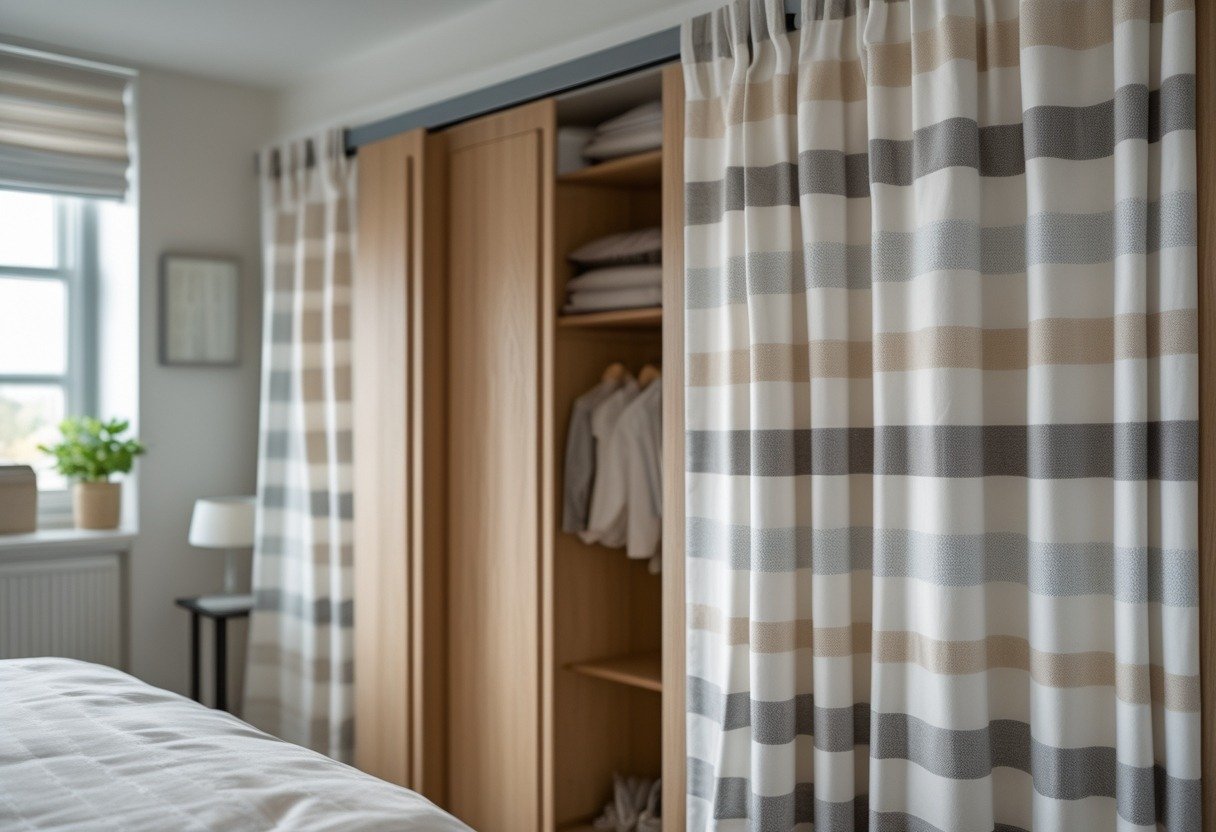
You can use striped cotton café curtains to cover the lower half of closet doors while leaving the top open for easy access. The stripes add a clean, tailored look that fits casual and modern bedrooms.
Cotton breathes and drapes well, so your closet stays ventilated and neat. Choose neutral or subtle stripes to match bedding and wall colors without overwhelming the room.
6) Roman-style fabric panels with magnetic closures for easy access
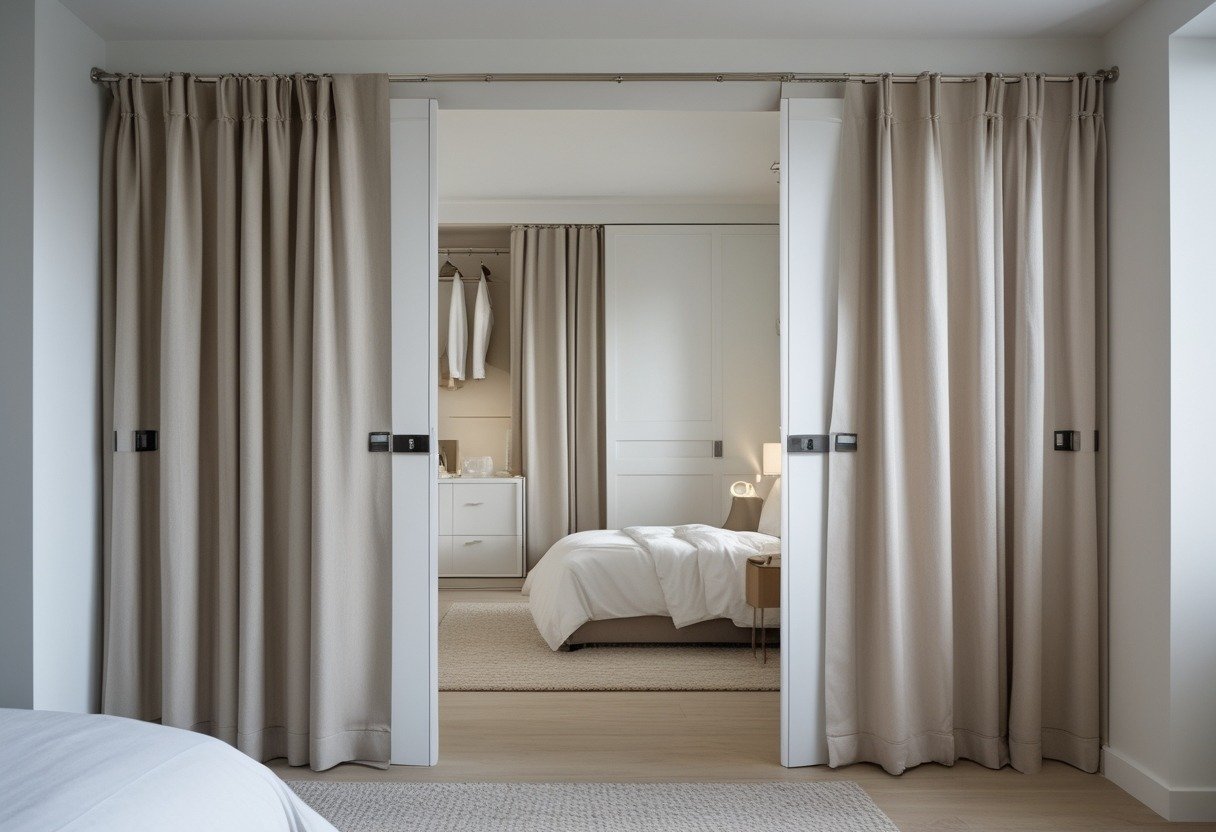
Choose Roman-style panels if you want a neat, tailored look that still feels soft. You can open them quickly because magnets hold the folds in place and let the panels snap back.
Pick blackout or light-filtering fabrics to match your needs and control light. Installation is usually no-drill and works well on metal doors or tracks, so you get easy access without hardware or holes.
7) Blackout thermal curtains in charcoal for bedroom light control
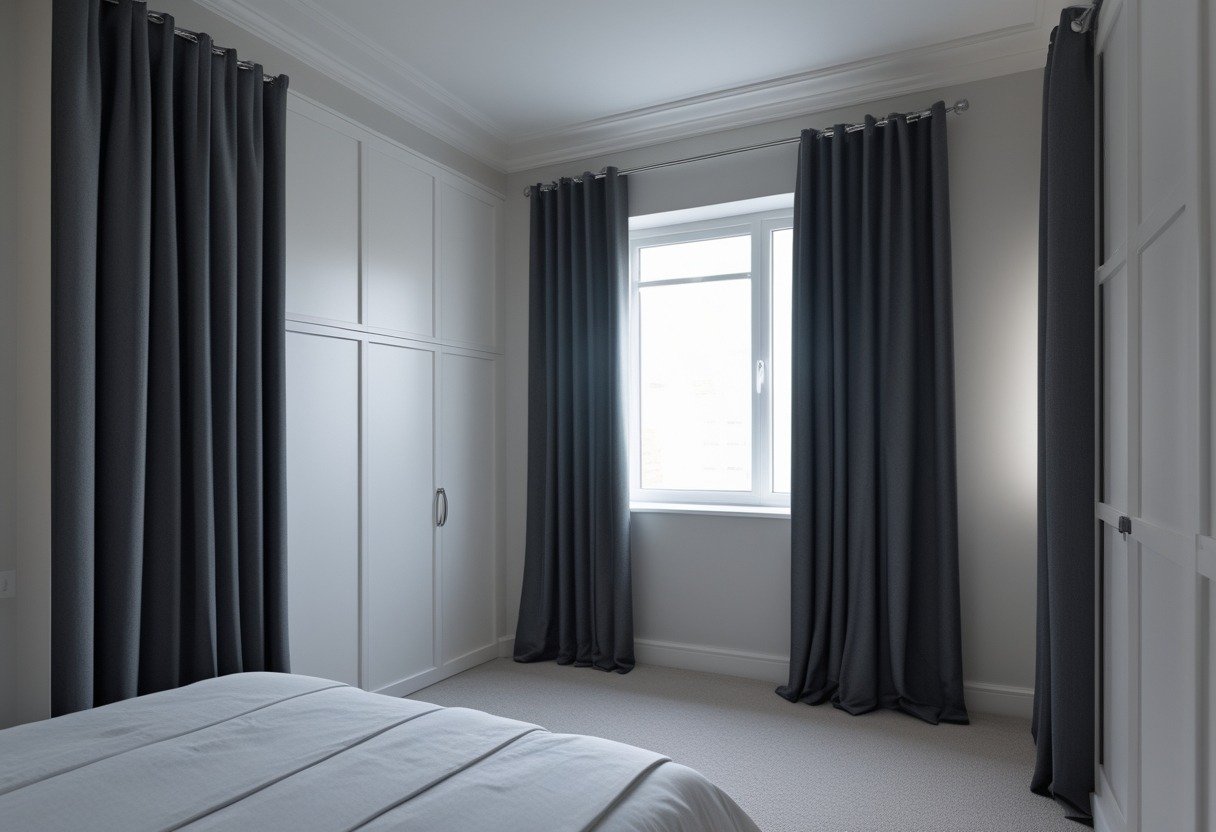
Choose charcoal blackout thermal curtains to keep light and heat out of your bedroom. They block sunlight and help stabilize room temperature.
Pick grommet or pinch-pleat styles for easy sliding and a tidy look. The dark neutral color hides stains and matches many decor schemes.
Install a rod slightly wider than the closet opening so curtains fully cover the doorway. Use heavy fabric for better sound reduction and privacy.
8) Bamboo roll-up shade used as a closet door alternative
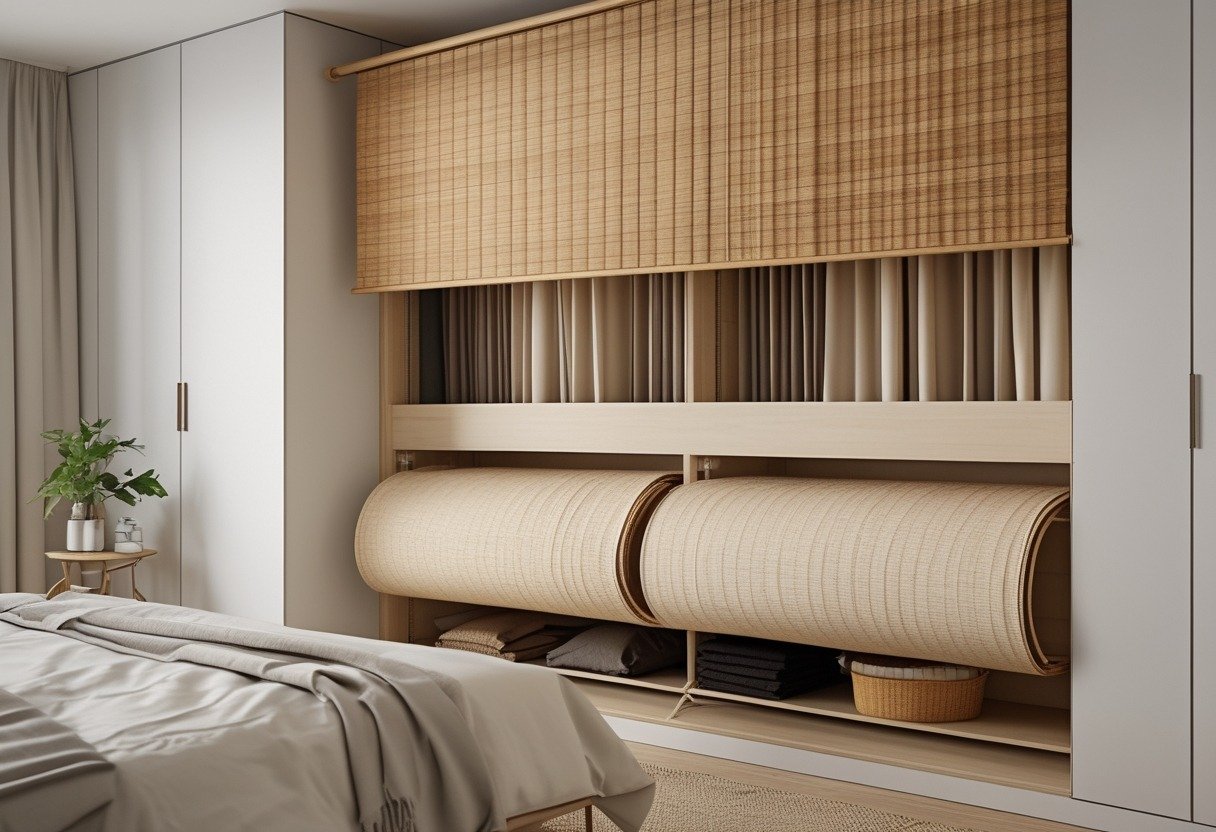
You can install a bamboo roll-up shade to cover a closet opening for a clean, natural look. It rolls up to give full access and rolls down to hide clutter.
Bamboo shades come in light-filtering and blackout options, so you can control privacy and light. They add texture without taking up floor space and work well in small rooms.
9) Vintage floral quilting as a DIY patchwork curtain
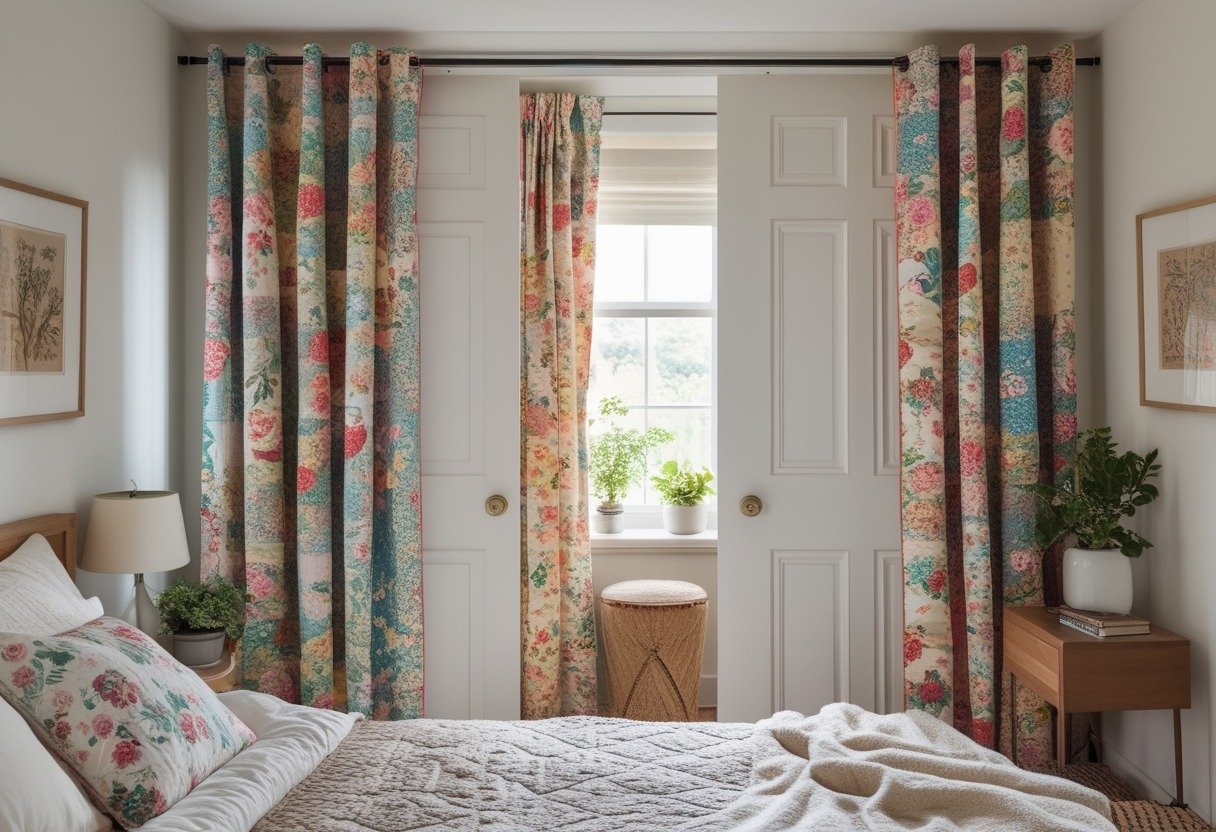
You can turn old floral quilts or fabric scraps into a charming patchwork curtain for your closet door.
Mix small floral prints with solid panels to keep the look balanced and not too busy.
Sew squares together into a panel that fits your door, or use no-sew fabric glue for a quicker option.
Add a rod pocket or tabs at the top so your curtain slides easily and hangs straight.
The result brings soft color and a vintage vibe to your bedroom without much cost.
It also lets you reuse fabrics and make a custom piece that matches your decor.
10) Grommet-top heavy cotton panels in navy for modern minimalists
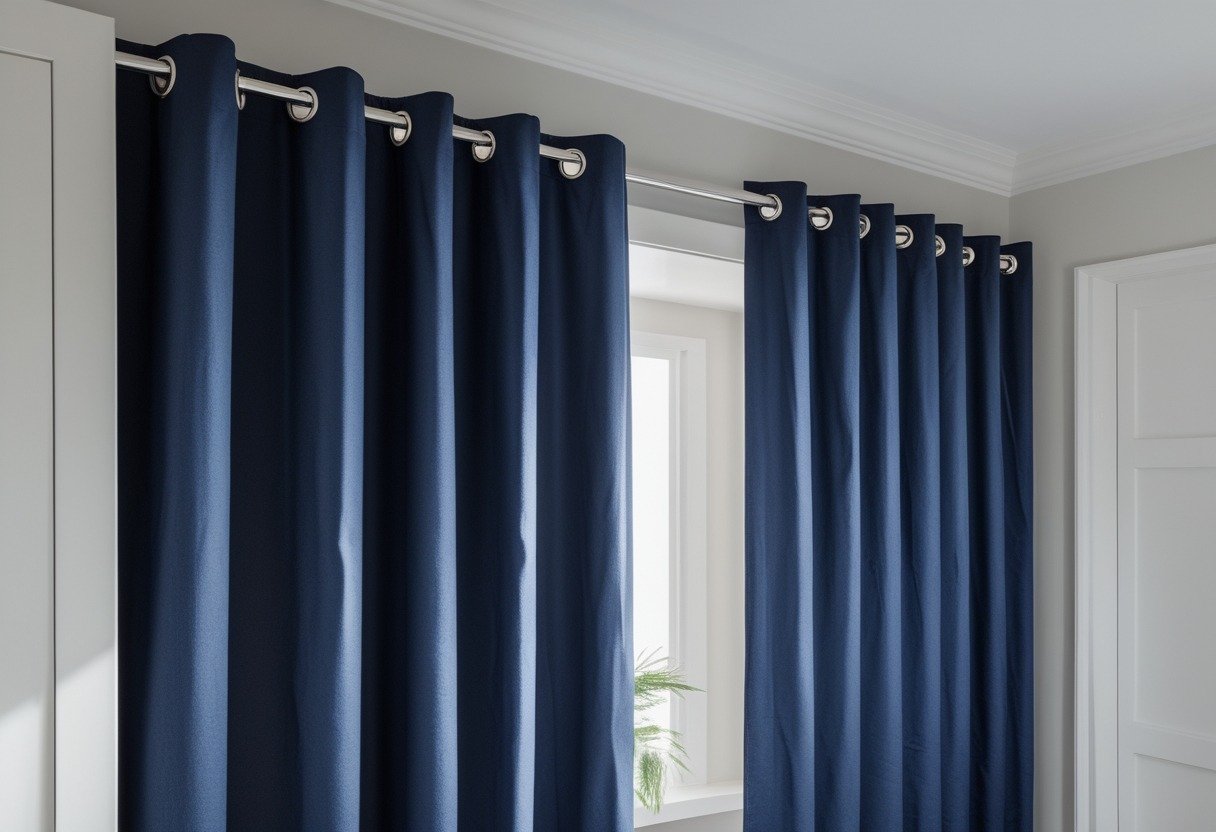
Choose navy heavy cotton panels with grommet tops for a clean, modern look. They hang in even folds and slide easily on the rod.
The dark navy adds depth without busy patterns, so your closet stays calm and neat. Cotton feels durable and masks light while still looking tailored.
Install a simple metal rod and keep hardware minimal to match the style. These panels work well in bedrooms where you want a sleek, low-clutter finish.
11) Layered curtains: sheer inner panel with opaque outer drape
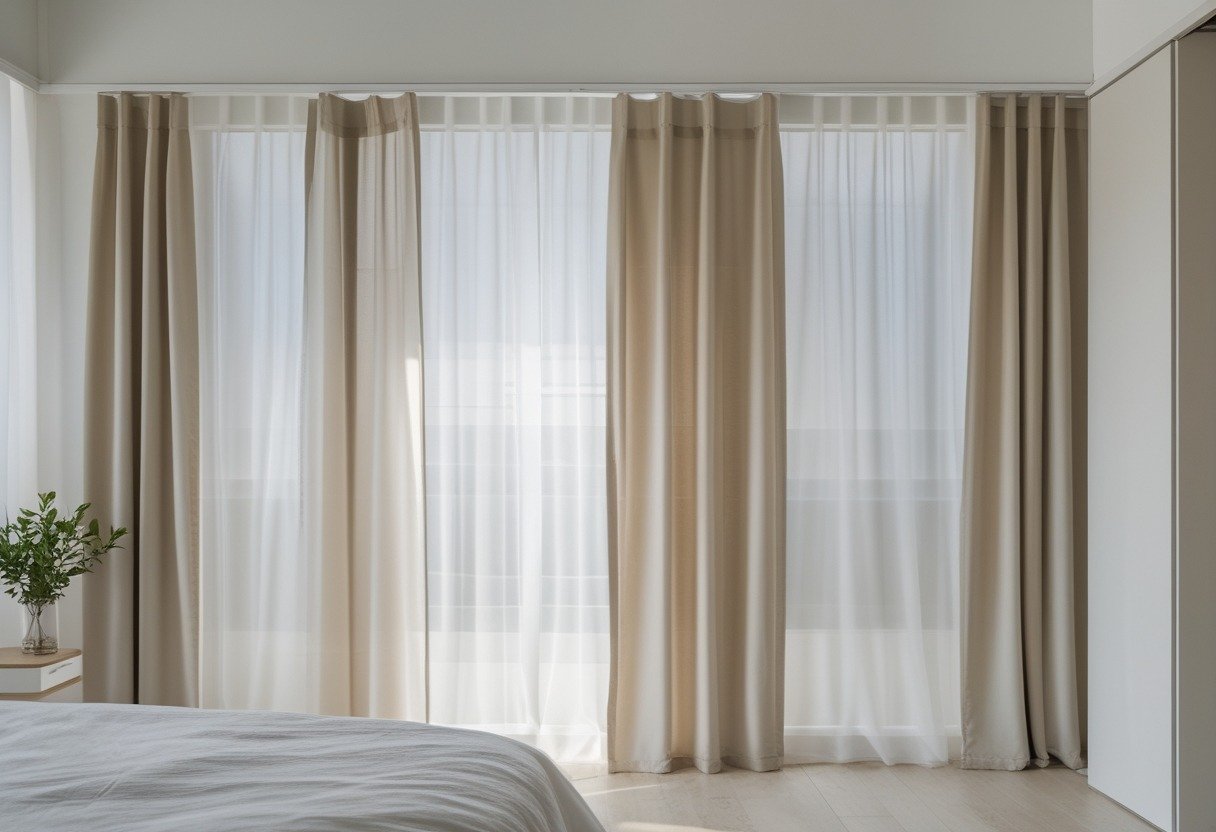
You can mix a sheer inner panel with an opaque outer drape to control light and privacy. The sheer softens daylight while the outer drape blocks light when you need darkness.
Hang the layers on a double rod or use a single rod with clip rings for easy movement. This setup gives a neat, finished look and works with many styles and colors.
12) Sliding track pocket curtains for wide closet openings
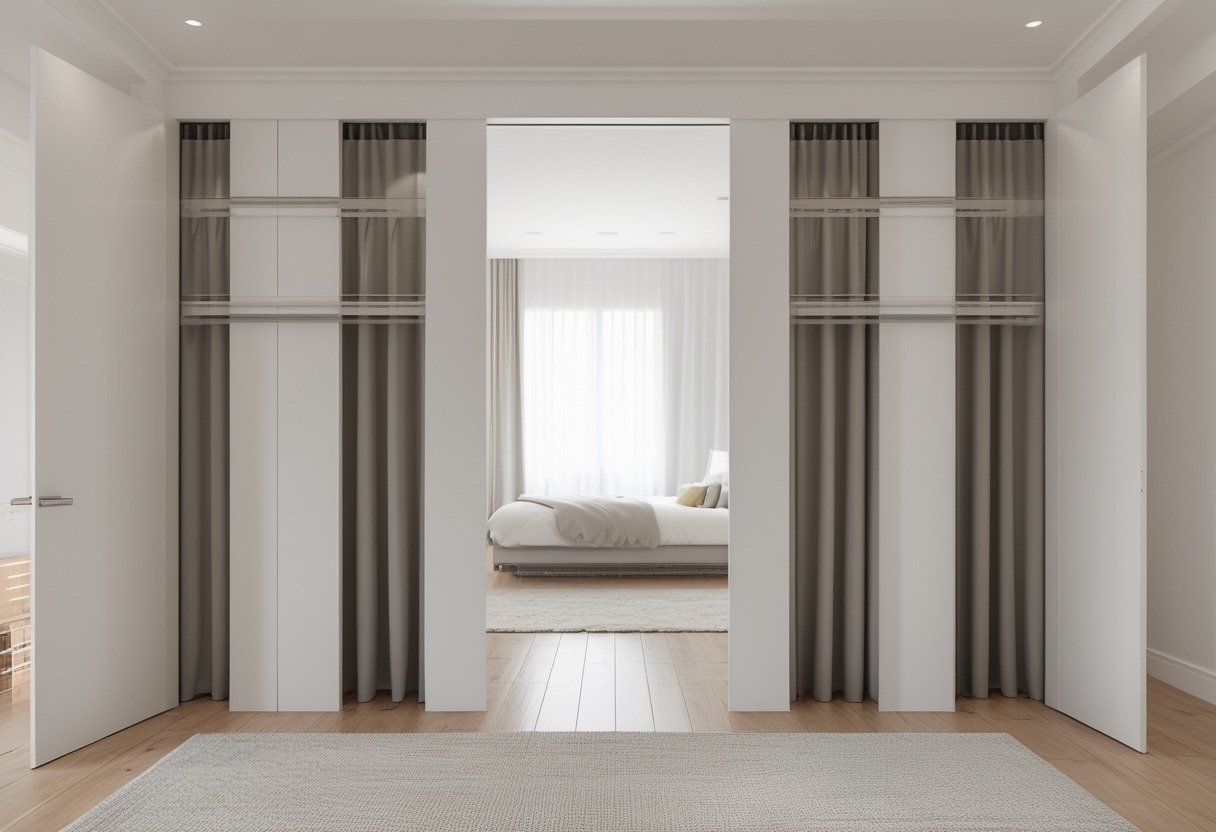
Sliding track pocket curtains glide along a hidden rail to cover wide closets without bulky doors. You can stack panels into a recessed pocket so the fabric disappears when open.
Choose sturdy tracks and smooth gliders to avoid snagging. Heavy or blackout fabrics give a clean look and hide clutter effectively.
Benefits of Replacing Traditional Closet Doors
Switching to curtains can free up floor space, speed up access to items, and change the look of your bedroom without a big remodel. You can pick fabrics, colors, and hanging systems to match storage needs and your room style.
Maximizing Space and Accessibility
Curtains remove the swing or track limits that doors create. If your room is small or furniture sits close to the closet, curtains let you use the full width without needing clearance for opening doors. That gives you easier access to every shelf and hanging rod at once.
Choose a ceiling-mounted rod or a double track so curtains slide fully open and stack neatly to one or both sides. Light, wrinkle-resistant fabrics let you see inside without pushing fabric into the space. For airtight or dust concerns, add a weighted hem or magnetic strip to keep the curtain in place.
Think about installing multiple panels on separate tracks for partial openings. This setup helps you reach specific sections without exposing the whole closet, and it speeds daily routines like choosing outfits.
Enhancing Room Aesthetics
Curtains let you add color, pattern, or texture without replacing built-in elements. You can match bedding, curtains, or accent walls by choosing fabric in the same tone or pattern. Sheer fabrics soften light and create a breezy look, while heavier fabrics give a tailored, hotel-like feel.
Use bold prints to make the closet a focal point, or neutral tones to blend it into the wall and make the room feel larger. Consider custom lengths that just skim the floor for a clean, finished appearance. Decorative hardware—like brushed metal rods or rings—adds a subtle design upgrade without major expense.
Layering is another option: pair a blackout panel behind a sheer layer for privacy and light control. That approach gives you both style and function.
Cost and Installation Advantages
Curtains are usually less expensive than replacing doors or buying new sliding or bi-fold systems. Basic rods and a ready-made panel can cost under $100, while custom panels or higher-end hardware remain cheaper than full door replacements in most cases.
Installation typically takes 30–60 minutes. You only need a drill, screws, and basic mounting hardware, or you can use tension rods for a no-drill option on many openings. Repairs are simple: swap a damaged panel or replace a rod for minimal cost.
If you rent, curtains avoid permanent changes that violate lease rules. For homeowners, the low labor and material costs make curtains a quick update that won’t require contractors or permits.
Curtain Materials and Maintenance
Choose a fabric that fits your room’s light, privacy, and durability needs. Think about how often you’ll wash the curtain, how much light you want to block, and whether the fabric will hold up to daily use.
Popular Fabric Choices
- Cotton: Lightweight and breathable. Cotton drapes easily and comes in many colors. It works well if you want a casual look and plan to wash curtains often.
- Linen: Has a textured, upscale look and lets some light through. Linen wrinkles more easily but stays airy. Use it where you want soft privacy without total darkness.
- Polyester / Blends: Durable and wrinkle-resistant. These fabrics resist fading and are good for high-traffic closets or rental rooms. They often cost less than natural fibers.
- Velvet: Thick and heavy for maximum privacy and sound dampening. Velvet suits a formal bedroom or if you need to keep light out. It requires more care and can be heavy on the rod.
- Sheer (Voile, Organza): Best for decorative or light-filtering curtains. Sheers won’t hide clutter but add softness and diffuse sunlight.
Match fabric weight to your rod and space. Use liners with light fabrics to add privacy or block light.
Cleaning and Care Tips
- Read the label first. Follow manufacturer instructions for washing temperature, machine vs. hand wash, and drying method.
- Machine-washable fabrics: Use a gentle cycle and cold water to prevent shrinkage. Fasten any hooks or rings and wash small items in a mesh bag.
- Dry-clean only fabrics: Take them to a cleaner. Velvet and some linens may warp or lose pile if washed at home.
- Spot cleaning: Use a mild detergent and a soft cloth for small stains. Test on an unseen corner first to check for color transfer.
- Ironing and steaming: Steam removes wrinkles from most fabrics without direct heat. Iron on the fabric’s low setting and use a pressing cloth for delicates.
- Maintenance routine: Shake or vacuum curtains monthly to remove dust. Rotate or swap curtains seasonally to reduce uneven fading.
- Hardware check: Ensure rods, rings, and brackets are rated for your curtain weight to avoid damage or sagging.
