
You can make a small bedroom feel calm, stylish, and highly functional without a big budget or major renovations. This article shows 13 simple small bedroom ideas for women, practical ideas that help you get more storage, more light, and more usable space so your room works for sleep, dressing, and a bit of work or lounging.
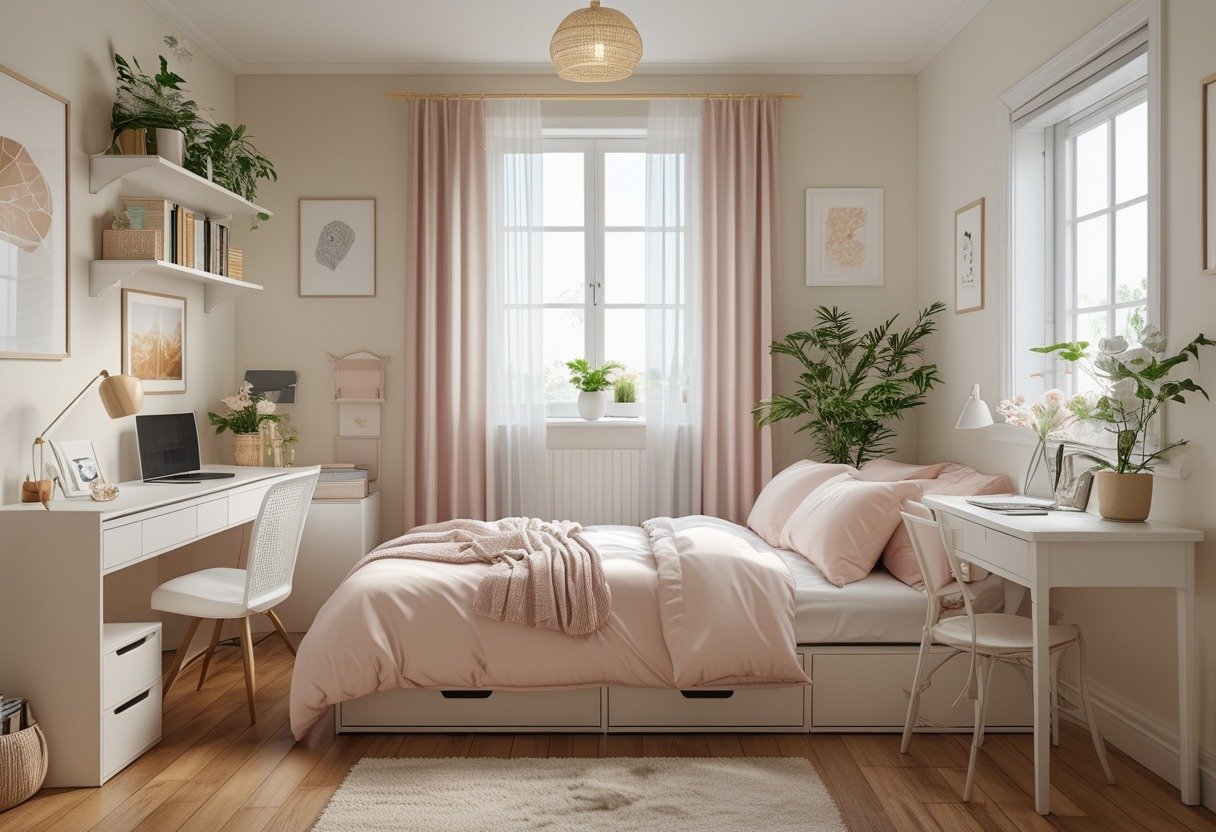
Expect easy-to-apply tips for furniture, storage, lighting, and color that make a compact room feel larger and more livable.
Follow along to learn creative ways to use vertical space, mirror tricks, multi-purpose pieces, and layout choices that fit a small footprint and your personal style.
1) Maximize vertical storage with floating shelves above the bed
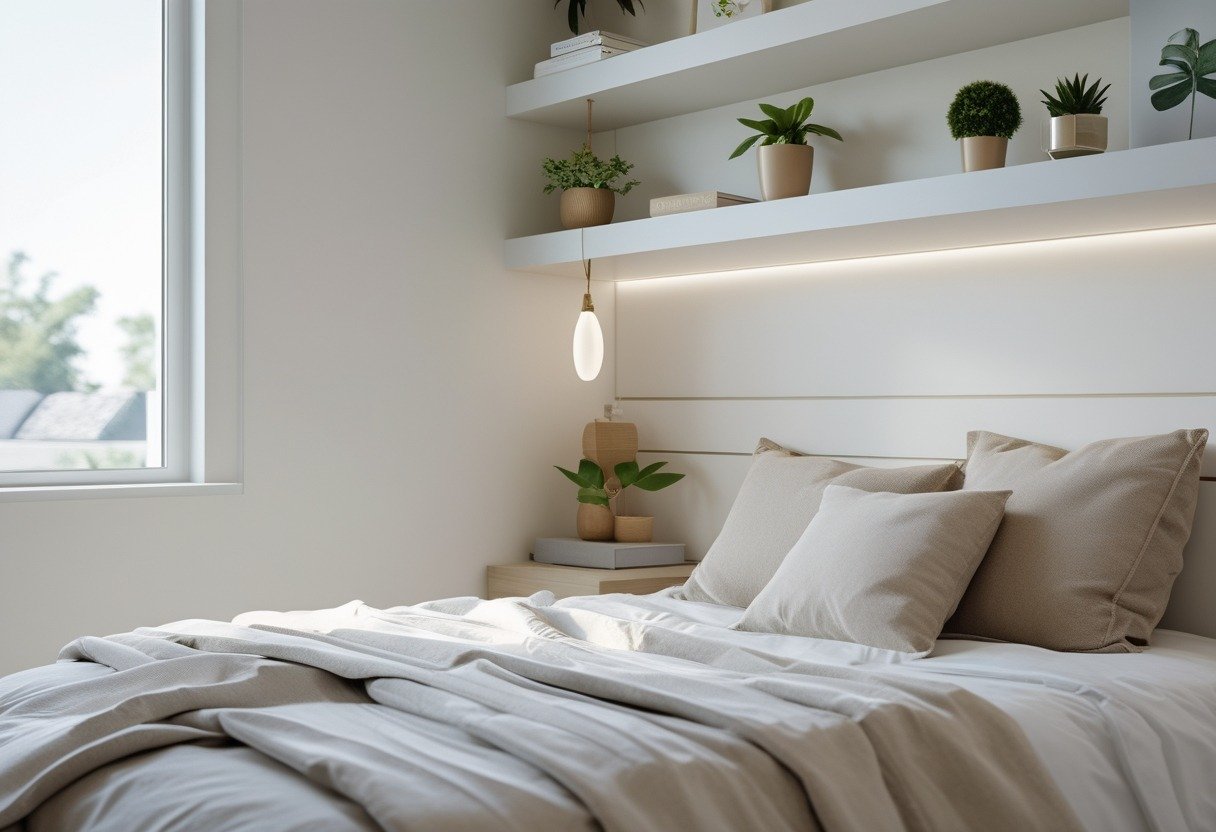
You can free up floor space by installing floating shelves above your bed.
They give you room for books, plants, and small decor without a bulky nightstand.
Choose shallow shelves to avoid bumping your head and keep items secure.
Use boxes or trays on the shelves to hide clutter and make cleaning easier.
2) Use a full-length mirror to visually double the room and boost light
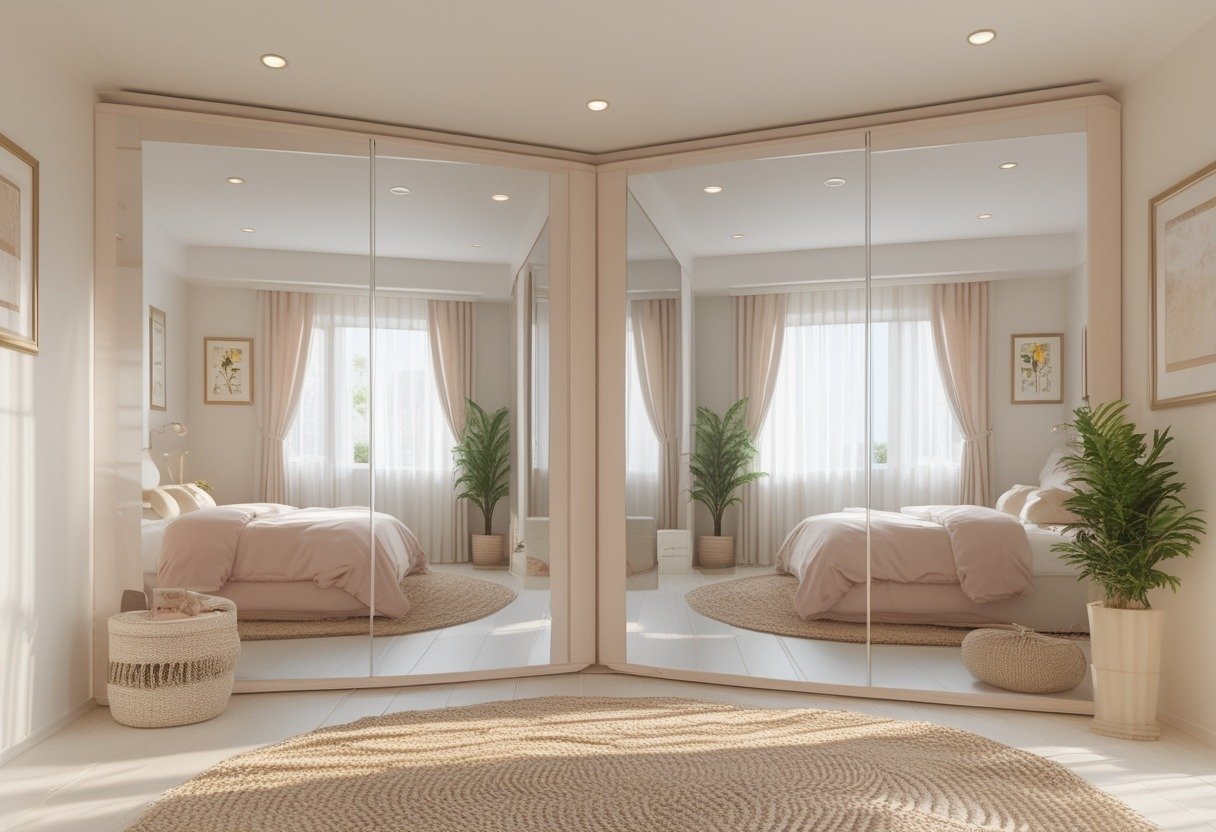
Place a full-length mirror opposite a window to catch and spread daytime light. This simple move brightens the room without extra lamps.
Lean a mirror against a wall or hang it vertically to add perceived height. You’ll see the room feel more open because the reflection extends sight lines.
Choose a slim frame or frameless mirror to avoid visual clutter. A mirror also helps when you dress, so it’s both practical and space-smart.
3) Choose a daybed with under-bed drawers for dual seating and storage

Pick a daybed that works as both a sofa and a bed to save space and add function. The built-in drawers give you easy storage for bedding, clothes, or shoes without extra furniture.
Look for sturdy slats and a solid frame so the bed feels stable for sitting and sleeping. Measure the room and drawer clearance before buying to ensure it fits and opens smoothly.
4) Install wall-mounted sconces to free up bedside tables
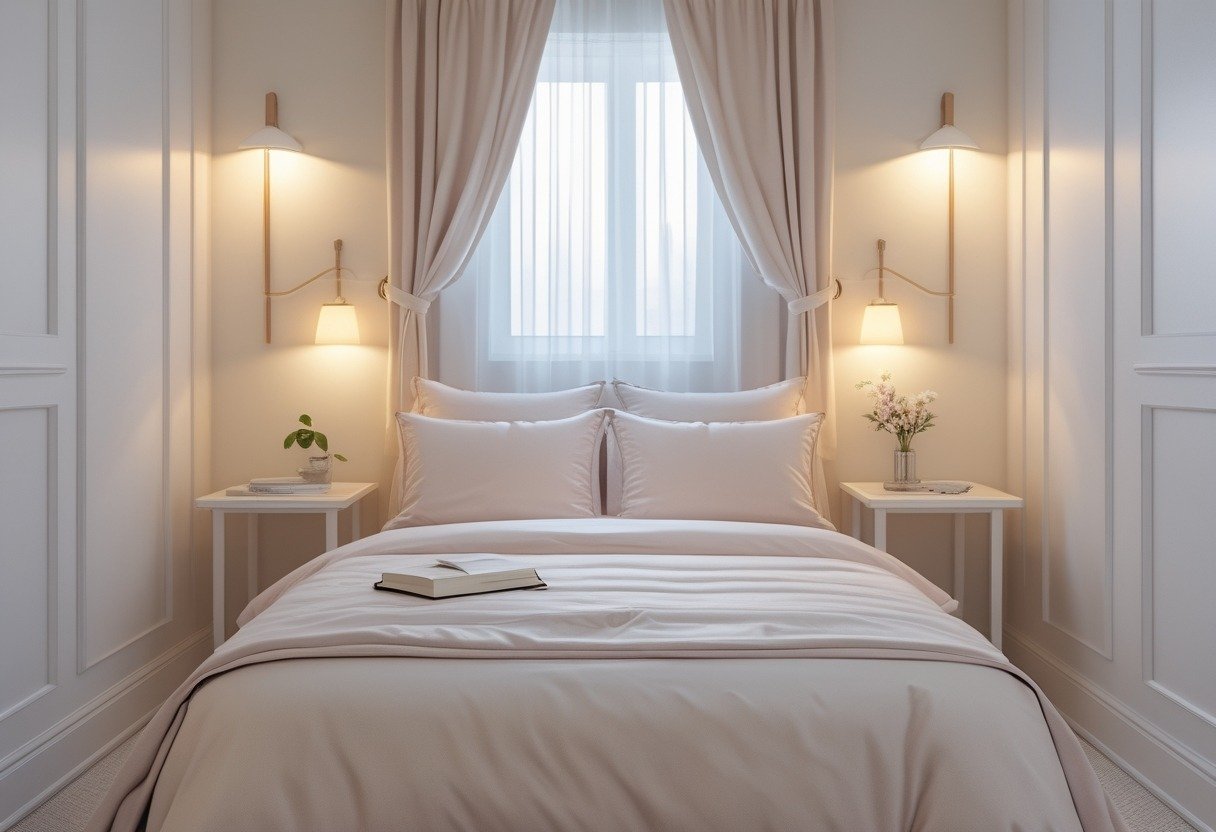
Mounting sconces clears space on your nightstand so you can keep only essentials like a book or phone.
Choose swing-arm or adjustable sconces so you can direct light for reading without overhead glare.
Hardwired or plug-in options work for different budgets and renters.
Install them at eye level to avoid shadows and make the bed area feel tidy and intentional.
5) Create a soft neutral palette with layered textures (linen, faux fur)
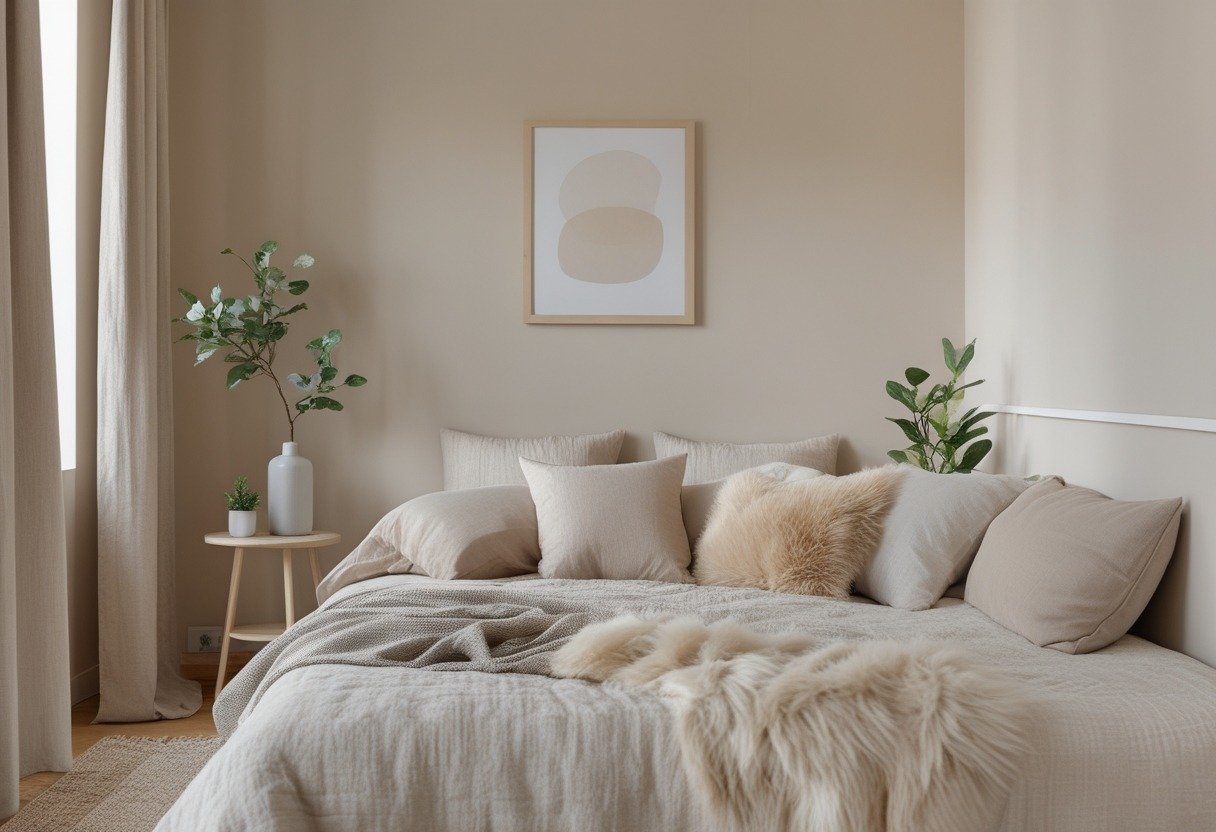
Choose soft neutrals like beige, gray, and ivory to keep the room calm and bright.
Layer linen sheets, a chunky knit throw, and a faux fur pillow to add depth without color.
Mix matte and slightly shiny textures to catch light and make the space feel cozy.
Keep patterns minimal so textures become the main focus and the room stays peaceful.
6) Add a compact vanity nook with a slim console table and mirror

Create a tidy vanity nook using a slim console table and a wall mirror to save floor space.
Place the table near a window or add a lighted mirror for better makeup tasks.
Choose a table with a drawer or slim shelf to store daily items.
A small stool tucks under the table to keep the room feeling open.
Keep accessories minimal: a tray for brushes and a small organizer for makeup.
This setup gives you a dedicated routine spot without crowding a small bedroom.
7) Opt for a Murphy bed to convert bedroom into workspace
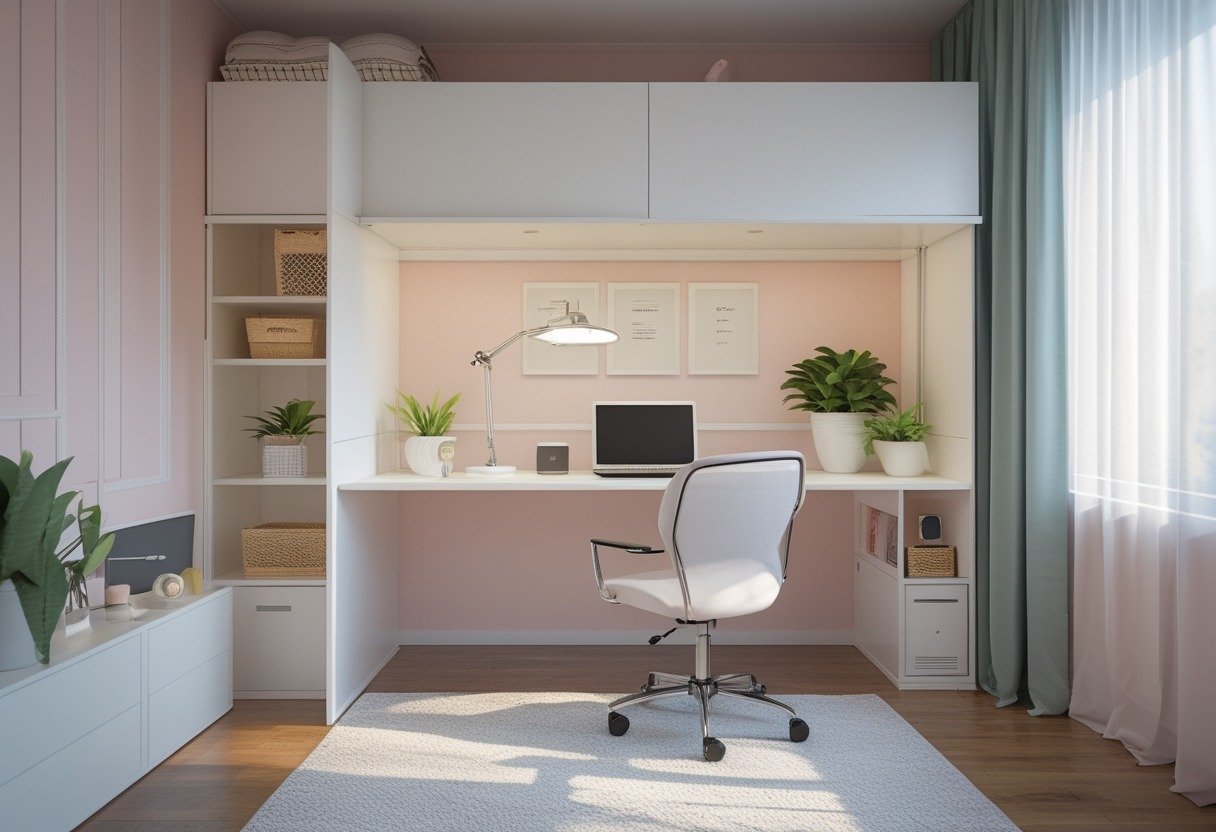
A Murphy bed folds into the wall so your floor clears for a desk and chair during the day. You keep sleeping comfort without losing room for work.
Choose a model with built-in shelving or a fold-down desk to save even more space. This lets you store office supplies and hide the bed in seconds.
Measure carefully so your workspace feels roomy when the bed is stowed. Pick a simple finish that matches your decor to keep the room calm and cohesive.
8) Use multi-functional furniture like an ottoman with hidden storage
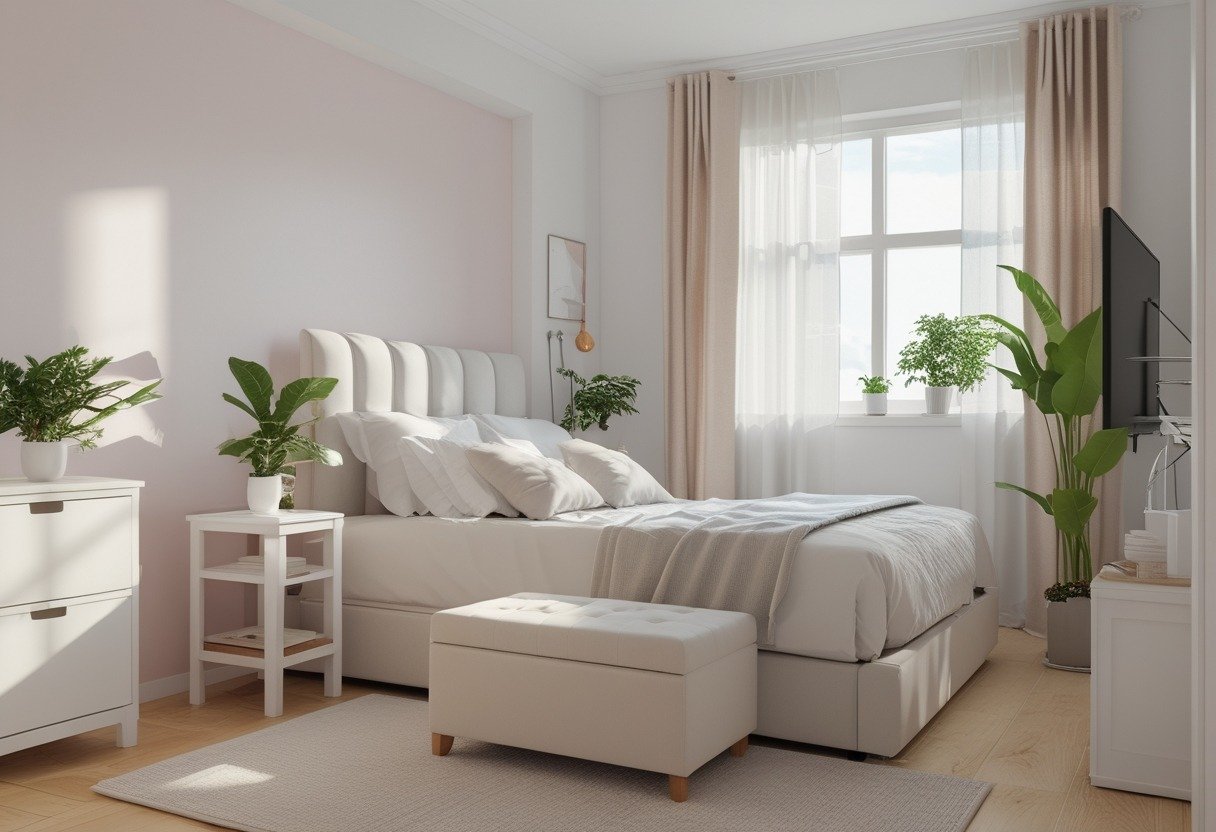
Choose an ottoman that opens to hide blankets, shoes, or seasonal items to free up closet space.
It also gives you extra seating and a surface when topped with a tray.
Pick neutral colors and simple shapes so it fits different layouts.
Look for sturdy hinges and a fabric or finish that cleans easily.
9) Hang sheer curtains high to make ceilings appear taller
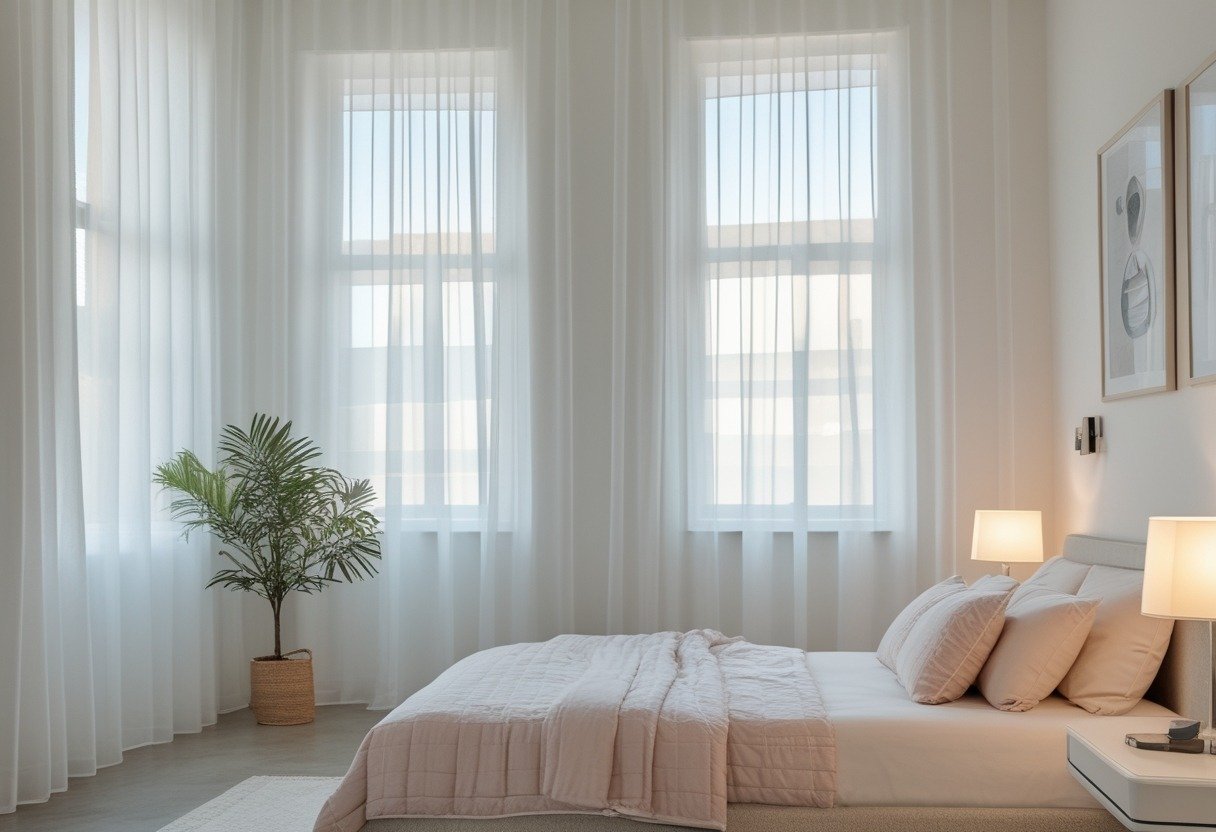
Hang your sheer curtains close to the ceiling to lift the eye and make the room feel taller. Mount the rod 4–8 inches above the window or at ceiling height if possible.
Choose lightweight sheers so light still fills the room. Floor-length panels add a clean vertical line that draws attention upward.
Extend the rod wider than the window to let more light in when curtains are open. That makes the space feel airier without changing the room.
10) Create a gallery wall of small framed prints in a cohesive color story
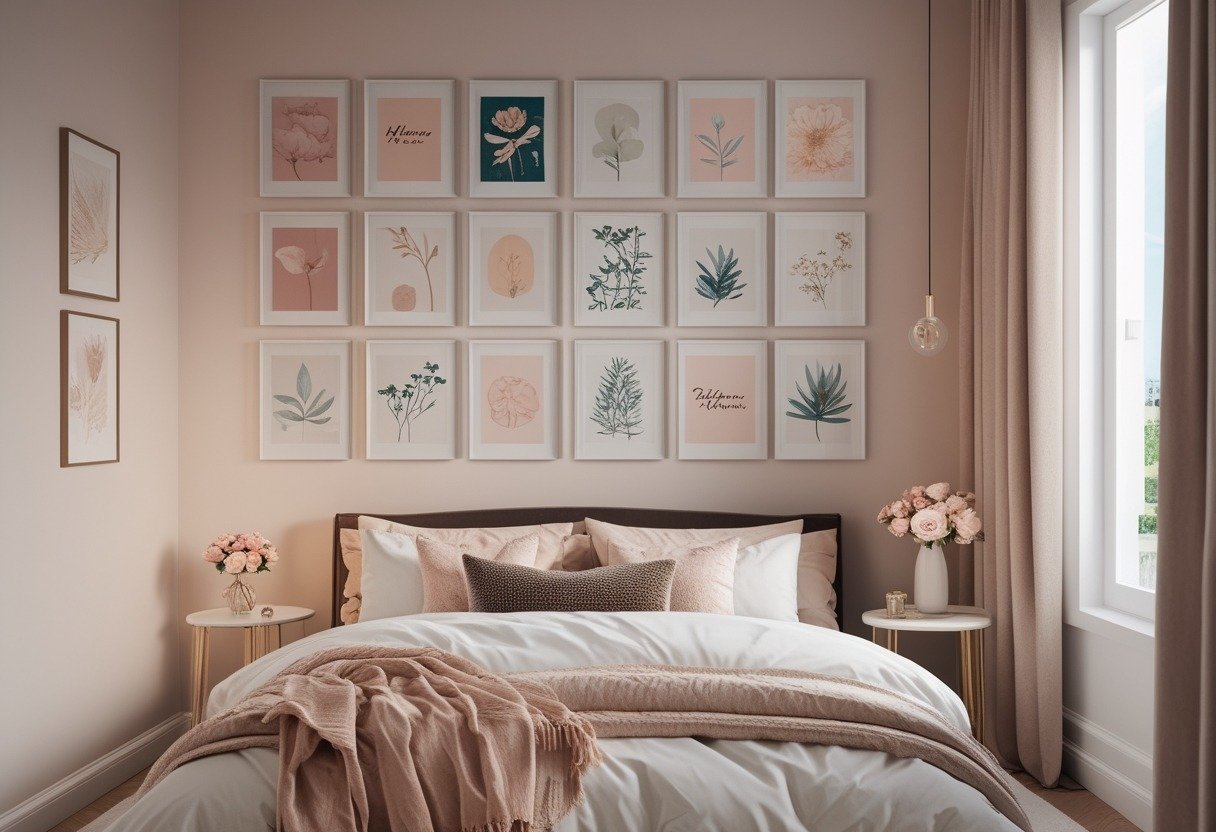
Choose 6–9 small frames and stick to 2–3 main colors to keep the look calm and unified.
Lay the prints on the floor first to test arrangements before you mark the wall.
Mix frame finishes and mat sizes for texture, but keep the palette steady so pieces read as one.
Hang the center line at eye level above key furniture to make the display feel intentional and balanced.
11) Install pegboard or slatwall for flexible jewelry and accessory organization
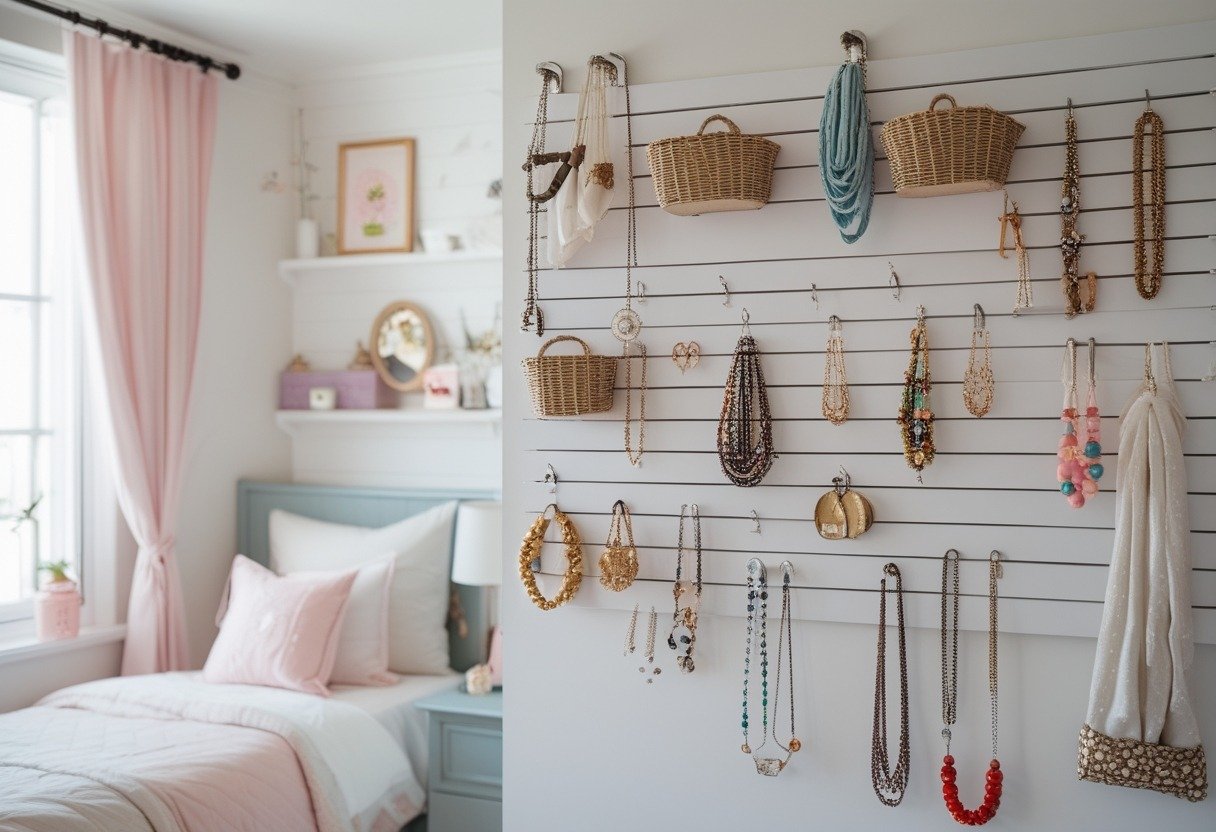
Mount a pegboard or slatwall to make your jewelry visible and easy to grab. You can hang hooks, small shelves, and baskets to fit necklaces, earrings, and scarves.
Paint the panel to match your room for a neat, custom look. Rearrange pieces anytime as your collection grows or your needs change.
12) Select a slim floating desk for a bedroom home-office corner
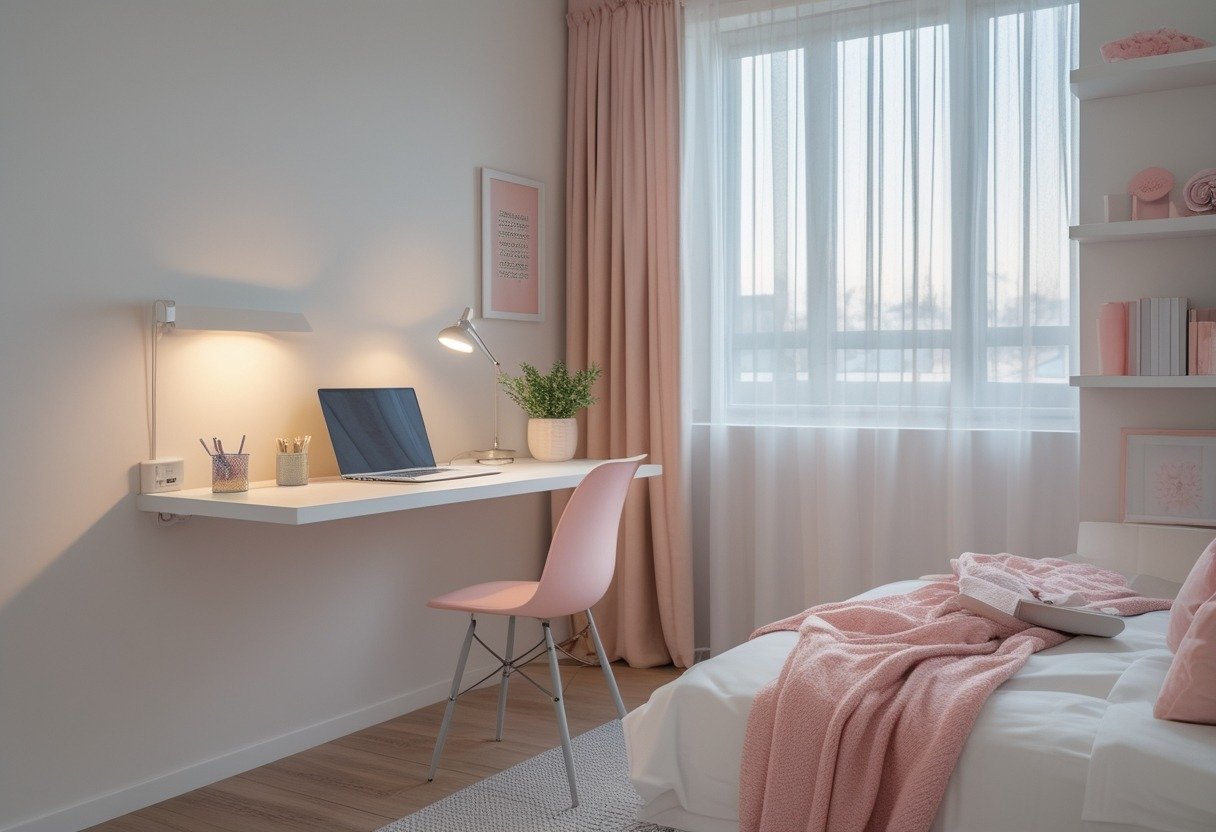
Choose a slim wall-mounted desk to save floor space and keep the room light. Floating desks fit small corners and leave more floor visible for a cleaner look.
Pick one with a small drawer or shelf so you can tuck away pens, chargers, and notebooks. Install it at a comfortable height for your chair to avoid strain.
Opt for a simple design and a neutral finish to match bedding and decor. A fold-down model adds extra flexibility when you need more room.
13) Use a rug that defines zones and adds warmth to a small footprint
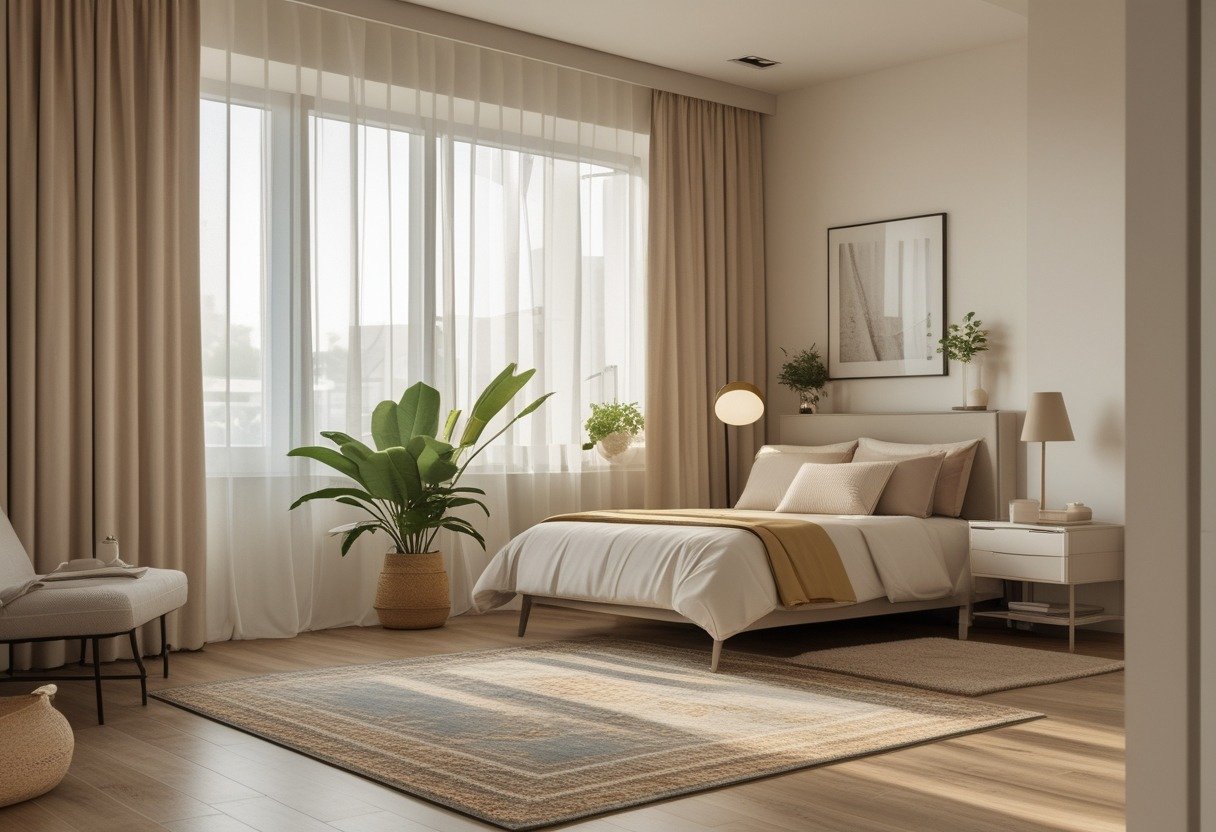
Choose a rug that fits your bed and a bit of floor around it to anchor the sleeping area. A properly sized rug makes the room feel organized and cozy without crowding the space.
Pick light colors or subtle patterns to reflect light and keep the room feeling open. Layer a small runner or round rug near a reading chair to mark a separate zone.
Common Design Challenges in Small Bedrooms
Limited floor area, tight storage, and the need to reflect your style while keeping the room usable are the main issues. You’ll need clear choices about furniture size, storage type, and decor scale to make the room feel both personal and functional.
Making the Most of Limited Floor Space
Choose furniture that fits your room dimensions. Measure wall lengths and the path from door to bed before buying a bed frame, dresser, or desk. Consider a low-profile bed or a storage bed to free floor area and reduce visual bulk.
Use vertical space. Install wall-mounted shelves, a floating desk, or tall narrow wardrobes. Hang hooks behind the door for bags and robes. Place mirrors opposite windows to bounce light and create depth.
Plan traffic flow. Keep a clear pathway of at least 24–30 inches beside the bed and to the closet. Group items by use—sleep, dressing, work—so you avoid moving furniture for different tasks.
Balancing Personal Style and Practicality
Pick a limited color palette to keep the room calm and cohesive. Use two or three main colors and add texture through pillows, a throw, or a rug. This keeps your style visible without overwhelming the small space.
Prioritize multi-use pieces. A bench with storage, a nightstand that doubles as a vanity, or a fold-down desk gives you function without extra furniture. Choose lighting that works for reading and makeup—wall sconces or adjustable lamps save surface space.
Keep decor scaled to the room. Use one or two statement items (a framed print, a decorative mirror) and smaller accents in groups. Rotate accessories seasonally to refresh the look without adding clutter.
Color Psychology and Mood in Cozy Spaces
Choose colors that match how you want to feel. Soft tones soothe and make small rooms feel larger, while bold hues add personality and depth. Use textiles and accents to balance any strong walls.
Impact of Soft and Bold Palettes
Soft palettes—like pale blues, warm creams, and muted sage—reflect more light and make a small room feel airy. Paint the ceiling and trim the same light shade to blur edges and increase perceived height. Use layered textures (linen curtains, a wool throw) to add warmth without crowding the visual field.
Bold colors—deep green, navy, or a blue-black accent wall—create drama and a cocooning effect in tiny bedrooms. Limit bold paint to one wall or the headboard area so the room keeps balance. Add small contrasting accents (brass lamp, patterned pillow) to prevent the space from feeling heavy.
Tips for Creating a Calming Retreat
Pick a primary color, a secondary neutral, and one accent to keep the scheme cohesive. For example: dusty rose (primary), warm beige (neutral), and matte gold (accent). This reduces visual clutter and makes choices simple.
Control light: sheer curtains or adjustable blinds let you shift the mood. Use soft white bulbs (2700–3000K) and layered lighting—overhead + bedside lamp—for gentle brightness. Keep 2–3 tactile elements like a plush rug, woven basket, and cotton duvet to anchor the room and invite relaxation.
