
When I think about decorating a living room, my mind usually goes straight to the sofa, wall colors, lighting, rugs, and artwork. But over time, I have realized that one of the most overlooked parts of any living room is right above us—the ceiling. A well-designed ceiling can completely change how a room feels, making it look taller, brighter, more luxurious, more modern, or even more comfortable.
That is why exploring different ceiling design ideas for living room spaces can be such a rewarding part of a home makeover. The ceiling does not have to remain a plain white surface. With the right combination of shape, texture, lighting, color, and architectural detail, it can become one of the most impressive features in the entire room.
The good thing is that ceiling design is not limited to expensive homes or large spaces. There are beautiful options for small apartments, traditional homes, contemporary interiors, luxury living rooms, and even simple family spaces where comfort matters more than extravagance.
In this guide, I am sharing 15 ceiling design ideas for living room interiors that can help you create a more polished and thoughtfully designed space. Some ideas are bold and dramatic, while others are subtle enough to work with almost any decorating style.
1. Create a Modern Tray Ceiling
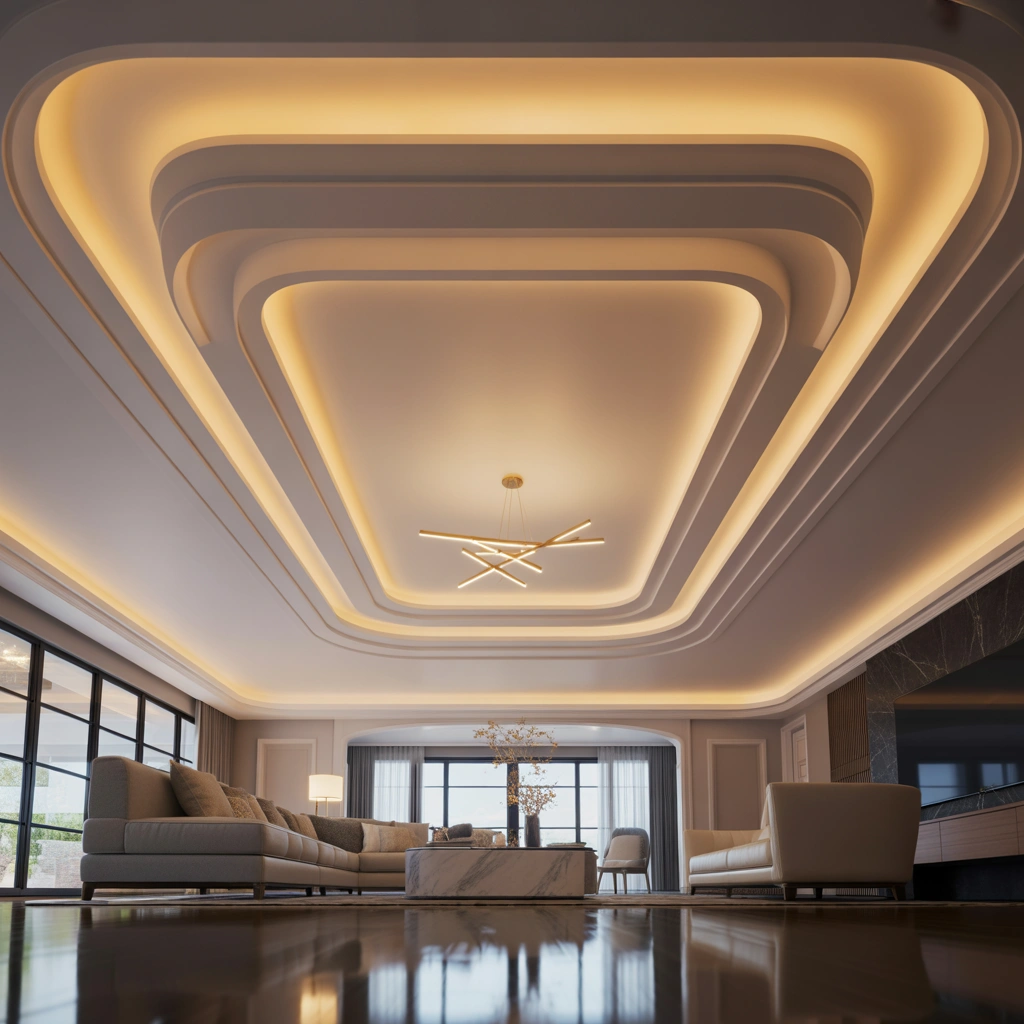
A tray ceiling is one of my favorite ways to add architectural interest without making a living room feel overly decorated. The design usually features a recessed center section that sits slightly higher than the outer edges of the ceiling.
What makes a tray ceiling so appealing is how versatile it can be. In a modern living room, I would keep the lines clean and simple, perhaps painting the center section in soft white while using warm LED lighting around the recessed edge.
This creates a beautiful floating effect at night.
Tray ceilings are especially effective in medium-sized and large living rooms because they add visual height without requiring dramatic structural details. They can also help define the seating area in an open-concept space.
For a more luxurious appearance, you could add:
- Concealed LED strip lighting
- A decorative chandelier in the center
- Subtle molding around the recessed section
- A contrasting ceiling color
- Wood or wallpaper inside the tray
If your living room has low ceilings, however, I would keep the tray depth shallow so the surrounding edges do not make the room feel smaller.
2. Use Wooden Ceiling Beams for Warmth
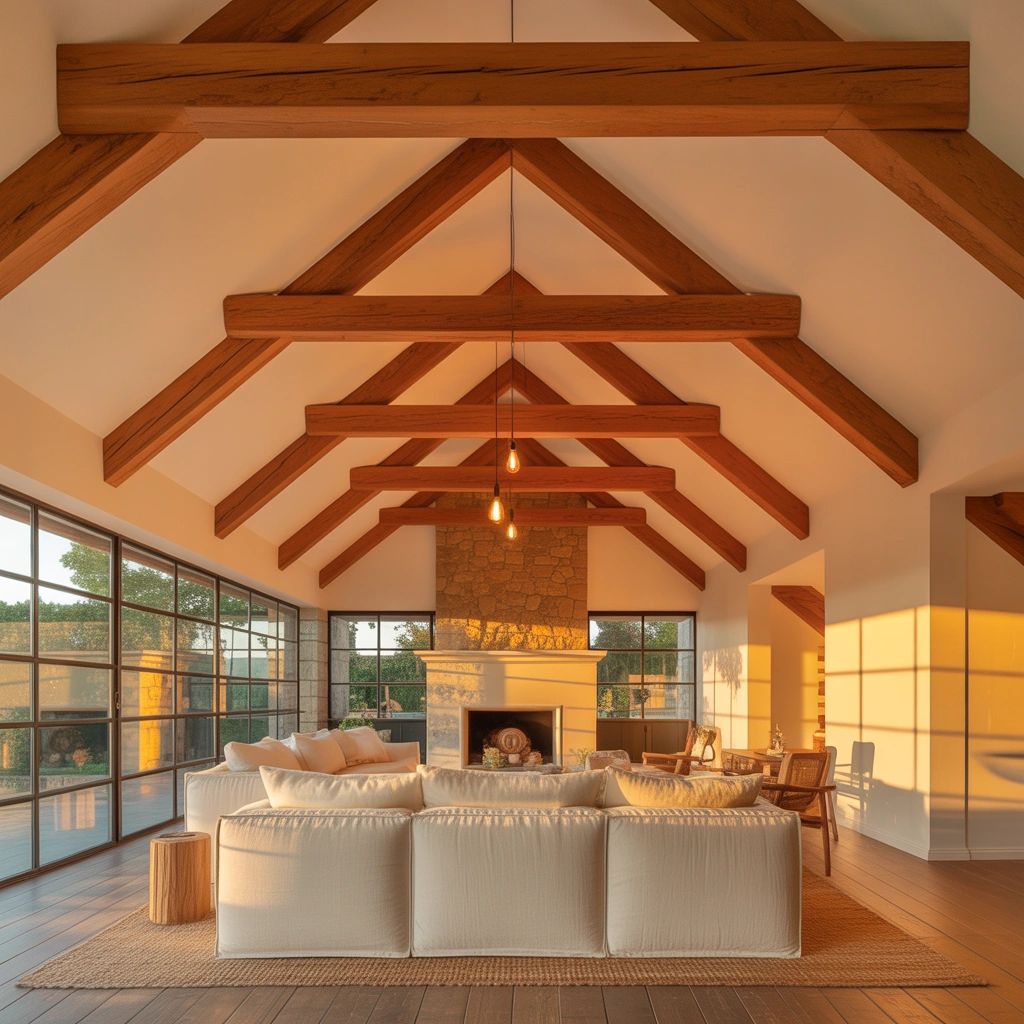
There is something incredibly inviting about wooden ceiling beams. They immediately add warmth, texture, and character to a living room.
Wood beams can work in farmhouse, rustic, Mediterranean, Scandinavian, transitional, and even modern interiors. The key is choosing the right finish.
For a rustic room, darker distressed beams can create a cozy, traditional atmosphere. In a modern space, lighter wood beams with clean edges feel much more contemporary.
I particularly love wood beams in living rooms with neutral walls because the natural texture keeps the interior from feeling flat.
You do not necessarily need real structural timber either. Decorative faux beams can provide a similar appearance while being lighter and easier to install.
Consider pairing wooden ceiling beams with:
- White or cream ceilings
- Stone fireplaces
- Neutral sectional sofas
- Linen curtains
- Warm pendant lighting
- Natural wood furniture
This is one of those ceiling design ideas for living room interiors that can make even a relatively simple space feel much more thoughtfully designed.
3. Install a False Ceiling with Recessed Lighting
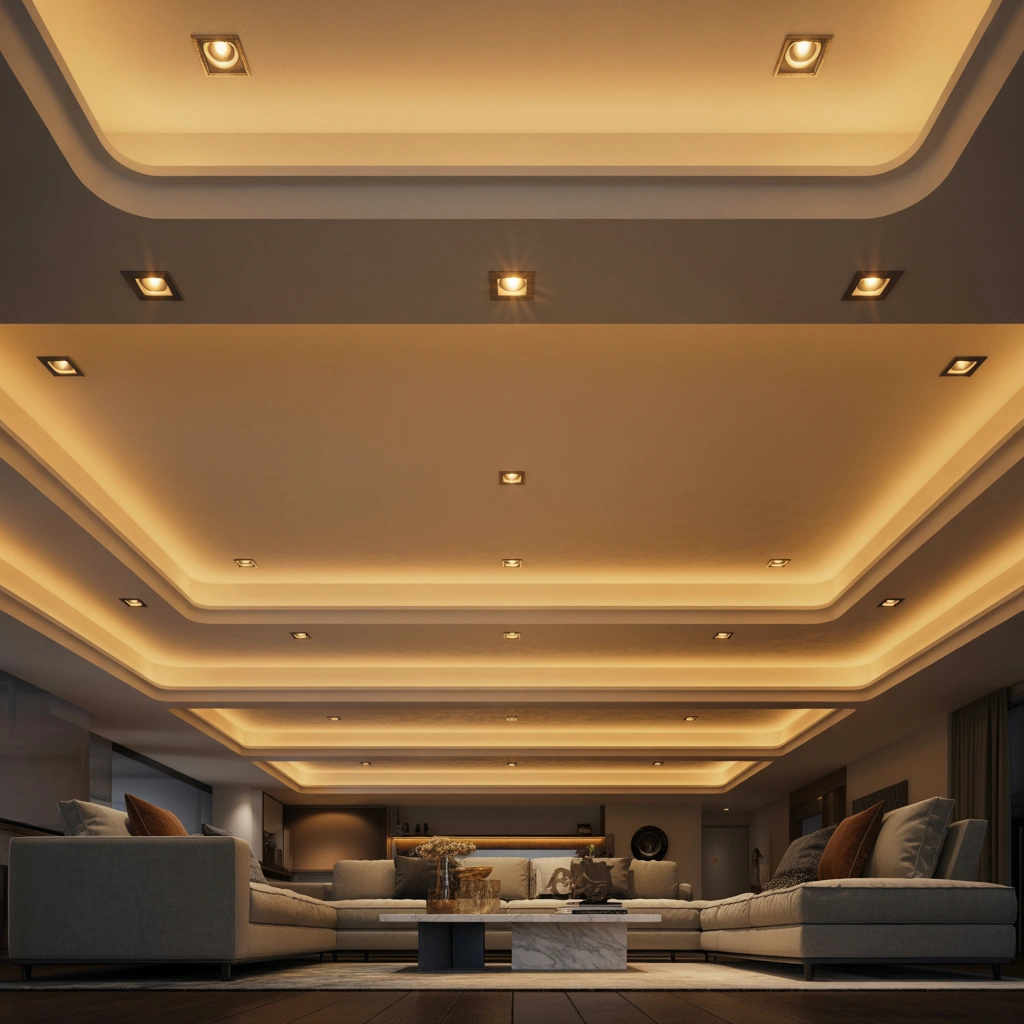
False ceilings have become extremely popular in contemporary homes, and it is easy to understand why. They allow you to combine architectural design with practical lighting.
A false ceiling is essentially a secondary ceiling built below the original surface. It can be made from gypsum board, plasterboard, POP, or other lightweight materials.
What I like most about false ceilings is the flexibility they provide. You can create geometric shapes, floating panels, recessed borders, layered sections, or curved designs.
For a sophisticated look, I prefer simple rectangular or linear designs rather than overly complicated patterns.
Recessed spotlights can then be positioned around the ceiling to create balanced illumination throughout the room.
You can also add hidden LED strips inside recessed sections for soft ambient lighting.
This combination is especially useful if you want your living room to have multiple lighting levels. Bright recessed lights can be used during gatherings, while concealed lighting can create a relaxed atmosphere in the evening.
4. Add a Statement Chandelier to a Simple Ceiling
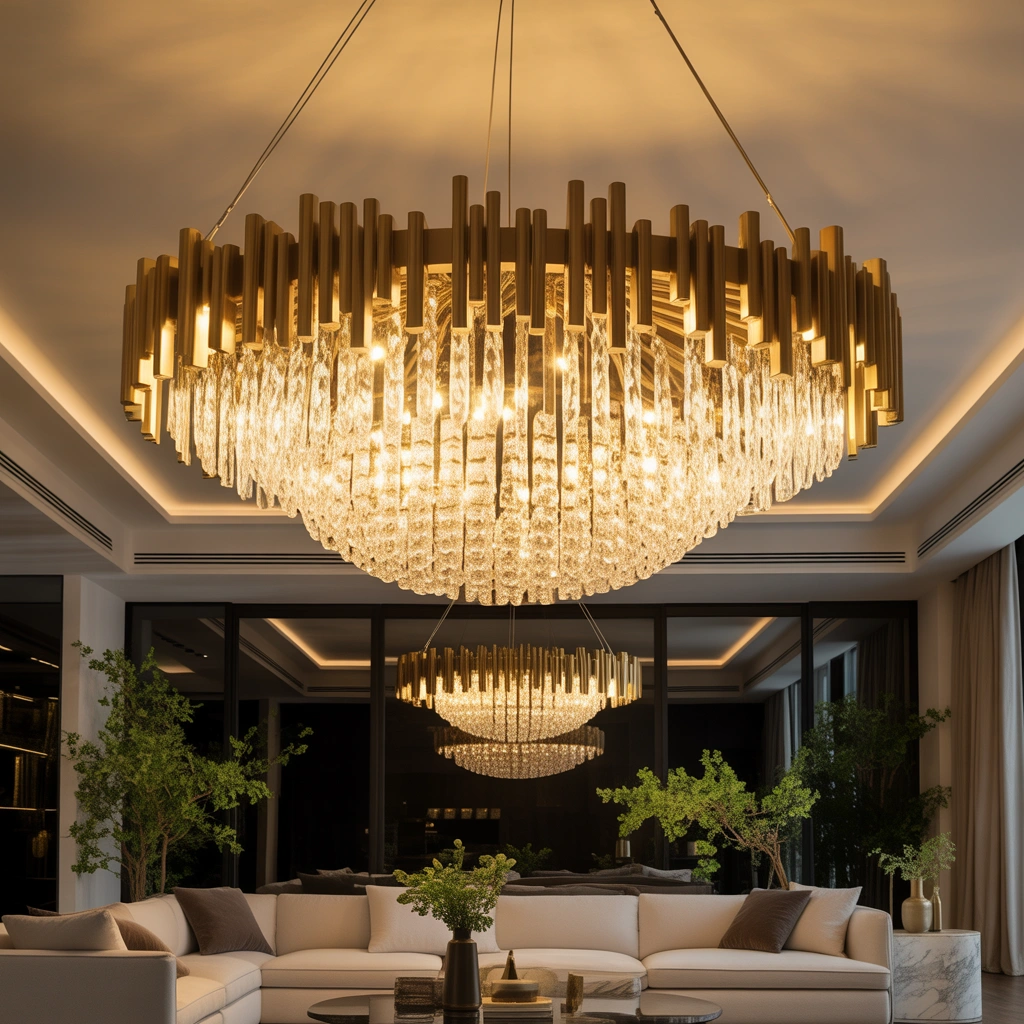
Sometimes the most effective ceiling design does not require complicated construction.
A beautiful chandelier can become the centerpiece of an otherwise simple ceiling.
If your living room already has strong furniture, patterned rugs, artwork, or colorful walls, keeping the ceiling simple while adding one striking light fixture can provide better visual balance.
I personally prefer chandeliers that match the overall scale of the room. A tiny fixture may feel lost in a large living room, while an oversized chandelier can overwhelm a small space.
Modern chandelier options include:
- Sculptural LED fixtures
- Glass globe chandeliers
- Linear chandeliers
- Brass designs
- Crystal-inspired lighting
- Minimal black metal fixtures
The chandelier should feel connected to the furniture below it rather than floating randomly in the room.
For example, positioning it above the main coffee table or centered within the primary seating arrangement usually creates a stronger visual connection.
5. Try a Coffered Ceiling for Classic Elegance
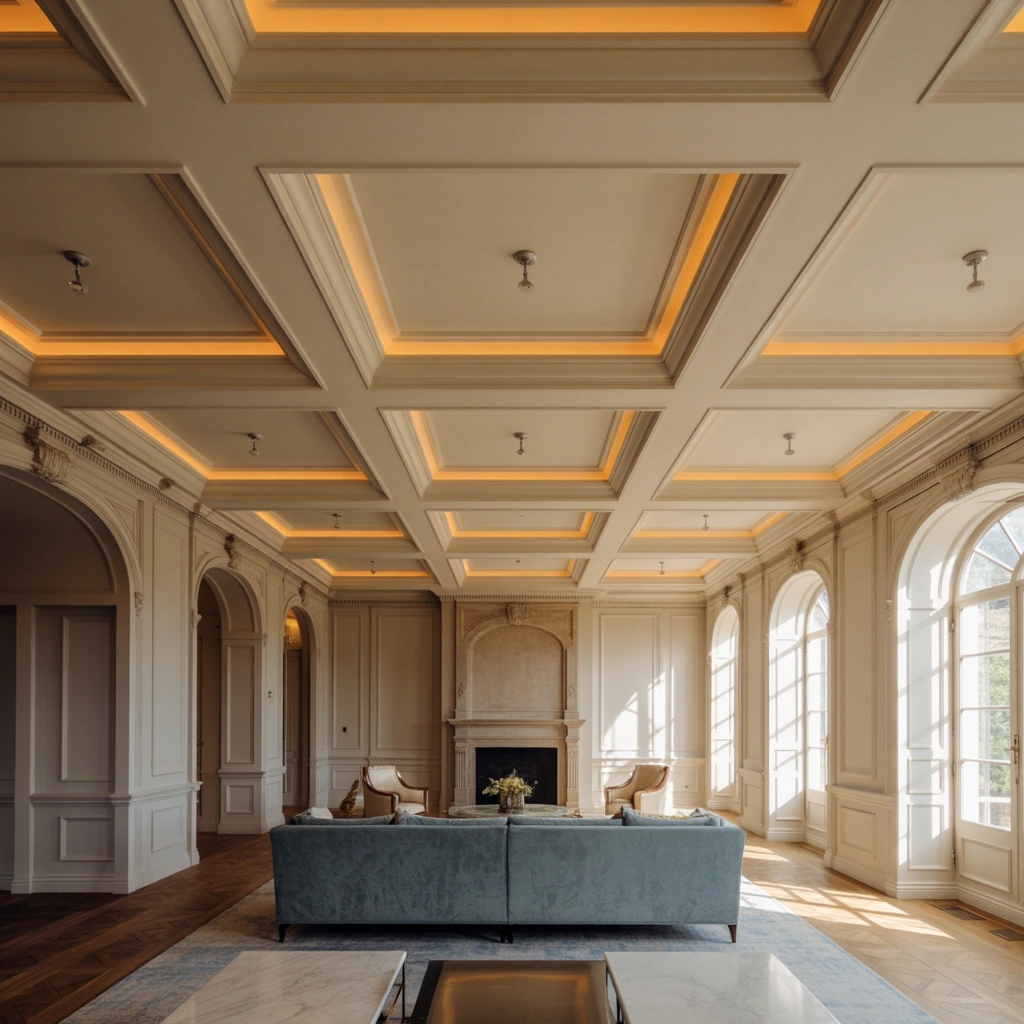
If you want a living room that feels sophisticated and architecturally rich, a coffered ceiling can make a dramatic difference.
Coffered ceilings feature a grid of recessed panels created with beams or molding. This style has been used in classical architecture for centuries, but modern versions can look surprisingly fresh.
Traditional coffered ceilings often feature ornate molding and deeper recessed panels. Contemporary versions usually have simpler lines and fewer decorative details.
I think this ceiling style works particularly well in formal living rooms, large family rooms, and luxury interiors.
For a timeless appearance, white-on-white coffering is always a safe option.
For something more dramatic, consider using a darker color inside the recessed panels while keeping the beams lighter.
You could also install subtle lighting within selected sections.
Because coffered ceilings already contain plenty of architectural detail, I would keep the rest of the room fairly balanced. Too many decorative elements competing for attention can make the space feel busy.
6. Paint the Ceiling a Bold Color
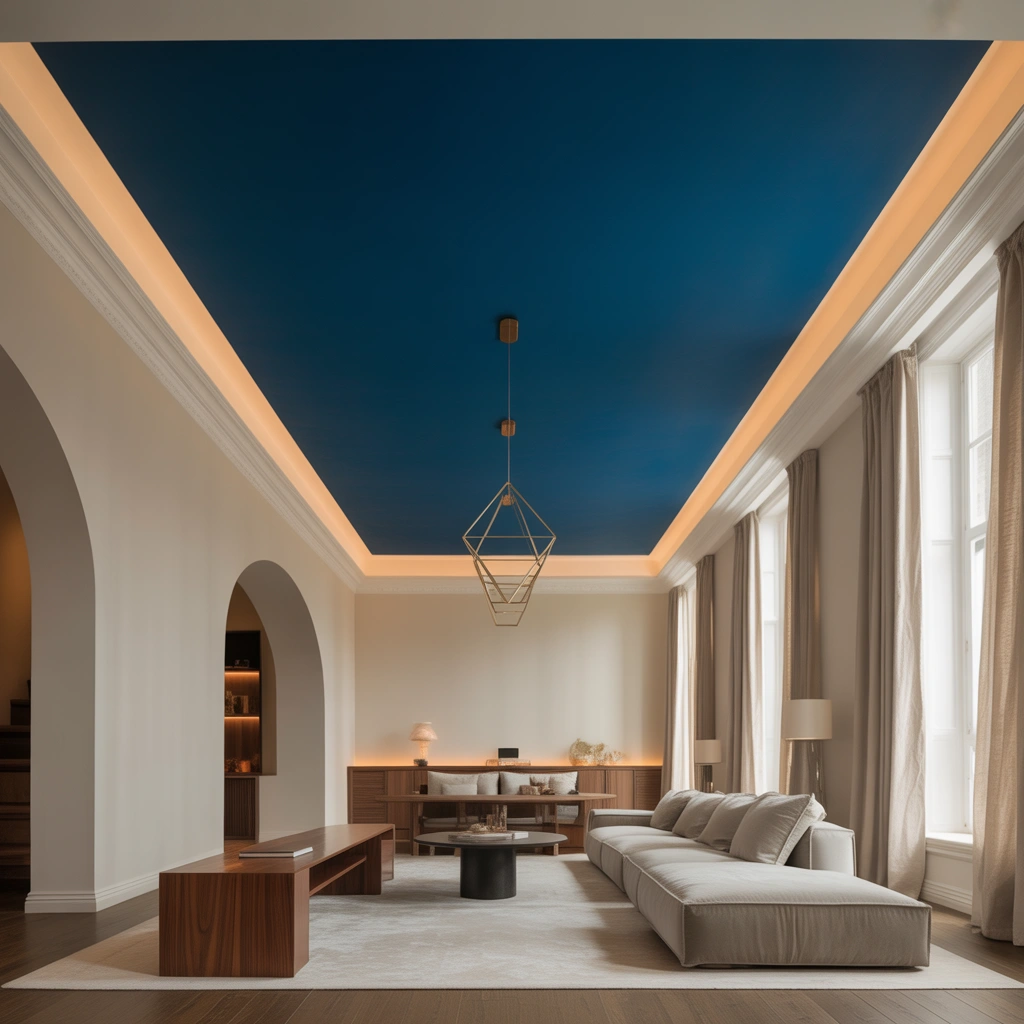
One of the easiest ceiling design ideas for living room spaces is also one of the most affordable: paint.
Most ceilings are automatically painted white, but there is no rule saying they have to stay that way.
A painted ceiling can dramatically influence the mood of a room.
For a cozy, sophisticated living room, deep navy, charcoal, forest green, or warm brown can create a beautiful cocoon-like feeling.
If you want something lighter, soft beige, pale blue, dusty green, or warm cream can add subtle color without overwhelming the room.
I find this approach especially effective when the ceiling color connects with another element in the space.
For example, a muted green ceiling could complement green cushions or artwork, while a warm beige ceiling could coordinate with wooden furniture.
One important thing to consider is ceiling height.
Darker colors visually lower the ceiling, which can make large rooms feel more intimate. In a small room with a low ceiling, lighter shades are usually more flattering.
7. Use Ceiling Wallpaper for Unexpected Pattern
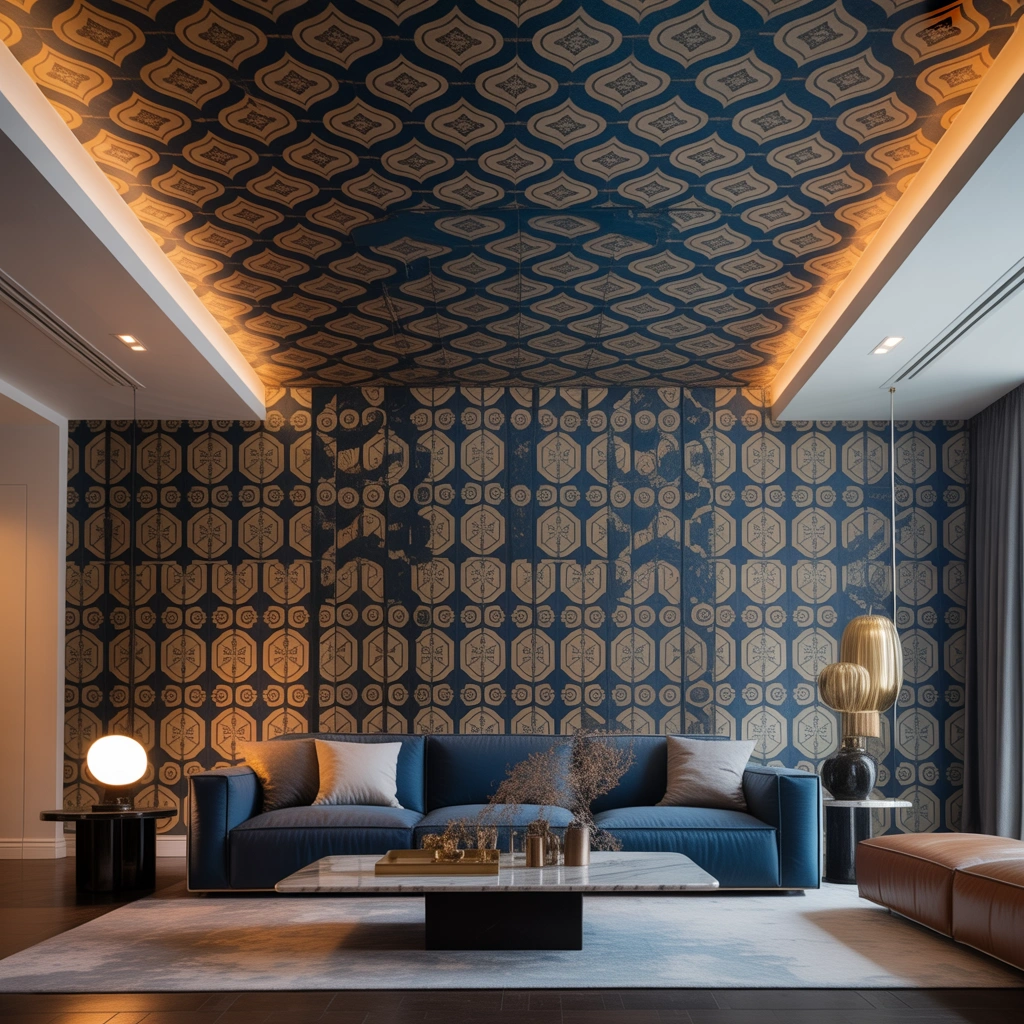
Wallpaper is normally associated with walls, but placing it on the ceiling can create an incredibly memorable interior.
This idea works especially well when the walls are relatively simple.
You could use:
- Botanical prints
- Geometric patterns
- Metallic wallpaper
- Subtle textured wallpaper
- Cloud-inspired patterns
- Vintage floral prints
Personally, I prefer slightly restrained patterns for living rooms because the ceiling covers such a large surface.
A soft geometric print or subtle metallic texture can add interest without becoming overwhelming.
Wallpaper can also be applied inside a tray ceiling or between ceiling beams rather than covering the entire surface.
This gives you the decorative effect while keeping the design controlled.
It is a great way to introduce personality if you want something more creative than paint.
8. Add Wood Paneling to the Ceiling
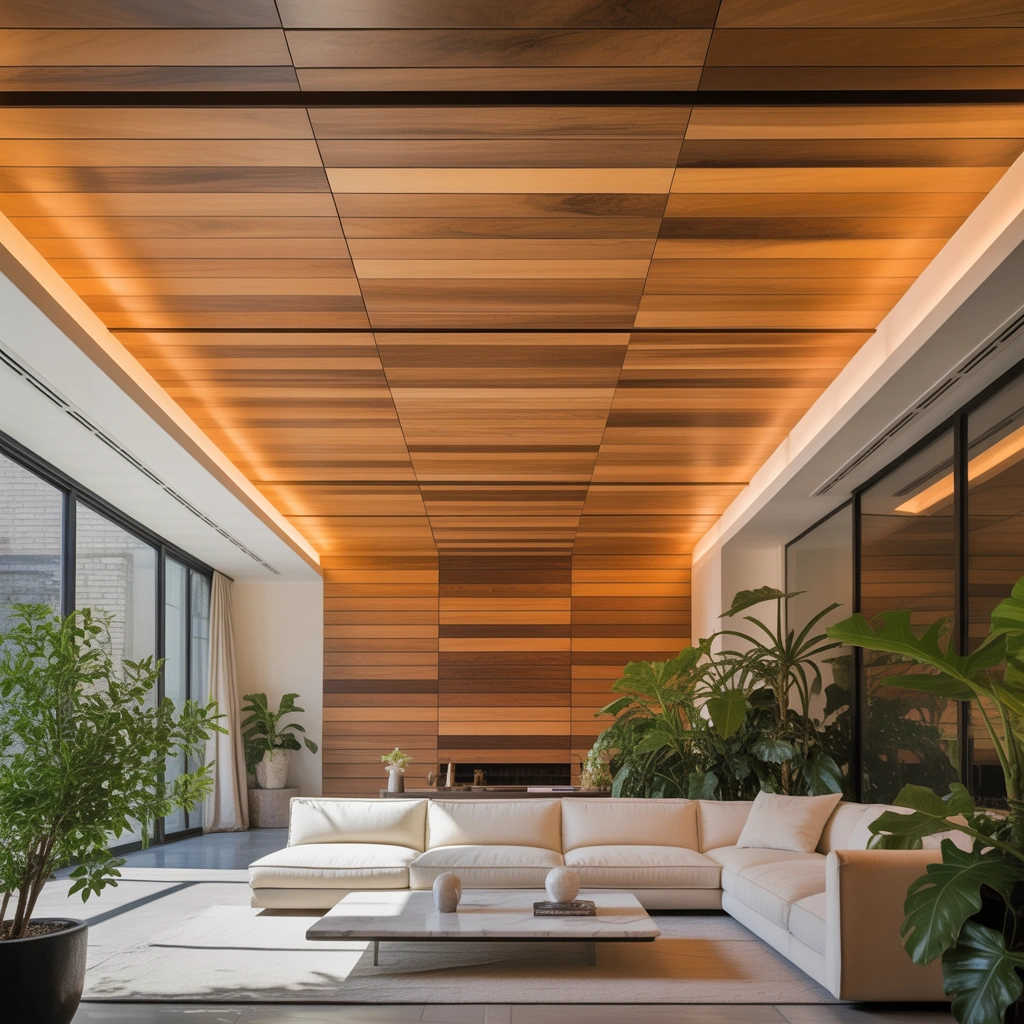
If you love natural materials, wood ceiling paneling can completely transform the atmosphere of a living room.
Unlike exposed beams, which create strong architectural lines, wood paneling covers a larger portion of the ceiling and introduces continuous texture.
Light oak or similar pale woods can create a modern Scandinavian appearance, while darker walnut tones feel more luxurious and dramatic.
I especially like wood ceilings in living rooms with large windows because natural daylight brings out the grain and texture beautifully.
To prevent the room from becoming too dark, balance wood ceilings with lighter surfaces below.
For example:
- White walls
- Cream sofas
- Light curtains
- Pale stone flooring
- Soft neutral rugs
Wood paneling also works particularly well when extended from the ceiling down one feature wall. This creates a seamless architectural effect that feels very custom.
9. Design a Curved False Ceiling
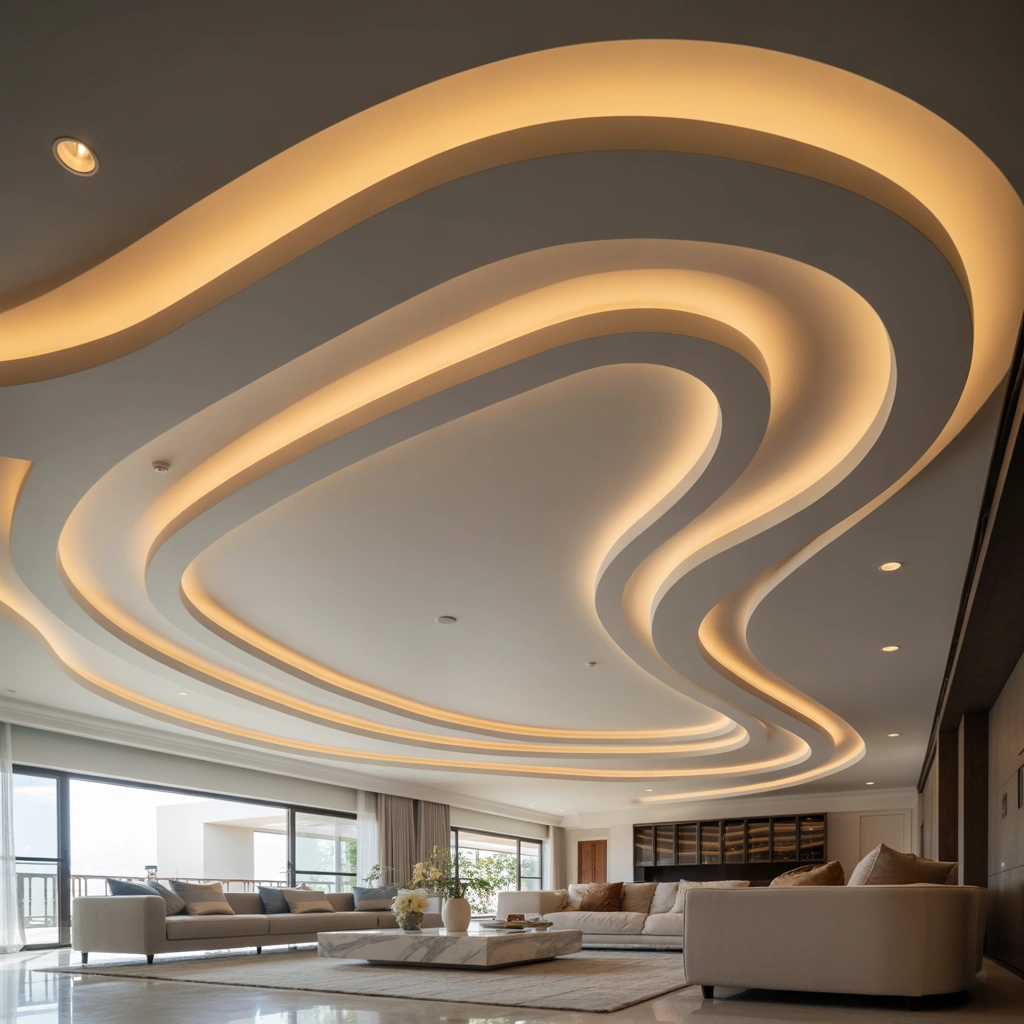
Most ceiling designs rely on straight lines, so introducing curves can immediately make a living room feel different.
A curved false ceiling can soften modern interiors and create a more fluid appearance.
You could design a circular recessed area above the seating arrangement, curved lighting channels around the perimeter, or a flowing ceiling feature that leads from one part of the room to another.
I think curved ceilings work best when the room already contains a few rounded elements.
For example, you could repeat the shape through:
- A round coffee table
- Curved sofas
- Circular rugs
- Arched doorways
- Globe lighting
This repetition helps the ceiling design feel intentional.
The main thing I would avoid is using too many different shapes at once. One strong curved ceiling feature is usually more elegant than several competing patterns.
10. Create a Minimalist Ceiling with Linear Lighting
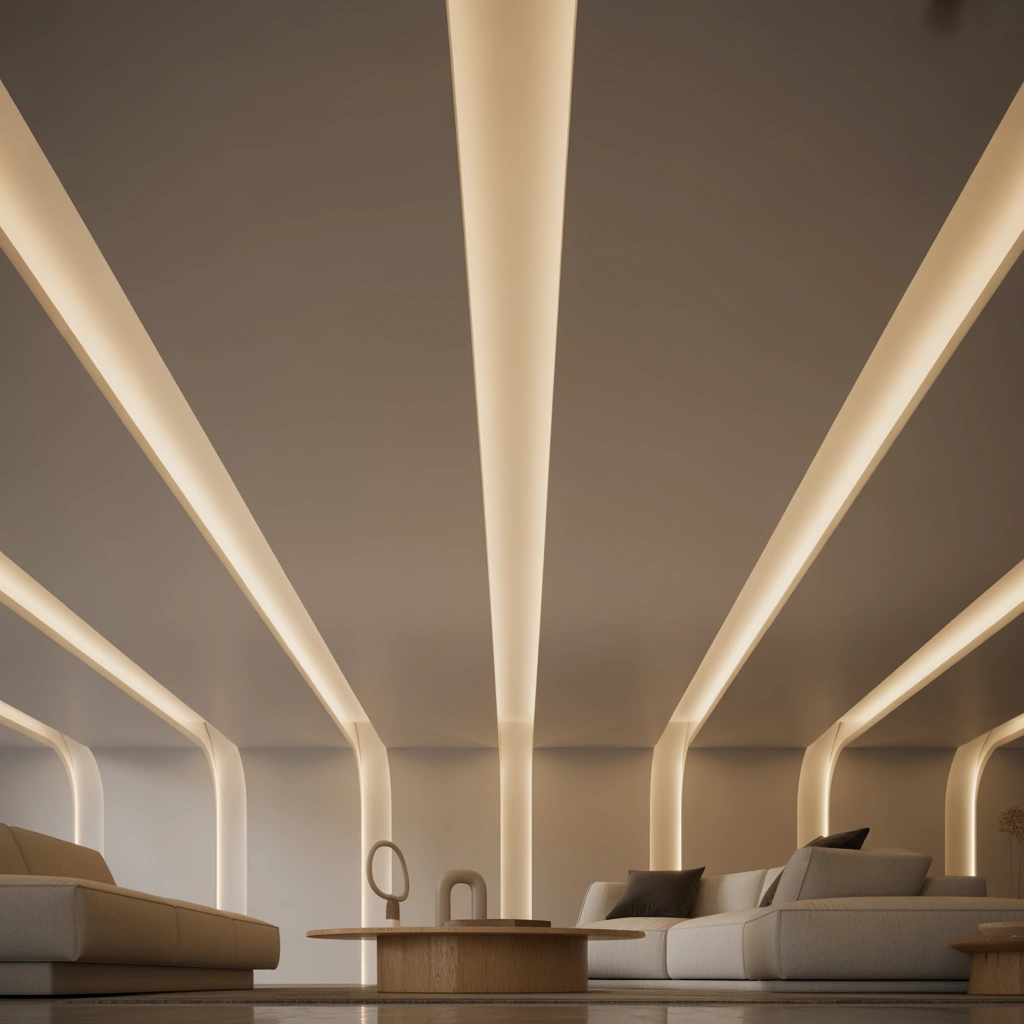
For modern and minimalist interiors, simplicity often has the strongest impact.
Instead of decorative molding or elaborate ceiling structures, consider using clean architectural lines combined with integrated lighting.
Linear LED channels can run across the ceiling in straight lines, creating a sleek contemporary appearance.
They can also be arranged along the edges of recessed sections.
What I like about linear lighting is that it feels integrated into the architecture rather than added afterward.
It works particularly well in living rooms with:
- Modern furniture
- Neutral color palettes
- Flat-front cabinetry
- Large windows
- Minimal accessories
Warm white lighting usually creates a more comfortable atmosphere than very cool blue-white lighting.
Even in a minimalist room, the goal should still be to make the space feel welcoming rather than overly clinical.
11. Add Decorative Ceiling Molding
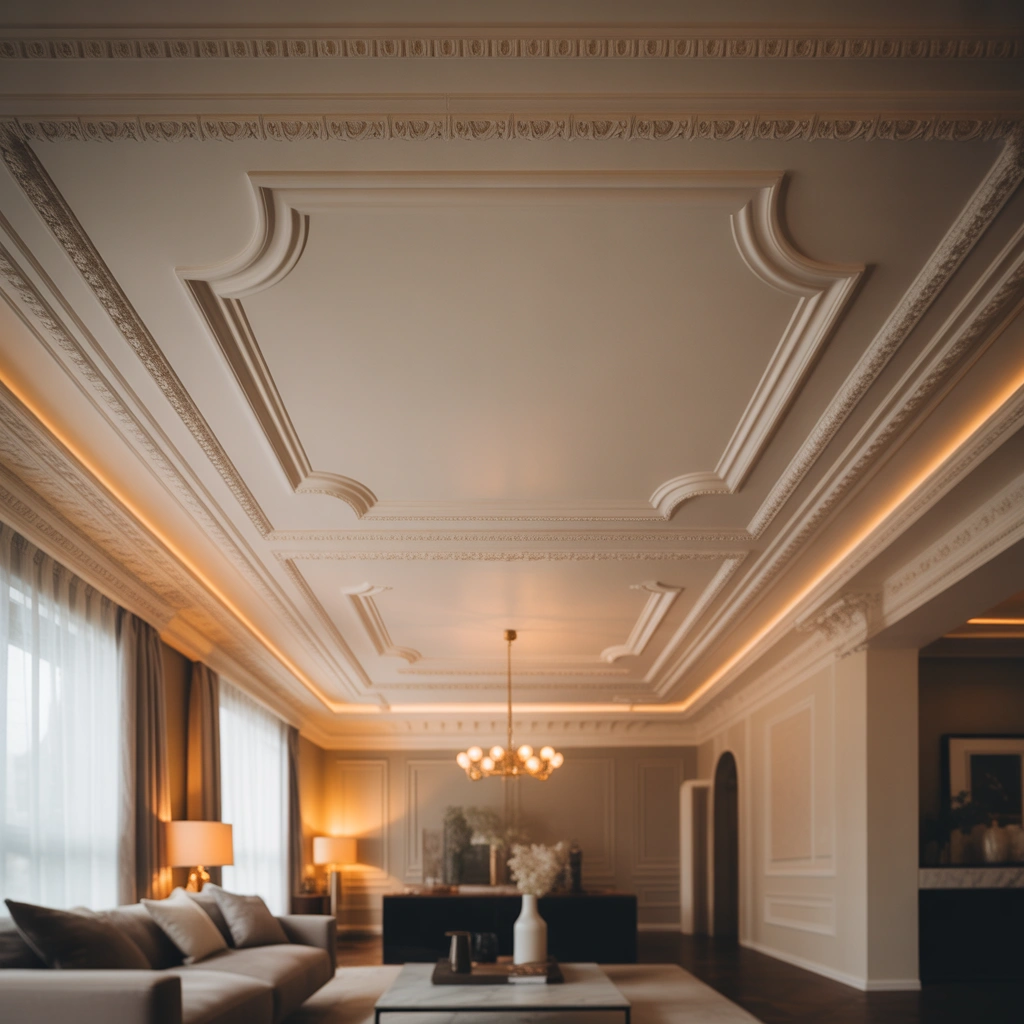
Decorative molding is a classic option that can instantly make a simple living room feel more refined.
You can use molding around the perimeter of the ceiling, around light fixtures, or to create geometric frames across the surface.
Traditional interiors often use ornate plaster details, but modern living rooms can benefit from simpler molding profiles.
One idea I particularly like is creating a large rectangular frame above the main seating area using narrow decorative trim.
Painting both the trim and ceiling the same color keeps the effect subtle.
If you want stronger contrast, you could paint the molding slightly darker or lighter.
Ceiling medallions are another beautiful option, especially when combined with chandeliers.
The key is matching the level of detail to your home’s overall architecture. Highly decorative molding may look out of place in a very minimalist apartment, while extremely plain molding could disappear inside a grand traditional room.
12. Create a Double-Layer Ceiling Design
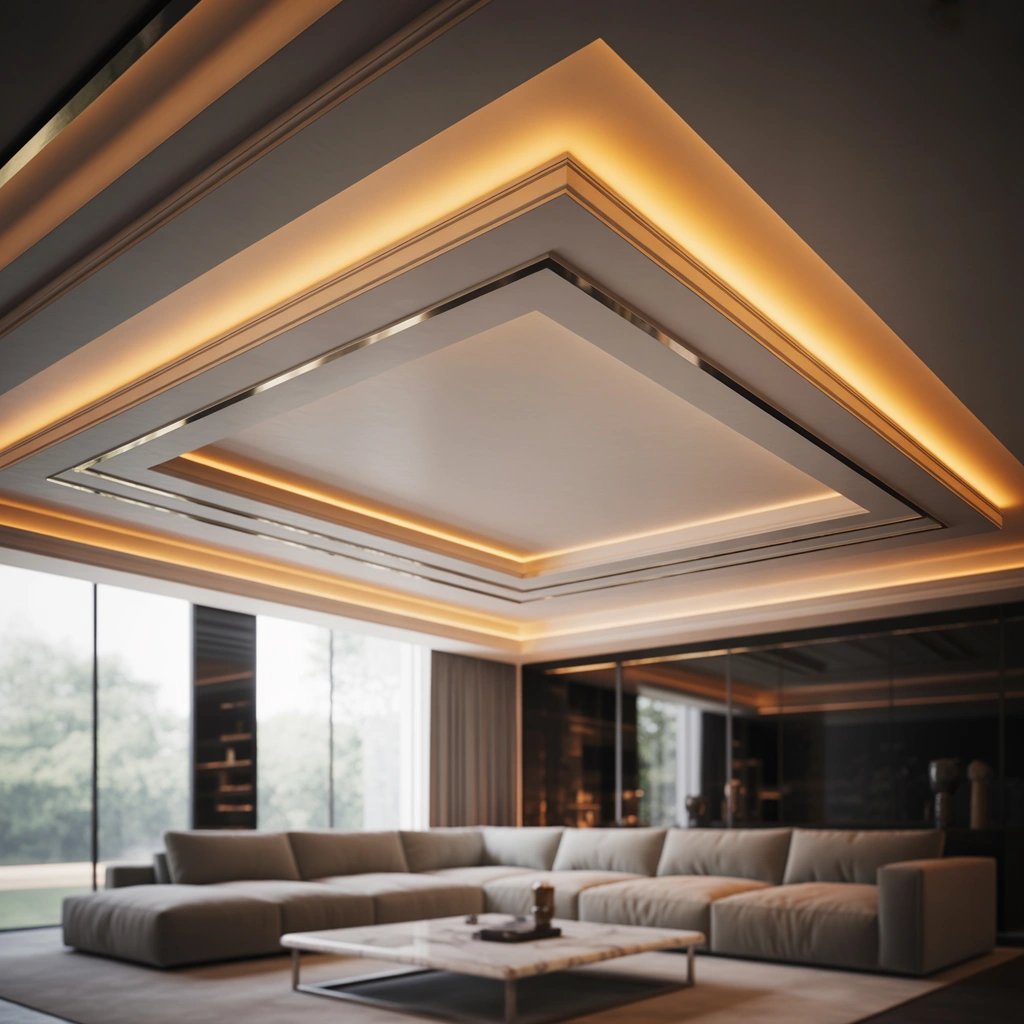
Layered ceilings are an excellent choice when you want a more architectural and luxurious appearance.
A double-layer ceiling usually includes one lowered section around the perimeter with another central area at a different height.
Hidden lighting between the layers creates a soft glow and adds depth.
This is one of the most popular ceiling design ideas for living room spaces because it combines style with practical illumination.
I would recommend keeping the design symmetrical unless your room has an intentionally asymmetrical layout.
Simple rectangular layers often look more expensive than overly complicated patterns.
You can enhance the design further with:
- Recessed spotlights
- LED strips
- Pendant fixtures
- A chandelier
- Textured center panels
The combination of direct and indirect lighting also allows you to change the atmosphere depending on the occasion.
13. Try an Industrial Exposed Ceiling
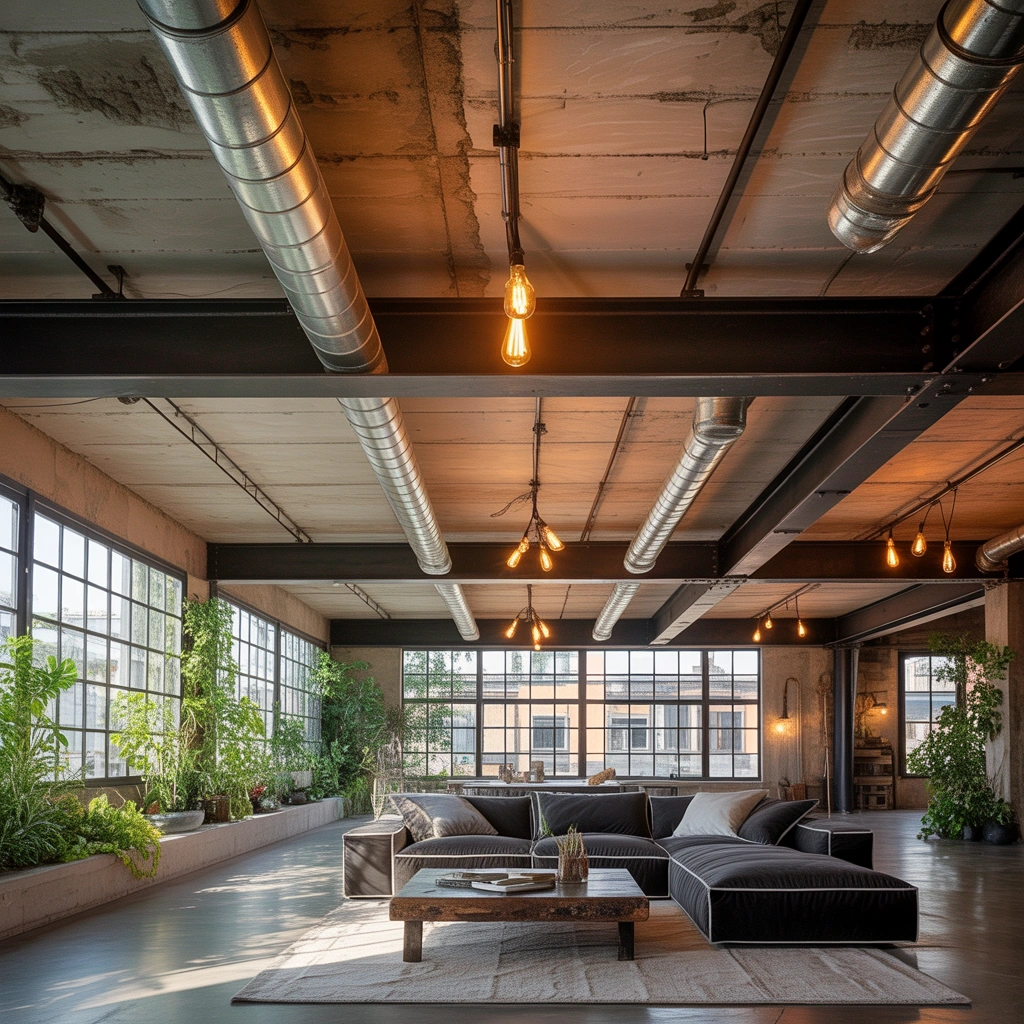
Not every beautiful ceiling needs to hide pipes, beams, ducts, or structural materials.
In industrial-style living rooms, exposing these elements can actually become part of the design.
An exposed concrete ceiling, for example, can create an urban loft atmosphere.
You could also keep visible metal beams, ducts, or pipes, especially in converted warehouse-style homes.
The secret is making the look feel deliberate.
Random unfinished construction rarely looks attractive, but carefully coordinated exposed materials can feel stylish.
I would pair an industrial ceiling with warmer furnishings to prevent the room from becoming too cold.
Leather seating, wooden tables, textured rugs, greenery, and warm lamps can balance raw concrete and metal beautifully.
This idea is particularly suitable for high ceilings because exposed architectural elements can visually fill some of the empty space.
14. Use a Ceiling Fan as Part of the Design
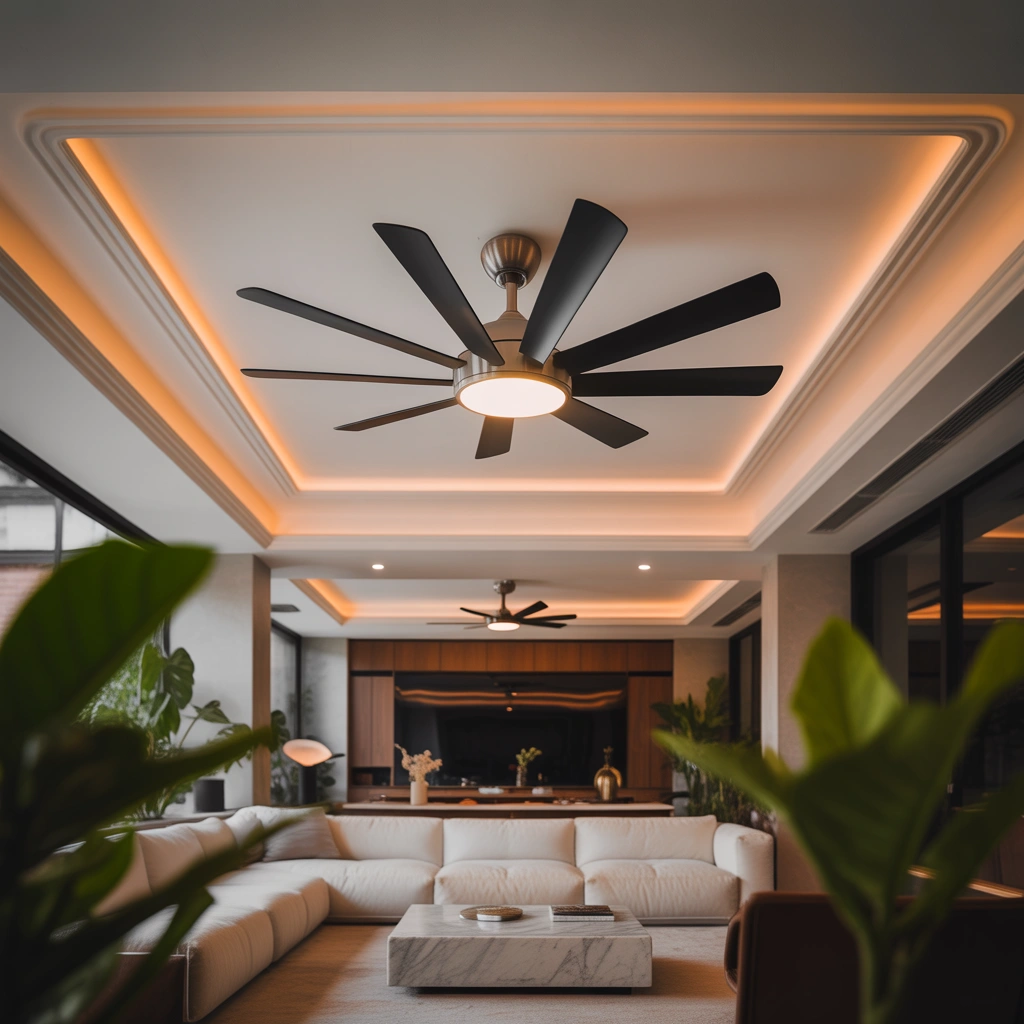
Ceiling fans are practical, but they can also contribute to the overall appearance of the room.
Instead of treating the fan as an afterthought, choose one that matches your interior style.
For modern living rooms, slim fans with simple blades can blend beautifully with minimalist ceilings.
For coastal or natural interiors, wood-look blades can complement organic materials.
Large living rooms may benefit from oversized fans, while smaller rooms need more compact designs.
The finish matters as well.
Black fans create contrast against white ceilings, while white fans blend in for a quieter appearance.
Brass or bronze finishes can add warmth to traditional interiors.
If your ceiling already includes architectural details, make sure the fan is positioned carefully so it does not visually interfere with lighting, beams, or molding.
15. Combine Ceiling Design with Layered Lighting
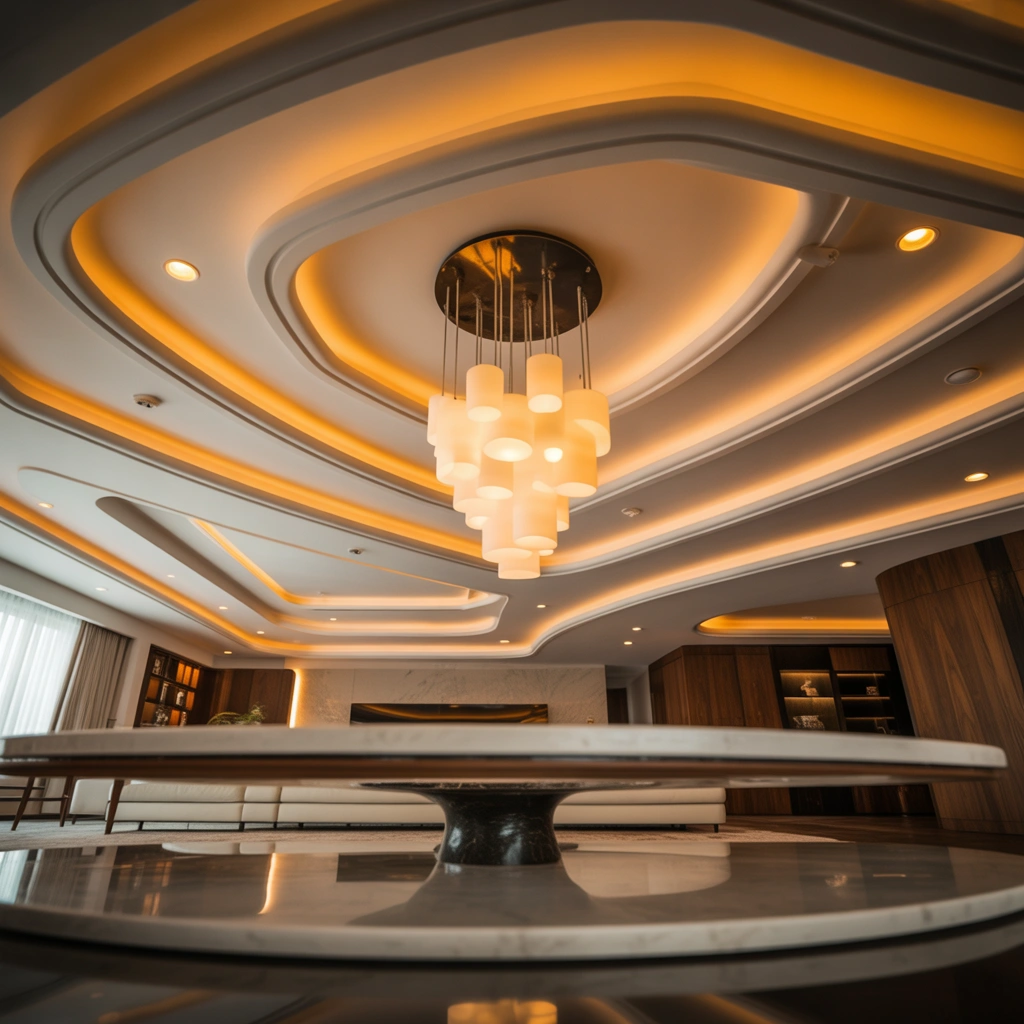
The final idea is less about a specific ceiling style and more about how the entire ceiling works with lighting.
In my experience, lighting is what truly brings ceiling design to life.
A beautifully constructed ceiling can look flat if it only has one bright central light.
Layered lighting creates depth and allows different architectural features to stand out.
A good living room ceiling might combine:
- Recessed spotlights for general illumination
- Hidden LED strips for ambient lighting
- A chandelier or pendant for decoration
- Wall lights for warmth
- Floor and table lamps for task lighting
The ceiling itself can help organize these lighting layers.
For example, recessed lights can follow the outer perimeter while indirect lighting highlights the center.
The goal is to avoid making every light equally bright.
Different lighting levels create atmosphere and make the room feel more sophisticated.
How to Choose the Right Ceiling Design for Your Living Room
With so many ceiling design ideas for living room interiors available, choosing one can feel overwhelming.
I usually start by looking at four things: ceiling height, room size, interior style, and lighting needs.
Consider Ceiling Height
High ceilings give you more flexibility.
You can use beams, deeper tray ceilings, chandeliers, coffering, or layered designs without making the space feel cramped.
Low ceilings require more restraint.
Shallow false ceilings, simple molding, light paint colors, and recessed lighting are usually better choices.
Think About the Size of the Room
Large rooms can visually support stronger ceiling features.
Smaller living rooms often look better with simpler designs because elaborate structures can reduce the sense of openness.
Match the Interior Style
The ceiling should feel connected to the rest of the room.
For example:
A farmhouse interior may suit wood beams.
A luxury room may work beautifully with coffering and chandeliers.
A minimalist living room usually benefits from simple recessed lighting and clean lines.
A bohemian space might look interesting with patterned ceiling wallpaper or warm wood paneling.
Plan Lighting Before Construction
This is something I would strongly recommend.
If you are installing a false ceiling, tray ceiling, or layered ceiling, decide where the lighting will go before construction begins.
Moving wiring afterward can become unnecessarily complicated.
Best Ceiling Colors for a Living Room
Color can have a surprising effect on ceiling design.
White remains popular because it reflects light and makes rooms feel open.
Warm off-white and cream can feel slightly softer.
Beige and greige work beautifully in neutral interiors.
Soft blue can create an airy feeling, while green can introduce a calming natural quality.
Dark ceilings can also look stunning when used carefully.
Charcoal, navy, deep green, and chocolate brown can add drama to rooms with good natural light and sufficient ceiling height.
The important thing is maintaining balance between the ceiling and the rest of the room.
Ceiling Design Ideas for Small Living Rooms
Small living rooms can still have stylish ceilings.
In fact, subtle ceiling details often make compact rooms feel more finished.
For small spaces, I would focus on:
- Shallow tray ceilings
- Simple recessed lighting
- Light ceiling colors
- Thin decorative molding
- One elegant pendant light
- Minimal linear lighting
- Soft indirect LED lighting
Avoid excessively deep false ceilings or large decorative beams if your ceiling is already low.
The goal should be to create visual interest without making the room feel enclosed.
Ceiling Design Ideas for Large Living Rooms
Large living rooms provide much more freedom.
You can introduce stronger architectural features because there is enough space to support them visually.
Consider:
- Coffered ceilings
- Large chandeliers
- Exposed wood beams
- Multi-level false ceilings
- Dramatic dark colors
- Ceiling paneling
- Oversized decorative lighting
In open-concept homes, ceiling design can even help define different areas.
A tray ceiling might highlight the living area while pendant lighting defines the dining space nearby.
This creates separation without requiring walls.
Common Ceiling Design Mistakes to Avoid
Even beautiful ideas can become less effective if the design is not properly planned.
One common mistake is adding too many shapes.
Multiple circles, rectangles, curves, and lighting channels can quickly make a ceiling look visually confusing.
Another mistake is using extremely cool or harsh lighting throughout the room.
Warm or neutral lighting is generally more comfortable for living spaces.
I would also avoid choosing a ceiling design only because it is trendy.
The design should work with your home’s architecture and your personal style.
Finally, always consider maintenance.
Highly detailed ceilings may collect more dust, while complicated lighting systems can be harder to repair.
Sometimes the simplest design remains attractive for the longest time.
Final Thoughts
The ceiling has much more design potential than most people realize. Once you start paying attention to it, you notice how strongly it influences the atmosphere of the entire room.
From elegant tray ceilings and traditional coffering to warm wooden beams, minimalist lighting, bold paint, and decorative wallpaper, there are countless ways to make the ceiling more interesting.
The best ceiling design ideas for living room spaces are not necessarily the most complicated ones. They are the designs that complement the room’s proportions, lighting, furniture, architecture, and personality.
If I were redesigning a living room today, I would first decide whether I wanted the ceiling to quietly support the interior or become a major visual feature. From there, choosing the right materials, lighting, colors, and architectural details would become much easier.
Whether your living room is small and simple or spacious and luxurious, even a thoughtful change to the ceiling can make the entire space feel more intentional. And sometimes, looking upward is exactly what a room needs to feel completely transformed.
