
A large living room gives you plenty of decorating freedom, but it can also make a TV wall surprisingly difficult to design. When the wall is wide, tall, or both, simply mounting a television in the center can leave the entire area looking unfinished. The TV may feel too small for the wall, the furniture may seem disconnected from it, and all that empty space can make the room feel colder than expected.
I have always found that the best large living room TV wall decor ideas are not really about hiding the television. Instead, they are about making the TV feel like an intentional part of the room. With the right combination of wall treatments, storage, lighting, artwork, shelving, and furniture, the television can become part of a much larger focal point.
Another thing I love about decorating a large TV wall is that there is no single correct style. You can create a luxurious marble feature wall, install warm wooden panels, build a modern media unit, surround the television with shelves, or keep everything minimal with soft neutral colors.
Below, I am sharing 12 detailed ideas that can help turn an oversized living room TV wall into a stylish, balanced, and functional feature.
1. Create a Floor-to-Ceiling Wood Slat TV Wall
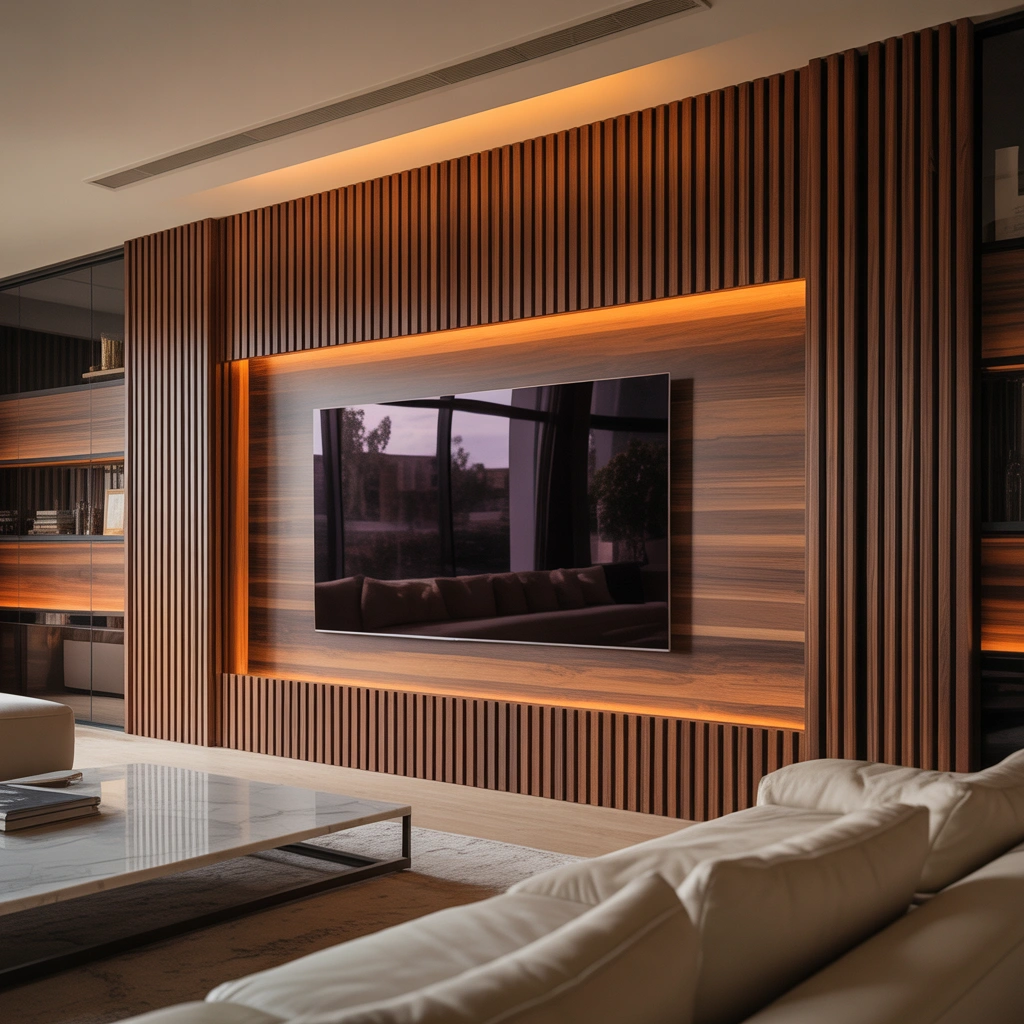
One of my favorite ways to decorate a large living room TV wall is with vertical wood slats. They immediately add warmth and architectural interest without making the room feel overly decorated.
A plain television against a huge white wall can sometimes look isolated. Wood slats solve this problem because they visually expand the entertainment area from floor to ceiling. Instead of seeing only a TV, your eye notices an entire feature wall.
For a contemporary look, I would choose narrow vertical wood strips in oak, walnut, or another warm natural finish. Dark walnut creates a richer, more dramatic appearance, while lighter oak works beautifully in Scandinavian, Japandi, and modern organic interiors.
You do not necessarily need to cover the entire wall. Another option is to install wood slats only behind the television and extend them slightly beyond the width of your media console. This creates a defined TV zone while leaving part of the wall simple.
If your living room has particularly high ceilings, vertical slats are even more useful because they emphasize the height of the space in an elegant way.
I would pair this look with a long floating cabinet underneath the TV. Keep accessories minimal with perhaps a ceramic vase, a few books, and one decorative object.
Warm LED lighting installed behind the wood panels can make the wall look even more impressive in the evening.
2. Design a Luxurious Marble TV Feature Wall
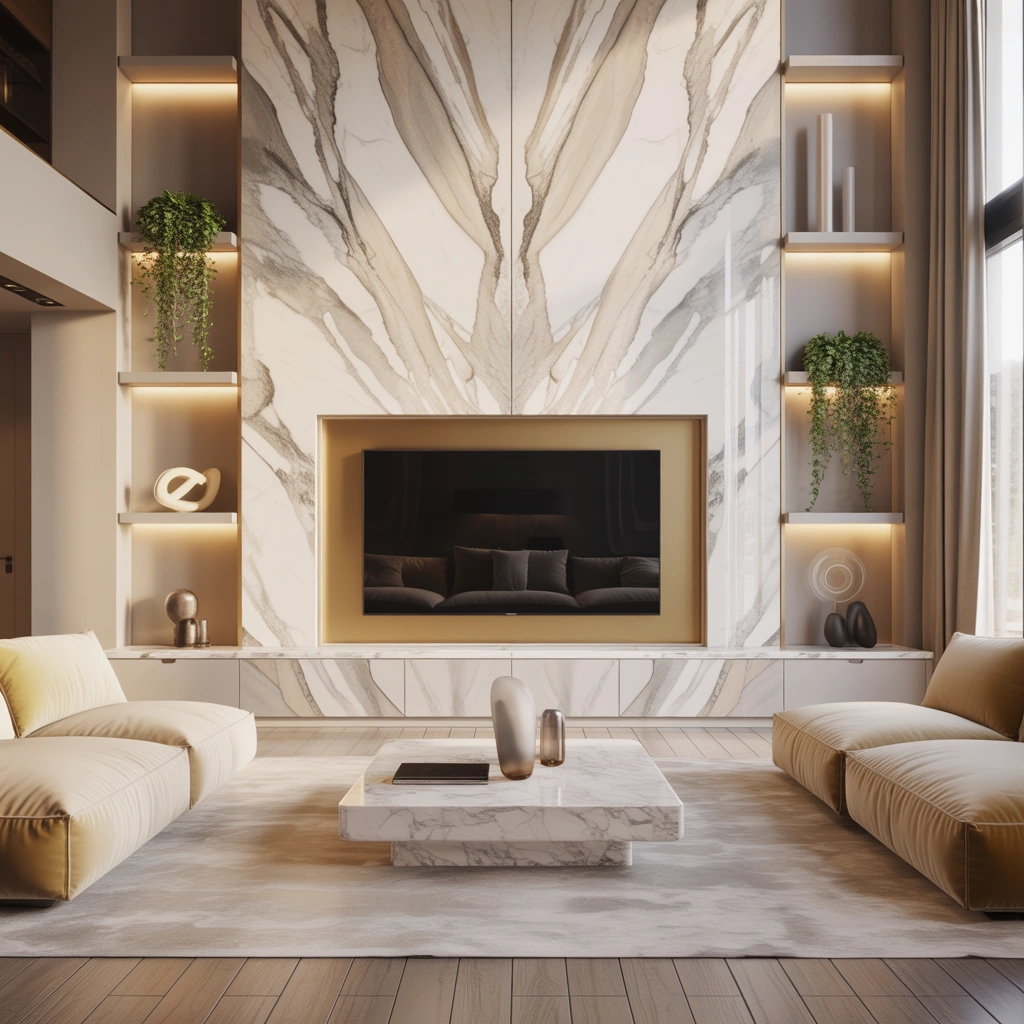
For a more sophisticated interior, a marble-inspired TV wall can completely transform a large living room.
Large-format marble slabs create the kind of visual impact that works especially well in spacious rooms. Because marble has natural veining and movement, the wall looks decorative even without additional artwork.
White marble with soft gray veining is ideal if you want the living room to stay bright and elegant. Beige marble gives the room a warmer atmosphere, while black or charcoal marble can create a dramatic luxury look.
One design detail I especially like is pairing marble with wood. For example, the central section behind the television can be marble, while wooden panels or cabinetry frame the sides.
This combination prevents the wall from feeling too cold.
For a polished appearance, consider hiding television cables inside the wall so that no wires are visible. A floating media cabinet underneath can keep gaming systems, remotes, speakers, and other electronics neatly stored.
Subtle backlighting around the marble panel can also highlight its texture and veining.
The goal here is not to add lots of accessories. Marble already creates enough visual interest, so I would keep the rest of the decor simple.
3. Build a Large Custom Media Wall With Storage
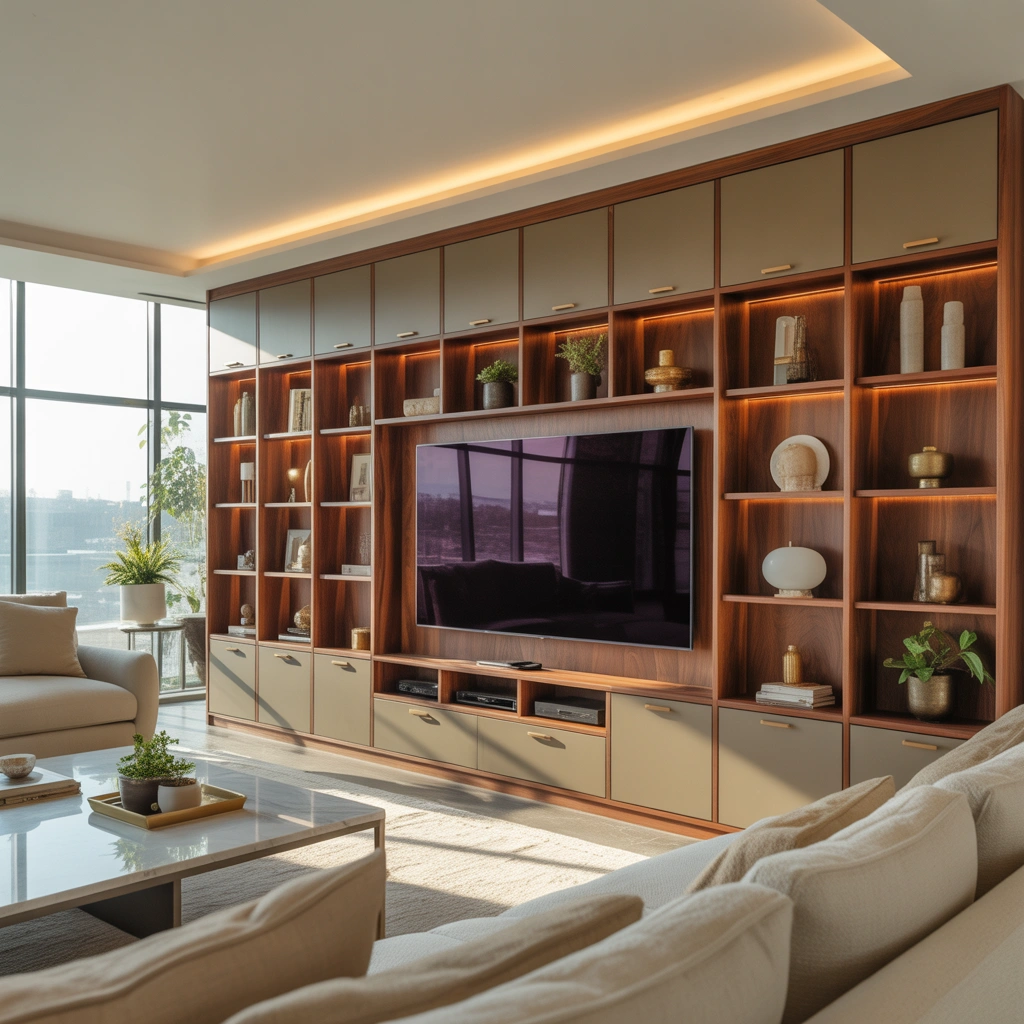
If your living room needs more storage, a built-in media wall can be both beautiful and incredibly practical.
A large television wall gives you enough space to create cabinetry that stretches across most or all of the wall. This can include closed cabinets, display shelves, drawers, bookcases, and decorative niches.
What I like most about this idea is how organized it makes the room feel.
Instead of having a television, console, speakers, books, decorations, and electronic devices scattered around the space, everything becomes part of one coordinated installation.
I would recommend combining open and closed storage.
Closed cabinets are useful for hiding clutter, while open shelves provide space for attractive items such as books, framed photographs, sculptures, plants, and ceramics.
Try not to fill every shelf. Leaving some empty space usually makes a built-in unit look more sophisticated.
For modern interiors, choose flat-front cabinets without visible handles. For a traditional living room, shaker-style cabinetry or decorative trim may be more appropriate.
You can also paint the entire media wall the same color as the surrounding room for a seamless effect.
4. Add Built-In Shelving Around the Television
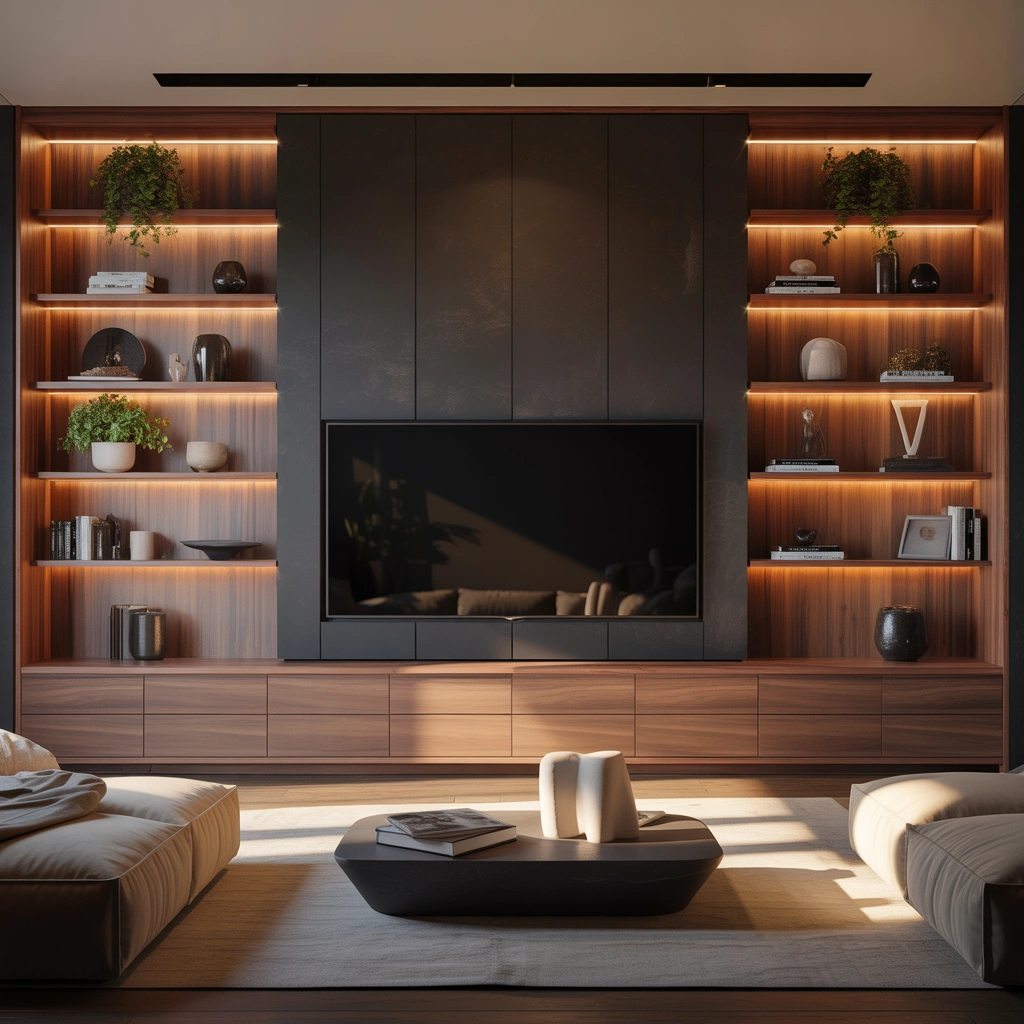
If a full media cabinet feels too heavy, built-in shelving can create a lighter and more decorative TV wall.
Shelves placed on both sides of the television help balance a wide wall while providing plenty of opportunities for styling.
The key is symmetry.
For example, you could install three or four floating shelves on each side of the television. Another possibility is creating floor-to-ceiling shelving towers with the television positioned between them.
When decorating the shelves, I usually recommend mixing objects of different heights and textures.
You might include:
- Decorative books
- Ceramic bowls
- Small sculptures
- Framed photographs
- Green plants
- Candles
- Woven baskets
- Small lamps
Avoid making every shelf look identical. A slightly relaxed arrangement usually feels more natural and inviting.
One mistake I often notice is placing too many tiny accessories around a large television. On a big wall, small decorations can disappear visually.
Choose fewer but larger pieces instead.
5. Frame the TV With Wall Molding
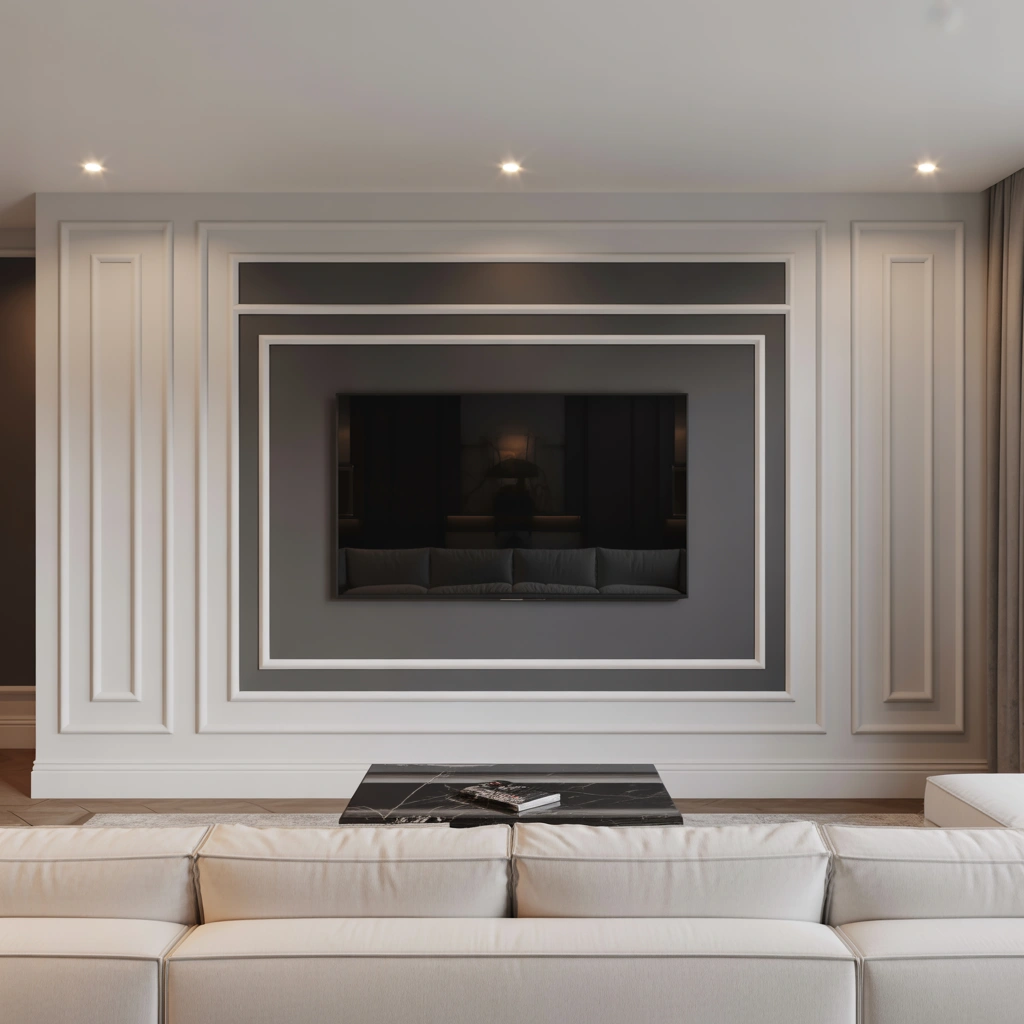
Wall molding is an excellent choice if you want your large living room to feel elegant without using heavy materials.
Decorative molding can transform an ordinary flat wall into something that feels architectural and custom designed.
You can create rectangular panel molding around the television or divide the entire wall into several large framed sections.
For a sophisticated contemporary look, paint the molding and wall the same color. Soft beige, warm white, greige, charcoal, and muted taupe all work beautifully.
You could place the television inside the central panel while using the surrounding panels for wall sconces or artwork.
This approach works particularly well in transitional, Parisian-inspired, modern classic, and luxury interiors.
If your room has tall ceilings, large rectangular molding panels can help emphasize the height while also giving the wall better proportion.
Personally, I would avoid making the molding pattern too complicated. Large walls usually look better with fewer, larger panels rather than dozens of small decorative sections.
6. Use a Dark Accent Wall Behind the TV
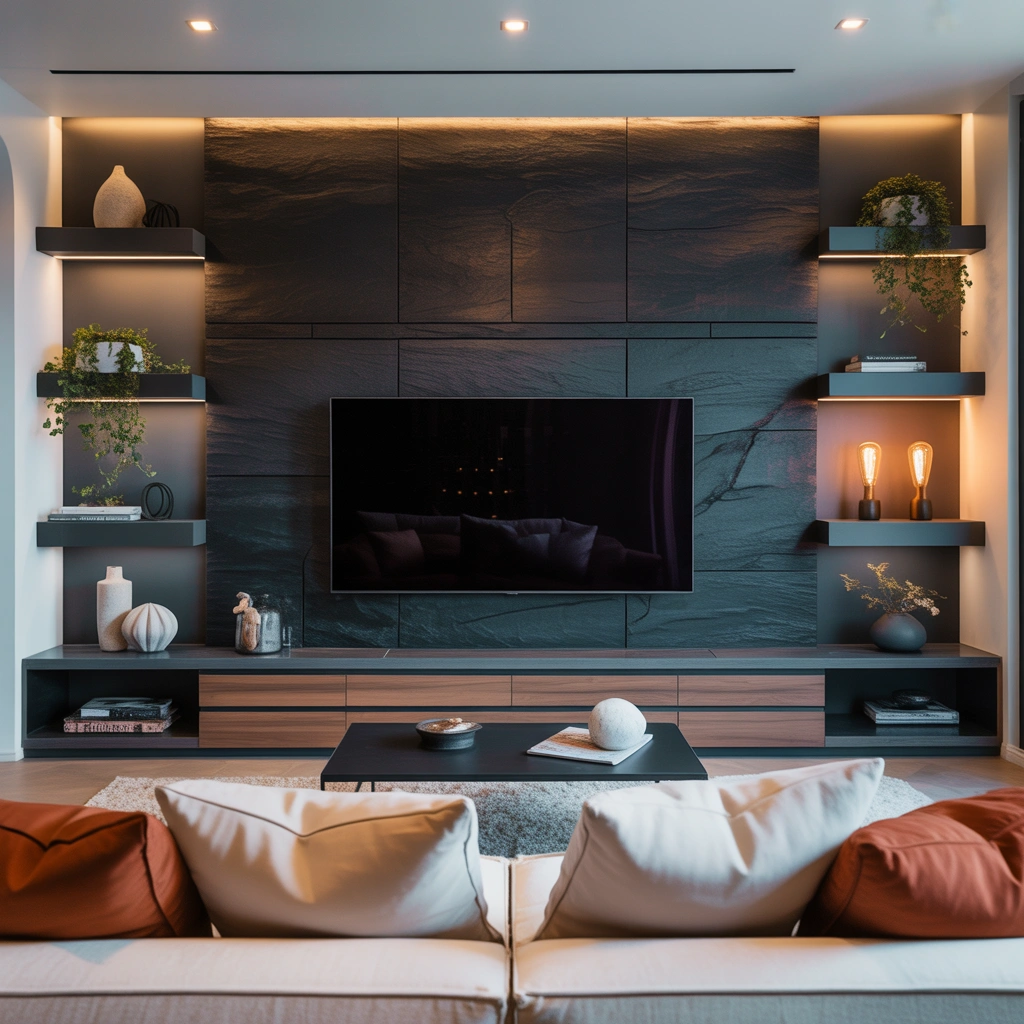
Sometimes the simplest decorating idea can have the biggest impact.
Painting the TV wall a dark color creates instant contrast and makes the television blend more naturally into the background.
Black, charcoal gray, deep navy, dark brown, and forest green are all excellent choices.
A black television screen can sometimes look harsh against a bright white wall. Against a darker background, however, it becomes less visually dominant.
This allows other elements in the room to receive more attention.
If you are worried that a dark wall will make the living room feel smaller, remember that large rooms can usually handle deeper colors much better than small spaces.
You can also soften the look by adding warm wood furniture, textured fabrics, and metallic accessories.
For example, a charcoal TV wall paired with a natural oak media console and cream sofa can look modern without feeling cold.
Lighting is particularly important with dark walls. Wall sconces, floor lamps, and warm recessed lighting can keep the space comfortable and inviting.
7. Add a Fireplace Below the Television
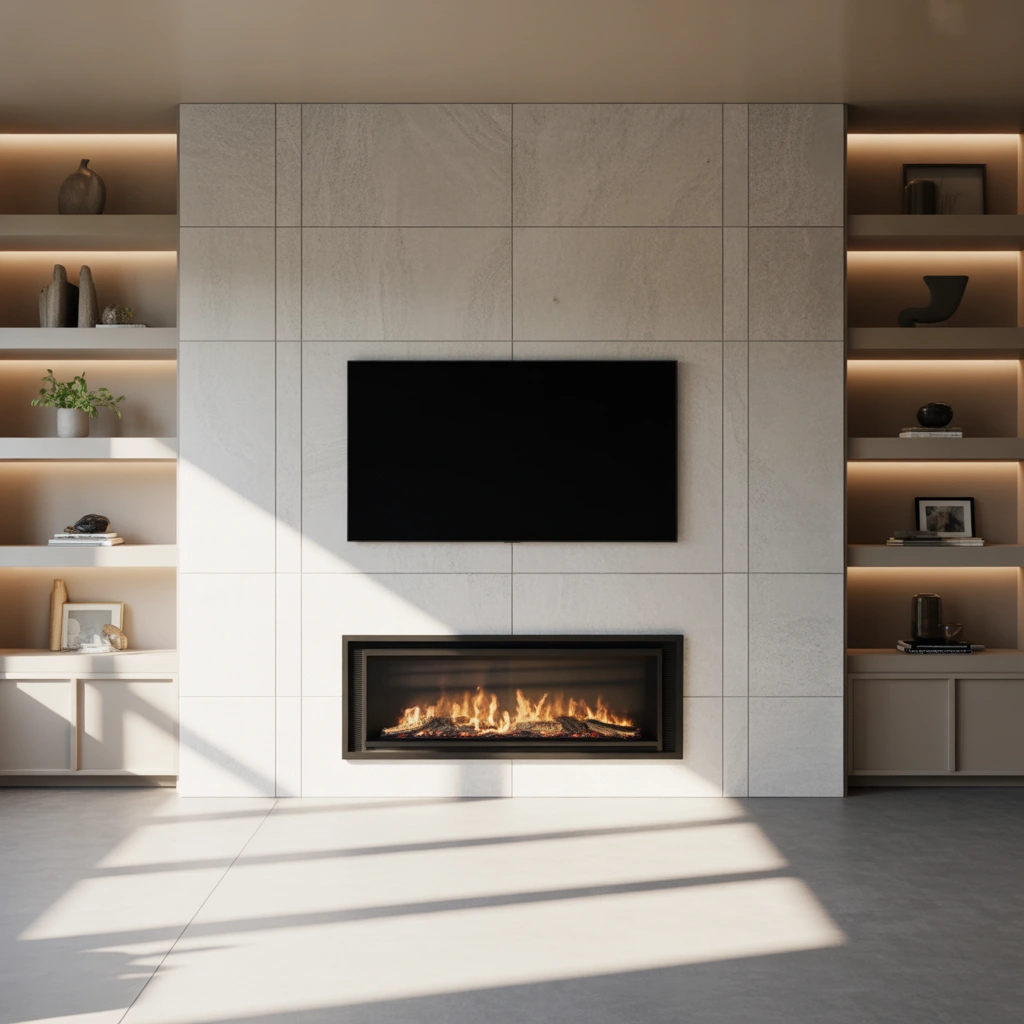
A fireplace and television combination creates one of the strongest focal points for a large living room.
This arrangement works particularly well on wide feature walls because the fireplace adds visual weight underneath the television.
Electric fireplaces are especially popular for modern media walls because they can be incorporated into streamlined designs.
Imagine a large television centered above a long linear fireplace, with textured stone or plaster surrounding both.
The result feels cohesive and intentional.
If you prefer a more traditional look, a fireplace mantel can create a beautiful architectural centerpiece. The television can be mounted above it or positioned nearby depending on the layout.
One important consideration is television height. If the fireplace is very tall, placing the television above it may force the screen too high.
Try to keep the screen comfortable for seated viewing.
You should also follow proper installation and heat-clearance requirements for the specific fireplace and television setup you are using.
From a decorating perspective, the combination works wonderfully with stone, wood, marble, concrete, or plaster wall finishes.
8. Create an Asymmetrical Modern TV Wall
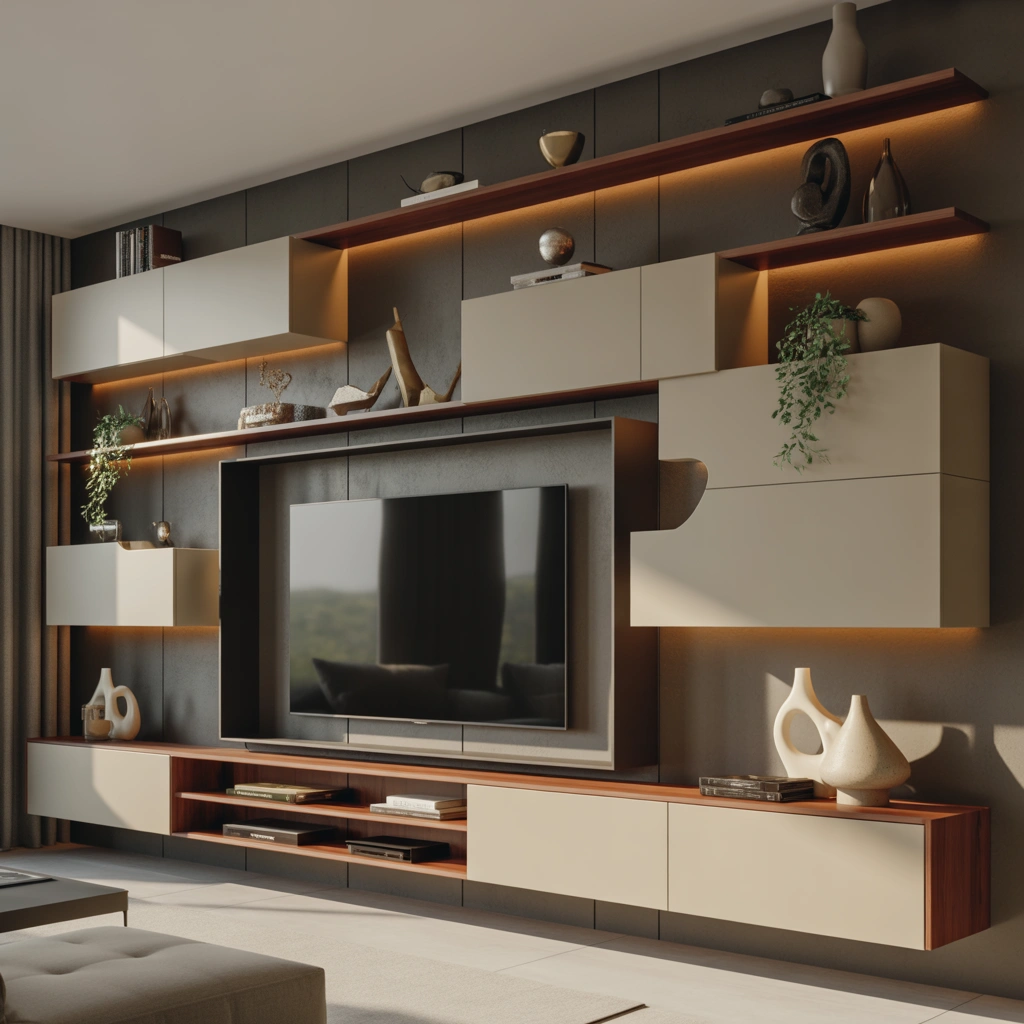
Not every TV wall needs to be perfectly symmetrical.
In fact, an asymmetrical layout can make a large living room feel more creative and contemporary.
You might mount the television slightly off center and balance it with open shelving, a tall plant, artwork, or decorative wall panels on the opposite side.
Another option is installing vertical wood slats behind only one section of the television wall.
This type of design works especially well in modern interiors where the goal is to create movement rather than perfect balance.
However, asymmetry still needs visual balance.
If one side of the television contains a large cabinet, the opposite side might need something substantial such as a tall indoor tree or oversized artwork.
Think about visual weight rather than exact measurements.
For example, several small decorations usually will not balance one very large object.
This approach gives you more flexibility if windows, doors, or architectural features prevent you from centering the television perfectly.
9. Surround the TV With Oversized Artwork
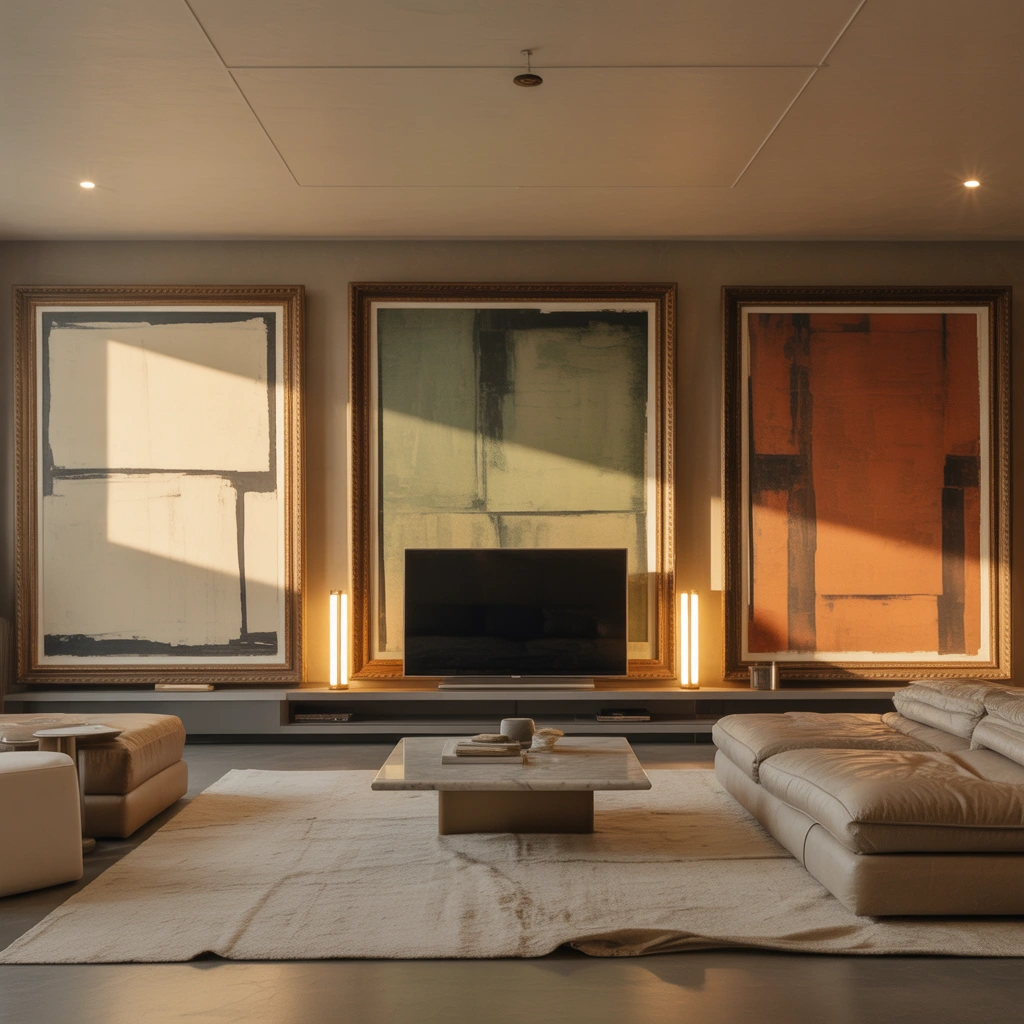
Artwork can make an enormous living room wall feel more personal.
Instead of treating the television as the only visual feature, incorporate it into a larger gallery-style arrangement.
The trick with a large wall is choosing artwork that is substantial enough to match the scale of the room.
Tiny framed prints around a large television often look cluttered.
Instead, use a few large pieces.
You could hang one oversized artwork on either side of the TV or create a carefully arranged gallery wall using medium and large frames.
Keep the frames somewhat coordinated so that the television does not feel disconnected from the composition.
Black frames create a modern look, while wood frames add warmth.
Neutral abstract artwork tends to work beautifully because it adds texture and color without competing too strongly with whatever is playing on the television.
If you prefer a relaxed style, you can also lean framed artwork on a long media console rather than hanging every piece.
Just make sure the arrangement does not block the screen.
10. Install a Long Floating Media Console
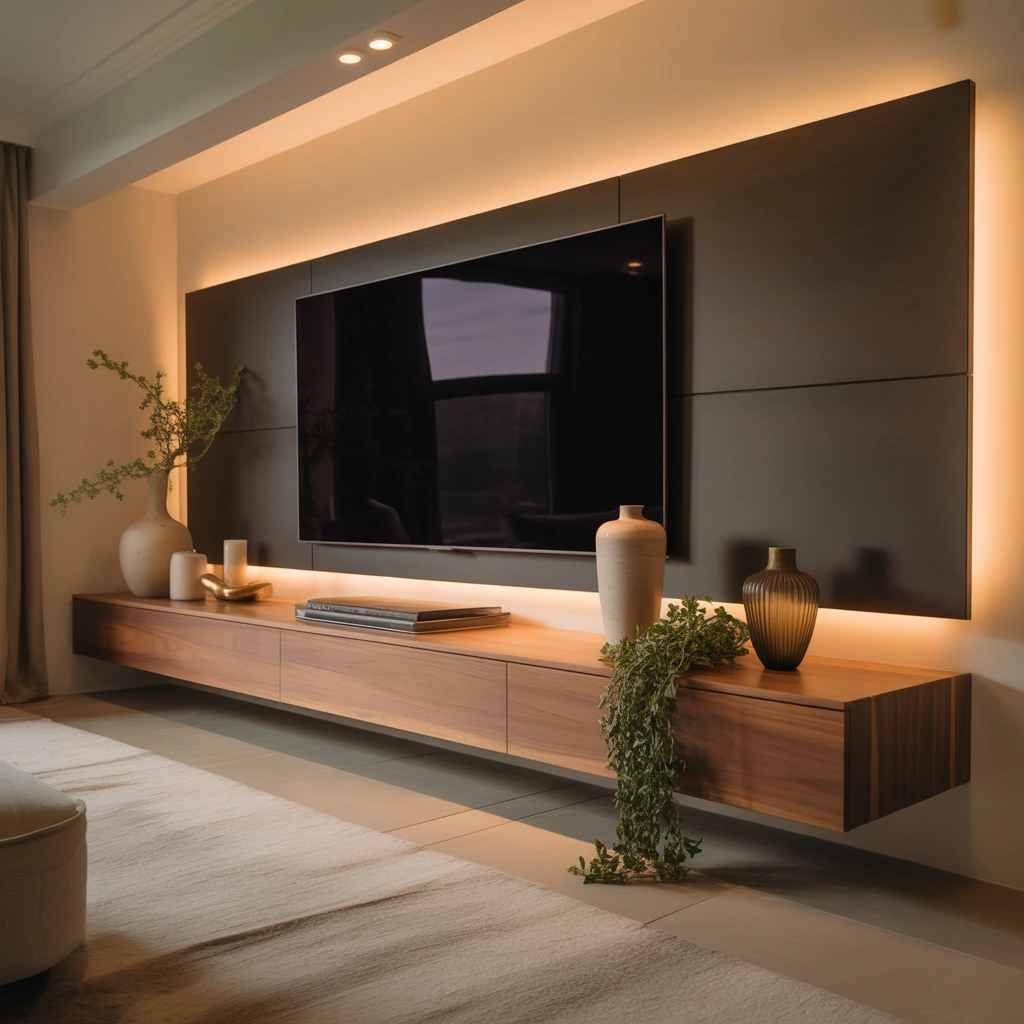
One of the easiest ways to improve the proportions of a large TV wall is to use a media console that is wider than the television.
A small TV stand underneath a large wall often looks visually weak.
A long floating console creates a strong horizontal line that anchors the entire entertainment area.
For very wide walls, you might even use cabinetry that stretches across half or two-thirds of the wall.
Floating cabinets are particularly effective because they create a clean, modern appearance while keeping the floor visually open.
They also make cleaning underneath easier.
Wood finishes can bring warmth to the room, while matte white or black cabinets create a more minimalist look.
Inside the cabinet, you can store electronics, cables, games, remotes, and other items that would otherwise create visual clutter.
For styling, I would keep the top relatively simple.
A large vase, small stack of books, sculptural bowl, and perhaps one table lamp may be enough.
The scale of the accessories should correspond with the scale of the cabinet.
11. Use Textured Stone or Concrete Panels
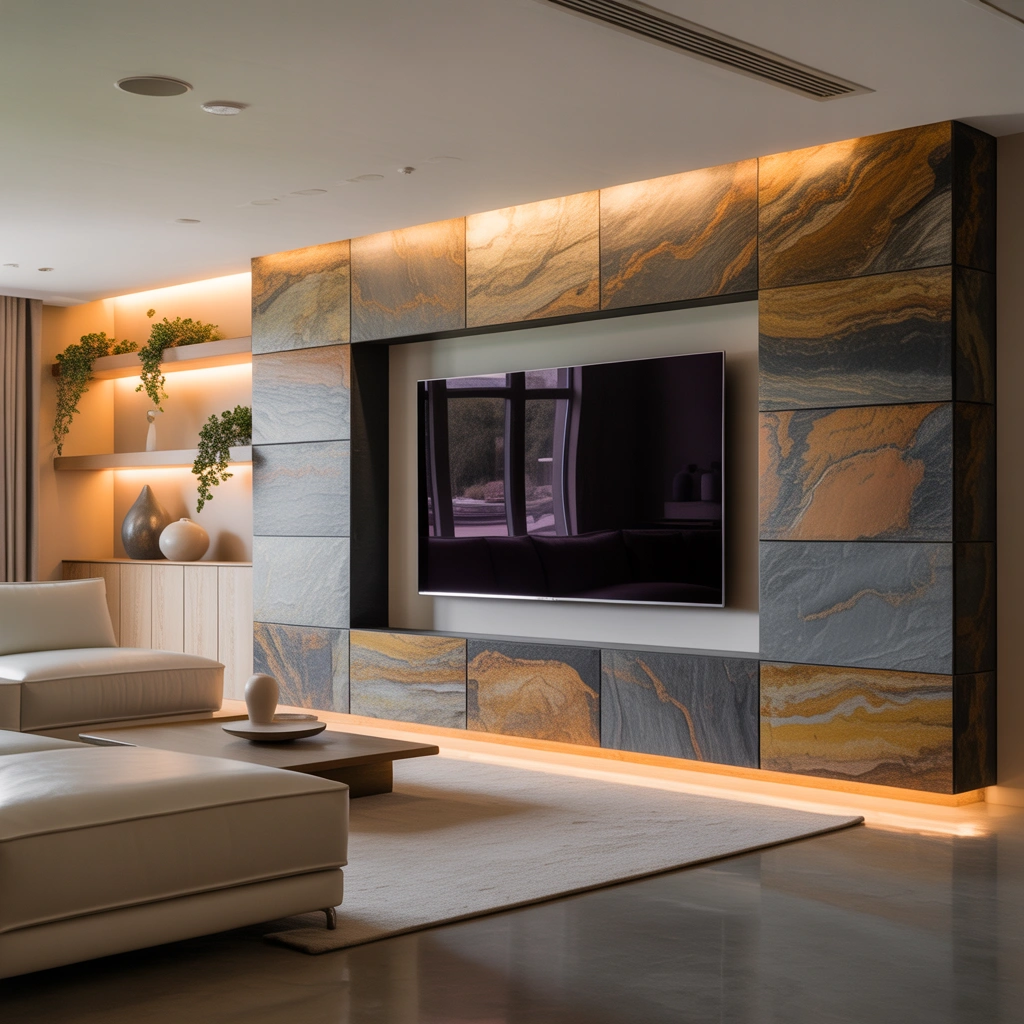
Texture can make a large living room TV wall feel much more interesting without relying on excessive decorations.
Stone, brick, concrete, microcement, or textured plaster can create a strong architectural backdrop.
For a warm organic look, consider light limestone or travertine-inspired surfaces.
For industrial interiors, concrete or dark stone may be more suitable.
A television mounted against textured stone automatically feels integrated into the room because the wall itself becomes the decoration.
One particularly attractive approach is using a large rectangular stone section behind the television while keeping the surrounding walls plain.
This creates a framed focal area.
You could also extend stone across the entire wall for maximum impact.
Lighting can dramatically enhance textured surfaces.
Recessed ceiling lights, wall washers, or concealed LED strips create shadows that highlight the material’s natural depth.
If real stone is outside your budget, high-quality stone-look porcelain or textured wall panels can create a similar visual effect.
12. Combine the TV Wall With Plants and Natural Decor
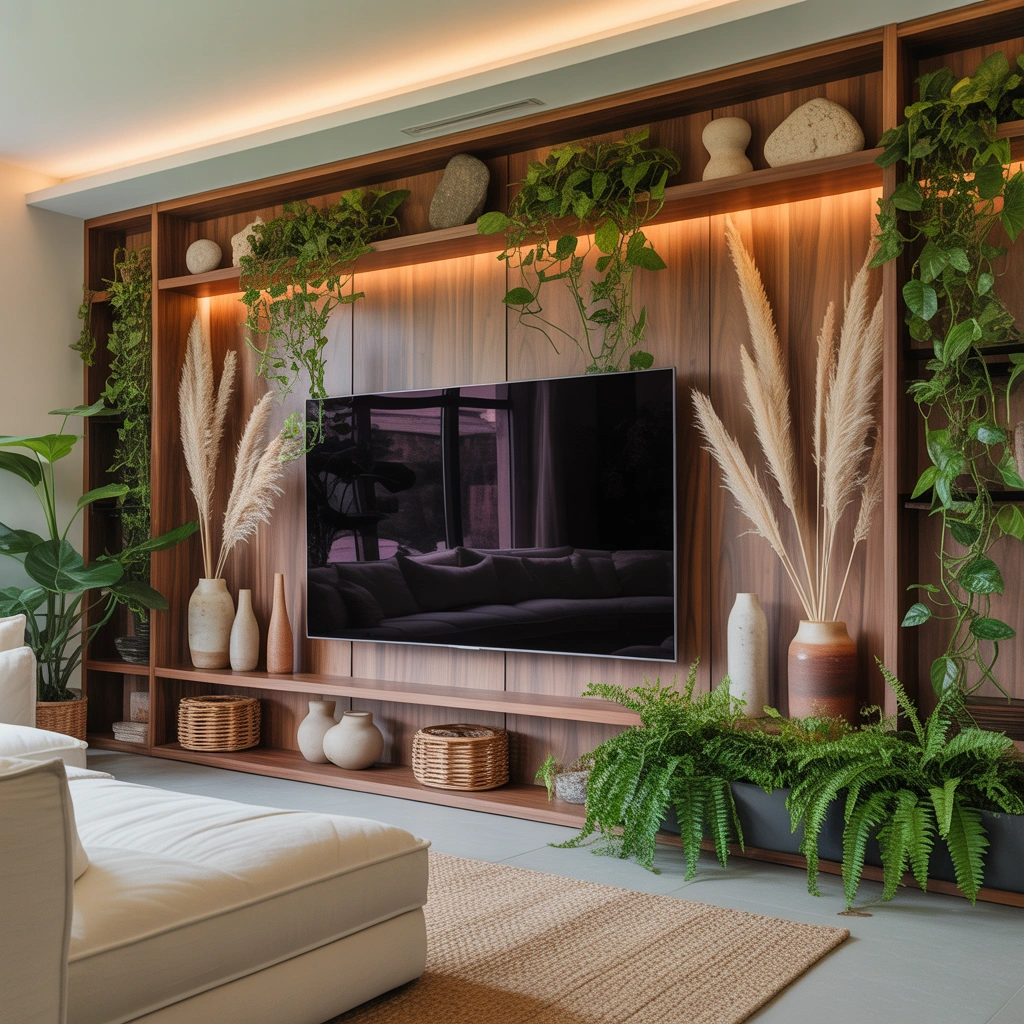
Large living rooms sometimes feel formal or empty simply because they lack natural elements.
Plants are an easy way to soften a large TV wall and make the space feel more comfortable.
A tall indoor tree beside the television can provide height and help fill empty vertical space.
Popular options include fiddle-leaf figs, olive trees, rubber plants, and bird-of-paradise plants.
You can also place smaller plants on shelves or media cabinets.
I especially like combining greenery with wood, stone, woven baskets, ceramics, and neutral textiles.
The mixture creates a relaxed modern-organic atmosphere.
For example, imagine a warm white wall with a floating oak media console. On one side is a tall olive tree in a textured ceramic planter. On the other side are two simple framed prints and a floor lamp.
The composition feels decorated without becoming cluttered.
Artificial plants can also work if the room receives limited sunlight, but choose realistic varieties with natural-looking leaves.
The goal is to make the television area feel like part of a comfortable living space rather than a technology station.
How to Decorate a Very Large Wall Behind a TV
Before buying furniture or wall decor, I always recommend looking at the television wall as one complete composition.
A common mistake is decorating one small area directly around the screen while ignoring the rest of the wall.
Instead, decide how wide and tall you want the overall feature to feel.
If your wall is extremely wide, you may need several layers of visual interest. For example, the television could sit on a central wood panel while built-in shelves fill the sides.
If the wall is very tall, vertical elements such as wood slats, shelving, molding, or artwork can help connect the television area with the ceiling.
Furniture scale matters as well.
A wide wall usually needs a wider console, larger artwork, taller plants, and larger decorative accessories.
Using pieces that are too small can make the wall feel even larger.
How High Should a TV Be Mounted in a Large Living Room?
A large wall can tempt people to mount the television higher simply because there is so much empty space above it.
However, viewing comfort should come before wall proportions.
Ideally, the middle portion of the screen should be close to eye level when you are seated.
The exact height will depend on your sofa height, television size, viewing distance, and whether furniture or a fireplace is positioned underneath.
Before drilling holes, I recommend using painter’s tape to outline the television dimensions on the wall.
Then sit on your sofa and look at the outline.
If you constantly have to tilt your head upward, the television is probably too high.
This simple test can prevent an expensive installation mistake.
What Should You Put Around a TV on a Large Wall?
There are many options, but the strongest TV wall designs usually combine only a few elements rather than everything at once.
You could use shelving and plants, for example, or wall molding and sconces.
A marble feature wall might need almost no extra decoration.
A plain painted wall, on the other hand, may benefit from artwork, cabinetry, and lighting.
The key is deciding what role the television should play.
If you want the TV to disappear visually, choose dark paint, cabinetry, or a gallery arrangement that helps it blend into the wall.
If you want the television area to become the room’s main focal point, use stronger materials such as marble, stone, wood panels, or a fireplace feature.
Best Colors for a Large Living Room TV Wall
Color can completely change how prominent the television appears.
For a bright and airy room, warm white, cream, beige, greige, and soft taupe are easy choices.
For a more dramatic feature wall, charcoal, black, forest green, chocolate brown, and deep navy can be beautiful.
Natural wood tones are especially useful because they add warmth without introducing a strong color.
If you are decorating a large open-plan living room, consider repeating the TV wall colors elsewhere in the space.
For example, if the media wall has walnut cabinetry, you might use the same wood tone on a coffee table or dining furniture.
This creates visual continuity across the larger room.
Lighting Ideas for a Large TV Wall
Lighting is one detail that can turn a basic TV wall into something that looks professionally designed.
Hidden LED strips behind wall panels or floating cabinets can create soft ambient lighting.
Wall sconces can add symmetry and decorative interest.
Recessed spotlights can highlight shelving, artwork, stone, or decorative accessories.
For built-in shelves, integrated lighting inside individual niches can create a beautiful evening atmosphere.
I would avoid extremely bright lights directly beside the television because they can become distracting while watching movies.
Warm, indirect lighting usually works better.
The goal is to create depth without creating glare on the screen.
Common Mistakes to Avoid When Decorating a Large TV Wall
A large wall gives you freedom, but it also makes design mistakes more noticeable.
One common problem is using furniture that is too small. A narrow console underneath a large television may feel unbalanced.
Another issue is adding too many small decorations. Instead of filling the wall with dozens of little objects, choose fewer items with stronger scale.
Mounting the television too high is another mistake I frequently see. Empty wall space above the screen does not mean the television needs to move upward.
Visible cables can also reduce the polished appearance of even the most expensive media wall. Whenever possible, plan cable management during installation.
Finally, avoid mixing too many materials.
Wood, marble, stone, metal, shelving, artwork, lighting, and molding can all look beautiful, but they do not necessarily need to appear together.
Usually two or three coordinated design elements are enough.
How to Make a TV Wall Look Expensive
You do not necessarily need luxury materials to make a large living room TV wall look high-end.
Scale, simplicity, and careful installation often matter more.
A long floating cabinet, hidden wiring, warm lighting, and one beautifully textured wall treatment can already create a sophisticated appearance.
Choose finishes that coordinate with the rest of your living room rather than trying to make the TV wall completely different.
Repeating wood tones, metal finishes, or neutral colors from other parts of the room will make the design feel more intentional.
Large decorative objects also tend to appear more luxurious than clusters of small accessories.
One oversized ceramic vase, sculptural lamp, or statement plant can have more impact than ten small decorations.
Final Thoughts
Decorating a large living room TV wall is really about creating the right balance between entertainment, architecture, storage, and style.
The television does not need to be hidden, but it also does not need to look like a random black rectangle floating on an oversized wall.
Wood slats can introduce warmth. Marble can create luxury. Built-in cabinets provide storage. Shelving gives you decorating space. Dark paint helps the television blend in, while stone, molding, fireplaces, artwork, and plants can add character.
If I were designing a large TV wall from scratch, I would first decide on one main feature material or architectural idea and build everything else around it. That usually produces a cleaner and more cohesive result than trying to add several unrelated decorations.
Most importantly, think about the scale of the entire living room. Large spaces need larger visual gestures. A long console, tall plant, oversized artwork, floor-to-ceiling paneling, or full-width media unit can make the television area feel proportional to the room.
With thoughtful planning, your TV wall can become much more than a place for a screen. It can become the architectural centerpiece that brings the entire living room together.
