
Burgundy is one of those bedroom colors that can completely change the mood of a space. It is deep, warm, dramatic, and sophisticated without feeling as predictable as navy, gray, or beige. When I think of a burgundy bedroom, I picture a room that feels cozy at night, rich in character, and slightly luxurious without needing to look overly formal.
The great thing about burgundy is that you do not have to cover every wall in the room to make an impact. You can bring it into the room through bedding, curtains, an accent wall, furniture, rugs, artwork, or even small decorative details. It also works beautifully with a surprisingly wide range of colors, including cream, warm white, blush, dusty pink, beige, brown, charcoal, black, brass, gold, and natural wood.
If you have been searching for burgundy bedroom ideas because you want your bedroom to feel more intimate and stylish, you are in the right place. I have put together 15 different ways to use burgundy, ranging from dramatic full-room designs to subtle combinations that are much easier to recreate.
1. Create a Dramatic Burgundy Accent Wall
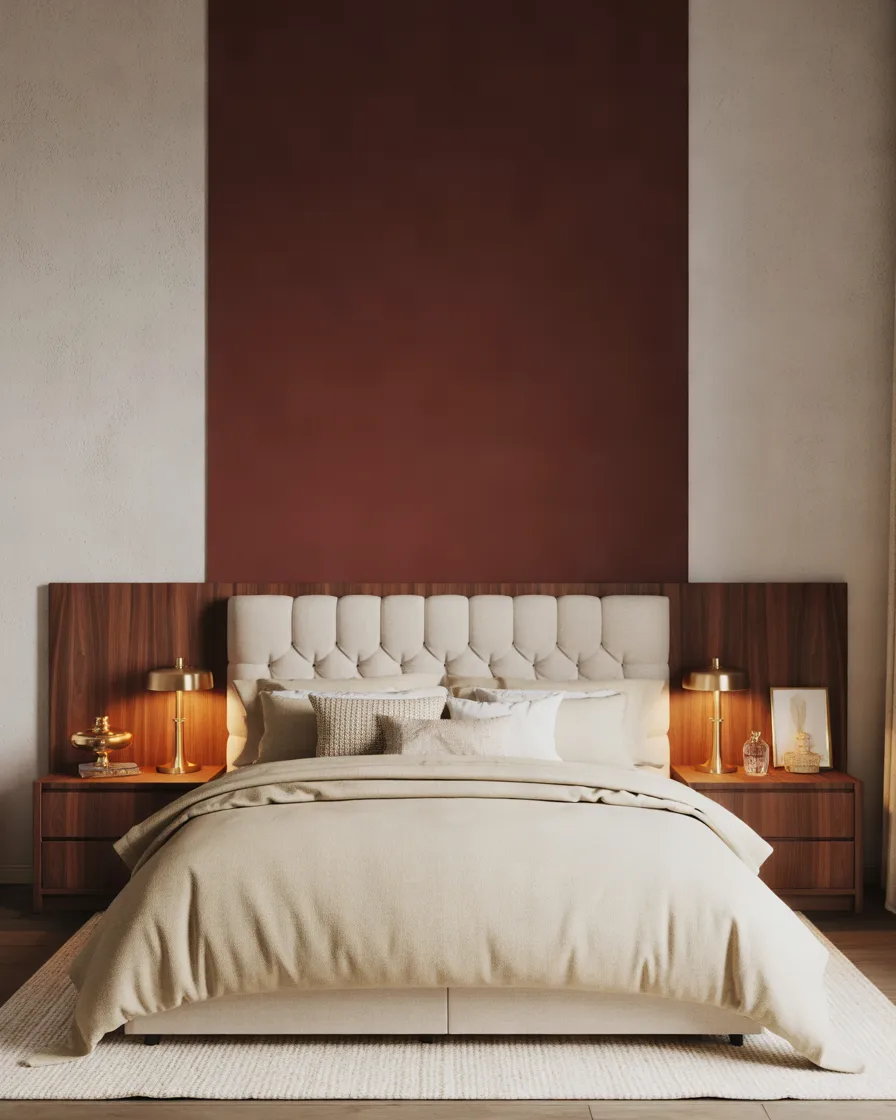
One of my favorite ways to introduce burgundy into a bedroom is with a single accent wall behind the bed. It gives you the drama of a dark, saturated color without making the entire room feel heavy.
The wall behind the headboard is naturally the room’s focal point, so burgundy works especially well there. I would pair it with warm white or creamy walls on the remaining sides to create contrast. A large upholstered headboard can make the accent wall feel even more intentional, especially in beige, ivory, taupe, or soft gray.
Lighting also matters. Warm bedside lamps or wall sconces can bring out the richness of burgundy after sunset and prevent the room from looking too dark.
For furniture, I would choose natural oak, walnut, black, or soft upholstered pieces. Brass or antique-gold details can add another layer of elegance.
This approach is particularly useful if you like burgundy bedroom decor but are not ready to commit to a completely dark bedroom.
2. Layer Burgundy Bedding for a Cozy Look
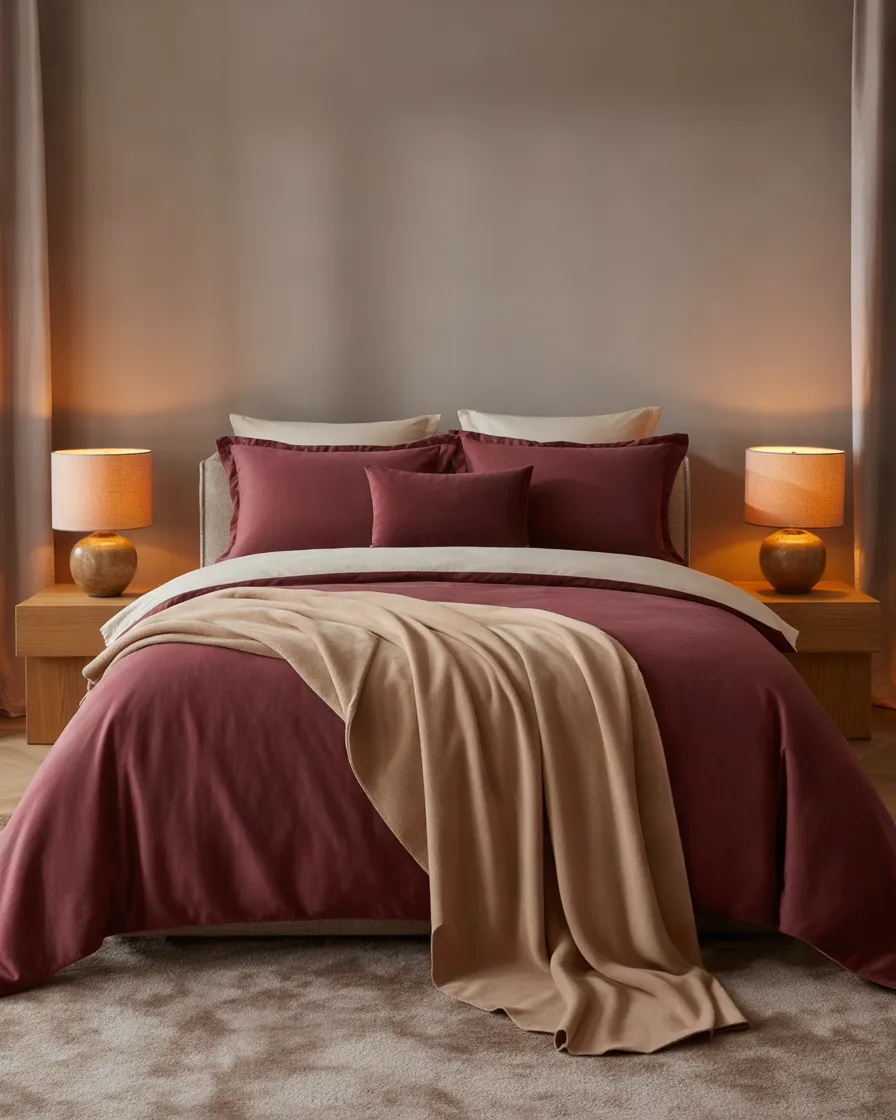
If painting walls feels like too much of a commitment, burgundy bedding is probably the easiest place to start. A burgundy duvet, quilt, comforter, or throw can instantly transform a neutral bedroom.
I especially like the layered approach. Instead of using one burgundy item from top to bottom, combine different textures and slightly different shades. For example, a deep burgundy duvet can be paired with cream sheets, burgundy velvet cushions, a muted rose throw, and a textured beige blanket.
This makes the bed feel inviting rather than overly matched.
The surrounding bedroom can remain relatively simple. White, cream, beige, light gray, and warm wood are excellent foundations because they allow the burgundy bedding to become the star.
If you want a more luxurious appearance, velvet is worth considering. Burgundy velvet has a naturally rich appearance because the fabric catches light differently across its surface.
For me, this is one of the best burgundy bedroom ideas for renters or anyone who wants a seasonal color change without renovating.
3. Pair Burgundy With Cream for a Soft Contrast
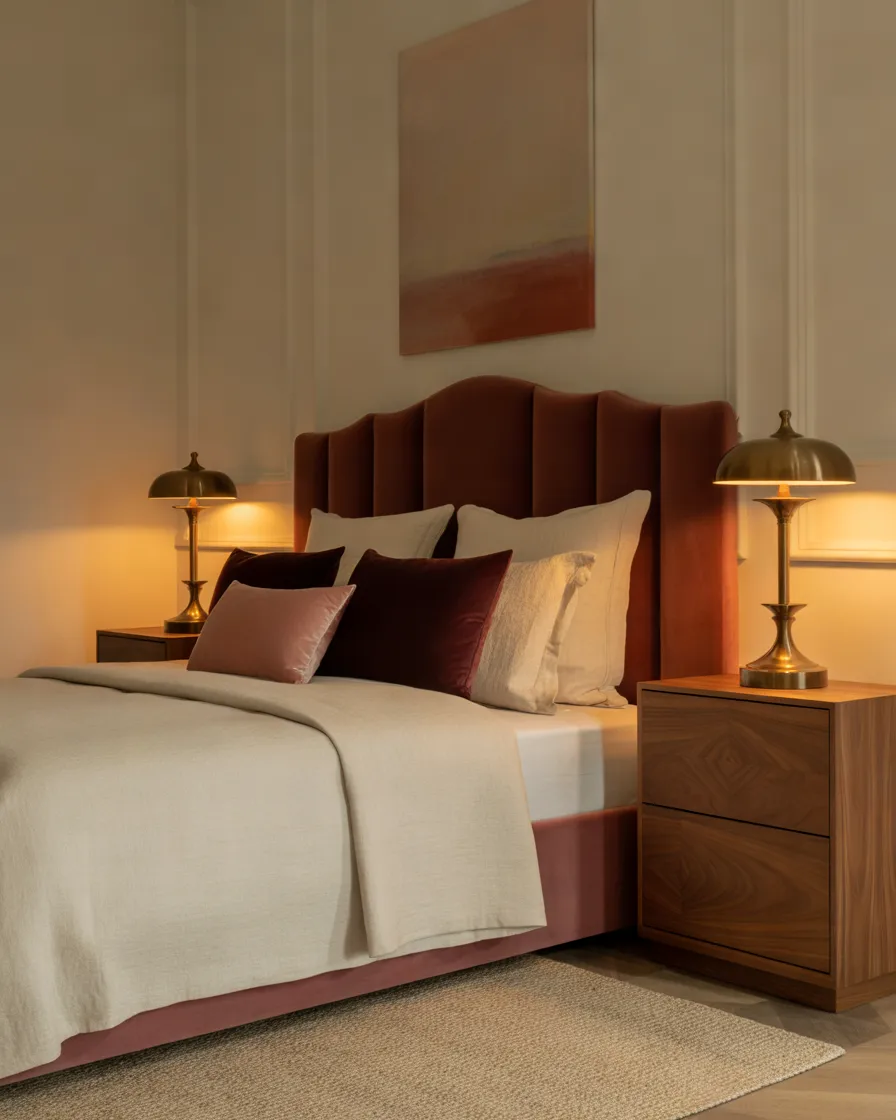
Burgundy and cream are a combination I would recommend when you want warmth without making the bedroom feel too dark. Cream softens the intensity of burgundy while still allowing the deeper color to stand out.
You could use burgundy on the headboard, curtains, bedding, or an accent wall while keeping the rest of the room creamy and light.
I particularly like cream walls with a burgundy upholstered headboard. Add cream bedding, a few burgundy cushions, and warm wooden furniture, and the room immediately feels polished.
Unlike bright white, cream has a warmer undertone that works naturally with burgundy. It also makes wood, brass, leather, and woven materials look more cohesive.
For artwork, choose abstract pieces featuring muted red, beige, brown, and warm white rather than introducing lots of additional colors.
This is a versatile bedroom palette that can work in traditional homes, modern apartments, transitional interiors, and even slightly rustic spaces.
4. Go Moody With Burgundy Walls and Dark Furniture
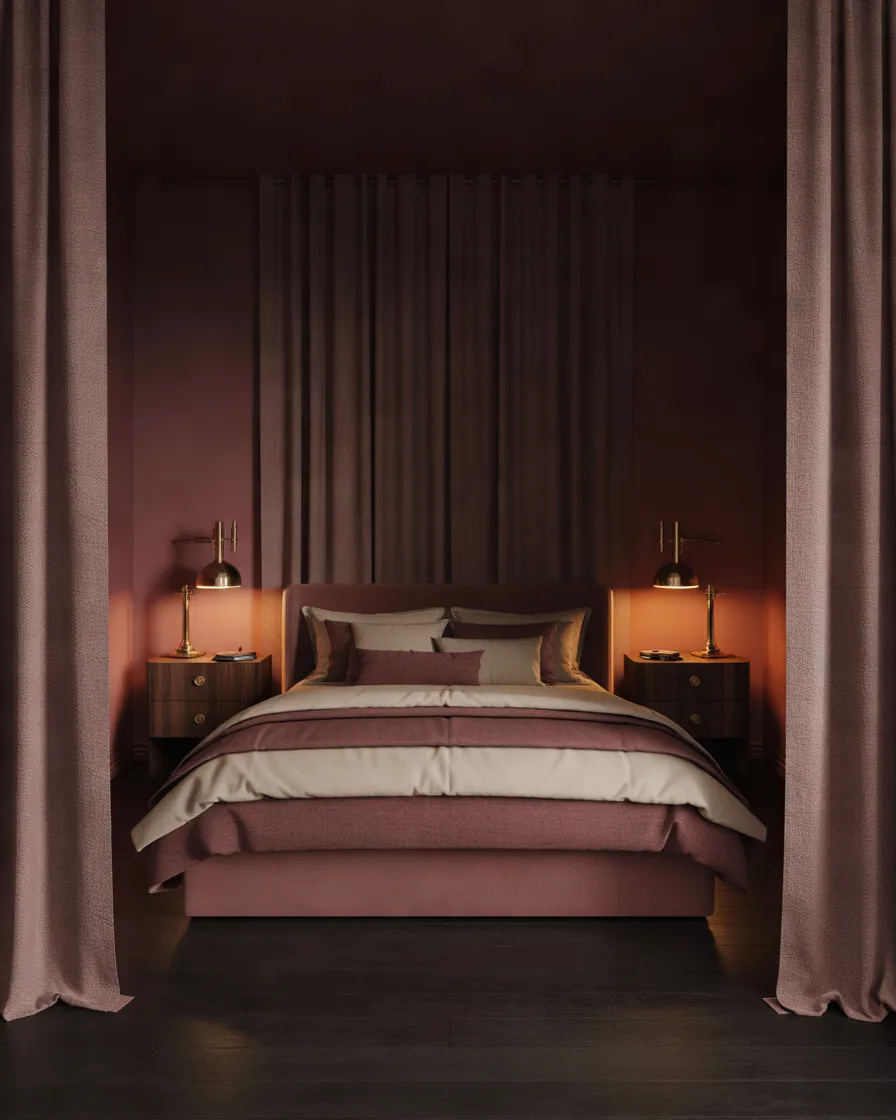
For anyone who loves moody interiors, why not embrace burgundy fully? Painting several or all of the bedroom walls in a rich burgundy shade can create an intimate, cocoon-like atmosphere.
The key is balancing the darkness. I would avoid filling the entire room with equally dark furniture and accessories. Instead, introduce lighter bedding, soft textiles, and reflective details.
A cream or oatmeal-colored bedspread can break up the deep wall color. Dark walnut furniture can reinforce the sophisticated mood, while brass lamps or metallic picture frames provide small points of contrast.
Flooring can remain natural wood, medium brown, or even a warm neutral carpet.
This type of burgundy bedroom design looks especially beautiful in the evening. Warm lamps, dimmable sconces, and subtle indirect lighting make the walls appear rich rather than flat.
It is definitely a bolder choice, but if you want your bedroom to have personality, a moody burgundy palette can be incredibly effective.
5. Add a Burgundy Velvet Headboard
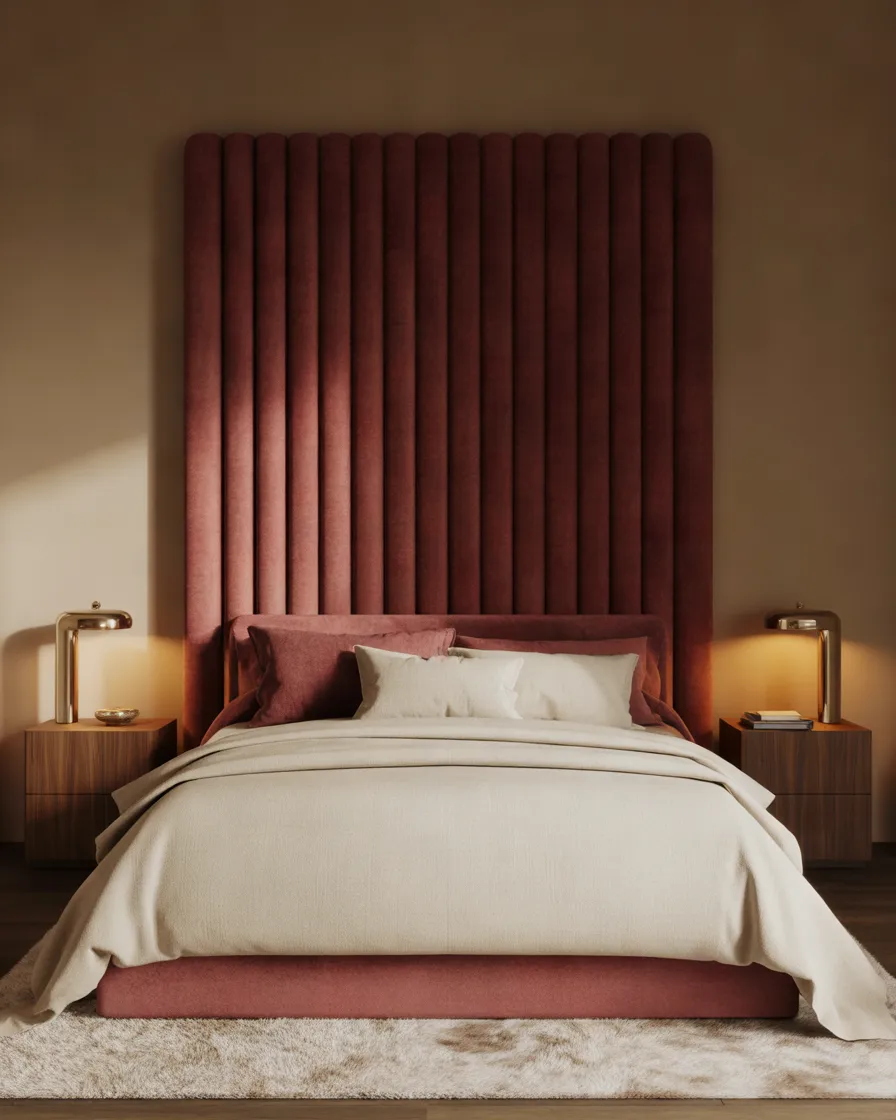
A velvet headboard is an easy way to make burgundy feel luxurious without using the color everywhere.
A tall burgundy velvet headboard immediately gives the bed more presence. I would choose a simple silhouette if the fabric is already rich and dramatic. A softly curved, channel-tufted, or gently arched headboard can look beautiful without overwhelming the room.
Keep the bedding relatively understated. Cream, white, oatmeal, or light gray linens create a lovely backdrop for the velvet.
You can then repeat burgundy in two or three smaller places, such as a cushion, bedside artwork, or a small throw.
I would also consider warm metal finishes. Brass, aged gold, and bronze all complement burgundy beautifully.
The result is a bedroom that feels luxurious but not excessively decorated. It is particularly suitable if you want the bed to be the main visual feature.
6. Mix Burgundy With Blush Pink
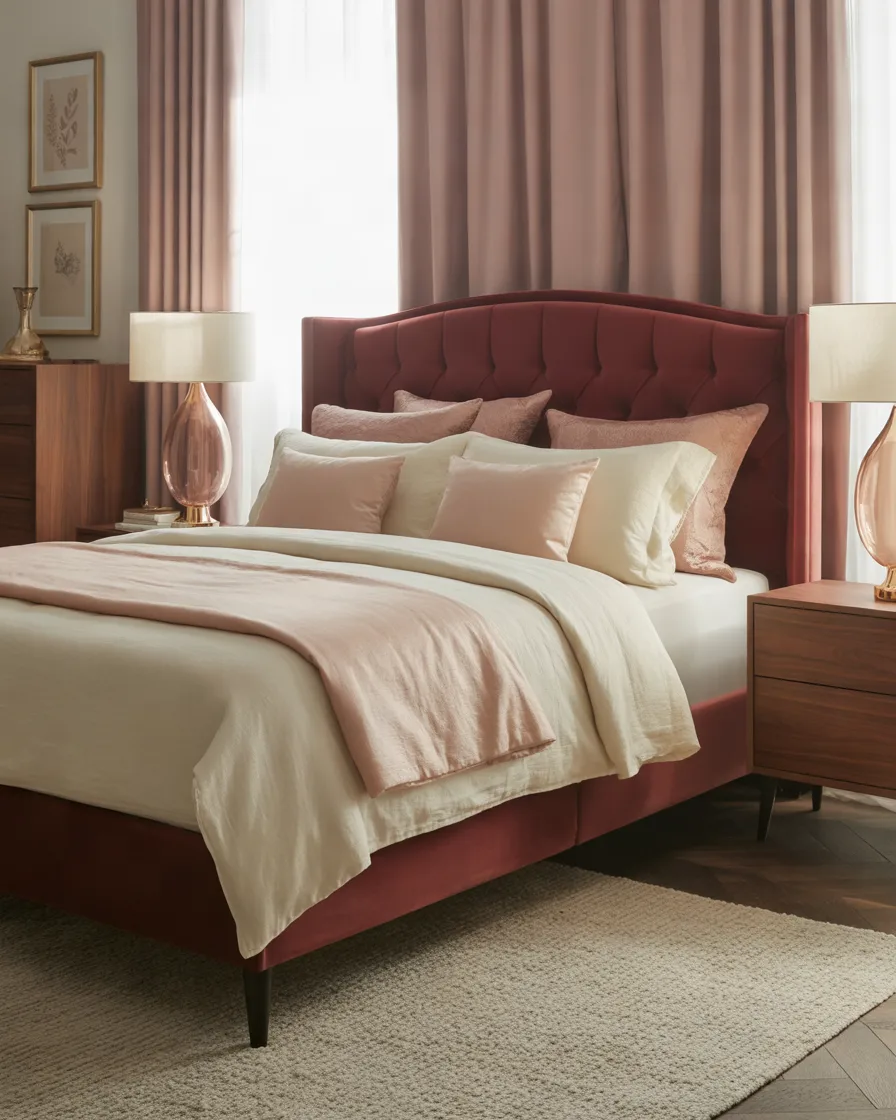
Burgundy and blush pink might sound like an unusual pairing, but the contrast can be incredibly beautiful when the shades are carefully balanced.
Instead of choosing a bright pink, I would use a muted dusty blush. It feels more sophisticated and allows burgundy to remain the dominant color.
For example, you could have a burgundy upholstered bed, blush curtains, cream bedding, and warm wood furniture. Add a few darker burgundy cushions to visually connect the colors.
This palette works particularly well in bedrooms where you want warmth and softness at the same time. The blush prevents burgundy from feeling too serious, while burgundy gives the pink a more mature appearance.
Gold or champagne-colored accents can complete the look.
I would keep the rest of the color palette fairly restrained. Too many additional shades could make the room lose its elegant character.
7. Use Burgundy Curtains for an Elegant Statement
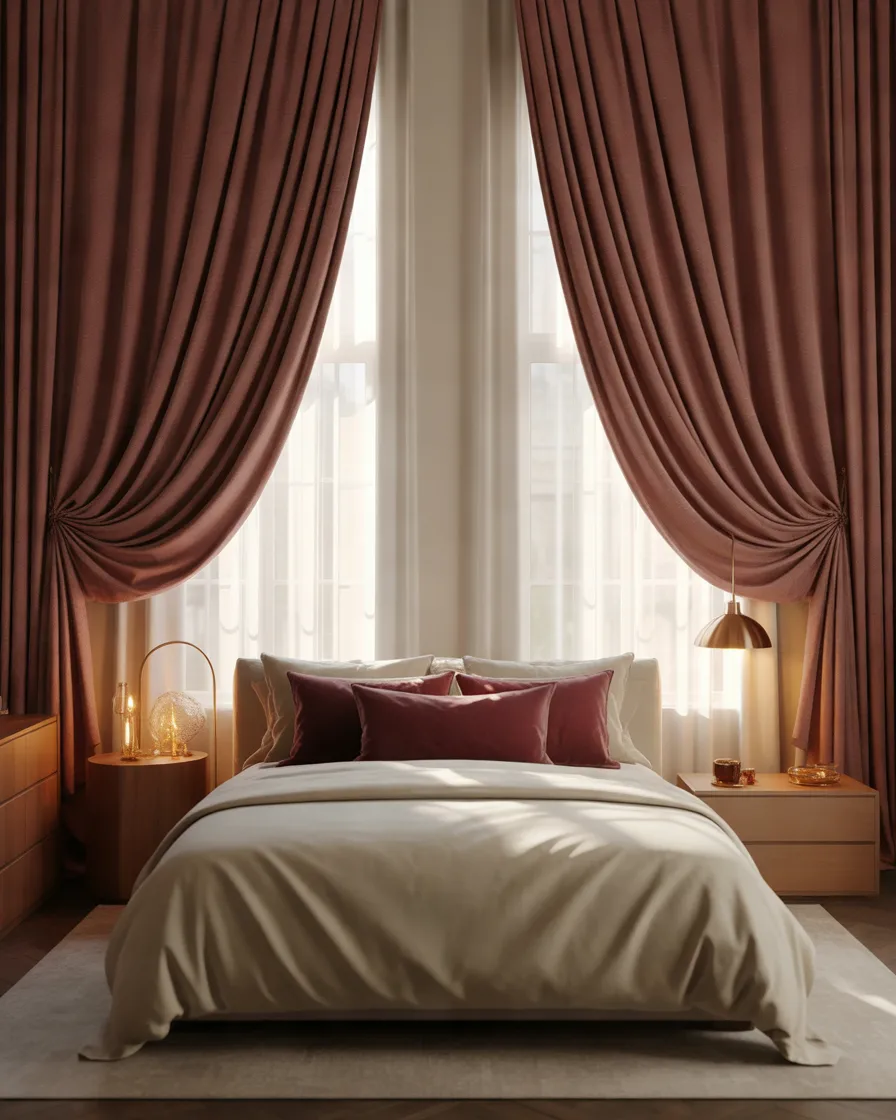
Sometimes the simplest changes create the biggest visual difference. Burgundy curtains can frame a bedroom beautifully while adding color without requiring permanent changes.
I would choose full-length curtains that extend from close to the ceiling down toward the floor. This makes the room feel taller and gives the fabric a more luxurious appearance.
Velvet, linen-look, and heavier woven fabrics can all work, depending on the mood you want.
If the walls are cream, beige, soft gray, or white, burgundy curtains immediately become a statement feature. You can repeat the color with a small cushion or throw on the bed, but you do not need to overdo it.
For smaller bedrooms, consider using burgundy only on one window wall and keeping the remaining textiles lighter.
This is also one of the easiest burgundy bedroom ideas to update later because curtains can be replaced without repainting or replacing furniture.
8. Combine Burgundy With Warm Wood
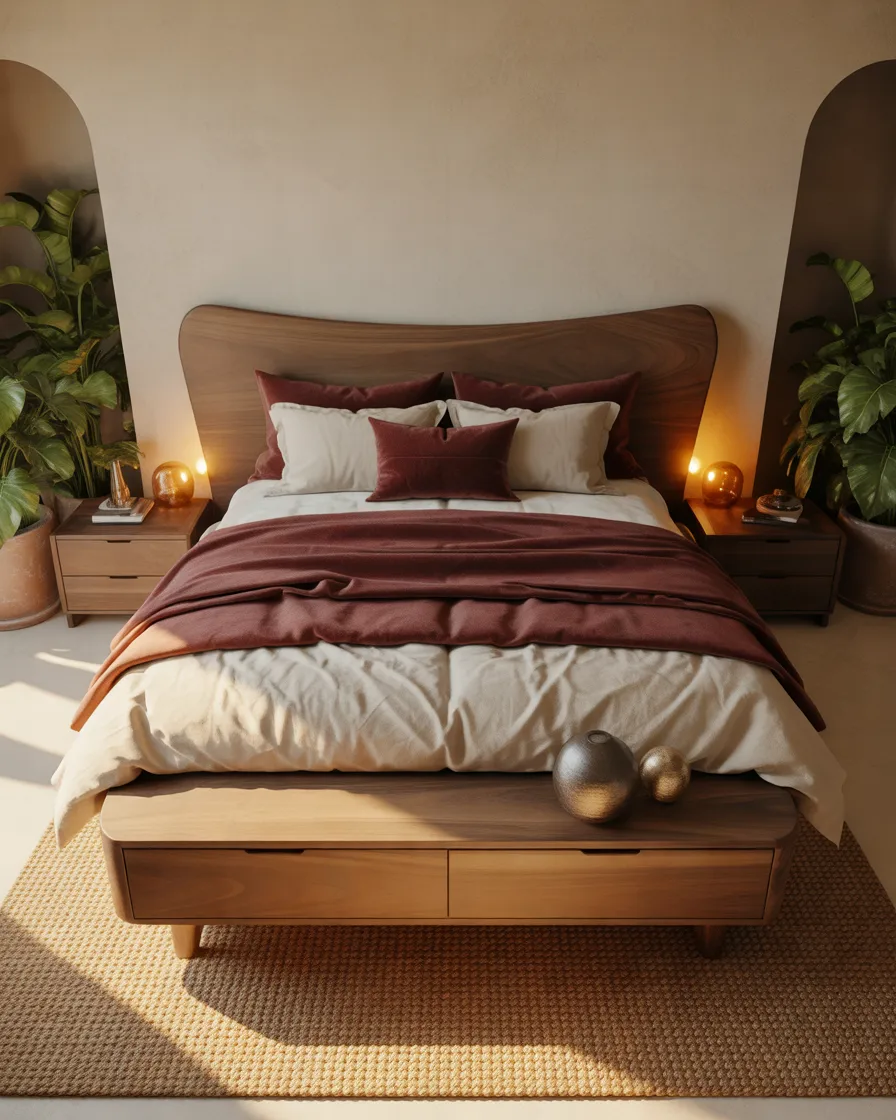
Burgundy and natural wood create a wonderfully grounded bedroom palette. The deep red adds richness while wood introduces warmth and organic texture.
I would particularly recommend walnut, medium oak, or warm brown wood tones. A wooden bed frame, nightstands, dresser, or exposed wood details can work beautifully with burgundy bedding or walls.
For example, imagine a warm oak bed, cream linen sheets, burgundy quilt, woven rug, and simple wooden nightstands. The result feels comfortable rather than overly glamorous.
If your bedroom already has wooden flooring or furniture, adding burgundy through textiles may be all you need.
Plants can also work well with this palette. Green foliage creates a natural contrast against the deeper red, particularly when the burgundy is used in small to medium amounts.
This combination is ideal for anyone who wants burgundy bedroom decor that feels warm, relaxed, and timeless.
9. Try a Burgundy and Charcoal Bedroom
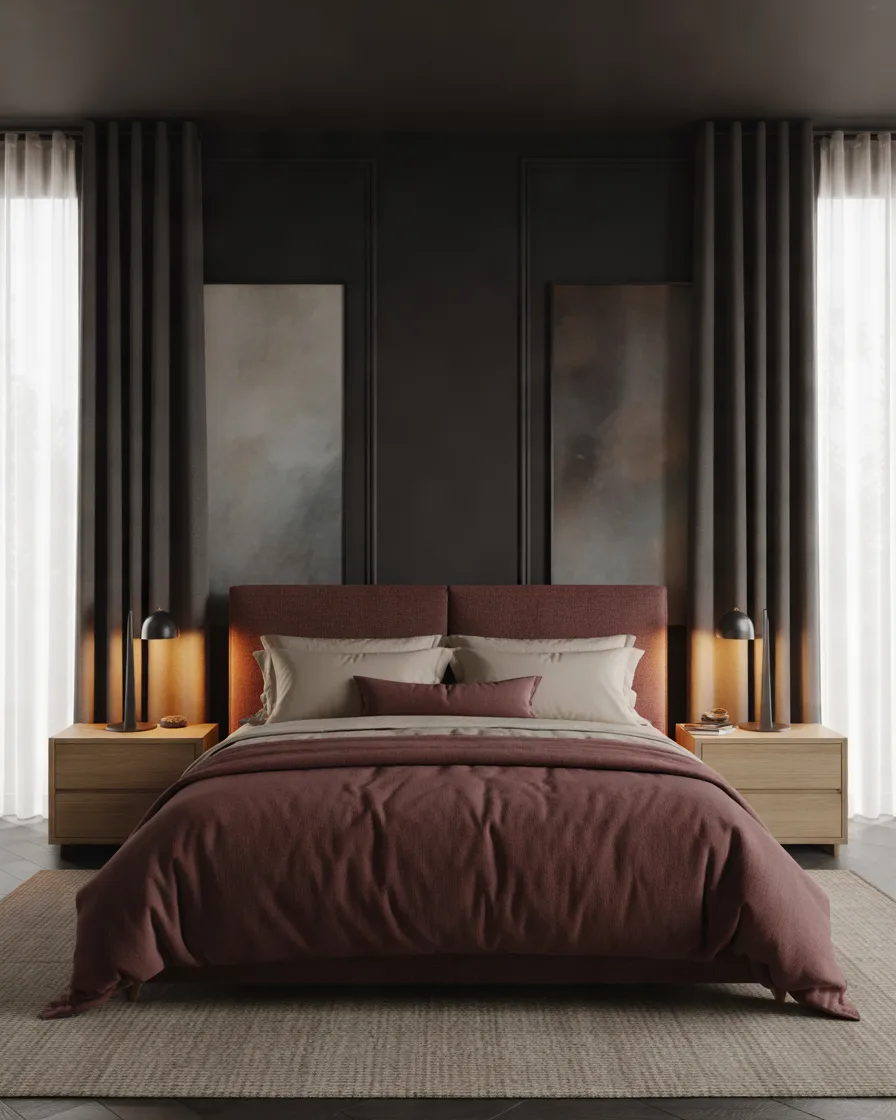
If you prefer contemporary and slightly masculine bedroom designs, burgundy and charcoal can be a strong combination.
Charcoal provides a cool, deep neutral that balances burgundy’s warmth. However, because both colors are dark, I would introduce lighter elements to keep the room from feeling closed in.
Cream sheets, pale gray pillows, light wood, or a soft neutral rug can provide the necessary contrast.
You can use burgundy on the bed and charcoal on the curtains, accent chair, or one wall. Alternatively, use charcoal walls with burgundy bedding for a more dramatic appearance.
Black metal lighting and simple modern furniture can reinforce the contemporary style.
The key is texture. When working with several dark colors, velvet, linen, wool, boucle, and woven materials prevent the room from looking flat.
10. Bring Burgundy Into a Traditional Bedroom
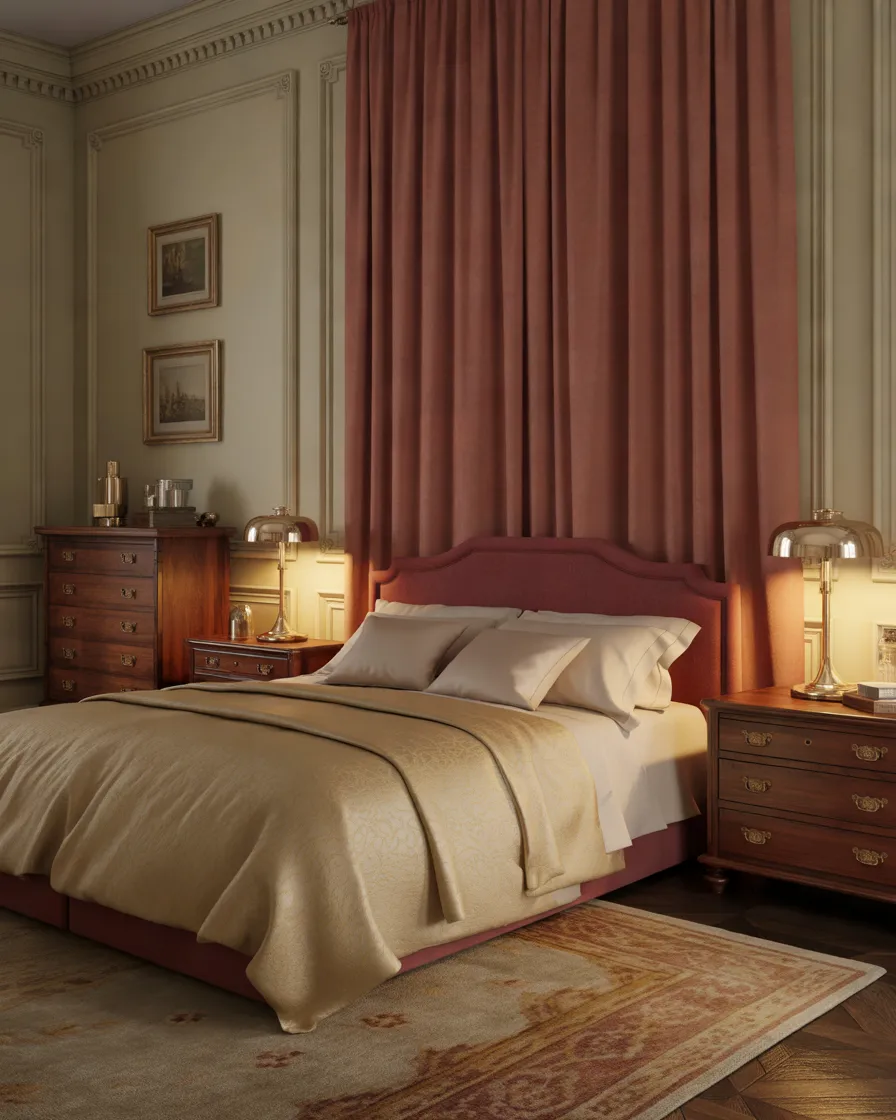
Burgundy has a natural connection with classic interiors, so it works beautifully in traditional bedrooms.
If you have panel molding, ornate furniture, classic bedside tables, or traditional architectural details, burgundy can enhance those features rather than compete with them.
I would consider burgundy curtains, a patterned rug, or a traditional upholstered headboard. You can combine these with cream walls, antique-style furniture, brass hardware, and classic artwork.
Pattern is also welcome here. Floral, botanical, damask, or subtle geometric patterns can introduce burgundy without making every surface solid-colored.
The trick is moderation. Choose one major burgundy feature and then repeat the color in smaller details.
This approach creates a bedroom that feels established and timeless rather than trendy.
11. Design a Burgundy Bedroom With Gold Accents
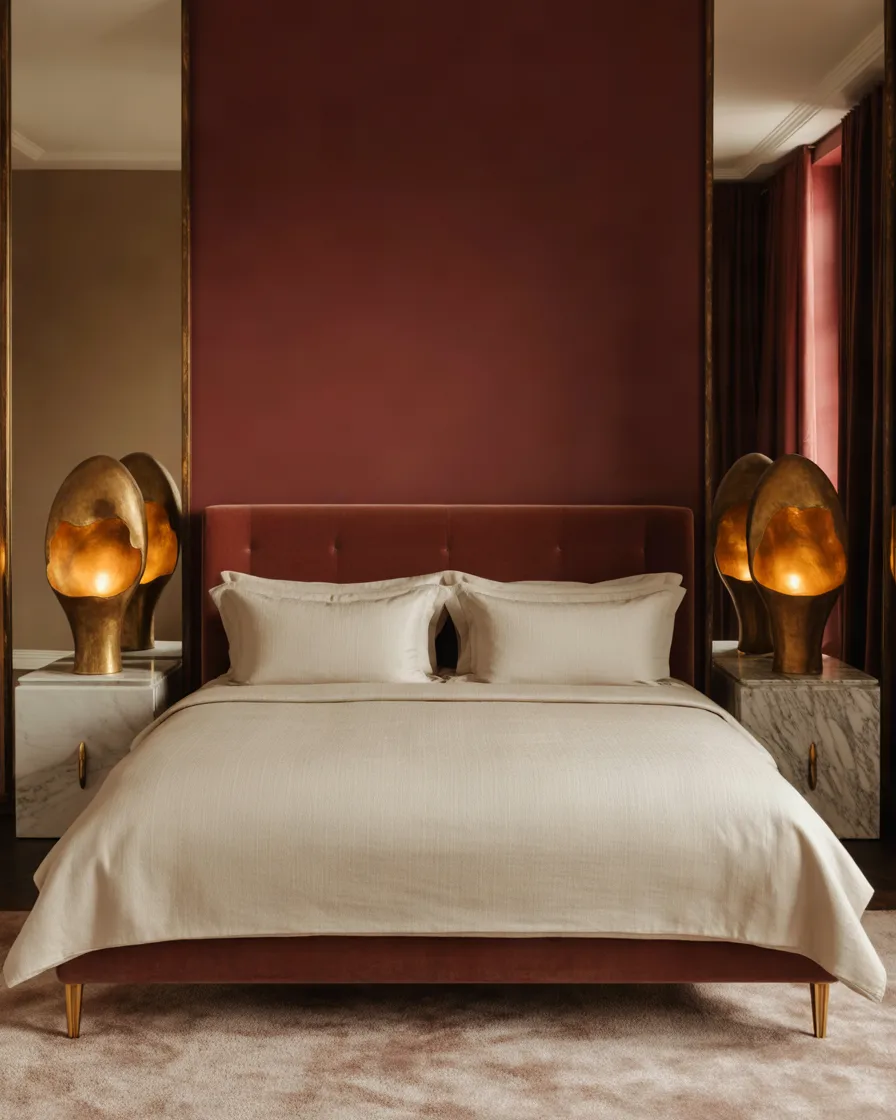
If your idea of a dream bedroom includes a little glamour, burgundy and gold are hard to beat.
The combination works because both colors have a naturally rich visual quality. However, I would use gold as an accent rather than covering the room with metallic finishes.
A burgundy bed or accent wall can become the foundation. Then introduce gold through lighting fixtures, drawer pulls, mirrors, picture frames, or small decorative objects.
Warm cream bedding can keep everything balanced.
For an especially sophisticated result, choose brushed, antique, or aged gold rather than extremely shiny yellow gold. These finishes tend to look more refined against deep burgundy.
You can also introduce marble or stone surfaces for another layer of luxury.
The final result should feel elegant and intentional rather than flashy.
12. Use Burgundy in a Small Bedroom
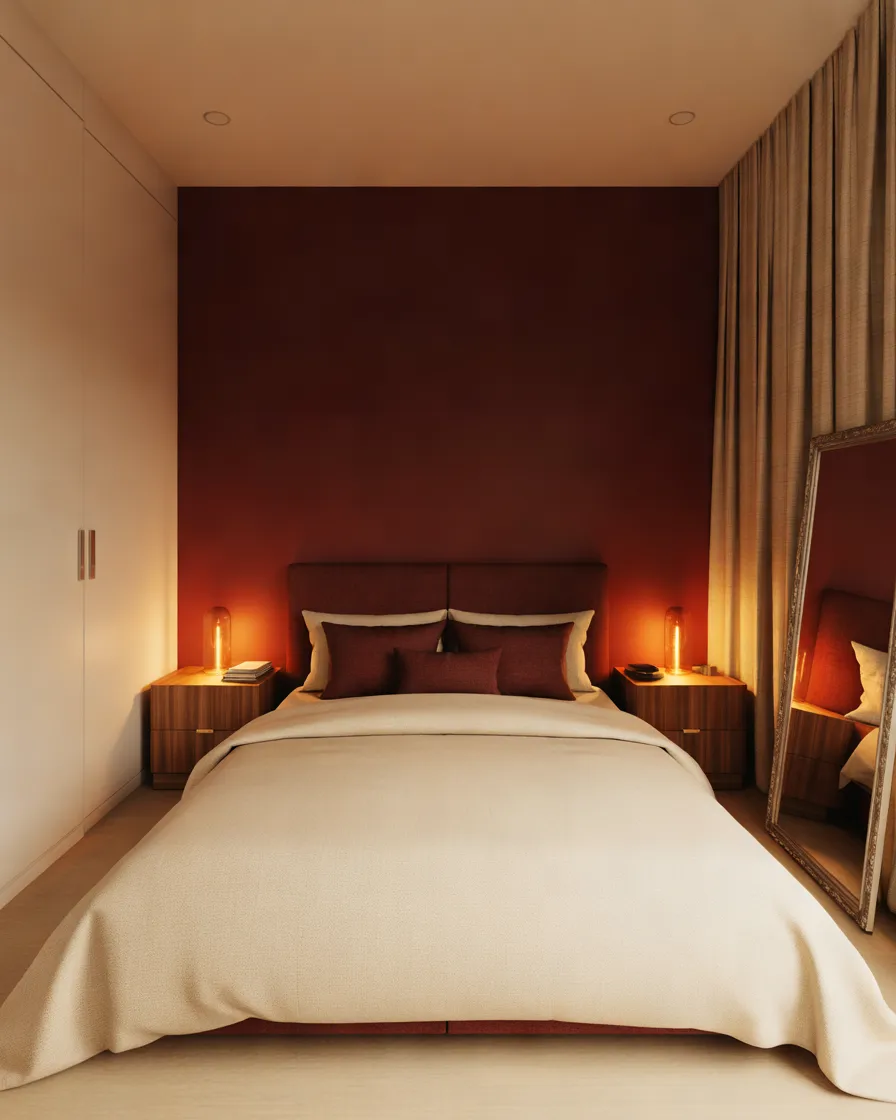
A small bedroom does not have to avoid dark colors. In fact, burgundy can make a compact room feel cozy and intentional when used correctly.
Rather than painting every wall dark, I would choose one burgundy focal point. The wall behind the bed is an obvious choice.
Keep the remaining walls light and use furniture with a slim profile. Mirrors can help reflect light, while lighter bedding prevents the room from feeling visually crowded.
Another option is to use burgundy through bedding, curtains, and cushions while keeping the walls cream or pale beige.
Vertical elements can also help. Full-length curtains and a tall headboard draw the eye upward and make the room feel more substantial.
The goal is not to make the small bedroom look enormous. Instead, create a comfortable space where the darker color feels deliberate and stylish.
13. Create a Modern Burgundy and Beige Bedroom
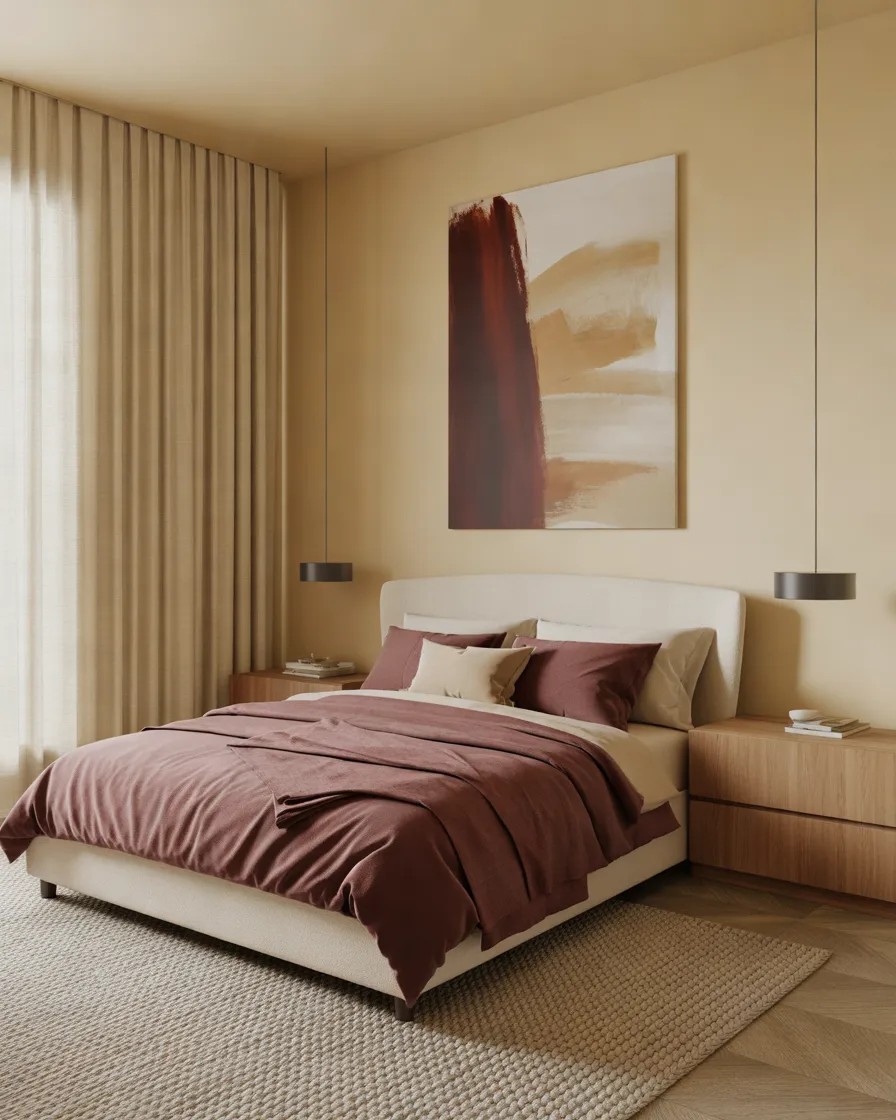
For a softer modern approach, burgundy and beige make an excellent pair.
Beige gives burgundy a calmer foundation and works especially well with contemporary furniture. I would use warm beige rather than a very cool gray-beige because it complements the warmth of burgundy.
One simple combination is a beige upholstered bed, burgundy bedding, cream curtains, natural wood furniture, and a textured beige rug.
You can add black accents sparingly through lighting or furniture legs to give the room some definition.
Modern artwork with abstract burgundy shapes can reinforce the palette without making the room feel themed.
This is one of the easiest combinations to live with because beige is so versatile. If you eventually decide to change the accent color, much of the room can remain exactly as it is.
14. Add Burgundy Through Artwork and Accessories
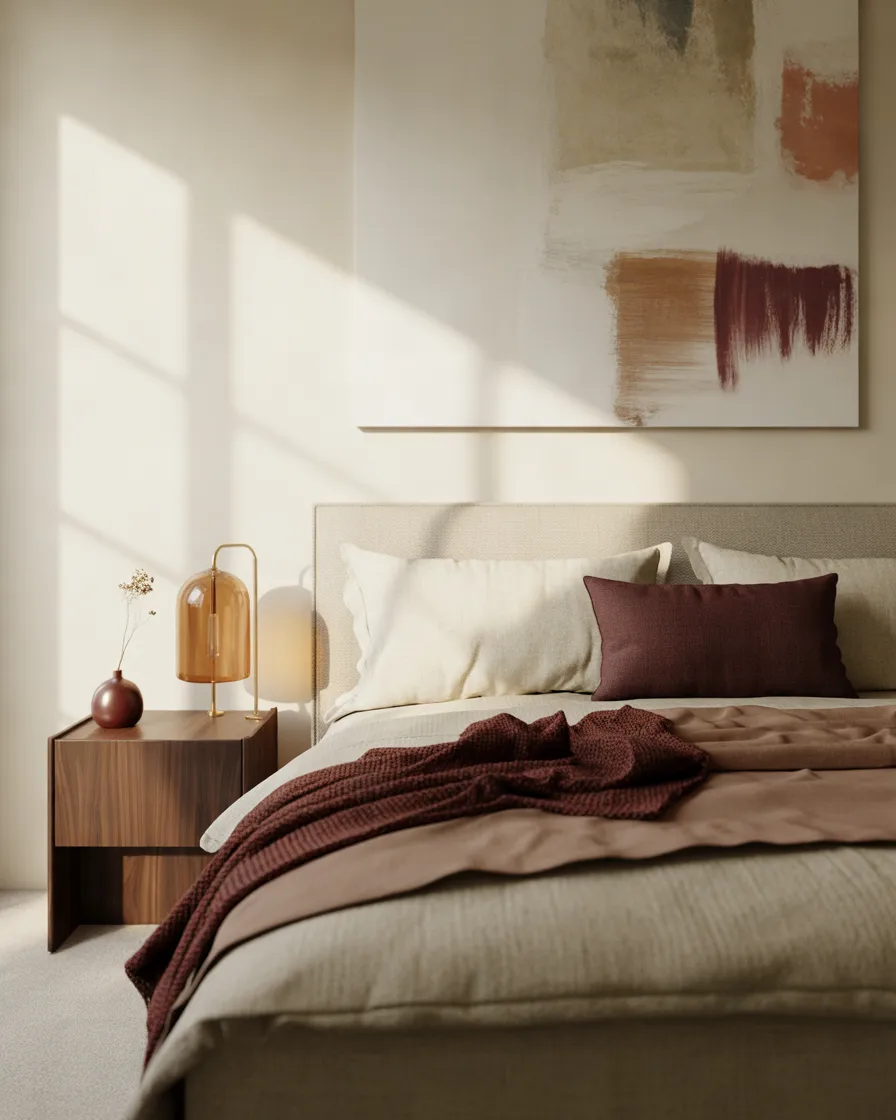
You do not always need a burgundy wall, bed, or curtains to enjoy the color. Sometimes the most sophisticated approach is using burgundy in small details.
Artwork is a great starting point. Look for abstract paintings or photography that contain burgundy, wine, rust, brown, cream, or muted pink tones.
Then repeat the color through cushions, a throw blanket, ceramic accessories, books, lampshades, or a small rug.
The advantage of this approach is flexibility. You can introduce a strong color while keeping your primary bedroom palette neutral.
I particularly like this idea for minimalist bedrooms. A cream or beige room can sometimes feel a little too plain, and several carefully selected burgundy accessories can give it personality without creating visual clutter.
Try to repeat the color in at least three places so it feels intentional.
15. Build a Romantic Burgundy Bedroom With Soft Lighting
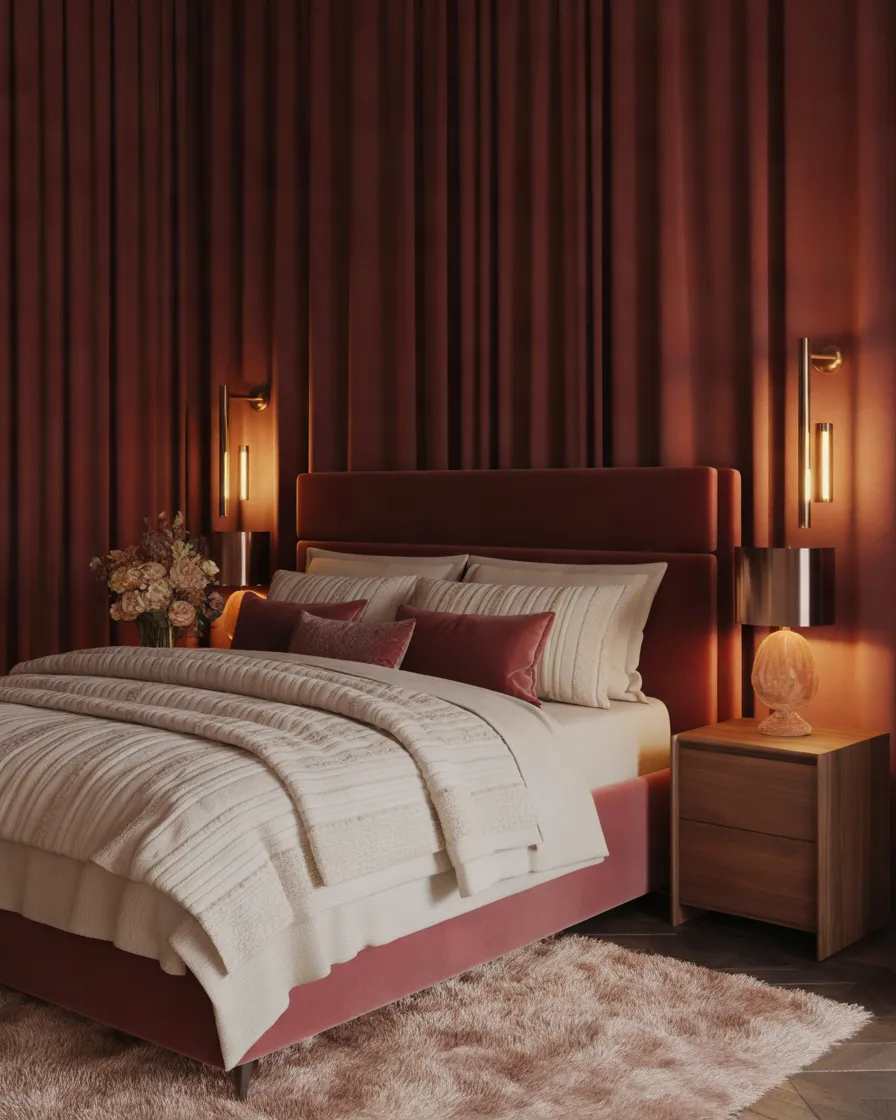
If you want your bedroom to feel romantic, intimate, and relaxing, burgundy is an excellent foundation.
I would combine deep burgundy textiles with soft cream bedding, velvet cushions, flowing curtains, and warm layered lighting. Instead of relying on one bright ceiling fixture, use bedside lamps, wall sconces, and subtle accent lighting.
Soft textures make a huge difference here. Velvet, brushed cotton, linen, knitted throws, and plush rugs can make the room feel much more comfortable.
For furniture, warm wood or painted cream pieces can work beautifully. A small upholstered bench at the foot of the bed can add another layer of texture.
You can also introduce fresh flowers, candles, framed artwork, or decorative ceramics for personality.
The important thing is to avoid making the room feel like a themed romantic space. Burgundy already provides enough drama. Let the materials, lighting, and proportions create the atmosphere.
How to Choose the Right Burgundy Shade for Your Bedroom
Not every burgundy paint or fabric will look the same. Some burgundy shades lean toward red, while others have more purple, brown, or wine-colored undertones.
Before choosing your exact shade, I recommend looking at it in the actual bedroom. Natural daylight, artificial lighting, flooring, and surrounding colors can all change how the color appears.
If your room receives plenty of natural light, you can usually handle a richer and deeper burgundy. If the bedroom is naturally dark, consider using burgundy on one wall or primarily through textiles.
Warm burgundy shades with brown undertones tend to feel earthy and traditional. Purple-leaning burgundy can feel more dramatic and luxurious. Wine-inspired shades can provide a sophisticated middle ground.
Always test a paint sample before committing to the entire wall.
What Colors Go Best With Burgundy in a Bedroom?
Burgundy is surprisingly flexible. Some of my favorite combinations include burgundy and cream, burgundy and beige, burgundy and blush pink, burgundy and warm wood, burgundy and charcoal, and burgundy and gold.
Cream and beige are excellent choices when you want the room to feel soft and balanced. Charcoal and black create a darker contemporary atmosphere. Natural wood makes burgundy feel warmer and more relaxed, while gold introduces a more luxurious quality.
If you are unsure, start with burgundy, cream, and natural wood. It is difficult to go wrong with that combination.
How to Keep a Burgundy Bedroom From Feeling Too Dark
The biggest mistake with dark bedroom colors is using too much darkness without enough contrast.
If you have burgundy walls, consider using cream or white bedding. If you have a burgundy bed, keep the walls lighter. Add mirrors, lighter rugs, reflective lighting, and natural textures to create visual balance.
Lighting is especially important. Use multiple light sources instead of depending entirely on a central ceiling light.
Warm bulbs can make burgundy look incredibly rich and inviting, while cooler lighting can sometimes make the color appear less welcoming.
You should also consider the size and natural light level of your bedroom before deciding how extensively to use burgundy.
Final Thoughts on Burgundy Bedroom Ideas
A burgundy bedroom does not have to be dramatic in every possible way. That is probably what I love most about this color. You can make it the star of the room with burgundy walls and velvet furniture, or you can introduce it quietly through bedding, artwork, curtains, and accessories.
If I were starting from scratch, I would first decide how much commitment I wanted. For a quick transformation, I would choose burgundy bedding or curtains. For something more permanent, I would consider an accent wall or upholstered headboard. And if I wanted a truly dramatic bedroom, I would combine deep burgundy walls with warm wood, cream textiles, and carefully planned lighting.
The best burgundy bedroom ideas are not necessarily the ones that use the most color. They are the ones where burgundy feels connected to the rest of the room.
Whether your style is modern, traditional, romantic, minimalist, or luxurious, this rich shade can give your bedroom warmth, depth, and personality while creating a space that feels distinctly your own.
