
A hallway is often the first part of a home that guests see, yet it is one of the spaces we tend to overlook when decorating. Because hallways are usually narrow, transitional areas, it can be tempting to keep them completely plain. But in my experience, a well-designed hallway can completely change the feeling of a home.
One of my favorite ways to give a hallway more character is with full wall panelling. Unlike small decorative panels placed only halfway up a wall, full wall panelling covers the entire vertical surface and creates a strong architectural feature. It can make a narrow hallway feel taller, add warmth to an otherwise plain space, and provide a beautiful backdrop for mirrors, artwork, lighting, and furniture.
The great thing about hallway wall panelling is that there isn’t one style that works for every home. You can choose classic rectangular mouldings, slim vertical slats, contemporary geometric patterns, warm wood panels, painted MDF panels, or even luxurious fluted designs.
I also love how flexible this decorating idea can be. You don’t necessarily need a huge hallway or an expensive renovation. With the right proportions, color, lighting, and panel design, even a small entrance can look intentional and sophisticated.
If you’re considering transforming your hallway, here are 15 hallway full wall panelling ideas that can give you plenty of inspiration.
1. Classic Full-Length Rectangle Wall Panelling
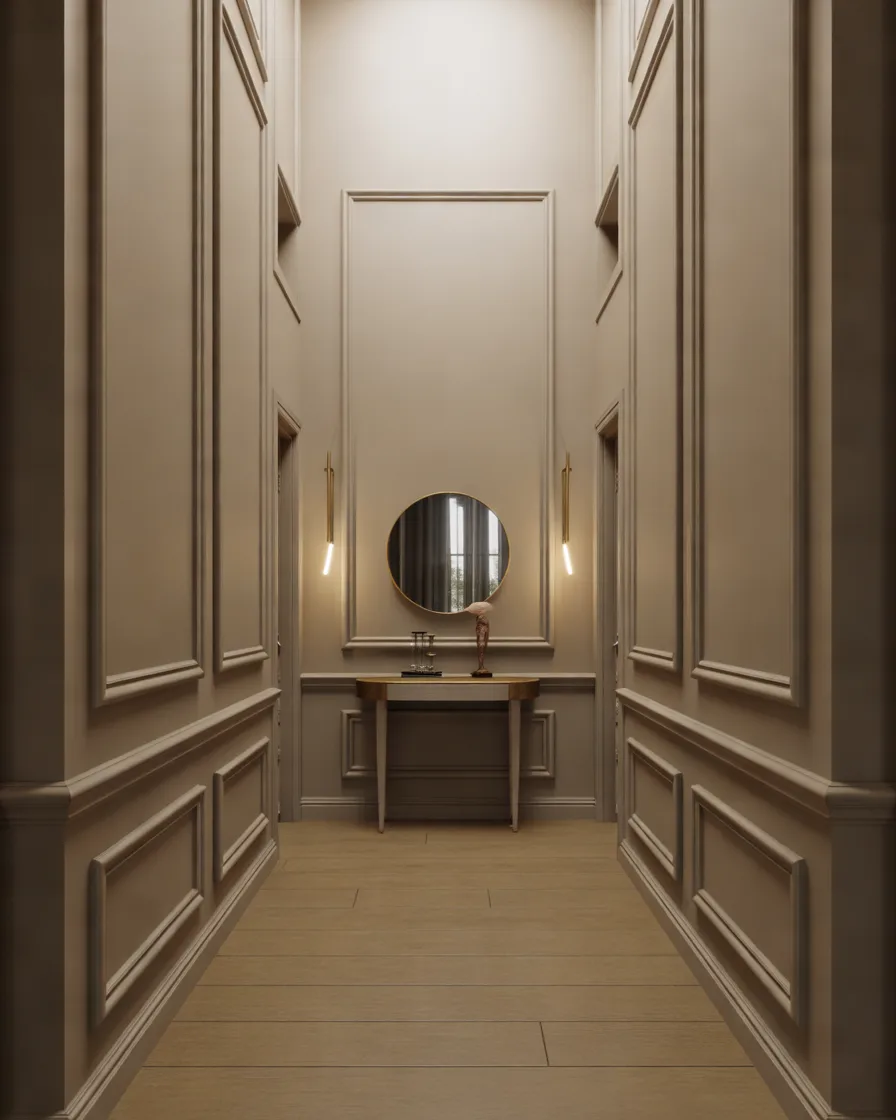
When I think about timeless hallway panelling, classic rectangular moulding is one of the first designs that comes to mind. It has a traditional architectural feel but can easily be adapted for a modern home.
The idea is simple: create evenly spaced rectangular panels that run from the skirting board all the way up to the ceiling. Keeping the panels symmetrical gives the hallway a neat and balanced appearance.
For a sophisticated look, I would choose a soft neutral such as warm white, beige, greige, or light taupe. If you want something more dramatic, deep green, navy blue, charcoal, or muted burgundy can make the hallway feel much richer.
The proportions are particularly important in a hallway. Avoid making the panels too wide if the space is narrow. Several slimmer panels can create a more elegant rhythm and make the wall feel longer.
You can finish the look with a simple console table, a round mirror, and warm wall lighting. The result feels architectural without being overly decorative.
2. Modern Vertical Slat Wall Panelling
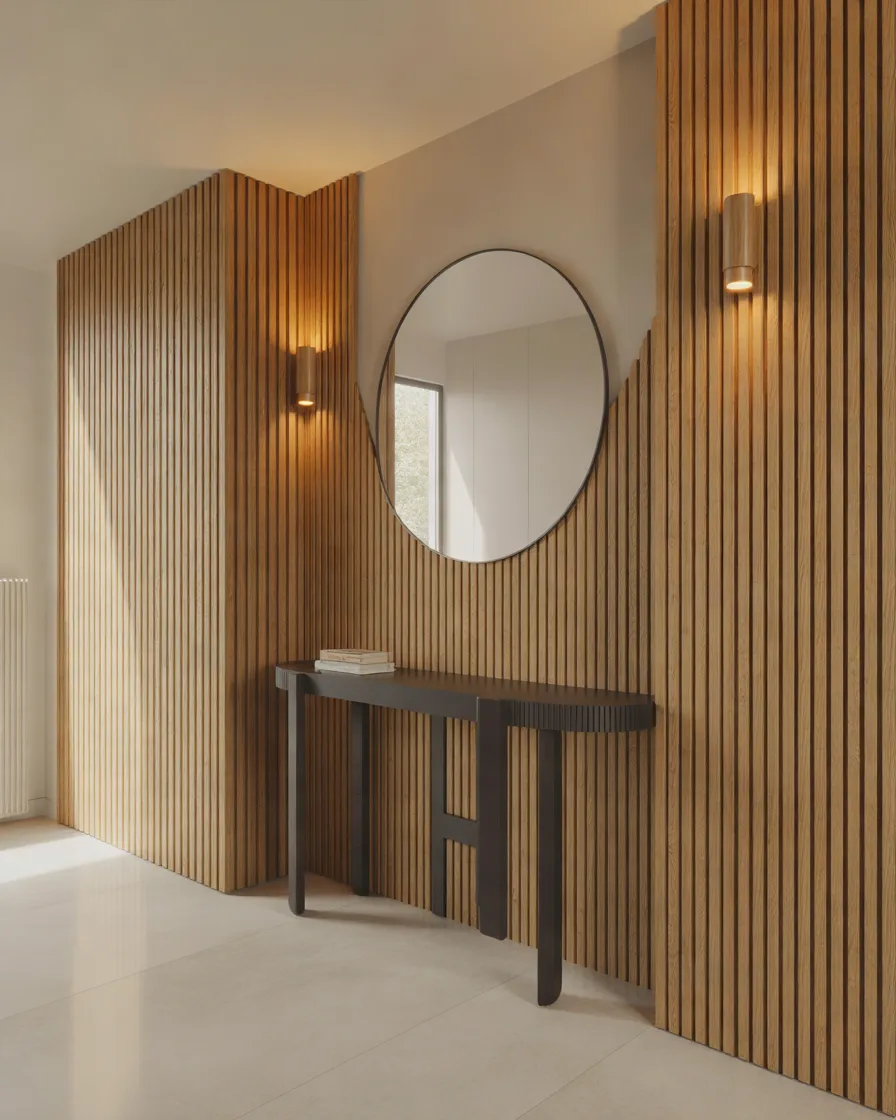
Vertical slat panelling is one of my favorite options when the goal is to make a hallway feel taller and more contemporary.
Instead of traditional moulding, this design uses narrow vertical strips installed closely together across the full wall. The repeated lines naturally draw the eye upward, which can make a low-ceiling hallway appear taller.
For a warm and inviting appearance, natural oak is a beautiful choice. If you prefer a more modern interior, try painted vertical slats in charcoal, soft black, cream, or muted green.
Vertical slats can also work particularly well around architectural features. For example, you could continue the panel treatment around a doorway or use it as a feature behind a console table.
I would keep the rest of the hallway relatively simple because the slatted wall already provides plenty of visual interest.
3. Dark Green Full Wall Panelling
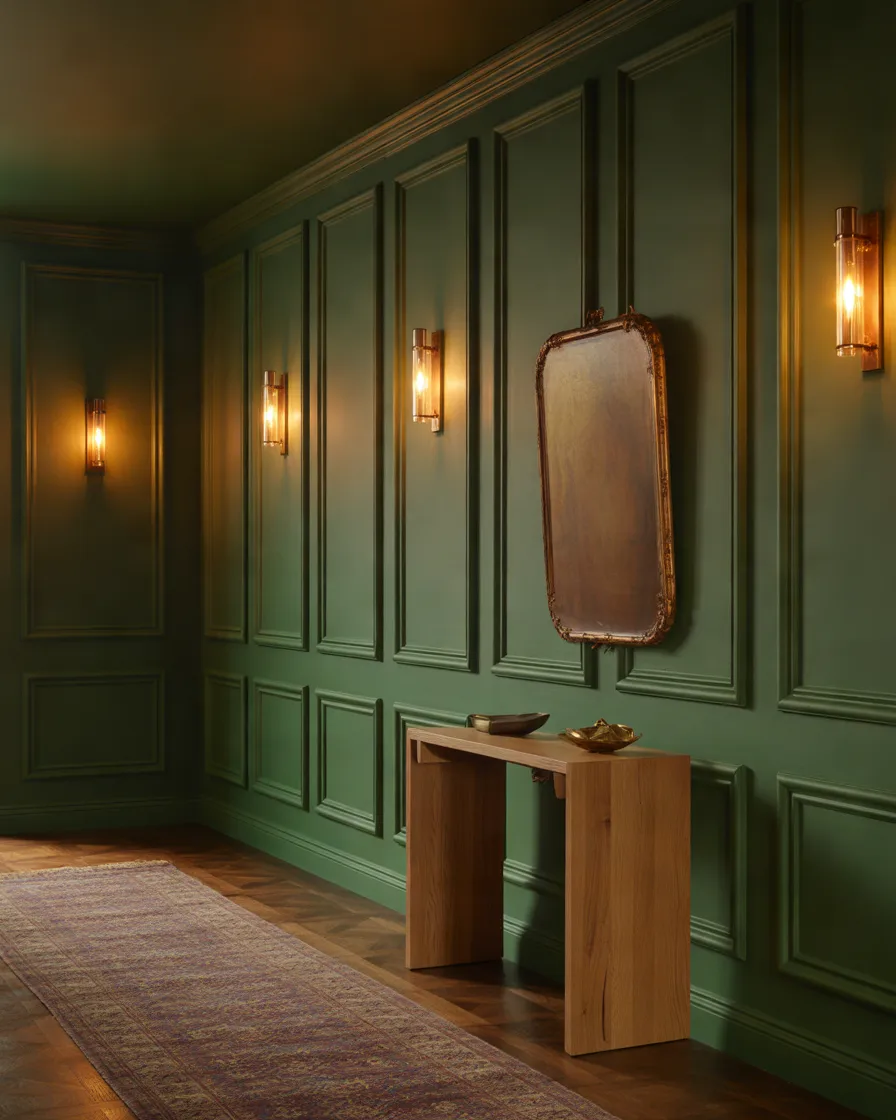
If you want your hallway to have personality, don’t be afraid of darker colors. A deep forest green or sophisticated olive green can look stunning when applied to full wall panelling.
I particularly like dark green in hallways because it creates a cozy transition between rooms. Instead of feeling like a forgotten passageway, the hallway becomes a destination in its own right.
Classic rectangular or square moulding works beautifully with this color. Add brass hardware, warm lighting, and natural wood furniture to prevent the space from feeling too cold.
A dark green hallway can also look incredible with artwork. Black-and-white photography, botanical prints, or traditional framed artwork can stand out beautifully against the rich background.
If the hallway has limited natural light, use warm artificial lighting rather than very cool white bulbs. This helps the green feel inviting instead of gloomy.
4. Soft Beige Panelling for a Calm Hallway
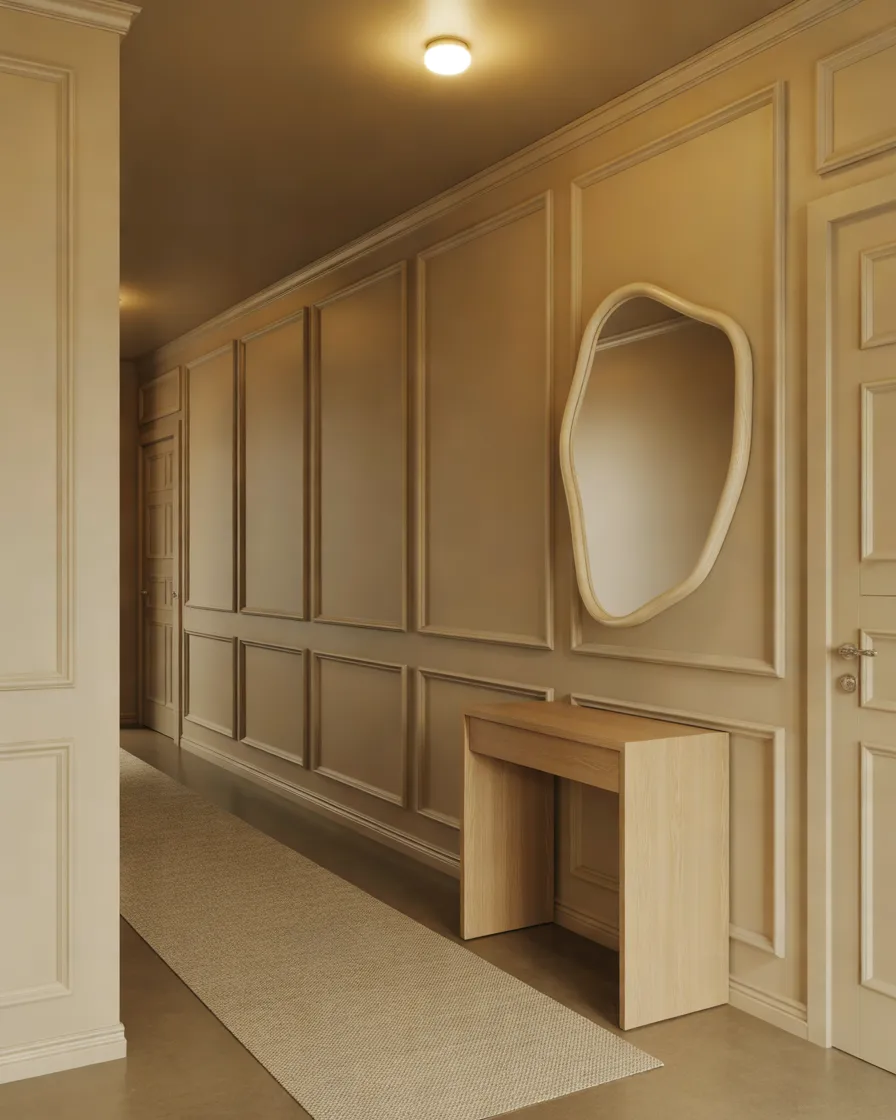
For anyone who prefers a quiet and timeless interior, beige wall panelling is an excellent option.
A soft beige, oatmeal, mushroom, or warm sand shade can make the hallway feel welcoming without overwhelming the rest of the house. I especially like this approach in homes where the main living spaces already have plenty of color or pattern.
The beauty of beige is that it gives you plenty of freedom with accessories. You can introduce black accents for contrast, wooden furniture for warmth, or gold details for a more luxurious look.
Full wall panelling also adds subtle texture, so the hallway doesn’t need much additional decoration. A simple mirror and a small console may be enough.
For a cohesive design, consider matching the panel color to the trim, doors, or nearby room colors.
5. Floor-to-Ceiling Fluted Wall Panels
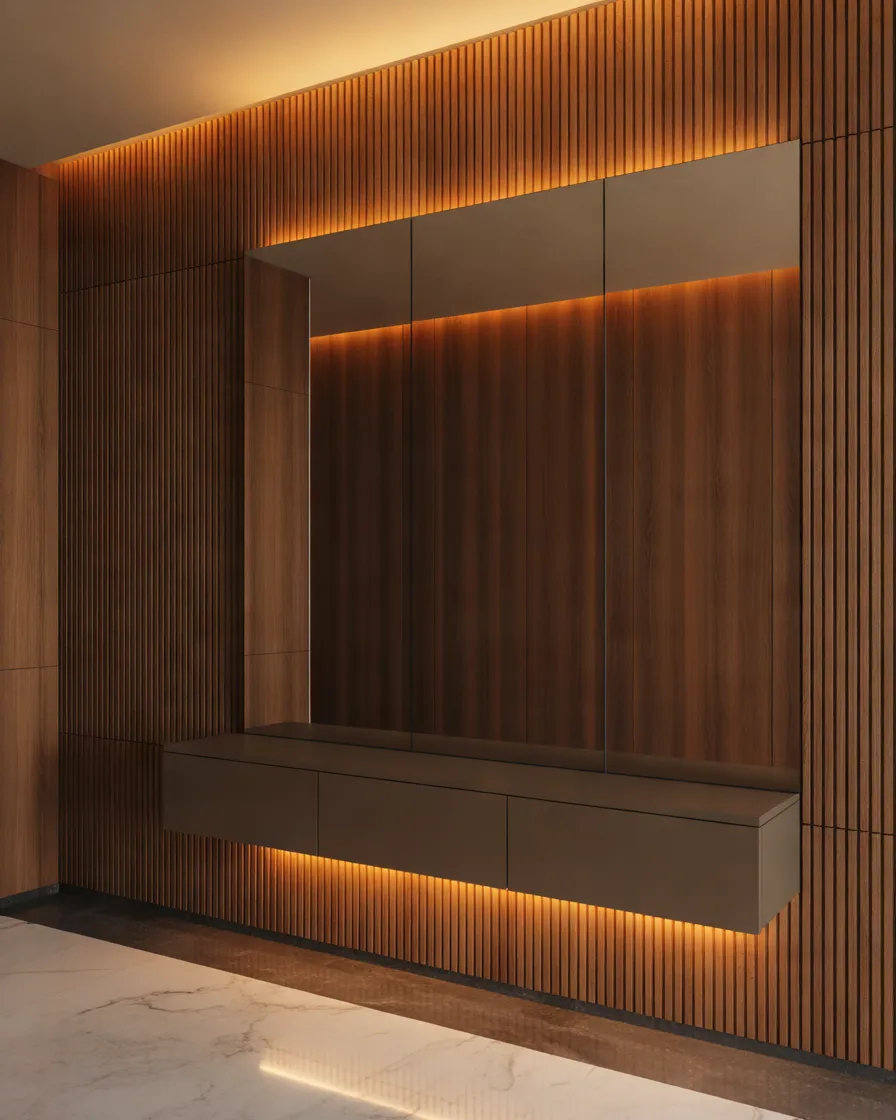
Fluted panels bring texture into the hallway while maintaining a clean contemporary appearance. Their repeated grooves create shadows that change throughout the day as the light moves across the wall.
This style is particularly effective when you want something more interesting than flat wall moulding.
You can use natural wood fluted panels for a warm Scandinavian-inspired hallway or choose painted fluted panels for a more luxurious appearance. A creamy white, warm beige, or dark walnut finish can all work beautifully.
I would use this design on a prominent hallway wall, especially one visible directly from the front door. It creates an immediate impression without requiring lots of furniture or accessories.
Adding concealed LED lighting can make the grooves even more noticeable in the evening.
6. White Full Wall Panelling with Black Accents
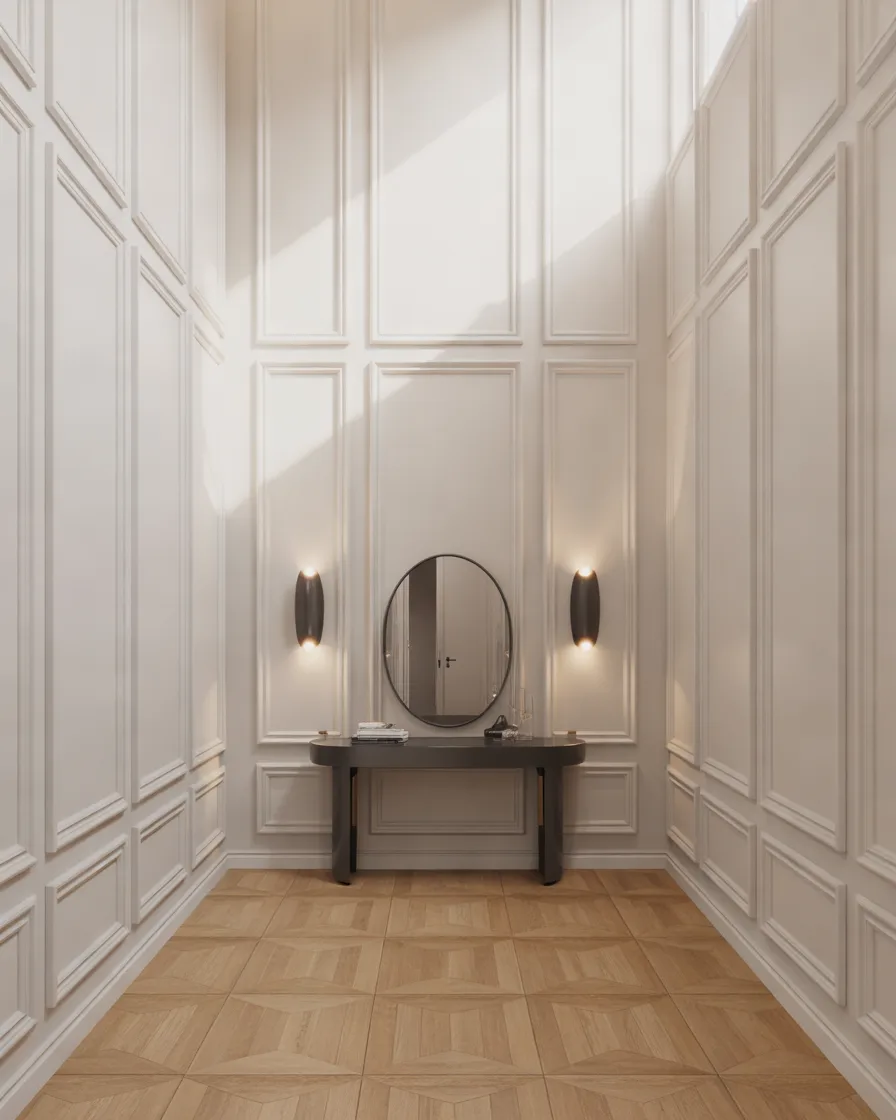
White panelling doesn’t have to look boring. In fact, it can create a beautiful classic hallway when paired with carefully chosen dark accents.
Full-height white moulding makes the space feel bright and fresh, while black details add definition. Think black-framed mirrors, black light fixtures, dark door handles, or a slim black console.
This combination works particularly well in narrow hallways because white reflects light and helps prevent the space from feeling enclosed.
I would avoid adding too many decorative objects. A few strong black accents are enough to create contrast and keep the design polished.
If you have wooden flooring, the combination of white panels, natural timber, and black details creates a timeless palette that works with both traditional and contemporary homes.
7. Two-Tone Full Wall Panelling
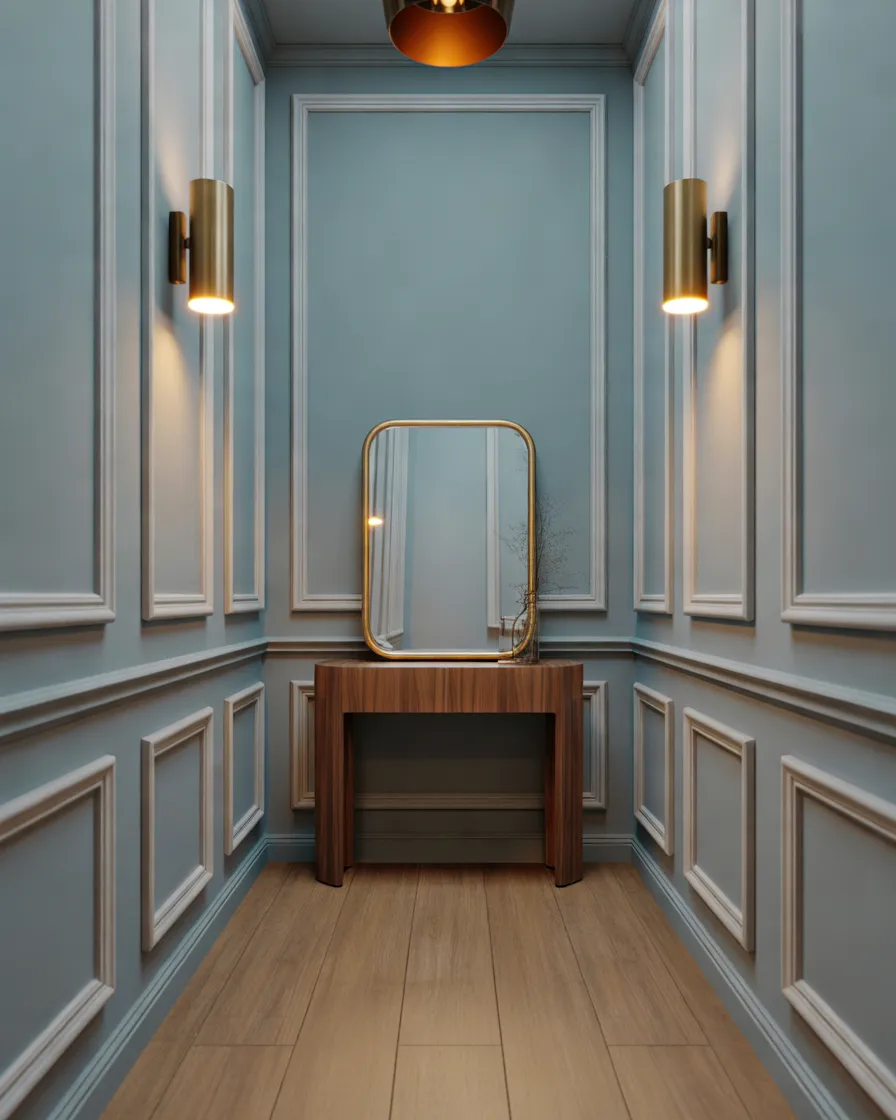
If you can’t decide between a neutral and a stronger color, a two-tone approach can be a great solution.
Instead of painting every part of the wall the same shade, use one color for the panel moulding and another for the wall background. For example, warm white moulding against a muted blue-gray wall can create beautiful depth.
Another approach is to use different shades within the same color family. A darker panel section can sit against a lighter surrounding wall to create subtle contrast.
The key is to keep the combination intentional. Choose colors that complement the flooring, doors, and furniture already present in the hallway.
Two-tone panelling can make a relatively simple moulding design look much more sophisticated.
8. Geometric Full Wall Panelling
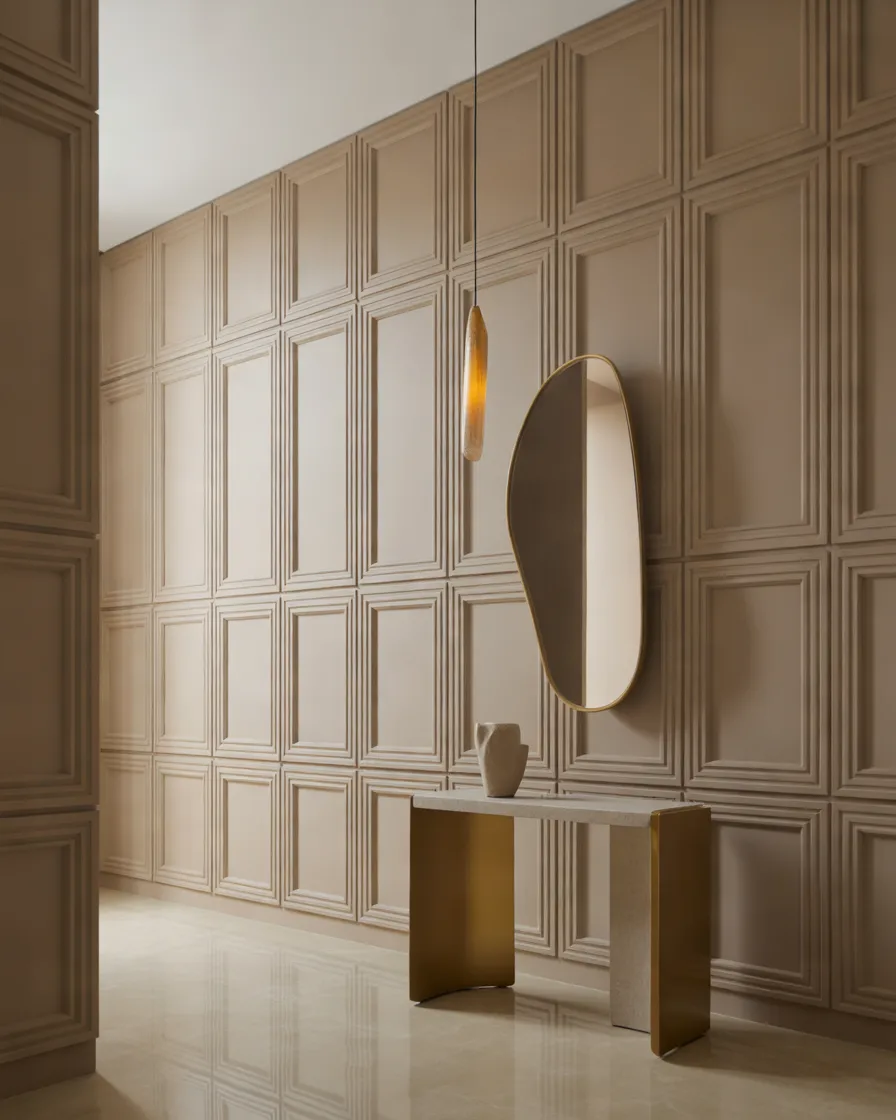
For a more contemporary hallway, geometric panelling can create an eye-catching feature without relying on wallpaper or bold artwork.
Geometric designs may include diagonal lines, overlapping rectangles, squares, or asymmetrical moulding patterns. I recommend keeping the color relatively simple when the geometry is complex.
A single neutral paint color allows the shadows created by the moulding to become the main decorative feature.
This approach is especially effective in modern homes where traditional rectangular panelling might feel too formal.
If you’re working with a small hallway, don’t overcrowd the design. A carefully planned geometric arrangement can feel artistic, while too many lines can make the space visually busy.
9. Natural Oak Full Wall Panelling
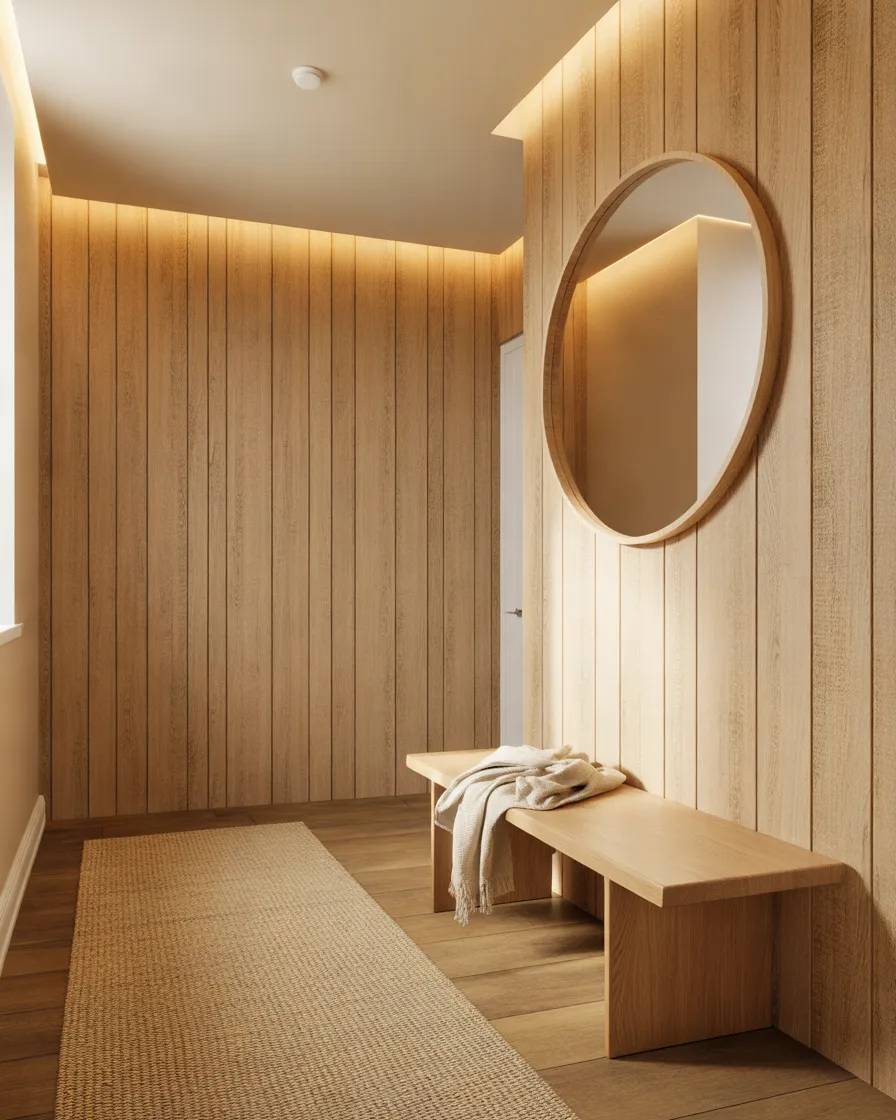
Natural wood brings warmth into a hallway instantly. If your home has neutral walls and flooring, full-height oak panelling can add enough texture to make the entrance feel much more welcoming.
I particularly like pale or medium oak because it gives the hallway a natural appearance without making the space feel heavy.
The panels can be arranged vertically, horizontally, or in large architectural sections. Vertical wood panels are especially useful if you want to emphasize ceiling height.
Pair the wood with cream walls, soft lighting, black accents, or natural textiles. A woven runner can further soften the look.
This style works beautifully in Scandinavian, Japandi, contemporary, and modern farmhouse interiors.
10. Navy Blue Traditional Wall Panelling
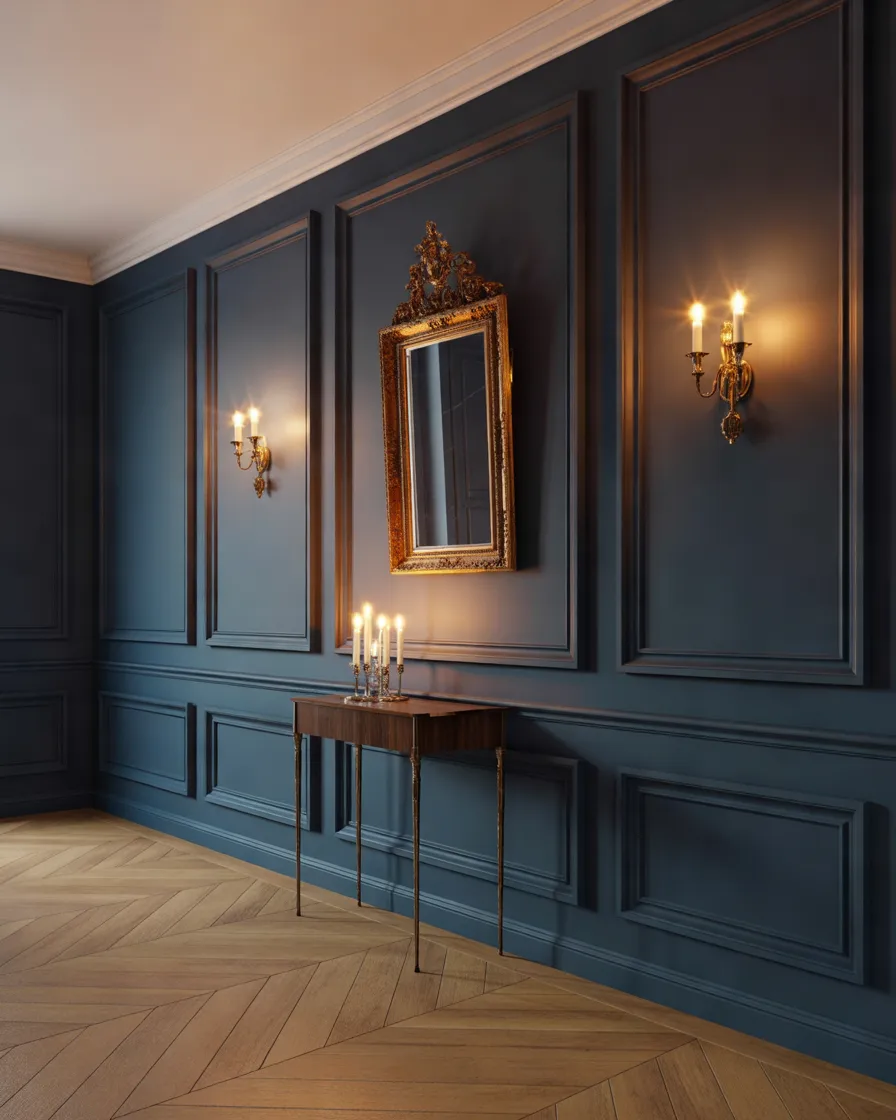
Navy is another color I would consider if you want a hallway that feels elegant and slightly dramatic.
A deep navy shade works particularly well with traditional raised moulding. Add warm brass or antique gold details and the entire hallway can take on a sophisticated boutique-hotel feel.
The trick with navy is balancing the darkness. Keep the ceiling lighter and introduce warm lighting to stop the hallway from becoming visually heavy.
A pale stone or light wood floor can also provide a useful contrast.
For artwork, choose lighter frames or artwork with cream, white, or warm neutral tones so that the pieces stand out clearly against the navy background.
11. Hallway Panelling with a Built-In Bench
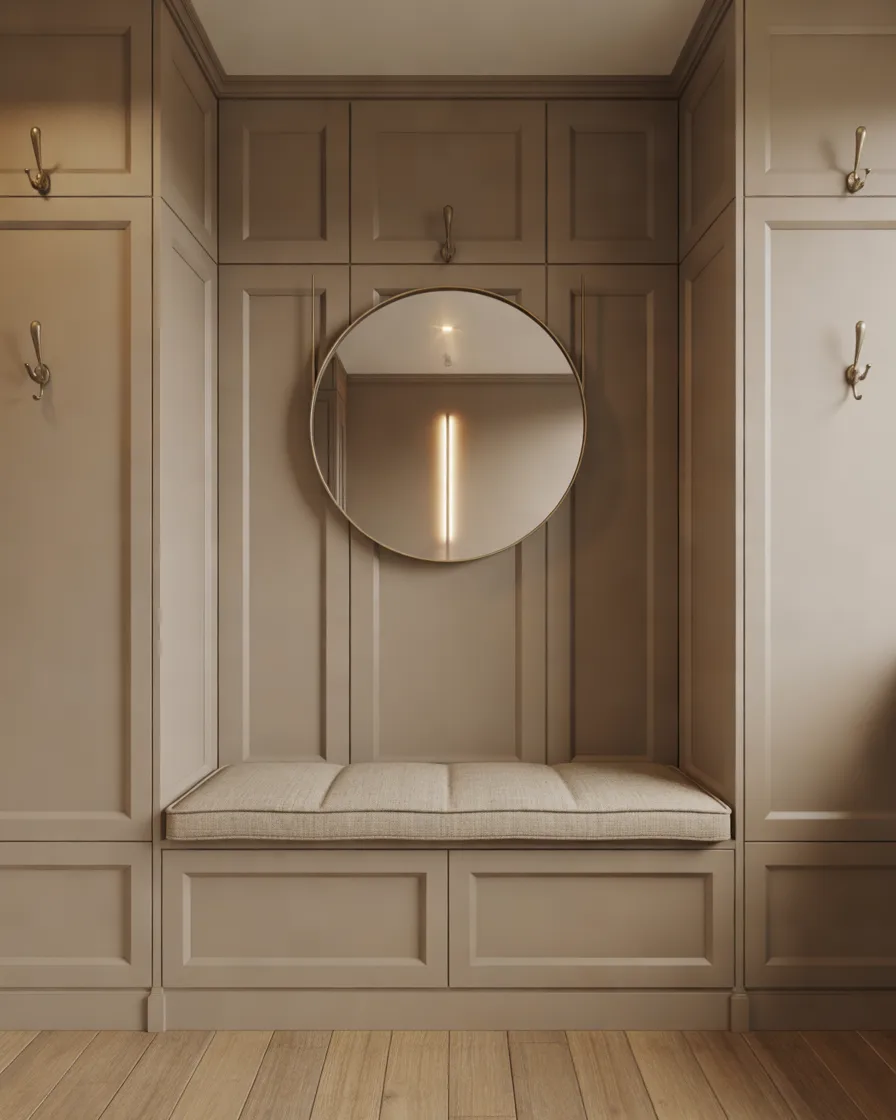
Full wall panelling doesn’t have to exist separately from practical furniture. Combining the two can create a hallway that is both attractive and functional.
A built-in bench integrated into the paneled wall gives you a convenient place to sit while putting on shoes. Below the bench, you can add drawers, baskets, or open storage for everyday items.
The wall panels can continue behind the bench, creating a seamless built-in appearance.
This is an excellent option for family homes where the hallway needs to work hard. Add hooks, baskets, or a shelf while keeping the overall design coordinated.
For a more sophisticated finish, use the same paint color across the wall, bench, and moulding.
12. Full Wall Panelling with Integrated Lighting
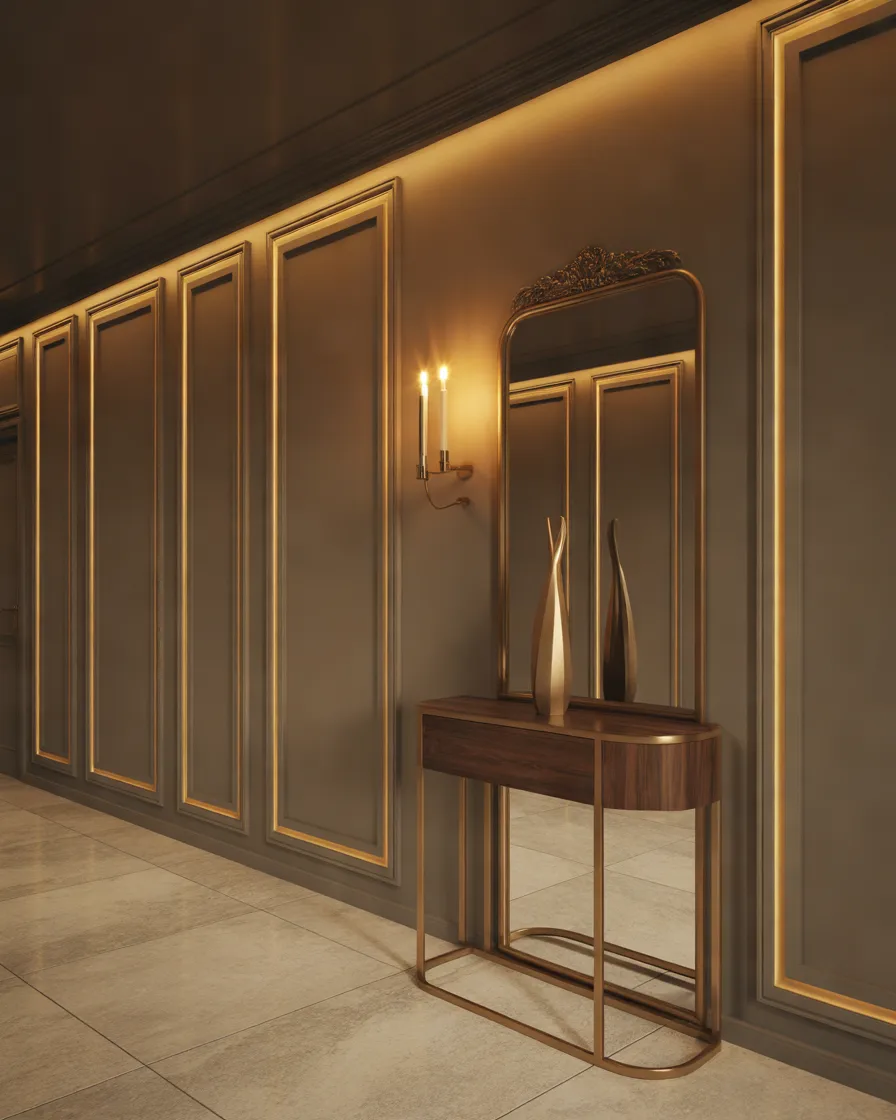
Lighting can completely transform wall panelling. If you want your hallway to feel more luxurious, consider incorporating lighting directly into the design.
Wall sconces can be positioned symmetrically inside or between the moulding sections. Alternatively, hidden LED strips can be installed along architectural edges to create a soft glow.
The important thing is to use lighting that highlights the texture of the panels rather than washing everything out with bright overhead illumination.
Warm white lighting usually works particularly well with wood, beige, green, navy, and cream panels.
This approach can make even a simple hallway look expensive because the lighting emphasizes the architectural details.
13. Grey Full Wall Panelling for a Contemporary Look
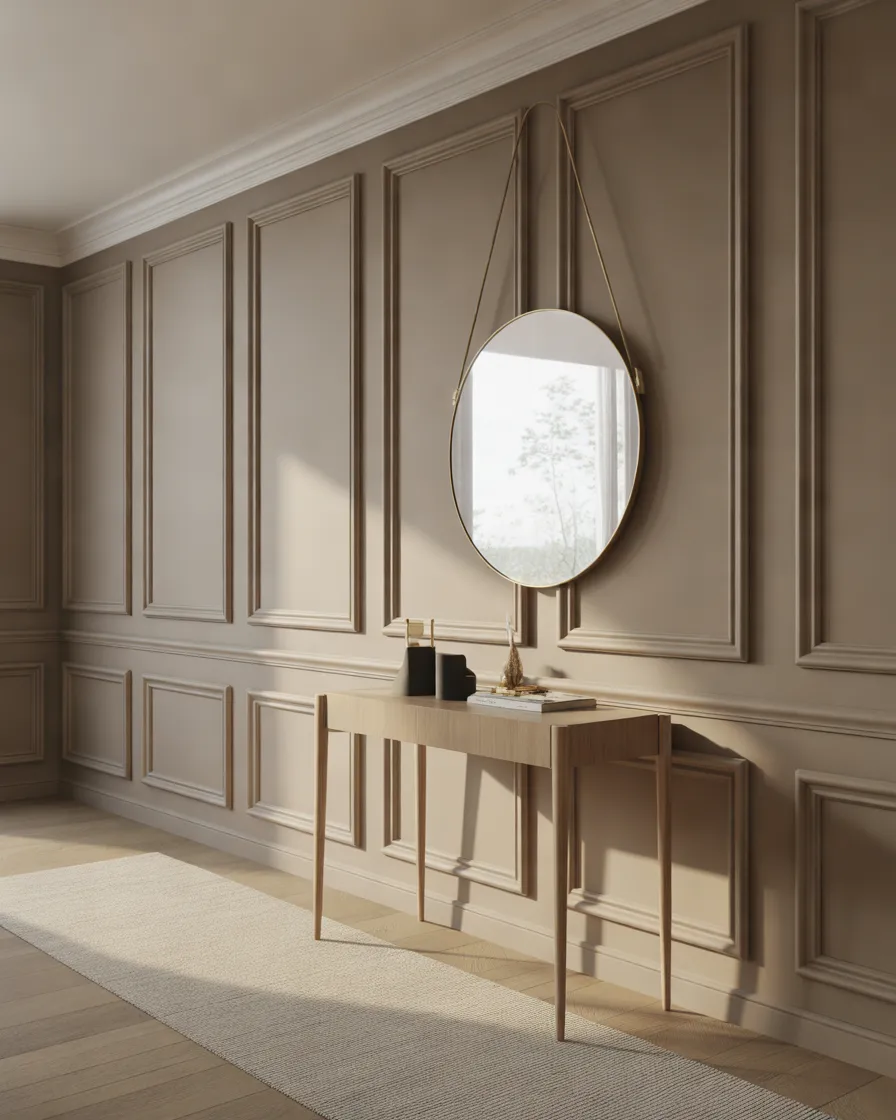
Grey remains a versatile choice for hallway interiors because it can work with both warm and cool decorating schemes.
Instead of using a flat grey wall, full-height panelling gives the color architectural depth. A warm greige-gray can make the hallway feel comfortable and inviting, while a cooler charcoal gray creates a stronger contemporary atmosphere.
I would choose a medium or light gray for smaller hallways and reserve darker shades for spaces with plenty of natural or artificial lighting.
Combine gray panels with oak, brushed metal, cream textiles, or black accents depending on the mood you want.
The result can be understated while still looking carefully designed.
14. Half Traditional, Half Modern Panelling
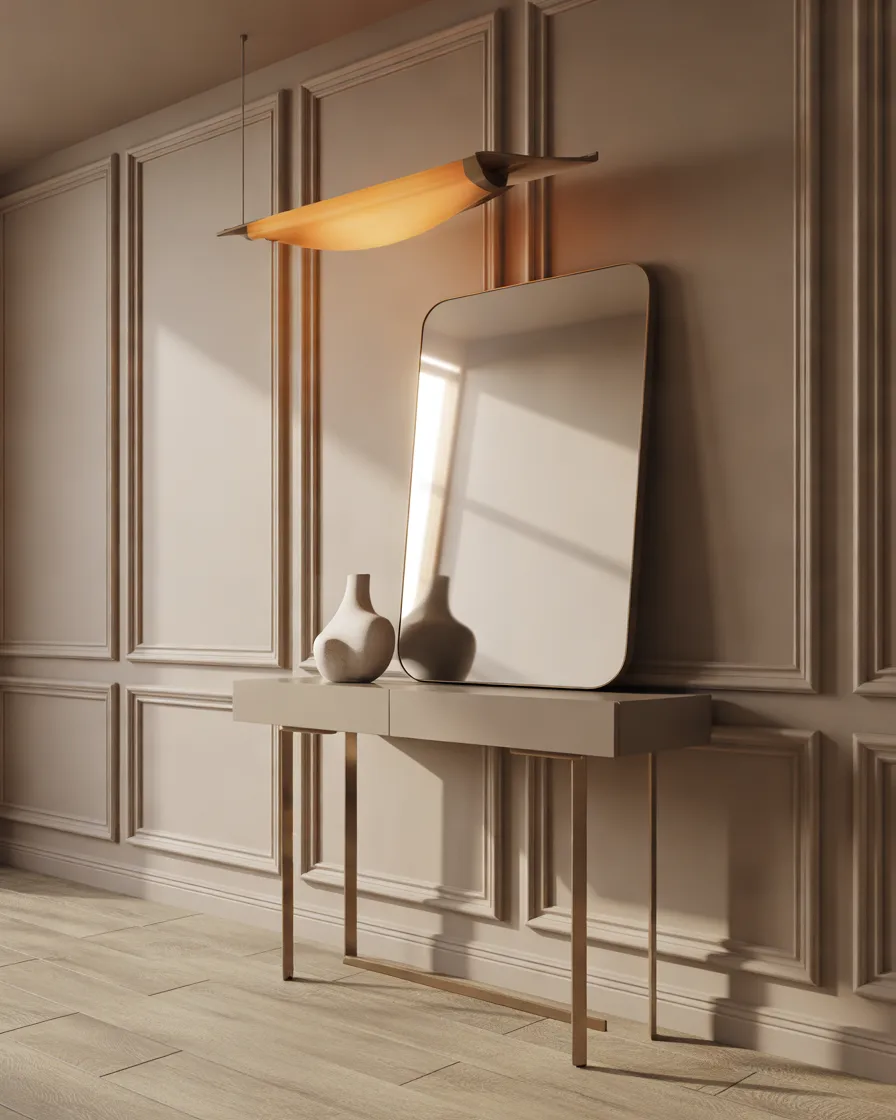
If you love traditional moulding but don’t want your hallway to look old-fashioned, combine traditional panel shapes with modern furniture and lighting.
For example, use classic rectangular full-height moulding painted in a warm neutral color, then add a minimalist console, contemporary mirror, modern pendant, and clean-lined accessories.
This creates a transitional interior that feels timeless rather than tied to one decorating era.
I find this particularly useful when the architecture of the house is traditional but the homeowner prefers modern interiors. The wall treatment respects the building while the furniture keeps the space current.
You can also use modern colors such as dusty blue, sage green, mushroom, or warm charcoal to update the traditional panel design.
15. Dramatic Black Full Wall Panelling
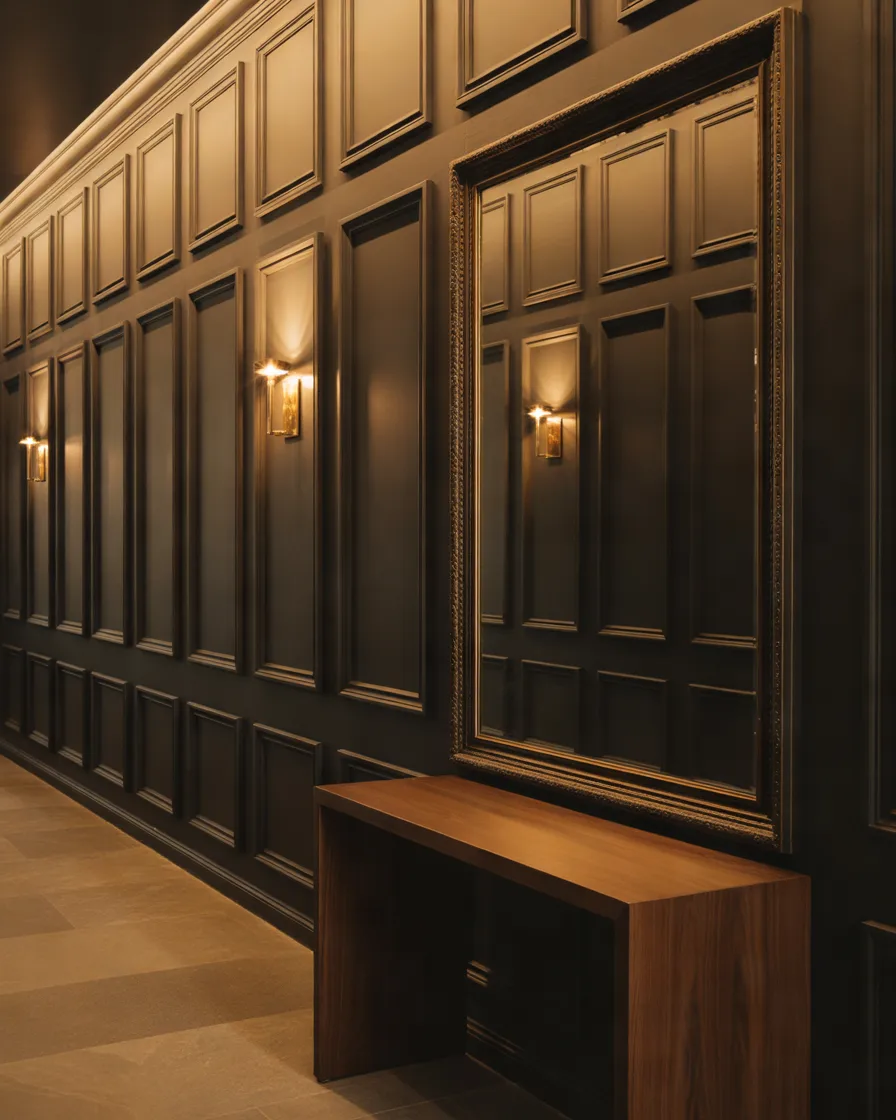
For the boldest option on this list, consider black full wall panelling.
Black can sound intimidating when you’re decorating a narrow hallway, but when it is used correctly, it can look incredibly sophisticated. The key is contrast, lighting, and texture.
Rather than using completely flat black walls, raised moulding gives the surface dimension. Warm lighting then catches the edges of the panels and prevents the wall from appearing visually flat.
I would pair black panels with brass lighting, warm wood, cream artwork, or a large mirror. A lighter floor can also provide the contrast needed to balance the dark wall.
This style isn’t for everyone, but if you want your entrance to make a strong first impression, black panelling can be unforgettable.
How to Choose the Right Hallway Wall Panelling Style
With so many options available, choosing the right design can actually be harder than installing it. I usually start by looking at the architecture of the hallway rather than choosing a trend first.
If your home has traditional details, classic rectangular moulding will probably feel natural. If the architecture is modern, vertical slats, fluted panels, or geometric designs may fit better.
You should also consider the width of the hallway. Narrow spaces generally benefit from simpler designs. Too many small panels can make a tight hallway feel busy.
Ceiling height matters as well. Vertical panelling is excellent for emphasizing height, while horizontal arrangements can visually widen a wall.
Finally, think about what the hallway connects to. The paneling should feel like part of the home’s overall design rather than a completely separate room.
What Color Should You Use for Full Wall Hallway Panelling?
There isn’t one perfect color for hallway panelling. The best shade depends on the amount of natural light, floor color, ceiling height, and overall style of your home.
For a bright and airy hallway, consider white, cream, beige, or pale greige. These shades reflect light and work well in smaller spaces.
For a cozy atmosphere, sage green, olive, warm taupe, dusty blue, or muted brown can create more character.
If you want a dramatic entrance, navy, forest green, charcoal, or black can make the hallway feel sophisticated.
I also recommend looking at the colors already used in nearby rooms. Repeating one subtle color or material can make the transition between spaces feel much more intentional.
Are Full Wall Panels Good for Narrow Hallways?
Yes, but the panel design needs to be carefully proportioned.
A narrow hallway doesn’t automatically mean you should avoid wall panelling. In fact, the right design can make a narrow space feel much more finished.
For narrow hallways, I prefer relatively simple moulding patterns with generous spacing. Vertical slats can also help emphasize ceiling height.
Avoid excessive decorative accessories on top of an already detailed wall. A single mirror, narrow console, or wall light can be enough.
Light-colored panels are another reliable choice if the hallway doesn’t receive much natural light.
How Do You Make Hallway Panelling Look Expensive?
The expensive look usually comes from proportions and finishing rather than simply choosing an expensive material.
Make sure the panels are evenly spaced and aligned with architectural features such as doors and skirting boards. Poorly proportioned moulding can make an otherwise beautiful hallway look unfinished.
Lighting is another major factor. Warm wall sconces or subtle LED lighting can highlight the panel details beautifully.
I also recommend keeping accessories intentional. One high-quality mirror and a simple console often look better than filling every available section with decoration.
Natural wood, brass hardware, stone flooring, and textured fabrics can also add visual richness.
Should Hallway Panelling Match the Doors?
It doesn’t necessarily have to match, but coordination usually helps.
For a seamless look, you could paint the panels and doors in the same color. This can make the entire hallway feel calm and cohesive.
Alternatively, you can create contrast. For example, cream panelling with dark wood doors can provide a beautiful traditional appearance.
If your hallway already contains several different materials, matching the panel color to the doors can help reduce visual clutter.
Final Thoughts on Hallway Full Wall Panelling
A hallway doesn’t need to be enormous to make an impression. In fact, because it is usually a relatively small and transitional part of the home, it can be the perfect place to experiment with architectural details.
Full wall panelling gives a hallway something that plain paint often can’t: texture, depth, rhythm, and a sense of permanence. Whether you choose classic white moulding, warm oak slats, dramatic black panels, elegant navy, soft beige, or textured fluting, the right design can completely change how the entrance feels.
Personally, I think the most successful hallway designs are the ones that balance beauty with practicality. Don’t choose a panel style simply because it looks good in a photograph. Consider the width of your hallway, ceiling height, natural light, flooring, doors, storage needs, and the rooms surrounding it.
And most importantly, don’t feel that hallway decorating needs to be complicated. Sometimes a beautifully proportioned paneled wall, a good mirror, warm lighting, and one carefully chosen piece of furniture are all you need.
If you’re planning a hallway makeover, full wall panelling is definitely one of the ideas worth considering. It can turn an ordinary passageway into one of the most memorable architectural features in your home.
