
Blue curtains can change the whole feel of your bedroom, from calm and airy to bold and dramatic. You’ll learn simple ways to pick styles, fabrics, and shades that match your space and goals so your room looks and feels better.
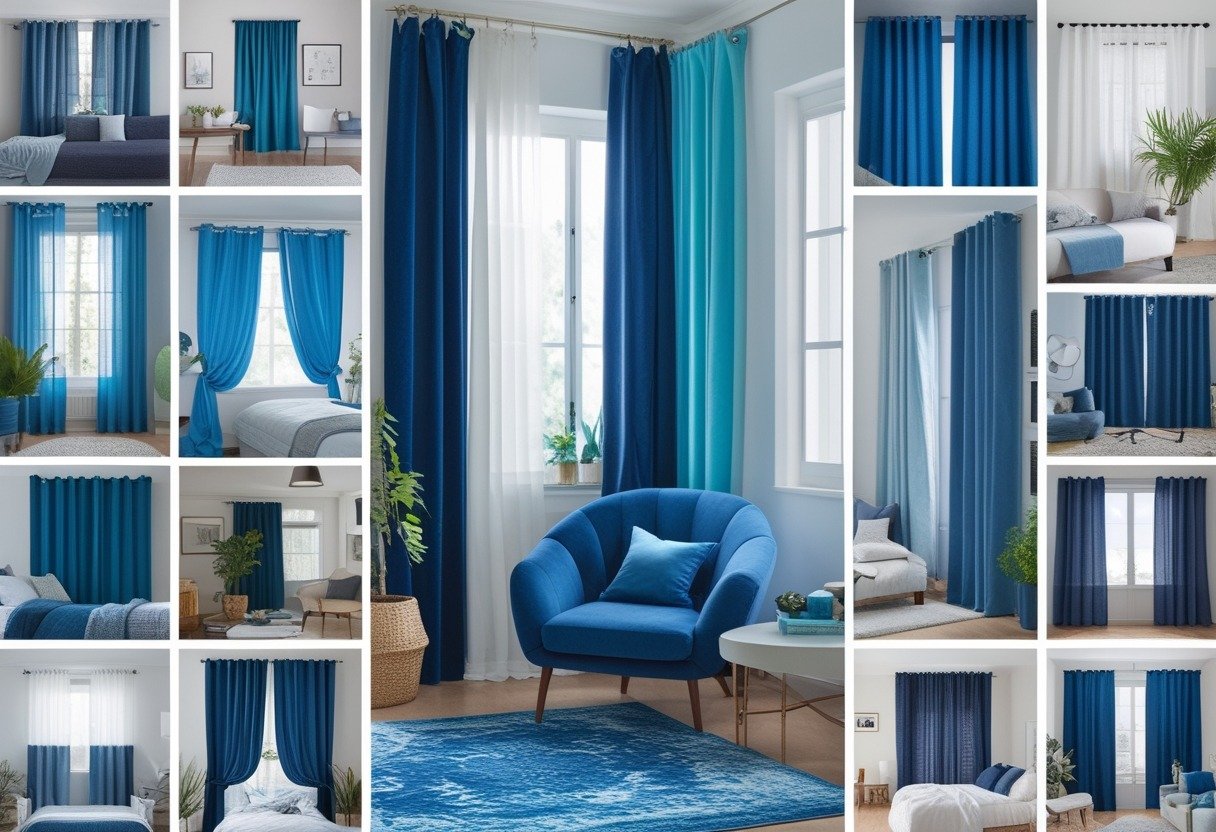
This article walks you through a dozen practical blue curtains bedroom ideas and shows how each choice affects light, mood, and function. Use these options to find a look that suits your taste—whether you want cozy blackout panels, breezy sheers, textured patterns, or energy-saving liners.
1) Navy velvet blackout panels for a moody, hotel-style bedroom
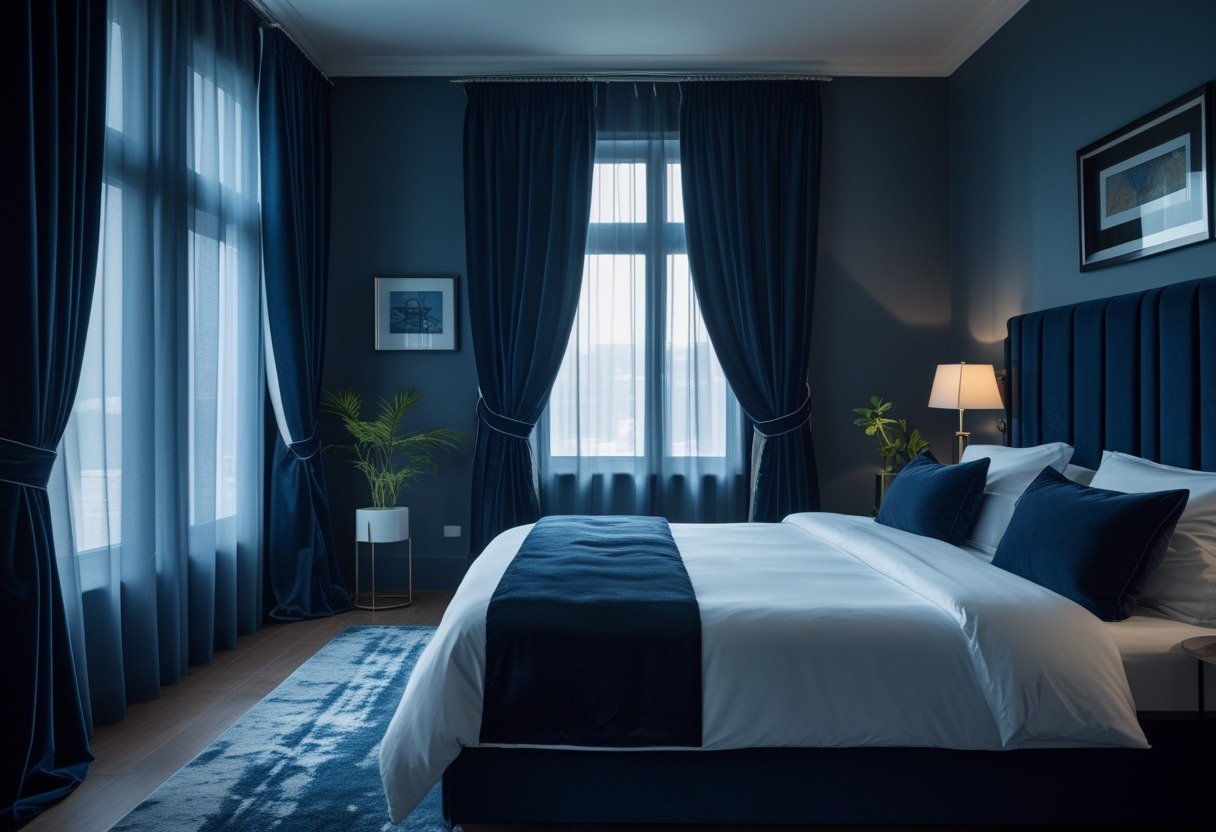
Choose navy velvet blackout panels to give your room a rich, hotel-like feel. The velvet adds depth and a soft texture, while blackout lining keeps light out for better sleep.
Hang panels floor-to-ceiling to make ceilings feel taller and windows more dramatic. Pair them with warm metallic hardware and simple bedding to keep the look polished and calm.
2) Sheer powder-blue voile layered with white linen curtains for an airy coastal look
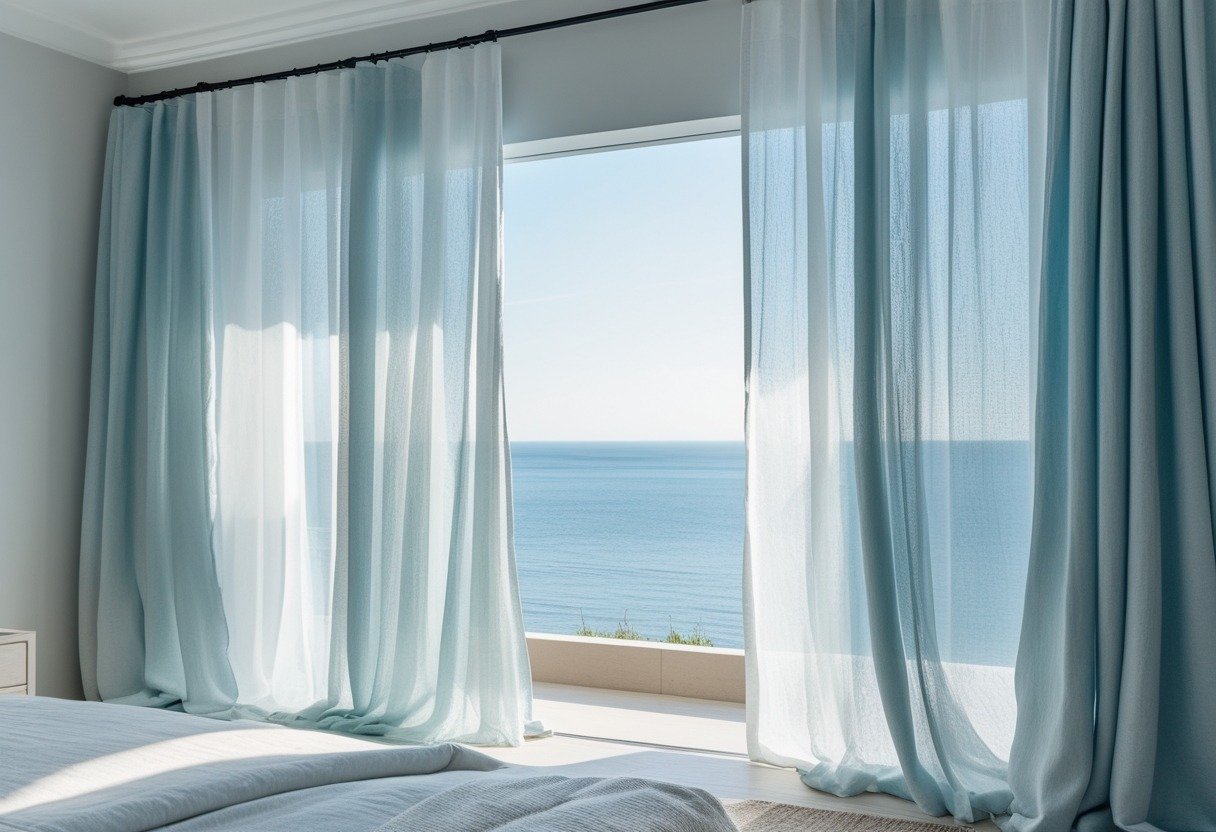
Pair powder-blue voile with white linen to bring soft light and a beachy feel to your bedroom. The voile filters sunlight while the linen adds texture and modest privacy.
Hang the voile on the inner rod closest to the window and the linen on the outer rod. This lets you adjust light and maintain a clean, layered look that suits coastal or modern styles.
Choose light hardware and simple header styles so the fabrics stay the focal point.
3) Turquoise ombré curtains to add a vibrant focal point
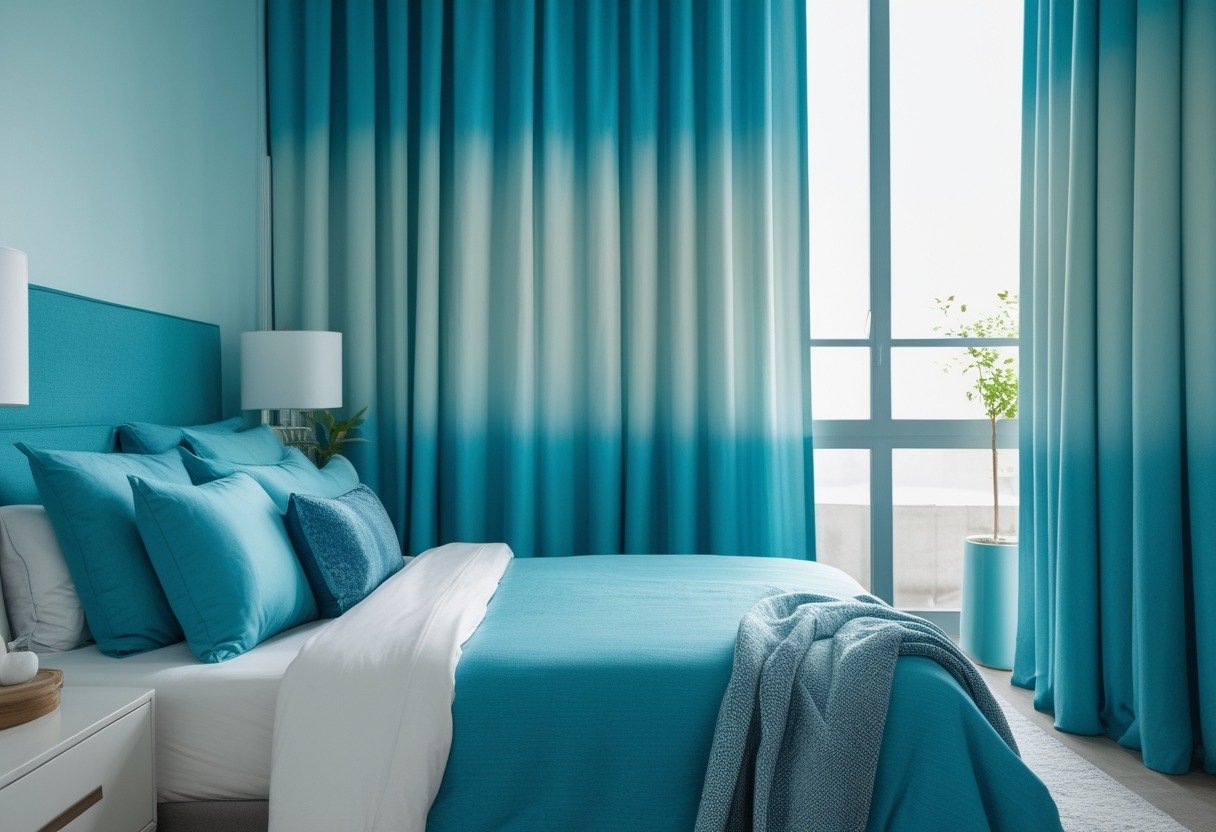
Choose turquoise ombré curtains to give your bedroom a clear, colorful focal point. The gradual color shift draws the eye without overwhelming the room.
Place them against neutral walls to let the turquoise stand out. Pair with simple bedding and a few accent pillows that pick up the darker or lighter tones.
Pick light-filtering sheers for soft glow, or blackout panels if you need darkening. Both types keep the ombré effect while controlling light and privacy.
4) Sky-blue linen panels paired with rattan blinds for a relaxed beach vibe
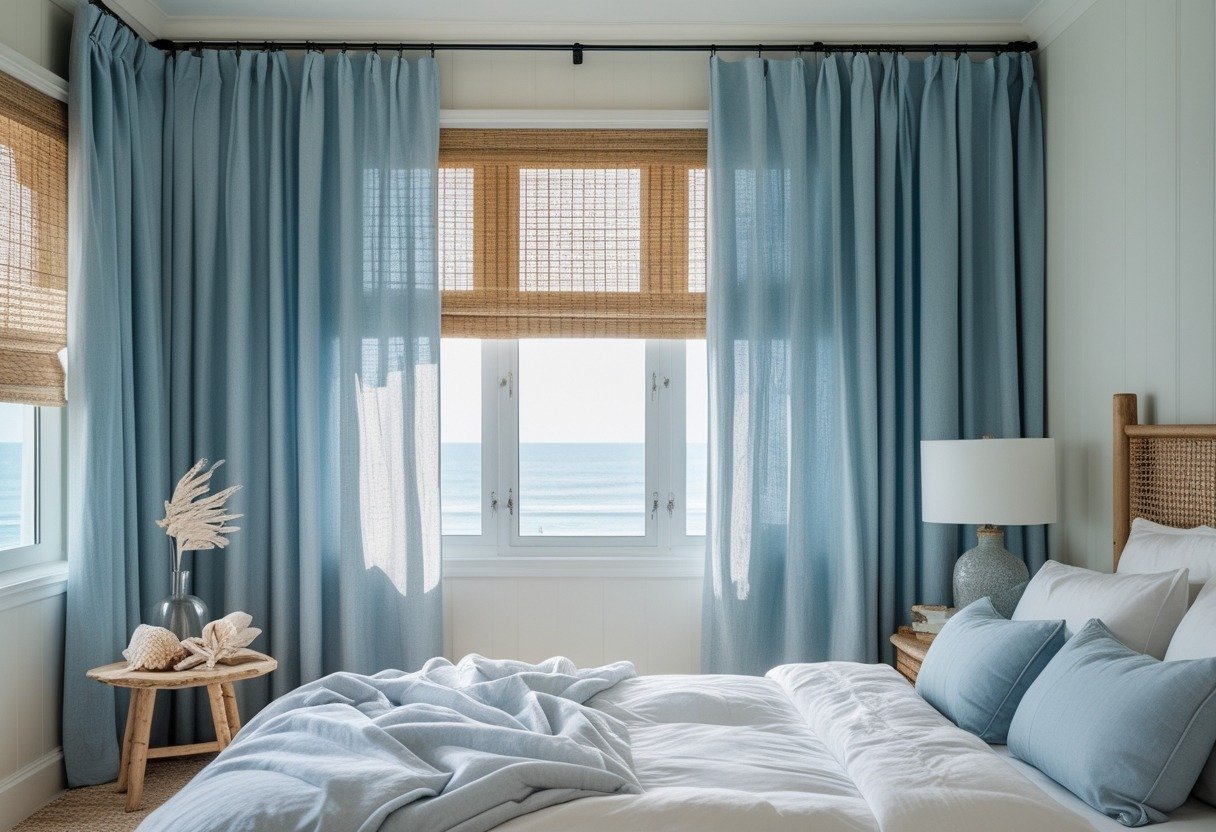
Choose sky-blue linen panels to bring soft color and light diffusion into your bedroom. The fabric feels airy and keeps the room bright without harsh glare.
Layer rattan blinds behind the panels for texture and privacy. Together they create a calm, coastal look that suits both modern and casual spaces.
Keep accessories natural—jute rugs, woven baskets, and light wood furniture will tie the scheme together.
5) Royal blue silk drapes with brass grommets for a luxe, formal bedroom
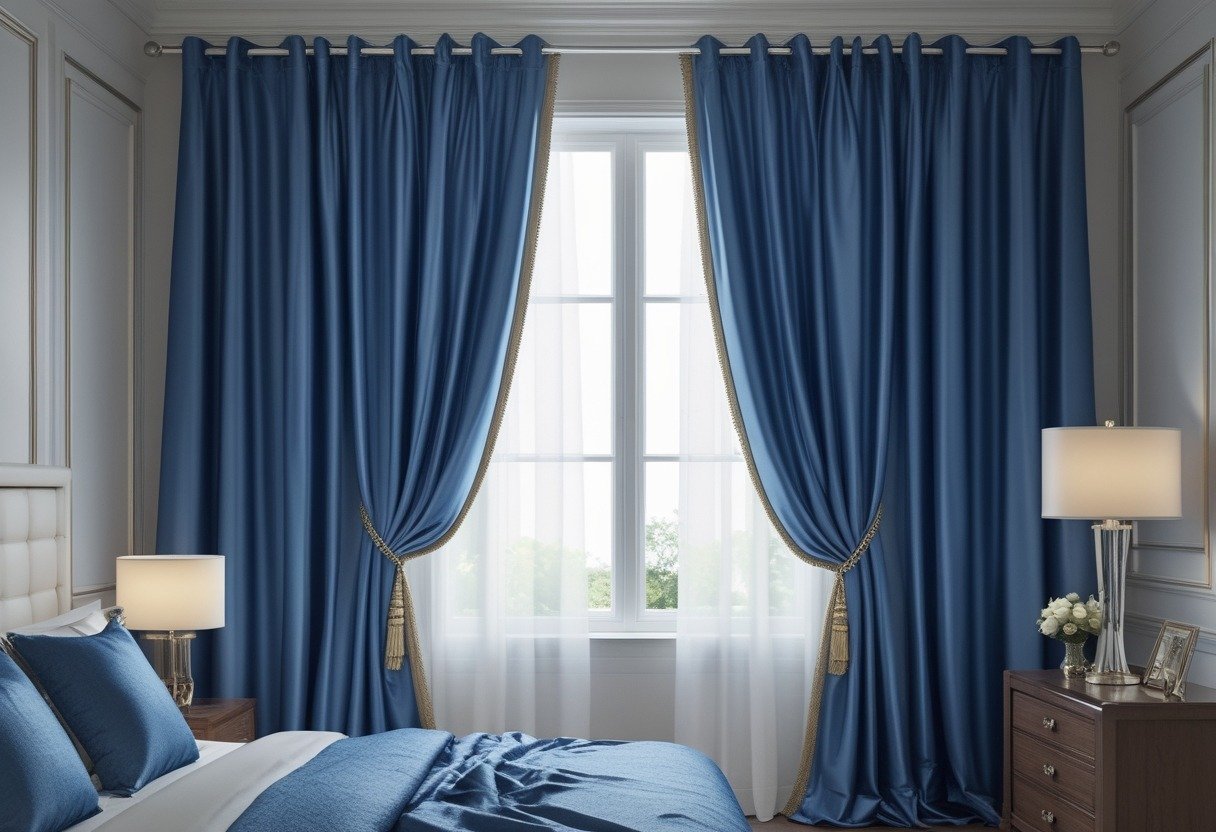
Choose royal blue silk drapes to add depth and a rich color to your bedroom. The silk fabric catches light softly and feels smooth to the touch.
Brass grommets give a clean, modern header and add a warm metallic contrast. They make the panels easy to slide and hold up well over time.
Pair with neutral walls and polished hardware to keep the look balanced. Add high-quality liners for privacy and better light control without losing elegance.
6) Cobalt patterned jacquard curtains to introduce texture and drama
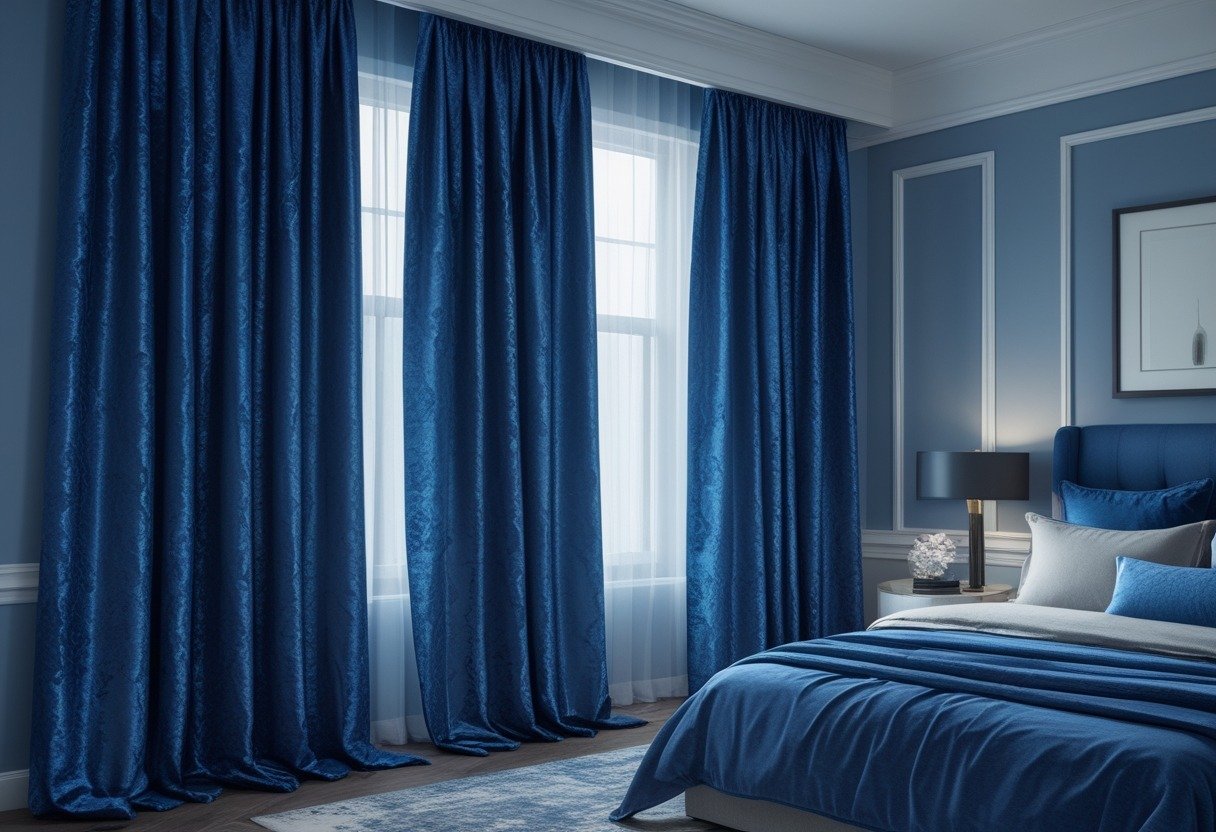
Choose cobalt jacquard curtains when you want bold color with subtle pattern. The woven design adds texture that catches light and feels rich without being loud.
Pick lined panels for privacy and better light control. A weighted hem helps them hang neatly and reduces fluttering on breezy days.
Pair them with neutral walls or soft metallic accents to keep the focus on the fabric. They work well in bedrooms where you want a dramatic, polished look.
7) Light aqua thermal-lined curtains for energy efficiency and privacy
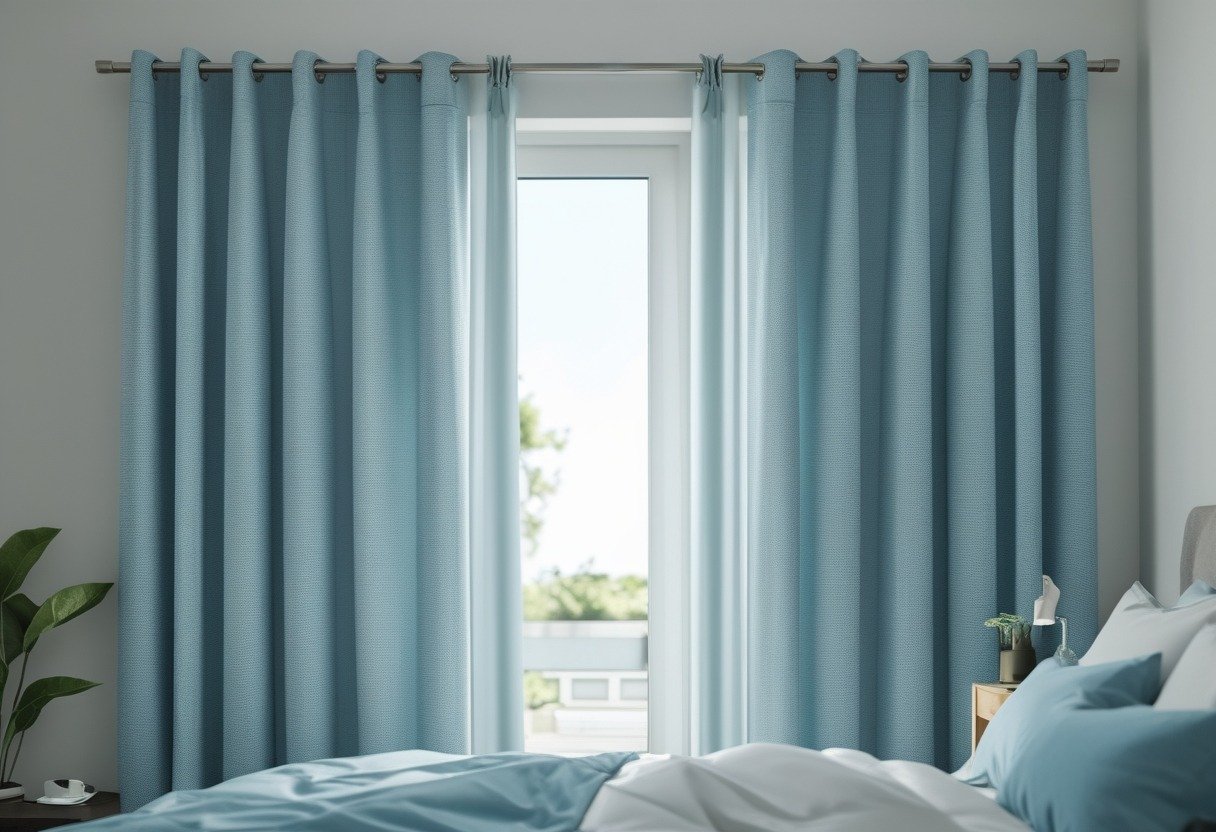
Choose light aqua thermal-lined curtains to cut drafts and lower heating or cooling needs. The lining adds insulation while the soft aqua keeps the room bright and calm.
You keep privacy without blocking all natural light, so the room feels airy yet private. These curtains work well for bedrooms where sleep and energy savings both matter.
8) Midnight blue floor-to-ceiling curtains to visually raise low ceilings
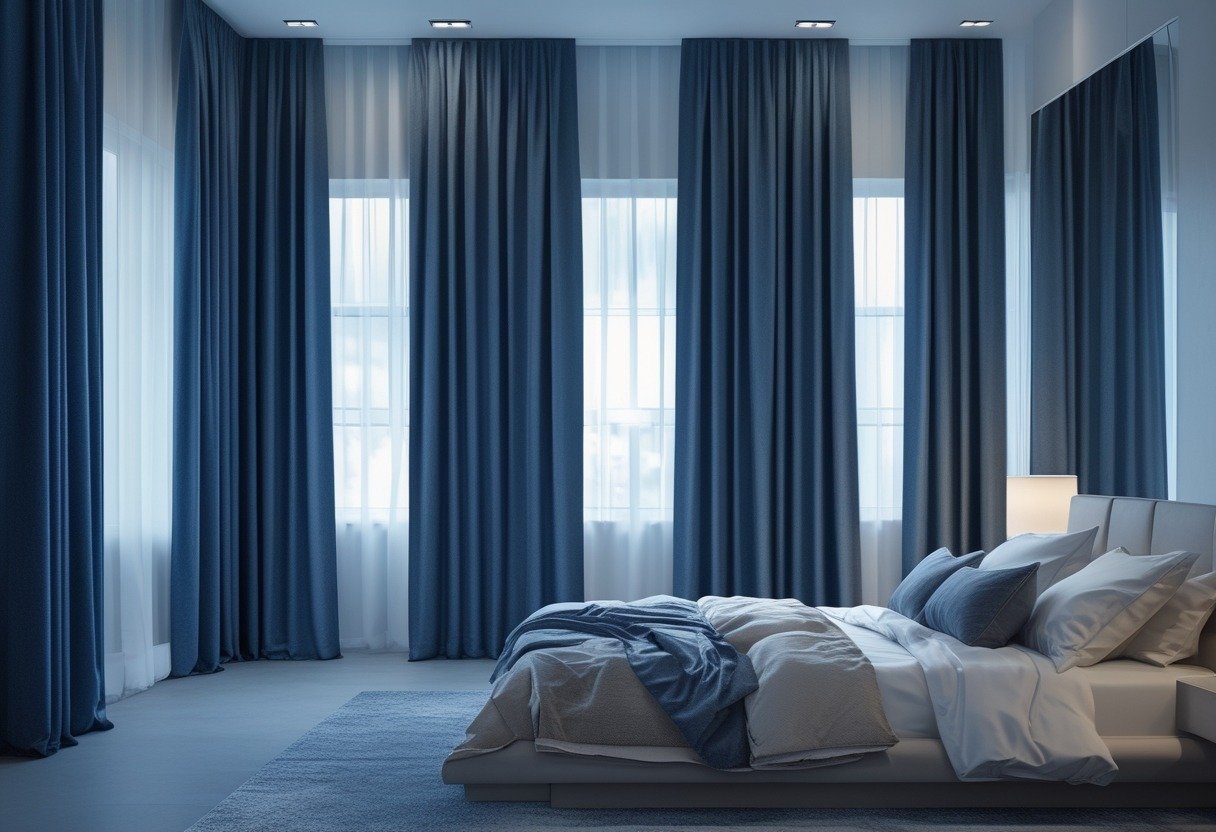
Hang midnight blue curtains from just below the ceiling to the floor to create a taller visual line. You’ll draw the eye upward and make the room feel less squat.
Choose lightweight or medium-weight fabric so the curtains fall straight without adding bulk. Keep the rod slim and close to the wall for a clean, uninterrupted look.
Pair with simple, light walls to keep contrast high but balanced. You’ll get height without darkening the room too much.
9) Blue and white striped cotton curtains for a classic nautical scheme
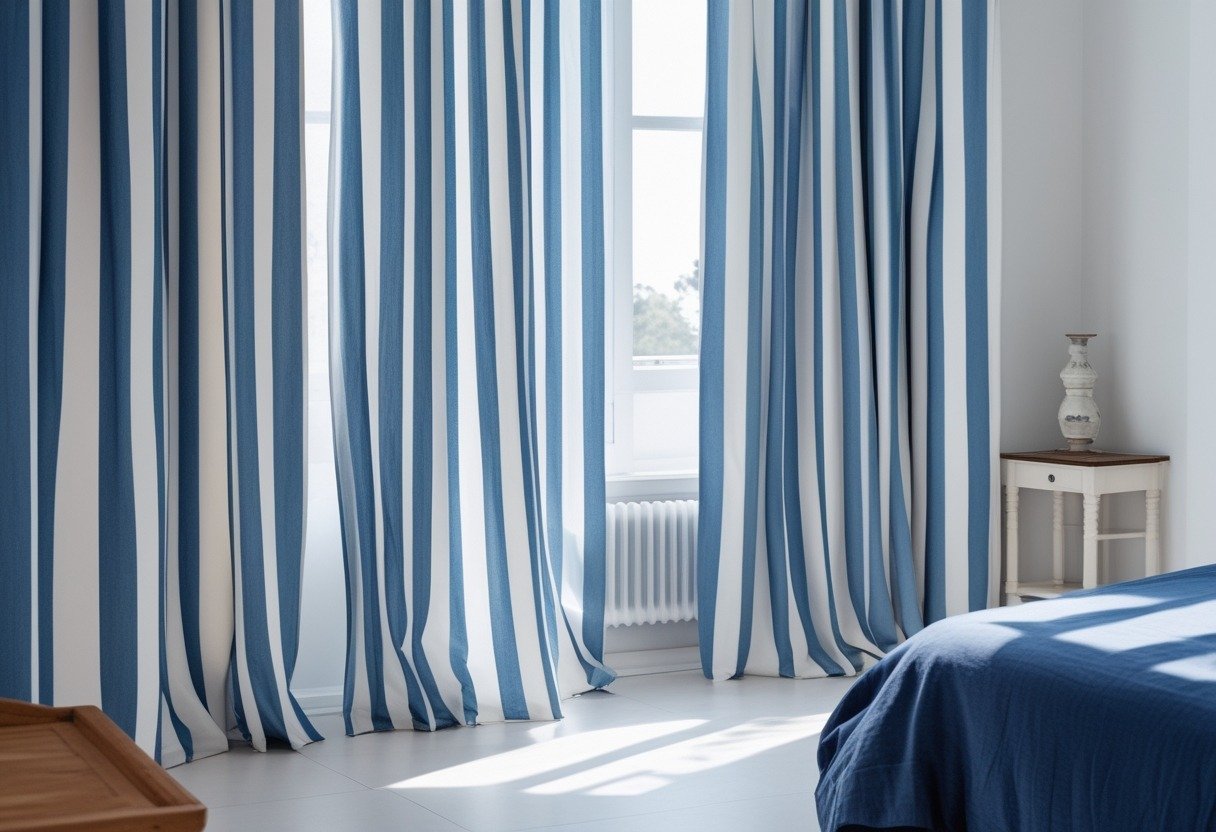
Choose blue and white striped cotton curtains to give your bedroom a clean, coastal look. The stripes add structure without heavy pattern, so your room feels calm and balanced.
Cotton drapes let light in while still offering privacy. Pair them with natural wood or rope accents to reinforce the nautical theme.
Keep other fabrics simple and use navy or white bedding. You can add a single anchor or compass pillow for a subtle maritime touch.
10) Indigo block-printed panels for a global/bohemian accent
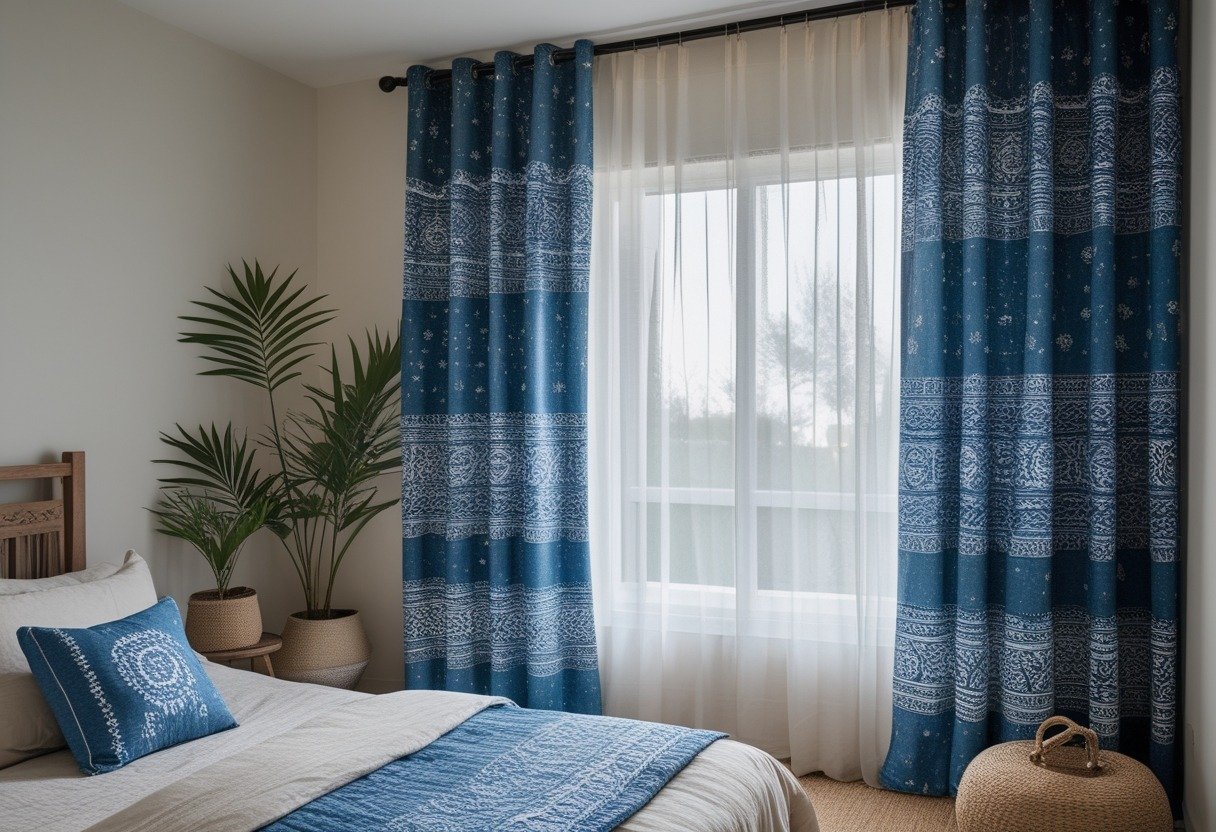
Choose indigo block-printed panels to add a handmade, worldly feel to your bedroom. The deep blue prints pair well with natural wood, rattan, and layered textiles.
These curtains often use cotton or linen, so they filter light softly while keeping a casual look. Mix patterns and textures, but keep colors simple to avoid visual clutter.
11) Chambray blue blackout roman shades for a casual, tailored finish
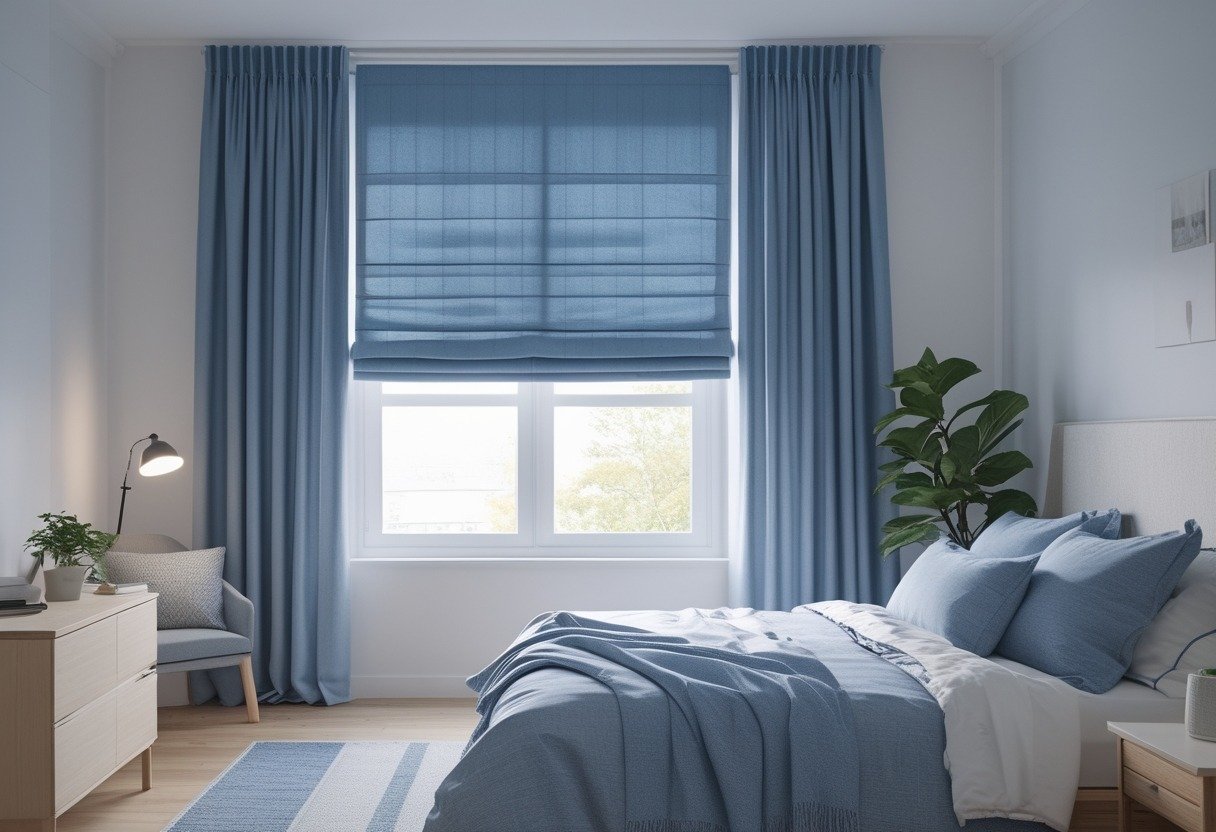
Choose chambray blue blackout roman shades to give your bedroom a relaxed, neat look. They block light and add a soft, linen-like texture that suits many styles.
You can pair them with white trim or wood accents for contrast. Cordless options keep the look clean and work better for safety.
12) Teal velvet pinch-pleat curtains for rich color without heavy sheen
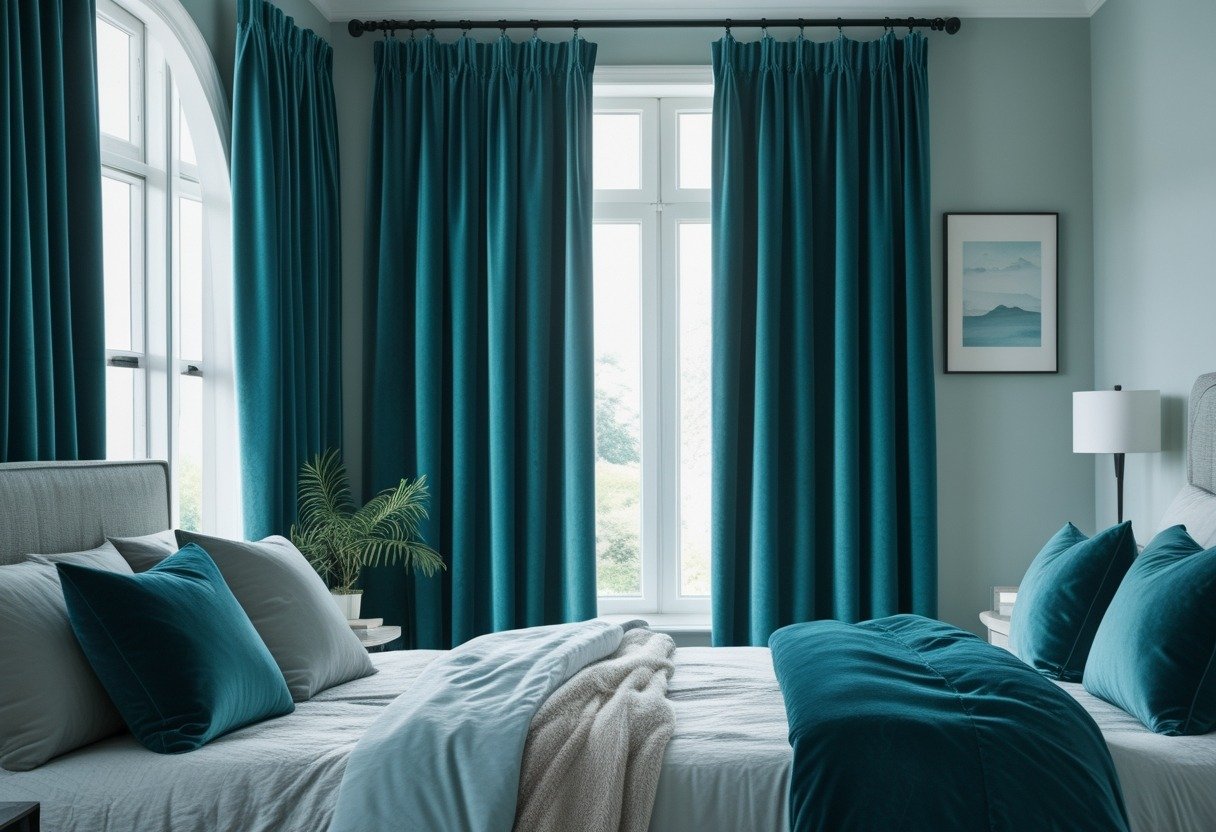
Choose teal velvet pinch-pleat curtains to add deep, calm color to your bedroom. The pinch pleat gives a tailored, hotel-style look that hangs neatly.
Pick a velvet with low sheen so the color reads rich without glare. This fabric also helps with light filtering and feels soft to the touch.
Hang them on a hidden track or classic rod for clean lines. They work well with warm wood or brass accents for a balanced palette.
Choosing the Right Shade of Blue
Pick a blue that matches how you use the room and the light it gets. Think about mood, privacy, and how bold you want the curtains to feel.
Understanding Light Versus Dark Blues
Light blues make a room feel airy and open. Choose pale sky, powder, or dusty blue if your bedroom gets little natural light or if you want a soft, calm mood. Light blue sheers let sunlight through while keeping privacy when layered with blinds.
Dark blues add depth and drama. Navy, indigo, or deep teal work well if you want better light blocking and a cozy feel. They hide stains and pair nicely with warm wood or brass. Keep in mind dark panels can make a small room feel smaller, so balance them with lighter walls or bedding.
Consider fabric sheen and texture. Matte cotton or linen softens dark hues, while velvet or silk makes them richer. Test a large fabric swatch near the window to see the true color at different times of day.
Coordinating With Existing Décor
Match blue curtains to at least two elements in the room for a cohesive look. Pick one accent color from your bedding, rug, or artwork and choose a blue that either complements or contrasts it. For example, pair navy curtains with gray bedding and brass lamps for a classic palette.
Use a simple rule for contrast: if walls are pale, go darker on curtains; if walls are dark, use lighter blue curtains or patterned panels to break up the color. Stripes or subtle prints can tie multiple colors together without clashing.
Think about finishes and metals. Cool blues suit chrome, silver, or white trim. Warmer blues (teal with green undertones) pair better with wood tones and brass. Always view samples in the room to confirm the blue works with your lighting and materials.
Pairing Blue Curtains With Bedroom Accents
Match curtain color, fabric weight, and pattern to the main pieces in your room so the space feels intentional. Focus on specific tones and textures that tie curtains to furniture and floor coverings.
Furniture and Upholstery Coordination
Choose furniture tones that either contrast or echo your curtain shade. For navy or deep blue curtains, pick warm woods like walnut or oak to prevent the room from feeling cold. If you use light blue curtains, pair them with pale wood or white-painted furniture to keep the look airy.
Match upholstery accents to curtain undertones rather than exact color. For example, curtains with gray undertones pair well with gray or charcoal upholstered headboards. Curtains with greenish-blue tones work nicely with olive or sage armchairs. Use one patterned piece—like a striped bench or a plaid armchair—to pull small amounts of blue into the seating without overwhelming the room.
Keep metal finishes consistent. Brass or matte gold looks good with warm, deep blues. Brushed nickel or chrome fits cool, sky-blue curtains. Add small throw pillows or a lumbar cushion in a shared accent color to link the window treatment to the rest of the furniture.
Textile and Rug Integration
Coordinate rug colors with the curtain tone and the room’s dominant palette. For dark blue curtains, choose rugs with cream, rust, or warm terracotta accents to create balance. Light-blue curtains match well with neutral rugs in beige, pale gray, or jute for a soft, layered look.
Think about pattern scale when mixing textiles. If your curtains have a bold pattern, pick a rug with a subtle, small-scale pattern or solid color. If curtains are solid, a patterned rug can add interest—use one or two colors from the curtains in the rug’s design to create cohesion.
Match textile textures for a finished feel. Velvet curtains pair with low-pile wool rugs and woven throws. Linen or sheer curtains go well with flatweave rugs and cotton throws. Add two to three throw pillows that echo the curtain color in different textures to pull the whole scheme together.
