
You use your upstairs hallway every day, so its flooring should feel both practical and pleasing. This article shows 10 upstairs carpet hallway ideas that help you improve comfort, safety, and style upstairs so you can pick the best fit for your home.

You will find options that link stairs to landings, boost durability in high-traffic zones, and make narrow halls feel longer — all while keeping maintenance and lighting in mind. Each idea focuses on real choices you can make to change how your hallway looks and works.
1) Striped wool runner linking stairs and upstairs landing

Choose a striped wool runner to create a clean line from your stairs to the landing. Wool wears well and hides foot traffic without looking shabby.
Pick stripes that echo your decor colors to make the space feel cohesive. A runner cut to size for the landing gives a smooth, finished look and reduces tripping.
2) Plush neutral-tone wall-to-wall carpet for cozy continuity

Choose a soft, neutral carpet to link rooms and make your upstairs hallway feel calm and cohesive. Neutral tones hide wear and pair easily with different wall colors and decor.
Plush fibers add sound absorption and a cushioned step, which helps reduce noise between floors. Keep pile dense but low enough to withstand foot traffic and vacuuming.
3) Patterned sisal-style carpet for high-traffic durability

Choose a patterned sisal-style carpet to give your upstairs hallway a hard-wearing surface with simple visual interest. The natural fiber look hides dirt and wear better than plain colors, so your hall stays neater between cleanings.
You get strong performance for busy homes and a subtle pattern that fits many decor styles. Pair it with easy-care pads and regular vacuuming to keep fibers looking their best.
4) Bold stair and hallway runner with brass stair rods

Choose a bold runner pattern to give your upstairs hallway instant character. The strong print draws the eye and hides foot traffic better than a plain carpet.
Brass stair rods add a classic, polished touch and help hold the runner in place. They contrast nicely with dark or bright patterns and lift the overall look without much effort.
Keep the runner width and rod spacing consistent for a neat, tailored finish. You can pair this look with simple wall paint so the runner becomes the focal point.
5) Vintage Persian runner to add color and character
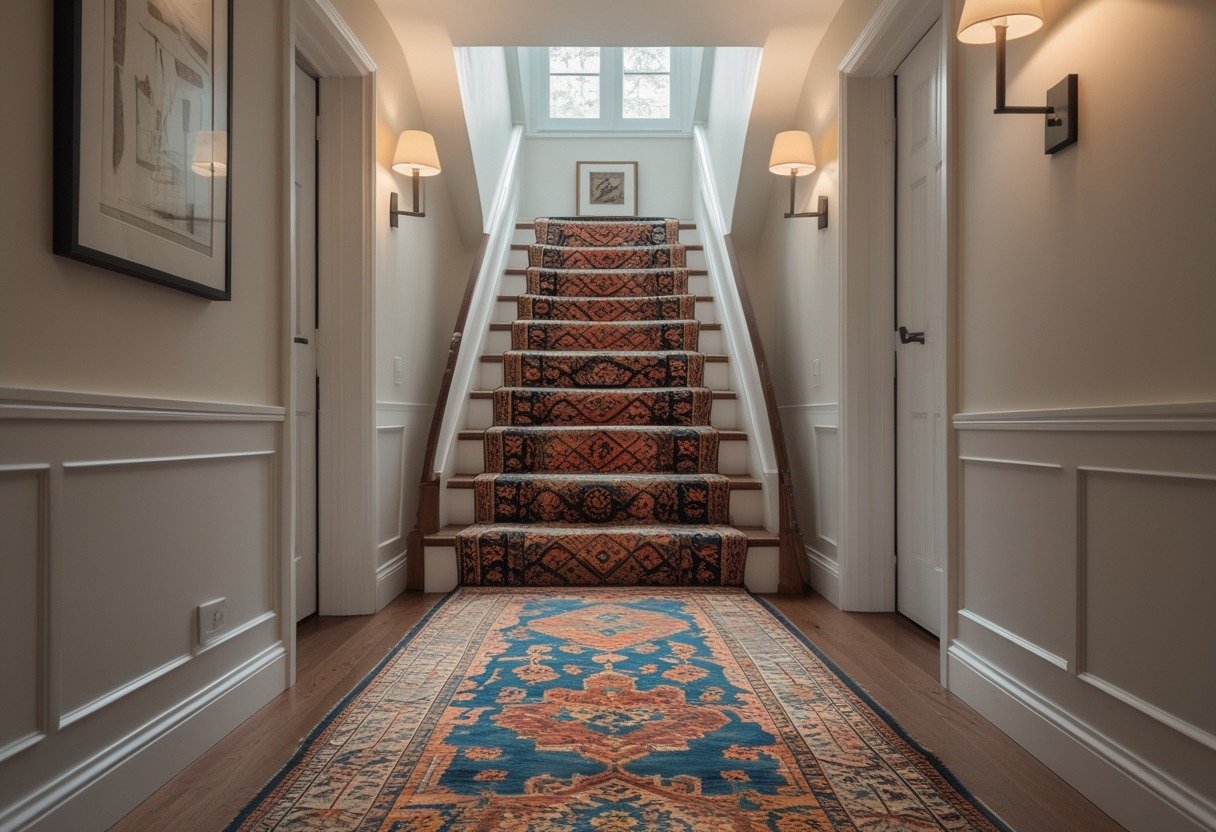
A vintage Persian runner brings rich color and pattern to your upstairs hallway. It can tie together paint, trim, and artwork with a single, classic statement.
Choose a size that leaves a border of floor visible on each side. This keeps the runner balanced and helps traffic flow feel natural.
Look for wool or high-quality blends for durability. A well-chosen runner adds warmth and a sense of history without overwhelming the space.
6) Low-pile nylon carpet for easy maintenance upstairs
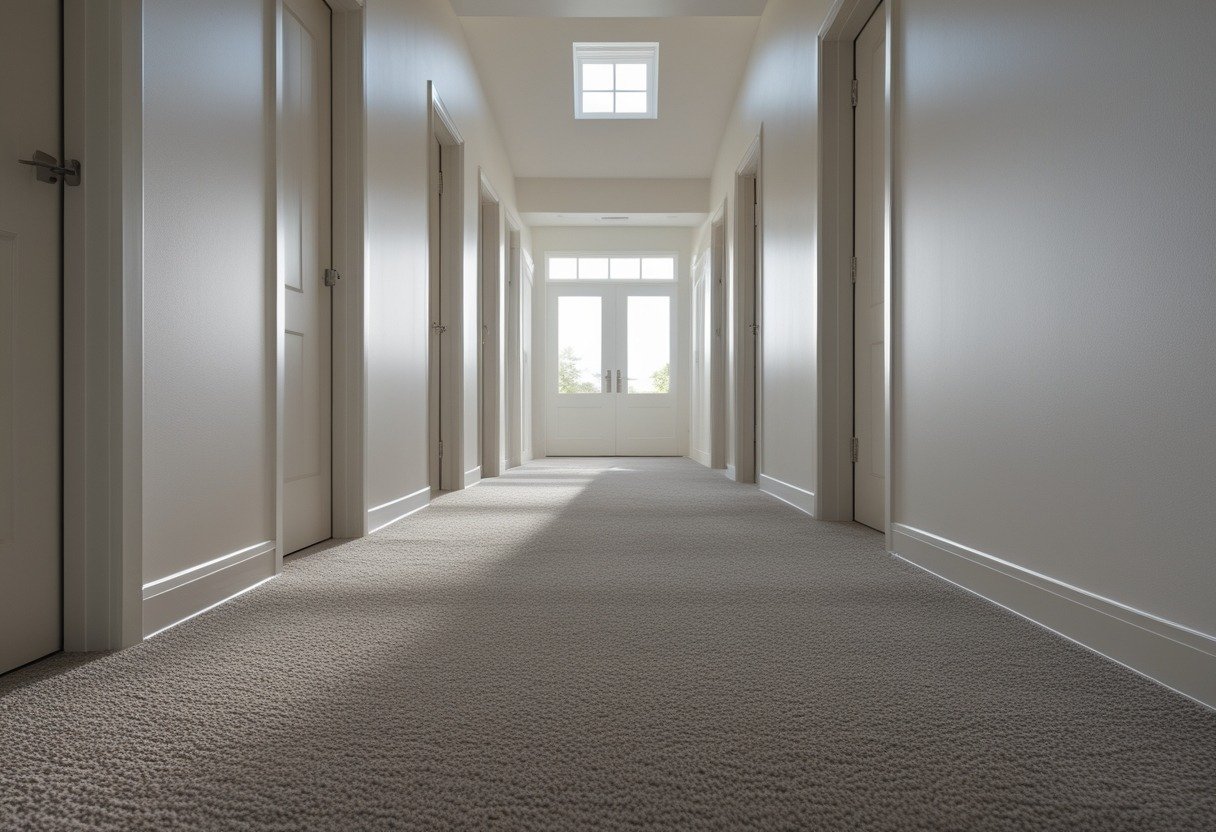
Choose low-pile nylon for a hallway that handles lots of foot traffic and simple cleaning. It resists wear and hides footprints better than high-pile options.
You can vacuum quickly and spot-clean spills with mild cleaners. Nylon also dries faster than some natural fibers, so stains are easier to manage.
Pick a darker or patterned tone to mask dirt between cleanings. Ask your installer about carpet density and face weight for longer life.
7) Chevron wool runner to elongate a narrow hallway
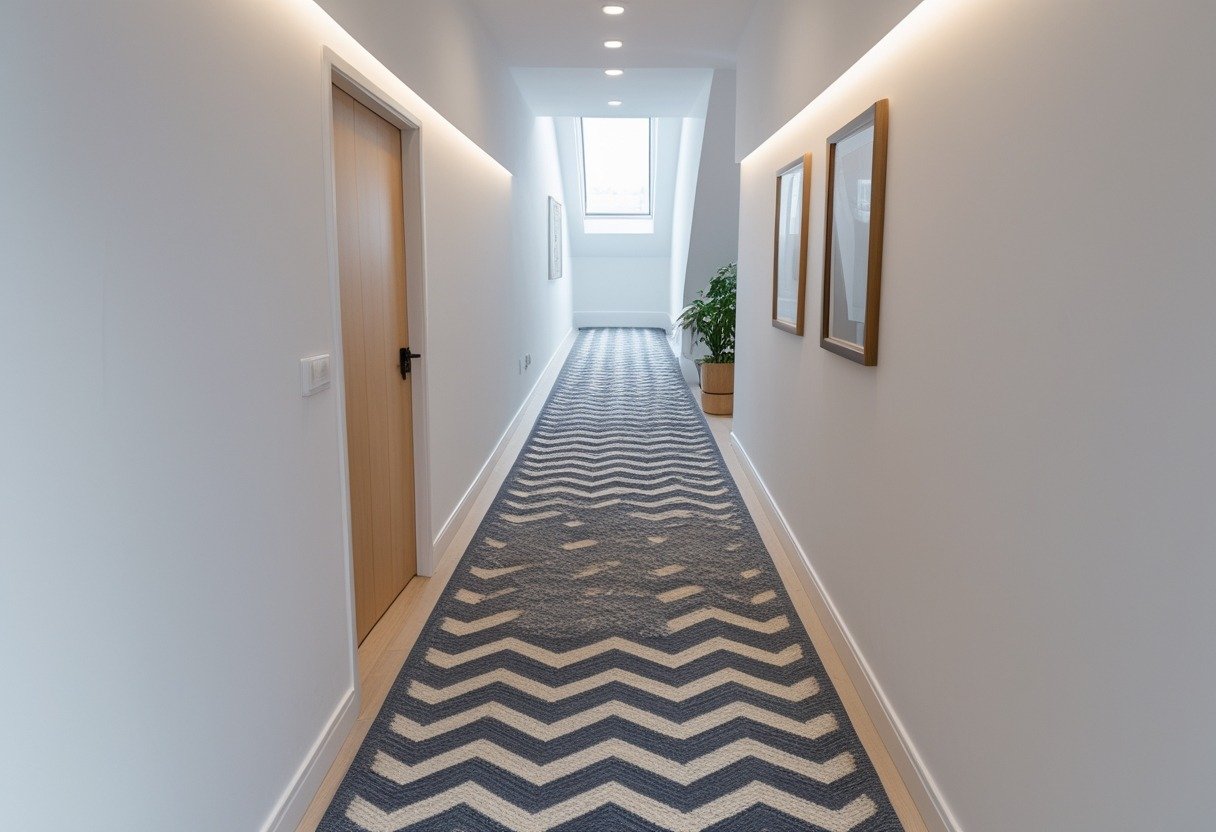
Choose a chevron wool runner to add both pattern and warmth to your upstairs hall. The zigzag lines draw the eye along the length, making the space feel longer.
Wool holds up to foot traffic and hides light dirt, so it works well on busy landings. Pick a low-pile weave for easier cleaning and safer footing.
Stick to a color contrast that complements your walls and stair trim. A bold chevron can become a simple, modern focal point without cluttering the corridor.
8) Stair-to-hall seamless cut-and-loop carpet for visual flow
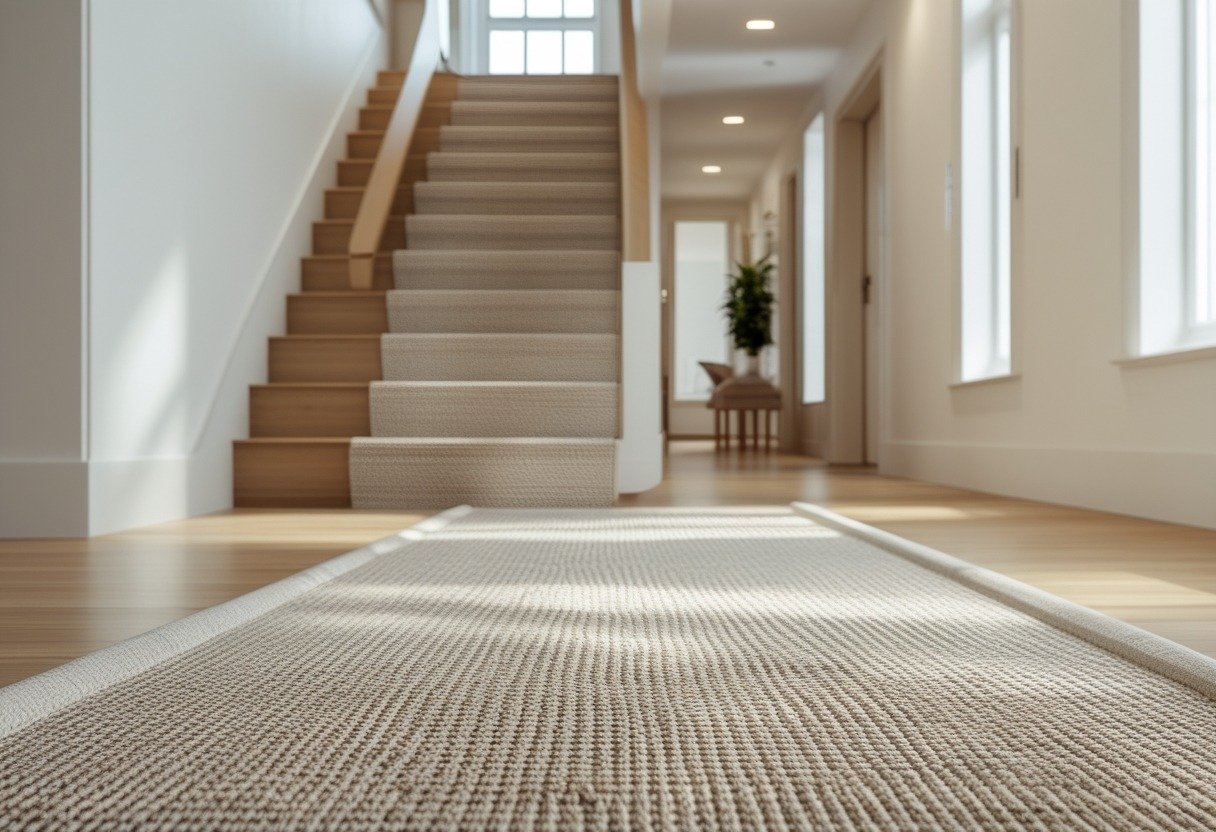
Choose a cut-and-loop carpet that uses the same pattern on both stairs and the upstairs hall to keep your space feeling connected.
The mix of cut and loop fibers adds texture but stays low-profile, so it wears well on steps.
Matching pattern and color reduces visual breaks and makes the transition smoother.
Install with consistent pile direction to avoid visible seams and ensure safer footing.
9) Runner with anti-slip rubber backing for safety on stairs

Choose a runner with rubber or gel backing to keep the rug from sliding on wooden steps. You reduce trip risks and protect the stair surface at the same time.
Pick a size and pattern that fits your staircase. Look for washable, waterproof backings so the runner stays secure and resists mold.
Install with stair tape or a few discreet tacks if needed. Regularly check for wear and replace the runner when the backing thins.
10) Layered narrow runner over hardwood with contrasting edge

Place a narrow runner over your hardwood to protect high-traffic areas and add texture. Choose a runner slightly narrower than the hallway so a strip of wood shows on each side.
Layer a second, thinner runner or trim with a contrasting edge to frame the wood and add visual interest. The contrast guides the eye down the hall and ties stairs and rooms together.
Essential Considerations for Upstairs Hallway Carpeting
You need carpet that lasts, keeps noise down, and stays clean with minimal fuss. Choose fibers, pile, and underlay that match your traffic, noise needs, and allergy concerns.
Material Durability and Safety
Pick a fiber and pile that handle high foot traffic. Nylon and polyester blends resist crushing and wear; wool looks great but costs more and can flatten sooner in narrow walkways. Loop pile hides footprints; cut pile feels softer but shows traffic lines faster.
Think slip resistance and stair safety. Use a firm underlay and secure edges with stair rods or grippers to prevent trips. For stairs, consider shorter pile (4–8 mm) to reduce slipping and make fastening easier.
Choose stain-resistant finishes if you expect spills or pets. Look for residential wear ratings and warranties tied to traffic levels. That helps you match carpet life to your household, saving replacement costs.
Sound Insulation Benefits
Carpet dramatically reduces footstep noise compared with hard floors. A 6–12 mm underlay plus a medium pile carpet can cut airborne and impact noise by several decibels, making bedrooms below quieter.
Dense backing and thicker underlay absorb vibration from heels and running. In multi-level homes, prioritize carpets with high impact insulation class (IIC) ratings when available. This improves sleep and lowers daily noise complaints.
Place runners or extra padding near bedroom doors to block noise further. You can compare product specs for IIC and STC values if noise control is a prime concern.
Allergy and Maintenance Factors
You can reduce allergens with tight low-pile carpets that don’t trap dust as much as shag styles. Regular vacuuming with a HEPA filter and monthly deep cleaning remove dust mites and pet dander effectively.
Choose stain-resistant and antimicrobial treatments for easier upkeep. Blends with olefin or treated nylon repel liquids, cutting stain time and cleaning effort. Test cleaning products on a hidden patch first.
Plan a cleaning schedule: vacuum high-traffic areas twice weekly and arrange professional cleaning every 12–18 months. That keeps fibers performing and extends the carpet’s usable life.
Color Coordination and Lighting Effects
Use color to balance light and choose fixtures that add warmth without glare. Focus on how carpet tones, wall paint, and light temperature work together to make the upstairs hallway feel larger, safer, and more inviting.
Enhancing Natural Light
Place lighter carpet colors, like pale gray or warm beige, where sunlight hits strongest to reflect daylight into the corridor. If your hallway has a window or skylight, align the runner’s lighter edge toward the light source to amplify brightness along the path.
Use low-profile, sheer window treatments or frosted glass to keep privacy while letting diffuse light in. Add a mirrored element—small framed mirror or mirrored console—across from the light source to bounce rays deeper into the hall.
Choose bulbs around 2700K–3000K for a warm, natural look that matches wood tones and beige carpets. Use layered lighting: recessed downlights for general light plus wall sconces to reduce shadows and highlight artwork or textured carpet.
Choosing Shades for Narrow Spaces
Pick mid-tone carpets with a subtle linear pattern to draw the eye down the corridor and create the illusion of length. Avoid bold, large-scale patterns that overwhelm a narrow hallway; instead opt for narrow stripes, herringbone, or a soft geometric motif.
Paint walls a shade lighter than the carpet to create depth and prevent the space from feeling boxed in. For example, pair a warm stone carpet with off-white or very light taupe walls. Use darker trim sparingly to frame doors without closing the space.
Install fixtures that keep the ceiling visually high: flush-mount or slim recessed lights work best. If you add a runner, center it and keep at least 6–8 inches of floor visible along each wall so the hallway reads wider.
