When I think about the details that make a house feel complete, staircase lighting is one of the first things that comes to mind. A staircase is often treated as a purely functional feature, something we use to move from one floor to another. However, with the right lighting, it can become one of the most attractive architectural elements in a home.
Whether you have a narrow staircase in a small house, a grand staircase in a spacious property, or a contemporary staircase with glass railings, the right lighting can make a remarkable difference. It can highlight beautiful materials, create a welcoming atmosphere, improve visibility at night, and make an otherwise ordinary corner feel thoughtfully designed.
The best staircase lighting ideas do not always require an expensive renovation. Sometimes, a few carefully positioned wall lights or a subtle strip of LED lighting beneath each step can completely change the appearance of the space. In other homes, a sculptural pendant light or a statement chandelier can become the main design feature.
Personally, I believe good staircase lighting should balance three things: appearance, comfort, and safety. Brightness matters, but so does the direction of the light. A beautiful fixture is less useful if it creates harsh glare, while an attractive indirect lighting arrangement can make a staircase feel warm and inviting without overwhelming the surrounding interior.
If you are planning a renovation or simply looking for ways to refresh your existing staircase, these 15 staircase lighting ideas will help you explore different styles, materials, and lighting techniques. Each idea includes practical design advice to help you visualize the look before making a decision.
1. Install LED Strip Lights Beneath Each Stair Tread
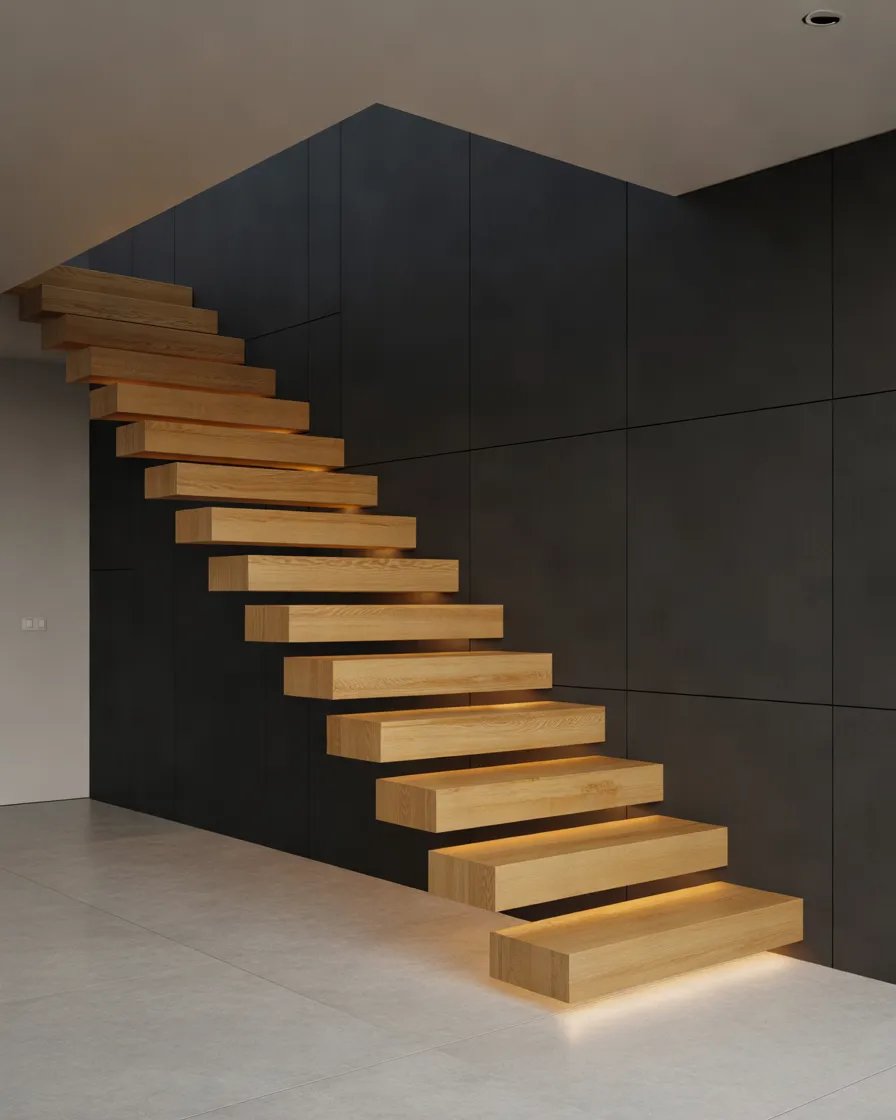
One of my favorite staircase lighting ideas is installing LED strip lights beneath the front edge of each stair tread. This approach creates a clean, floating appearance, particularly when the staircase has wooden, stone, or concrete steps.
The light gently illuminates the step below rather than shining directly into your eyes. This makes the staircase visually appealing while helping people distinguish individual steps in low-light conditions.
Warm white LEDs are an excellent choice for homes with oak flooring, walnut finishes, beige walls, or other natural materials. If your interior has a cooler, minimalist appearance, neutral white lighting may complement it better.
For the neatest finish, the LED strips should be concealed inside a recessed channel or positioned behind a small lip beneath the tread. An exposed strip can look unfinished and may create distracting points of light. Choosing a dimmable system also gives you greater control over the atmosphere.
Before installation, check that the lighting components are suitable for the location and that the power supply, wiring, and any necessary drivers can be safely concealed.
Best for: Modern homes, floating staircases, minimalist interiors, and contemporary renovations.
2. Add Recessed Wall Lights Along the Staircase
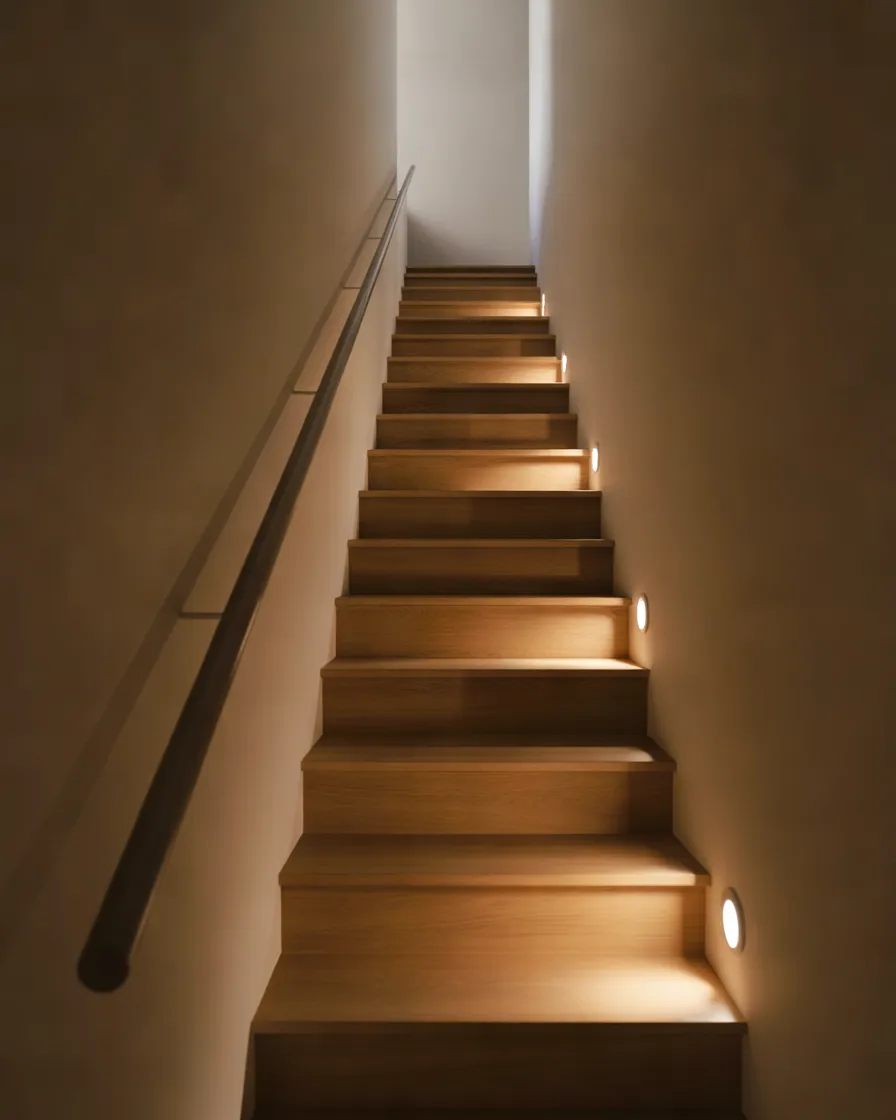
Recessed wall lights are an excellent solution when you want effective staircase lighting without adding bulky fixtures. They sit inside the wall, leaving the surrounding architecture clean and uncluttered.
These lights are commonly installed at regular intervals along the staircase wall, positioned to illuminate the treads without producing uncomfortable glare. Some fixtures cast light downward, while others create a combination of upward and downward illumination.
I particularly like this approach for narrow staircases. When floor space is limited, wall-mounted fixtures that project only slightly from the surface help preserve an open feeling.
The spacing and height should be planned according to the staircase dimensions, fixture beam angle, and brightness. A series of carefully positioned lights usually creates a more balanced effect than installing too many fixtures close together.
Recessed lighting can work beautifully with painted plaster, textured stone, concrete finishes, and wooden wall panels. For a coordinated interior, match the fixture trim to the wall color or nearby metal finishes.
If you are installing the lights during construction or renovation, the electrician can conceal the wiring within the wall. Retrofitting an existing staircase may require more planning.
Best for: Narrow staircases, contemporary homes, and understated interior designs.
3. Make a Statement With a Staircase Pendant Light
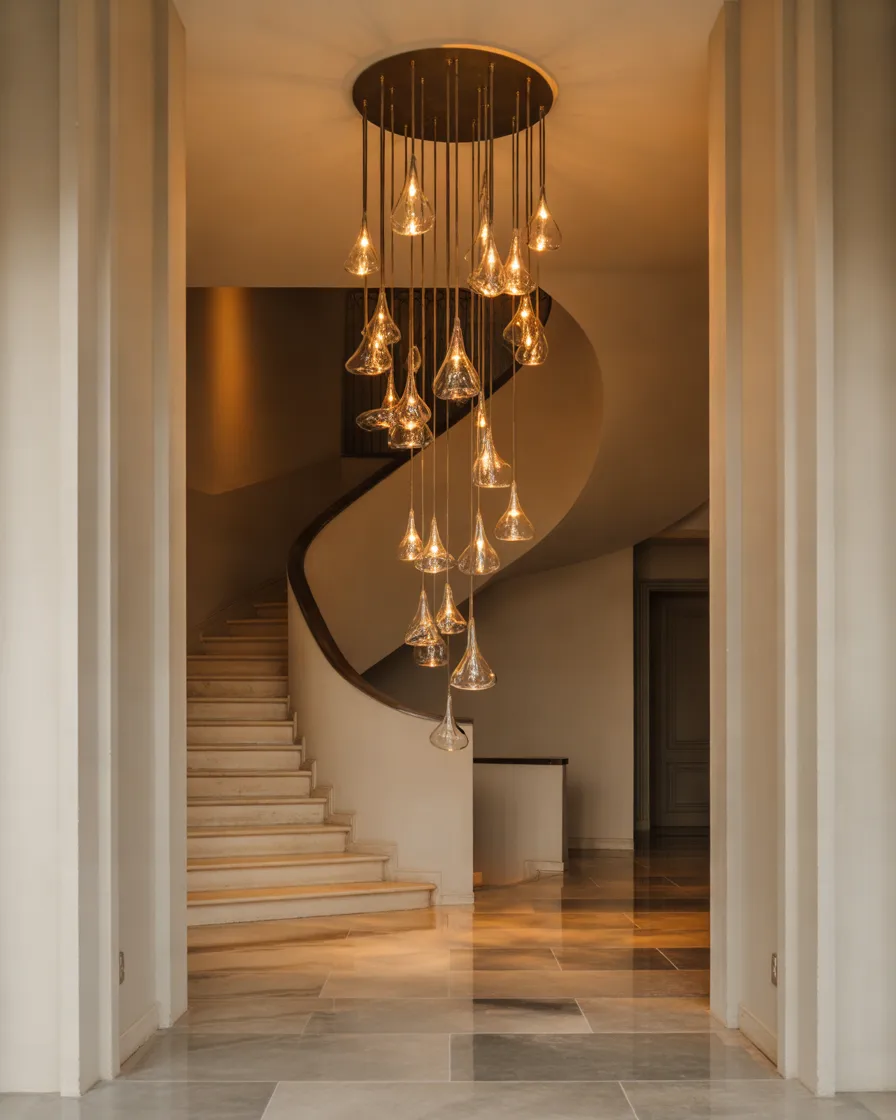
A pendant light can turn a staircase into a memorable focal point, especially when the space has a high ceiling or an open stairwell.
Instead of selecting a small fixture that disappears into the background, consider a pendant with an interesting silhouette, such as a sculptural glass design, an elegant metal frame, or a cluster of suspended lights at different heights.
The key is to choose a fixture that complements the proportions of the staircase. A large pendant can look impressive in a spacious double-height entrance, but an oversized design may overwhelm a compact stairwell.
Glass pendants are particularly useful when you want the light fixture to feel visually light. Black metal designs suit industrial interiors, while brass and warm glass can complement traditional or transitional spaces.
Placement is just as important as appearance. The pendant should illuminate the stairwell without obstructing movement or creating a collision hazard. Consider sightlines from the entrance, upper landing, and lower floor before deciding on the suspension height.
For the best result, combine the pendant with subtle wall or step lighting. This prevents the main fixture from doing all the work and gives you a more layered lighting scheme.
Best for: Double-height entrances, open stairwells, and homes with high ceilings.
4. Use Wall Sconces for Warm, Layered Lighting
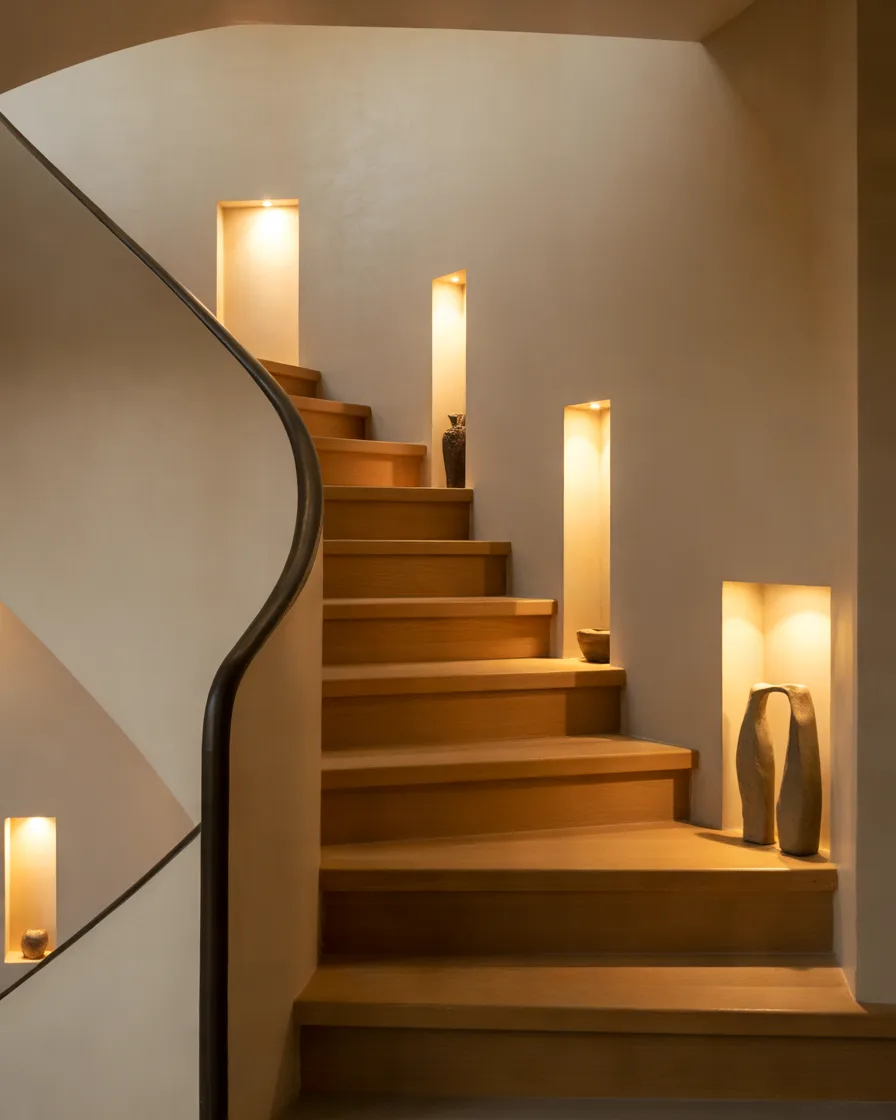
Wall sconces are a practical way to add character to a staircase while making the surrounding walls feel more finished.
Unlike recessed fixtures, sconces are visible design elements. They can feature cylindrical shades, globe-shaped glass, decorative metalwork, or traditional fabric covers. This gives you plenty of options for matching the lighting to the rest of your home.
For a warm and welcoming look, I would consider sconces with diffused shades and warm white bulbs. They soften the light and reduce the harsh contrast that can occur when a staircase is illuminated by a single ceiling fixture.
A consistent arrangement along the wall creates a pleasing rhythm as the staircase rises. However, the lights do not necessarily need to be positioned at identical intervals if the architecture includes landings, artwork, or changes in wall height. The aim is to create balanced illumination rather than follow a rigid pattern.
Pay attention to the fixture’s projection, especially in a narrow stairwell. A compact sconce is generally more suitable where people pass close to the wall.
Wall sconces can also coordinate with hallway lighting, creating a consistent design language throughout the home.
Best for: Traditional houses, transitional interiors, and staircases that need decorative lighting.
5. Highlight the Handrail With Integrated LED Lighting
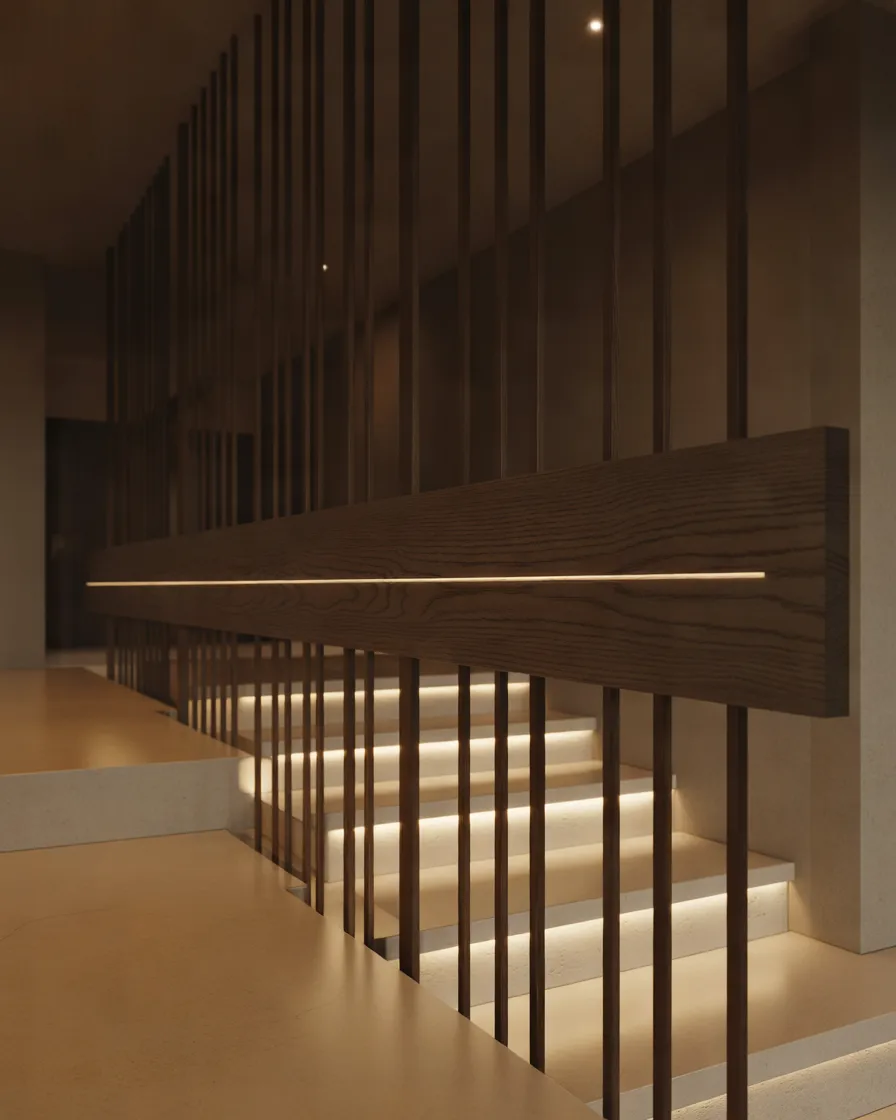
If your staircase has an attractive handrail, why not make it part of the lighting design?
Integrated handrail lighting places a concealed LED strip beneath or inside the handrail, directing a soft line of light toward the steps. The effect is subtle and architectural, making it particularly appealing for modern homes.
This staircase lighting idea works well with wooden handrails, black metal railings, and some specially designed glass or metal railing systems. The installation details depend on the handrail material and the available space for concealing the lighting components.
One of the biggest advantages is that the light follows the natural path of the staircase. Instead of creating isolated bright spots, it forms a continuous visual line that guides the eye upward.
Warm white illumination often looks especially attractive with timber, while neutral white can complement cool-toned stone or concrete.
When choosing this design, consider maintenance and accessibility. The LED strip and driver should be installed so that components can be replaced without dismantling the entire railing. The handrail must also remain structurally sound and comfortable to grip.
Best for: Contemporary staircases, floating steps, and homes with custom-designed railings.
6. Install a Dramatic Staircase Chandelier
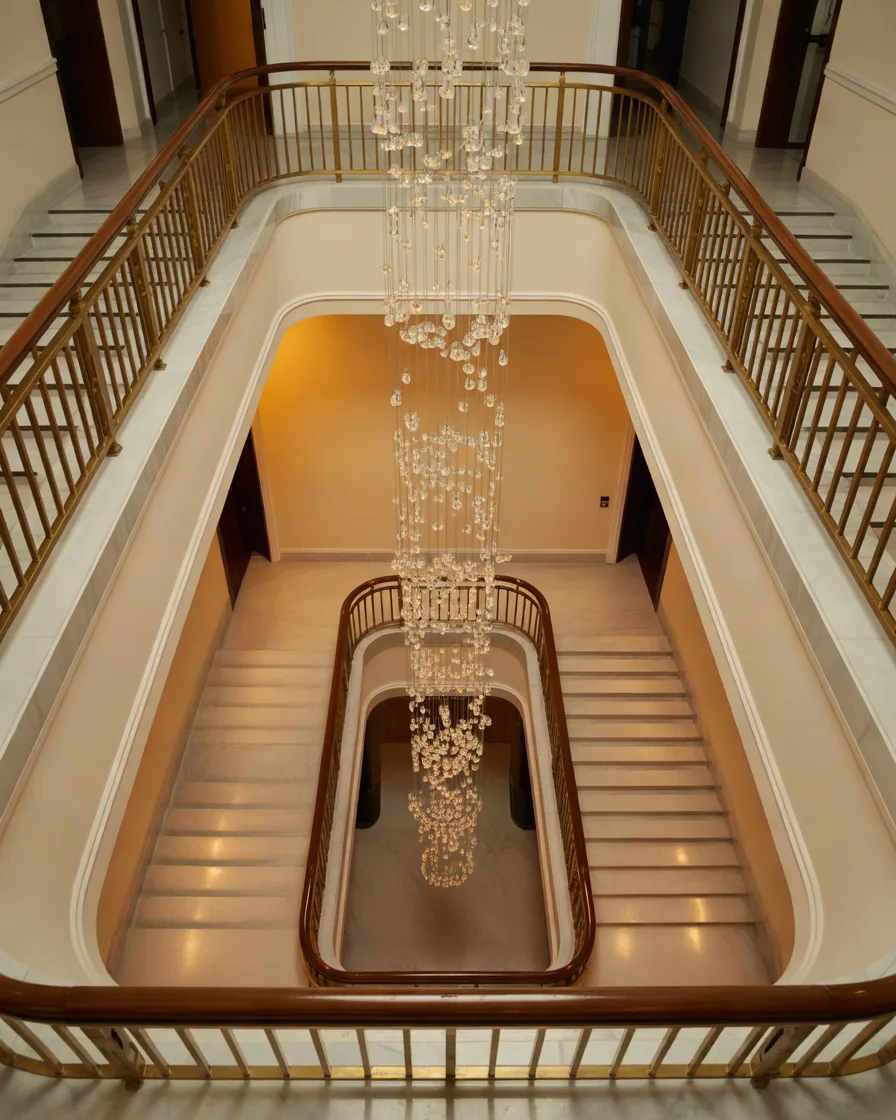
For a grand entrance, few lighting features make a stronger impression than a staircase chandelier.
A chandelier can fill a tall stairwell with visual interest, connect multiple floors, and create a sense of scale. Designs range from classic crystal fixtures to modern geometric arrangements and long cascading installations.
The most important consideration is the relationship between the chandelier and the staircase. A tall, narrow stairwell may suit an elongated fixture, while a broad staircase with a generous landing can accommodate a wider design.
Crystal chandeliers reflect light across nearby surfaces, creating sparkle and movement. In contrast, sculptural metal chandeliers create a bolder architectural statement without necessarily producing the same glittering effect.
Brightness should be considered carefully. A chandelier that looks beautiful in a showroom may create uncomfortable glare when viewed from the upper landing. Diffused bulbs, suitable shades, and dimming controls can help make the fixture more comfortable.
For everyday use, I would pair a chandelier with secondary lighting rather than rely on it alone. Wall lights or discreet step lights can provide a more practical level of illumination after dark.
Also plan how the chandelier will be cleaned, serviced, and accessed for bulb replacement.
Best for: Large villas, luxury interiors, formal entrance halls, and double-height staircases.
7. Choose Motion-Sensor Stair Lights for Everyday Convenience
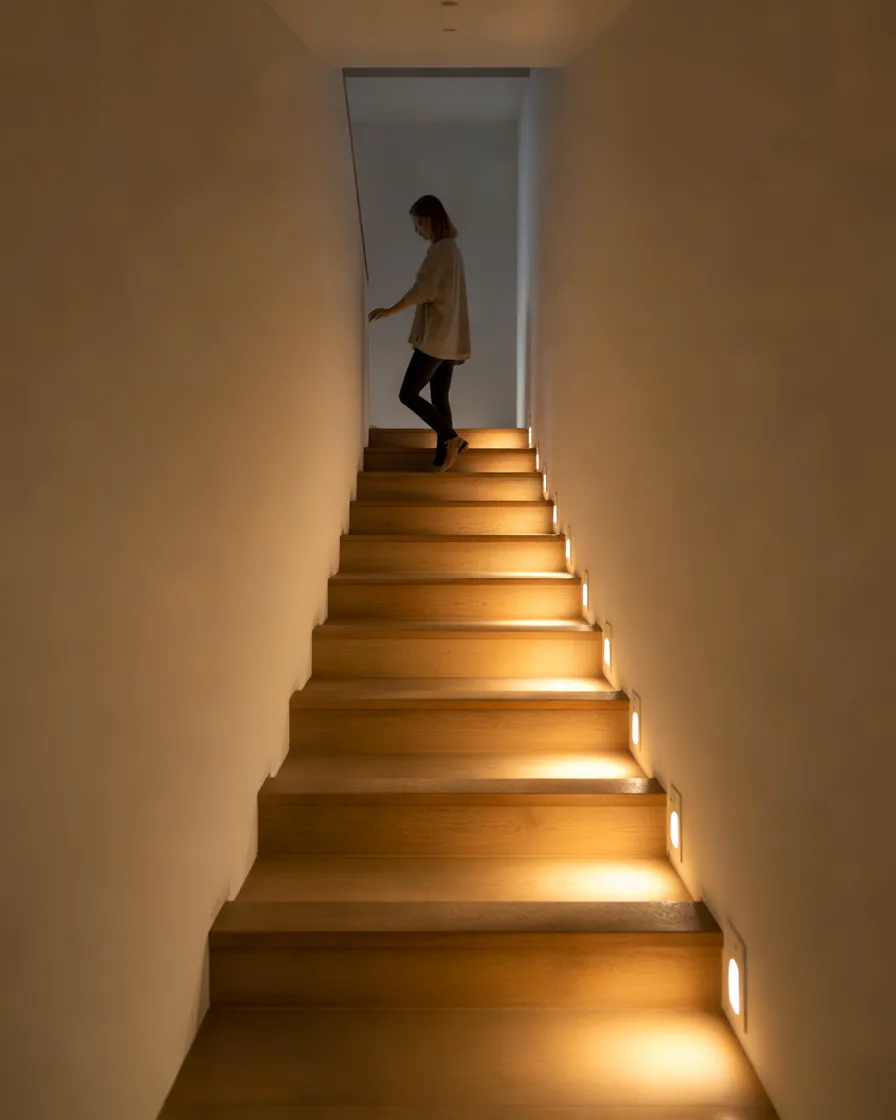
Motion-sensor staircase lighting is one of the most practical upgrades for a busy household.
The lights switch on automatically when someone approaches the staircase and switch off after a suitable period of inactivity. Depending on the system, you can illuminate individual steps, wall lights, or a concealed LED strip along the staircase.
This is especially convenient at night when you do not want to search for a switch or turn on bright overhead lighting. It can also help reduce unnecessary operating time when the staircase is used occasionally.
A motion sensor should be positioned so that it detects people before they begin climbing or descending. Depending on the layout, one sensor may be sufficient, or separate sensors may be needed at the top and bottom.
Look for a system with adjustable sensitivity and a suitable timeout setting. If the lights switch off too quickly, they may become distracting while someone is still on the stairs. A daylight sensor can also prevent the system from activating when there is already enough natural light.
Motion-sensor lighting is available in wired and battery-powered options, although hardwired systems may be preferable for permanent installations.
Best for: Family homes, frequently used staircases, and nighttime navigation.
8. Illuminate Glass Railings for a Floating Effect
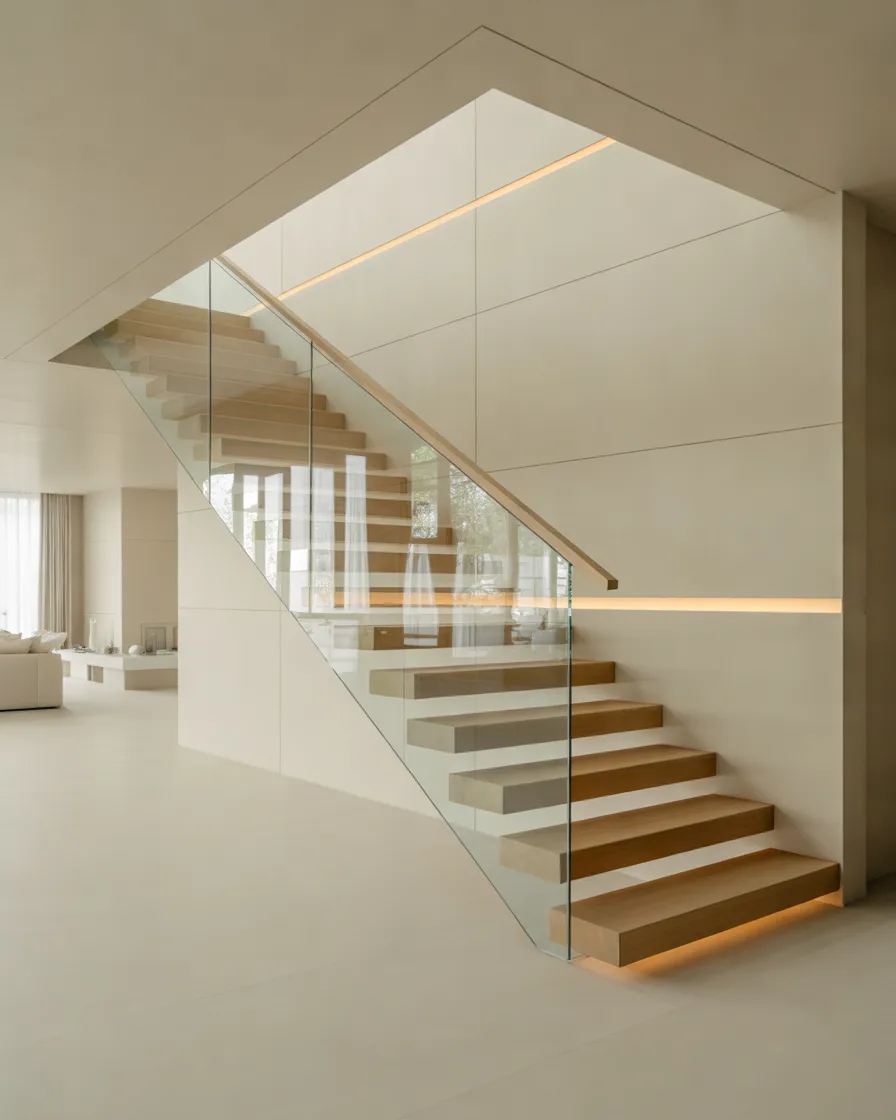
Glass railings can make a staircase feel open, airy, and connected to the surrounding interior. Adding carefully concealed lighting can enhance this effect without making the design look overly decorative.
One option is to integrate LED lighting into a compatible handrail or a purpose-designed railing channel. Another is to use concealed lighting near the base of the glass panels to create a subtle glow along the staircase.
The aim is to highlight the transparent structure while keeping the light source discreet. Exposed LEDs can produce distracting reflections in glass, particularly at night, so diffusers and carefully controlled beam angles are important.
This approach looks particularly attractive with pale stone, concrete, or timber steps. The combination of transparent glass and indirect light creates a contemporary architectural appearance without requiring a large decorative fixture.
Safety and installation quality are essential. Glass panels must use appropriate structural fixings, and any lighting channels must not compromise the railing’s strength. An experienced installer can help select a compatible system.
If your staircase overlooks a living room or entrance hall, consider how the illuminated glass will look from both floors. The result should feel cohesive rather than excessively bright.
Best for: Modern architecture, open-plan homes, and floating staircases with glass balustrades.
9. Combine Natural Wood With Warm Staircase Lighting
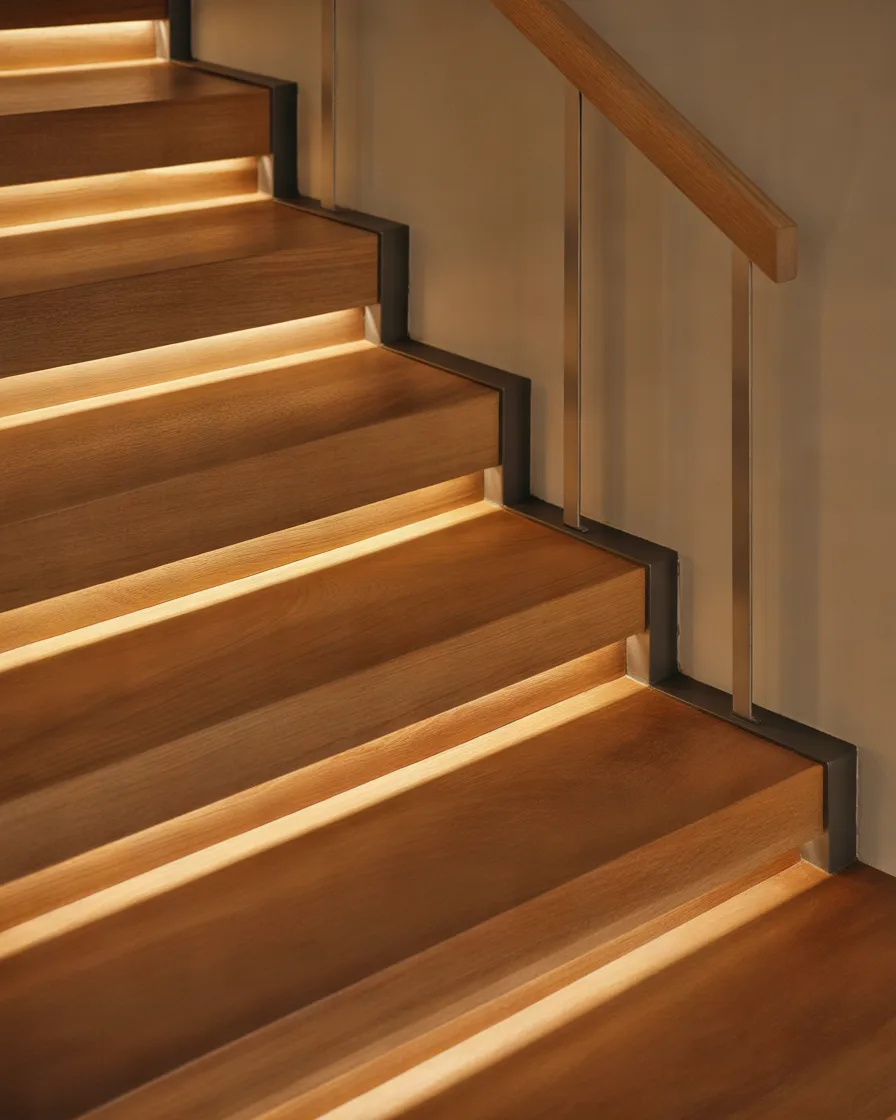
Wood and warm lighting are a natural combination. If your staircase features oak, walnut, teak, or another attractive timber, the right illumination can bring out its grain and make the space feel more inviting.
Rather than installing a bright light directly above the stairs, consider using concealed LEDs beneath the treads or subtle wall fixtures that wash light across the wood. This produces a softer effect and allows the material to remain the main visual feature.
Warm white light generally complements natural timber, although the best color temperature depends on the wood’s undertones and the colors elsewhere in the room. Testing a sample before final installation can prevent the finish from looking too yellow or orange.
This idea works with both traditional wooden staircases and modern floating designs. For a traditional interior, pair the lighting with a wooden handrail and understated wall sconces. For a contemporary space, combine oak treads with simple black metal details and hidden LED strips.
A protective finish also matters because reflections can change how the wood looks under different lighting conditions.
Best for: Warm minimalist interiors, Scandinavian-inspired homes, and natural-material designs.
10. Use Lighting to Highlight a Textured Staircase Wall
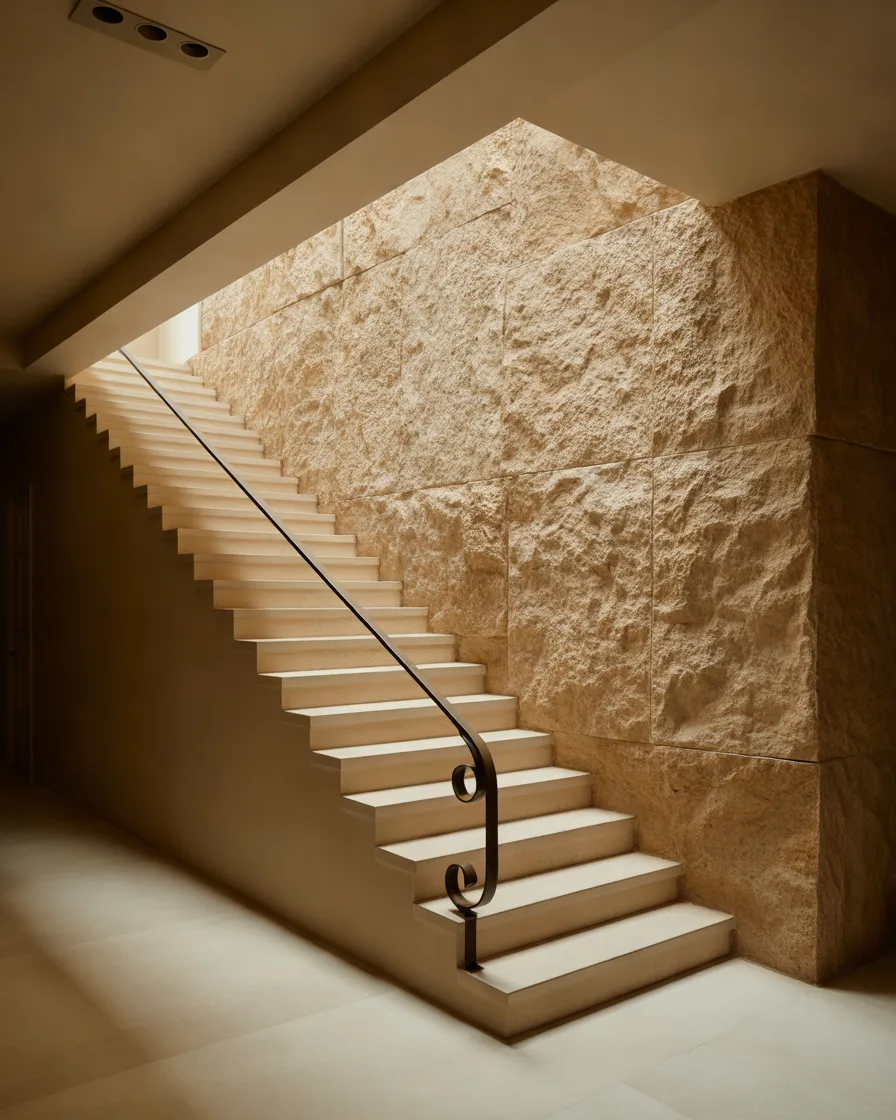
A staircase wall can become a feature in its own right when you use lighting to emphasize its texture.
Materials such as exposed brick, natural stone, decorative plaster, fluted panels, and textured wallpaper create interesting shadows when illuminated from the side or above. This technique, often called grazing, makes the surface appear more three-dimensional.
For example, a stone wall beside a staircase can be illuminated with discreet fixtures that cast light downward across the irregular surface. A fluted timber panel may look more striking when light travels along its vertical grooves.
The success of this idea depends on the light’s angle. Light directed too evenly at a textured wall may hide the very details you want to highlight. On the other hand, extremely harsh illumination can exaggerate imperfections or create distracting shadows.
I would keep the surrounding staircase relatively simple when using this approach. A textured feature wall already provides plenty of visual interest, so minimal fixtures and restrained colors often produce the most elegant result.
Make sure the lighting also illuminates the steps adequately. Decorative wall lighting should complement the staircase’s functional lighting rather than replace it.
Best for: Contemporary interiors, stone feature walls, exposed brick, and architectural staircases.
11. Add Cove Lighting to the Staircase Ceiling
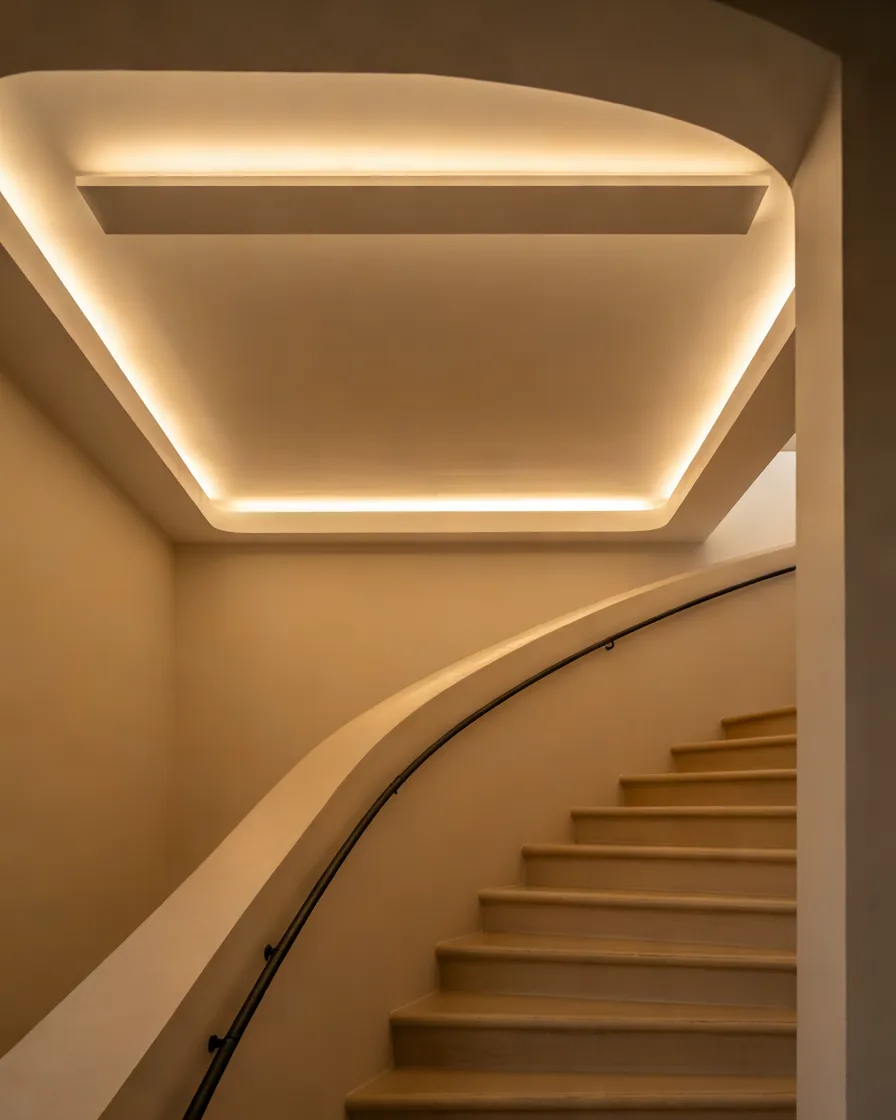
Cove lighting is an effective way to create soft, indirect illumination around a staircase without drawing attention to individual fixtures.
The light source is concealed within a ceiling recess, bulkhead, or architectural ledge, directing light onto the adjacent ceiling or wall. This creates a gentle glow that spreads through the stairwell.
It works especially well in contemporary homes with clean ceiling lines and relatively simple wall finishes. A concealed LED strip can emphasize the height of the staircase and make a compact stairwell feel less enclosed.
Cove lighting is also useful when you prefer a relaxing evening atmosphere instead of strong overhead illumination. Pair it with low-level step lights to maintain visibility while keeping the overall effect understated.
The main challenge is planning the recess and selecting an appropriate LED strip. A strip that is too powerful or installed too close to the visible edge can create bright spots. A suitable diffuser, sufficient concealment, and a dimmable driver can help produce a smooth, continuous glow.
If you are renovating, discuss the ceiling profile and access for maintenance with your electrician or contractor before building the recess.
Best for: Minimalist interiors, contemporary stairwells, and homes with architectural ceiling details.
12. Make a Small Staircase Feel Larger With Vertical Lighting
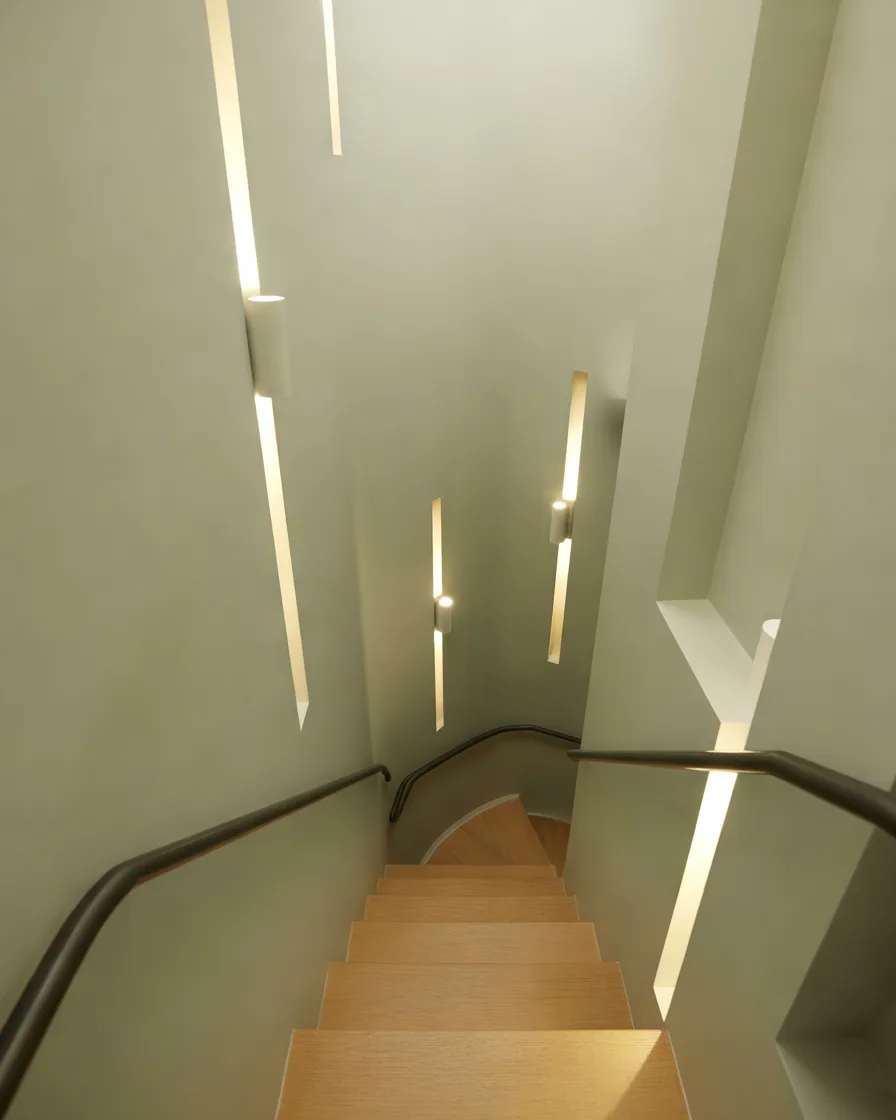
Small staircases can feel cramped when they have dark walls, limited natural light, or bulky fixtures. Vertical lighting can help create a sense of height and openness.
One option is to use slim vertical wall lights that direct light upward and downward. Another is to install a series of narrow illuminated recesses that emphasize the wall’s height.
Vertical lighting draws the eye along the staircase, helping the space feel taller and more structured. When combined with light-colored walls and a simple handrail, it can make a narrow stairwell appear more open without changing its physical dimensions.
Avoid choosing fixtures that project too far into the walking area. Compact wall-mounted designs or recessed fixtures are usually better suited to tight spaces.
Color temperature also influences the result. Warm white lighting creates a cozy appearance, while neutral white can help a contemporary staircase with cool finishes feel crisp and bright.
Mirrors may help reflect available light, but their placement should not produce confusing reflections of the steps or glare in the eyes. Keep the design simple and prioritize clear visibility throughout the staircase.
Best for: Small homes, narrow stairwells, and staircases with limited daylight.
13. Create a Contemporary Look With Black Track Lighting
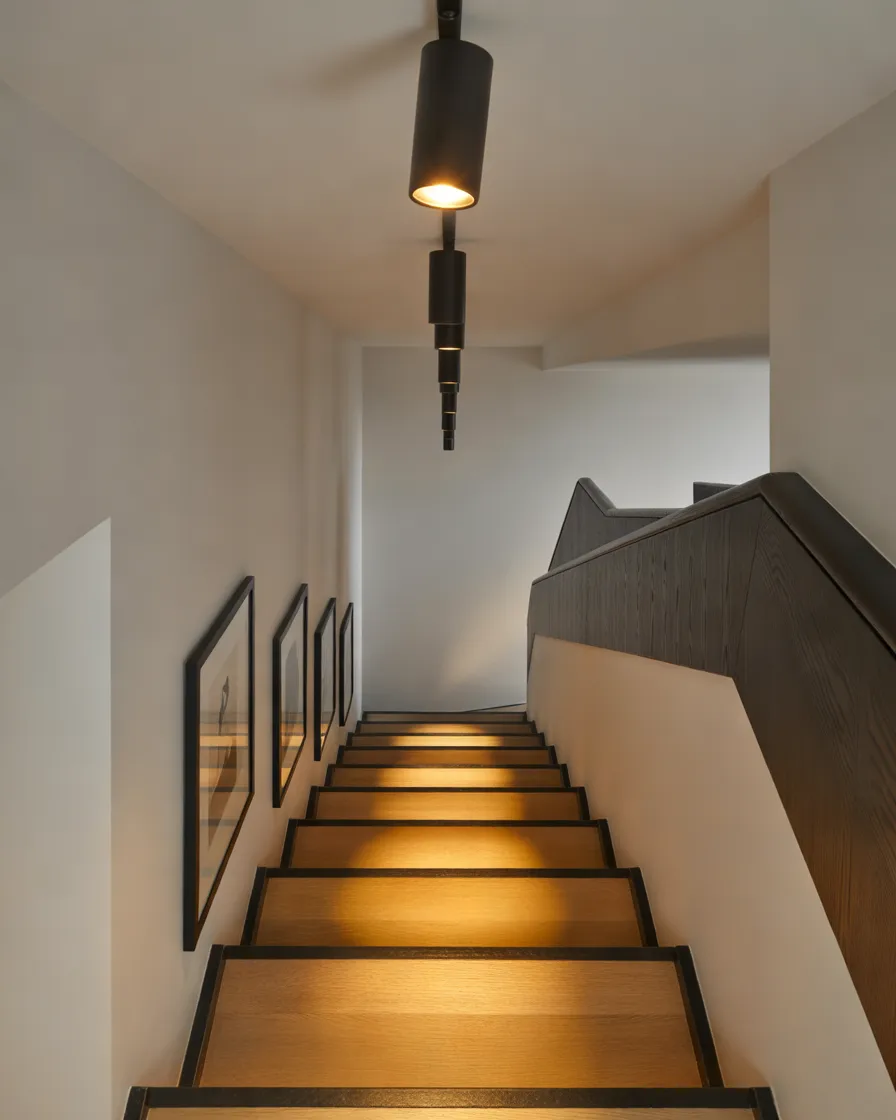
Track lighting is a flexible option when you want to direct light toward specific areas of the staircase.
A black track installed along the ceiling can support adjustable spotlights that illuminate the steps, artwork, a textured wall, or a landing. This makes it useful for staircases where the layout or decorative features may change over time.
Track lighting suits industrial, contemporary, and modern minimalist interiors. Black fixtures create a strong contrast against white ceilings, while matching the track to a darker ceiling can make the installation less visually prominent.
The key is to aim each spotlight carefully. Directing the beam toward the treads or wall rather than into someone’s eyes reduces glare. Multiple smaller light sources can provide more balanced illumination than relying on one powerful spotlight.
Track lighting is especially helpful for highlighting framed artwork or architectural details along the staircase. However, decorative accent lighting should not leave the walking surface in shadow.
Before choosing a system, check the track’s electrical requirements, the ceiling structure, and the compatibility of the fixtures. If the staircase has a sloping ceiling, adjustable heads may be particularly useful.
Best for: Industrial-style homes, contemporary interiors, and staircases displaying artwork.
14. Bring Natural Light Into the Staircase With Skylights
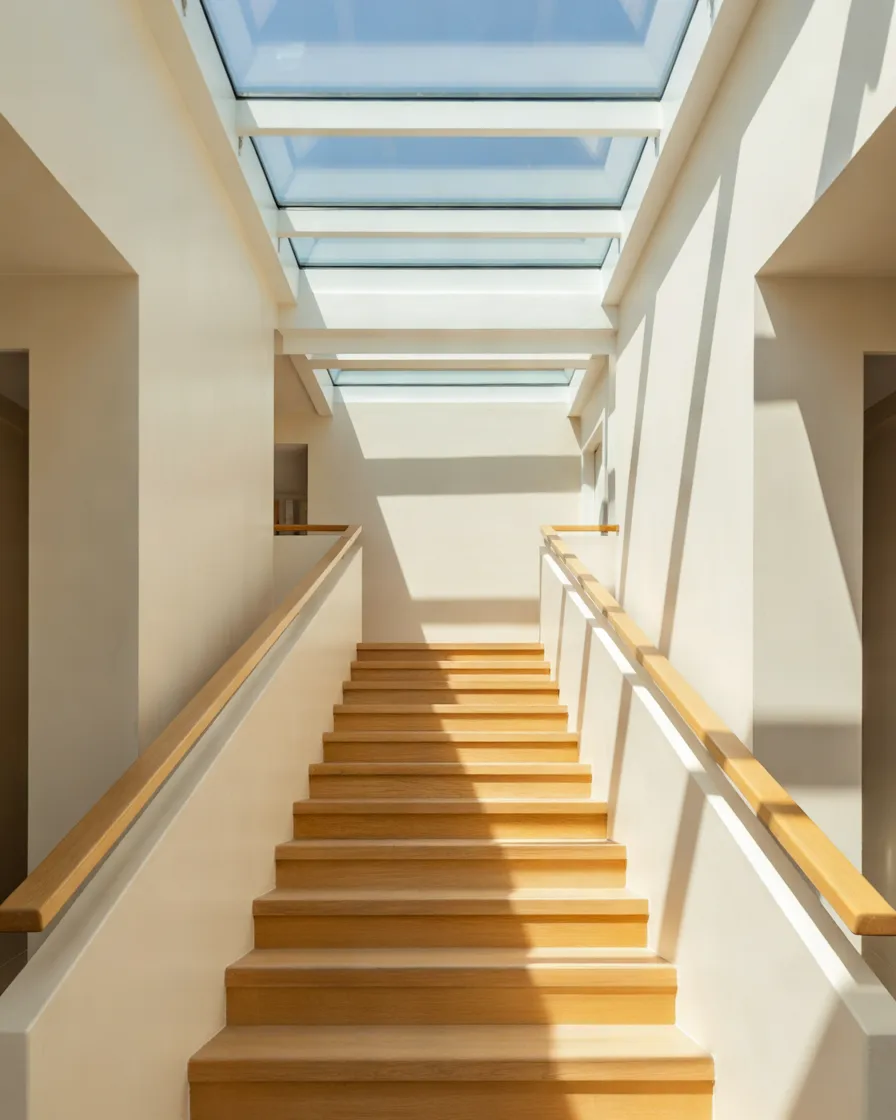
Natural light can be just as important as artificial lighting, particularly in a staircase located near the center of a home.
A skylight above the stairwell can introduce daylight from the roof, illuminating the upper landing and allowing light to travel down through the space. This can make the staircase feel brighter during the day and reveal the natural textures of wood, stone, and plaster.
If the staircase is part of a major renovation, a roof window or skylight may be worth considering. Its size, orientation, glazing, and position will influence how much daylight enters the space. A light-colored wall can help distribute that daylight more effectively.
Not every home can accommodate a skylight, and installation may involve structural changes, waterproofing, insulation, and building-code requirements. A qualified professional should assess the roof and surrounding construction before work begins.
Natural light also changes throughout the day, so it should not be the only source of illumination. Recessed wall lights or low-level LEDs can provide dependable lighting after sunset and during darker weather.
Best for: Homes with suitable roof access, central stairwells, and renovations focused on natural light.
15. Layer Multiple Lighting Types for a Balanced Finish
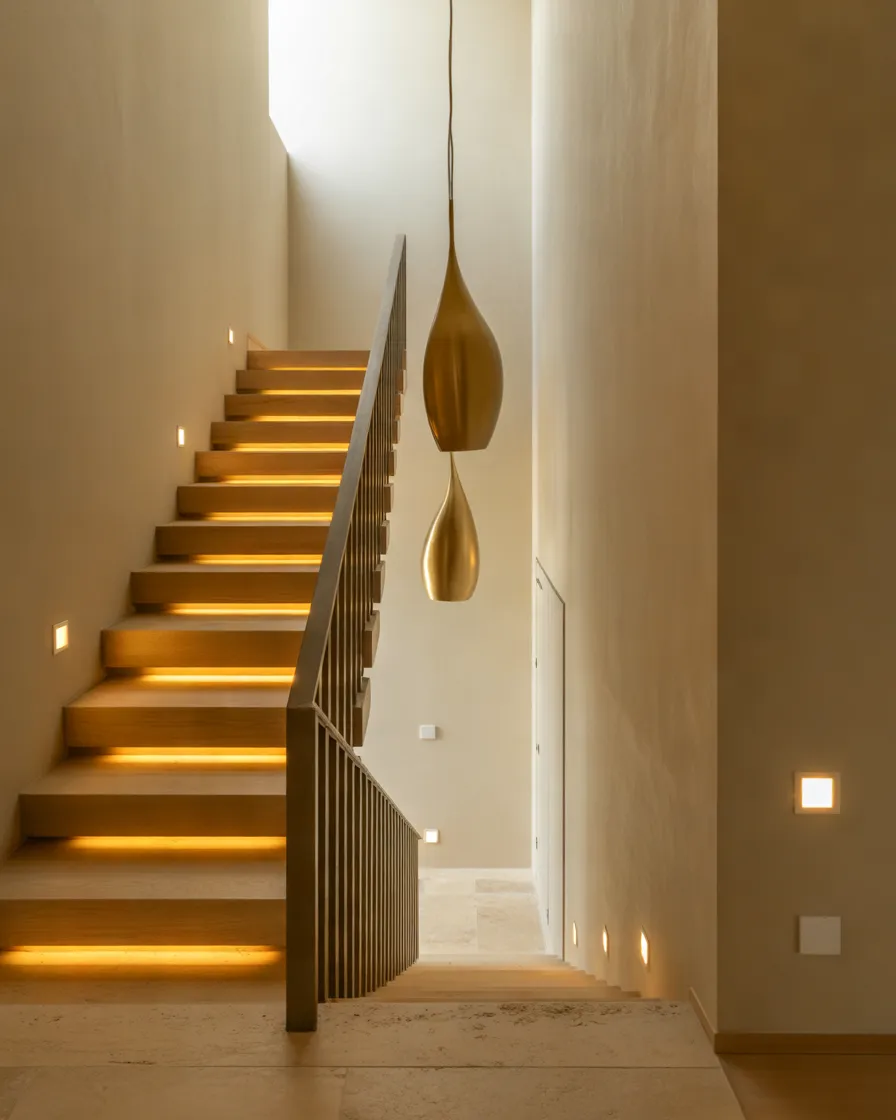
If you want the most versatile staircase lighting design, consider combining two or three lighting types rather than relying on a single fixture.
For example, recessed wall lights can provide everyday illumination, LED strips beneath the treads can highlight the staircase’s shape, and a pendant can add decorative interest to the upper stairwell.
Each layer serves a different purpose. Functional lighting helps people see the steps clearly, accent lighting emphasizes architectural features, and decorative lighting contributes to the overall character of the interior.
The secret is balance. Too many competing fixtures can make the staircase look cluttered, while several bright light sources can create glare and uncomfortable contrast. I would start by deciding where the staircase needs dependable illumination and then add decorative elements only where they contribute to the design.
Using compatible dimmers or smart lighting controls can make the arrangement more flexible. You might prefer brighter illumination when cleaning or moving furniture, but a softer setting when walking downstairs at night.
Try to keep the color temperature reasonably consistent across the different fixtures. A mixture of very warm and very cool lighting can make the same wall or staircase appear visually disconnected.
A well-planned layered scheme can work in almost any home, regardless of whether the staircase is traditional, modern, compact, or grand.
Best for: Whole-home renovations, open staircases, and homeowners seeking both practicality and visual impact.
How to Choose the Right Staircase Lighting for Your Home
With so many staircase lighting ideas available, the best option depends on your home’s layout, the staircase materials, and how the space is used every day.
Before choosing fixtures, consider these essential factors.
Staircase size and shape: A narrow staircase usually benefits from compact recessed lights, discreet LED strips, or small sconces. A grand staircase can accommodate a larger pendant or chandelier without overwhelming the space.
Ceiling height: High ceilings provide more opportunities for statement lighting. In low-ceiling stairwells, flush-mounted fixtures and indirect lighting are generally easier to incorporate.
Interior style: Warm wood and traditional railings often work well with brass sconces or soft golden illumination. Minimalist interiors may suit concealed LEDs, simple black fixtures, and neutral white walls.
Light direction: Choose fixtures that illuminate the walking surface without shining directly into the eyes. Check the appearance from both the bottom and top of the staircase.
Energy efficiency: LED lighting typically consumes less electricity than comparable traditional lighting and is available in many brightness levels and color temperatures. Select suitable-quality components and follow the manufacturer’s installation guidance.
Ease of maintenance: Consider how easily you can reach the fixtures to clean them or replace components. This is particularly important for chandeliers and lights installed in tall stairwells.
Budget: Replacing a ceiling fixture or adding compatible surface-mounted lights may be relatively straightforward. Concealed step lighting, integrated handrails, skylights, and architectural coves usually require more planning and installation work.
What Is the Best Color Temperature for Staircase Lighting?
Color temperature influences the overall mood of a staircase and how its materials appear.
Warm white lighting, generally around 2700K to 3000K, creates a relaxed and welcoming atmosphere. It works particularly well with timber, beige walls, brass fittings, and traditional interiors.
Neutral white lighting, often around 3500K to 4000K, produces a cleaner appearance and can complement contemporary spaces with white walls, gray finishes, concrete, and glass.
Neither option is universally best. The right choice depends on the surrounding finishes, personal preference, and the quality of the light source. If possible, test a bulb or sample fixture in the actual staircase before making a final decision.
For a cohesive appearance, use similar color temperatures across the main staircase lights. You can still introduce decorative effects, but consistency helps prevent the space from looking visually disjointed.
How to Make Staircase Lighting Safer
Beautiful lighting should never come at the expense of safe movement. Stairs need clear visibility, especially at the edges of each tread and near landings.
Start by ensuring that the entire flight is illuminated sufficiently, including the top and bottom steps. Avoid relying solely on decorative pendant lights, as they may leave shadows in the areas where people need to see their footing.
Choose fixtures that minimize glare and harsh reflections. Position lights so that they illuminate the steps instead of shining directly into the eyes of someone walking up or down.
Motion sensors can be useful, but they should activate early enough to illuminate the staircase before a person begins climbing. Set the shutoff delay so the lights remain on throughout normal use.
Pay attention to electrical safety, particularly when installing lighting beneath treads or near metal railings. Use appropriately rated components, suitable drivers, protected wiring, and professional installation where required. Outdoor or exposed staircases may need fixtures with suitable weather-resistance ratings.
Finally, make sure cables, fittings, and lighting channels do not create trip hazards or compromise the handrail and stair structure.
Frequently Asked Questions About Staircase Lighting Ideas
What Is the Best Lighting for a Staircase?
The best staircase lighting depends on the staircase’s design and the amount of available space. LED strip lights beneath the treads, recessed wall lights, and well-positioned sconces are versatile choices for many homes. A chandelier or pendant can provide an attractive focal point in a larger stairwell.
Where Should Staircase Lights Be Positioned?
Lights should be positioned to illuminate the treads, landings, and changes in direction without creating glare. Recessed wall lights are often installed at regular intervals along the staircase, while LED strips can be concealed beneath the front edge of each tread. Exact positioning depends on the fixture, beam angle, and staircase dimensions.
Are LED Strip Lights Good for Staircases?
Yes. LED strips can provide efficient, discreet illumination beneath steps, inside compatible handrails, or along architectural recesses. Choose appropriate components, use diffusers where needed, and plan the installation so that wiring and drivers remain safely concealed but accessible for maintenance.
Should Staircase Lighting Be Warm or Cool?
Warm white lighting is popular for cozy residential interiors and natural timber finishes. Neutral white can suit contemporary spaces with cooler materials. The best choice is the one that complements the surrounding colors while providing comfortable, effective visibility.
Can I Add Staircase Lighting Without Major Renovation?
Yes. Depending on the existing wiring and staircase design, you may be able to add surface-mounted wall lights, replace an existing ceiling fixture, or install compatible battery-powered motion-sensor lights. Concealed LED strips and recessed fixtures may require more extensive work.
Are Motion-Sensor Stair Lights Worth It?
Motion-sensor stair lights can be very convenient because they activate when someone approaches the staircase. They are particularly useful at night and can reduce the time lights remain on unnecessarily. Choose a system with reliable detection and an adjustable shutoff delay.
How Many Lights Does a Staircase Need?
There is no single number that works for every staircase. The required number depends on the length and width of the flight, ceiling height, fixture brightness, beam angle, and surrounding daylight. A lighting professional can help determine suitable spacing and illumination levels for your particular layout.
Final Thoughts on Staircase Lighting Ideas
A staircase can be much more than a practical connection between floors. With thoughtful lighting, it can become an architectural feature that adds warmth, character, and visual interest to your home.
From understated LED strips and recessed wall lights to elegant sconces, dramatic chandeliers, and natural daylight from a skylight, there are staircase lighting ideas to suit almost every interior style and budget.
My advice is to begin with the essentials: make sure the steps are clearly visible, avoid glare, and choose fixtures that complement the staircase’s materials and proportions. Once those needs are covered, introduce decorative lighting that reflects the atmosphere you want to create.
You do not necessarily need to install every type of light or undertake a major renovation. A simple change, such as adding concealed LEDs beneath wooden steps or replacing an unremarkable ceiling fixture with a well-chosen pendant, can make a noticeable difference.
The best staircase lighting design is one that looks beautiful during the day, feels welcoming in the evening, and helps everyone move comfortably and confidently through the home.