
You want your front entry to feel purposeful and inviting. This article shows 15 entrance wall design front entry ideas that help you shape the tone of your home and make the doorway work better for everyday life.
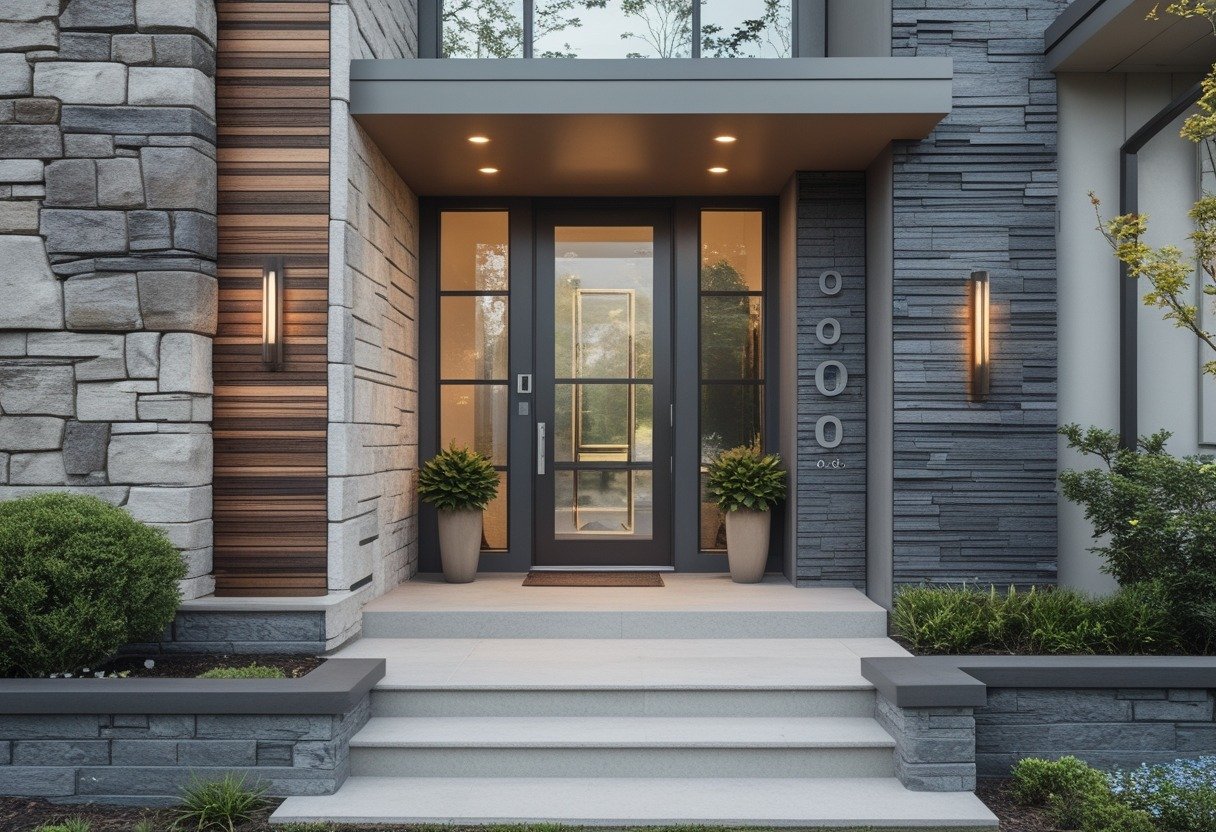
You will learn practical design options—from bold painted statements to built-in storage and textured materials—so you can pick ideas that match your style and needs.
1) Shiplap accent wall with contrasting black trim
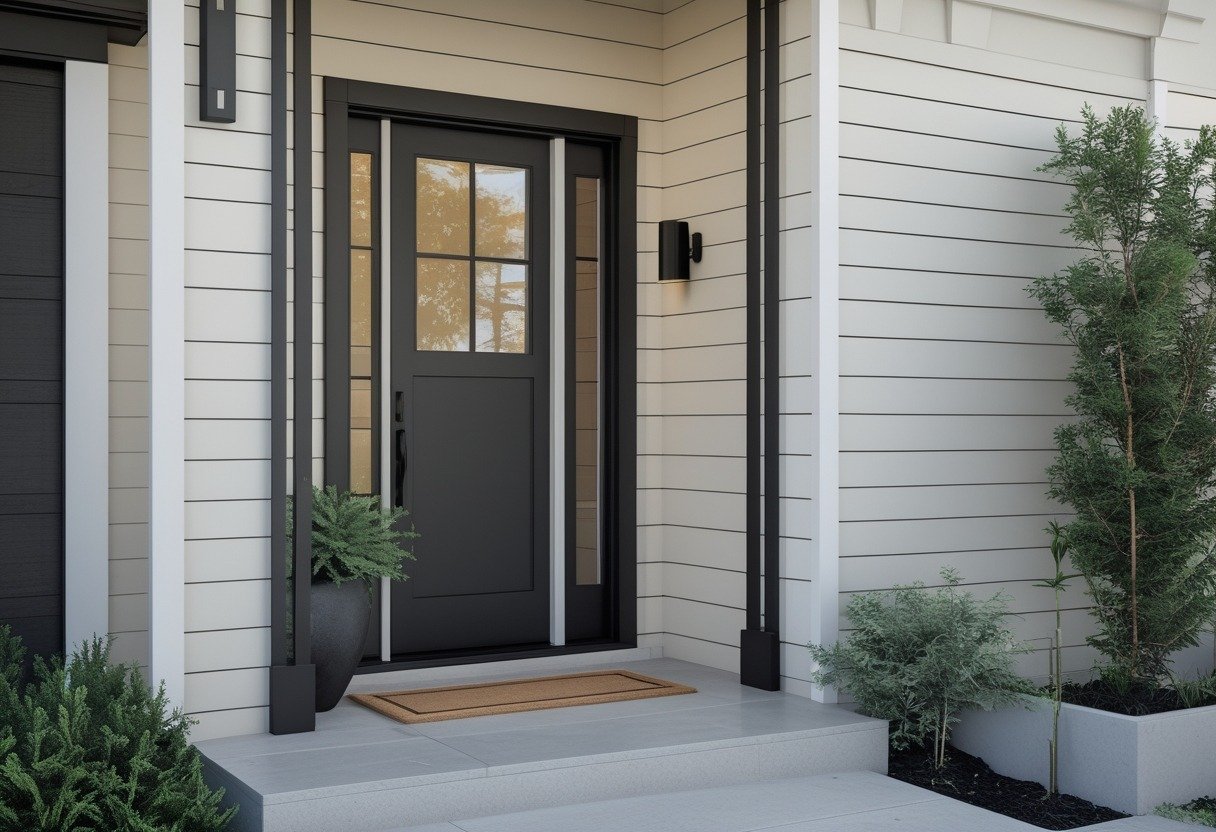
Use horizontal shiplap to add texture to your entry wall. The clean lines feel modern but still warm.
Paint the shiplap a light neutral and add black trim around doors, windows, or baseboards to create sharp contrast. Black trim frames the space and draws attention without cluttering it.
Keep decor simple: a single mirror or slim console table complements the look. Good lighting helps the black trim read crisp and intentional.
2) Gallery wall of mixed-frame family photos in a grid
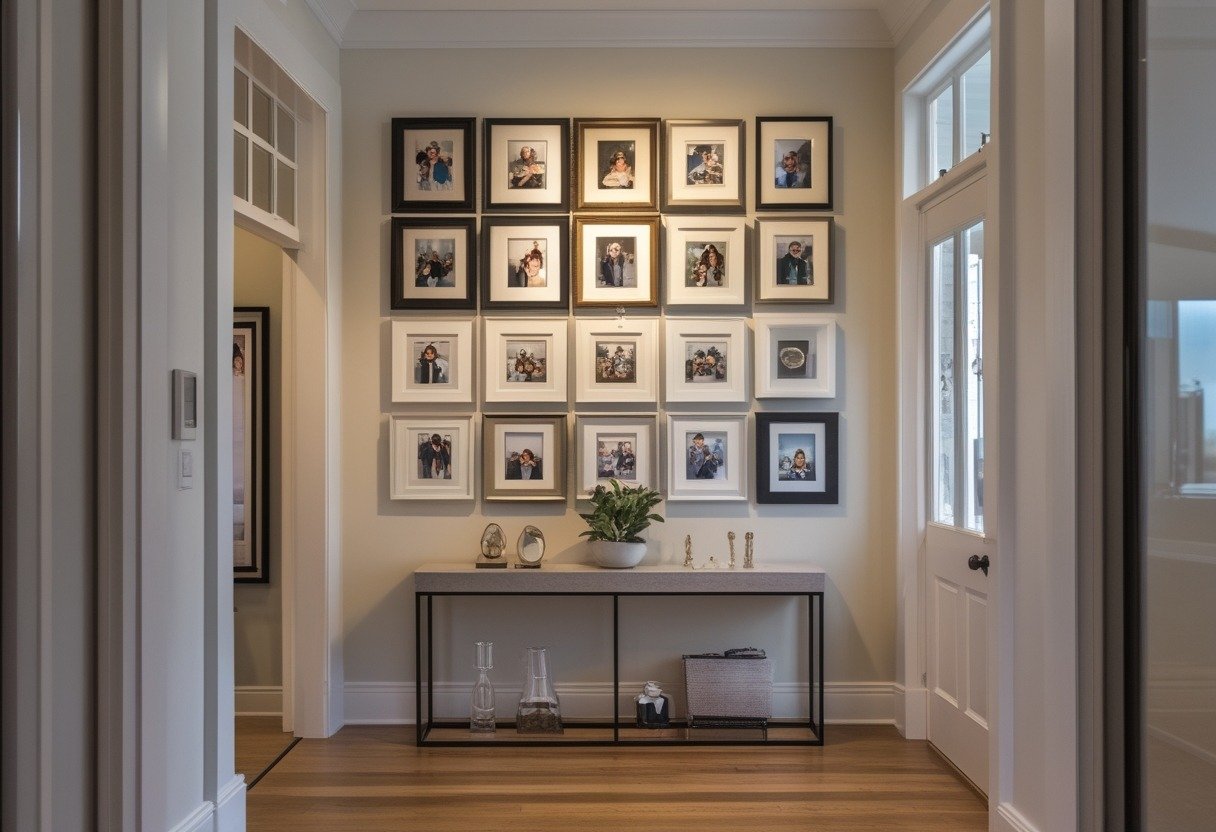
Choose a clean grid layout to make a strong, organized first impression. You can mix frame styles and colors, but keep consistent spacing for a tidy look.
Pick photos that tell your story and vary sizes for visual interest. Use a life-sized paper template or level guide to hang frames quickly and accurately.
Place the grid at eye level near the entry so guests see it right away. Keep frames easy to dust and swap as your family grows.
3) Vertical wood slat feature wall with integrated bench
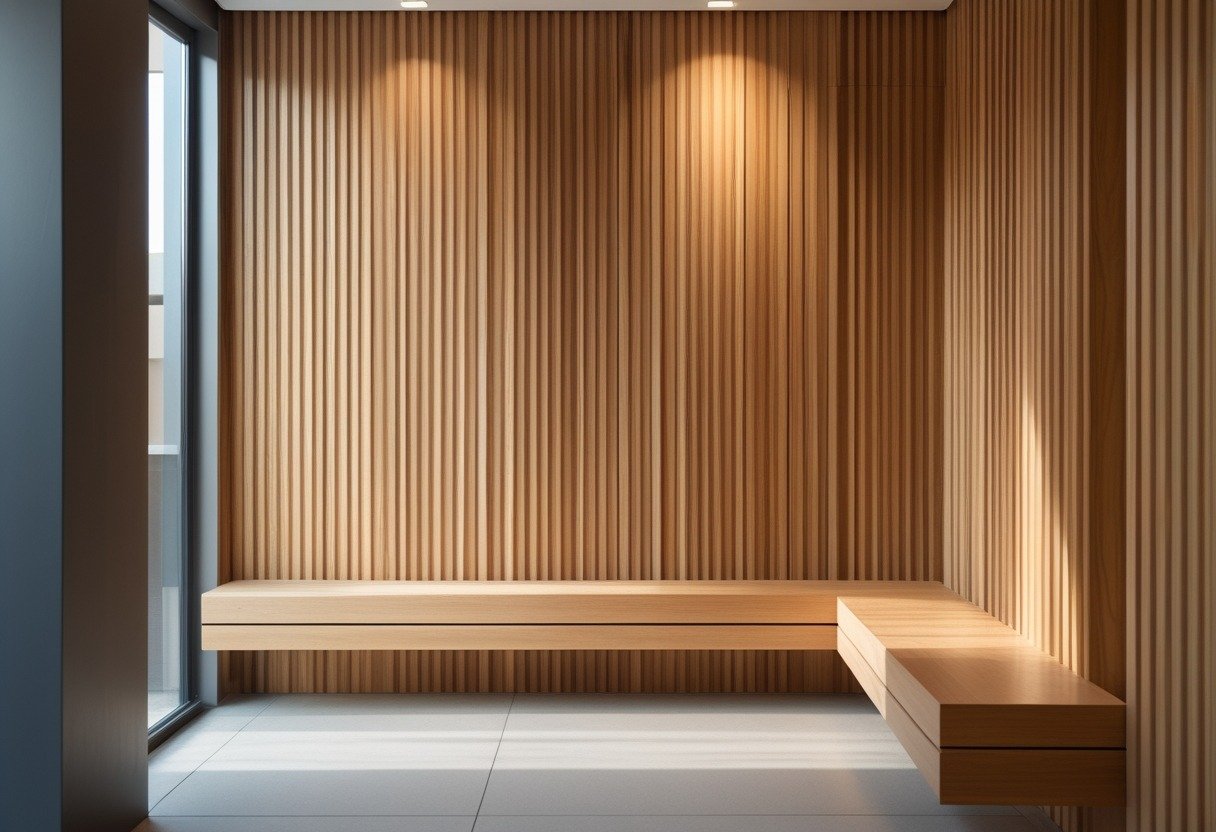
You can create a warm, modern entry by pairing vertical wood slats with a built-in bench. The slats add texture and height, while the bench gives a practical place to sit, drop bags, or put on shoes.
Integrate hooks or a slim shelf above the bench for keys and mail without cluttering the look. Choose durable wood or veneered panels and seal them for easy cleaning and long life.
4) Bold matte-black statement paint with brass hooks
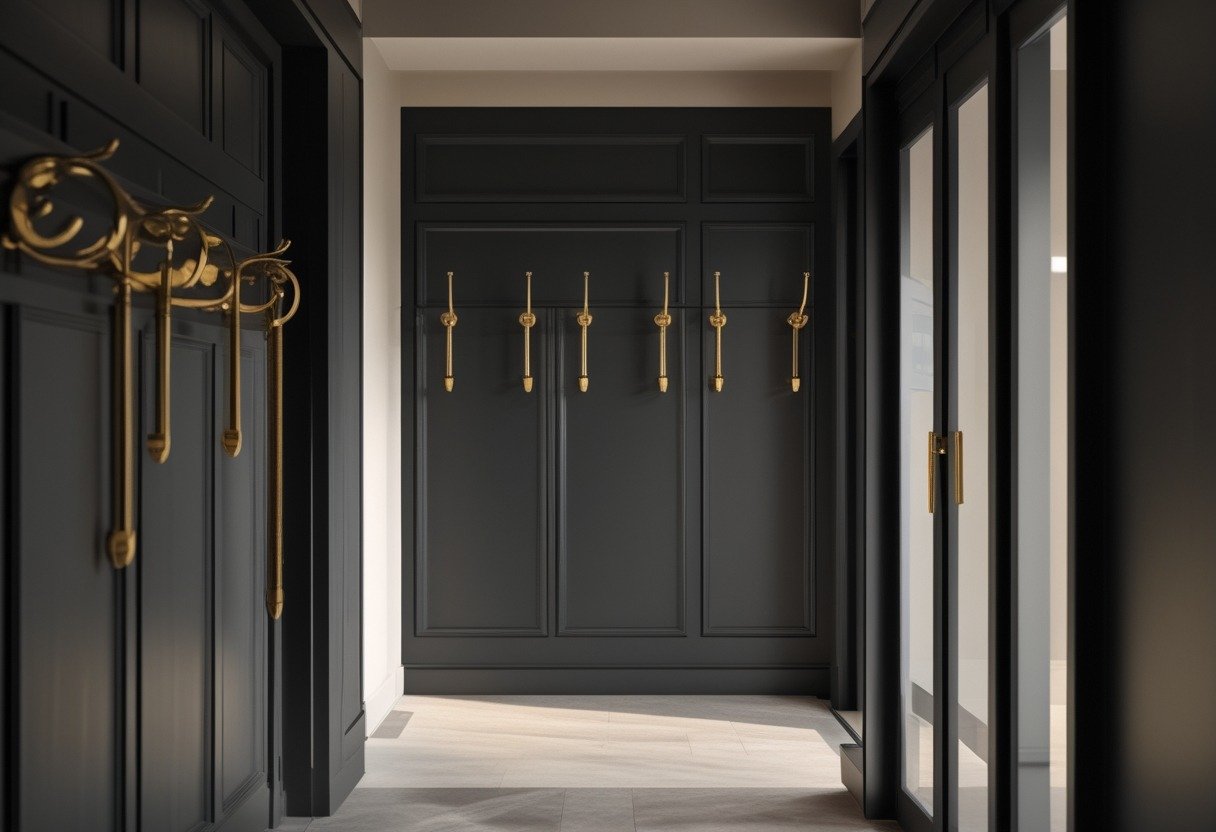
Paint your entrance wall matte black to create a clean, modern backdrop. The flat finish hides imperfections and makes hardware stand out.
Add brass hooks for coats, bags, and keys. The warm metal contrasts the black and reads as intentional, not fussy.
Keep hooks simple and spaced for easy use. This combo works with many exterior colors and updates the entry without major renovation.
5) Wainscoting with painted dado and wallpaper above
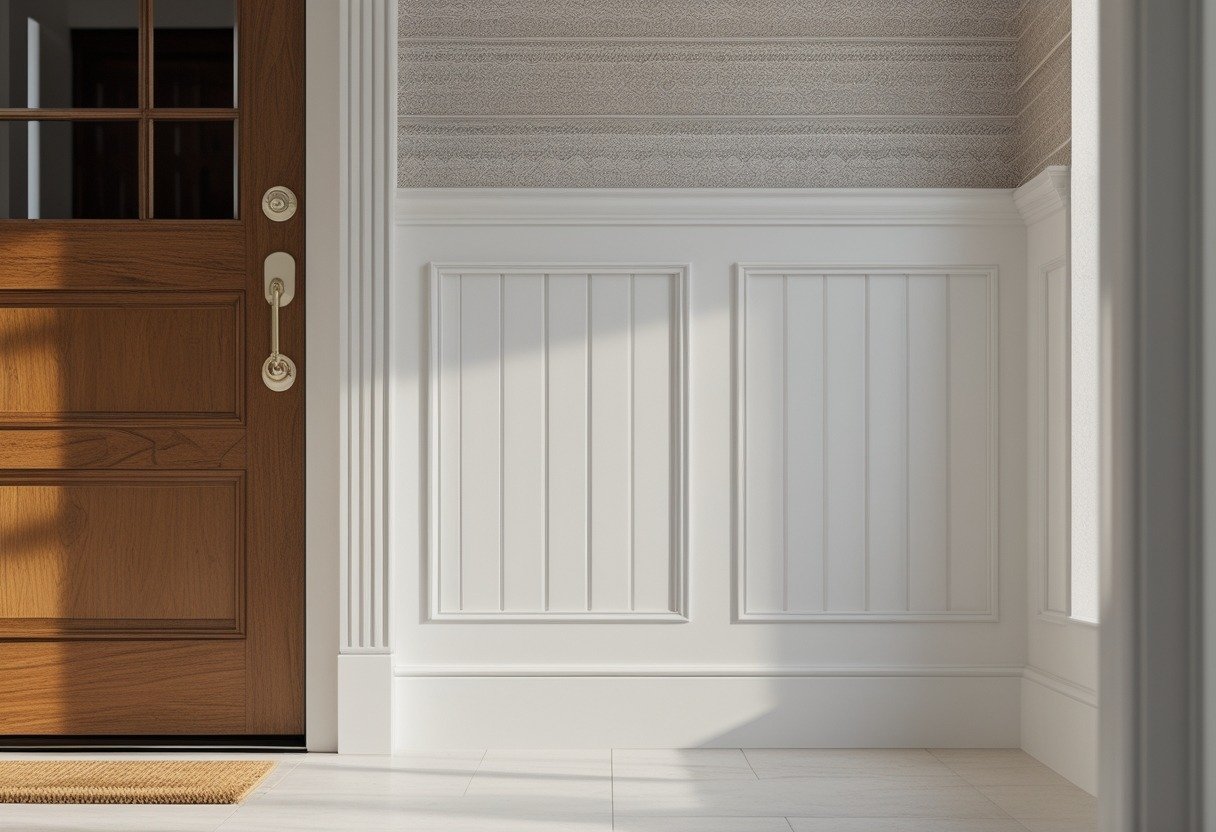
You can paint the lower wainscoting and dado in a durable, contrasting color to ground the entry.
Above it, choose wallpaper with a subtle pattern or texture to add visual interest without overwhelming the space.
This combo protects walls from scuffs and makes cleaning easier in busy entryways.
Match trim tones and wallpaper colors for a balanced, intentional look that welcomes guests.
6) Oversized round woven wall art above console
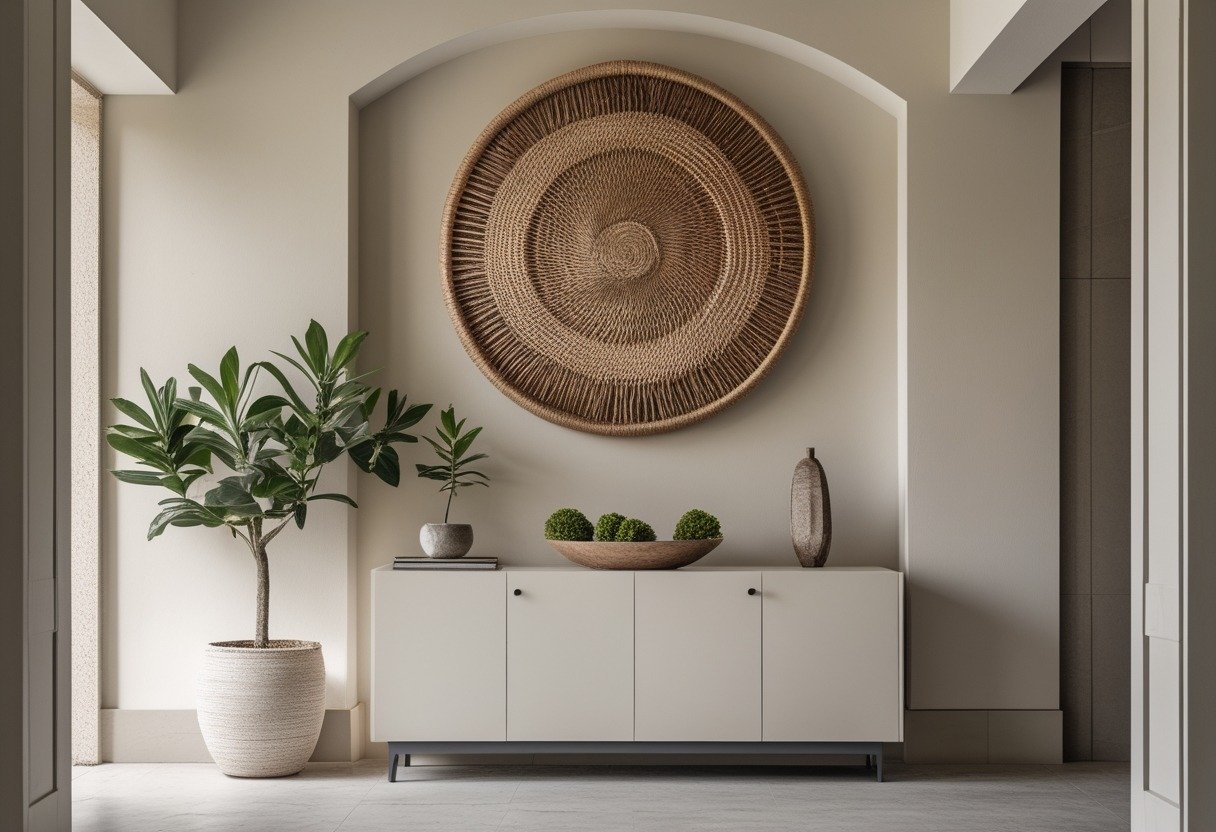
Place an oversized round woven piece above your console to create a calm focal point. The natural texture warms the space and keeps the look simple.
Choose a neutral tone to match wood, or pick a darker weave for contrast. The round shape softens hard lines and fills wide wall space without clutter.
Hang it at eye level and center it over the console. Add one or two small accessories on the table so the art remains the main feature.
7) Full-height mural of botanical watercolor scene
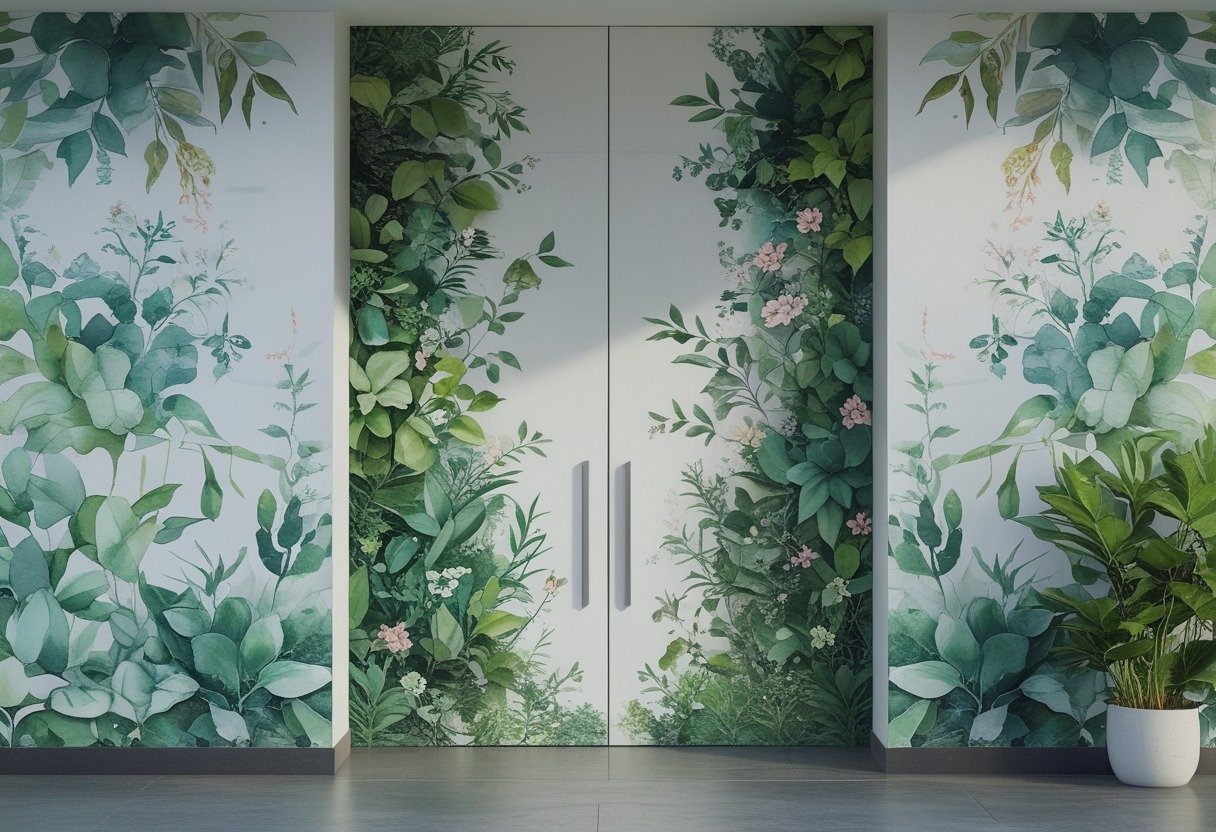
You can install a full-height botanical watercolor mural to create a calm, natural entryway. Soft washes of green and muted florals add depth without overwhelming the space.
Choose prints or hand-painted work that match your lighting and scale. A tall, vertical composition draws the eye up and makes a narrow foyer feel larger.
Keep surrounding decor simple so the mural remains the focal point. Use natural materials and low-profile furniture to reinforce the organic look.
8) Raw concrete-look plaster with industrial sconces
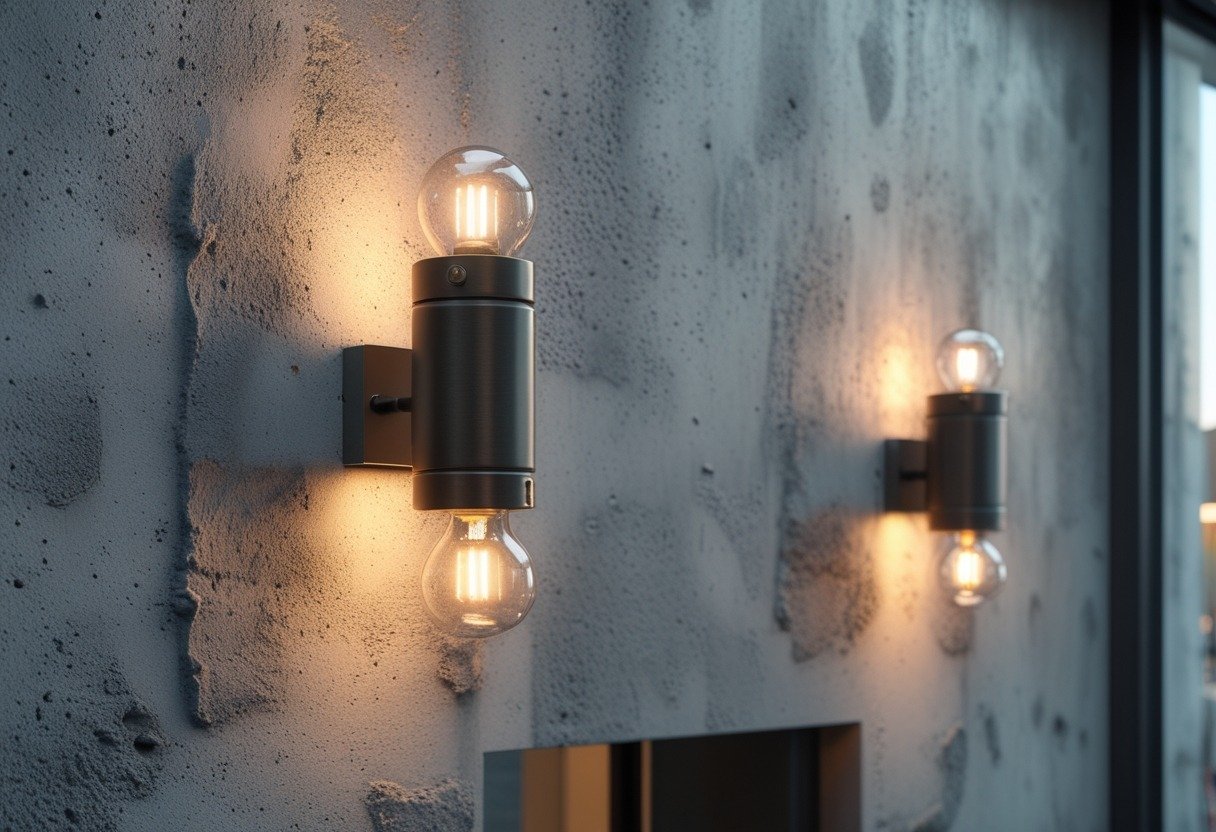
You can use a raw concrete-look plaster to give your entry a modern industrial feel. The texture adds depth without heavy construction.
Pair the plaster with metal industrial sconces for focused lighting. The warm light contrasts the cool wall and highlights the surface texture.
Keep fixtures simple and matte black or aged brass to match the raw look. Place sconces beside the door or along the wall for balance and clear sightlines.
9) Mirrored panel wall with staggered seams
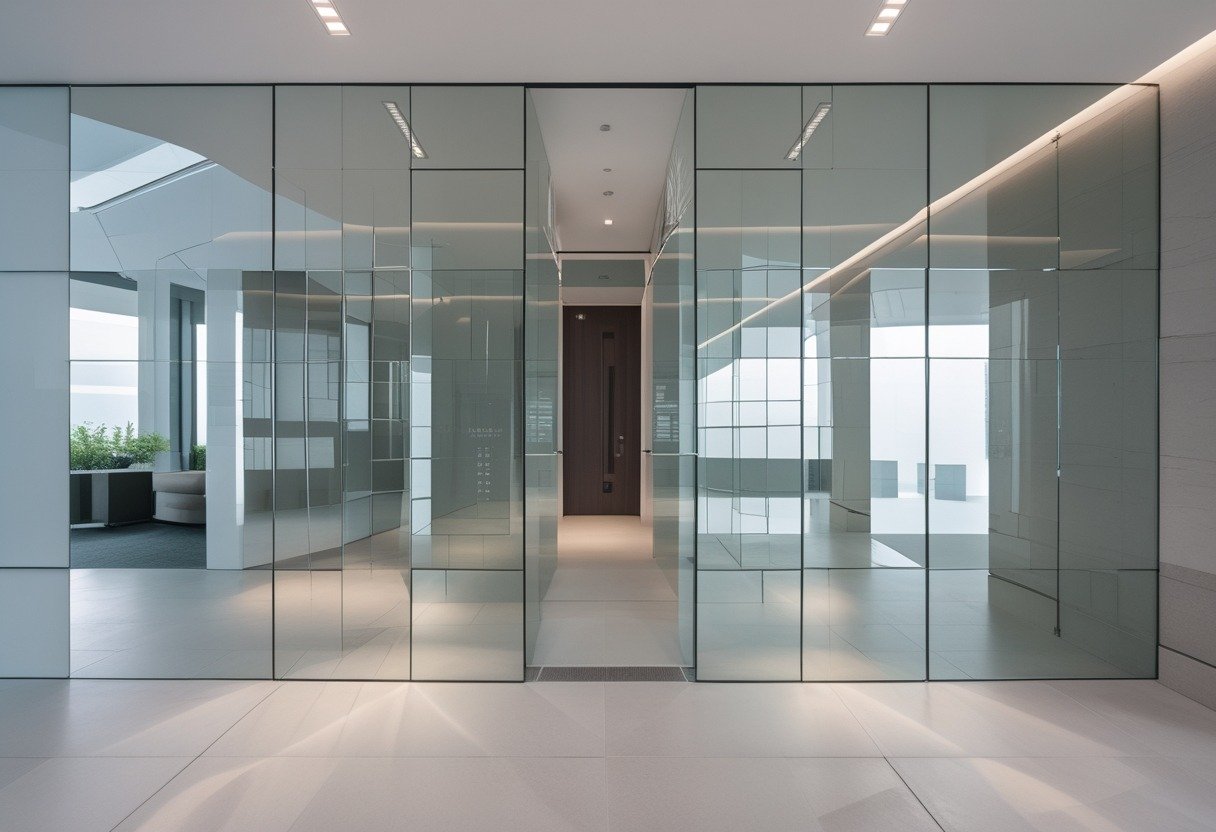
A mirrored panel wall with staggered seams adds depth without taking up floor space. You get reflected light that brightens the entry and makes the area feel larger.
Staggered seams create a subtle geometric pattern that looks modern and intentional. Install panels with tight joints and secure backing to avoid warping and to keep edges safe.
Choose safety-backed glass or acrylic for homes with kids or pets. Keep mirrors clean and avoid heavy frames to maintain a sleek, airy look.
10) Built-in cubby wall with cubby doors and coat pegs
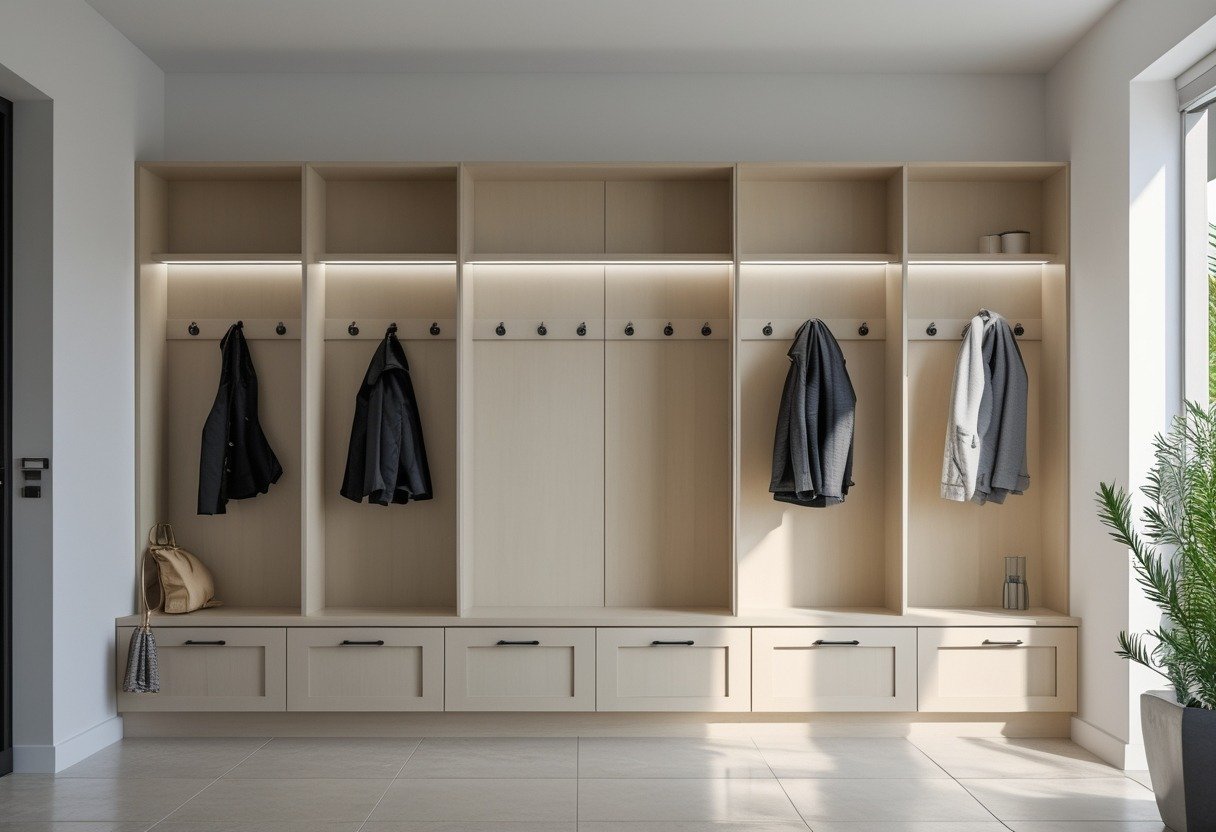
You get a tidy entry when cubbies have doors that hide shoes and bags. Closed cubbies keep clutter out of sight and make the space look calm.
Add coat pegs above or beside the cubbies for quick hang-ups. This combo saves floor space and makes daily routines faster.
11) Textured grasscloth wallpaper in warm neutral tone
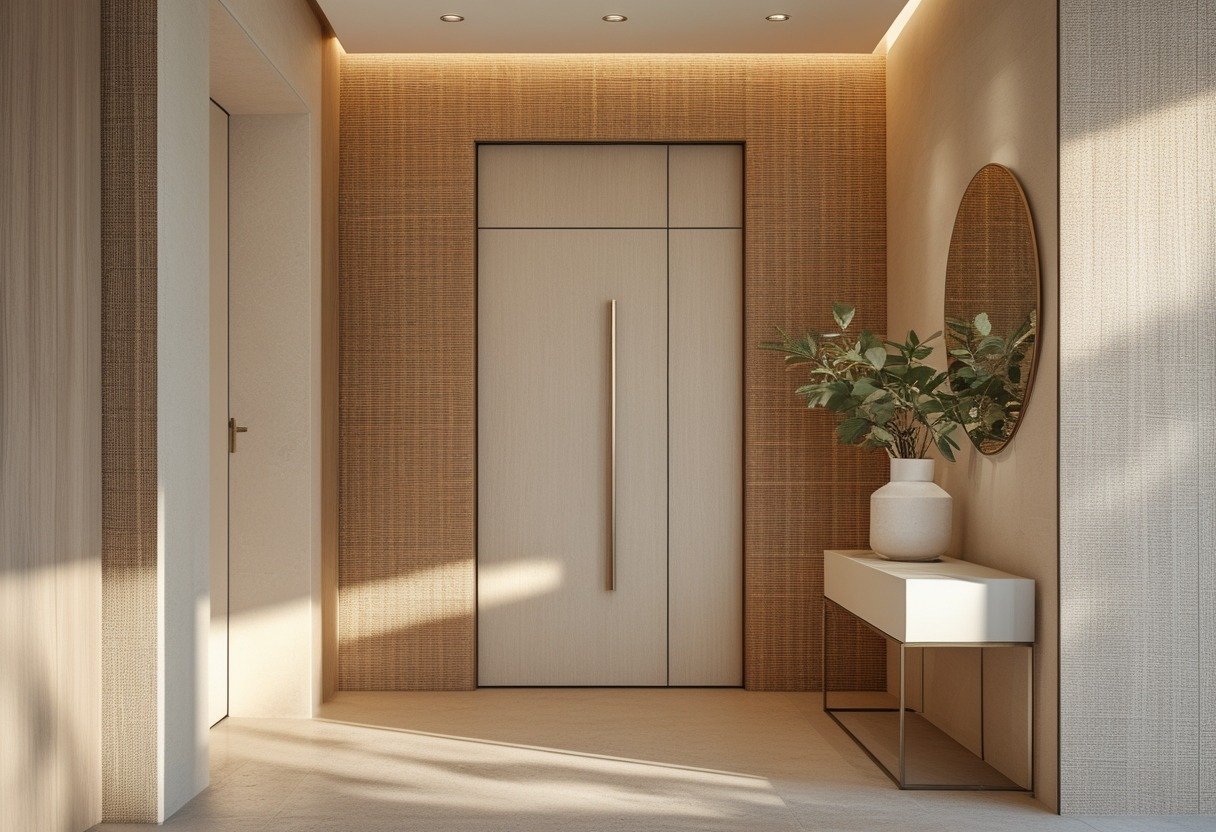
Choose grasscloth wallpaper in a warm neutral to add subtle texture to your entry wall. It gives a soft, natural look without loud patterns.
The woven fibers create depth and hide minor wall flaws, so your space feels richer and cleaner. Pick tones like beige, taupe, or warm gray to match many decor styles.
Install samples first to check color under your light. Maintenance is simple: dust or spot-clean gently to keep the texture looking fresh.
12) Floating shelf ledge with rotating seasonal decor
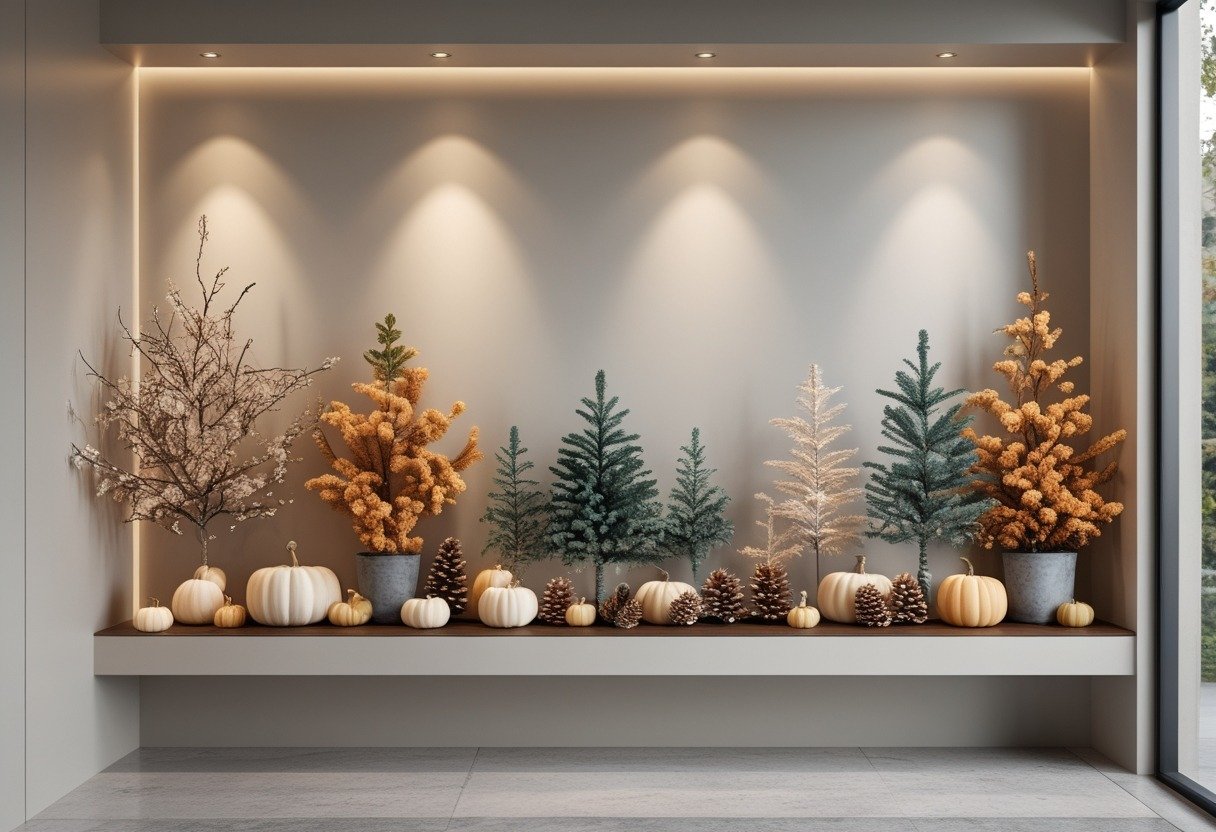
Add a narrow floating ledge near your entry to display seasonal items you can swap quickly. You can show small frames, greenery, or themed knickknacks without cluttering the floor.
Rotate pieces each season to keep the entry fresh and welcoming. Use a mix of heights and textures so the arrangement looks balanced at a glance.
13) Hexagonal tile entry wall (floor-to-waist)
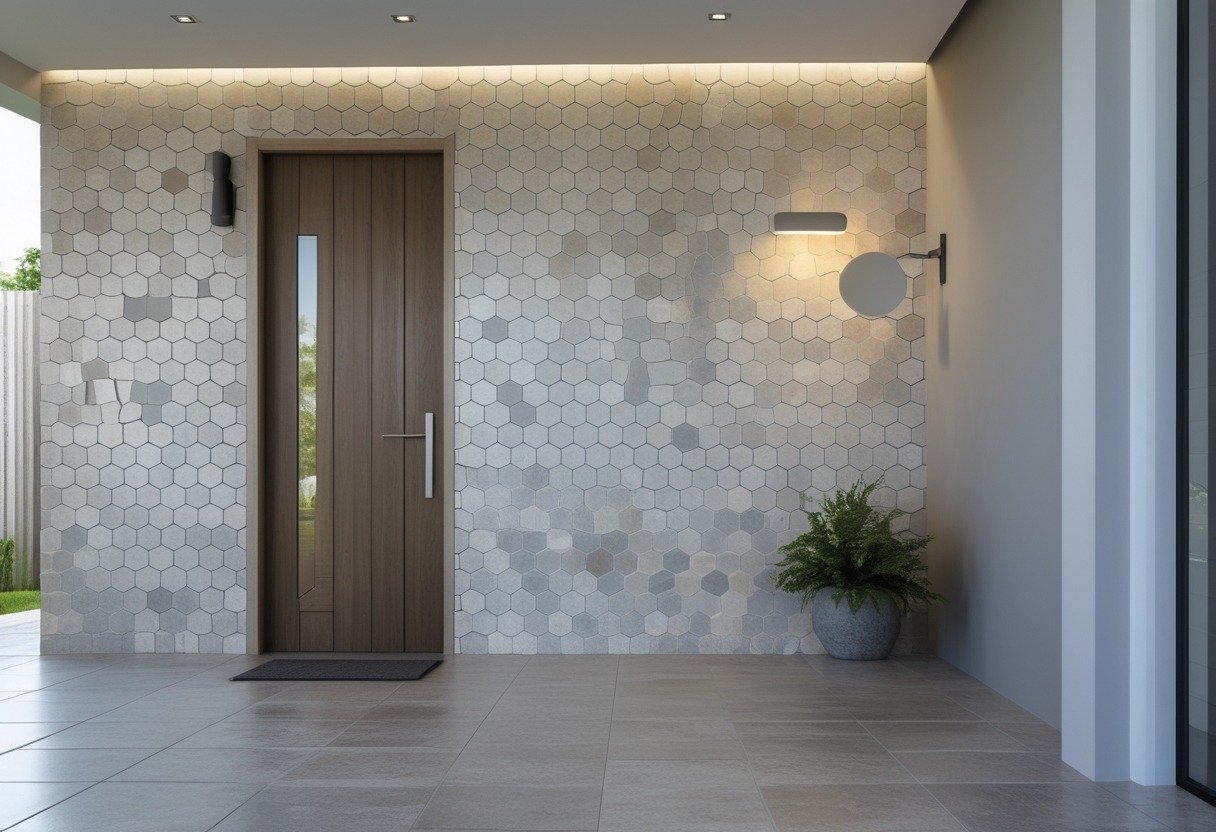
You can create a modern, durable entry wall by tiling from the floor up to waist height with hexagon tiles. This adds texture and visual interest while protecting the lower wall from scuffs and dirt.
Choose small or medium hex tiles in ceramic, porcelain, or natural stone to match your home’s style. Keep grout color close to the tile tone for a seamless look, or contrast it for a graphic pattern.
14) Painted geometric chevron feature in muted tones
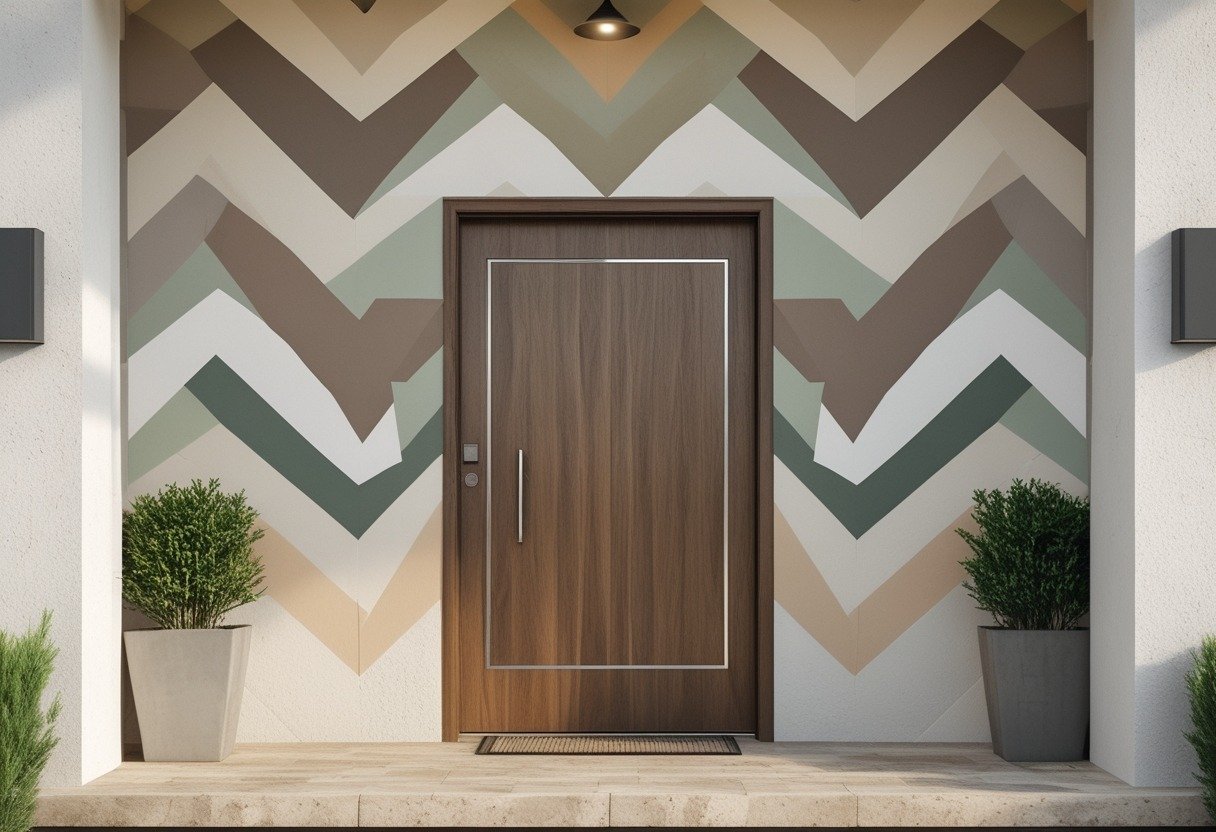
Choose a chevron pattern in soft, muted colors to add texture without overpowering your entry. You can paint the design directly on the wall for a clean, modern look.
Keep the palette to two or three tones like greys, warm taupes, and off-white for a calm effect. Measure and tape carefully so the chevrons stay crisp and even.
This feature works well behind a console table or bench. Add simple decor to let the pattern remain the focal point.
15) Rustic reclaimed-board plank wall with coat rod
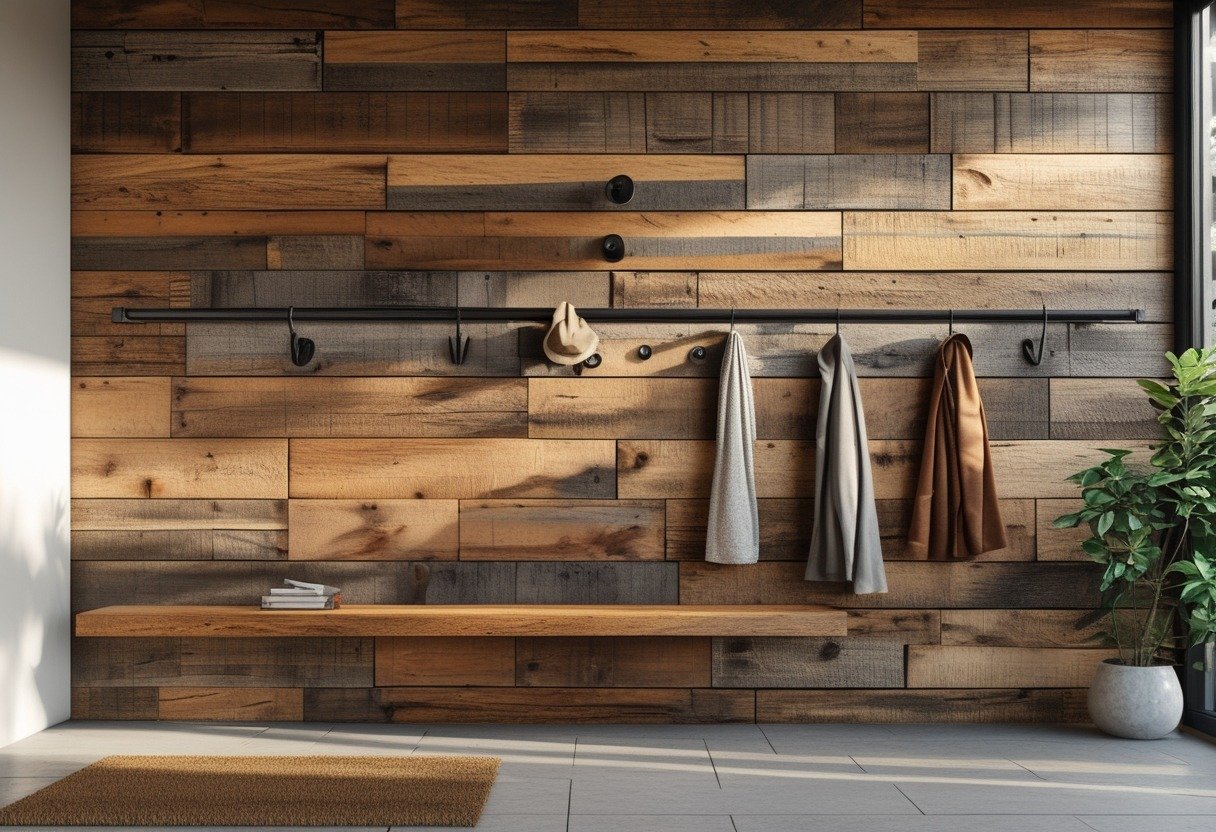
You can mount reclaimed wood planks on your entry wall to add texture and history. The uneven grains and mixed tones hide wear and look natural without much upkeep.
Add a simple metal coat rod across the planks for hanging jackets, bags, and hats. The rod keeps things organized and uses the wall space without bulky furniture.
Seal the wood lightly to protect it from moisture but keep its patina. This setup fits a farmhouse or modern rustic entry and installs in a single afternoon.
Design Essentials for Welcoming Entryways
You want an entry wall that looks good, works well, and sets the right tone for your home. Focus on color, light, and practical details so the space feels welcoming and useful from the first step inside.
Choosing the Right Color Palette
Pick a base color that matches your home’s style and the amount of light the entry gets. For bright, sunlit entries, consider cooler tones like soft blues or light grays to keep the space crisp. In low-light entries, warm neutrals—creams, warm beiges, or muted terracottas—add depth and make the area feel cozy.
Use accent colors sparingly on a single wall or with trim, artwork, or the door to add interest without overwhelming the space. If you want a bold look, paint one feature wall in a darker color and keep the rest neutral. Test samples on the wall at different times of day to see how they change with light.
Lighting Considerations for Entry Walls
Layer your lighting: combine overhead fixtures, wall sconces, and task or accent lights. An overhead pendant or flush mount gives general light. Pair it with wall sconces placed 60–66 inches apart to highlight art or architectural details.
Choose bulbs in the 2700K–3000K range for warm, welcoming light. Use dimmable fixtures so you can lower brightness in the evening. If you place a mirror on the entry wall, position lights to avoid glare and to reflect natural light into the hallway.
Balancing Functionality and Style
Start with a practical layout: coat hooks, a small bench, and a narrow console often fit best. Measure your wall before buying furniture so items don’t block traffic flow. Choose storage that doubles as decor—baskets under a bench, a tray on a console, or built-in cubbies.
Keep surfaces easy to clean and materials durable for daily use. Add a few decorative touches—one statement mirror, a piece of artwork, or a plant—to create personality without clutter. Use a simple checklist: seating, storage, lighting, and a focal point to guide decisions.
Impact of Materials and Textures
Your choice of materials and textures sets the look and lifespan of the entry wall. Pick surfaces that resist weather, fit your maintenance time, and match the house style.
Selecting Durable Finishes
Choose finishes that stand up to sun, rain, and touch. Porcelain or ceramic tiles resist moisture and fading, while fiber cement panels hold paint longer than standard siding. For painted surfaces, use exterior-grade primer and a 100% acrylic paint with UV protection to limit peeling and color loss.
Think about daily wear. Use scuff-resistant finishes near the door and impact-resistant cladding if the entry sees heavy foot traffic or kids. Seal joints with high-quality silicone to prevent water intrusion. For maintenance, prefer materials you can clean with soap and water—natural stone and wood often need periodic sealing or staining.
Incorporating Natural Elements
Natural elements add warmth and texture but need the right care. Cedar or teak planks create a welcoming look; choose heartwood species and apply oil or stain to slow moisture damage. Stone veneers and stacked stone deliver long life and mask dirt, but use breathable mortar and a weather-resistant backing to avoid trapped moisture.
A living green wall brings visual interest and improves microclimate. Pick hardy, low-water plants and install an automatic drip irrigation system with a timer. For mixed-material designs, anchor heavy elements on solid blocking and flashing to direct water away from joints.
