A staircase is often one of the most overlooked areas when decorating a home. We spend time choosing beautiful living room lights, bedroom fixtures, and kitchen lighting, but the staircase sometimes receives little more than a basic ceiling light. Yet, this space has so much potential. With the right lighting, an ordinary staircase can become one of the most attractive architectural features in your home.
I particularly love how staircase lighting can change the atmosphere of an entire interior. A soft glow beneath each step creates a contemporary appearance, while elegant wall sconces can make a traditional staircase feel warm and welcoming. If you have a tall staircase, a statement pendant or chandelier can introduce a dramatic focal point that immediately catches the eye.
Of course, appearance is only part of the story. Good stair lighting also improves visibility, helps people recognize individual steps, and makes moving between floors more comfortable, especially at night. The trick is finding a balance between practical illumination and beautiful design.
Whether you have a narrow staircase in a small apartment, a grand staircase in a spacious home, or a simple wooden stairway that needs a little character, there are plenty of ways to improve it.
To help you find inspiration, here are 15 beautiful stair lighting ideas that combine functionality, comfort, and style. Each option offers a different approach, so you can choose something that complements your home’s architecture and personal decorating preferences.
1. Install LED Strip Lights Beneath Each Stair Tread
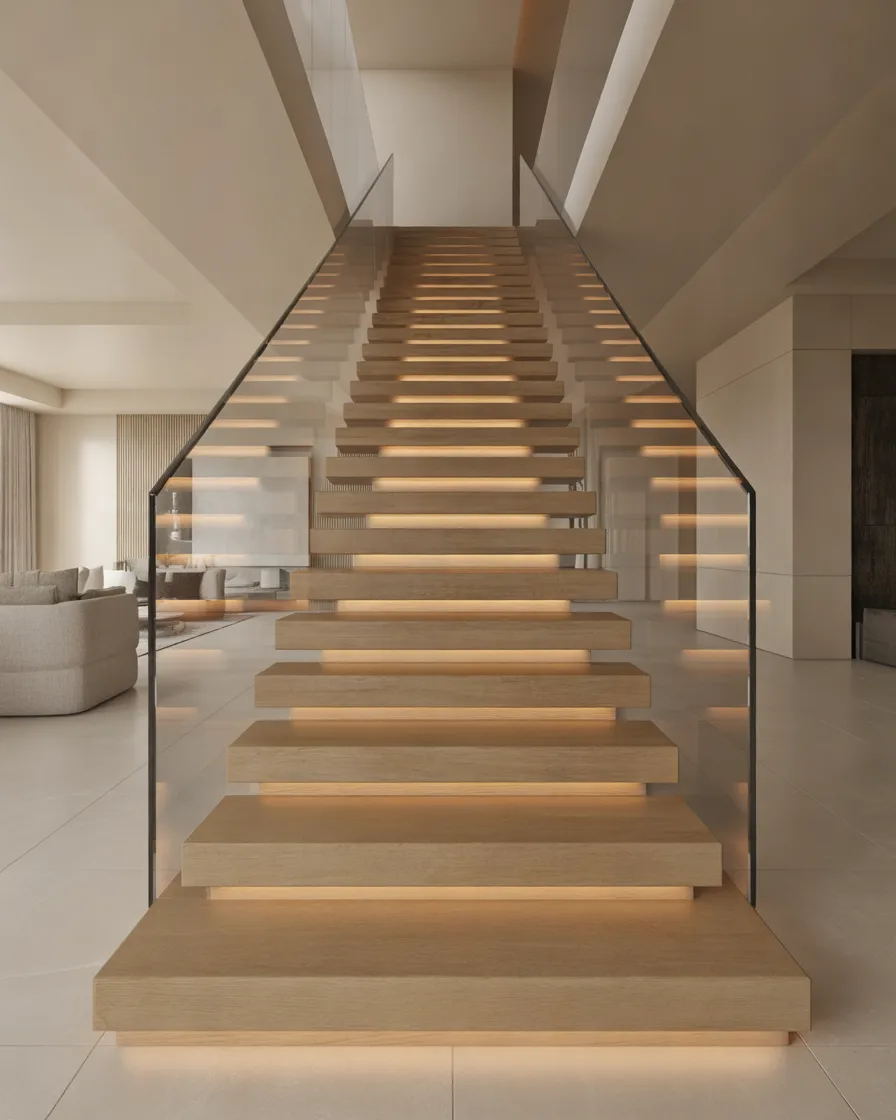
If you love clean, modern interiors, LED strip lighting beneath each stair tread is one of the most attractive staircase lighting ideas to consider. This design creates a soft floating effect by illuminating the space immediately beneath the front edge of every step.
The beauty of this approach is that the light source remains mostly hidden. Instead of seeing bulky fixtures, you notice a gentle line of illumination that highlights the staircase’s shape. It works particularly well with floating wooden stairs, contemporary concrete steps, and minimalist interiors.
Warm white LEDs are an excellent choice if you want a comfortable and welcoming atmosphere. They complement natural wood beautifully and prevent the staircase from feeling too cold or clinical. For a more contemporary appearance, you can also consider neutral white lighting.
When planning the installation, make sure the LED strips are positioned evenly and concealed within suitable channels or profiles. Diffusers help create a smooth lighting effect instead of exposing individual LED points.
This design is especially useful for staircases that need additional visibility after dark without relying entirely on bright overhead lights. Choose dimmable, appropriately rated products and have the wiring installed safely.
2. Add Recessed LED Lights Along the Staircase Wall
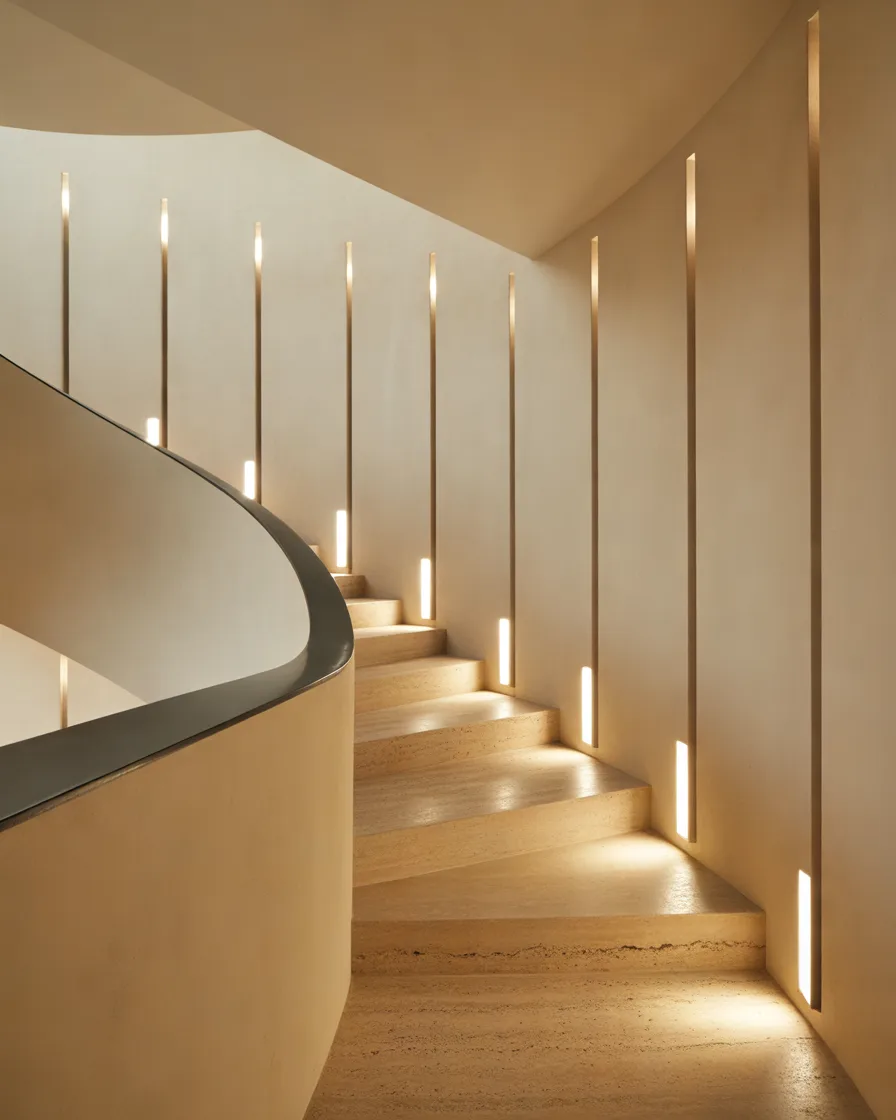
Sometimes the most beautiful lighting solutions are also the simplest. Recessed LED wall lights offer a discreet way to illuminate a staircase without making the walls look crowded.
These small fixtures are installed directly into the wall beside the steps. Their light is directed downward or across the staircase, helping illuminate individual treads while creating attractive patterns on the surrounding surfaces.
I especially like this option for homes with narrow staircases. Traditional wall lamps can occupy valuable space and sometimes make a tight passage feel even smaller. Recessed fixtures provide illumination without projecting into the walking area.
You can choose small square, rectangular, or round fittings depending on the interior style. Black or brushed-metal finishes look particularly attractive in modern homes, while white fixtures blend almost invisibly into light-coloured walls.
Spacing is important. Installing the lights at consistent intervals creates a balanced appearance and avoids alternating bright and dark areas. Their positioning should also minimize glare when someone walks up or down the stairs.
For a cohesive result, coordinate the fixture finish with your door handles, handrails, and other metal details.
3. Make a Statement With a Staircase Pendant Light
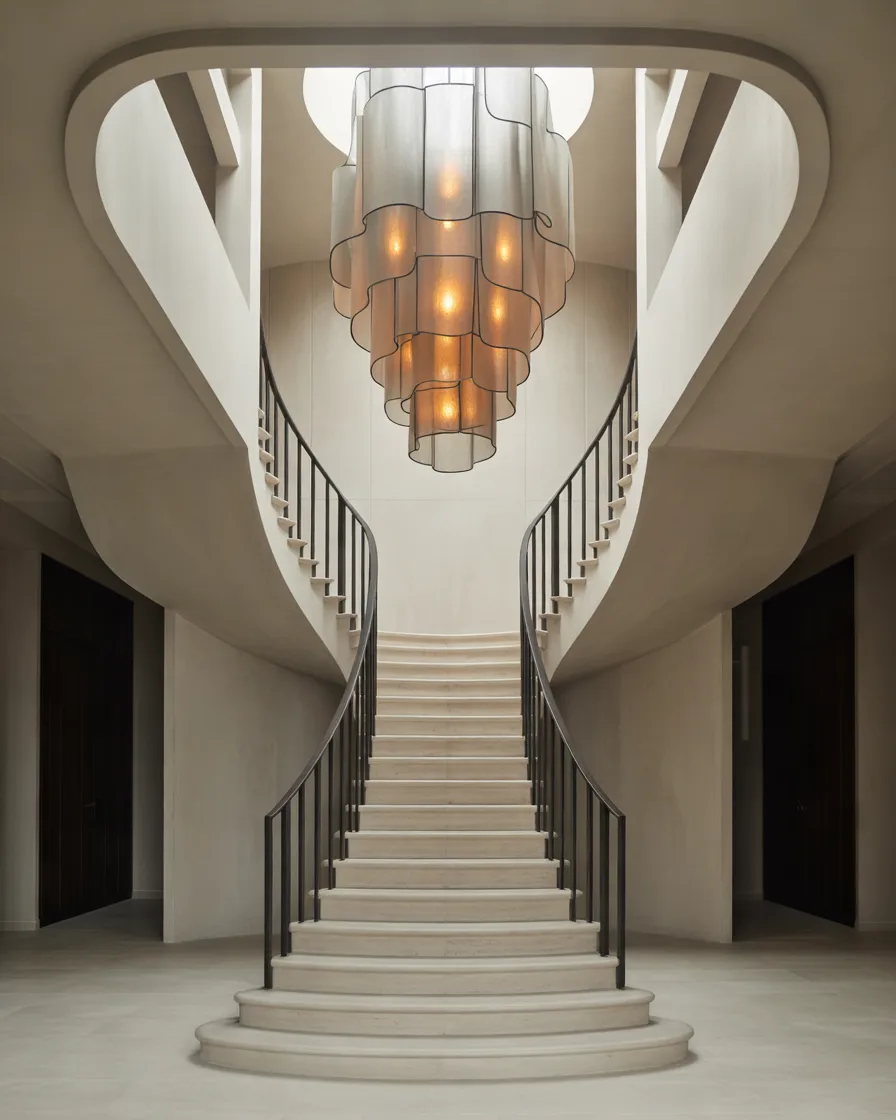
If your staircase sits inside a large entrance hall or a double-height living space, a statement pendant light can completely transform the area. Rather than treating lighting as a background feature, this approach makes the fixture part of the home’s overall design.
Large pendant lights are available in countless styles. You might prefer a sculptural glass design, a contemporary metal fixture, or a beautiful arrangement of suspended lights at different heights.
For a particularly striking look, choose a pendant with an open structure. This allows light to travel through the fixture and creates interesting shadows across the staircase and surrounding walls.
Scale is one of the most important considerations. A tiny pendant can look lost in a large stairwell, while an oversized fixture may overwhelm a smaller entrance. Consider the ceiling height, staircase width, and viewing angles before selecting a design.
You should also check that the pendant does not interfere with head clearance or obstruct movement. Professional installation is essential for heavy fixtures and high ceilings.
This is one of my favourite modern staircase lighting ideas for homes where the staircase is visible immediately upon entering.
4. Use Elegant Wall Sconces for a Warm Atmosphere
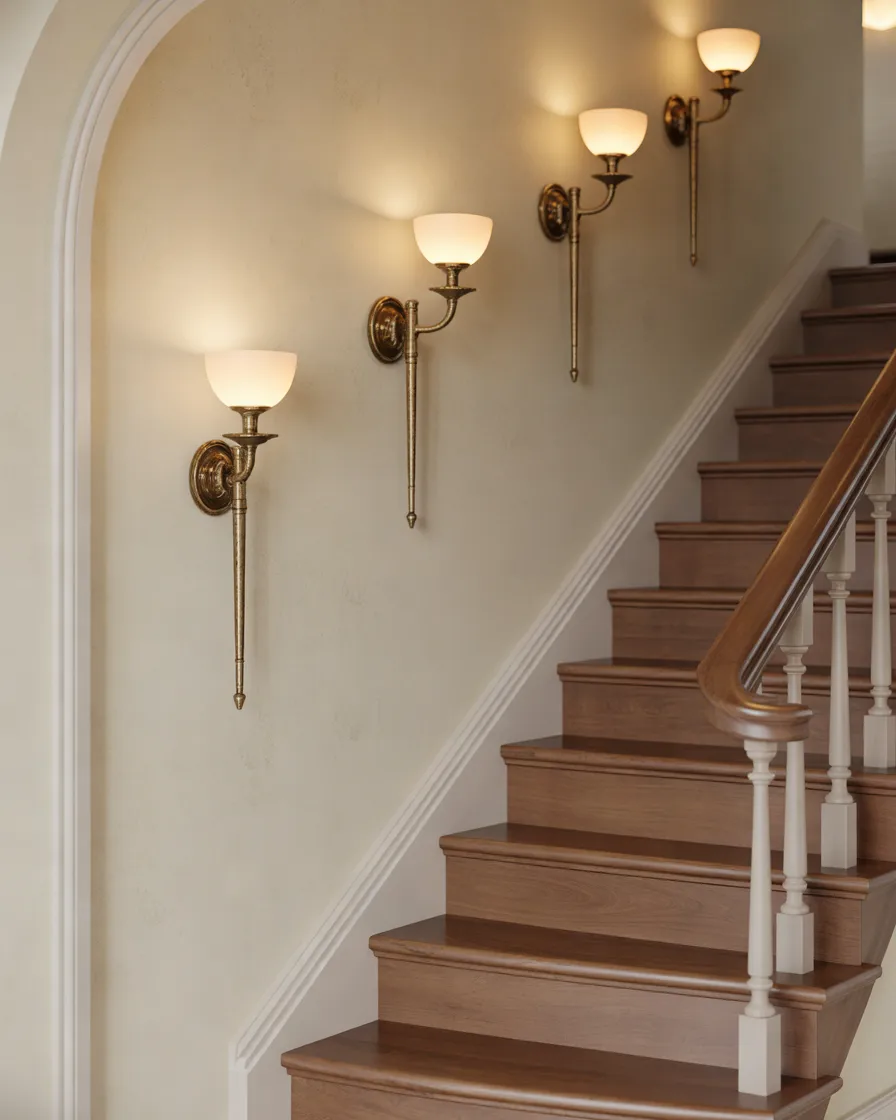
Wall sconces are a wonderful option when you want your staircase to feel warm, comfortable, and thoughtfully decorated. Unlike recessed fixtures, they also introduce a decorative element that can complement the architecture.
You can find beautiful sconces in brass, bronze, matte black, brushed nickel, and ceramic finishes. Some designs direct light upward and downward, while others feature fabric or frosted-glass shades that soften the illumination.
For a traditional home, consider brass fixtures with classic detailing. If your interior is more contemporary, simple cylindrical or geometric sconces can create a cleaner appearance.
One detail that makes a noticeable difference is consistency. Matching sconces installed at carefully planned intervals create a sense of rhythm along the staircase wall. However, you do not necessarily need a fixture beside every step. The number should depend on the length of the staircase and the brightness of each fitting.
Warm white bulbs are particularly attractive with natural timber, cream walls, and traditional finishes.
Besides improving visibility, wall sconces make a staircase feel like an intentional part of your interior design rather than just a passage connecting two floors.
5. Highlight the Staircase With LED Riser Lighting
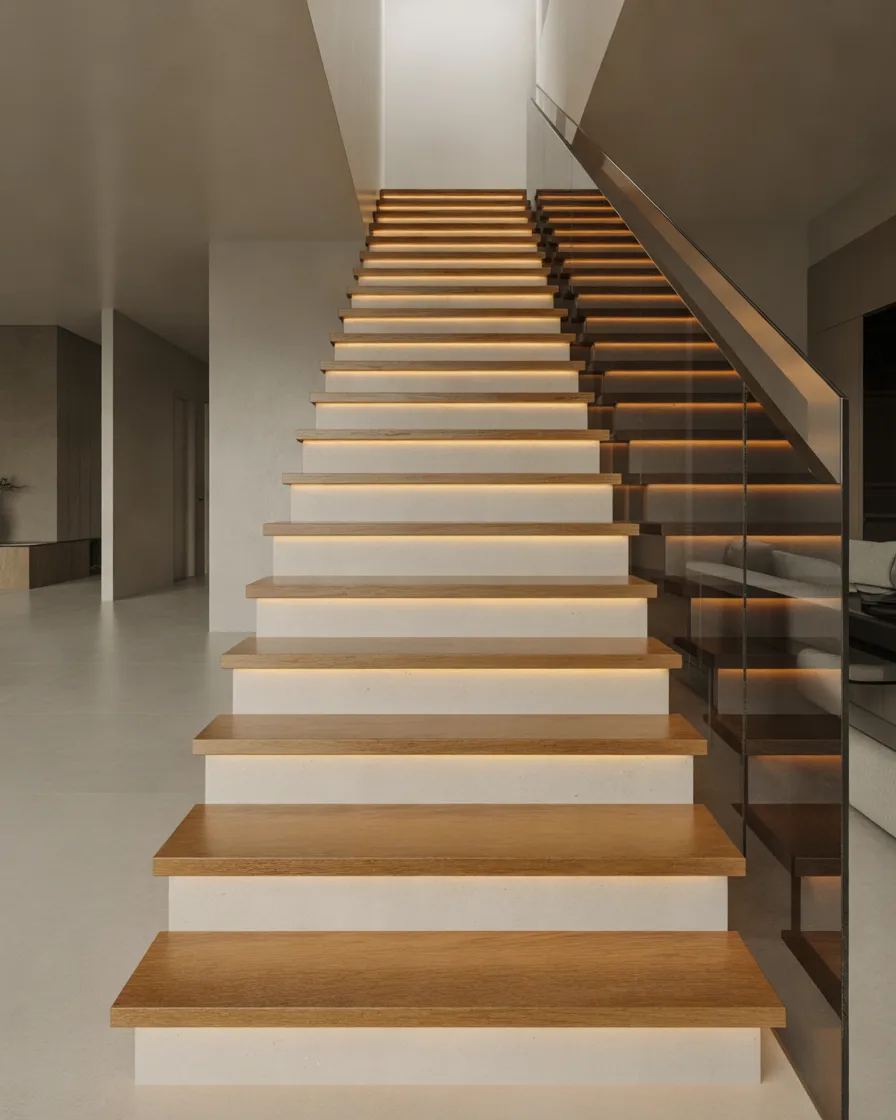
If you want something a little different from the usual under-step lighting, consider installing LED lights along the vertical risers of your staircase.
The riser is the vertical section between two horizontal stair treads. Adding a concealed lighting strip or a suitable recessed fixture to this area creates a distinctive illuminated effect that makes the staircase look architectural and contemporary.
This idea works beautifully with minimalist wooden stairs, concrete staircases, and modern floating designs. You can illuminate the full width of each riser or use a smaller lighting element positioned toward one side.
The choice of light colour can influence the final appearance. Warm white creates a softer residential atmosphere, while neutral white gives the staircase a crisp, modern finish.
One advantage of riser lighting is that it visually emphasizes the individual steps. This can make the staircase easier to navigate when the main overhead lighting is reduced.
However, installation should be carefully planned to protect the electrical components from damage and ensure the lights do not produce distracting glare. Choose fixtures designed for the intended installation location.
6. Choose a Glass Staircase With Integrated Lighting
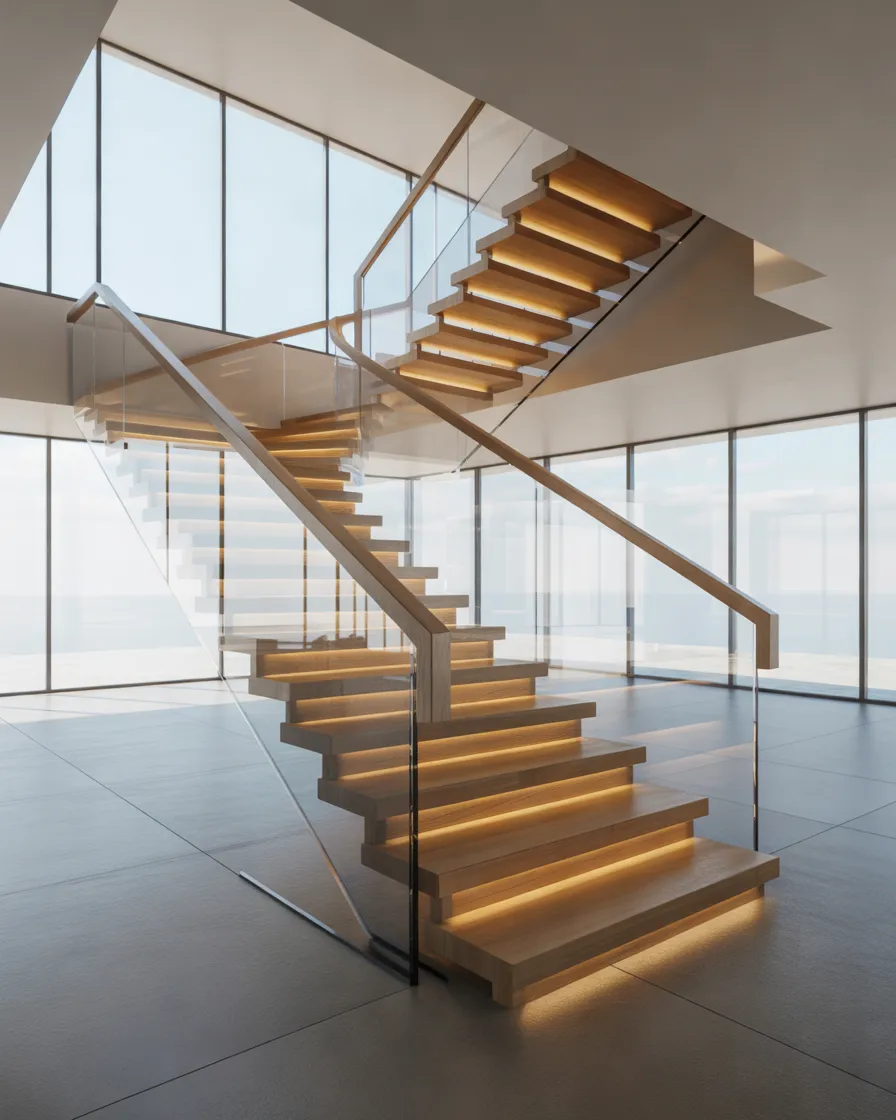
Glass staircases already have a beautiful architectural quality because they allow light to move freely through a space. Adding integrated lighting makes this feature even more impressive.
If you have a staircase with glass balustrades, consider installing subtle LED lighting beneath the handrail or within suitable floor-level channels. The light can highlight the transparent structure without distracting from its clean appearance.
Another option is to illuminate the wooden or stone steps while keeping the glass panels visually simple. This combination produces an attractive contrast between illuminated solid surfaces and transparent barriers.
Glass staircases are particularly suitable for contemporary homes, open-plan layouts, and smaller interiors where maintaining a sense of openness is important.
For the best result, avoid using too many different light sources. A few carefully positioned fixtures usually look more sophisticated than an excessive number of decorative lights.
Pay attention to reflections, too. Glass can reflect bright light sources, so concealed LED profiles and diffused illumination are often preferable.
Always use properly engineered safety glass, suitable structural fittings, and professional installation. Lighting should never compromise the strength or safety of the balustrade.
7. Create a Dramatic Look With a Staircase Chandelier
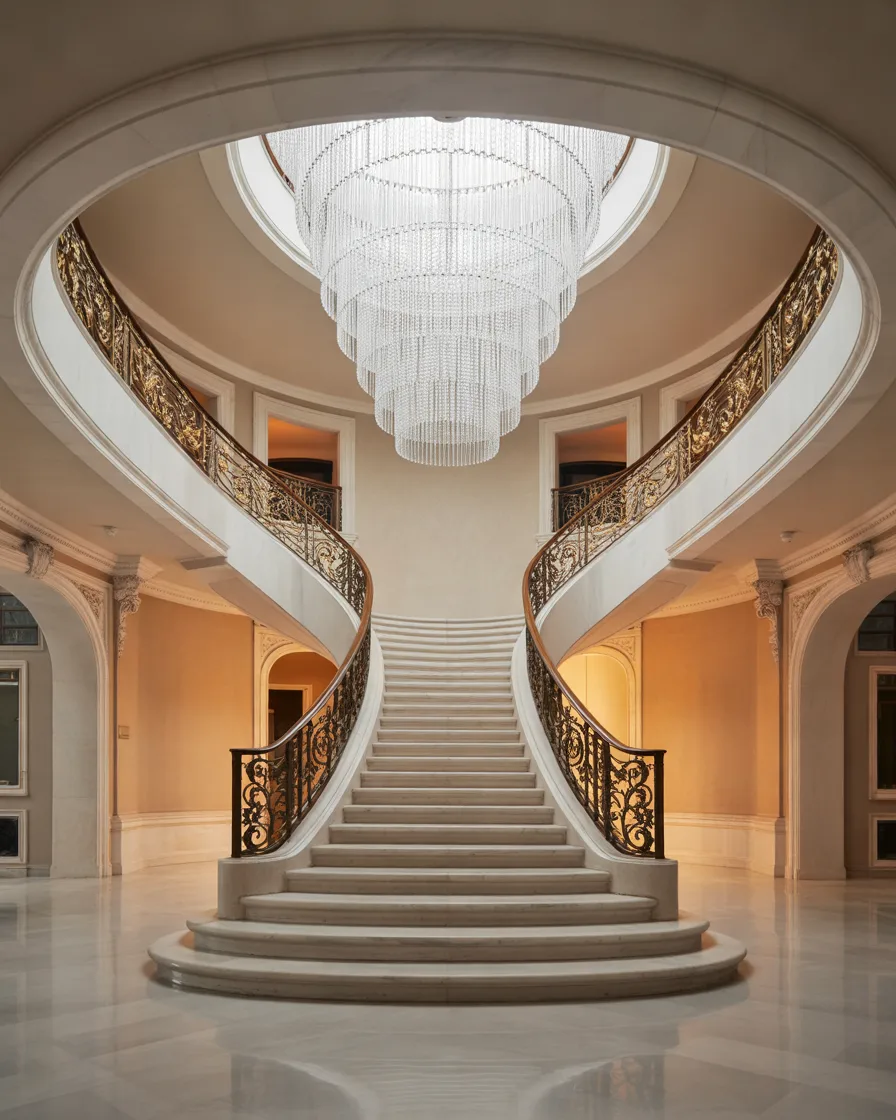
A staircase chandelier can turn an ordinary stairwell into a memorable design feature. If you enjoy elegant interiors and statement lighting, this is an option worth exploring.
Unlike a standard pendant, a chandelier often contains multiple light sources arranged in a decorative structure. This makes it particularly suitable for grand entrances, curved staircases, and homes with tall ceilings.
Crystal chandeliers are a classic choice because their surfaces reflect light and create beautiful highlights. However, you are not limited to traditional designs. Contemporary chandeliers featuring glass spheres, sculptural metalwork, or cascading linear elements can look equally impressive.
For a balanced appearance, consider how the chandelier will look from different floors. It should be visually attractive from the entrance, staircase landing, and upper-level hallway.
You should also think about brightness. A chandelier may create a dramatic central glow, but it should not be the only source of illumination if the individual steps remain poorly lit.
Choose a suitable size and suspension height, and have the installation assessed by a qualified electrician, especially when the fixture is heavy or positioned over a tall stairwell.
8. Install Motion-Sensor Stair Lights for Convenience
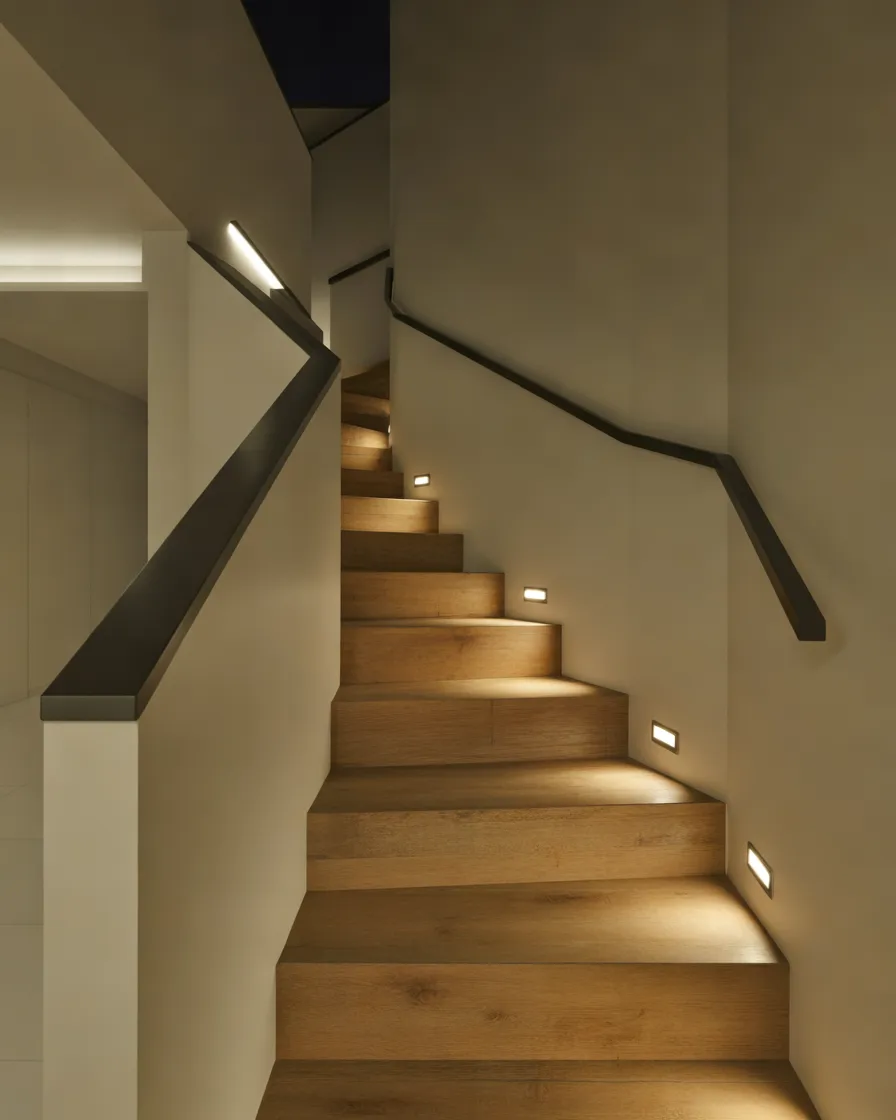
Beautiful lighting is important, but convenience matters just as much. Motion-sensor stair lighting is an excellent choice if you want your staircase to illuminate automatically whenever someone approaches.
These systems detect movement and switch the lights on without requiring you to find a wall switch. Depending on the setup, you can use small wall-mounted fixtures, concealed LED strips, or integrated step lights.
They are particularly useful in family homes, hallways, and staircases used frequently during the night. You can also configure many systems to operate only when the surrounding area becomes dark, helping prevent unnecessary illumination during daylight hours.
One attractive design is a sequence of low-level lights that gradually illuminates the staircase as someone approaches. Some advanced systems offer progressive lighting effects, although a simple synchronized setup can be equally practical.
When selecting a motion sensor, consider its detection range, response time, and positioning. You want the lights to activate before someone reaches the first step rather than halfway up the staircase.
For a polished installation, choose fixtures that match your existing interior finishes. The technology should improve convenience without making the staircase look overly technical.
9. Illuminate the Handrail With Integrated LED Lighting
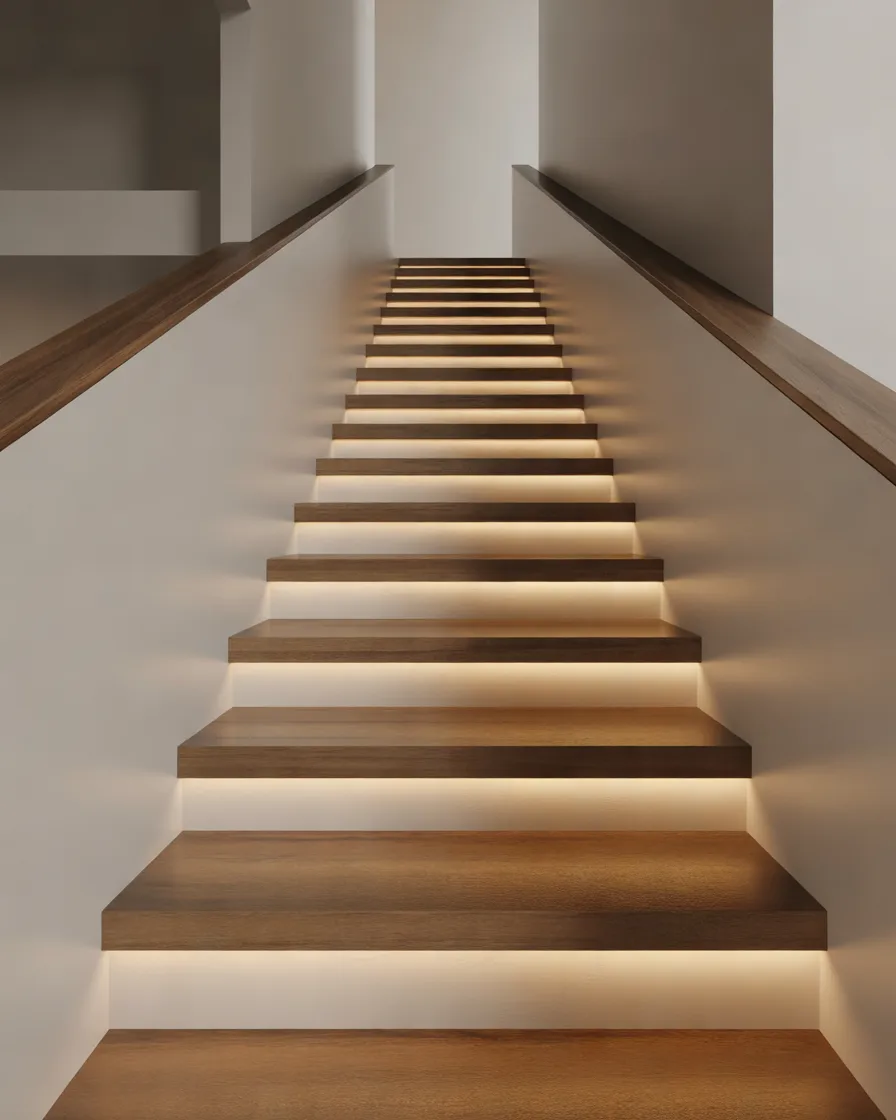
Handrails are usually installed for support, but they can also become an attractive lighting feature. Integrated LED lighting beneath a staircase handrail creates a continuous line of illumination that follows the shape of the stairs.
This approach is particularly beautiful on long, straight staircases and contemporary designs with simple architectural details. The light source remains discreet, while the illuminated handrail becomes a subtle decorative feature.
Wooden handrails are especially suitable because warm lighting enhances their natural grain and colour. You can also achieve an interesting result with black metal or stainless-steel handrails, provided the lighting is designed to integrate neatly with the structure.
One advantage of this approach is that light is positioned along the natural route people follow when using the staircase. It can provide useful guidance without requiring numerous individual wall fixtures.
Make sure the LED profile is properly concealed and does not create uncomfortable glare. The handrail should remain comfortable to grip, and any electrical components must be installed without compromising its structural integrity.
For a coordinated appearance, you can combine handrail lighting with subtle recessed wall lights.
10. Use Step-Embedded Recessed Spotlights
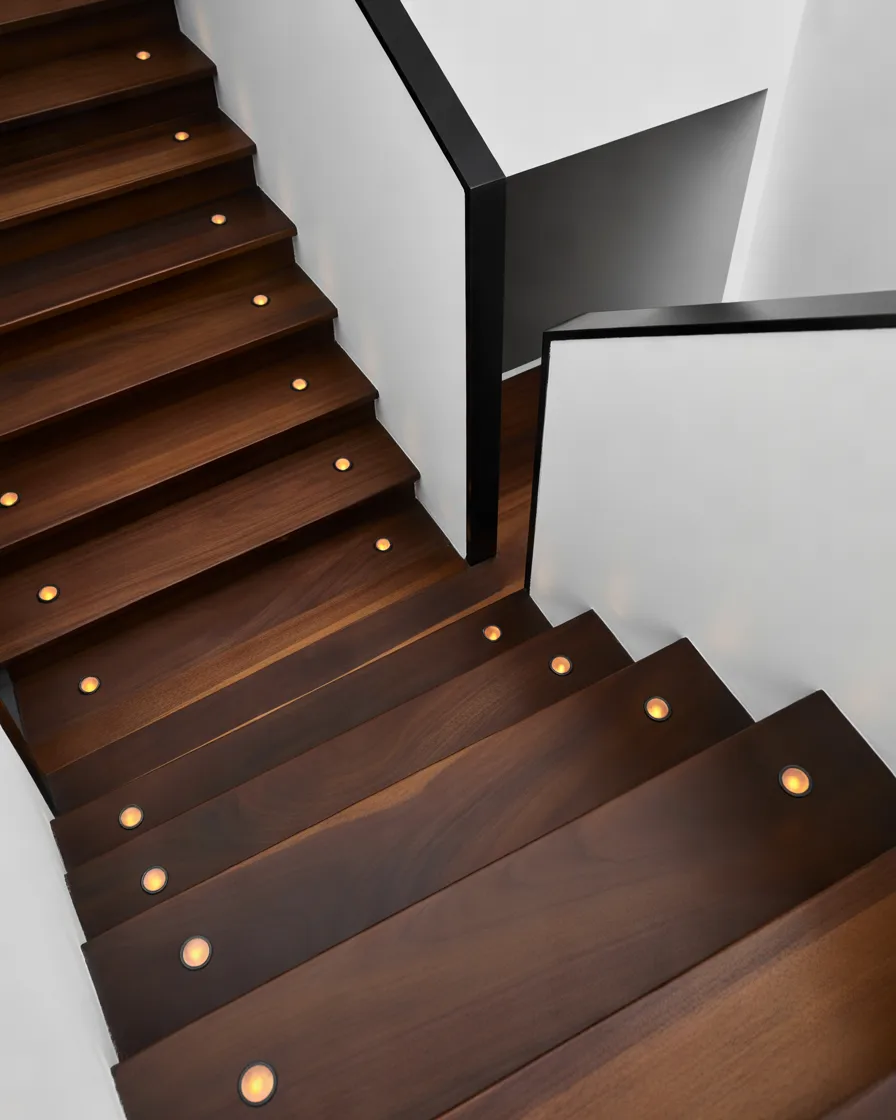
If you prefer subtle lighting that does not attract too much attention, small recessed spotlights embedded into staircase surfaces can be an excellent solution.
These fixtures are installed directly into suitable step structures or adjacent architectural surfaces. Their compact design allows the staircase material to remain the main visual focus while providing additional illumination.
For example, imagine a staircase made from dark oak. A few carefully positioned warm LED spotlights can create beautiful highlights across the wood without overwhelming its natural character.
This approach also works with stone and concrete staircases, particularly in contemporary homes where clean surfaces and minimal decoration are preferred.
The positioning of each spotlight is important. They should provide useful illumination without shining directly into someone’s eyes as they approach the stairs. Diffused or shielded fittings can help achieve a more comfortable result.
Before choosing this design, check that your stair construction can accommodate the required fittings and wiring. Some stair materials and structural designs may require alternative installation methods.
When properly planned, recessed spotlights create a refined lighting effect that feels integrated into the architecture.
11. Add Decorative Lighting to a Staircase Landing
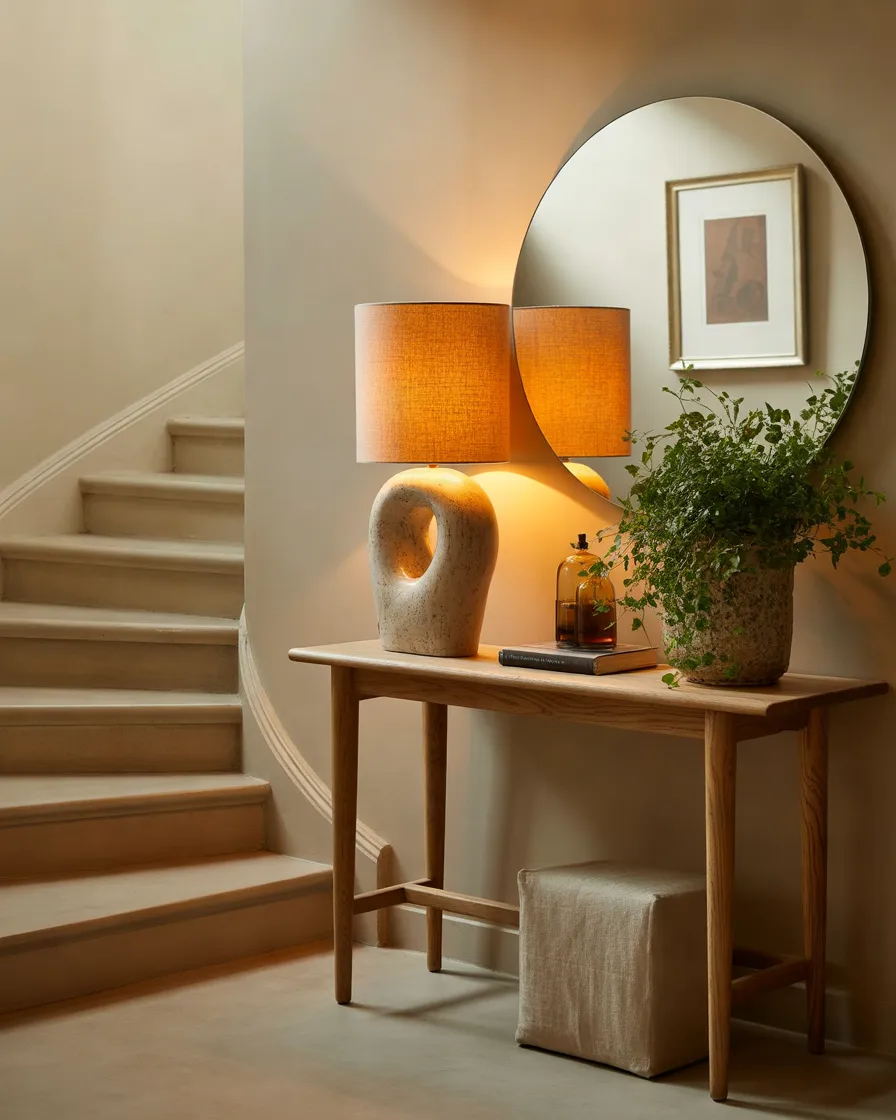
A staircase landing is more than just a place to turn or pause between floors. It can also provide an opportunity to introduce decorative lighting and create a beautiful transition between different areas of your home.
If your landing has enough space, consider adding a slim console table with an attractive table lamp. A sculptural lamp can bring warmth to an otherwise empty corner, while also providing gentle illumination.
Another possibility is to install a decorative floor lamp if the landing has sufficient floor space and the fixture will not obstruct movement. For smaller areas, a wall-mounted lamp is often more practical.
You can make the arrangement feel more intentional by pairing the light with a mirror, framed artwork, a small decorative vase, or a carefully chosen plant.
The important thing is to maintain a comfortable balance. Avoid filling the landing with too many objects or placing electrical cords where people might trip.
This is one of the most flexible stair lighting ideas because it allows you to update the appearance of your staircase without changing the entire lighting installation.
12. Combine Staircase Lighting With Natural Wood Accents
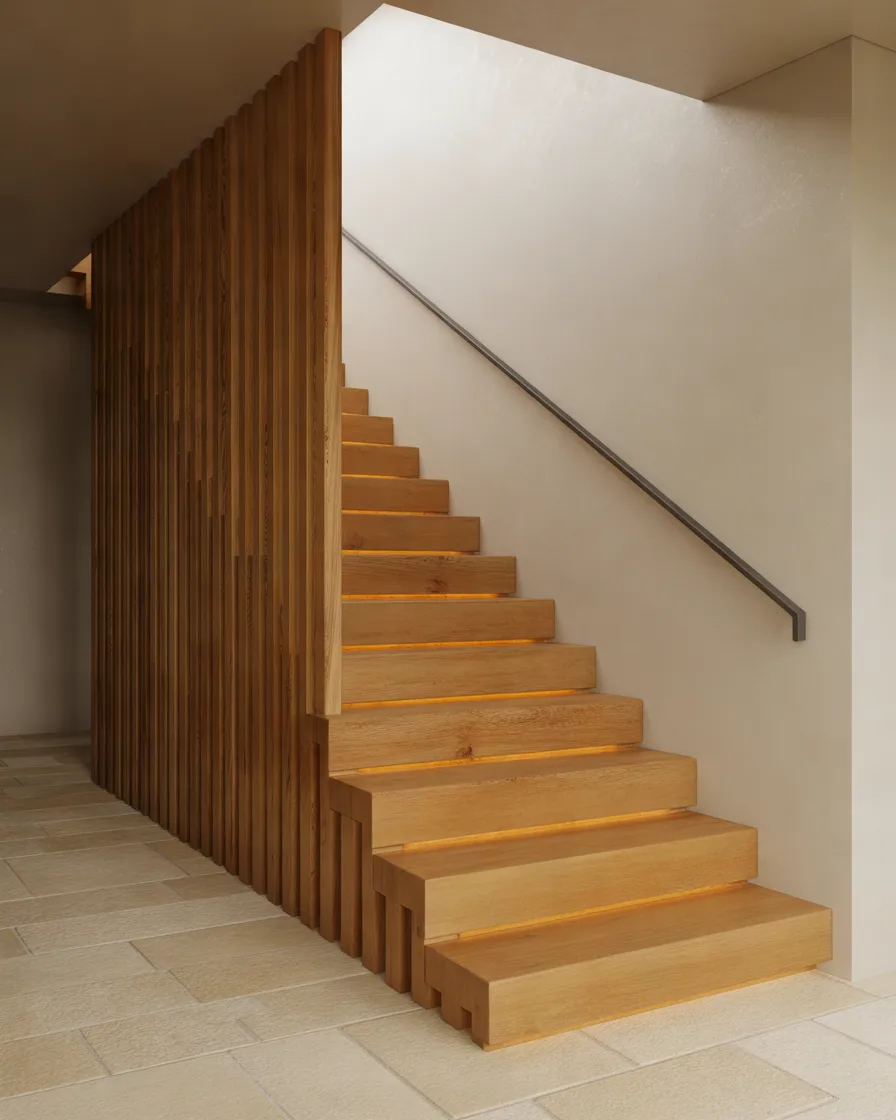
Natural materials can make a home feel warmer and more welcoming, and lighting is a wonderful way to highlight their texture. Combining wooden staircase elements with concealed lighting creates an inviting design that works particularly well in Scandinavian, modern rustic, and contemporary interiors.
Consider using oak or walnut treads alongside a wooden feature wall. A concealed LED strip beneath the steps or behind vertical timber slats can produce a beautiful combination of light and shadow.
The natural grain of the wood becomes more noticeable when illuminated with warm white lighting. This makes the staircase feel richer without relying on elaborate decorative fixtures.
You can also introduce complementary materials such as stone flooring, matte black handrails, or neutral plaster walls. These finishes prevent the space from looking overly wooden while maintaining a consistent visual style.
When selecting timber, consider its colour, finish, and durability. Staircase surfaces experience regular foot traffic, so materials should be appropriate for everyday use.
This idea is particularly appealing if you want a staircase that feels modern without losing the comfort and character associated with natural materials.
13. Choose Recessed Floor Lights Along the Staircase
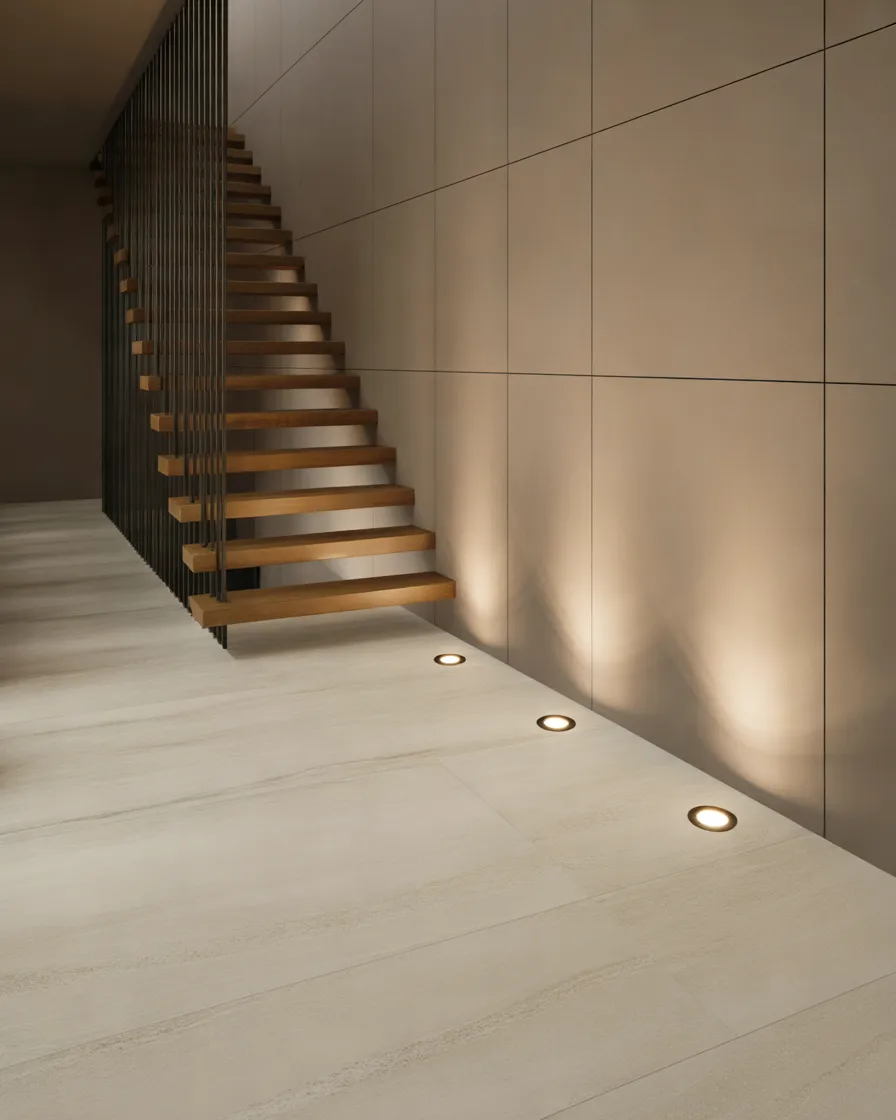
Floor-level lighting offers another creative way to illuminate a staircase. Instead of installing fixtures on the steps or walls, you can use suitable recessed floor lights positioned along the staircase approach or near the base of the wall.
These fixtures can cast a gentle beam upward, highlighting the surrounding surfaces and creating attractive architectural shadows.
This approach works particularly well in modern homes with stone flooring, polished concrete, and minimalist wall finishes. It is also a useful option when you want to avoid adding visible wall-mounted fixtures.
For example, a row of small recessed uplights along one side of a staircase can create a subtle illuminated pathway. When combined with low-level ambient lighting, the effect feels sophisticated without being overly dramatic.
However, floor lights should be selected carefully. Choose products specifically designed for floor installation, with suitable load ratings and protection against dust and moisture where required.
Avoid placing them where they could create uncomfortable glare or become a tripping hazard. Proper installation and a smooth, level finish are essential.
14. Create a Modern Look With Smart Colour-Changing LED Lights
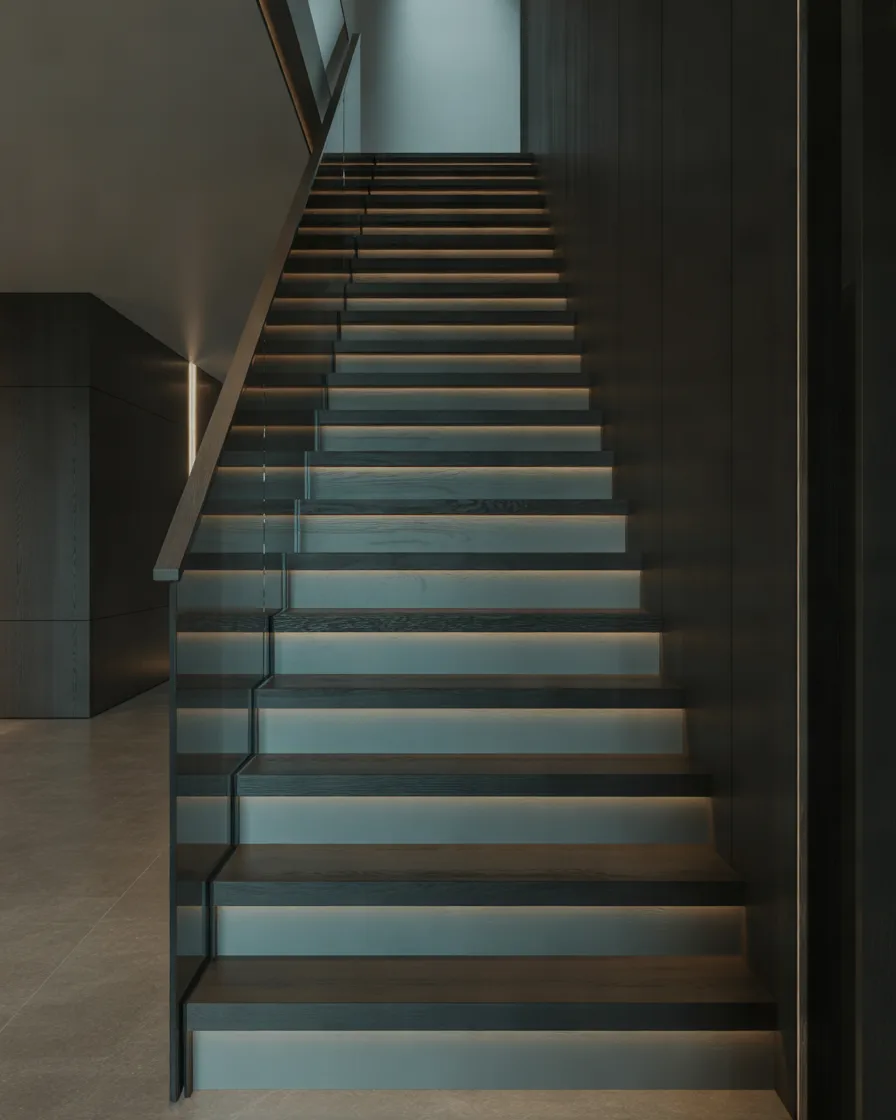
If you enjoy experimenting with modern technology, smart colour-changing LED lighting can give your staircase a completely different personality.
These lighting systems allow you to adjust brightness and colour using a compatible remote, smartphone app, or smart-home controller. You can choose soft warm white for everyday use, cooler tones for a crisp contemporary appearance, or subtle colours for special occasions.
One of the nicest ways to use this technology is to install concealed LED strips beneath stair treads or along the staircase wall. This keeps the lighting integrated into the architecture rather than making the space look like an entertainment venue.
For everyday residential interiors, subtle colour choices usually work best. Soft amber, warm white, and gentle neutral tones can create an attractive atmosphere without becoming distracting.
You can also create different lighting scenes for different times of day. For example, a low-brightness nighttime setting can provide guidance while keeping the surrounding home calm.
Before purchasing a system, check compatibility between the LED strips, controller, power supply, and smart-home platform. Make sure the installation includes suitable electrical protection and accessible maintenance points.
15. Use Natural Light and Skylight Lighting to Brighten the Staircase
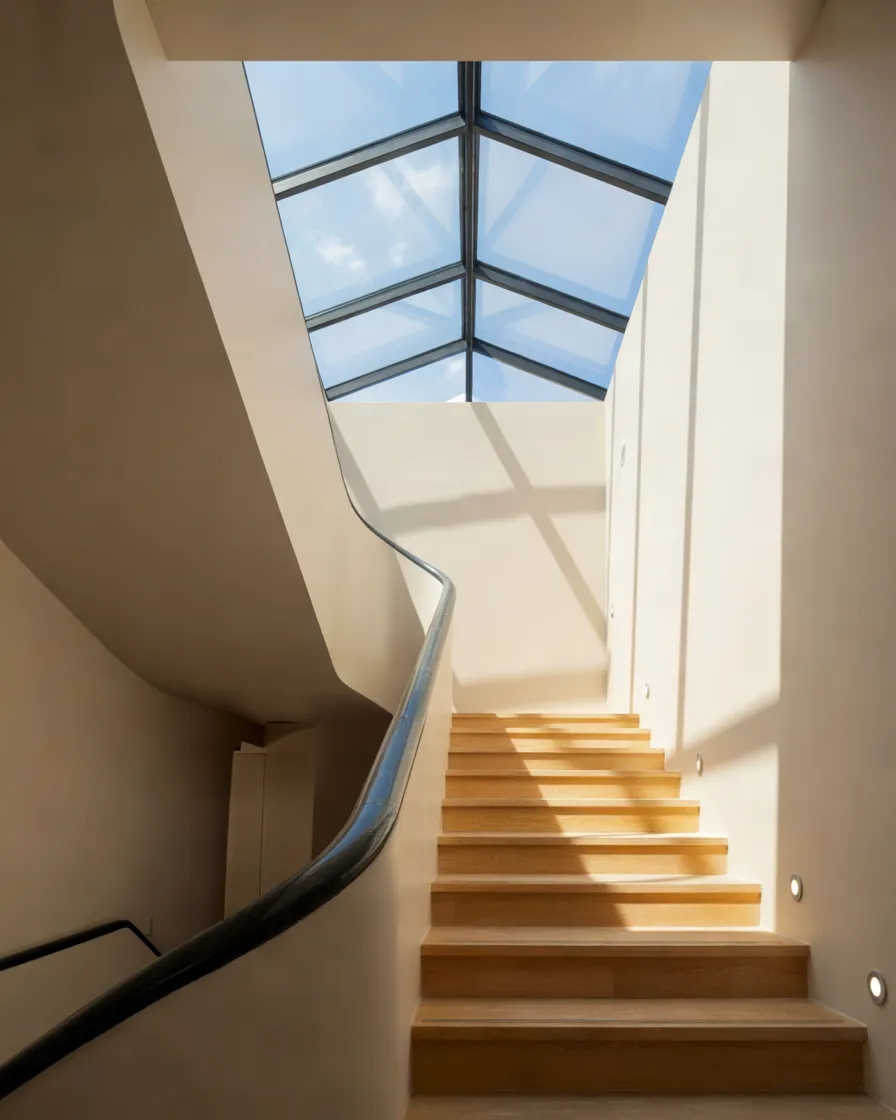
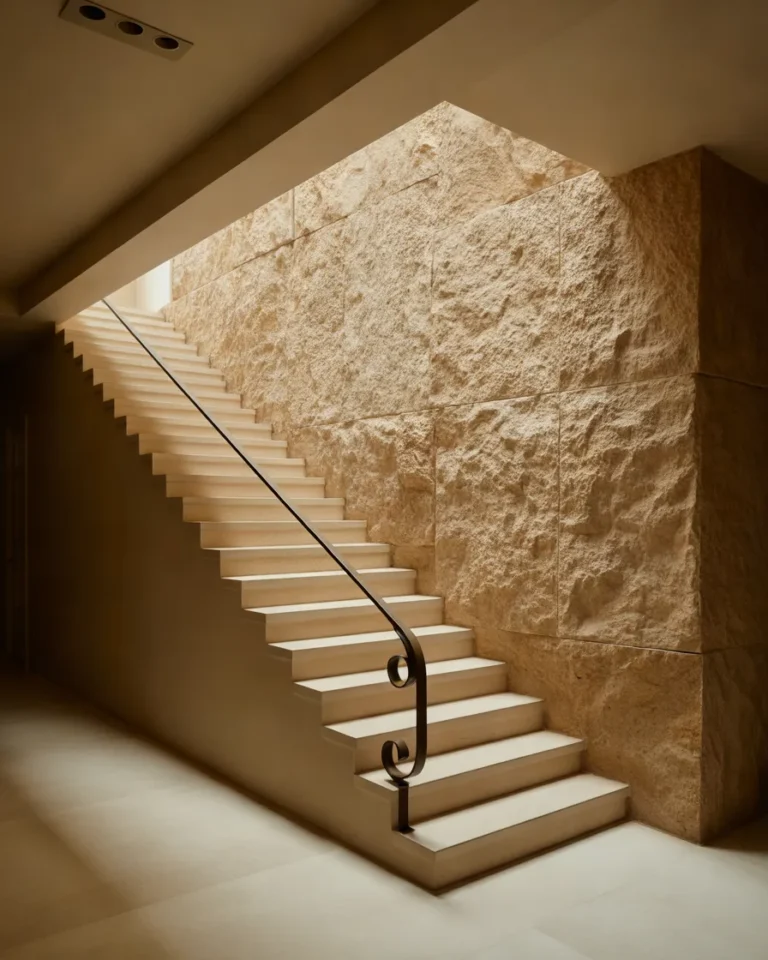
Not every beautiful staircase lighting solution needs to depend entirely on artificial fixtures. Natural daylight can make a dramatic difference, especially in homes where the staircase is surrounded by solid walls or positioned away from large windows.
If your home’s architecture allows it, consider introducing a skylight above the staircase. This allows daylight to enter from above, brightening the stairwell and highlighting the textures of the walls, handrails, and steps.
A tall vertical window or carefully positioned glazed opening can achieve a similar result. These options are particularly attractive in contemporary homes with open stairwells.
Natural light also makes neutral interior colours appear more vibrant and can help a narrow staircase feel more spacious. White walls, pale timber, and light stone surfaces work especially well with this approach.
However, daylight changes throughout the day and cannot provide reliable illumination after sunset. You should still include suitable artificial lighting, such as recessed wall fixtures or concealed LED strips, to ensure the staircase remains visible at night.
When planning a skylight, consider insulation, weatherproofing, solar heat gain, privacy, and professional installation. The goal is to create a bright staircase that remains comfortable throughout the year.
Practical Tips for Choosing the Right Staircase Lighting
Choosing beautiful fixtures is only one part of designing an effective staircase lighting scheme. The placement, brightness, colour, and installation all influence how the finished space will look and function.
Here are some practical considerations to keep in mind before making your decision.
- Consider your staircase design: Floating stairs, enclosed staircases, curved staircases, and traditional wooden stairs all have different lighting requirements. Choose fixtures that complement the actual structure rather than forcing a design that does not suit the space.
- Choose a comfortable colour temperature: Warm white lighting, generally around 2700K–3000K, creates a cosy residential atmosphere. Neutral white lighting around 3500K–4000K offers a cleaner appearance. Think about how the chosen light will look alongside your flooring, paint, and wood finishes.
- Avoid excessive brightness: Very bright fixtures can create glare, especially when positioned directly in someone’s line of sight. A combination of diffused lighting and carefully directed beams usually produces a more comfortable result.
- Think about even illumination: Try to avoid large differences between brightly lit and completely dark steps. Consistent lighting makes the staircase easier to navigate.
- Use dimmers where appropriate: Dimmable lights allow you to adjust the atmosphere according to the time of day and your needs. They are particularly useful for decorative pendants and ambient LED lighting.
- Consider motion sensors: Automatic activation is convenient for staircases that are frequently used at night. Make sure the sensor detects movement before someone reaches the first step.
- Coordinate your finishes: Match the lighting fixtures with other interior details, such as door handles, handrails, cabinet hardware, and decorative metalwork.
- Plan for maintenance: Choose accessible fixtures and lighting systems that can be serviced without unnecessarily dismantling the staircase.
- Prioritize safety: Use suitable electrical components, proper cable protection, and professional installation. Keep wiring away from walking surfaces and ensure that decorative lighting does not interfere with handrails or head clearance.
Frequently Asked Questions About Stair Lighting
What Is the Best Lighting for a Staircase?
The best staircase lighting depends on your home’s design and how the stairs are used. Recessed LED wall lights, under-step LED strips, and integrated handrail lighting are popular options because they provide useful illumination without taking up much space. For larger staircases, pendant lights and chandeliers can also create attractive focal points.
How Do You Light a Staircase Without Making It Too Bright?
Use concealed LED strips, diffused wall lights, and appropriately positioned recessed fixtures. Dimmable lighting is particularly useful because it allows you to adjust brightness according to the surrounding conditions. Avoid placing exposed bulbs where they shine directly into people’s eyes.
Are LED Strip Lights Good for Staircases?
Yes. LED strip lights are a popular staircase lighting choice because they are compact, energy-efficient, and available in different colour temperatures. They can be installed beneath stair treads, along handrails, or within suitable wall channels. Choose good-quality products with appropriate electrical protection and professional installation.
Where Should Staircase Wall Lights Be Positioned?
Wall lights should be positioned to provide consistent illumination along the staircase without creating glare. Their exact height and spacing depend on the fixture design, staircase dimensions, and wall layout. Follow the manufacturer’s installation recommendations and have the arrangement checked by a qualified electrician.
What Colour Temperature Is Best for Staircase Lighting?
Warm white lighting between approximately 2700K and 3000K is an excellent choice for comfortable residential interiors. It works particularly well with wooden stairs, beige walls, and traditional décor. Neutral white around 3500K to 4000K can suit more contemporary spaces.
Can You Install Stair Lighting Without Rewiring?
In some situations, yes. Battery-powered motion-sensor lights and certain rechargeable LED fixtures can provide additional illumination without extensive electrical work. However, these options may require regular charging or battery replacement. For permanent integrated lighting, proper wiring is generally the better long-term solution.
How Can I Make a Small Staircase Look Bigger With Lighting?
Use discreet recessed fixtures, concealed LED strips, and light-coloured wall finishes. Glass balustrades can also help preserve an open appearance. Avoid oversized chandeliers and bulky wall fixtures in narrow staircases because they can make the space feel crowded.
Are Motion-Sensor Stair Lights Worth Installing?
Motion-sensor stair lights can be very useful, particularly in family homes and staircases used frequently during the night. They automatically illuminate the area when movement is detected, reducing the need to search for a switch. Choose a reliable sensor with appropriate detection coverage.
Conclusion
A staircase deserves just as much attention as the other rooms in your home. The right lighting can transform a plain set of steps into a beautiful architectural feature while making everyday movement more comfortable.
From concealed LED strips and recessed wall lights to elegant sconces, statement chandeliers, and natural skylight illumination, there are countless ways to approach staircase lighting. Some options are ideal for creating a dramatic modern appearance, while others focus on warmth, simplicity, and practicality.
My advice is to begin with your staircase’s existing design. Think about the materials, available space, ceiling height, and amount of natural light before choosing your fixtures. You do not necessarily need an expensive lighting installation to achieve an impressive result. Sometimes, a few carefully positioned lights can make a much bigger difference than an elaborate arrangement.
Most importantly, remember that beautiful staircase lighting should also be functional. A well-designed combination of ambient and step-level illumination can help create a staircase that looks inviting during the day and feels comfortable to use at night.
With these 15 stair lighting ideas, you can find inspiration to create a space that reflects your personal style while adding beauty, character, and practicality to your home.