
You can turn a big, blank dining room wall into a strong visual anchor that lifts the whole room. This article shows ten smart, easy-to-execute large dining room wall decor ideas to help you pick the right scale, texture, and lighting so your large wall feels balanced and intentional.
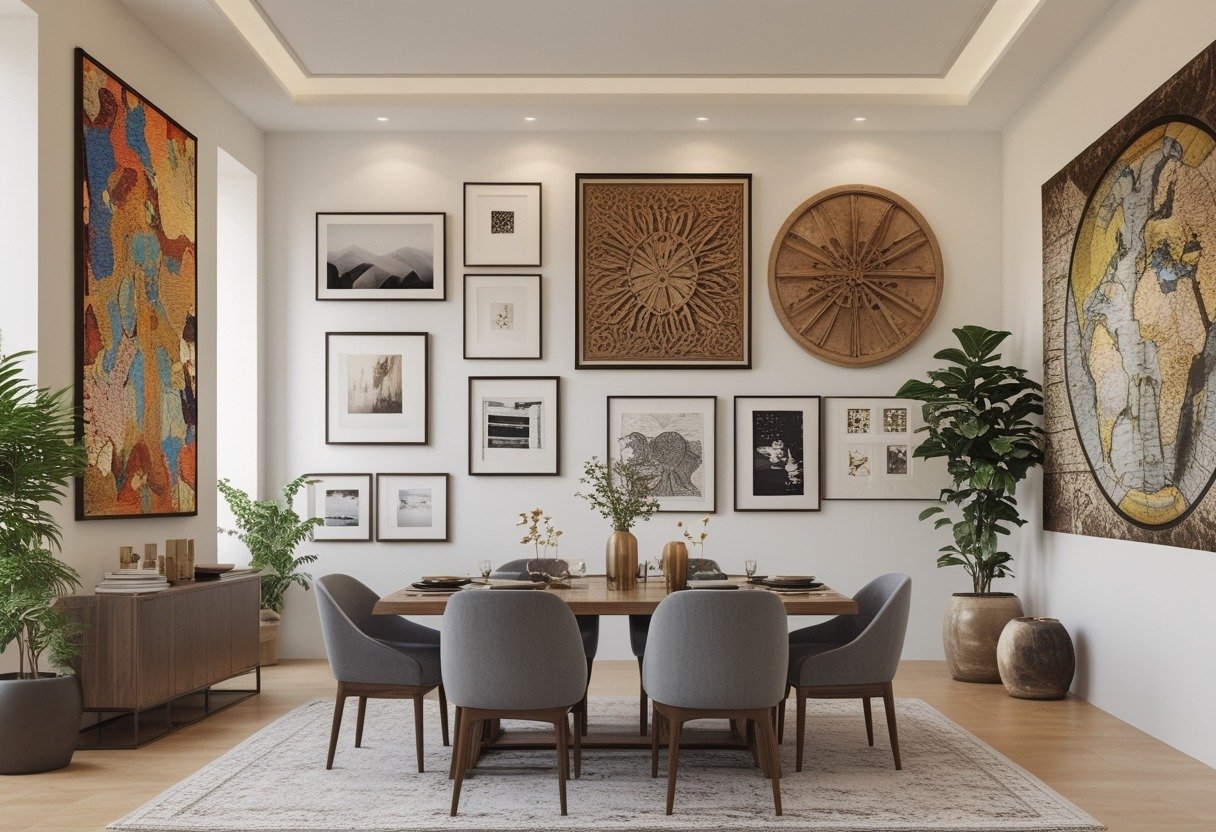
You’ll find options that range from bold art and large mirrors to practical built-ins and layered lighting, all aimed at making your space feel inviting and well-proportioned. Use these ideas to match your style and to solve common issues like empty expanses, echoing sound, or lack of storage.
1) Oversized abstract canvas triptych in muted tones
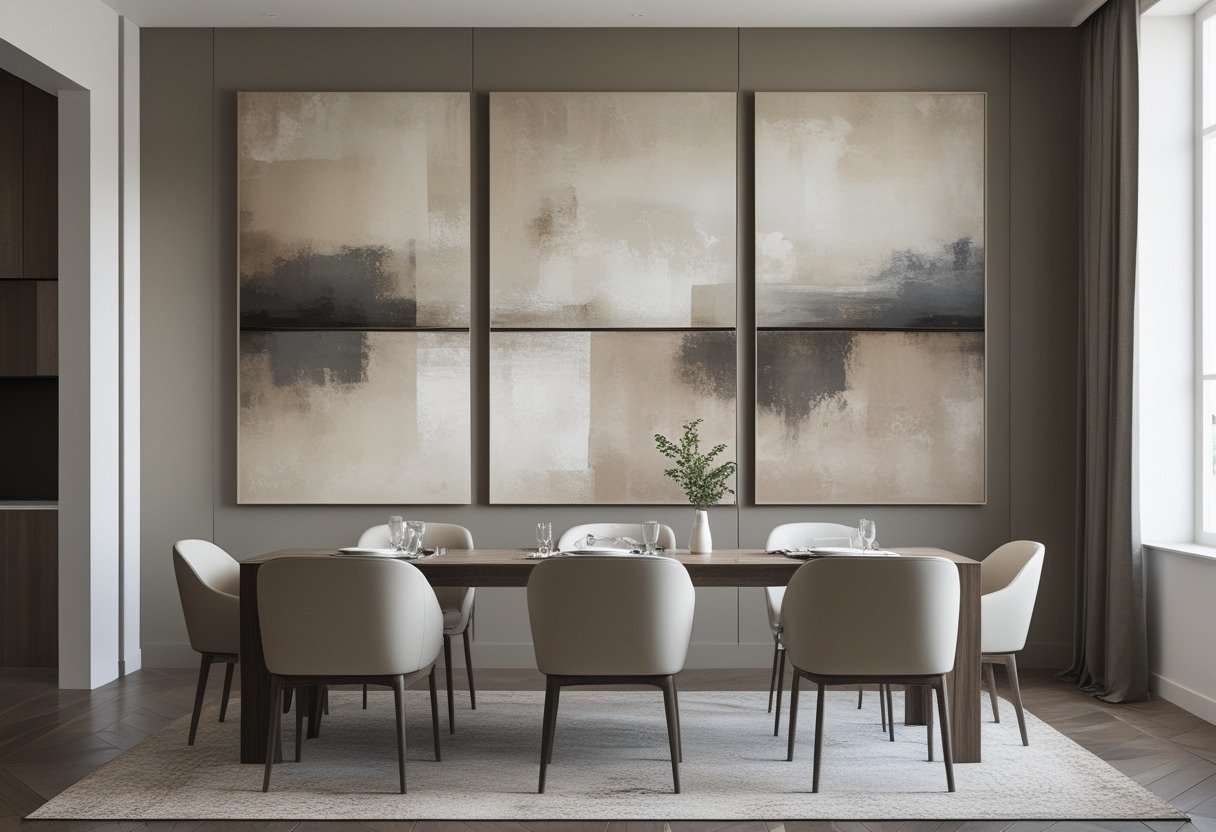
Choose a large triptych to cover wide wall space and anchor your dining room. Muted tones like soft grays, beige, and dusty blue keep the mood calm and match many color schemes.
Hang the three panels evenly with small gaps to show the design flows across all pieces. This style adds modern shape without loud colors, so your table and lighting remain the focus.
2) Floor-to-ceiling built-in shelving with warm LED backlighting
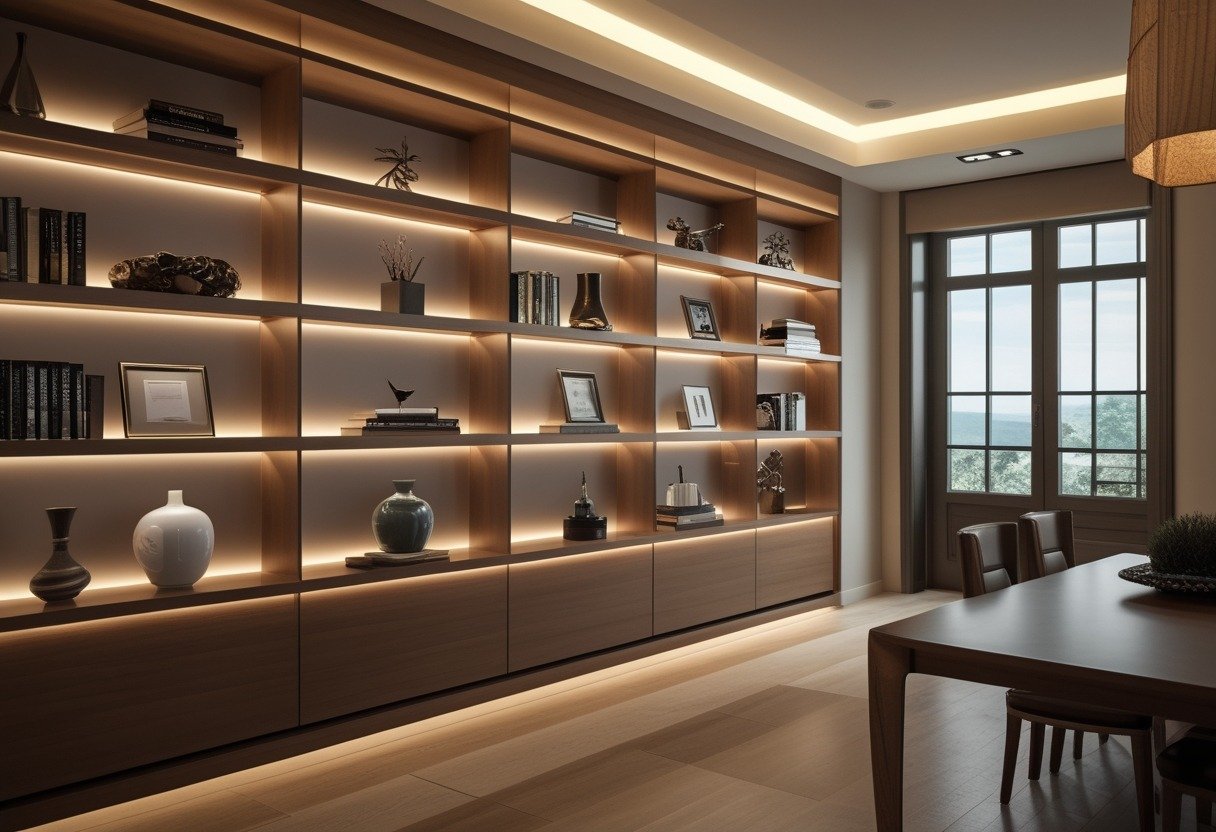
You can install floor-to-ceiling built-ins to frame your dining area and add serious storage. Warm LED backlighting softens the shelves and highlights dishes or art without glare.
Choose adjustable shelves so you can fit platters, vases, and books. Keep wiring hidden and use dimmers to match mood and mealtimes.
3) Large round antique mirror with a distressed brass frame
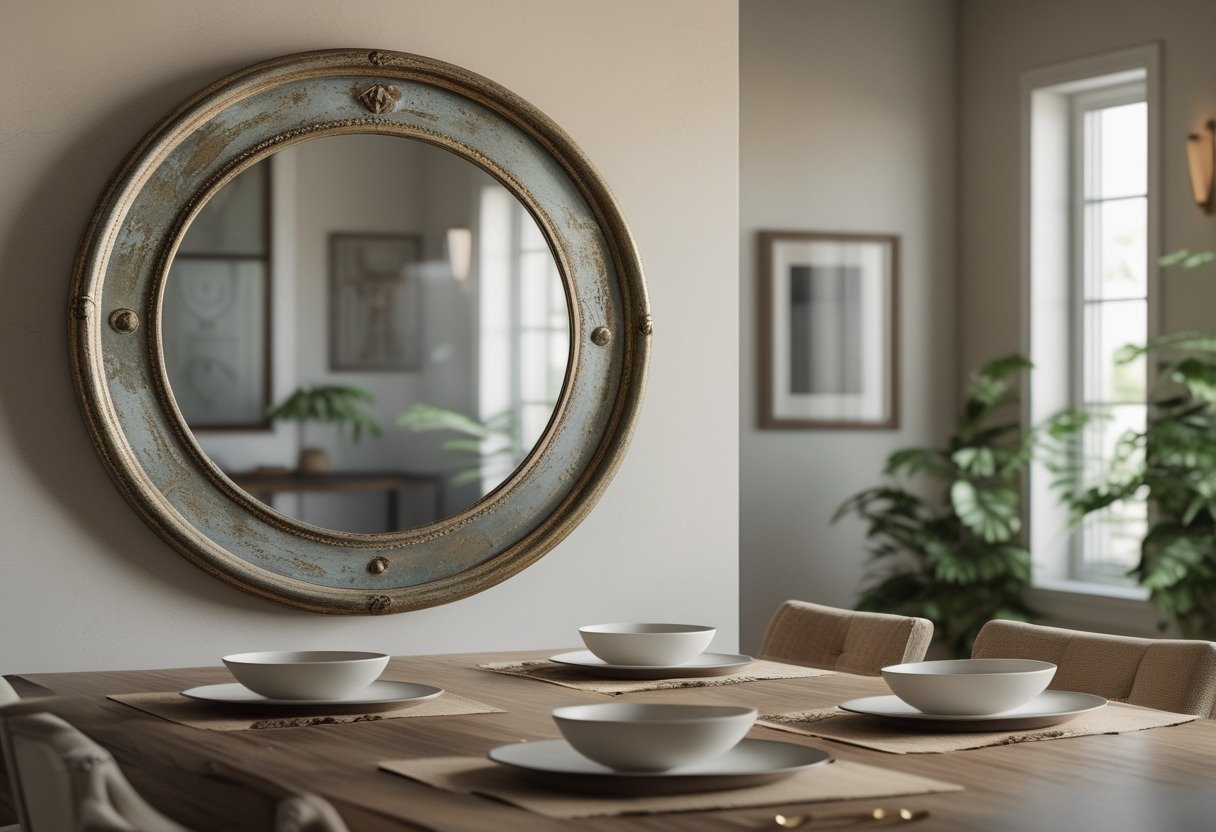
A large round antique mirror adds depth and light to your dining room. The distressed brass frame brings warm color and a lived-in feel.
Place it over a buffet or opposite a window to reflect light and make the room feel larger. Pair with simple tableware so the mirror stays the focal point.
4) Gallery-style arrangement of framed black-and-white landscape prints
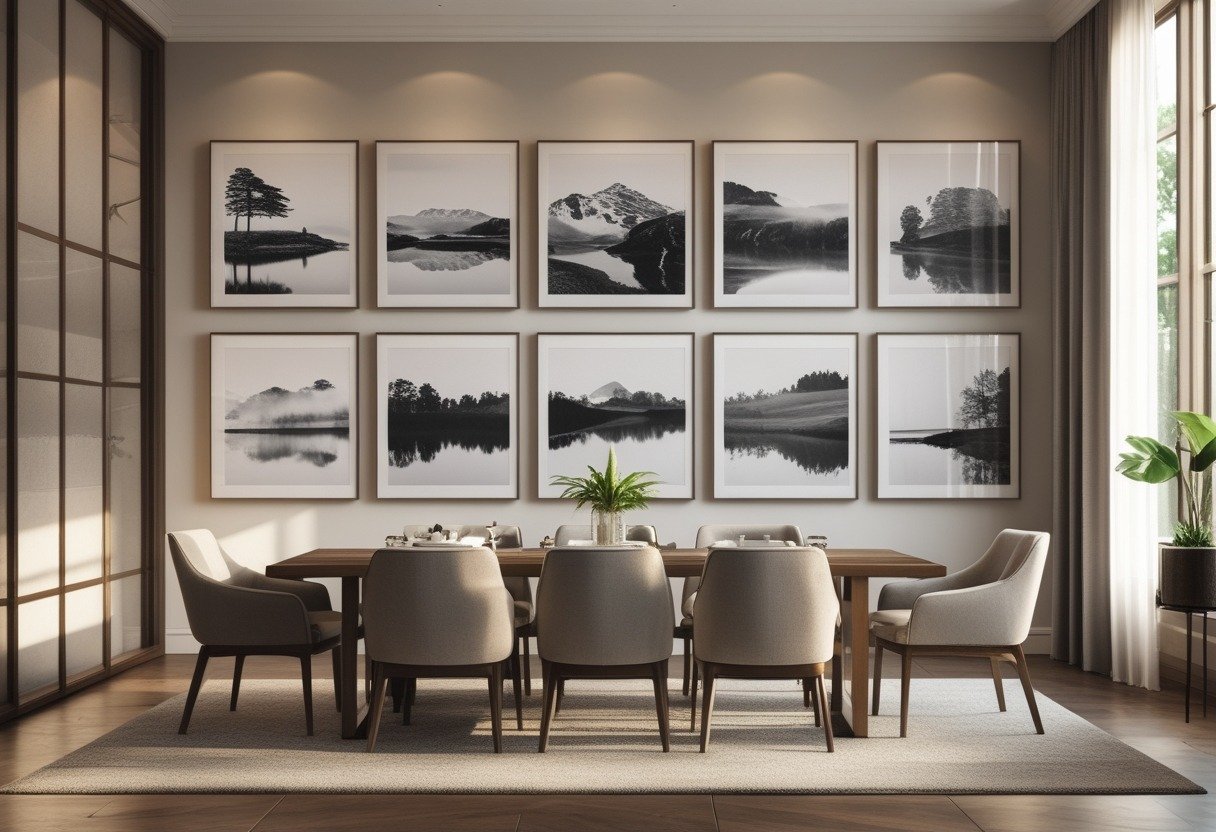
Choose several black-and-white landscape prints in matching frames to create a calm, cohesive look. You can arrange them in a grid or a looser salon style depending on your wall size.
Use wide white mats to add breathing room around each image and keep the display from feeling crowded. Place the center of the grouping at eye level so your guests naturally focus on the art.
Vary frame sizes slightly for visual interest, but keep frame colors the same for unity. This style fits modern and classic dining rooms alike.
5) Statement wood slat accent wall (vertical or chevron pattern)
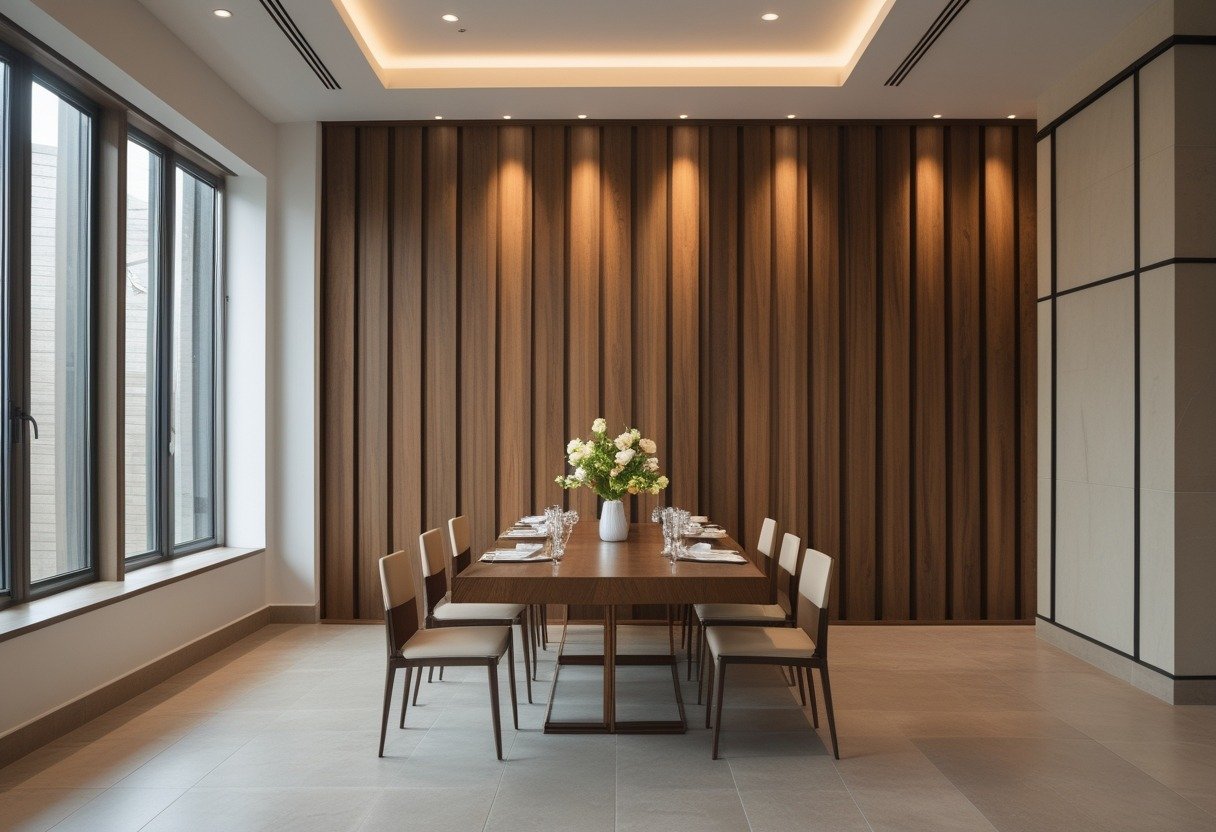
A wood slat wall adds texture and warmth to your dining room. Choose vertical slats for height and a clean look, or a chevron pattern for motion and visual interest.
Pick a wood finish that matches your furniture or contrast with paint for a modern edge. Install slats with even spacing and hidden fasteners for a polished result.
You can DIY with pre-cut panels or hire a carpenter for complex patterns. Add simple lighting to highlight the grain and pattern.
6) Floor-to-ceiling botanical mural in soft monochrome
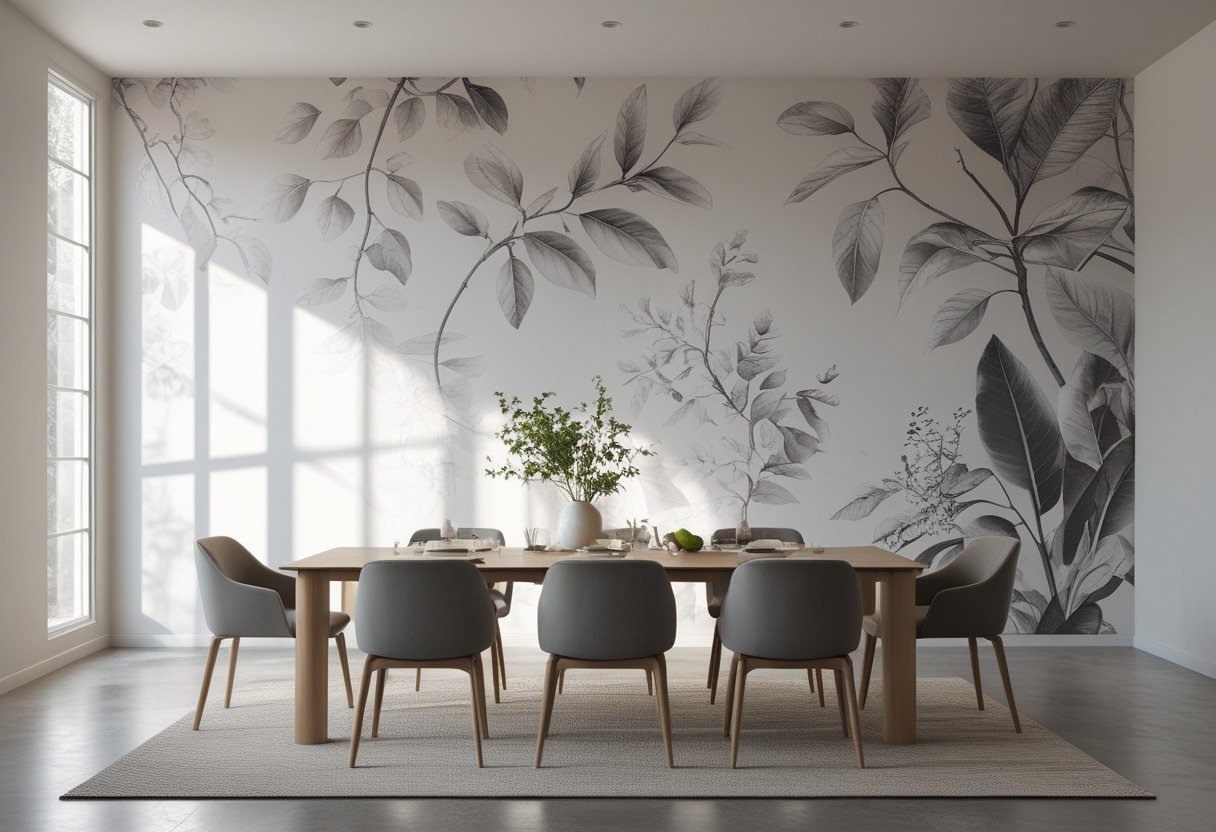
Choose a floor-to-ceiling botanical mural to add calm and scale to your dining room. A soft monochrome palette keeps the look elegant and lets your table and lighting stand out.
Pick a mural with layered leaves or delicate branches for subtle depth. You can pair it with light wood, rattan, or black metal accents to keep the space balanced and modern.
7) Oversized woven tapestry or macramé wall hanging
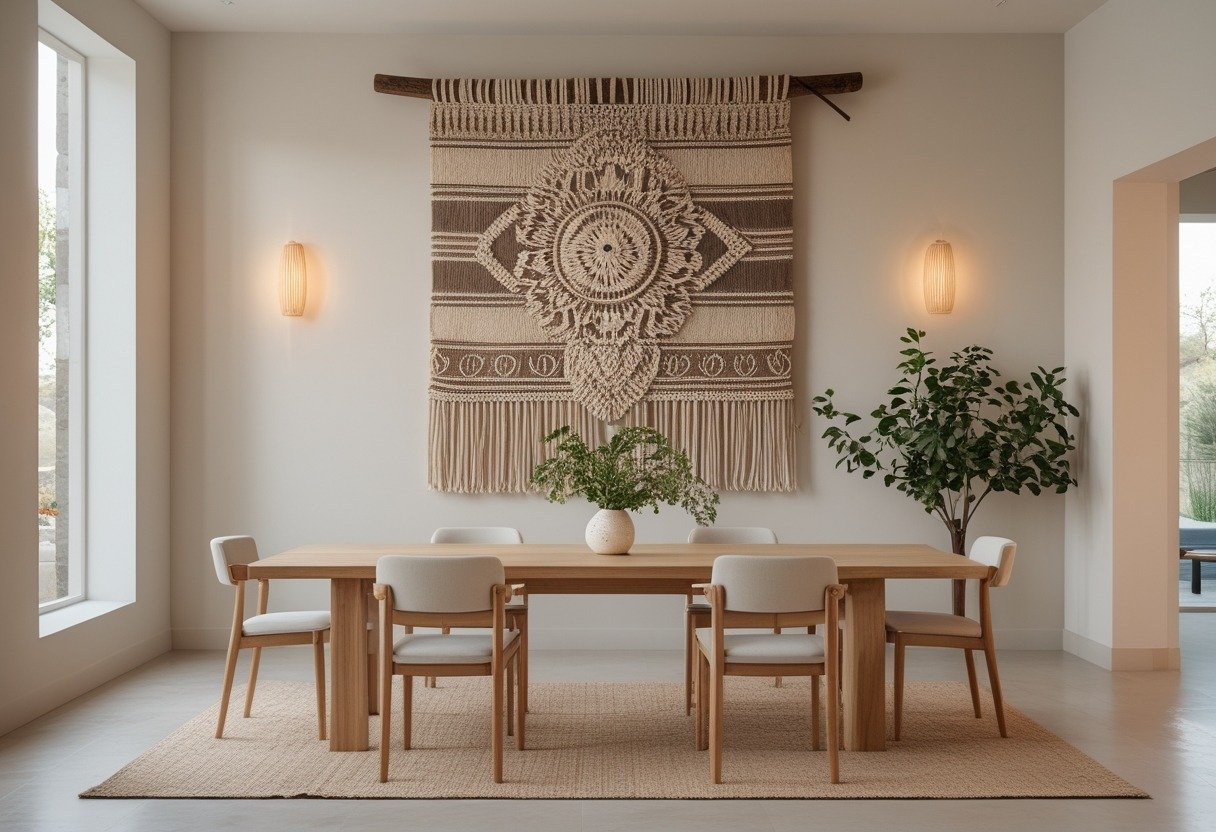
Choose a large woven tapestry or macramé piece to fill empty wall space and add texture. You can pick natural cotton, wool, or mixed fibers for a softer, tactile look.
Hang it centered above your table or on a long wall to create a clear focal point. Consider neutral tones for a calm feel or a subtle pattern to add visual interest without overwhelming the room.
8) Cluster of sculptural metal wall scones for layered lighting
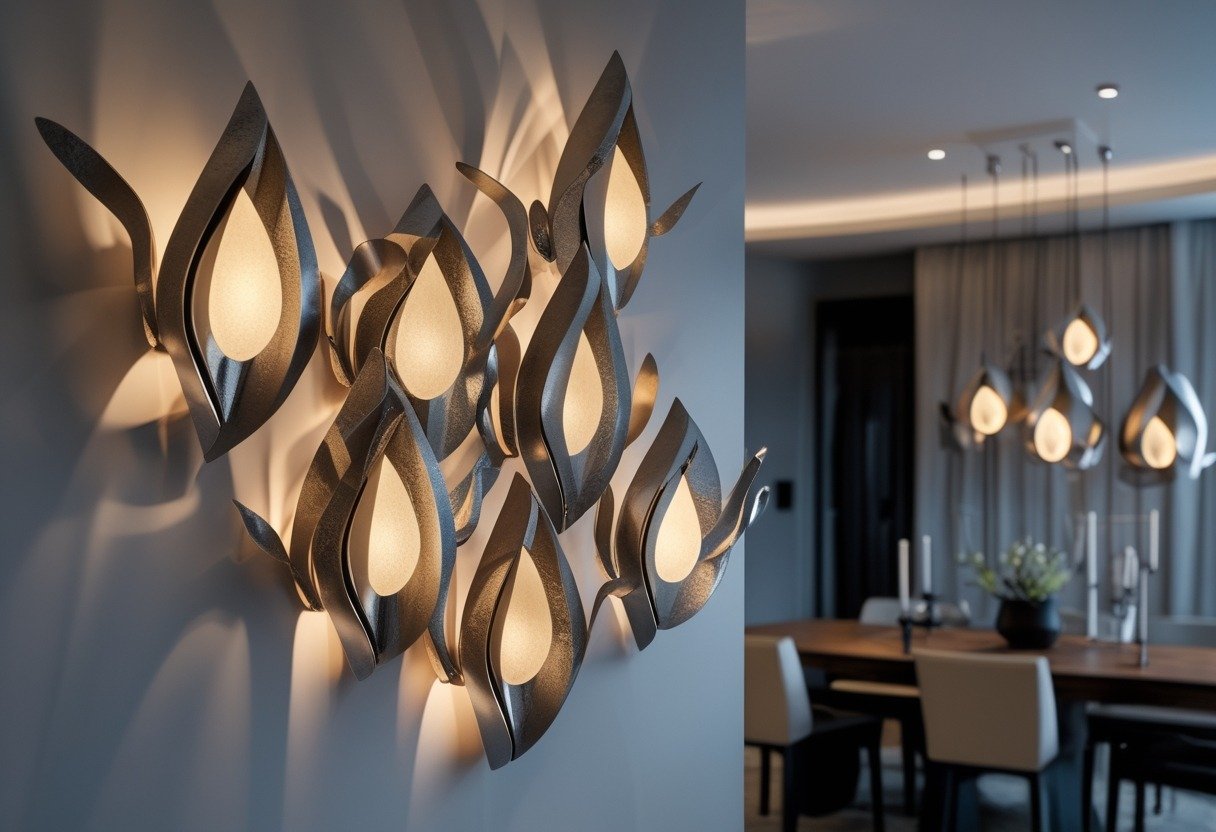
Choose a group of metal sconces with different shapes or finishes to add depth to your dining room.
Place them at varying heights to create layers of light and draw the eye across the wall.
Metal sculptural sconces work as art and task lighting.
They reflect light and pair well with a central chandelier or pendant.
9) Long floating credenza topped with sculptural ceramics and art
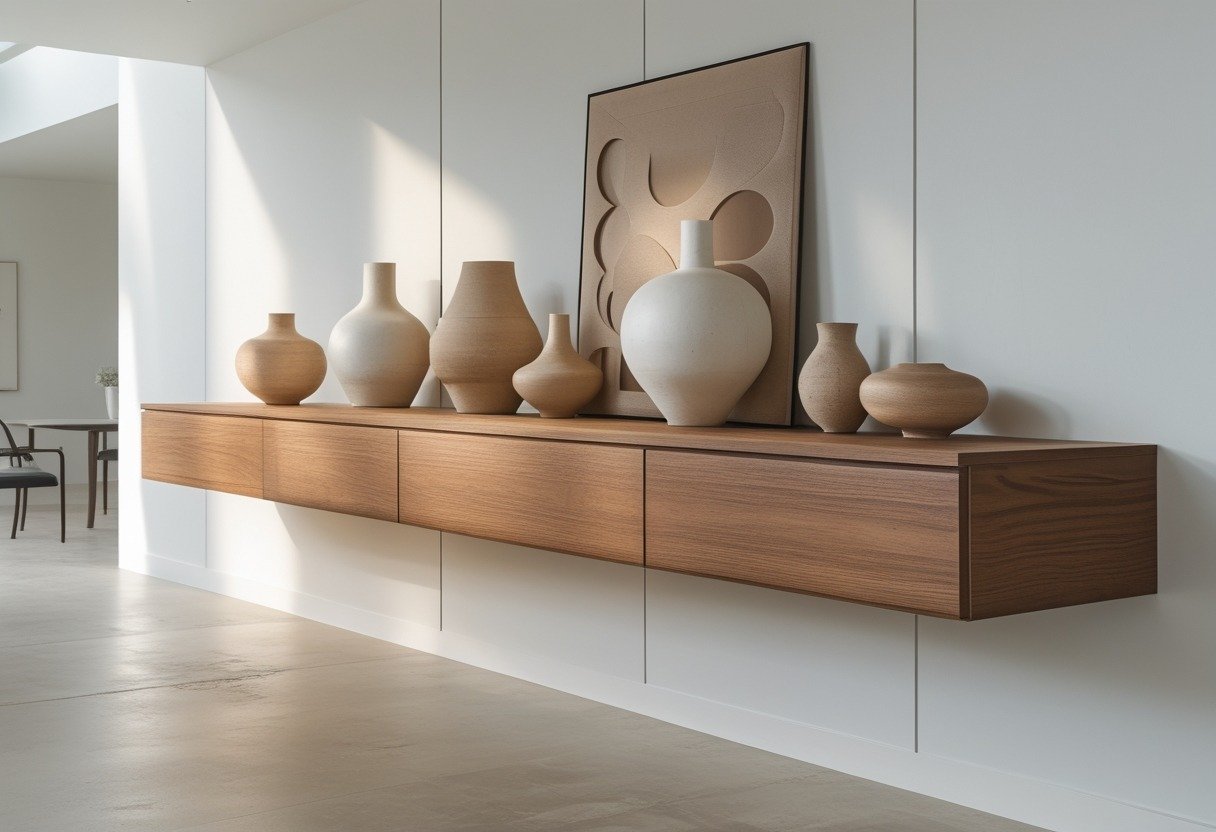
Mount a long floating credenza to free floor space and add storage without visual bulk. You get a clean line that anchors large wall art or a sculptural grouping above it.
Place a few sculptural ceramics on one side and a framed print or painting on the other to balance weight. Vary heights and textures so your display feels intentional but not crowded.
Keep colors limited to two or three tones to tie the credenza to the room. Leave some empty surface to keep the look airy and modern.
10) Wall-mounted folding buffet table for serving and storage
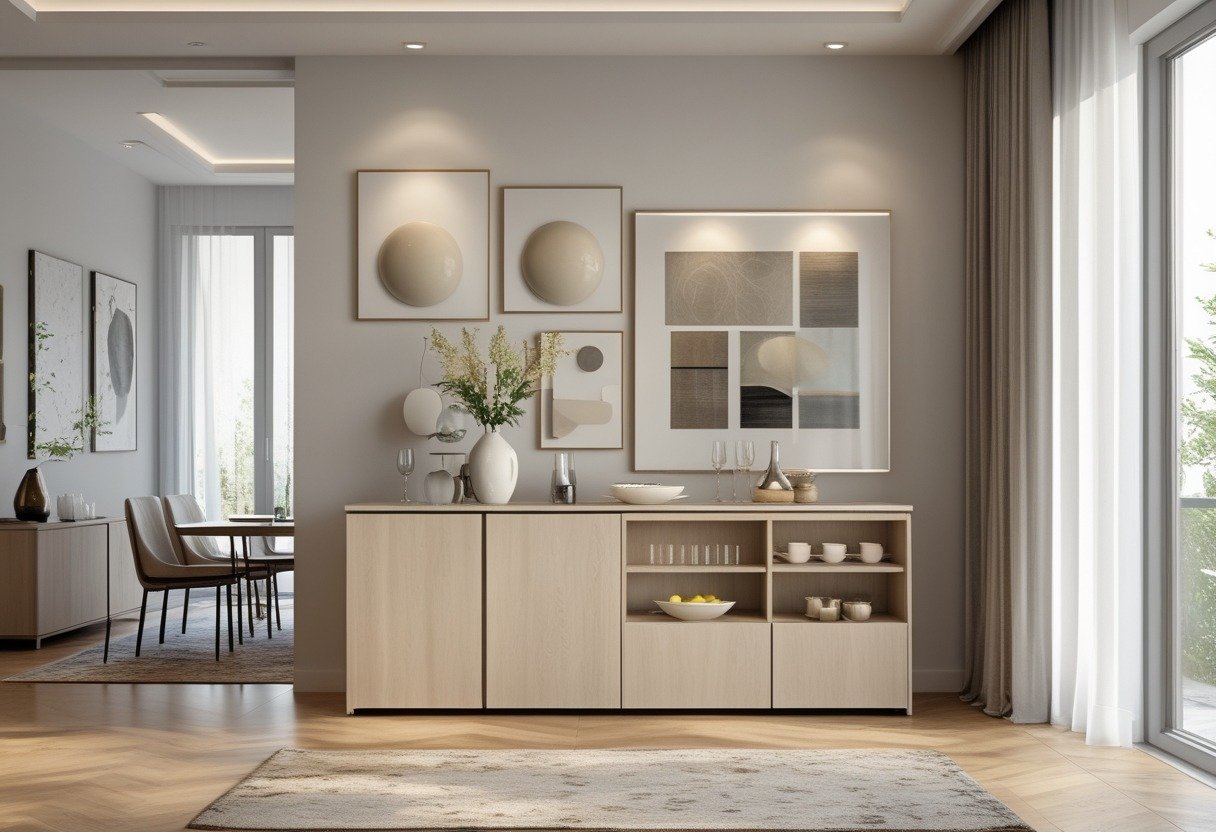
A wall-mounted folding buffet table gives you extra surface for serving without taking floor space. You can fold it down for meals and tuck it away when you need room.
Choose a model with shelves or a sideboard to hold dishes, napkins, and glassware. Mount it at a comfortable height so guests can reach food and you can work easily.
Balancing Scale and Proportion
Think about how each piece relates to the wall, the table, and the room. Size, spacing, and placement decide whether your wall feels balanced or awkward.
Choosing Artwork for Large Walls
Pick artwork that covers at least two-thirds of the width above furniture or the visual field it sits in. For example, a canvas above a buffet should span roughly 66–75% of the buffet’s width. If you use one large piece, pick something that has strong focal points and clear edges so it reads well from across the room.
Consider height as well: center art about 57–60 inches from the floor or align its midpoint with eye level for a seated viewer if the dining table is the main focus. Use frames and matting to add visual weight without changing the piece itself. Choose colors and contrast that tie to textiles or rugs to keep the room cohesive.
Arranging Multiple Decor Pieces
When you group pieces, plan a clear grid or an intentional asymmetry. Start by laying items on the floor to test layouts before you hammer nails. Keep consistent spacing—2–4 inches for a tight gallery, 4–8 inches for a more airy feel—so the cluster reads as one unit.
Anchor the arrangement with a focal piece, then build outward with smaller items that repeat shapes, colors, or textures. Mix vertical and horizontal shapes to avoid a flat look. If you include shelves or mirrors, balance reflective surfaces opposite solid artwork to control light and depth.
Integrating Color and Texture
Use color to set the mood and texture to add depth. Pick a main color, one or two accents, and mix smooth and rough surfaces to keep the wall from feeling flat.
Coordinating Wall Decor With Dining Room Palettes
Match wall art and decor to your room’s existing palette. If your chairs and rug use warm tones (terracotta, mustard), choose wall pieces with those hues or neutral frames that let the colors pop. For cool palettes (navy, gray, emerald), bring in metal finishes like brushed brass or matte black to create contrast.
Use a simple rule: 60% base color (walls), 30% secondary (furniture), 10% accents (art, shelves). This helps you place bold wallpaper, a large painting, or a gallery wall without clashing. Test samples on the wall at different times of day to check light effects. Keep frame finishes consistent when you want a unified look, or mix finishes sparingly for a modern layered feel.
Layering Materials for Visual Interest
Combine materials to give the wall weight and texture. Start with a main surface—paint, plaster, or wallpaper—then add a structural element like wood slats or a narrow shelf. Finally, top with smaller items: woven baskets, metal sconces, or canvas art.
Think in three layers: structural (wood panel, tile), mid-layer (floating shelves, molding), and surface detail (prints, plants, ceramics). Vary finishes: matte paint, glossy ceramic, rough wood. That mix improves acoustics and makes the room feel cozy. Keep scale in mind: large textures need fewer items; small textures can be repeated for rhythm.
