
Working from home sounds simple until you actually need to create a space where you can concentrate for several hours. I have found that a good home office is not only about having a desk and chair. The right workspace should feel comfortable, organized, practical, and pleasant enough that I actually want to sit there and work.
That is where IKEA can be especially useful. IKEA home office furniture is popular because it combines clean design with practical storage, flexible layouts, and relatively simple solutions for rooms of almost every size. Whether you have an entire spare room, a small bedroom corner, or only a narrow section of a living room, there are plenty of IKEA home office ideas that can help you use the space wisely.
One of the things I like most about IKEA is that many pieces can be combined instead of being used exactly as shown in the store. A drawer unit can support a desktop. A bookshelf can become a room divider. A wall rail can turn into vertical office storage. Even a small cabinet can hide paperwork and chargers that would otherwise make the room feel messy.
If you are planning a new workspace or simply want to improve your current setup, these 15 IKEA home office ideas can help you create a home office that looks stylish while still being practical for everyday work.
1. Create a Classic IKEA Desk With Drawer Units
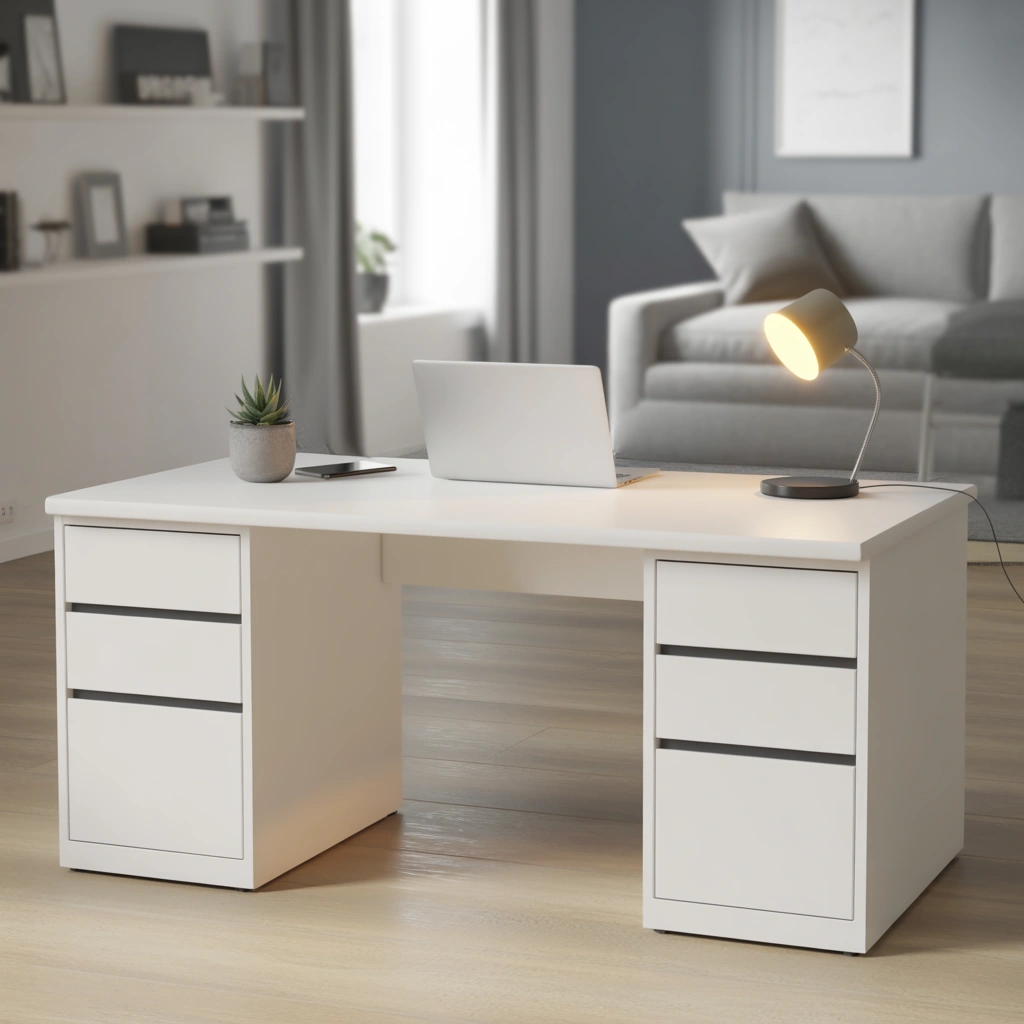
One of the most recognizable IKEA home office ideas is creating a desk using two drawer units with a desktop placed across them. I like this setup because it gives you a large working surface while providing plenty of storage directly underneath.
Drawer units are particularly useful for keeping notebooks, pens, cables, chargers, documents, and other office supplies out of sight. Instead of covering the desk with small organizers, I can keep most items inside the drawers and leave the main surface open.
A long desktop also gives you enough space for a laptop, monitor, keyboard, lamp, notebook, and decorative accessories without everything feeling crowded.
If you work with two monitors or use your desk for both office work and creative hobbies, choosing a deeper desktop can make the setup much more comfortable.
For a more polished appearance, I would keep the desktop color consistent with the rest of the room. White creates a bright Scandinavian look, while wood tones can make the office feel warmer and more relaxed.
The beauty of this IKEA home office setup is that it is easy to customize. You can have drawers on both sides for maximum storage or use one drawer unit and simple desk legs on the opposite side to keep the workspace feeling lighter.
2. Turn a Small Corner Into an IKEA Home Office
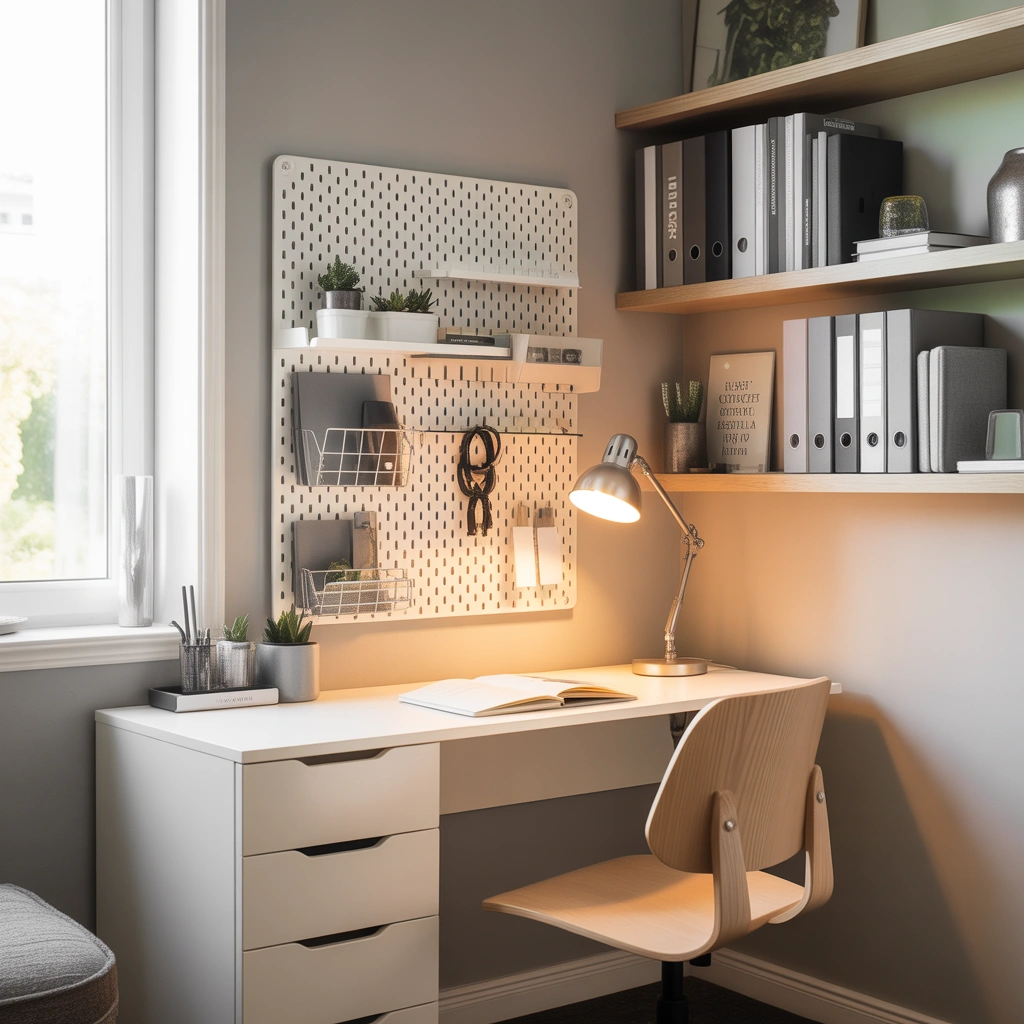
You do not need an entire room to create a functional workspace. In many homes, the best office location is simply an unused corner.
A compact IKEA desk can fit beside a window, behind a sofa, in a bedroom corner, or even along a hallway wall.
When I design a small workspace, I prefer furniture with a simple shape and slim legs because bulky furniture can make the corner feel smaller than it actually is.
The wall above the desk becomes especially important in a small IKEA home office. Instead of using floor-standing storage, install shelves or wall organizers above the workspace. This allows you to store books, files, and office accessories vertically.
Another trick is choosing furniture in a color similar to the wall. For example, a white desk against a white wall visually blends into the space instead of dominating it.
Add a small desk lamp, one comfortable chair, and a few personal accessories, and even the smallest corner can feel like a dedicated office.
3. Build a Wall-to-Wall IKEA Home Office
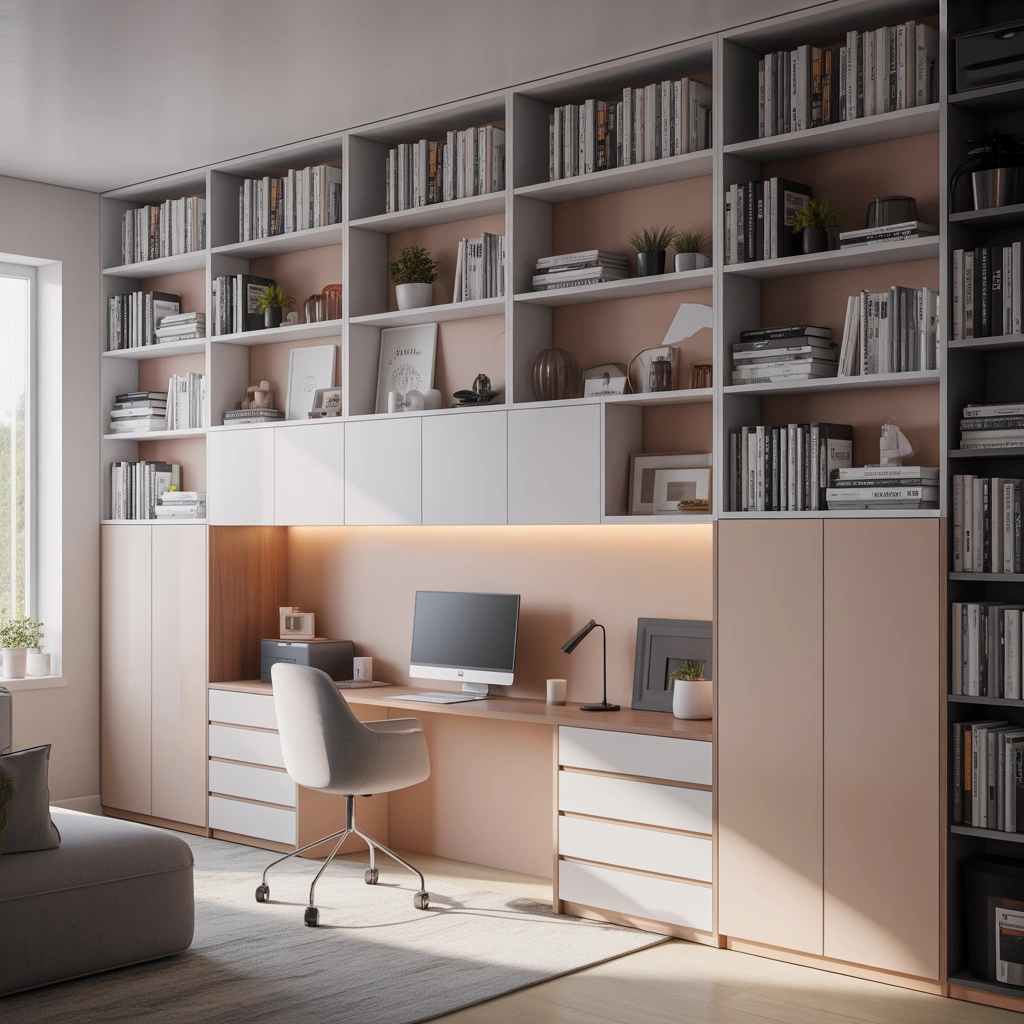
If you have a long empty wall, consider turning the entire area into a built-in-style workspace.
A long IKEA desktop combined with cabinets or drawer units underneath can create a professional office look without requiring custom carpentry.
This type of setup works particularly well for couples who work from home or families who need several workstations.
You can divide the long desktop into individual sections. One side might be used for computer work, while another section could become a writing, crafting, or study area.
Adding floating shelves above the desk can make the entire arrangement feel more intentional. I would keep the shelf spacing consistent and use matching storage boxes to create visual order.
For a built-in effect, try selecting furniture that closely matches the wall color. When cabinets, shelves, and desktops visually connect, the office looks more customized and expensive.
This IKEA home office idea can also solve storage problems because a wall-to-wall setup provides space for drawers, cabinets, bookshelves, and equipment without cluttering the rest of the room.
4. Use IKEA KALLAX as Office Storage
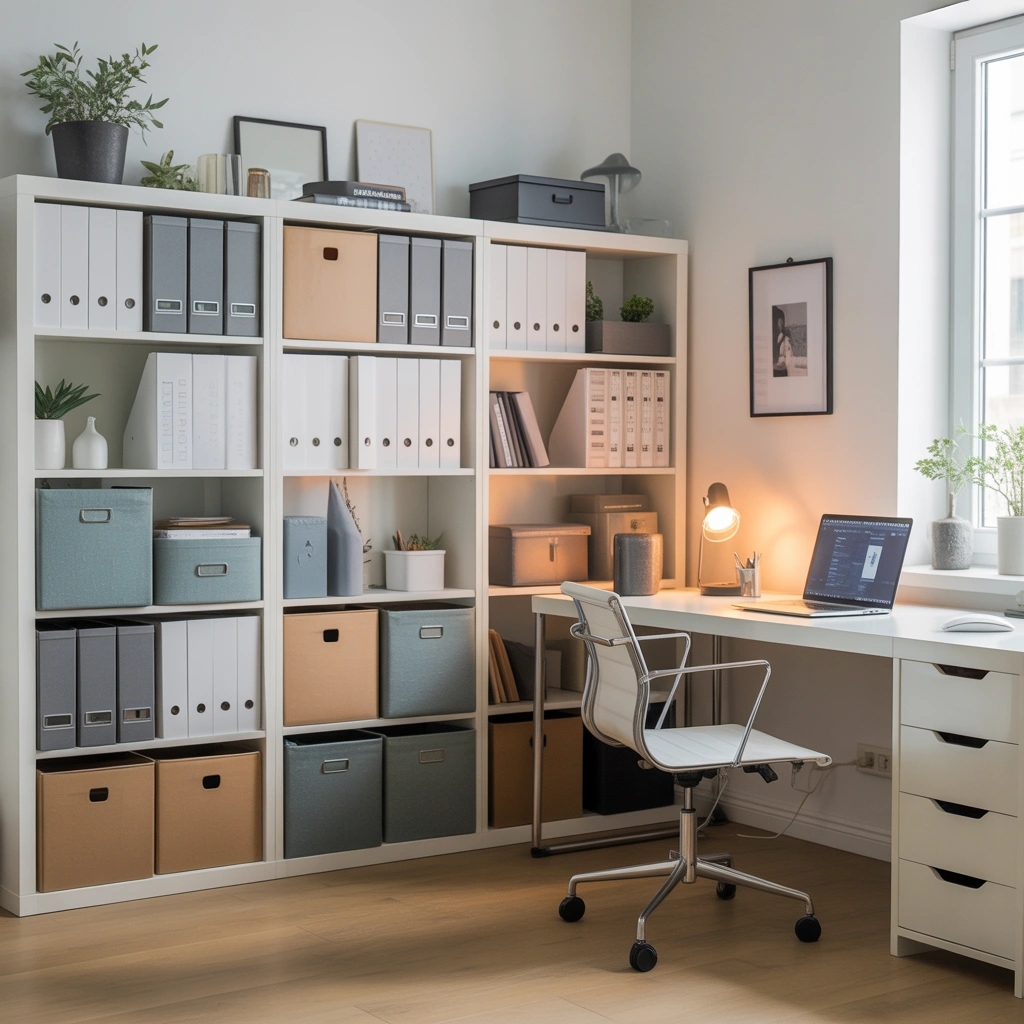
The IKEA KALLAX shelf is one of the easiest pieces to include in a home office because its cube design works with almost every decorating style.
I especially like KALLAX storage when I need a mixture of open and hidden storage.
Some cubes can display books, plants, baskets, or decorative objects, while others can hold storage inserts or boxes for paperwork and office supplies.
This creates a balance between practicality and decoration.
You can place a KALLAX unit beside your desk for easy access or behind your office chair to create an organized background for video meetings.
If your office is part of a larger room, a taller KALLAX shelf can even act as a room divider. It gives your workspace a little visual separation without completely closing off the room.
To make the shelf look less cluttered, I suggest limiting the number of decorative items. Instead of filling every cube, leave some open space so the arrangement can breathe.
5. Design an IKEA Home Office Around a Window
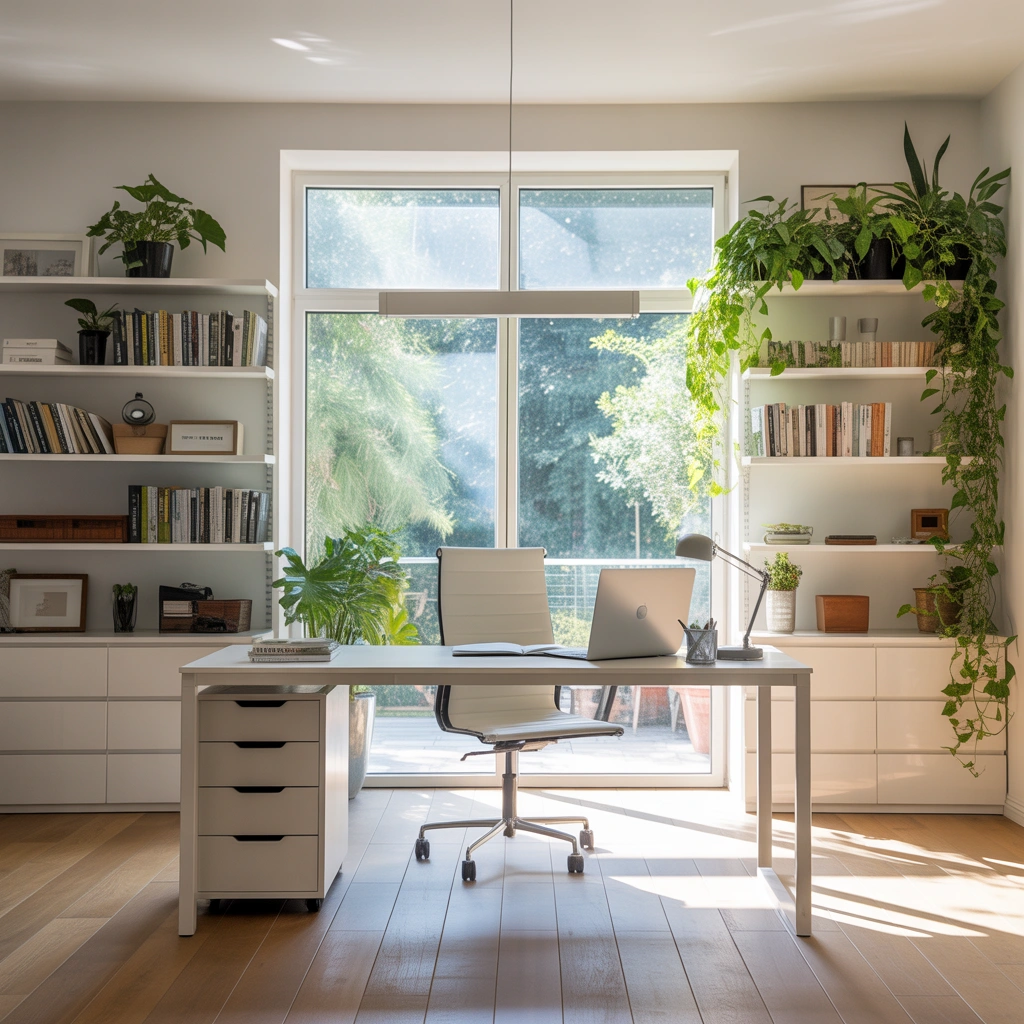
Natural light can completely change the way a workspace feels.
If possible, I like positioning a desk close to a window because daylight makes the room feel brighter and can reduce the need for artificial lighting during the day.
However, desk placement matters.
Putting the monitor directly in front of a bright window can sometimes create glare. Positioning the desk perpendicular to the window often works better because you still receive natural light without having it shine directly onto the screen.
Choose a simple IKEA desk that does not visually block the window.
You can then add lightweight curtains or blinds to control harsh sunlight when necessary.
A small plant on the windowsill can also bring some life into the office without using valuable desk space.
For me, a window-facing home office feels especially pleasant because there is something beyond the computer screen to look at during short breaks.
6. Create an IKEA Home Office With BILLY Bookcases
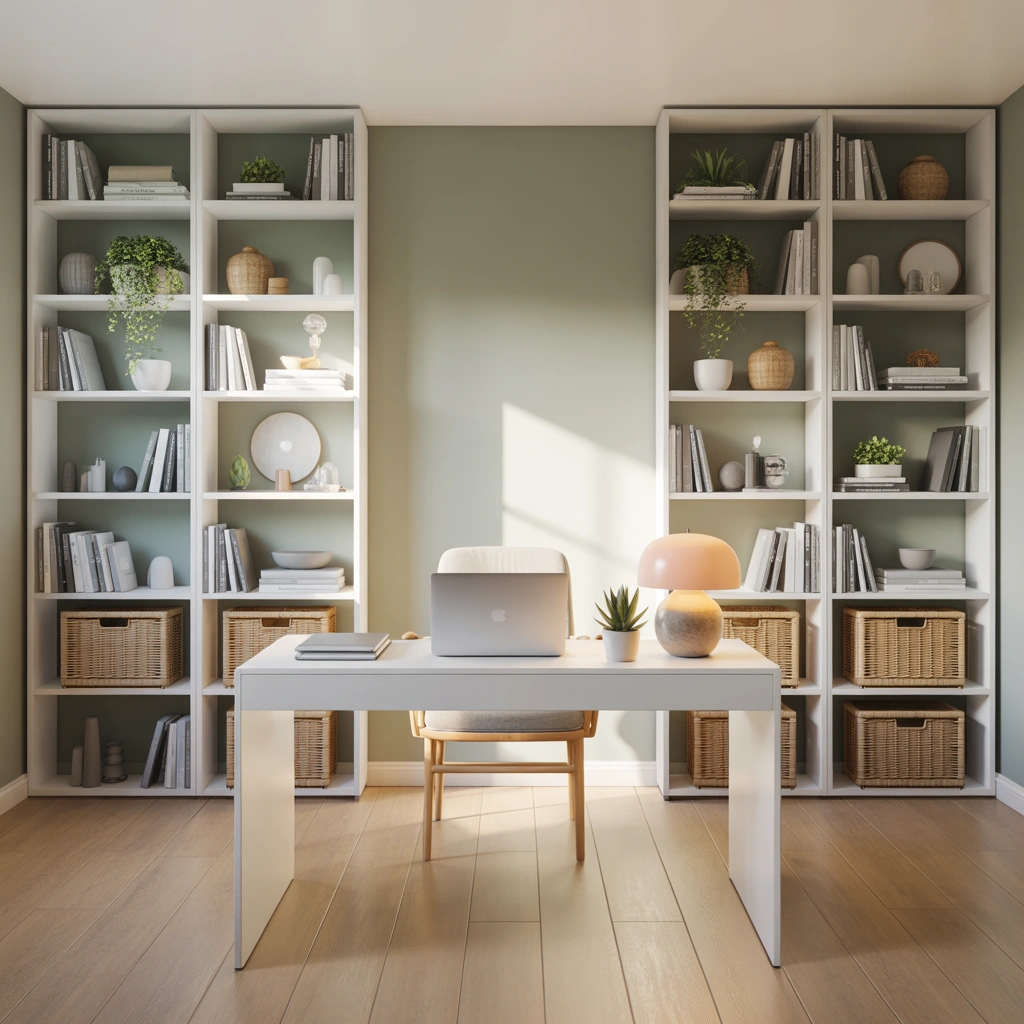
If you own a lot of books, documents, or work materials, IKEA BILLY bookcases can turn an ordinary office into something that feels like a personal library.
One option is placing two BILLY bookcases on either side of the desk. This creates a balanced layout and frames the workspace nicely.
Another option is covering an entire wall with bookcases and leaving space in the center for the desk.
The result can resemble a customized built-in office.
I would organize the shelves by mixing practical storage with decorative objects. Books can take up most of the space, while small plants, framed photographs, storage boxes, and artwork can break up large rows of books.
If you prefer a cleaner office, choose bookcases with doors for the lower sections. Files and supplies can stay hidden while the upper shelves remain open for display.
This setup works particularly well for writers, teachers, students, researchers, and anyone who regularly needs access to printed materials.
7. Use IKEA Pegboards for Vertical Office Organization
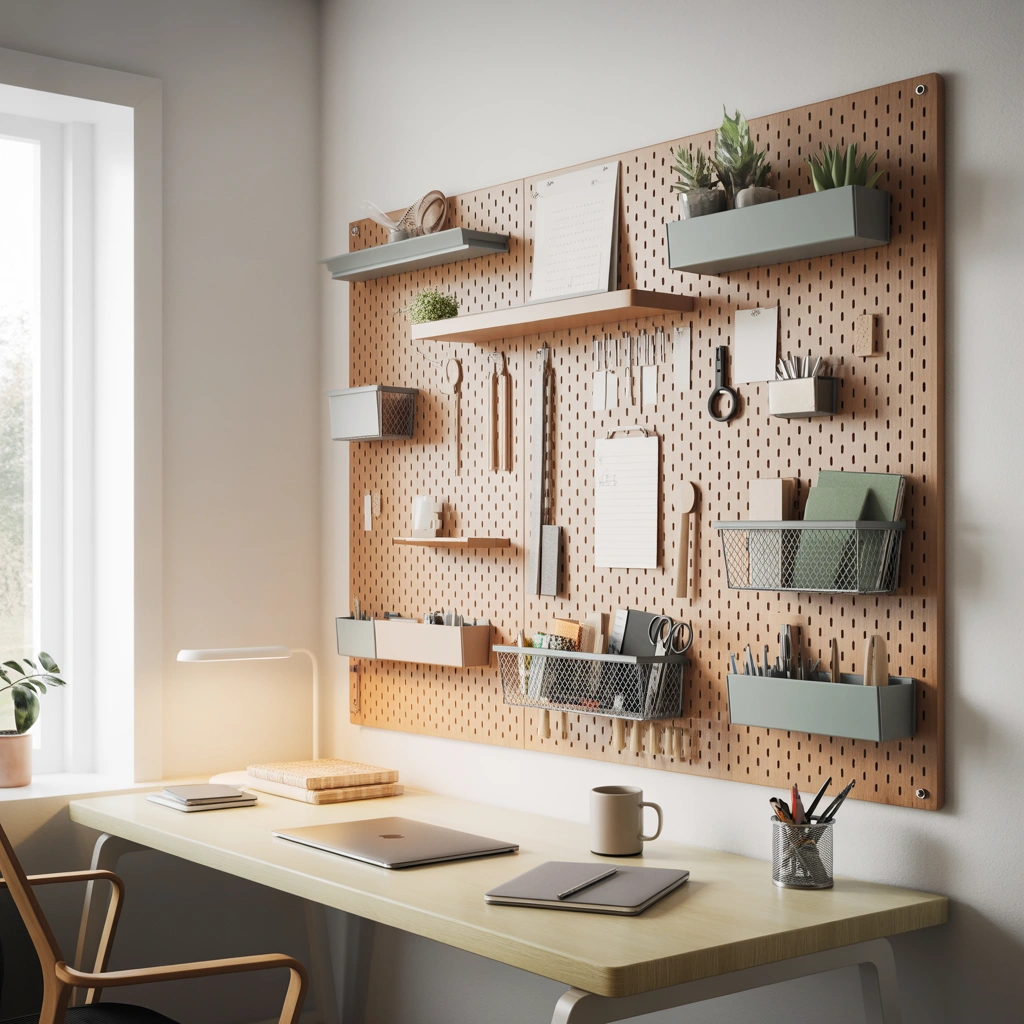
When desk space is limited, the wall can become one of the most useful parts of the office.
IKEA pegboard systems make it easy to organize small office items without covering the desk.
You can attach containers for pens, hooks for headphones, clips for notes, small shelves for notebooks, or holders for charging cables.
What I enjoy about pegboards is how easy they are to change. If your work routine changes, you can rearrange the accessories instead of buying completely new storage furniture.
Mount the pegboard directly above or beside the desk so frequently used items remain within reach.
For a cleaner appearance, avoid filling every available section. A pegboard should help reduce visual clutter rather than simply move clutter from the desk to the wall.
Keeping similar items grouped together can make the organization system easier to maintain.
8. Create a Minimal Scandinavian IKEA Home Office
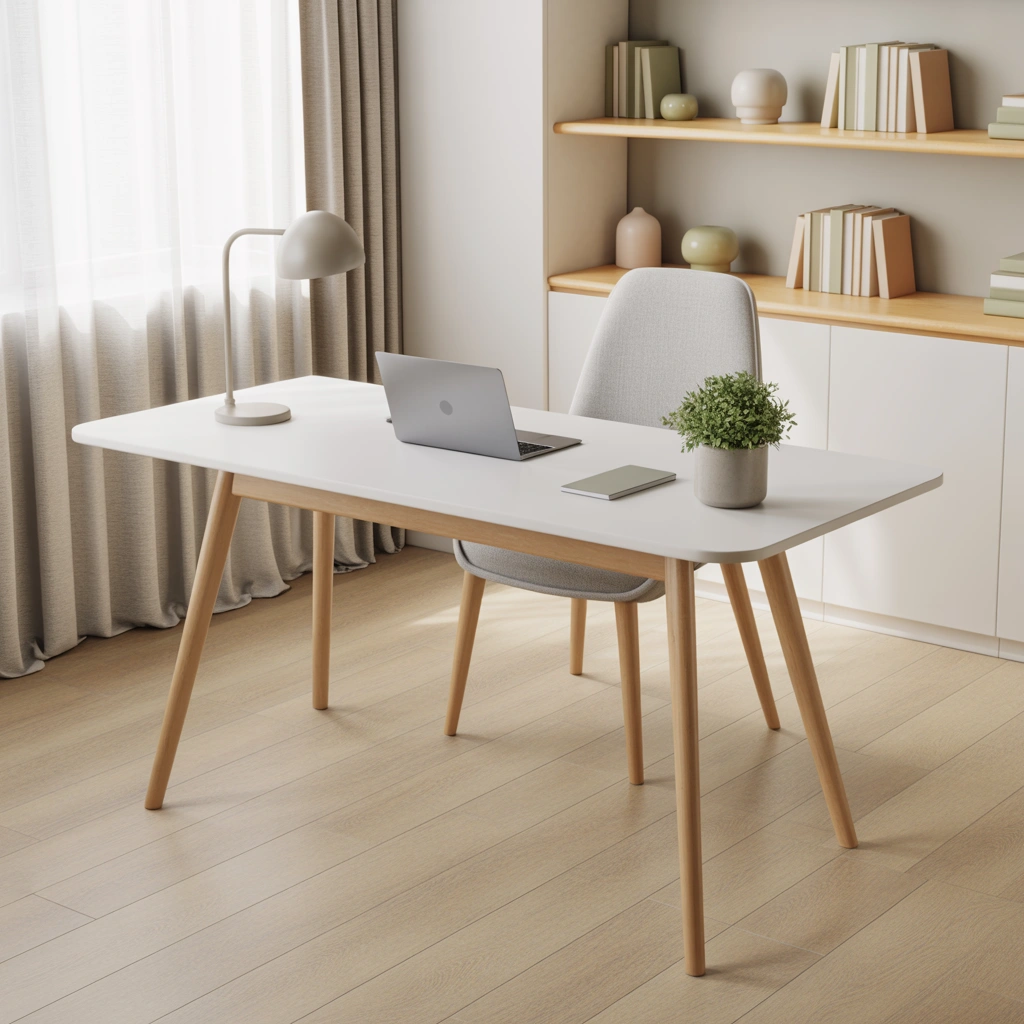
Sometimes the simplest home offices are the most relaxing.
A Scandinavian-inspired IKEA home office usually focuses on light colors, natural materials, clean lines, and minimal decoration.
Start with a simple white or light-wood desk.
Instead of adding several storage units, include only what you actually need. A slim drawer cabinet, one wall shelf, and a small desk organizer may be enough.
Keep the color palette calm. White, beige, light gray, soft brown, and natural wood work beautifully together.
I also like introducing a little greenery through one or two indoor plants.
The goal is not to make the office completely empty. It should simply feel intentional.
Choose a few objects that make you happy, such as a framed print, ceramic cup, small plant, or favorite notebook.
When unnecessary items are removed from the workspace, the desk feels calmer and concentration can become easier.
9. Build a Hidden IKEA Office Inside a Cabinet
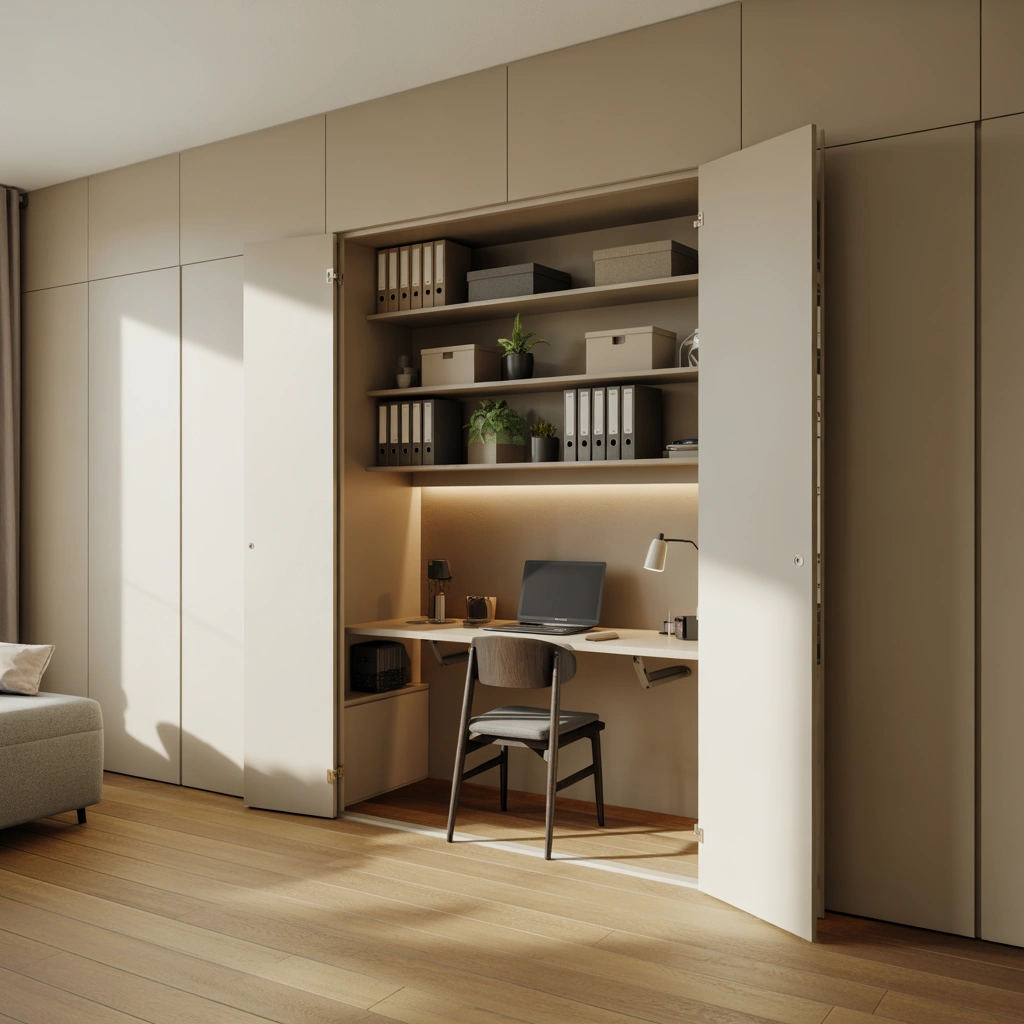
Not everyone wants their workspace visible all day.
If your office is located in a living room, bedroom, or dining area, consider creating a hidden workstation inside or around a cabinet system.
A cabinet can store your printer, documents, charging equipment, and office supplies behind closed doors.
A nearby compact desk provides the working surface.
At the end of the day, you can close the cabinets, put away your laptop, and visually return the room to its original purpose.
This idea is particularly useful in apartments where rooms have multiple functions.
I find hidden storage helpful because seeing unfinished work after office hours can make it harder to mentally switch off.
Even if you cannot hide the entire desk, simply storing most work materials behind cabinet doors can make the room feel much calmer in the evening.
10. Create an IKEA Home Office for Two People
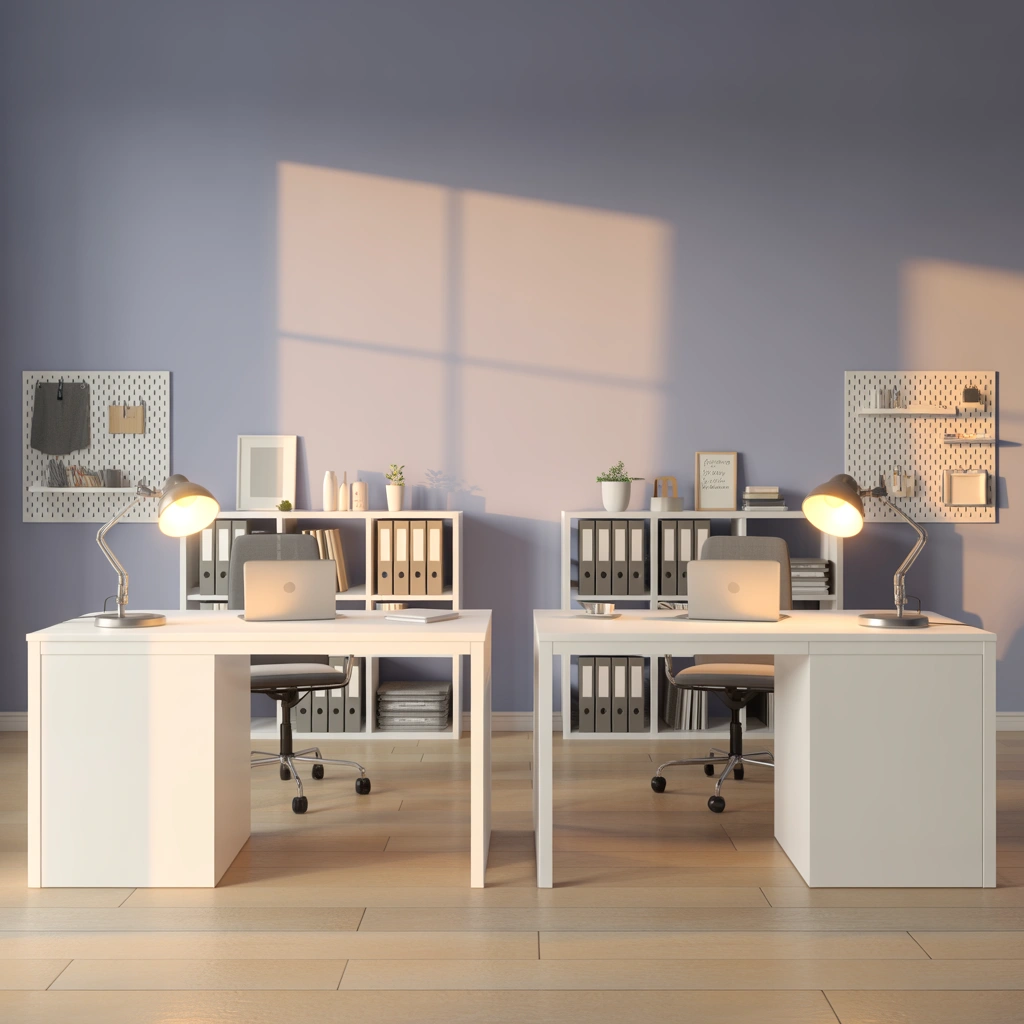
Sharing a home office requires a little more planning because both people need enough workspace and storage.
A long IKEA tabletop can create two workstations without requiring two separate desks.
Place a drawer unit between the seating positions to create a natural division. Each person can then have their own storage area underneath.
If both people attend video calls, consider positioning the workstations slightly apart rather than sitting directly beside each other.
Bookshelves or small storage cabinets can also create visual separation.
Lighting is another important consideration. Instead of relying on one central desk lamp, give each workstation its own adjustable light.
I also recommend defining personal storage areas. When every drawer and shelf belongs to someone specific, shared offices tend to stay much more organized.
A two-person IKEA home office can look very attractive when both sides use similar furniture while still allowing each person to personalize their desk.
11. Add IKEA Floating Shelves Above Your Desk
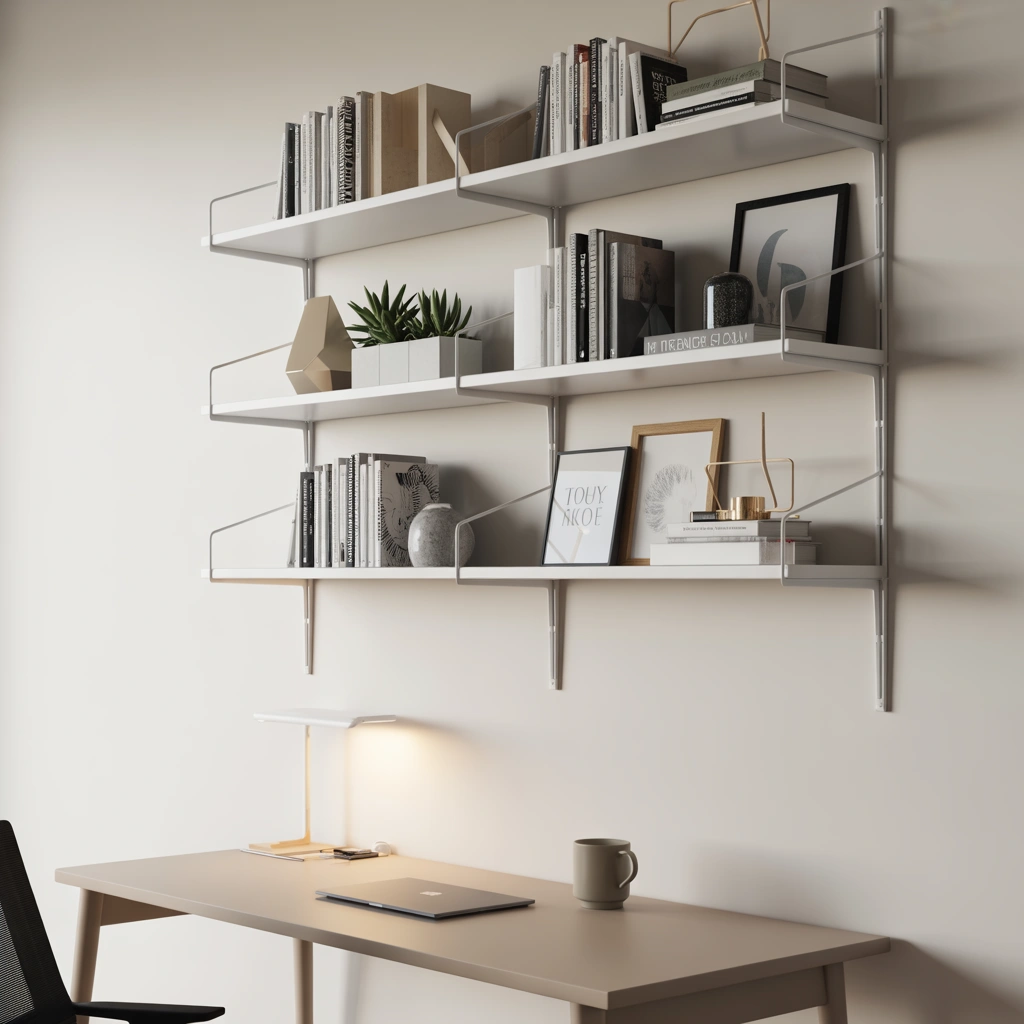
Floating shelves are one of the easiest ways to add storage without making a small office feel crowded.
I especially like installing one or two shelves above the desk.
The lowest shelf can hold frequently used items such as notebooks, reference books, or office containers. The upper shelf can be more decorative with artwork, plants, or framed photos.
The key is choosing the right height.
Shelves placed too low can make the workspace feel cramped, while shelves that are too high become difficult to reach.
Before installing them, sit at your desk and imagine where your computer monitor and desk lamp will be positioned.
You can also use matching storage boxes on the shelves to hide smaller items.
One simple rule I follow is to combine useful objects with decorative ones. If every shelf contains only office supplies, the area can feel overly functional. If everything is decorative, you lose valuable storage.
A combination of both creates a home office that feels practical and lived-in.
12. Create a Cozy IKEA Bedroom Office
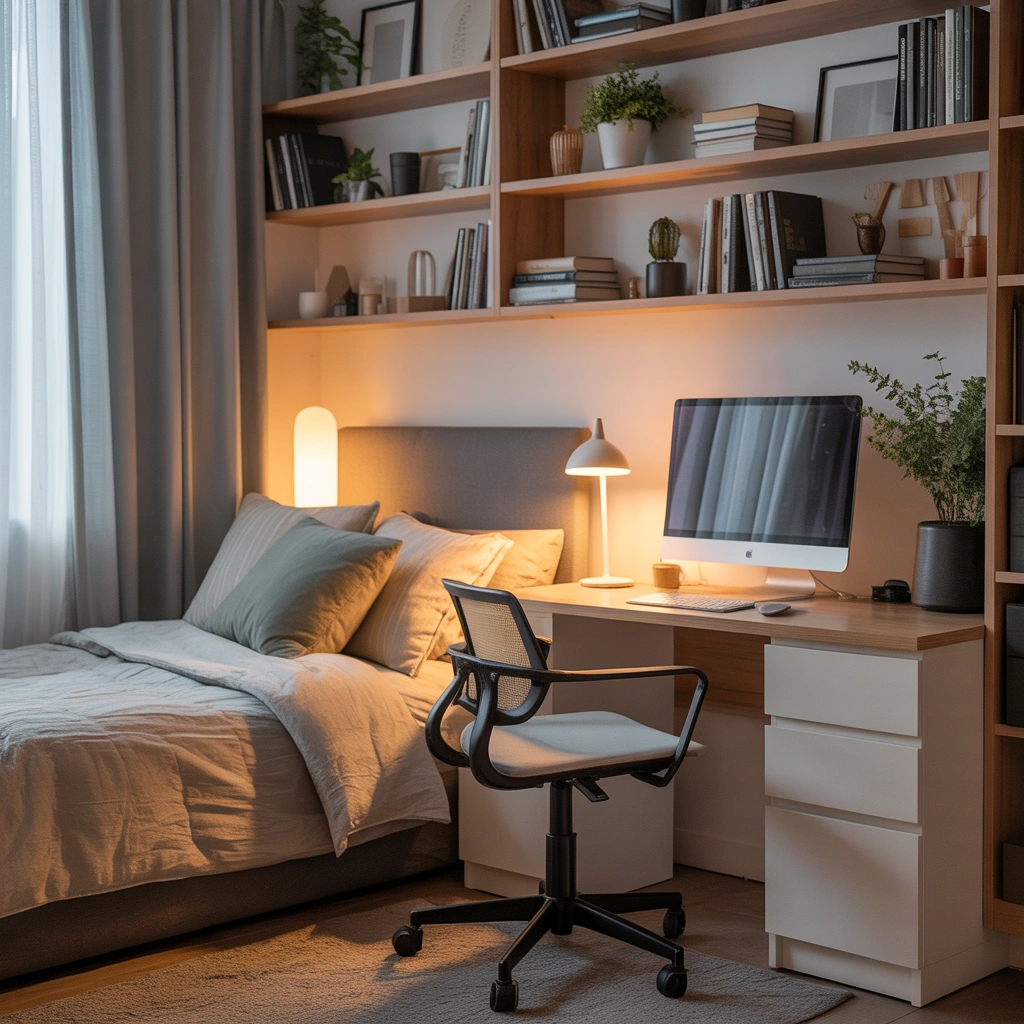
Sometimes the bedroom is the only quiet place available for working from home.
A bedroom office can work surprisingly well when the workspace visually blends with the bedroom furniture.
Choose a compact desk instead of an oversized executive-style workstation.
Place it against an unused wall or near a window, keeping enough distance from the bed so each area still feels separate.
Color coordination helps enormously.
If your bedroom furniture is light wood, select an IKEA desk with a similar finish. If the room is mostly white, a simple white desk can almost disappear into the background.
I would also avoid storing too many visible files or office supplies in a bedroom. Closed drawers and boxes make it easier to hide work-related items when the day is finished.
Adding a warm desk lamp can make the workspace feel softer and more appropriate for a bedroom compared with harsh office lighting.
13. Create an IKEA Gaming and Home Office Combination
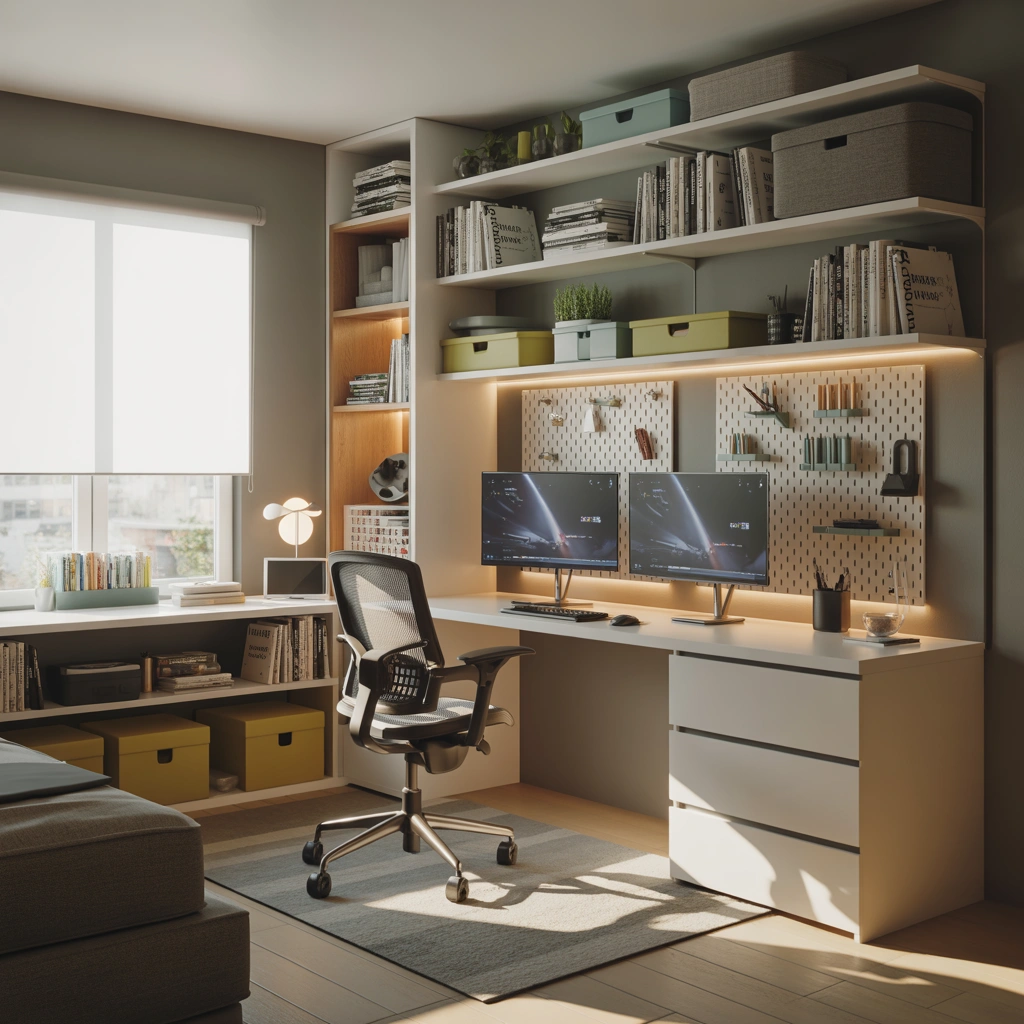
Many people use one desk for both working and gaming.
The challenge is creating enough space for multiple monitors, accessories, controllers, keyboards, and work equipment without making the desk look chaotic.
A larger IKEA desk or desktop system works well because it provides plenty of surface area.
Consider using drawer units underneath for controllers, cables, headphones, and other equipment.
Cable organization becomes especially important in this type of setup.
Run power cables behind the desk and use cable management trays or holders to keep them away from the floor.
I would divide the desk into clear zones. The center can remain focused on the monitor setup, while one side holds work notebooks and the other contains gaming accessories.
With a little organization, the same desk can comfortably support work during the day and entertainment in the evening.
14. Use IKEA Cabinets to Hide Your Printer and Office Equipment
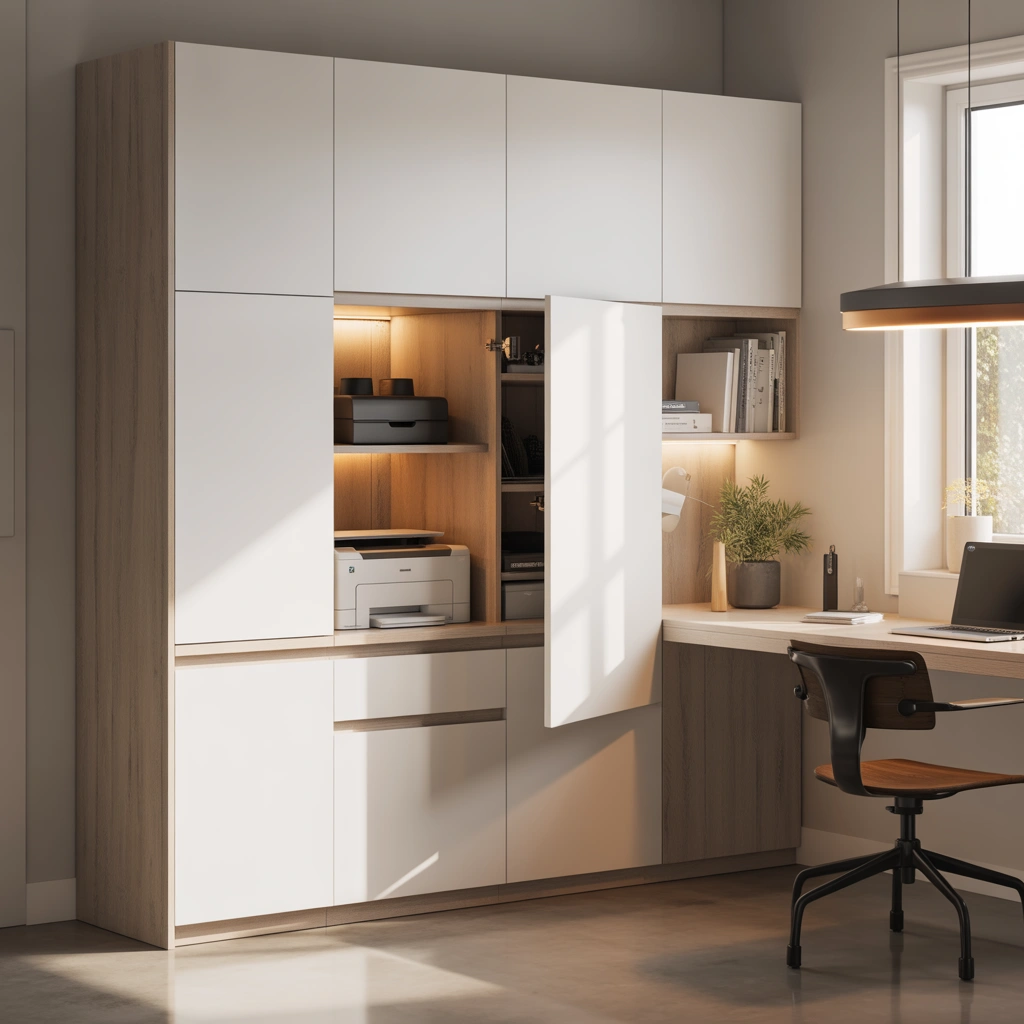
Printers are useful, but they are rarely the most attractive part of a home office.
Instead of keeping large office equipment directly on the desk, use an IKEA cabinet, shelf, or storage unit nearby.
A printer can sit inside an open cabinet section or on a pull-out shelf, depending on the available space.
Paper, ink cartridges, envelopes, and stationery can be stored in the drawers or shelves below it.
This creates a small printing station separate from the main desk.
I prefer this arrangement because it keeps the main workspace focused on the things I use constantly.
The same approach works for scanners, shredders, charging stations, and other equipment.
If you choose closed storage, make sure frequently used devices remain easy to access and have sufficient ventilation when required.
15. Personalize Your IKEA Home Office With Decor
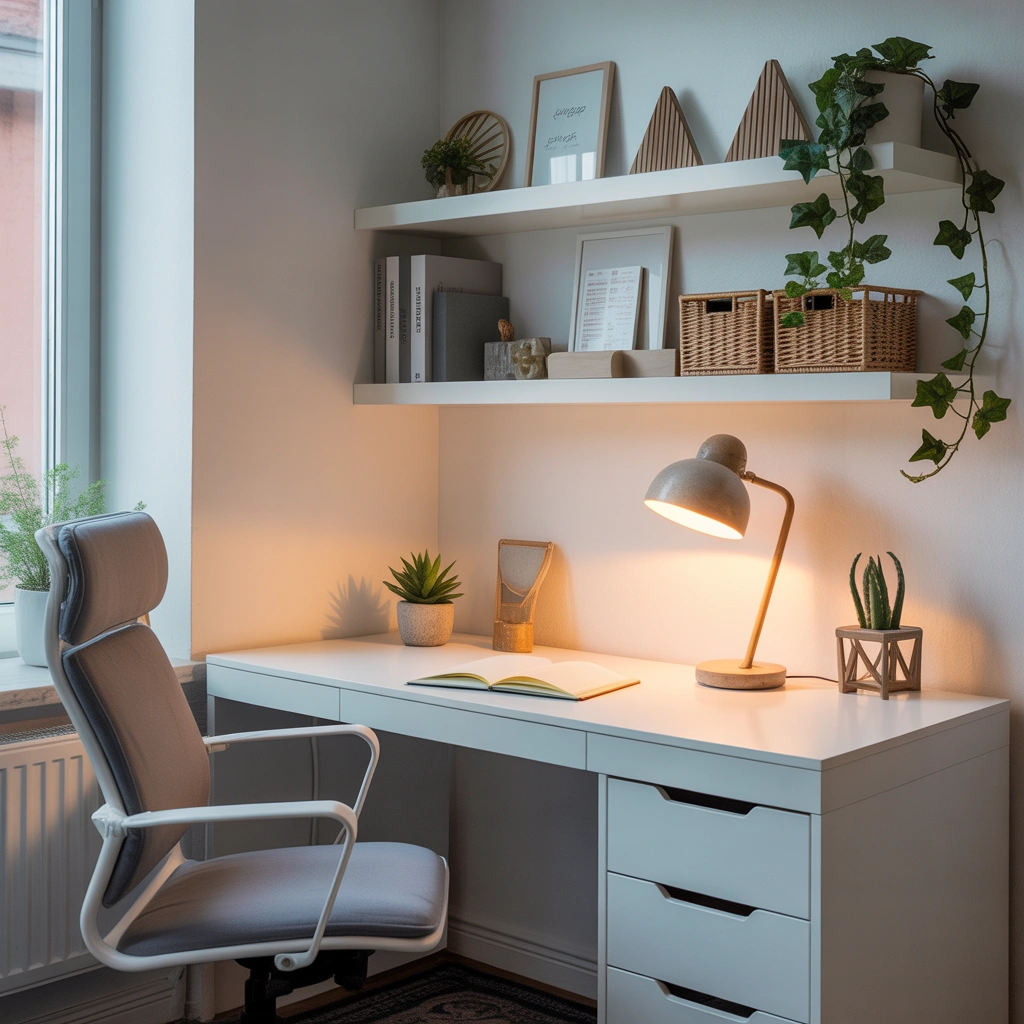
Furniture creates the structure of a workspace, but personal details are what make it feel like your own office.
Once the practical setup is finished, I like adding a few decorations that make the space more enjoyable.
A framed print above the desk can introduce color without taking up any working space.
Plants can soften the straight lines of office furniture and make the room feel more relaxed.
A comfortable rug can visually define the office area, especially when the workspace is part of a living room or bedroom.
You can also use attractive storage boxes, desk organizers, lamps, cork boards, and small decorative objects.
The important thing is not to overdecorate.
Your desk still needs enough empty surface area for actual work.
I usually prefer keeping one or two decorative objects on the desk while using shelves and walls for most of the personality.
This keeps the workspace interesting without creating unnecessary distraction.
How to Choose the Right IKEA Home Office Setup
Before buying office furniture, spend a little time thinking about how you actually work.
Someone who mainly uses a laptop has very different needs from someone who works with two monitors, a printer, paperwork, and several storage folders.
Start by measuring your available space carefully.
Measure the width of the wall, the depth available for the desk, and the amount of room needed for your chair.
Remember that you need enough space to move the chair backward comfortably.
Next, think about storage.
If you rarely use paper documents, you might need only one small drawer unit. However, if you work with files, books, samples, or equipment, investing in proper storage from the beginning can prevent the office from becoming cluttered later.
Lighting is another important factor.
Natural daylight is excellent, but you should also have a good desk lamp for darker days and evening work.
Finally, think about comfort.
A beautiful workspace is not very useful if the chair becomes uncomfortable after an hour or the desk is too shallow for your monitor.
Function should always come first. Once the practical foundation is right, you can focus on creating the style you want.
Tips for Making an IKEA Home Office Look More Expensive
One reason I enjoy using IKEA furniture is that relatively simple pieces can look surprisingly sophisticated when styled carefully.
The first thing I would focus on is consistency.
Try to repeat the same wood finish, metal finish, or primary color throughout the room. When furniture pieces visually relate to one another, the space appears more intentional.
Cable management also makes a huge difference.
Even an expensive desk can look messy when several power cords are hanging underneath it. Hiding cables behind the desk or placing them inside cable trays immediately creates a cleaner appearance.
Another useful trick is leaving some empty space.
You do not need to fill every shelf or desktop corner. Negative space makes the office feel calmer and allows decorative pieces to stand out.
Lighting can also improve the overall atmosphere. Combine practical task lighting with softer ambient lighting rather than relying entirely on one bright ceiling fixture.
Finally, consider adding a few higher-quality accessories such as a good desk mat, ceramic organizer, framed artwork, or attractive plant pot.
Small details can make simple IKEA furniture feel much more personalized.
How to Keep Your IKEA Home Office Organized
Creating an organized office is one thing. Keeping it organized is another.
I have found that the easiest organization systems are the ones that require the least effort.
Keep frequently used items close to your desk. Things you use only occasionally can go inside cabinets or on higher shelves.
Assign specific locations for cables, notebooks, chargers, documents, and office supplies instead of placing them wherever there happens to be space.
Drawer organizers can prevent small items from turning into a messy pile.
Storage boxes are also useful for grouping similar items together.
At the end of the workday, spend a couple of minutes clearing the main desk surface. Put pens back into containers, return papers to their folders, and move empty cups or dishes out of the office.
This small habit can make starting work the next morning much more pleasant.
Final Thoughts on IKEA Home Office Ideas
Creating a great home office does not necessarily require a huge room or expensive custom furniture. Sometimes the smartest solution is simply choosing flexible furniture and using the available space more thoughtfully.
These IKEA home office ideas can work in bedrooms, living rooms, dedicated offices, apartments, shared workspaces, and even small corners.
You might create a large desk using drawer units, install floating shelves for vertical storage, build a library-style office with BILLY bookcases, organize supplies on a pegboard, or keep everything simple with a minimalist Scandinavian setup.
The most important thing is designing your workspace around the way you actually work.
For me, the best home offices are not the ones that look perfect in photographs. They are the ones where everything has a purpose, the chair feels comfortable, supplies are easy to find, and sitting down to work feels natural.
Start with the practical pieces you need most. Add storage where clutter normally collects. Then introduce lighting, plants, artwork, and personal details gradually.
With a little planning, IKEA furniture can help you turn almost any part of your home into a comfortable, organized, and stylish workspace that supports both productivity and everyday living.
