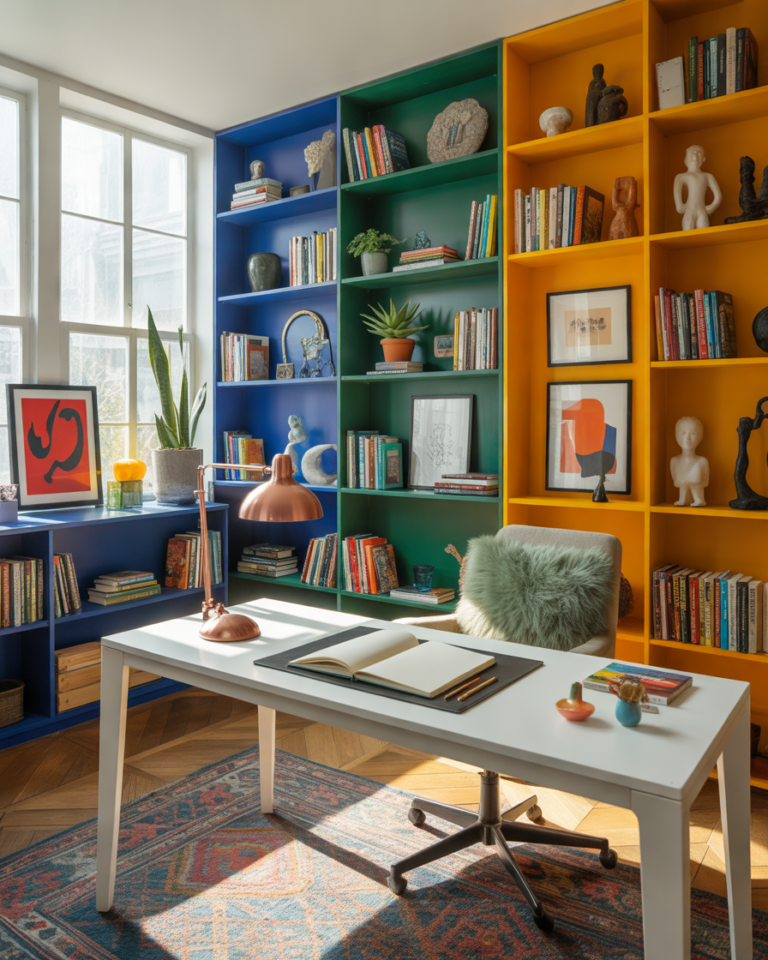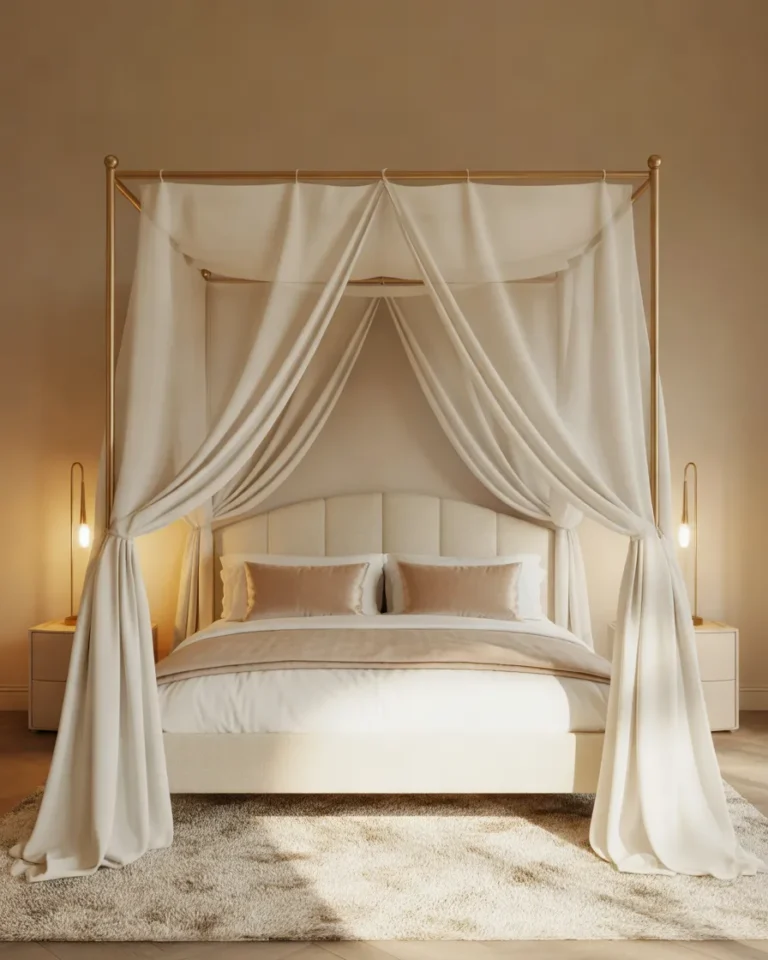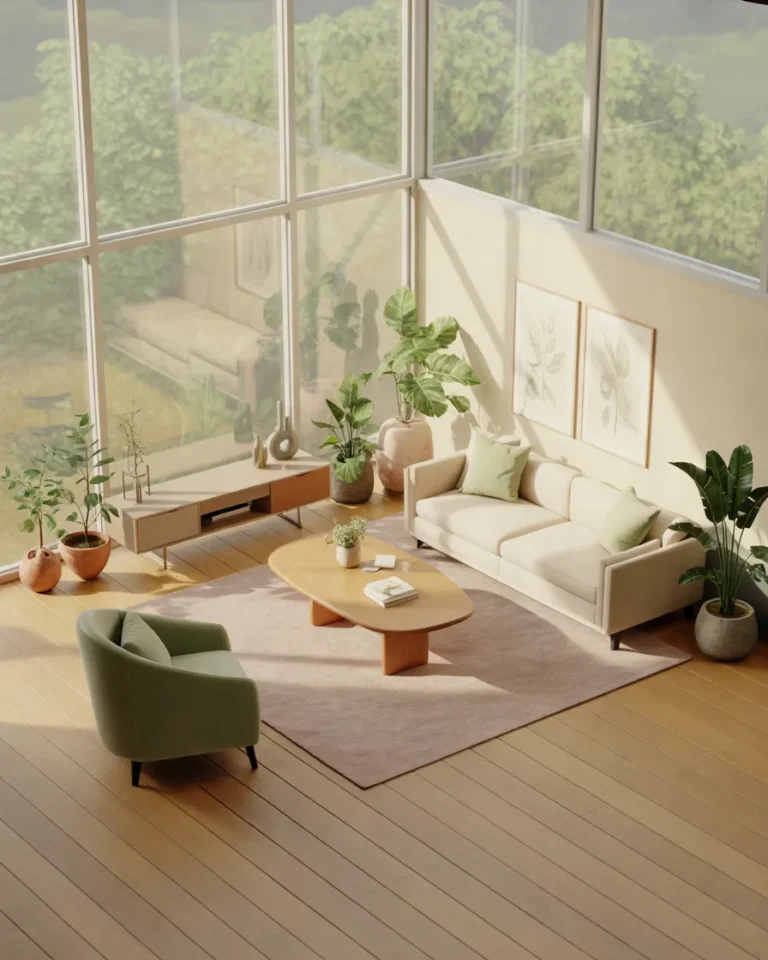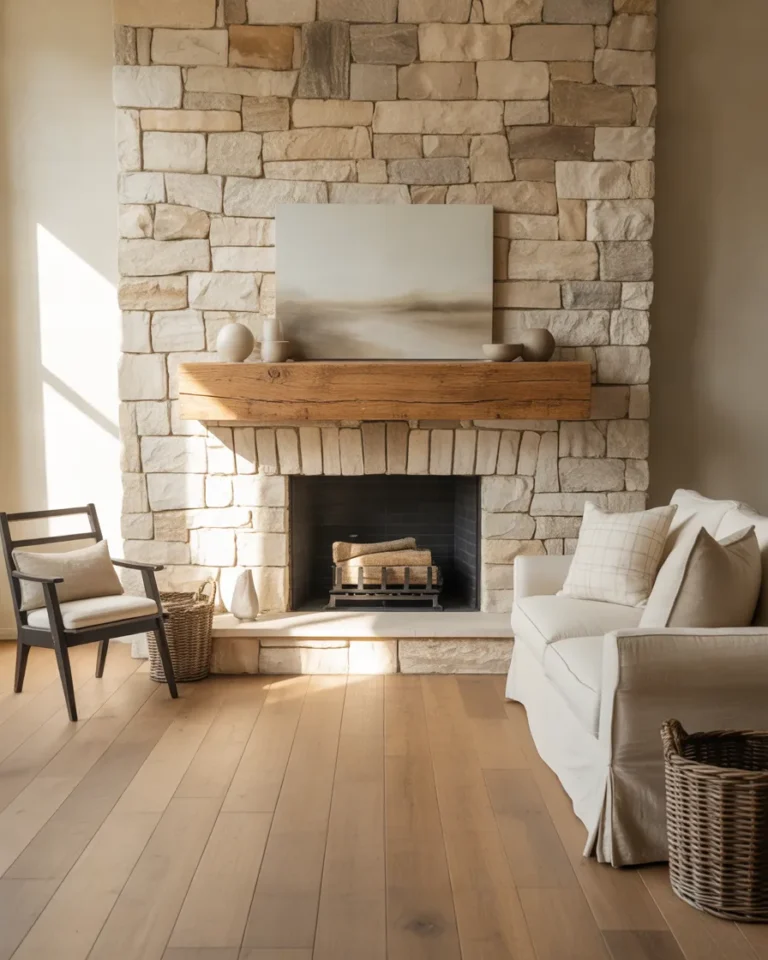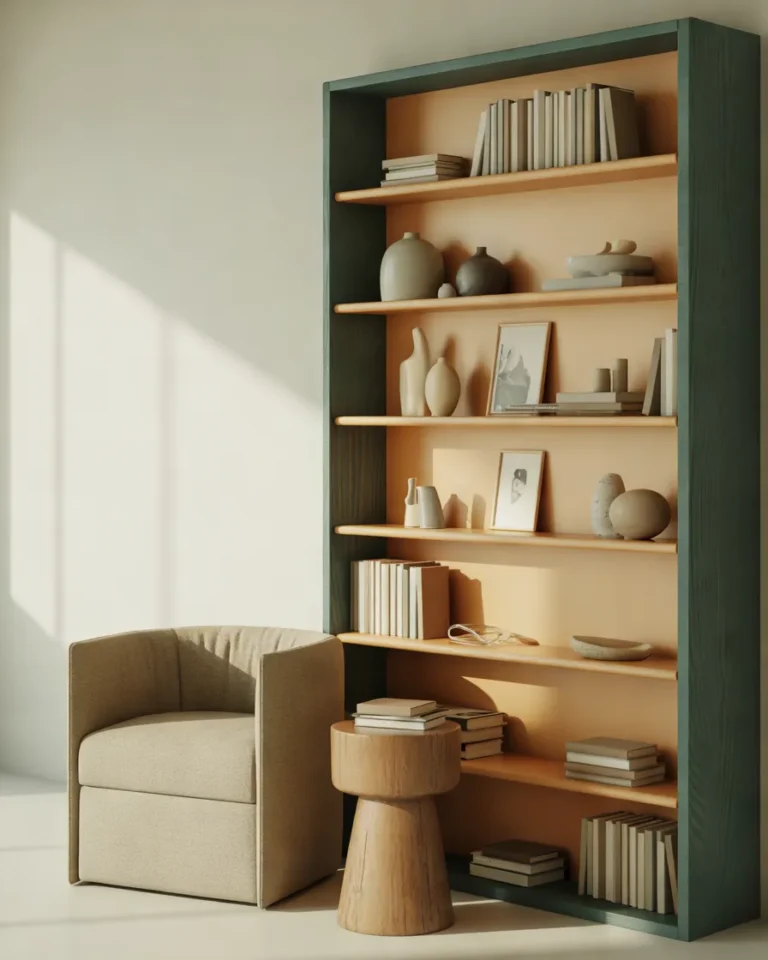
A home office does not need expensive furniture, elaborate decorations, or an entire room to look beautiful. Sometimes, a simple desk, a comfortable chair, good lighting, and a thoughtfully arranged space are all you need to create a workspace that feels welcoming and functional. That is what makes minimalist home office design so appealing. It focuses on keeping things simple while making every element count.
Personally, I love how a minimalist workspace can make even an ordinary corner of the house feel more organized and inviting. Soft neutral colors, natural wood finishes, uncluttered surfaces, and practical storage solutions can completely change the atmosphere of a room. The best part is that you do not have to sacrifice comfort or personality to achieve this look.
Whether you work from home full-time, manage a small business, study, or simply need a quiet place for personal projects, these 13 minimalist home office ideas will help you create a beautiful workspace. From compact desk arrangements to elegant Scandinavian interiors, there are plenty of ways to design an office that suits your space, lifestyle, and everyday needs.
1. Create a Bright Minimalist Home Office Near a Window
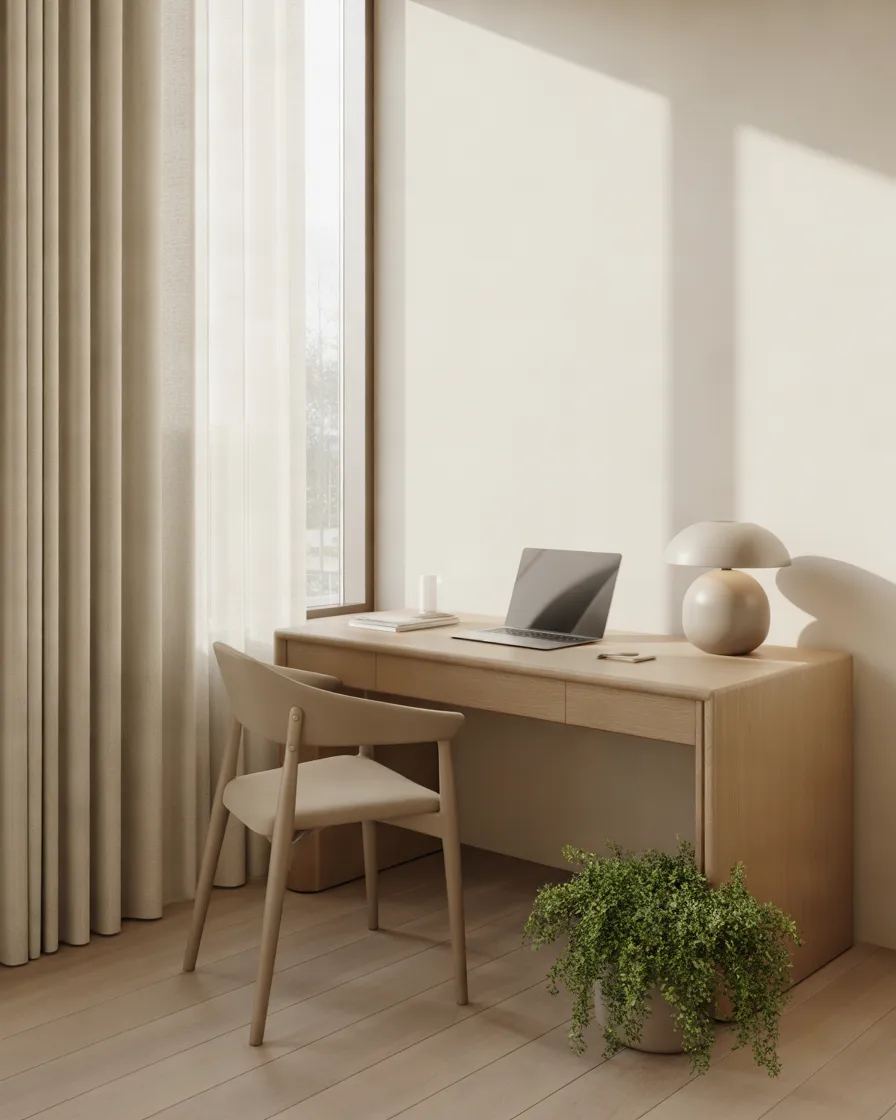
Natural light can make a tremendous difference in the appearance of a home office. Instead of placing your desk against a dark wall, consider arranging your workspace near a window. This simple design decision allows daylight to brighten the room and makes the entire environment feel more open and comfortable.
For furniture, choose a straightforward wooden or white desk with clean edges. Pair it with a comfortable upholstered office chair in beige, cream, or light gray. Keep the desktop relatively clear, with just a laptop, a small desk lamp, and perhaps a notebook or pen holder. A simple roller blind or lightweight curtain can provide privacy without blocking too much sunlight.
I particularly like this arrangement because it makes a small office feel considerably more spacious. You can also add a small indoor plant near the window to introduce a natural touch without overwhelming the design. If possible, position your monitor to avoid direct sunlight and screen glare.
2. Choose a Warm Wood Desk for a Natural Minimalist Look
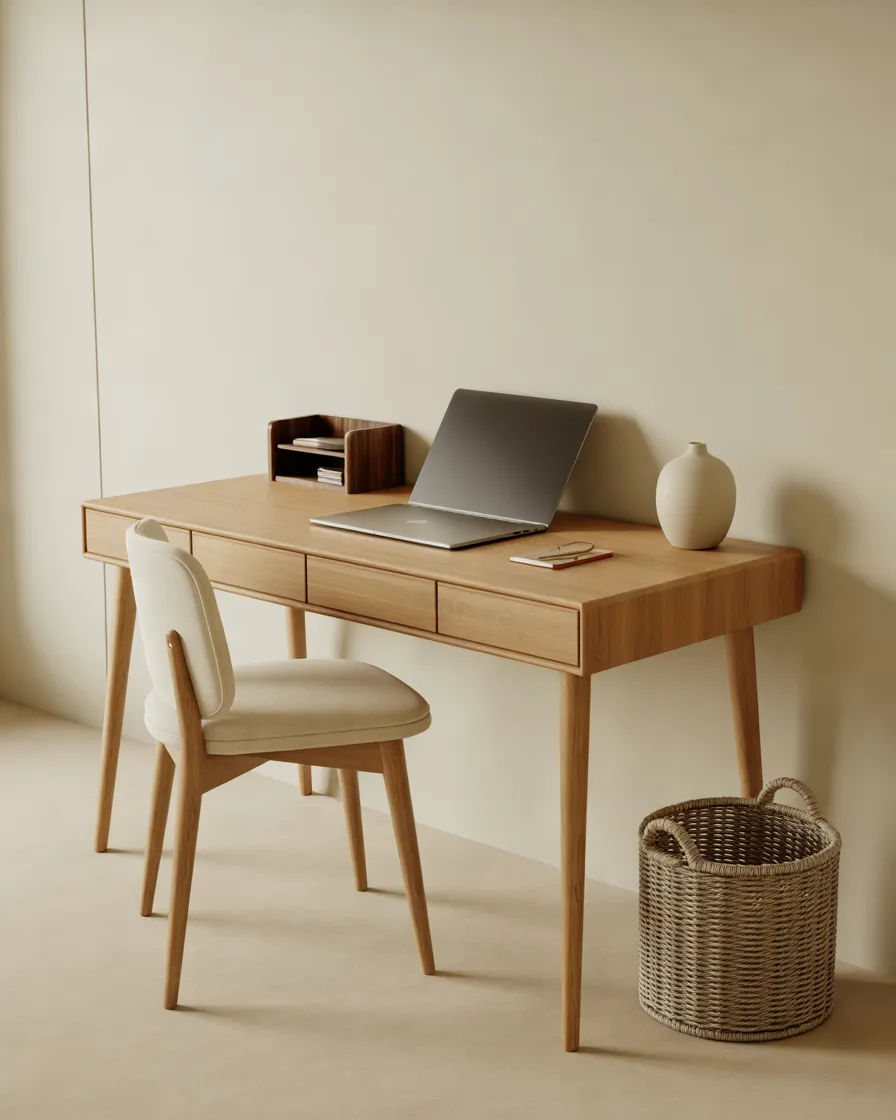
A wooden desk is one of the easiest ways to make a minimalist home office feel warm rather than cold or overly plain. Natural wood introduces texture and character while maintaining the simplicity that defines minimalist interiors. Light oak, ash, maple, and walnut are particularly attractive options.
You do not need a large executive desk to achieve this look. A medium-sized wooden desk with a simple rectangular top and slim legs can provide enough room for everyday work. Pair it with a neutral office chair and keep the remaining furniture understated. White walls, beige accessories, and soft lighting work beautifully alongside natural wood.
For an additional layer of warmth, consider adding a woven storage basket underneath the desk or a small wooden shelf above it. These details make the office feel thoughtfully decorated without introducing unnecessary clutter.
One thing I would avoid is mixing too many wood finishes in a small space. Choosing one dominant wood tone creates a more consistent and balanced appearance.
3. Design a Small Minimalist Home Office in an Unused Corner
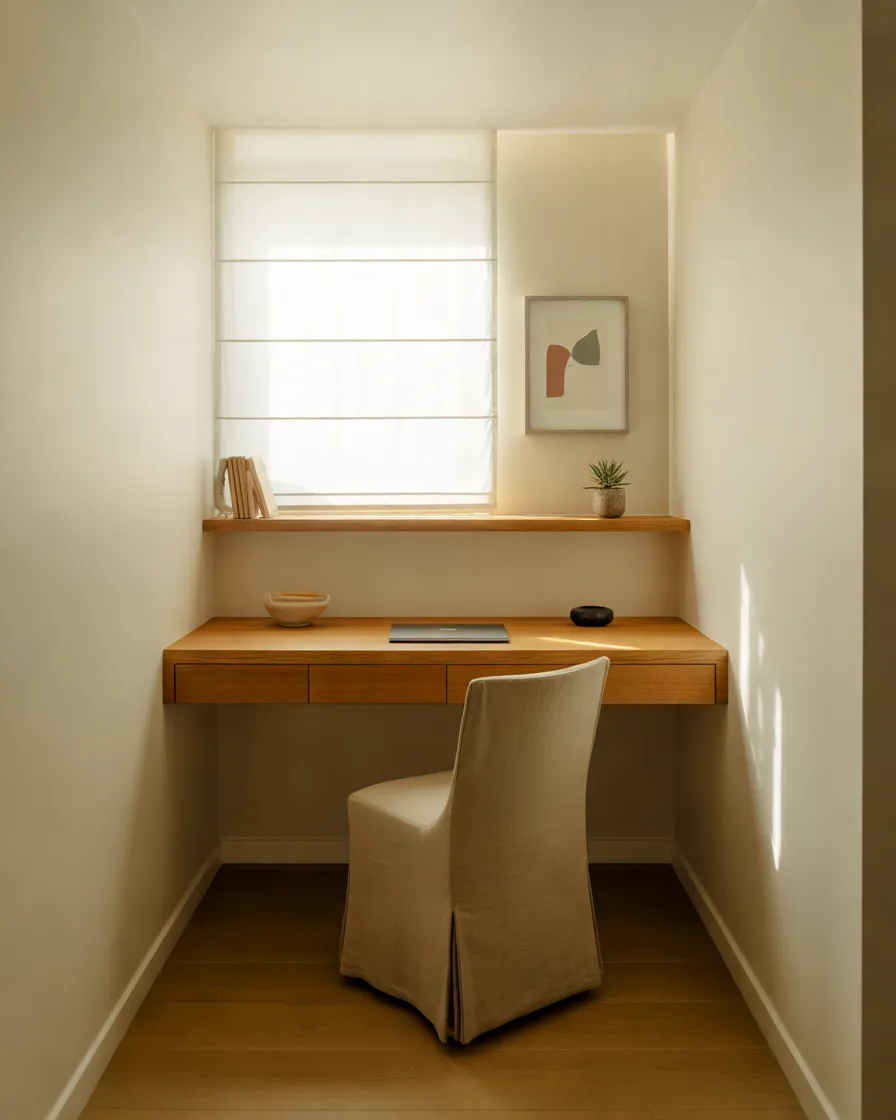
Not everyone has a separate room available for a home office. Fortunately, an unused corner in a bedroom, living room, or hallway can become a surprisingly practical workspace. The key is choosing furniture that fits the available dimensions instead of trying to squeeze a full-sized office setup into a small area.
Start with a narrow desk that provides enough space for your laptop, keyboard, and everyday essentials. A wall-mounted desk or a compact writing table can work especially well. Add a slim chair that can slide underneath the desk when it is not being used. This keeps the surrounding area open and makes the arrangement look less crowded.
For decoration, choose a small framed print, a minimal wall clock, or a single floating shelf. Avoid filling every empty section with accessories. A light-colored wall and a simple rug can help visually separate the workspace from the rest of the room.
The beauty of this approach is that it allows you to create a dedicated working area without changing your entire home.
4. Use an All-White Color Palette for a Clean Workspace
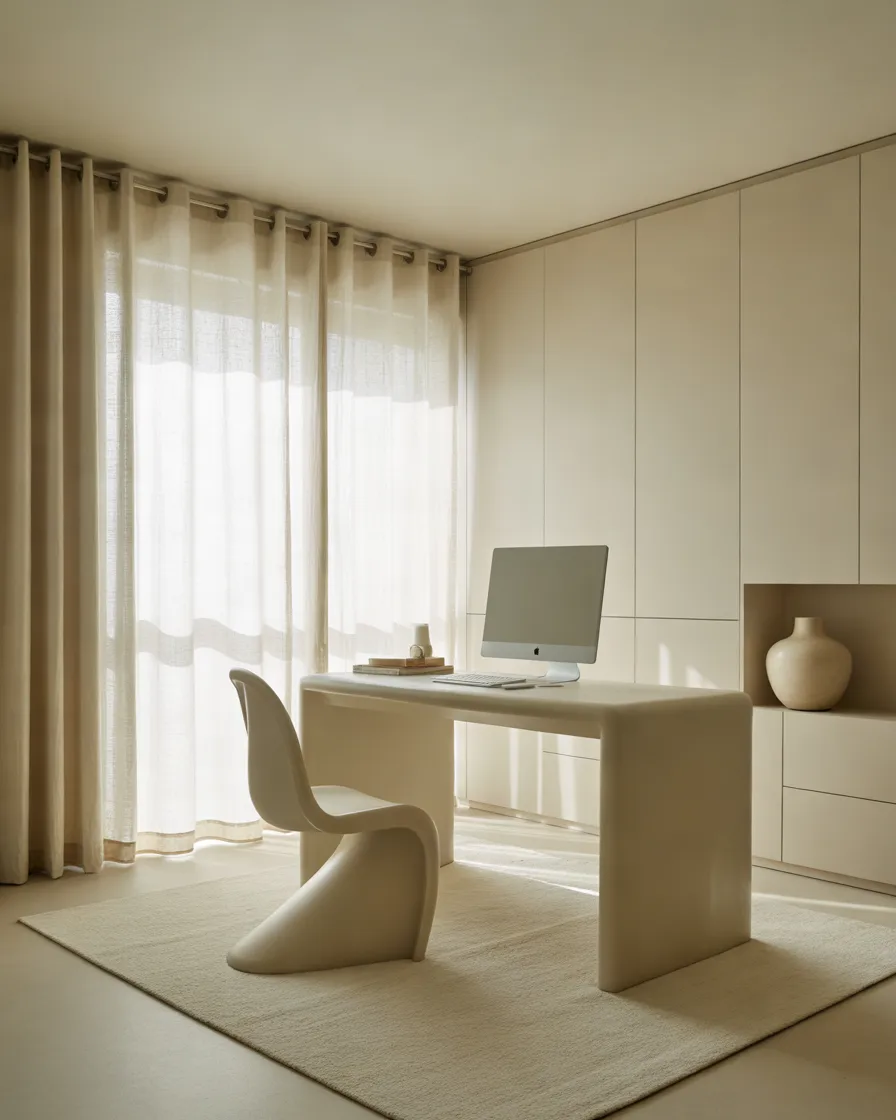
An all-white home office is a timeless option for anyone who enjoys a bright, simple, and uncluttered interior. White reflects natural light and can make even a relatively small room appear more spacious. It also provides a neutral background that allows your furniture and accessories to blend together naturally.
Start with a white desk, white storage cabinets, and light-colored walls. Rather than choosing furniture with elaborate detailing, look for smooth surfaces, straight lines, and minimal hardware. A white ergonomic chair or a soft cream alternative can complete the arrangement.
However, an entirely white room can sometimes feel flat. To avoid this, introduce different textures instead of adding lots of contrasting colors. A textured rug, linen curtains, a matte ceramic vase, or a subtle woven basket can provide visual interest while maintaining the overall aesthetic.
I would also recommend using warm white lighting rather than harsh, cool lighting. It gives the office a softer appearance, especially during evenings when natural daylight is unavailable.
5. Install a Floating Desk to Save Floor Space
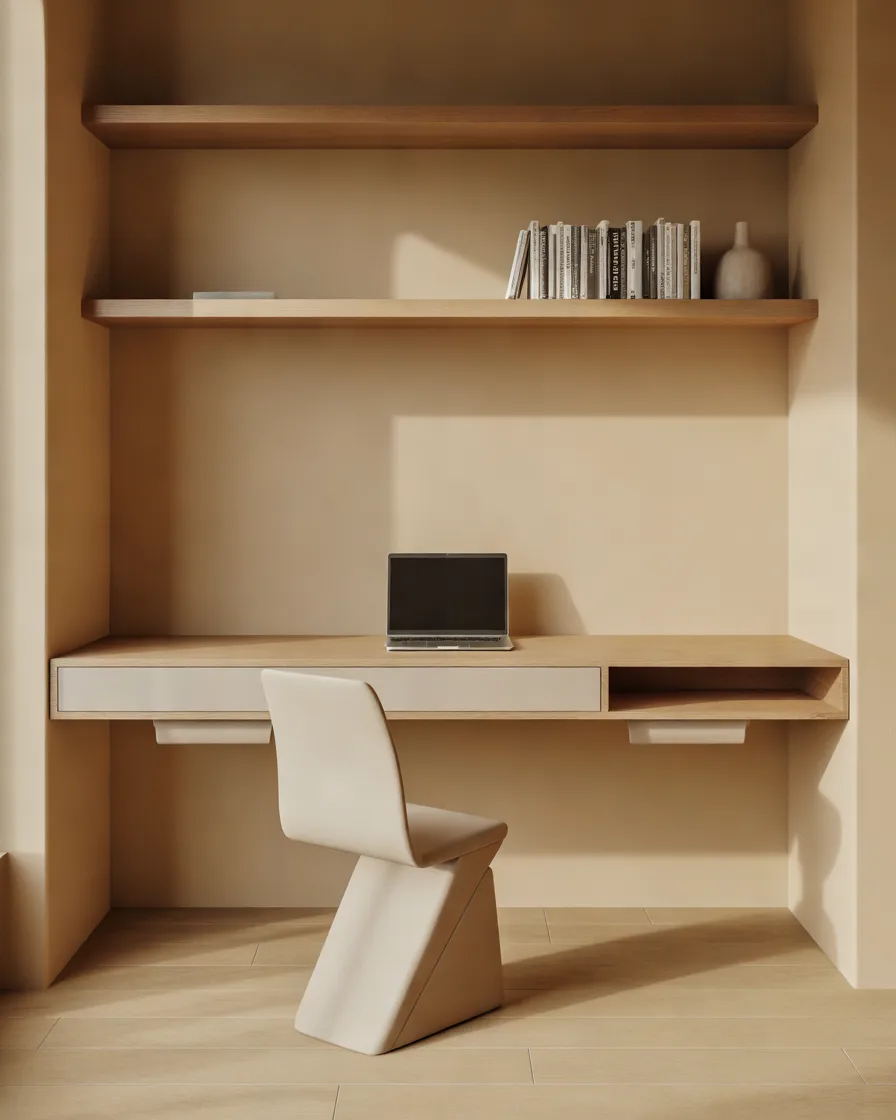
A floating desk is an excellent solution when you want a functional home office without making the room feel crowded. Since the desk attaches directly to the wall, it eliminates bulky legs and creates a more open appearance underneath. This can be especially useful in apartments, bedrooms, and compact home offices.
Choose a floating desk with a clean rectangular design and enough depth to accommodate your laptop, monitor, and keyboard. Some models also include a small drawer for storing chargers, stationery, and other essentials. If you need additional storage, install one or two matching shelves above the desk.
The most attractive approach is to keep the surrounding wall simple. A soft neutral paint color, one carefully selected artwork, or a subtle wall sconce can provide decoration without taking attention away from the workspace.
Before installation, check the wall construction and use suitable mounting hardware. The desk must be securely supported and capable of handling the weight of your equipment.
6. Keep Everything Organized with Concealed Storage
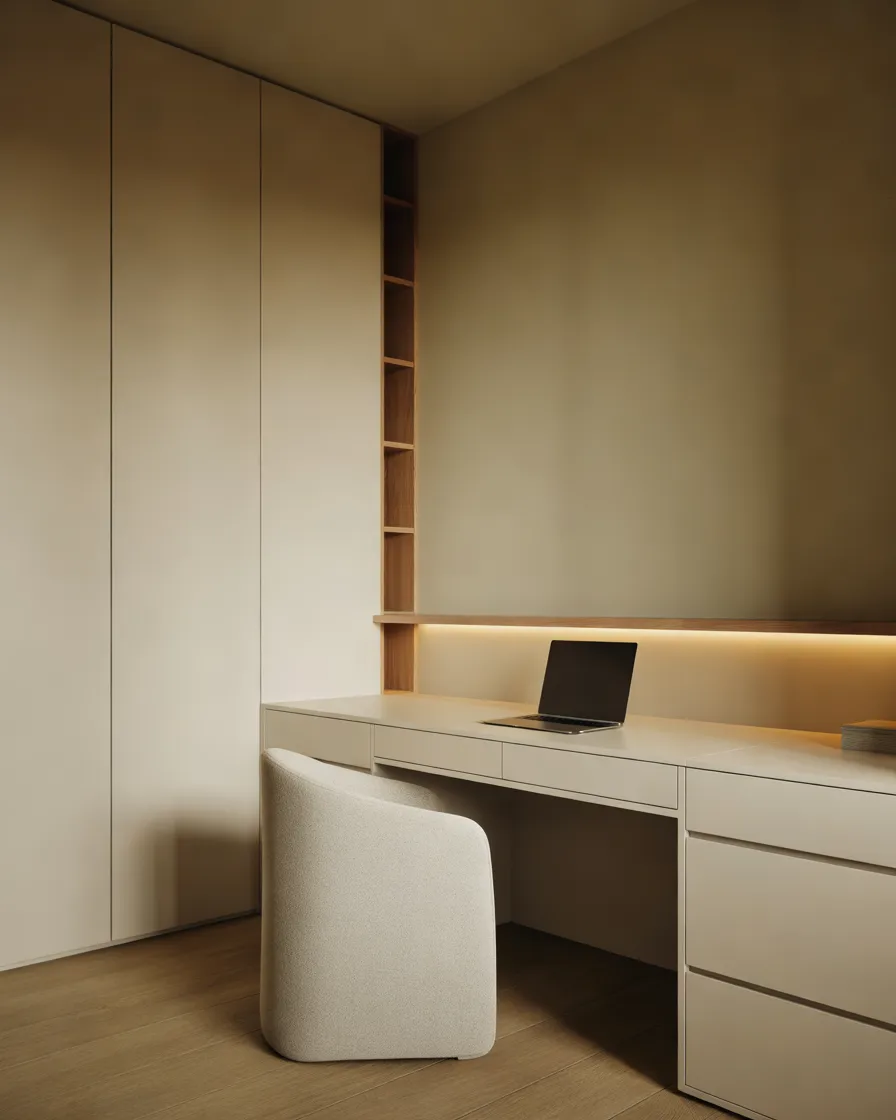
A minimalist home office looks its best when everyday items have a proper place. Loose papers, charging cables, stationery, and office supplies can quickly make even a beautiful desk appear messy. Concealed storage helps solve this problem while maintaining a clean visual appearance.
Consider adding a desk with built-in drawers, a small cabinet with closed doors, or a storage unit that matches your office furniture. These pieces allow you to keep frequently used items nearby without displaying everything on open shelves. Drawer organizers can also make it easier to separate stationery, documents, electronic accessories, and personal belongings.
If you have a larger workspace, a low-profile storage cabinet positioned against the wall can provide substantial storage without dominating the room. Choose simple handles or handle-free doors for a more streamlined appearance.
I find that this approach makes a workspace feel much more relaxing. Instead of constantly seeing unfinished paperwork and miscellaneous supplies, you can enjoy a clear desk that is ready whenever you need to concentrate.
7. Bring Scandinavian Style into Your Minimalist Home Office
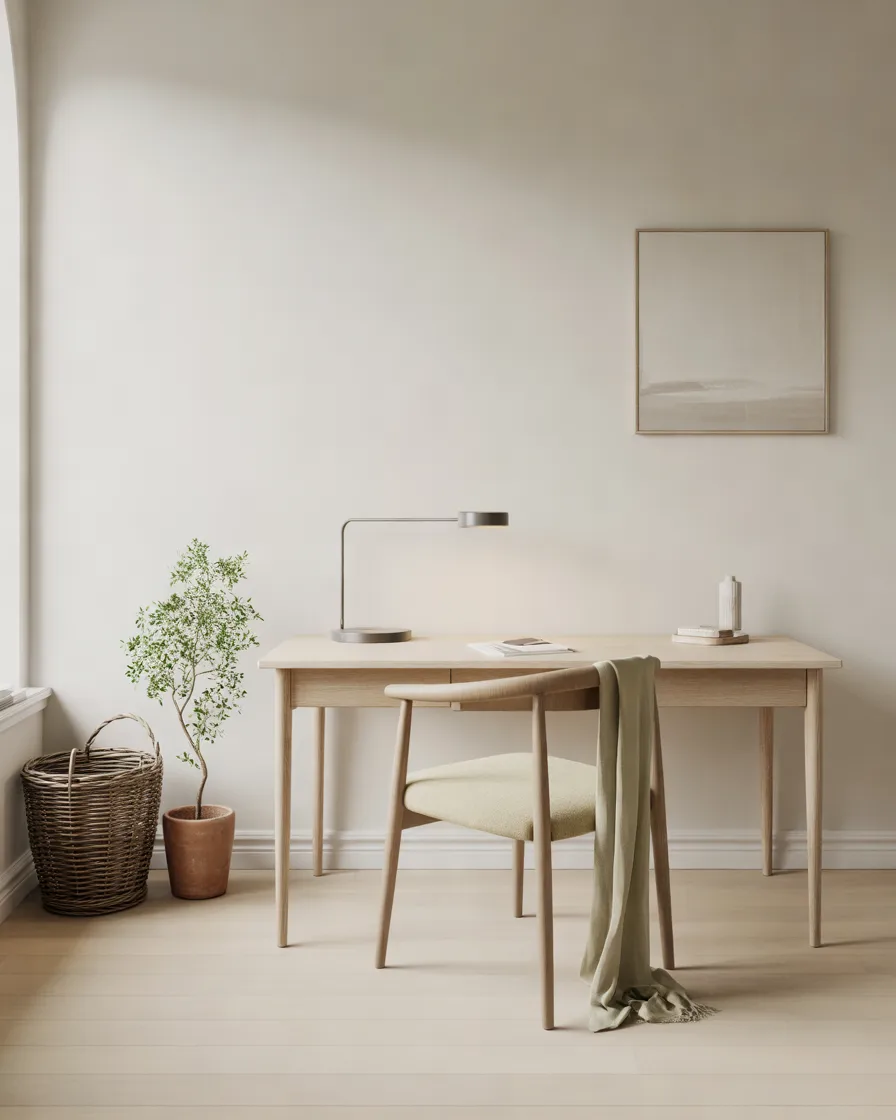
Scandinavian design and minimalism work beautifully together because both emphasize simplicity, natural materials, practical furniture, and comfortable living spaces. A Scandinavian-inspired home office feels bright and organized without appearing overly formal.
Begin with a light wood desk and a comfortable chair featuring simple lines. White walls, pale flooring, and soft gray or beige textiles provide an excellent foundation. You can introduce a small amount of black through desk accessories, picture frames, or lighting fixtures to create contrast.
Natural materials are particularly important in this style. Consider a woven basket, a linen cushion, or a wooden desktop organizer. A small potted plant can also bring life into the room without disrupting its simple appearance.
Another feature worth considering is a warm, adjustable desk lamp. Scandinavian interiors often combine natural daylight with soft artificial lighting to create a welcoming atmosphere throughout the day.
The result is a workspace that feels practical, relaxed, and visually balanced. It is a particularly lovely option if you prefer a home office that feels connected to the rest of your interior rather than looking like a corporate workplace.
8. Combine Your Home Office with a Guest Bedroom
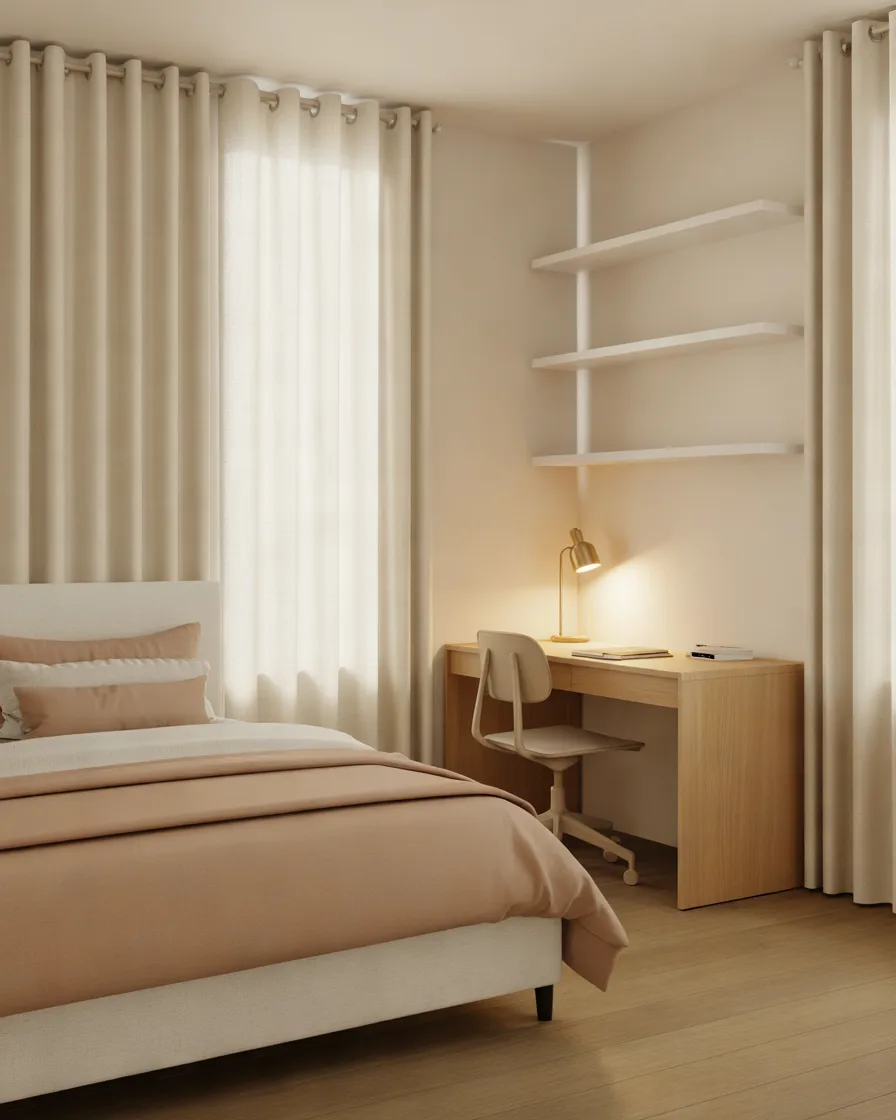
When space is limited, combining a home office with a guest bedroom can be a practical way to make better use of your home. The challenge is creating two functional areas without making the room feel overcrowded.
A simple writing desk positioned against one wall can serve as your primary workstation. Choose a compact desk with drawers and a chair that can be tucked away when visitors arrive. Keep the bed and office furniture in complementary colors so that both areas feel like part of the same interior.
For example, a neutral bedroom with a light oak desk, white bedding, and beige curtains can create a consistent minimalist appearance. You can also use a small area rug underneath the desk to visually distinguish the workspace from the sleeping area.
Avoid oversized office furniture or multiple decorative accessories. The bedroom should still feel comfortable and inviting for guests.
This arrangement is especially useful in apartments or smaller houses where a dedicated office simply is not an option.
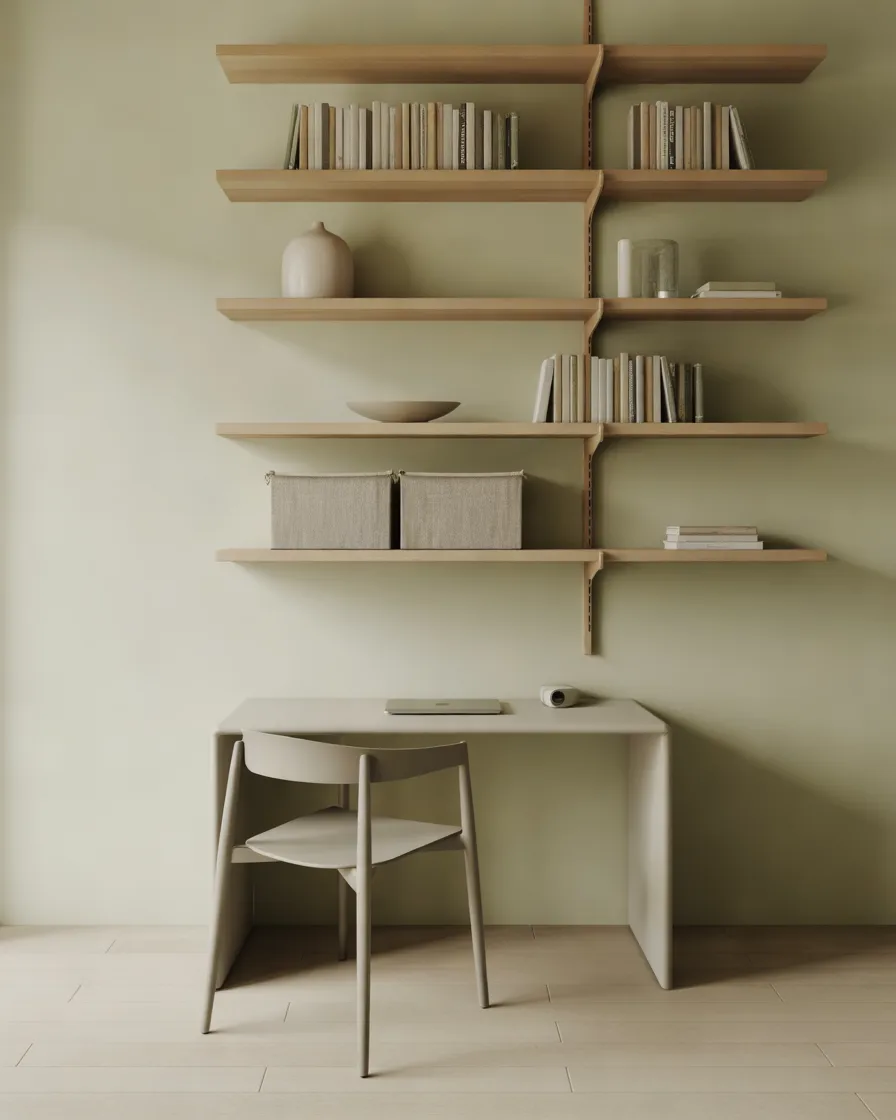
9. Use Vertical Wall Shelving for a More Spacious Workspace
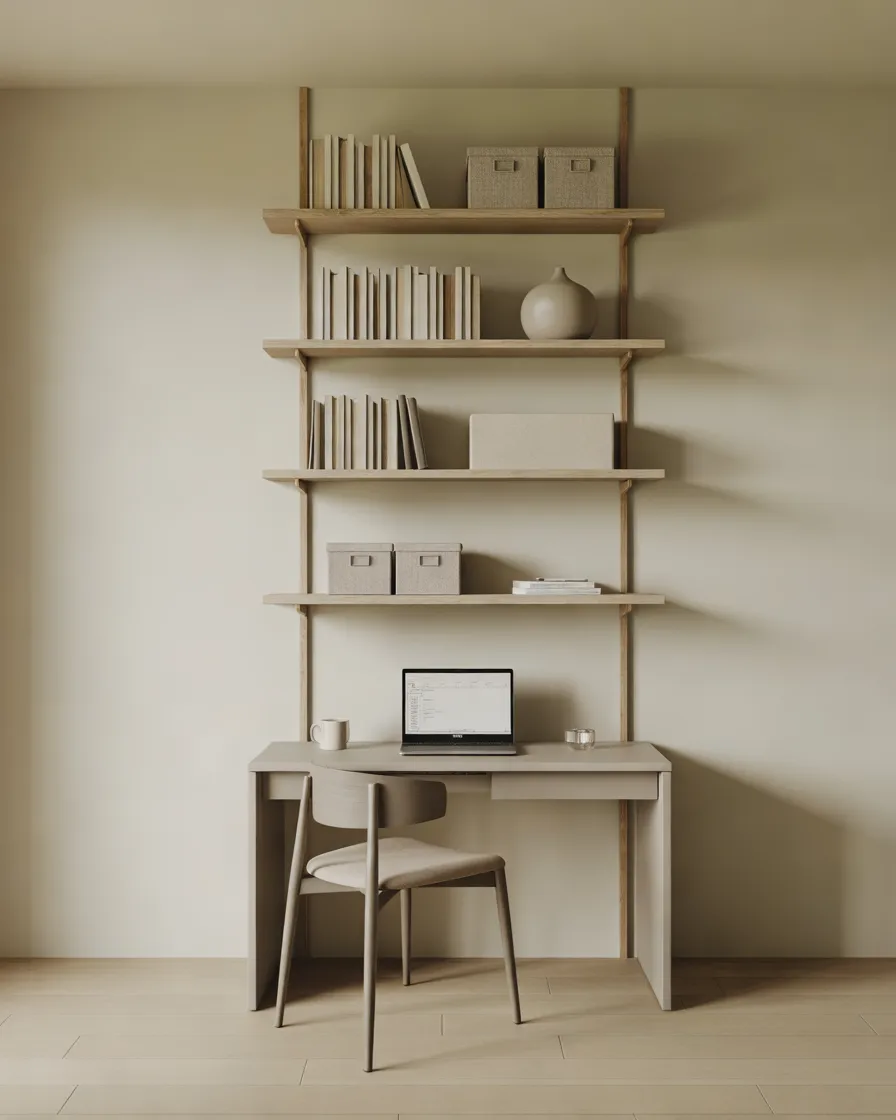
When your home office has limited floor space, looking upward can be just as useful as looking for additional room elsewhere. Vertical wall shelving provides storage and display space without taking up valuable floor area.
Install two or three simple floating shelves above your desk. Use them to organize books, notebooks, small storage boxes, and a few carefully chosen decorative objects. Keeping the arrangement relatively symmetrical can create a more orderly appearance, although an intentionally balanced asymmetrical layout can also look attractive.
Choose shelves in a finish that complements your desk. Light oak works particularly well with white walls, while matte black shelves can create a more contemporary appearance.
One important detail is to avoid filling every shelf completely. Leave some empty space between objects so that the arrangement does not become visually overwhelming. You should also position shelves at a practical height that does not interfere with your computer monitor or everyday work.
This design makes a minimalist office more functional while keeping the desk itself free from unnecessary items.
10. Add Indoor Plants for a Fresh Minimalist Workspace
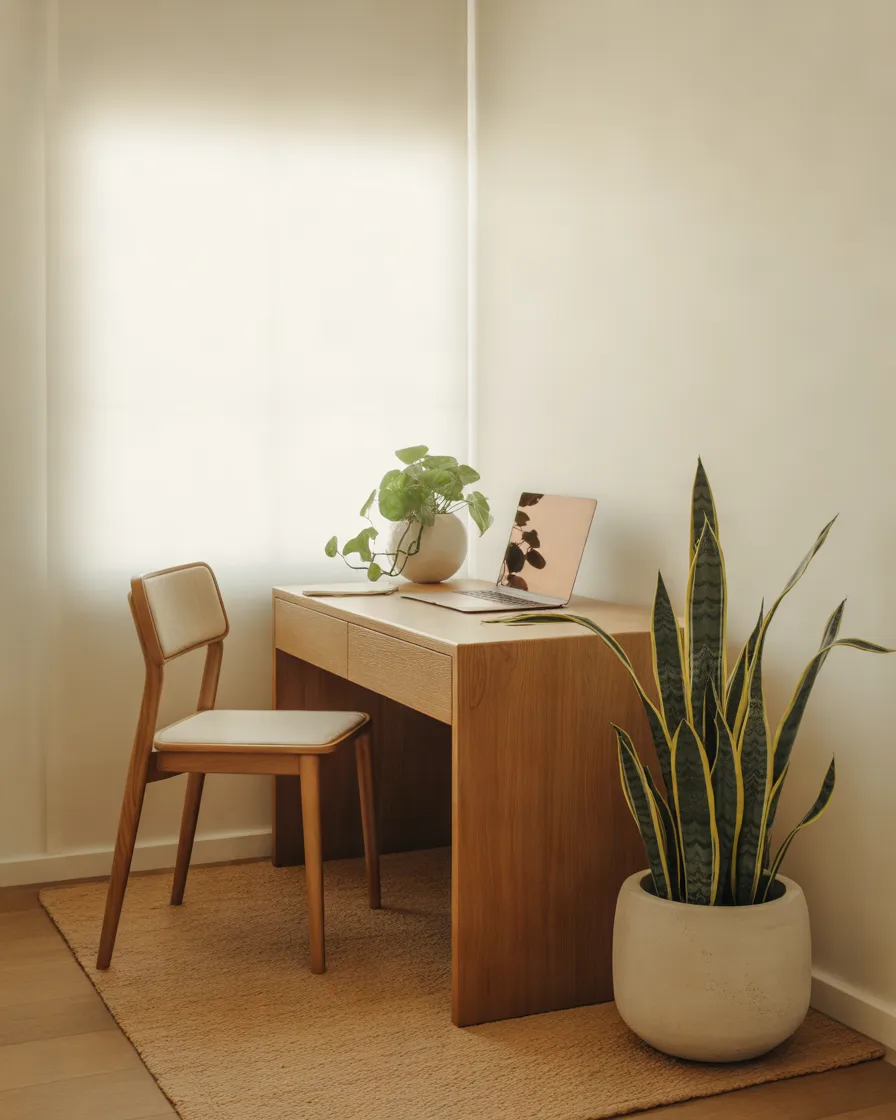
Minimalist interiors do not have to feel empty or lifeless. A few carefully selected indoor plants can introduce natural color, texture, and personality while preserving the simplicity of your home office.
Instead of filling the room with multiple small pots, choose one or two plants that complement the available space. A tall snake plant can work beautifully beside a desk, while a small pothos or ZZ plant can sit on a cabinet or windowsill. If your workspace receives plenty of indirect sunlight, a compact rubber plant can also make an attractive addition.
Keep the plant containers simple. White ceramic, matte beige, natural stone, or textured terracotta planters all work well with minimalist furniture.
I particularly like combining greenery with natural wood and warm neutral colors. The contrast creates an inviting atmosphere without requiring additional decorative pieces.
Remember to consider the plant’s light and watering requirements before choosing it. A beautiful plant should also be practical for the conditions inside your home.
11. Create a Modern Minimalist Office with Black Accents
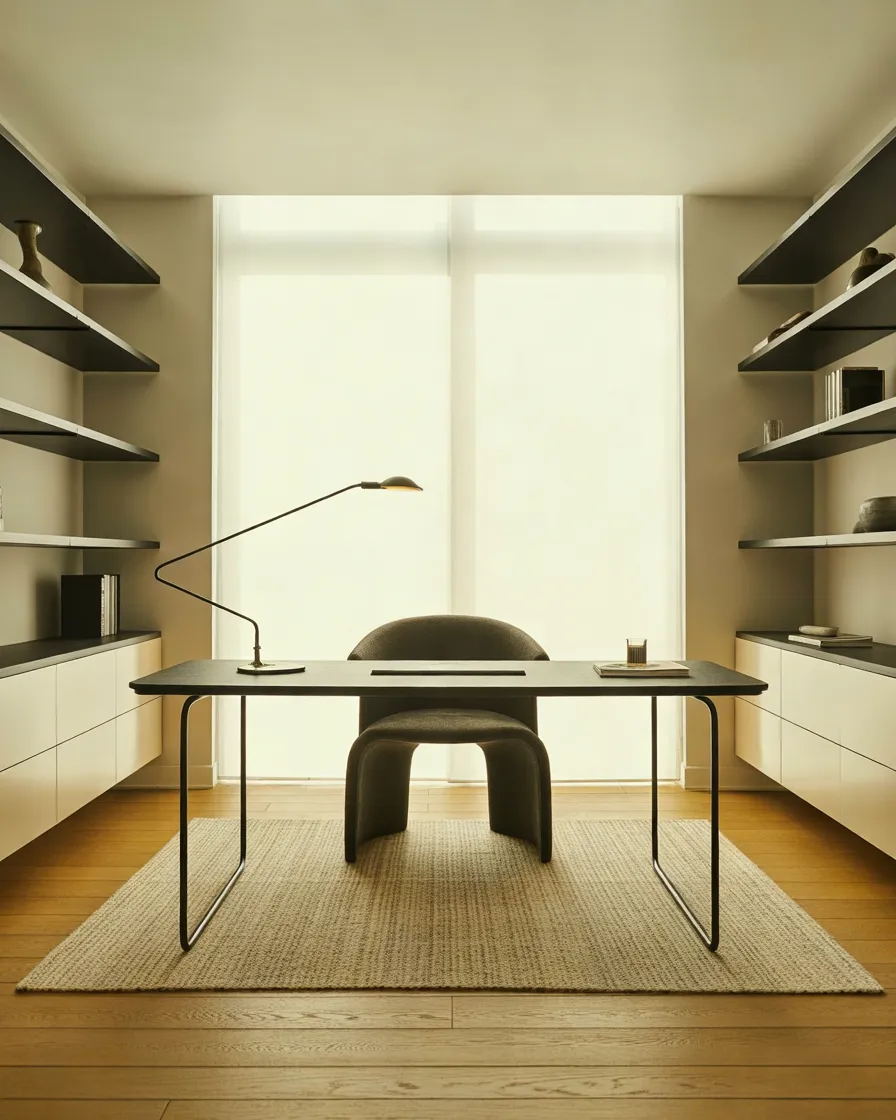
If you prefer a slightly more dramatic interior, consider introducing black accents into your minimalist home office. Black can add definition and contrast without making the room feel overly decorated. When used thoughtfully, it creates a sophisticated and contemporary appearance.
Start with a neutral foundation, such as white walls and light wood flooring. Add a black metal desk frame, a slim black task lamp, or a dark monitor stand. You could also choose a charcoal office chair or black shelving to strengthen the overall design.
The important thing is to maintain a balance between light and dark elements. Too many black surfaces in a small room may make the office feel visually heavy. Combining black details with natural wood, beige fabrics, and plenty of natural light helps keep everything balanced.
For a finishing touch, consider a simple black-framed piece of artwork. It can connect the darker accessories without introducing unnecessary decoration.
This style is especially appealing if you enjoy clean architectural lines and modern furniture.
12. Use a Minimalist Desk Setup with Hidden Cables
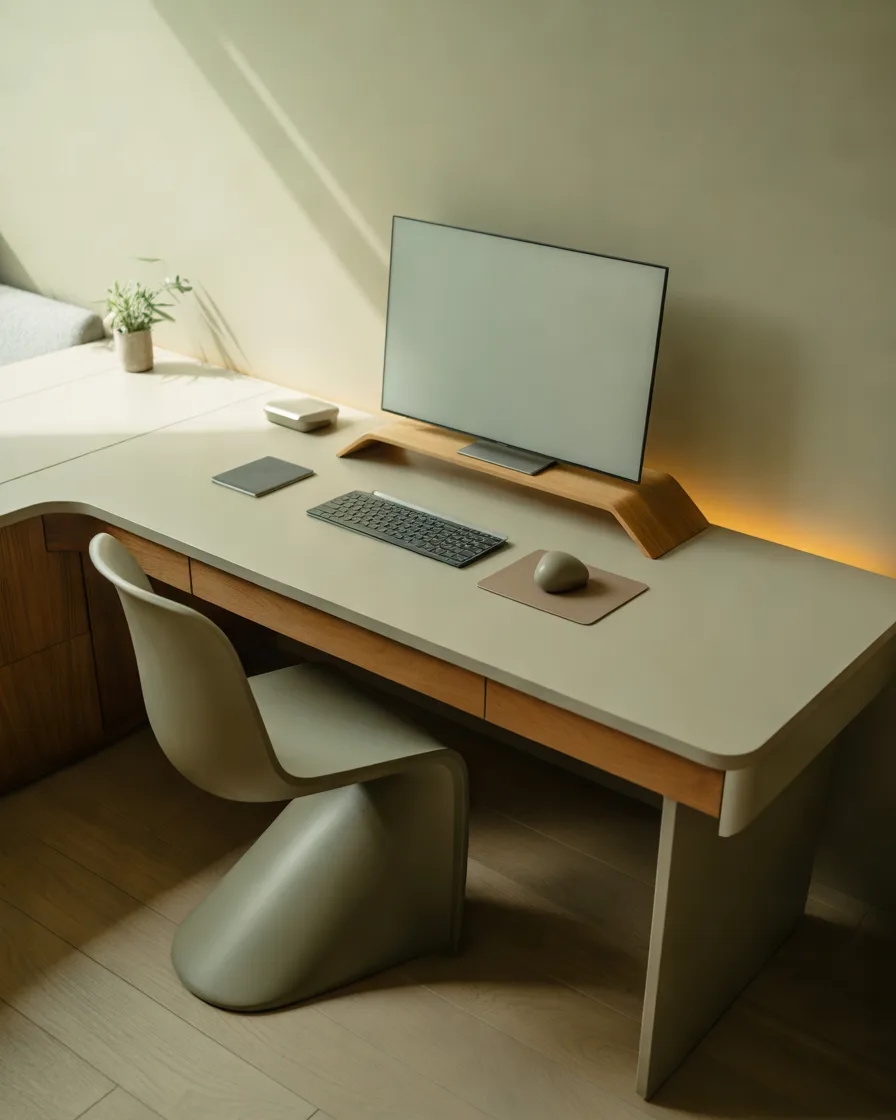
Even the most attractive desk can look disorganized when electrical cables, chargers, and extension cords are visible everywhere. A minimalist desk setup should look clean while still accommodating all the technology you need for everyday work.
Begin by selecting a desk with a cable-management opening or an integrated cable tray. You can attach a cable organizer underneath the desktop to keep power strips and excess wiring out of sight. Cable clips also help guide individual wires neatly along the desk’s edges.
For your equipment, choose accessories that complement one another. A laptop stand, wireless keyboard, compact mouse, and matching monitor stand can create a consistent appearance. You do not need to purchase everything at once; simply focus on replacing unnecessary items and arranging the equipment you already own.
If you use several electronic devices, make sure that the power strip is properly rated and that cables remain accessible for maintenance.
A clean technology setup makes a real difference to the overall appearance of a minimalist office. It also makes cleaning and reorganizing the desk much easier.
13. Personalize Your Minimalist Home Office with Subtle Decor
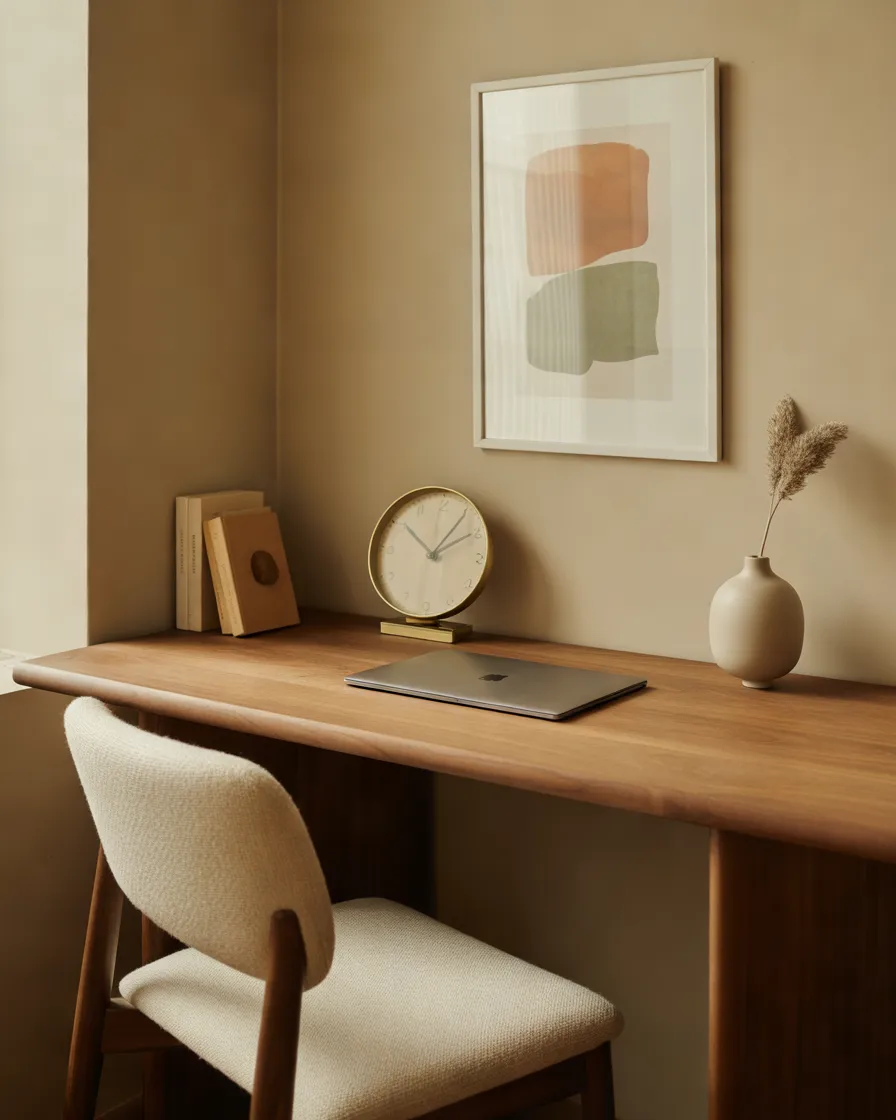
Minimalism does not mean removing every personal detail from your workspace. In fact, a home office often feels more inviting when it includes a few meaningful objects that reflect your interests and personality. The secret is choosing decorations carefully rather than displaying everything you own.
A framed abstract print, a small ceramic vase, a favorite photograph, or an elegant desk clock can add character without making the room feel busy. You might also display one or two books that inspire you or a decorative object collected during your travels.
Try to maintain a consistent color palette. If your office uses cream, white, and natural wood, choose accessories that complement those tones. A small black or muted green detail can provide contrast while preserving the overall look.
I would recommend leaving enough empty space around decorative objects so that each one has room to stand out. You do not need a large gallery wall or an elaborate collection to make your workspace feel personal.
The goal is to create an office that looks thoughtfully designed but still feels like a comfortable part of your home.
How to Make Your Minimalist Home Office Comfortable and Functional
Choosing beautiful furniture is only one part of creating a successful minimalist home office. Your workspace should also support the way you work every day. A visually attractive room will not be particularly useful if your chair is uncomfortable, your desk is too small, or your lighting makes it difficult to concentrate.
Start by choosing a desk with enough surface area for your computer and everyday essentials. Your chair should provide suitable back support and allow you to sit comfortably. If you spend long hours working, consider an adjustable chair and a monitor positioned at a comfortable viewing height.
Lighting is equally important. Natural daylight is wonderful during the day, but a dedicated adjustable desk lamp can provide additional illumination when needed. Try to avoid harsh glare on your screen.
Finally, develop a simple organization routine. Return stationery to its storage place, remove unnecessary paperwork, and clear your desktop at the end of the day. These small habits help maintain the clean appearance that makes minimalist office design so attractive.
Final Thoughts on Creating a Beautiful Minimalist Home Office
Creating a minimalist home office is not about purchasing expensive furniture or removing everything from your room. It is about making thoughtful decisions that allow your workspace to feel organized, comfortable, and visually appealing.
Whether you prefer a bright all-white interior, a warm Scandinavian arrangement, a compact floating desk, or a modern setup with black accents, the best design is the one that supports your everyday needs. Start with the furniture you already have, identify what is genuinely useful, and gradually introduce pieces that improve the space.
Remember that even a small corner can become a beautiful working environment with the right arrangement. Focus on natural light, practical storage, comfortable furniture, and a few meaningful decorative details. With these simple choices, you can create a minimalist home office that looks elegant, feels welcoming, and makes working from home a little more enjoyable.