A beautiful backyard is not just about comfortable furniture, colorful flowers, or perfectly maintained landscaping. The right lighting can completely change how an outdoor space looks and feels, especially after sunset. Even a simple backyard can become a warm, inviting retreat with thoughtfully placed lights that highlight its best features and make it more enjoyable in the evening.
One thing I love about backyard lighting is how many different ways you can use it. You don’t necessarily need expensive fixtures or complicated electrical installations to create something beautiful. A few strategically placed solar lights, a string of warm bulbs, or some attractive lanterns can make a noticeable difference. If you have a larger backyard, you can combine different lighting styles to create separate areas for relaxing, entertaining, dining, and enjoying the garden.
The secret is to choose lighting that looks attractive while serving a practical purpose. Some lights help illuminate pathways, while others create a cozy atmosphere around seating areas or draw attention to beautiful trees and architectural details.
If you’re looking for inspiration, these 15 backyard lighting ideas will help you transform your outdoor space into something special. Whether you have a small garden, a spacious lawn, a modern patio, or a traditional backyard, there are plenty of ways to make your evenings brighter and more enjoyable.
1. Create a Magical Atmosphere With Backyard String Lights
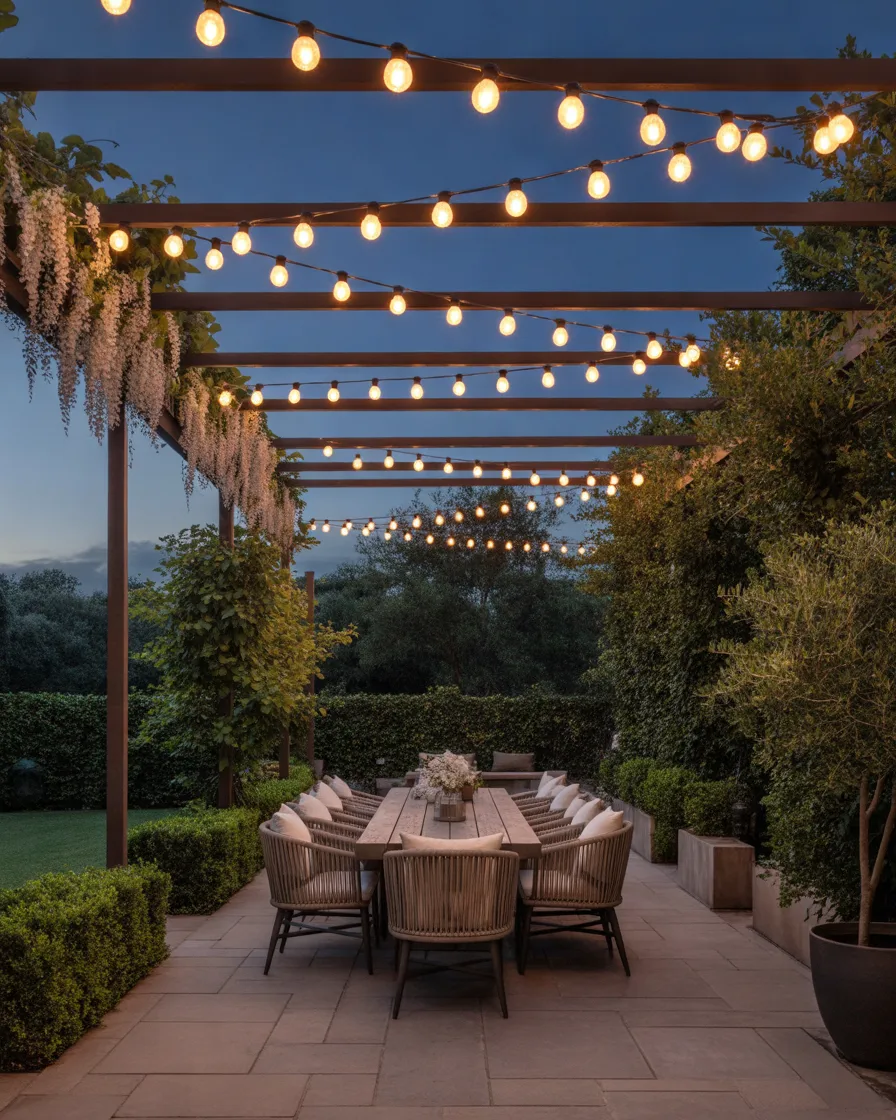
String lights are one of the easiest and most beautiful ways to make a backyard feel welcoming. Their soft, glowing appearance creates a relaxed atmosphere that works wonderfully for casual dinners, family gatherings, and quiet evenings outdoors. You can hang them above a patio, stretch them between trees, or attach them to sturdy wooden posts to create an attractive overhead lighting arrangement.
For a classic look, choose warm-white bulbs with dark cables. Larger globe bulbs give the space a modern café-inspired appearance, while smaller fairy-style bulbs create a delicate, romantic effect. If your backyard has a pergola, stringing lights across its beams is an especially attractive option.
Placement makes a big difference. Instead of hanging all the lights in one straight line, try creating gentle zigzag patterns or parallel rows. This distributes the light more evenly and makes the arrangement look professionally styled.
When choosing outdoor string lights, look for weather-resistant construction and suitable outdoor safety ratings. Shatter-resistant bulbs and solar-powered or plug-in options are also worth considering. The result is a simple lighting feature that can make an ordinary backyard feel like an outdoor entertaining space.
2. Illuminate Garden Pathways With Solar Stake Lights
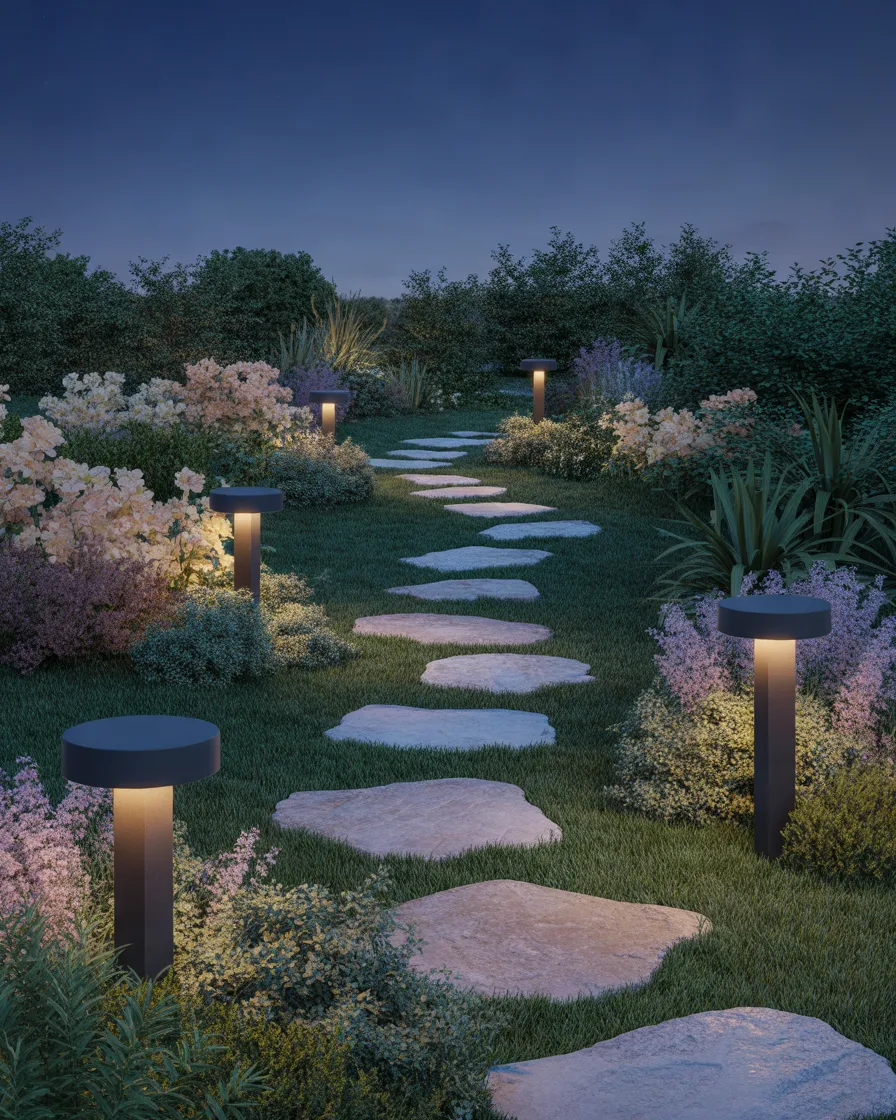
Garden pathways deserve attention because they connect different parts of your backyard and help everyone move around safely after dark. Solar stake lights are a practical and attractive solution for illuminating these areas without requiring complicated wiring.
These small fixtures can be positioned along both sides of a walkway, beside stepping stones, or around the edges of garden beds. During the day, their discreet designs blend into the landscaping. Once evening arrives, they provide gentle illumination that makes the pathway easier to follow.
There are several styles to consider. Traditional black solar lights work well in classic gardens, while stainless-steel and minimalist designs complement contemporary outdoor spaces. You can also find decorative fixtures with warm LED illumination that create a softer appearance than bright white lights.
For the best results, avoid placing the lights too close together. Give each fixture enough space to illuminate its surroundings without making the pathway look crowded. Make sure the solar panels receive sufficient sunlight during the day, and keep them free from leaves and dirt.
I particularly like this option for smaller backyards because it adds both beauty and functionality without taking up much room.
3. Add a Cozy Glow With Outdoor Lanterns
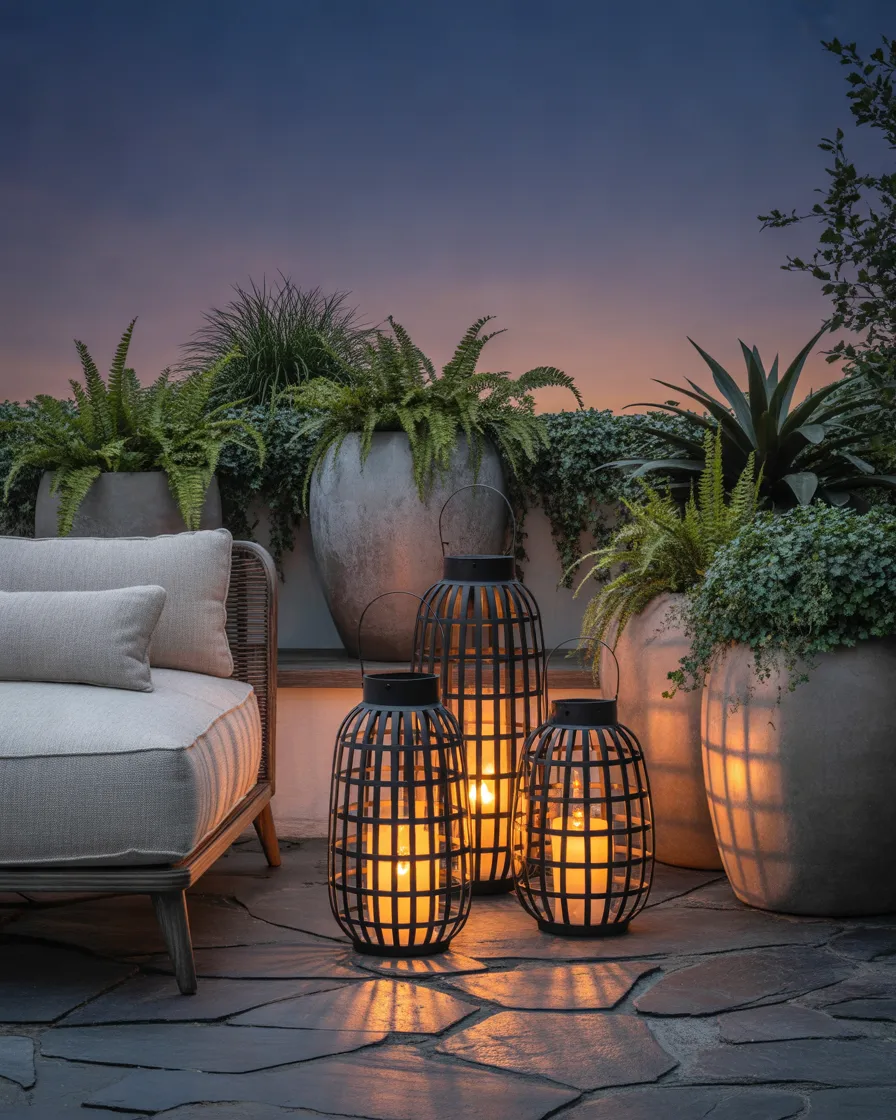
Outdoor lanterns are a wonderful choice when you want backyard lighting that feels decorative as well as functional. Unlike permanent lighting fixtures, lanterns can easily be moved around whenever you want to change the arrangement of your outdoor space.
You can place them beside patio furniture, near the entrance to your garden, along outdoor steps, or around a dining area. Large lanterns look particularly attractive when positioned in groups of two or three, with different heights creating a more interesting display.
For a traditional garden, consider black metal lanterns with glass panels. Wooden or woven lanterns are excellent for creating a natural, relaxed appearance, while sleek metal designs suit modern outdoor spaces.
Battery-operated LED candles are a convenient alternative to real flames. They provide a similar flickering effect without the same fire risk, making them especially useful around children, pets, and fabric furniture. Always choose products designed for outdoor conditions.
Another lovely idea is to place lanterns near potted plants or decorative stones. The surrounding textures help create a layered look that feels thoughtfully arranged rather than overly decorated.
4. Highlight Trees With Beautiful Uplighting
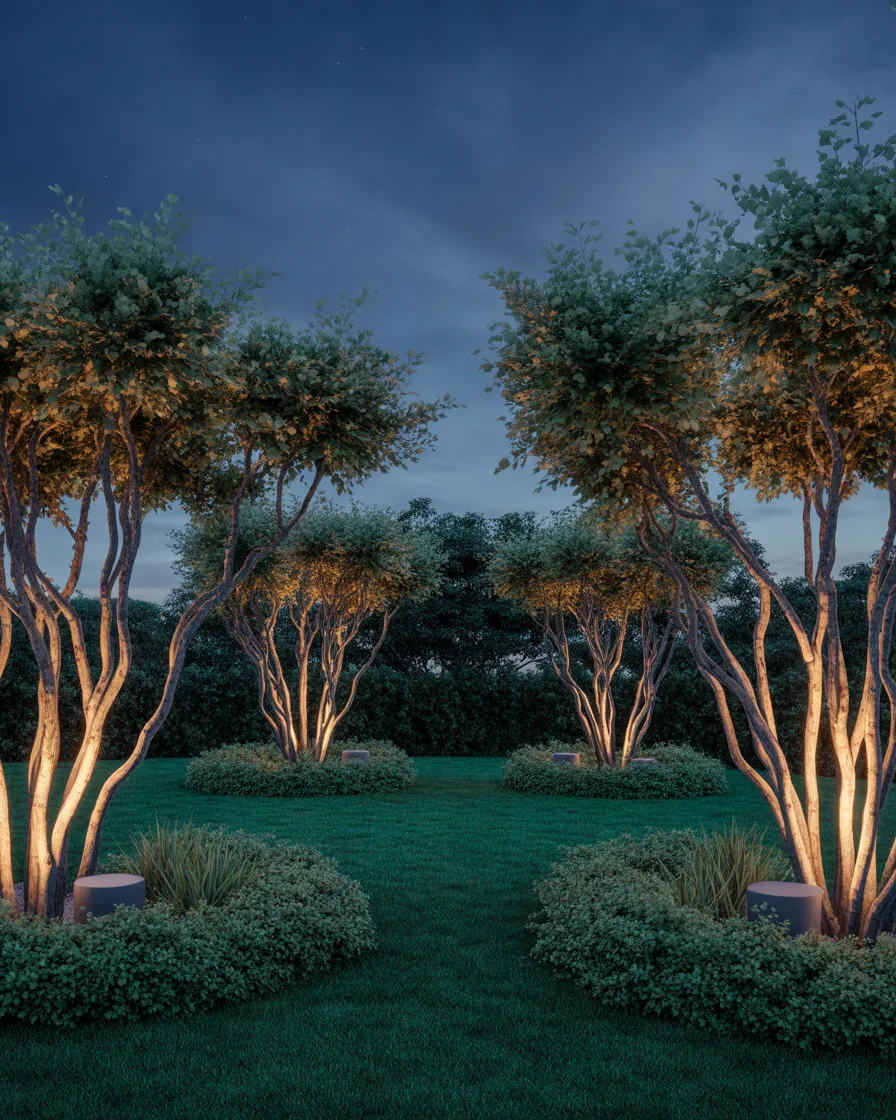
If your backyard has mature trees or attractive ornamental plants, uplighting is an excellent way to make them stand out after sunset. Instead of illuminating the entire garden, this technique directs light upward from ground-level fixtures toward the trunk, branches, and leaves.
The result can be surprisingly dramatic. A large tree becomes a natural focal point, while its branches create interesting shadows against nearby walls or fences. Even a relatively simple tree can look impressive when illuminated from the right angle.
For a natural appearance, choose warm-white outdoor spotlights rather than extremely bright fixtures. Position them a short distance away from the tree and adjust their direction until the light highlights the trunk and lower branches without shining directly into people’s eyes.
You can also experiment with placing two or three fixtures around a particularly beautiful tree. This creates a more balanced appearance and reduces harsh shadows.
Uplighting works especially well in backyards with landscaped lawns, flowering trees, palms, and decorative shrubs. Just make sure fixtures are weather-resistant and positioned safely around roots and garden equipment. Avoid lighting that shines unnecessarily into neighboring windows or the night sky.
5. Make Your Pergola Shine With Integrated Lighting
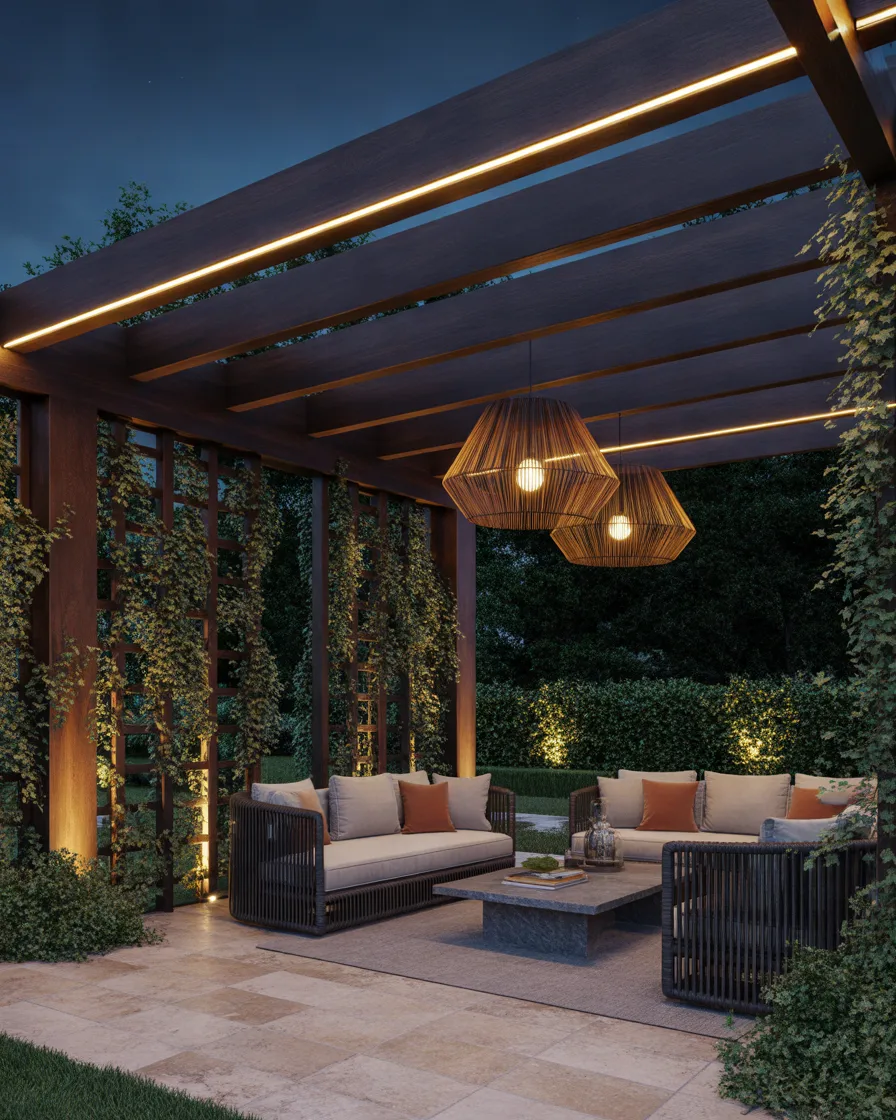
A pergola provides a natural structure for adding beautiful backyard lighting. Its beams and posts create several opportunities to install fixtures without making the outdoor space look cluttered.
One popular option is to attach small LED strip lights along the inside edges of the pergola beams. This creates a soft, indirect glow that makes the entire seating area feel more comfortable. If you prefer something more decorative, combine the strips with hanging pendant lights or a few warm string bulbs.
For a modern backyard, recessed outdoor-rated lights installed into suitable pergola beams can provide a clean, finished appearance. However, electrical work should be planned carefully, with appropriately rated equipment and professional installation where required.
Think about how you use the space before deciding where the lights should go. If the pergola contains an outdoor dining table, place the main lighting above the table. If it is primarily a relaxing area, softer indirect lighting around the edges may be more suitable.
You can also use dimmable fixtures to adjust the atmosphere throughout the evening. Brighter illumination is useful when eating or reading, while a lower setting creates a more relaxing environment.
6. Use Hanging Pendant Lights Above Outdoor Dining Areas
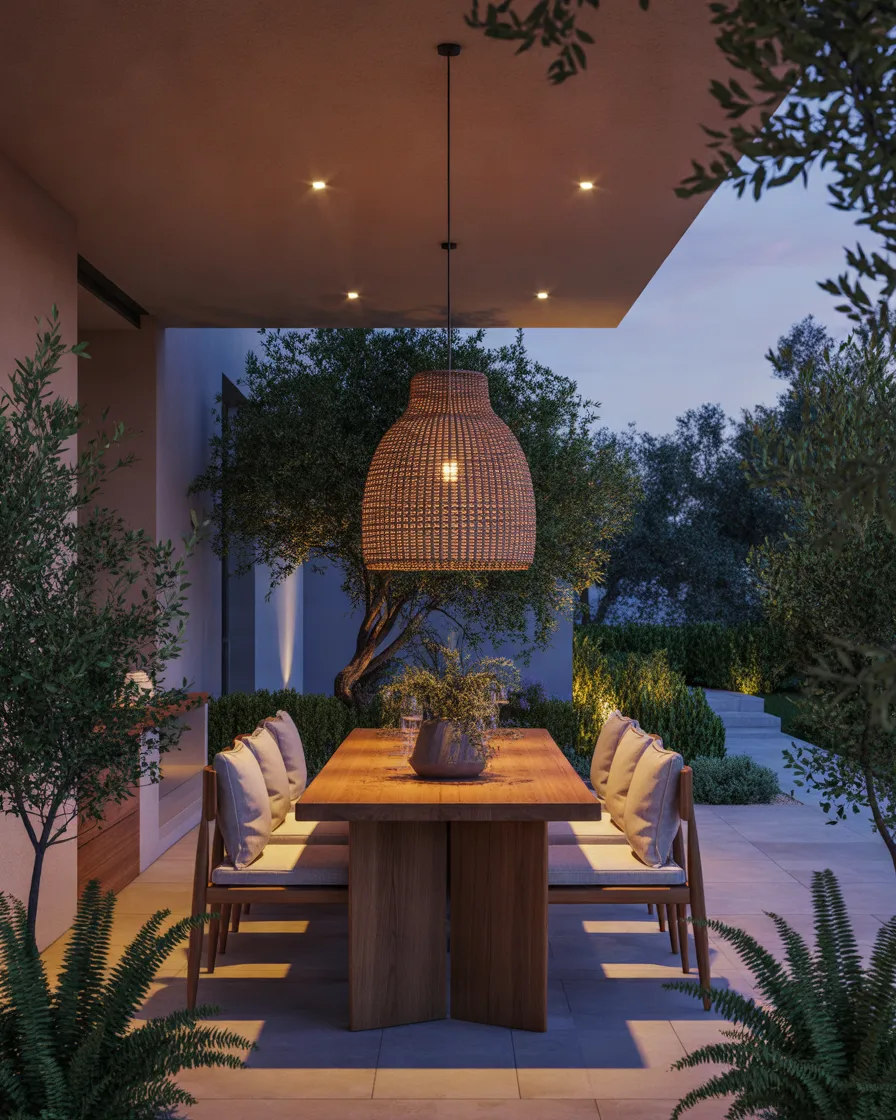
If you enjoy eating outdoors, hanging pendant lights can make your backyard dining area feel like a beautiful extension of your indoor living space. They provide focused illumination while adding a decorative feature that draws attention to the table.
A large pendant positioned above a dining table can create an attractive centerpiece. For a softer appearance, consider woven rattan-style fixtures, weather-resistant lantern pendants, or designs made specifically for covered outdoor spaces.
The size of the pendant should suit the table and surrounding area. A very small fixture may disappear visually, while an oversized design can overwhelm a compact patio. Make sure the light hangs high enough that people can sit and move comfortably underneath it.
Warm lighting generally works better for outdoor dining because it creates a relaxed atmosphere and makes the space feel welcoming. If you regularly use the dining area for cooking, serving, or reading menus, combine the pendant with subtle surrounding lighting for better visibility.
Remember that exposed outdoor fixtures need suitable weather protection. Choose products rated for their installation location, particularly if the dining area is not fully covered.
7. Create a Relaxing Seating Area With Fire Pit Lighting
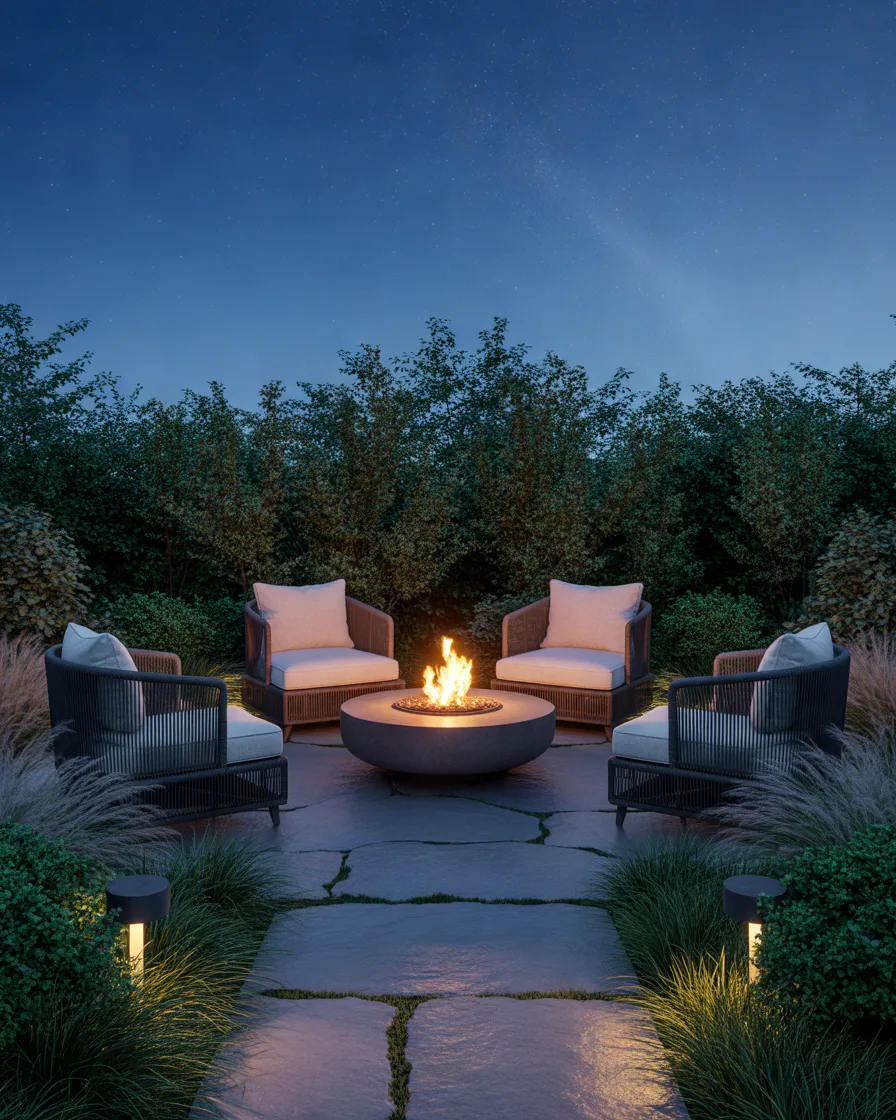
A backyard fire pit can become the natural gathering point of your outdoor space. The combination of glowing flames and subtle surrounding lighting creates an inviting setting for conversations, relaxing evenings, and spending time with family.
Although the fire itself provides illumination, adding carefully positioned outdoor lights makes the surrounding area more practical. Low-level pathway fixtures, subtle wall lights, and discreet landscape spotlights can help people move around without overpowering the natural glow of the fire.
Arrange comfortable outdoor chairs around the fire pit, leaving enough room for safe movement. You can use weather-resistant cushions, outdoor rugs, and small side tables to make the seating area more comfortable.
One important consideration is distance. Keep electrical fixtures, hanging decorations, and combustible furniture materials at a safe distance from the flames. Follow the manufacturer’s clearance requirements for the fire pit and any local fire-safety guidance.
For a more understated appearance, avoid installing very bright lights directly around the seating circle. The goal is to preserve the warmth of the fire while providing enough visibility for everyone to enjoy the space comfortably.
8. Install Recessed Deck Lights for a Modern Look
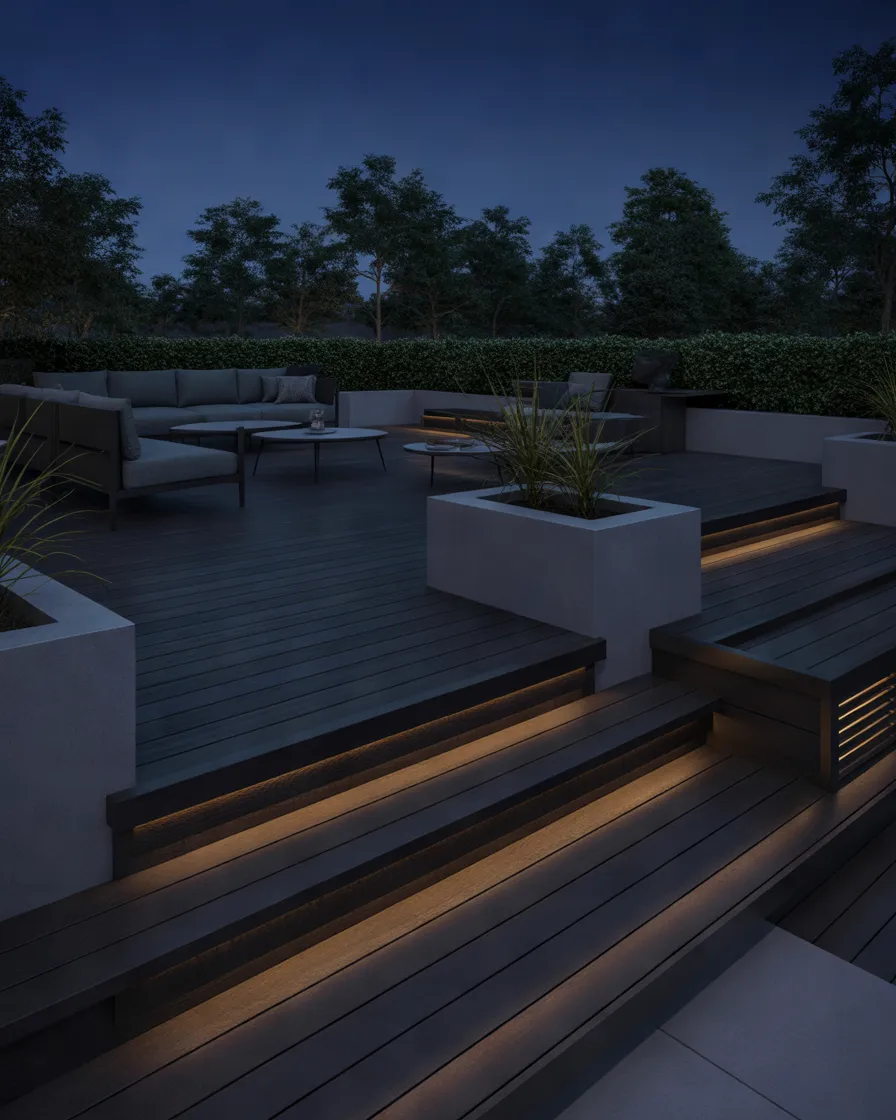
Recessed deck lights are an excellent option if your backyard includes a wooden deck or raised outdoor platform. These small fixtures are installed flush with the deck surface, creating a neat appearance without taking up valuable space.
They can be arranged along the outer edges of the deck, around steps, or beside seating areas. Their gentle illumination helps define different sections while making changes in floor level easier to see after dark.
One advantage of recessed lighting is its minimal appearance during the daytime. Unlike larger fixtures, these lights do not interrupt the deck’s design. At night, however, they create a sophisticated effect that works particularly well in modern outdoor spaces.
Warm-white LED fixtures are often a good choice because they provide a comfortable glow without making the deck feel too bright. You can also use them to highlight the boundaries of a staircase or the edge of a raised platform.
Before installation, check that the lights are suitable for foot traffic, outdoor moisture exposure, and the specific deck material. A professional installer can help with spacing, drainage, wiring, and waterproof connections.
9. Decorate Your Fence With Outdoor Wall Lights
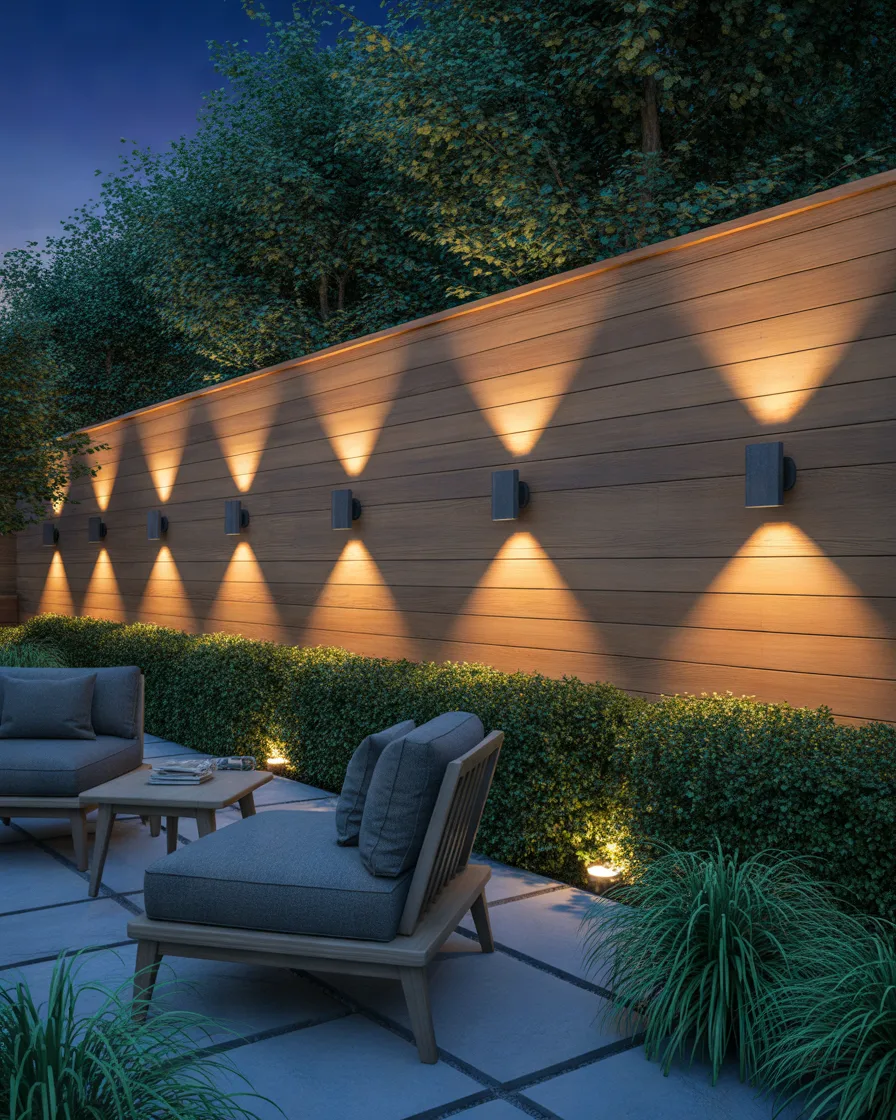
Backyard fences are often overlooked when planning outdoor lighting, even though they provide an excellent surface for decorative fixtures. Installing outdoor wall lights along a fence can make the entire garden feel more organized and visually balanced.
For a modern backyard, consider simple rectangular fixtures that cast light upward and downward. These create attractive patterns on wooden or textured walls and add architectural interest after sunset.
If your backyard has a traditional wooden fence, small black lantern-style wall lights can provide a more classic appearance. You can also find solar-powered fence lights that attach directly to the surface without requiring an electrical connection.
Spacing is important. Rather than placing fixtures randomly, arrange them at consistent intervals along the fence. This creates a balanced appearance and helps distribute light more evenly.
Fence lighting is also useful when your backyard contains several activity areas. You can use brighter fixtures near entrances and seating spaces while choosing softer lights around garden sections.
Choose weather-resistant fixtures that suit the fence material, and make sure any electrical installation uses appropriate outdoor-rated connections and professional wiring.
10. Add Magical Sparkle With Outdoor Fairy Lights
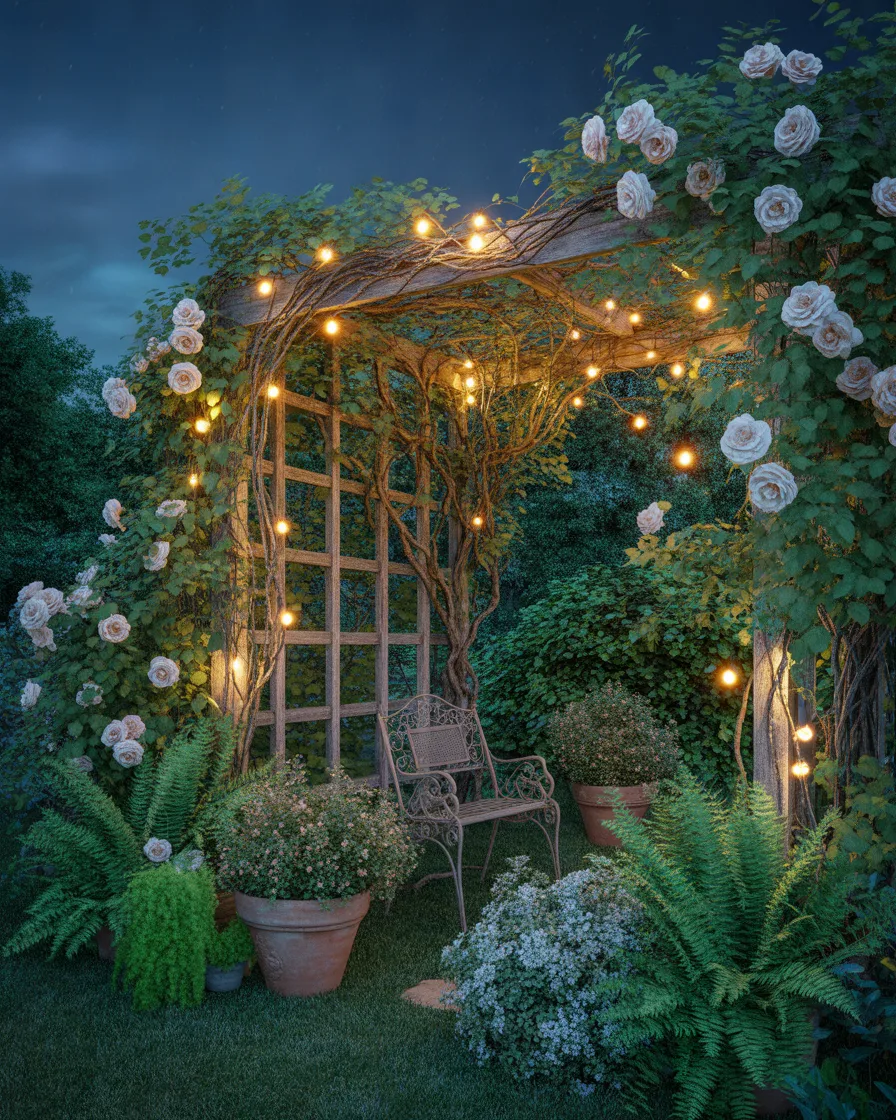
Fairy lights are perfect when you want to create a delicate, dreamy atmosphere in your backyard. Their small points of light can make ordinary garden features look more interesting without requiring large or expensive fixtures.
One beautiful approach is to wrap outdoor-rated fairy lights loosely around tree trunks and larger branches. You can also place them inside suitable covered lanterns, decorate a pergola, or weave them through a garden trellis.
For a romantic setting, choose warm-white lights rather than multicolored designs. The softer tone works especially well with flowering plants, wooden furniture, and natural landscaping.
If your backyard is small, fairy lights can be particularly effective because they add visual interest without occupying much physical space. A few carefully decorated features are usually more attractive than covering every tree, fence, and plant with lights.
Look for products designed specifically for outdoor use, with suitable weather-resistant cables and connections. Solar-powered fairy lights are convenient in areas where electrical outlets are unavailable, although their performance depends on sunlight exposure and battery capacity.
11. Brighten Garden Steps With Step Lighting
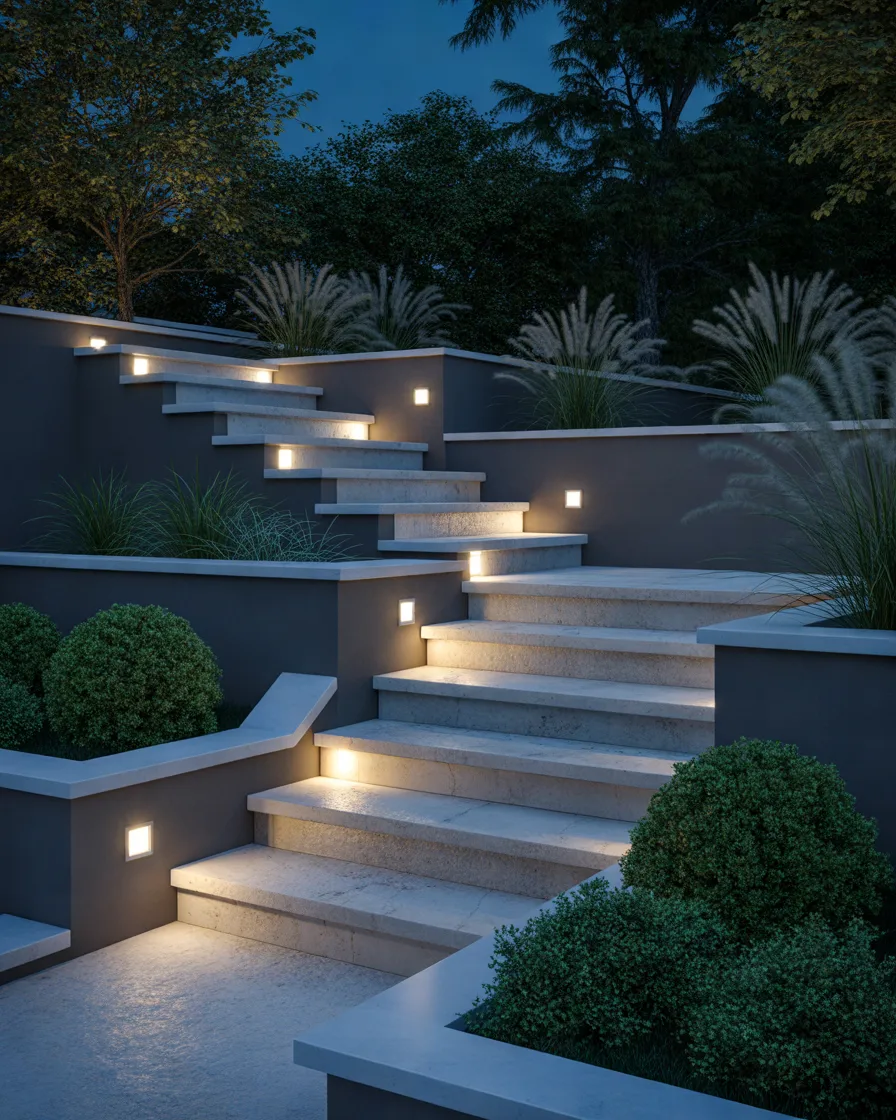
Outdoor steps can become difficult to navigate after sunset, particularly when they connect a patio, lawn, raised deck, or different garden levels. Step lighting offers a practical solution while adding an attractive architectural detail.
Small LED fixtures can be installed into the vertical risers of outdoor stairs, allowing light to spread gently across each step. This makes the edges easier to identify without creating excessive brightness.
For a contemporary backyard, recessed rectangular fixtures with warm illumination create a clean, minimalist appearance. Traditional gardens can benefit from small decorative step lights that complement stone or brick surfaces.
Try to position the fixtures so that the light falls onto the walking surface rather than directly into people’s eyes. Consistent spacing is also important because uneven illumination can make stairs harder to navigate.
If your backyard has several steps, consider using matching fixtures throughout the staircase. You can also add low-level pathway lighting nearby to create a continuous visual connection between different outdoor areas.
Choose fixtures designed for outdoor installation and appropriate exposure to water. Proper drainage and safe electrical connections are essential, particularly for lights installed close to the ground.
12. Create a Beautiful Garden Feature With Lighted Water Fountains
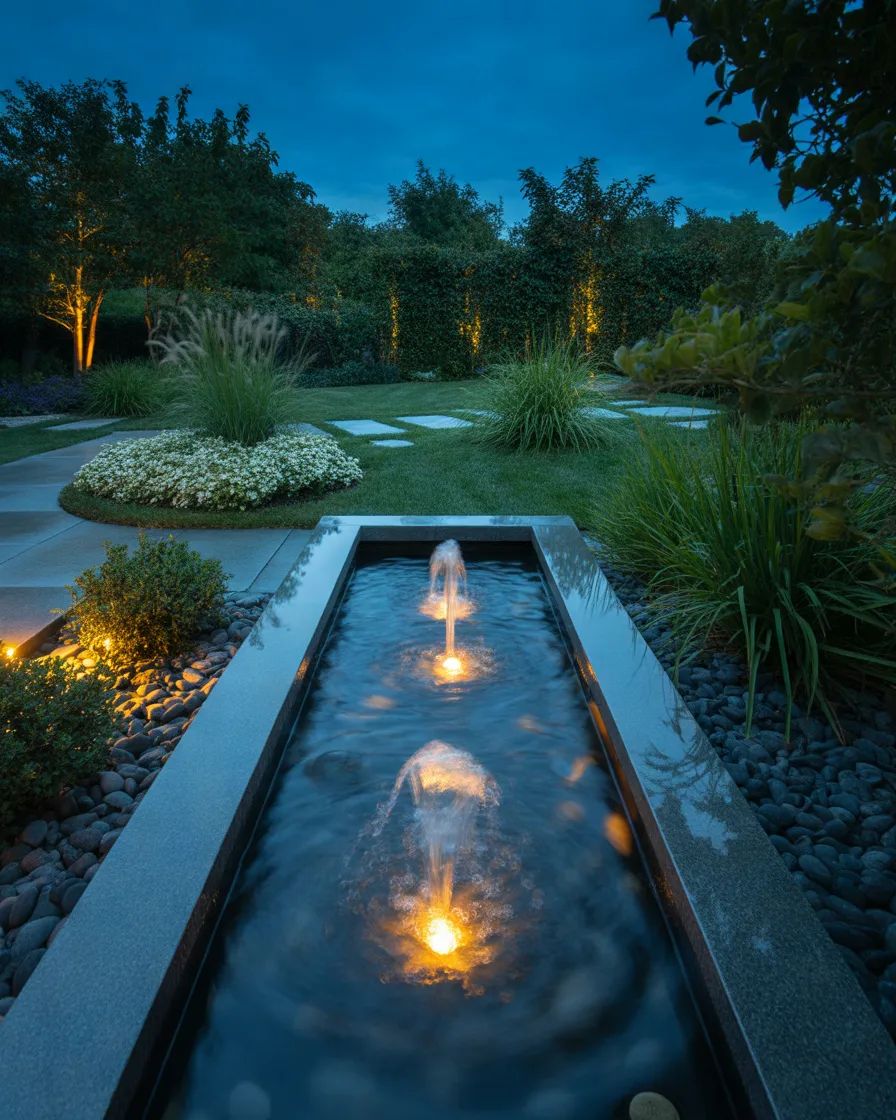
If your backyard has a water fountain or decorative pond, lighting can make it one of the most attractive features in the garden. Water naturally reflects surrounding light, creating movement and visual interest that is especially beautiful after dark.
Submersible LED lights can be installed in suitable fountains and water features to illuminate flowing water from below. This creates a gentle glow that highlights the movement of the water and makes the feature more noticeable from different parts of the backyard.
For a natural appearance, warm-white lighting is a timeless option. If you prefer something more contemporary, color-changing lights can add a decorative touch, although subtle colors generally create a more sophisticated result than constantly changing bright effects.
You should also think about the surroundings. Place a few discreet landscape lights near nearby plants or stones to create depth without competing with the water feature.
Water and electricity require particular care. Use only lighting specifically approved for the relevant underwater application, with properly rated low-voltage equipment, transformers, and electrical protection. Have the installation checked by a qualified professional.
13. Use Solar Hanging Lights for Trees and Garden Corners
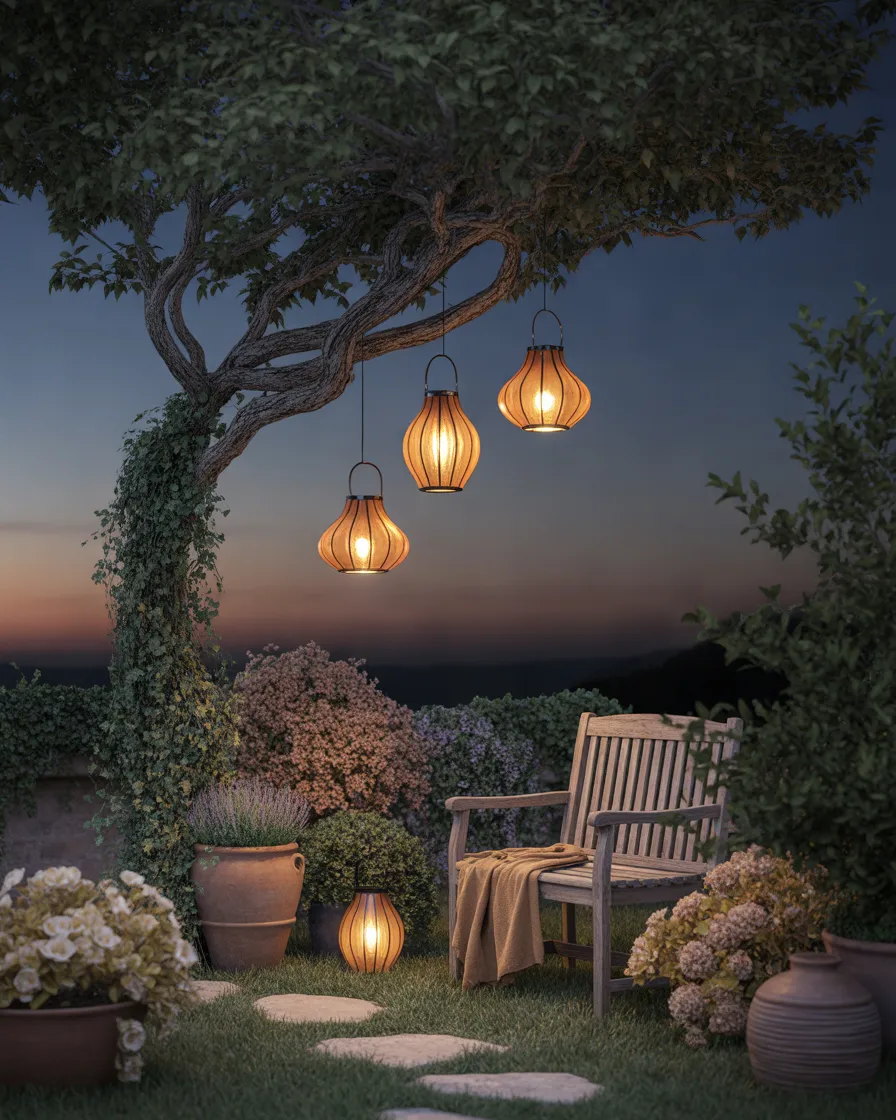
Solar hanging lights are a simple way to add illumination to parts of the backyard that may not have nearby electrical outlets. They are especially attractive when suspended from tree branches, garden hooks, pergola beams, or decorative outdoor stands.
Unlike traditional stake lights, hanging fixtures introduce light at a higher level. This creates a different visual effect and can help illuminate seating areas, garden corners, and decorative planting arrangements.
There are many styles available, including small solar lanterns, decorative globe lights, and woven-look hanging fixtures. Choose a design that complements the rest of your backyard rather than mixing too many different styles.
A particularly attractive arrangement is to hang two or three lights at slightly different heights near a garden bench. The varying positions add depth and make the corner feel more thoughtfully designed.
Remember that solar lights need sufficient daylight to recharge effectively. Before purchasing, check the panel placement, battery specifications, expected operating time, and whether the fixture is suitable for rain exposure.
14. Highlight Flower Beds With Low-Voltage Landscape Lighting
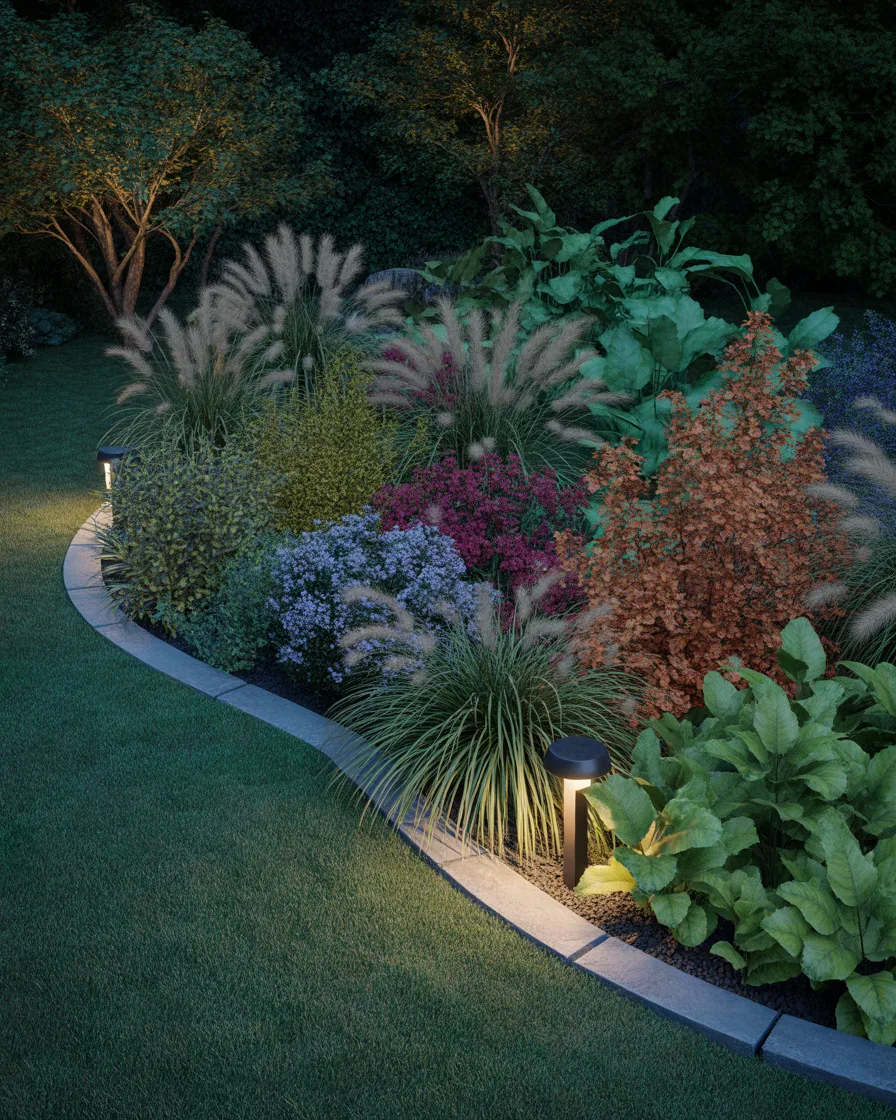
Flower beds can become beautiful focal points in the backyard when they are illuminated carefully. Instead of using strong overhead lighting, low-voltage landscape fixtures allow you to highlight individual plants, decorative grasses, and colorful flowers.
Small directional spotlights can be positioned around the edges of flower beds to illuminate taller plants from below. This creates attractive layers of light and shadow while helping the garden maintain its natural appearance.
Another option is to use discreet low-level fixtures between planting areas. These provide a gentle glow without distracting attention from the flowers themselves.
When choosing lighting, consider the plants you want to highlight. Taller ornamental grasses look attractive with upward-directed lighting, while flowering shrubs may benefit from softer illumination placed slightly farther away.
It is also worth considering seasonal changes. Plants grow, lose leaves, and change shape throughout the year, so adjustable fixtures offer more flexibility than permanently fixed lighting positions.
Avoid excessive illumination, particularly near wildlife-friendly garden areas. Bright outdoor lighting can interfere with nocturnal insects, birds, and other wildlife. Use warm-colored fixtures, shields, and timers to limit unnecessary light exposure.
15. Install Smart Backyard Lighting for Effortless Control
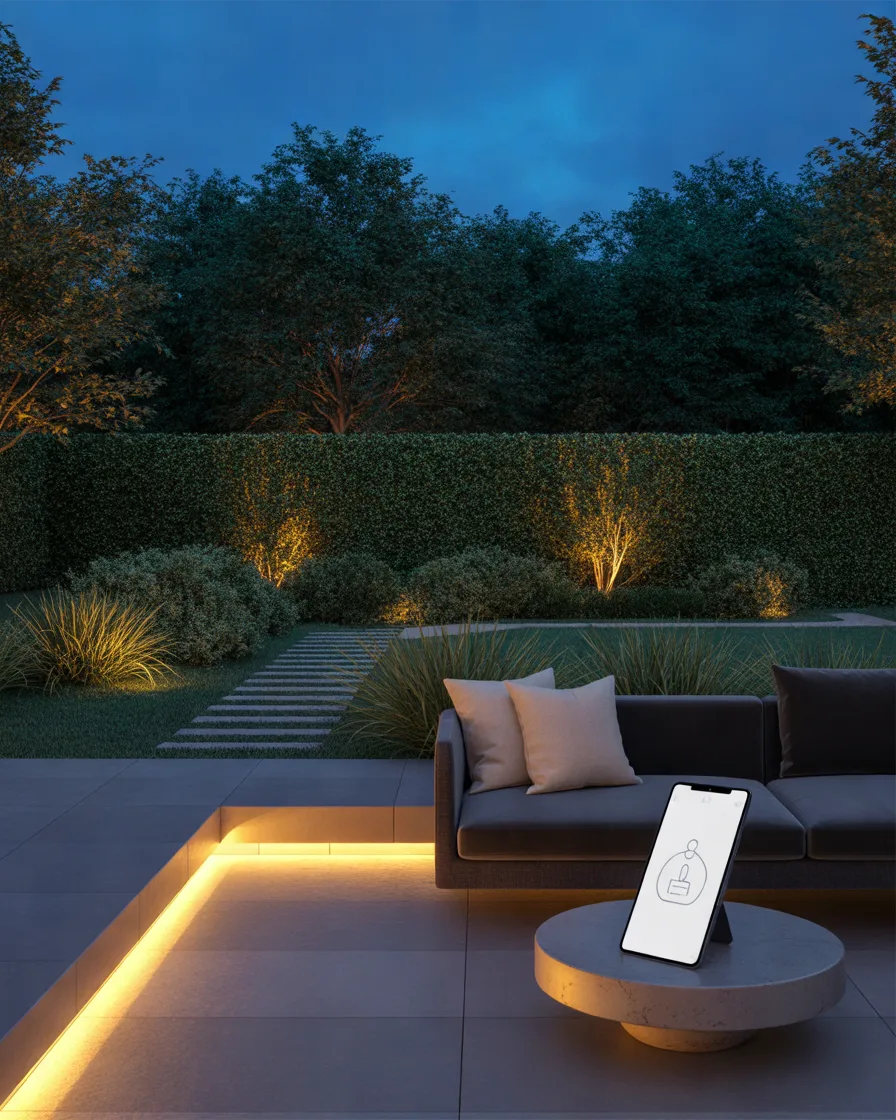
If you want more flexibility, smart backyard lighting is worth considering. These systems allow you to control compatible outdoor fixtures through a smartphone, remote control, or voice assistant, depending on the products you choose.
You can use smart lighting to adjust brightness, create different lighting scenes, and schedule lights to switch on or off automatically. For example, you might prefer brighter illumination around your outdoor dining area when guests arrive, followed by softer lighting later in the evening.
Some systems also allow you to group several fixtures together. This means you can control pathway lights, patio lighting, and decorative garden lights separately without walking around the backyard to operate each one.
Smart bulbs and outdoor-rated LED fixtures can be particularly useful in covered patios and pergolas. For exposed areas, make sure the complete fixture and its connections are rated for outdoor conditions. Not every indoor smart bulb is suitable for outdoor use.
Before buying a system, check its wireless range, compatibility, power requirements, and internet or hub requirements. If your backyard is large, you may need additional connectivity equipment.
The best part is that smart lighting makes it easier to create different moods for different occasions while keeping your outdoor space convenient and functional.
How to Choose the Right Backyard Lighting for Your Space
Choosing the right backyard lighting is about more than selecting attractive fixtures. You also need to think about how you use your outdoor space, the features you want to highlight, and the atmosphere you want to create.
Start by identifying the main areas of your backyard. If you have an outdoor dining table, prioritize comfortable lighting above and around it. If your garden includes pathways and steps, focus on making those areas easier to navigate. For a backyard designed mainly for relaxation, softer lighting around seating areas and plants may be more important.
It also helps to combine different lighting types. For example, you can use string lights above a patio, solar stake lights along a pathway, and a few spotlights to highlight trees. This creates layers of illumination rather than relying on one bright light to illuminate the entire space.
Here are a few additional considerations:
- Consider the size of your backyard: Large gardens can accommodate several lighting zones, while smaller spaces benefit from carefully selected fixtures that serve more than one purpose.
- Choose suitable brightness: Avoid overly bright lighting that makes the backyard uncomfortable. Use focused task lighting where necessary and softer ambient lighting elsewhere.
- Think about energy efficiency: LED and solar-powered options can help reduce electricity consumption, although solar performance depends on available sunlight and battery quality.
- Check weather resistance: Outdoor fixtures should have appropriate IP ratings for their installation locations. Areas exposed to direct rain need suitable protection.
- Plan for maintenance: Choose fixtures that are easy to clean, replace, and access when necessary.
- Protect the natural environment: Use warm-colored light, directional fixtures, and timers to reduce light pollution and unnecessary nighttime illumination.
A well-planned lighting arrangement should feel balanced. You want enough light to enjoy your backyard comfortably without making it look like a brightly illuminated commercial property.
Final Thoughts on Backyard Lighting Ideas
Creating a beautiful outdoor space doesn’t always require expensive renovations or a complete landscaping makeover. Sometimes, the right lighting is all you need to give your backyard a fresh and inviting appearance.
From charming string lights and decorative lanterns to modern recessed deck fixtures and smart lighting systems, there are countless ways to make your outdoor space more enjoyable after sunset. The important thing is to choose options that suit your backyard’s layout, your personal style, and the activities you enjoy most.
If you’re working with a limited budget, start with simple additions such as solar pathway lights, hanging lanterns, or warm-white string lights. These can make a noticeable difference without requiring a major investment. If you’re planning a more extensive transformation, consider combining several lighting styles to highlight different areas of the garden.
My favorite approach is to keep the lighting warm, layered, and purposeful. Let beautiful trees stand out, make pathways easier to follow, and create a comfortable atmosphere around your seating area. With a little planning and creativity, your backyard can become a place you’ll genuinely look forward to spending time in, even after the sun goes down.