
When decorating a home, the staircase often receives plenty of attention, but the ceiling above it is surprisingly easy to overlook. I used to think of a stair ceiling as nothing more than an empty surface connecting two floors. But once I started noticing beautifully designed stairways, I realized how much the ceiling contributes to the overall atmosphere.
The right stairs ceiling design can completely change how a staircase feels. A narrow stairway can appear brighter and more spacious, while a large staircase can become a dramatic architectural feature. From modern recessed lighting and elegant wooden panels to luxurious chandeliers and creative geometric patterns, there are countless ways to turn the ceiling above your stairs into something memorable.
What I especially like about staircase ceiling design is that it gives you an opportunity to experiment without overwhelming the rest of the house. You can introduce textures, colors, lighting, or architectural details in a relatively contained area.
If you are planning a renovation, building a new home, or simply looking for inspiration, these 15 stairs ceiling design ideas can help you create a staircase that feels stylish, intentional, and beautifully connected to the rest of your interior.
1. Modern Recessed Lighting Stairs Ceiling Design
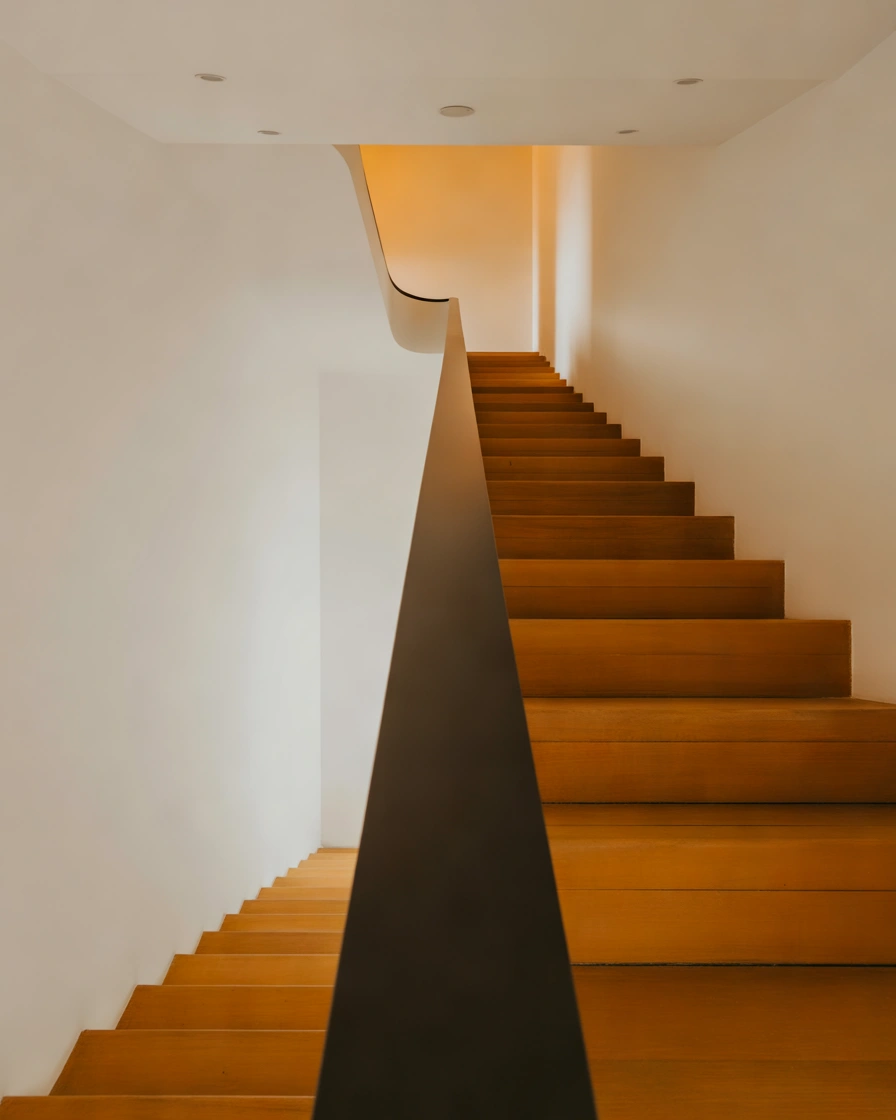
One of my favorite options for a clean and contemporary staircase is a ceiling with recessed lighting. This design works especially well in modern homes because it keeps the ceiling simple while providing practical illumination.
Instead of using a large hanging fixture, several small recessed lights can be installed along the length of the staircase. I love how this creates an even wash of light without making the space feel crowded.
For a narrow staircase, place the lights in a straight line following the direction of the stairs. In a wider stairwell, you can use two rows or create a symmetrical pattern.
Warm white lighting usually creates a more comfortable residential atmosphere, while neutral white lighting can give the staircase a crisp contemporary appearance.
A white or light beige ceiling keeps the design airy, particularly when combined with wooden steps and simple metal railings.
You can also install dimmable recessed lights so the staircase feels bright during the day and softer in the evening.
2. Wooden Panel Stairs Ceiling Design
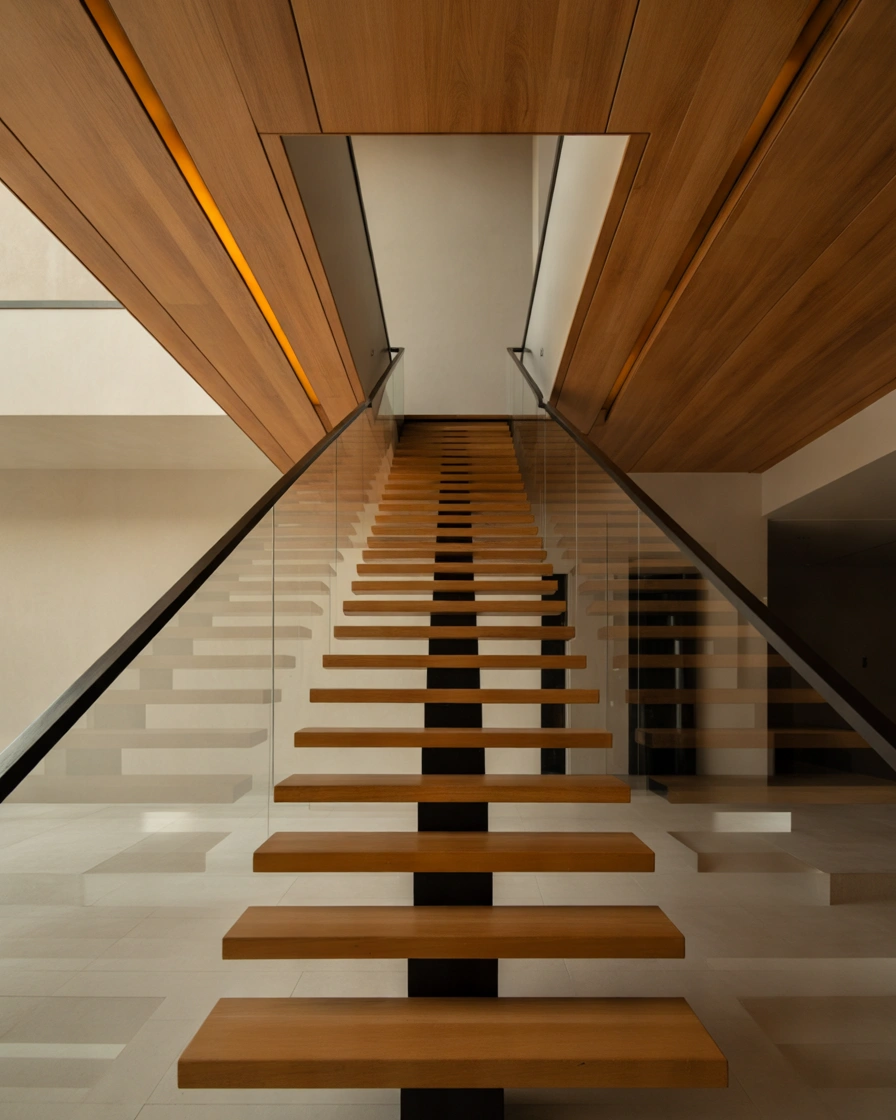
Wood is one of those materials that instantly makes a staircase feel warmer. A wooden ceiling above the stairs can create a beautiful connection between different floors while adding natural texture.
I particularly like this idea in homes that already feature wooden flooring, doors, furniture, or staircase treads. Repeating the same wood tone on the ceiling helps create visual continuity.
You can cover the entire staircase ceiling with wooden planks or use narrow timber strips with small gaps between them for a more modern architectural look.
Light oak works beautifully in Scandinavian or minimalist interiors, while walnut or darker wood creates a richer and more sophisticated appearance.
If the stairwell does not receive much natural light, I would avoid extremely dark wood across the entire ceiling. Instead, use lighter wood or combine wooden panels with white sections.
Small recessed lights installed between the wooden panels can make this design look especially polished.
3. False Ceiling With Hidden LED Lighting
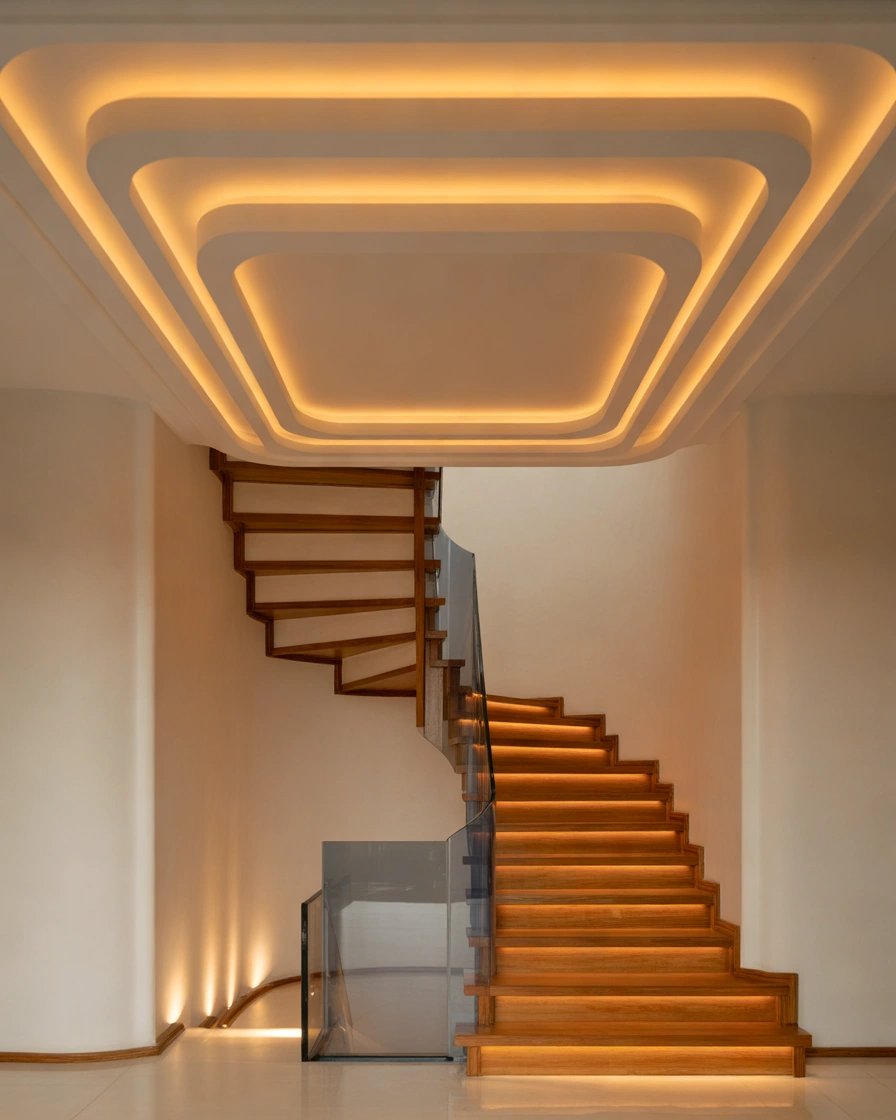
A false ceiling can add depth and dimension to an otherwise plain stairway. One of the most stylish approaches is combining a layered false ceiling with hidden LED strip lighting.
The lighting can be installed inside recessed channels around the ceiling edges, creating a soft glow rather than harsh direct light.
I love this design for modern homes because the light seems to float around the ceiling. It looks especially attractive at night when the main lights are turned off.
You can keep the ceiling rectangular for a simple look or introduce curves and geometric shapes for something more decorative.
Soft warm LED strips usually work best in residential staircases because they add a welcoming atmosphere.
If you want something slightly more dramatic, combine hidden lighting with a statement pendant light in the center of the stairwell.
4. Statement Chandelier Staircase Ceiling
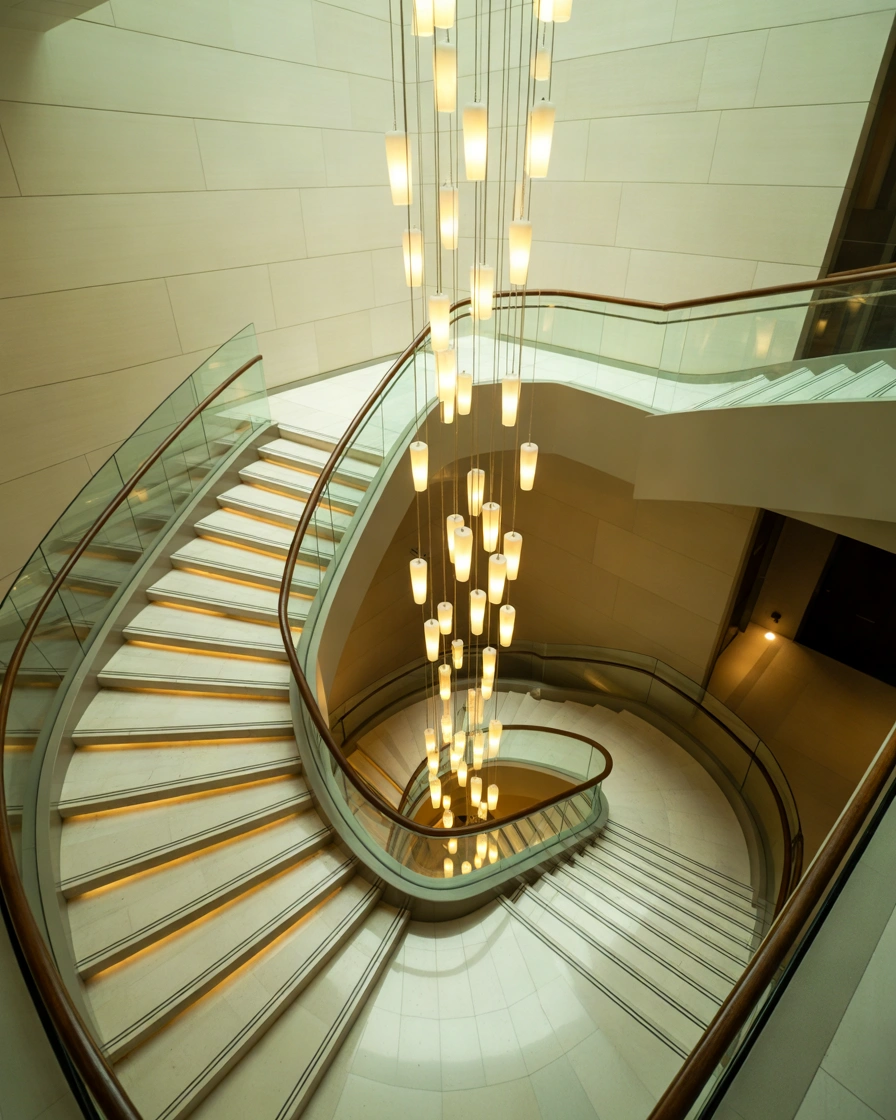
If you have a tall stairwell or double-height staircase, a statement chandelier can become the focal point of the entire space.
I think staircases are actually one of the best places for dramatic hanging lights because the vertical height allows the fixture to be appreciated from several angles.
Instead of choosing a traditional chandelier, you could select a modern cascading design made from glass globes, crystals, metallic rings, or sculptural pendants.
For a staircase that spans two or three floors, a long cascading chandelier creates a striking visual connection between levels.
The ceiling itself can remain simple so the lighting fixture receives most of the attention.
Before installing a chandelier, make sure the size suits your stairwell. A fixture that is too small can disappear visually, while an oversized design may make a compact staircase feel cramped.
5. Geometric Pattern Ceiling Above the Stairs
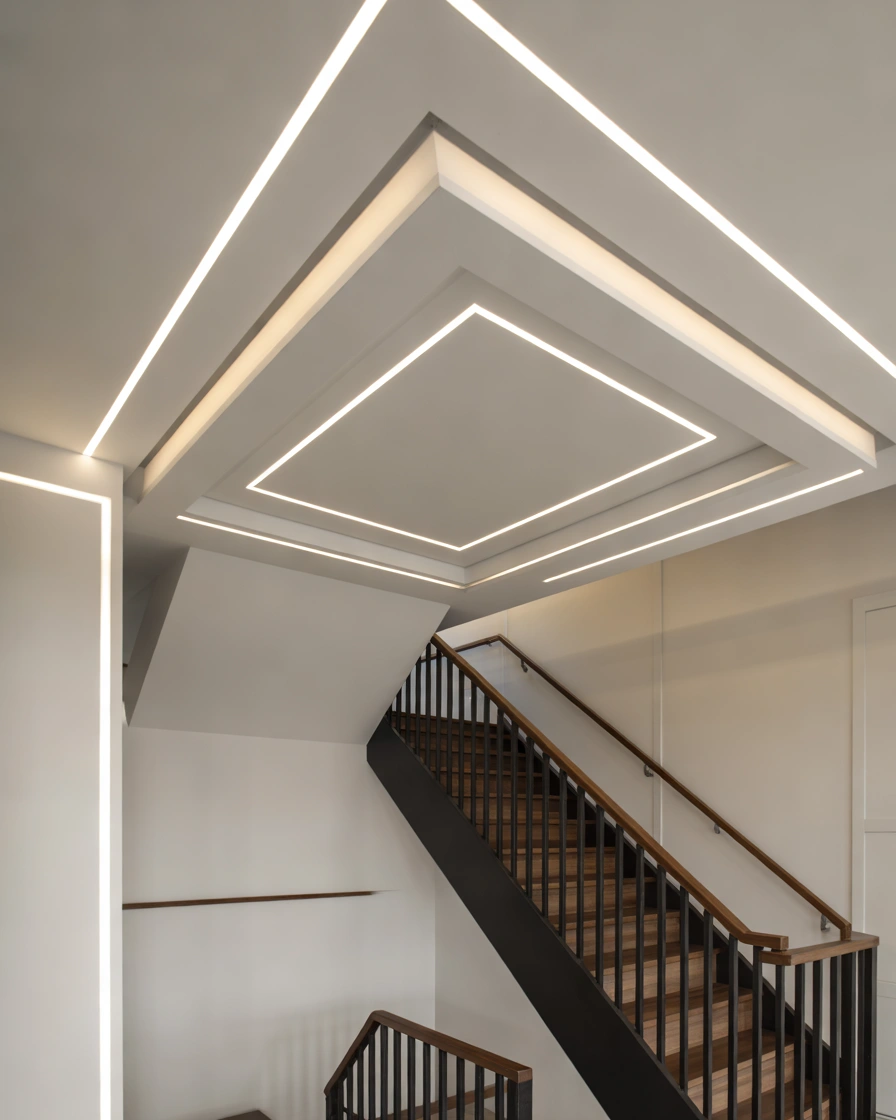
A geometric ceiling is an excellent choice when you want the staircase to feel modern and architectural.
Squares, rectangles, diagonal lines, hexagons, or layered ceiling panels can introduce visual movement that complements the direction of the stairs.
I especially like rectangular ceiling sections that follow the staircase upward because they naturally guide the eye toward the upper floor.
You can create these patterns using gypsum board, wooden battens, molding, or recessed LED channels.
Keeping the color palette simple is usually best. White and cream create a subtle effect, while black accents can make the geometry more noticeable.
This design works beautifully in contemporary interiors where clean lines are already part of the overall style.
6. Skylight Stairs Ceiling Design
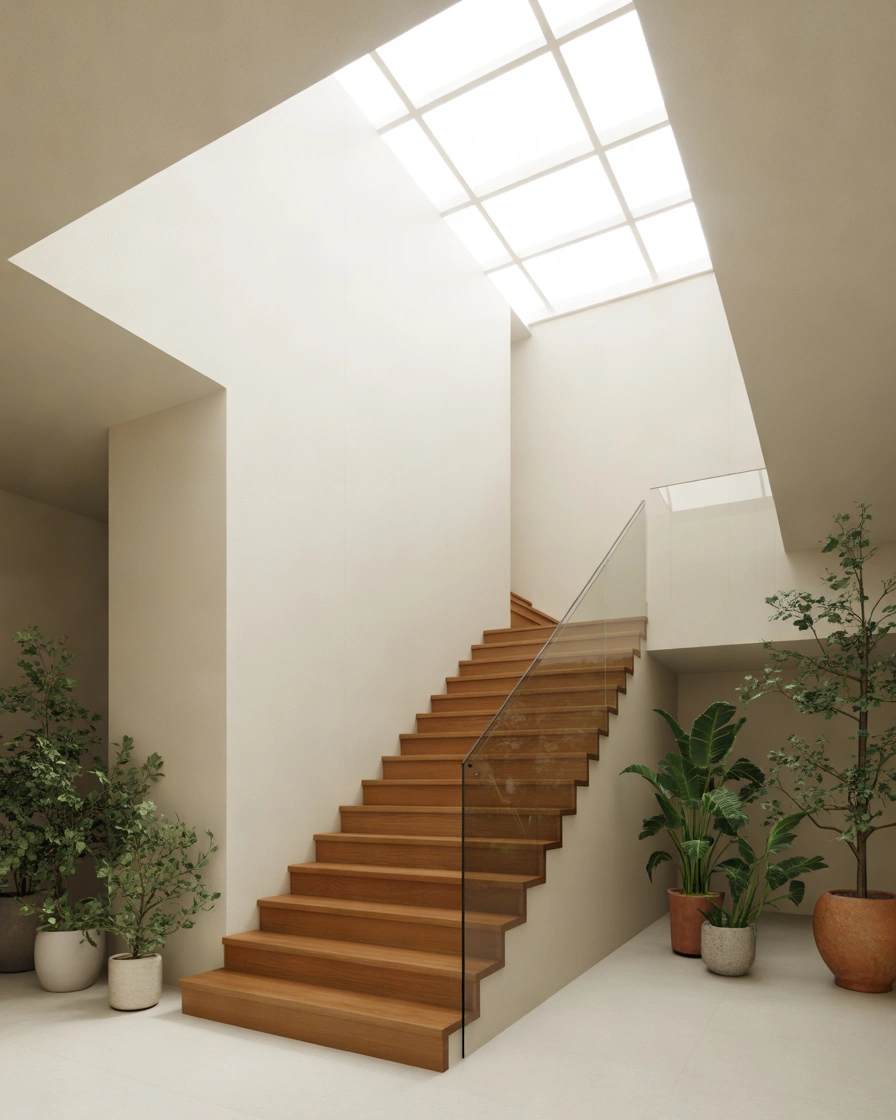
If your staircase is located near the center of your home, adding a skylight can completely transform the space.
Natural light coming from above makes the staircase feel larger, fresher, and much more inviting.
I love skylights over stairs because they bring daylight into areas that might otherwise feel dark. During the day, you may barely need artificial lighting.
A large rectangular skylight works beautifully in modern homes, while several smaller roof windows can create an interesting architectural rhythm.
The natural light also highlights staircase materials such as wood, stone, glass, and metal.
If privacy or heat is a concern, you can choose tinted, frosted, or solar-control glazing.
Adding plants around the staircase can make the space even more beautiful because the natural light supports indoor greenery.
7. Coffered Stairs Ceiling Design
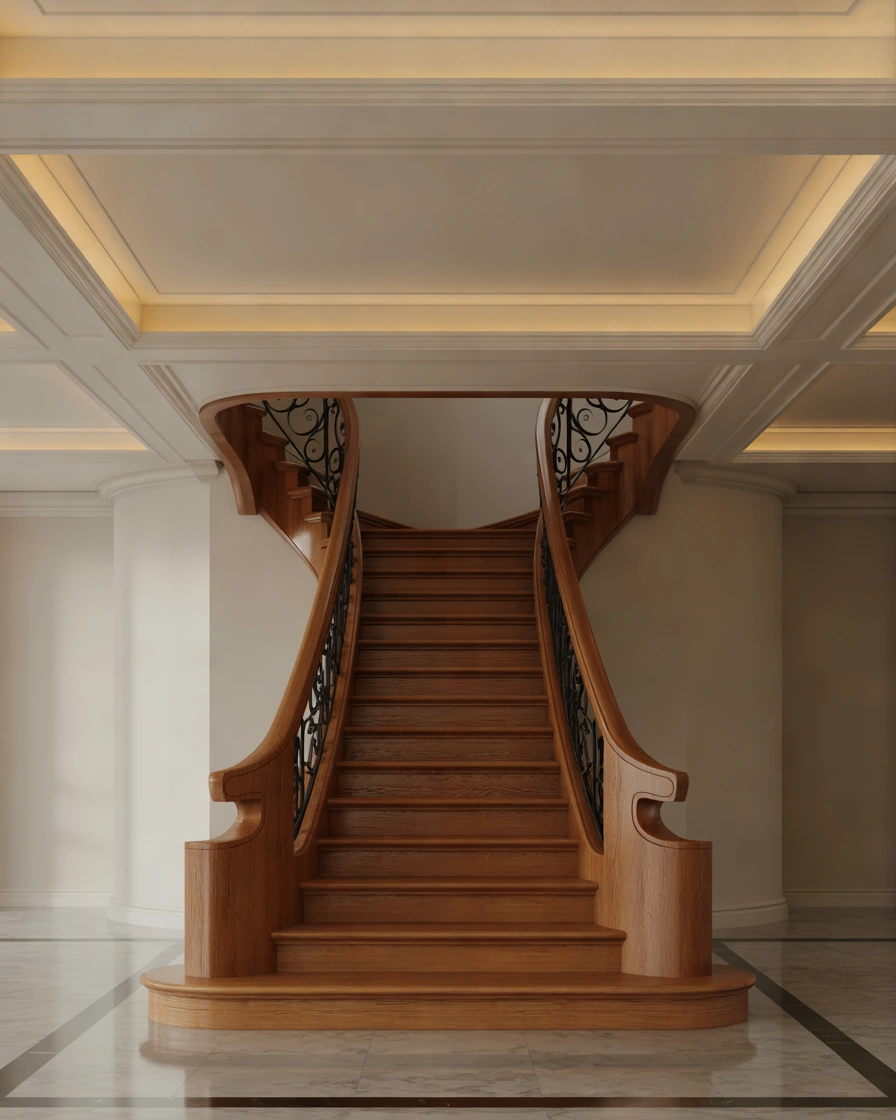
Coffered ceilings are usually associated with living rooms or formal dining spaces, but they can look equally impressive above a staircase.
A coffered ceiling consists of recessed panels framed by decorative beams or molding. It adds depth and creates a more traditional or sophisticated appearance.
I would recommend this style for classic, transitional, Georgian, or luxury interiors.
The panels can remain white for an elegant monochromatic finish, or you can paint the recessed sections in a slightly contrasting shade.
For an upscale appearance, small recessed lights can be placed inside selected ceiling panels.
If your staircase ceiling is high, deeper coffers can create dramatic shadows. For a lower staircase, shallow molding gives the same visual effect without making the ceiling feel heavy.
8. Minimalist Flat Ceiling With Linear Lighting
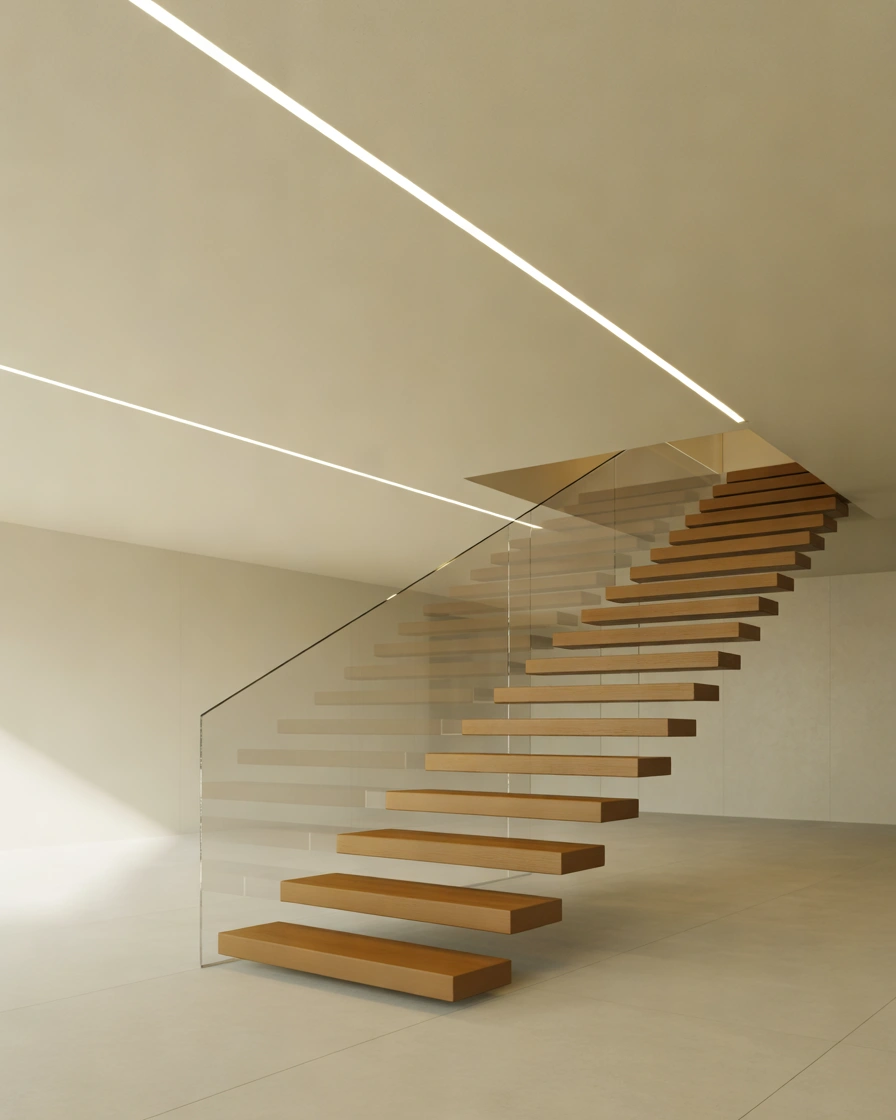
Sometimes the simplest design creates the strongest impression.
A smooth flat ceiling with slim linear lighting can give a staircase a beautifully modern and uncluttered appearance.
I like this approach for minimalist homes where architectural simplicity is important. Instead of multiple spotlights, a single continuous LED line can follow the direction of the stairs.
The light could be installed in the center of the ceiling or positioned near one edge for a more asymmetrical appearance.
Black recessed lighting channels look dramatic against a white ceiling, while white channels blend in for a softer style.
Pair this ceiling with floating stairs, glass balustrades, and neutral walls for a clean contemporary look.
9. Decorative Molding Stairs Ceiling Design
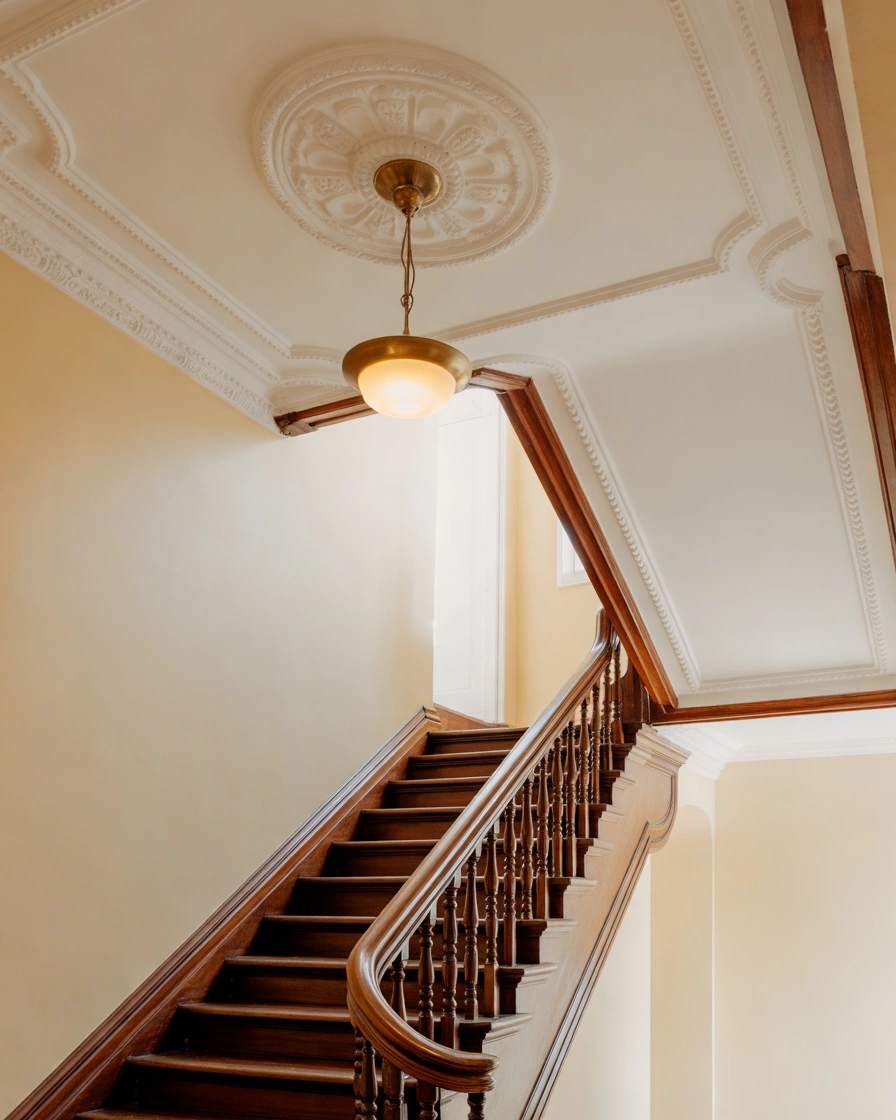
Decorative molding can turn a plain staircase ceiling into something elegant without requiring major structural changes.
You can use simple rectangular molding for a contemporary-classic look or more detailed plasterwork for a traditional interior.
I particularly like molding when it continues from the ceiling onto the nearby walls because it makes the stairwell feel thoughtfully designed rather than separate from the rest of the house.
A central ceiling medallion can also be added above a hanging pendant or chandelier.
Paint everything the same color for a subtle architectural effect, or use a slightly darker shade inside the molding frames for more contrast.
This approach works well in both older homes and new builds designed with classic details.
10. Dark Ceiling for a Dramatic Staircase
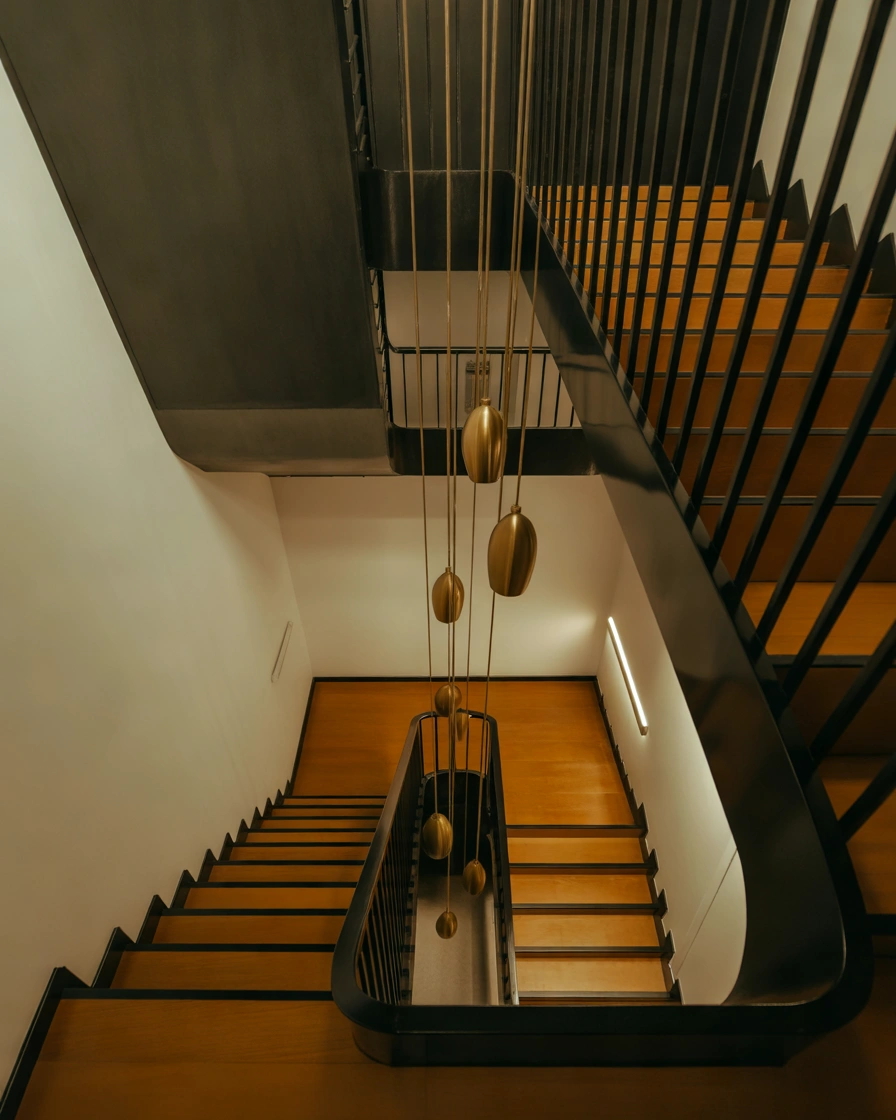
Although light ceilings are more common, a dark stairs ceiling design can create incredible drama.
Charcoal gray, deep navy, dark brown, or even matte black can give the staircase a sophisticated and intimate atmosphere.
I would use this idea when the staircase has plenty of natural or artificial light so the area does not feel closed in.
A black ceiling paired with warm wood steps and brass lighting can look extremely luxurious.
You can also use dark paint only on the stairwell ceiling while keeping the walls light. This creates a strong visual contrast without overwhelming the entire space.
Soft wall lighting or recessed spotlights help balance the darker ceiling color.
11. Wooden Beam Ceiling Over the Staircase
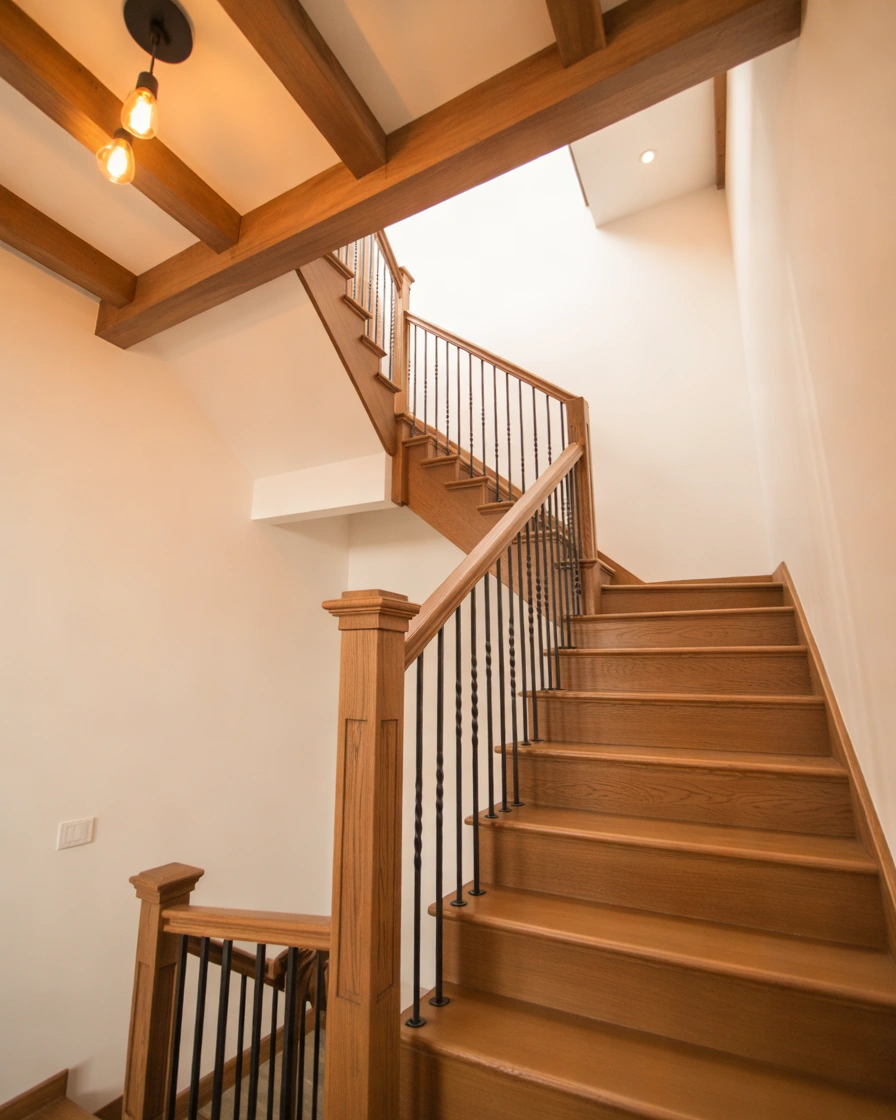
Exposed ceiling beams can introduce warmth, personality, and architectural character.
This design looks especially beautiful in farmhouse, rustic, Mediterranean, and transitional homes.
You can use real structural beams or decorative faux beams if you simply want the visual effect.
I like medium or dark wooden beams against a white ceiling because the contrast makes each beam clearly visible.
If your staircase is modern, use clean rectangular beams rather than heavily distressed wood. For a rustic interior, reclaimed timber can create a more relaxed and natural feeling.
Pendant lights positioned between the beams can add another layer of interest.
12. Curved Stairs Ceiling Design
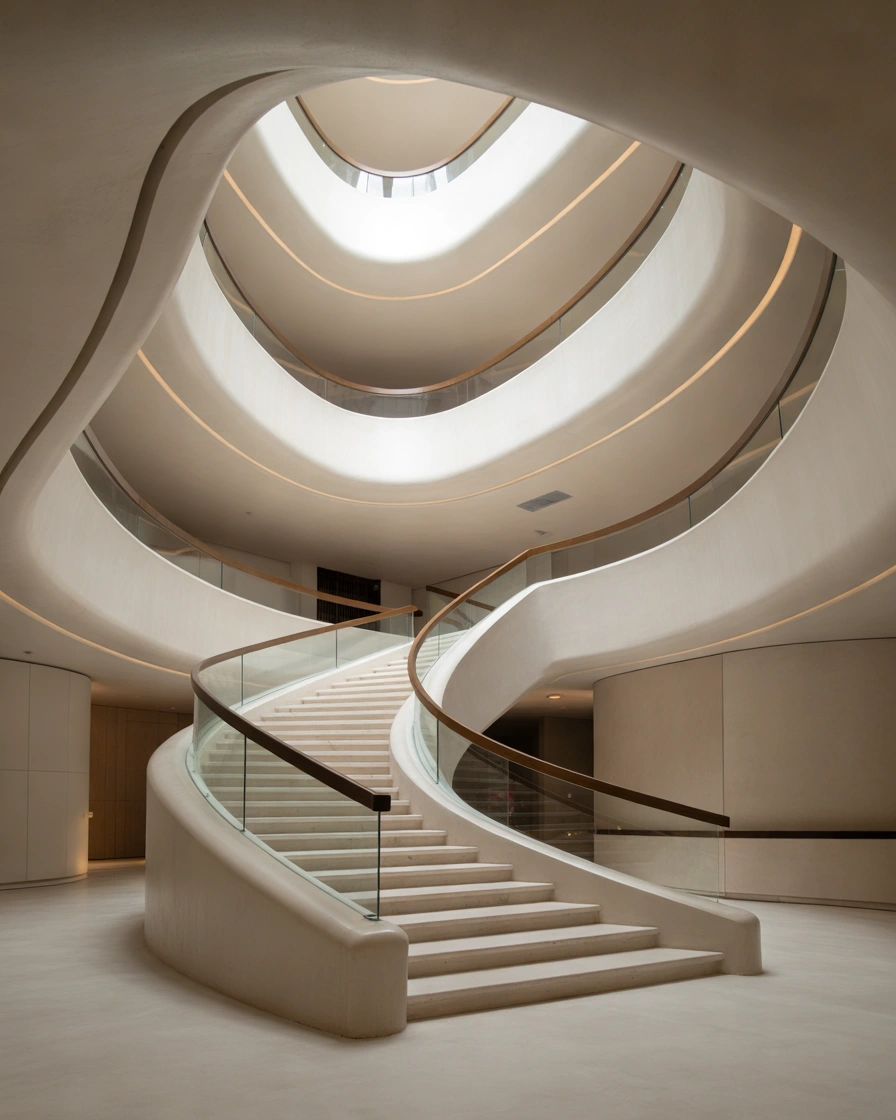
A curved ceiling can beautifully complement a curved or spiral staircase.
Instead of using straight architectural lines, the ceiling follows the natural movement of the stairs, creating a softer and more fluid appearance.
I find this especially effective in luxury homes where the staircase itself acts as a sculptural feature.
Hidden LED lighting along the curved ceiling edges can emphasize the shape even more.
You could also add a circular recessed section above the center of a spiral staircase and hang a sculptural chandelier through it.
Soft neutral shades such as white, ivory, or warm beige keep the design elegant and allow the architectural curves to stand out.
13. Ceiling Wallpaper for a Creative Staircase
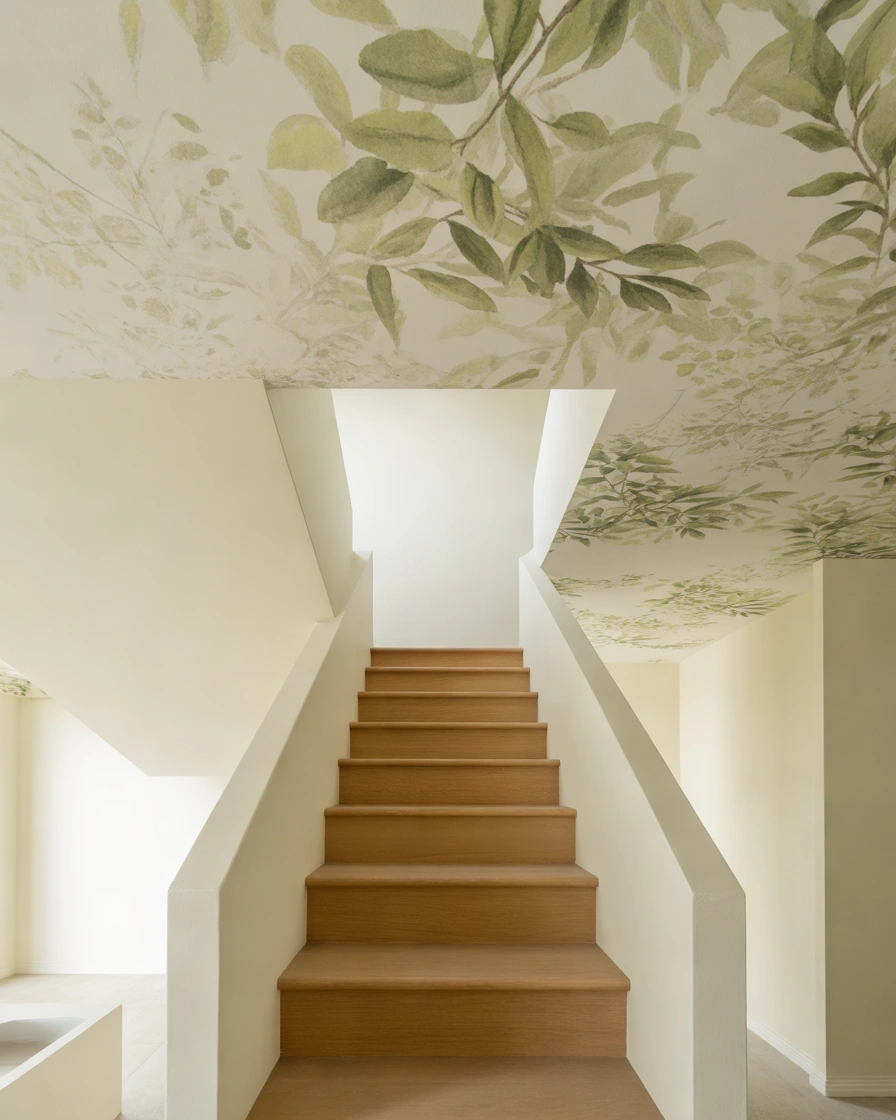
Wallpaper is not only for walls. Using it on the ceiling above a staircase can create a surprisingly stylish feature.
Because the staircase ceiling is usually viewed from multiple angles, patterned wallpaper can add an artistic element without covering an entire room.
Botanical prints, subtle geometric designs, clouds, vintage patterns, or textured wallpapers can all work depending on your decorating style.
I prefer using a pattern that connects with colors already present in the surrounding hallway or staircase.
For example, soft green botanical wallpaper can complement indoor plants, while blue-gray geometric wallpaper works beautifully with modern interiors.
Keep the staircase walls fairly simple so the ceiling remains the main decorative feature.
14. Ceiling Pendant Cluster Above the Stairs
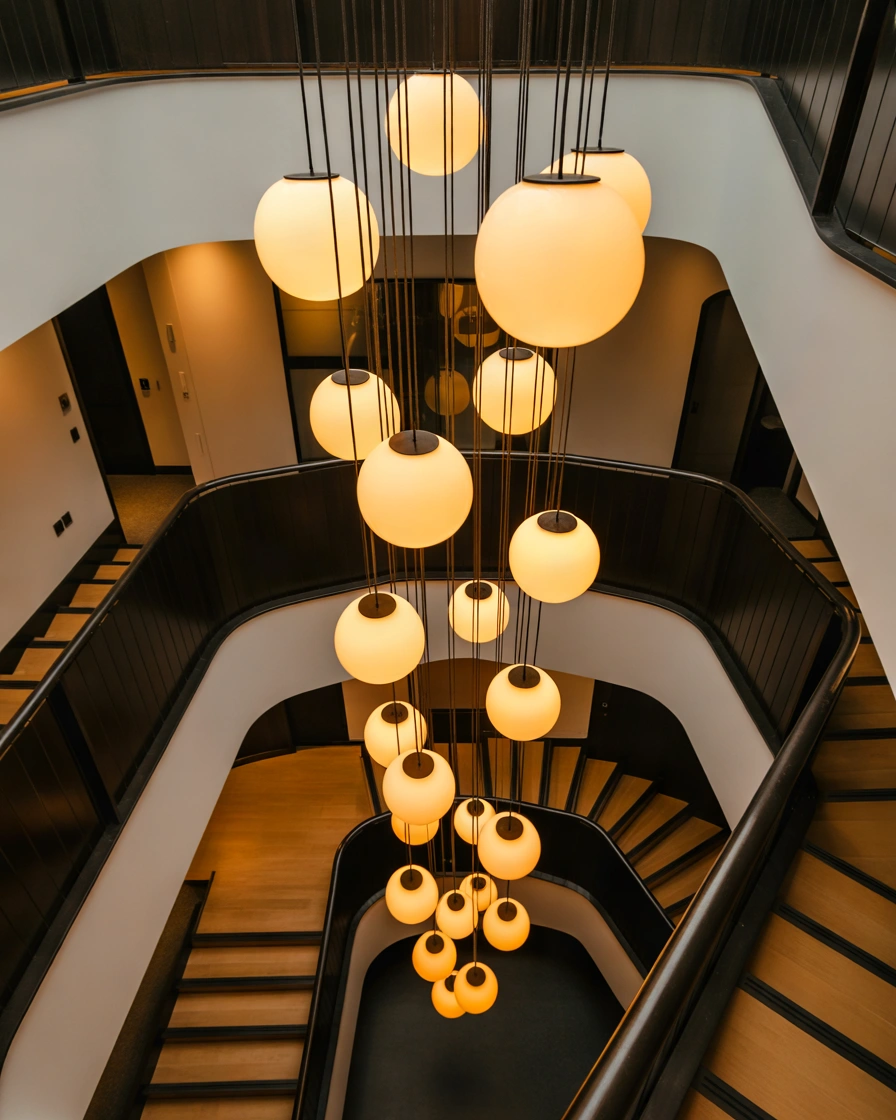
Instead of using one chandelier, consider hanging a cluster of smaller pendant lights.
This is one of my favorite staircase lighting ideas because it feels modern, flexible, and visually interesting.
The pendants can hang at different heights, following the vertical movement of the staircase.
Glass globes are perfect for a light and airy look, while metal pendants create a more industrial appearance.
You can also choose sculptural ceramic, brass, or frosted glass pendants for a designer-inspired result.
The key is spacing. The lights should feel intentionally arranged rather than randomly suspended.
This style works especially well in stairwells that can be viewed from both the lower and upper floors.
15. Luxury Marble and Gold Staircase Ceiling Design
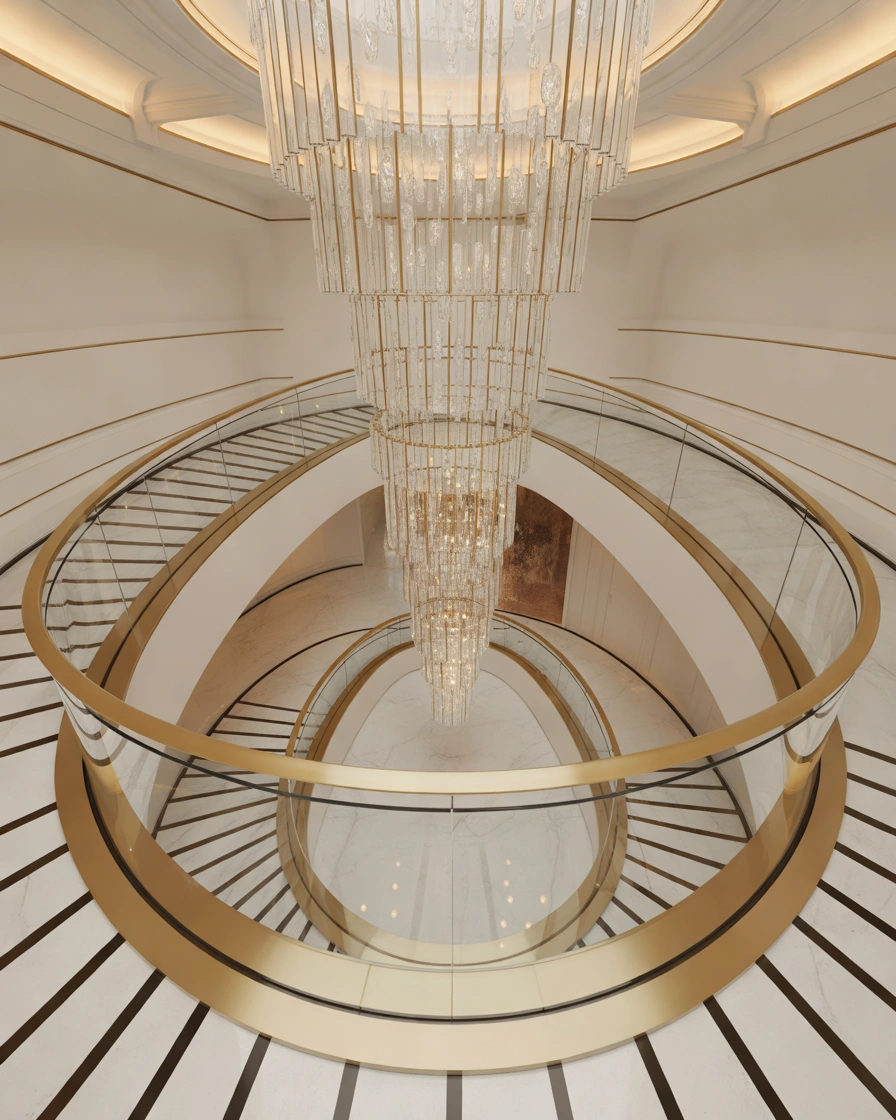
For a truly glamorous staircase, combine sophisticated ceiling details with marble and gold accents.
The ceiling itself does not necessarily need marble. Instead, it can feature elegant molding, recessed lighting, and gold-trimmed architectural elements that coordinate with marble stairs.
I particularly love warm white ceilings with subtle gold lines or brass light fixtures. The combination feels luxurious without becoming excessively decorative.
A dramatic chandelier can complete the look, especially in a double-height entrance staircase.
If you are using marble flooring or stairs, repeat one of the marble’s warmer tones in the ceiling lighting or nearby wall finishes.
This helps the entire staircase feel coordinated rather than overly ornate.
How to Choose the Right Stairs Ceiling Design
Choosing a staircase ceiling design is not only about finding something beautiful. The proportions of your staircase, available ceiling height, lighting conditions, and overall interior style all matter.
For a small or narrow staircase, I would keep the ceiling relatively simple. Light colors, recessed spotlights, linear LEDs, and minimal molding help maintain an open feeling.
For a double-height staircase, you have more room to experiment. Large chandeliers, wooden panels, coffered ceilings, skylights, or geometric designs can create impressive architectural features.
Your home’s existing design style should also guide your decision.
Modern interiors usually look best with clean ceilings, hidden lighting, geometric forms, or wooden slats. Traditional homes can handle decorative molding, ceiling medallions, beams, and chandeliers. Scandinavian interiors tend to look beautiful with pale wood, white ceilings, and simple lighting.
I also recommend thinking about how the staircase looks from both floors. Unlike a regular room ceiling, a staircase ceiling may be visible from several heights and viewing angles.
Best Lighting for a Staircase Ceiling
Lighting can make an ordinary stair ceiling look completely different.
Recessed spotlights are one of the most practical options because they provide good visibility without taking up much visual space.
Linear LED lights are ideal for modern staircases, particularly when they follow the direction of the stairs.
Pendant lights work best when the ceiling is high enough to avoid interfering with headroom.
For a double-height stairwell, cascading chandeliers or pendant clusters can take advantage of the vertical space.
Hidden LED strips inside false ceilings are another excellent option because they create soft ambient light.
Personally, I like combining more than one lighting layer. For example, you might use recessed ceiling lighting for everyday use and subtle wall lights along the stairs for nighttime illumination.
Best Colors for Stairs Ceiling Design
White continues to be one of the safest ceiling colors because it reflects light and makes the stairwell feel spacious.
However, you do not have to limit yourself to plain white.
Warm ivory and soft beige can make traditional staircases feel more inviting. Light gray works beautifully in modern homes. Natural wood tones introduce warmth, while charcoal and black create drama.
When choosing ceiling colors, consider the amount of daylight available.
Dark ceilings usually work best in large stairwells with good lighting, while lighter shades are generally better for smaller enclosed staircases.
You can also create contrast by using a white ceiling with dark beams or geometric details.
How to Make a Small Staircase Ceiling Look Bigger
Small staircase areas can easily feel narrow or enclosed, so ceiling design should focus on creating visual openness.
I would start with a light ceiling color such as warm white, ivory, or pale gray.
Use simple recessed lighting rather than bulky fixtures.
A long linear light running in the same direction as the stairs can visually stretch the space.
Glossy or reflective finishes should be used carefully, but a subtle satin ceiling can reflect slightly more light than a completely matte surface.
Another trick is to keep the ceiling and upper wall colors similar. Reducing strong visual boundaries can make the stairwell feel taller.
If possible, introduce natural daylight through a window or skylight because bright spaces almost always appear larger.
Final Thoughts on Stairs Ceiling Design
A staircase does much more than connect one floor of a home to another. With the right ceiling treatment, it can become one of the most visually impressive areas in the entire house.
Whether you prefer a simple modern stairs ceiling design with recessed lighting or a dramatic double-height ceiling with a cascading chandelier, the best choice is one that complements both the size of your staircase and the overall personality of your home.
For contemporary spaces, I love the look of linear LEDs, wooden slats, skylights, and geometric ceiling designs. In more traditional homes, coffered ceilings, exposed beams, decorative molding, and elegant chandeliers can add timeless character.
You also do not need an enormous renovation budget to improve your staircase. Sometimes fresh paint, better lighting, decorative molding, or a thoughtfully chosen pendant fixture is enough to completely change the space.
The most successful staircase designs feel connected from top to bottom. When the stairs, railings, walls, lighting, and ceiling work together, the entire area becomes more polished and intentional.
Hopefully, these 15 stairs ceiling design ideas give you inspiration to look upward the next time you are planning your interior. That previously overlooked ceiling might just become one of your favorite design features in the house.
