
Working from home has completely changed the way many of us think about our personal spaces. A few years ago, a home office was often just a small corner with a desk and a chair. Today, it has become a place where we attend meetings, build businesses, study, create content, and spend several hours every day.
When I first started improving my home office setup, I focused mostly on furniture, desk organization, and technology. I thought a comfortable chair and a powerful computer were enough to create a productive environment. However, I quickly realized that one important element was missing: proper lighting.
The right home office lighting can completely transform the feeling of a workspace. It can make a small room feel bigger, reduce eye strain, improve concentration, and even influence your mood throughout the day.
After experimenting with different lighting styles, positions, and designs, I learned that good office lighting is not just about making a room brighter. It is about creating a balanced environment where your eyes feel comfortable and your mind stays focused.
In this guide, I am sharing 15 home office lighting ideas that can help you design a workspace that looks professional, feels comfortable, and supports productivity.
Why Home Office Lighting Matters for Productivity
Before choosing any lighting setup, it is important to understand why lighting plays such a major role in your work environment.
Many people underestimate the impact of poor lighting. A workspace with harsh overhead lights, dark corners, or screen glare can quickly become uncomfortable. You may experience tired eyes, headaches, reduced focus, and lower energy levels.
A properly designed home office lighting system should achieve three goals:
- Provide enough brightness for working
- Reduce shadows and screen reflections
- Create a comfortable atmosphere for long working hours
The best home office lighting usually combines different types of lights instead of relying on a single source.
For example:
- Natural light from windows
- General room lighting
- Task lighting for your desk
- Decorative lighting for atmosphere
This layered approach creates a balanced workspace that feels both functional and inviting.
1. Use Natural Light as Your Primary Home Office Lighting Source
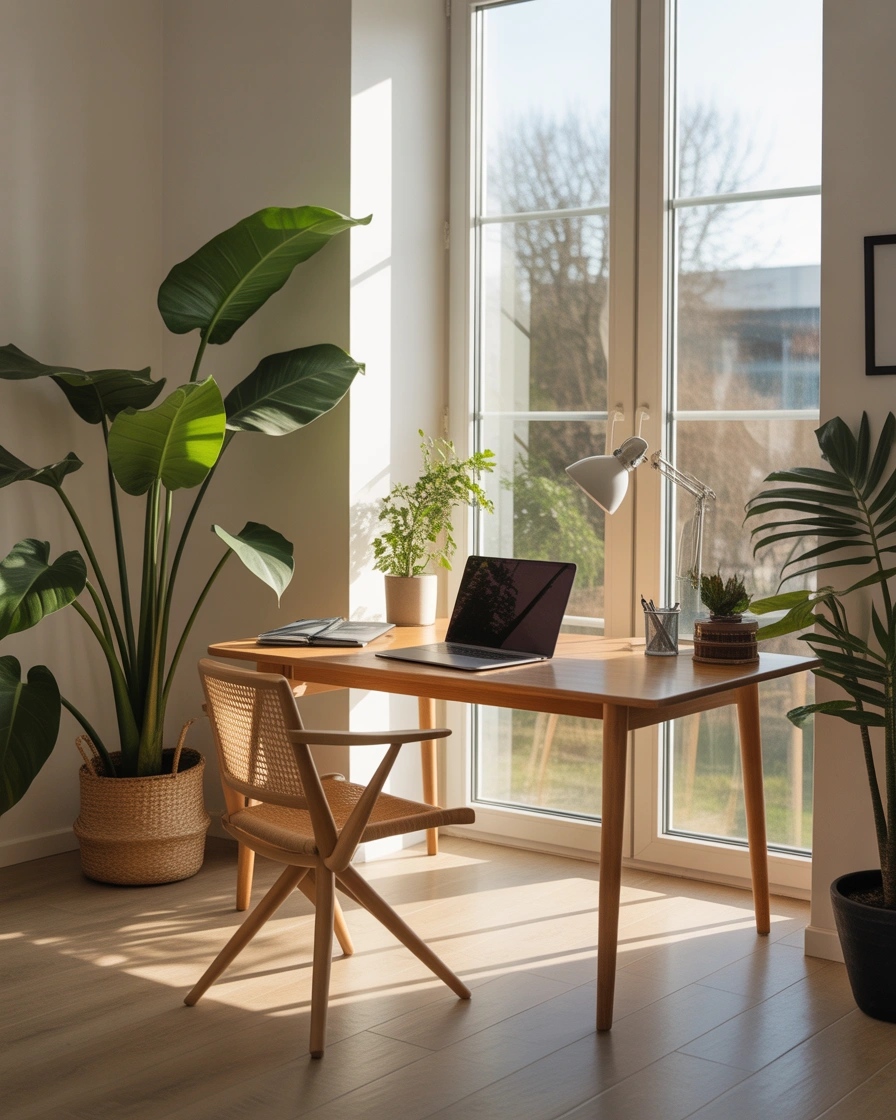
One of the simplest and most effective home office lighting ideas is to maximize natural light.
Natural sunlight creates a refreshing workspace and can make you feel more energetic during working hours. If possible, place your desk near a window where you can benefit from daylight.
When I adjusted my desk position closer to natural light, I noticed that my workspace immediately felt more open and comfortable. The room looked brighter, and I needed less artificial lighting during the day.
However, positioning your desk correctly is important.
Avoid placing your computer screen directly in front of a window because sunlight can create reflections and make it difficult to see your display. Instead, position your desk perpendicular to the window.
This allows natural light to come from the side, reducing glare while keeping your workspace bright.
Additional tips:
- Use light-colored curtains to control brightness
- Keep windows clean to maximize sunlight
- Avoid blocking windows with large furniture
- Use adjustable blinds during very bright afternoons
Natural light is especially beneficial for people who spend long hours working because it creates a connection with the outside environment and prevents the workspace from feeling closed or isolated.
2. Add a Stylish Desk Lamp for Focused Task Lighting
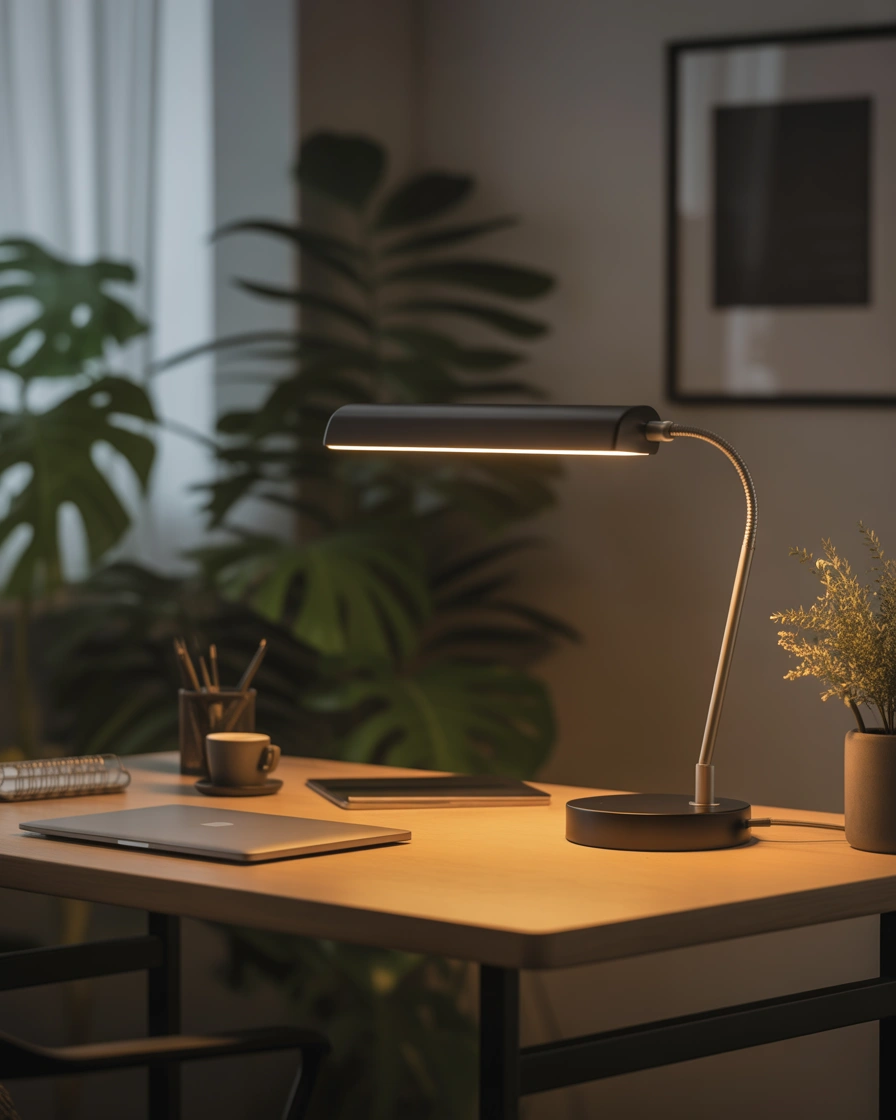
A desk lamp is one of the most important pieces of home office lighting equipment.
While ceiling lights illuminate the entire room, a desk lamp provides focused light exactly where you need it. This is especially useful when reading documents, writing notes, designing graphics, or working late in the evening.
A good desk lamp should have:
- Adjustable brightness levels
- Flexible neck or arm
- Comfortable color temperature
- Directional lighting control
I personally prefer adjustable LED desk lamps because they allow me to change the brightness depending on the task. During detailed work, brighter light helps me focus, while softer light feels better during meetings or creative sessions.
The position of your desk lamp also matters.
For right-handed users, placing the lamp on the left side helps reduce shadows while writing. For left-handed users, placing it on the right side works better.
Avoid placing the lamp directly behind your monitor because it can create unwanted reflections.
Modern desk lamps are also available in many styles:
- Minimal black metal designs
- Wooden base lamps
- Smart LED lamps
- Wireless charging lamps
- Clamp-mounted lamps
Choose a design that matches your office style while improving functionality.
3. Install Adjustable LED Ceiling Lights for Overall Brightness
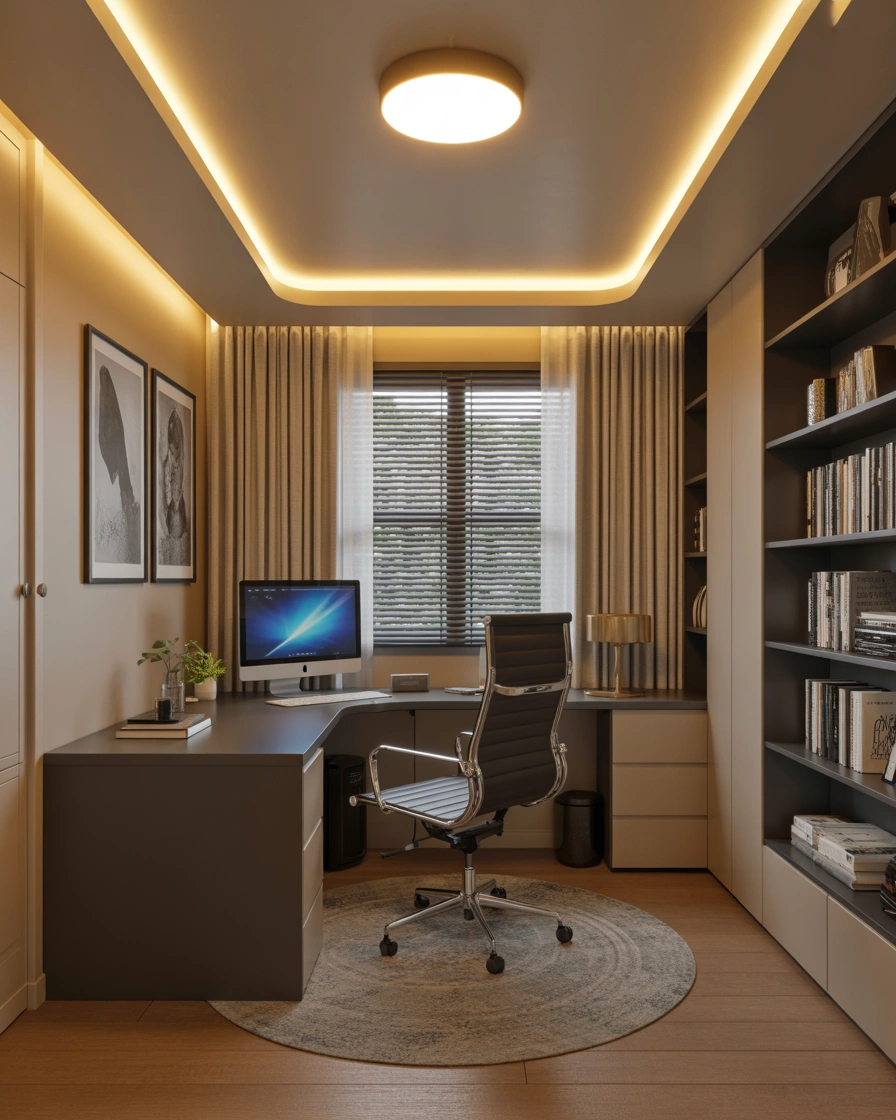
A ceiling light provides the foundation of your home office lighting system.
Many home offices rely only on a single ceiling fixture, but traditional fixed lights often create uneven brightness. Some areas become too bright while corners remain dark.
Installing adjustable LED ceiling lights gives you better control over your workspace.
LED lights are a popular choice because they:
- Consume less electricity
- Last longer
- Produce less heat
- Offer different brightness options
For a home office, choose a ceiling light that provides neutral white illumination rather than extremely warm yellow light.
A color temperature between 3500K and 5000K usually works well because it creates a clean environment without feeling too harsh.
Modern options include:
- Flush mount LED panels
- Smart ceiling lights
- Track lighting systems
- Recessed ceiling lights
Smart ceiling lights are particularly useful because you can adjust brightness and color using a mobile app or voice commands.
For example, you can use brighter lighting during work hours and softer lighting when you finish working.
4. Add Warm Ambient Lighting to Make Your Office More Comfortable
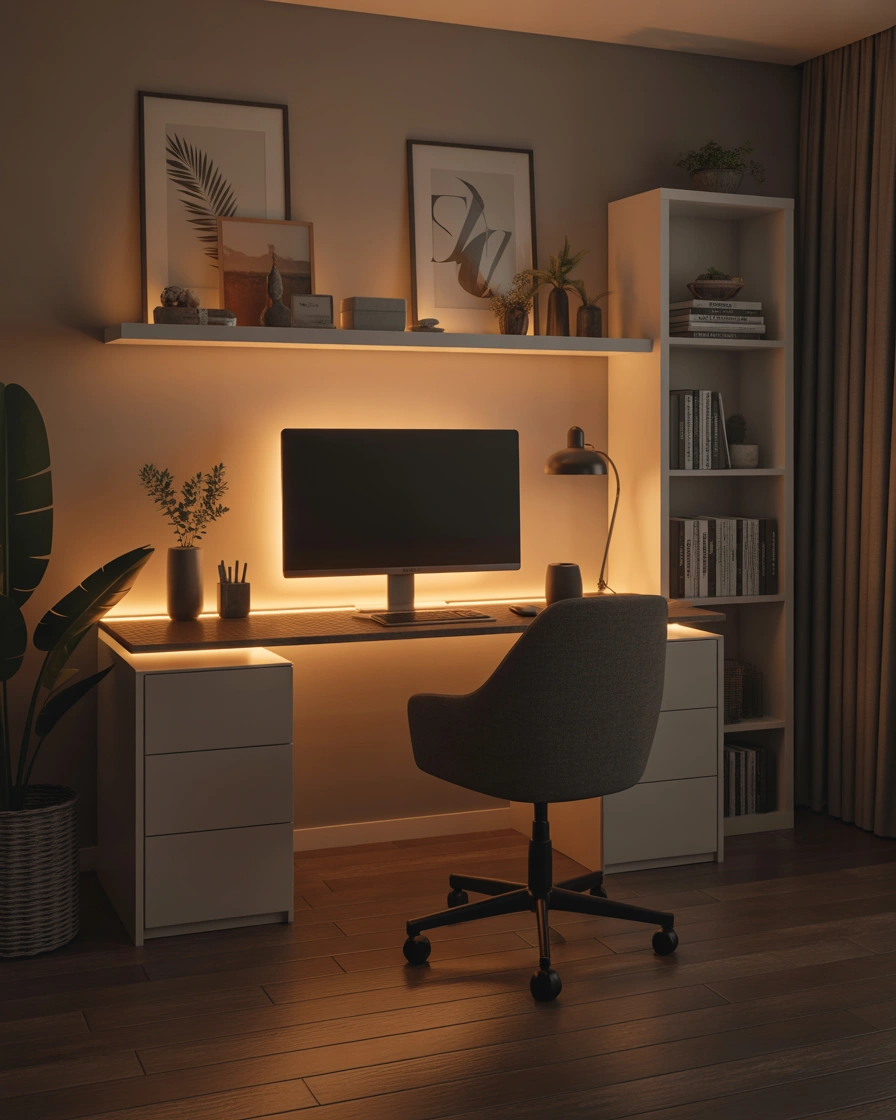
A productive workspace does not need to feel like a commercial office. Adding warm ambient lighting can make your home office more relaxing and visually appealing.
Ambient lighting is the background illumination that creates the overall mood of a room.
Examples include:
- Floor lamps
- Wall lights
- Table lamps
- LED strips
- Decorative lighting fixtures
I found that adding a warm light source behind my desk completely changed the atmosphere. Instead of feeling like a strict work area, the room became a comfortable place where I actually enjoyed spending time.
Warm lighting is especially useful during evening work sessions because it creates a softer environment after a long day.
Popular ambient lighting ideas include:
LED Strip Behind Monitor
Installing LED strips behind your monitor creates a modern glow effect and reduces contrast between your bright screen and the dark room.
Floor Lamp Near Desk
A stylish floor lamp can fill empty corners and provide additional soft lighting.
Wall Sconces
Wall-mounted lights save desk space and add a professional interior design touch.
The key is balance. Ambient lighting should support your workspace without becoming distracting.
5. Use Monitor Lighting to Reduce Eye Strain During Long Work Sessions
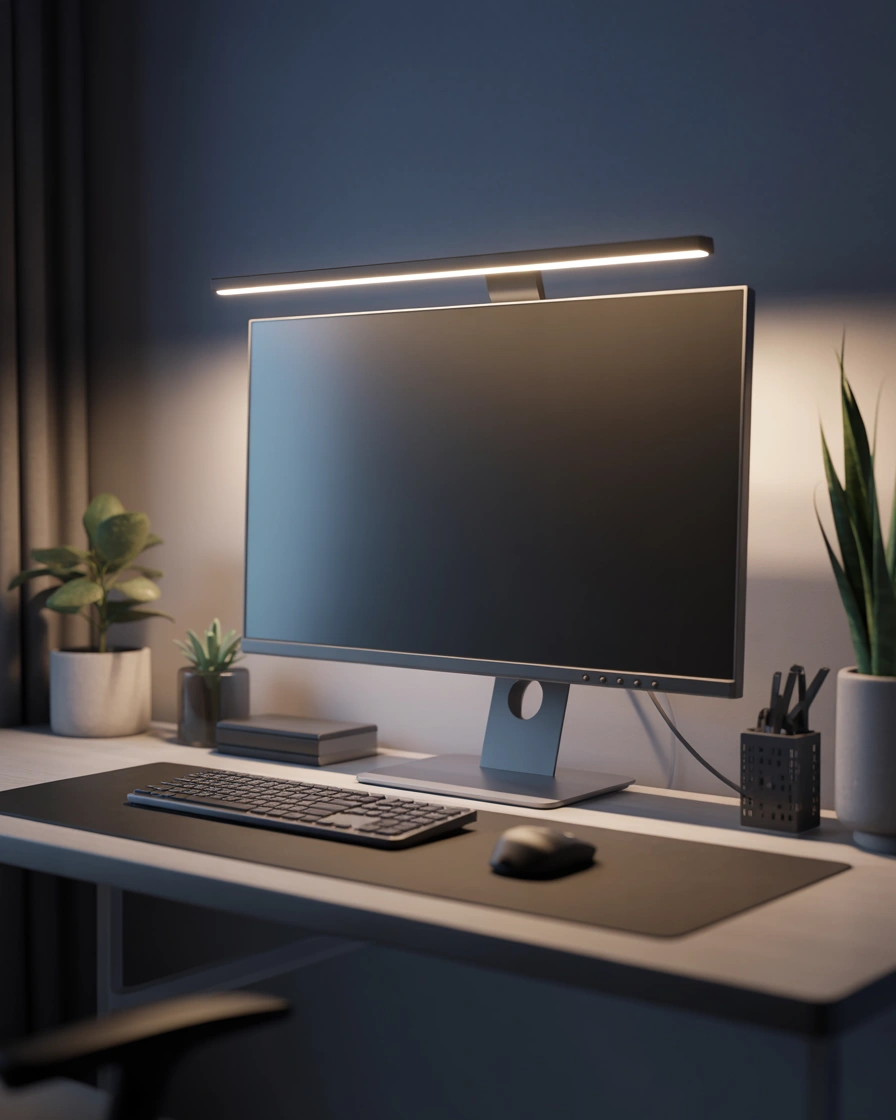
One of the most overlooked home office lighting ideas is adding dedicated lighting around your computer monitor.
If you spend several hours every day working on a computer, the difference between a bright screen and a dark room can create unnecessary stress on your eyes. This contrast forces your eyes to constantly adjust, which may lead to discomfort and fatigue.
A monitor light bar is a simple solution that provides balanced illumination without taking up desk space.
Unlike traditional desk lamps, monitor light bars are designed to sit directly on top of your screen and shine downward onto your workspace. They illuminate your keyboard, documents, and desk area while minimizing reflections on the display.
The benefits of monitor lighting include:
- Reduced eye fatigue
- Better visibility while typing
- Less screen glare
- Cleaner and more organized desk appearance
- Improved comfort during nighttime work
When selecting a monitor light, look for adjustable brightness and color temperature settings. Cooler tones can help during focused work sessions, while warmer tones are better for relaxed evening use.
Another useful tip is to avoid placing bright lights directly behind your monitor because they can create visual distractions.
A balanced setup usually includes:
- Soft light behind the monitor
- Moderate screen brightness
- A small amount of desk illumination
This creates a comfortable environment where your eyes do not constantly struggle between different brightness levels.
6. Install Smart Lighting for a Flexible Home Office Setup
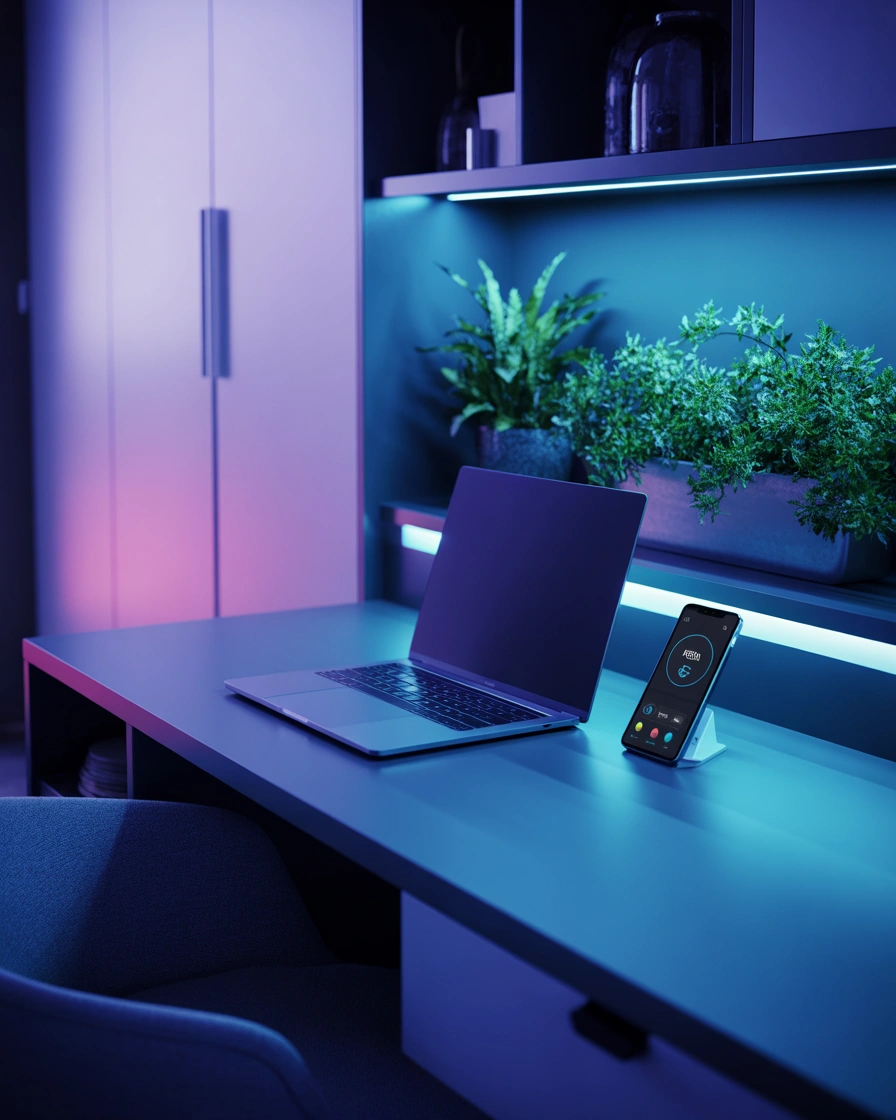
Smart lighting has become one of the most useful upgrades for modern home offices.
Unlike traditional lights that only turn on and off, smart lighting allows you to customize brightness, color temperature, and schedules according to your daily routine.
When I started exploring smart lighting options, I realized how convenient it was to create different lighting environments for different activities.
For example:
- Bright white light for focused work
- Soft warm light for video meetings
- Relaxing tones after finishing work
- Automatic lighting schedules based on time
Smart bulbs and smart LED panels can usually be controlled through:
- Mobile apps
- Voice assistants
- Wireless switches
- Smart home systems
A simple smart bulb can completely change the feeling of a room without requiring major renovation.
One of my favorite features is creating a “work mode.” With one command, the lights can adjust to a brighter setting when starting work.
You can also create an “evening mode” that gradually reduces brightness to help your mind transition away from work.
Smart lighting is especially useful for:
- Freelancers
- Remote employees
- Content creators
- Online teachers
- Entrepreneurs
It provides flexibility and allows your office to adapt to your changing needs.
7. Add Backlighting Behind Your Desk or Monitor for a Premium Look
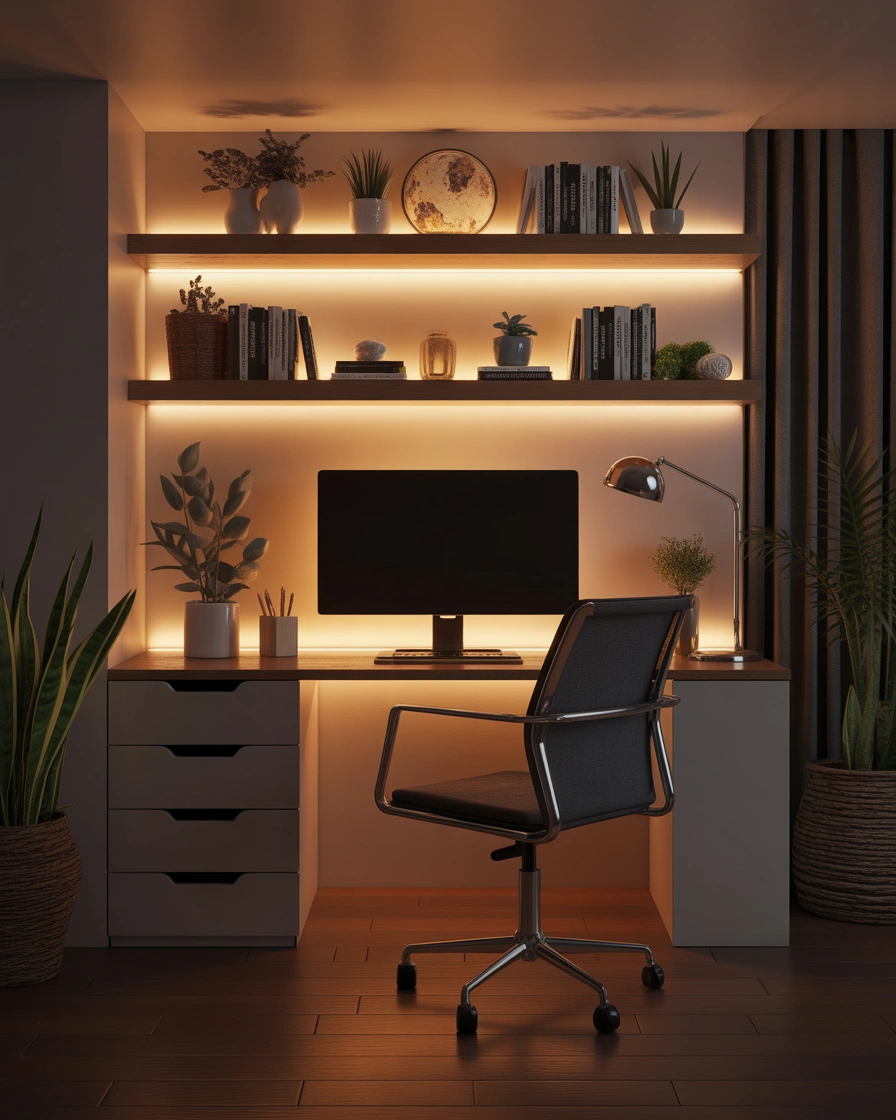
If you want your home office to look more professional and visually attractive, backlighting is an excellent option.
Backlighting creates a soft glow behind objects such as:
- Computer monitors
- Floating shelves
- Desks
- Wall panels
This technique is commonly used in professional studios, gaming setups, and modern offices because it creates depth and makes the space look more sophisticated.
A simple LED strip behind your desk can completely transform a plain workspace into a stylish environment.
The biggest advantage of backlighting is that it adds atmosphere without creating harsh brightness.
For example, a soft glow behind your monitor can:
- Reduce eye strain
- Improve the appearance of your workspace
- Create a relaxing environment
- Make video calls look more professional
If you record videos or attend online meetings, background lighting can also improve the visual quality of your camera setup.
Some creative backlighting ideas include:
Behind Wall Shelves
Adding LED strips under shelves highlights books, decorations, and plants.
Behind a Desk Panel
A glowing wall panel creates a modern office aesthetic.
Around Artwork
Lighting artwork or motivational quotes on the wall adds personality.
Choose neutral colors if you want a professional look. RGB colors can work well for creative spaces but should be used carefully to avoid distraction.
8. Use Floor Lamps to Brighten Dark Corners
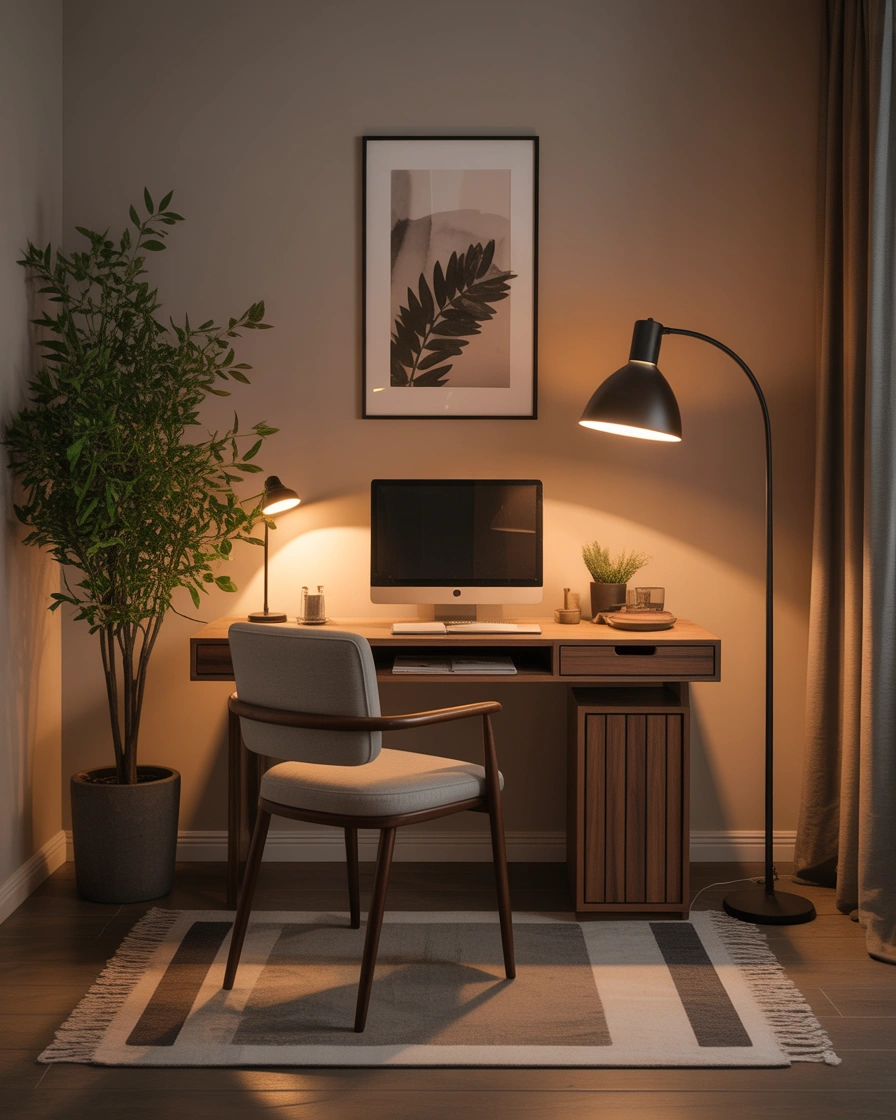
Many home offices have areas that remain dark even after installing ceiling lights. These shadows can make the room feel smaller and less inviting.
A floor lamp is an easy way to improve overall lighting while adding style to your workspace.
Floor lamps are available in many designs:
- Minimalist standing lamps
- Adjustable reading lamps
- Arc lamps
- Industrial-style lamps
- Modern LED floor lights
The best placement for a floor lamp is usually near an empty corner or beside your desk.
A floor lamp can help create a more balanced lighting environment by spreading light across the room.
For smaller offices, choose slim designs that do not occupy much floor space.
For larger offices, statement floor lamps can become part of the room’s interior design.
I personally like floor lamps because they add a comfortable feeling during evening work. Instead of turning on bright overhead lights, a floor lamp creates a softer atmosphere that feels more relaxed.
Another advantage is flexibility. Unlike built-in lights, you can easily move a floor lamp whenever you change your office arrangement.
9. Choose the Right Color Temperature for Your Home Office
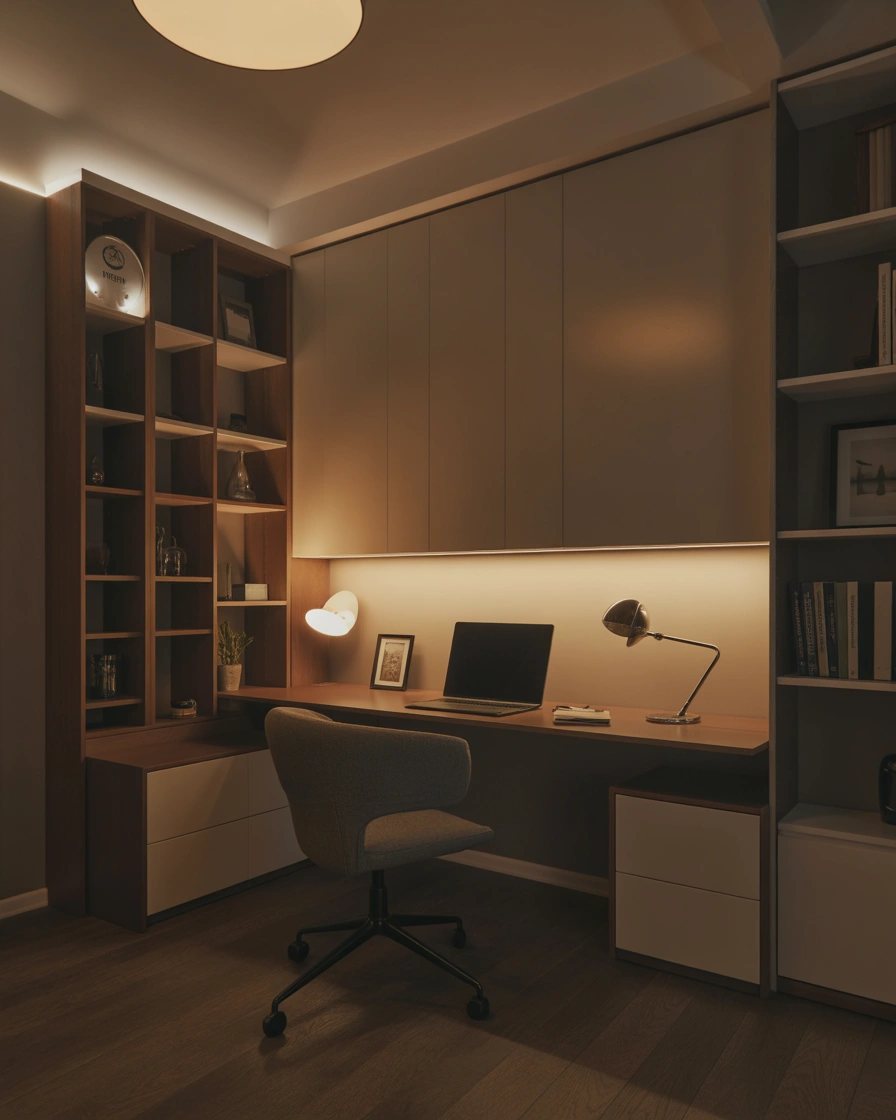
Choosing the correct light color is just as important as choosing the type of light.
Many people buy attractive lamps but ignore color temperature, which can affect how comfortable the workspace feels.
Light color is measured in Kelvin (K).
Different temperatures create different moods:
Warm White (2700K–3000K)
Warm lighting creates a comfortable and relaxing atmosphere. It works well for:
- Reading areas
- Evening work
- Creative spaces
However, it may feel too relaxing for tasks requiring intense concentration.
Neutral White (3500K–4500K)
This is often the best choice for home offices.
It provides:
- Clear visibility
- Balanced brightness
- Professional appearance
Cool White (5000K–6500K)
Cool lighting creates a bright environment similar to daylight.
It can be useful for:
- Detailed work
- Design tasks
- Technical projects
However, extremely cool lighting may feel harsh if used for many hours.
For most home offices, a combination works best:
- Neutral white for desk lighting
- Warm lighting for background atmosphere
This creates a workspace that supports productivity while remaining comfortable.
10. Add Wall-Mounted Lights to Save Desk Space
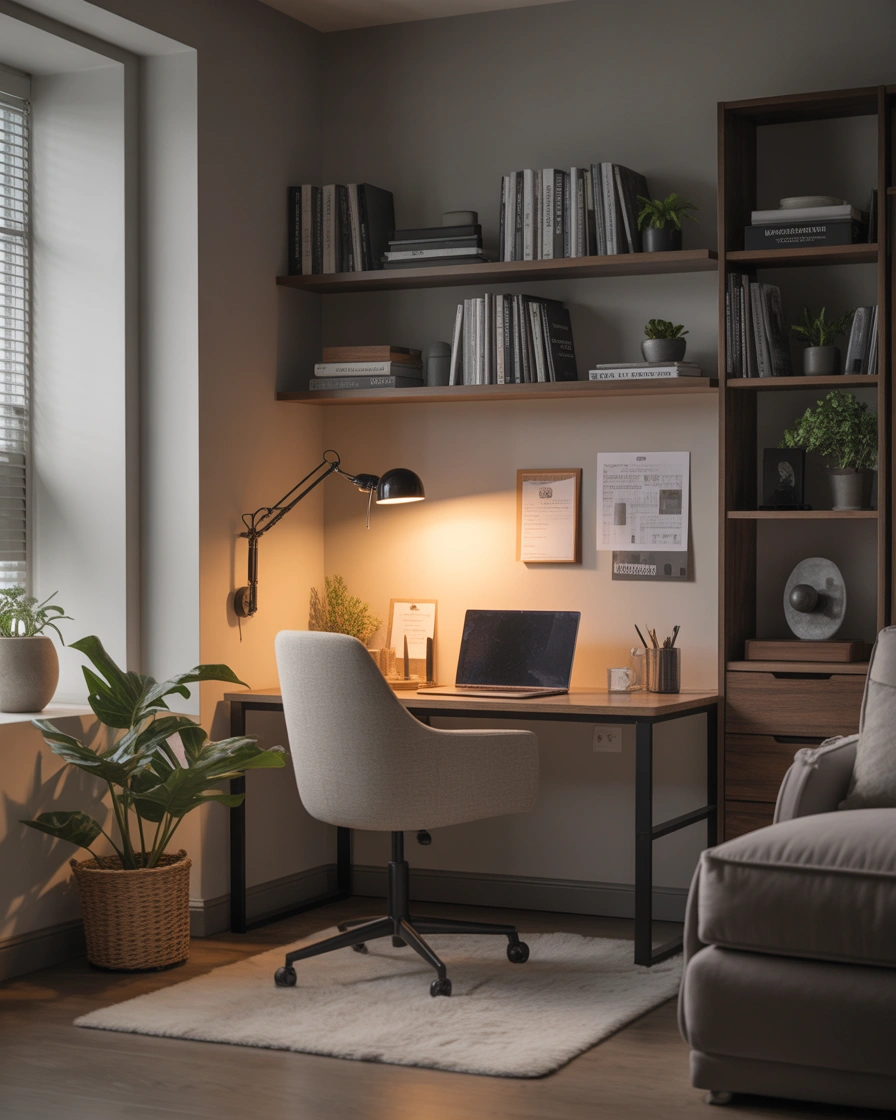
If your desk is small or already crowded with equipment, wall-mounted lights are a smart solution.
Wall lights provide excellent illumination without taking up valuable workspace.
They are especially useful in:
- Small home offices
- Bedroom offices
- Minimalist workspaces
Popular wall lighting options include:
- Adjustable swing-arm lamps
- Modern wall sconces
- Reading lights
- Decorative LED panels
A swing-arm wall lamp is particularly practical because you can move it exactly where you need light.
For example, you can direct it toward:
- Your keyboard
- Reading materials
- Notebook
- Creative projects
Wall-mounted lighting also gives your office a more customized appearance. Instead of looking like a temporary workspace, it feels like a professionally designed room.
When installing wall lights, consider the height carefully. The light should illuminate your working area without shining directly into your eyes.
11. Create a Video Call Lighting Setup for a Professional Appearance
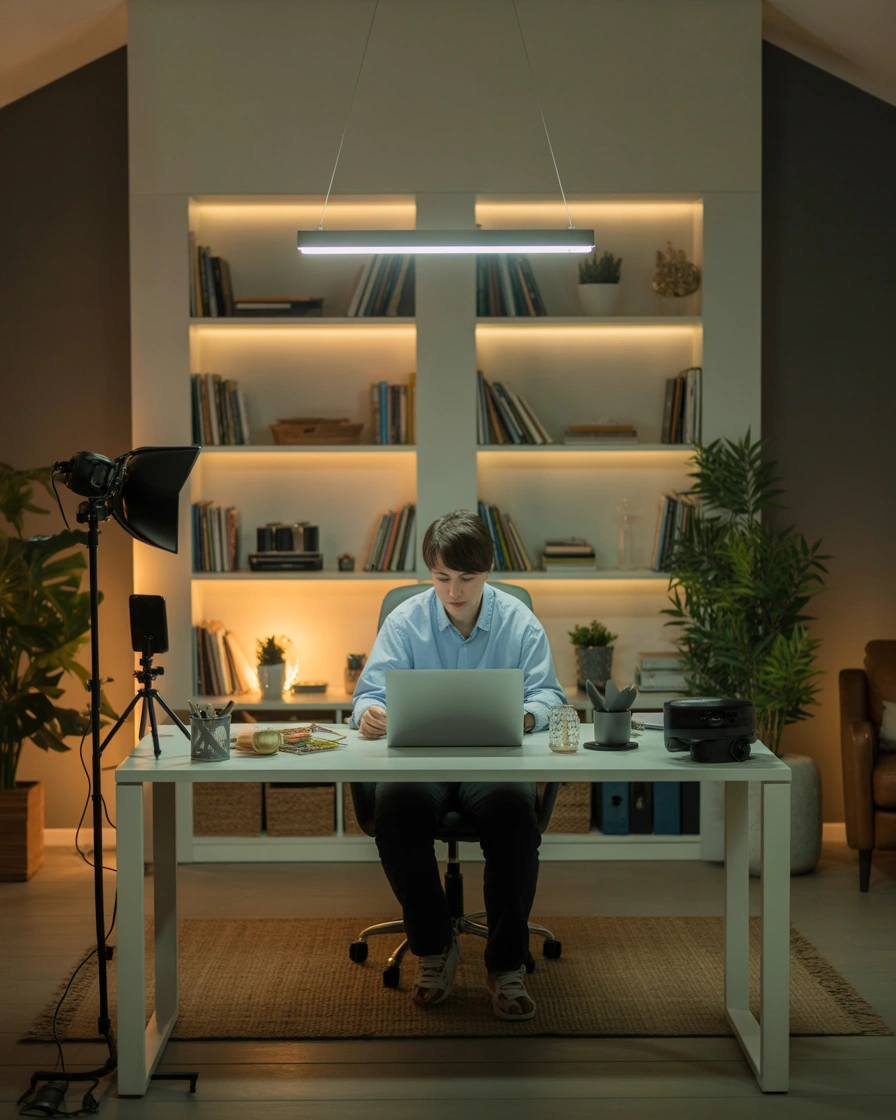
With remote work becoming more common, video meetings have become an important part of many people’s professional lives. A good home office lighting setup is not only useful for working but also helps you look more professional during online meetings.
Poor lighting can make your face appear dark, create unwanted shadows, or reduce the quality of your camera image. Even with an expensive webcam, bad lighting can negatively affect your appearance.
A simple video call lighting setup usually includes:
- A soft light in front of you
- A small background light
- Balanced room lighting
The main light should be placed slightly above eye level and in front of your face. Avoid placing a bright window behind you because the camera will usually make you appear darker.
A ring light is a popular option for video meetings because it provides even facial illumination. However, you do not always need professional equipment. A simple adjustable desk lamp with a soft diffuser can also work effectively.
For a premium look during meetings, consider adding:
- Warm LED lighting behind your desk
- Bookshelves with subtle lighting
- Plants with accent lights
- A clean background
Good lighting creates a more confident and professional presence during virtual communication.
I noticed that improving my lighting setup made my video calls look much clearer without upgrading my camera. The biggest improvement came from controlling the direction and softness of the light.
12. Use Pendant Lights for a Stylish Home Office Design
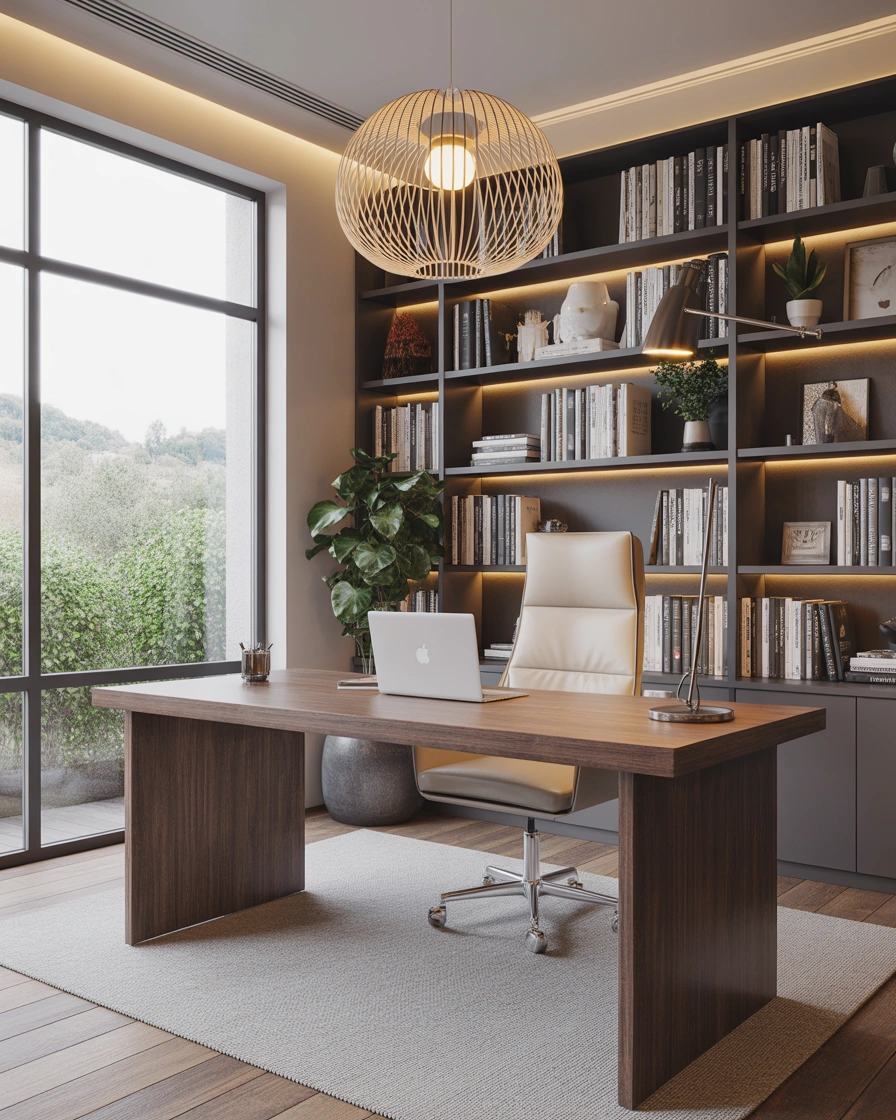
Pendant lights are not only practical lighting solutions but also beautiful design elements.
Unlike traditional ceiling fixtures, pendant lights hang from the ceiling and create a more decorative appearance. They can instantly make a home office feel more intentional and professionally designed.
Pendant lights work especially well in:
- Large home offices
- Creative studios
- Offices with high ceilings
- Modern interior designs
There are many styles available:
- Industrial metal pendant lights
- Glass pendant fixtures
- Minimalist hanging lights
- Scandinavian-style designs
A single pendant light above a desk can become the centerpiece of the room.
However, placement is important. The light should provide enough illumination without hanging too low and becoming distracting.
For a balanced setup:
- Use pendant lighting as general illumination
- Combine it with a desk lamp for detailed tasks
- Add ambient lighting for comfort
Pendant lights are especially effective when you want your home office to feel less like a temporary workspace and more like a carefully designed professional environment.
13. Add Task Lighting for Specific Work Activities
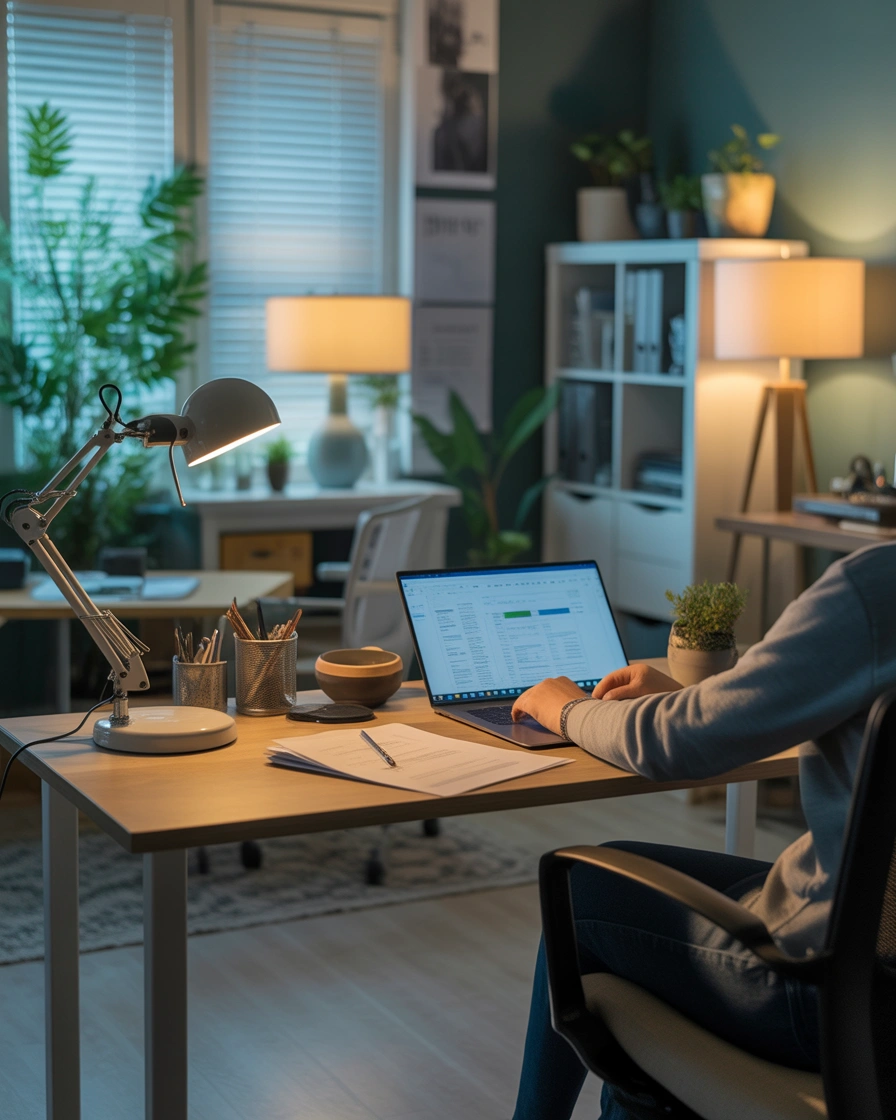
Every home office has different types of work, and your lighting should match your daily activities.
A writer, designer, student, programmer, and business owner may all need different lighting arrangements.
Task lighting focuses light on a specific area where detailed work happens.
Examples include:
- Reading documents
- Drawing sketches
- Writing notes
- Reviewing paperwork
- Craft projects
- Technical work
The advantage of task lighting is that it allows you to brighten only the area you need instead of making the entire room extremely bright.
Some useful task lighting options include:
Adjustable Arm Lamps
These allow you to move the light closer or farther depending on your activity.
Under-Shelf Lighting
Perfect for desks with storage shelves above them.
Portable LED Lights
Useful if you frequently change your workspace.
Clip-On Lamps
Great for small desks and temporary setups.
A well-designed home office often combines different lighting layers instead of depending on one powerful light source.
The goal is not maximum brightness. The goal is comfortable and controlled illumination.
14. Use Decorative Lighting to Add Personality to Your Workspace
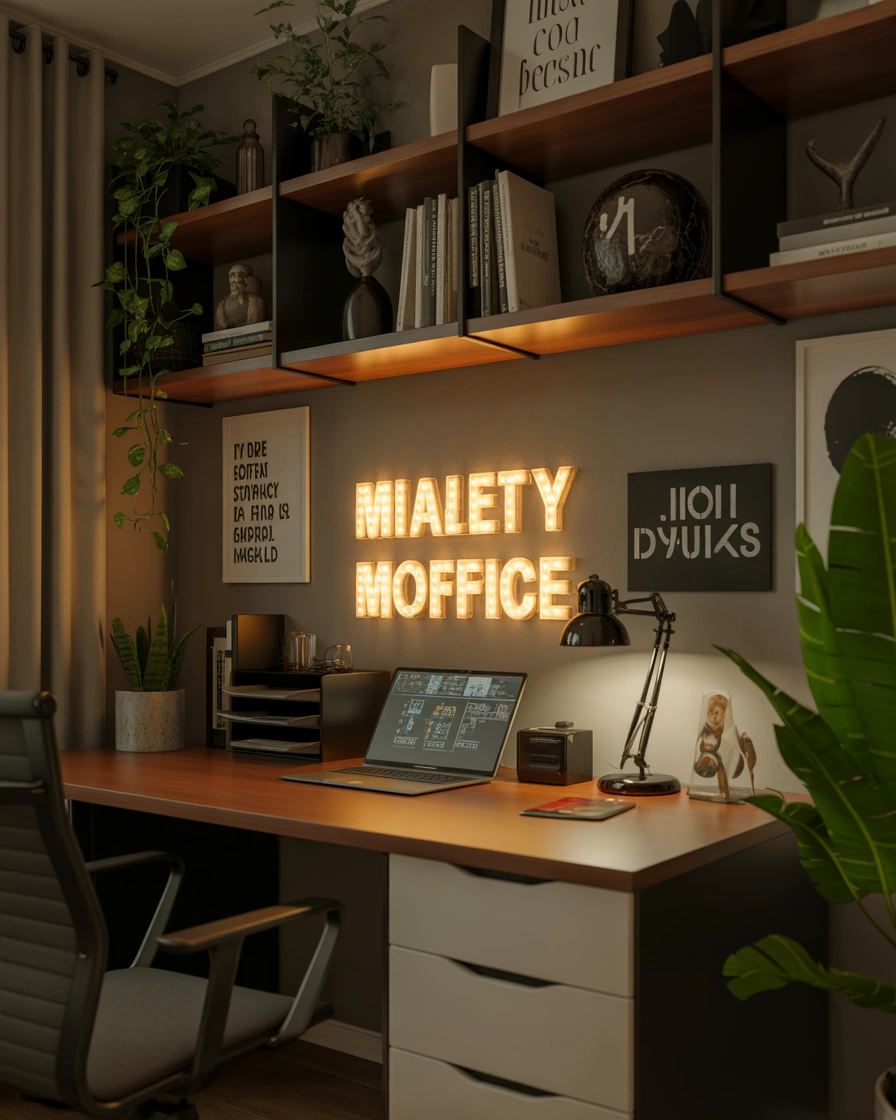
Your home office should not only be functional. It should also reflect your personality and inspire creativity.
Decorative lighting allows you to add character and make your workspace feel unique.
Some creative decorative lighting ideas include:
- Neon signs
- LED wall panels
- Lighted artwork
- Decorative table lamps
- String lights
- Illuminated shelves
For example, a small motivational quote sign with soft lighting can create a positive atmosphere.
A content creator might prefer colorful RGB lighting, while someone working in a corporate environment may choose elegant warm lighting.
The important thing is to avoid making decorative lighting too distracting.
A good balance is:
- Functional lighting for work
- Decorative lighting for atmosphere
I believe a workspace becomes more enjoyable when it feels personal. Small design details can make you feel more connected to your environment and motivated to spend time there.
Decorative lighting is also a great option if your home office is part of another room, such as a bedroom or living area. It helps define the workspace visually without requiring major changes.
15. Combine Multiple Lighting Sources for the Perfect Home Office Setup
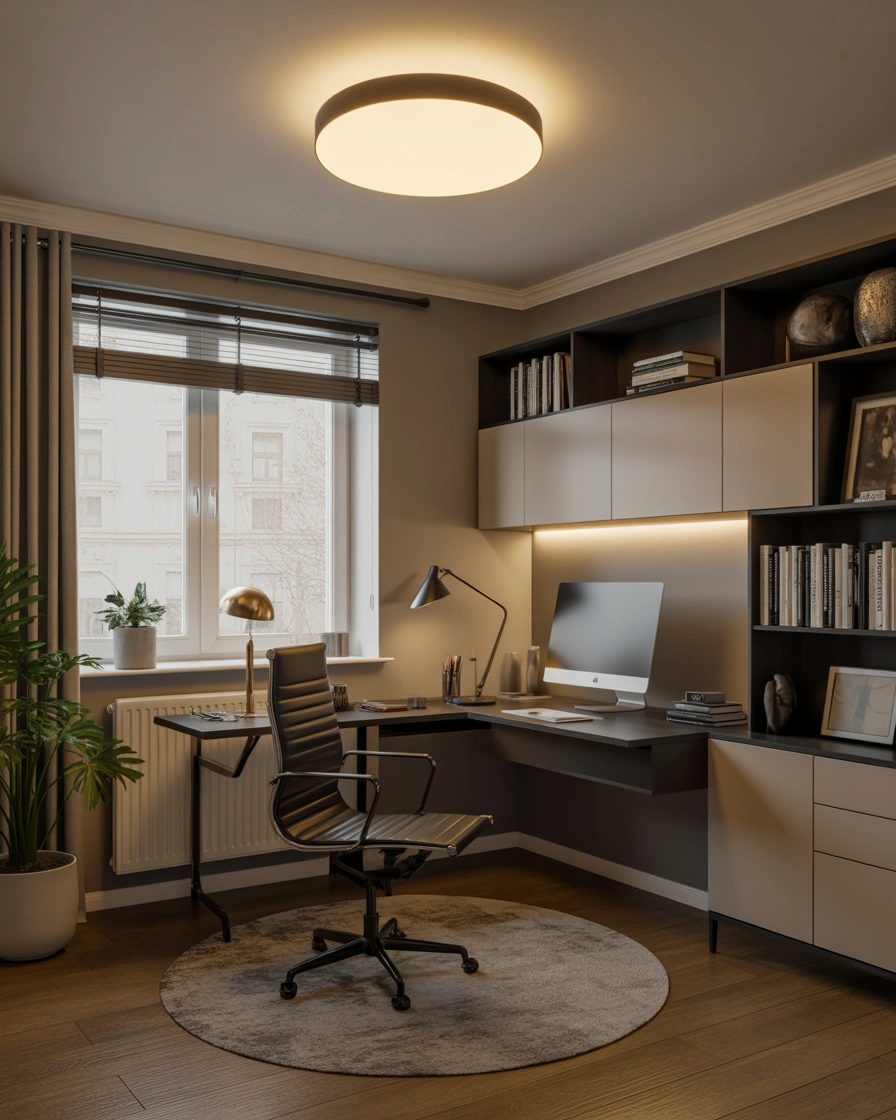
The final and most important home office lighting idea is to combine different lighting sources together.
Many people make the mistake of searching for one perfect lamp that will solve all lighting problems. In reality, professional-looking offices usually use multiple layers of lighting.
A complete home office lighting system may include:
Natural Lighting
Provides daytime brightness and improves the feeling of openness.
Ceiling Lighting
Creates general room illumination.
Desk Lighting
Provides focused light for detailed tasks.
Ambient Lighting
Adds comfort and improves the atmosphere.
Accent Lighting
Adds style and personality.
When these layers work together, your workspace becomes more comfortable, functional, and visually appealing.
A simple example setup:
- Window providing natural daylight
- Neutral LED ceiling light
- Adjustable desk lamp
- Warm LED strip behind monitor
- Floor lamp in the corner
This combination works well for most home offices.
The goal is to create flexibility. Your lighting should adapt whether you are:
- Starting your morning work
- Attending online meetings
- Doing creative projects
- Working late at night
- Reading or planning
A thoughtfully designed lighting system can completely change how your home office feels.
Common Home Office Lighting Mistakes to Avoid
Even after choosing the right lights, some common mistakes can reduce comfort and productivity.
Using Only One Light Source
A single ceiling light often creates shadows and uneven brightness. Layered lighting creates better results.
Choosing Lights That Are Too Bright
Extremely bright lights can cause discomfort and make your workspace feel harsh.
Ignoring Screen Glare
Poorly positioned lights can reflect on your monitor and make working difficult.
Using Incorrect Color Temperature
Very warm lighting may make you feel sleepy, while very cool lighting can feel uncomfortable for long periods.
Placing Lights Behind Your Screen
Bright lights behind your monitor can create unnecessary eye strain.
Forgetting Evening Lighting
Your lighting needs change throughout the day. Adjustable lights are useful because they allow you to adapt.
How to Choose the Best Home Office Lighting for Your Space
The best lighting setup depends on your room size, work type, and personal preferences.
Before buying new lights, consider these questions:
How Many Hours Do You Work in Your Office?
If you work long hours, prioritize comfort and adjustable lighting.
What Type of Work Do You Do?
Creative tasks may require stronger task lighting, while general office work may need balanced illumination.
How Much Natural Light Does Your Room Receive?
Rooms with large windows may need less artificial lighting during the day.
What Is Your Office Style?
Choose lighting designs that match your furniture and overall interior style.
A practical approach is to start with essential lighting:
- Improve natural light placement
- Add a quality desk lamp
- Upgrade ceiling lighting
- Add ambient and decorative lights later
You do not need to redesign everything at once. Small improvements can make a noticeable difference.
Final Thoughts on Home Office Lighting Ideas
Creating the perfect home office is not only about buying expensive furniture or advanced technology. Lighting plays one of the biggest roles in making a workspace comfortable, productive, and inspiring.
After exploring different setups, I learned that the best home office lighting is a combination of functionality and atmosphere.
A good workspace should help you stay focused during demanding tasks while also feeling comfortable enough to spend hours in.
Whether you prefer a minimalist office, a creative studio, or a professional corporate-style workspace, the right lighting choices can completely transform the experience.
Start with the basics:
- Use natural light whenever possible
- Add a quality desk lamp
- Reduce screen glare
- Create layers with different lighting sources
- Choose comfortable color temperatures
Small lighting changes can create a much bigger impact than most people expect.
Your home office is where ideas are created, goals are achieved, and important work happens. Giving attention to lighting is one of the simplest ways to make that space better every day.
