
Working from home sounds comfortable until you realize you do not have a separate room for an office. Your dining table becomes crowded with papers, your laptop stays on the sofa, and work-related items slowly begin taking over your living space.
I have learned that creating a functional home office does not depend on having a large house. Even a small bedroom corner, an unused wall, a hallway, or a narrow space beside a wardrobe can become a practical workstation with the right planning.
The best home office ideas for small spaces focus on using every inch wisely without making the room feel cluttered. You need a comfortable surface, proper lighting, organized storage, and a setup that helps your mind switch into work mode.
Whether you live in a small apartment, a studio, a shared home, or a compact bedroom, these 15 small home office ideas will help you create a workspace that feels organized, attractive, and comfortable.
Why a Dedicated Home Office Matters
It is easy to assume that working from the bed or couch is good enough, especially when space is limited. However, a dedicated work area can make a noticeable difference in your productivity and daily routine.
When you work in the same spot every day, your brain begins associating that area with concentration and responsibility. This makes it easier to start work, stay focused, and mentally disconnect when the workday ends.
A properly arranged small home office can also improve posture, reduce distractions, protect important documents, and prevent office supplies from spreading throughout the house.
You do not need an entire room. You simply need a thoughtfully designed area that supports the way you work.
1. Turn an Empty Corner Into a Compact Office
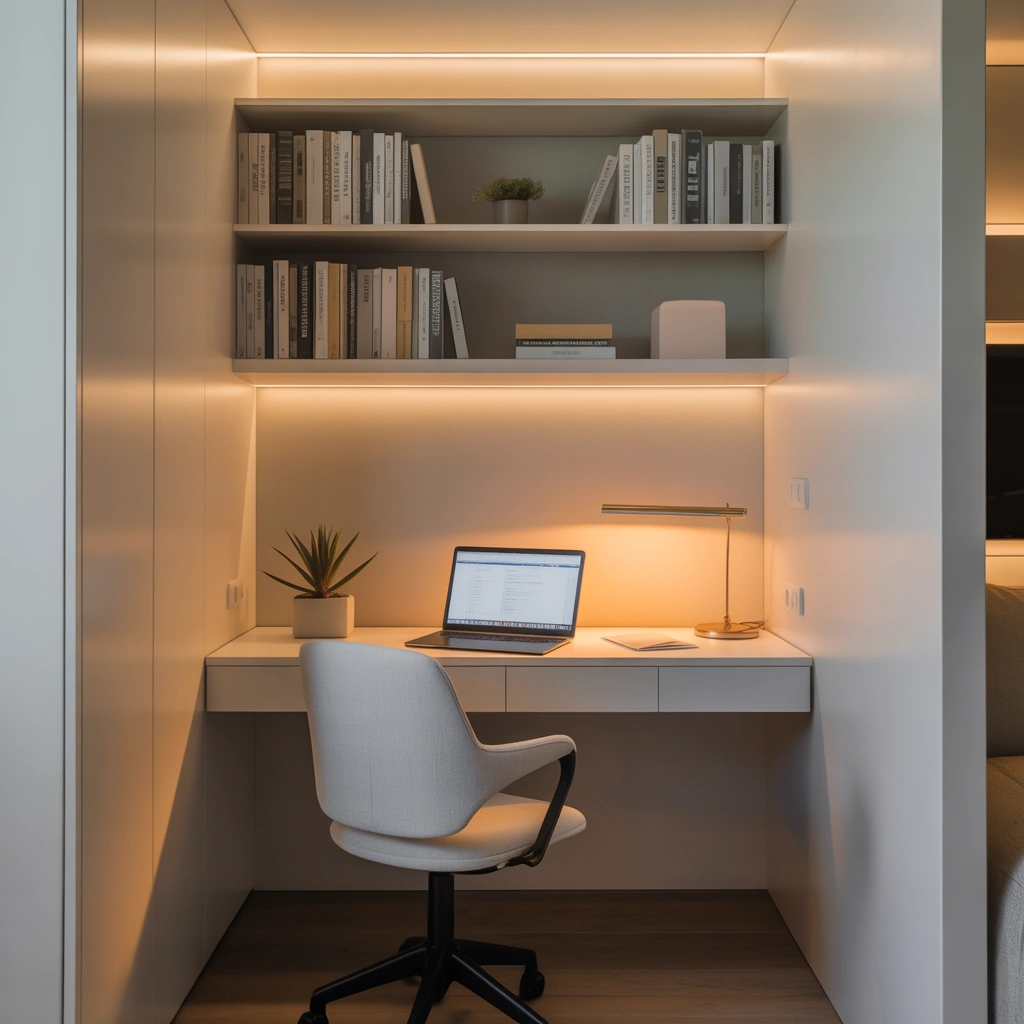
One of the simplest home office ideas for small spaces is to use an empty corner. Many rooms have corners that remain unused because standard furniture does not fit there properly.
A small corner desk can transform this forgotten area into a useful workstation. Choose a triangular desk, an L-shaped surface, or a narrow table that fits comfortably without blocking movement.
If you are working with an especially tight corner, install floating shelves above the desk. These shelves can hold notebooks, office supplies, small storage baskets, or decorative items without taking up floor space.
Try to keep the setup visually light. A bulky desk and oversized chair may make the corner feel cramped. A slim desk, open-leg design, and compact ergonomic chair will create a more spacious appearance.
You can also add a wall-mounted light instead of using a table lamp. This keeps the desk clear and gives you more room for your laptop, keyboard, and paperwork.
2. Install a Floating Desk
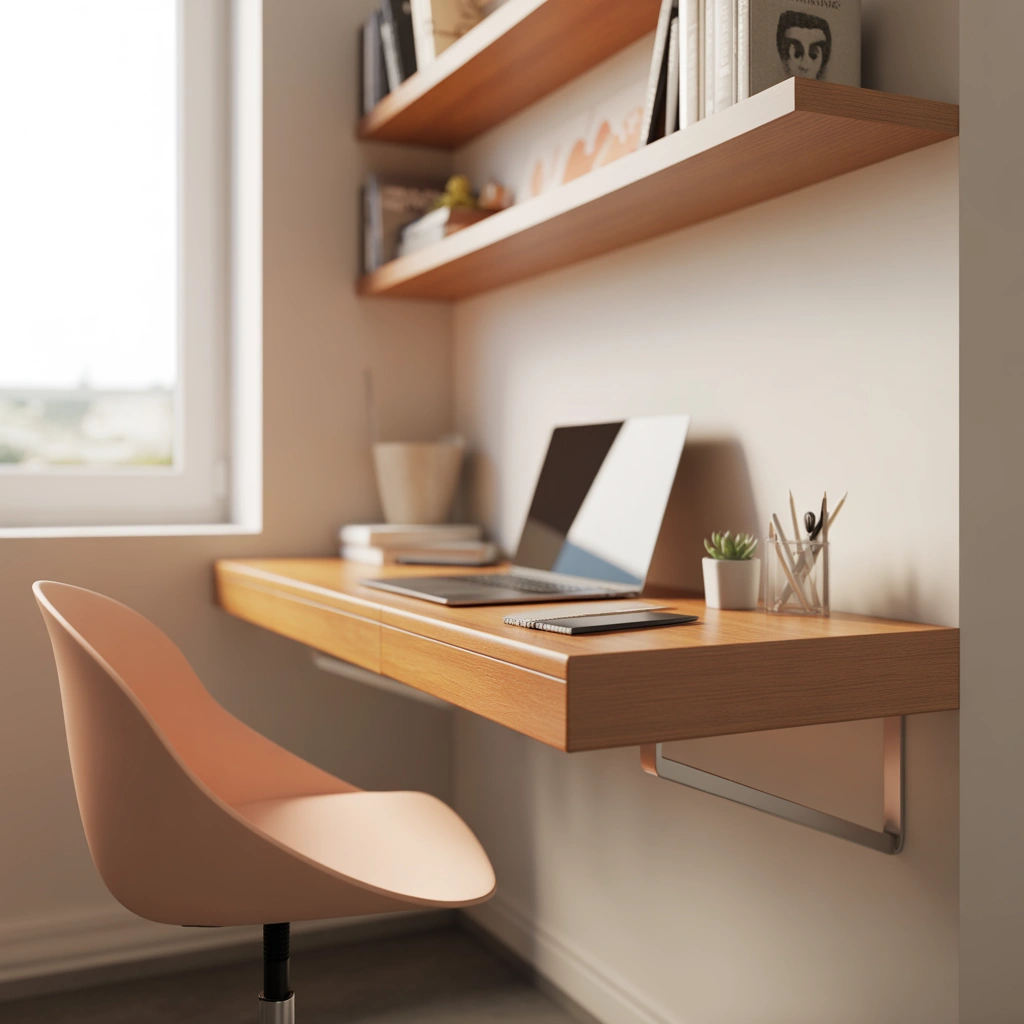
A floating desk is one of my favorite solutions for a small home office because it provides a work surface without occupying much space.
Unlike traditional desks, floating desks are attached directly to the wall. They have no legs, which creates an open and uncluttered look. This design is especially useful in narrow rooms, studio apartments, bedrooms, or hallways.
Some floating desks include built-in drawers or shelves, while others fold up when they are not in use. A fold-down floating desk is perfect if you need your workspace only during certain hours.
Mount the desk at a height that allows you to sit comfortably with your elbows close to a 90-degree angle. Pair it with a lightweight chair that can slide underneath when work is finished.
You can make the area more attractive by adding a small pinboard, wall organizer, framed print, or slim shelf above the desk. Keep the decorations simple so the workspace remains calm and functional.
3. Create a Closet Office
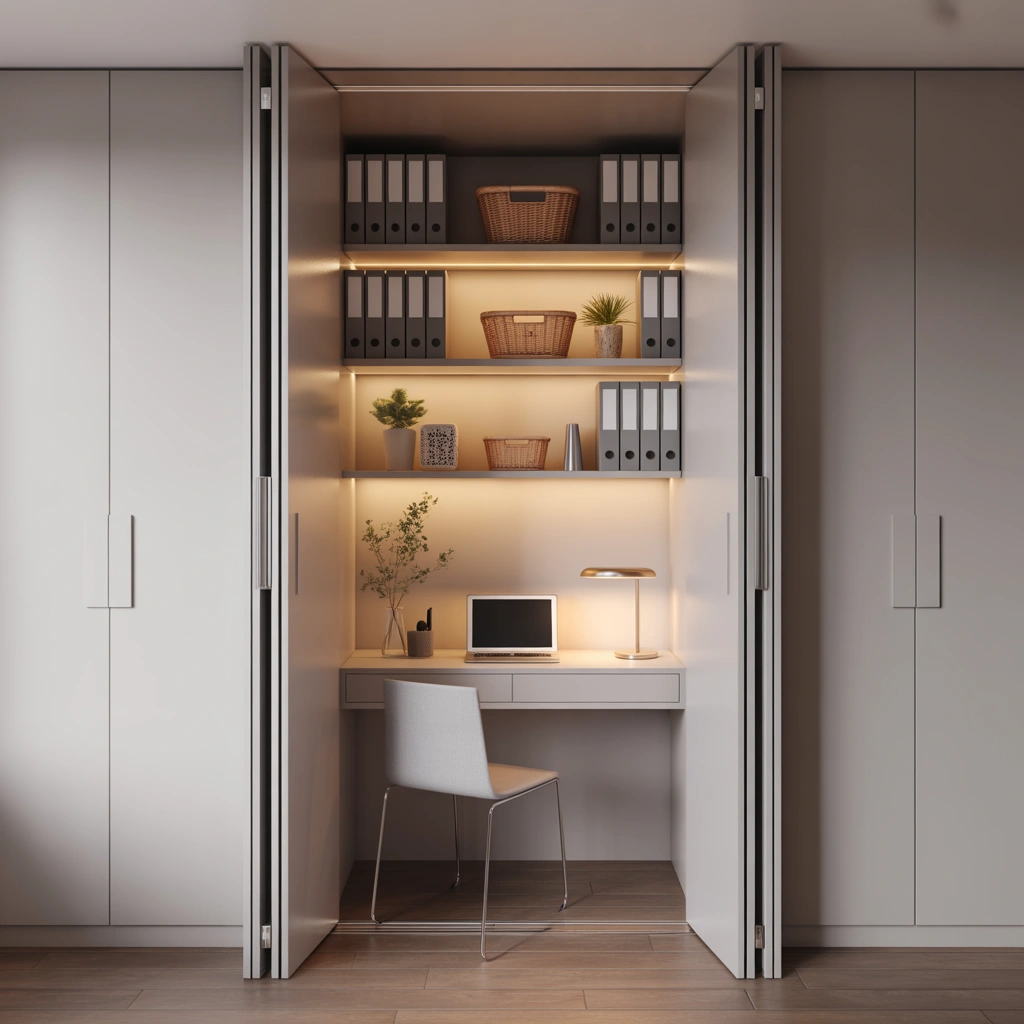
A closet office, often called a “cloffice,” is a clever way to create a hidden workspace in a small home.
If you have an underused closet, remove the hanging rod and install a desk-height shelf inside. Add shelves above the work surface for books, files, office equipment, and storage containers.
The biggest advantage of a closet office is that you can close the doors at the end of the day. Your computer, paperwork, and work-related clutter disappear from view, helping you separate your job from your personal life.
Before creating a closet office, make sure there is access to a power outlet or use a professionally installed electrical solution. Good lighting is also important because closets are usually darker than regular rooms. LED strip lighting, a wall-mounted lamp, or an adjustable desk light can brighten the area.
Paint the inside of the closet a light color to make it feel larger. White, soft beige, pale gray, or muted blue can create a clean and comfortable atmosphere.
For additional personality, use removable wallpaper on the back wall or add a small piece of artwork.
4. Use the Space Under the Stairs
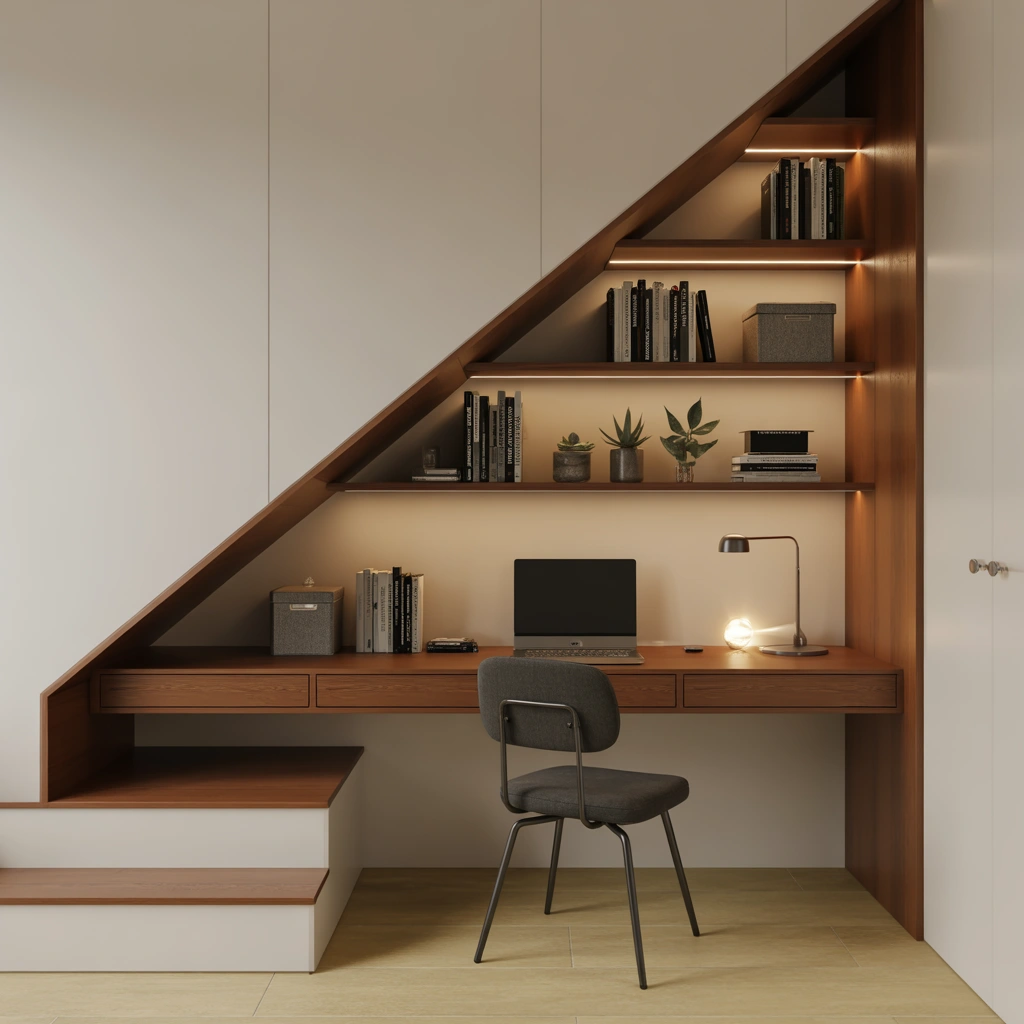
The area under a staircase is often ignored or used as random storage. However, it can become an excellent small home office with a little creativity.
Start by measuring the available width, height, and depth. A custom desk may work best because the wall shape under stairs is usually uneven. You can also use a narrow console table if it fits comfortably.
Install shelves or cabinets along the taller section of the wall. Use the lower area for drawers, a printer, file boxes, or hidden cable storage.
Since under-stair spaces may feel dark, lighting should be a priority. Use a combination of task lighting and soft ambient lighting. A bright desk lamp will help you work, while warm LED strips can make the area feel more inviting.
Keep the design coordinated with the surrounding room. Matching the desk color, shelving, and accessories with your existing interior will help the office blend naturally into the home.
5. Place a Desk Behind the Sofa
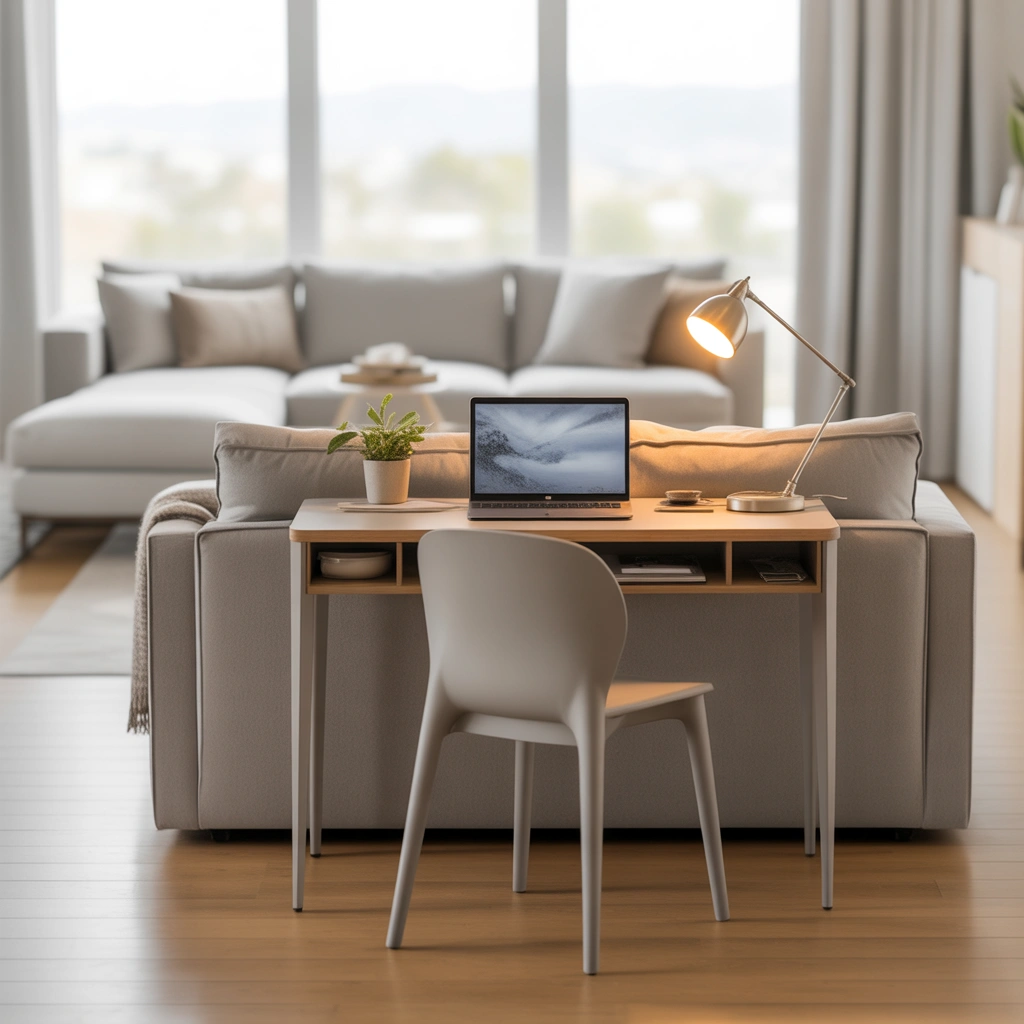
If your living room has an open layout, the space behind the sofa can become a practical work area.
A narrow desk or console-style table can fit behind the sofa without changing the entire arrangement of the room. This setup works especially well when the sofa is positioned away from the wall.
Choose a desk that is approximately the same height as the back of the sofa. This keeps the room visually balanced and prevents the workspace from looking awkward.
Use a compact chair that can slide fully under the desk. A backless stool may save space, but an ergonomic chair is a better choice if you work for several hours each day.
To keep the office area organized, use a desk with drawers or place a small filing cabinet at one end. Avoid filling the surface with too many items because the desk will remain visible from the living area.
A decorative lamp, a plant, and one organized tray can make the setup feel intentional rather than temporary.
6. Use a Window Area as Your Workspace
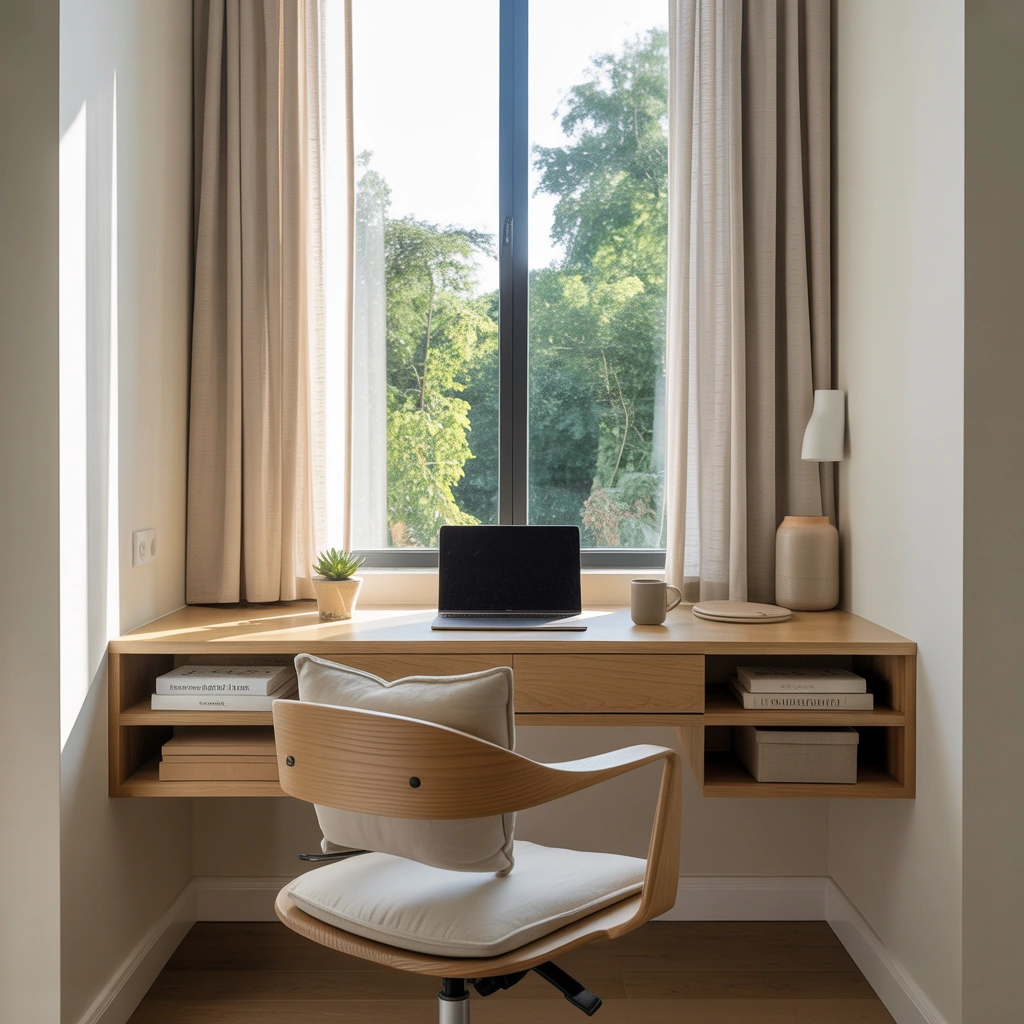
Placing your desk near a window can make a small home office feel brighter and more open.
Natural light can improve the atmosphere of your workspace and reduce the need for artificial lighting during the day. Looking outside occasionally may also give your eyes a break from the computer screen.
However, desk placement matters. Positioning your screen directly in front of or behind a bright window can create glare. If possible, place the desk at a right angle to the window. This allows you to enjoy natural light without making the screen difficult to see.
Use blinds, curtains, or a window shade to control strong sunlight. A light-filtering curtain is a good option because it softens the brightness without making the room dark.
A window office does not need much decoration. The outdoor view already adds visual interest. Keep the desk simple, add a small plant, and use nearby wall space for storage.
7. Choose a Ladder Desk
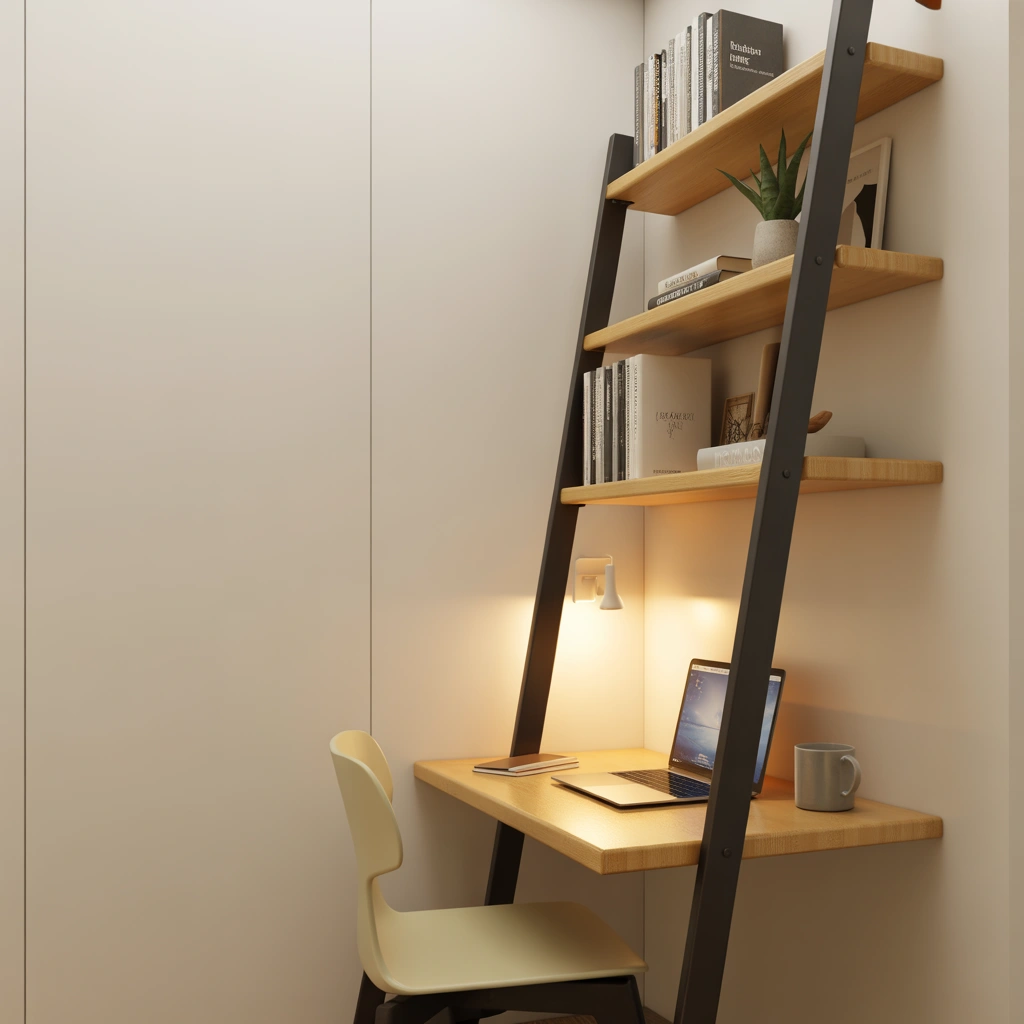
A ladder desk is an excellent choice when you need both a workstation and vertical storage.
This type of desk leans against the wall and usually includes a work surface with several shelves above it. Because the design becomes narrower toward the top, it appears lighter than a traditional desk with a separate bookcase.
A ladder desk works well in bedrooms, living rooms, guest rooms, and small apartments. It can hold a laptop, notebooks, books, storage boxes, and decorative items in one compact structure.
When styling the shelves, place frequently used office supplies within easy reach. Use the upper shelves for items you do not need every day.
Avoid overfilling the unit. Too many objects can make a narrow workspace look messy. Use matching boxes or baskets to hide small supplies and maintain a clean appearance.
For safety, secure the ladder desk to the wall according to the manufacturer’s instructions.
8. Build an Office Inside a Bedroom
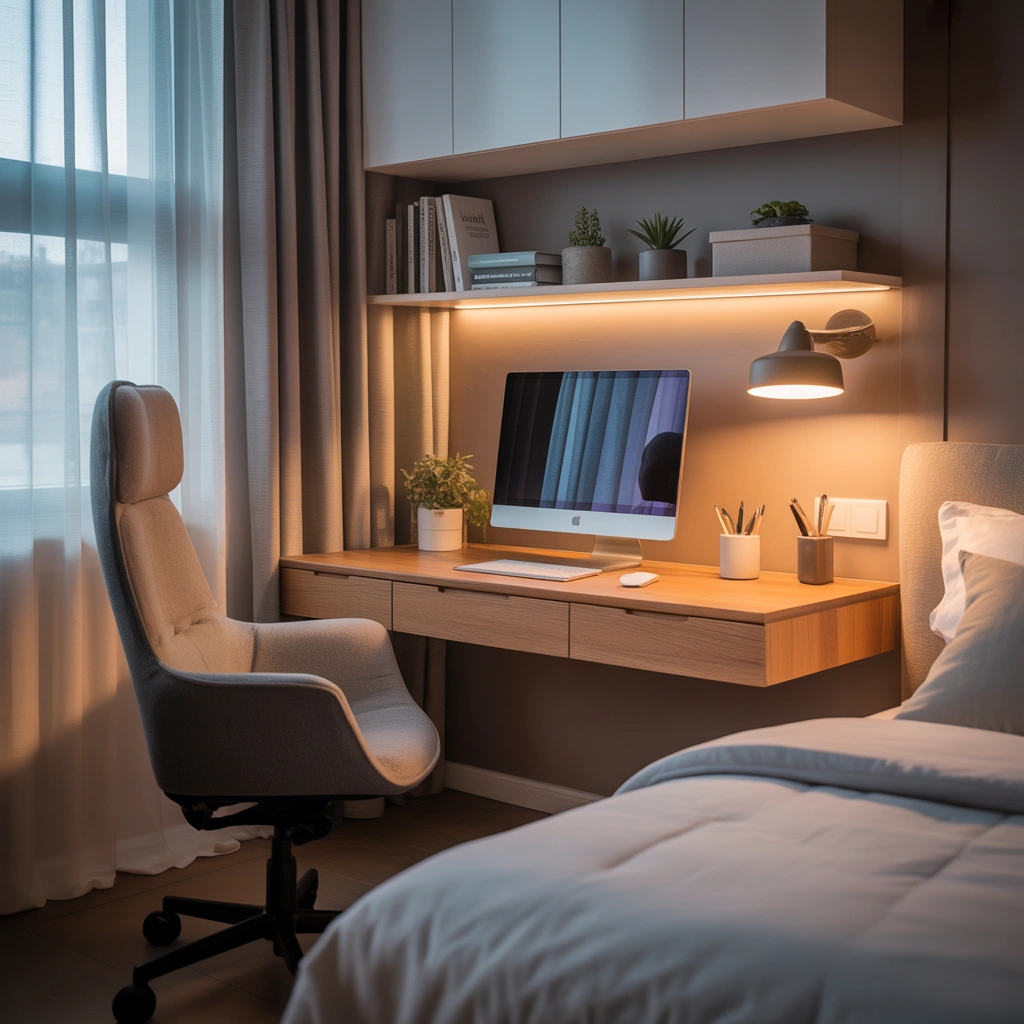
For many people, the bedroom is the only available place for a home office. Although mixing rest and work is not always ideal, a thoughtful layout can make it manageable.
Place the desk away from the bed whenever possible. A corner near a window, the area beside a wardrobe, or an unused wall may provide enough room.
You can visually separate the office area with a small rug, a different wall color, a curtain, or an open shelving unit. Even a subtle boundary can help your mind recognize the workspace as a separate zone.
Choose office furniture that matches the bedroom decor. For example, use a desk in the same wood tone as your bedside tables or select storage boxes that coordinate with the room’s color palette.
At the end of the workday, clear the desk and close the laptop. A tidy workspace will prevent the bedroom from feeling like an office throughout the evening.
If possible, avoid facing the bed while working. Looking directly at the bed can make you feel sleepy or tempted to take unnecessary breaks.
9. Convert a Hallway Into a Narrow Office
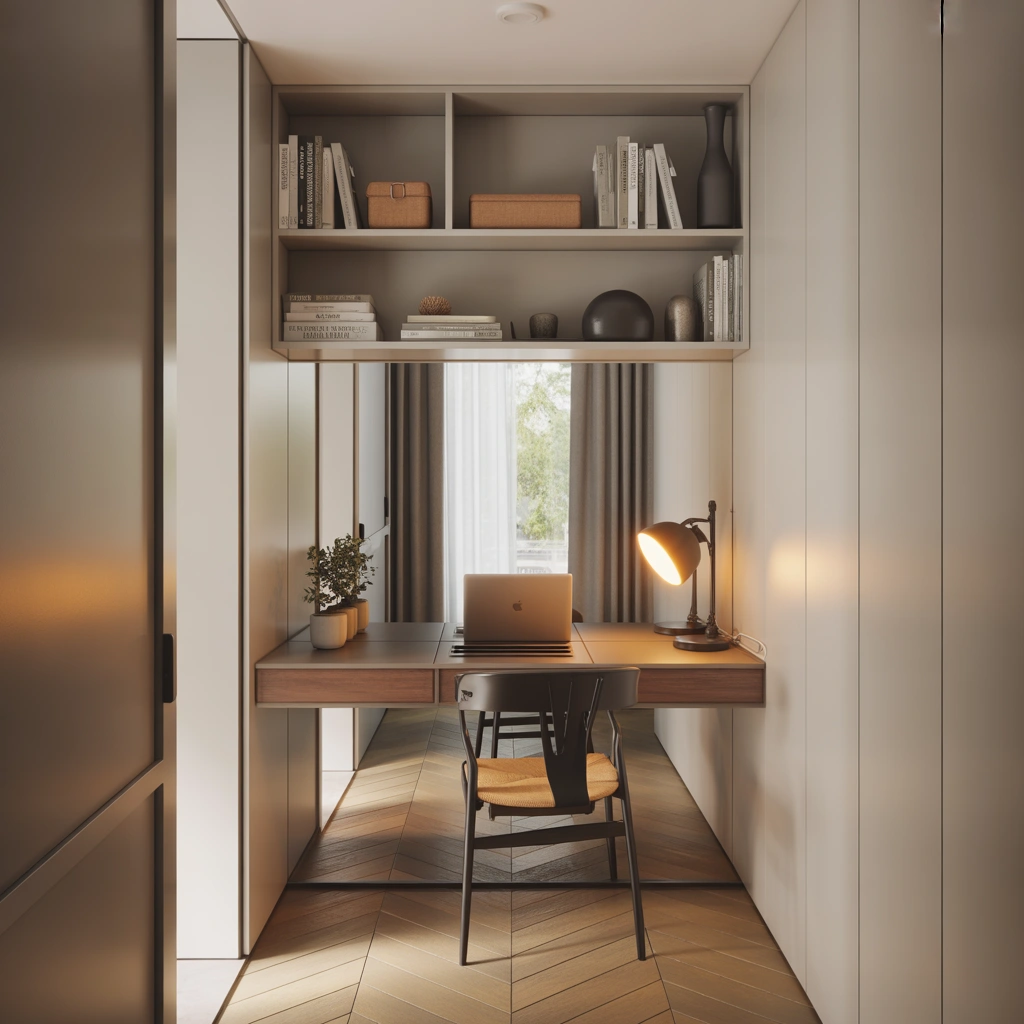
A wide hallway or passage can sometimes provide enough space for a slim home office.
The key is to maintain a clear walking path. Choose a shallow desk that does not extend too far into the hallway. Wall-mounted desks and narrow console tables are ideal for this arrangement.
Use the wall above the desk for vertical storage. Floating shelves, pegboards, document holders, and wall-mounted organizers can keep necessary items nearby without using valuable floor space.
Because hallways often have limited natural light, install a bright task light. Wall-mounted lighting may be better than a desk lamp because it saves surface space.
Keep cables secured against the wall or hidden in cable channels. Loose cords in a hallway can create a tripping hazard.
A hallway office is usually visible from several areas of the home, so maintain a neat and minimal setup. Matching folders, simple containers, and concealed storage will help the space look organized.
10. Select Multipurpose Furniture
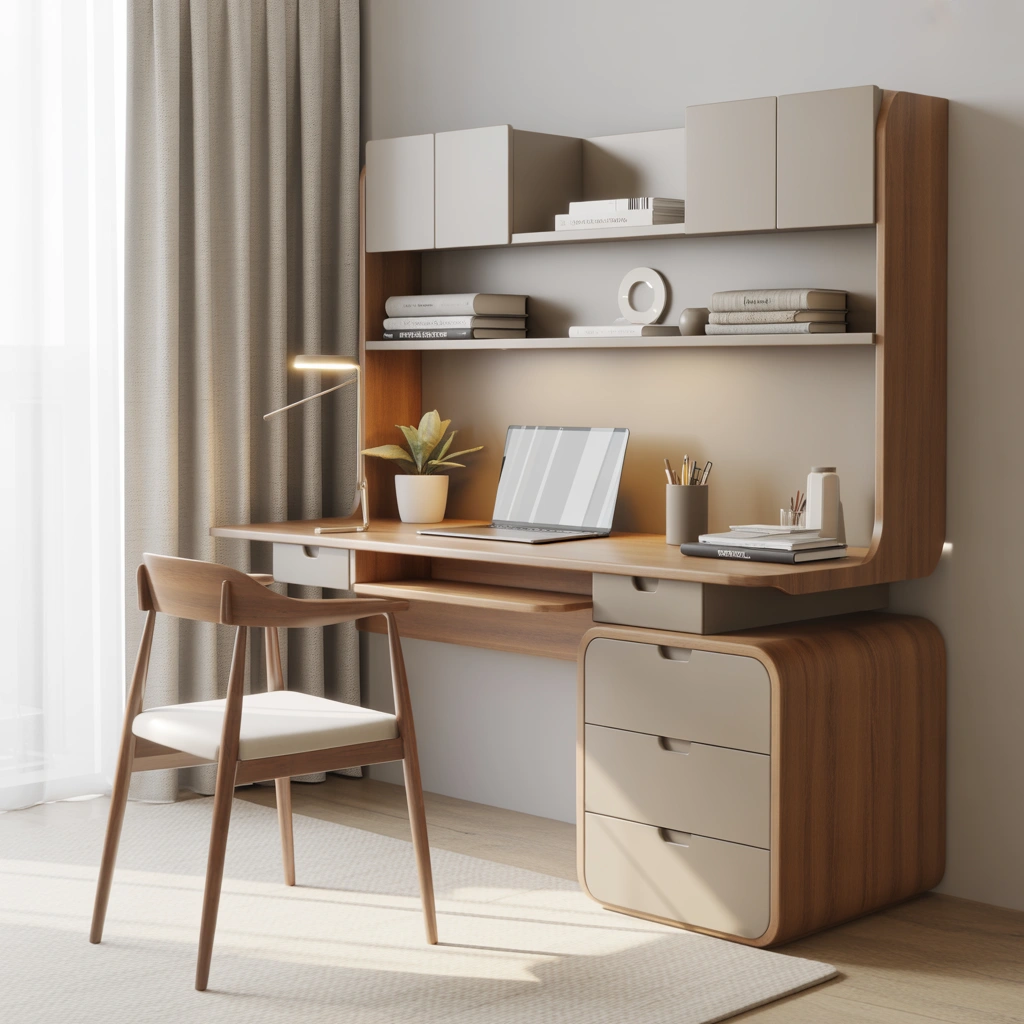
When space is limited, every piece of furniture should work hard.
Instead of buying a desk that serves only one purpose, consider furniture that can be used in different ways. A small dining table can function as a workstation during the day. A secretary desk can hold office supplies and close when not in use. A storage cabinet with a fold-out surface can become a temporary office.
You can also use an ottoman with hidden storage for extra supplies or a rolling cart that moves between rooms.
Before purchasing multipurpose furniture, think about your daily work routine. Do you need space for one laptop, or do you use multiple monitors? Do you store paperwork, products, art materials, or equipment? Your furniture should support your actual needs.
The goal is not simply to fit a desk into the room. It is to create a flexible setup that makes the entire space easier to use.
11. Use Vertical Wall Storage
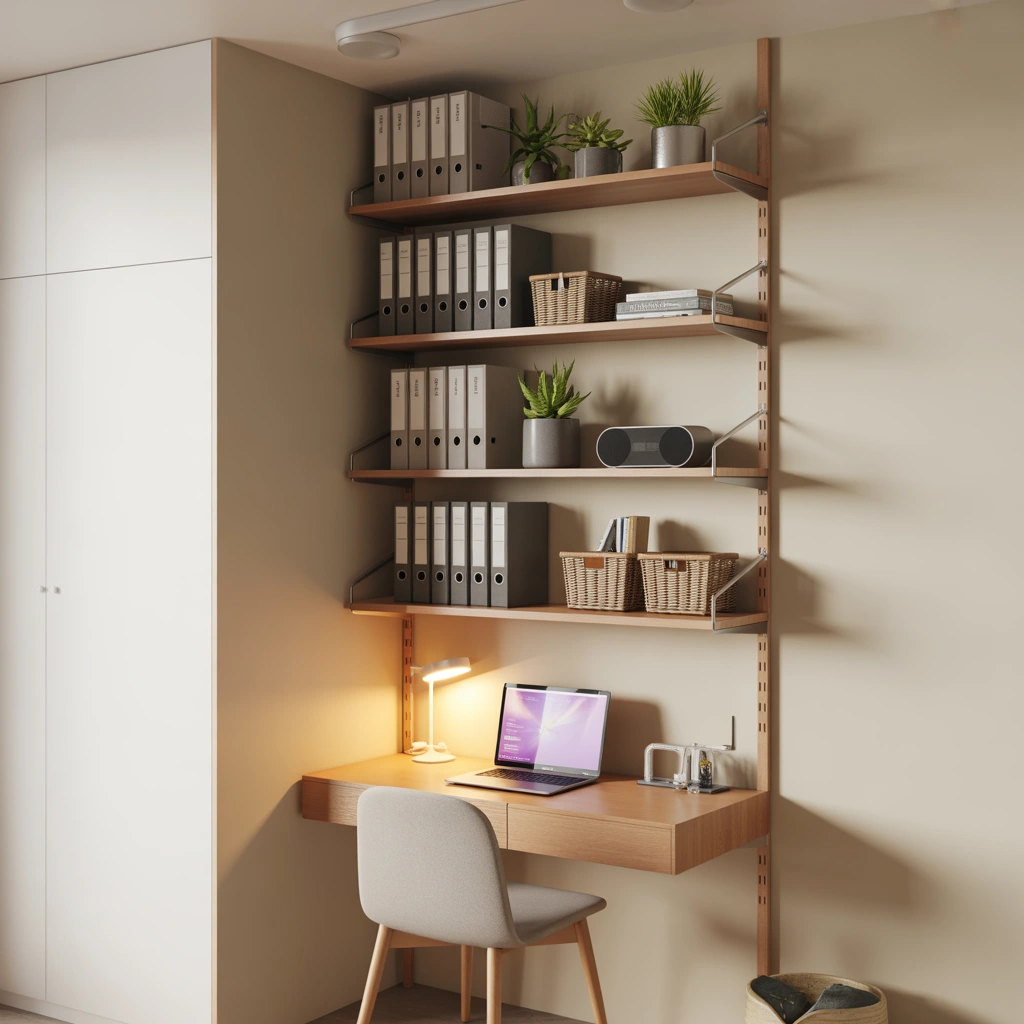
In a small home office, wall space is often more valuable than floor space.
Vertical storage allows you to keep the desk clear while organizing files, tools, books, and supplies. You can install floating shelves, wall grids, magnetic boards, pegboards, hanging pockets, or slim cabinets.
A pegboard is especially useful because it can be customized. Add small shelves, hooks, containers, and clips according to your needs. You can rearrange the accessories whenever your workflow changes.
Keep the most frequently used items between eye level and shoulder height. Less frequently used items can go on higher shelves.
Use labels to make storage easier to maintain. When every item has a clear place, you are less likely to leave supplies scattered across the desk.
Be careful not to cover the entire wall with storage. Leaving some empty space will prevent the office from feeling crowded.
12. Hide Your Office Behind Curtains or Screens
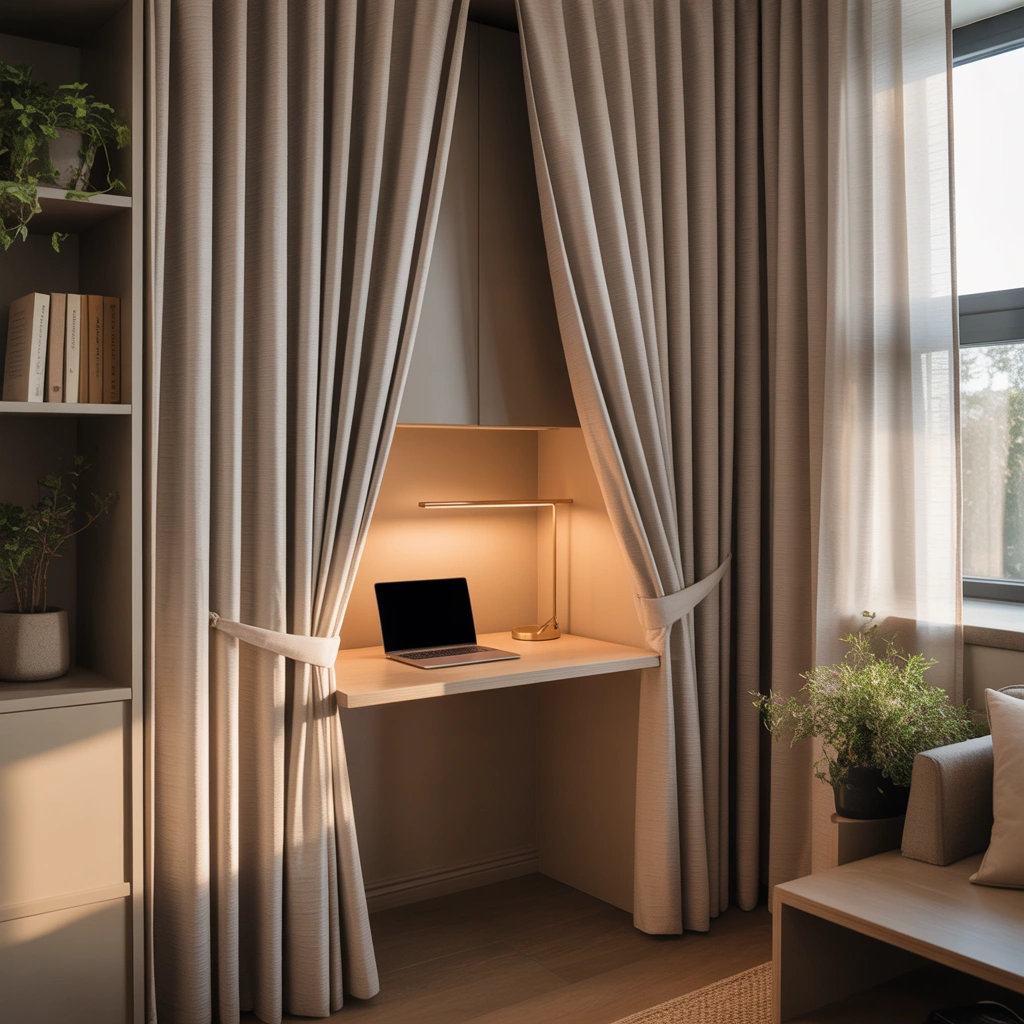
Sometimes a small home office needs visual separation rather than a permanent wall.
A curtain, folding screen, sliding panel, or room divider can hide your workspace when it is not being used. This is helpful in bedrooms, living rooms, and studio apartments where work equipment remains visible throughout the day.
Ceiling-mounted curtains are an affordable and flexible option. Choose fabric that matches the room so the divider feels like part of the decor.
A folding screen can be moved easily and may also provide a more professional background for video calls.
Open shelving can serve as both storage and a room divider. Select a design that allows light to pass through, especially in a small room.
When creating separation, make sure your workspace still receives proper ventilation and lighting. The goal is to create privacy without making the office feel boxed in.
13. Set Up a Mobile Home Office Cart
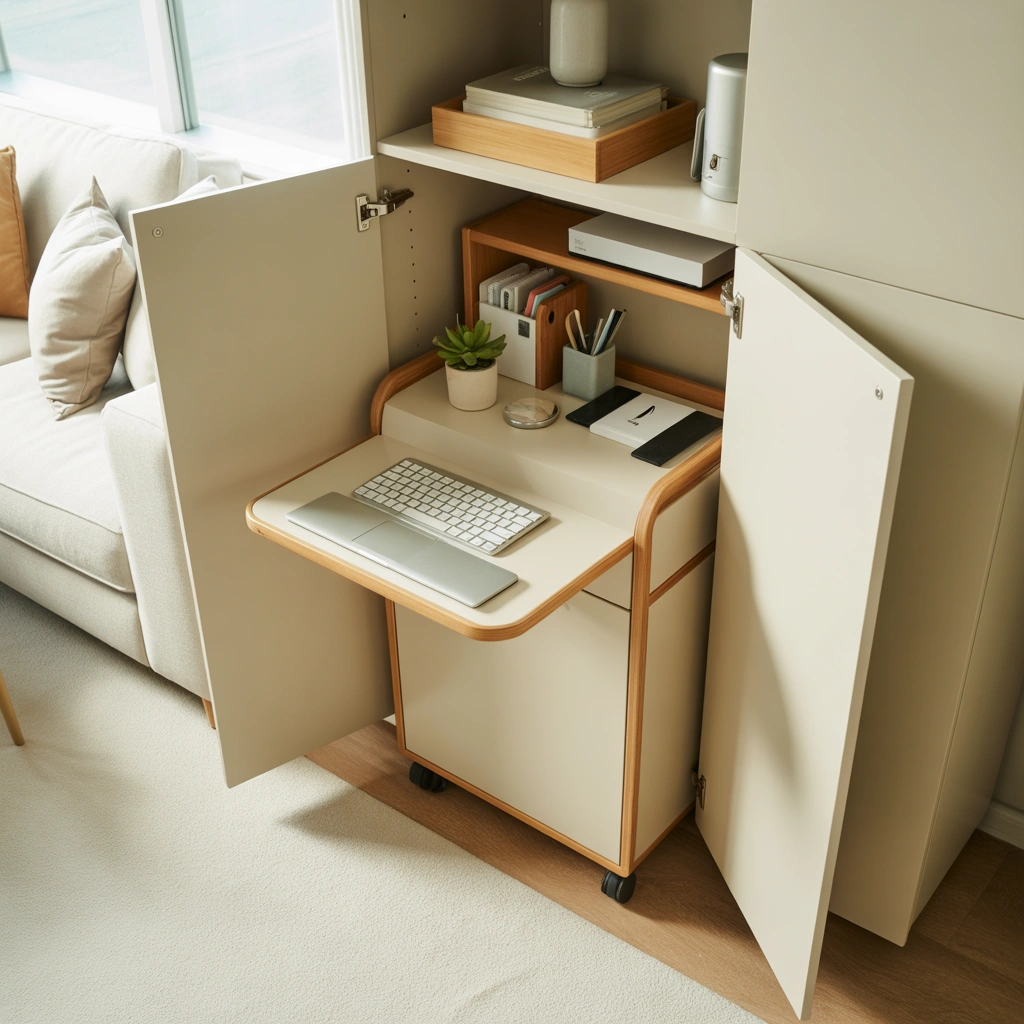
A rolling cart is a practical solution for people who cannot keep a permanent desk in one location.
Use a compact cart with multiple levels to store your laptop, charger, notebooks, headphones, pens, and other supplies. At the beginning of the workday, move the cart beside a table or comfortable workstation. When work is finished, roll it into a closet or corner.
Organize each level according to function. The top shelf can hold daily essentials, the middle shelf can store documents, and the bottom shelf can contain equipment or less frequently used supplies.
Use small containers to prevent items from shifting when the cart moves. Cable ties and pouches can keep chargers from becoming tangled.
This portable home office idea works well for renters, shared households, students, and anyone who needs to work in different rooms.
14. Keep the Color Palette Light and Simple
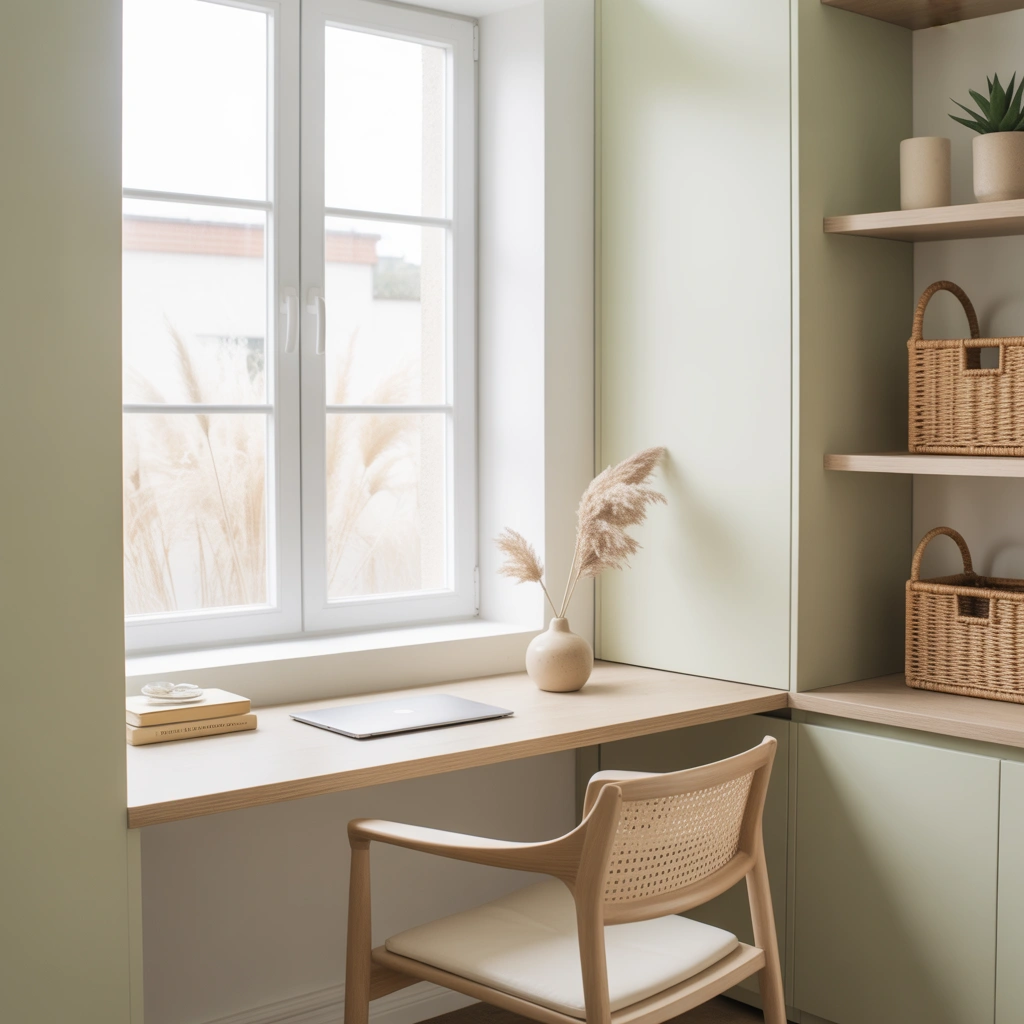
Color can strongly influence how spacious a small office feels.
Light shades such as white, cream, soft gray, pale beige, and muted pastels reflect more light and create an open appearance. Dark colors can still be used, but they usually work best as small accents rather than covering every surface.
Try to limit the office to two or three main colors. A simple color palette reduces visual noise and makes the area feel more organized.
For example, you could combine a white desk, natural wood shelves, and black accessories. Another option is light gray furniture with soft blue accents and green plants.
Storage containers should also coordinate with the color scheme. Matching baskets, folders, and boxes will create a cleaner look than a collection of unrelated items.
This does not mean your office needs to feel plain. Add personality through artwork, stationery, a textured rug, or one colorful chair.
15. Create a Minimalist Desk Setup
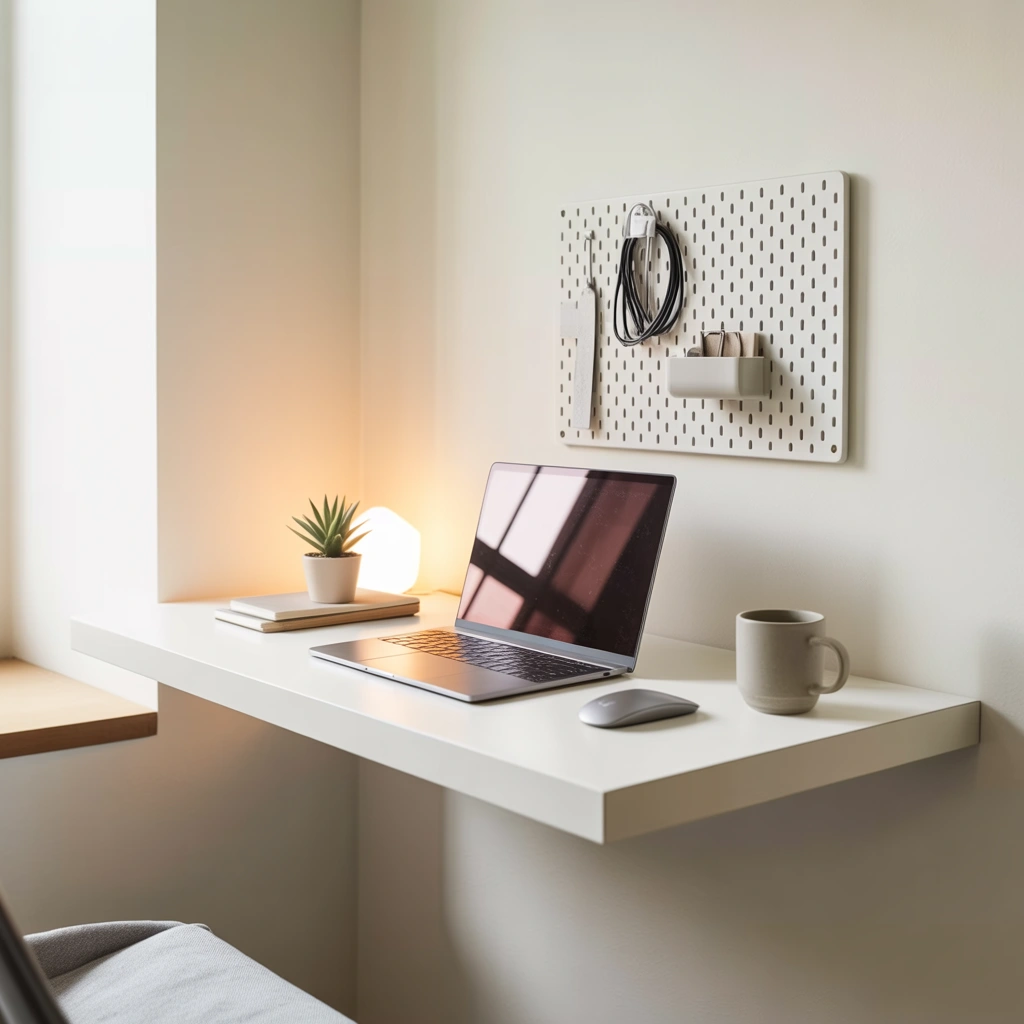
A minimalist setup is one of the most effective home office ideas for small spaces because clutter makes a compact area feel even smaller.
Begin by removing everything from your desk. Then return only the items you genuinely use during a normal workday. This may include your computer, a notebook, a pen holder, a desk lamp, and a small tray.
Store occasional-use items in drawers, boxes, or wall organizers. Avoid using the desk as long-term storage for unopened mail, receipts, cables, or unrelated household objects.
Use wireless devices when practical to reduce visible cords. For necessary cables, install clips, sleeves, or an under-desk cable tray.
Choose a few meaningful decorative items rather than filling every available surface. A framed photograph, a small plant, or one piece of artwork can make the space feel personal without creating distraction.
A minimalist office is not about removing comfort or personality. It is about creating enough visual calm to help you focus.
How to Make a Small Home Office More Comfortable
A compact office should not only look attractive. It also needs to support your body and work habits.
Invest in a Supportive Chair
A dining chair may work for short sessions, but it can become uncomfortable during a full workday. Look for a compact ergonomic chair with adjustable height, proper back support, and a seat that fits under your desk.
If a full office chair is too large, use a supportive seat cushion and lumbar pillow with your existing chair.
Position Your Screen Correctly
The top of your screen should generally be close to eye level. If your laptop sits too low, use a stand and connect an external keyboard and mouse.
This simple adjustment can reduce the habit of bending your neck forward for several hours.
Improve the Lighting
A small office needs both general room lighting and focused task lighting. Place your desk lamp so it illuminates your work without creating screen glare.
Warm lighting can make the space feel cozy, while neutral or cooler task lighting may help with concentration.
Add Something Natural
A small plant, natural wood accessories, or a view of the outdoors can make the office feel more pleasant. Choose low-maintenance plants if your workspace has limited sunlight.
Control Noise
In a shared or busy home, noise can quickly interrupt concentration. Use noise-reducing headphones, soft furnishings, curtains, rugs, or a door draft stopper to reduce sound.
You can also establish work hours with family members or housemates to limit unnecessary interruptions.
Small Home Office Organization Tips
Organization is essential when your workspace has limited room.
Start by separating daily items from occasional-use supplies. Keep daily tools within reach and move everything else into labeled storage.
Use drawer dividers for pens, clips, chargers, and stationery. Place paperwork in vertical file holders rather than creating horizontal piles. Digitize documents whenever possible to reduce physical storage.
Set aside five minutes at the end of each workday to reset the space. Close open notebooks, remove cups, file loose papers, and prepare the desk for the next morning.
This small habit can prevent clutter from building up and make your office more inviting.
Common Mistakes to Avoid in a Small Home Office
Even a beautifully designed workspace can become frustrating when practical details are ignored.
Choosing an Oversized Desk
A large desk may provide more surface area, but it can overwhelm a small room. Measure the available space carefully and leave enough room to move the chair comfortably.
Ignoring Cable Management
Visible cables can make a clean office look messy. They may also create safety problems. Use cable trays, clips, covers, or ties to keep cords controlled.
Using Too Many Decorative Items
Decorations make a workspace personal, but too many items create distraction. Leave open space on the desk and shelves.
Forgetting About Lighting
A dark workspace can cause eye strain and make the area feel smaller. Add focused lighting even when the office is near a window.
Sacrificing Comfort for Appearance
A stylish chair is not useful if it becomes painful after one hour. Comfort, posture, and function should come before appearance.
Frequently Asked Questions About Small Home Offices
Where should I put a home office in a small house?
Look for underused areas such as an empty corner, closet, hallway, window wall, space behind the sofa, bedroom corner, or area under the stairs. The best location is one that offers enough light, access to power, and minimal disruption.
What is the minimum space needed for a home office?
There is no fixed minimum size. A basic workstation may fit into an area approximately three to four feet wide, depending on the desk and chair. A wall-mounted desk may require even less space.
How can I hide a home office in my living room?
Use a folding screen, curtain, sliding panel, secretary desk, cabinet-style workstation, or closet office. You can also choose furniture that matches the living room so the office blends into the surrounding design.
How do I make a small office look bigger?
Use light colors, simple furniture, vertical storage, good lighting, and minimal decorations. Choose a desk with open legs and keep the floor as clear as possible.
Can I work from my bedroom?
Yes, especially when no other space is available. Try to separate the office visually from the sleeping area and clear the desk at the end of each day. Position the workstation away from the bed when possible.
What type of desk is best for a small space?
Floating desks, ladder desks, corner desks, narrow writing desks, fold-down desks, and secretary desks are all good options. The right choice depends on your available wall space and storage needs.
Final Thoughts
Creating a home office in a small space is less about finding extra square footage and more about using the space you already have intelligently.
An empty corner can become a focused workstation. A closet can turn into a hidden office. A narrow hallway, window area, or wall-mounted desk can provide everything you need for a productive day.
Start by considering how you work. Think about the equipment you use, the amount of storage you need, the lighting available, and how often the office must be hidden or moved.
You do not have to complete the entire setup at once. Begin with a comfortable desk and chair, improve the lighting, organize your supplies, and add personal touches gradually.
The most successful home office ideas for small spaces are not necessarily the most expensive or complicated. They are the ones that make your daily work easier, help you stay organized, and allow your home to remain comfortable after the workday ends.
