
A living room side table may be small, but it can make a surprisingly big difference in the overall appearance of your space. It is one of those pieces of furniture that serves several purposes at once. It provides a convenient place for a lamp, drink, book, remote control, or decorative item while also helping the room feel complete and thoughtfully styled.
Whenever I decorate a living room, I pay close attention to the side tables because they are usually positioned beside the sofa or armchair—exactly where the eye naturally travels. An empty side table can make the room feel unfinished, while an overcrowded one can appear messy. The key is finding the right balance between beauty and practicality.
The good news is that you do not need expensive accessories or professional interior design experience to style your side tables beautifully. A few well-chosen pieces, arranged with intention, can completely transform them.
In this guide, I am sharing 15 side table decor living room ideas that can work with modern, traditional, minimalist, farmhouse, bohemian, coastal, and luxury interiors. These ideas will help you create a space that feels welcoming, organized, stylish, and personal.
1. Style Your Side Table With a Beautiful Lamp
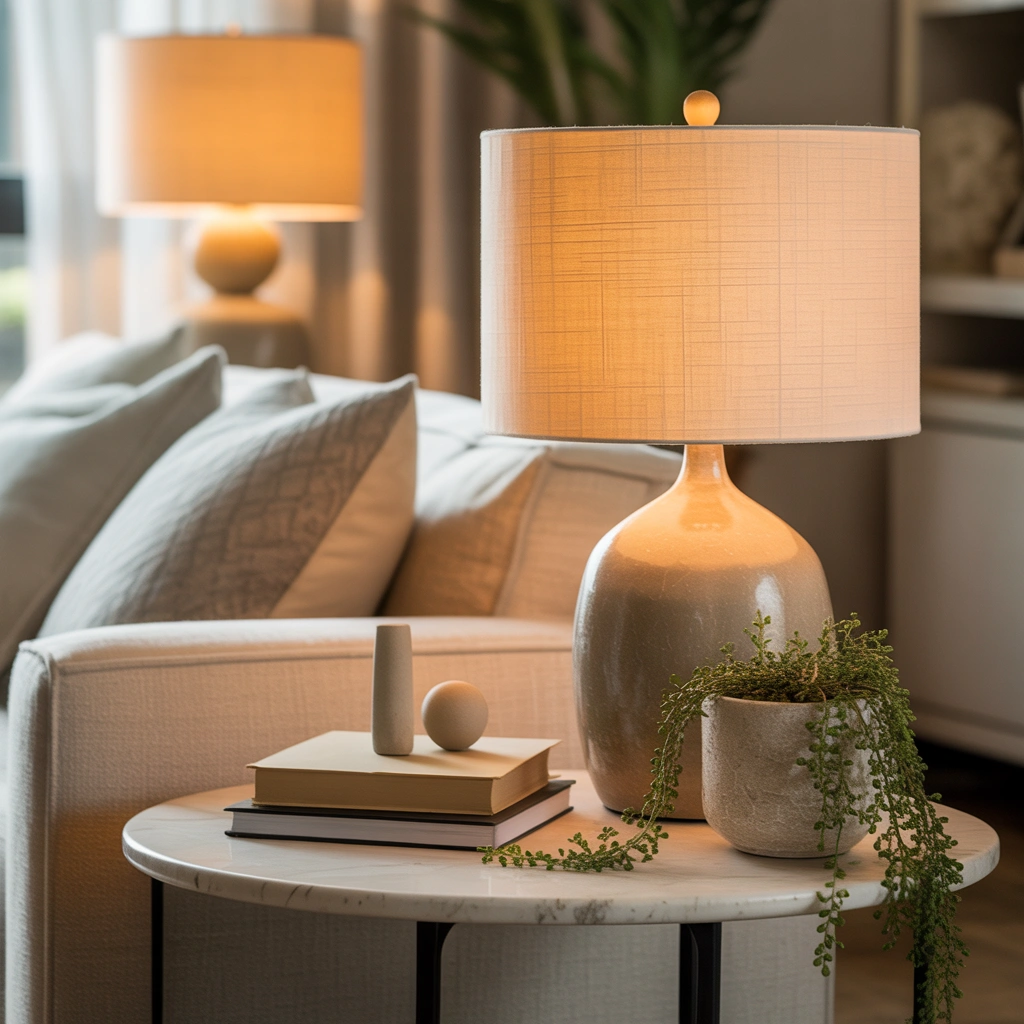
A table lamp is one of the most practical and attractive accessories you can place on a living room side table. It adds height to the arrangement, provides soft lighting, and helps create a warm atmosphere in the evening.
When choosing a lamp, consider the size of both the table and the surrounding furniture. A very large lamp may overwhelm a small table, while a tiny lamp can look out of proportion beside a large sofa. Ideally, the lamp should feel substantial without taking up the entire surface.
I love using lamps with interesting bases because they act as decorative objects even when they are switched off. Ceramic, glass, wood, marble, metal, and textured plaster bases can all bring character to the room.
The lampshade also plays an important role. A white or cream shade keeps the look light and timeless, while a darker or patterned shade can add drama. For a modern living room, try a sculptural lamp with clean lines. For a traditional room, a classic ceramic or brass lamp can look beautiful.
Leave enough space beside the lamp for a drink, book, or small decorative item. This keeps the side table useful rather than turning it into a display-only surface.
2. Add a Small Stack of Books
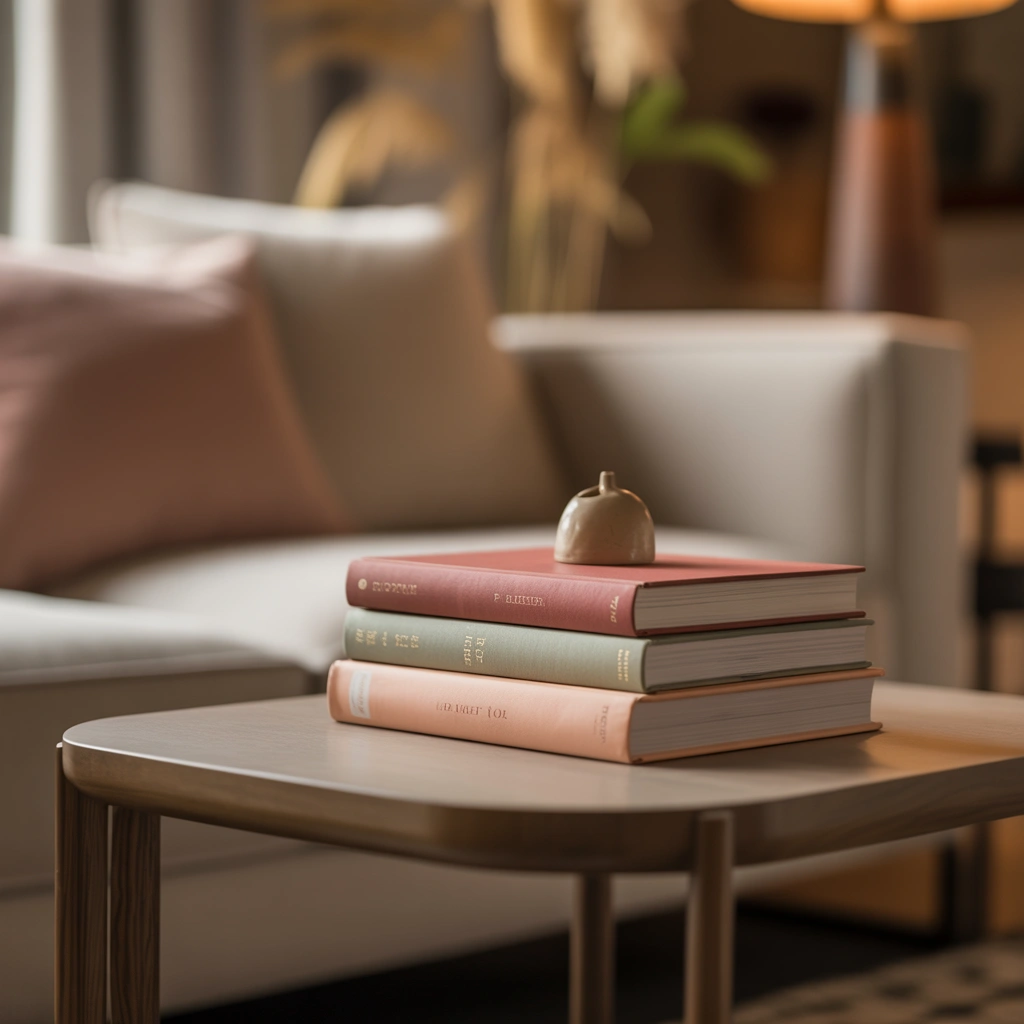
Books are among my favorite side table decor accessories because they add color, personality, and height without making the arrangement feel forced. They also offer an easy way to display your interests.
Choose two or three books with attractive covers that relate to topics you enjoy, such as interior design, travel, fashion, photography, gardening, architecture, or art. You can stack them horizontally and place a smaller decorative object on top.
For a cohesive appearance, select books with colors that complement your living room palette. Neutral covers work beautifully in minimalist spaces, while colorful books can add energy to a simple room.
You do not necessarily need to buy expensive coffee table books. Look through the books you already own and remove the dust jackets if the covers underneath are more attractive. Secondhand shops are also excellent places to find stylish books at affordable prices.
Avoid creating a stack that is too tall. A side table is smaller than a coffee table, so two or three books are usually enough. The goal is to create visual interest while maintaining plenty of usable surface space.
3. Decorate With a Small Plant or Fresh Flowers
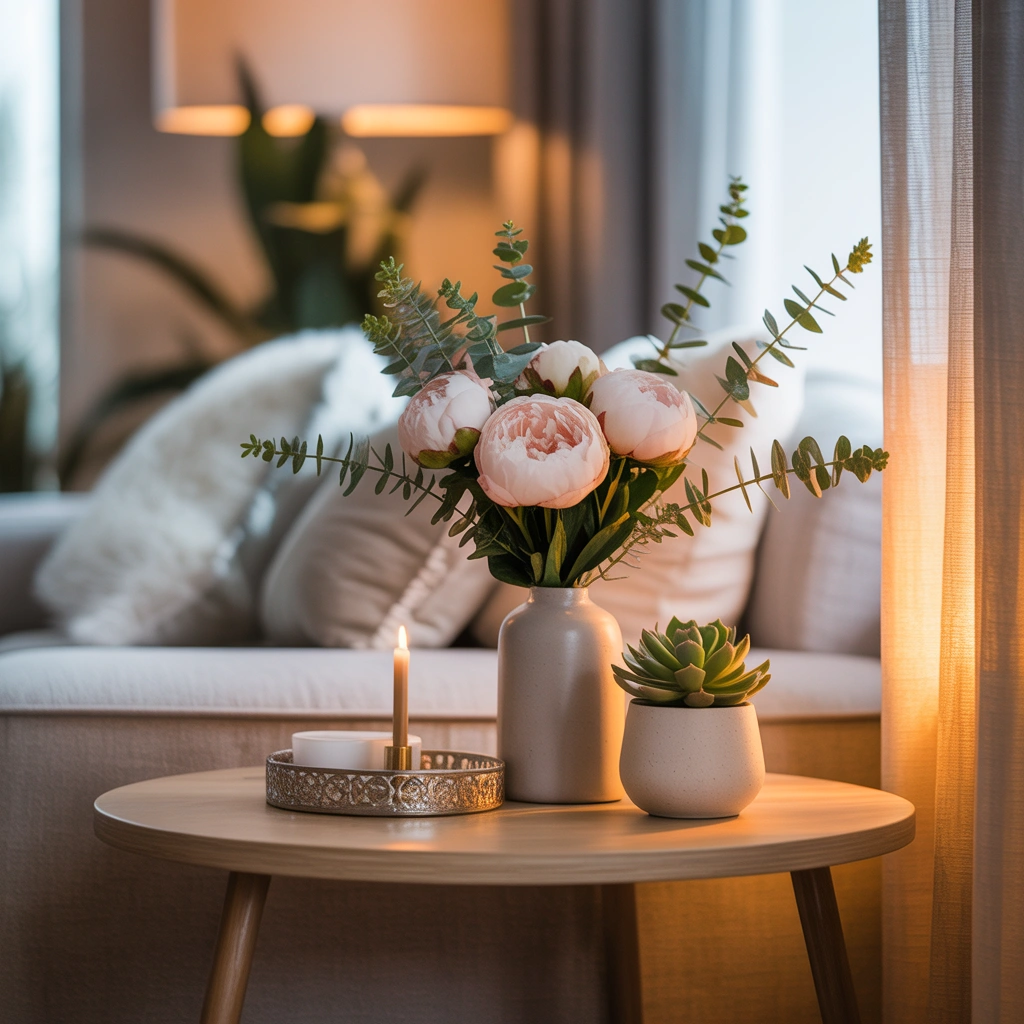
Plants and flowers instantly bring life, freshness, and natural color into a living room. Even a small touch of greenery can soften furniture, brighten a dark corner, and make the room feel more welcoming.
For a side table, choose a compact plant that will not block the view or spread across the entire surface. Pothos, succulents, small snake plants, ferns, peperomia, and prayer plants are all attractive choices. Place the plant in a decorative pot that coordinates with the room.
Fresh flowers are another beautiful option. A small arrangement of roses, tulips, carnations, eucalyptus, or seasonal branches can make the living room feel elegant and cared for. You do not need a large bouquet. A few stems in a simple glass or ceramic vase are often more suitable for a small table.
When I want a low-maintenance arrangement, I use realistic artificial greenery or dried flowers. High-quality faux plants can look convincing, especially when placed in a natural-looking pot.
Remember to protect the table surface from moisture. Use a waterproof saucer under real plants and regularly check for leaks.
4. Create a Simple Decorative Tray Arrangement
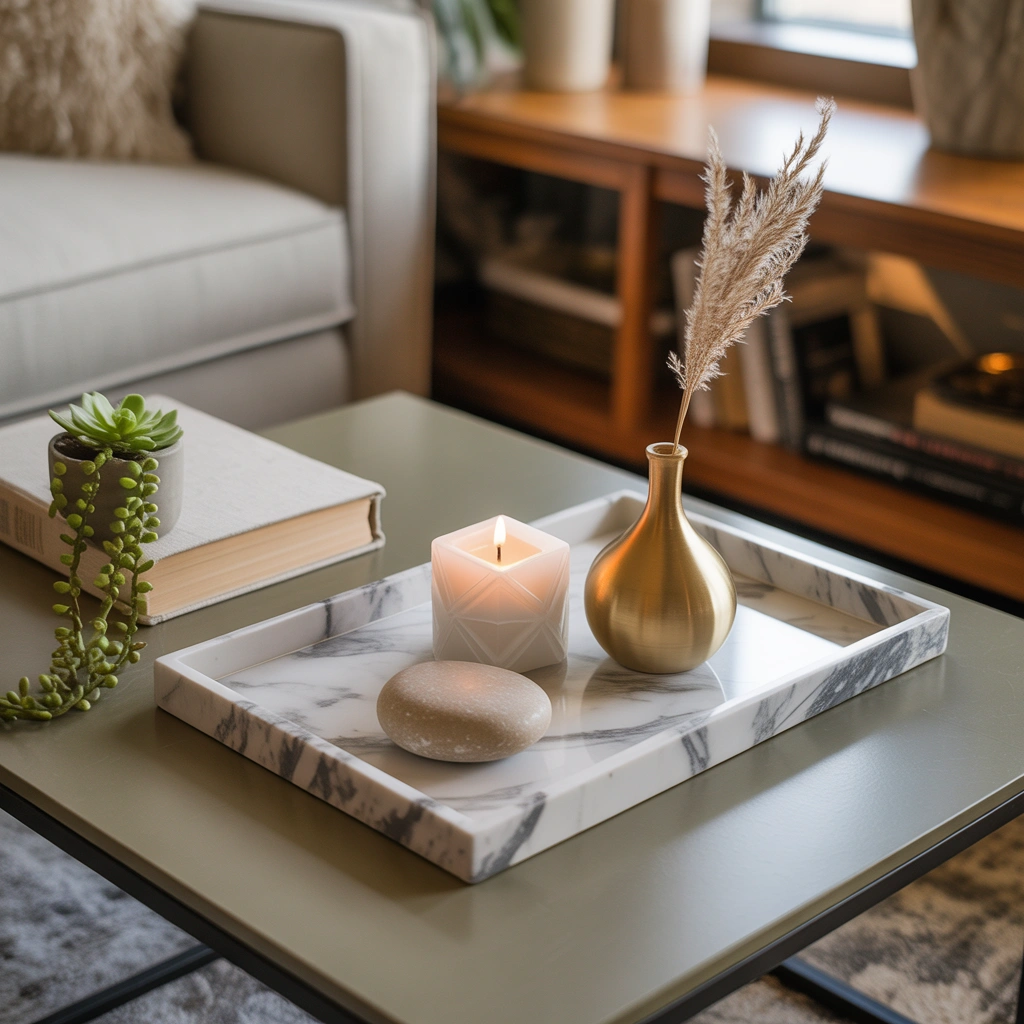
A small decorative tray is an excellent way to organize multiple objects while keeping the side table looking neat. It visually groups the accessories together, making them appear intentional rather than scattered.
Choose a tray that fits comfortably on the table without covering the entire surface. Round trays work well on square tables, while rectangular trays can complement longer surfaces. Materials such as wood, marble, metal, rattan, acrylic, and mirrored glass can support different interior styles.
Inside the tray, you might place a candle, small vase, coaster set, matchbox, decorative beads, or tiny bowl. Keep the number of items limited so the tray does not feel crowded.
I particularly like using trays on side tables that tend to collect remote controls, keys, charging cables, or other small objects. The tray provides a designated place for everyday essentials and helps prevent visual clutter.
For a refined look, combine objects of different heights. For example, pair a short candle with a taller bud vase and a small decorative box. This creates a more balanced and layered arrangement.
5. Display a Scented Candle
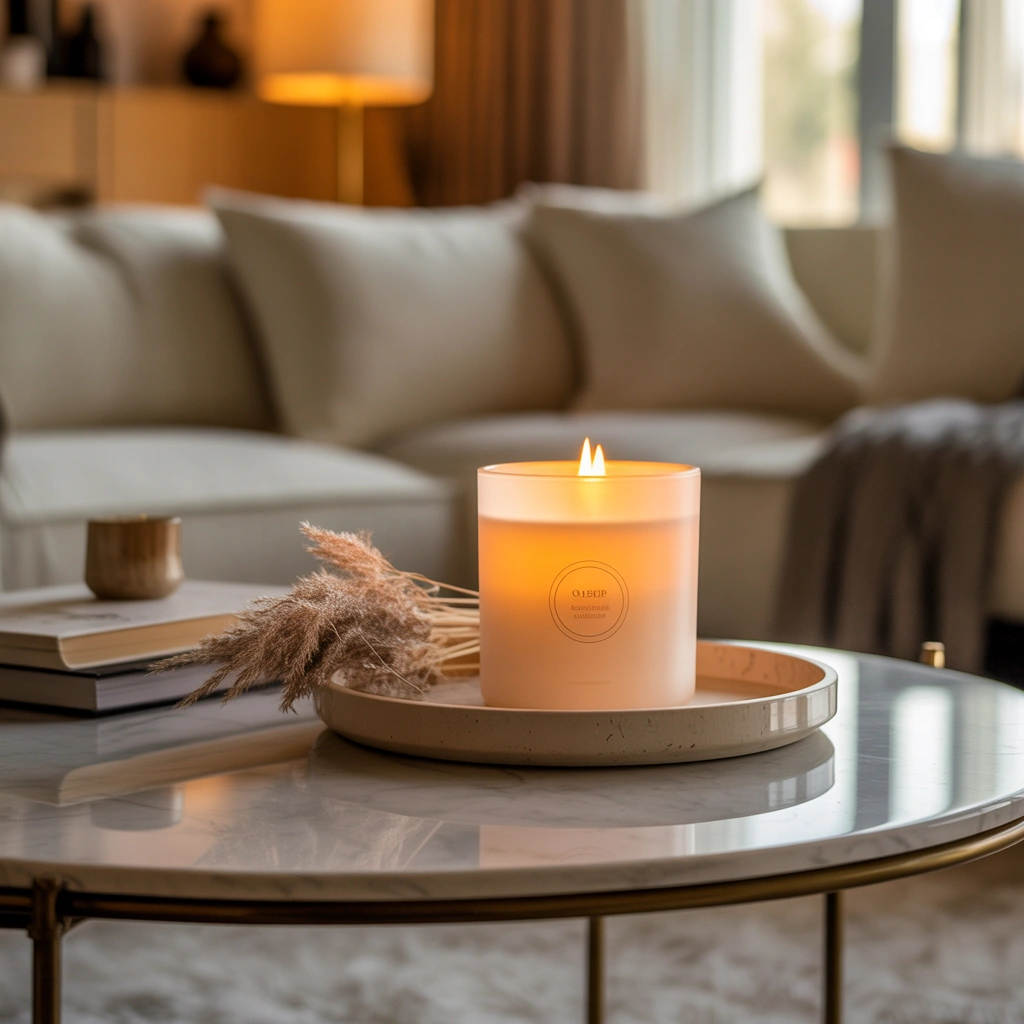
A scented candle adds more than visual beauty to a living room. It can influence the mood of the entire space through fragrance and soft, flickering light.
Select a candle in a container that complements your decor. Amber glass suits warm and rustic interiors, white ceramic looks clean and modern, while metallic containers can introduce a glamorous detail.
Seasonal fragrances are a lovely way to refresh the atmosphere throughout the year. In spring and summer, I prefer light scents such as citrus, linen, lavender, or fresh flowers. During autumn and winter, warmer fragrances such as vanilla, cedarwood, cinnamon, amber, or sandalwood feel especially comforting.
Place the candle on a coaster, tray, or heat-resistant plate to protect the table. Keep it away from curtains, books, dried flowers, and anything that could catch fire.
Even when the candle is not burning, it can still serve as a decorative object. For a layered arrangement, place it beside a small plant or on top of one or two books.
6. Use a Decorative Bowl for Small Essentials
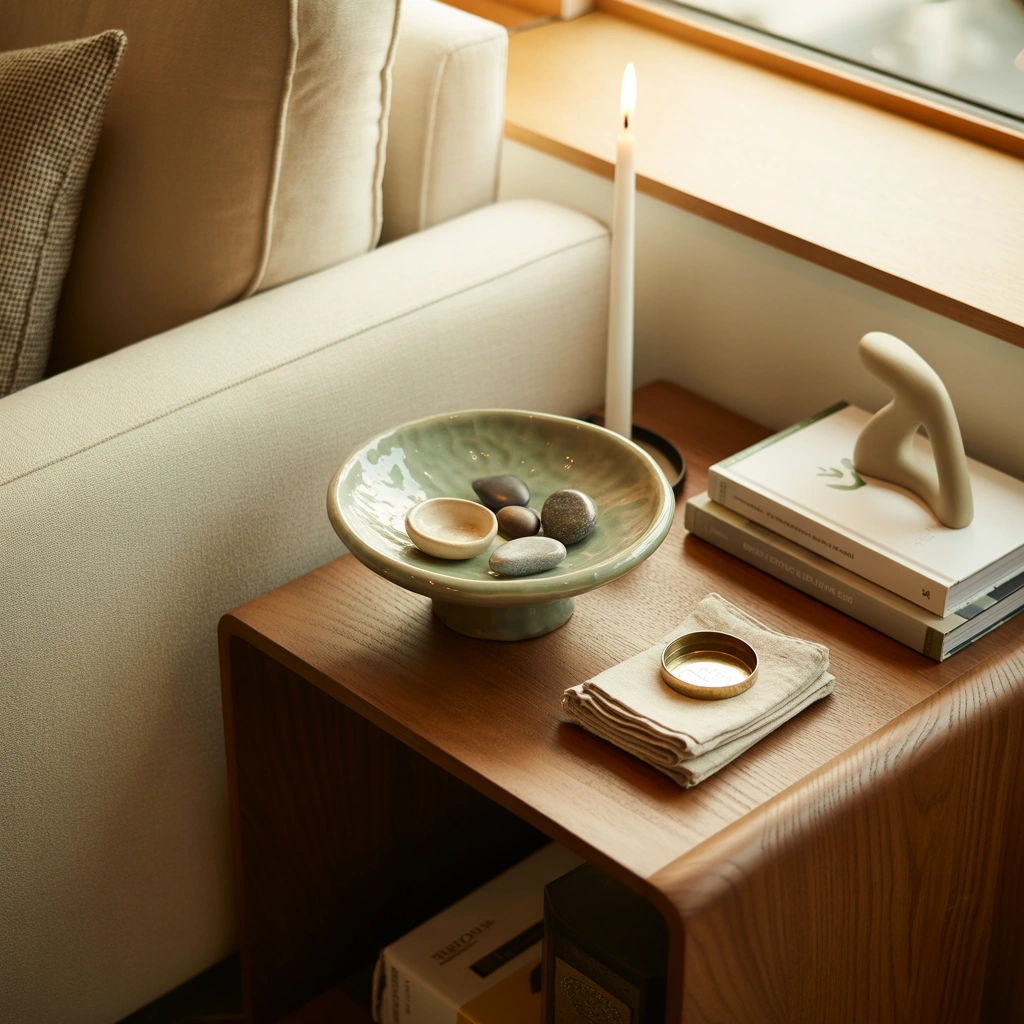
A decorative bowl is both useful and stylish, making it a perfect accessory for living room side table decor. It can hold small items that would otherwise make the table look untidy.
Depending on your household, the bowl could be used for remote controls, keys, reading glasses, earbuds, wrapped sweets, matches, or small charging accessories. Keeping these everyday objects together makes them easier to find.
Choose a bowl with an interesting shape, color, or texture. Ceramic bowls bring an artisanal feeling, glass bowls look elegant and light, wooden bowls add warmth, and metal bowls introduce shine.
Make sure the bowl is proportionate to the side table. A large centerpiece bowl may work well on a coffee table, but a smaller dish is generally more appropriate for an end table.
For purely decorative styling, fill the bowl with natural objects such as polished stones, decorative beads, pinecones, dried seed pods, or wooden spheres. However, avoid filling it with too many tiny objects, as they can collect dust and make cleaning more difficult.
7. Add a Personal Framed Photograph
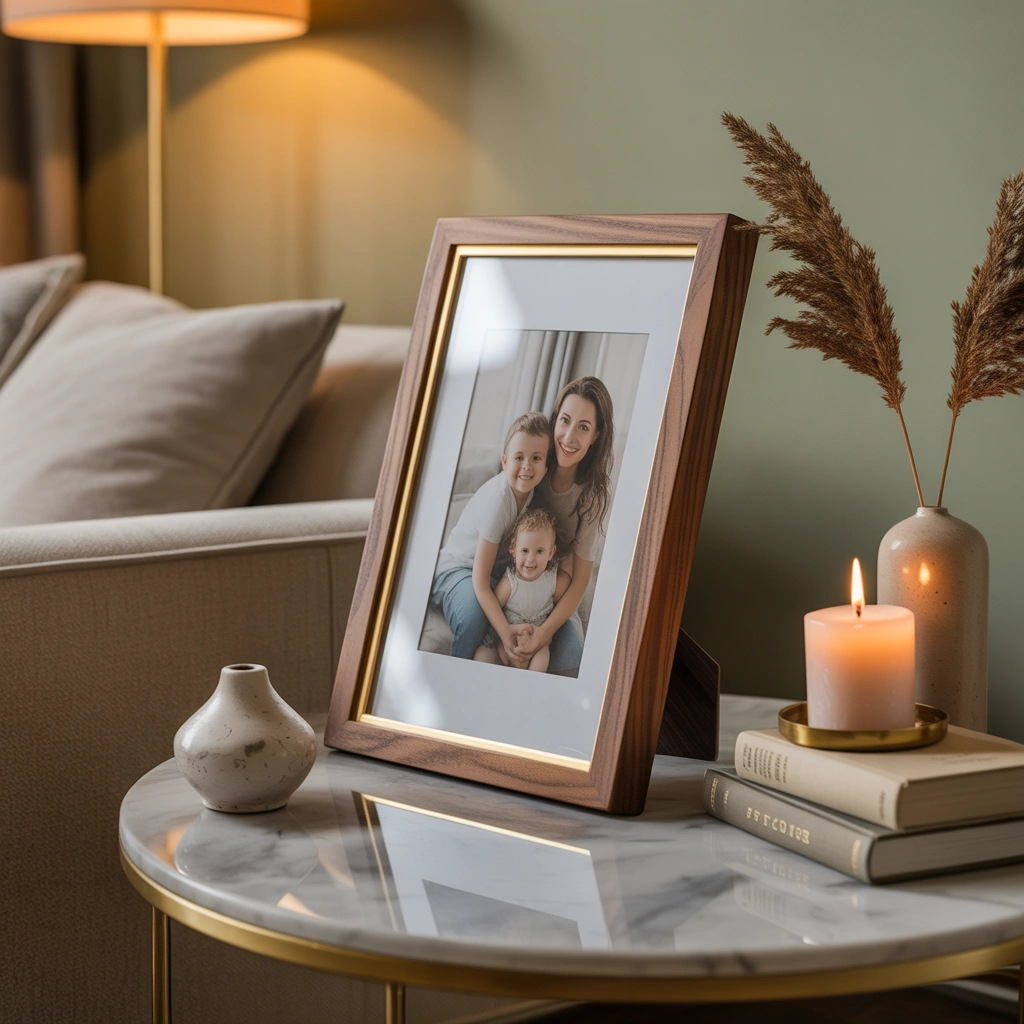
A framed photograph is one of the easiest ways to make your living room feel personal rather than staged. Family photos, travel memories, wedding pictures, pet portraits, or meaningful moments can all add warmth to a side table.
Choose one photograph that is visually clear and emotionally significant. A single frame often looks more elegant on a small table than several frames competing for attention.
The frame should coordinate with nearby finishes. Black frames create a modern appearance, wood frames feel warm and natural, brass frames add a classic touch, and silver frames can look crisp and sophisticated.
When arranging the frame, angle it slightly toward the seating area so it can be viewed easily. Pair it with a lamp, small vase, or stack of books to create a balanced composition.
I recommend avoiding oversized frames on narrow tables because they can appear unstable and may be knocked over. A medium or small frame usually works best.
You can also change the photograph occasionally. Updating the image for holidays, family milestones, or changing seasons is a simple way to keep the display feeling fresh.
8. Introduce a Small Decorative Sculpture
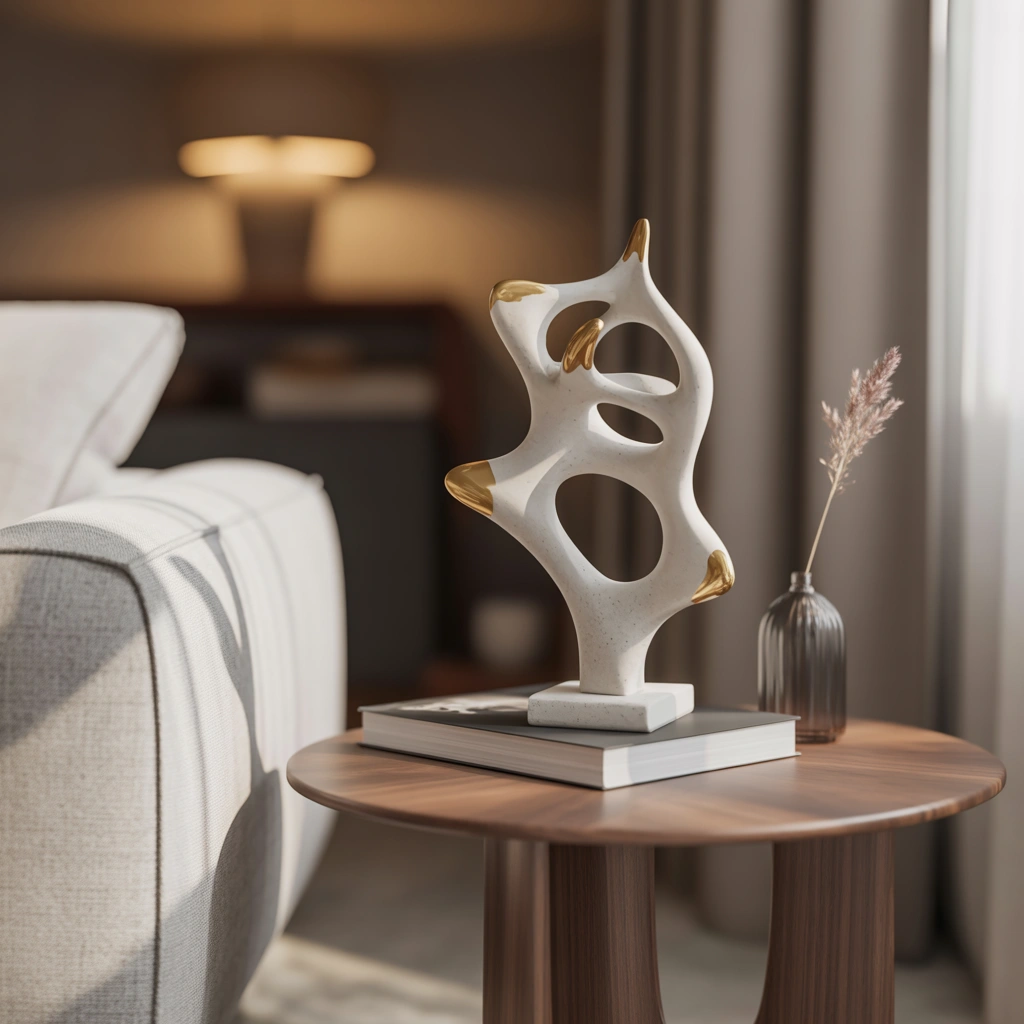
A sculptural object can add character and artistic interest to a side table. It does not need to be expensive or dramatic. Even a small abstract form can become an attractive focal point.
Popular options include ceramic knots, metal figurines, miniature busts, carved wooden objects, stone shapes, animal figures, and abstract sculptures. Choose something that reflects your personality or supports the overall style of the room.
For example, a smooth white ceramic sculpture works well in a modern neutral space, while a handmade wooden figure may suit a rustic or bohemian living room. Brass or black metal objects can add contrast to a contemporary interior.
Place the sculpture on top of a book stack if it needs additional height. This technique also helps connect the object with the rest of the arrangement.
The most important rule is to choose one meaningful or visually interesting piece rather than several unrelated ornaments. A single statement object usually looks more intentional and allows the side table to breathe.
9. Bring Warmth With Natural Textures
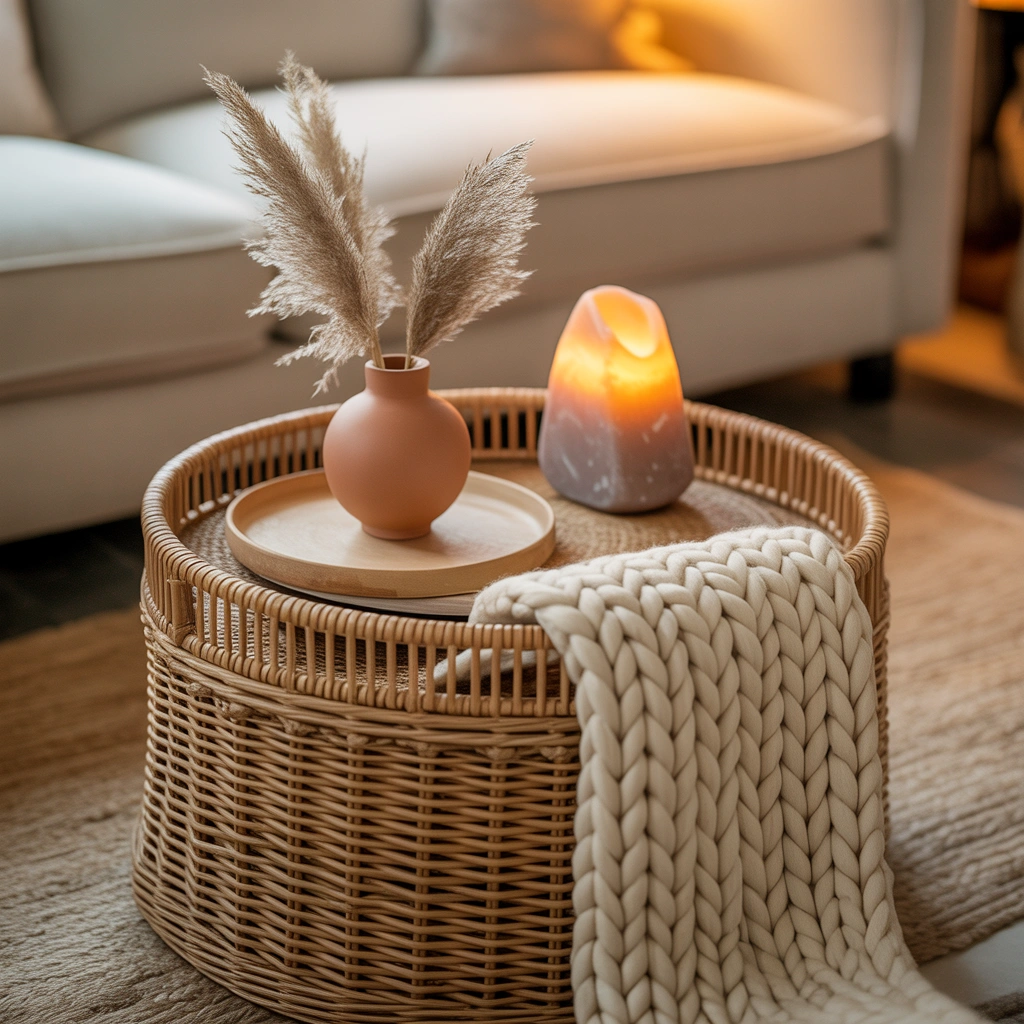
Natural materials make a living room feel relaxed, comfortable, and inviting. A side table provides the perfect place to introduce small textured elements without changing the entire design.
Try adding a woven coaster set, rattan tray, wooden beads, stone candle holder, linen-covered box, ceramic vase, or small basket. These materials can soften sleek furniture and bring warmth to rooms dominated by metal, glass, or polished surfaces.
I especially like combining contrasting textures. For example, a smooth marble side table looks beautiful with a woven tray or rough ceramic vase. A wooden table can be elevated with a glass candle and polished metal accessory.
Natural textures are particularly effective in farmhouse, coastal, Scandinavian, organic modern, and bohemian interiors. However, they can also make a formal room feel less rigid.
Avoid adding too many textured pieces at once. Select one or two materials and repeat them elsewhere in the room through cushions, curtains, baskets, or decorative objects. This repetition creates visual harmony.
10. Keep It Minimal With Only Two or Three Objects
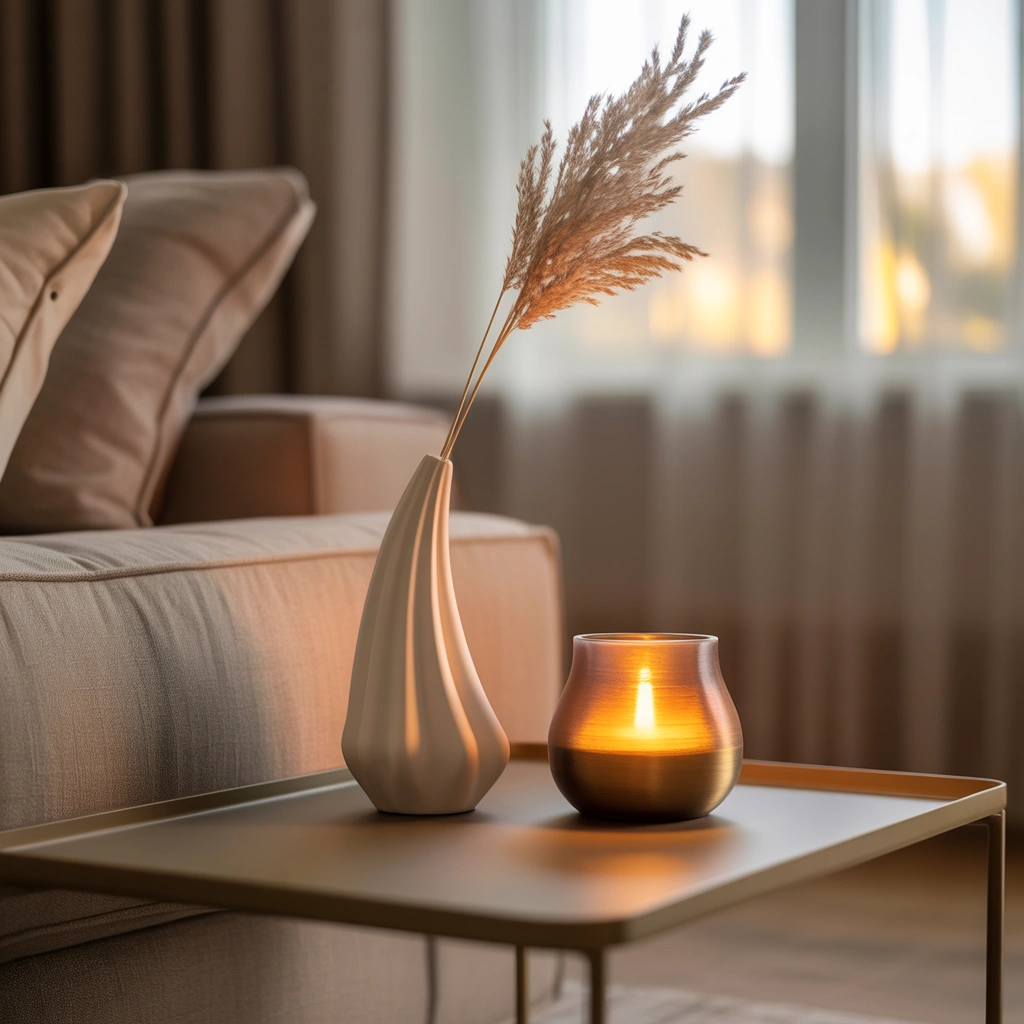
Side table styling does not have to be elaborate. In many living rooms, a simple arrangement looks more polished than a crowded display.
For a minimalist look, choose only two or three objects with different heights. You might combine a lamp, small bowl, and book. Another option is a vase, candle, and coaster set.
The empty space around the objects is just as important as the objects themselves. It allows each piece to stand out and keeps the table functional.
When I create a minimal arrangement, I focus more carefully on shape and proportion. Since there are fewer items, every piece becomes more noticeable. Choose accessories with clean forms, quality materials, and colors that coordinate with the room.
A neutral palette can make the side table feel calm and sophisticated. Shades of white, beige, black, brown, gray, or muted green are easy to combine.
Minimal styling is especially suitable for small living rooms because it reduces visual clutter and helps the space feel more open.
11. Create Balance With the Rule of Three
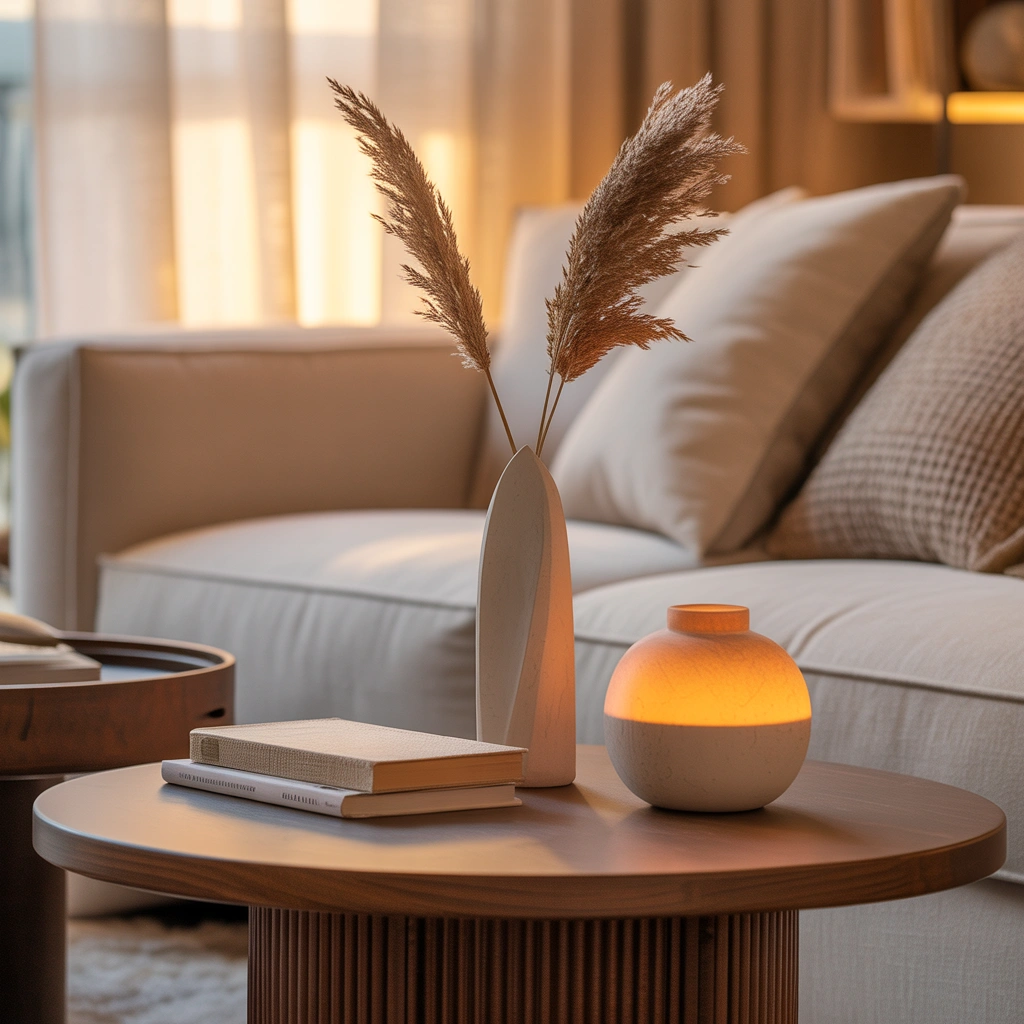
The rule of three is a simple decorating principle that can help a side table arrangement feel natural and visually balanced. Objects grouped in odd numbers, particularly groups of three, often appear more attractive than symmetrical pairs.
Start by selecting three objects with different heights, shapes, or textures. For example, use a tall lamp, medium-sized plant, and small decorative bowl. Another combination could include a vase, candle, and book stack.
The objects do not need to match, but they should share at least one connecting element. This might be a similar color, material, or style.
Arrange the tallest object toward the back of the table, the medium object slightly forward, and the smallest piece near the front. This creates depth and allows each item to remain visible.
Be careful not to interpret the rule too rigidly. A stack of books can count as one visual object, even if it contains several books. The goal is not to count every item but to create three main visual groups.
12. Add Coasters That Match Your Decor
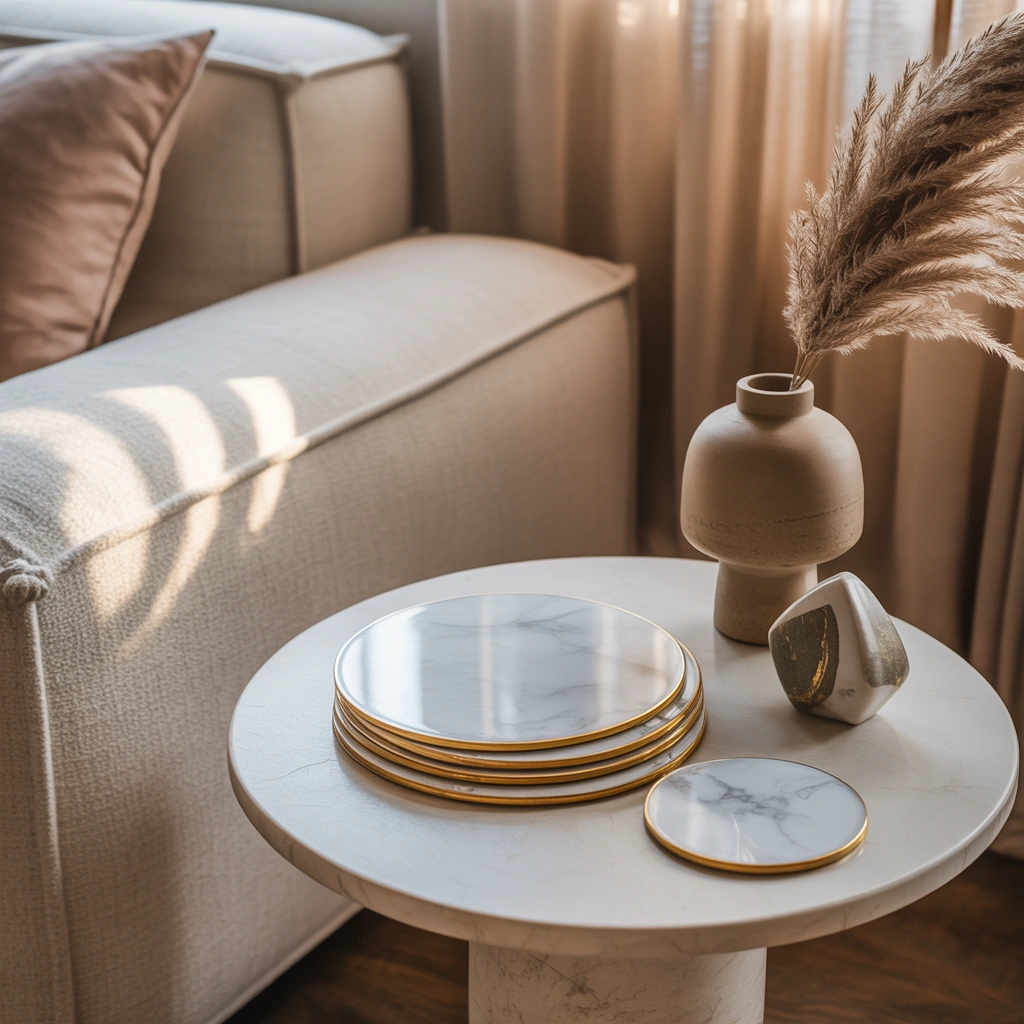
Coasters are essential for protecting a side table from water rings, heat marks, and scratches. Fortunately, they can also contribute to the overall decor.
Instead of hiding coasters in a drawer, choose a stylish set and make them part of the arrangement. Marble, wood, cork, leather, woven fiber, ceramic, and resin coasters are available in many colors and styles.
Stack them neatly beside a lamp or place them inside a small holder. This keeps them organized and easy to reach when guests arrive.
For a cohesive look, coordinate the coaster material with another element in the room. Wooden coasters might connect with a wooden coffee table, while brass-edged coasters could complement metal lighting or cabinet handles.
Coasters are particularly useful when the side table is located beside the seat where you usually enjoy tea, coffee, or cold drinks. They allow the table to remain practical without sacrificing style.
13. Decorate With Seasonal Accessories
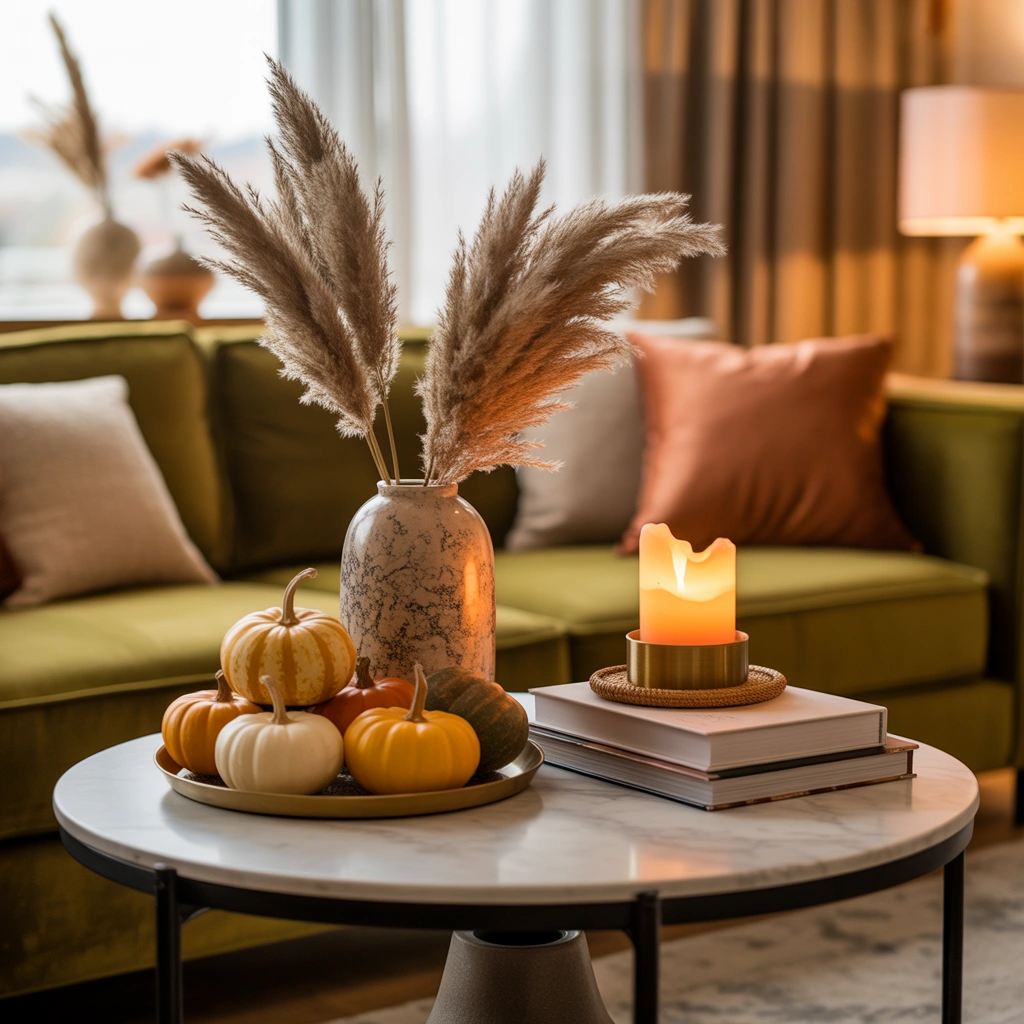
Changing a few side table accessories with the seasons is an affordable way to refresh your living room throughout the year.
In spring, consider a small vase of flowers, a pastel candle, or a ceramic bird. For summer, use coastal textures, fresh greenery, light-colored books, or a glass vase. Autumn side table decor might include warm-toned candles, dried leaves, miniature pumpkins, or wooden elements. During winter, introduce metallic details, pine branches, fairy lights, or rich fabrics.
You do not need to replace everything. Keep your main pieces, such as the lamp and tray, and change only one or two smaller accessories.
I prefer subtle seasonal decorating rather than filling every surface with themed items. A small change in color, fragrance, or natural material is usually enough to create a fresh atmosphere.
Store seasonal accessories in labeled boxes so they are easy to find and rotate. This approach allows you to enjoy variety without buying entirely new decor every few months.
14. Include a Decorative Box With Hidden Storage
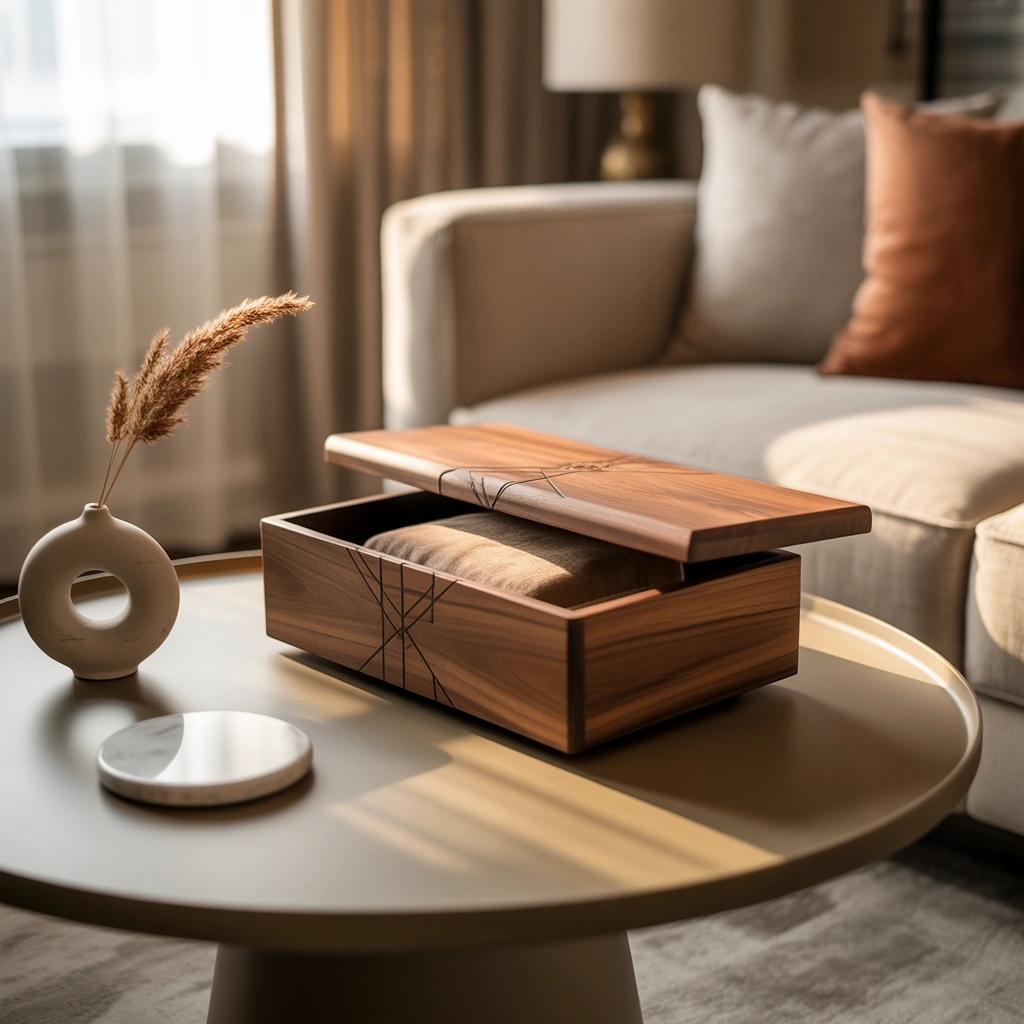
A decorative box is a clever solution when you want the side table to look beautiful while hiding small clutter.
Use the box to store remote controls, charging cables, batteries, reading glasses, pens, medication, or other items you prefer to keep nearby but out of sight.
Boxes are available in materials such as wood, leather, fabric, glass, metal, and woven fiber. Choose one that fits the scale of the table and complements the living room style.
A small box can be placed directly on the tabletop or on top of a book stack. If the box has a particularly attractive lid, it can serve as a decorative focal point.
For a luxury-inspired arrangement, look for boxes with stone, brass, velvet, or lacquered finishes. For a relaxed interior, use linen, rattan, or carved wood.
This is one of my favorite ideas for busy family living rooms because it supports everyday organization without making the space feel overly practical or utilitarian.
15. Combine Beauty and Function With a Reading Corner Setup
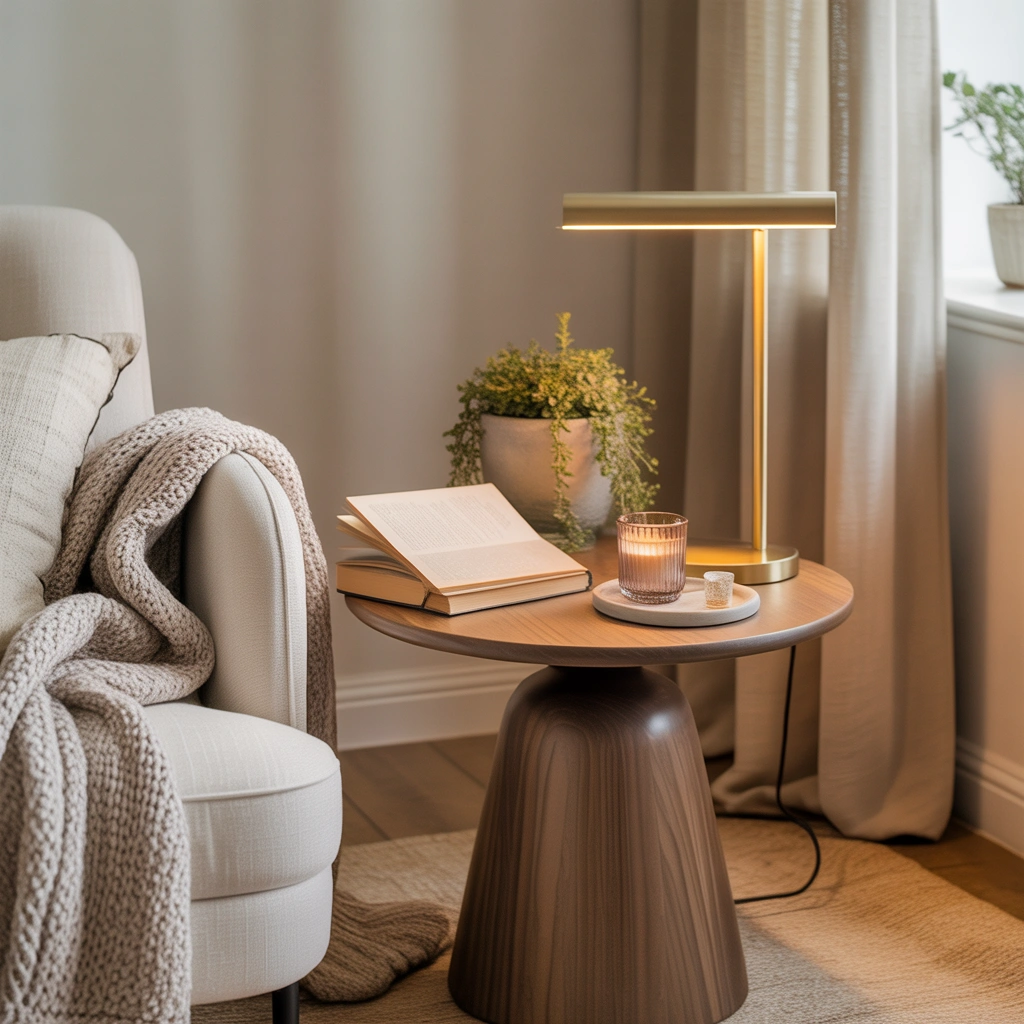
When a side table sits beside an armchair or the end of a sofa, you can style it as part of a comfortable reading corner.
Begin with a lamp that provides focused but soft light. Add the book you are currently reading, a coaster for your drink, and a small bowl or box for reading glasses and bookmarks.
You might also include a candle or small plant, but keep the arrangement practical. The purpose of a reading corner is comfort, so avoid covering the table with objects that must be moved every time you sit down.
A small basket beside the table can hold additional books, magazines, or a folded throw blanket. This expands the storage without overcrowding the tabletop.
I love this approach because it turns an ordinary corner into a personal retreat. It invites you to slow down, relax, and spend more time enjoying your living room.
How to Choose the Right Decor for Your Living Room Side Table
Before buying accessories, consider how you use the table every day. Is it mainly decorative, or do you regularly place drinks, phones, books, and remote controls on it? A practical table needs more open space than one located in an unused corner.
You should also consider the table’s shape, size, and material. A small round table may only need a lamp and coaster, while a wide square table can support a more layered arrangement.
Look at the surrounding furniture and identify repeating colors, textures, and finishes. Using similar elements on the side table will help it connect with the rest of the room.
Try to include objects of different heights. A completely flat arrangement can look uninteresting, while varied heights create movement. However, avoid using objects so tall that they block conversation or the view of a television.
Finally, remember that side table styling does not have to remain permanent. Experiment with different combinations using items you already own.
Common Side Table Decorating Mistakes to Avoid
One of the most common mistakes is placing too many accessories on the table. Even beautiful objects can look messy when they are crowded together. Leave enough empty space for the table to remain functional.
Another issue is choosing accessories that are out of scale. An oversized lamp may dominate a narrow table, while tiny objects can look insignificant beside large furniture.
Using items of the same height can also make the arrangement feel flat. Create variation with a lamp, vase, plant, book stack, or elevated decorative object.
Visible cables are another detail that can affect the finished look. Use cable clips, covers, or furniture placement to keep lamp and phone-charging wires organized.
Finally, avoid decorating without considering your daily habits. If you constantly remove decorative pieces to make space for a drink, the arrangement is probably not practical enough.
Frequently Asked Questions
What should I place on a living room side table?
A living room side table can hold a lamp, books, plant, flowers, candle, decorative bowl, framed photograph, sculpture, coasters, tray, or storage box. Select only a few items and leave room for everyday use.
How many items should be on a side table?
Two to four visual groupings are usually enough. A lamp, book stack, and small decorative object can create a complete arrangement without overcrowding the surface.
Should both living room side tables match?
The tables do not have to match exactly. You can create a coordinated look by repeating colors, materials, lamps, or similar decorative objects. Slight differences can make the room feel more natural and collected.
How do I decorate a very small side table?
Keep the arrangement simple. Use one compact lamp or vase, a coaster, and perhaps one small book or bowl. Prioritize items that are both practical and decorative.
How tall should a side table lamp be?
The lamp should be proportionate to the table and seating. When seated, the bottom of the lampshade should generally be near eye level so the bulb does not shine directly into your eyes.
How can I make inexpensive side table decor look expensive?
Choose a limited color palette, avoid overcrowding, use books to elevate small objects, and combine different textures. Simple ceramic, glass, wood, and metallic accessories can look luxurious when arranged carefully.
Final Thoughts
Decorating a living room side table is a small project that can have a noticeable impact on the entire space. The best arrangements balance style, personality, and everyday function.
You might prefer a classic setup with a lamp, books, and flowers, or you may enjoy a minimal arrangement with only a candle and decorative bowl. There is no single correct formula. The ideal side table decor should reflect your interior style and support the way you live.
My favorite approach is to begin with one practical anchor piece, such as a lamp, and then add one or two smaller objects with different heights and textures. I always leave some empty space for a cup, phone, or book. This simple method keeps the table polished without making it feel staged.
Use these 15 side table decor living room ideas as inspiration, but do not be afraid to experiment. Move objects around, shop your own home, rotate seasonal pieces, and display items that mean something to you. When the accessories are beautiful, useful, and personal, even the smallest side table can become one of the most charming features in your living room.
