Designing a bathroom for two children can already feel like a challenge, but creating one that works equally well for a boy and a girl requires a little more thought. You want the space to feel playful without becoming too childish, organized without looking boring, and balanced enough that neither child feels like the room belongs more to their sibling.
When I think about the best kids bathroom ideas shared boy and girl, I always come back to one simple rule: start with a neutral foundation and add personality through smaller details. This makes it easier to create a bathroom both children enjoy while giving each of them their own little sense of ownership.
A shared kids bathroom also needs to be practical. There are toothbrushes, towels, bath toys, hair products, soaps, pajamas, and plenty of other small items that somehow find their way onto the countertop. Smart storage and clearly defined areas can make morning and bedtime routines much easier.
The good news is that a shared boy-and-girl bathroom doesn’t need to rely on predictable pink-and-blue decorating. From cheerful color combinations and playful wall art to double vanities and personalized storage, there are many stylish ways to create a bathroom that feels welcoming to everyone.
Here are 12 kids bathroom ideas shared boy and girl that combine personality, organization, durability, and style.
1. Start With a Cheerful Neutral Color Palette
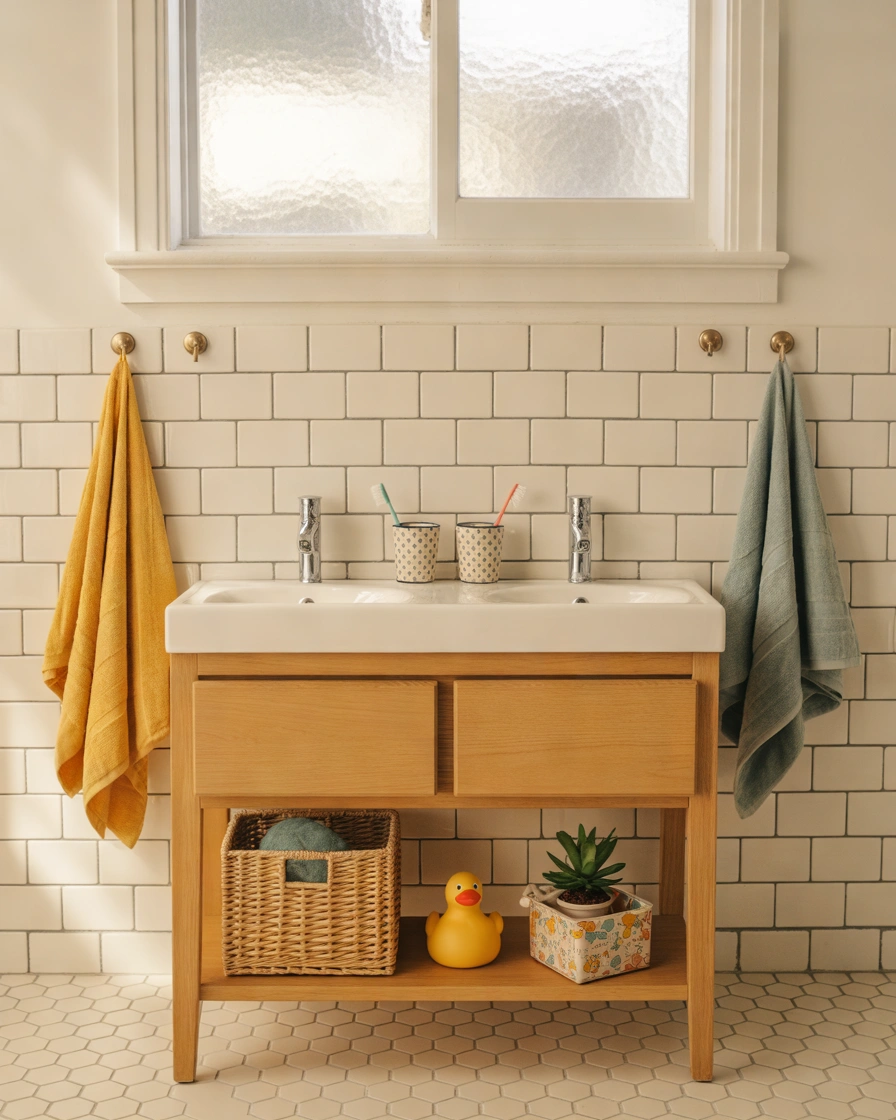
One of my favorite ways to design a shared bathroom for a boy and girl is to begin with a warm neutral base. White, cream, soft beige, light gray, pale greige, or even a gentle sage can provide the perfect background for colorful accessories.
A neutral bathroom doesn’t have to feel plain. In fact, it gives you much more freedom when decorating. Instead of committing to strongly gendered wall colors, you can introduce personality through towels, bath mats, artwork, baskets, soap dispensers, and shower curtains.
For example, a white vanity with light wood cabinetry can look beautiful with mustard yellow, muted teal, terracotta, and soft green accents. These colors feel youthful without making the bathroom look like it belongs exclusively to a boy or girl.
I also love neutral walls because children’s tastes change surprisingly quickly. A bathroom decorated around dinosaurs and rainbows today might need to accommodate completely different interests a few years from now. Keeping larger surfaces neutral makes those changes much easier and less expensive.
If the bathroom is small, lighter neutral shades also help reflect natural and artificial light, making the space feel brighter and more open.
2. Create Two Personalized Vanity Zones
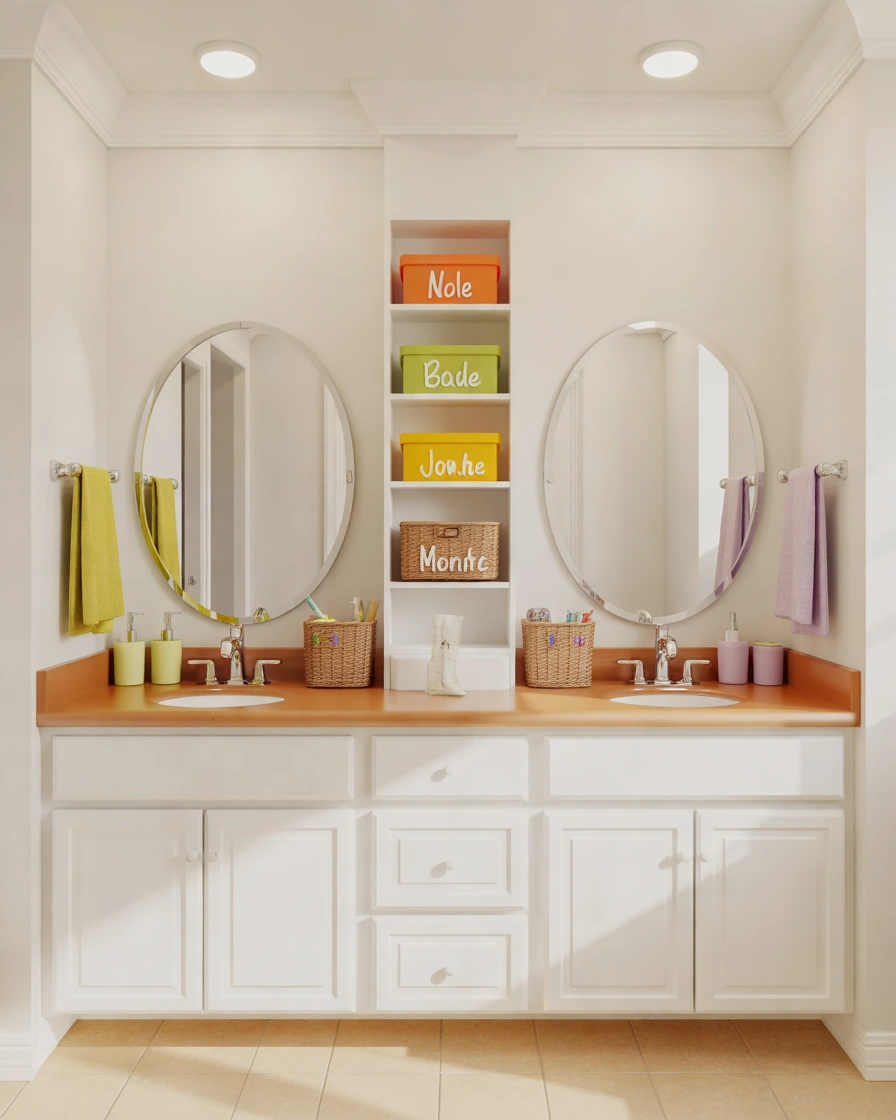
If you have enough counter space, creating separate vanity zones can completely change the way a shared bathroom functions. Children love having their own little space, even when they are sharing the same room.
You don’t necessarily need two sinks. A long vanity with one sink can still be visually divided into two sections. Give each child their own toothbrush holder, storage cup, hand towel hook, small basket, or drawer.
For a larger bathroom, a double vanity is even better. Each child can have their own sink, mirror, drawer, and accessories. This can reduce arguments during busy school mornings when both children are trying to get ready at the same time.
Personalization can be subtle. Small wooden initials, colorful name tags, or individual storage containers work beautifully without making the bathroom feel overly themed.
I prefer keeping the vanity itself consistent so the overall room remains cohesive. Then I use accessories to identify each child’s side. One child might have green and orange accents while the other uses yellow and lavender.
This approach works particularly well as children grow because the personalized accessories can easily be replaced.
3. Use Colorful Geometric Tiles
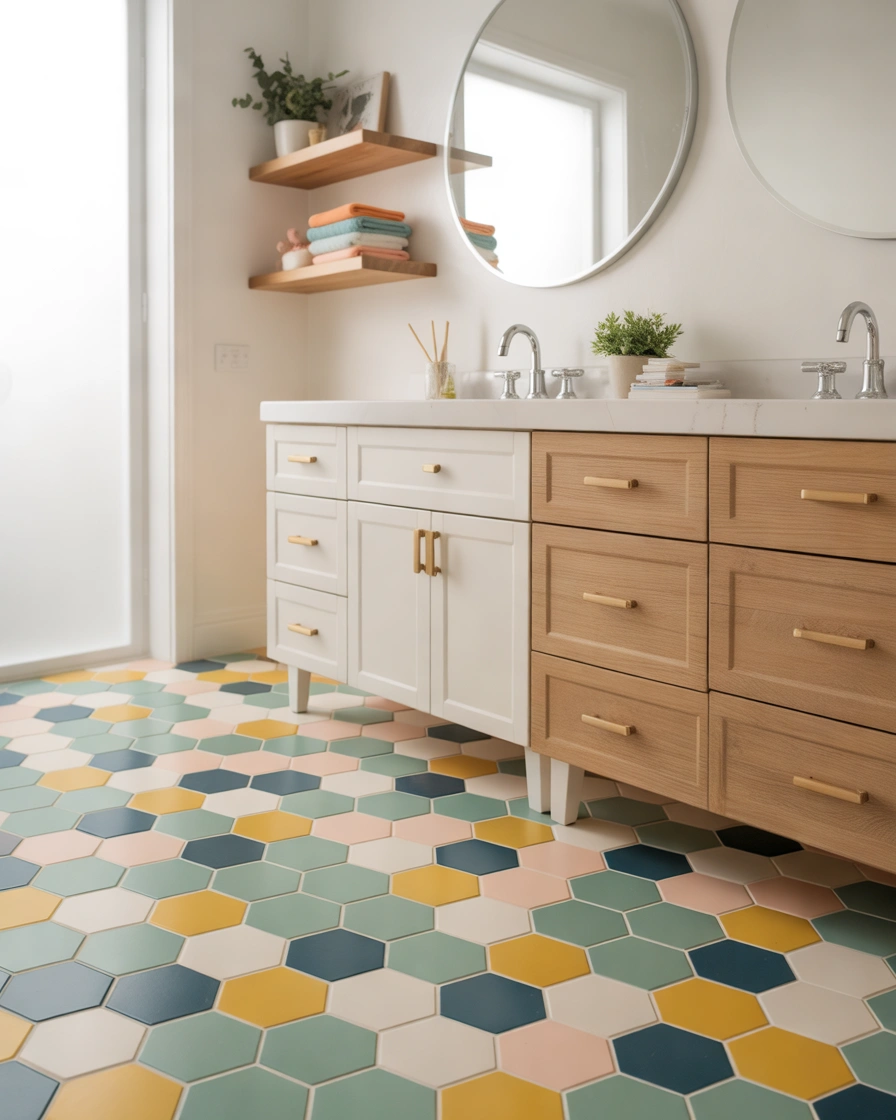
If you want your shared kids bathroom to feel lively without using a specific theme, geometric tiles are an excellent option.
Patterns made from hexagons, triangles, arches, checkerboards, or small squares can introduce color and energy while still looking stylish enough to grow with your children.
Personally, I love combining several muted colors instead of choosing one dominant shade. Think dusty blue, sage green, mustard, peach, terracotta, and cream. Together, these colors create a playful atmosphere while remaining balanced.
You can use patterned tile on the floor while keeping the walls simple, or create a colorful backsplash behind the vanity.
Another option is using classic white tile with colorful grout. It is a subtle detail, but it instantly makes a standard bathroom feel more interesting.
If you are worried about committing to a bold pattern, limit the tile to a smaller area such as the vanity backsplash or shower niche.
The beauty of geometric patterns is that they aren’t tied to a specific childhood character or trend. That means the bathroom can still look attractive when your kids become teenagers.
4. Add Separate Towel Hooks for Each Child
Sometimes the smallest changes make the biggest difference in a shared bathroom.
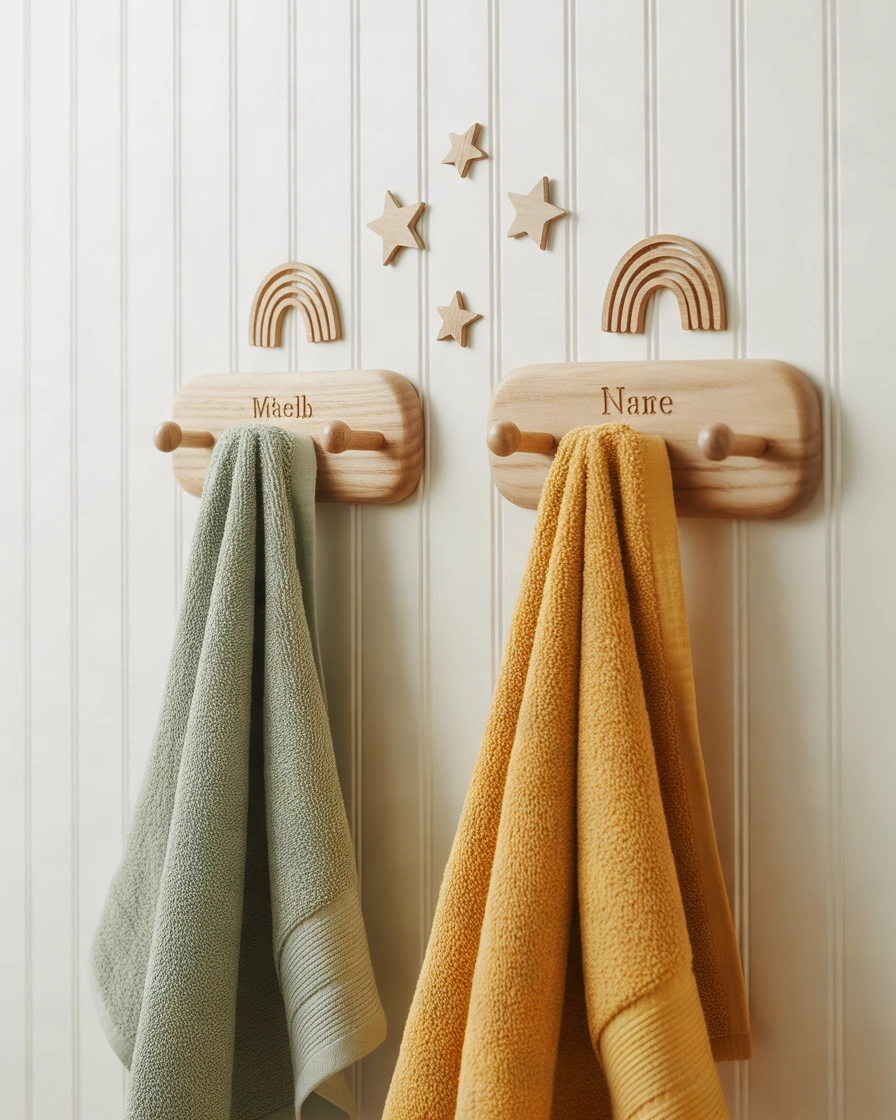
One practical feature I always recommend is giving each child their own towel hook. It sounds simple, but it helps keep towels organized and prevents confusion about which towel belongs to whom.
Instead of placing one traditional towel bar on the wall, install two or three sturdy hooks at child-friendly height.
You can identify each hook using initials, names, symbols, or colors. For example, one hook could have a small star above it while the other has a rainbow. Another idea is using wooden letter plaques.
Color-coded towels also work wonderfully. One child might always use sage green towels while the other uses mustard or soft coral.
I like hooks because children are much more likely to hang towels on a hook than carefully fold them over a towel bar. Anything that makes cleanup easier is a win in my book.
Just make sure the hooks are installed low enough that younger children can reach them without climbing.
5. Choose a Fun Gender-Neutral Shower Curtain
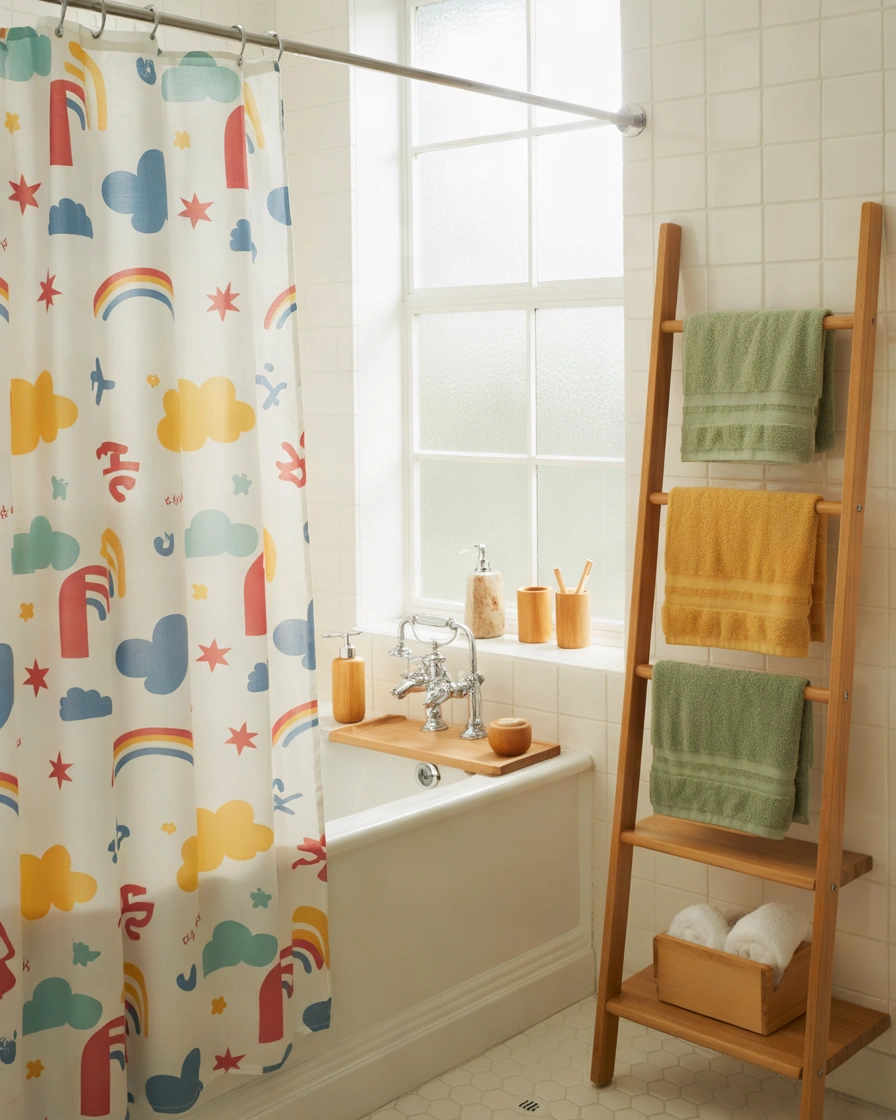
A shower curtain takes up a large visual area, which means it can completely change the personality of a kids bathroom.
Instead of choosing a design specifically targeted toward boys or girls, look for something fun and gender-neutral.
Some of my favorite ideas include rainbows, ocean animals, abstract shapes, stars, clouds, forests, fruit, stripes, dots, and playful typography.
A white shower curtain covered in colorful hand-drawn shapes can instantly make the room feel cheerful without overwhelming the space.
You can also coordinate colors from the shower curtain with towels, bath mats, and storage containers. This helps the bathroom look intentionally designed rather than randomly decorated.
When selecting the curtain, I would avoid designs that feel too babyish unless the children are very young. Choosing something slightly more sophisticated means you won’t need to replace it every year.
Machine-washable fabric curtains are especially practical for family bathrooms because they are easy to clean.
6. Give Each Child Their Own Storage Basket
Shared bathrooms can become cluttered very quickly, especially when two children have different toiletries.
Separate storage baskets are one of the easiest ways to solve the problem.
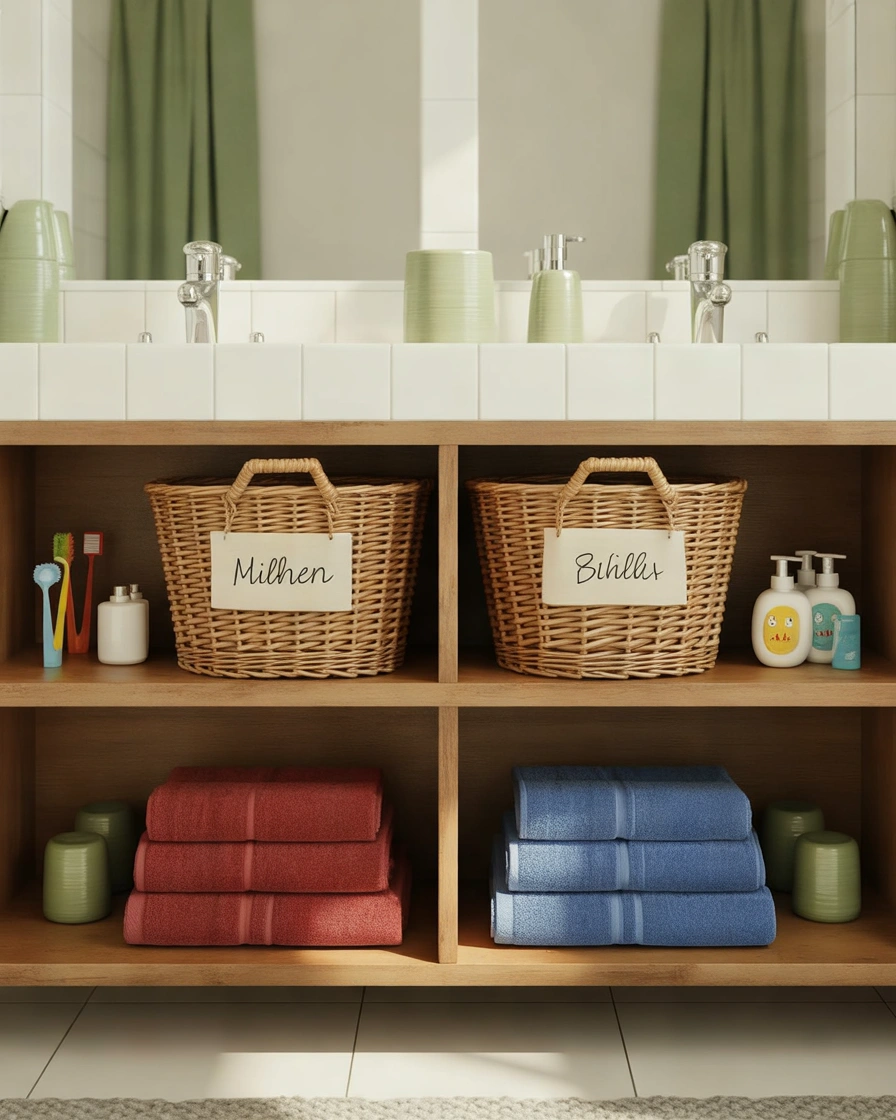
Give each child their own basket for personal items such as hair products, brushes, skincare, bath toys, combs, or extra toiletries.
I especially like woven baskets because they add warmth to bathrooms filled with tile and other hard surfaces. Plastic or metal bins are also great choices when you need something easier to clean.
You can place baskets under the vanity, inside open shelving, or in a bathroom cabinet.
Labeling them helps younger children understand where their belongings should go. Simple wooden tags or waterproof labels can keep the system looking neat.
If you have three shelves, you can dedicate the bottom shelves to each child and use the upper shelf for shared supplies such as toilet paper and extra towels.
This small organizational system can make cleaning the bathroom much faster.
7. Decorate With Playful Wall Art
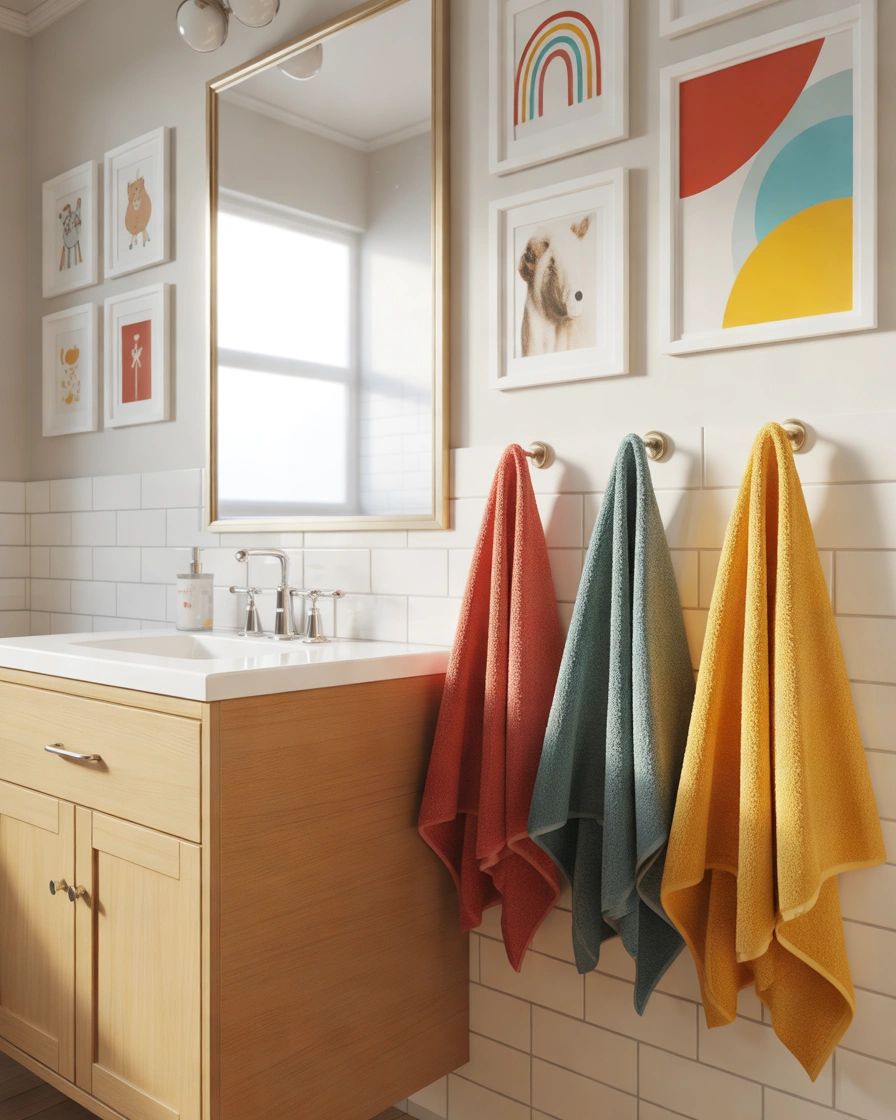
Bathroom walls are a perfect place to add personality without making permanent design changes.
Instead of decorating around one child’s favorite character, choose artwork that both children can enjoy.
Animals, funny bathroom quotes, colorful illustrations, ocean scenes, rainbows, abstract shapes, botanical prints, or cheerful typography all work beautifully.
One idea I particularly like is creating a small gallery wall with three or four framed prints. Each print can feature a different color so the collection ties together the bathroom palette.
You could include one print chosen by each child and a third piece that connects the two.
For example, one child might choose an animal illustration while the other chooses a colorful abstract print. Using matching frames makes everything feel cohesive.
Wall art is also easy to update as children grow.
Just remember that bathrooms can be humid, so choose moisture-resistant frames or artwork that can handle occasional humidity.
8. Add a Step Stool That Looks Like Part of the Decor
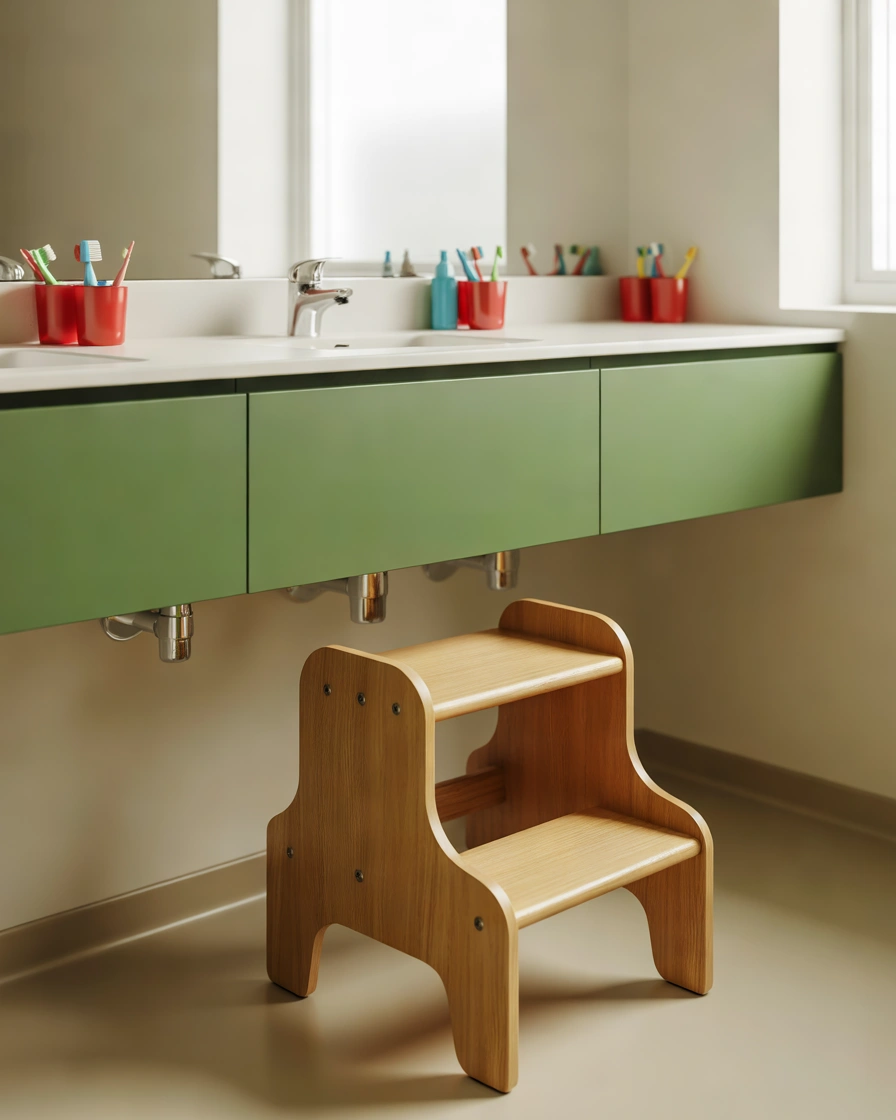
For younger children, a step stool is practically essential.
Instead of treating it as something that gets hidden away, choose one that complements the bathroom design.
A small wooden stool can look beautiful in bathrooms with natural wood cabinetry. Painted stools in sage green, muted yellow, navy, or white can also coordinate with your overall palette.
If both children are young, consider choosing a wider step stool so they can easily reach the sink.
Safety should always come first. Look for a sturdy design with non-slip feet and a textured top surface.
I love the idea of storing the stool directly under a floating vanity when it isn’t being used. This keeps the floor clear and makes the bathroom look organized.
As the children grow, the stool can eventually become a small plant stand, storage surface, or decorative accessory.
9. Use a Nature or Adventure Theme
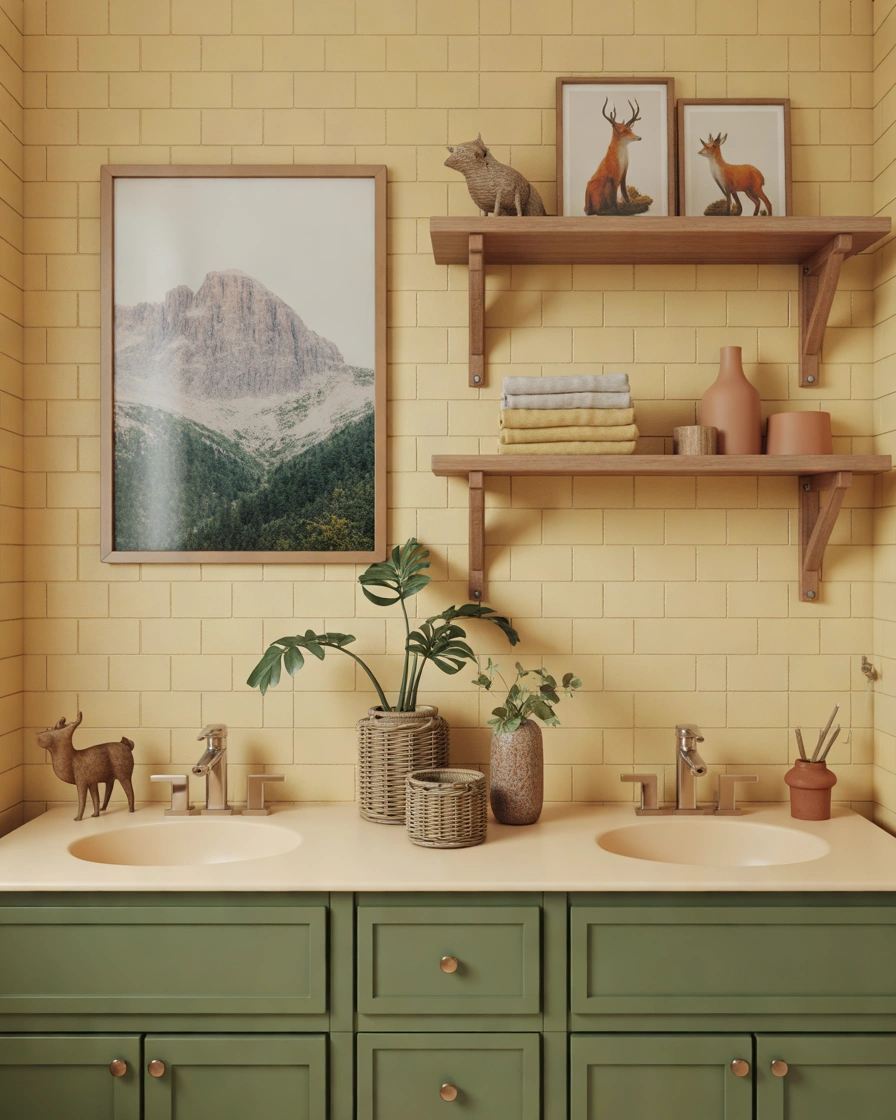
If you really want a theme, nature is one of the easiest options for a shared boy-and-girl bathroom.
Forest animals, mountains, oceans, jungles, clouds, stars, and outdoor adventure themes feel playful without becoming overly gender-specific.
You don’t need to transform every surface. A few thoughtful elements are enough.
For a forest-inspired bathroom, you might use sage green walls, wooden shelves, animal artwork, and leafy bath accessories.
An ocean theme could include blue-green towels, wave-pattern tiles, fish illustrations, and sandy beige accents.
Personally, I prefer subtle themes because they age better. Instead of covering the walls with cartoon characters, choose colors, textures, and artwork inspired by the theme.
A mountain print combined with earthy tones can still look stylish when the children are older.
Nature themes also pair beautifully with materials such as wood, stone, wicker, and linen, helping the bathroom feel warmer and more inviting.
10. Install Easy-to-Reach Open Shelving
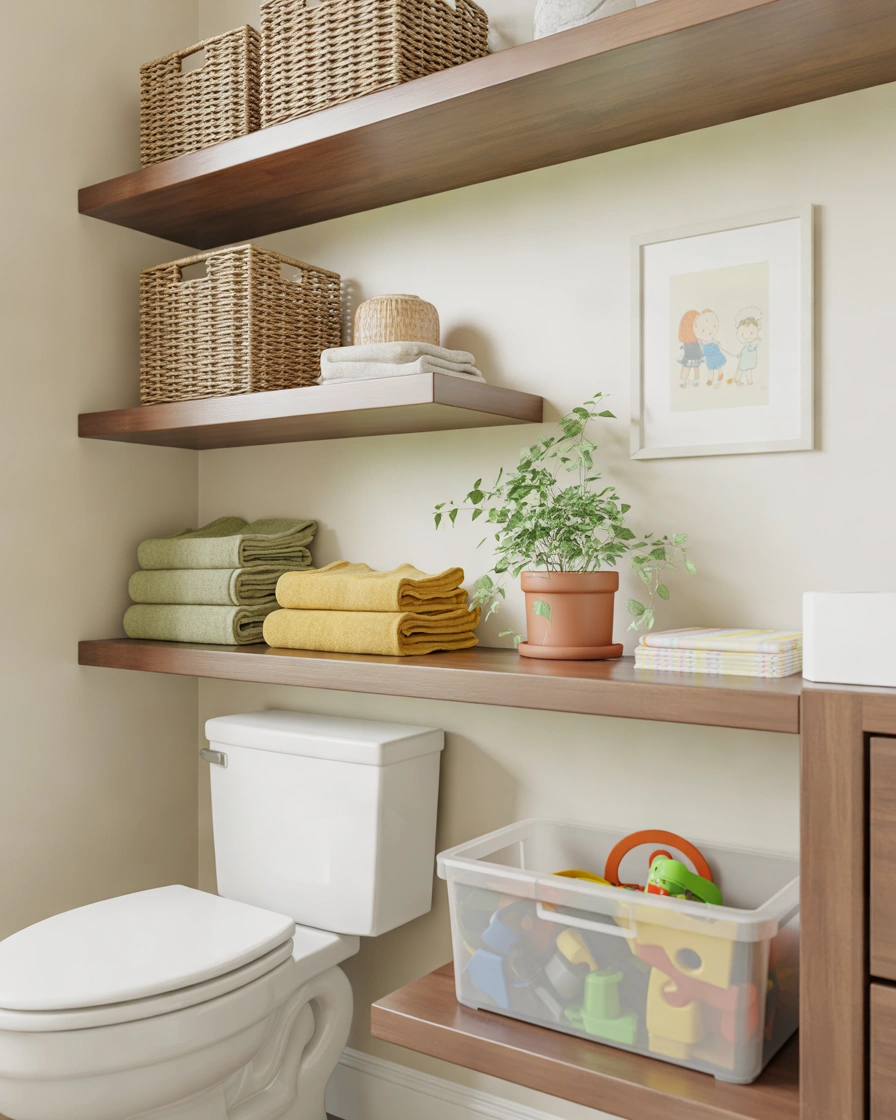
Kids are much more likely to keep things organized when they can easily see where everything belongs.
That’s why open shelving works so well in children’s bathrooms.
A few shelves above the toilet, beside the vanity, or near the bathtub can provide storage for towels, baskets, bath products, and decorative accessories.
Keep everyday items on lower shelves so children can reach them independently.
I like placing matching baskets on open shelving because they hide clutter while still making items accessible.
One basket might contain bath toys, another could hold washcloths, and another could store extra toiletries.
You can also add a plant, framed illustration, or small decorative item so the shelving looks styled rather than purely functional.
Avoid overcrowding the shelves. Too many objects can quickly make a small bathroom feel messy.
A combination of practical storage and a few decorative pieces usually works best.
11. Create a Color-Coded Organization System
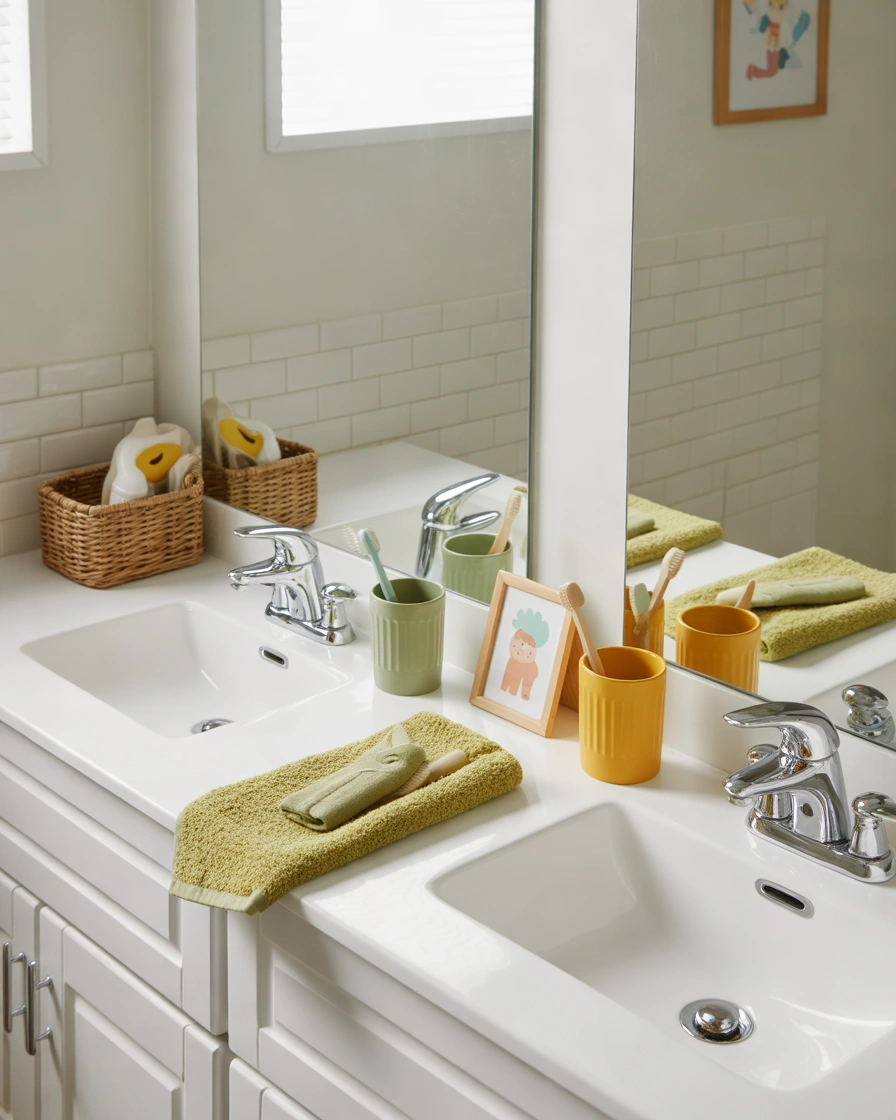
One of the easiest ways to manage a bathroom shared by siblings is to use color coding.
Each child can have their own accent color for towels, toothbrush cups, storage baskets, and small accessories.
The colors don’t need to follow traditional boy-and-girl combinations.
Instead, choose two shades that work beautifully together.
Some combinations I love include sage green and mustard yellow, navy and terracotta, teal and coral, lavender and olive, or sky blue and burnt orange.
The rest of the bathroom can remain neutral so the two accent colors stand out.
Color coding isn’t just decorative. It also makes routines easier because children instantly know which items belong to them.
If one child always uses green towels and another uses yellow, there is much less confusion during busy mornings.
You can even extend this system inside vanity drawers using colored storage containers.
It’s a simple organizational trick that can make a shared bathroom run much more smoothly.
12. Design the Bathroom to Grow With Them
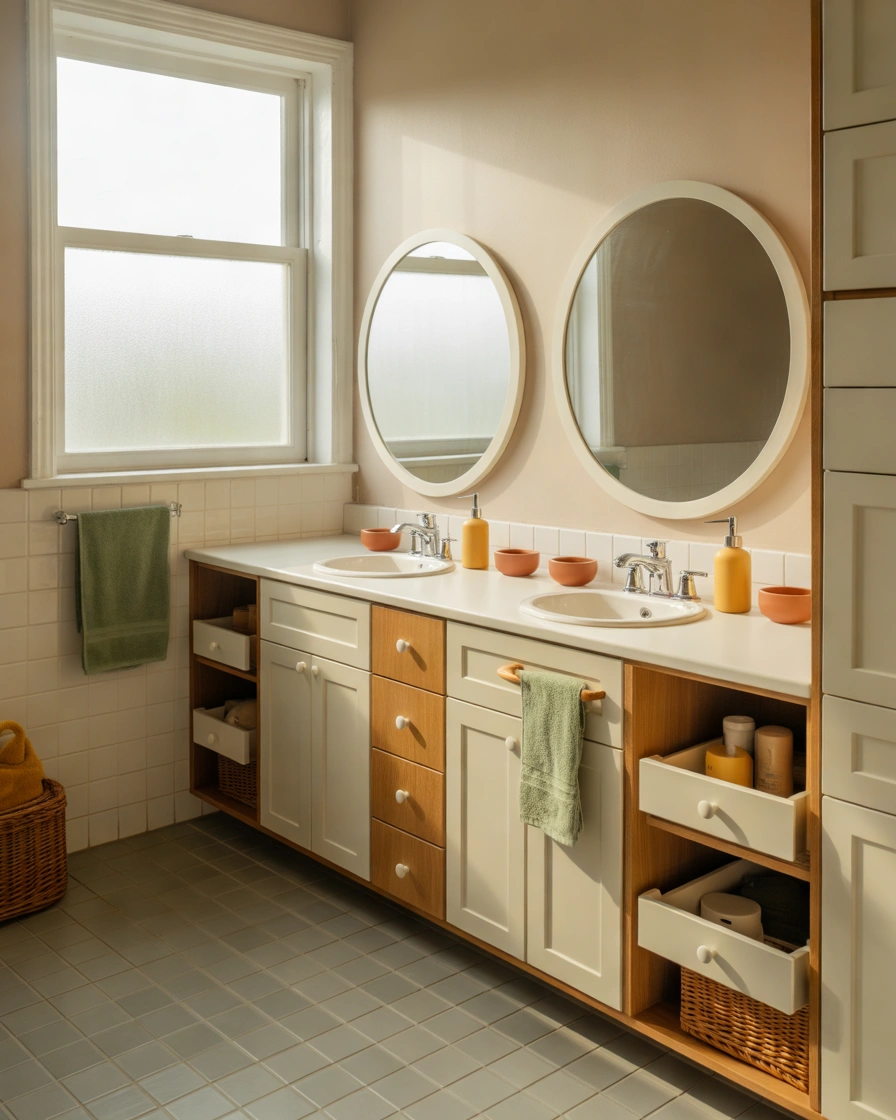
The smartest shared kids bathrooms aren’t only designed for childhood.
They are created with enough flexibility to still work several years later.
Children’s interests can change very quickly, so I recommend investing in timeless permanent features and using accessories for playful details.
For example, choose a classic vanity, neutral tile, simple mirrors, and durable flooring. Then introduce personality with towels, artwork, bath mats, shower curtains, storage bins, and accessories.
When your children outgrow a certain theme, you can change those smaller items without renovating the entire bathroom.
Storage should also grow with them.
Young children might use shelves for bath toys, but teenagers will eventually need room for skincare, hair products, grooming tools, and other personal items.
Deep vanity drawers, medicine cabinets, and adjustable shelving can accommodate those changing needs.
I also recommend choosing mirrors and lighting that feel slightly more sophisticated than typical children’s decor. These elements can continue working beautifully as the kids grow older.
The goal is to create a bathroom that feels fun today without becoming outdated tomorrow.
How to Make a Shared Boy and Girl Bathroom Feel Fair
When two children share a bathroom, design isn’t the only thing that matters. The space should also feel fair.
Whenever possible, give both children the same amount of storage and personal space. If there are two vanity drawers, assign one to each child. If you install two towel hooks, place them at the same height.
Small details can make a surprisingly big difference.
You can also let each child choose one or two accessories for the bathroom. Maybe one chooses their towel color while the other selects a piece of wall art.
This gives both children a sense of involvement without allowing the design to become chaotic.
A shared bathroom works best when there are also clear spaces for shared items and personal items. Toilet paper, hand soap, and cleaning supplies can remain communal, while toothbrushes, towels, hair products, and grooming items have individual storage.
The goal isn’t to divide the bathroom into two completely separate rooms. Instead, create one cohesive space where both children feel represented.
Best Colors for a Shared Boy and Girl Bathroom
Choosing the right color palette can make decorating much easier.
Instead of automatically choosing pink and blue, explore combinations that feel cheerful, modern, and versatile.
Some of my favorite shared bathroom palettes include sage green with mustard yellow, teal with burnt orange, sky blue with warm beige, terracotta with dusty green, olive with cream, navy with natural wood, and lavender with muted green.
You can also use several colors together.
A neutral white bathroom with small accents of teal, mustard, peach, and green can feel playful while still looking coordinated.
Natural wood works particularly well in shared children’s bathrooms because it softens colorful accessories and adds warmth.
If you prefer a calmer atmosphere, use one neutral wall color and introduce brighter shades through smaller decorative items.
This makes it easy to refresh the room later.
Storage Essentials for a Shared Kids Bathroom
Good storage might be the most important part of designing a bathroom for two children.
Without it, countertops quickly become covered with toothbrushes, hairbrushes, toothpaste, cups, soaps, and random bath products.
Vanity drawers with dividers are excellent for organizing smaller items.
Under-sink baskets can hold backup toiletries, while open shelves can store towels and bath accessories.
Wall hooks are another simple way to increase storage without taking up much space.
If your bathroom is very small, look for vertical storage opportunities. A narrow cabinet or shelves above the toilet can provide valuable extra room.
Bath toys can be stored inside waterproof baskets or hanging mesh organizers near the tub.
Giving every item a designated place also makes it easier for children to help keep their own bathroom tidy.
Shared Kids Bathroom Decorating Tips
When decorating a shared bathroom, I always try to balance fun and simplicity.
Too many bright colors, patterns, and themes in one room can quickly become overwhelming. Instead, choose one or two standout elements and keep the remaining decor relatively simple.
For example, if you install colorful patterned flooring, use neutral walls and simple towels.
If your shower curtain has a bold pattern, keep the wall art understated.
Another helpful trick is repeating colors around the room. If you use sage green towels, repeat that same shade in artwork or storage baskets.
Repeating colors helps the entire bathroom feel intentional.
Finally, choose materials that are easy to clean. Children’s bathrooms need surfaces that can handle splashes, toothpaste, wet towels, and daily use.
Durable tile, washable paint, wipeable cabinetry, and machine-washable textiles will make maintaining the room much easier.
Final Thoughts on Kids Bathroom Ideas Shared Boy and Girl
Creating a bathroom that works for both a boy and girl doesn’t mean dividing the room into two completely different styles. The best spaces feel unified while still giving each child a few personal touches.
When exploring kids bathroom ideas shared boy and girl, focus first on functionality. Good storage, easy-to-reach hooks, organized vanity areas, and durable materials will make daily routines much easier.
Then bring personality into the room through colorful towels, playful artwork, creative shower curtains, patterned tiles, and personalized accessories.
A neutral foundation is especially helpful because it allows the bathroom to evolve as your children grow. Instead of renovating whenever their interests change, you can simply update smaller decorative pieces.
Most importantly, try to create a space where both children feel comfortable and included.
With thoughtful storage, balanced colors, practical organization, and a few playful details, a shared kids bathroom can become one of the most cheerful and hardworking rooms in your home.