There is something incredibly comforting about stepping into an antique-inspired bedroom. Unlike ultra-modern interiors that sometimes feel too polished or impersonal, antique bedrooms carry warmth, history, charm, and a sense of quiet elegance. They feel collected rather than decorated, as though every piece in the room has a story behind it.
I have always loved rooms that look like they evolved naturally over time. A carved wooden dresser, a brass lamp, a floral quilt, an old-fashioned mirror, or a beautifully aged bedside table can instantly give a bedroom more personality. The best part is that creating an antique bedroom does not mean filling the room with expensive museum-quality furniture. You can achieve the look by mixing vintage-inspired pieces, thrifted finds, family heirlooms, traditional fabrics, soft lighting, and a thoughtful color palette.
Whether you love Victorian romance, French country elegance, rustic farmhouse charm, or classic European interiors, antique bedroom ideas can work beautifully in both large and small spaces. The key is to make the room feel layered, warm, and personal rather than overly themed.
Below are 15 antique bedroom ideas that can help you create a bedroom that feels sophisticated, cozy, and timeless.
1. Make an Antique Wooden Bed the Centerpiece
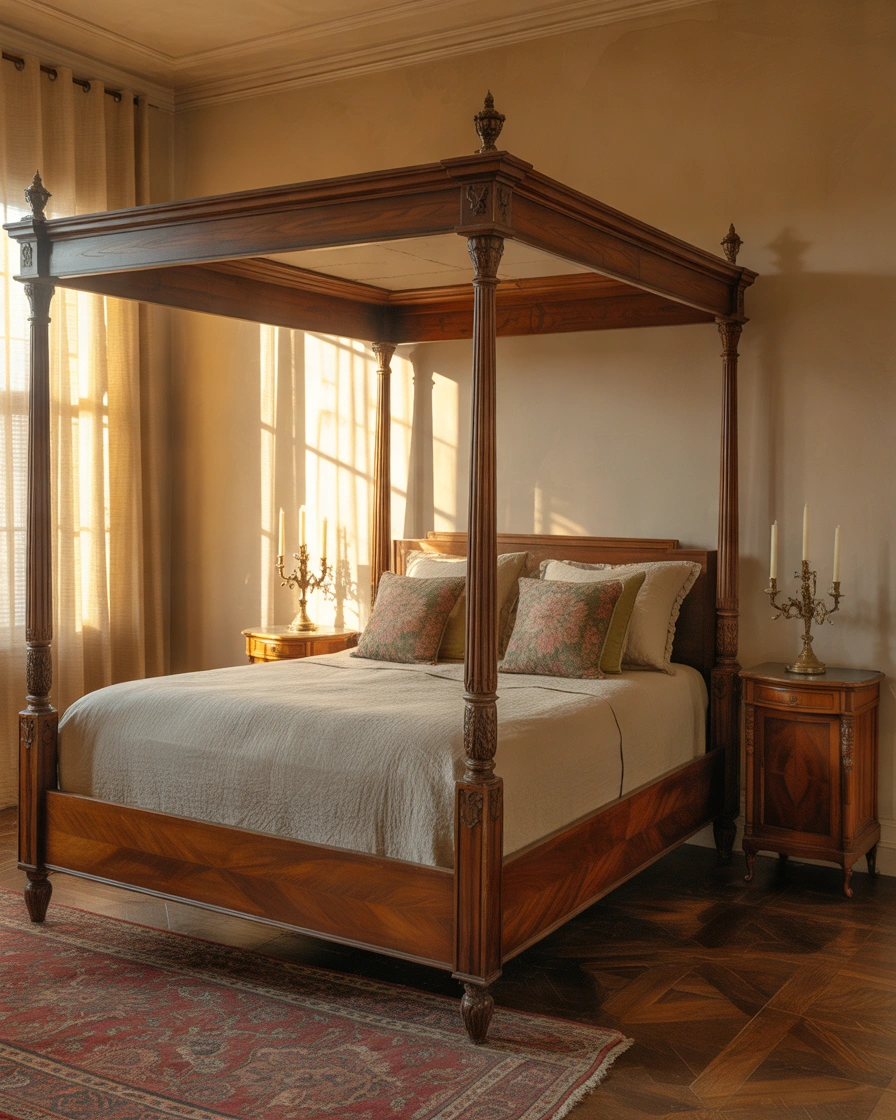
If you want your bedroom to instantly feel antique, start with the bed. A beautifully carved wooden bed can become the main focal point of the entire room.
Look for dark walnut, mahogany, oak, or distressed wood frames with carved headboards, turned posts, or decorative detailing. Four-poster beds are especially beautiful in antique-inspired rooms because they immediately add height and drama.
I personally love pairing a heavy wooden bed with softer bedding so the room does not feel too dark. Crisp white sheets, ivory linen, floral cushions, and a lightly patterned quilt create the perfect contrast against rich wood.
You do not necessarily need a genuine antique bed either. Many furniture brands offer reproduction beds with traditional detailing, and secondhand marketplaces often have beautiful older frames that can be restored.
Keep the surrounding furniture simpler if your bed has a lot of carving. This allows the craftsmanship of the bed to remain the star of the room.
2. Decorate with Vintage Floral Wallpaper
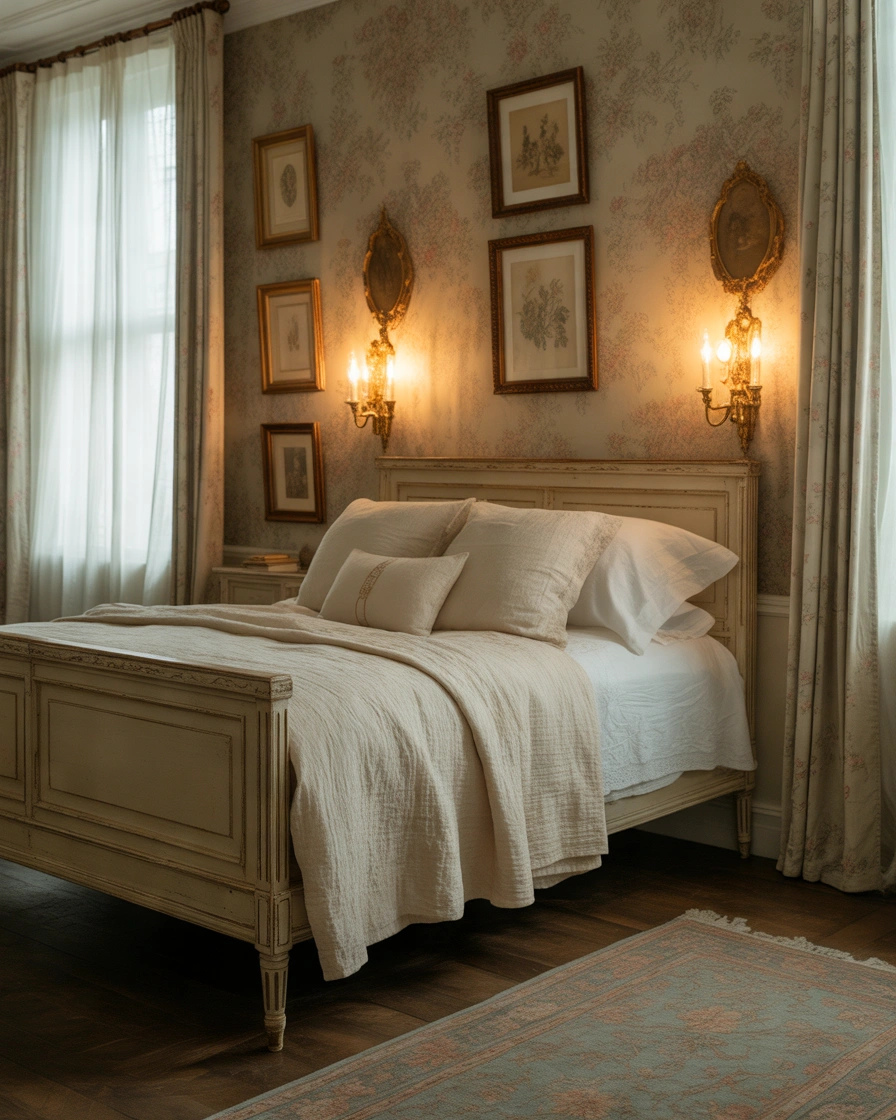
Wallpaper is one of my favorite ways to give a bedroom an antique personality without replacing all the furniture.
Traditional floral patterns instantly bring to mind English cottages, Victorian houses, and classic European bedrooms. Look for muted roses, botanical prints, vines, delicate leaves, or small repeating flowers.
Instead of bright modern florals, choose slightly faded colors such as dusty rose, sage green, soft blue, cream, muted burgundy, or antique gold.
You can wallpaper the entire bedroom if you want a rich, traditional feel. For something more subtle, create a feature wall behind the bed.
Pair floral wallpaper with plain bedding and wooden furniture to keep the room balanced. If both your wallpaper and bedding are heavily patterned, the bedroom may start to feel visually crowded.
A beautiful antique mirror or brass wall light also looks amazing against patterned wallpaper.
3. Add a Vintage Dressing Table
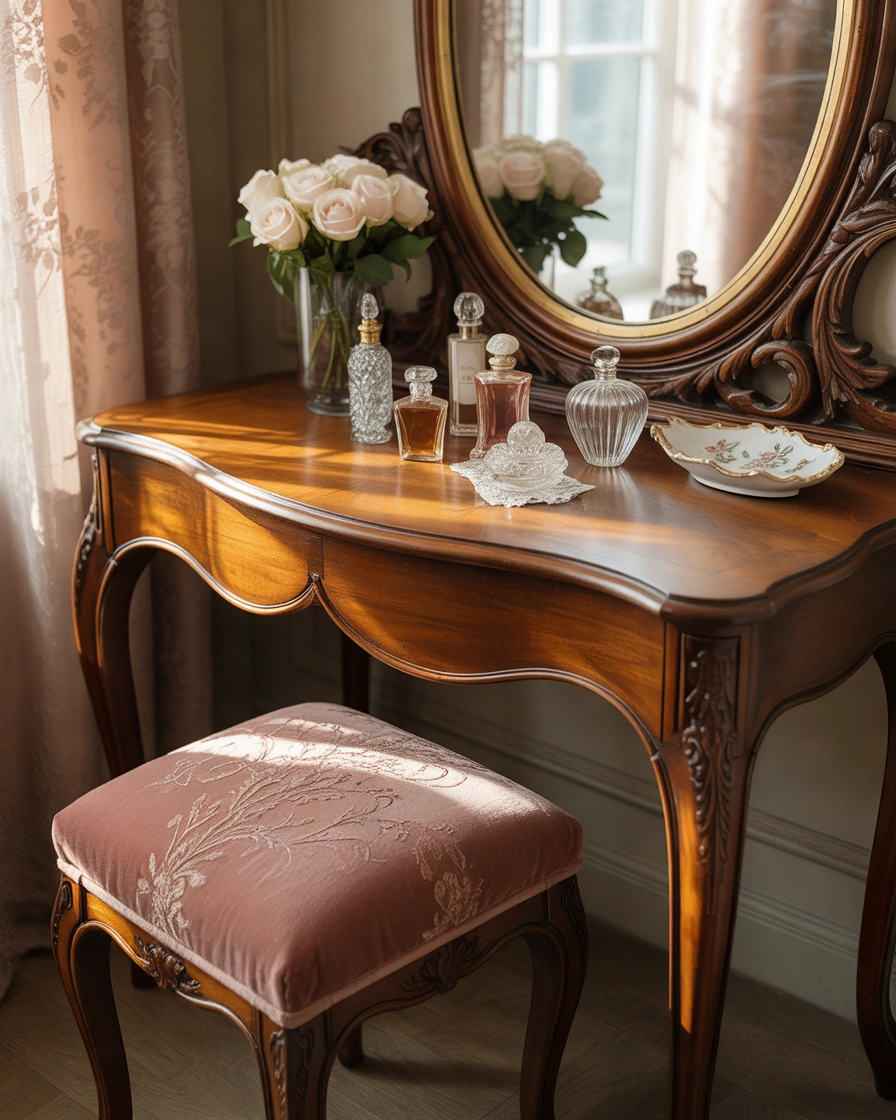
A traditional dressing table instantly makes a bedroom feel more graceful and personal.
I especially love antique dressing tables with curved legs, small drawers, brass handles, and an attached mirror. They add both beauty and function while creating a lovely area for perfume bottles, jewelry, brushes, and decorative accessories.
If you already have a simple wooden desk or console, you can turn it into a vintage-inspired dressing table by adding an ornate mirror and a small upholstered stool.
Style the surface carefully rather than covering it completely. A vintage perfume bottle, small porcelain dish, candle, old jewelry box, and tiny vase of flowers are usually enough.
For a more romantic look, place a lace runner or embroidered fabric across the top.
The goal is to make the space feel elegant and lived-in, almost like a dressing table that has been used and loved for generations.
4. Use Brass and Antique Gold Accents
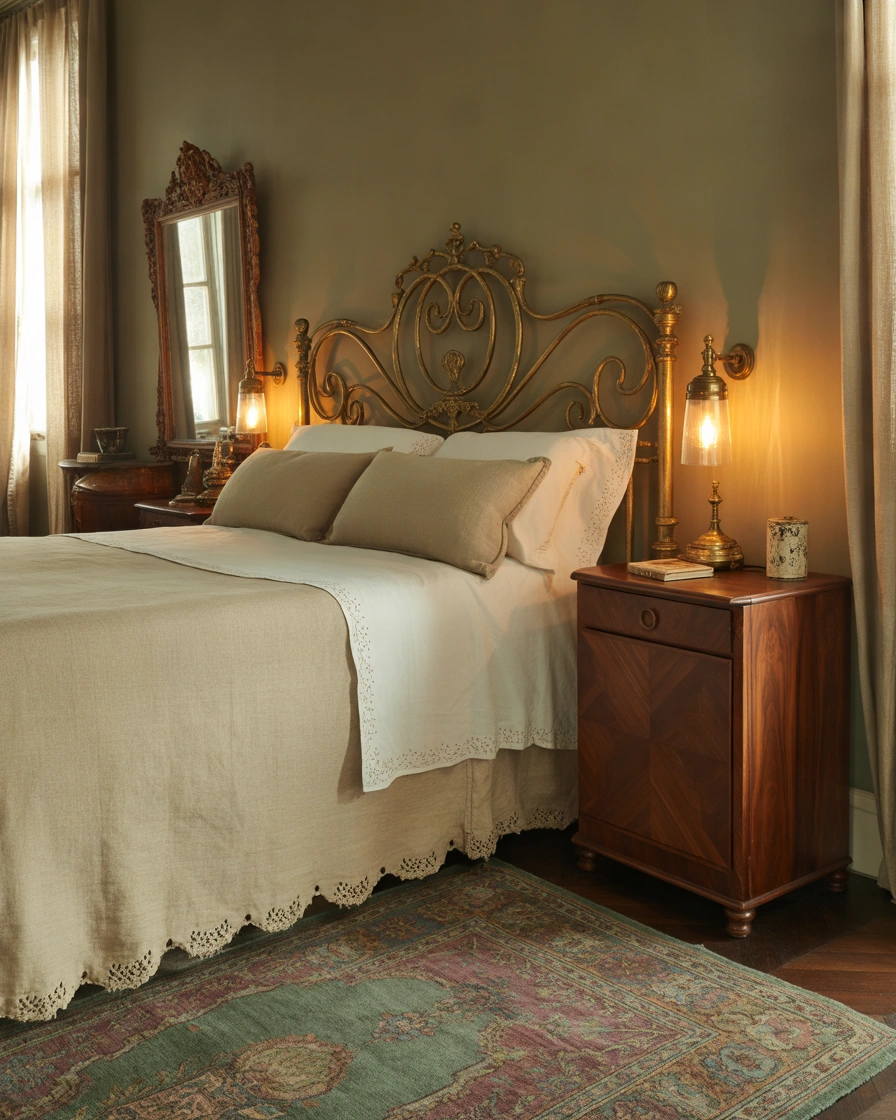
Brass is one of those materials that naturally works with antique interiors. It has warmth, depth, and a slightly aged appearance that modern chrome simply cannot replicate.
You can introduce brass through bedside lamps, picture frames, drawer pulls, curtain rods, mirrors, candleholders, or small decorative objects.
I would avoid making every metallic item perfectly matched. Antique spaces usually look more authentic when finishes are slightly different.
For example, an aged brass lamp can sit beside a darker bronze mirror while small gold frames decorate the wall.
A brass bed frame can also be a beautiful alternative to a wooden bed, especially if you want something lighter and more delicate.
Choose aged, brushed, or unlacquered finishes rather than extremely shiny gold. A little patina actually makes the room feel more convincing.
5. Layer the Bed with Quilts and Traditional Textiles
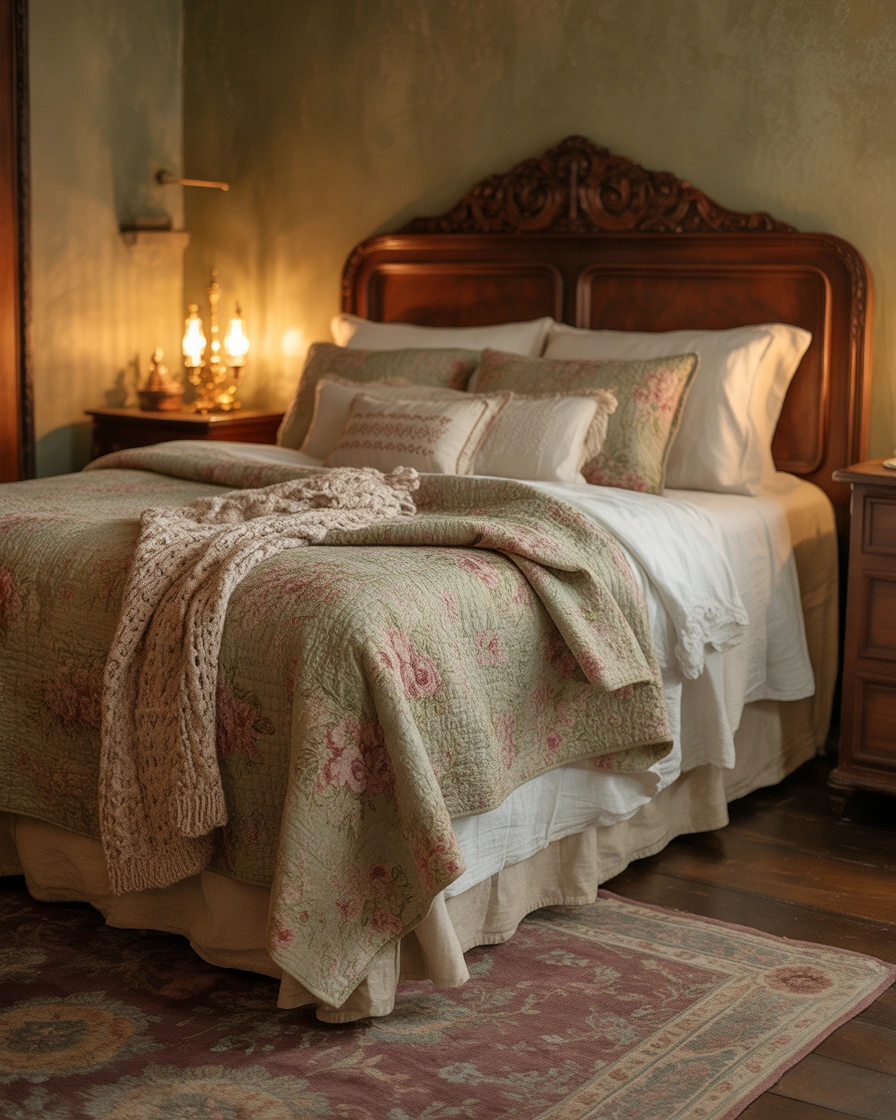
Antique bedrooms rarely look minimal, but they also do not need to feel cluttered. One of the easiest ways to create warmth is by layering traditional textiles.
Start with neutral sheets and then add a quilt, crocheted blanket, embroidered throw, or patterned coverlet.
Floral patchwork quilts are especially beautiful in cottage-style antique bedrooms. For a more elegant European look, choose damask, jacquard, velvet, or embroidered linen.
I love folding an extra quilt across the foot of the bed because it adds color without overpowering the entire room.
Mix pillows in slightly different fabrics instead of buying a perfectly coordinated bedding set. This gives the bedroom a more collected feeling.
Colors such as ivory, faded blue, rust, burgundy, muted green, dusty pink, and warm beige work beautifully for this style.
6. Bring in an Ornate Antique Mirror
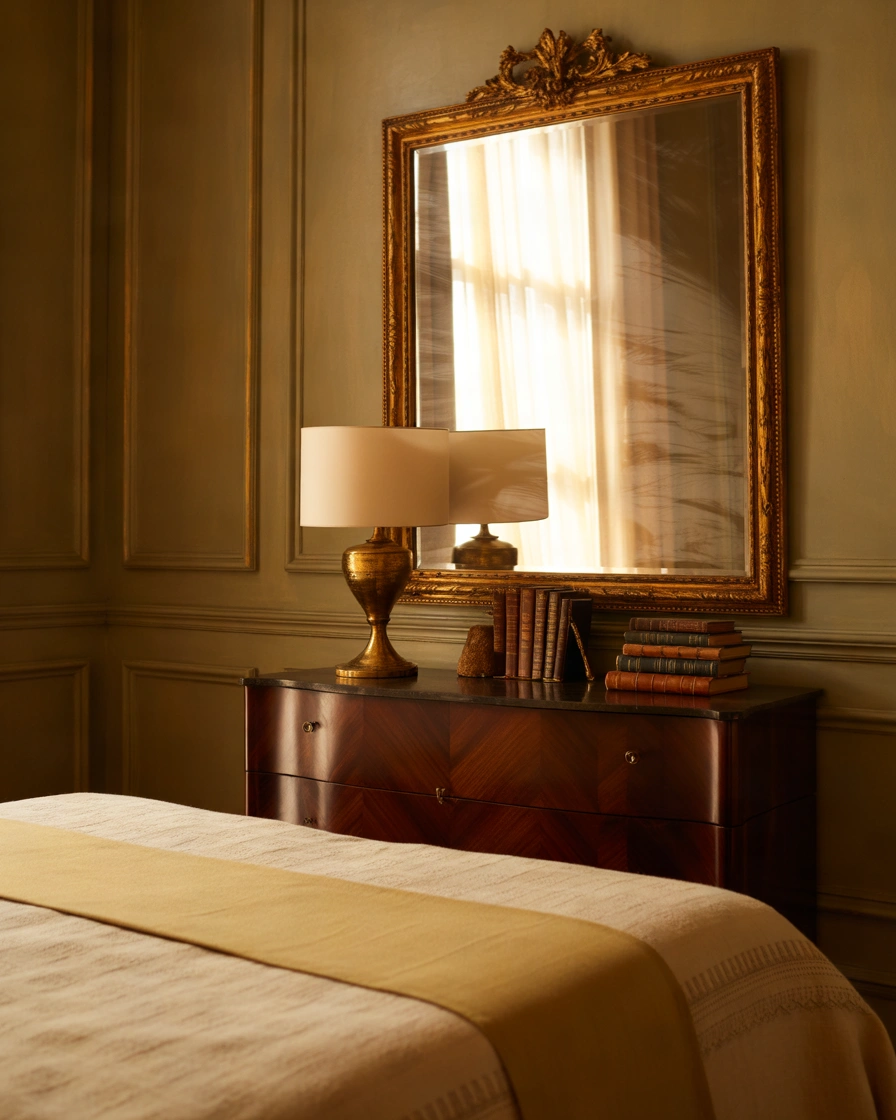
Mirrors are incredibly useful in antique bedroom decor because they provide both decoration and function.
A large ornate mirror above a dresser can completely transform a plain bedroom wall. Look for carved wood frames, gilded finishes, distressed paint, oval shapes, or decorative corners.
If your bedroom is small, a tall floor mirror is even better because it reflects light and visually opens the space.
I particularly like mirrors that show a little age. Slightly worn edges, faded gold paint, or subtle imperfections make them feel far more interesting than something perfectly new.
Place your mirror opposite or near a window if possible. The natural light reflecting around the room will make everything feel softer and brighter.
Just avoid putting too many ornate pieces together. If the mirror is highly decorative, allow the dresser underneath it to remain fairly simple.
7. Create a Soft Victorian-Inspired Color Palette
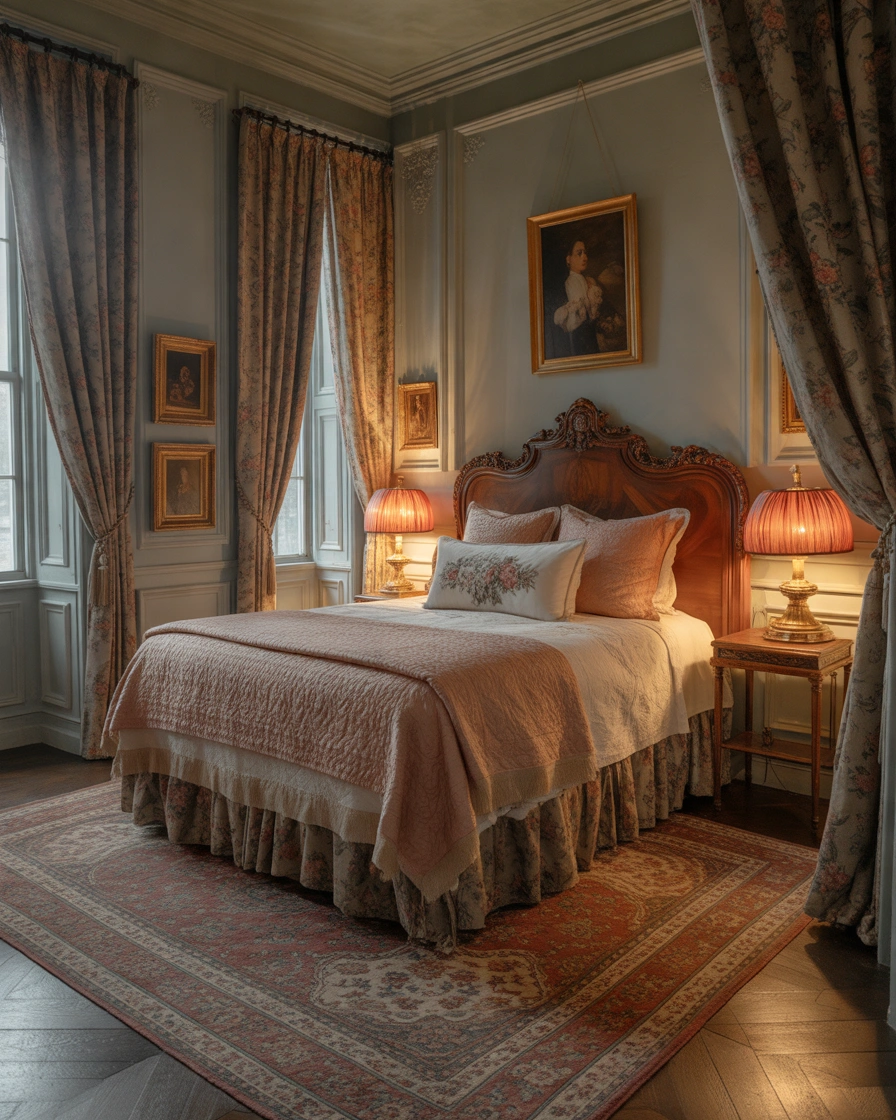
Color has a huge influence on whether an antique bedroom feels calm or overly theatrical.
Victorian interiors are often associated with dark red, green, brown, navy, and gold, but you do not have to use all of these colors at once.
For a softer modern interpretation, start with cream, warm white, beige, pale gray, or muted taupe. Then introduce deeper colors through pillows, rugs, artwork, curtains, and furniture.
Dusty rose and sage green create a romantic look, while navy and walnut feel more sophisticated. Burgundy and antique gold are beautiful if you want a richer, more dramatic bedroom.
I usually prefer keeping the walls somewhat soft and allowing furniture and textiles to provide depth.
This approach gives you the antique character without making the room feel heavy.
8. Use Antique Trunks for Character and Storage
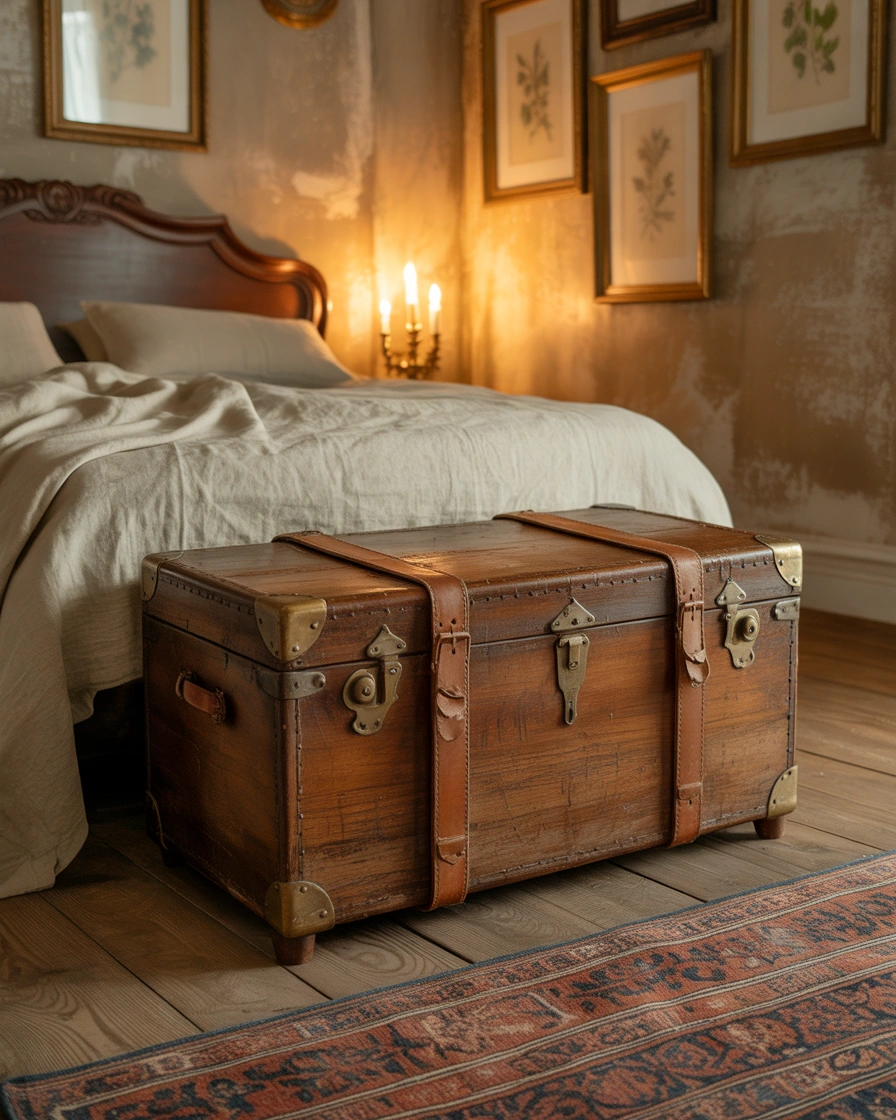
An old trunk at the end of the bed is one of those details that instantly makes a bedroom more interesting.
Vintage trunks, travel chests, and storage boxes bring texture and history into the room while also providing useful storage for spare blankets, seasonal clothing, or pillows.
Leather trunks create a more masculine library-inspired look, while distressed wooden trunks feel rustic and relaxed.
I love when an old trunk shows scratches, worn metal corners, faded travel labels, or aged leather straps because these imperfections add character.
If the trunk is sturdy enough, you can also use it as a bench. Add a folded blanket or small cushion on top for extra softness.
Try not to over-restore a genuinely old trunk. A little wear is exactly what makes it special.
9. Style the Room with Antique Artwork
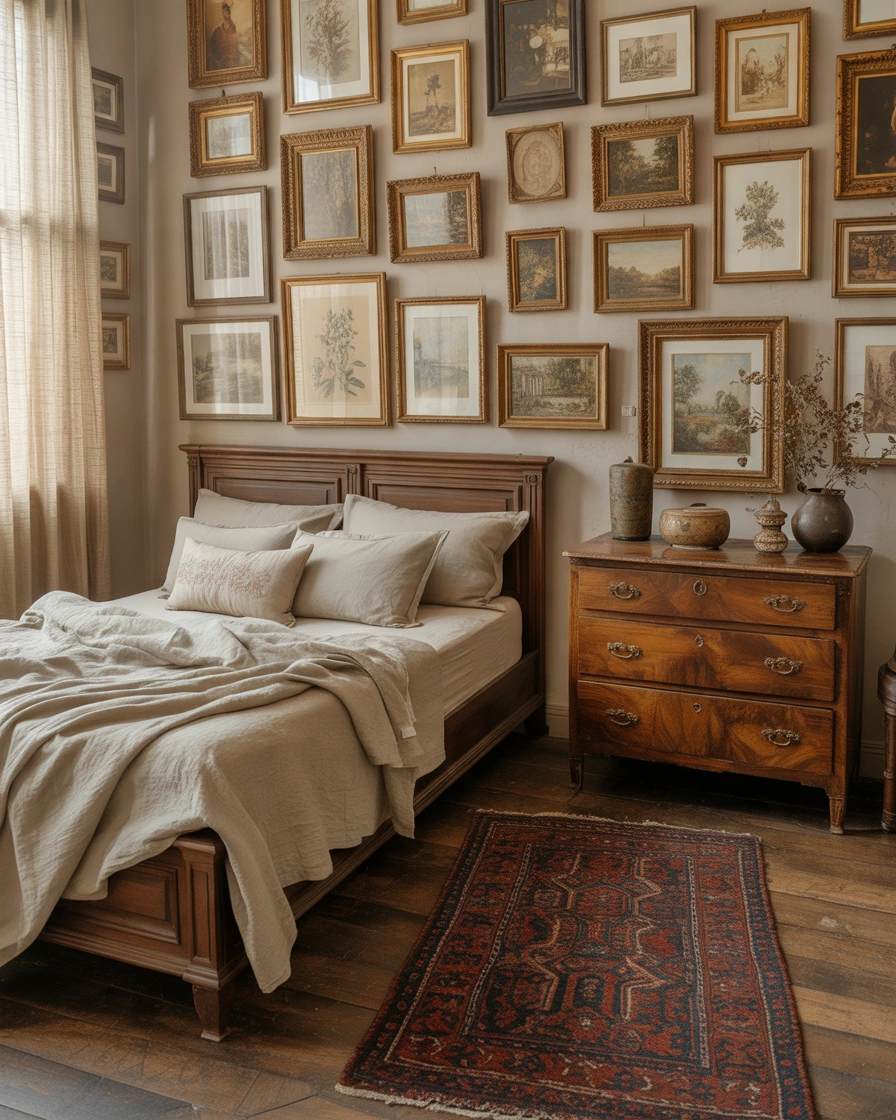
Blank modern walls can make an antique bedroom feel unfinished. Traditional artwork helps give the space depth and history.
Look for old botanical prints, landscape paintings, portraits, floral paintings, architectural sketches, or vintage illustrations.
You can find inexpensive reproductions and place them in antique-style wooden or brass frames.
A gallery wall looks especially beautiful above a dresser, but I would recommend mixing frame sizes rather than arranging everything too perfectly.
Antique interiors often feel charming because they are slightly imperfect.
You can also hang one larger oil-style painting above the bed for a more sophisticated look.
Choose artwork with muted colors that complement your bedding and furniture rather than introducing completely unrelated shades.
10. Choose Vintage-Inspired Bedside Lighting
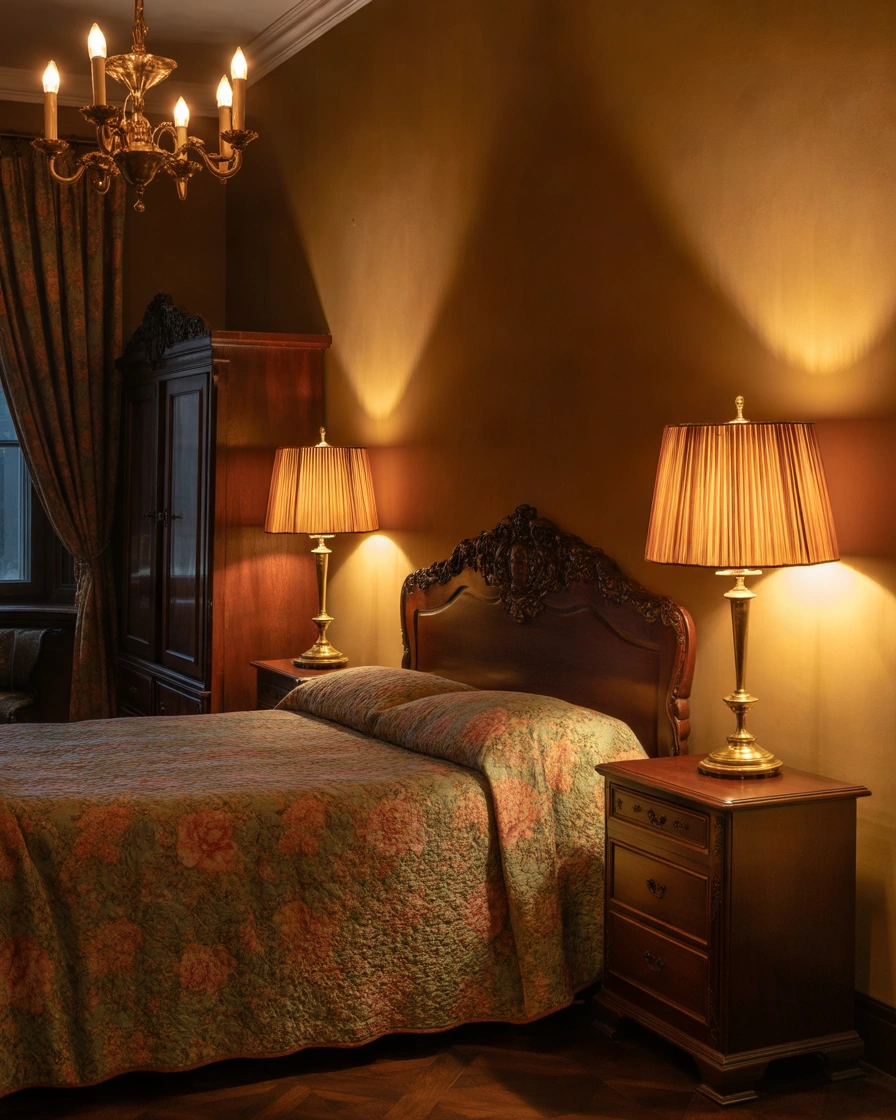
Lighting can completely change the mood of an antique bedroom.
Instead of modern LED fixtures, choose lamps that look as though they could have existed decades ago.
Brass table lamps, ceramic lamps with fabric shades, wall sconces, pleated lampshades, glass lamps, and candle-style fixtures all work beautifully.
Warm bulbs are essential because cool white lighting can make traditional decor feel harsh.
I like placing slightly different lamps on either side of the bed if the room is meant to feel collected rather than perfectly symmetrical.
You can even use antique candlesticks as decoration, although real candles should always be used carefully.
A chandelier can also make a lovely statement, particularly in bedrooms with higher ceilings.
11. Add Lace and Embroidered Details
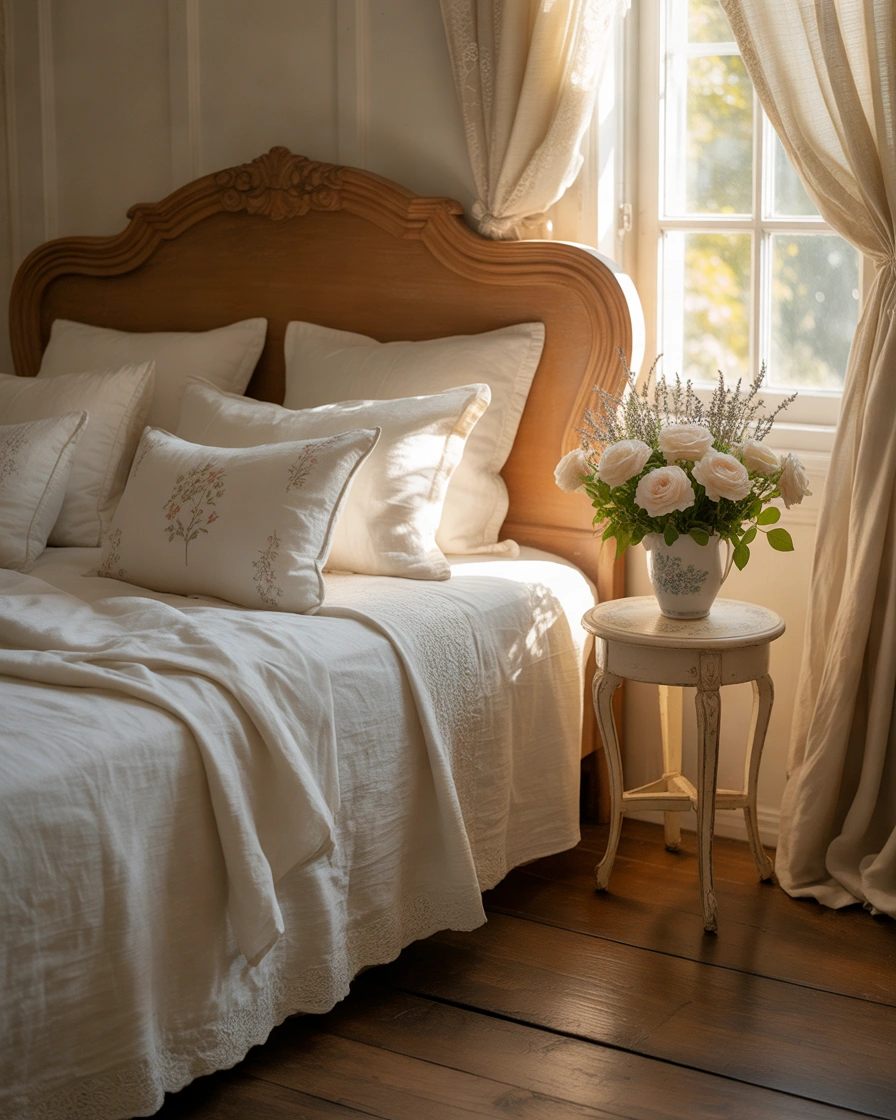
Small textile details can have a surprisingly big impact on antique bedroom decor.
Lace curtains, embroidered pillowcases, crocheted blankets, linen table runners, and delicate fabric trims bring softness and nostalgia into the room.
The key is using these details carefully. Too much lace can make the bedroom feel more like a costume set than a comfortable home.
I prefer adding one or two traditional textile elements. For example, simple linen bedding paired with embroidered pillows and a small lace curtain can look beautiful.
Handmade textiles are especially valuable because they naturally have the imperfect, personal quality that works so well with antique decor.
White, ivory, cream, and soft beige fabrics are easy to combine with darker wooden furniture.
12. Incorporate an Antique Armoire or Wardrobe
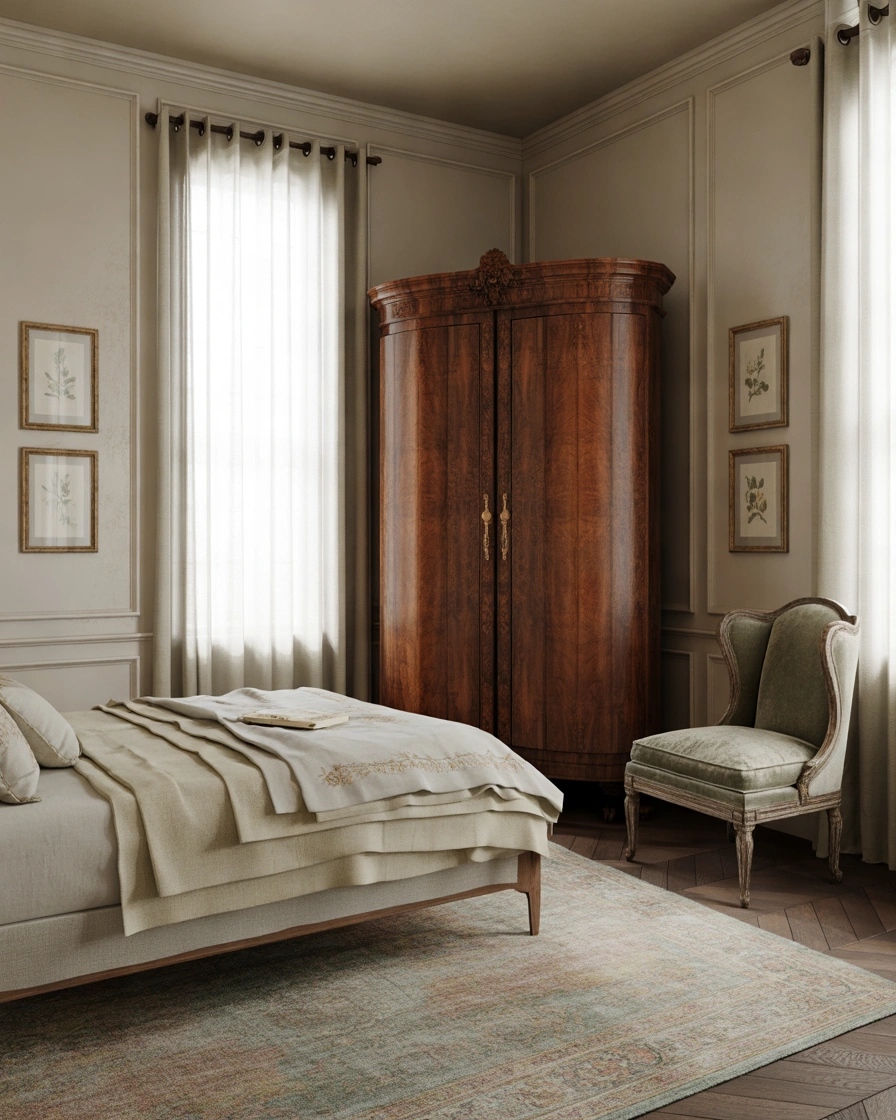
Before built-in closets became common, freestanding wardrobes were an essential part of bedrooms.
Adding one today is a wonderful way to give your bedroom a more authentic antique character.
Look for tall wooden wardrobes with paneled doors, carved trim, brass handles, or mirrored fronts.
A large armoire can provide excellent storage while also becoming a beautiful architectural feature.
If you find an old wardrobe in dark wood but want a lighter bedroom, consider leaving the exterior original and styling the surrounding room with pale walls and neutral textiles.
Painted vintage wardrobes can also work beautifully in French country bedrooms, especially in soft gray, cream, faded green, or distressed white.
I would avoid painting over high-quality antique wood unless the piece is already badly damaged, since its natural grain is often part of its beauty.
13. Place a Vintage Rug Under the Bed
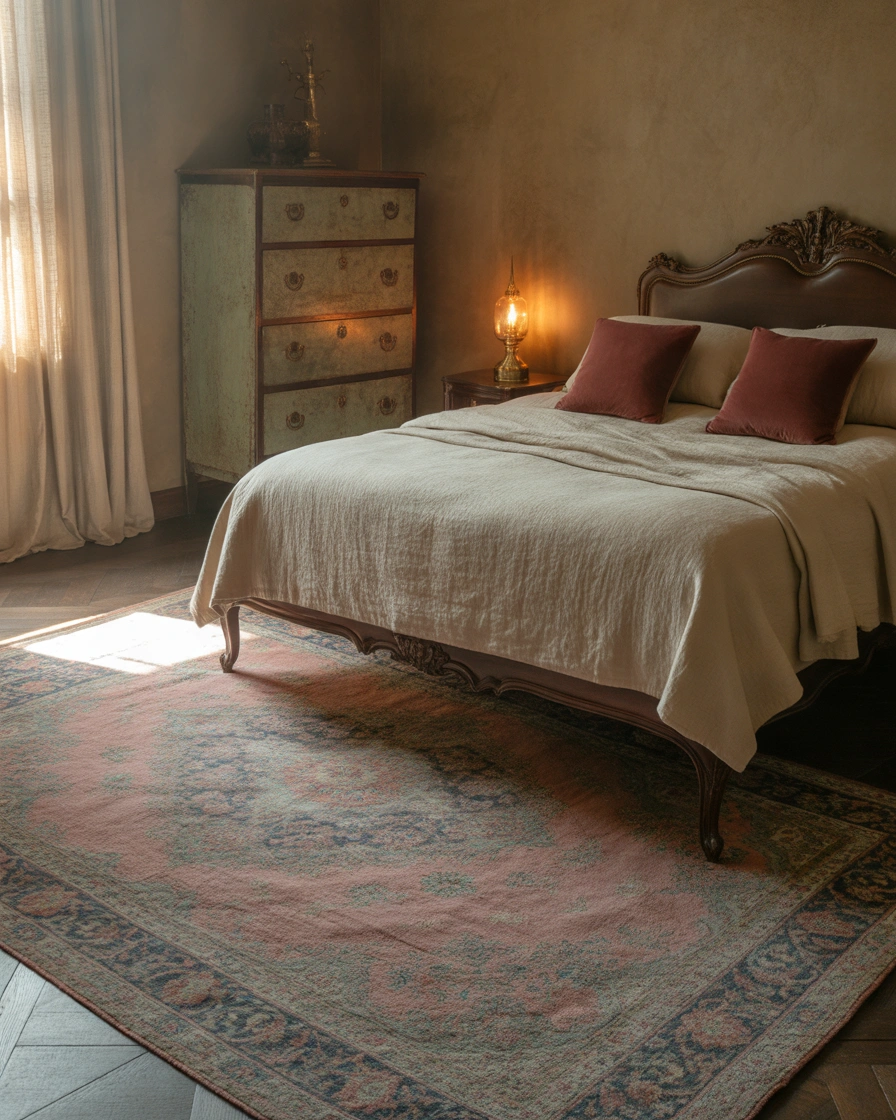
A rug is one of the best ways to visually pull an antique bedroom together.
Persian-style rugs, Turkish rugs, faded oriental designs, and traditional floral patterns work especially well.
I personally prefer rugs that look slightly aged rather than perfectly bright and new. Muted red, navy, cream, olive, dusty blue, and warm brown are all classic options.
Place a large rug underneath the bed so that it extends beyond the sides and foot. This gives the room a luxurious and intentional appearance.
In smaller rooms, you can place two vintage runners beside the bed instead.
A traditional rug also helps soften wooden floors and makes the room more comfortable during colder months.
Try choosing a rug that includes at least one color already used elsewhere in the bedroom so everything feels connected.
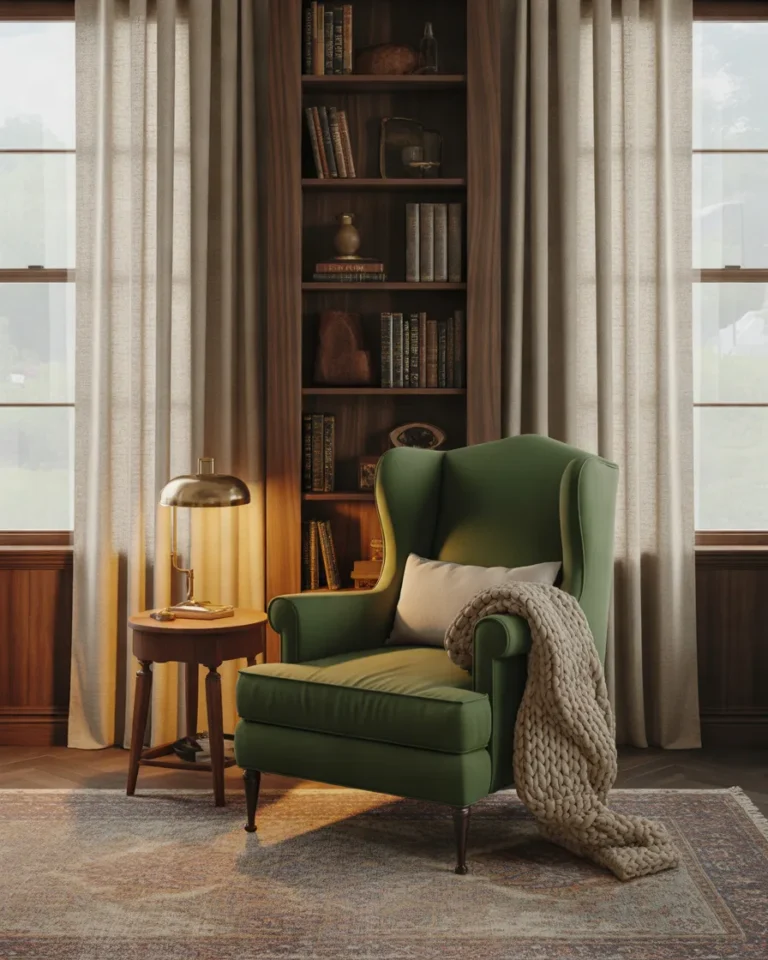
14. Create an Antique Reading Corner
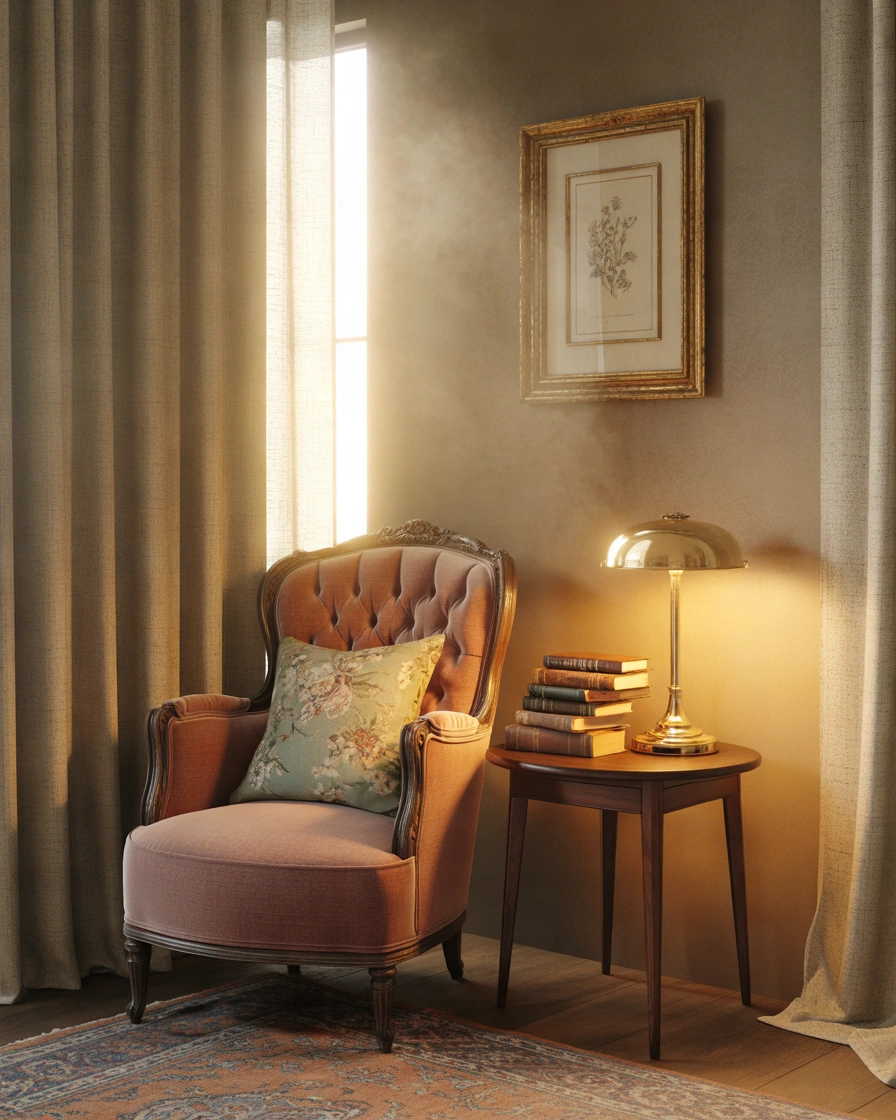
If you have an unused corner in the bedroom, turning it into a small reading area can add both beauty and comfort.
Start with a vintage armchair, wooden chair, or small upholstered chair. Add a side table, warm reading lamp, and a few old books.
A floor lamp with a brass base or fabric shade works particularly well.
I love placing a small floral cushion or knitted throw on the chair to make the corner feel inviting.
You can even stack a few vintage books on the floor or display them inside a small bookcase nearby.
The goal is not to create a formal library. It should feel like a quiet corner where you could sit with a cup of tea and read before bed.
This simple addition can make the entire bedroom feel more personal.
15. Mix Genuine Antiques with Newer Pieces
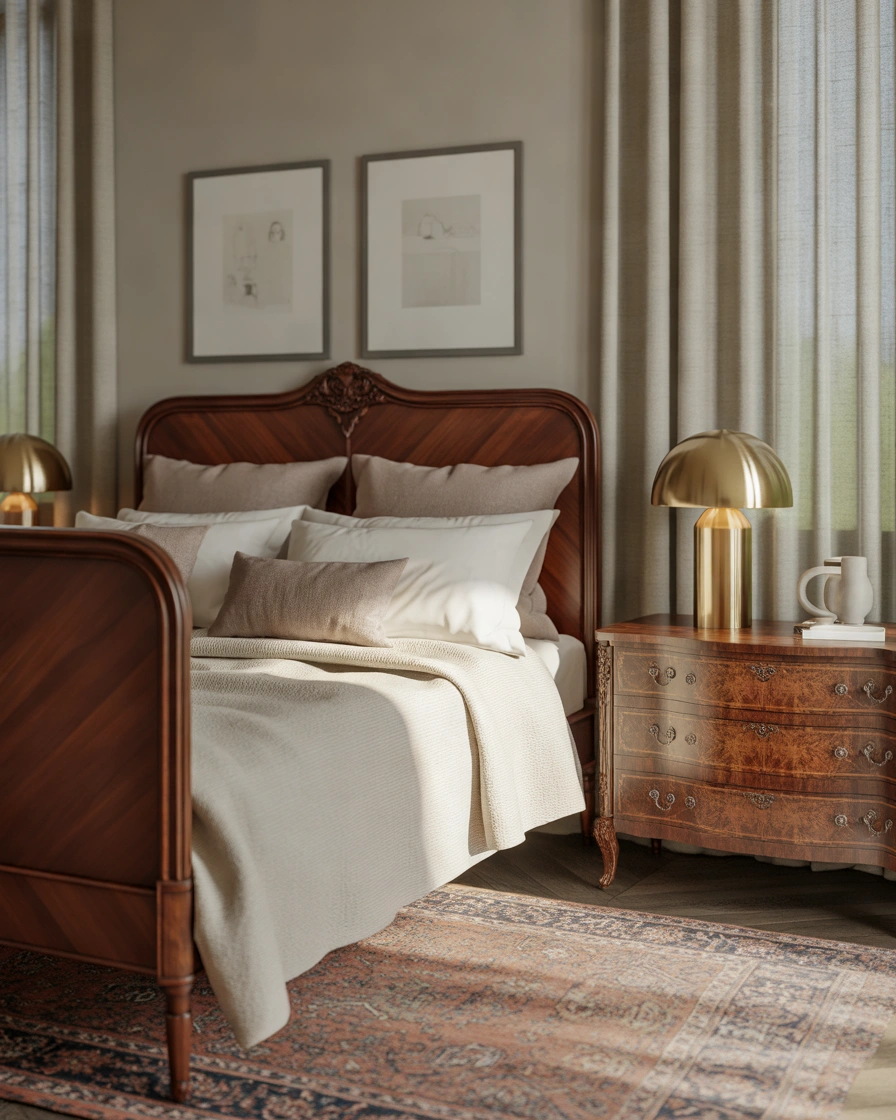
Perhaps the most important antique bedroom idea is also the simplest: do not try to make everything old.
A room filled entirely with antique furniture can sometimes feel like a museum. Mixing older pieces with newer, simpler items makes the bedroom more comfortable and practical.
You might pair an antique wooden bed with modern white bedding, or place contemporary curtains beside a vintage dresser.
A newer mattress, modern storage solutions, and updated lighting can easily coexist with old furniture.
I actually think these contrasts make antique pieces stand out even more.
Try choosing a few meaningful statement pieces rather than buying everything at once. Maybe start with an old dresser, mirror, rug, or bedside table. Over time, you can add other pieces as you find them.
This slower approach often creates the most authentic-looking antique rooms because the bedroom naturally becomes a collection of things you genuinely love.
How to Make an Antique Bedroom Look Elegant Instead of Outdated
The difference between a beautiful antique bedroom and an outdated-looking room usually comes down to balance.
Start by giving the eye some breathing space. You do not need to cover every wall or surface with decorative objects. Choose a few important antiques and let them become focal points.
Neutral walls are particularly useful if your furniture is dark or highly detailed. Soft cream, warm white, taupe, pale beige, muted green, and gentle gray all work beautifully.
Lighting also matters. Antique furniture can look heavy in a dark room, so make the most of natural light whenever possible.
Mix textures rather than matching everything. Wood, linen, velvet, brass, ceramic, lace, and woven rugs create visual depth.
Most importantly, do not worry about making every item come from the same historical period. Real homes change over generations, so a thoughtful mix often looks more natural than a perfectly matched furniture set.
Best Colors for an Antique Bedroom
When planning an antique bedroom color palette, I usually start with one soft base color and two or three accent tones.
Cream and walnut create a classic and comfortable combination. Sage green works beautifully with brass and darker wood. Dusty rose adds romantic softness, while burgundy brings richness and drama.
Muted navy can create a more formal look, especially when paired with warm wood and antique gold.
For French-inspired rooms, consider soft gray, ivory, faded blue, and pale green.
If you enjoy cottage interiors, warm white, floral pinks, soft greens, and honey-colored wood create a welcoming atmosphere.
Avoid using too many bold colors at once. Antique bedrooms usually feel more timeless when the palette looks slightly faded and layered rather than intensely saturated.
How to Decorate an Antique Bedroom on a Budget
Creating an antique bedroom does not have to be expensive.
Some of my favorite vintage-style pieces can be found at thrift stores, flea markets, estate sales, online marketplaces, and even family storage rooms.
Start with smaller items such as mirrors, picture frames, lamps, wooden boxes, old books, candleholders, or bedside tables.
You can also transform inexpensive furniture by replacing modern hardware with vintage-inspired brass handles.
Secondhand wooden furniture is often much more affordable than buying brand-new reproduction antiques.
For textiles, look for floral pillow covers, traditional quilts, embroidered fabrics, and vintage-style rugs rather than replacing every item in the room.
Wall art is another easy area to save money. Download public-domain botanical illustrations or traditional artwork and place them inside thrifted frames.
The most important thing is patience. Antique-style rooms look best when they seem collected over time, so there is no need to finish everything in one weekend.
Final Thoughts
Antique bedroom ideas are really about creating a space with warmth, personality, and timeless character.
You do not need an enormous historic home or expensive antique collection to achieve the look. A beautifully aged mirror, wooden dresser, floral quilt, brass lamp, traditional rug, or vintage artwork can completely change how a bedroom feels.
What I love most about antique interiors is that perfection is not required. Scratched wood, faded fabric, worn brass, and slightly mismatched furniture often make the room more beautiful because they create a sense of history.
Start with one or two pieces you genuinely love and build the bedroom around them. Mix textures, keep your colors soft, use warm lighting, and allow the room to feel personal rather than staged.
Whether your style leans toward Victorian elegance, French country charm, rustic farmhouse warmth, or classic European decor, these antique bedroom ideas can help you create a bedroom that feels comfortable, graceful, and beautifully timeless.