
Remember when you walked into that friend’s house and literally stopped mid-step to stare at their ceiling? Yeah, that’s the power of a well-executed POP ceiling design. And if you’re still living under plain, boring ceilings, we need to talk.
I learned about POP (Plaster of Paris) ceilings the hard way—by living with water-stained, cracked ceilings for two years before finally saying “enough.” The transformation after installing my first POP ceiling? Mind-blowing. Suddenly, my living room went from “meh” to “magazine-worthy,” and all it took was looking up—literally—for inspiration.
Here’s what makes POP ceilings the ultimate game-changer: they’re completely customizable, surprisingly affordable, and transform any room from basic box to architectural masterpiece. Whether you want subtle elegance or jaw-dropping drama, POP delivers every single time.
Ready to discover which design will make your guests forget about their phones and actually look around? Let’s explore ten stunning options that guarantee that wow factor you’re after.
Floating Layered POP Ceiling
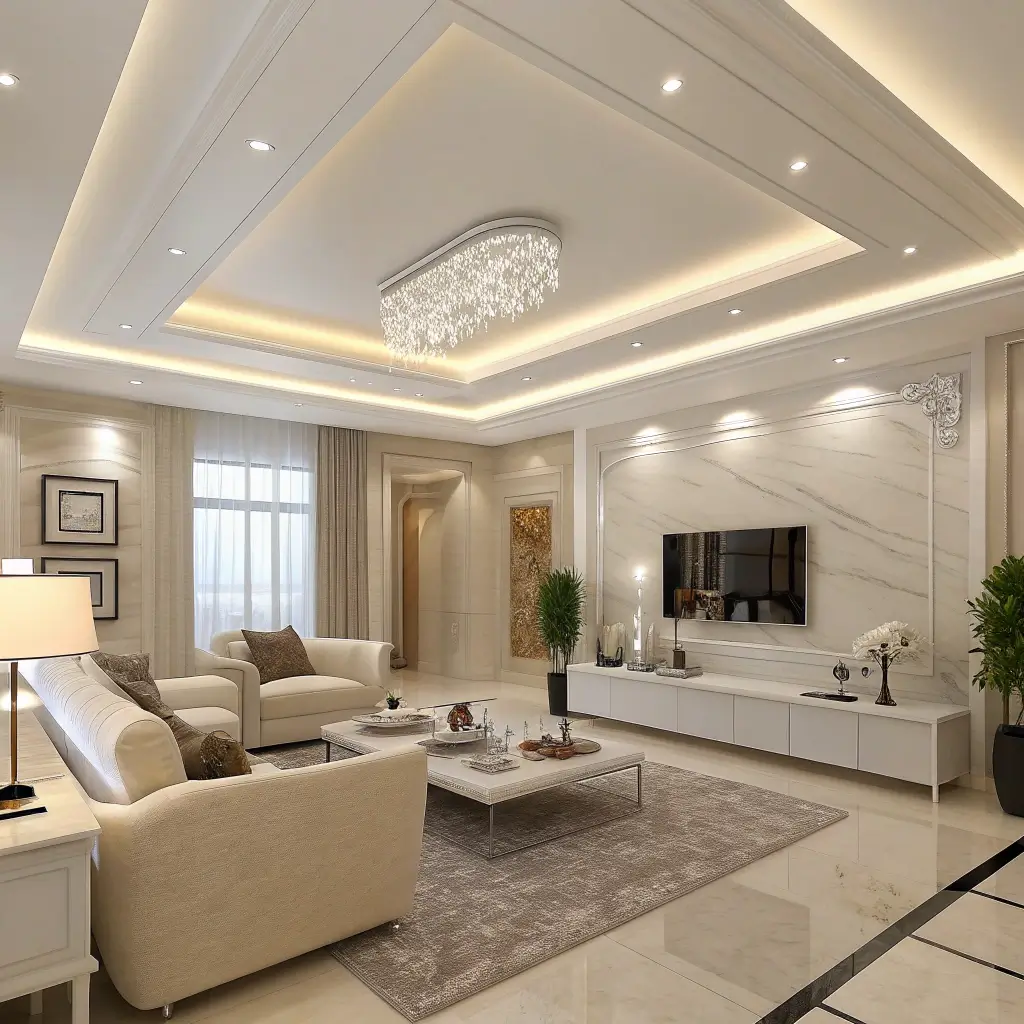
Picture this: multiple ceiling levels that seem to float in mid-air, creating depth and dimension that flat ceilings could only dream about. Floating layered POP ceilings trick the eye into seeing more space while adding serious architectural interest.
The magic happens through strategic layering. You build different levels at varying heights, usually dropping 6-12 inches between layers. Each layer appears to hover independently, thanks to hidden supports and recessed lighting that creates shadow gaps. My cousin installed one in her tiny apartment, and suddenly her 10-foot ceilings looked like 12.
What really sells the floating effect? The gaps between layers where you hide LED strips. The indirect lighting makes layers appear weightless while providing gorgeous ambient illumination. No more harsh overhead lights making everyone look like they haven’t slept in days.
Design Elements for Floating Layers:
- Minimum three layers for proper impact
- Keep center highest for spacious feel
- Vary layer shapes—mix rectangles with curves
- Plan electrical before construction starts
- Use warm white LEDs for residential spaces
The best part about floating layers? They define spaces without walls. Your dining area gets its own “ceiling zone” while maintaining open floor plans. Functional and beautiful—what more could you want?
Geometric Pattern POP Ceiling
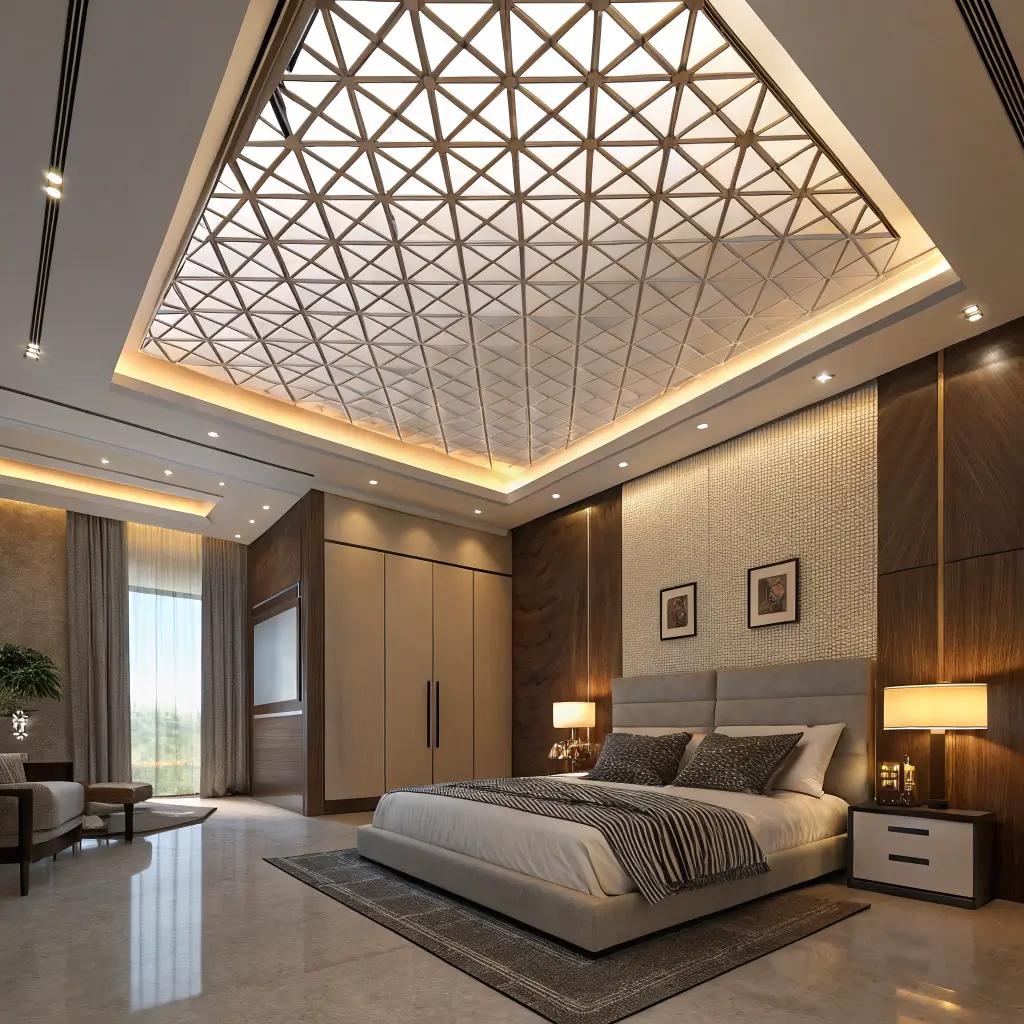
Who says ceilings need to be boring? Geometric POP patterns turn that overhead canvas into a work of art that would make any mathematician weep with joy. Triangles, hexagons, diamonds—pick your shape and run with it.
I went full geometry nerd in my home office with interlocking hexagons, and every video call starts with someone asking about my ceiling. The patterns create visual rhythm that energizes spaces without overwhelming them. Plus, you control the complexity—simple squares for subtle sophistication or complex tessellations for maximum impact.
The key lies in proportion and spacing. Too many small shapes make rooms feel busy; too few large ones look unfinished. You want that Goldilocks zone where patterns enhance rather than dominate. Paint them all one color for subtlety or alternate shades for bold statements.
Geometric Pattern Planning:
- Start with graph paper sketches
- Consider room size when choosing pattern scale
- Account for lighting fixture placement
- Mix 2-3 shapes maximum to avoid chaos
- Keep edges clean with proper finishing
Installation tip: hire someone with OCD-level attention to detail. One crooked line ruins the entire effect, and trust me, you’ll notice it every single day.
LED Cove POP Ceiling
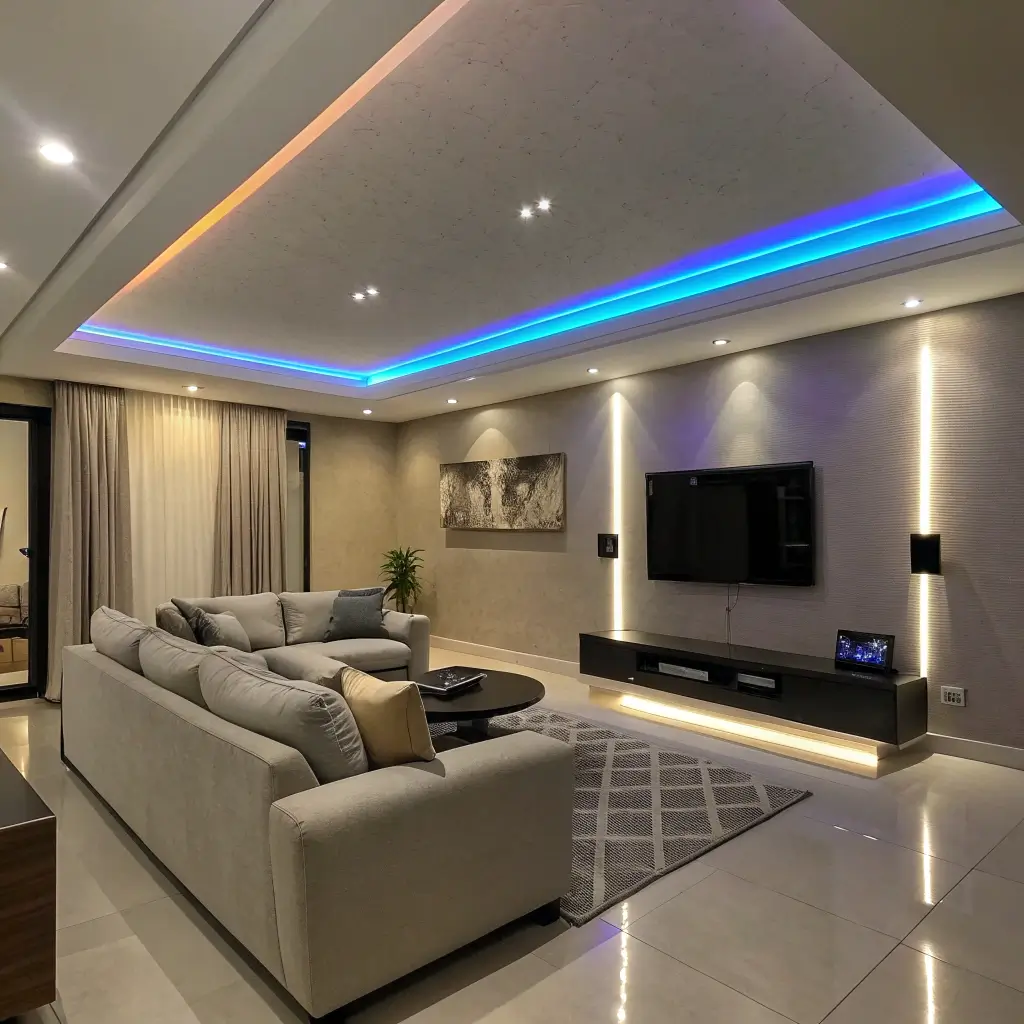
Cove ceilings with integrated LEDs create that luxurious ambient lighting that makes every evening feel like you’re in a high-end hotel. The recessed perimeter with hidden light strips eliminates harsh shadows while adding sophisticated glow.
The cove typically runs 4-6 inches below your main ceiling level, creating a ledge perfect for concealing LED strips. You never see the actual lights—just this beautiful, even illumination that seems to emanate from the ceiling itself. My master bedroom has this setup, and falling asleep feels like drifting off on a cloud.
Modern LED technology means you can control everything from your phone. Want romantic purple for date night? Done. Need bright white for cleaning? Easy. Some systems even sync with your alarm, gradually brightening to wake you naturally. Living in the future feels pretty good 🙂
LED Cove Specifications:
- Cove depth affects light spread—deeper equals softer
- Use diffusion strips to eliminate dots
- Install separate circuits for different zones
- Choose dimmable drivers always
- Include access panels for maintenance
FYI, color-changing LEDs might seem fun initially, but you’ll probably stick to warm white 95% of the time. Save money and skip the RGB unless you’re really into mood lighting.
Also Read: 12 Trendy Wooden Ceiling Design Ideas for Modern Décor
Minimalist Recessed POP Ceiling
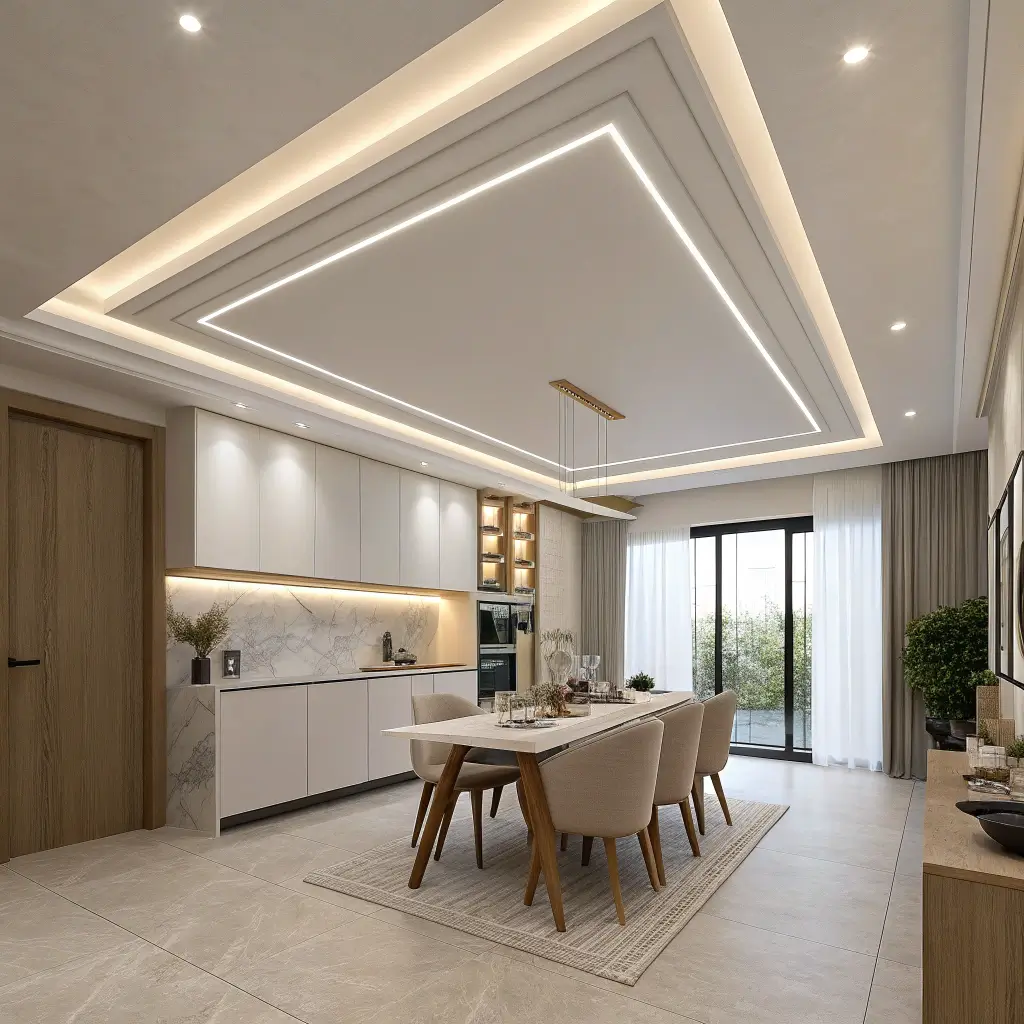
Sometimes less really is more, and minimalist recessed POP ceilings prove that subtle design changes create massive impact. We’re talking clean lines, simple geometry, and zero unnecessary ornamentation.
The design involves creating shallow recesses in strategic locations—maybe a rectangle over your bed or a subtle border around the room’s perimeter. The depth variation adds interest without screaming for attention. I helped my minimalist friend design hers, and the result looked expensive despite costing less than fancy light fixtures.
What makes this style genius? It works with literally any decor. Modern furniture? Perfect match. Traditional pieces? Creates beautiful contrast. Can’t decide on a style? This ceiling won’t limit future choices.
Minimalist Design Principles:
- Keep recesses shallow (2-4 inches max)
- Maintain consistent spacing throughout
- Use same paint color for cohesion
- Limit to 1-2 recessed areas
- Focus on proportion over decoration
The understated elegance appeals to people who find ornate designs overwhelming. You get architectural interest without the visual noise.
Floral Motif POP Ceiling
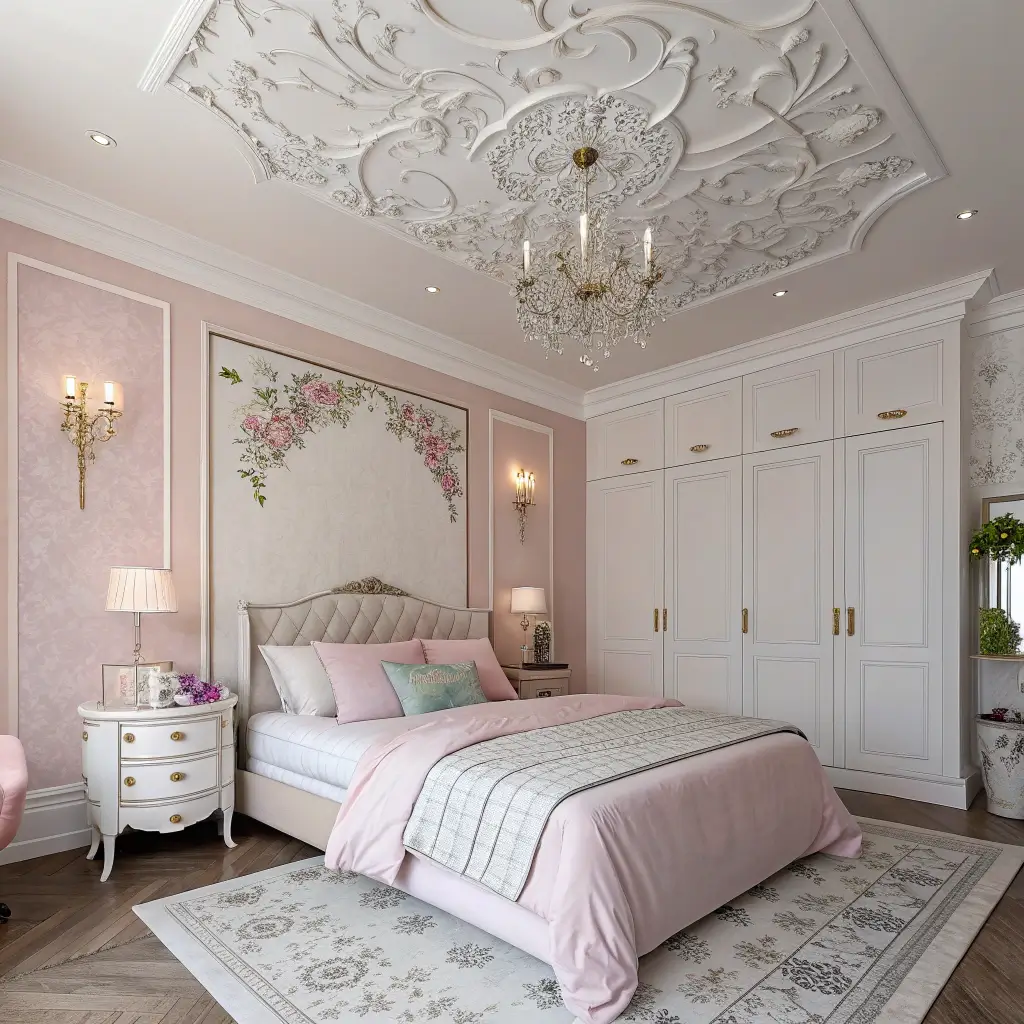
Okay, hear me out before you picture your grandmother’s house. Modern floral POP designs have evolved way beyond those dated ceiling roses from the 1970s. Think stylized botanicals, abstract interpretations, and artistic flourishes that happen to be flower-inspired.
The trick lies in scale and placement. One large, central floral design creates a focal point without overwhelming. Scatter smaller motifs for all-over interest, or create a vine-like border for subtle nature vibes. My daughter’s room features cherry blossoms that look like they’re floating across the ceiling—magical without being childish.
Manufacturing techniques have improved dramatically. Modern POP work creates crisp, clean edges that look hand-carved rather than molded. The level of detail possible now makes even simple designs look incredibly sophisticated.
Floral Design Options:
- Abstract flowers for contemporary spaces
- Realistic botanicals for traditional rooms
- Single large bloom vs. scattered pattern
- Raised relief adds dimension
- Paint highlights for extra definition
Don’t go overboard with colors. White or cream florals on white ceilings create texture through shadow play. Save the rainbow for your actual garden.
Circular Dome POP Ceiling
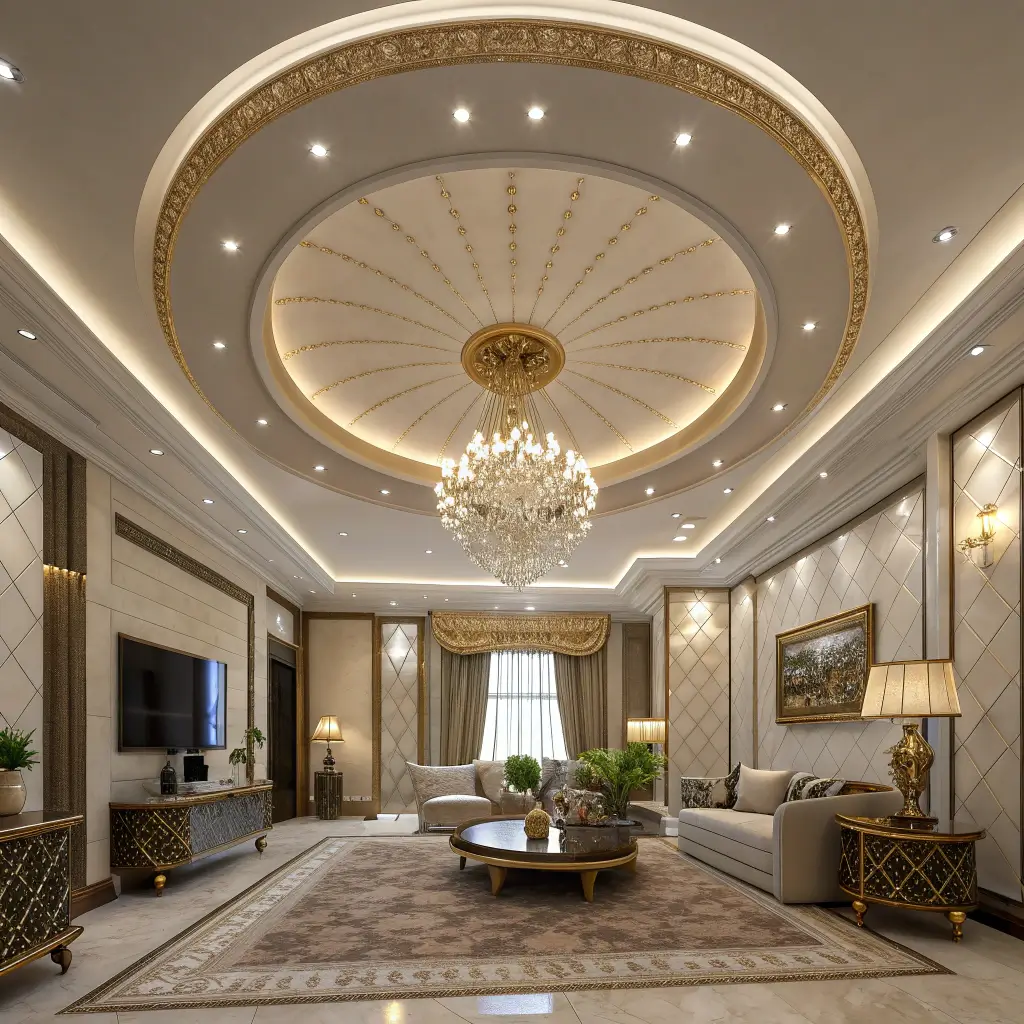
Want instant grandeur? Circular dome POP ceilings deliver that “wow” moment every single time someone enters your room. Not talking full cathedral domes here—just subtle curves that add elegance and height.
The dome doesn’t need to be huge. Even a gentle 8-inch rise in your ceiling’s center creates significant visual impact. The curved surface reflects light differently throughout the day, creating ever-changing shadow patterns that keep the space interesting. My dining room dome makes every meal feel like a special occasion.
Domes work particularly well above gathering spaces—dining tables, conversation areas, or bed centers. The circular shape naturally draws people together while the height adds breathing room. Psychology meets design in the best possible way.
Dome Design Considerations:
- Room height determines dome size
- Gradual curves look more natural
- Center over main furniture pieces
- Include perimeter lighting for drama
- Consider chandelier compatibility
Fair warning: once you install a dome, flat ceilings everywhere else start looking incredibly boring. You’ve been warned!
Also Read: 15 Minimal Simple Ceiling Design Ideas for Clean Look
Wave Design POP Ceiling
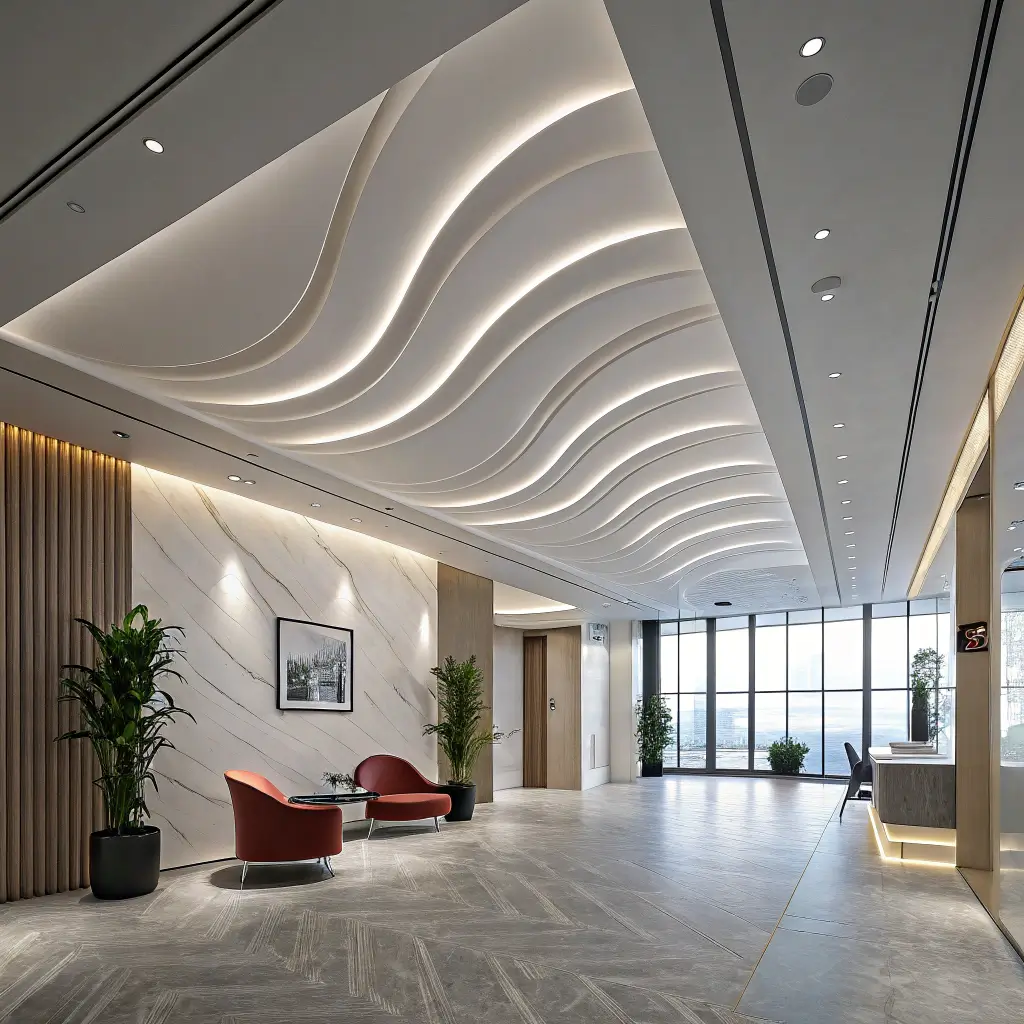
Bringing movement to static spaces, wave design POP ceilings create flowing lines that make rooms feel dynamic and alive. Imagine gentle ocean waves frozen overhead—calming yet captivating.
The waves can be subtle undulations or dramatic peaks and valleys. I’ve seen everything from barely-there ripples to bold tsunamis of plaster. The key is matching wave intensity to room function. Bedrooms need gentle flows; entertainment spaces handle more drama.
Creating smooth, continuous waves requires serious skill. This isn’t a DIY weekend project unless you’ve got plastering experience. The transitions between peaks and valleys must flow naturally, or you’ll end up with lumpy ceiling disease. Nobody wants that.
Wave Design Techniques:
- Follow room length for natural flow
- Vary wave heights for interest
- Integrate lighting in valleys
- Keep edges clean against walls
- Consider furniture placement below
The organic nature of waves softens angular rooms beautifully. If your space feels too boxy, waves add the curves you’re missing.
False Beam POP Ceiling
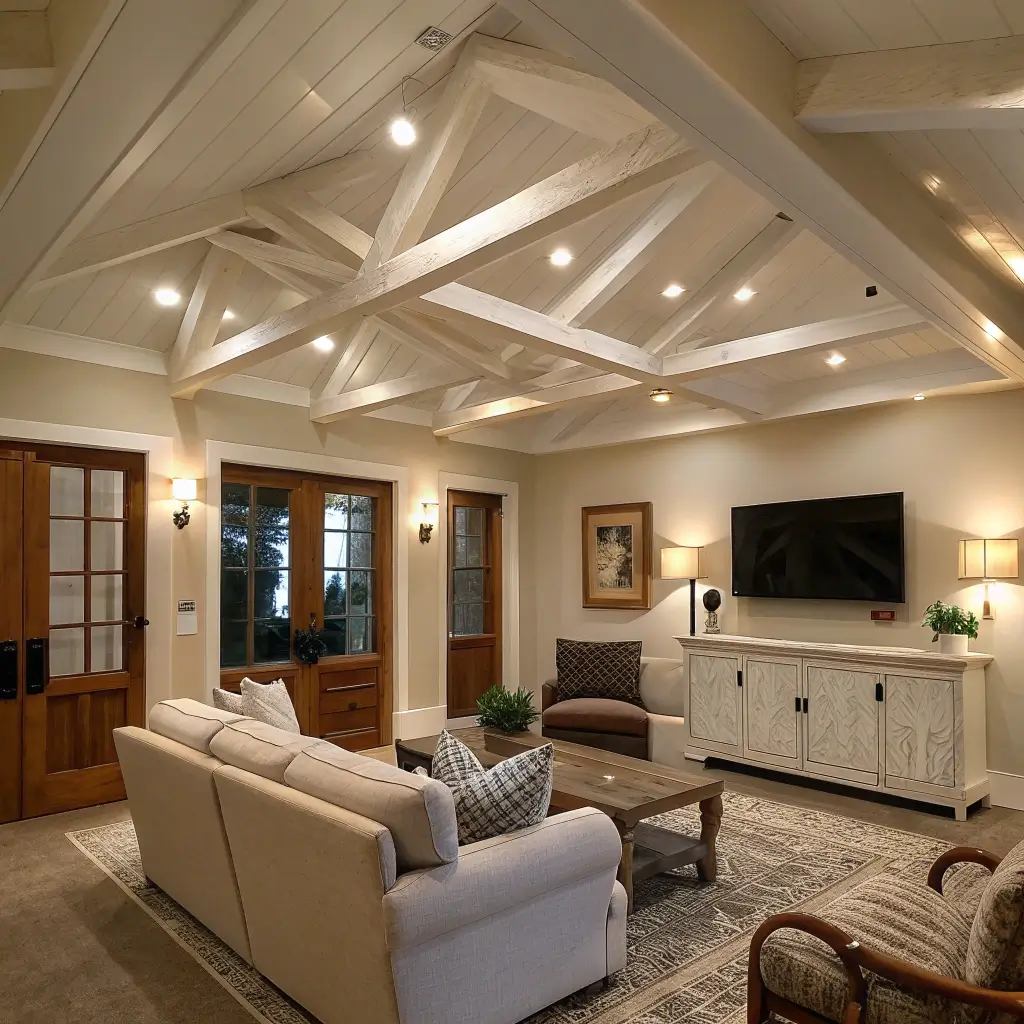
False beam POP ceilings give you that exposed beam look without the weight, cost, or structural requirements of actual wood. These lightweight alternatives install easily while delivering identical visual impact.
POP beams offer advantages real wood can’t match. Want perfectly straight lines? Done. Need consistent color throughout? Easy. Worried about termites or moisture damage? Not happening with POP. My neighbor replaced rotting wooden beams with POP versions, and honestly, they look better than the originals.
You can create any beam style—rustic rough-hewn, sleek modern, or traditional coffered. The finish possibilities are endless too. Paint them to match your ceiling for subtle definition or contrast colors for bold statements. Wood grain texturing techniques make them virtually indistinguishable from real timber.
False Beam Benefits:
- 75% lighter than solid wood
- Moisture and pest resistant
- Consistent dimensions throughout
- Easy electrical integration
- Simple repair if damaged
The hollow construction means running cables inside beams later—perfect for adding speakers or lighting without visible wires.
Starry Sky POP Ceiling
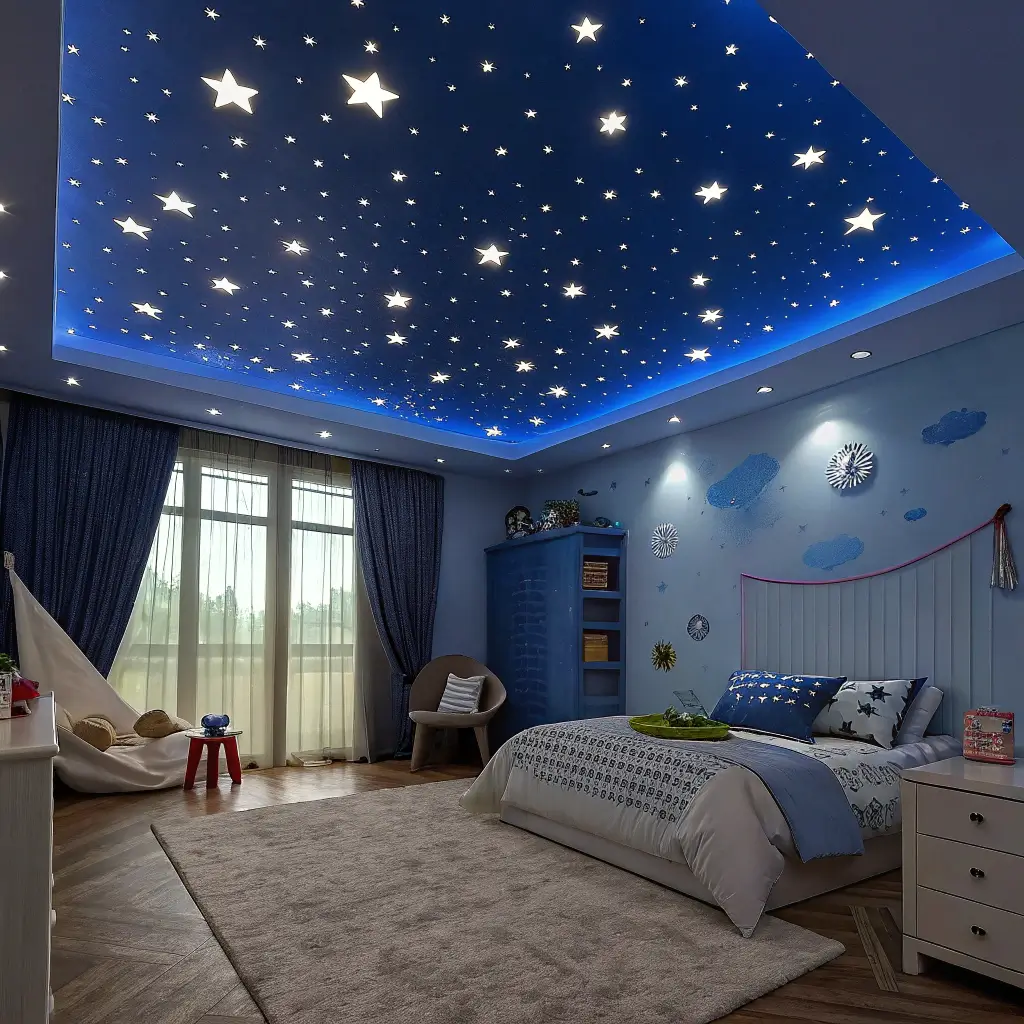
Ever wanted to sleep under the stars without the mosquitoes? Starry sky POP ceilings bring the cosmos indoors through fiber optic magic embedded in plaster. This isn’t your kid’s glow-in-the-dark sticker situation—we’re talking sophisticated celestial design.
Tiny fiber optic cables poke through the POP surface, creating pinpoints of light that genuinely look like stars. Some systems include shooting star effects, constellation patterns, or even color-changing “northern lights.” My friend’s home theater has one, and movie nights feel absolutely epic.
The technology has improved dramatically. Modern systems use LED light sources lasting 50,000+ hours. You can control brightness, twinkle speed, and even program different sky scenes. Want Orion in winter and Scorpius in summer? Totally possible.
Starry Sky Installation:
- Plan constellation placement carefully
- Use varying fiber sizes for star magnitude
- Include dimmer controls essential
- Hide light source in accessible location
- Consider adding painted Milky Way effect
IMO, this works best in bedrooms or entertainment spaces. Your kitchen probably doesn’t need astronomical ambitions :/
Also Read: 15 Trendy Simple False Ceiling Design Ideas for Dream Homes
Modern Hexagon POP Ceiling
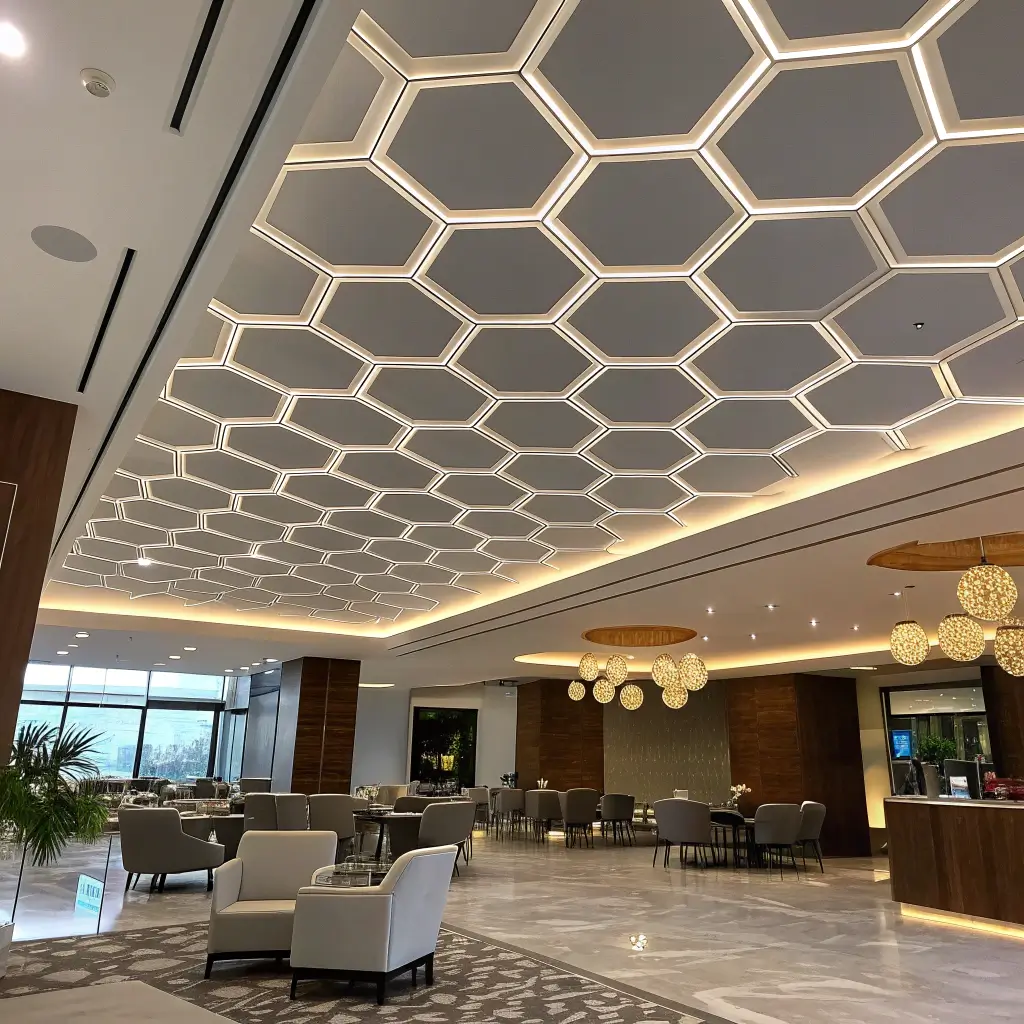
Hexagons are having a moment, and hexagonal POP ceiling designs lead the charge in bringing this trendy shape overhead. The six-sided geometry creates patterns that feel both natural (hello, honeycomb) and ultra-modern.
The beauty of hexagons lies in their tessellation—they fit together perfectly without gaps, creating seamless patterns. You can go uniform with identical hexagons or mix sizes for organic randomness. My bathroom features a gradient pattern where hexagons shrink from center to edges, creating an almost 3D effect.
Installation flexibility makes hexagons particularly appealing. Create a full ceiling coverage, accent zones, or single statement hexagon. Each approach delivers different impact levels. The shape also works brilliantly with integrated lighting—imagine soft glow emanating from hexagonal frames.
Hexagon Design Strategies:
- Standard size is 12-18 inches across
- Mix depths for dimensional interest
- Consider metallic finishes on edges
- Plan pattern from room center outward
- Account for edge pieces against walls
The geometric nature means precise installation matters. One wonky hexagon throws off the entire pattern—hire someone who understands geometry!
Creating Your POP Ceiling Masterpiece
So there you have it—ten POP ceiling designs guaranteed to make people actually notice your ceiling (in a good way). The beauty of POP lies in its versatility. Whether you crave subtle sophistication or bold artistic statements, there’s a design that fits your style and budget.
Start by honestly evaluating your space and lifestyle. Love entertaining? Go dramatic with domes or waves. Prefer peaceful sanctuaries? Minimalist recesses or gentle coves deliver. Can’t commit? Simple floating layers offer flexibility for future changes.
Remember, the best POP ceiling design enhances your room’s existing architecture rather than fighting it. Low ceilings benefit from recessed designs that add perceived height. Large rooms handle complex patterns that would overwhelm smaller spaces. Work with what you’ve got, not against it.
The investment in a quality POP ceiling pays dividends beyond aesthetics. You’re adding value to your home, improving lighting quality, and creating spaces that genuinely make you happy. That plain ceiling above you right now? It’s basically begging for transformation. Give it the glow-up it deserves—your future self will thank you every time you look up!
